← The Wolf Of All Streets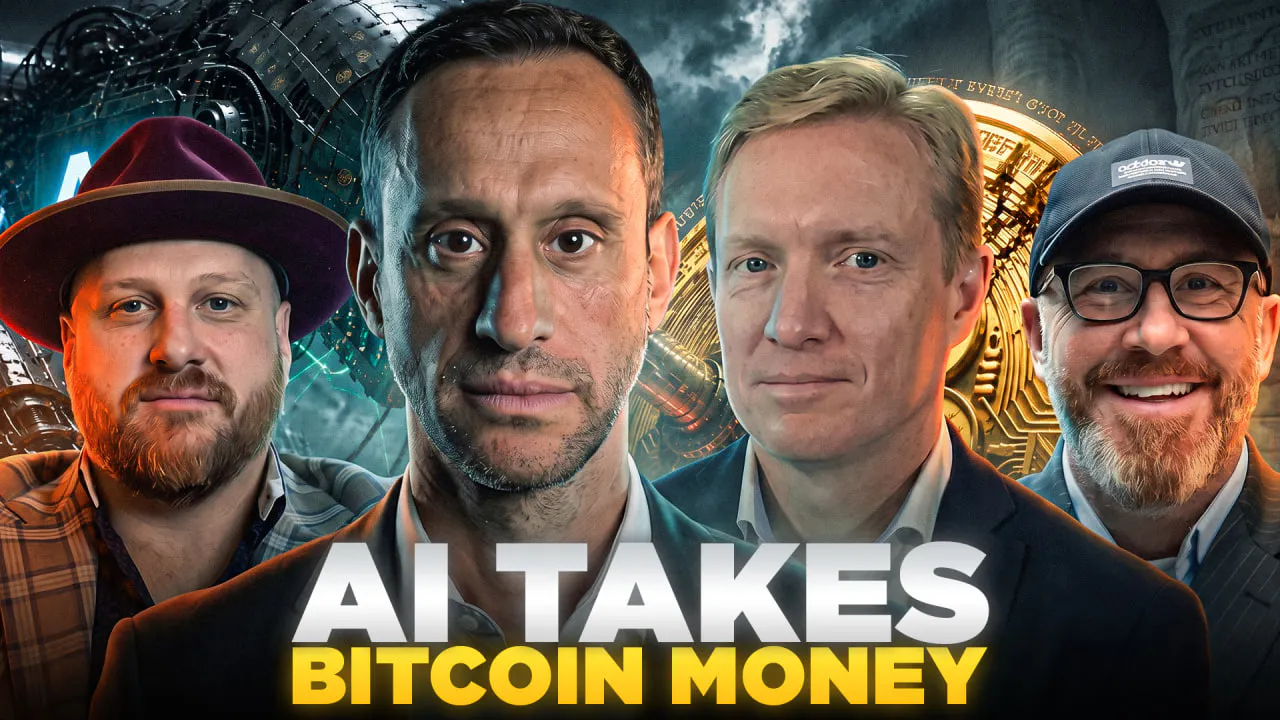
Loading summary
Transcript182 lines
- [00:01]
A
Bitcoin mining just changed forever. All caps forever anthropic makes a $9.1 billion AI bet on riot platforms yet again. Another bitcoin miner abandoning us and moving on to greener pastures AKA AI. What does that mean for bitcoin mining? What does it mean for bitcoin price? We're going to unpack all of that today. Of course we've got Andrew and tman but we have very special guest James Butterfield here as well from Coin shares. Let's go.
- [00:34]
B
Let's dope. That's dope.
- [00:49]
A
Good morning everybody. Happy Tuesday and welcome to whatever room this is. I don't know what that is. I hope that you're all having a wonderful day. I'm jet lagged and so my brain's not working fully. So I'm going to bring on the guests that they can bail me out. Good morning gentlemen. How are you?
- [01:07]
C
So what percentage is your brain at right now if it normally doesn't work at 100%?
- [01:12]
A
Where, where does Andrew that nobody's brain. See, I couldn't get nobody's brain. Nobody's brain work 100%. We've never. I saw like the movie Limitless where you take a pill and it opens all of your brain capabilities.
- [01:26]
C
Your brain has the candy shell.
- [01:31]
A
Good morning James. Welcome to the clown show. That is. It's nice to have you here. Let's talk about the first story here because listen, it's not new but it's a continuation which is obviously riot Platforms surges 20% in pre market trading on $9.1 billion anthropic deal. So listen, I mean this is following Iron and Marathon and basically anyone and get their narrative switched over to AI. But listen, you very closely have tracked miners. I've had you on for years talking about this. Who's going to be mining bitcoin once this is all over?
- [02:11]
B
Yeah, I mean it doesn't really surprise me that Riot announces. I actually went to see that Corsicana site and they absolutely said outright. No, we're always, we're always mining bitcoin. And here we are now and I think for a lot of bitcoin miners this makes sense. So you need something called the 49s in AI. It's 99.99% uptime. And so that requires an incredibly robust power source and a really decent fast Internet link. And what a lot of these miners have done over the last four or five years is built these mega scale sites that have exactly that really reliable power sources particularly in Texas and you know, at the moment, if you look at corporate results, around 30% of revenues listed miners revenues come from AI, but by the end of the year, I'm
- [03:13]
A
assuming that's going to be like 80 or 90% in two years.
- [03:16]
B
Yeah, by the end of the year it will be 70%, 75% based on announcements that these different mining companies have made. So there's like potentially a bit of an existential problem here for bitcoin mining. We've seen the hash rate fall about 10% I think maybe from its peak. And so there is this worry. Personally though, you don't think we should be worried. It makes absolute sense if you look at the return on invested capital for a, a bitcoin, a bitcoin mining miner versus an AI thing, AI is around three times more the return invested capital on current numbers. So it really makes sense for them to shift into this. But I don't think they are all going to shift towards AI completely. Some of them are, but it makes sense to, I think really diversify your revenue streams for any business.
- [04:12]
C
It does, does.
- [04:12]
B
So it makes sense to do that. But there'll always be a need for load balancing in Texas. When I went there, even at the, the Corana site, you could hear the rigs spooling up and spooling down again as they're responding to the ERCOT power grid prices and so, and, and consequently demand and that won't go away. It's a great way for energy producers in Texas to monetize their unused power. So there'll always be a need for it. But certainly these mega scale sites that particularly Riot has, has created, I think are going to shift all towards AI. And bitcoin interestingly is going to become more regionalized. You, you know, it's interesting Marathon's doing stuff where they're talking about containerized solutions of 10 megawatts. The course Garner site, right, by the way, is 2 gigawatts. That's enough to power 2 million European homes, by the way, sorry, 1 gigawatt, but you know, these small containerized solutions of, of 10 megawatts on the outskirts of town to load balances. I think what is more the reality for bitcoin and it's actually quite a good thing because we'll see a much more decentralized bitcoin network over time. So I don't think this is necessarily a bad thing. I think what the miners have done with these mega scale sites is just set themselves up perfectly for AI and we shouldn't be worried. And also there's quite an interesting IPO pipeline for smaller miners to come on through.
- [05:45]
A
Yeah, but they won't be ipoing as miners. They'll be as data centers.
- [05:51]
C
Yeah, this is a very, very compelling workaround to the backlash currently to building out big AI facilities. Right. So. Oh, instead of building out big facilities, having to deal with state local governments, a bunch of people are, you know, out picketing, you know, all of the politics associated with it. Oh, okay, we're not going to build one. We'll just go do a deal here and a deal here and a deal here because they're already built all this stuff and we'll flip the switch on and away we go. I did think it was interesting talking about the wattage and it would, you know, serve 2 million households in Europe. Interestingly, here in the United States, it would only serve about 21 homes because we have air conditioning and they don't. So, you know, a little bit difference in the. In the deal there. But. But no, this is, this. I think this will happen very quickly and a lot more of them are probably coming. One, because this is a unique. Very fast and quick we've gotten there. We don't have to deal with other questions and all the craziness associated with politics around this. Flip the switch, put in all our stuff, and away we go. What it means for bitcoin and bitcoin mining, that's a better question for Tillman as he spent a lot of time in that space.
- [07:15]
D
Yeah.
- [07:16]
A
His solo miner on his desk right now has a better chance of mining.
- [07:22]
D
Well, I love the network. That's what got me attracted to bitcoin, Bitcoin to begin with. And I probably have a little bit of an unpopular opinion in the fact that I think there's going to be a lot of pain in this space for the foreseeable future. I think it's due to the fact that we artificially in inflated it through public offerings and through concentration of debt, capital and all of the things that we've applied to the treasury companies, quite frankly, we've done that to the mining companies as well. And anytime you have that kind of a disjointed effort, in my opinion, there's going to be a rebalancing. And so the rebalancing is what James was talking about is like we've gone to a highly centralized representation of bitcoin mining and we're going to go back to a very decentralized. How far will the pendulum swing? I don't know. I think if you analyze it from a grid Perspective, there are a tremendous amount of motors and applications that cannot go to a variable drive. And you know, that means there's cycles and that means that there are demands that are fluctuating and you can fill that demand as long as you have the intelligent way in which you can do that. And so putting a variable drive on the entire grid essentially and using the, the power that's free or bleed, bleed off power, excuse me, is the way in which Bitcoin's going to be powered going forward. It's going to be a commodity that's going to be driven down to the free energy category. In my opinion, in terms of the production cost, that's not a bad thing. But I do think it's going to, we're going to have to take a hard look from a innovation perspective and a deployment perspective here in the US specifically. And I know there are some companies doing some pretty interesting things along these lines where they're integrating bitcoin mining functionality into air conditioning systems because air conditioning is one of the ones that has a large amount of variable, variable demand. And so there's solutions for it. But the catch up period is, is the part that, you know, scares me a little bit. And then when you look at just the infighting in the bitcoin community right now at the mining level about bitcoin improvement protocols and you know, the, the bip110 fork and all that stuff, it's just a mess right now. And so there's going to be a restructuring in this side of Bitcoin and, and I think Wall Street's going to lead it. And I think Wall street should lead it. You know, he who has the gold makes the rules.
- [09:57]
A
The bitcoin actually world is so embarrassing right now. Okay, you can go ahead, but I can go back to that. Go ahead, James.
- [10:03]
B
Yeah, I said don't forget like, you know, listed miners only represent 25% of the hash pad. So there's a whole 75% I know about that's around the world somewhere. James?
- [10:16]
A
Yeah. Can I ask you, as you go on to that, can I just ask you, so that percentage though, how much of that is the hash power in the United States? I guess one of the bigger stories would be like if all the United States publicly traded miners turn into AI data centers, are we going back to a bunch of mining that's quietly happening in China?
- [10:36]
B
That's really difficult to know, but we have some indications. If you look at, for instance, when we had the really cold winter in Texas, power prices went through the Roof. If you look at the hash rate, it really fell. So clearly power prices have a big impact at the top end of the hash rate. But it's really hard to know exactly what's happening there.
- [11:00]
A
I mean, you just have this narrative, Trump, make America the crypto capital of the world. All the bitcoin mining will come here. We want to mine all the bitcoin. It seems like we're going in the opposite direction.
- [11:09]
B
Well, bitcoin mining, it hunts out the cheapest form of power. And for a long time that's been Texas. You know, you can get 5 cents a kilowatt hour for power. You know, the ordinary consumer will probably be spending 10 to 15 in the US percent per kilowatt hour, if not more. So it's very cheap and then curtail. Power is incredibly cheap. It can sometimes, you know, like if you look in places like Norway where I'm involved in some mining operations, they're sometimes being paid to take the power. And so cartel power is always have a place for bitcoin mining because it's never something you can use in AI. So I think that's one compelling thing. And there's another huge power source that's not used around the world. I wrote this in a report about a year and a half ago. So stranded gas or stranded energy. If you look at stranded gas specifically, there's enough stranded gas emitted in the world. So this is stuff that they drill a hole in the ground, they get some oil out and the byproduct is all they might not know what to do with. So they just burn it off because they haven't got pipeline to extract it. There's enough stranded gas emitted in the world to power the whole of south, south and Central America for a year. So there's a massive amount of power to be taken and you could go place most of that is coming from the Middle East. You could drop ship containers next to a sort of yen backer generator gas to power generator and monetize that gas immediately on site without the need of building pipelines and all those sorts of things. So actually think we will see that transition to more stranded renewables and stranded energy. We're already seeing evidence in Africa of bitcoin mining, subsidizing unprofitable hydro power plants and things like that. That's where it's going to go. And actually I think it's really positive. So actually if you took all that stranded gas around the world and put it through a generator, you're reducing carbon emissions by 63%. So actually this is a really positive thing environmentally. A message for Bitcoin.
- [13:05]
D
See, I think the hard part about the energy space, and I was in it for a while is like by the time you got that infrastructure built at scale, something new would be, you know, a compelling case that we should be, you know, looking at as a better alternative like the, the, the like. Battery technology is a good example of this right now. If you look at the solar generation, it's the cheapest way to generate power, period. The end in terms of renewable free. The problem is, is in the storage of it and in the load capacity that it can manage. That's going to change with Silver State batteries. That's going to change a lot in the next 10 years, in the next 20 years. So the same reason why we don't have, we do have drones now, but we didn't, you know, 10, 15 years ago as a, at a residential level is because the battery technology allows it for it. You didn't have the functionality that you did back then that could cost effectively deploy it at scale. And we're going to have that type of technology. And this isn't going to be as big of an issue in my opinion because solar is the answer. We just have to tackle the storage and the load issues and that's being tackled right now. And some of these new Silver State batteries are orders of magnitude more efficient and more capable to do these types of things and applications than the previous predecessor.
- [14:34]
A
Yeah, I want to move. I think that's great conversation. We spent about 15 minutes on mining and energy and I think there's some other topics that I want to jump to. And James, I know you kind of sent some notes in advance and I wanted to dive into this one. Although I made a solemn promise to never say the word Clarity act for a month because I thought that I had the opportunity. Jokes on me. We're going to talk about it every day, but we have this. So US SEC sets meeting to propose reg crypto to support certain digital asset offerings. You had kind of pointed out pre show that you think that one of the sort of incidental or I guess collateral damage of the Clarity act continuing to be delayed is that the regulators are also waiting to see if the Clarity act happens before they'll do rulemaking and maybe we're going to get some rulemaking soon as the Clarity act kind of stalls here.
- [15:26]
B
Yeah, I think we certainly see this like in fund flows data and just generally across investor sentiment. This is not a bitcoin thing. This is more of ethereum Solana Defi thing that there's still quite a lot of regulatory uncertainty and that really weighed on bitcoin before the ETFs were launched. And then obviously we had the Strategic Reserve act and other things that really helped with investor confidence and it green lit corporations to get involved in it. And I think it's still lacking now with, I mean, the Clarity act looks like it's going to pass at some point, but September 15th, I think it is for the next vote.
- [16:05]
A
If it happens 2047 and it's going to be written by,
- [16:10]
B
you know, right in the middle of midterms and electioneering and everything, it's could be quite a difficult one to actually happen at that point. But yeah, I think it's just, it's uncertainty, regular reg uncertainty overhanging and I think it's making investors cautious from that perspective. And naturally with the sec, you know, you can't, they, they don't have a framework to work off but they, before they start forming regulations, particularly the one which I'm real advocate for is the ethics side of things, which they need to clear up with the, on the Senate. But I think that's actually really needed
- [16:46]
A
and yeah, but it's such a catch 22 with ethics because I mean, listen, if you were listening to me, who knows nothing but in December, I thought it was really obvious that we were just, it was misdirection. Every narrative about the Clarity act was a way to not talk about the fact that ethics wasn't going to happen. And that's all that really mattered. We have this problem now where if they don't pass the Clarity Act, Democrats are fighting, saying the ethics clause doesn't go far enough. But if they don't pass the Clarity
- [17:14]
D
Act, Trump can just do whatever he wants.
- [17:17]
C
Yeah, anybody can do whatever they want.
- [17:19]
A
It just none of it, it makes no sense.
- [17:22]
B
Well, I think we've been talking a lot about a lame duck president. I, I, look, I don't know if it's going to happen in the US but if it did, where the Senate and the House are controlled by the Democrats, I actually don't think it's gonna have much of an impact overall. I still think they'll still progress because if you look at the floor vote in May for Clarity act, it was very bipartisan in that respect. And you know, in the US like UK they have a government debt problem and having a marginal buy of government debt, I. E. Stable coins, is a very good thing. And so I don't think there'll be A huge political reversal of some of the Trump friendly policies in that respect. That's my take on it. But I'd be really interested to hear
- [18:00]
A
what other people say just really quickly. I mean, what the SEC is proposing here with reg crypto is basically a structure that allows companies to transparently fundraise for token offerings or for their company. And then the idea of safe harbor that Hester Peirce has been literally proposing for half of a decade in which you could effectively launch a company or a token in the United States and with some sort of, you know, maybe a three year safe harbor period where you become sufficiently decentralized and then you're able to continue to exist without being a security. Like really obvious things that everybody knows we need, regardless of whether, like Elizabeth Warren is, you know, having a seizure today about Trump's crypto earnings. So, by the way, Trump's having a rough crypto run here too, but we get into that, I guess, separately. Andrew Tillman, any thoughts here? I mean, before we have to puke about Clarity again. Go ahead.
- [18:53]
D
I think politics are just so messy right now. I mean, if you try to make sense of it, you're just chasing your tail. I, I do think I agree with everything James said. I, I think the Clarity act will get passed. I don't think it will happen anytime soon unless we start seeing, you know, flights being booked to Jekyll island in, in by. But other than that, I don't think that it happened.
- [19:17]
A
Train. They took the train.
- [19:19]
D
Yeah, they're going to take the train. They're private submarines. But yeah, I don't think it's going to happen anytime soon. And I do think it's, you know, my whole point to whoever's talking about the ethics clause, we all know who they're talking about. Isn't it a little too little too late on that front? Like, you know, we're just now talking about the rest of us, so can't we get on with business?
- [19:43]
A
We're going to, we're going to get rules about Trump and crypto and Trump is entirely exited crypto. Like, you know, Trump beat his bitcoin holding shrink as crypto losses at 361 million. So like they sold like 60 bitcoins, but obviously, like they're down bad. Right. If you saw the news that we didn't even really deeply dive into, they basically canceled their deal with crypto.com, the CRO treasury company. That's not going to happen. They had ETF plans with crypto.com. that's not going to happen. Like, in the depths of the bear market, they made billions of dollars. And now, now there's a part of
- [20:18]
D
me that was hopeful that that was concessions in order to get the Clarity act, but maybe that's just naivete speaking, but, yeah, yeah.
- [20:28]
C
Basing monetary decisions on political outcomes has been a, you know, a waste of
- [20:35]
A
time for a lot of Nancy Pelosi.
- [20:37]
C
Yeah, well, I mean, again, to, to that point, like, we've been trying to come up with ethics around stocks for a long time and nothing's ever happened. Meanwhile, again, if you take out Bitcoin and crypto, broader markets just keep going higher, literally no matter what. So that, you know, that's the way to look at it. I, I, I said, you know, Clarity was dead six months ago. It's just luck probably that I was right. But to your point, Scott, you know, the, the ethics stuff is the, was the, you know, elephant in the room. Like, there's no version of Democrats that are going to agree to anything on that side of it leading up to an election that they want to win. They can use this as a club as they're doing stump speeches across the country.
- [21:24]
A
They wait till they get to the ethics clause on prediction markets.
- [21:29]
C
Exactly right.
- [21:31]
A
The guy who's running his teleprompter is making bets on what words are going to be in the speech that he's reading in real time. You know, like, and I'm that, that's none of that to, well, you can,
- [21:40]
C
you know, exhibit A about something like that is, you know, like, what's his face at Coinbase? Brian Armstrong saying a bunch of things that are, what are you gonna say? I mean, right there, right? So it's, you know, you never want to use the phrase it's better to ask for forgiveness than, you know, permission. But it seems that oftentimes markets move in that direction, like, innovate, innovate, innovate. And at some point a decade later, somebody will get their hands around this stuff. And what they, you know, were considering a decade before is irrelevant.
- [22:17]
A
I mean, like 97 years old, and they're gonna be like, we've passed.
- [22:21]
C
Yeah, we, I mean, listen, quote, unquote, rules of the road on the Internet happened 15 to 20 years after, after the Internet became a thing and just, you know, took over the universe. Right? So everybody has to click on a little button when you go to any website now saying accept something. Right. That didn't happen until about three years ago. Before then, it was just complete, absolute chaos and anarchy as it relates to collecting data around where you go and where you've been. So, yeah, we're a long way off from.
- [22:55]
A
So I made this quip, James, before that. It's been a rough run for the bitcoin maxis the last few weeks, right? So we have Gold Card hack, which to me is such a big deal. And I'm not making fun, I'm not trying to make light of that, obviously, because to me it's different because those are the people who did everything right. They listened to the Bitcoiners who said, be your own bank and store this away and you'll be safe. And oops, then you have BTCPay, which is a basis, basically like, hey, run your own node, verify your own transactions. Oops, lightning. That's messed up for lightning. And then of course you have the like, utter embarrassment of bip 110. And I don't really have a take on either side, but I just think it's like ridiculous. Like the nerd fights. You remember bum fights that, that show they used to have. These are nerd. And so like, you just have a bunch of people who should be completely irrelevant, making themselves relevant by arguing over something that probably doesn't matter. But like, I just wonder sometimes if you're. I guess institutions probably don't care, but you sign on to Bitcoin Twitter, you're like, I'm into this new bitcoin thing. It's awesome. And then you see cold card hack, Lightning network, like being drained and a bunch of guys arguing something you don't understand about spam and whatever. And don't you just go, this is dumb. I'm going to go buy Nvidia. Yeah.
- [24:11]
B
So this is like the first amongst investors, the first question that comes up, they hear about Cold Card and they go, okay, well, that's it. Bitcoin's been hacked. It clearly it hasn't, but that is the inference. And then they sort of try to come dismiss the whole asset completely. And I think that's incredibly a misguided view, partly because the cold card hack in the. Although it's harsh for people, what was it? Two and a half thousand, three thousand Bitcoin in total. Not a huge amount of bitcoin that was vulnerable. But I thought what's really interesting about Cold Card is the way in which the exploit happened. Finding out that the random number generator was not random and exploiting it. That's incredibly sophisticated in my view. And I'm convinced, although codcard can't. Can't say so that he can't determine it, but it was an AI exploit
- [25:09]
A
that figured that or there's been idea I saw something, God knows I don't know anything that's true on X but that the CTO or the guy who actually developed it in the first place, there's evidence that he was using another name in the programming chats and pretending to be somebody else. And maybe he kind of let it sit there latently for years. But it seems very obvious that this is a mythos thing type thing. Right? I mean you unleash AI and it hacks everything.
- [25:35]
B
So what makes a vulnerable network vulnerable? How many different attack vectors are there? And actually bitcoin there are very few. But with something like traditional finance there are huge number of attack vectors. So theoretically it should be more vulnerable. We should be talking about the, you know, we've just had a bunch of hedge funds attempt to get hacked. I think the story of AI assisted hacks is going to really escalate and I think actually the tradfi world is way, way more vulnerable. We just not had the headline yet.
- [26:07]
A
Yeah, let me ask you this then. Yeah, I agree. So let me ask you this then. So we've had this historic run, basically it has ended of ETF outflows. Right. Everybody does. We've talked about it fore, but we saw the biggest bump in ETF inflows last week basically since April. Prices effectively stagnant. That hasn't been reflected. Do you believe that there are people now who used to be self custody maxis who are saying forget this, I'm just buying the etf.
- [26:38]
B
There's definitely been, we have seen specifically clients that have built relationships with well known wealth managers. They built their wealth in bitcoin and are now shifting to ETFs. There's definitely some of that is happening, like quantifying that. It's very hard to tell but I hear that narrative more and more now that some are just saying, right, well ETFs have that institutional grade custody and therefore I'd like to do it but there's always those people that are going to actually rather have a bit of paper with their wallet address on it, aren't they? But yeah, there does seem to be a little bit of a trend, but it's quite hard to go, I think,
- [27:14]
A
I don't want to misquote but I think I saw something being discussed where BlackRock was floating or had found a way that you could convert basically your spot holdings into IBIT without a tax
- [27:24]
D
event from 25 million to a million.
- [27:29]
A
Yeah. So like if you can now do that without having the tax loss of selling your Bitcoin at a profit, you can just convert your spot holdings to the etf. So they clearly see this as an opportunity.
- [27:43]
D
Yeah, absolutely. I mean they literally are, they were standing there waiting to catch the business. Lowering it from 25 million to a million is a massive inclusion. You know it's a, it's a. Yesterday I'm seeing the news, it happened yesterday. And it's massive news because now if you have spot and you're worried about all these things, you have no reason not to trust, I mean to make the conversion in my estimation.
- [28:09]
A
Or you believe in self custody and being your own bank. But yes, if you're not, if you're not a hardcore ardent like you know, kind of guy who buries your gold in the backyard and you just view it as an investment. Certainly.
- [28:20]
D
But my argument even there shortly would be like how, how many millions of dollars do you need to keep in your BTC backyard buried emergency fund? Like
- [28:31]
B
I think that's right. I mean when I was at ETF securities we had Europe's largest gold ETF and there's always that discussion about personal custody of gold versus institutional grade custody. And the ETF offered the ability to receive physical delivery of gold. And in 15 years we only had one person want that physical delivery because it says massive practical reasons why having a load of gold bars at home is quite a dangerous thing to do. And I think bitcoin in a way now it's risen up so much in value over the last 10 years. Ultimately Bitcoin on a USB stick or in your head is a kind of a bearer instrument. And I'm sure lots of people, when they've got lots of bitcoin and they execute a trade, it's incredibly nerve wracking waiting for that. I've had it where I've done a trade and it's stuck there for half an hour and I'm wondering what's going on and the stress of that. So I can really see the allure of handing it over to a bunch of professionals. And additionally the kind of exploits on Coldcard don't sort of exist on sort of ledger hardware security modules which are the institutional grade sort of hardware devices. They have white listed wallets and stuff. So you can only move bitcoin certain wallets. So there's so much higher level of security.
- [29:50]
A
Yeah, I mean there's great companies, they'll lose your data, your bitcoin is safe. But it's just like I Watch these. And I'm sorry, we're keeping you a little over time here, James. You have a few more minutes.
- [30:01]
B
That's fine.
- [30:02]
A
Yeah, I mean, it's like, oh well, the thing. And I kind of made a joke about this on my other show yesterday. It's like your customer service for cold card is telling people why they're dumb and it's their fault. I mean, it's like you go on there and like, well, you didn't get the proper casino dice with your Dungeons and dragons dice with 64 sides and you didn't roll them 99 times to increase your entropy. And I'm like, what the hell are we doing here? Nobody wants to do this. Nobody wants to do this. Like nobody wants their Texas Instruments calculator with and they're rolling dice. I mean, nobody.
- [30:36]
D
Especially when you can just insure the problem custody guy.
- [30:39]
A
But it's good for like one in a thousand people who are willing to do the work.
- [30:43]
C
Well, it's also, it's also good for like less than 1% of, of your holdings. Right? If you're a rich guy and you've got $30 million, you're going to keep 300 grand on, on a cold storage just in case the world burns down. Right? That's the only reason to, it's the only reason to do it anymore. That, that's it. That's the only reason to, to, to do it anymore.
- [31:07]
D
Listen, just moving into a more sophisticated investor category. People who are wealthy are more about wealth preservation than they are more are about wealth, you know, capitalization or, or making money. And if you think about like the risk that self custody that you can't self insure, that you can, but you just, you're the guy who takes the loss, just like you saw with the gold card. But any of these big institutions now, like, they'll lose your data, Scott, to your point. But if they lose your money, they pay you back, which, you know, they can't pay me my data back. But at least their coverage on the insurance side of things mitigates all of this risk. And it's a very elegant, easy to deploy solution.
- [31:51]
A
I guess the nuance there is that at least they can see where kind of where the bitcoin went. And we'll see if those people can actually cash it out or if any of it's recovered. That whole blockchain thing. Yeah, go ahead.
- [32:03]
B
Yeah. For many of these physical physically backed instruments, which sounds a bit weird because it's a digital asset, you can receive physical delivery. There's always that option of receiving physical delivery. I, you don't want an ETF form, you want a US in on a USB stick or something. You can, you generally can do that. It's not easy, but it can be done. Yeah, there's always that.
- [32:26]
D
Well, and I think the mobility of Bitcoin is still preserved in that scenario. For example, if you're in a war torn country and you have a lot of money in bitcoin and you have most of it on an exchange, well, there's nothing that keeps you from pulling it off an exchange and putting it on a cold storage wallet and taking that with you to wherever you're going. And then like you still have the functionality. It's just the trust issue of like, does the exchange cut me off? Well, I mean you're going to trust a wallet provider, you're going to trust.
- [32:54]
A
Well, that, that's. You just made the. I'm sorry to interrupt. I mean that the thing is that you were told like not to trust any counterparties and then you found out cold cards counterparty point. It's like don't trust any counterparties, be your own bank. Well, like is going any different than, you know, Voyager here. You know, like I, it's, they, they
- [33:14]
D
mess up the dangerous point. AI is going to find every exploit that it can. I mean there's more out there for sure.
- [33:20]
A
I love this comment. Cold card are not for your grandma or noobs, it's for purists. How'd that go for the purists, dumbass? That's the point. Sorry.
- [33:33]
B
Yeah, I just think we're going to be in a situation though where some fight. You know, if you look at Romania, it recently had its government property ledger hacked. Really theoretically, in a way, and they didn't have a backup. So theoretically no one really quite knows who owns what property. And I think we're going to hear more and more instances of this in the traditional physical world, so to speak. And actually I think this is really going to benefit things like Bitcoin is. People realize actually it can't be hacked and there's quite sophisticated security things that just based on pure maths that, that AI can't, can't get around.
- [34:11]
A
Yeah.
- [34:13]
B
So many different attack vectors. There's actually so much more money that's vulnerable in the tradfi world than in crypto. So this is, it could become just a massive story and if we see some major hack of some government ledger or something like that, it could really benefit something.
- [34:28]
D
Yeah, but you and I both know that money doesn't mean anything if it's hacked. They just print more and it's a rounding error of a rounding error of a rounding error in terms of the supply. And so the point is, is like the illusion of fiat being valuable is protection against this very exploit in these hacks. Because it's not valuable and everyone kind of. But Bitcoin is valuable. It's scarce. And so when you, when you, when there is a hack, it's much more significant. And, and there has to be additional measures put in place in terms of insurance policies and like you were saying, like layers of security. Whitelisted, late whitelisted and you know, they've already got this in place. This problem has been fixed. Cold Card is an example of like a dinosaur left in our ecosystem that is going extinct, in my opinion. And I think there's going to be a mass exodus from cold storage into any type of these custody based solutions.
- [35:33]
C
If we want a preview of what let's call it bitcoin protocols are going forward, take a look at the CNBC roundtable that announced a $500 billion investment into AI infrastructure yesterday. That's a preview two, three, four years from now. Oh, we think this is what should happen with the next protocol adjustment because it was blackrock, JP Moore, it was all those guys.
- [36:01]
D
I honestly think they had to have figured this out before they got into the game. But they're. I don't, I don't know when the Wall street fork happens, but it's coming, I promise.
- [36:10]
C
Yeah, yeah. Interesting stuff, no doubt.
- [36:13]
A
All right, James, I kept you long enough. I appreciate you taking the time to join. Any final thoughts? I know if you do have two more minutes, you know, anything else before I let you go?
- [36:22]
B
Well, I usually talk about fun flows. I've not talked about it for a while. I've not actually been publishing it for a while. But yeah, I think it's really interesting what's gone on. I mean, I look at global flows, not just the U.S. although the U.S. dominates and we've had this period, so. So there were 2 billion of assets under management in Bitcoin back in 2018. And it had, there was a big outflow event then and it represented, I think it was around 8 to 9% of assets under management. The outflow pit moment and actually what happened this summer in May and June, eight weeks of outflows totaling $8 billion is proportionally very similar to the outflows we saw in 2018. And to me it signifies that capitulation amongst investors and the Low point in markets and this is something we've been talking about quite a lot on the trading day.
- [37:16]
A
He just said the bottom, he just didn't want to say it.
- [37:18]
B
That's so, yeah, the low point. We're there, I think and, and what's interesting is we've now seen we're in our fourth week of inflows. One week was a bit flat, but they're not big inflows, they're like hundreds, you know, or last week, sorry is about a billion dollars of inflows.
- [37:34]
A
1.1.
- [37:35]
B
But there's like this tentative step back into, into the, the crypto assets and we've just finished a survey and a lot of clients are thinking it's, it's looking quite good value right now. So I think we're done. I think the lows are set in. I still think we need what is going to stimulate the next real ramp up in prices. And I don't think that's clear yet. It's got to be something around monetary policy. And I can't see Kevin Walsh suddenly turning around and saying yeah, we're going for it, we're cutting rates like mad. But I do think consensus is wrong. I don't think we'll see any rate hikes this year and I think there'll be this gradual realization throughout the year. We've got some crappy jobs numbers in the US recently and there'll be gradual realization that actually he's not going to hike rates and slowly I think that will bit by bit really support the crypto market. But when will we see the next really strong leg up? It's either got to be the Fed really, really going dovish or whales coming back in. And I don't think whales are going to come back in until six months before the next halving.
- [38:42]
A
So about It'll be on October 1st, the minute that the clock changes so that we can talk about October and how the four year cycle was so obvious and that we wasted years talking about these things. That's what's going to happen.
- [38:55]
B
Exactly.
- [38:56]
A
Going to be so frustrating.
- [38:59]
D
Painting a pretty exciting, compelling picture. I mean I think that's what every, I think you just made a lot of bitcoiners cry out there with hope. I think we're waiting for the bottom to set.
- [39:11]
B
Well, there's some other, there's some really interesting measures. One I really like is mvrv. So that's market value over realized value. So realized value being the weighted average acquisition cost of Bitcoin. And if you look at that we're at cycle lows now for MBRV. So it happened in 2018, 19 happened in 22. So that's. If you're taking a sort of bit. It's like the case Shiller for equities. You have to look at a really sort of long term picture for it to really make any sense. And I think MV is. MVRV is a bit like that. It's that long. You take a long term perspective. And I mean that two, three years plus actually now is a really interesting entry point for, for digital assets, Bitcoin in particular.
- [39:54]
A
Yeah, I, I agree with everything you just said. It made me excited. So that's coming. So I, I think the bottom's in too. I think everybody here generally agrees bottoming is the process, but I think all things point to boring and then up. And I'll take boring and then up anytime. Gives me a little more time to buy. Right. You know, accumulate a bit more. All right, James, thank you so much. Appreciate you joining as always. And we'll see you very soon.
- [40:21]
B
Pleasure. Thanks. See you guys.
- [40:24]
A
Still just. I'm still thinking about that comment that guy made.
- [40:28]
C
Listen, I want you to know that last week's show with me as the host was uniquely better than this show.
- [40:35]
A
Gonna leave it. Whatever Andrew.
- [40:37]
C
I've seen it in the comments that, you know, people.
- [40:40]
A
One guy was like, Andrew should have his own show. And Andrew, Andrew shows up in like a tux next week.
- [40:52]
D
He's been acting like a prick this whole week.
- [40:57]
A
Self. This is exactly what I was getting at though. Like it's your fault. You weren't purist enough so you got hacked.
- [41:03]
D
Listening is everywhere on every front. And it's like, you know, you're judged on not only what you don't do, but what you do do. And everybody just has an opinion and they want to hate another group. The maxis have been a problem for a long time. Listen, I'm with you, Scott. I'm. I actually somewhat know what's going on. It's not like at the depth of those guys, but the behavior that both sides have exhibited is just embarrassing.
- [41:33]
A
It's just becoming marginalized. Listen, I come back to bitcoin maxis. I give them all the credit in the world for getting bitcoin to where it was. Let's call it 10 years, 12. Okay. Generously 15 years in. Right. Then I realize you're just a bunch of. It's just a religion. Exactly. You need to move on with your fucking lives. And you know what they did here's the thing they did, they dumped on us at 126,000
- [42:05]
D
and then they bought Zcash and pumped at 8x.
- [42:09]
C
Well, and they, and they, and they cashed out with bitcoin treasury companies. Right.
- [42:15]
A
So I'm going to get in so much trouble again. That interview I sent you guys, the one I did on When Shift Happens. Yeah. The thing people keep me is where I said I was like, I've, I, I've, I'm like a unicorn because I can be called a shitcoiner by bitcoin maximalists, but I can be called a bitcoin maximalist by shitcoiners. I don't belong to anywhere. Yeah, it's amazing. It's called free thinking where I can be universally liked and disliked by all the same.
- [42:41]
D
I mean, to me it's all about utility and about people and what they want to do. I was going to bring up a point and it's, you know, I was on a football team a long time ago and one thing that stuck out to me is that we gambled on everything together. You know, we, we literally gambled on dominoes, we gambled on dice, we gambled like when we were together, cards. We liked that type of competitive. And I think sports betting and the, the, the explosion in that industry that we've seen is the tip of the iceberg. I think that you cannot keep people from doing these activities and technology allows them to do it 247 with a wider group of participants. Like, you know, I'd put, I'd have a, a poker game locally if I could, but guess what? I don't know anybody around here that plays poker and there's no online site
- [43:31]
A
that you can just said, I have no friends.
- [43:33]
D
Well, I'm just kind of up in the middle of nowhere.
- [43:36]
C
I'm trying to, I'm trying to make the connection between bitcoin Maxis and now the gambling conversation. I, I'm aware.
- [43:43]
D
Well, here's my, here's my, Here is the connection. Thank you for asking
- [43:52]
A
hard questions.
- [43:53]
D
Utility matters. And for Maxis to go like nothing on the blockchain has utility other than bitcoin is stupid. I thought it was stupid 10 years ago and I still think it's stupid. And I think that every single thing that you can build on the blockchain has a potential utility attached to it. And I think different blockchains have different utilities, applications that are uniquely suited for their technology. And my point is, is like you're seeing people who are fighting about old technology and then you see like hyper liquid, focusing on new technology. Where's all the money going? To the new space where the users are, where people are showing up to roll dice together in a global platform with billions of dollars of liquidity. Like that's where people are headed and it's not going to stop.
- [44:42]
A
So not dice rolling, though. The fun kind.
- [44:45]
D
The fun kind of dice rolling. Not the bad, not the. Not the entropy dice rope rolling.
- [44:51]
C
So that was asinine last week. Like absolutely stupid. Entropy and dice rolling. And somehow that was a meaningful part of the discussion.
- [45:03]
D
Well, let's tell the viewers why, Because
- [45:05]
A
I think Gary Cardone's in the comments now talking shit. I need Scott's money and Andrew's also. If you guys remember the last card game I played with Gary, we have a clip of him taking a saying. I took all his solanas. Oh, yeah.
- [45:20]
C
Gary, we're coming to Tampa. We're coming for you, buddy. We're coming.
- [45:25]
A
Nice rolling event after the high stakes cashier's fist.
- [45:28]
D
That's right.
- [45:28]
A
That's right. I will crush you peeps. I believe him.
- [45:37]
D
Listen, I want to play some dominoes and we'll gamble on some dominoes. I've played a lot of dominoes in my day and it's a lot of fun.
- [45:45]
A
Gary and I played this game. I've told it like we were in Vegas, you know, two years ago for the thing double down, double down poke or something. Double down blackjack where you could like double down literally on every single card. First card, double down, take. It was the most fun I've had. It was me, Gary, John Deaton, Marco.
- [46:07]
D
Marco
- [46:09]
A
and what? And like any random who Dared sit for 30 seconds before we embarrass them and sent them packing. That was good.
- [46:20]
D
Utility matters and we are all degens. That's the point I'm making. You know, if you can offer a service to all of us that allows us to play the our game of choice, then it's gonna gather attention,
- [46:37]
C
not wrong.
- [46:38]
A
In other words, Gary paid me and fake Internet money when I could have taken real money. And I'm not about 80 of what I won. What a game. Okay, let's talk about other things like that. We got this little thing called arch Public. I want to tell you guys, though, I'm signing up for Tasty Trade right here. Look at that. Earn a 3% cash match. Andrew, why don't you break down how tastytrade is not a gay dating site and it's actually.
- [47:04]
C
Yeah, yeah, I'll never be able to unhear that.
- [47:07]
A
Now it was like Andrew sent me this thing. He was like, we were talking about Tasty Trade.
- [47:12]
D
Now I can't react my smile to frown fast enough. Can you give me a little leeway so I can publicly shame you with my facial expressions?
- [47:22]
A
I want James Wynn on this show. Call me a book.
- [47:27]
C
All right, listen. Our equities and ETFs we initially launched with tastytrade because they do a great job in terms of liquidity and margins and costs or lack of costs when it comes to actual commissions. So, you know, we've launched on tastytrade and so far all of our customers that have signed up and started using our tools, the same tools that have been extraordinary in the crypto space. We adjusted those tools so that they're uniquely as valuable in equities and ETFs. So we've done an enormous amount of case studies on the equities and ETF side. The delta variance between things like buy and hold or even DCA and what our tools can do are just kind of mind blowing. A lot of people that are watching this show have been on our webinars, private webinars, showing that stuff off. And tastytrade is a, is a great platform for us to start with. There'll be other platforms, but yeah, Scott's gonna sign up for tastytrade here shortly and, and you know, it says right there there's an opportunity for what tastytrade is doing for people that sign up. Doesn't have anything to do with us here at Arch Public, but yeah, can do what they want.
- [48:44]
A
You know, I need to be able to run. Run. Yeah.
- [48:46]
D
It's important for everybody here that my
- [48:49]
A
profile photo for Tasty Trade should be shirtless.
- [48:55]
D
Yeah. We do not get paid by exchanges. We do not make money for you signing up. We have no deal with tastytrade. Tastytrade happens to be a very technologically forward exchange that's looking at integrating markets and integrating automated solutions and having API and OAuth2 connections and functionality that is literally at the tip of everyone's tongue in all of the exchanges. And they're, they're building it out as quickly as they can on a lot of fronts. And you can see that happening. I mean, Gemini offers stocks now. I think Kraken offers stocks now. This is going to be a connected 247 global market that you can trade crypto options, gold, silver, perps, you name it. And, and that we're just in the technical build out phase of that kind of journey. There's a lot of infrastructure being built out right now. Tasty. Trade the hats off to them. They, they've been, they kind of saw the future and got ahead of the curve.
- [49:54]
A
Their logo is a little cherry.
- [50:01]
C
Yeah, no, it's, it's, it's. Think of it this way. The crypto markets have had a, you know, a difficult 12 months. The equities and ETF markets have not had a difficult 12 months. They've had a fantastic 12 months. But even then you're talking about meaningful differences in performance to the tune of 80 to 100% above buy and hold and DCA. And again, we've got case studies all over our website that show that stuff off and the reasons why and how and all those things also at Tastytrade, you know, if you want to avoid things like, well, if I'm going to take some profits and taxes and stuff, they offer IRAs. Right. So if you want to, if you want to use our tools inside of qualified account, you're able to handle that issue. So, you know, we cover the gamut of stuff associated with what we do from a tool standpoint. So come talk to us. Come, come do what Scott's about to do. Put some money to work, see what the outcomes are and, and then decide how much you're going to deploy. I will say this, you know, automated algorithmic agentic type trading is, is kind of the buzz right now across traditional markets. Yeah, it's, it's, but it, but, but it is. People are talking about it like crazy because two to three years from now it's going to be ubiquitous because markets are going to be 24, 7 and so you're going to have to use some sort of tool, slash tools to be able to take advantage of movements when you're asleep. And that's what we're really, really good at already.
- [51:40]
D
Volatility is a gift. Yeah.
- [51:43]
A
On top of that,
- [51:45]
C
we have a team of people that will spend time with you, will help you with this, we'll hold your hand, we'll say this is what we think, this is what we look at, this is what we have seen work. And you get to make those decisions standing next to somebody, a human on a call like this all the time.
- [52:01]
D
Well, and if you think about all the other agentic messages right now, a lot of people are focusing on these black boxes where you don't know what's going on inside of them. There's a lot of risk in that and I don't think people are ready for it. What you're going to get with us is a programmatic tool that is an extension of your will in the markets. You'll know exactly what's happening because you're the one that picked it. You're the one that programmed it. With our help, we've made the user interface as simple as we possibly can.
- [52:32]
A
How many dice do I need to roll?
- [52:34]
D
No dice. You don't need to roll any dice.
- [52:36]
A
No, no dice. What's the average roi? Someone asked a question. This is impossible to answer, but it gives you a launching pad. You know, what's the average ROI on Arch per year? It really depends on what you're trying to do.
- [52:46]
D
Yeah, don't look at it as an roi. Look at it as trying to a force multiplier on what you're trying to accomplish. So if you're trying to accumulate, the question is, is when are you available to accumulate and are you getting advantage? Are you taking advantage of dips when you're accumulating? If the answer is, is that you don't have time to sit in front of a computer and wait for those dips to take place, our tool can help you accumulate at a lower cost curve. Because it's available, it's sitting there waiting for those things to take place. Conversely, it can take profits on asymmetric upside moves to harvest volatility that continue to allow you to have dry powder. So it's more of a rebalancing management tool. But it's very, very robust. And the best way for you to experience it honestly is to use it for free. That's why we offer it for free. We want you to see it for it's all of its glory. And for you to come to us and say, I want to join the concierge program. I want to be a part of the community at a deeper level. But that's as soft of a sell as we could possibly give you. This is very different than anything you've ever experienced, and we want you to experience it. So please reach out, schedule a demo, and we'll walk you through it and we'll get you set up absolutely at no cost. And you can continue to use it at no cost. There is no. As long as you're under the $10,000 a year trading threshold, there's no cost to use the software.
- [54:13]
C
Good stuff. I'll just throw a couple numbers out there. You know, just did an iron case study. Iron's gotten its, you know, face beat in a little bit so far this year. Using our tools. You'd be up 109% gold ETF also hasn't had a great year. You'd be up 33% this year. So you know there are by using tools that are completely unemotional and are acting out your particular will but doing it at a much, much better clip than you can manually, the numbers just start to stack up. So go to our site, take a look, take a look around, go to, go to case studies, take a look at those case studies. Whether it's Bitcoin, Ethereum, Solana or qqq Spy and Nvidia, you're going to see numbers that tell you the story and at the same time give you an opportunity to interact with, with our folks and see how easy it is to to use.
- [55:12]
D
Yeah, seeing is believing. Our most common response from you know everyone is holy smokes, this is exciting. Like John Deaton would reach out right when he was in the carpool line and say I was picking up my daughter and trades were going off and I was making money on these. It's a very eye openening experience if you've never seen it happened before and when you understand that you have total control over it, you can turn it off whenever you want. You can turn it on whenever you want. We are a software license provider so we are licensing the software for you to use and you can use it to for whatever purposes and ends you want to and we want to show you how robust that spectrum of use cases is.
- [55:53]
A
Andrew, anything you'd like to say as our host?
- [55:58]
C
I will add that our, our show last week associated with the cold card thing was pretty extraordinary and bitwise I asked them to really go through there's 19 different levels of checks associated with security and risk. If you put your bitcoin into like
- [56:15]
D
their ETF or any and then insurance underneath it.
- [56:18]
C
Yeah, it is. I'm telling you the, the, the inflows into Bitcoin ETFs over the past week have been been meaningfully boosted by people moving their money out of cold storage. And to James said one little thing that was quiet and very quick but people that aren't us are associating the cold card hack with a bitcoin hack of course. So move my stuff over there or I don't want to touch it. So two things for that like the fact that bitcoin didn't crater to 46, seven inside of two days. That's something that, that is meaningful. And at the same time I, I think this movement is going to continue.
- [57:00]
D
I think Maxis are so lost in the noise that they don't realize that while they were fighting for bip110 and being childish, the fork they should have been paying attention to is self custody to custody. And they've lost that. So they may have won the battle of the BIP1 110 fork, but they lost the Wall street fork.
- [57:25]
A
The battle that never needed to happen. Stupid. Nothing happened. Two blocks remind somebody's forked themselves.
- [57:34]
D
Well, the fork is now custody. Bitcoin will be 85% and growing very soon.
- [57:40]
A
I say to those people, and I'm sure they're wonderful and had a great. But you fork.
- [57:45]
C
Yeah.
- [57:47]
A
By the way, really quickly, can you divulge if Arch has been targeted by hackers? Desert security. Hold up, guys. Arch can't be hacked. Yeah, we don't custody funds holding the assets. Yeah, we.
- [57:57]
D
All we're doing is giving you software that's that works with your exchange. So if you keep your money on Gemini, if you keep it on Coinbase, if you keep it on Tasty Trade, if you keep it on, you know, soon some additional tradfi exchanges like E Trade are coming to the table. Those are the security folks. Those are the people holding your money. We do not account custody funds. All we're doing is giving you a tool that can be applied to these markets.
- [58:23]
A
Want me to custody your funds, guys? Send them over to me. I have all of my dice.
- [58:27]
D
Don't do that.
- [58:28]
A
All my dice from playing Robotech and Dungeons and dragons in the 80s. I save them. I have 64 sided dice. You're safe. My entropy is so good right now. I literally feel it rising as the show goes on.
- [58:43]
D
I think you should be a character in Fortnite that carries around a Lacroix bottle. And that would be. That's your. Troy Canon. That's a huge sponsorship deal.
- [58:58]
A
And you know what? They still haven't called.
- [59:00]
D
Still haven't called.
- [59:01]
A
Roy still hasn't called. But I'm gonna fire my whole sales team. Like we should be doing outreach daily. Guys, sign up for Arch Public because unless you hate money.
- [59:18]
C
Right.
- [59:19]
A
Can you guys. If you use that. I trademarked it and I want my royalty. Apple mousse.
- [59:33]
C
Nasty natural flavors.
- [59:35]
D
Those are the two words to research.
- [59:37]
A
Nasty. Somebody threw. Somebody threw some flavor into this can.
- [59:42]
C
Yeah.
- [59:42]
A
From the other room.
- [59:43]
C
Almost sure it's completely organic too. I'm sure it's really good.
- [59:46]
A
Orgasmic. What you're looking for is Orgasmic.
- [59:51]
C
We have derailed.
- [59:54]
A
Hi. Don't forget to stay so we can upload your clips. We got a lot of clips. Oh, there's no outro video set. Oh, everybody's fired. I was trying to end and I couldn't. Now I'm going to end on you. Ready?
- [60:07]
C
Here it comes.
- [60:08]
A
Orgasmic.
- [60:10]
B
That's dope.