← The Wolf Of All Streets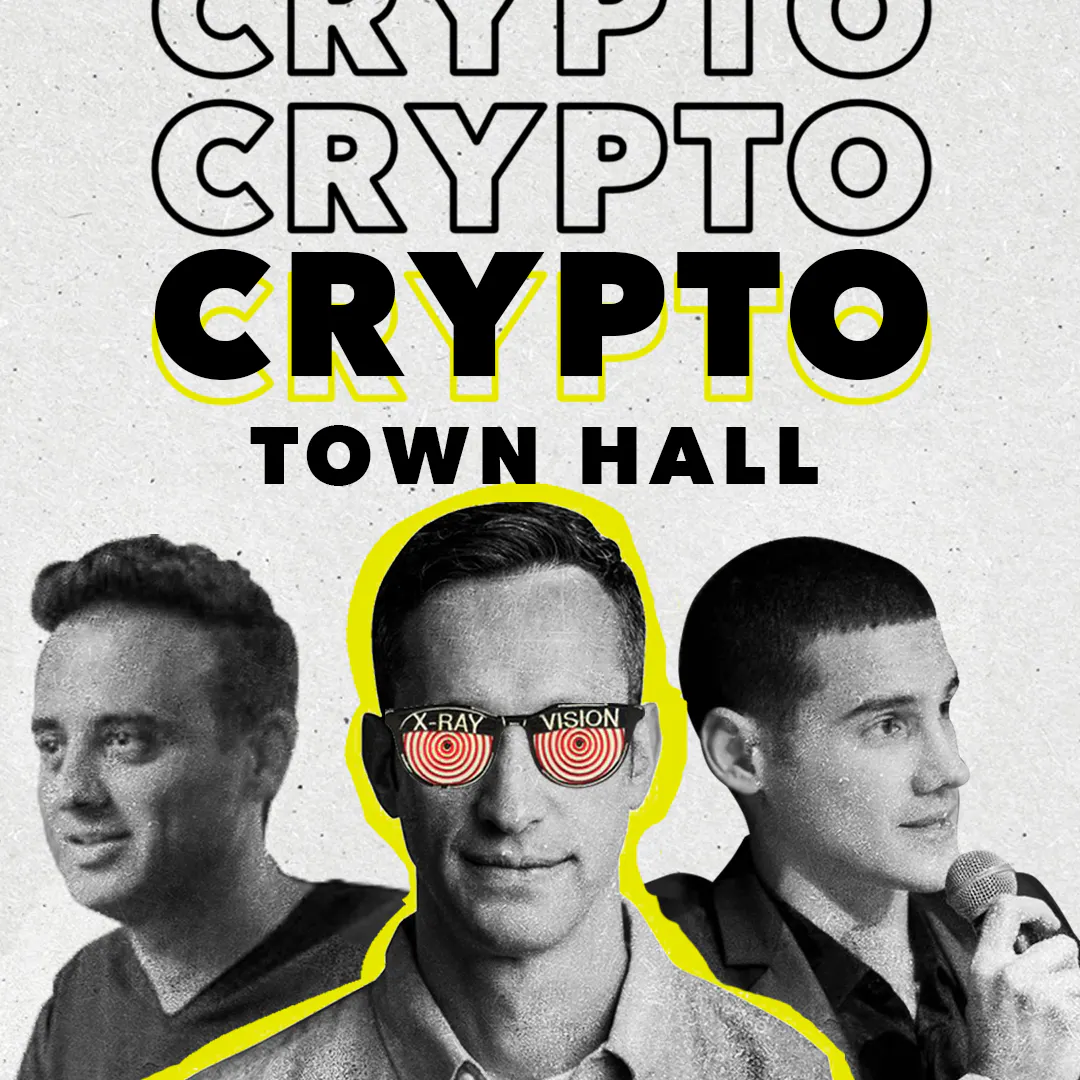
The Wolf Of All Streets
Powell's Speech Sends BTC Below $100K | Crypto Town Hall
01:00:34
Powell's Speech Sends BTC Below $100K | Crypto Town Hall
Loading summary
Transcript100 lines
- [00:00]
Tom
Tom, I'm glad you're here, Mike, because yesterday was quite a day and there's a lot to unpack. We obviously, I think, have a historically bad run on the Dow Jones here. Worse than 50 years, something like that. Obviously the largest drop we've had since 2001 in the S and P after a Fed meeting. And Powell said exactly what everybody was anticipating, right? 25% rate cut and inflation's a little bit sticky and maybe we'll be a little slower, but keep cutting rates and there we go.
- [00:34]
Mike
What happened, I like to look at it simplistically, is when markets get this stretched, sometimes it just takes a little minor catalyst for a little bit of profit taking. And at this stage in the year, most of the buying selling is done by bots and algos. And when you're up 30% in one year, you add $13 trillion to market cap. That's most in history. It doesn't take a lot to just have a little bit of back and feel the questions what do we do from here? And I think the key thing from and oftentimes you just wait for a fact, wait for an event and a number to come out, a release. And yesterday was a significant event, probably the last cut for a while, which means, okay, you're done with the liquidity. And it was a key thing we talked about a lot on macro Mondays of the fact that the Fed was easing with the stock market on a record run, was a little bit dicey and they had good reasons because unemployment is going up, inflation is going down. But now we're seeing the stickiness of inflation, which is the key thing we talked about forever. When you get stock market cap to GDP this high and you have this wealth effect the highest in about 100 years. Yeah, it's kind of silly. Expect inflation to go down when stock market keeps going up. So that to me is the key macro where we are now and it's a key thing that's really changed from a year ago as we know. There's been the Trump transmogrification is that bitcoin might be now the one asset that matters most. Before I used to say, like when I was writing my outlook for 2024 for commodities, I kept saying, well, okay, commodities definitely need the stock market to go up just to stabilize. The stock market went up a lot, yet only gold was one big wanted to go up. Now I look at everything I write about metals and energy for 2025. My first thought as well, if bitcoin keeps going up, okay, maybe copper will be fine and stock market will be fine. This risk asset is so in your face now. It's so predominant and so part of this new opium for the Trump administration that the markets start to realize that, yeah, okay, let's book some profits. And the fact is there's a lot of profits to book. So I don't think yesterday, one thing I noticed is there's so much analytic views. But the key thing I think you need to think about for next year is there's really no reason for the Fed to cut unless unemployment starts ticking up a lot. And it's been stuck around 4.2 for a while. Inflation drops, and it's unlikely for inflation to drop much more until the stock market makes it, because there's so much wealth in the system. And what can be a good leading indicator for that is bitcoin. I think also in the macro, people are all looking at Trump are going to really talk. I mean, Mr. Powell can't really talk about it a lot, but we all know that it's just logical, certainly for those of us who read the book no Free Trade by Robert Lighthizer, and you see what he's doing. The new administration has to rip the band aid off right away because we're going to have to think about midterms and legacy. And they're not saying it, but we all know just get the pain over and then move on. You can't just keep going straight up in equities without corrections. Now, we haven't had a 10% correction since 2023, so maybe we can. Maybe it's different this time. To me, that's what markets starting to anticipate. And actually getting it from our major equity strategist, the one who really was spot on for years now, is Gina Martin Adams. She's our equity strategist, and she's pointing out the market. I'm hearing this from a lot of sources. There's so much optimism for earnings for next year. Certain point you're supposed to say, yeah, great, thanks, but. So this is why I'll end with this. I'm tilting over. I've never seen a market this much dependent on going up. I mean, bitcoin absolutely has to go up next year or the implications of it not going up because there's so much optimism about strategic bitcoin reserves and the new Trump administration and how the world's changed that I'm just somewhat, I have to point out it brings up my. The curse of being a critique and contrarian and still sticking with that that. Yeah, you just don't want to. You want to. When you see 100 grand in Bitcoin for the first time for some of us who are, you know, fell off the horse for a little while, but look for this for years, you're not supposed to be adding too long. You're supposed to be doing the wonderful thing we all hope to have in this business is booking some profits. I think that's what the prudent investors are doing. But which one? Remember one thing about what's happened when people all pile on. Remember what happened with Ark. Was it 21 or so? And that put in a pretty good high. There was massive inflows into ARK and Cathie woods, and I don't think we got back to those levels. I'm just kind of concerned now that there's just so much hopium for this new administration. I think markets just are so lofty. We just need some back and fill. We're getting it right now. And key thing is it's also a curse of being in commodities from a commodity standpoint. You see a global recession really kicking in. Global deflation just looks happening in China, Germany, Germany in Canada, in Brazil. You just go down the list. So we'll leave it there and see what everybody else thinks.
- [05:39]
Tom
Arthur Hayes kind of made the news yesterday or the day before saying that. Sort of along the lines of what you're saying that we would, after the inauguration or around that time, see a pretty massive drop in crypto because expectations are so high and they effectively can't be met. I mean, that was basically the gist of what he was saying.
- [06:02]
Mike
Yeah, well, I get that. I agree completely. The thing that's always bothered me is we all get the bitcoin thing. I mean, completely agree with the definable diminishing supply, increasing global demand and adoption price must go up over time.
- [06:15]
Scott
Get it?
- [06:15]
Mike
We all know it's still very highly volatile digital risk asset. It's the rest of the space I'm so concerned about. I mean, we used to talk about 10,000 wannabes. Now there's 2.4 million wannabes and things like dogecoin with the and fart coin with just excessive valuations.
- [06:31]
Tom
I just fart coins at 1.1 billion.
- [06:34]
Mike
Yeah. I just can't. I'm expecting. I'm hoping to be able to write some of this history because that's becoming more of what I do. And I have to respect a lot of people on this program who are much more doers. I'm just a sayer and which keeps me more neutral. But I'm expecting to write that history. And I just cannot conceive of how we're going to look back and see these legitimate valuations for things that just compared to things like BMW, which is the same market cap as Dogecoin. But that's who we are. And the key thing is on a year like this, anybody who's been on board and stayed on board, which you have, Scott, complete respect you for that, you're probably supposed to say, gosh, it's a good problem to have books and profits and move on and see what happens next year.
- [07:19]
Tom
Bitcoiners obviously don't often view it as something you book profit on. But the rest of the market, certainly hard to disagree.
- [07:29]
Simon
Yeah.
- [07:29]
Mike
What we're entering there. But that's the thing is bitcoin's in the real world space now where that is, these ETF inflows are getting assets on demand are getting pretty high, nearing gold. Certainly on a risk adjusted basis, it still is a non income producing asset. It has a great narrative. We all get it, those of us who've been saying it for at least six years. But it's also the prudent part of investment portfolios. Yes, getting off zero is fine, but those who've been in it and are irresponsibly long, bitcoin, I love that quote and have done that well and then are tempting people. It's just the temps of the things I Remember hearing in 1999 and 2007. So when you tempt the market gods like Mr. Saylor has been doing with Buffett and some of these people are finally vindicated, you just have to look back and say, yeah, gosh, please don't do that. Because it's the bad karma of tempting the market gods. I'm concerned about keeping it more of an upbeat mode this morning. But again, it's been a great year. Here's a key thing I'd like to point out is on a year like this, when gold has significant competition from stock market, certainly from ETF outflows fourth year and low, and certainly from. I mean, is there any person in the planet who, who's less than 30 cares about gold? They're all buying bitcoin that is still beating the S&P 500. I'm sticking with gold to beat the S&P 500 next year too. I'm just concerned this is not a good sign when the rock beats stocks.
- [08:57]
Tom
Simon.
- [08:59]
Andre
Yeah. Hey, everybody. So, yeah, I think it's, it's interesting, you know, The. The juncture that we've hit in terms of the dual market of Bitcoin, you've got bitcoiners like myself that value everything in terms of Bitcoin. And so the concept of booking profits means that an asset needs to have outperformed Bitcoin because we don't use dollars as the baseline currency to measure our wealth. And so obviously the new people or the tradfi people would be using dollars, or what they should be using is gold as their baseline currency to value the performance. And so I think it's a difference in culture in terms of just market breathing. The dollar value of Bitcoin changed. We'd expect this along the way, but I do think that we did get a little bit of help from two financial terrorists. We had Jerome Powell come out and I think quite manipulatively say, we can't put Bitcoin on the Fed's balance sheet. I think it was deliberately designed, and I think it's a little bit of an interesting tussle we're going to see into the future in this next administration between Trump and Jerome Powell, because obviously the majority of people would read the headline and think, oh, that means the strategic reserve asset can't happen. And it was actually very bullish news because the financial terrorists at the Fed not being able to put Bitcoin on their balance sheet gives treasury the opportunity to build an asset quickly. Their balance sheet.
- [10:37]
Tom
Yeah. Simon, sorry to interrupt, but he was just speaking factually. It was literally just the factual answer to the question, regardless of his feelings. I mean, the strategic gold reserve is controlled by the treasury, which is where the Bitcoin reserve would be. To your point, the Fed was never. It's not really a bank. Right. But the Fed was never going to own the Bitcoin. And the Strategic Petroleum Reserve, which I think Trump has compared it to, is owned by the Department of Energy.
- [11:02]
Mike
Right.
- [11:03]
Tom
The Fed has never been the one owning the reserve asset.
- [11:07]
Andre
Yeah, exactly. But, you know, if you, if you subscribe to, you know, kind of theories that while in 1933, you know, the. The government stole everyone's gold in America because the Fed hasn't done an audit, there is a trail of thought that most of the collateral of the gold supply for America, treasury, is actually been used as collateral for Fed lending. And so, you know, but it's this difference. I really like, hope that people start to understand the core of monetary reform and why bitcoin exists. Because, you know, the Federal Reserve hijacked the dollar and understanding that treasury can build their own Bitcoin reserves. And potentially, if the Fed becomes as predatory as it currently is, use that in order to restructure and take back control of the dollar, should the government ever wish to do that. And I think the headlines will obviously read as if the strategic reserve asset isn't happening because the Chairman said that. And I don't think most people understand the nuance and the difference. Similarly, we had the economic hitmen at the International Monetary fund negotiate a $3.5 billion IMF loan with El Salvador. Very disappointed that he didn't go forward with the Bitcoin bond, because especially in light of how MicroStrategy has used their corporate bond strategy, I think to have done that at the sovereign level would have been awesome. But obviously the economic hitman at the IMF had some leverage and it still seems like El Salvador has to play ball. And so they managed to negotiate in the $3.5 billion that they had to limit the voluntary nature in terms of legal tender, which is nothing burger, but also wind down the onboarding and offboarding through the chivo wallet, which also could be a nothing burger because you'd want a more free market. And at the bitcoin office and the tax haven that they're creating for bitcoin entrepreneurs in El Salvador, you'd want them to be creating the exchanges. But it's clear that the IMF is intimidated. And so both of these surface level look like reasons to sell bitcoin, but actually it's bitcoin working the way it is designed to be working, coming up against the entrenched interest of the Federal Reserve and the International Monetary Fund.
- [13:43]
Tom
Andre, you had your hand up.
- [13:47]
Dave Weisberger
Yes, thank you. So I think, I mean, nobody knows whether Trump will create a bitcoin reserve, right? I think Polymarket says 35, but we'll see after inauguration what happens. But I just want to weigh in on the, on the FOMC meeting. I think what's most interesting about the big picture, big macro picture is, I mean financial conditions have been tightening since the Fed has started cutting rates in September.
- [14:16]
Mike
Right?
- [14:17]
Dave Weisberger
I mean US 10 year yields are up by more than 50 basis points in September. The dollar is up, mortgage rates are up. So financial conditions have tightened. And I think the Fed appears to be somewhat stuck between a rock and a hard place because financial conditions continue to tighten since the Fed embarked on rate cutting cycle. At the same time, inflation has not been only sticky, right? You mentioned sticky, Mike, but I think it's been really accelerating.
- [14:51]
Mike
Right.
- [14:52]
Dave Weisberger
If you look at like high frequency indicators like the inflation metric by truflation, it's at a multi year high. Right. It's been really accelerating. So either the Fed does more than is currently penciled in, they've just telegraphed one more rate rate cut. Right. In 2025. And it thinks way too low. Right. It's way too less. Because if they don't cut aggressively. Right. They risk that financial conditions continue to tighten further. Right. Dollar continues to go up, yields continue to go up. Right. And at some point. Right. Kill the economy or they risk. Re acceleration is severe. Re acceleration in inflation. Yeah. So I think they're stuck between a rock and a hard place from a big picture point of view. But I think what's really relevant for bitcoin and crypto assets is the dollar appreciation is bad because usually it leads to a contraction in global money supply. Right. And this is like the most bearish charts that you can see on Twitter right now that that's been shared by, I think Raul Ralph's been sharing that one with global money supply. Right. Lacked by I think 12 weeks, three months and Bitcoin. And I think that's, that's actually true in the way that it's actually a serious macro is especially if the dollar continues to appreciate.
- [16:28]
Tom
Dave Weisberger, curious your thoughts?
- [16:31]
Joe
Well, I mean the, the money supply, you know, lead lag is obviously, you know, that's obviously been a very good indicator. I find it hard to understand how money supply is shrinking when all the central banks are in accommodative phase. So, you know, sometimes I wonder about the numbers. I mean, I think that I missed the, the first half of Mike's daily bearish screed. But I'm assuming that he talked about the bond yields both on the 10 year and the 30 year and the backup that we've seen since the Fed cut rates. Because that's rather telling and is extremely important in my opinion. We pierce the 4.5 level fairly, fairly significantly. And what that's telling you is while the Fed is cutting rates, the world is saying, yet they're saying, you know what, you know, guys, you know, inflation's a real problem. And that becomes, that's really interesting from, you know, from the perspective of if you listen to Saylor talk, he always talks about bitcoin vis a vis bonds. And I think that from a long term perspective, it's a pretty interesting day when bitcoin and gold are down, stocks are up and bonds are continuing to languish. It is, it speaks more about, you know, unwinding of Trends and people taking a pause to me than anything major. But look, you know, it's all nothing goes in a straight line. The real issue is what kind of policies do we get after January 20th? You know, you're going to see ebbs and flows. You know, the last time, you know, we had a massive rally you saw this exact same sort of chart pattern before the massive rally as I think Peter Brandt and I were talking about on the spaces yesterday. I don't see Peter here but you know, in terms of this is completely normal. What, what's really what is interesting though is the violence of some of the moves in some of the alts. I mean Solana looks like it's getting ready to drop below 200. XRP is, you know was at 260 yesterday is down to 230 now, you know, is that you know, in percentage terms those moves are much larger. And so what you're seeing is a lot of crypto money kind of heading, you know, for the exits. At the same time, funding rates are well below normal sitting at like 0.08 on the. On Bitcoin at least point below 0.08 on Bitcoin as opposed 0.008. Sorry. So about 20 below what a Nor, you know, normal average neutral setting is. So that's kind of getting towards. Even though the, the market sentiment on coin market cap still says what's the saying Greed now still that'd be my guess but let's find out. Let's look the greed and fear. Yeah, it's still saying greed. It's telling you that derivative traders are fearful and derivative traders tend to be the leading edge. Now the. Does that mean we're going to turn it a dime? No. But is that constructive for when the selling is over and there's a rally? Yes, and that's really what people should be looking at. But the last thing I would say though is in direct response to the Because I guess Mike would say that I am. What's the word, irresponsibly long. Well probably not actually in terms of percentage, but it's getting close to that. Sorry, I. Someone called a lot of people have a different philosophy kind of in between Simons and Mike's and I happen to be one of those people which is have all your liquidity for the next year or two available in what you're going to spend it in, which in my case is dollars and beyond that have your wealth benchmarked to Bitcoin. That way you're never shaken out by a Downturn and certainly be exceedingly careful with leverage. I mean, to be blunt, I use leverage very little. And if I do, it's much lower levels than, much more like Tradfi style levels than crypto levels.
- [20:37]
Tom
Makes perfect sense. Joe, you haven't been on in a while. What are your thoughts?
- [20:41]
Scott
Yeah, thanks for having me up. So, listen, you had expectations for seven cuts at the beginning of this year. Seven cuts. We've got a few. Right. But inflation, although has subsided from the 2022 peak, is still closer to 3 than 2. And I think Powell in his heart of hearts thinks that the battle with inflation is done, but he can't say that politically. He thinks that this is really effectively over. So we're going to move forward with a cut, but we have to signal to the market, which before Yesterday was signaling four cuts in 2025, that we're not going to move that quick. And you need to realize that and reset your expectations. So we get the price out of two cuts. Now we're down to two for the next year still clearly in an easing cycle. And markets have to react to that. They have to react to the fact that this is not like the prior cycles that everyone who's been trading is familiar with, where somebody blows up, they cut aggressively down to zero, they stop the QE QT quite enough tightening off their balance sheet that they effectively, you know, just have this really quick pivot because of some shock to the market because growth is still too strong. And I do take issue with one of the other speakers, and you can look this up for me if you don't believe me, but one of the other speakers said financial conditions have actually tightened since the, the first cut. That's. That's incorrect. Look at the Chicago Financial Conditions Index. Look at the St. Louis financial conditions Index, Trust Index, credit spreads. Everything is looking pretty darn rosy, to be honest. The Financial Conditions Index in particular, it just posted one of its lowest levels in about 15 years, indicating very loose financial conditions. So, you know, the notion that, like, suddenly we're all really tight in this environment is just incorrect. It's from people misunderstanding what the M2 indicators are supposed to actually measure, which is not real financial conditions. That's why we have separate financial conditions indexes. But putting all that aside, where we stand right now, you have strong growth consistently. You have markets that have gotten way over their skis with respect to valuations. We're coming from one of the best years for the S&P 500 in recent memory. And you need to reset consistent with Rates, markets which are coming back to reality that there is no recession. This argument that we saw during the summer where the SAHM rule was triggered and had a recession on our doorstep was a complete bunk. It was not borne out by the data. And you've seen this in the labor market. So for where I stand, this is just a reset of investor expectations. This is Powell being clear that do not expect aggressive cuts into the early part of next year and middle of next year. If anything, you get a couple. And that's frankly what he should be doing given the strong economic data.
- [23:27]
Tom
I'm not sure who had made the point before that you were sort of contending with, but I can't remember if it was Mike or it was me. Maybe Andre.
- [23:36]
Dave Weisberger
Yes. Yeah, if you look at Goldman Sachs, I think they include the dollar index, right? And this index has been, has been signaling and tightening financial conditions. But I mean, you can cherry pick whatever you like, right?
- [23:50]
Scott
No, this is all like they're data too. So, so here's the, here's the chart I refer to. I just, just so everybody can check for yourself. Financial conditions index for 2024. That's it shows it right in the nest.
- [24:02]
Tom
David, go ahead. And then infra. David Tal. And then different.
- [24:06]
Infra
No, I'll let infra go first. He was before me. Let him go first.
- [24:10]
Tom
I'm not scared to pay attention to when the hands go up, guys. It's nothing personal.
- [24:14]
David Tal
Thanks.
- [24:14]
Tom
Go ahead.
- [24:16]
David Tal
Yeah, I was just going to kind of emphasize Joe's point. You know, I think the move in rates, a lot of it is pricing out of expected cuts and a lot of it is pricing in higher growth and maybe, you know, higher inflation. But I think there's two separate issues. I think there's the move that we've kind of seen since September and then there's the, the what happens in the near future. So I would agree with Joe that a lot of what we've seen currently, you know, up until this point, is a pricing out of way too many cuts in a. Pricing in, of, of kind of, you know, better growth. Like he was referring to, you know, the SOM rule being untriggered. But I think what's going to be important over the next six months, kind of immediate, you know, near term, is where do the, where does a trend in rates go from here? Where does the dollar go from here? Because to Joe's point, the US is spreads are tight. Personally, I think they've, we've seen their, you know, tights. I think they widen from here. I Think unemployment seen its bottom. I think it rises from here. But, but in general, the US Is way better than Europe. UK is in stagflation, Europe is in recession, China's screwed. Just go down the list. And so the rest of the world needed needs to ease, they need easing. But because the US Is okay like this, this was basically a lifeline. I think he needed to send. Now everything is so synchronized, he had to send a lifeline to the rest of the world. I mean, the euro is, is collapsing, the Canadian dollar is collapsing. The rest of the world is in severe, severe. And if the dollar.
- [26:16]
Scott
Sorry, that's the story.
- [26:17]
David Tal
Go ahead.
- [26:17]
Scott
That story. That is the story. The story is the basket case outside the United States and US Growth, US Resilience and strengthening of the US Economy, which we've seen stronger data. That is the exact story. And just again, one point on financial conditions. Just look back at the chart. Don't take my word for it. What was the 10 year trading at infrared? We talked about this yesterday back in April. What was the 10 year at relative to today?
- [26:38]
David Tal
4 7. But then what happened immediately thereafter? It didn't stay at 47 and it didn't go higher.
- [26:45]
Scott
Exactly. Because of the growth slowdown. Right. Over the summer that we started.
- [26:48]
Mike
Right, right.
- [26:49]
David Tal
Yep. Yeah. I think we're, I think Joe, I think we're, we're pretty much in agreement, 95% though. I think the only point that we disagree is, is the trend from here. If the, if these current trends continue in the dollar and rates, that could lead to trouble outside of, of the US which could sneeze and then the US Catches a cold.
- [27:14]
Tom
David, you ready?
- [27:15]
Infra
Yeah, I'm ready now.
- [27:17]
Tom
So you're a real gentleman. I appreciate you, Scott.
- [27:22]
Infra
Only, only because I'm, only because I'm dealing with you, who is a gentleman par excellence. So, you know, I gotta go ahead and bow my head to the host.
- [27:30]
Tom
It must be the holidays. We're all being very kind. It is.
- [27:33]
Infra
It is. Yes, correct. Even Joe's got his Santa on, which I love. But I will say, you know, certainly we have to watch out for what happens around the world in terms of cracks and fissures from this, you know, to summarize, Joe versus infra, is US strength good or bad at the end of the day? Depends, I guess, on how strong we get and how weak everyone else gets as a result. But the other thing that I'm curious about watching is, you know, Trump definitely defines part of his presidential success by the numbers at the stock market. And he certainly is going to want to see that market continue to go higher. He defines, I think, a good part of his presidency by that metric. And the thing that I'm, I'm less certain about is whether he's going to go ahead and try his best to make real estate great again. He comes from that world. A lot of his friends are from that world. A lot of his financial support came from that world. I don't know if he's generally divorced himself from that world, but if he does try to make real estate great again, that is by driving rates down to zero again or somehow getting that type of accommodative environment there, I think we're in a bit of a pickle in terms of, well, how do you pull all that off without watching inflation just moon in a way where whoever's chair of the Fed is going to go ahead and have a heart attack. So I'm curious to see all that on the other side of the coin. I do think that the cutbacks in government spending, the paring back of the size of government, government generally will be a good thing, and also the pledge to go ahead and pay down the debt. And then lastly, and we spoke about this for a little while on the show this morning about the government shutdown. Are we going to go ahead, in fact, get a government shutdown this time? Mike McGlone, curious if we, if you haven't spoken about this issue yet, curious about your thoughts, whether it's more real now than it ever was before.
- [29:56]
Mike
Yeah, sorry, I don't really know how this one's going to work out. But what we should expect the market's not just starting to realize is volatility. I mean, the Vix has been hovering around 13 forever and, you know, maybe we're overdue for that first 10% correction in the equity market, which might be a great opportunity to buy Bitcoin if it drops on that. But just one thing we should expect is uncertainty. That pointed out a lot. And that's some volatility. We're overdue.
- [30:24]
Andre
B. Yeah, again, real estate has to go up for the banking sector to not rear its ugly head again. So to think that there is even an alternative to real estate going up to China having to succeed with America succeeding and to even think that the Department of Government Efficiency could actually end up paying down the debt, these are inherently not possible in order to have a successful America. Structurally, the dollar does not allow for it. And it also needs to cause massive problems globally because the dollar milkshake theory is a real thing. The world cannot invest in its own infrastructure. All it can do is buy Treasuries. And so just by the fundamental structure of the dollar, there is no alternative other than more and more people to lend to the US Government, which is what's calling all this structural wealth inequality on a global scale. So at some stage to think that Trump would do anything different and that the Feds would do anything different than what they're doing, it should be no surprise because it will continue until it can't continue. And that's the structure of the global financial system that's been set up. I don't know what would happen in an environment where you'd allow real estate or stock market to correct itself or debt to be paid down. That would be a depression. And that's unacceptable to anyone in Congress. And so it will always be wealth inequality and it will always be redistribution of wealth until it doesn't work. And that's why the next four years is the administration that we would hope has as much tools as possible in order to implement some kind of monetary reform, but unfortunately no one wants to do it. They just want to pass the hot potato onto the next administration. And Trump may be the one that's being set up for that, or maybe he can pull it off again and pass it on.
- [32:42]
Infra
I'm planning to be pleasantly surprised. I have a bit of hope that we will make progress. I don't know if we're going to solve it. I don't think Simon certainly in the next four years is going to concede that he's wrong regardless of what happens. But that being said, I think we will will make progress towards a better end over the next four years. I don't mean to sound like a Hopium crazy man, but I do think that there is a chance for reform.
- [33:13]
Andre
And that chance is Bitcoin. I hope that that's why the strategic reserve is important and the importance of treasury buying itself a degree of independence from the Fed is, I think, a due process and a prudent process. And I hope America does it because that's what the world needs.
- [33:36]
Tom
Infrastructure, throwing up a lot of hundred emojis. I'm assuming you generally agree with Simon.
- [33:43]
David Tal
Yeah, yeah, Simon's 100% right. So, like, this is why Trump was elected. When the dollar is the reserve currency, it necessitates an ever growing trade deficit. The way we finance and balance that trade deficit is with debt. And it's debt for the young people, it's not debt for the boomers. It's debt that we will have to pay back that. Those dollars are shipped overseas. Our greatest exporters now are debt, the debt of our young people. And then a lot of that money is reinvested into us, the capital account. And so if you're in finance, if you're a portfolio manager or an insurance salesman or something like that, all of this is a strong dollar, a growing trade deficit, all these things are great. But if you're just formerly middle class young person, you're screwed. And this is the way, as he was pointing out, this is the way the system was constructed, this is how it works. And so I really hope to David's point that Trump does come in and really break things and really shake things up. And if we see, you know, to bring it to Bitcoin, if we see Bitcoin emerge as a new neutral reserve asset, these currencies could, you know, kind of correct towards a more, you know, balance of payments basis, which would mean a much weaker dollar. And so, you know, Bitcoin, bitcoin, bitcoin could fix this. You know, like the, like the sound goes.
- [35:25]
Tom
You have to shake your head slightly though when you see these consistent rate cuts. And then, I mean, Mike, we talk about this, but you know, and then TLT goes down and yields go up and mortgages get more expensive. Not really how this is supposed to be happening, correct?
- [35:40]
David Tal
Yeah, I mean the, the, you know, I've kind of been arguing, I know it might be controversial, but I've kind of been arguing for the past, I don't know, six, nine months that the sovereign debt crisis has already started. If you look at TLT over gold or TLT over SPY or TLT over Bitcoin underperforming everything massively, massively, massively. It's like, if that's not a sovereign debt crisis, what is?
- [36:10]
Tom
Mike, what do you make of it?
- [36:12]
Andre
Oh, agreed.
- [36:13]
Mike
I mean, I think TLT is getting really cheap and it's getting cheaper and I've been wrong on that one. But we still have this record setting stock market. That's kind of the key test. I think TLT is just an ideal put. For the first time we get that 10% correction in the equity market. I think that's what happened earlier this year. Equities S and p dropped what, 8%? TlT jumped like 10, 15%. So to me that's the key thing. It's all about the US stock market. So expensive. If it keeps going up, creating this wealth effect, creating inflation. Yeah, TLP is going to underperform. But here's one Key fact for you, you look at US stock market cap to GDP, yeah, we know it's pretty high. And it's like 1.3%. China is closer to 300%. In Japan, it's closer to that. But if you look at total debt outstanding compared to US treasury compared to the stock market cap, stock market cap now is around $63 trillion. The total debt outstanding is only like 60% of that. That's been trending down for quite a while. So it's all about stock market cap, I think. And if stock market keeps going up, why, why mess with bonds? But that's what's been concerned me. I love that ratio. Just comparing gold to TLT going back 30 years, it's so cheap. The question is, how long can it stay there? And I agree it's having an issue. But then I like to point out, if you compare US Treasuries compared to the rest of the world, it's like we've pointed out earlier, there's pretty severe deflationary forces in most of the rest of the world, most notably China and Europe. And how long can US remain the shining star? The tariffs kicking in next year, I think we're going to have that volatility that might get a little bit of reversion.
- [37:47]
Infra
David, I'd like to know from Infra and Simon, if we actually get a government chop down, do you see that as being bullish for the market?
- [37:58]
David Tal
I don't, I don't. I think it could cause significant pain. I was just going to point out really quick. My favorite indicator is not the S and P over gdp, but the S and P over the average hourly wage. And I just want to put a finer point on what I said earlier. In the 70s, it took about 20 to 30 hours at the average job to buy one share of the S and P. That number now is 190. So what we've seen. Pull up that chart. SPX divided by the average hourly wage and that shows you why Trump was elected. That shows you that is picture perfect financialization. This is, this is just a result of the system and the structure of the system.
- [38:49]
Andre
Yeah, agreed. There will never be. I mean, you could get a temporary government shutdown and then it will lead to an increase. It's just a negotiation chip. So you try to use it in order to leverage some kind of change. But that debt always goes up. Number always has to go up.
- [39:06]
Infra
No, but what I meant by the question. Excuse me. What I meant by the question is if we get a government shutdown, it's an indication that Trump is ready to break things in order to get the economy right.
- [39:20]
Tom
And so also this time, just to say, David, what I was going to say, which lends that it also to some degree happened because Musk tweeted. Right. I mean it's a slightly different situation.
- [39:31]
Infra
Absolutely. No, no, no doubt. He's the most powerful person in the country right now.
- [39:37]
Tom
Behind closed it's less of behind closed doors, Democrats arguing with Republicans and pork barrel spending and figuring out what concessions people can make. They may have even I mean I haven't dug too deep, but it looked like they may have. This was less of a concern or a worry before a simple tweet said, you know, anyone who votes for this thing shouldn't get reelected. Pretty different scenario here. Go ahead, Joe.
- [40:01]
Scott
Yeah, so we were going back just to move back for a second to the discussion of is TLT or is the long bond cheap here or rich? One thing to think about, and I take no position on this, but is that you're getting a new treasury secretary. And for the last four years we have had games played with issuance so that long duration supply has not come to market. So if you're factoring in or thinking about your mental model, is long bond cheap here or is it expensive? You have to factor in what will the new treasury secretary do? Will he follow the same path as Janet Yellen in relying heavily on front end issuance or will he return to the historical norm of, you know, not all, you're not all in the belly of the curve or the front, you're sort of staggering it because that's a big issue. Right. If there's more supply coming, basic supply and demand at the long end in the upcoming administration that is going to push the long end up in terms of yields.
- [41:03]
Tom
Sorry, I'm having as usual, I'm having some mic glitching problems where I hit it and it goes on and off. Any final thoughts here? Anyone want to wrap this this conversation up? I know that Buzz wants to move on to a separate conversation. Buzz, I think you can take over.
- [41:19]
Mike
Cool.
- [41:19]
Simon
Yeah, we have a sponsor today which is Victory Chain. Just before we get started, as a disclaimer, Mario's company IBC does marketing, incubation and investing. Sponsors on the show are sponsors working with IBC specifically and not necessarily crypto, Town hall or Scott specifically. And we have Victory Chain today like I said and it's pretty interesting and looking at your guys website, it's a, it's a layer two for global sports fans and some of the investors include Six Man Ventures, Delphi Ventures, even Verizon and Coinbase. So VictoryChain, if you're, if you're up here, why don't you start us off with the elevator pitch.
- [41:56]
Victory Chain Representative
Yeah, sure, sure. Thanks for having us. So VictoryChain is a layer two built on the OP stack for the world of sportsfi. And the idea is to create an ecosystem for to bring three and a half billion sports fans on chain. So that's kind of the short of it.
- [42:20]
Simon
Why did you guys choose to build on top of the OP stack?
- [42:24]
Victory Chain Representative
Yeah, so it's kind of in line with the way we see blockchain ecosystems being developed. If you look back at one of our partner projects is called Fan Controlled Football. They really tried to step into the world of web3 by bringing a bunch of existing projects into their ecosystem. So this was one of the first fan run sports teams so fans could vote on plays, draft players into their team. And the idea is that they brought in projects like Bored Apes and Knights of Degen and Gutter Cats and some of the original NFT projects. The idea is that if you can build an ecosystem that can share assets and share communities with other existing ecosystems, then it's kind of this rising tide floats all boats. The superchain right now is looking really nice and really interesting with projects like BASE and a few others building on there. And we really wanted to just kind of lean into that ecosystem while at the same time building, building our own economy for the world of sports.
- [43:40]
Simon
It is funny when you look at how much stuff is built on top of optimism and then you look at where it actually is ranking on CoinMarketCap right now, the 49th highest coin. And you gotta think if base were to launch a coin, it would be much higher than the $2.8 billion market cap right now that that optimism is at. I'm definitely a huge fan of their tech stack and what they offer to the industry. But another question is just this cycle is seemingly dominated by a lot of new layer 2s or even layer ones launching. Like we've had Hyper liquid taking off recently, even Barachain launching in the new year. Why another layer two? What's the exact use case for needing a layer two for the solution?
- [44:25]
Victory Chain Representative
Yeah, I think that speaks more to the way the ecosystem is or the way the blockchain ecosystem is being developed. You mentioned base. I think one of the most unique things about it and the reason why so many people flock to it, is because of the potential for easy onboarding.
- [44:40]
Simon
Right.
- [44:40]
Victory Chain Representative
Coinbase has A ton of users and it's pretty easy and seamless to get involved and to bring people onto the base Blockchain is really just a press of a button. And I think that's why there's so many new blockchains launching, because it's getting easier and easier to get on these new chains. The other thing is that we, you know, because we're building for the world of sports, there's a lot of unique use cases for it. We have predictive burst traffic, right. So we know when games happen, we know that there's going to be a ton of transactions during that time. So we can do cool things like scaling, like a scheduled incentivized scale. We do some cool app layer abstractions and this other concept called probabilistic sampling, which we're planning on bringing on chain also. And then the idea also is by creating our own blockchain ecosystem, we're planning on encouraging a lot of other projects to get involved here as well. So, you know, when, when you create a space for the world of sports, fi, you kind of put that idea front and center into other developers and other users and you know, really hoping to, to, to create a space for global sports fans to be able to, to live and develop and, and, and use.
- [46:02]
Simon
So for those global sports fans and kind of the, the target audience of the chain, what, what, what are the key, key features and sort of the, like what's drawing them in to be using it?
- [46:13]
Victory Chain Representative
Yeah, I think that one of the challenges in blockchain today is just how, how much friction there is still for normies to get involved. So one of the things that we did was just create this app layer, this kind of Web 2.5 type interface using the control protocol, which is this app layer built on top of VictoryChain to allow for easy connectivity, easy use case, easy development into the Web3 environment. And then another cool thing that we built was this idea of victory vault. Victory vault is kind of a play on traditional staking. So VictoryChain will have traditional staking as well. But then we took the traditional staking and instead of distributing rewards evenly across, across all stakers, we pick one lucky wallet and all the staking rewards from that kind of prize pool like staking system will go to that one wallet. So it kind of leans more into this idea of sports about winning. You know, instead of just like traditional finance, this is a, a way to really win big even from traditional staking and then we can actually link in really cool things into that instead of just staking Sticking rewards in the traditional aspect, we can bring in real world things. So, you know, by staking in the victory vault, you can win sports memorabilia, you can win tickets, you can win real world experiences. And, and again, you know, we're, we're really trying to bridge that gap between the two. So, so one of the other things, instead of, you know, talking about staking in the traditional sense, which is, you know, sending your, your tokens to a smart contract, we're, we're really easing that use case from a user perspective for.
- [48:02]
Simon
Things like staking to win experiences. I've seen a couple of implementations of this in the past and oftentimes it's quite difficult to actually bridge those Web two items to Web three. How are you guys solving that challenge where if somebody's entering a staking pool and winning tickets or memorabilia or whatever it may be, is that all going to be run by third party partners? And like some of the partners where on your website they're, they're listed in ecosystem.
- [48:31]
Victory Chain Representative
Yeah, exactly. So, so there's the traditional Web three use cases that we see today, which, you know, you connect with your MetaMask or your Phantom or whatever wallet you use. And then there's like the more traditional Web2 experiences, you know, where you download some native app and you, you play some game or you use some. For one of our partners, the Control app, which was used for real sports interactivity, where you download this app and you can vote in real time on how to design a nascar, a car in a NASCAR race, or what driver is going to drive that car, or which players to draft for a sports scene. So when you're using these traditional Web2 experiences, you can get really cool. It really simplifies how you interact with web3 and it allows for things like web3 prizes in a much more seamless way. The idea is just to abstract all of the complexities from Web three into a Web two experience.
- [49:30]
Simon
Cool. Now that we're at the tail end of Q4 here going into Q1, maybe talk a little bit about your roadmap as well. Well, where you guys are right now and maybe what's coming down the pipe in Q1.
- [49:46]
Victory Chain Representative
Yeah, great question. So we're leaning pretty heavily into an ido. Some of our launchpads have already leaked some news, but we have a few launch pads that we're working with, a few exchanges also. That's probably going to be coming in the next. I probably shouldn't put a firm date on this, but it's coming very soon, so kind of Stay you know, stay informed. On on our Twitter page we're finalizing some testnet stuff on our internally just making sure everything's ready to go. And, and coming up next year we have a bunch of really interesting partner projects that are leaning more into this interactive sports experience. So things like fan controlled golf, fan controlled cricket. You know, I think one of the things that all sports fans have in common is that they scream at the TV with no real logic or reason. And I mean that I can, I.
- [50:49]
Simon
Could heckle Bryson DeChambeau as he's going up in the the PGA Tour US Open and for that last final shot or anything like that.
- [51:00]
Victory Chain Representative
I think you have to be there to heckle them. But, but, but there's going to be more unique experiences in the golf space. You know, kind of unique, more unique experiences. Maybe not necessarily PGA full blown PGA events but, but you know, I think that's, that's some of our partners and you know we are working with, with some really interesting sports leagues and some, some really interesting projects in the space.
- [51:26]
Simon
That, that's very cool. I'm a big sports fan so that definitely speaks towards me and, and certainly a lot of things to, to look forward to in Q1 it sounds like. And, and just even looking at, at your investor list, I see Coinbase is on there as an investor as well. I don't want to want to spark any speculation there but you talked about exchanges and not being able to talk about it, but certainly a long list of very recognizable investors there. I'm interested just from the development perspective because that's where I personally sit within web 3. What sort of toolkits are you guys building for developers and what kind of stack are you hoping that people are building?
- [52:10]
Victory Chain Representative
Yeah, we decided to look at sports from the bottom up. Kind of like what we'd like to see as developers. And historically most of the sports stats and most of the sports data has been kind of limited to very specific companies and use cases. So we really wanted to open that up. So we're doing things like exposing player biometric data in real time on chain things like real time sports data which is through a network of oracles where then you can develop some really cool applications. Everything from sports betting to, to you know, playable games that are are directly impacted by real time stats. So by opening these things up we're really leaning into a developer community to, to get more people excited and developing with real data. You know, you look at, you look historically at EA Sports which has had licenses to, to some of these sports leagues and, and there haven't been a lot of other, there haven't been allowed to be other developers in those leagues because of, you know, exclusivity and license deals and things like that. So we really hope that by opening these things up, by creating more of a decentralized experience for sports data, that we're going to see some really interesting projects pop up.
- [53:32]
Simon
When did you guys start building this? Like, your investors on the the website are pretty impressive. Like what was the. When did the process start with some big players like that? And how excited are they right now as you guys are seemingly approaching a TGE here coming very shortly?
- [53:49]
Victory Chain Representative
Yeah, we've been working on this a long time, to be honest. This started with the idea of interactive sports. So we started with this idea on how to get more fans involved instead of just yelling at the tv like I said before. And you know, Fan Controlled Football was one of, one of the first projects to lean into this idea of interactive fan run teams. And that was kind of like where the spark happened, which is, you know, there's this idea of interactivity and of ownership from a psychological perspective for your sports team, but it doesn't really translate to anything physical. So we really wanted to bridge that gap between the physical, like real ownership and governance. And you know, with real ownership you lean more into rewards that the crypto world and the web3space are really, really good at. So we've been working on this for a couple years, really, really trying to find exactly the best way to develop this concept of interactivity in sports. And it started with the control protocol, which was going to be an app layer. And we realized there just wasn't the right environment for us to develop, both from a technology perspective and from an ecosystem perspective. Then we started really leaning into building our own chain, which is where Victory Chain came in. So it's been a long time coming and we're really excited to get this thing out.
- [55:19]
Simon
Just as a final question here before we're just kind of running out of time. I know for the average consumer it can be really helpful to kind of compare in terms of competitors, like what's a similar project? And to me one that comes to mind is really chilly Z. Like it's a project that I was looking at even dating back to 2017, just being a sports fan and kind of seeing how fan experiences could be done better. There's certainly some things that they've done that I disagree with from a strategy perspective, but certainly a long standing project that's had a lot of success. In the market. Could you maybe compare and contrast to consumers who are maybe are listening that have heard of Chili Z and what is different with Victory Chain?
- [56:04]
Victory Chain Representative
Yeah, I think one of the things that Chili Z was a really interesting concept when it came out, like you said, I think it was seven or eight years ago in the first ICO phase. So they told an interesting story and now it's been about seven years. And honestly I think that both their direction and, well, I'll speak more to what we're doing instead of what they're doing. We're really trying to lean more into this interactivity piece, which is to give users not just a surface level interactivity in their sports team. So not just, not just pick a theme song for their team, but really control their team on the field or on the pitch or, or on the court. So things like drafting players on, on their, on their teams, things like real time sports betting, you know, leaning, leaning more heavily into real interactivity with sports teams. And I think that that's, that's really what people want. You know, there's the, if you look at traditional sports fans are getting older and older and, and I think the younger generation, you know, is getting more into video games and more into interactive experiences. And I think that's what people want. People want an interactive kind of lean forward experience in sports instead of a lean back experience. And VictoryChain is really leaning to that idea and building the tools to allow developers to create those experiences.
- [57:35]
Simon
It's an exciting future as well. Because, I mean, when I look at myself as a sports fan, I vividly remember this past summer screaming at my TV when the Buffalo Bills traded their pick to Kansas City and Kansas City selected Xavier Worthy. And now we're stuck with Keon Coleman. Ultimately worked out. And maybe I wasn't the best GM to be making those decisions, but at the time I certainly would have liked to have put my chips on the table or staked my tokens to tell whomever was making that choice. As a fan group, we should go a different direction, but in the essence of time. What are some calls to action? Like if listeners are listening in, what can they do right now to get involved? Of course, follow the Twitter account. They're up here. Victorychainio. It's the red logo with a nice V in it. Follow along. But what else? What are the other calls to action?
- [58:29]
Victory Chain Representative
Yeah, you can join our telegram group, follow us on Twitter like you said. And you know, if you have any interesting projects in the world of Sports, World of SportsFi, please reach out. You know, we're really excited to work with, with projects and teams in the space and, and pave the way for, you know, the three and a half billion sports fans that are currently having, let's say, more resistance than needed to bring sports on chain certainly so.
- [58:56]
Simon
Well, I really appreciate Victory Chain joining us today. I hope we can do a follow up because. Because I would really like to put my 2 cents into the Buffalo Bills giraffe strategy this coming summer. But I wish you guys all the success in your upcoming tge but also really congratulate you on that investor list on your website. It's incredibly impressive and it's not too often that you come across projects in this space that have the backing of such recognized VCs. So congratulations for that and wish you guys all the success with tge and hopefully we can host something again too because this was fun.
- [59:34]
Victory Chain Representative
Yeah, thank you. It was a lot of fun for me too. And I just got a message from our head of marketing saying make sure to remind everybody to download the Control app also, which is a good point. Control App is one of our partner apps that is kind of showcasing the idea of interactivity in sports. So the Control app, download it. It's another great opportunity to get involved in VictoryChain.
- [60:00]
Simon
It's a good call out. So I did just pin up a tweet which will be there visibly for the entire if people were looking to listen to the recording, they'll be able to find that a link to your Telegram channel up in the nest because I couldn't find a direct download link to the Control app. But I'm sure that people can go to the Telegram channel and find that very quickly. So I appreciate you guys joining and yeah, thanks again. Wish everybody a happy Thursday.
- [60:30]
Victory Chain Representative
Thank you.
- [60:31]
Simon
Take care everyone. Have a wonderful day.
- [60:33]
Victory Chain Representative
Take care.