
Podcast
The Wow! Signal Podcast
Hosted by Paul Carr · EN
The Wow!Signal Podcast examines a wide range of issues from a scientific perspective through the lens of the search for intelligent life from other worlds.
10episodes
Episodes
Newest firstAll episodes
Episode 50 - Arecibo Wow! with Professor Abel Mendez
Sep 12, 202401:07:20Tap to summarizeWe welcome back Professor Abel Mendez from the University of Puerto Rico to tell us about recent research into data from the Arecibo radio telescope focused on cold hydrogen clouds and a proposed natural explanation for the Big Ear Wow! Signal that we covered in depth in Episode 19. We recommend you download the draft paper so you can follow along. Links: Arecibo Wow! I: An Astrophysical Explanation for the Wow! Signal Our episode (#19) with Big Ear scientist Bob Dixon A previous appearance by Abel Mendez on this podcast. Planetary Habitability Laboratory at the University of Puerto Rico The Arecibo Radio Telescope Collapse The FAST Radio Telescope Astrophysical MASERs (microwave lasers) Harvard & Smithsonian Center for Astrophysics: Masers Population Inversion (Wikipedia) The Hydrogen 21 cm line MASERs, Interstellar and Circumstellar, Theory. Credits Host, editor, producer: Paul Carr Music: Quincas Moreira (Black Swan), George Hrab (Far), Jason Robinson Episode 50 of the Wow! Signal Podcast by Paul Carr is licensed under CC BY 4.0
Transcribe →
Burst 34 - The Mystery of the Nine Transients
Jul 14, 202100:21:34Tap to summarizeInterview recorded: 11 July 2021 Released: 16 July 2021 Duration: 21 minutes, 33 seconds Beatriz Villarroel discusses her latest VASCO paper in Nature Scientific Reports, "Exploring nine simultaneously occurring transients on April 12th 1950." Links: Villarroel+ , Exploring Nine simultaneously occurring transients on April 12th 1950. Burst 19: Our Sky Now and Then (August 2016) Episode 41: The Vanishing Sources with Beatriz Villarroel (November 2019) The Vanishing & Appearing Sources during a Century of Observations project: I. USNO objects missing in modern sky surveys and follow-up observations of a "missing star The Palomar Digital Sky Survey Gran Telescopio Canarias The United States Nuclear Testing Program Credits Host and Producer: Paul Carr Music: Ahleuchatistas and Erika Lloyd
Transcribe →
Episode 49 - Existential Risk
Feb 4, 202100:58:45Tap to summarizeReleased: 4 February 2021 Duration: 58 minutes 44 seconds Co-hosts Paul Carr and Daniela DePaulis are joined by author Thomas Moynihan. The subject is the idea of human extinction and how it evolved into our present day understand of Existential Risk. Guest Bio: I am a writer and researcher from the UK. In 2019, I completed a PhD at Oriel College on the history of human extinction. Currently, I am a visiting Research Associate in History at St Benet's College, Oxford University, and I am working for Oxford's Future of Humanity Institute with a grant from the Berkeley Existential Risk Initiative. I am interested in the history of existential risk and of existential hope: that is, how people first came to understand the perils and promises that face us as a species. I see this as the central philosophical drama of the modern world: how we came to appreciate our position—and precarity—as intelligent beings within an otherwise seemingly silent and sterile universe. My goal is to reveal how contemporary research into global risks can be seen as part of the wider story of our 'coming of age' as a civilisation and a species. Links: Thomas Moynihan - https://thomasmoynihan.xyz X-Risk at MIT Press: https://mitpress.mit.edu/books/x-risk Mary Shelley - The Last Man Churchill - Shall We All Commit Suicide? The Order of the Dolphin Frank Drakę: A Speculation on the Influence of Biological Immortality on SETI Natural Selection of Stellar Civilizations by the Limits of Growth The Jaws of Darkness The Ethics of METI Credits: Co-hosts: Paul Carr and Daniela De Paulis Producer: Paul Carr Music: Sun Ra and his Intergalactic Solar Arkestra, DJ Spooky
Transcribe →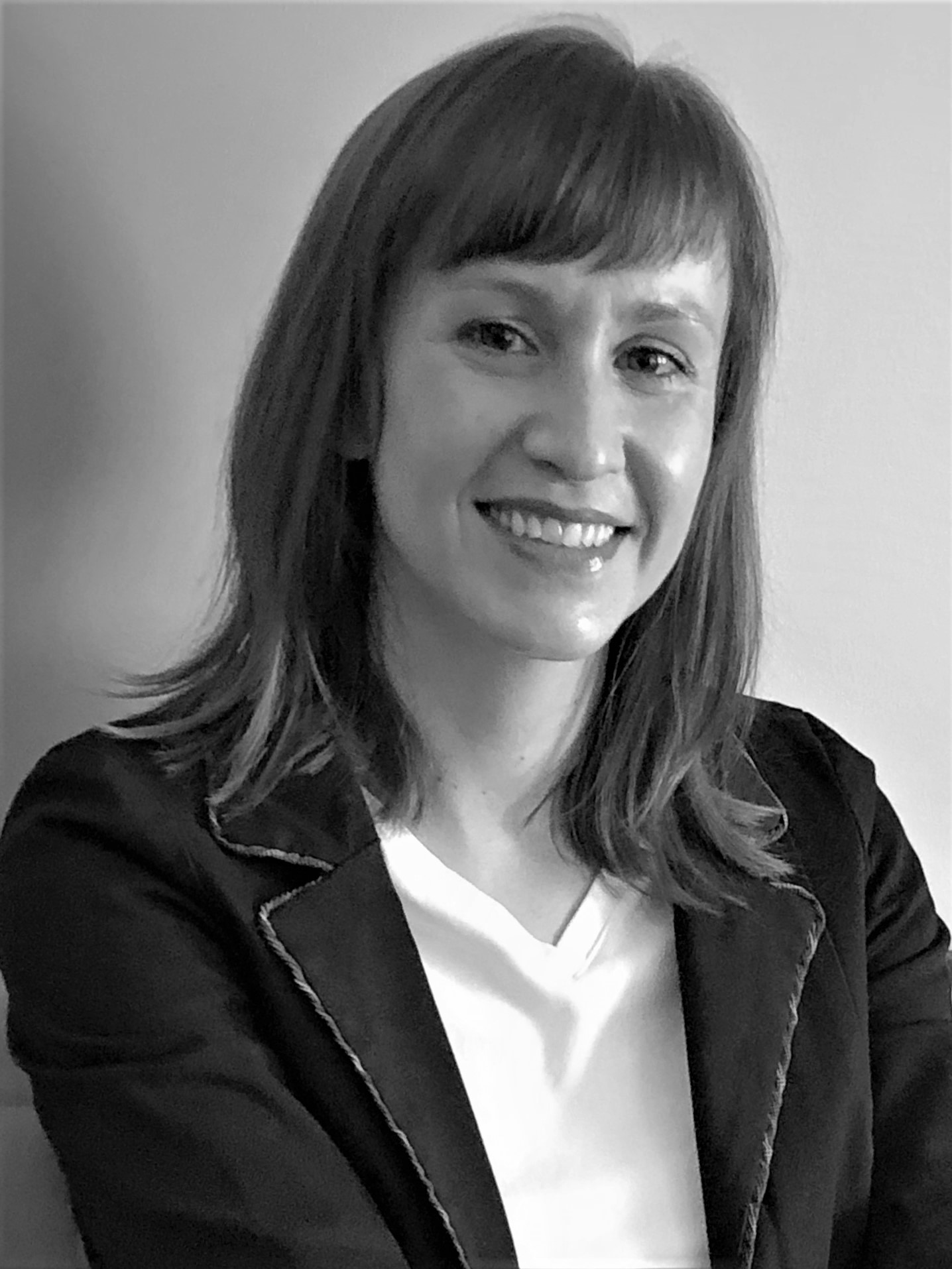
Episode 48 - Chelsea Haramia on the Ethics of METI
Nov 26, 202001:10:40Tap to summarizeReleased: 28 November 2020 Duration: 70 minutes, 39 seconds Co-hosts Paul Carr and Daniela De Paulis engage philosopher Chelsea Haramia on the ethics of sending signals into space that might be received by intelligent beings in the cosmos. For more information about this episode, include a rich set of links, please see the blog entry for Episode 48 at: https://wowsignalpodcast.com Guest Bio Chelsea Haramia received her PhD in philosophy from the University of Colorado at Boulder, where she specialized in ethics. She is now an assistant professor in the philosophy department at Spring Hill College. She is also co-editor of the online journal 1000-Word Philosophy, which houses a growing set of original 1000-word essays on philosophical questions, figures, and arguments aimed at an audience of philosophers and non-philosophers alike. She has published in the areas of normative ethics, bioethics, animal ethics, aesthetics, feminist philosophy, and astrobiology ethics. Her current work involves ethical and metaethical analyses of space exploration and of the search for intelligent life in particular. Credits: Co-hosts: Paul Carr and Daniel De Paulis Producer: Paul Carr Music: DJ Spooky, Nest, Erika Lloyd. The Wow! Signal is published under the Creative Commons Attribution/Share-Alike license.
Transcribe →Episode 47 - Arthur C. Clarke, Godfather of Satellites
Nov 7, 202000:57:36Tap to summarizeReleased: 7 November 2020 Duration: 57 minutes, 36 seconds Co hosts Paul Carr and Daniela De Paulis welcome space historian David Skogerboe to talk about the pro-space activism of Arthur C. Clarke. Guest Bio: David Skogerboe is a space historian and science communicator. He recently earned his MSc in the History and Philosophy of Science from Utrecht University in the Netherlands, where he focused his research on the intersection of space science, science fiction, and science communication. During his masters, he interned at the NASA History Division in Washington DC, where he spent countless hours perusing the most interesting historical reference collections on the planet. He is presently a freelance writer and editor while he awaits the emergence of his first child, and he hopes to soon begin a PhD and a fruitful career as a professional nerd. Links: The Godfather of Satellites: Arthur C. Clarke and the Battle for Narrative Space in the Popular Culture of Spaceflight, 1945-1995, David Skogerboe, full master's thesis Apollo 12: Why Don't You Know Me? You Should., David Skogerboe, NASA News & Notes Wireless World Feb. & Oct. 1945, Scans of Clarke's articles proposing the geostationary satellite How the World Was One: Beyond the Global Village, Arthur C. Clarke (1992), Clarke's overview of the impact of communication technology on society The Making of a Moon: The Story of the Earth Satellite Program, Arthur C. Clarke (1957), Clarke's pre-history of satellite technology, first published before Sputnik The Fountains of Paradise, Arthur C. Clarke (1979), Clarke's sci-fi that features the space elevator and "project clean-up" Arthur C. Clarke's official website An expansive bibliography of Clarke's work. An impressive reminder of just how hard he pushed to propel humans into space, and keep them there. Credits: Co-hosts: Paul Carr and Daniela De Paulis Music: DJ Spooky and Lloyd Rogers
Transcribe →
Episode 46 - Extraterrestrials
Apr 6, 202000:53:55Tap to summarizeReleased: 6 April 2020 Duration: 53 minutes, 55 seconds Author and podcaster Wade Roush talks about his forthcoming book from MIT Press, Extraterrestrials. The book covers astrobiology, SETI, the Fermi paradox and more for a literate but non-specialist audience. WADE ROUSH, a Boston-based science and technology journalist, is a columnist at Scientific American and the producer and host of Soonish, an independent podcast about the future. He has served as Boston bureau reporter for Science, senior editor and San Francisco bureau chief at MIT Technology Review, chief correspondent and San Francisco editor for Xconomy, and acting director of MIT's Knight Science Journalism program. He holds a PhD in the history and social study of science and technology from MIT. For more information, please visit us at https://wowsignalpodcast.com Links: The Extraterrestrial page at MIT Press Six Strange Facts about Oumuamua Sofia Sheikh and the Nine Axes The Vanishing Sources Where is Everybody? Stephen Webb's Book on the Fermi Paradox Natalie Cabrol Seth Shostak on the Zoo Hypothesis The MIT Technology Review The Hub and Spoke Podcast Network The Soonish podcast The podcast contact page Wow! Signal Live Credits Host and Producer: Paul Carr Music: Lloyd Rogers and Jason Robinson The Wow! Signal is released under the Creative Commons Attribution License
Transcribe →Episode 45 - Among the Space People with Paola Castaño
Mar 30, 202000:54:09Tap to summarizeReleased: 31 March 2020 Duration: 54 minutes, 8 seconds Co-hosts Paul Carr and Daniela DePaulis welcome Dr. Paola Castaño to talk about her research among the science teams working on the International Space Station. For more information, please visit our blog at https://wowsignalpodcast.com Guest Bio Paola Castaño is a sociologist of science. She recently completed a Newton International Fellow funded by The British Academy at Cardiff University and is working on a book about the meanings and valuations of scientific research on the International Space Station. On the basis of ethnographic work following the life course of experiments sent to the station, the book examines the fields of particle physics, plant biology and biomedical research. She has a PhD in sociology from the University of Chicago, and has been a postdoctoral researcher at the Smithsonian Air and Space Museum in Washington DC, the Free University of Berlin, and Waseda University in Tokyo. Links: The International Space Station goes under the microscope Human Research Program Investigators' Workshop 2020: Day 1 Cosmic-ray positron fraction measurement from 1 to 30 GeV with AMS-01 Scott Kelly's genes and NASA's twin study on him, explained Keyworkers Daniela De Paulis on the Unseen Podcast Daniela De Paulis discusses Cogito in Episode 35. Cogito in Space Castaño's article on Cogito The Wow! Signal podcast on Reddit Our YouTube Channel Credits: Co-hosts: Paul Carr and Daniela De Paulis Producer: Paul Carr Music: DJ Spooky, Blue Dot Sessions, Lee Maddeford, and Lloyd Rogers
Transcribe →Burst 33 - Astronomer David Blank Comments on Episode 41
Mar 20, 202000:31:42Tap to summarizeReleased: 20 March 2020 Duration: 31 minutes, 42 seconds Astronomer David Blank responded to our invitation to comment on the Villarroel+ paper we covered in Episode 41, which he describes as "very fascinating." Links The VASCO project: I. USNO objects missing in modern sky surveys and follow-up observations of a "missing star" Dorrit Hoffleit and her autobiography: Misfortunes as Blessings in Disguise Bradley Schaefer and the Harvard Plates Josh Grindlay, PI of DASCH The Very Large Array Sky Survey The VASCO Citizen Science Project Credits: Host and Producer: Paul Carr Music: Lloyd Rogers
Transcribe →Episode 44 - The Night Watch
Jan 22, 202001:06:45Tap to summarizeReleased: 22 January 2020 Live recording: 20 January 2020 Duration: 66 minutes 45 seconds Thread: Astronomy and Astrophysics Host Paul Carr along with Daniela De Paulis and Ciro Villa welcome astronomer Stella Kafka, director of the American Association of Variable Star Observers (AAVSO). We talk about the recent and possibly unprecedented dimming of Betelgeuse, among many other astronomy topics. For complete show notes, please visit https://wowsignalpodcast.com Credits: Host and Producer: Paul Carr Panelists: Daniela De Paulis, Ciro Villa Music: Claudio Nuñes, Felipe Sarro (playing Ravel) Software: Zoom, OBS, Auphonic, Reaper, OS X Mojave Hardware: Apple, Shure, Focusrite, Cloud, Elgato, Logitech
Transcribe →
Episode 43 - Adam Dipert Moves in Zero G
Dec 22, 201900:55:38Tap to summarizeReleased: Duration: 55 minutes, 36 seconds Adam Dipert is a veteran circus performer and dancer who recently received his PhD in physics from Arizona State University. Her has brought his various interests together by researching human movement in microgravity. We are going to let him tell you all about that. Adam will be presenting about this work at the Conference for Research on Choreographic Interfaces in Providence, Rhode Island, USA at Brown University, March 5-7 2020. Link to conference here: http://www.choreotech.com/vision Links: Flower Sticks Zero G Kitsou Dubois Orienting Beyond Gravity: Training with Kitsou Dubois Partner Stilting Acrobatics A video of Adam in Zero G Skylab Astronauts Doing Gymnastics in Zero G The Froude Number Kristina isabelle Credits: Co-hosts: Daniela DePaulis and Paul Carr Producer Paul Carr Music: DJ Spooky This podcast is released under the Creative Commons Attribution/Share-Alike license.
Transcribe →