← Think AI Podcast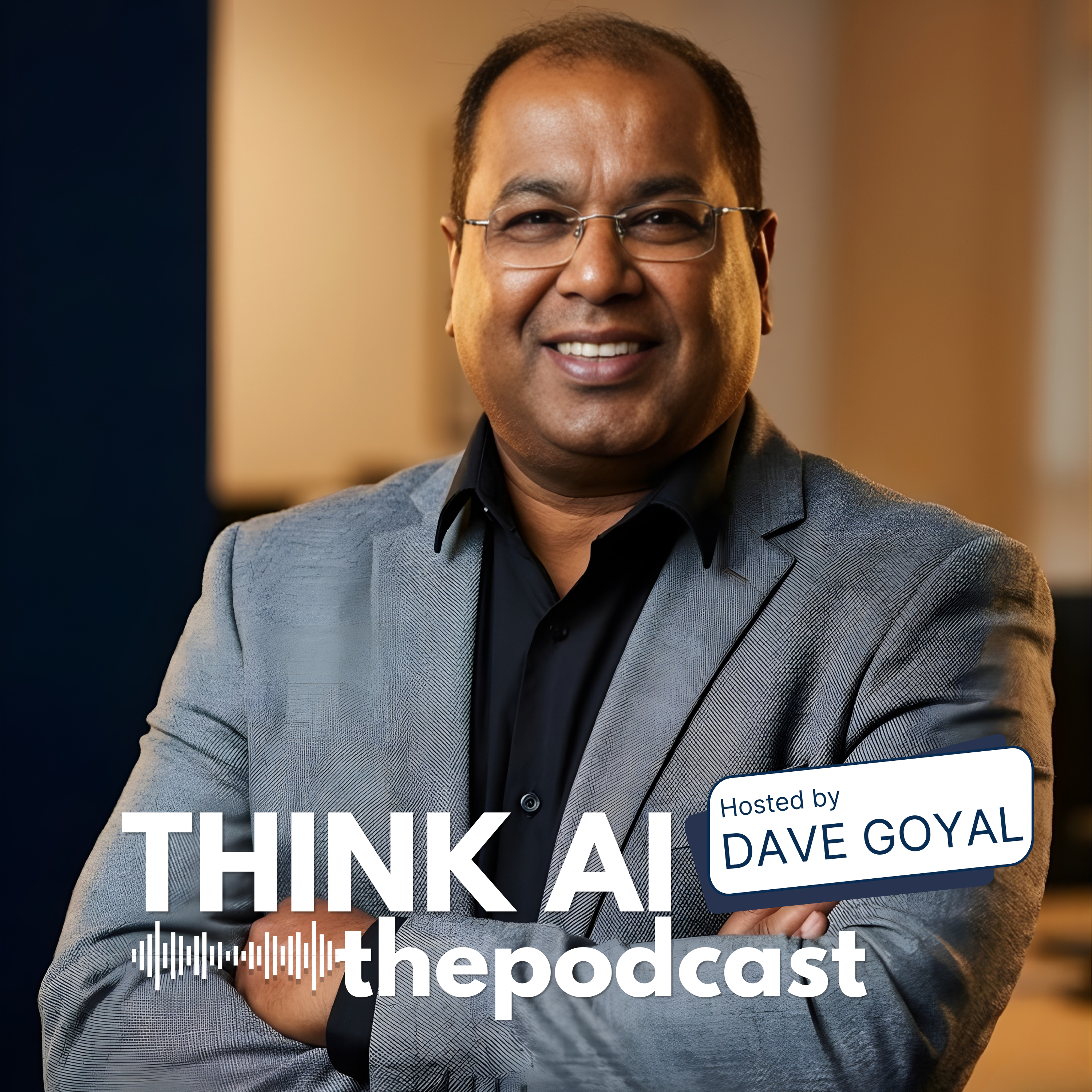
Think AI Podcast
Prescription Before Diagnosis is Malpractice | Ep. 12 with Sung Paik (Data QI)
01:03:43
Loading summary
Transcript58 lines
- [00:00]
A
Prescription before diagnosis is malpractice.
- [00:02]
B
Why do 95% of AI pilot fails and what does the 5% that works?
- [00:08]
A
There's this urgency to say that, hey, we're doing AI, but what does doing AI really mean?
- [00:14]
B
Most AI is sold backwards. Welcome to the Think AI podcast. Each week we talk about the most exciting AI research tools, case studies and more. I'm your host, Dev Goyav and I've been working behind the scene in data and AI for over 30 years. 30 years. Whether you are an AI expert, skeptic or something in between, this podcast is for you. My guest today is Sung Pak, VP of AI Go to Market for North America and Field CTO at dataqi, an AI company that turns raw manufacturing data into intelligence on the Factory floor. Before DataQI, Sung held the same role at Cisco and led Cloud and Full stack observability for their Americas partner org. What makes it interesting to me is the shape of his career. He's done corporate finance, written code, run a startup, carried a sales number. He builds it, sells it, and counts the money. Funny enough, that's almost exactly my own background. And so this is going to be a very interesting conversation. Sang, welcome to the show.
- [01:27]
A
Hey, thanks, Dave. It's really great to be here with you.
- [01:32]
B
Thanks for joining in. So let's just get started. One of the thing that struck me you said prescription before diagnosis is malpractice. Walk me through a real diagnosis that you had and what are actually you're looking at before you let a manufacturing touch AI or a manufacturer of touch AI.
- [01:53]
A
Yeah, fantastic. I really appreciate us opening up with this topic because it's so important with both of our consultative background. There's so much AI hype right now. And what I call it is the AI chasm of confusion, where you got a lot of different parties saying, hey, AI will solve everything, AI will solve everything. And then you have folks on this other cliff for the customers and the companies are trying, well, how can it solve everything? How does it help me? And of course the chasm is the ravine in the middle of actually trying to help these customers. And so the whole proverbial AI is the hammer, everything looks like a nail is absolutely. The ineffective approach, as you and I both know and many people appreciate, is that the consultative approach says what are you trying to solve and why? And that's where this concept of the business outcomes that everybody knows about now is really trying to start. There in what I call upstream conversations, you first establish what are the business outcomes you're trying to solve they're tightly related, if not exactly related to corporate initiatives. Every company has them regardless of technology. It's probably either to make money, save money, or reduce risk or some sort of combination thereof. So by starting there and then starting to think, okay, what use cases are most relevant, then that actually will naturally lead in a downstream fashion towards designing the right system with the right tech stack and then being able to deploy and for the workload placement considerations. Right. A lot of vendors right now are trying to go backwards and say, hey, we have this AI factory, this, or we have this kind of AI software, this AI platform. What can we help you with? And so that's what we mean. It's just like going to a doctor where the first thing they should do in an annual checkup is ask, hey, how you doing? How you feeling? Anything hurt? Anything that's on your mind, that's the right way to do it by diagnosing and having that conversation before applying any sort of prescription. Because you wouldn't want to go to doctor. And the first thing they say is, I got this pill for you. Just take this. Whatever AILS you, just take it.
- [04:02]
B
Now. That's pretty good. And you know, one of the things that I've also noticed is people start with AI without knowing their data foundation. What's your experience looks like on data before AI? I keep saying that to my potential customers. What's your take there?
- [04:21]
A
You're so right. You're so right. It's interesting, isn't it? Because there's been a lot of different revolutions in technology, AI or the generative AI and agent systems now. But then there was cloud, then there was Internet, and then there was all these other things. And so there's some universal truths that will persist now and forever, including data strategy and having the right data and then being able to leverage that data. We had a customer of ours that a manufacturer, they had got of data. They even said, hey, we collect so much data, but we don't know what to do with it. And that is the key is that's a lot of folks are in that same situation. They just don't know. Almost everybody else is also in that situation. And so when you really boil it down to it, the goal, the award, is not for collecting the most data. It's actually trying to figure out, well, what business outcome are we trying to solve for and what use cases are relevant. And therefore that dictates what data you need and in what fashion and form you need it. Right? And then which also kicks off data engineering for collection Cleansing, transforming and then surfacing.
- [05:35]
B
That's really, really good. And we being Microsoft partner and I see a lot of similarity in your portfolio as well. We do teach and preach on data before AI, a cliche term is garbage in, garbage out. And I say it differently, data is never garbage, it is how you have kept it. So if you keep it in a dumpster, then it is a garbage. But if you put it in the right format, you start calling it good data once you do it. But then anything, whether it's bi, your integration, your AI, everything will start to play the role if you put the data in the right format. And that foundation is the key to success. And the stepping stone to get to AI or any newer technology in future as well isn't really is.
- [06:24]
A
And I'll give you an example that helps to illustrate it is when we worked with one manufacturer comes to mind and they wanted our help frankly to be able to increase and this is the business outcomes is that they wanted to increase their output, make more products is just really the easy way to say that. But they didn't have any more capex budget to spend, capital expenditure budget to spend on adding more machines or adding another factory. So their factory floor was maxed out. And so what do they do? We were actually the fourth vendor to come in and finally we're able to help them them. And so how this relates to data is because part of it is by us engaging with them, understanding their business outcomes and then going naturally into, well, what use cases could actually help to achieve your business outcomes, which is increasing output while keeping quality high and making sure that you're able to hit those metrics of production. Then we were able to actually access some of that data that was already collected, but then help them understand there was some other data sets that we actually needed, you see. And then by combining those and as you know, from a technical perspective, you know, creating a schema and putting in the right database, but then also from a user experience perspective, being empathetic to the operator and helping them actually be able to understand what's going on and not just see a bunch of dashboards that are historical reactive, they can't take action on that. They can actually drill in and do some root cause analysis and be able to resolve the issues without stopping the machine, stopping the production line. And that's actually what causes eventually a lot of the reduction in output. And it was because we were able to help get the right data set in the right form that enabled all of those things to be activated. So that the operators could take that action and increase their productivity. Operators are happy, management's happy, executives are happy. Because the net result is we increased their output by 6%. That's huge for a manufacturer, frankly. You and I know manufacturers, 1% is huge.
- [08:41]
B
Yes.
- [08:42]
A
And so this was $3.6 million just on that one production line to their top line revenue. That's how important data is.
- [08:50]
B
That's an amazing story to tell. And you know, that leads me to the next question. It landed automatically there. So you mentioned your team runs many POCs a month. A whole lot that you mentioned. And then you tell your clients to walk in when the ROI isn't there. So you just walk out when the ROI is not there and you teach them like there is no roi. Why you go further with it. What's your autopsy looks like on that? The data, the people, or the vendors selling backwards?
- [09:19]
A
Yeah, no, it's great because again, where my mind goes to that, Dave, is this urgency that folks want to just say that they're doing AI, but what does doing AI really mean? Does that mean having an enterprise license from one of the foundational model providers? Does that mean being able to just say, hey, we deployed copilot, we're not sure what's being done with it or how it's being used or it could be a variety of things. Those are just some examples. But there's this urgency to say that hey, we're doing AI, it's. And so part of that is sometimes we have to unravel what's the motivation of doing AI? What do you mean by that? Because definitions are super important, but also motivations are super important. What are you trying to accomplish and then also how are you going to measure it? That's really important. Unfortunately. Roi, you're talking to the corporate finance guy here. ROI is an afterthought, which is very unfortunate. But in our consultative approach, we make it the forefront. Because part of it is that when we work with IT teams and OT teams, from a manufacturing perspective, just put yourself in the shoes of a CEO or C level person, CFO, COO, or just leadership. It could be VPs, people that have P and L responsibility. They need to make hard decisions every single day. And that means considering the different proposals that are brought up to them and which ones to pursue. Like that's the bottom line. It's not rocket science. But they do need to understand what does this mean to the company, what does this mean to our customers? How does it relate to our business priorities? Make money, save money, reduce risk, or some sort of variation of that. And therefore looking at the return on investment and what that multiple is, 10x20x whatever it might be, it's super important to have that as part of it. So we are big, big believers in being very purpose in making sure to prominently showcase ROI and help our customers build these business cases because frankly we're very empathetic to them. They haven't done this before and it lends itself to the things we're going to talk about today as to why these initiatives succeed or fail. And really part of it is that IT departments and companies for the most part aren't really meant to be software companies. And unless you're a huge company that actually can dedicate budget and resources to IT departments that can do software development, the shortcomings are that people are just doing this on nights and weekends in IT departments, whereas folks like us, we do this 247 and that way we can stay locked step with all the different immense number of changes going on in the AI world.
- [12:11]
B
That's pretty amazing to hear. One of the thing I'm more curious on a personal level as well, being in the similar business. So how do you say no to a client without losing them? Especially you know, we, we both may have clients running for 10, 15 years. I have somebody who's like 17 years now and kept working with us and I mean there's a trust obviously built and, but then there are clients who are potential now and there's not much trust there. How do you really say no without losing them and still gain their trust on AI especially?
- [12:46]
A
Yeah, it's a great point. Because the reality is unless we're able to provide value in serving our customers, because that's how we think about it, we serve our customers, we're here to serve them. And if we do our work well, we get compensated, right? That's a good business. And so we will always have this ethical lens to say the request of the customer, you know, is that grounded in benefit to them. And so for instance, another story that comes to mind is a customer was trying to solve something and they were going about it and they just couldn't figure it out. And it just happens to be with jet engine fan blades. And they said, hey, this is impossible, this is something we've tried, we've worked with various organizations, et cetera. We think it should be this way, but we just don't know how to do it. And they engaged us because of our experience, because of our know how and our expertise. And after doing some discovery Again, that diagnosis, we were at the prescription stage and said, hey, look, this can appreciate your approach, but you're never going to get where you want to be going this way. And so part of this is saying we're just going to be open and honest with you always. And this is actually the recommendation in the method. You haven't thought of this before, but this is what we recommend. And there was resistance. There was resistance on that. And so professionally, full respect, we decided to part ways, but it was only temporary because, Dave, the reality is that the customer said, hey, we're going to try it our way. And eventually they found out it wasn't really panning out. And so they actually came back to us and they said, hey, we respect that. You actually gave us a recommendation that we didn't necessarily agree with, but now we would like to give that a shot because what we tried just didn't work. And so would you like to work with us again? And so I said, sure, absolutely, yeah, we're here to serve you and help you. And that's our ultimate goal. And thankfully, ultimately, it did work out. The solution that we suggested and recommended was the right solution. Now we have a very long standing, thriving relationship with them.
- [14:59]
B
Now. That's pretty amazing. And especially that makes you a trusted partner than a transactional vendor, isn't it? And I love that you mentioned one more thing which also struck me and I was thinking last night too. So you told me the operator is the single most important person. If the operator doesn't find value, it fails no matter what the executive mandate. Pretty amazing thing to say. And why does everyone else in AI skip the operator? I. When you say that, I feel like that should be where you should be starting. Because he's the real buyer of it. Right. Others are just sponsors. So how do you really think about it and how do you really manage when you pitch the project and move forward through it?
- [15:48]
A
Yeah, the enlightened leader in a manufacturer recognizes the core elements and the operators are key. You know, there is not a situation right now where there's lights out manufacturing. So you need skilled people, men and women, to be able to do those important roles. And so we recognize that by empowering the operators, that's the key to success. In fact, there's a quote from one of our customers, the manager of the operators, that said, the reason why dataqi is successful here with us is because from the start, dataqi recognized the importance of enabling the operator and not necessarily dictating to the operator, because the operators want to do a Great job. They want to hit their numbers. They may be compensated based upon those achievements. And so they're highly motivated, they want to do the right thing. And so anything that can help them improve they will adopt and embrace and in fact champion. And we've worked with so many manufacturers that that's just always held true. And as we know and we've seen when there's top down edicts, those don't really tend to last long, especially if they're not adopted by the operator from a pure IT perspective, by the users. And so we really embraced that philosophy and found it to be something that is consistent and appreciated when we take that approach.
- [17:14]
B
So I want to go one level deep there. Who's more difficult to convince or harder to convince? Middle management or frontline workers?
- [17:25]
A
Yeah, that is an interesting one. I would say it really depends because the hat I wear going into it is really as a psychiatrist because everybody's role, their job is important to them. And I think it's important to understand that. And especially when there's this multidimensional aspect of oh, you know, you got these people thinking AI can help, you got these people that think it's going to take their job. And so it really is a matter of having a listening session and an education session. Like the combination of those things, like when we clarify the different parts of AI, whether it's classical AI, generative AI, agent systems and the rights approach of human in the loop, all these dynamics, people appreciate that because they never thought about that way. Why? Because they don't think about this market 24, 7.
- [18:18]
B
Right.
- [18:18]
A
They're just thinking about their roles. And so with the different Personas you're talking about the operator and the management, there are different things that resonate with them most. And so it's important to be a psychiatrist and a good listener, but also a good educator. And keep in mind that, you know, the diagnosis part goes back to that diagnose. Well, what are your biggest challenges as an operator? What are your biggest challenges as leadership? Because they have to work together. But if the operators are restricted by a broken process that has bottlenecks and as you know, in manufacturing, you know, that's something that comes up all the time. They can only go so fast. So management's trying to say, how can I help my operators work more efficiently, effectively and be happy about it? And so they have different care abouts and by us actually helping them to see how we can help them individually but also together, that's the best approach we've seen. But that's all because we were listening and educating all along.
- [19:22]
B
That's really, really good. And you know, that takes me to my next question also. And we are calling it Silver Tsunami, no pun intended. I'm over 50, you are over 50, one in four manufacturing worker is over 50. And replacing them from outside big cities is really brutal. We have seen that happen. If you try to do that, how do you capture decades of institutional knowledge with AI and again empowers them back or the team that they are managing or they are handing over to what knowledge actually walks out the door? What being captured by these operators and what's the surveillance being recent? I mean how that whole equation works for them.
- [20:06]
A
Yeah, that's such a top of mind topic for manufacturers. The Silver Tsunami. You know, we call it the Silver Tsunami because of the silver hair, but also the tsunami aspect is because it's one in four are over 50. In the next five to 10 years these folks are going to retire. And as you can imagine, these are people that have 15, 20, 30 years of experience at that manufacturer. And so there's so much more know how that's not in the manuals of the machines. Right. And not even captured in the SOP documents necessarily or the engineering designs or the diagrams. It's really the know how that makes the production floor in the factories work well and be efficient. And so there was one, there was one plant manager that was sharing with us, he says, hey, I've got 18 operators here on just this factory alone and six of them are going to retire in the next five years. I don't know what to do. And so what we had shared with them and we eventually ended up helping them with is being able to capture that institutional knowledge. And part of that is being able to use, you know, the methods of rag and language models and training them and providing user interfaces. You know, that's kind of a common way to do that. We have some intellectual property know how with our platform that makes sure that, that we produce outputs with high confidence and correctness of high probability. Right. Which is everybody's starting to realize is super, super important. But it's also capturing the SOPs, the engineering documents, but also the know how from the interactions of the operators. So all of that is very, very important. And the value is, is that when you have people retiring, you have people coming in, so you have new hires, they could be young, they could be older and the age doesn't necessarily matter. They just don't know the know how. And so instead of after the new hire training Going to the experience operators and asking them questions and frankly pestering them all day because it's like out of necessity they can actually ask the system that we've built for them and they can have an interaction and have an assistant for their job and to be able to help them answer and do self discovery on ways to resolve tasks and issues as they come up. So that's the way we've been helping manufacturers handle this phenomenon of Silver Tsunami.
- [22:40]
B
That's pretty good. And you know, one thing we have also noticed is Silver Tsunami is okay, but then people who are also stayed for long term change their roles, build the wisdom in the organization, seen the progress and the growth. I mean those also needs to be taken care. Well, not just, you know, the institutional knowledge, but the knowledge has been acquired through their own smartness and working through the company. And AI need to embrace that as well, isn't it?
- [23:11]
A
Yeah, absolutely does. In fact, on this particular topic, it's how do we empower the people? And so what we talk about is concepts like making your employees superhuman, helping them to be superhuman. Also we have this catchphrase intelligence amplified IA and so that's where we also employ, in addition to the assistant that we have to create a knowledge base and let them access it, we also have an agent system employed in our platform that we leverage to create these solutions for our organizations, our customers. Because part of it is that taking away the drudgery from all the employees, including the most senior employees and the most knowledgeable employees. Because the thing that they are good at now that they've had years and possibly decades of becoming really effective and efficient in their roles is the things that when you ask them, the things that really are challenging for them is having to do the mundane work that could be some manual work, that could be writing reports for incidents, that could be updating various systems, whatever it might be, it takes away value from them doing the high value tasks. And so we leverage agent systems and this is where we develop skills for various agents. It's not just one agent, it all depends on the use case. But we develop a system of a number of agents as necessary and we develop skills for those agents, have them coordinate, even be able to access the knowledge base to be able to solve certain tasks themselves. But this is super important. We always, always, always incorporate human in the loop because manufacturing right now doesn't have the appetite for lights out manufacturing or lights out operations and processes. So we're a big, big believer in human in the loop. And to be able to make sure These important decisions are made by humans. And so that's how we help amplify these workers across the board and really increase employee satisfaction, if you think about it. And that translates into better products, higher quality and happier customers.
- [25:30]
B
You know, I want to pick up on the same point here. And this is amazing. We lend it to that, which is what's the real line today between assistant and an agent? And I know there's a lot of debate between agent, agent. I am not going there. But you know, when they would want to have an assistant versus an agent, which can be either fully automated, supervised by human, or controlled by human. I say human in control as one of my phrase too. But how do you differentiate assistant versus an agent? And when you think an assistant is needed versus an agent is needed?
- [26:08]
A
Yeah, they're starting to actually blend because as we do system design, it's really driven by the use case. And so, for instance, like an example that we're supporting is for a sales rep at a manufacturer. As we all know, it's super, super important for sales reps in manufacturing to convey high confidence in a delivery date. Right. It's kind of obvious that that's important. Customers want their shipments and what they order on time. But most people don't realize unless they're in manufacturing how difficult it is to give high confident delivery date. Because there's so many factors that go into it. There could be engineering that goes on because if it's not necessarily a product that's off the shelf, there has to be engineering. And there's a cycle that's involved there. There's also a cycle in parts and inventory and supply chain. And then there's also a cycle involved in production, quality management, quality control. I mean, I can go on and on, but I think you get the idea. Well, that is a very manual process right now. And so what the sales rep, if you would ask him or her what does great look like? Which is one of my catchphrases. Oh, I would love it if I could just go to a system that I can see what's going on and I could see more. And this is three catchphrase see more, no more, do more. See more of what's going on, what my current orders are and if they're online for the delivery dates that I've communicated, if I can know more, if I can know what it will take for this new order for it to be fulfilled, and then I can get a delivery date that I can confidently share with the customer and do more in terms of maybe hey, if there's something that's going to affect or delay or push out a delivery date, I need to know why. I need to know why, what the remediation is, what the new delivery date is and maybe even share with me what could I say as far as an update to the customer. So the see more, know more, do more. That's actually what the use case is, what's driven technology wise because now we can design the system and our platform actually handles that is to be able to then support all those different areas of that use case. And in fact what we do is leverage the assistant from a language model, rag, knowledge base perspective to be able to look things up. Right. When you have that search capability, semantic search to find out information. But then the agent piece is still part of that use case where it's actually doing these things and 247 monitoring for anything that might affect that delivery date.
- [28:52]
B
Right.
- [28:53]
A
And so that's where. Yes, when a year, two years ago, we were talking and segmenting those things because this technology was so new. Well now in system design we're leveraging it because it actually supports the use case and that's part of the actual recommended tech stack in the deployment.
- [29:15]
B
What an amazing way to sum up that agent take agent and assistant debate here. And it's fairly simple the way you explained it. So pretty amazing. I want to switch gears. So you move from Cisco cloud and observability world into manufacturing. Completely different world in my opinion. But it could be same and you would argue differently. But what did the factory floor teach you that the cloud never did?
- [29:44]
A
Yeah, and interestingly enough at Cisco I also started an AI initiative over there to engage with customers. I think the best way for me to explain that is. And like you said, you and I are both part of the silver tsunami, aren't we? But we are fortunate enough to have a varied career. Like you said in the intro, I do have a variety in my background. Corporate finance, building applications and software, selling them, implementing them, you know, the executive experience at a startup and also working for a large hardware company. So I've got the software and hardware and all that part and I've been on the customer side. I would say that part of it is because I've had that variety and that background. I'm just a very curious person that likes to solve issues and if you think about all the people out there that have accomplished great things and are continuing to do that, they're just very curious people. So part of that is I don't necessarily silo myself into one discipline. Part of it is how do we accomplish or how do we help customers if you will accomplish what they're trying to do by leveraging technology and applying the right technology the right way. And so you even see on my LinkedIn profile, that's how I describe it is that I'm just very curious of various companies. We happen to focus on manufacturing here because of the frankly the great background and experience of our folks. DataQi platform was built for manufacturers by manufacturers. You know, we have people that are very significant experience on the factory floors at very significant manufacturers, but also the midsize manufacturers. Right. Because they need some solutions as well and we want to serve that group. And based on our experience, we've created this platform that is geared towards manufacturers now just to set the record straight. Also we do help with horizontal use cases because for instance manufacturers, they have sellers, they've got to do order processing, they've got all kinds of things from a background back end departmental function perspective, all the verticals have companies that need to sell and do order processing and have customer service and things like that. So we've got a vertical focus of manufacturing, but then horizontal use cases that we could help companies in any verticals there. So that's how I would explain that, Dave. It's, it's, it's because of the curiosity that actually explains how it is that I can seamlessly go and talk with manufacturers and be motivated by that. And plus I will tell you this, is that there's a lot of vendors out there having a go in terms of AI and I applaud them because there's, that's where the innovation comes from. But at the same time we want to, we want to be known and branded for certain focus, specialty area. And that's why we did choose manufacturing, because it makes sense. But then, you know, we're becoming known for that. And that's where we came up with the new market category manufacturing optimization solution that actually complements existing manufacturing systems like the mes, the manufacturing execution system or the MOM Manufacturing Operations Management. You know, those are really great systems that help manufacturers but there's that optimization layer that is lacking in this industry 4.0, 5.0 world of digital transformation. And that's where the Dataqi manufacturing optimization solution fits in that layer cake.
- [33:12]
B
That's, you know, this is one of the key reason I wanted to connect with you today and that really makes me very happy. There's a lot of alignment and the kind of things we did. I have a 15 year old son And I keep telling him, be curious, be very curious. Whatever you learn today is not going to go out. Like for me, I did a telecom engineering, I did an MBA in finance, cfa, did an event management business. Nine different types of businesses. And when I sum it up, everything now everything is helping me managing my cash flow properly, Knowing my Runway today, knowing where the customer will get the value, I can see it right away in 30 minute meeting with the CXO, even a CEO because they are always excited about new things and they want to move forward. But what's the roi? Whether you're going to get into a path where you can either only two business imperatives, right? One is increasing the revenue or decreasing the cost or increasing the productivity. One of those, everything else falls underneath. And if you can hit one of those, then you go towards the scalability path of applying a solution rather than building a solution and finding the problem for that solution. So back to your career, you know, moving from corporate finance. We are conservative people, we want to make sure that the money is well spent, every dollar is being accounted and get the value. And I see that you are doing it really well. So an applaud to you on that. You touched upon the innovation and one of the words which struck me, you know, we keep calling it POCs, MVP, POVs, but you called Innovation Sprint and your innovation sprints are concrete. Six to eight weeks, it's not like one week. I'll give you something which is completely throwaway and sure you can create that fairly quickly with some synthetic data and you know, some pre built dashboards and chatbots and agents, but no, you're not doing that. You are actually seeing how much they are committed for a full build and fail early is what I generally say. What does a good sprint looks like week to week for those six to eight weeks and how do you keep it disrupting a line without disrupting a line which should not stop in general?
- [35:32]
A
Yeah, absolutely. Yeah, you definitely don't want to stop a line because with the downtime there's so much cost to that for manufacturers. And the reality is that the innovation sprint came out of necessity and it is akin to a proof of value. So I just want to be clear for the audience is that we're not trying to use cute words here. Part of it is really to help to validate before going for a full build and frankly that's just logical in and of itself. But again, because of the AI hype and the fomo, the fear of missing out, you know, there's more of these incidents a year ago, two years ago than they are now. Because people are starting to realize that it's not really a good idea to just jump in with a multimillion dollar budget to try to solve a use case that is unproven as far as the solution goes. And so what we've been finding really great traction in is these innovation sprints where we purposefully say it's best to prove something out and just from the core critical path to see if this is something that's even possible. And then from there we can extrapolate and help you understand what it will take to take it to that full built production deployment. And that is just resonated really well because now there's a lot more scrutiny on the money being spent, especially in this world of runaway token costs. And so there's a lot of due diligence that needs to be going on now. And that's been an easy way for people to get quick wins, which is super important. And because there's a lot of politics in every organization, but also just a good way to do business. And so being able to position internally because you know, people's careers are at risk here, they don't, they shouldn't take unnecessary risk. In fact, they should take on calculated risk from a finance perspective. Right. That concept to that and be able to position saying, hey, we've got a time bound six to eight weeks, very narrowly focused and defined, but still on the critical path to prove something out. And it's a very manageable cost. Tens of thousands of dollars depending upon the scope versus hundreds, if not millions of dollars. And that's been effective over and over again. And you get out of this pilot purgatory, which is just a continuing pilot forever that never ends. And it's just this bottomless money pit. So that's really what resonates. And the fact is that at the end of those innovation sprints, we do give them a roadmap. Okay, now that we've proven this out with you, by the way, it's collaborative, here's your options in terms of now going to a full production belt.
- [38:23]
B
Yeah, no, that's really good. And a lot of value to the customer as well. And they can see the results early on in a smaller fashion so that they can kind of predict also it's no guesswork now. It's like, okay, so for one component or one thing I got this. What will be on the 201, you know, and that the progression will keep going one at a time. So. So that's Pretty good. What we have also done is we have created a fabric platform like a framework on it for small mid sized manufacturers and you know, for supply chain analytics or for real time intelligence. I wrote a book on real time business intelligence as well and there how they can make use of it on a daily basis, on a continuum basis so that they can make effective decisions out of the insights that's coming through. One of the thing I also want to switch gear is and again that's very intriguing to me, the four hats background. So you have done corporate finance one, written code two, run a startup three and also carried a sales number which is fourth hat in my definition. You can correct me if I'm wrong. Same mix I have when you walk a plant floor. This is more intriguing to me which head is most useful because there you need to go at that level, you need to understand that and then reflect back how do you. So it could be a mix or it could be one hit. What's your thinking behind it?
- [39:52]
A
Yeah, that's a, that's a really great question. And what comes to mind immediately is it's all of them. Yeah. Because again, part of the benefit of having such a variety of background and roles is being able to comprehensively look at the situation in the need. Because when we're in this seat from a vendor perspective, servicing customers, we have to from a sales perspective recognize what is the decision process and who's involved, what do they care about. And that by nature is going to reveal many, many different hats of the different people involved. And then alluding to what I said earlier about the hat for being a psychiatrist, that's important too. So that's actually probably the top hat and then you got all the other hats underneath it. And you just gotta be ready to leverage any and all of them when it's necessary. Because by choosing a consultative career, if you will, or a career in consulting, that's our role, is to be able to provide that view that maybe many folks don't have, that don't have as comprehensive of a background. And that to me is what service is about, is helping them understand the technology aspect, the business aspect and so forth and so on and so empathizing with all of the people that we engage with and then helping them represent that in the business cases that they have to create and then be able to get approval for. Because ultimately we also empathize with the C level and the board and the shareholders and what they may be thinking about so that we just want to surface up the right information at the right time so that they can do and making right decisions and do their job as effectively as possible.
- [41:48]
B
I love your analogy there. And I also say this, that it's the game of mindset to mind shift and you need to keep your heads or heads ready like a magician and we are the right one based on, you know, who you are talking to, what mindset they are in at that particular point in time, and then take them towards where they get into a listening mode. So you sit in a listening mode for a long time before they can start listening to you. And that's the mindset to mind shift game that anyone has to play in order to convey what is the right thing to do. And that's amazing how you put it together. So thank you.
- [42:33]
A
My pleasure.
- [42:34]
B
So that leads me to another thing. Call it the wrench moment. You call AI a tool that can improve performance or be proverbial wrench in the machine. What's the moment you watched it become the wrench. I mean, you know, those terms are intriguing to me, so hence I'm picking on those.
- [42:56]
A
Yeah, I like it. I think I know where you're going with this is that when does actually create tangible business benefits, right? Because then, then, then that's something where the realization is, wow, this is actually helping us do our jobs better. And every instance where we help the customer achieve that status is where, using your analogy, where I think it's become more of a wrench. That's part of being able to. And what does a wrench do? It actually helps you make adjustments.
- [43:29]
B
Right.
- [43:30]
A
And do a task. And so our system, DataQI and our people, frankly, and how we're able to help and innovate and constantly improve for the benefit of our customers. That's the wrench moment. Because they can use the solution, the manufacturing optimization solution for various use cases, whether that's reducing waste, preventative maintenance, quality control, being able to do root cause analysis, to be able to look at the Pareto bottleneck representations and be able to focus in on the 80% of the bottleneck and resolve that or get alerts that help them save time. And when they come in the morning with their cup of coffee and the shift manager is looking at what's going on, it's not just looking at a static dashboard. Our system has actually fashioned up a report that they can see in the beginning of every shift of hey, here's the metrics and here's the goals that were hit. Here's where they were under, here's some clues into what might become an issue from a maintenance perspective. And they can actually drill down and have that interaction. So we want it to be very interactive. And that's why we chose the word optimize in manufacturing optimization solution. This is a system solution that is of action, not just a historical record. And so that's how we view in terms of a wrench, where it's actually something that you can use to leverage and make yourselves better.
- [45:06]
B
That's amazing. And one thing you just mentioned, action with Microsoft partnership, we've been constantly learning on data, insight, action, again, all cliche terms. How do you relate those two here? So data is data. AI is a good tool or an employee to present that faster, either descriptive, diagnostic, predictive, prescriptive, whatever format that could be. But then how do you really get insight? And would you rely on AI insights? Would you, how would you, you know, use a wrench analogy here also so that you can get some actionable insights rather than just insights which makes no sense or, you know, doesn't help you to move forward. Hmm.
- [45:50]
A
Another example, I, as you can tell, I love answering with examples. It's. It's actually a computer vision deployment that we had. So I'd love to have you imagine this manufacturer that they make these rolling bins for warehouses. And so, you know, you like a big old Amazon warehouse or whatever, there's a lot of companies that have warehouses, right. And they just need to move things from here to there. Well, there's these bin, rectangular bins, if you will, and they're on wheels and there happens to be two axles. Well, one of the axles has a brake on it, right? So you can stop it or slow it down. And so therefore, if you have a brake, you need a brake assembly. And the thing is, is that they get orders for 30,000 of these things or 50,000, you know, in one go. As you can imagine, that's a really nice order. But it's even better if you can fulfill that order as soon as possible, because it's not like they can stack these bins so high. And so what's really important is that there's an effective assembly process. And for that axle brake assembly process, the customer says, hey, we're just not getting enough of these, the output on the number of assemblies that we need to actually meet the demand. Right. Can we make this more efficient? Well, if you think about the current as is state and the future to be state, because that's the exercise we help them understand, hey, how are you doing it now? What would you love it to be Again, my catchphrase, what does great look like to you? Well, what great looks like to me is if we can shave off 30 seconds on each of those assembly, okay? And you got various operators at stations that put the things together. And so the current, as is state, Dave, there was no tracking at all. All they knew in terms of productivity or output was, well, how many did this person make in their shift, Right? And so there would be sometimes 12, sometimes 30, sometimes 18, and across the different people. And so what we did is we leveraged computer vision, okay? And we created this rig that was right above the operator or the for the human assembly process. And it had cameras. And then we're able to monitor the assembly process, but we were also able to create zones for the different steps, okay? And then by doing that and leveraging great software, you know, by Nvidia and other firms, because we're an Nvidia Inception partner, that's the ISV category for software vendor. And we leverage a lot of their software, including nvae, the AI Enterprise, as well as NIMS and other things. But the point is we leverage great software like that to help us analyze the process. And then now all of a sudden, a human assembly process that was never tracked before is now digitized where you can see each step and the efficiency of each step, right? And then by being able to digitize that, that's when we were able to help the customer analyze, well, where are the steps that actually are slowing things down? Here was the conclusion, Dave. I share that entire story for the setup for the punchline here. They were eventually able to realize the operator, on about three steps actually was having a really hard time putting these bushings on or these other parts there. And it was taking longer than normal. Like you could visually see this person was just trying to get it on and like, you know, wriggle it and all that stuff. Well, it turns out the problem wasn't the operator, right? It wasn't the person doing the assembly. It was that those parts, the tolerances, were not actually appropriate. So that's the epiphany. That's the wrench part. It says, ah, that's where I know I need to turn this wrench is go back to engineering or the parts supplier and say, I need a little bit more tolerance on that, right? So they changed the design of those parts that were not intolerance, right? And then. Or not fitting, I should say, but, you know, change the tolerance and then magic, the assembly was able to happen very efficiently. They got more output, right? And they Actually were able to shave that great ideal case scenario 30 seconds off of each of those brake axle assemblies.
- [50:24]
B
I love hearing your stories and use cases. And you know one of the analogy I see that there is lactose intolerance. So people who are consuming milk based products are not the ones in this case. These are the operators, not the ones at fault. You're feeding them what they are not supposed to. So that also leads me to one of the last question I have. But before I go there, I want to talk about data. Qi in a minute. There's a fun question I have and this is more towards the sales, the fourth hat that you talked about. So if you could delete one phrase, every AI sales deck aimed at manufacturers, what would it be? What would you remove from their deck?
- [51:12]
A
Oh, do you mean when people that
- [51:14]
B
sell AI they always go in and the sales guys goes in and your team has it? My team has it. They go and present some cliche terms, right. And then the people at floor middle management, they're thinking, oh yeah, you are here to sell me something. You know, I can clearly sense it. How do you make it more believable so that you take out that particular term which they keep hearing and that term they do not want to hear. Because a lot of times with one term people get disconnected, they are not listening anymore. So what would that term be?
- [51:44]
A
I see what you're saying, I see what you're saying. I totally understand the question now and I'm going to spin it a little bit for you. And what we do instead of saying what term would I take out? Because we try to operate a very high level in terms of effective communications. The technique we leverage is actually the anti topic. And so one of the things we say is, hey, AI may not actually help you. The reason is because we don't know what your problem is. AI is a great technology. In fact, depending upon the definition, we could be saying different things. But the reality is that's where it's important to diagnose what you're trying to solve for. And then we can prescribe the right technology. And AI may or may not be part of that. So that's the way I would answer that, Dave. Only because we really are diligent in making sure that what we do say is effective and how we say it is effective.
- [52:48]
B
That's pretty good way to say it. And one of the thing I see it is also it's more on the question more than the term that needs to be taken out, which is if you go with a Pitch, you're saying, you know, if you find a use case, we get an roi. Rather we'll say, can we validate if AI can help you or not? It may not. So let's start from there with that perception in mind that AI may not be able to help you, which is fine because that just sets the platform right there. They come pretty excited for more. Like you mentioned, everybody else is doing AI. I pay $20 a month and I get an amazing capability on AI. And little did they know that it's hallucinating a lot because just running on the words data and it's probably sending you some predetermined cash, questions and answers to you. So setting them on the right expectation, probably the right thing to say, set them on that platform, that it may not work for you. Let's see where we get from here. So, yeah, that's pretty awesome. And that leads me to the last question and dataqi. I went through the sites also, but I will give you the opportunity to talk about what makes dataqi different from other vendors trying to serve manufacturers. When a plant manager has five AI pitches on the deck and they all look similar, what actually separates the one that work?
- [54:21]
A
Yeah, I love that question and I appreciate you bringing it up because there's a lot of choices out there, but decision makers ultimately and influencers have to down select. And so how do you downselect you down select by fit. And dataqi, number one, is made for manufacturers by manufacturers. We have folks that were on the shop floor, major, major manufacturers and SMB manufacturers as well. This is, as you know, in product management, you want to build from experience as much as possible. And so part of that is incorporating all of those manufacturing experiences into how can we help these operators, management executives, hit their revenue, cost savings and efficiency targets. And so that's number one, is that we're made for manufacturers by manufacturers. And the second one is end to end. There's a lot of companies that are in the AI space that, hey, look, they understand language models, they understand techniques like rag, they understand vector databases, embeddings. You know, they can, they can define that stuff and explain it. Probably even given a seminar on it, right? They talk about agent and agentic like it's going out of style.
- [55:39]
B
Right?
- [55:39]
A
But the thing is, is that that's actually not end to end. End to end begins for manufacturer with regards to their machines and production. And so we also in our solution, in our platform, we have a part called Insights, Data, Qi Insights. That's the part that gives that visibility into the production shop floor. Because frankly manufacturers don't have a data problem necessarily. They have a visibility problem. Like I said that one customer, we have gobs of data, they just don't know what to do with it. And so when you have that component there and then can enable them to have that 6% increase in output. Right. That's the core piece that most other companies that say they can do AI for manufacturing don't do. What they're focused on is creating a knowledge base and doing some automation with agent systems, which is awesome, super important. But it's really that other part that makes it end to end. So that's number two, end to end. I will say actually part of the end to end as well is that the core, core purpose of it is the, the vertical focus anyways. We also create and leverage a verticalized small language model and we create that specific for manufacturing. Okay. And so that's another way to service manufacturer specifically because it's going to know about manufacturing versus necessarily any of the foundational models which are more general in nature and like you said are probabilistic. So they're just going to make stuff up even if they don't know. Right. Where we actually purposely train these small language models for manufacturing, which again is very purpose built. And we've designed the whole system for various workload deployment scenarios so we can air gap that entire deployment on prem because as you know, manufacturers like to have things near their production for us and their factories. We also can deploy in cloud environments or any sort of a hybrid or colocation kind of scenario as well. So that's again being empathetic to the customer for their needs, not just saying hey, we only offer a SaaS offering and you've got to use it or not. Right. That's being inflexible because data sovereignty, data security, all these other things, governance, compliance come into play and that's what they're going to care about. And then finally, no machine left behind. This is a big one. And what I mean by that is that. Remember I was talking about how important it is to be able to digitize the factory floor and you need to get data out of it. Well, there are modern systems that have these PLCs, these programmable language controllers that you could access their APIs and get the data. Really not that difficult frankly. But there are some analog machines that lots of companies have that aren't digitized by Vjooqic, that don't have PLCs that you can't just plug in with a different interface and get that data. How are you going to actually get data out of that? And so we have mechanical engineers on staff and we have a lot of smart people that can figure out ways to connect to those systems to be able to then get digital signals out. And I got to tell you, that's something that really excites manufacturers because we're very rare in being able to handle that scenario because then you get the full picture. It's no good if you get data from 80% of your machines that are digital, but not 20%. You don't have the full picture of the factory floor. So you've got to solve for that. And that's why we really stress this whole concept of no machine left behind, which resonates a lot with our core VP or idle customer profile.
- [59:30]
B
This is really good. And congratulations to dataqi and you and your team for doing many, many successful implementations, AI and in general for manufacturing work and providing good outcome to the community out there. Before I provide my closing thoughts, anything you have something to close. And first of all, I want to appreciate you being here on the show and bringing so many insights. I'm sure my listeners, a lot of them are CTOs as well, can create their own blueprint or engage one of us to get this going. Anything you'd like to add?
- [60:11]
A
Yeah, in closing thoughts here, first of all I'd like to thank you for, for the opportunity to share with your audience. It's a, it's a great pleasure and honor, so thank you so much. I really enjoy your podcast, Dave. I wish you just tremendous success going forward. My closing thought is really something that's not necessarily related to our product, but it's important from a business perspective. We're big believers here in utilizing the channel and what I mean by that is partners. It's super, super important because where we focus, being an ISV independent software vendor with a vertical and horizontal focus in our go to market strategy, we can't do it alone. And in fact when I was highlighting the customer AI journey of business outcomes, use cases, design, build, validate workload placement, there are a lot of players there that we engage with and we partner with. So Nvidia I mentioned before, we're an official Nvidia Inception partner and we're really appreciative of them because of the great innovation technology they have. But then also the value added resellers are super, super important because we don't sell hardware and our solutions need to run on compute infrastructure. Part of it's the GPU deployments but also some basic CPU powered infrastructure as well. And also from there that we also work with the compute OEMs. And so I can tell you that with HPE we're super happy that we're a partner of HPE with the Greenlake Marketplace and on Unleash AI program. That's a great program that has also a similar mission to pair up ISVs like us with them and resellers like that is the secret. The secret is to be able to work together for the respective roles in the channel ecosystem. And that also includes distributors too. Right. So the big distributors are realizing and great supporters of the entire ecosystem of channel partners and working together. So they're even facilitating that and having me talk with their resellers and their compute infrastructure partners as well. So that's really important because that's what helps us do all the great things that we do together to serve the customers. And that's kind of where I want to end it because it starts with serving the customers. Prescription before diagnosis is malpractice. Right. You always got to keep in mind the benefit to the customers. But then also ended on that is that we set this up business wise so that we can serve the customers the best way and get the right people in for the right tasks in their customer AI journey. So I'll end it there.
- [62:57]
B
Dave. Thank you Sang. And for my listeners, you heard it from Sang Prescription before diagnosis is malpractice and most AI is sold backwards. So you can see it from that phrase itself. And then why do 95% of AI pilot fails and what does the 5% that works sank has given the great story, the use case, the blueprint behind it which will work on the factory floor. No jargons. He has given real life examples. We appreciate him being here. Thank you Sang. Thank you listeners.
- [63:33]
A
Thank you so much.
- [63:35]
B
You have been listening to Think AI podcast with Dave. Take one idea from this episode and turn it into action.