← Think Fast Talk Smart: Communication Techniques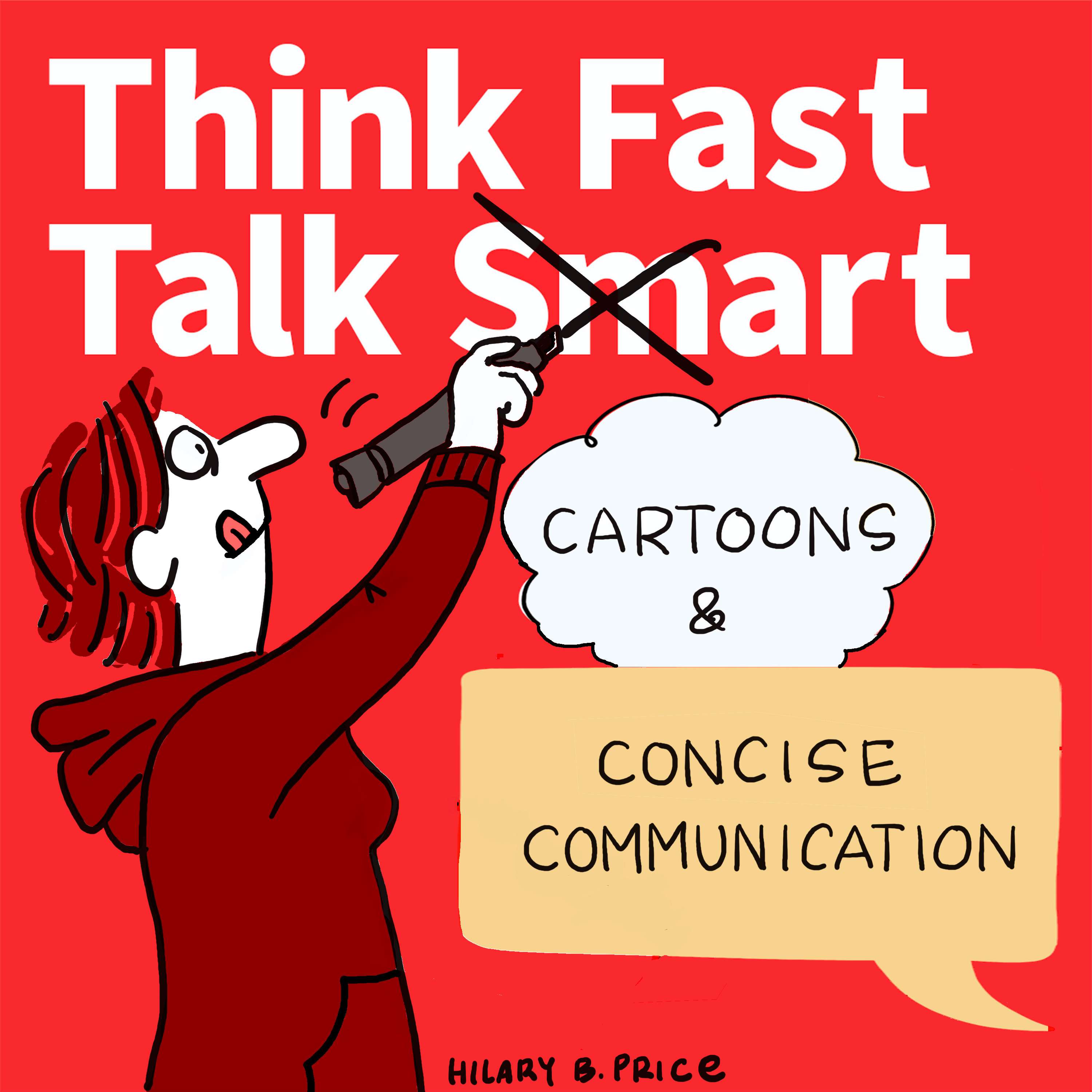
Think Fast Talk Smart: Communication Techniques
Between the Lines: In Storytelling, Simplify to Amplify - Premium Sampler
00:19:01
Loading summary
Transcript33 lines
- [00:01]
Matt Abrahams
Hi Matt here. One of my biggest stresses used to be wading through my emails. My anxiety would spike every morning when I would log on to see my inbox full of messages and calendar invites. This all changed once I found Superhuman. Superhuman has made my email experience so much better. I'm now more productive and focused. My inbox is organized and categorized. I schedule meetings easily and Superhuman's AI helps me draft and respond much more efficiently. Superhuman literally changed the way I work for the better. The start of the new year is a great time to take back control of your inbox and increase your productivity. Superhuman is offering the Think Fast Talk Smart community access to one month free on the platform and if you add any teammates in January, they also get a free month. To join go to superhuman.comtfts that's superhuman.comtfts.
- [00:59]
Unknown
Ts being concise and clear is critical in a world where our attention is constantly being tugged and pulled. When I thought about communicators, I know who had to deal with this challenge of being clear and concise on a daily basis. I was reminded of a former college classmate who for decades has written a daily one panel comic strip called Rhymes with Orange. As part of our recent thinkfast Talk Smart miniseries on non traditional storytellers, we I interviewed Hilary Price. Her complete episode along with those of others who were in the miniseries can be found in our Premium library. But since Hillary's insights into communication are so useful and applicable to all of us, I wanted to share the full interview here outside of Premium as a bonus episode. I hope you enjoyed learning from Hillary as much as I did.
- [01:56]
Matt Abrahams
Before we get started, I wanted to let you know that I am super excited for our current four episode Communication, Happiness and well being miniseries. I've learned so much from our amazing guests. I also invite you to stay tuned for our upcoming Catalyze your Career miniseries coming in February.
- [02:15]
Unknown
I am super excited to speak with Hillary Price. We went to college together and Hillary helps me start every day. As a cartoonist and the author of Rhymes with Orange. I get a little chuckle and sometimes a every morning by reading Hillary's work. Hillary, thanks for being here with us and I'd love for you just to take a moment to introduce yourself.
- [02:35]
Hilary Price
Okay, thanks Matt. So I have been creating the comic strip Rhymes with Orange which appears in newspapers daily and also online for the last gosh, almost three decades. For the last seven years. I collaborate on that with a Toronto based cartoonist and we go back and forth generating gags for the strip.
- [02:57]
Unknown
I thoroughly enjoy your work and what I find so fascinating about it, Hilary, is you do it all in one panel.
- [03:04]
Hilary Price
Lazy cartoonists.
- [03:05]
Unknown
I want to hear more about that. But what makes a good story, there.
- [03:10]
Hilary Price
Has to be change and there has to be surprise, and there also has to be stakes. I'm going to reference a storyteller who is one of my favorites. His name is Matthew Dix and he does a lot of mock storytelling. And his definition of a story is, I used to think one thing, then some stuff happened, and now I think another. So I think that when you're doing that in a cartoon, in terms of the before, you rely on cultural history. So if you're at a Thanksgiving table, you don't have to have a banner that says Thanksgiving over the top, right? And then you're going to have a twist. If every bit of cultural history is a common knowledge, then a cartoon or a good story that has surprise disrupts that cliche.
- [03:58]
Unknown
It seems to me that something you're bringing to the table that we have yet to talk about is how we use the reader or the story experiencers, past experience to help us tell our stories. So you're relying on cliche or common experiences that are culturally shared and bring that literally in the example you use to the table, to help us be part of the story. And then this notion of surprise and change is critical as well. And one of the things that I enjoy so much about the cartoon that you draw and write is the fact that there is surprise and change in it. It makes you think for a second, oh, that's really clever. And that's part of the shared experience that you bring through the storytelling you do. Are there other aspects of storytelling you use in your job? Can you share a little bit, perhaps, how you go through your process of actually crafting the story?
- [04:50]
Hilary Price
So for my creative process, I tend to come up with the joke first and then I audition the characters. Is this most effectively done by having two dogs talking to each other? By having a dog talk to a person? A person talk to a dog. What is the best way to get the gag across? And in my business it's called gag cartooning. And gag means the joke. Just like for musicians, gig means the actual.
- [05:19]
Unknown
So it sounds like you start with the end in mind, the result, you want the gag. And I love this notion of auditioning the characters. So can you walk us through? What is it you're looking for? Is it what's most appropriate? What would be most silly? What would be most counterintuitive? What's the audition about?
- [05:34]
Hilary Price
I'll Walk you through what's going to be my Easter gag. So I started out and I was talking with a friend and we were brainstorming ideas or what are the kind of cliches of Easter? The bunny, right? And then we were thinking, where does this bunny exist outside of Easter? And we came up with the idea of the magician. So what if you took the concept of you've got a magician and you've got a bunny, and the bunny is turning to the magician and saying, I told you I needed this Sunday off. You need to have some clues that this is a Easter. You don't want to say it's Easter because anybody reading the newspaper on that day is going to know Easter, right? And so I had the bunny. The prop I added was the bunny holding a basket. That's all I needed to say Easter. And then it never says Majesto the Magnificent in the drawing, because if you see a man and a cape and a mustache and there's like a dove and some rings or something, some magic rings, then you, the reader, already bring to the experience where we are. I ended up with, I told you I needed this Sunday off. But it started with before that. I told you this was my side hustle. The goal in cartooning is you want to simplify and amplify. Those are the two things. And also not spoon feed your reader. Because the joy of a cartoon, it's interactive. It's going from not getting it to. To getting it.
- [07:06]
Unknown
I love this notion of simplify and amplify. And I think a lot of our communication would benefit if we thought about how can we make our messages as simple as possible and really amplify the meaning. And also in what you said, in your brainstorming about this idea, you were really thinking about what's appropriate for a reader of a newspaper on Easter Sunday. And it's not just, here's a gag, it's how do I make the gag play for the audience. And I think those are really critical skills for anybody in communicating and story writing.
- [07:41]
Hilary Price
There's something interesting in terms of back end is that when my syndicate receives my comic strip, they try and do tag words. And one of the first things they do is they just record what is said. But that doesn't make for an effective tag because you need to bring also what is the cultural things that aren't being said. It doesn't state Easter, it doesn't state bunny, it doesn't state Magician. It's a challenge then for like an AI SEO to properly mark the strip because you're trying to take out those markers because the reader's bringing them. So that's just a little left turn, but it's just an interesting way that it doesn't help in this modern world.
- [08:23]
Unknown
I think what's fascinating is we finally found something that AI can't do well, and what humans need to do well, which is to bring in all the implied information that isn't just overt. So this notion of, in many ways, it's a partnership with your reader to co create the meaning that you're talking about. Many times in the type of storytelling that people do, they're literally bringing your audience through the story. You're telling them everything. And in your case, you're actually leaving out critical information that the audience brings to the stories. You're telling the comics that you draw and write. And that's the magic. That's where it really happens. What is it in storytelling that you do as a cartoonist, beyond what we've talked about in terms of simplify and amplify? Consider the context, think about the audience. Are there any other things that people who tell stories in their daily lives could benefit from what you do in your process?
- [09:21]
Hilary Price
Yes. You never want to start a story with first I was born, and then too much introduction is not necessary. So you want to start at the action moment or right before the action moment. The way that this translates for me is that I have a single panel to do this, so I can't futz around giving too much information that is unnecessary. And with humor, you either want to show an event right before it happens or right after it happens. If I were going to throw a glass of water at you, what is funnier me about to throw the glass of water or the act of it? You want to give the audience the joy of imagining it versus showing it.
- [10:11]
Unknown
So what I'm hearing you say, which is really important for I think all of us to think about, is where do you start? And some of us start too early and with too much, and we have to think. I love this idea of what's the action moment? Even if you're writing technical documentation, there is an action moment there that you can think about. I want to ask you, because of all the guests we're talking to for this miniseries, you're the only one that uses any visual elements at all. We're talking to a mime who uses only physical body. How important is the visual element? And where does the visual element come in your process? So for many of us, we're not cartoonists, but we might create slides or PowerPoint to help us get our message across. In your process, do you start with the visual elements, or do you start just with the character or the gag? Where do you start? And where do visuals come into that process?
- [11:00]
Hilary Price
The first question in creating a joke is taking two disparate ideas and going, what if? What is the connection between these two things? It is a game that I often play in order to generate gags. I call it the justification game, trying to decide how two different things might make sense in a way that disrupts the cliches. The visual is the last thing that happens. But even that is an iterative process. So I might draw something and then redraw it and redraw it type of thing in order to cut elements out in the same way that I'm cutting words out of the speech bubble. I'm not over complicating the drawing because I only want to put the elements that are important. If they're decorative, I don't want them there because I'm going to tell my audience, if I've drawn it, then my audience knows it's a clue.
- [11:57]
Unknown
What I'm hearing is that the drawing often comes last. And that's the advice that those of us who do what I do suggest that you don't create the slides first, you create the story first, you create the reason first. And then applying similar rules to you, does it help simplify or amplify? And if it does, then maybe a visual makes sense. And then the other thing I heard you say, which I think is so important for all of us, is the task is to figure out what is the least amount of information you can provide to accomplish it? What I hear you saying is exactly the opposite. What's the least amount of information I need to provide to make the joke land or to get the point across? And I think that's an interesting lesson for all of us is less is more.
- [12:36]
Hilary Price
It's called a punchline for a reason. You want to end on the strongest word in a cartoon, so the reader have to get to it. And then there's the boom. And then your job as a cartoonist is not to have another character comment on the punchline. That is the reader's job. That's the listener's job. You don't say, and here you laugh. Your audience is going to laugh or not laugh. But I have always found it odd when a comedian makes a joke and no one laughs, and then they comment on the fact that no one laugh.
- [13:10]
Unknown
Move on this notion of a punchline I think all of us in the stories we tell, the communication we do, we have punchlines. A punchline is what you build up to.
- [13:18]
Hilary Price
I've learned that invariably someone is going to ask me, where did you get the title? Rhymes with orange? What does that come from? As a general rule, I don't include it in the talk because I know that's a curiosity seed that someone is going to raise their hand and then you've got that engagement going. And then if you break the seal with the first question, then others will follow.
- [13:42]
Unknown
I think that is such good advice and advice that we often give to people during Q and A is have a question at the ready or set yourself up for a question to get the ball rolling. And that's exactly what you do. The last question I'd like to ask is who is a storyteller that you admire and why? You've already mentioned one, but I'm wondering if there's another that you admire.
- [14:04]
Hilary Price
Matthew Dix is a an award winning moth storyteller and his definition of three elements that a story has to have is stakes, suspense and surprise. And I figured that's something that would be good for folks listening to. Just keep that in mind. If your story is that you went to the drive through and ordered a grilled chicken sandwich, there are no stakes involved there, so you're going to lose your audience. There's nothing in peril, there's nothing that you could lose or win as a result. That's not a story because you didn't change from the fact that you were hungry and you're no longer hungry, that's not enough of a steak. If the stake is that the principal wanted the chicken sandwich and if I didn't get it for him in time for her lunch, I would lose my job. That's a stake.
- [15:01]
Unknown
So there's consequence and significance. And we as storytellers need to make sure that is clear. And what I'm hearing in the work you do is that because you rely on cliche or commonly known knowledge, you will let the reader create the stakes in their own mind. They understand the stakes that are involved.
- [15:18]
Hilary Price
Well, here's my other storyteller, Elna Baker. I heard a story she told about how in her life at that time, because she was a religiously observant person, she had to say no to a lot of things. And she was a young woman living in New York. So her credo was that she had to say yes to everything else. And so it takes her on all these adventures, this saying yes to things. And the name of her story is called Black Dress. I think that you know at the outset that she is going to get in trouble because she's gonna say yes to everything and it takes her on these adventures that you just would not expect.
- [16:01]
Unknown
Okay, last question. How did you come up with and why did you name your comic strip Rhymes with Orange?
- [16:07]
Hilary Price
So there are a couple different answers to this. First is that there is no real word that rhymes with the word orange. The other piece is that when the strip began I was a 25 year old woman living in an apartment with three other roommates and I date women, right? So that was an experience that was absolutely not my dating life, but just my entire worldview was very different than the ones found on the traditional comics page. And so I felt like the title reflected that the reader was going to get a different take on the world, right?
- [16:50]
Unknown
So the titling of a story can set expectations for the experience. So it signaled two things. One, that this is going to be different than all the other titles, which many of them are names for their characters or something. I think there's a lesson there. Many of us have to title our presentations, our meetings, our stories, and think of a title that builds curiosity and incites somebody to want to learn more. And perhaps a title that shares what's to come. And in your case, it was this comic's going to have a slightly different perspective maybe than others. So Hillary, it is always a pleasure to chat with you. Your insights into storytelling are really cool. Thank you so much.
- [17:30]
Hilary Price
Thank you for having me. Anytime, Matt.
- [17:34]
Unknown
Hillary's insights can be used by all of us to be more clear and concise in our communication. I try to employ her ideas in the work that I do to get more extended content like this. Please consider checking out fastersmarter IO Premium where you can join our global community and get access to tools and opportunities to further your communication and careers. Be sure to check out fastersmarter IO Premium. This episode was produced by Jenny Luna, Ryan Campos and me, Matt Abrahams with thanks to Podium podcast company. Please find us on YouTube and wherever you get your podcasts. Be sure to subscribe and rate us. Also follow us on LinkedIn and Instagram and check out fastersmarterio for deep dive videos, English language learning content and our newsletter.
- [18:27]
Matt Abrahams
Hi Matt here. I'd like you to consider becoming part of our Think Fast, Talk Smart Premium. Premium affords you lots of opportunities to get extended Deep Thinks episodes, coaching through Ask Matt Anythings and access to a global community of people looking to hone and develop their communication and careers. Many people around the globe have already joined. Premium. Special thanks to our ambassadors who've donated extra money to the cause. Please check out Fastersmarter I.O. premium. We look forward to seeing you there.