Podcast
Thinkers & Ideas
Hosted by BCG Institute · EN
Inspiring and thought-provoking conversations with leading thinkers about influential ideas on business, technology, economics, and science. Hosted by Nikolaus Lang and Adam Job.
For more ideas and inspiration, sign up to receive BCG INSTITUTE INSIGHTS, our monthly newsletter, and follow us on LinkedIn.
25episodes
Episodes
Newest firstAll episodes
Warhead with Dr. Nicholas Wright
Oct 1400:28:38Tap to summarizeIn Warhead: How the Brain Shapes War and War Shapes the Brain, Nicholas Wright argues that war and competition are rooted in human biology—in our drives for survival, fairness, territory, and belonging.Wright is a neuroscientist who researches the brain, technology, and security at University College London; Georgetown University; and the Center for Strategic and International Studies in Washington, DC, where he also advises the Pentagon. In his new book, he explores how each region of the brain is linked to a certain dimension of conflict—explaining why war seems inevitable, yet also why peace is possible.In his conversation with Nikolaus Lang, global leader of the BCG Henderson Institute, he discusses why neuroscience is a powerful lens to understand conflict, how it helps military leaders make decisions, and why we need to give AI a prefrontal cortex to ensure it makes wise decisions in conflict situations.Key topics discussed: 01:27 | Neuroscience as a lens to understand conflict04:10 | The role of prediction error in the psychology of war07:29 | The clash between the amygdala and prefrontal cortex12:46 | How AI and its interaction with humans may influence the future of conflict18:55 | How neuroscience insights help military leaders make decisions22:13 | Training political and business leaders based on neuroscience insights
Transcribe →After the Spike with Dean Spears and Michael Geruso
Sep 3000:34:57Tap to summarizeIn After the Spike: Population, Progress, and the Case for People, Dean Spears and Michael Geruso argue that the defining demographic risk of this century is global depopulation.Spears and Geruso are both professors at the University of Texas at Austin, focusing on economic demography and development economics. In their new book, they explore the trend of falling birth rates, how it threatens human progress, and what actions may reverse this trend.In their conversation with Nikolaus Lang, global leader of the BCG Henderson Institute, they discuss projections for global depopulation, why advances in AI and robotics will not replace humans, why fewer people may not be good for the planet, and what the implications of all this are for business leaders.Key topics discussed:01:06 | Projected global population levels06:11 | The impact of depopulation11:00 | The potential for AI and robotics to replace humans17:00 | The environmental implications of depopulation21:24 | Potential solutions to falling birth rates26:02 | Implications for business leaders28:26 | Reasons to remain hopefulAdditional inspirations from Dean Spears:Air: Pollution, Climate Change and India's Choice Between Policy and Pretence (Harper Collins Publishers India, 2019)Where India Goes: Abandoned Toilets, Stunted Development and the Costs of Caste, co-authored by Diane Coffey (Harper Collins Publishers India, 2017)
Transcribe →How Progress Ends with Carl Benedikt Frey
Sep 1600:28:37Tap to summarizeIn How Progress Ends: Technology, Innovation, and the Fate of Nations, Carl Benedikt Frey argues that progress, throughout history, has not just depended on technological innovations but also on the flexibility of our institutions.Frey is the associate professor of AI & Work at the University of Oxford, where he directs the Future of Work program. In his new book, he explores how technological progress has unfolded throughout history, from the Qin Dynasty to Silicon Valley. He argues that progress is always fragile, resting on achieving a delicate balance between decentralized innovation and centralized scaling of new technologies.In his conversation with Adam Job, senior director at the BCG Henderson Institute, he discusses how to achieve institutional flexibility, the hurdles we must overcome to turn AI into progress, and what lessons history holds for business leaders looking to navigate the conundrum of innovating versus scaling.Key topics discussed: 01:15 | The fragility of progress05:35 | The role of decentralization and centralization11:24 | How to achieve institutional flexibility17:29 | The hurdles to overcome for turning AI into progress21:04 | How business leaders can navigate the conundrum of innovating vs. scaling25:00 | Why progress might not yet endAdditional inspirations from Carl Benedikt Frey:The Technology Trap: Capital, Labor, and Power in the Age of Automation (Princeton University Press, 2019)
Transcribe →Anointed with Toby Stuart
Sep 200:31:58Tap to summarizeIn Anointed: The Extraordinary Effects of Social Status in A Winner-Take-Most World, Toby Stuart dives deeply into the power that social status holds over us.Stuart is the Leo Helzel Chair in Entrepreneurship and Innovation at UC Berkeley’s Haas School of Business. In his new book, he explores how social status shapes everything—from who we trust and what we value, to which ideas and innovations change the world and who gets credit for their success.In his conversation with Adam Job, Senior Director at the BCG Henderson Institute, he discusses the cumulative effects of social status, whereby small initial differences can snowball into outsize effects. He also outlines why the social status system persists despite a prevailing distrust in elites—and how AI may yet be poised to change the system.Key topics discussed: 01:44 | The importance of social status05:15 | The role of anointment in modern times13:23 | The cumulative effects of social status19:18 | Why the social status system persists21:23 | How AI may change the role of social status24:45 | The downsides of high social status, and how to deal with them
Transcribe →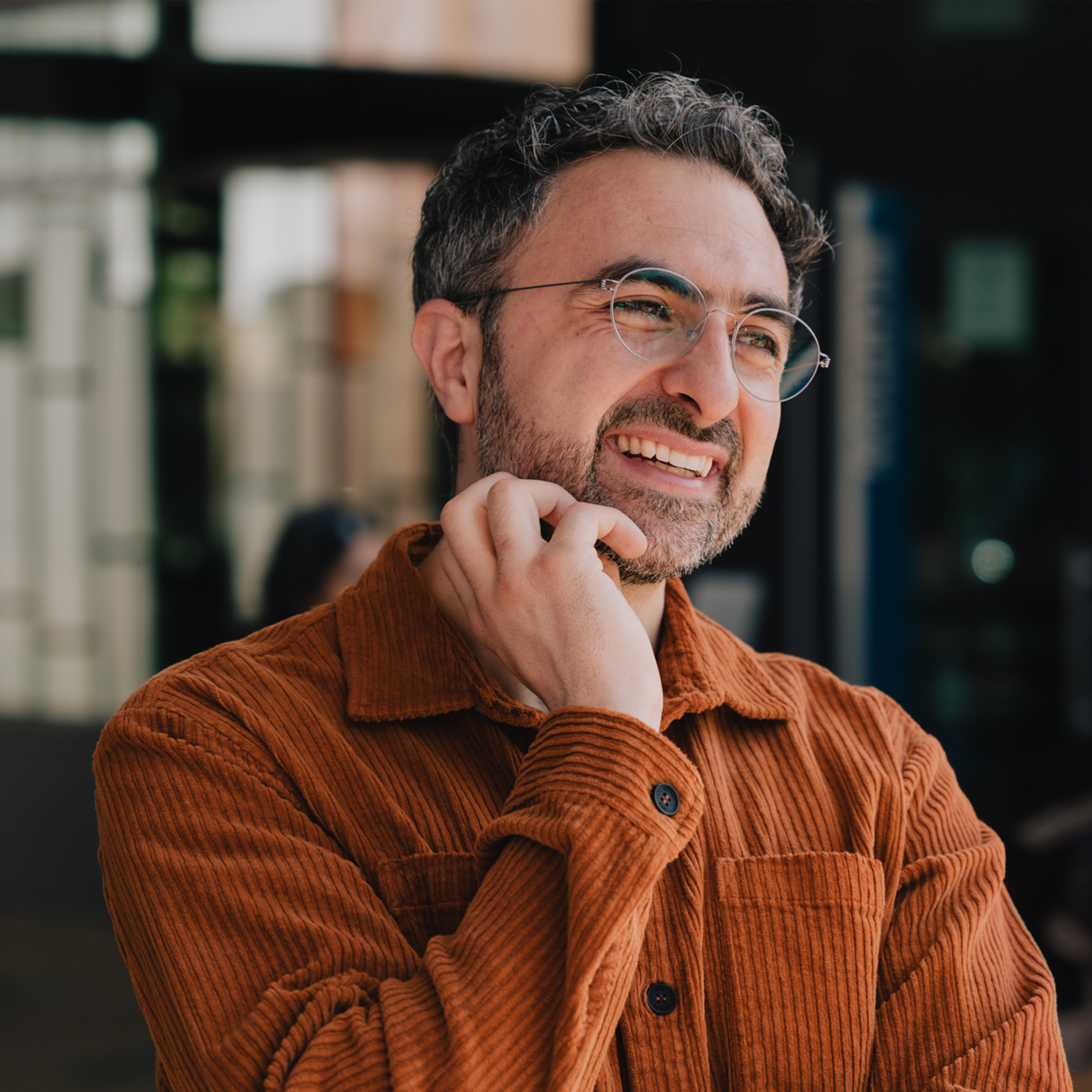
The Coming Wave with Mustafa Suleyman
Sep 5, 2023Tap to summarizeIn his new book, The Coming Wave: Technology, Power, and The Twenty-First Century’s Greatest Dilemma, Mustafa Suleyman discusses the new technologies that will transform society—chief among them AI and synthetic biology.Suleyman is a renowned thought leader on this topic, having co-founded Inflection AI and DeepMind, and having served as VP of AI product management and AI policy at Google.Together with Martin Reeves, Chairman of BCG Henderson Institute, Suleyman discusses the threats and opportunities posed by AI and synthetic biology, whether and how they will confer competitive advantage, and how governments and companies can collaborate to contain their negative effects while ensuring that society reaps their benefits.Key topics discussed:01:28 | The threats of the coming wave of technologies06:43 | A modern Turing Test for AI10:14 | The competitive advantage conferred by AI15:25 | The benefits and limitations of AI18:34 | Containing the next wave of technologies22:09 | Potential regulatory interventions23:46 | Motivations for writing the book
Transcribe →