Loading summary
Transcript315 lines
- [00:00]
Ira Glass
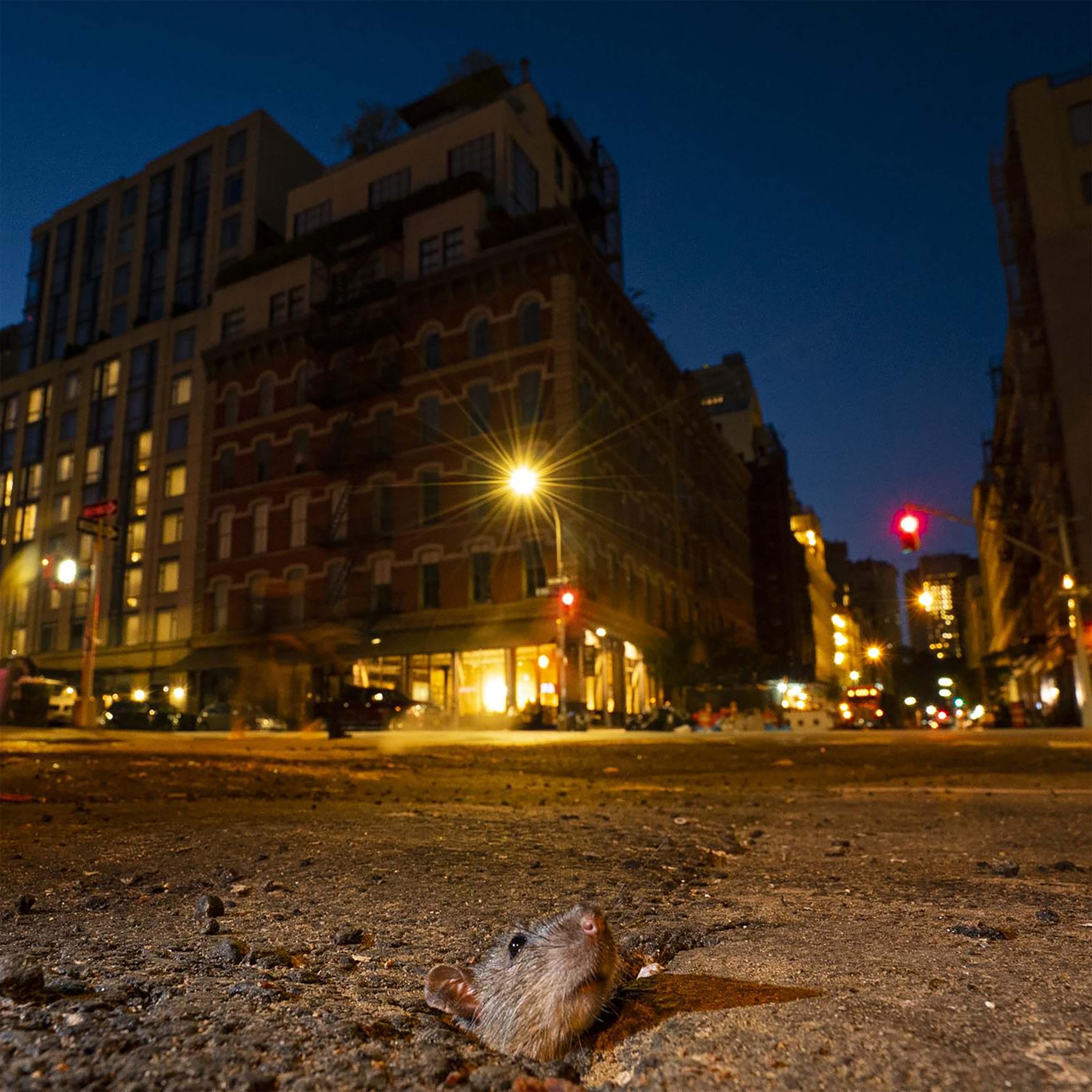
This message comes from NPR sponsor Capella University. Interested in a quality online education. Capella is accredited by the Higher Learning Commission. A different future is closer than you think with Capella University. Learn more at capella. Edu from WBC Chicago. CisAmerican Life. Good morning. And it's a great morning for New Yorkers and a great morning to be in New York City at a press conference in a park in Harlem with New York's Mayor Adams in April 2023. There are two undisputed truths about the Adams administration. Mayor Eric Adams loves his mother. Mayor Eric Adams hates rats. This event was to introduce New Yorkers to their brand new rat czar. This is a position the mayor created, and his job listing called for candidates who were, quote, highly motivated and somewhat bloodthirsty, with a swashbuckling attitude, crafty humor, and general aura of badassery. At the time of this press conference, New York's mayor was not popular. He had huge disapproval ratings on crime and homelessness. Fewer than half of all New Yorkers liked the way he was doing his job. And we're revisiting this moment because Mayor Adams was about to be replaced on January 1st. And this is an episode of ours that he inspired, that we all at our show really loved. Who? Where we tried some funny things that we had never tried before. It's a show about rats in New York and elsewhere. And as a kind of goodbye to Mayor Adams, we thought we would play this now, our last show of this year. Because when this embattled, disliked mayor, Mayor Adams, would talk about rats, it was with a kind of joy. It was like he was a dad whose teenage kids would roll their eyes at everything he said. But then he knew he had this one topic that was like, I don't know, taking them out for ice cream or something. Like, he knew this was at least gonna go over. He made rats a big issue. I hear it all the time. I'm on the trains. I'm walking the streets. People stop me and say, you know, we're with you, man. We hate those damn rats. And, you know, remember Julia? Remember when I came out that rat device? You know, I had a rat device. We caught 96 rats around Brooklyn Borough Hall. 96 rats. And, you know, there were people that were yelling, you know, oh, you murderer. You murderer. You know, this is the kind of cutthroat swagger in a lot of the remarks this day. Next to the podium is a table with all kinds of gear for shooting, poisoning, and trapping rats. Soon, the new rat czar Kathy Karate takes the stage. And if zingers could kill rodents, well, New York's in good hands. You'll be seeing a lot of me.
- [02:45]
Bashir Salahuddin
And a lot less rats. There's a new sheriff in town and with your help, we'll send those rats packing.
- [03:01]
Ira Glass
Fully keeping with the giddy mood of the day, the rats are parents are there felling for reporters and telling the story of how at 10, their daughter mobilized her entire neighborhood to fight rats. And so, so proud. They can't stop themselves from talking over each other in a gush of words. I'll be honest with you, there was so many applicants, but then when she started to get down, I was like. I said to my wife, I go, I think they're going to hire her. She's right.
- [03:22]
Chandra Russell
She's got this job.
- [03:23]
Bashir Salahuddin
She's smart. She's super smart. She's great with.
- [03:27]
Ira Glass
She's going to do a great job.
- [03:27]
Bashir Salahuddin
She can do a great job. The mayor has made it very clear.
- [03:31]
Ira Glass
His stance on rats.
- [03:32]
Bashir Salahuddin
He hates rats. I hate rats. All New Yorkers hate rats.
- [03:37]
Reggie and Rachel (New York City rats)
Wow, that is strong and not true. Nah, not true. Everybody don't hate rats.
- [03:44]
Ira Glass
Okay? So we are gonna devote our program today to rats and their hold over our cities and our minds. And for some equal time, we thought it was very important to co host today's coverage. We thought we would reach out to the one group that did not get a turn at the mic at the mayor's press conference. Welcome, you guys. So let me push this mic a little closer to you there on the floor, please.
- [04:06]
Reggie and Rachel (New York City rats)
Far away. Alrighty. 1, 2, 1, 2.
- [04:10]
Ira Glass
All right, you want to introduce yourselves?
- [04:11]
Reggie and Rachel (New York City rats)
I'm Reggie. I'm Rachel. We are rodents. Yeah, we're the rodent class. We are rats.
- [04:16]
Ira Glass
Can I ask you to ask, like, what do you make of this press conference and the mayor appointing a rat czar and announcing like rats is his mission. He's going to kill rats.
- [04:25]
Reggie and Rachel (New York City rats)
You know, look, if I had made the same budget cuts that that guy was pitching, I'd also be trying to throw little smoke and mirrors in the air. Little confusion. Confusion. Little confusion.
- [04:35]
Ira Glass
So you're saying it's just a distraction?
- [04:37]
Reggie and Rachel (New York City rats)
Of course it's an extraction. I mean, look, you know, who's going to fight back against that? We're easy.
- [04:42]
Ira Glass
Yeah.
- [04:43]
Reggie and Rachel (New York City rats)
We're small, but we're resilient. Yeah. And we got the numbers. We got the numbers.
- [04:47]
Ira Glass
Well, actually, the numbers are interesting. It's actually a real question. Nobody knows how many rats are in New York City. It's 8 million people. But since you guys are, like, nesting everywhere under the streets and sidewalks, and you're in ancient water pipes and utility pipes and sewers and subway tunnels. Like, the best guess, like, we could find from anybody is just millions of rats. That's all they can say.
- [05:07]
Reggie and Rachel (New York City rats)
A million. So far. We're growing every day.
- [05:11]
Ira Glass
Well, actually, that's true. People are seeing a lot more rats in New York. Health inspectors are seeing twice as many rats as they saw just a few years ago.
- [05:19]
Reggie and Rachel (New York City rats)
And that's what you see. Features female rats. Let's go.
- [05:25]
Ira Glass
Can I ask you guys, do you see anything in the other side's arguments? Do you see anything and why people find you to be a pest and frightening?
- [05:32]
Reggie and Rachel (New York City rats)
All right, every once and again, a kid gets bitten.
- [05:36]
Ira Glass
Okay, well, actually, the last year that we have stats for 100 New Yorkers got bit by rats, we said it's 8 million.
- [05:41]
Reggie and Rachel (New York City rats)
What is that? That's nothing. That's nothing. How many New Yorkers a year get stabbed? You know, how many New Yorkers a year get hit by cars? How many rats control rent prices in New York? Very few. Very few of us are, you know, keeping Manhattan unaffordable. And yet somehow. Oh, rats are evil.
- [05:58]
Ira Glass
Yeah. Well, let me give you guys the human point of view on this, okay? In this new battle that's going on in New York between a growing rat population and a mayor calling for your blood, let me tell you about somebody who's on the front lines of where the new wave of rats has shown up. Her name is Darnese Foster. She lives just a couple blocks from the park where the mayor's press conference was held. And she saw the commotion and stopped to watch and talked to my co worker, Valerie Kipnes. Told her that she's lived on 138th street since the 90s, and they never used to have a rat problem until the pandemic. Rats outside the building, rats in the basement. This is new. This is. I guess nobody was. Everybody was looking the other way or doing something else, and the rats took over. I. It's very frustrating. Like, garbage collection day is the absolute worst. There's really no safe place because they're running from garbage to garbage to garbage to garbage. Even in the middle of the street, it's not safe because they dart so that you can barely walk. And you just have to hope, pray to God that not there. Like, I shake my keys, I make as much noise. So Valerie and I headed to her block on garbage pickup day and met up with Darnice before her kids left for school, which is a big operation in our house. Each of her four kids goes to a different school in a different part of the city. She lives on a really pretty block in Harlem that's all townhouses and trees. It was a perfect spring morning, and as we stood there on the sidewalk, yes, even with the sun shining there in plain day.
- [07:20]
Elna Baker
Oh, God.
- [07:21]
Ira Glass
Jesus Christ. A rat? Yeah, no, I just saw the rat. I don't know where it came from, but it crawled across the top of the green can. I don't know where it went because I kind of froze. I walk over to a big plastic trash bin and look inside. There's a rat chewing through a bag. That sound was the rat. Darnice says that it's not just a general kind of post pandemic surge that's led to all the rats on her particular block. The neighborhood has been gentrifying. One house a couple doors down sold for $2.5 million. Others aren't far behind. Darniece rents in one of the only apartment buildings on the block, and she says her landlord is trying to drive everybody out of her building to raise the rents. Hot water and heat have gone out for weeks at a time. They don't fix anything. They're harassing tenants. They have managed to harass and get half the building. So half of the tenants are gone, and rats are helping their cause because they just want to clear out my building anyway. In New York City, rats are just a pawn in the much bigger clash that is New York real estate. We did reach out to the landlord, his name is Hamid Ali, to ask him if he's trying to drive out Darnees and the other last tenants in the building, letting rats to fester as part of that. But he didn't return our calls, our texts, or our emails. I'm really stubborn. I do not want my landlord to win. Oh, my God. Sorry. Sorry. I'm so sorry. That was humongous. When rats scamper by, they seem to completely unnerve Darnis. And she urges me and her sons to move away from a stairwell where she's seen rats. There are certain spots where she doesn't like to stand. But her kids are totally unruffled. Her sons, Micah and Amir. They're 9 and 12, both perfectly happy to be late for school to talk rats. Each new rat we see, they're like, yeah, sure, whatever.
- [09:15]
Reggie and Rachel (New York City rats)
This one looks like it died recently.
- [09:18]
Ira Glass
The boys spot this one up the block and show Valerie. Wait, how can you tell? Because, like, it's body, their eyes are still open and like its body is like still. It kind of looks like it's fake playing dead. And because ants haven't swarmed that place yet.
- [09:35]
Reggie and Rachel (New York City rats)
Well, I'm gonna take a quick picture.
- [09:39]
Ira Glass
Do you feel like the rats have gotten into your head? Oh, yeah. No, absolutely. I am thinking about them a lot. I mean, it's just so strange because they're so small and yet they can loom so large. They're huge. These are not small. These are big, fat, jolly rats. They are eating good here. Like, I'm amazed at how agile they are. I told her niece how a scientist I talked to said that the big problem with rats these days is not that they spread disease. She said it's rare in North America for anybody to report catching a disease from a rat. And it's much more common for rats to catch our diseases from us. Going through our stuff like New York rats got Covid from us. And the scientists told me that the bigger problem with rats is the very thing that Darnese is experiencing. The stress feeling of everything being out of control. When rats are there, it just freaks people out. Like there's just something about having them around that just gets to us psychologically. It means that you've done something terribly wrong in your life and you should correct it. If you're encountering rats, it's like a problem sign. It's like stop, stop, change. Do something different. What a day. On our program Rats when rats show up, it is all about the rats beginning of anything else. If you have had a run in with a rat, you pretty much remember it the rest of your life. Today we let ourselves get transfixed. Why do they get to us so much? Like I said earlier, my co hosts for the hour today are Reggie and Rachel. New York City rats. You guys have anything you want to say about Darnice's situation? You think she's wrong to be scared?
- [11:25]
Reggie and Rachel (New York City rats)
No, no. You know she's speaking the truth. Yeah, yeah, yeah. It's scary. But you know what? I think the fact that we're being blamed for being a bunch of Beyonces, you know, is outrageous. Right? When we step in the room, all eyes on us. Yeah, all eyes. You know, we're special.
- [11:42]
Ira Glass
Oof.
- [11:43]
Reggie and Rachel (New York City rats)
Bars, right? You know, valid. Excuse us for shining. Sorry, rats.
- [11:50]
Ira Glass
You may think you know them, you may think you have nothing to learn. We have stories today I think will open your eyes. Stay with us. This message comes from Apple Card. Apple Card members can earn unlimited daily cash back on everyday purchases wherever they shop. This means you could be earning daily cash on Just about anything, like a slice of pizza or a latte from the corner coffee shop. Apply for Apple Card in the Wallet app to see your credit limit offer in minutes. Subject to credit approval. Apple card issued by Goldman Sachs Bank USA, Salt Lake City branch terms and more@applecard.com Support for this American Life comes from Superhuman, the AI productivity suite that.
- [12:44]
Elna Baker
Gives you superpowers everywhere you work with Grammarly, mail and coda coming together.
- [12:50]
Ira Glass
You get proactive help across your workflow.
- [12:52]
Elna Baker
So you can outsmart the chaos experience.
- [12:55]
Ira Glass
AI that proactively helps you go from.
- [12:57]
Elna Baker
To do to done faster.
- [13:00]
Ira Glass
Unleash your superhuman potential today. Learn more@superhuman.com podcast that's superhuman.com podcast.
- [13:11]
Chandra Russell
Clarity.
- [13:12]
Ira Glass
Is a competitive advantage, especially when it.
- [13:14]
Chandra Russell
Comes to the economy.
- [13:16]
Ira Glass
That's because anybody can know what's happening. But understanding why it matters is crucial. Hi, I'm Kai Rysdal, the host of Marketplace.
- [13:23]
Chandra Russell
We provide the context you need to.
- [13:25]
Ira Glass
Understand how the economy influences our everyday, everyday lives. From our local communities to the global conversation. You'll be smarter every time you listen and these days, that's priceless. Listen to Marketplace on your favorite podcast app. This is American Life from Ira Glass. For our show today on Rats, I am co hosting with two New York City rats. And we're going to start today with a story that the two of you commissioned as co hosts, right?
- [13:53]
Reggie and Rachel (New York City rats)
Mm, yep. Because there's the lie and there's the rat truth. That's why we're here to tell our story, which is why we got this next story for you, Act 1 51st rats. So this might be hard for some of you close minded folks to believe, but there are a lot of people out here who love rats, love us to death, who see us for who we really are. For more we go to NPR's Elna Baker.
- [14:18]
Ira Glass
Actually, she's not with NPR.
- [14:20]
Reggie and Rachel (New York City rats)
Oh my God. Copy that. But more on this we go to our very own Elna Baker.
- [14:25]
Bashir Salahuddin
Okay, so I wanna start from the beginning. You and I, we met at a party, right?
- [14:31]
Elna Baker
Yep.
- [14:32]
Bashir Salahuddin
You came up to me and you basically did this thing where you were like, hey, you're a woman. Can I get your opinion on something? And then you explained your predicament. Will you explain for us now what's your current big dilemma?
- [14:50]
Elna Baker
Yes, I have several pet rats and I also am single and used to be a very active dating in the dating scene. And I want to either, I have to either get rid of my rats so that I can start dating again or I guess become a weird, lonely rat person. For the rest of my life. I don't know if that's like. It seems like those are the two options, and the fact that I'm weighing that decision is probably not a good sign. That should be a pretty easy choice. I would think that a couple of years ago it would have been an easy choice for me, but all of a sudden it's not.
- [15:24]
Bashir Salahuddin
And at the party, you turned to me after explaining all of this and you said, is me being a rat guy a deal breaker?
- [15:35]
Elna Baker
And you emphatically said, yes.
- [15:37]
Bashir Salahuddin
Yes. Because it's not just that Todd has rats. That's his name, by the way. Todd. He has 12. They roam free all day. And they've taken over his living room, where he's set up an American Gladiator style obstacle course with tiny ropes for the rats to swing from furniture. If this were a Disney movie, it'd be magical. But if Todd were your Tinder date, you'd report his profile. A little about toddler. He's 39, a writer living in LA. He's tall, attractive, says he wants to find a real relationship and settle down. According to his friends, he's really broken up over this choice, Constantly telling them he's going to get rid of the rats, but unable to pull the trigger, he's truly at a crossroads. Obviously, I have a strong bias for which road I think he should take. The kind of road that when you're walking, a rat doesn't suddenly come scurrying out, brushing against your feet. And the only thing I didn't understand, why was this so hard for him? Okay, so just help me. Walk me through it. So how did it start with the rats?
- [16:46]
Elna Baker
I think that the rats, in a weird way, I think everybody has, like, at least one weird thing that they got into during the pandemic. For some people, it was like knitting or like, you know, a weird Japanese TV show. For me, it was, you know, having a bunch of pet rats.
- [16:59]
Bashir Salahuddin
Wait, so, so I see. So basically you're saying this decision could only have happened during the pandemic.
- [17:08]
Elna Baker
100% before the pandemic, I was not what. What you would call a rat person. I, you know, I spent 10 years living in New York. I thought rats were pests, not pets. Like, they are, like, slightly above or below bedbugs, I guess, on, like, the New York things you don't ever want in your apartment list. It was probably three weeks into the pandemic, into the first lockdown. I was going on a walk, and when I got home in the parking lot, to my apartment. There was the. I saw this little, tiny, cute little rat, and he was crawling, and he wasn't, like, scampering away. He was crawling, and his back legs weren't working. He was kind of like dragging his body with his front little arms. It was like. It almost looked like out of Saving Private Ryan, like, just like a wounded soldier trying to carry himself to safety. And I felt so bad. It was like, one of the saddest things I'd ever seen, combined with also being super, like, lonely and locked down and, like, just going on, like, a super introspective walk. And I was like, I'm gonna save this rat. I'm gonna bring this rat upstairs. I'm gonna nurse it back to health.
- [18:12]
Bashir Salahuddin
Todd put on a pair of gloves, picked up the rat, put it in a box, did the icky dance, then went upstairs.
- [18:19]
Elna Baker
The first thing that happened is I called the Humane Society, because I was like, I'll take care of this rat until they can take him in, thinking I would do that the next morning. And they were like. Immediately the girl on the phone was like, yeah, we don't do anything with rats. Like, I can call animal control to get rid of it if you want, but we don't, like, do anything for rats.
- [18:34]
Bashir Salahuddin
Wait, the Humane Society is like, ew, no rats.
- [18:39]
Elna Baker
Yeah, at least the one in la. Yeah. They are not very humane.
- [18:42]
Bashir Salahuddin
The woman was humane enough to give him the number of a rat rescue. He calls and talks to a woman named Shannon who says she'd love to take his rats, but she can't for 10 days because she's out of town.
- [18:53]
Elna Baker
She's like, can you handle it till then and keep it alive? I was like, yeah, of course I can. Like knowing nothing about rats or anything, But I was like, awesome, we got a project now. Let's do it.
- [19:05]
Bashir Salahuddin
Because of the pandemic, Todd had lost his job. He spent most days sitting at home with his wheels spinning. So Project Keep Rat Alive until Shannon Gets Home became his new focus. Todd was in luck, though. The rat he took home wasn't a street rat. It was a discarded pet rat. While they're the same species, the difference between street rats and pet rats is similar to wolves versus dogs. Still, the first night did not go well. Todd was afraid of the rat, and it seemed afraid of him. It escaped the cardboard box it was in multiple times. But quickly, Todd went from being grossed out to engrossed. He'd Google, why does my rat do this? And lose himself for hours reading all sorts of rat behavioral studies.
- [19:54]
Elna Baker
Also, every pet rat is different. Cause, like, they all have different personalities, much like people. And so you'll go on the rat Reddit, or Rattitt, as it's called, and to Google or to look up, it's called Rattat. It's called rat it. They got a good one. They locked that down pretty good. It was a real crash course into learning about everything about rats. Like, you have to get it a buddy. Basically. Like, they hate being alone. They get lonely and depressed. And so immediately I was like, okay, I got to get another rat for, like, 10 days. Or at this point, it was like eight. And so I went on Craigslist and started looking up, like, you know, like, rats for sale. So I found a guy who was selling rats for, like, $3 a piece of. And I went to that dude's house, and he's like, okay, here's the two rats I have. Which one do you want? And there's two little cute rats and, like, a little fish tank thing. And I was like, I don't care. Like, you know which. Which one do you not want? He's like, well, it doesn't matter to me. I'm just gonna feed the other one to my snake. And I was like, well, now I don't want the other rat's blood on my hands. Like, I'll just buy them both. So at that point, I had three rats. And obviously, very quickly, I was becoming like, they were definitely my best friends and my only friends, because again, it was lockdown. And so at the point that this lady Shannon got back from visiting her family and was ready to take the original rat in to her rodent rescue, I no longer wanted to give him up. And in fact, she was not surprised that my rat culture had already multiplied to three. And she's like, that's how it happens. And then I was like, no way. She's like, yeah.
- [21:24]
Bashir Salahuddin
She literally says, that's how it happens.
- [21:26]
Elna Baker
Oh, yeah. She was laughing. She was like, yeah, that's literally every rat owner. Like, you start with one, and then all of a sudden, like, you have a ton.
- [21:32]
Bashir Salahuddin
She tells him about another rodent rescue where he can get even more rats. Todd says, I think I'm okay with three.
- [21:39]
Elna Baker
Shannon, thanks a lot. I hang up the phone, immediately, go on Instagram, look at the South Bay rodent rescue. And later that day, I had two more rats. I was up to 5. And I'm pretty sure I want to say later that week, we got to eight. Like, if you added up all the rats I've had Between the ones that have died and the ones that.
- [22:00]
Ira Glass
Got.
- [22:00]
Elna Baker
Fostered, I feel like I probably have, like, 35 rats at this point, which is pretty insane.
- [22:04]
Bashir Salahuddin
35 rats? Actually, it was 37. There's Claude, Pearl, Arthur, Marceau, Birdie, Lucy, Henry, Bobby, Caesar, Leonard, Oliver, Harriet, Luke, Amanda, Julian, Roger, Ricky, Bo, Penelope, Sweet Lou, Dave, Kelsey, Alonzo, Ebenezer, Eddie, Beth, Sven, Osmo, Jake, Delilah, Clouse, Aldous, Dare, Eleanor, Gertie, Joshua, Heidi, and Peter. He didn't have them all at once. Rats only live a few years, so the most he's ever had at one time was 14. When I've told friends about Todd's rats, they've asked me, is he okay? Like, is he having a breakdown or anything? And the answer is emphatically no. He's fine. But he'd just lost his job, and he was having a hard time getting motivated to find another one in the pandemic job market. And besides, how could he? He was so busy falling in love with rats. I see rats as vermin, carriers of disease. Just thinking of them skeeves me out. But Todd says I just don't know them. Like a proud parent. He told me things about rats that converted him. And I gotta say, I actually had no idea how intelligent these animals could be. That's part of what hooked Todd.
- [23:29]
Elna Baker
He observed, rats are, like, obsessed with what we know about what they know. Like, they never want us to know what they know. There's like, the mind game level. It's like CIA level mind games of, like, they want to make us keep us in the dark about whatever information they have or whatever they know how to do. So, like, they're very secretive. They love hiding stuff and stashing stuff, and they never want to be caught doing anything naughty.
- [23:52]
Bashir Salahuddin
Right in the beginning, Todd would give his rats treats, which they'd take and stash in hiding spots all over his apartment. Every night, he'd have to clean 20 to 25 little stashes. Todd started to get suspicious. He was giving them treats, but not this many treats. So he set up a GoPro facing the treat drawer to find out what was happening. Sure enough, the rats had figured out how to open the treat drawer by standing underneath it and pushing it open. As a team, they'd steal treats, then close it shut. Todd immediately moved the treats up to the middle drawer. The next day, he came into the kitchen. The middle drawer was open and all the treats were gone. He reviewed the GoPro footage to try to figure out what happened.
- [24:39]
Elna Baker
Come to find out that three of them had figured out that if they wedged them so the oven is next to this cabinet, if they wedged themselves against the oven with their little tiny fingers, they were able to kind of, like, just wedge in between the drawer and get it out just enough that then they could stick their face in, use their face to wedge it out more. And then all of a sudden, they were able to climb into this middle drawer and start stealing food again. But then they figured out that they can't close the second drawer because there's no way to push it close. They'd been closing the bottom drawer, and.
- [25:08]
Bashir Salahuddin
If it's not closed, then that means they're caught.
- [25:11]
Elna Baker
Now you're totally caught. So then I don't know what little rat meeting they had, but they somehow came up with the idea that instead of getting caught with the second drawer open and that they'd been stealing food, they would take all of the food and treats from the second drawer and put it back into the first drawer, the bottom drawer. So then hopefully when I would find it, I would think that they were, like, helping me put it back in the correct drawer.
- [25:34]
Bashir Salahuddin
Todd opens the bottom drawer, and the treats are all there. Another thing I learned talking to Todd about rats is that they can jump incredibly high like bunnies. Todd learned this when he set up his GoPro to figure out how his rats were getting into these high cubbies. The footage showed they were crawling onto the kitchen table and launching themselves four feet in the air. Todd knows their secret, but they don't know he knows. A few days later, he wakes up.
- [26:08]
Elna Baker
And I walked into the living room, and I saw Claude, and he was running over to go do this, and then he's kind of stopped and froze. He had been busted doing something naughty. And he walked up to the edge of the table, and I looked at him, and he kind of turned and looked at me, and then he turned and looked at the cubbies, and then he turned and looked at me again. And then he jumped, like, straight up, just like a couple, like, the saddest little jump, and just belly flopped onto the ground. He essentially tried to trick me into thinking that he could not make this jump that, like, very easily could be done. And I have seen them do now on camera many, many times. I was like, did that just happen? Like, did this rat just try to trick me into thinking he couldn't do something I know he can do?
- [26:49]
Bashir Salahuddin
I talked to a rodent behavior specialist about all of this. He says Todd's got it mostly right. He wouldn't go so far as to say the rats were trying to trick Todd. But he said that rats know what will or won't get them treats from their owner, and they'll behave accordingly. What Todd is reading as intent is actually the nuance with which the rats can read the cues he's giving. I was surprised when the rodent guy told me how perceptive they are. If you're stressed, a rat can smell that. They also study your posture. They read your facial expressions. They can detect things about us that we can't even see in each other. And they're social animals. If you like them and aren't trying to kill them, they want to play all day. They enjoy it, which Todd noticed.
- [27:35]
Elna Baker
It was nonstop entertainment. They are always up to something. And also, they're so loving. They're just like, they're one of the most loving creatures you could ever have as a pet. They just are obsessed with you. It's like, wait, okay.
- [27:49]
Bashir Salahuddin
It was the side of rats I do not know about. Like, no one talks about rats. They're so loving. So can you just, like, I need you to. I need you to convince me that that's true.
- [28:06]
Elna Baker
That's fair. That's totally understandable. But as far as, like, their loving nature is, like, do they just, like, constantly want to come cuddle and kiss you and give you little licks? And, like, this is so. I fully admit that, like, I am, like, pretty far off the deep end into, like, pet rat ownership. But there's still, like, another level that I haven't, like, sunk to yet, which is, like, a lot of people let their rats, like, clean their teeth and stuff, which is, like, disgusting to me. But rats love to groom you because that is, like, hugging and kissing. I think that I got a lot of booger eaters right now. They just always want to get in my nose and try to, like, clean my boogers, which is like, dude, stop. That is, like, disgusting.
- [28:46]
Bashir Salahuddin
You have a line.
- [28:49]
Elna Baker
Oh, yeah, I do. I do. Yeah. I will not let them clean my teeth or boogers or the ear thing is like, I don't want them crawling inside my ear. But it is really cute when they try to because, like, you hear their little squeaks and sniffs, and that's pretty cute. But then once they start trying to get into your ear to clean it, it's like, dude, stop. Like, that's disgusting.
- [29:09]
Bashir Salahuddin
The idea of Todd being groomed by rats brings me back to his predicament. When does the thought, okay, I need to get rid of these rats if I want to have love And a relationship. When does that occur to you?
- [29:25]
Elna Baker
Yeah. So for me, I feel like as the pandemic started, kind of like actually winding down a bit. I think, like, post, like the last variant, it felt like things were opening up again. People were, you know, I was going to parties again for the first time in a while and, like, meeting people at parties. And like, I think I was at a friend's party and the moment kind of occurred. I was. I met a girl at this party and we really hit it off and we were flirting and then we exchanged numbers and then she. We kind of kept talking and then she inquired about potentially getting a drink. So we had a drink after this party. And then as things were winding down and the bar was closing, you know, I think like, anybody, you fall into old habits and you're like, okay, do you want to go back to my place? And she's like, yeah. And like, it was like a Keyser Soze moment where all of a sudden in my head I was like, oh, my God, wait a minute, I have at that point 12 rats in my apartment. Like, it had not. It had not even occurred to me that, like, I can't bring this person home to an apartment full of rats. I was like. The first thing that rushed through my mind is like, how do I explain this to her? To preface this before we go to my apartment? And, like, very quickly I was like, there is no way to explain having 12 rats in your apartment.
- [30:33]
Bashir Salahuddin
They were in his car. On the way home, Todd turns to.
- [30:36]
Elna Baker
The woman and says, actually, I'm really sorry I lied and said, I'm actually really, really tired and I have an early morning tomorrow. And so this girl probably thought, like, I was not that into her having second thoughts, when in reality it's because I didn't want to expose her to a rat filled apartment.
- [30:52]
Bashir Salahuddin
He takes her back to her car and they never see each other again.
- [30:56]
Elna Baker
I remember laying in bed that night being like, well, this is probably the end of rat ownership. Like, if we're gonna be like, meeting people again, life is kind of starting to get back to normal. This is not something that you can explain to somebody.
- [31:13]
Bashir Salahuddin
Todd's tried to get rid of the rats, posted them online, but then every time, he ends up backing out at the last minute. So much so that he's been banned from multiple online LA rat groups.
- [31:25]
Elna Baker
Three and a half weeks ago, I had a woman who was coming to adopt them who, like, I feel really bad. She drove all the way from Simi Valley in like, a half hour before and I was like, I'm so sorry. I can't do this. Like, I gotta keep them. I'm really, really sorry. I offered to, like, Venmo her for her gas, but she was like, no, don't worry about it. Whatever. But, yeah, it's really hard to get rid of them. I've tried quite a bit. It's tough.
- [31:47]
Ira Glass
Oh, man.
- [31:50]
Bashir Salahuddin
I don't think you're gonna be able to do it.
- [31:53]
Elna Baker
I know, but I have to. There's gotta be a way.
- [31:56]
Bashir Salahuddin
Why do you have to?
- [31:58]
Elna Baker
This is definitely not a sustainable way of living life.
- [32:05]
Bashir Salahuddin
Todd told me he was planning on getting rid of all of his rats within a.
- [32:19]
Reggie and Rachel (New York City rats)
Okay.
- [32:19]
Bashir Salahuddin
Hi, Todd.
- [32:20]
Elna Baker
Hi.
- [32:23]
Bashir Salahuddin
So, all right. So it's been four months since we last talked.
- [32:28]
Elna Baker
Has it really been four months?
- [32:29]
Bashir Salahuddin
It's been four months. Well, minus, like, a few days. I'm dying to know, have you given away the rats?
- [32:37]
Elna Baker
I have not. I have, I feel like, made some progress in that. I have committed to not getting any more rats or any new rats, which I think is a big step, a first step. I'm down to three now, unfortunately.
- [32:53]
Bashir Salahuddin
You're down to three rats?
- [32:54]
Elna Baker
Down to three rats, yeah.
- [32:56]
Bashir Salahuddin
Since Todd got most of them around the same time, many of them died around the same time. It's been hard. He's actively restraining himself when he has the urge to get more rats.
- [33:08]
Elna Baker
That takes discipline.
- [33:09]
Bashir Salahuddin
What was the closest you came?
- [33:13]
Elna Baker
Like, a week ago, man, there was a really cute rat video. There was a. There was a rat, like, a week ago that was. Came from the same, like, breed as one of my favorite rats. My first rat, Claude, that died, that was just like, oh, he's the cutest and best little rat. And there was, like, a really cute video that one of the rodent rescues posted. And I was like, yeah, he's up for adoption. I was like, man, four isn't that different than three? Maybe I'll just get, like, one more and then, like, see where that goes. But he was a young rat. I was like, if I get a fourth one that's young, then I'm going to have to get him a buddy when the other three die. And then now we're at two. And then, like, you know where this goes from there? Like, it's just, like, it spirals out of control pretty quickly.
- [33:50]
Bashir Salahuddin
So why is he finally letting go of his rats? What changed? After our first call, he started opening up to women on dating apps about his rat ownership. To his surprise, at least half were totally cool with it. He even brought four dates home to Meet the rats. It went great. This huge obstacle he'd invented rats or love. It wasn't actually a problem, which made him look at why he was so embarrassed about being a rat guy in the first place.
- [34:19]
Elna Baker
I think I was more embarrassed and ashamed of being in general who I was and where I was at that point. Obviously, like the pandemic. Like it just like everything that my identity was wrapped around had been paused. Like I, I love those rats, do not get me wrong. And they are super fun. But I think also you could argue that I was using rat ownership as a way of avoiding addressing other problems in life. Cause that's the double whammy is like, okay, I'm not pouring all this time into this weird hobby. That means I do have to pour it into getting my career back on track, addressing my personal life, addressing my love life and actually taking those things serious. I don't have this great excuse anymore to avoid them.
- [35:03]
Bashir Salahuddin
Todd's taking steps to move towards a life without rats. He's taken down all the paintings and pictures the rats chewed the edges of and is replacing them with new art. The rats destroyed all his plants. He's buying new ones. And he's been going out on lots of dates. He feels hopeful about his new life, though he did say when he's out buying new plants, maybe he'll see a new rat and get that too.
- [35:38]
Reggie and Rachel (New York City rats)
Elna Baker, she's a producer on this show and a real one to us.
- [35:42]
Ira Glass
Rats. Coming up, no country for old rats. We visit a vast place that has somehow gotten rid of rats.
- [35:53]
Reggie and Rachel (New York City rats)
That's in a minute from Chicago Public Radio when our program continues.
- [35:59]
Ira Glass
This message comes from Capital One. Capital One offers checking accounts with no fees or minimums. What's in your wallet terms apply. See capitalone.combank for details. Capital One NA Member FDIC support for this American Life comes from Mint Mobile. Turn your expensive wireless present into a.
- [36:19]
Elna Baker
Huge wireless savings future by switching to Mint Shop.
- [36:23]
Ira Glass
Mint unlimited plans@mintmobile.com American limited time offer upfront payment of $45 for three months, $90 for six months or $180 for 12 months. Taxes and fees extra initial plan term only above 35 GB.
- [36:38]
Elna Baker
Network may slow when busy capable device required.
- [36:41]
Ira Glass
Availability, speed and coverage varies. See mintmobile.com Support for this American Life comes from BetterHelp. The holidays are a time of traditions like making your grandmother's pudding recipe or.
- [36:54]
Elna Baker
Watching that movie you've seen a thousand times. Incorporating therapy into your life can help you take time for yourself during what.
- [37:01]
Ira Glass
Can be A joyful but sometimes tough time of year. And by caring for yourself, you can show up more for the important moments. This December, start a new tradition by.
- [37:10]
Elna Baker
Taking care of you.
- [37:11]
Ira Glass
Visit betterhelp.com tall for 10% off just American life from Hourglass Today's program must be rats on the brain. My co host today, New York street rats Reggie and Rachel.
- [37:26]
Reggie and Rachel (New York City rats)
Hello. Hey, we're here.
- [37:28]
Ira Glass
All right, you guys, welcome back to the second half. We have arrived at Act 2 of our program, Act 2, the big bag theory. So, like we were talking about at the beginning of the show, early on in the administration of the current mayor of New York, Mayor Adams, he and his rats are declared a war on rats. But one thing about that entire project that's kind of absurd is that one reason that there are so many rats in New York City is just completely obvious. It's just out in the open, not complicated at all.
- [38:00]
Reggie and Rachel (New York City rats)
That's right. It's racism. Oh, no, I'm sorry. No, it's plastic bags.
- [38:05]
Ira Glass
Yeah, the bags.
- [38:05]
Reggie and Rachel (New York City rats)
Excuse me?
- [38:06]
Ira Glass
Yeah, the plastic bags. Yeah, yeah, right.
- [38:08]
Reggie and Rachel (New York City rats)
Yeah, the MacDag.
- [38:09]
Ira Glass
Yeah, that's the thing. New Yorkers put out their garbage in plastic bags. And if you've ever visited the city for more than a day, you've seen these. They're on the sidewalk at night, just huge stacks of them, just stretching down the block. It's about £8 million of food waste every day. That's £1 for every man, woman, child, and non binary person in the five boroughs. And it is also a lot of rat food.
- [38:31]
Reggie and Rachel (New York City rats)
It's like a buffet on every block. And you're saying, oh, no, don't eat the buffet food.
- [38:36]
Ira Glass
And is it very hard tearing into a plastic garbage bag? No.
- [38:42]
Reggie and Rachel (New York City rats)
Is it hard to walk?
- [38:44]
Ira Glass
All right, all right, point taken. Okay, so why, why, why would the biggest city in the country decide to do something so absurd and counterproductive? One of our producers, Ike Sriskondarajo, looked into that.
- [38:56]
Ike Sriskandaraja
It wasn't always this way. New Yorkers used to take out their trash in Oscar the Grouch style. Metal cans with tightly fitting lids. The cans were ubiquitous, mostly worked, but nobody liked them. Here's how you used to have to take out the trash. You'd put your raw refuse in a metal can. A sanitation worker would drag it to the back of the truck, banging it loudly to empty it out. Where New Yorkers, many without hoses, were left to clean out their smelly metal cans. It wasn't great. Then in the late 60s, the future arrived. America put a man on the moon.
- [39:40]
Ira Glass
And here's the answer, folks. New glad trash bags. They're odor proof, scatter proof. So strong they're leak proof. It's the end of trashy trash.
- [39:49]
Reggie and Rachel (New York City rats)
That's neat.
- [39:50]
Ike Sriskandaraja
Plastic trash bags were mass produced. For the first time, New York City Mayor John Lindsay saw an opportunity for an easy political win. He called a press conference on May 8, 1969. Reporters gathered in the blue room at City Hall. A garbage bag hung on the wall. And Mayor Lindsay announced plans for a new experimental program that would allow New Yorkers in half a dozen neighborhoods to drop trash bags directly on the curb overnight. The mayor said he wanted to see if paper and plastic garbage bags could reduce noise, odor, litter, speed up garbage collection, and improve conditions for sanitation workers. The sanitation union was all in. But not everyone was so glad. Bobby Corrigan remembers where he was these days. He's a world renowned rodentologist, but back then he was taking an intro to Pest management class at SUNY Farmingdale. His professor asked the class to consider the mayor's recent announcement.
- [40:58]
Ira Glass
I remember him giving us a lesson about that event. And he said, I want you to.
- [41:04]
Chandra Russell
Write a homework lesson.
- [41:05]
Elna Baker
What do you think this is going.
- [41:06]
Ira Glass
To do for the rat population of the city to put trash in plastic bags?
- [41:12]
Elna Baker
What will this do?
- [41:14]
Ike Sriskandaraja
Even the students In Pest Control 101 could tell what would happen.
- [41:19]
Ira Glass
The writing was on the wall that if we do this, we're going to be literally as if it was a zoological garden. We're going to try to grow these animals.
- [41:29]
Ike Sriskandaraja
For some reason, Bobby thinks back on this moment. Often in the Terminator version of this movie, which would be called X Terminator, the human survivors of New Rat City would send Bobby back to dive in front of the podium and knock the bag out of Mayor Lindsay's hand.
- [41:47]
Ira Glass
If I was there sitting in the audience or any pest professional, we all would have went, whoa, whoa, stop.
- [41:53]
Reggie and Rachel (New York City rats)
We have questions back here in the back row.
- [41:55]
Ira Glass
Stop, stop. My message would have. I would have stood up and say, this is going to be a colossal mistake in public health and a colossal mistake in quality of life, and it needs to be stopped and rethink this whole thing with different approaches.
- [42:10]
Ike Sriskandaraja
How pivotal was this moment in the history of the New York City rat population?
- [42:17]
Ira Glass
I think. I think it was everything. I think it put this animal into hyperdrive.
- [42:26]
Ike Sriskandaraja
He calls this the big Bang theory or the big bag theory, because he's funny. Right before the bags, in 1969, another respected rodentologist named Joe Brooks did a survey and found that rats were only in 11% of New York now, Bobby says rats are in 80 to 90% of the city. So did anyone in charge see this coming? If a bunch of undergrads in an entry level, best class could tell, couldn't the people running the city? Fortunately, one of the men who brought plastic bags to New York is still alive. Jerry Kretschmer is now 88. Back then, he was acting sanitation commissioner. Jerry might be one of the last people left who can tell us definitively. Did they have any idea that the plastic bags would lead to a ratpocalypse in 1971?
- [43:33]
Chandra Russell
Let's just say if somebody would show me a plastic bag, I would think.
- [43:37]
Elna Baker
That'S easy to fill, that's easy to.
- [43:39]
Chandra Russell
Pick up, and they're easy to collect. Those are the things that I would have thought about it. I wouldn't have thought that rats could eat them, because that wasn't what I was concerned with. My concern is collecting the garbage.
- [43:52]
Ike Sriskandaraja
Is that trade off worth it?
- [43:55]
Chandra Russell
I don't know if it's worth it. My story is we gotta get the garbage collected.
- [44:01]
Ike Sriskandaraja
Rats were not on Jerry's radar at all. He was busy removing millions of pounds of garbage from the city every day, which, by the way, is kind of a miracle. And baggs, they made that massive job faster. 20% faster. Where the city saw efficiency, Big bag saw dollar signs. Bag makers primed the public by donating 600,000 sacks and even got to help pick the guy who evaluated the pilot project. At the initial press conference, that guy claimed that bags would reduce the smell so much that they wouldn't attract rats. Which, as any New Yorker who has walked past a pile of black bags of baking under the hot sun can tell you, it's just a total lie. In January 1971, the city council unanimously voted to approve the use of plastic bags in all five boroughs of New York. Cans were out. Bags were in, and the party began. Oh, to be a New York City rat in the 1970s.
- [45:21]
Ira Glass
Fast forward to 2023. I don't think you're going to find an administration that is more serious about containers and placing our garbage in containers like we are.
- [45:33]
Ike Sriskandaraja
That, of course, is Mayor Eric Adams and the big thing he and his new rat czar are doing to take back the city from rats is to get trash bags back in trash cans. But Adams is putting millions of dollars into a new pilot that undoes Mayor Lindsay's pilot. It puts trash into sleek, modern bins. It's ambitious, bold. But here's why it might not work. The New containers need to be picked up more often daily or even twice a day. This would require hiring more sanitation workers and buying new special side loading trucks. Could cost hundreds of millions of dollars over the next decade. And then there's the parking spots. To make the plan work, the city would need to place the containers in 150,000 parking spots. Up to 25% of spots in some neighborhoods. So are New Yorkers willing to give up their parking in order to beat back rats?
- [46:42]
Bashir Salahuddin
I don't want to give up parking spot. It's hard enough to find a parking spot.
- [46:45]
Ira Glass
You can't get a spot as it is around here.
- [46:48]
Chandra Russell
Just when you come home at night, forget about it.
- [46:51]
Ira Glass
I'd rather get rid of the rat problem. That's much more important.
- [46:54]
Elna Baker
I mean, this is a walking city.
- [46:55]
Ira Glass
So, you know, it's easy. Give up the spots, give off the spots. 150,000.
- [47:04]
Chandra Russell
Where they going to park in Jersey?
- [47:06]
Ira Glass
You're asking like a very. Two very intense things in New York. Finding a spot to park but not wanting problems with a rat. That is 150,000.
- [47:19]
Chandra Russell
Got to make sacrifices.
- [47:21]
Ira Glass
You got to make sacrifices. But that means people got to spend more money going to like parking garages. Oh, that's. I'm gonna have to say no.
- [47:31]
Bashir Salahuddin
I don't care at all. Same like it doesn't affect me.
- [47:35]
Ira Glass
Yeah, I don't think I care.
- [47:36]
Bashir Salahuddin
I don't think I care whatsoever. Parking spots aren't affecting me.
- [47:40]
Ike Sriskandaraja
It was mixed, pretty much split. Humans are a house divided. Rats, they're united. They know what they need to do. That's why they're winning.
- [48:00]
Ira Glass
Like Teresa, he's a producer on our show. It's been two years since we first broadcast this episode. Mayor Adams has his job till December 31st last fall, he mandated that most New Yorkers, 70% of them now have to put their trash out in thick plastic bins with secure latching rat proof lids. So years passed. Did it work? Are people complying with the rule? We reached out to New York's Department of sanitation to find out and learned they have no idea. They don't know how many people are using the containers now and they don't know how much trash was in containers before Mayor Adams mandated it. They are also not measuring whether the number of rats is going down in the city. The the best measure they've got is complaints to 311 over the phone. Rat sightings. They are down roughly 20% since the mayor's war on rats began, though in certain neighborhoods they are up, way up it is not clear if Adam's successor, Zoran Mandani, will be appointing his own rats.
- [49:12]
Reggie and Rachel (New York City rats)
Actree Alberta, more like Almoida. A lot of rats.
- [49:18]
Ira Glass
All right, so daily, everywhere there are people, there are rats. They thrive living off our agriculture and our garbage. They've followed us wherever we've settled.
- [49:26]
Reggie and Rachel (New York City rats)
We followed you to love. Hey.
- [49:29]
Chandra Russell
Hey.
- [49:30]
Reggie and Rachel (New York City rats)
He's the main character.
- [49:33]
Ira Glass
So you're saying it's more of a partnership?
- [49:35]
Reggie and Rachel (New York City rats)
Absolutely. Good luck.
- [49:36]
Ira Glass
Well, I'm just saying that as people spread around the globe like rats, most of the rats that are across New York and across America, they started in China and Mongolia, right?
- [49:46]
Reggie and Rachel (New York City rats)
That's right, Mongolia. And then got to Europe, and then, you know, we got on the boats and just headed out to everywhere. You know, everywhere the Europeans went, the rats went.
- [49:55]
Ira Glass
That's actually the truth. And if you want to find places where there aren't rats, you basically have to go to places where there are no people. Like Antarctica. There are islands here and there. But there is one big exception to all this. The largest place of human habitation where there are no rats. Alberta, Canada. Alberta, Canada, is a province of Canada roughly the size of California and Oregon combined. It's bigger than France. And it's done something that humans elsewhere have failed at completely. They have no rats. How is that possible? How'd they do it?
- [50:28]
Chandra Russell
We are a couple miles west of the Saskatchewan border. It's kind of like the front line, I guess. And there's no doubt that's where the rats show up.
- [50:40]
Ira Glass
I'm riding through the Alberta countryside with rat inspector Jory Hoffman. It's green and mostly flat, open space that to an American like me, looks very Midwestern. Farm after farm. And the towns near the border are tiny. George, 29, straight talking guy who volunteers at the fire department and small town events in a T shirt, jeans and baseball cap. His feelings about this line of work are uncomplicated.
- [51:03]
Chandra Russell
I like my job. I like the outdoors. So spray weeds, go look for rats. Something new every day. I'm an everyday farmer, so I enjoy it.
- [51:17]
Ira Glass
Rat hunting is just five weeks in the spring and fall for him. When he's not doing that, he's working the farm his family's had for five generations near here. He knows most of the farmers here along the border. Also in the truck is Karen Wickerson, who runs Alberta's rat control program. She explains that Alberta's campaign against rats began decades ago. If you picture for a second, okay, rats arrive on the east coast of North America and then slowly spread west across the Continent. And in Canada, what that means is they infiltrate Quebec province, and then they move west to Ontario province, the Manitoba province. Karen says they reached Saskatchewan province, surprisingly not that long ago, around 1920.
- [51:55]
Bashir Salahuddin
And it took them 30 years to move across the province to get to the Alberta, Saskatchewan border. And essentially, we saw the rats coming, and so we're able to mobilize and be ready for when they arrived.
- [52:09]
Ira Glass
That day came in 1950, people in Alberta would cross the boat border Saskatchewan, and saw that rats were infiltrating farms and eating crops. Alberta is a big agricultural province, and Albertans were like, nope, we don't want the rats.
- [52:21]
Bashir Salahuddin
And therefore, they were declared a pest so that every Albertan was responsible for controlling them. And they actively went out and educated people as well, because people didn't know what rats looked like. They had rats taxidermied and put in all the local agricultural field offices just so that they could see what a rat actually looked like.
- [52:42]
Ira Glass
NASA decided to set up a rat control zone, kind of a DMZ for rats, where they'd catch the vermin trying to infiltrate the pristine province to ravage their crops. The zone runs along the border with Saskatchewan, north to south, over 300 miles, 18 miles wide. That's where we are right now in this truck. Twice a year, Karen has 13 people that go out to inspect every farm, every, and every spot where rats might nest. Jory's on his spring inspection today. He turns his truck into a driveway of a farm. We see four big steel grain bins. There's some farm equipment in the yard. Okay, we're pulling into where?
- [53:20]
Chandra Russell
Just a very suspect area. I've had an infestation at this yard before, so there was hundreds here inside this burning pit.
- [53:30]
Ira Glass
We climb out of the truck to see if the rats have returned. The burning pit is 8ft or 10ft deep and the length of a good sized swimming pool with a tangle of stuff sticking up that the farm wants to set ablaze and get rid of. There's dead trees, barbed wire fencing, cow bones.
- [53:45]
Chandra Russell
Yeah. So what we're doing here, we're just gonna walk around this burning pit, and we're looking on the edges for holes. Rat runs like, you can tell. They use the same track over and over so you can tell where they've been.
- [54:02]
Ira Glass
Now, Jerry, you're climbing down. What are you pointing at?
- [54:04]
Chandra Russell
There's a hole there. Could be old.
- [54:08]
Ira Glass
That hole is around 3 inches around.
- [54:11]
Chandra Russell
Yep.
- [54:11]
Ira Glass
Yeah.
- [54:12]
Chandra Russell
Could be a rat. Could be new. Could be a gopher, a weasel, or anything.
- [54:18]
Ira Glass
We spot dozens of Other holes, big and small, but no signs of life. No rat feces or food by the holes. Jory concludes there are probably no rats here. And we go onto other farms. We usually in and out in just a few minutes. Look around some bales of barley or oats, open doors to steel grain bins. The fact that we find zero rats, that's typical. Joey has 500 locations he inspects and the number of actual infestations he discovers. Like a real nest with dozens or.
- [54:46]
Chandra Russell
Hundreds of rats once every two years.
- [54:51]
Ira Glass
So it's a bad infestation. Once every two years. And then how many other times would you find a rat? Let's say in a year like last.
- [55:00]
Chandra Russell
Year, I found one. One solo. And probably none the year before that. Maybe none the year before that.
- [55:07]
Ira Glass
Yeah. Yeah. There must be a part of you where you kind of wish, like, you hope you find something so you have something to do.
- [55:13]
Chandra Russell
Yeah. So you have to remind yourself sometimes why you're doing it, because it can get fairly dry. Like, you're just. I've been to all these yards so many times in my life. It's the same thing every time.
- [55:26]
Ira Glass
This is a dirty secret of the world's most effective rat control program. They have done such a good job that at this point, it's kind of boring. Jory and Karen both use that word. It's like Jory is Batman, and every night he goes out looking for criminals and never, ever finds them. Though I should say it took them a long time to get to this point. Back in the first years of the program in the 1950s, Karen says the teams would discover 600 infestations a year in the rat control zone along the border. By the 1960s, they still needed 250 pest control officers to fan out and kill rats. Today, like I said, it's just 13 people. Instead of 600 infestations a year, it'll be just two to five. Take that in a second. Just two to five infestations and over 300 miles of border. One thing that helps them keep the numbers low. I thought this was interesting is the death of the family farm. In Canada, just like in the US So many small farmers have gone out of business over the last half century that the remaining farms are really far apart. So if rats stow away in feed or supplies and then land on a farm, it's hard for them to migrate to a neighbor. Consolidation of farms hasn't just been bad for small farmers. It's been bad for rats.
- [56:38]
Chandra Russell
Then when you find some, it's exciting when you find some.
- [56:41]
Ira Glass
Get a sense of just how monotonous Jury's job usually is when he talks about the last big infestation he cleaned out. It was especially memorable because instead of using poison, which is the normal way to handle it, the landowner is the one who discovered the rats. And he told Jury, why don't you come out and bring a shotgun?
- [56:57]
Chandra Russell
They had me out, and they supplied all the bullets, all the shotgun shells. I brought my shotgun out and my other three friends, and we'd shoot, stand in a horseshoe. It's kind of like you're shooting clay pigeons or skeet, if you know what that is.
- [57:16]
Ira Glass
Yeah.
- [57:16]
Chandra Russell
And they just go running out of the holes, and you get time to shoot them and then reload. It was a ton of fun. Four good friends and four shotguns, and, yeah, that was. That was a good, great day.
- [57:31]
Bashir Salahuddin
It was my first infestation, too, that. Yeah.
- [57:34]
Reggie and Rachel (New York City rats)
Yeah.
- [57:34]
Bashir Salahuddin
I had just started being mentored by my predecessor, so it was pretty exciting that I actually got to go out and see rats on my first day.
- [57:43]
Ira Glass
That was about three years ago. Karen talks about what was so great about this. She says a sentence you cannot imagine a New Yorker uttering in the same tone of voice.
- [57:51]
Bashir Salahuddin
I actually got to see live rats.
- [57:53]
Ira Glass
I told Joe Doria I was worried that people would hear his glee over shooting rats and think he's a monster. He said it was actually a quicker death than poison, probably less painful. Of course, if you truly want to keep Alberta rat free, you can't just patrol the border. Stray rats can hitch a ride in a truck or car and land in Calgary or Edmonton or one of the other big cities or towns in the middle of the province. When that happens, and it does happen, Albertans are supposed to notify Karen's office. There used to be a phone number you could call if you spot a rat dead or alive anywhere in the province. But Karen has streamlined the process by creating an email address so people could just shoot a photo of the suspect critter and send it to her. Back in the truck, she pulled out her phone and opened an email folder overfilled with hundreds of rodent pigs.
- [58:38]
Bashir Salahuddin
I got a couple on Friday, a couple on Thursday. So this photo here, this is pretty typical.
- [58:46]
Elna Baker
I have.
- [58:48]
Bashir Salahuddin
I know right away when I look at it, it is a muskrat.
- [58:52]
Ira Glass
A muskrat is not a rat. It's bigger, puffier. But Karen says she faces a funny problem from Albertans reporting rats.
- [59:00]
Bashir Salahuddin
Albertans don't know if you've lived in Alberta your whole life, you've never seen a rat, so identifying it is pretty hard.
- [59:08]
Ira Glass
In 2020, three of the 449 reports that Karen got, only 23 were rats. The official stats actually list the others as non rats. Sometimes, of course, people do bring in rats intentionally to the province as pets. But in Alberta, that is breaking the law. And now and then Albertans will drop a dime on rat pet owners, even on people they know.
- [59:31]
Bashir Salahuddin
Sometimes it can be a bad breakup. And this has happened. And yeah, so people have been ratted out to me.
- [59:43]
Ira Glass
In this case, it was an ex boyfriend who ratted out his ex. She was not happy about this. Karen did what she does in these cases. She gives you a week to find your rat a home in another province. If you don't succeed, they euthanize your pet. Whenever anybody tries to estimate how much money Alberta saves by having no rats, the numbers are in the tens of millions. That's crops that weren't eaten and infrastructure that wasn't degraded. And the cost each year to keep rats out of Alberta, shockingly low. Roughly $380,000, which is less than the price of one New York City garbage truck. The low cost and Alberta's success at keeping out rats is partly thanks to some lucky geography, Karen says, namely, they only have to patrol one border. Rats don't come in from the west because there are mountains and rats apparently don't cross mountains. They don't come up from the US Because Karen says it's too far between food sources. And they don't come down from the north because it's too cold for rats up there. Okay, so the humans of Alberta have banded together in a civic minded mission that no other members of our species have been as successful at. I was very interested to find out, is that a big deal to Albertans? Do they feel a sense of achievement? Do they feel a sense of pride about that? My producer Ella and I approached Albertans on a drizzly day outside a compound full of animals that they do allow into the province. We were at the zoo. No, there's no rat exhibit. We checked. And we asked everybody to name the things that make Alberta special and different. Wondering how many of them would mention their epic ratlessness. Here's what they said. Their national parks.
- [61:39]
Elna Baker
Cost of living.
- [61:40]
Bashir Salahuddin
The scenic routes are much more closer than you think.
- [61:44]
Ira Glass
Diversity. Lately.
- [61:45]
Elna Baker
Gas prices. This is the land of oil and gas. I guess. Guess.
- [61:49]
Ira Glass
Notice what? Nobody's mentioning the wildlife.
- [61:52]
Chandra Russell
There's all the lakes and all the boreal forest.
- [61:55]
Bashir Salahuddin
To the north, the mountains.
- [61:57]
Elna Baker
Mountains.
- [61:58]
Ira Glass
Ooh, the Rocky Mountains for sure. We talked to a few dozen people. Not one mentioned rats. So the reason why I'm asking is because. Do you know about the rat situation in Alberta?
- [62:10]
Bashir Salahuddin
Nope, there is no rat situation.
- [62:12]
Ira Glass
Say more. I don't know.
- [62:14]
Bashir Salahuddin
They've kept. They've had policies to keep them out ever since I can remember. So there are no rats.
- [62:20]
Ira Glass
I take it from this conversation that isn't like a point of pride or something?
- [62:24]
Chandra Russell
No rats?
- [62:25]
Bashir Salahuddin
Yeah, no, no, not really. Honestly, I literally hadn't thought about it until you brought it up just now.
- [62:33]
Ira Glass
Lots of people said they knew there were no rats. They're glad about it, but it is not a point of pride. This is the thing. If something is not around, you don't think about it. As one teenager put it, that's like.
- [62:46]
Bashir Salahuddin
Thinking why there's no giraffes walking around here.
- [62:48]
Ira Glass
Like it's just kind of normal to us. Also turns out life in Alberta is not so different from life in the rat filled rest of human civilization because Alberta has its own share of pests. In fact, as we stood there outside the zoo, an animal ran by us on the grass and the family we were talking to was like, oh yeah, gophers. They're everywhere.
- [63:15]
Elna Baker
You see them a lot. We probably have as many groundhogs and prairie dogs as New York has rats.
- [63:22]
Ira Glass
Out in the rat controlled zone on the border, Karen and Jury confirmed that of all the pests they have in the province, mice, muskrats, wild feral pigs, the worst one is gophers. Anyway, that's what everybody calls them, gophers, but as Karen points out, they're actually Richardson ground squirrels.
- [63:38]
Bashir Salahuddin
You could call it the menace out.
- [63:40]
Chandra Russell
Here there's a war against gophers. For sure. There's an extreme war against gophers.
- [63:47]
Ira Glass
So on your farm, do you have to put out poisons for the gophers? Yeah.
- [63:52]
Chandra Russell
Or else you have to be like my dad and shoot a few hundred a day or else they'll like. We still don't have them under control. There's just thousands. You could sit in one spot all day and shoot gophers without moving. And then there's just holes and it makes your field rough and bouncy and messy and. And they'll eat your grain. They're terrible. I hate them. I bet my dad has shot probably 2000 gophers already this season. Like anytime he's not too busy working, that's what he goes and does.
- [64:38]
Ira Glass
So wait, so, so, but then you're out here keeping the rats out, but you have this other pest that's just as bad. Almost.
- [64:45]
Chandra Russell
Well, yeah.
- [64:45]
Ira Glass
This one.
- [64:46]
Chandra Russell
This one we can eradicate. And that one one is too far gone.
- [64:51]
Ira Glass
We just.
- [64:52]
Chandra Russell
There's nothing we can do about it, really.
- [64:54]
Bashir Salahuddin
Well, and they're native.
- [64:55]
Chandra Russell
Yeah, yeah.
- [64:56]
Bashir Salahuddin
Whereas a Norway or roof rat is not. It's an invasive species.
- [65:00]
Ira Glass
I know, but just because they're Canadian doesn't mean they're not terrible for you.
- [65:04]
Bashir Salahuddin
Yeah.
- [65:05]
Chandra Russell
Yeah, it does, doesn't it?
- [65:10]
Ira Glass
Standing there in the rat control zone, Karen did try to make the case that rats are way worse than gophers. Gophers don't move into a house or grain bin and leave their pee and poo. They don't chew through fours and do the same kinds of destruction. But in the end, what it comes down to is gophers are Canadian. So what are you gonna do? Like rats in New York, you can kill a few thousand here or there, but they're not going away. Even in a province that's done the impossible, some things are truly impossible. So what do you guys think? You can't enter Alberta, Canada.
- [65:53]
Reggie and Rachel (New York City rats)
Oh, no. Oh, so sad. Oh, no. Hey, Rachel. Oh, no. We don't get to go to Canada. Oh, don't get to eat a bunch of sloppy poutine and fart all night. Hey, you want to catch a game by the Edmonton Oilers? Okay, now it's time for act four. Hey, put that down. You can't eat that.
- [66:16]
Ira Glass
Okay, so this is another story that you guys organized for us. Just explain what you did.
- [66:20]
Reggie and Rachel (New York City rats)
Yeah, what we did was. Rachel, you wanna. Oh, yeah, yeah, yeah, yeah. So we went under Delancey Street. We got some microphones. We set it up in a real rat's nest. So this is gonna be a real treat for you. You don't get to hear this very much, you know. We're very private inside the rat's nest. For those of you who like film, this is called verite. This is real rats talking. Real issues. Talk about that. Real rat.
- [66:39]
Ira Glass
Real rat.
- [66:39]
Reggie and Rachel (New York City rats)
Real rat. Yes, real rat.
- [66:41]
Ira Glass
Rat.
- [66:41]
Reggie and Rachel (New York City rats)
Real. Real rat. Rat.
- [66:42]
Ira Glass
Now, I have actually heard this recording, and just an important fact for our human listeners to know. Before we play this, I should tell you rat litters, they discuss. Rat litters are about a dozen pups. And this is also important to know. Male rats sometimes eat baby rats. And when they've studied this with lab rats, they've found that the males are less likely to eat their own babies. Isn't that right, you guys?
- [67:02]
Reggie and Rachel (New York City rats)
Exactly. Hey, depends on how much you like the kid. Look, and it's a cold war, but you know, we have a lot of babies for a reason, all right? You're gonna lose a few, you're gonna keep a bunch, you're gonna eat a few.
- [67:10]
Ira Glass
Okay? So another thing, and this is kind of out there. Scientists have theorized that female rats might choose to mate with lots of males to protect their own pups from being eaten. Though, as best we can tell, no studies have tested that yet. Okay. Anything else you guys think we need to say to set this up? No, just. Just roll the tape. Aight.
- [67:28]
Reggie and Rachel (New York City rats)
Quick warning. The story acknowledges the existence of sex between mammals.
- [67:33]
Ira Glass
Okay, so this is a conversation between rats.
- [67:36]
Reggie and Rachel (New York City rats)
Jerry. Yeah? I have amazing news. Okay. I'm pregnant. No way. Yeah. And you're sure it's mine? Absolutely. 100% sure. Absolutely. Because you do. You know, as we all know. Yes. No, I did have sex with every other male rat here, but absolutely, yeah. Wow. So you're not gonna eat them? Yeah. Because they're yours. Yeah. Probably not. I probably won't eat them.
- [68:08]
Ira Glass
Okay.
- [68:09]
Reggie and Rachel (New York City rats)
Especially if there's, you know, an abundance of food scraps and garbage. If I'm full, I definitely won't eat them. Okay. And even if I'm not full, I probably won't eat them because they're yours, baby.
- [68:19]
Ira Glass
Yeah.
- [68:20]
Reggie and Rachel (New York City rats)
This is the happiest news. I would say that there's a slim chance I would eat more than a couple of these babies, but I'm so psyched. Congratulations. I want to be a monster here, but Gina had some babies. If you're feeling a little peckish, that's interesting. Probably. I don't. Gina's baby. Gina's babies probably wouldn't hit the spot, you know? Really? Gina's so tempestuous. She can get so emotional. Oh, okay. So you know that about Gina. Really? Well, then I'm just saying I probably wouldn't want to eat Gina's babies. Okay? Are they only Gina's babies? Are they. I don't know. Are they all little Jesus mice? Unless Gina is having immaculate conception babies, it's definitely hers. And someone else. No, I assume they were Ralph's. Yeah, I assume so, too. Well, then why aren't you eating them? I don't know. Something instinctively. Ooh.
- [69:23]
Chandra Russell
Ooh.
- [69:27]
Reggie and Rachel (New York City rats)
Listen. These aren't even yours. There, I said it. These aren't even yours. That's why I want to eat them so bad. I mean, you have to give me credit. I promise not to eat more than 16 of those babies when we both kind of instinctively knew they weren't. Keep your promises. You really keep your promises. Hey, I'm sorry it didn't work out. You're a great partner. But I guess things bounced the wrong way. And I guess. I guess I impregnated Gina. I didn't mean to do it. I can see your nose twitching just when you say her name. I know I should have known her beady little eyes when she told me she was pregnant. Go. Once a rat, always a rat. Shout out to our friends Jerry and Louise. Emmanuel Jochi produced that story.
- [70:25]
Ira Glass
Rats. We are the rats.
- [70:36]
Elna Baker
Living in the sewer in the baby's crib.
- [70:42]
Reggie and Rachel (New York City rats)
Down in the alley.
- [70:44]
Ira Glass
Back on where you live. Program was produced today by Diane Wu and Ike Sris Kandaraja.
- [71:01]
Reggie and Rachel (New York City rats)
The top of the show was produced by Valerie Kipnitz. Hello, Mustafa. Produced by Story from Alberta.
- [71:06]
Ira Glass
The people who put together our show today include Fia Bennett, Mike Cometey, Aviva de Kornfeld, Bethel Hapte, Cassie Halley, Seth Lynn, Tobin Lowstone Nelson, Catherine Raymondo, Nadia Raymond, Ryan Rumery, Alyssa Shipp, Elyse Spiegel, Christopher Swetala and Matt Tierney. Our managing editor is Sara Abderrahman. Our senior editor is David Kestenbaum. Our executive editor is Emmanuel Berry. Help on today's rerun from Suzanne Gabber. Today's show was broadcast in 2023. Since then, Darnice, who you heard at the beginning of the show, says her landlord did send a guy who cleaned up the trash and took care of the rats. Todd, the single guy who was trying to get rid of his rats, finally did succeed in doing that. Still not girlfriend. And he says he absolutely would get another rat if the opportunity presented itself.
- [71:49]
Reggie and Rachel (New York City rats)
Special thanks today to rat disease expert Katie Byers from the Vancouver Rat Project, Robin Nagle, Ben Miller, Kim McCarson, Maury Fitzgerald. @ the archives at Yale University Library, James Edwards, Kate Smut, Lily Lam and Curtis.
- [72:01]
Ira Glass
Sharratt. And now in real life, you guys are Bashir Salahuddin and Chandra Russell. You guys, let's hear your real voices.
- [72:08]
Bashir Salahuddin
Hello.
- [72:08]
Ira Glass
Hello. Hey, everybody. So. And people can see you on the TV show Southside on Max Bashir, you're also in the film what Freedom. And Chandra, you're in the film Paper Bag Plan. That's right. Thank you so much for doing this. Thank.
- [72:21]
Elna Baker
You. Thank you for having.
- [72:22]
Ira Glass
Us. Seriously, man, this is.
- [72:23]
Bashir Salahuddin
Awesome.
- [72:24]
Elna Baker
Yes. The rad improv in our last story was Chris Gethard and Tammy.
- [72:27]
Ira Glass
Sager. He's the host of the podcast Beautiful Anonymous. Our website, this AmericanLife.org this American.
- [72:34]
Bashir Salahuddin
Life is delivered to public radio stations by PRX, the public radio.
- [72:38]
Ira Glass
Exchange. Thanks as always to our program's co founder, Mr. Tory Malatea. You know, he bought a new briefcase this week. Leather. They didn't want cowhide. Didn't want snakeskin. He was very specific with the salesperson. They went back and.
- [72:52]
Reggie and Rachel (New York City rats)
Forth. Talk about that. Real rat. Real rat. Real rat. Yes. Real rat. Rat. Real. Real.
- [72:56]
Ira Glass
Rat. Rat. I'm out of glass. Back next week with more stories of this American life. We are the rats. FOREIGN. This message comes from Capital One. With the Quicksilver card, earn unlimited 1.5% cash back on every purchase, every day. What's in your wallet? Terms apply. See capitalone.com for details. This message comes from Capital One. Capital One offers checking accounts with no fees or minimums. What's in your wallet? Terms apply. See capitalone.combank for details. Capital One NA Member.