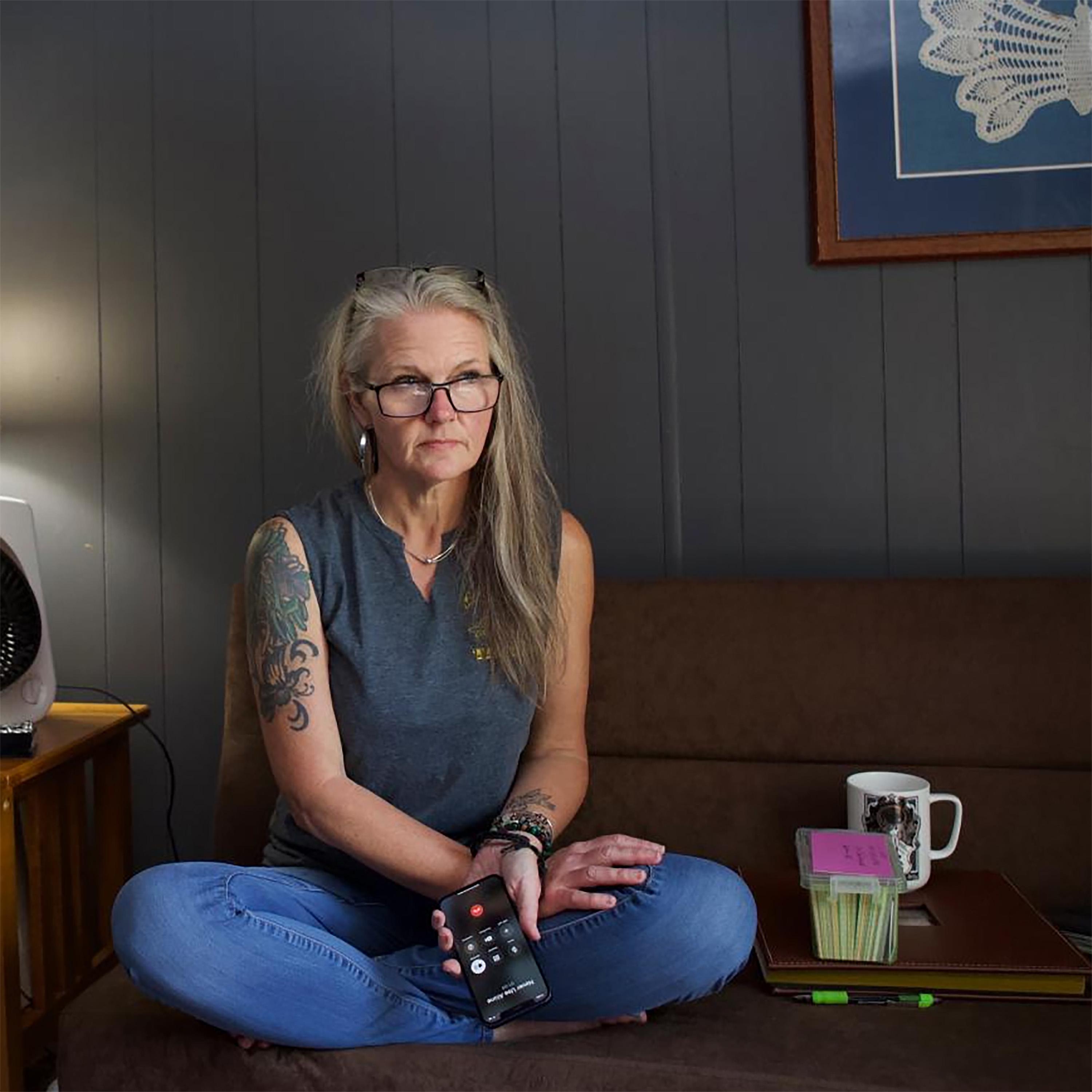
Loading summary
Transcript255 lines
- [00:01]
Mint Mobile
This message comes from Mint Mobile. From the gas pump to the grocery store, inflation is everywhere. So Mint Mobile is offering premium wireless starting at just $15 a month. To get your new phone plan for just $15, go to mintmobile.com switch this message comes from NPR sponsor Oxfam. Oxfam operates in more than 75 countries around the world, providing life saving aid to people in times of crisis while fighting inequality for the long term this giving season. Donate@oxfamamerica.org NPR Hey There podcast listeners.
- [00:36]
Howard Glass
Before we start the show today, I want to just say a word about the bonus content that we've been making lately, which includes our very first Ask Me Anything session. And people did ask me anything.
- [00:47]
Mary Harris
What is your favorite color? But it's a two parter.
- [00:54]
Howard Glass
Mm.
- [00:56]
Mary Harris
And why?
- [00:59]
Howard Glass
Okay, so in addition to that very existential question, people also ask questions about how we make our show, about what books and movies I'm liking these days, and many, many questions. More questions than on any other subject about all those fake Tori Mattia quotes that we do at the end of our show. If you want to hear this, if you want to hear all the other bonus episodes and bonus content that we're making, go to thisamericanlife.org LifePartners become a this American Life partner. You'll also get ad free listening. You'll get a greatest hits archive with hundreds of shows right in your podcast feed. And maybe most important, you will keep our show financially solvent and healthy. Thisamericanlife.org LifePartners the link is also in the show notes to this episode. And thanks.
- [01:46]
Mary Harris
A quick warning. There are curse words that are unbeeped in today's episode of the show. If you prefer a beeped version, you can find that at our website.
- [01:54]
Howard Glass
ThisAmericanLife.org from WBZ Chicago, this American Life, I'm Howard Glass. Okay, so you call a hotline and then a complete stranger tries to figure out how to help you on the spot. That idea seems to have begun in the 1950s. The first suicide hotline in the United States was created in the early 60s by a guy in San Francisco who was a priest and also a journalist. And it was just him answering the phone at first. Ads on matchbooks and sides of buses said thinking of ending it all, call Bruce. Which, by the way, was not his real name. His real name was Bernard Mays. But of course, the power of anonymity is so important to any hotline. People would call. And sometimes he could help them precisely because he had no connection to their life at all. Like they could say anything to him. In those pre Internet days, that was completely new to harness that kind of anonymity, the intimacy of it this way over the phone. These days, of course, there are all kinds of hotlines for people in all sorts of situations. Prayer hotlines, psychic hotlines, Also hotlines for homework help for new moms. There's a hotline for owners of three legged dogs and another one specifically for anybody who swallows one. You know those little round button batteries about how Lanosa handles any kid who pushes it up their nose. Today we're going to devote our entire show to one phone call that happened on one hotline, A very unusual hotline. And then we have everything that followed from that one call. It takes you inside this world that I think either you're already in this world or it's totally invisible to you. Like it's all around you. You don't even register that this world is there. Mary Harris tells what happened. She's the host of Slate's daily news podcast, what Next. We first broadcast today's show last year. One quick note. Some parts of this phone call might not be great for young children to hear. I suppose I'm going to give you this warning before mentioning that part about pushing batteries up your nose. But anyway, here's mary with Act 1, the call.
- [04:03]
Jessie
The call in this story took place a few years ago. Thank you for calling. It's a call to a hotline of sorts, though one I'd never heard about before and was surprised to learn existed. This is the music you hear when you're waiting for an operator. I tried to break free, you tried to keep me bound. I tried to live right.
- [04:25]
Howard Glass
You tried to keep me down.
- [04:26]
Kimber
But now I'm going Never use alone at Stacey.
- [04:30]
Stephen
Hi, my name is Kimber.
- [04:33]
Kimber
How are you?
- [04:35]
Stephen
Good, how are you?
- [04:36]
Kimber
I'm good. Let me catch your name one more time.
- [04:39]
Stephen
Kimber.
- [04:40]
Kimber
That's what I call.
- [04:41]
Jessie
Okay, the woman taking this call, her name is Jessie. She's a nurse and she's taken thousands of these.
- [04:48]
Kimber
All right, let me get my book. Kimber, I've never talked to you before. I'm glad you called. Have you called us before?
- [04:58]
Stephen
No, this is my first time. I just went out of rehab yesterday and I don't wanna use by myself.
- [05:07]
Kimber
Okay. All right, so what are you going. What are you gonna use, Kimberly? And how are you gonna use it?
- [05:12]
Stephen
I'm injecting heroin.
- [05:14]
Jessie
Okay.
- [05:15]
Stephen
Probably fennel.
- [05:18]
Kimber
Probably fentanyl. Okay.
- [05:20]
Jessie
The hotline is called Never Use Alone. And the idea is, if you're gonna inject heroin or do a speedball, something like that, and there's no one around, you can dial them up. Someone will stay on the line, make sure you're okay. If it seems like you've overdosed, they'll call the paramedics.
- [05:39]
Kimber
All right, let me get some information. Okay, baby. Give me your callback number in case we get disconnected.
- [05:46]
Jessie
Jessie gets the caller's phone number and address just in case she has to call the ambulance. The caller, Kimber, is in Massachusetts. Jesse is down in Georgia.
- [05:56]
Kimber
You got your door unlocked?
- [05:59]
Stephen
Let me check. Hold on. Yeah, it's unlocked now.
- [06:05]
Kimber
Okay, so make sure I'm on speakerphone.
- [06:09]
Jessie
Yep.
- [06:10]
Kimber
All right. Are you. You're by yourself in your home, in your apartment?
- [06:13]
Stephen
Yeah.
- [06:14]
Kimber
Okay. Do you have Narcan?
- [06:16]
Stephen
I do.
- [06:18]
Kimber
Set it out for me. And if you've got anything else extra that you don't need to do your job, if you just picked up, if you got some extra rigs, put away, anything you don't need. Okay?
- [06:32]
Stephen
Okay.
- [06:33]
Kimber
Because God forbid I have to call the ambulance. You. They'll take your. When they leave, and I don't want them to do that.
- [06:41]
Stephen
Okay, hold on. Let me put everything away. Then in the bathroom, there's, like, a bunch of stuff out.
- [06:47]
Kimber
Yeah, just. Just, you know, like, close the door, you know, or whatever. Just don't leave it right where you. How long have you been abstinent?
- [06:59]
Stephen
About a month.
- [07:01]
Kimber
Okay, so you know your tolerance is in the dirt, right, baby?
- [07:05]
Stephen
Yeah.
- [07:06]
Kimber
Okay. All right, so I'll stay up. Listen, so I'll stay on the phone with you if you want to just. I mean, if you want to do points at a time or half a point at a time, we'll take it as slow as you want. If you would feel better video chatting me, we can do a gypsy or something. Okay.
- [07:29]
Stephen
That's okay.
- [07:31]
Kimber
Okay.
- [07:33]
Stephen Murray
So you can hear, like, in the beginning. I'm upbeat. I'm happy to talk to her.
- [07:40]
Jessie
I spoke with Jesse, the nurse, but.
- [07:42]
Stephen Murray
You hear my voice change. Like, I.
- [07:45]
Jessie
What is that?
- [07:46]
Stephen Murray
That the. She was speaking with some speed, with some urgency. I just. I knew she wasn't going to be careful. My mama spirit kicked in immediately. It's a sixth sense that you develop when you do these calls, when you.
- [08:05]
Jessie
Can say, she's not, like, connecting with you. She's like. She's like, just, I'm here to get this done.
- [08:10]
Stephen Murray
She was there to do a job.
- [08:13]
Kimber
So all I ask you to do is you let me know as soon as you push your first dose, you let me know that you're done.
- [08:21]
Stephen
Well, I have to hold my breath for a second because I have to do it in my neck. I'm not going to be speaking for a second, but I'll let you.
- [08:27]
Stephen Murray
Okay, so her neck to go in, you can inject in your external jug in your external jugular vein. But to do that, you have to hold your breath.
- [08:39]
Jessie
Is that because, like, you do that when your other veins are, like, blown out? You're using terminology I don't understand, like, half a point a point.
- [08:47]
Stephen Murray
What does that mean when they hopefully weigh their dope. Hopefully. When you weigh your dope out, they're using a scale and they measure it out in grams. 0.1 is 0 is a tenth of a gram, 0.2. I mean, you know, that's, you know, drug user lingo for, well, nickel and dime it right on in there.
- [09:14]
Jessie
Small doses are one way to try to stay safe when you're using a drug like heroin or fentanyl. But the truth is, you really have no idea what you're getting if you're buying drugs off the street.
- [09:25]
Stephen
I said I just need a second because I gotta find a vein.
- [09:28]
Kimber
That's fine. We're in no rush.
- [09:32]
Stephen
I just have really bad eyes, so it's, like, really hard to do.
- [09:36]
Kimber
Oh, God, Lord.
- [09:37]
Stephen
Yeah, but, like, all the veins on my arms are, like, shocked.
- [09:43]
Kimber
Yeah.
- [09:47]
Stephen
Okay, I'm pushing it in.
- [09:49]
Stephen Murray
All right.
- [09:50]
Kimber
Slow and easy, baby.
- [09:52]
Stephen
All right, I'm pushing and I'm letting the tourniquet go.
- [09:55]
Kimber
Okay, baby.
- [10:03]
Stephen
Okay, I think I'm okay. I'm good.
- [10:05]
Kimber
All right, well, we don't stay on the phone for about five minutes. Okay?
- [10:09]
Stephen
Okay.
- [10:10]
Kimber
And then if you want to do more, then you can do a little bit more. Okay.
- [10:18]
Jessie
Sometimes a person will call in wanting to talk with her regulars. Jesse knows the names of their pets, keeps track of their birthdays. But her main job is just to stay on the line and check in every now and then. For this call, she was sitting at her kitchen table. Her husband walks in at some point for help with a Ziploc bag. But every minute or so, she's trying to get a read on Kimber.
- [10:41]
Kimber
You good? Yeah. Okay.
- [10:47]
Jessie
About 60 seconds later, Jesse checks in again.
- [10:50]
Kimber
You okay, honey? Kimberly? Kimber? Kimber, I'm going to call your name about one more time, and I'm calling an ambulance. Kimber, you better answer me. Kimber.
- [11:40]
Jessie
What are you thinking?
- [11:41]
Stephen Murray
In this moment, I'm hoping that she just walked away from the phone. I. I try to give them 30 seconds. 30 seconds. 30 of the longest seconds of your life. I try to give them 30 seconds to. Oh, shit, I'm sorry I walked away from the phone or my head, my earbuds disconnected or I hit the mute by accident. Or I. You know, that's. That's what I try to do. 30 seconds.
- [12:10]
Emergency Operator
North Adams Public Safety. The signs recorded 12:51 from Northern.
- [12:15]
Jessie
Transferring a operator from the Overdose Prevention crisis Line. Requesting ambulance in North Adams, Massachusetts.
- [12:22]
Kimber
I have the address of apartment one upstairs.
- [12:27]
Emergency Operator
What's the nature of the request?
- [12:30]
Kimber
The caller became unresponsive while on the line with me.
- [12:35]
Emergency Operator
Okay. Do you have any reason to believe they may have taken any narcotics?
- [12:40]
Kimber
We're an overdose crisis line, so it's possible.
- [12:45]
Stephen Murray
Okay.
- [12:46]
Emergency Operator
Ma'am, can you give me any specifics in terms of the age of the potential patient?
- [12:49]
Kimber
The female, her first name, Kimber. K I M B E R. We're.
- [12:54]
Emergency Operator
Going to get help en route, ma'am. If you happen to get them back on the line or gain anything further, please call us right back. Okay?
- [13:01]
Kimber
Okay. Yeah, I've got the calls merged in. Yeah.
- [13:04]
Emergency Operator
Okay. Can you hear anything in the background?
- [13:06]
Kimber
No, I've never up on my end. No, let me call her name. Let me call her name again. Kimber, baby, answer me. Kimber. No.
- [13:20]
Emergency Operator
Okay, I'm gonna get multiple agencies in route to assist. Okay?
- [13:24]
Kimber
Okay. Her front door is unlocked.
- [13:27]
Emergency Operator
Okay, thank you for letting us know.
- [13:28]
Kimber
All right. Okay.
- [13:31]
Emergency Operator
Right.
- [13:33]
Kimber
Amber, baby, I got you some help coming.
- [13:37]
Jessie
Jesse stays on the line and then after a little while, you can faintly hear in the background over the phone someone shouting, anybody home? The ambulance got there just 3 1/2 minutes after Jesse disconnected from 91 1. Jesse hears him say, you awake? Then move that suitcase. And then she hangs up. It's easy to read the statistics and still not be able to imagine what the overdose crisis looks like. In this country, more than 100,000 people die from an overdose each year. That means that Americans are now more likely to die from an overdose than from a car accident. This hotline's purpose is simple and very single minded. It's not to get people sober or push them into treatment. It's just to keep people alive. One injection or snort after another. I wanted to know what it was like for everyone. The callers and the people like Jesse who sit there while someone uses, knowing they could die right there on the phone. Jesse talks to people week after week and sometimes they just stop calling. Maybe it's because they're not using anymore. Maybe it's because they're gone. Actual overdoses on the hotline don't happen that often. And Jessie had no way to know what went on after she hung up that day with Kimber. She kept answering calls on the line, tried to distract herself. She says she probably walked around her yard, poured herself a Sprite. Then she got a text from a pretty close friend of hers, a guy named Steven. He's a paramedic, so he sees a lot of overdoses. She has him in her phone as bruh.
- [15:29]
Stephen Murray
He said, what up, homie? I said, I said, oh, just living the dream. Taking some calls, some NUA calls. What you doing? He said, oh. He said, you know I'm at work today, right? And I'm like, oh, I forgot today's Saturday.
- [15:41]
Jessie
Stephen works in Massachusetts, texting back and forth.
- [15:45]
Stephen Murray
And I was like, oh yeah, I had a never used loan call. I had an overdose call in Massachusetts today.
- [15:50]
Jessie
Immediately her phone rings. It's him. Like instead of texting, he wants to talk. She answers.
- [15:57]
Stephen Murray
He said, where? I said, I said, hold on. I don't remember. He said, bitch, where? I said, bitch. I said, hold on. I got to go get the book. Damn, I opened the book. North Adams, Massachusetts. The SOB that left this man's chest, I'll never forget. He said, that was me.
- [16:34]
Howard Glass
We hear from that man in a minute. Stay with us.
- [16:40]
Mary Harris
Support for this American Life comes from Squarespace. Connect major social and multimedia accounts to your website in a few clicks as icons, direct links, or embedded feeds. Build visitor trust while updating content only where you need it. Sellers can also sync their product catalog directly with Instagram, Facebook, YouTube and Google. To reach more customers and reduce the steps for a purchase, visit squarespace.comameran for 10% off your first purchase of a website or domain. Support for this American Life comes from Capella University. Learning doesn't have to get in the way of life. With Capella's game changing Flex Path learning format, you can set your own deadlines and learn on your own schedule. That means you don't have to put your life on hold to earn your degree. Instead, enjoy learning your way and pursue your educational and career goals without missing a beat. A different future is closer than you think with Capella University. Learn more@capella.edu.
- [17:37]
Jessie
Throughline is a podcast where we tell stories about a place shrouded in mystery, the past. And to really understand it, we take you there. Something happened to our collective psyche after the atom bomb. Listen to hear us reopen stories from the past and find clues to the present on Throughline the history podcast from npr.
- [18:03]
Howard Glass
This is American Life. Mary Harris picks up our story. Where we left off.
- [18:07]
Jessie
Act two. Stephen. Stephen Murray, the paramedic who responded to that overdose call Jesse took. He had a lot of jobs before working in an ambulance, each with a very different uniform. The first was a black T shirt. He was in a metal band, then a suit and tie. When he was in college, he ran for a seat on the village council and won. Being a paramedic meant wearing a button up with S. Murray on one pocket and a badge above the other. He carried his dispatch radio pretty much everywhere, which is how he got the call that day.
- [18:43]
Paramedic
So it came in as a unresponsive, possible overdose. That's all we really got. And when I heard the address, I was like, oh, that's really close by.
- [18:54]
Jessie
It was right up the hill from the ambulance station, basically on the same street.
- [18:58]
Paramedic
We're only like 0.4, 0.5 miles away, so I like, jump in.
- [19:04]
Jessie
How many people?
- [19:06]
Paramedic
It was one engine company, three police cruisers, and two ambulances. We get there, and I'm looking at the building and it's. There's multiple units within this big house.
- [19:19]
Jessie
He bangs on the door, doesn't hear anything. Then he sees a little stairway, runs up, finds another door which is unlocked. He lets himself in.
- [19:28]
Paramedic
I'm like, hello, Anybody here? Like ems with the cops there behind me, they're yelling out. And I'm looking around, and I get down this hallway.
- [19:39]
Jessie
At the end, there's a little bathroom.
- [19:42]
Paramedic
And I find a girl laying on the ground or a woman laying on the ground. She was very small and she looked really young, and she was blue. And so I was like, crap.
- [19:57]
Jessie
Why? Hold it. Why?
- [19:58]
Paramedic
Well, because nobody's there and she's blue. When someone's blue, I know they're not breathing.
- [20:03]
Jessie
You thought you were too late.
- [20:04]
Paramedic
Yeah. That's where my mind went immediately, was that here's somebody who's alone, she's blue on the ground. And I find her pulse, and it's quite slow, so it's like in the 40s. So I turned to the cop and said, she's got a pulse. The bathroom is quite small, though, and I'm big, and it's really hard to work on somebody when you can't kneel down next to them. And so I put my arms under hers and I drag her into the living room, down the hallway to the living room. And at that point, the rest of my crew had brought all of our equipment upstairs. So they were like, they came up and put down our bag next to me.
- [20:45]
Jessie
If they'd gotten there a few minutes later, it might have been too late. But now they had a chance. Steven's got a particular way he likes to handle overdoses that he feels is easier on the people being revived because he's thought about this a lot. If they do come to, it's going to be a very strange experience. Some random guy leaning over you, face upside down. And if you just give someone a big dose of Narcan, it'll throw them into withdrawal. People sometimes wake up angry. They'll have a massive headache because they might not have been getting oxygen to their brain. That lack of oxygen, that's what'll kill you in an overdose. So Steven starts by fixing that.
- [21:30]
Paramedic
So I grabbed the bag, valve mask out, hooked up to oxygen, and started to breathe for her. And in the meantime, I directed one of my staff members to draw me up, to pull out an Narcan and put a needle on it, because I like to give it intramuscularly because I can control the dose better.
- [21:46]
Jessie
He has the police stand in another room while he works.
- [21:50]
Paramedic
Well, because the thing is, I've seen people come out and vomit and feel unwell. And when I first started ems, I remember, like, the police would be standing over them, like, what did you use? Like, yelling at them. I started to think about, like, what is that environment? Like, when they wake up, if it's. If there are too many people in the room, I will, like, tell people to go wait outside.
- [22:13]
Jessie
So Steven's kneeling over Kimber's head, squeezing oxygen into her lungs one breath at a time. Then he gives her the smallest dose of naloxone just to see how she'll react.
- [22:25]
Paramedic
Her color improves, her oxygen saturation comes up, and she then wakes up.
- [22:33]
Jessie
Do you remember what she said to you?
- [22:36]
Paramedic
She looked upset.
- [22:39]
Jessie
Upset despite all his effort, but alive. There's a conversation Steven sometimes has with people. He's revived. He doesn't remember where it happened with Kimberly, but often it's in the back of the ambulance where the driver can't hear. The patient will say something like, you're so much nicer than the other EMTs. And then Stephen will explain. I've been in your shoes. So Stephen, the person who revived Kimber from her overdose, he'd also survived an overdose. Let me tell you what happened. Stephen started using drugs sometime after he stopped touring with that metal band. He'd been straight edge then, so no alcohol, no drugs. But then he went to college, University of Miami. And academics had Never been his thing.
- [23:36]
Paramedic
The people that I like, fell in with, my group of friends, we all met at this. The tables that were outside the dorms, and we, like, would smoke cigarettes outside. It was like this thing. And the guy that used to sell us our weed, he was great. He was just like this really cool. Like, I can't even describe him. He was like. He would show up with a fishing tackle box full of drugs. It was like a menu, right? And, like, he knew that I was like. I had been struggling a bit.
- [24:10]
Jessie
A friend of the group named Kelly had died recently. She'd fallen off a balcony. Really kind of rocked Stephen's world.
- [24:17]
Paramedic
And so he was like, oh. Like, if I remember right, he was like, oh, you should try. These will make you feel better. And that was like, oxycodone.
- [24:25]
Jessie
So drugs became part of Stephen's very busy life. He's going to school, working a campus job. He had also won that seat on the local village council.
- [24:35]
Paramedic
At the time, they were saying I was the youngest elected official that had ever happened in South Florida. I don't know if that's, like, verifiable, but that's what people were saying about me. And, like. And here I am, like, using drugs the whole time.
- [24:48]
Jessie
He used in his car before talking to TV news before bed. He would lay out lines of oxy for when he woke up at night and withdrawal. It was the only way he could get back to sleep. And he was getting way too skinny.
- [25:00]
Paramedic
I used to wear, like, baggier clothes when I talked to my parents. This is like the era when Skype was a thing. And I used to put under eye concealer on my eyes to cause the. I have, like, sort of naturally dark circles under my eyes. But because I had lost so much weight and was so sunken in, they were very, like, pronounced. And so I would put, like, under eye concealer on before I would go on camera with my parents.
- [25:24]
Jessie
Wow.
- [25:24]
Paramedic
And actually, like, the camera would be faced backward where I had all my, like, accolades on the wall, like, certificate of election from, like, the Board of Elections. And, like, I got a letter from a congressman congratulating me on being elected. And, like, just, like, those things, like, behind me, but on the other side of the camera, my life was chaos.
- [25:45]
Jessie
So, yeah, Steven thinks he probably OD'd twice somewhere in there. But luckily he came to on his own. None of that stopped him. His family at some point had an intervention, which he said you could see a mile away. Like, he walked into the room and everyone was sitting there and no One was saying anything, and he was like, oh, I know what this is. But he felt relieved to be found out. He only had to go to rehab once, but recovery was a long process. Stephen tried various jobs, ran out of money, went back to living with his folks. They were retired in western Massachusetts, where he noticed they were looking for volunteer firefighters. So he signed up. And for some reason, it stuck in.
- [26:32]
Paramedic
My head, and in my mind, I'm like, I'm Steven the addict.
- [26:35]
Jessie
Yeah.
- [26:36]
Paramedic
And, like, now I'm Stephen the firefighter. And it was like, I'm a firefighter. That's pretty cool.
- [26:44]
Jessie
Eventually, he became a paramedic. Steven's experience with addiction is not what made saving Kimber so emotional for him, though. It was something else. Back when Steven was using, his drugs were coming from pain clinics known as pill mills. But by the time he became a paramedic, many of those had been shut down. More and more people were getting drugs off the street. That's when fentanyl entered the scene. Fentanyl can be 50 times stronger than heroin. It was causing these cluster overdoses. Steven would see them from his ambulance. He'd have days where he'd go to five ODs, one after another. He was seeing more people die, too. One case stuck with him. Everything went wrong. They were at the station when he got the call.
- [27:33]
Paramedic
And the street address that was given, we'll say, for example, that was 313. Like, 313. And we get there, and there is no 313.
- [27:43]
Jessie
This isn't that uncommon. But usually someone hears the sirens and comes out, says, we're over here.
- [27:50]
Paramedic
And so in this particular case, like, that didn't happen. And so we just start to go knock on doors and look. And so, like, that went on. We knocked on a bunch of doors, and, like, nobody ever came out. And so the other thing that dispatch will try to do is they'll try to call the person back repeatedly. You know, nobody answered on the call back. And so, you know, eventually we have, like, finite resources. And so the next calls are coming in, and, like, we have to move on.
- [28:22]
Jessie
A little while later, a different call comes in. A call about a dead body, a woman. Steven hears the location and realizes this was the overdose victim from that original call. In fact, Steven had knocked on her very door. Whoever called 911 the first time, they'd mixed up the numbers. So it wasn't 313. It was 133, something like that. So when Steven and the cops fanned out, went house to house, Stephen had craned his neck to look in the window of the right building, but he just couldn't see the woman who needed his help. She was just out of view.
- [29:00]
Paramedic
She was right around the corner from the. From the door that I had looked in. And I just thought to myself, like, I was, like six feet from her. And, like, when I got there, she was probably, you know, we could still have saved her. And that was actually somebody that I had reversed an overdose on in the past. I hadn't stayed, like, in, like, in real touch, but, like, she worked in the community, so I would see her sometimes.
- [29:29]
Jessie
Steven played this over and over again in his mind, looking for ways it could have gone differently. He understood that whoever called 911, they were doing what they could to keep this woman alive. But they were also scared. Scared that when someone like Stephen showed up, there'd be trouble. So they left. And in the end, it was leaving this woman alone that killed her. It meant Stephen couldn't find her. That overdose call solidified something for Stephen. With the drug supply getting more dangerous, keeping people who used drugs safe meant making sure they weren't left by themselves. It was sometime around then that he heard about the Never Use Alone hotline. And it immediately made sense. So he got involved. Zoom meetings, stuff like that. That's how he met Jesse. To get the word out where he was, he made these little cards.
- [30:24]
Paramedic
I, like, made this simple design on vistaprint. And I'm not a web designer or a graphic designer, so it looks terrible, but basically it was like, this is the Massachusetts line. Here's the number. This is what we do. And so I used my credit card and bought 5,000 of those.
- [30:42]
Jessie
He convinced programs that give out clean syringes to include these Never Use Alone cards in their kits. Stephen had no idea if any of this was really working. A lot of times he'd talked to drug users who said, what? I'm going to call up some stranger, tell him I'm about to inject dope? Are you kidding? But a few hours before he revived Kimber, she had gotten one of these cards bundled up with the stuff she'd picked up at a needle exchange. That was why she called. That was the thing that saved her life. Steven didn't know that, though, when he dragged her out of the bathroom that day and started giving her rescue breaths. There was a cell phone right next to her. He just didn't put two and two together. After Kimber opened her eyes, Steven told her she had to go to the hospital for observation. That meant she had to do this walk of shame down her front steps and climb into the back of the ambulance. It was nearly summer, but she put on her big winter coat, pulled up the hood. Steven started packing up. Before he left the scene, he went to check in with his crew.
- [31:46]
Paramedic
So they had the back doors of the ambulance open, and I stepped up into the back to talk to them, and I. It dawned on me again, like, oh, she was alone. So I said something along the lines of, like, you know, whoever was here with you called and left. You need to tell them never to do that again. They need to stay with you until we get here. And then she said, I wasn't with anybody. I was alone. And then I said, well, then who called 91 1? And then she said, I called it every use alone hotline.
- [32:21]
Jessie
Oh, my God, he thought when he got back to the station, that's when he started texting Jesse. And that's when it all kind of came out of him.
- [32:30]
Paramedic
When she told me that she was the operator, like, I started crying. Like, I couldn't believe it. Like, we sobbed on the phone together. I was in. I was in my office. Like, there was this, like, conference room thing that I was in, and I had the door closed, and I was talking to her, and I'm just in there crying with her. And, you know, it was just. It was like, wow.
- [32:55]
Jessie
Stephen says over his time as a paramedic, he pronounced maybe 30 people dead from an overdose. All of them were alone. Kimber was alone, too, but she had the line. The line had worked. It's so rare to find something that actually protects people once they're dealing with an addiction. But even when you save someone from an overdose, it doesn't mean they'll stop using. In fact, usually they don't. The morning after Stephen revived Kimber, Jessie sent her a text. Hi, she wrote, I am so thankful you called. She sent this with a little smiley face and a green heart emoji. Within a couple of hours, Kimber wrote back. She thanked Jessie, asked how many times she got Narcanned. Then Kimber says, I want to use again this morning, but I'm terrified if you use again today. Jesse replied, the likelihood of you ODing again is almost guaranteed.
- [34:06]
Howard Glass
Mary Harris. Coming up, what's Jesse's deal? Also, a fight in a Krispy Kreme parking lot. That's in a minute. From Chicago Public Radio. When our program continues.
- [34:20]
Mary Harris
Support for this American Life comes from. Indeed, people are driven by the search for better. But when it comes to hiring, the best way to search for a candidate isn't to search at all. Don't search. Match with Indeed. Use Indeed for scheduling, screening and messaging so you can connect with candidates faster. Get a $75 sponsored job credit to get your jobs more visibility@ Indeed.com American terms and conditions apply. Need to hire? You need Indeed. Support for this American life comes from GoodRx. Did you know GoodRx offers 20 popular diabetes medications for under $20? Check GoodRx before heading to the pharmacy and get up to 80% off your prescriptions. GoodRx is free and easy to use. Search any medication, get your coupon and start saving. Even if you have Insurance or Medicare, GoodRx could beat your co pay. See how much you could save on diabetes and everyday prescriptions@goodrx.com Tal this is.
- [35:20]
Howard Glass
American Life from Ira Glass. Today's show the Call, the story of one phone call to one telephone hotline and its aftermath. So Kimberly did keep using and kept calling the line. And a lot of times she was connected with Jesse. Which brings us to Act 3 of our program, Jesse Again. Here's Mary Harris.
- [35:41]
Jessie
Jesse is kind of the backstop for the entire hotline, the whole operation. If none of the other operators are available, the calls automatically go to her. And she pretty much always picks up. Sometimes she'll even give someone her cell and say, just call me directly. She did that with Kimber. It's like she can't help herself.
- [36:01]
Stephen Murray
Oh, I got a call.
- [36:02]
Jessie
Okay. I went down to visit Jesse at her home in Georgia to watch her work. You have an incoming call.
- [36:09]
Stephen Murray
Never use a loan. It's Jessie.
- [36:11]
Jessie
From the second I walked in, she was taking calls, still in her house dress and mismatched socks. The vibe was organized chaos. She takes in strays, seven cats. One is missing an eye, a chihuahua, and more chickens than she can count.
- [36:28]
Stephen Murray
Look at our eggs.
- [36:30]
Howard Glass
Hold.
- [36:30]
Jessie
Those are from your chickens?
- [36:31]
Stephen Murray
Yes. Those are the eating eggs. We've got eating eggs.
- [36:33]
Jessie
They lay their eggs in the garage.
- [36:35]
Stephen Murray
I can show you when we come back in.
- [36:36]
Jessie
I wanted to know how Jessie, a nurse, had ended up spending so much of her time on this line. And at some point in a pause in the conversation, she said this.
- [36:49]
Stephen Murray
My child has called this line before.
- [36:55]
Jessie
She was talking about Kaylyn Kaylin's 23, her only kid.
- [37:00]
Stephen Murray
She's the most magnificent creature I've ever met in my life. She's also the raggediest bitch I've ever met in my life. She's magnificent. She's magnificent.
- [37:12]
Jessie
Kaylin has overdosed a dozen times and counting have you picked up the phone and it's your daughter?
- [37:17]
Stephen Murray
No. She'll let me know. She would let me know that she was calling. Hey, Mom, I'm gonna call the line. Thanks for letting me know. I don't. I. I think I know that I could cut it off. I could cut the mama off. I could keep the mama cut off if she become unresponsive. I know I could do what I have to do. But what if I couldn't?
- [37:45]
Jessie
Watching her daughter nearly die again and again is kind of how Jessie came around to a whole new way of thinking. And the hotline, too. She tried for years to force her daughter to change. She wanted her to finish school. She wanted her to go to rehab. She wanted her to come home. But wanting all that never made anything go differently. It just made Kaylin push her away. Now, for her daughter, she really only has one goal. It's the same goal she has for her. Don't die. Jessie's serious about this goal and this one goal only. She literally has a tattoo on her forearm. That's a bird taking flight. It's carrying a banner in its beak with a single word on it. Fucks. As in, I don't give a fuck. My fucks are flying away. Jesse told me this one story about a time Kaylin pulled up in front of the house with a bag of dope and a couple of friends. It was late at night, just Jesse and her husband at home. Kaylin called her from the driveway.
- [38:49]
Stephen Murray
I said, what are y'all doing? She said, well, Mama, we just picked up from a new guy, and we're not real sure if it's safe or not. I said, so? I said, so y'all gonna sit in my front yard and use dope in a car? I said, how the hell. I said, how am I? What am I? What am I do for y'all in a car? Kaylin? And I heard her. She said, I told y'all we could go inside. I said, yes. I said, you're either gonna come inside or you're gonna get out my yard. I said, I can't.
- [39:18]
Jessie
My friends didn't believe her. They came in, and she watched as her daughter injected herself at her kitchen table. I had so many questions about this approach. I'm a parent. I know how hard it is to stop wanting things for your kids, stop protecting them, stop pushing them towards some imagined better future. The implications of abandoning that wanting were so radical to me. I asked, what if Kaylin never stops using drugs?
- [39:53]
Stephen Murray
If what she wants to do is continue to use, she should be alive and healthy to do so. If what she wants to do is one day kick and go on and do something else, she should be healthy and alive to be able to do so.
- [40:07]
Jessie
Do you even see her no longer using permanently as a goal?
- [40:14]
Stephen Murray
I don't know. I honestly don't think about what Kaylin Wheeler won't do, and I honestly don't. I don't mean this to sound like it's gonna sound. I really don't care what Kaylin does as long as she don't die, that'll be great. That's it. We can work with anything but death.
- [40:35]
Jessie
It must have taken you so long to get there.
- [40:40]
Stephen Murray
Took a fight in a Krispy Kreme parking lot one morning. Right, right there. Where y'all stay, you go down to the end of Dawson. I bet y'all go to the end of the Dawson and take a left to come to my house. It's a Krispy Kreme donut shop right there. It took a fist fight in Krispy Kreme parking lot for me and her to come to this place.
- [40:53]
Jessie
What happened? What was it over?
- [40:55]
Stephen Murray
I hadn't seen her in weeks, hadn't heard from her. She was hiding from me because every time I talked to her, I was. I was giving her the business. You know, you're going to come home, you're going to do this, you're going to do that. I was yelling at her, making her feel like crap. People who are using substances, who are in the place that she is, they feel bad enough about themselves. They don't need us to help them. Okay? So she would change her phone number. She would hide from me. I wouldn't see her. I'd ride an hour every morning before work, I'd ride an hour at lunch, and I'd ride an hour and a half every afternoon when I got off. I would ride three and a half hours every single day, Monday through Friday, to try to catch a glimpse of my baby.
- [41:28]
Jessie
You would just literally ride around town looking for her.
- [41:31]
Stephen Murray
Literally right around town in the places that I knew she was trying to catch a glimpse of my baby. One morning on the way to work, I saw her. She doesn't remember this. She was. She was that altered. But I saw her walking across Krispy Kreme parking lot. And I drove across five lanes of traffic, me and that legit. And I ran up on her and I was excited and I guess I ran up real fast. And she had her earbuds in and I touched her. I grabbed Her. I meant to touch her shoulder, but I grabbed her shoulder. And when I did, she turned around and hit me. And being from west Tennessee, I hit her back. So for a few seconds, she forgot I was her mama and I forgot I was her mama. And when we got through fighting in the Krispy Kreme parking lot, she we both bleeding. She threw her hands out to the side. She said, mama, what the do you want from me? And I threw my hands out and screamed back what I've said a thousand times to you today, if you could just not die, that would be great. And that's when it hit me. Just don't die. That was literally the moment, the moment my brain shifted. Because even standing there bleeding, I was looking at my baby and she was okay. And in that moment, that was all that mattered.
- [42:47]
Jessie
Remember, Jessie was on her way to work when all this happened.
- [42:50]
Stephen Murray
I was in my nursing uniform, going to teach. I'm a. I teach collegiately. I was going to lecture. I was going to stand at my podium looking my very best, my very best professional nurse that I could possibly look, going to teach all these baby nurses.
- [43:05]
Jessie
Did you go to work?
- [43:07]
Stephen Murray
I did.
- [43:08]
Jessie
Wow.
- [43:09]
Stephen Murray
I did.
- [43:11]
Jessie
What did you say?
- [43:14]
Stephen Murray
The truth.
- [43:16]
Jessie
She told them exactly what had just happened. After that fight in the parking lot, Jesse started getting needles for Kaelyn. Then she ordered Narcan. She got a big box to distribute around town. And inside was a Never Used Alone card. Jessie saw it and thought, huh, good idea. I heard about Never Use Alone when I ordered my own Narcan from the New York City Department of Health. You have to go to a training before they'll send it to you. The training tells you how and when to reverse an overdose. And One of their PowerPoint slides mentioned the hotline. At the time, I imagined Neveruse Alone was some official thing like 911. But it's nothing like that. It was started, as Jesse puts it, by a bunch of drug users who were tired of watching their friends die. When she first volunteered to answer calls, the screening process to be an operator consisted of talking to one guy to see if he were a fit. The very same day, she picked up her cell and got connected to someone who was about to get high.
- [44:25]
Stephen Murray
I said, hello? He said, I'm trying to reach Never Use Alone. I'm like, oh shit, I guess you did. Because I didn't know what to do. I mean, I knew I needed to get his address.
- [44:34]
Jessie
Uh huh.
- [44:35]
Stephen Murray
I mean that was kind of the no brainer, right? But outside of that, I was like, he's like, are you going to get my information? I'm like, what information do I need? He's like, oh, God. He said. He said, you're going to let me die. And I'm like, well, I mean, it seems that way right now, so help me out.
- [44:51]
Jessie
In the years since, Jesse's set up a whole system, a script that operators can use, a training regimen, but this organization is still basically run on a Google Doc and a prayer. I hung out while Jesse took one call after another over two days.
- [45:06]
Stephen Murray
Never use alone. It's Jesse.
- [45:08]
Jessie
The calls were intimate, sometimes joyful. One guy talked to Jesse for like half an hour about his life, where he was going over the weekend, his girlfriend, his health.
- [45:18]
Stephen Murray
You do good. You drinking an ounce of water for every kilogram body weight, aren't you? Didn't we figure that out the last time I talked to you?
- [45:26]
Jessie
Another guy felt guilty for taking up Jesse's time. He tried to have everything ready to go when he called, and he apologized afterward.
- [45:34]
Stephen Murray
Listen, if it wasn't for people like you calling, people like me wouldn't have nothing to do. I'd be bored as hell. I am so glad you called me, he told her.
- [45:43]
Jessie
He tapes Narcan to his arm and sits on his porch after getting high in case he passes out. He hopes his neighbors will find him. There was no recovery talk. Sprinkled throughout these conversations were little reminders of how scary things are for the people who need this line. Jesse gently admonished one caller who told her he'd used on his own a few hours before without letting her know.
- [46:08]
Stephen Murray
You didn't call me. You know my heart would be broke if something happened to you.
- [46:13]
Jessie
I know that, he says. I know. Okay. Okay.
- [46:17]
Stephen Murray
Just. Just call us. It's not a bother. Even if it's a tiny amount. Okay. Even if it's a tiny amount, it's okay. You're worth it. You're worth it every time. Okay.
- [46:35]
Jessie
It's notable that everyone in this story has some kind of connection to addiction. The people who started the hotline, Stephen, the paramedic, Jessie with her daughter, and actually Jessie herself. Twenty years ago, she had a real problem with opioids.
- [46:52]
Stephen Murray
I did. Back in 2002. I'd had a surgery and my doctor put me on Oxy. 30s. I'm a nurse. Anytime I called for a refill, I got one.
- [47:08]
Jessie
For Jesse, there was no rock bottom moment. But after a couple of years, she started running out of pills, and she didn't want to risk her nursing license to get more. She Quit cold turkey. Spent three days sick on her bathroom floor. Then it was over. Jesse says her daughter Kaylin started using years later when a boyfriend introduced her to heroin. Jesse wonders about why a lot. Everyone has a why, Jesse says. Kaelyn's why she thinkssort of has to do with her. Their particular mother daughter relationship. Jesse can be a hard ass. Kaelin, too. When Kaelin got pregnant at 15, Jesse thought Kaelin's boyfriend was bad news. So she blocked him and his family from calling Kaelyn cell. Kaelin was pissed. She threatened to move out. One morning, Jesse told her to go ahead and do it, so she did. They'd see each other every once in a while, but it wasn't the same.
- [48:06]
Stephen Murray
You know, I found out I was a grandmother through a text message when I had been at the hospital for two days, you know, with her while she was in labor, you know, but she sent me home and said, you know, I'll be fine. I'll let you know when something starts happening. And I found out the baby was here through a text message.
- [48:26]
Jessie
Oh, it's so hard. It's so hard because it's like, you go back and you're like, I don't know, like, what should we have done?
- [48:36]
Stephen Murray
I don't go back and have any regrets. I did the best I could with what I had at the time. That's all I got.
- [48:46]
Jessie
Yeah.
- [48:48]
Stephen Murray
When it became overtly obvious that I was really not doing my best, that I was making things worse between me and her because we were always so incredibly close. And when I realized, all right, you're fucking this up, you got to find a different way. You got to do something else, because this right here is not working.
- [49:13]
Jessie
Over the years, Jesse's watched Kaylin go back and forth. She'll have months of sobriety, then return to use. Kaylin's been picked up by the cops. Had her photo posted on the local police department's Facebook page. While I was visiting, Jesse called Kaelin up. Kaylin said she'd come by to talk, but she never showed. I think Kaelin's part of why Jesse takes so many of these. Never use alone calls. It's people like her daughter on the other end. She told me as much.
- [49:42]
Stephen Murray
I didn't want her to die. This whole thing is about this whole every, every, every, every fucking thing I do is about her not dying, about her not dying, then about her and her homie not dying, and then about her and her homie and their homies dying. And now it's about the Entire town not dying.
- [50:10]
Jessie
When Jesse took that call from Kimber, listened to her OD on the line, she knew better than to expect that moment to change Kimber's life. And the next day, when Kimber thanked Jessie for saving her and then quickly followed that up with I want to use again, it didn't surprise Jessie. In fact, for Jessie, this was good news. It meant she could encourage Kimber to keep using the line, and it was an invitation to stay in touch. So she did. She friended Kimber on Facebook, texted her for no reason. A few months after her od, Kimber started calling Jessie Mama. But Kimber would also drift away when she did that. Stephen and Jesse would try to keep track of Kimber online, what she was liking and commenting on. Messenger shows her active six minutes ago, Jesse texted Steven at one point, she hasn't even read my message. I text her phone, nothing. Yeah, he replied. She's been leaving me on read like she'd seen his message but hadn't replied. A month later, Jesse tried Kimber again. Hey, I haven't heard from you in a while. I hope that means you're good. She texted two days later. Hello, Are you good? A day after that. Hi, this is Jessie B. In case you lost my contact, it's not like you not to respond. I'm growing concerned. She added a heart emoji, pressed send, and hoped for the best. Act 4 Kimber While Jesse was checking in with Kimber by text and Facebook, Steven the paramedic. He was trying to help out irl. After all, he and Kimber lived in the same town. Steven got Kimber back into rehab. Then he offered to get her into job training. A few weeks after her overdose, he posted a picture of the two of them on Twitter. Kimber had shown up at Steven's July 4th barbecue. A few months after that, though, is when Kimber went silent. For Steven and Jesse. Weeks went by, then months. And then Jesse got a text from a number she didn't recognize. It read, hey, Jesse, it's Kimber. I just wanted to give you my new number. Jesse replies, oh, hey. Hi. Four exclamation marks. Kimber was alive. Is this gonna bug you?
- [52:41]
Kimber
No, you're good.
- [52:43]
Jessie
This, of course, finally, is Kimber. Kimber lives in Vermont now. She's been sober for one year. The place she calls home is a tidy duplex where she lives with her little gray dog, Luna, and not a lot else. She didn't bring anything with her when she left Massachusetts, where she OD'd two years back. There Aren't any family pictures on the wall. Not many mementos. Kimber's growing plants, though. Nature's always been her thing. As a kid, she was the one who was always bringing creatures home.
- [53:15]
Kimber
Do you remember Elmira from Looney Tunes?
- [53:17]
Jessie
Yeah.
- [53:18]
Kimber
So my family called me Elmira because I would. Her thing on the show was like, you'd. She would kiss and hug and squeeze animals till they died. And so that's what they called me because I always had some kind of critter or, like, stuff like that.
- [53:34]
Jessie
In her new apartment, there's a little sunroom off the kitchen. Kimber wanted to make it into a greenhouse, but the radiator started leaking there, and the floor got soft. Still, this is a fresh start. Do you. Do you keep Narcan around still?
- [53:48]
Kimber
I do. I do. I carry it with me. You just never know when you're going to need an arcan. Yeah, I just had to revive somebody the other day here at an AA meeting.
- [54:01]
Jessie
It was different being on that side of things.
- [54:04]
Kimber
Like, you don't even think about the fact that you almost died. That's the crazy part. Like, I forgot about a couple of my overdoses because, like, could you kind of just fall asleep and don't even know that you fall asleep? Like, I'd always get mad. You get mad at the person. You're like, what are you stressing out about? Like, I'm here. I'm fine. Like, what is the problem? And then I watched people overdose, and it is. It happened. It's like three minutes between when you arcane them and they'll come back. It feels like an eternity. And all those things run through your head. This person's dead. I don't know if this person's coming back. And then you realize, oh, you're like, oh, okay. This was pretty scary.
- [54:45]
Jessie
On that first day, she called the line. The day Jesse answered and Steven revived her, Kimber remembers waking up to a cold shiver rolling down her spine. She was looking down the hallway to the bathroom where she last remembered being a bathroom now filled with cops. There was the suitcase she'd just lugged home from rehab. And then she got really, really sick after Stephen forced her to go to the hospital. She checked herself out within an hour and walked home, puking along the side of the road. She picked up more drugs pretty much right away. The whole idea of never use alone's approach is that, as Jesse puts it, you give the callers time one more day to fight their demons. And Kimber had a lot of demons. She says her parents both used drugs. When she was 17, her brother was killed by a drug dealer. The whole family kind of crumbled after that, Kimber included. Kimber went to rehab on and off for years. She'd use a ton of drugs, realize things were getting a little out of control, and check in for a couple of weeks to spin dry, as she put it. She'd get clean enough to go back to work and pay her rent, and then the cycle would start back up again. So the call with Jessie was not the moment things changed. That moment came over a year later. Things had gotten bad, she says. The sheriff had kicked her out of her apartment, the one where Steven had revived her. Her car had been stolen and totaled. She was carrying around a backpack with her passport and birth certificate in it. But then it disappeared. Her cell phone was gone, too. She had a friend who would let her crash, but the friend had a condition. Kimber had to call detox every day and try to get a bed, which eventually she did. The hotline is called Never use Alone. But walking into rehab, Kimber was utterly and completely alone. Maybe for this part, you have to be. When she arrived, the nurse asked if she wanted medication, methadone, to make getting straight a little easier for the first time. She said no.
- [56:52]
Kimber
So I went up to the detox and detoxed with no medication.
- [56:57]
Jessie
What did that feel like?
- [56:58]
Kimber
It was awful. Like, I couldn't. I just remember going in, and I didn't. I couldn't lay in the bed. It was so cold. They had the AC blasting. It was summertime. Of course. AC is on, but you. You're going through withdrawal, so you're so cold. And I couldn't lay in the bed because they give you, like, these thin blankets. So I, like, went in the bathroom where there's, like, a heater thing in there, and laid on the floor. And they, like, dragged me out. They wouldn't let me stay in the bathroom. They're like, you can't lay in here. And so then I waited for them to leave, and I went into the bathroom. The only thing that felt good was I stripped down naked. It was a really small bathroom with, like, tile floors, so I had to throw my clothes out of the door back into my room and just lay on the tile. And I had the blanket over the heating vent, and I just, like, had the heat on there, but, like, the coolness on my back and then the heat. Oh, my God. It was the only thing that, like, kept me being able to, like, sit through it. And, I mean, I Was throwing up the whole time, And I don't know how long I was there. Like, it was a while. It just felt like days and days went on, and I didn't think it was ever gonna stop. And I just kept telling myself that I could do it, that I really had the strength to do it.
- [58:09]
Jessie
Kemper remembers all the details because she's really proud of what she did. Four days after she checked in, she sent Jesse that text from a new phone. I feel like I'm in a stable enough place right now to reach out and let you know I'm back. Kimber wrote tentatively. Jesse said, everything that you've been through has prepared you for today. You haven't been wasting time. You've been getting ready. I'll support you however you need me to every step of the way. For Kimber, it's been a year of big changes. She's in a new town, but she still doesn't really trust herself around her old crowd. It's interesting how this one call brought these three people together. Stephen told me when he first met Jesse, they didn't really like each other. Too similar, maybe. But the call bonded them somehow. And Kimber, right after that call, she avoided Steven, even though he kept reaching out. She was embarrassed. He lived in her town, knew all the police. She said she got to this point where she knew other people were sick of her bullshit because she was sick of her bullshit. That passed eventually. Kimber took a trip with Steven's family to the beach this summer. There are these photos of them hanging out in the sand. Jesse, to this day, hasn't met Kimber in person, but they text all the time. On mother's Day, Kimber sent Jessie a card. There was a picture inside of it. An ultrasound. Kimber's pregnant.
- [59:48]
Kimber
I always said, like, my body was too poisonous for anything to live inside. Like, I, you know, I had done so much to myself and just, like, berated my body and, you know, there was no way anything was going to be able to live in this toxic environment.
- [60:02]
Jessie
Kimber's got a partner, Mikey. She met him in aa. They moved in together. This pregnancy was a surprise, but a happy one.
- [60:11]
Kimber
And I think there was definitely a part of me that didn't thought I didn't know how to be a mother. So when I found out I was pregnant, like, even if I had to do it by myself, like, I was gonna do it, like, I'm 31 years old, I was sober. I moved to a brand new place, started with nothing, and, like, I knew I could do this. If I could do everything I was doing, I could do this too. So I never for a second thought that I was gonna not keep the baby.
- [60:44]
Jessie
Kimber still dreams about using drugs. These are absurd dreams, vivid dreams. Dreams about smoking dope that turns into vanilla frosting. And most of the people she went to rehab with, they've gone back to using. These days, Jessie's still taking calls, sometimes 10 calls a day. She doesn't hear from her daughter Kaylin very much, but I did reach Kaylin. She told me she's trying to use less. Mostly, she said she's sticking with weed. As for Steven, he says reviving Kimber changed his life. He'd been having nightmares about all the people he failed to save. After Kimber survived, he realized he didn't have to be the one pumping oxygen into someone's lungs to keep them alive. He could work more on the hotline instead. So he's doing that. He's even started taking calls. Steven and Jessie wanted Kimber to come work on the hotline too. So she went through the training and just took her very first call. Now she's one of the voices on the other side of the phone saying, put me on speakerphone, lay out your Narcan, unlock your door.
- [62:06]
Howard Glass
Mary Harris. She's the host and managing editor of Slate's daily news podcast. What next? They were our collaborators making the story. If you liked what you just heard. Mary is such an amazing interviewer, and her daily show gets into the news in ways other people don't. You might check it out. It's been a year since this story first aired. These days, Stephen, Jesse and Kimber are all working for an overdose hotline called Safespot. Stephen's the director. Jessie consults and takes a couple calls a day. She also quit her nursing job so she could spend more time helping people on the street. Kimber is the hotline's operation coordinator. She celebrated her two year anniversary of sobriety and her baby's first birthday a couple months ago.
- [62:47]
Jessie
You don't have to be a hero to save the world. It doesn't make you a narcissist alone. You're so if feels like nothing is easy, it'll never be. That's all right. Let it out. Talk to me.
- [63:17]
Howard Glass
Mary Harris story was produced and edited by David Kestenbaum. Our show is produced today by Elise Spiegel. The people who put together today's program include Bim Adewunmi, James Bennett ii, Zoe Chase, Michael Comete Sh John Cole, Avivita Kornfeld, Cassie Halley, Valerie Kipnis, Seth Lynn, Katherine Raimondo, Sto Nelson, Nadi Raymond, Alyssa Shipp, Kristo Sotala, Matt Tierney and Diane Wu. Our managing editor, Sara Abdurrahman. Our Executive editor is Emmanuel Berry. Help on today's rerun from Henry Larson. Special thanks today to Alicia Montgomery, Paige Osbourn, Susan Matthews, Elena Schwartz, Eamon Ismail, Jeffrey Bloomer, Dan Kois and the entire Slate and what Next team whose work you can find@slate.com this American Life is delivered to public radio stations by prx, the public radio exchange to Becoming this American Life partner, which gets you bonus content, ad free listening and hundreds of our favorite episodes of the show right in your podcast feed. Go to ThisAmericanLife.org LifePartners. You know you've been thinking about doing it. That link is also in the show notes. And as always, your program's co founder, Mr. You know he got fired from his job as an ambulance dispatcher because he was just way too chatty.
- [64:26]
Stephen Murray
If it wasn't for people like you calling people like me wouldn't have nothing to do. I'd be bored as hell. I am so glad you called me.
- [64:33]
Howard Glass
I'm Eric Glass, back next week with more stories of this American Life.
- [64:38]
Jessie
It's alright, come inside.
- [64:55]
Howard Glass
Next week on the podcast of this American Life, in the middle of a war zone, what would you think about moms going off, how to find food?
- [65:03]
Stephen Murray
Being in Darrella is boring.
- [65:07]
Howard Glass
It's boring.
- [65:09]
Stephen Murray
Really boring.
- [65:11]
Howard Glass
An 8 year old's experience of the war in Gaza where 1/4 of the population is under 10 years old. That's next week on the podcast or on your local public radio station.
- [65:30]
Mint Mobile
Support for the following Message come from LinkedIn ads. With LinkedIn ads, you can reach professionals relevant to your business, target them by job title, industry company and more by launching your next campaign with a free $100 ad credit at LinkedIn. Com. Results Terms and conditions apply.