← This American Life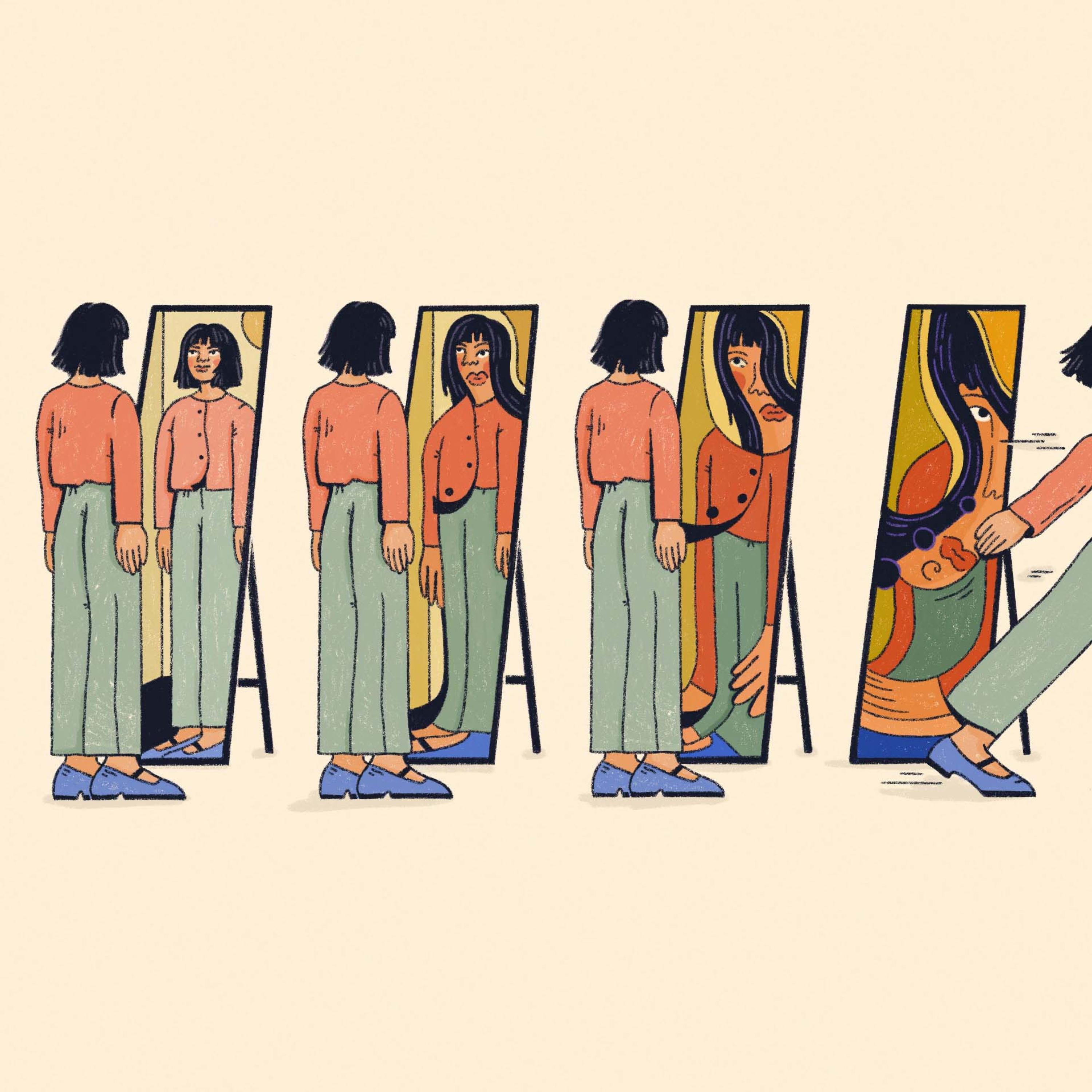
This American Life
860: Suddenly: A Mirror!
00:59:53
A show about people who are suddenly confronted with who they are.
Loading summary
Transcript182 lines
- [00:00]
Ira Glass
This message comes from Capella University. The right support can make a difference. That's why at Capella University, learning online doesn't mean learning alone. You'll get support from people who care about your success and are there for you every step of the way. Whether you're working on a bachelor's, master's, or doctoral degree, you can learn confidently, knowing you'll get the dedicated help you need. A different future is closer than you think with Capella University Learning. Learn more at capella. Edu. Hey there, podcast listeners. Ira Here to announce that I am helping kick off the Tribeca Festival with a live event in New York City on June 10th. That's Tuesday night, June 10th. I'm gonna be on stage with Ira Madison III, the host of the podcast Keep It. What we're gonna do is gonna take a little eras tour through 30 years of this American life. Visit different periods of the show with clips and stories. Tickets are on sale now@tribecafilm.com this American Life. Again, that is tribecafilm.com thisamericanlife if you're here in New York, I hope you can come out. I think it's gonna be fun. A quick warning. There are curse words that are unbeeped in today's episode of the show. If you prefer a beeped version, you can find that at our website, this AmericanLife.org from WBEC Chicago, it's this American Life. I'm Ira Glass, and I am joined in the studio right now by one of my coworkers, Aviva de Kornfeld.
- [01:28]
Aviva de Kornfeld
Hi, Ira.
- [01:28]
Ira Glass
Hi there. And so you're here to tell us a story?
- [01:31]
Aviva de Kornfeld
Yes. It happened probably when I was 11 or 12. I was with my older sister Ora, who's probably 14, and our cousin Jake, who's 16 or so, he was visiting us. And one night we decided it would be fun to sneak into the community pool, which is just a few blocks away from our house.
- [01:49]
Ira Glass
The community pool was closed?
- [01:51]
Aviva de Kornfeld
Yes. It's probably midnight. Our parents are asleep. We'd never snuck in. So we're walking to the pool and I actually didn't even wanna sneak into the pool. I was scared. But I just. The bliss of being included with the older kids as the younger one very much overrode my reservations.
- [02:07]
Ira Glass
Absolutely.
- [02:09]
Aviva de Kornfeld
So we get to the pool, scale the chain link fence, hop over, triumphant. Immediately, like one second after we've entered the pool, sirens go off. They're so loud, it's like, woo, woo. And then an automated voice comes on and it's like, you are trespassing the police have been alerted. They're on their way. Evacuate the premises.
- [02:29]
Tobin Lowe
Right.
- [02:29]
Ira Glass
And you guys are children, so.
- [02:31]
Aviva de Kornfeld
So we panic. And my cousin, he is the oldest and tallest and he just like runs to the fence, hops over it, clears it, no problem, takes off running. And then my sister is next and she hops up on the fence, but then she like kind of falls down. She like doesn't quite make it over. And then she hops up again. And she was just moving so slowly in my mind, it was probably 15 seconds actually. And what I did in my panic is she was up about 2ft off the ground, holding onto the fence and I grabbed her waist and I ripped her off the fence and I climbed over myself and I. And it's the, it's. I. We get home, she's fine. She like eventually makes it over. But for me, this is the first moment that I remember thinking, I have been shown what kind of person I am and I am a very bad person. Or there is a part of me that is like deeply selfish or capable of deep selfishness.
- [03:36]
Ira Glass
Yeah. That's like a very grown up thought to have. And there comes a time when you think that for the first time and. Right. Like you're 11 and you're capable of that.
- [03:45]
Aviva de Kornfeld
Yeah. And what I saw was this is who you are. You're the kind of person who prioritizes yourself over other people, including the person you love the most. Like, my big sister is like the person I idolized at the time. And we're still very close, but I was like, really like, anything for you. I love you so much. And then turns out, actually, nope, I just want to save myself when I'm scared. And the whole reason I'm here telling you this story is because I think that lots of people have moments like this and that these moments can act as a kind of mirror that reflects something back at you about yourself.
- [04:24]
Ira Glass
And does this moment come back to you in the years since?
- [04:27]
Aviva de Kornfeld
Absolutely. Every time I do something a little selfish or say something kind of shitty or just like I have some sort of failure of kindness, I think back to this moment and I'm like, well, that's the real you.
- [04:41]
Ira Glass
Wow. Okay. So the reason you're telling this story, I know, is that you have come here today with a collection of stories and moments like this one from a variety of people.
- [04:52]
Aviva de Kornfeld
Yeah.
- [04:53]
Ira Glass
And with that, I'm going to just step out of the way and just hand over the show to you to host.
- [04:58]
Aviva de Kornfeld
Okay. Do I wait, should I say I'm A Viva de Kornfeld sitting in friar glass.
- [05:03]
Ira Glass
Or no, no, no, you don't have to do that, because I think everybody's.
- [05:05]
David Kestenbaum
Gotten that by the way.
- [05:06]
Aviva de Kornfeld
They know who's who.
- [05:08]
Ira Glass
They have the cast of characters.
- [05:11]
Aviva de Kornfeld
Okay, Today on the show, we have stories like mine about people who are suddenly confronted with a part of themselves they had not previously known and how they deal with that newfound knowledge. Stay with us.
- [05:36]
Becca
This message comes from MIDI Health. Women in midlife face a healthcare desert, but MIDI is here to fill the gap. Offering expert care for perimenopause and menopause covered by insurance. Hot flashes, insomnia, brain fog, weight gain, and moodiness don't have to be accepted as just another part of aging. MIDI clinicians understand how these symptoms can connect to menopause and prescribe a wide range of solutions. Book your Visit today@joinmidi.com that's joinmidi.com this message comes from Sony Pictures Classics presenting Jane Austen Wrecked My Life, starring Camille Rutherford, a new romantic comedy about a Parisian woman who dreams of becoming a successful writer and experiencing true love. While attending a Jane Austen writer's residency in England, Jane Austen Wrecked My Life. Now playing select cities. For more information and tickets, visit janeaustinreckedmylife.com on criminal, we tell true stories about people who've done wrong, been wronged, or gotten caught somewhere in the middle. I never did anything wrong. I never had a speeding ticket.
- [06:39]
David Kestenbaum
So I think I just saved all my stuff up for just one thing.
- [06:42]
Becca
From lotto scams to black market whiskey.
- [06:45]
Ira Glass
To the accidental death of a rare.
- [06:47]
Becca
And beautiful fish, we bring you stories about the most curious crimes around. Listen to Criminal every week wherever you get your podcasts.
- [06:59]
Aviva de Kornfeld
It's this American Life Act 1 on top of spaghetti all covered with shame. So that moment with my sister when I was 11, did it change me? I can tell you that I have never pulled her or anyone off a fence while running from the police again, not even once. But beyond that, no. I think this moment gave me a little window into myself, and that's about it. Fundamentally, I am the same person. My co worker, Tobin Lo. When I told him this story, he was like, well, yeah, I'm sure most people who have these split second moments of selfishness don't really change. And to that I say, what kind of world is that? Not one I want to live in. So I sent Tobin searching to see if he could find someone who had one of these moments and actually did change. I'll let Tobin take it from here.
- [07:57]
David Kestenbaum
David and his girlfriend were fast asleep in his apartment in London when someone started banging on the door downstairs, screaming, fire. He got up and opened the bedroom door to find smoke piling in. And here is where he had his moment of split second decision making.
- [08:13]
Tobin Lowe
My first reaction was, okay, self preservation.
- [08:15]
Aviva de Kornfeld
I'm gonna get my passport because that burns up. I'm kind of stuck here. I'm gonna get my trousers because again, I don't look foolish waiting downstairs in my underwear.
- [08:26]
Leisha
And then I got my shoes.
- [08:29]
Aviva de Kornfeld
I ran outside and I ran so vigorously. I ran up against the wall and I got a burn, like a carpet burn, but from the wall. And I really wanted to get out of there.
- [08:42]
David Kestenbaum
He made it outside and it occurred to him only then that his girlfriend existed. And she'd also been in that smoke filled room that he'd fled, passport in hand. He realized this because she was standing next to him. She'd made it out too. But he had to admit to himself.
- [08:59]
Tobin Lowe
Oh, I'm glad she's safe, obviously, but.
- [09:01]
Aviva de Kornfeld
I didn't have anything to do with that.
- [09:04]
David Kestenbaum
His girlfriend, who's now his wife, says, I'm pretty sure I ran out ahead of you. He doesn't buy that. Still beats himself up. Says it's like a cloud of shame that follows him around. And yet, do you think it caused you to be the kind of person who runs towards a fire now? Like, do you think you're more that person now?
- [09:23]
Tobin Lowe
I think no.
- [09:25]
Ira Glass
I think I'm definitely.
- [09:27]
Tobin Lowe
I don't think I'm a hero.
- [09:31]
David Kestenbaum
I put the call out in multiple places, talked to everyone I knew, wondering if I'd find a kind of superhero origin story. Someone who took their pain and turned it into action. Turns out there are many people out there haunted by the ghosts of split second decisions past Jonah. In Illinois one night, his girlfriend woke up with terrible food poisoning from eating a bison sloppy joe. She was suddenly and violently throwing up. He said he thought of helping, but instead snatched the blanket off of her, threw it over his head and ran out of the room. He said the smell was too terrible. Did it change you in some way?
- [10:14]
Becca
Um, no. No.
- [10:16]
Tobin Lowe
I would say no, but I was a bit embarrassed, like, ashamed that I didn't step up to the plate a little bit better. In my defense, like, it was extremely, extremely gross.
- [10:32]
David Kestenbaum
To be fair to Jonah, I don't know that I would have stuck around for a repeat appearance of bison sloppy joes either. Though there was a small pattern developing in my search results. A recurring theme of boyfriends making the quote unquote Wrong decision, but not doing much differently afterwards. I wish I could report that it's going to change from here on out, but here we go. A lot of times it was the girlfriends who wrote in to tell us what happened. There's Jana, who lived in bear country. One afternoon, a black bear charged, and what did her boyfriend do? He ran for his life, leaving Jana to fend for herself. A similar thing happened to another woman, but instead of a bear, it was a charging bull. When she turned to grab her boyfriend's hand, she discovered he was already long gone. Racing to the car. Jenny in North Carolina. She and her high school boyfriend were sneaking back into her house after curfew. Her stepdad thought it was an intruder and pulled a gun on them. What did her boyfriend do? He yanked her in front of him. Used her as a human shield. Did you dump that guy right after it happened?
- [11:42]
Aviva de Kornfeld
Oh, absolutely not.
- [11:43]
Becca
No.
- [11:44]
David Kestenbaum
They stayed together for five more years, and surprise, surprise, he was a jerk the whole time.
- [11:50]
Aviva de Kornfeld
It ended very tragically and heartbroken for.
- [11:52]
Becca
Me, which is funny looking back on it, because it was like he was.
- [11:56]
Aviva de Kornfeld
A really bad boyfriend.
- [12:02]
David Kestenbaum
Talking to all these people, my search was coming up empty. Nobody seemed to be changing their behavior. They felt guilt, shame, embarrassment, sure, but actually changing, not so much. Then I talked to Becca. Becca is a pharmacist who lives in Chicago. Her story happened while she was on a medical mission trip in Ethiopia. Her and her team were there working at a local clinic. It was the end of her stint. She was headed back to the airport from the village she had been working in. There was Becca, a paramedic, and this older volunteer couple, Frank and Sue. Before their flight, they sit down for a meal at a restaurant. They're starving. Everyone else gets burgers. Becca orders a plate of spaghetti.
- [12:45]
Becca
And, like, Frank just becomes unresponsive a little bit at the table. Like, he didn't faint. He just was sitting there staring into space and breathing heavily. And I just thought he was dehydrated. And I was like, frank, here, drink this. Like, like, our food's here. And I'm, like, so excited to eat. And then he's not responding to his wife. Like, she's like, frank, Frank. And he's just sitting there, labored breathing.
- [13:13]
David Kestenbaum
Frank falls out of his chair, fully passes out.
- [13:16]
Becca
And then the paramedic immediately jumps up this huge, you know, like, six, five, bulky guy. And he just throws him over his shoulder and starts, like, running back towards the van and is like, come on, we're finding a hospital. And his wife is confused but she's following and just like, oh, okay, what's going on? Is Frank gonna be okay? Like, just frantic. And I. This is so bad. I sat at that table like an idiot, trying to get the wait staff's attention to see if we can get to go boxes for the food. And, like, Cornell, the paramedic is yelling, like, let's go. We have to go. I stand up, and I pick up my plate of spaghetti carbonara on a white, like, porcelain plate with silverware, like, and take that with me into the van. So we're zooming away. Frank's in the backseat, like, for all we know, dying, and I'm holding this plate of spaghetti in the car.
- [14:37]
David Kestenbaum
I talked to Cornell, the paramedic. He said yes. He remembers her holding the plate of spaghetti while he performed CPR on Frank the entire ride to the hospital. And also feeling kind of like, okay, I guess I'm on my own here.
- [14:50]
Becca
And I don't know why I did it. I don't know why I did. I don't know why I did it. I was immediately so ashamed and so embarrassed.
- [14:57]
David Kestenbaum
When did you eventually put the plate of spaghetti down?
- [15:01]
Becca
When we got to a hospital.
- [15:04]
Tobin Lowe
And.
- [15:05]
Becca
I put this plate of spaghetti just on the seat in the van, and we all went inside.
- [15:11]
David Kestenbaum
Frank ended up being okay. They hooked him up to an iv. He felt better. After a couple of hours, they got back in the van to head to the airport. And dear listener, if you're wondering if the plate of spaghetti was still there, if the driver of the van handed it back to Becca like a trophy of shame, if it sat on her lap because she was too ashamed to eat it in front of everyone else, yes, that did happen. Afterward, they joked that she was just looking out for them. She was just bringing them a snack. What do you think was actually happening in your head at that moment?
- [15:46]
Becca
I think I was hungry, and I wanted spaghetti. I think I was being really selfish. I really do. I think I was being really selfish. It doesn't sound good, right? Like, when I say it, to me.
- [15:58]
David Kestenbaum
It sounds like someone who went into shock. And you don't make rational choices when.
- [16:03]
Becca
You'Re in shock, but everyone else did. I think that's what still gets me. And I have since almost swung the other direction of, like, trying to be so selfless. Just the other day, like, this woman fell in the middle of the road at the airport. Blood everywhere. I drop all my stuff on over there. Like, I don't care about my luggage. I don't care about my stuff. Someone can steal my phone. I don't care. Like, I need to help this person.
- [16:33]
David Kestenbaum
She's really trying to change. There are other examples, like last year when she was driving on the highway when she saw a car accident. Someone flung from their vehicle. She immediately pulled over, left her keys in the ignition, her dog in the backseat. Just trying to get to this person to help. Becca is the only person I talk to who actually lives her life differently. After reflecting on how she acted.
- [16:56]
Becca
Like I'm trying to use that in a positive way. I think now, because pretty gross what I did.
- [17:03]
David Kestenbaum
Do you think each time you're doing something like that, are you thinking about that plate of spaghetti on some level?
- [17:10]
Becca
Honestly, I think maybe I am somewhere in the recesses of my mind.
- [17:15]
Tobin Lowe
Yes.
- [17:21]
David Kestenbaum
I think we're tempted to think of these moments of panic as revealing our true nature, but really, that's just the animal part of your brain reacting on instinct. The stuff we do after those moments when we apologize or double down or gaslight or atone, that's the part that makes us human.
- [17:50]
Aviva de Kornfeld
Tobin Lowe. He's an editor at our show, Act 2. BWE Big Wig Energy. You know those moments in life where everything's falling apart and it feels like you're drowning, you've gone through a breakup, you've been laid off, and so you just grab onto the first log you see floating down the river just so you have something to hold on to, like a rebound relationship or some new hobby you get way too invested in. That's what Leisha did, which led her to trying on this whole new identity. It began when Leisha's best friend adopted a dog, and Leisha decided to buy a present to celebrate. Leisha's best friend is a hardcore Pittsburgh Steelers fan, so she decides to buy the dog a Troy Polamalu jersey. Troy was her friend's favorite player on the team, known for, among other things, his long, curly hair. Leisha finds a dog jersey. No problem.
- [18:47]
Ruby Ganz
And I thought, oh, this would be great. I'll get the wig to go with this jersey. I went to all the pet stores, I looked online, and I could not find a wig. And I thought, well, this is like a void that needs to be filled. And I decided I was going to be the one to do it.
- [19:05]
Aviva de Kornfeld
These days, pet wigs are everywhere. You can order one with next day shipping. But this was back in the primitive days of 2014, before our culture had advanced quite that far. Lisha is good at lots of things. She's a musician, an actress. You might recognize her from the L word. But none of that translated to knowing how to make a hairpiece for a dog. Fortunately, her sister is a hairdresser, so together they bought a bunch of Styrofoam balls in three different sizes to represent the heads of small, medium, and large dogs. Then they bought some cheap wigs for humans to cut up and turn into prototypes. They came up with 10 different iconic hairstyles from throughout history. They made a mullet, a B52 style beehive, a gray golden girls wig.
- [19:51]
Ruby Ganz
I had a Farrah Fawcett, like, long blonde, flowing hair, feathered. I had like a bob, like, can I see the manager Kind of bob.
- [20:00]
Aviva de Kornfeld
What's your favorite wig that you made?
- [20:02]
Ruby Ganz
I think for me it was the beehive because it was so. It was just like the ultimate wig. It was like fire red. It had little, like, sideburns that were curled, that came down. And it got funnier as it got smaller. Like, it made a lot of sense on the pit bull, but when it went down to like a Chihuahua or Pomeranian, it was hilarious. I think that was a big part of this, is that it was so silly and so joyful. It was enjoyable to wake up and think about. And that's a really nice thing to follow.
- [20:38]
Aviva de Kornfeld
Leisha had had a really rough year before this. Her mom got sick, then she went through a big breakup. Then she left the band she'd been in for the better part of 10 years, which meant she was also out of work. But now she had a mission. Leisha went all in on the pet wigs. Over the next few months, Leesha and her sister make 30 wigs, all 10 designs in each of the three sizes. She also got an LLC, opened a bank account. Of course she needed a name for her product. She decided to keep it simple. Pet wigs. One word.
- [21:12]
Ruby Ganz
I had a tagline. It's a wig for your pet.
- [21:15]
Aviva de Kornfeld
Very descriptive.
- [21:17]
Ruby Ganz
Well, you know, if you didn't get.
- [21:18]
Aviva de Kornfeld
From the name that it's wigs for pets.
- [21:21]
Ruby Ganz
Exactly, because that was always the second. That was always the follow up question. When I said, I'm making pet wigs, people would say, what is a pet wig? It's a wig for your pet. Like, it was almost so shocking to people that they had to have that follow up question. So I made it clear.
- [21:37]
Aviva de Kornfeld
Three of Leisha's friends were living with her at the time. The prototypes were always scattered around the living room. And all three friends got really into the project. One made a website, another took over social media. The third signed her up for conventions, including dragcon Leisha was very excited about DragCon. She could show the wigs to people who really know and love wigs and find out if there's any possible market for them. So in preparation, she spent a ton of time building out her booth.
- [22:07]
Ruby Ganz
It was beautiful. I just want to give it full props. It was a really great looking booth. It was like a room you walked into. It was all white and clean. It had all the samples on a wall, on shelves. And I remember I really wanted it to sort of feel like when you walk into the Apple store. I wanted it to be clean. Lines, white walls, very stark. And then I wanted the pictures and the wigs to be the moment. So I wanted it to be like top of the line, classic, like so high. I wanted it to feel high end. The reaction that people had when they rounded the corner, people lit up in a way I've never been a part of. Like, I've never seen people so happy. I had a line out the door. Like they. I'm not going to say they were climbing over each other to get to it, but it was sort of rabid.
- [23:05]
Aviva de Kornfeld
RuPaul himself even came by the booth. He loved the wigs. And it's then that something shifts for Leisha. Because it's one thing for your sister or your friends to like your idea, but when a stranger, clear eyed in their total indifference to your well being, when they tell you your idea is good, you believe it. So riding the high of dragcon, Leisha decides it's time to go big. She sets up an appointment with Walmart. She flies to Bentonville, Arkansas, home of Walmart headquarters. The building is hulking and corporate, with big glass doors and security guards. A far cry from her sunny living room littered with wigs. It's suddenly all feeling very official.
- [23:49]
Ruby Ganz
It felt, you know, when Annie walks into in the musical, when Daddy Warbucks, you know, she walks into the house and she's looking around like, almost like that, like, am I gonna like it here?
- [24:01]
Aviva de Kornfeld
A rep meets her in the lobby and they walk down this long hallway to his office, passing dozens of identical offices, each filled with other people pitching their products. Leisha said it felt like a factory. Leisha sits down opposite the Walmart guy, setting her bag of wigs next to her on the floor. She takes a deep breath and makes her pitch. She starts as confidently as she feels.
- [24:26]
Ruby Ganz
One of the first things out of my mouth was, I'm about to blow your mind.
- [24:30]
Aviva de Kornfeld
This, unsurprisingly, was not the first time this guy had heard this. But then Leisha goes in for the hard sell.
- [24:38]
Ruby Ganz
I think I talked a lot about the void in the market, the missing piece, the finishing touch to every costume out there, the billions of costumes that are sold every day to pets, to owners all around the world, yet they're not completed. Because that was a real frustration of mine. It honestly was. Like, it drove me crazy that you couldn't complete a costume.
- [25:01]
Tobin Lowe
Mm.
- [25:03]
Ruby Ganz
He said, okay, let me see him. And I. I put him on the desk and presented my pitch deck. And the first thing he said was, great. I'd like to place an order. I think this would be great for Halloween. Let's launch at Halloween.
- [25:18]
Aviva de Kornfeld
Oh, my God.
- [25:19]
Ruby Ganz
I know. And right away, the question started coming at me. How much can you make them for? Where are you making these? How are they packaged? How fast can you turn these around? Do you have insurance? You know, just on and on.
- [25:36]
Aviva de Kornfeld
Of all the questions the Walmart guy asked you in your meeting, how many of them did you have answers for?
- [25:41]
Ruby Ganz
Would you say zero? I had nothing.
- [25:46]
Aviva de Kornfeld
But how did you think that? How capable were you of fulfilling the Walmart order?
- [25:51]
Ruby Ganz
I had no means at the time to fulfill one wig order.
- [25:57]
Aviva de Kornfeld
Like, not even one. Yeah.
- [26:00]
Ruby Ganz
I would have called my sister back up and said, we gotta get crackin' I got, like, some wigs to make. I just had the idea. I had a great idea.
- [26:11]
Aviva de Kornfeld
All at once, the improbability of Leesha's whole scheme caught up to her. Until now, Leesha had been charging full speed ahead, never stopping to consider even basic questions of viability. But now, here was this Walmart guy forcing her to consider, for the first time, the reality of this project, which, frankly, Leisha had no interest in doing.
- [26:35]
Ruby Ganz
I remember just wanting to take the wigs and put them back in my safe little bag with my great little ideas and, like, zip it up and just like, yeah, never mind. You know, you just want to, like, protect them from. Yes, from the horror of reality.
- [26:53]
Aviva de Kornfeld
Cause that's what he represented to you. He was like, reality crashing in, ruining the fun.
- [26:59]
Ruby Ganz
100%. I think he just made me realize it was about to become very unfun. Very, very fast.
- [27:09]
Aviva de Kornfeld
Yeah. And that was the point of it.
- [27:11]
Ruby Ganz
That was it.
- [27:16]
Aviva de Kornfeld
And with that, Leisha did what so many people fail to do. That little life raft she'd created for herself when things were rough, that log. She jumped on. She jumped right back off. She didn't double down. She didn't marry the rebound relationship. Suddenly, she was able to see her Petwigs fever dream for what it was.
- [27:37]
Ruby Ganz
It was sort of a strange, like, fantasy bridge that I walked across for a year and a half, like, because once it was over, things sort of normalized and the pieces of my life that I was used to started falling back into place. Yeah, I think I was better. I think I was done.
- [28:01]
Aviva de Kornfeld
Leisha tossed the pet wigs into a bin in the shed behind her house, didn't think much about them, and after some time she threw them away. How did it feel when Halloween rolled around?
- [28:14]
Ruby Ganz
The first Halloween when I would walk through the pet aisles, I'm like, oh, they're still not here. I still don't see a wig.
- [28:21]
Aviva de Kornfeld
Someone should really do something about this.
- [28:24]
Ruby Ganz
Yes, someone should really.
- [28:25]
Aviva de Kornfeld
But it's not gonna be me exactly. Sometimes the reflection you see of yourself, it's just a mirage there for a moment. Then it disappears and there you are again, the same person you always were. Coming up, how not to explain drugs to your kid. That's in a minute from Chicago Public Radio when our program continues.
- [28:58]
Ira Glass
This message comes from Schwab. At Schwab, how you invest is your choice, not theirs. That's why when it comes to managing your wealth, Schwab gives you more choices. You can invest and trade on your own. Plus get advice and more comprehensive wealth solutions to help meet your unique needs. With award winning service, low costs and transparent advice, you can manage your wealth your way at Schwab. Visit schwab.com to learn more. This message comes from Discover. Are you still quoting 30 year old movies? Have you said cool beans in the last 90 days? Do you think Discover isn't widely accepted? If this sounds like you, you're stuck in the past. Discover is accepted at 99% of places that take credit cards nationwide. And every time you make a purchase with your card, you automatically earn cash back. Welcome to the now it pays to Discover. Learn more@discover.com creditcard Based on the February.
- [29:56]
Becca
2024 Nielsen report, this message comes from Mint Mobile. If you're tired of spending hundreds on big wireless bills, bogus fees and free perks, Mint Mobile might be right for you with plans starting from 15 bucks a month. Shop plans today@mintmobile.com Switch upfront payment of 45 dollars for 3 month 5 gigabyte plan required. New customer offer for first 3 months only, then full price plan options available, taxes and fees extra. See Mint Mobile for details.
- [30:26]
Aviva de Kornfeld
It's this American Life. I'm Aviva DeKornfeld, sitting in for Ira Glass. Our show today suddenly a mirror. We have stories about people catching surprising reflections of themselves and what they do with that information. When I was thinking about this theme, I remembered this story about this guy I went to college with. His name's Ari. We went to school just outside Los Angeles and Ari moved to LA proper after graduation. One afternoon the summer after he graduated, he was driving around.
- [30:57]
Leisha
I couldn't have been more brains off in this moment. I mean, I was just stuck in traffic, driving along the highway and was just passively playing radio, like zoning out.
- [31:08]
Aviva de Kornfeld
Highway hypnosis.
- [31:09]
Leisha
Yeah, I was doing a drive like that, had done it a million times kind of thing.
- [31:14]
Aviva de Kornfeld
He was listening to kcrw, one of the local public radio stations.
- [31:18]
Leisha
And the DJ on the radio was just playing a lot of really good music. Like song after song. It was like, whoa.
- [31:24]
Aviva de Kornfeld
Like what kind of songs were they playing?
- [31:27]
Leisha
I want to say, like just a lot of things that were very popular in 2015. So like, like, like indie, indie pop. And I was just like, whoa, who is this dj? And then they start back announcing the songs, which means after they play a couple songs, they have to do the credits. And I just start having this picture in my head of who they are. Like this classic idea of what I understood KCRW DJs to be like, which was like a really cool woman who's single, in her late 30s, early 40s, has like been on the alt scene for, you know, her whole career.
- [32:11]
Tobin Lowe
Has.
- [32:11]
Leisha
A short pixie cut. I don't know why.
- [32:15]
Aviva de Kornfeld
Oh, you're really imagining her.
- [32:17]
Leisha
Yeah, yeah, I just like saw it.
- [32:20]
Aviva de Kornfeld
So Ari is driving along feeling like he's found his radio DJ soulmate.
- [32:26]
Leisha
I was like, wow, this person has the exact same music taste as me. This is going to become a staple of my commute. Catching their show and this is going to be just the start of the rich, wonderful, one sided relationship. And after they back announce everything, they go, you're listening to the Frothy and D Electronics show with me, DJ Ari, here on kspc. And I realize that the voice is me. And I mean, I was just so out of my body. Floored. Because you're the lady. Cause I'm the lady. Exactly.
- [33:14]
Aviva de Kornfeld
That's so weird.
- [33:16]
Leisha
Yeah, it was like reality broke for a second. Just how is it possible that I am hearing my own voice?
- [33:23]
Aviva de Kornfeld
What had happened was this. Ari was not listening to KCRW. He had accidentally tuned to KSPC, our college radio station where he had DJed as a student. And this set he was listening to was actually a rerun of a show he had done a few months prior. This mistake he'd made. It was actually a version of a mistake that many, many people had made. You see, anytime Ari is on the phone with someone who doesn't personally know him, they always assume that he's a woman every single time. And that doesn't really bother him. It's not like he finds it insulting or anything. It's more. He just finds it confusing.
- [34:07]
Leisha
I don't see it basically, like, I just don't hear. This is something that I'm going to immediately presume to be a female voice until I did in the moment of hearing my voice on the radio.
- [34:23]
Aviva de Kornfeld
It's cool that when you finally heard your voice as the rest of the world hears it, you really liked it.
- [34:29]
Leisha
Oh, hell yeah. I was picturing like the coolest person.
- [34:42]
Aviva de Kornfeld
Act 3. There will be Questions this next story is about a dad who catches glimpses of himself in the questions his daughter asks him. The dad is comedian Mike Birbiglia, and he's been traveling around talking about these questions on stage for over a year now. It's a pretty wide ranging show. Here's an excerpt.
- [35:05]
Tobin Lowe
I'm walking my daughter home from school and my wife and daughter and I live in Brooklyn. There's all these smoke shops there and they have these cutesy names like Blazey Susan and yes, we Cannabis. And. And my daughter Una looks up, she's nine years old. She looks up at the name of one of these shops and she goes, dad, what's the good life? And I was like, I don't even know. It's not what I'm doing. But then it was one of those moments where I'm like, oh, I should try to explain drugs as best I can. It's like, well, you know, some people use drugs and, and they sort of make your brain happy, but it's sort of a fake happy. And you don't want to get too happy because then you got to use more drugs to get it as happy as it was the first time. And then the eighth or ninth time, you're in real trouble. Anyway, mom and I use them sometimes, not often. Mostly when we're younger, not your age, like three years older than you are now. But I use prescription drugs. I don't want to, but I have to because I have a serious sleepwalking disorder. The reason I bring up the sleepwalking is that 20 years ago I get diagnosed with REM sleep behavior disorder. And they put me on Klonopin. And I recently went to a new doctor and she's looking at my chart and she goes, you've been on Klonopin for 20 years. And I go, yeah. She goes, all right, that is not what you want to hear when you go to the doctor. I go, are you concerned? She goes, well, do you know the side effects? I go, I don't. I don't know. She goes, depression, loss of memory, poor motor skills. I said, oh, I just thought that was my personality. Like, it's. It's a strange moment in one's life when you realize your personality is side effects, because then I'm just, like, self conscious about all my daily activities. Like, one thing I do every night before bed is my dosage of Klonopin is one and a half milligrams. And so I have to break a pill precisely in half. Yeah. You know, who shouldn't have a precision task like that? Someone with poor motor skills. Because inevitably, I break it in half. And there's like a pile of Klonopin dust on the sink. And I'm depressed and I'm crying into the. Into the dust, and the tears are merging to form a Klonopin sorbet. And then I lick up what I perceive to be a half a milligram, but definitely isn't a half a milligram. So how do I explain that to my daughter? That's the good life. That's. Yeah, that's for good. There are so many things I feel like I can't explain to my daughter. Like, she's nine years old, and it's just getting harder and harder because when they're younger, it sort of doesn't matter. Like, they're an animated bag of rice, and you just got to make sure they stay animated. And then even when they're toddlers, it's a lot of layups. What's that? That's an egg. I'm a genius. But. And my wife doesn't know that much stuff either. She's a poet, I'm a comedian. Together, we're a sculptor. We, you know, we just don't know a lot. And it just started to become very clear to me about a year ago, because I get a call from my mom, and she said, dad was sick this week, and I tried to get him to go to his doctor, but he wouldn't go. And then yesterday, he fell down in the bathtub, and I called 911 and the ambulance took him into the ER and it turned out he had had a stroke. And I get off the phone and I'm alone in my bedroom, and then I go into my closet and I'm just sort of organizing things, and I just start crying alone. And my daughter Una comes in and she goes, dad, what's wrong? And I go, well, grandpa had a stroke. And she says, dad, what's a stroke? And that's when I realized I can't really explain what a stroke is. I took a swing. I mean, I know the bullet points, you know, I go, it's a brain injury and there's bleeding in your brain. And then it was a lot of free association after that. You know, I was like, it's your brain. You know, your brain is bleeding. And I'm not sure where the blood was, but I think it was like in the vessels and they're sort of all in there, you know. But now it's just, you know, it's everywhere, I think. And maybe ask your mom about that or. Or grandpa, but not this week, you know. And so Una goes, is Grandpa Vin gonna be okay? And I go, I don't know. I'm gonna go home tonight. So that night, I drove to Providence, Rhode island, to the hospital. And I take the elevator up to the eighth floor to the stroke unit, and I see my dad. And he's. And he's just a shell of himself. He can't move half of his body and he can't really speak. And the neurologist came in and she goes, vince, we're gonna do a spinal tap. My dad happens to be a retired neurologist, so from the condition he was in, he suggested a type of spinal tap. He goes, guided spinal tap. Which is impressive, but also a good example of how controlling my dad is. I'm watching a half dead neurologist tell a fully alive neurologist how to do her job. I mean, that is next level mansplaining. I mean, that is. It was devastating seeing my dad in this condition because, you know, when I was a kid, I always viewed my dad as larger than life. He was almost like a mythological creature, you know, I just, in a way, I sort of wanted to be my dad because he knew so much stuff, like he was a doctor, and in his free time he got his law degree. Yeah, that's how much he didn't want to be a dad. He was like. He was like, what could I do in these slots of time when I would be parenting? In fairness, we weren't great kids. We always wanted a dad and he wanted another secondary degree. So our goals were at odds. My dad was a doctor, but I didn't really see him that way. You know, know, like every Once in a while, when I was a kid, strangers would come up to me. They'd be like, your dad is a great doctor. And they're like, all right. You know, from Worcester, Massachusetts. That's how everyone talks. Your dad is a great doctor. It's like, we don't none of us fully understand what our parents do when we're kids. Like, it was rare that I saw my dad as a doctor. Like, I remember a couple times, like, I played soccer when I was a kid. I was the goalie, and one time I dove head first for the ball and I got to it, and then the kid on the other team kicked my head. I know with the intensity he had intended for the ball. And I don't know the rest of the story, but I have been told that I hopped up. I was like, I'm good. And they took my word for it, and they kept me in the game. And about 15 minutes later, I just wander off the field onto another field. My teammates ran over. They go, mike, are you okay? And I said to them, and I quote, I go, what are we even doing here? And my dad ran onto the field and he picked me up and he carried me off and he drove me home and he asked me all the questions that doctors ask their patients. What's your middle name? What are the classes you take at school?
- [45:25]
Aviva de Kornfeld
School.
- [45:26]
Tobin Lowe
I was like, oh, okay, this is what my dad does. And then the other time when it came up is that I went to St. Mary's School for grade school in Shrewsbury, Massachusetts. And every Friday night we had science club, which is kind of like a mafia front for Catholic school. Like, we believe Jesus turned water into wine. And also there were dinosaurs, you know, and so every Friday night, it's like a different parent explaining what science has to do with their job. And one night it was going to be my dad. And I was so nervous, I was like, what's he going to say? He doesn't know anything about science. And he came in and he brought his medical tools and he took them out one by one. He explained what each of them does. He took out a three dimensional model of the brain, explained the hemispheres of the brain. And all these kids came up to me afterwards and they were like, your dad is wicked smart. You have the smartest dad. I was like, yeah, I do have the smartest dad. But how come he didn't explain any of that stuff to me sooner? Because I just didn't see a lot of that, you know, what I would see if my dad was. He'd come home from work around 8 o' clock at night and he would sit in the corner of the living room and read a war novel and scowl. And every now and then he'd sort of fly off the handle about some little thing. He'd be like, where are my goddamn keys? You know, I'd be like, we gotta find dad's keys. I spent my whole life looking for those keys. So we'd look for the keys and then my mom would just pray, you know, she'd be like, I'm gonna say a prayer to St. Anthony. I was 7. I was like, I don't think this is gonna work. We need more concrete tactics. Locate the key keys. My dad would not like that joke. I. My dad doesn't like a lot of my jokes, but he particularly doesn't like it when they're crude and then also personal. And he doesn't like political jokes. As a matter of fact, when I was in my 20s, I did, I was doing a political joke and then we ended up having this discussion from it about politics. And it was tense, you know, I was visiting him and we went for a walk on this wooded path behind his house. And the farther we walked, the more tense it got to the point where he was just saying mean spirited things about me. And then I started saying mean spirited things about him. And I got back to my car and I said, bye, dad. And he didn't say goodbye. He goes, well, you've gone another way. And that was it. And I just drove home and I just felt so adrift, you know, I thought my whole life I sort of wanted to be my dad. And at a certain point I decided I wanted him to be me. So I'm with my dad in March at the hospital and it's devastating. I mean, if you've been with someone who's had a stroke, I mean, it's the worst thing you can possibly imagine. But I will say, if I'm being completely honest, it has calmed him down. Stay with me. Most of the jokes are for you, but a few of them are for me. This is, this is a coping mechanism. I hope it is for you too. No, I mean, most of the time this is horrific, but then every once in a while I'm like, where was the stroke when I was five? You know what I mean? Like when I was a kid, he'd be like, where are my goddamn keys now? He's like, keys. And I'm like, I can't say I don't prefer the latter. It is a little more polite. So I'm with my dad in March at the hospital, and then he can't even really move his face. And so the only way I can even understand his expression is through his eyes. And the expression in his eyes is fear. So how do I explain that to my daughter?
- [50:26]
Aviva de Kornfeld
Mike Birbiglia. This was an excerpt from his brand new comedy special, the Good Life. It comes out this week, Monday the 26th. Go watch it. Act four trouble afoot. As you've heard many, many times in today's show, how you behave in a crisis, sometimes it shows you who you really are. That can be true even with a very small crisis. Here's David Kestenbaum.
- [51:01]
Ira Glass
The story starts with a shoe that one day seemed to stop existing. It was a gray and white Adidas belonging to one Ruby Ganz, age 24. Ruby had worn it and its mate to work like she did just about every day. She's not a person who has a lot of shoes. At the end of the day, she switched to her running shoes to go for a run with a friend. The Adidas she stuck in her car after the run. She drove home, then reached over to the backseat where she had put the shoes.
- [51:28]
H
And there's only one shoe. And so I, you know, I did my best. It was dark at that point, so I did my best to sort through the car and, like, look under the seats.
- [51:41]
Ira Glass
Still only one shoe. It was weird to lose just one. The next morning, she looks everywhere around the car on the sidewalk. This is in Santa Barbara, California. She texts her parents, who live nearby. I seem to have lost a sneaker. Her dad texts back, have you looked on your feet, Ruby? I have looked on my feet, Dad's. She rechecks the car.
- [52:06]
H
I even, like, I did the whole deep cleaning thing where you take out.
- [52:09]
Ira Glass
All the carpets because, like, it has to be somewhere, right?
- [52:12]
H
Yeah, totally.
- [52:14]
Ira Glass
Ruby is a science type, works in a lab. So she comes up with a working hypothesis. She figures she had dropped the shoe getting into the car and the street sweeper had come by and swept it up, which would explain why it was nowhere. Case closed. She kept the one lonely sneaker just.
- [52:33]
David Kestenbaum
You know, because, hope it's a new month.
- [52:36]
H
I have a new basic pair of shoes that I wear every day. It's a pair of black Doc Martens. And I knew that I had those shoes in the car. I was getting ready for work. I got out to the car and I could only find one shoe. I was just completely shocked and confused because how could this have happened not once, but Twice. Like, I don't know anyone who has ever lost one shoe. And now it's happened to me twice. Like, this just is not possible. And I looked around, I mean, pretty thoroughly checked everywhere I could think that a shoe would fit. And there was only one shoe in the car. And I was. I would say panicked is too strong, but I was worked up about it. Like, this is not a thing that happens in real life. Where is my shoe?
- [53:35]
Ira Glass
I was into Ruby's story. I find losing things to be completely maddening. Objects cannot just disappear. Here's what I want. I want, when you die for them, and I don't know who I mean by them, to tell you where everything you lost over the course of your life actually was when you were looking for it. Anyway, Ruby, who is wired similarly, decides she is not going to work until she finds this shoe. Her hunt begins with deduction. She feels sure it was in the car yesterday, which meant it must have fallen out of the car, which feels kind of unlikely now that I say it. Like, did the shoe hurl itself out somehow? Anyway, she makes a list of every place she had gone the day before. She'd gone to a city office to file a form. She'd gone to a Trader Joe's, and she'd gone to work. So she checks all these places. The parking lot at the city office, no shoe. The Trader Joe's actually goes into the Trader Joe's and asks the manager, did any workers find a single shoe in the parking lot? No. She texts the facilities guy at work, who texts her back a laughing face emoji, and no, no shoe. She also goes to look at her boyfriend's house, where things took a turn.
- [54:46]
H
And I went and I looked all around the house. Didn't find the shoe. But I did find his dad, who had showed up. And his dad was like, have you considered that someone's messing with you? And I was like, no, I had not considered that. But you're right, I should.
- [55:05]
Ira Glass
He'd just mentioned it in passing, but suddenly things made a lot more sense. The question was, who was had to be someone who knew about the first shoe and how crazy that had made her. Who had then taken the second shoe as a kind of prank? There was a short list of suspects. Maybe a friend at work. There are cameras in the parking lot. She could ask the facilities guy to go through them. Or maybe actually her boyfriend. It would have been easy for him to grab her car keys.
- [55:32]
H
I texted him saying, be straight with me. Are you messing with me? Do you think someone Else is somehow messing with me. Is there a way to tell if someone broke into my car? He's a car guy.
- [55:47]
Ira Glass
So she waits a minute.
- [55:49]
David Kestenbaum
He texts her back, I am not.
- [55:51]
H
The one hiding your shoes, if that's what you're asking. I don't like pranks, and I wouldn't do that if someone's doing that. It's not funny to me.
- [55:58]
Ira Glass
It wasn't funny to her either. But anything was starting to seem possible at this point.
- [56:03]
H
I was starting to feel a little bit genuinely concerned. Like it was. It didn't really process at first, but then once I was thinking about it, I realized that would mean somebody is getting into my car. And that makes me pretty uncomfortable. And I'm starting to feel kind of afraid.
- [56:21]
Ira Glass
Ruby wonders, should I call the police? She drives home from her boyfriend's house, sits on the front steps, when a thought occurs to her. And that thought is, wait, yesterday, didn't I come home for 10 minutes? I did. And didn't I park over there? She gets up, walks over to that spot.
- [56:43]
H
I looked in the street, I looked in the gutter, it wasn't there. And I was like, ugh, okay, fine. But then I looked up, and there.
- [56:52]
Ira Glass
In the tree was her shoe. I'm kidding. It was a few feet away on a curb next to someone's yard. It looked like someone had helpfully picked it up and set it off to the side.
- [57:03]
H
And I was so relieved. I was relieved beyond words to see the shoe sitting there. I took a picture of it.
- [57:13]
Ira Glass
So many things were put right in that moment. It was confirmation that objects do not suddenly stop existing and disappear. And also the world was suddenly repopulated in her mind with people who were generally kind and helpful.
- [57:27]
H
It was really nice to, you know, swing from thinking that a stranger is trying to break me psychologically to, oh, a stranger picked this up for me.
- [57:37]
Ira Glass
It was still a little crazy making that the first missing single shoe was unaccounted for. But then a few days later, she was walking her parents dog, and it jogged her memory. She'd parked in that very spot she was walking the day she had lost the shoe. It was after the run, but before she went home. She'd just forgotten. And there it was beside the road, the gray and white Adidas. She was back in the world she had started in. It's interesting how quickly you went to seriously considering, like, the least likely things, you know?
- [58:09]
H
Yeah. I immediately started thinking about all the crazy, like, all the things that people believe and I think are crazy. I'm like, pfft, that could never happen to me. I'm way too smart and logical.
- [58:22]
Ira Glass
Actually, it was logic, a kind of logic that led you there, right?
- [58:25]
H
Yeah. Like maybe I would have thought that I was somehow superior or just. I don't know. Turns out I'm not.
- [58:36]
Ira Glass
If you are listening to this and feeling a little disappointed, like you were promised a plot twist, something exciting and more dramatic than a story about a woman who had just lost two shoes in a row. Because that is what you come to this show for. Fair enough. But I am just holding up a mirror to the real world, where sometimes a lost shoe is just a lost shoe.
- [59:04]
Aviva de Kornfeld
David Kestenbaum is a senior editor at our show. There's a judging day of the man.
- [59:30]
Leisha
And it'll be too late to pray.
- [59:33]
Aviva de Kornfeld
And there'll be no Densin running. Today's show was produced by me, Ntobin Lowe and edited by Laura Starcheski. The people who put together our show today include Fia, Ben and Jindiah Bans, Mike Comite, Emmanuel Jochi, Angela Gervasi, Nikki Meek, Catherine Raymondo, Stone Nelson, Nadia Raymond, Lily Sullivan, Frances Swanson, Christopher Swatala, Nancy Updike, Julie Whitaker, and Diane Wu. Our managing editor is Sara Abderrahman. Our senior editor is David Kestenbaum. Our Executive editor is Emmanuel Berry. Special thanks to Brittany Luce, Kathy Tu, Ellie Fishman, John Herbert, Alyssa Lowery, Michael Bergen, Sheila Maloney, Ora DeKornfeld, Nathan Englander, Katie Rhodes, Chris Thompson, and John Skidmore. Our website is thisamericanlife.org I know this is a spot where Ira mentions this American Life Partners and all the perks you can get. Like bonus episodes. I did one a couple months ago in which Ira called me mean and eyeroly. So if you want to hear that, head on over. But really all the bonus episodes are so good and funny and super different from the stuff you normally hear on our show. Ira cries in one which kinda cool. So to hear those episodes and more importantly to help us keep making the show, subscribe@thisamericanlife.org LifePartners. That link is also in the show notes this American Life is delivered to public radio stations by prx, the Public Radio Exchange. Thanks as always to my boss, Big Dog Ira Glass. He's back on the dating scene and has this new approach where he's trying to be really radically honest about what he needs from a partner. And so if the first date goes well, he sits the person down before the end of the night and lets.
- [61:20]
Leisha
Them know this is going to be just the start of a rich, wonderful, one sided relationship.
- [61:27]
Aviva de Kornfeld
I'm Aviva DeKornfeld. Ira will be back next week with more stories of this American life.
- [61:37]
Leisha
Right now, take a look at your.
- [62:00]
Ira Glass
Next week on the podcast of this American Life. Most of them waited over a year to take a citizenship test. But then when the day finally came, he got this feeling, it's a trap.
- [62:11]
Aviva de Kornfeld
That was the immediate thought. You were idiot.
- [62:13]
Ira Glass
I have not even like thought twice about it. And so he had to make a decision, show up, risk deportation or go into hiding. His choice and how it played out differently than he ever imagined. Next week on the podcast, our new local public radio station.
- [62:32]
Tobin Lowe
Foreign.
- [62:38]
Becca
This message comes from Squarespace, offering a library of professionally designed website templates. Grow your business with a customizable website. Visit squarespace.com NPR for 10% off your first purchase of a website or domain.