← This American Life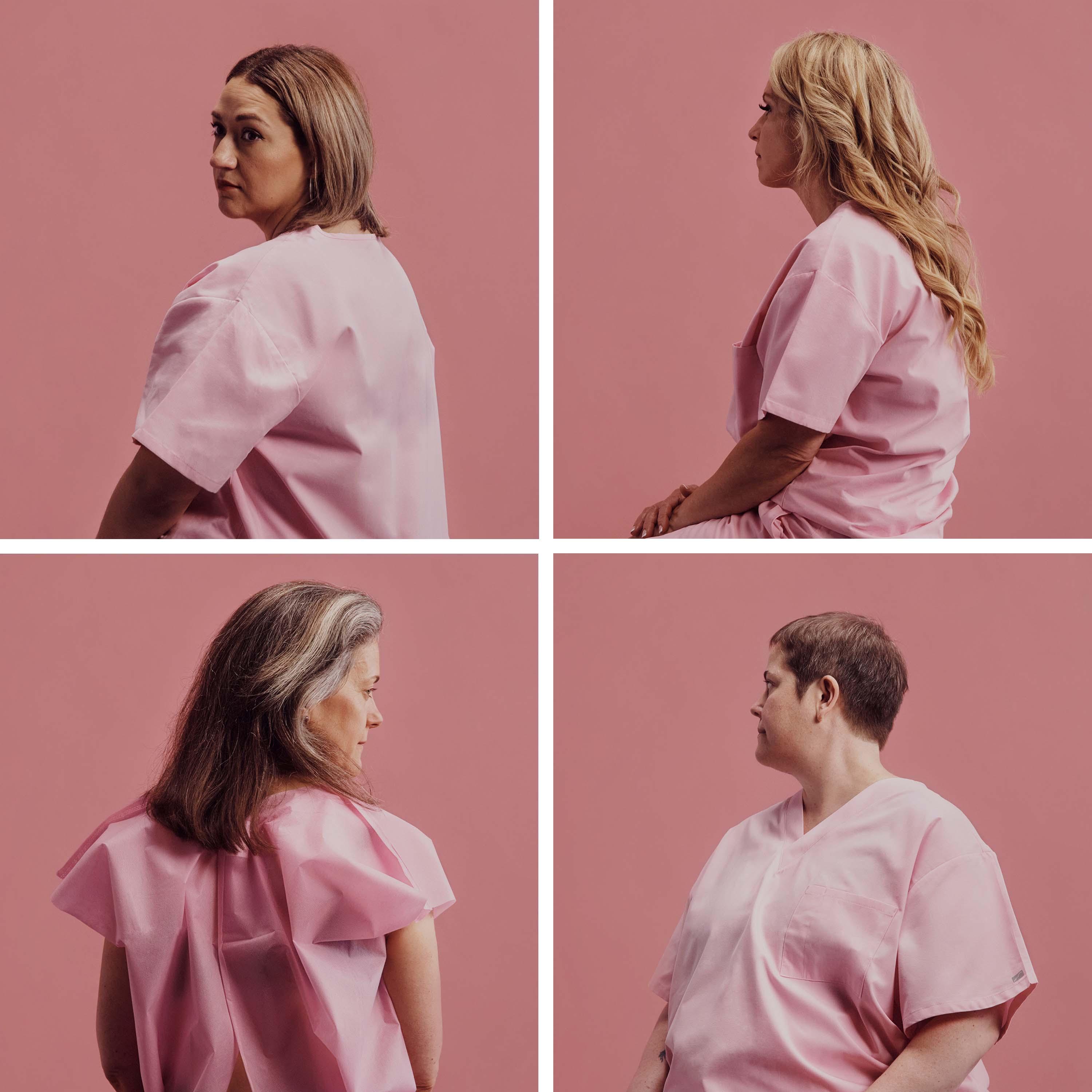
This American Life
864: Chicago Hope
00:59:25
The story of the most commonly performed surgery, and what goes terribly wrong with it.
Loading summary
Transcript127 lines
- [00:01]
Sponsor Voice
Support for this American Life comes from Amazon. When you're on hold with a doctor's office or pharmacy and the operator says your call is very important to us after the 10th time, well, suddenly your call doesn't seem very important to them at all. Amazon One Medical has 24. 7 Virtual Care and Amazon Pharmacy delivers meds right to you fast without any cheesy old music. Thanks to Amazon, Healthcare just got less painful.
- [00:26]
Ira Glass
Hey there, podcast listeners. It's Ira with a quick message before the show. I don't know how many of you know this, but we've been putting out bonus episodes every other week for months now. We now have 20 of them. They're available to people who signed up to be this American Life partners. The bonus episodes include some stories that have never been on the show. There's AMA sessions, there's recordings of live events on stage. But most of the episodes that we've done are ones where one of our producers will sit down in the studio with me and they pick some deep code cuts, like greatest hit stories from long ago that we think most people have never heard or if they've heard, they barely remember. And we started doing these and we weren't sure what they would be like. And we've made so many because they quickly became listeners favorites. And they became our favorites too. My favorites, definitely. When we would record them, I would find myself listening to these stories that I hadn't thought about or heard in decades. And it was really fun. It was just really eye opening. To give you a sense of what these are like, we've just released one of these bonus episodes into our regular podcast feed and you can listen to it this episode. It's called Nancy's Deep Cuts. Nancy is one of our producers, Nancy Updike, and she actually made me cry in this episode in a good way. Anyway, I hope you listen and if you like it, I hope you'll consider supporting us and subscribing to hear more bonus episodes. The way that you become a subscriber is@thisamericanlife.org LifePartners that link is also in the show notes. The bonus episode again is sitting right now in your podcast feed. Okay, that's a lot of talking. Here is today's show.
- [02:06]
Sponsor Voice
A quick warning. There are curse words that are unbeeped in today's episode of the show. If you prefer a beeped version, you can find that at our website, this.
- [02:14]
Ira Glass
AmericanLife.org from WBEZ Chicago, it's cis American life. I'm Ira Glass. A couple years ago One of our producers put together this story that just got too big for our show. It couldn't be contained in an hour or two hours, and so it spun out into its own podcast series called the Retrievals. It was a big hit. Maybe you heard it. Our co workers at Serial and the New York Times produced it. Anyway, now that producer Susan Burton is back with a story that is just as compelling and they have released it as season two of the Retrievals. I first heard drafts of this months ago and I am very excited that we can present one of the episodes for you today. I have to say, one of the things that I really like about this story is that by the end it turns out to be surprisingly hopeful. She also invented this way to tell a radio story. I have never heard anybody try. I hope you like it. I think you'll like it. The story takes place in a hospital's labor and delivery unit and there's some description in here of medical procedures and things don't go well. Just a heads up, here's Susan.
- [03:16]
Mindy Figueroa
6:00Am in Chicago. Of course, the shot starts at the lake. Camera pans over the water and the magnificent buildings rise from the shoreline, twinkling in the dawn light. We continue across the city, still bird's eye view over the grid, over the elevated tracks and wide highways, coming to rest in a western suburb. Drop down to a brick bungalow where inside A woman, late 30s, moves softly past the bedrooms where her children sleep and steps out the front door to meet the morning Winchell of 20 below. She hurries to a minivan and as she pulls away from the curb, we see the streets frosted with salt, the moon shining high and hard, and we see her work ID where she keeps it on the center console, the words board certified RN and her name in all caps. This is Mindy Figueroa. Mindy says she was made to be a nurse.
- [04:14]
Clara Hochhauser
I think I was just born to be in healthcare. Like as a kid, my sister would find all the dolls and the ballet slippers at the dollar tree like section. But I always got the doctor kit, the stethoscope, the little syringe. Always, always, always. So it was.
- [04:36]
Mindy Figueroa
Mindy was the first one in her family to go to college. Her parents came to this country undocumented from Mexico, worked factory jobs, earned citizenship. Mindy paid her way through school, got her degree, started out at a small hospital and after a few years transferred up to a big one, UI Health at the University of Illinois at Chicago. She works on the labor and delivery floor, but patients about to have babies.
- [05:03]
Clara Hochhauser
I've been told many, many times that as soon as I walk in a room, they know I like my job and I love coming to work and I feel like they feel that. So I walk in a room and good morning. My name is Mindy. I will be here until 7pm we watch this happen.
- [05:21]
Mindy Figueroa
Mindy stepping cheerfully into a labor room, her face framed by two neat braids. And then we carousel through shots of Mindy at work. Mindy strapping a fetal monitor to a patient's belly. Mindy at the nursing station holding a plastic pillow up like show and tell. Her colleagues doubled over in laughter. Mindy her face grave, bursting through the door of the or. Mindy loves the intimacy of labor and delivery and that adrenaline, that switch from it's calm to now it's time to run.
- [05:54]
Clara Hochhauser
And also, I mean, I just like blood in general. I like.
- [05:58]
Mindy Figueroa
Yes, like, do you mean like literally, like you like blood?
- [06:01]
Clara Hochhauser
Yes. And everyone on the unit knows it. If there is a hemorrhage, if there is heavy bleeding, they know I am the person. I like to weigh it. I like to quantify the blood, I like to clean it up. Blood clots coming out of a after delivery and we're pushing on their belly and it's almost like popping a pimple. Like, okay, let's get it out of there to prevent more bleeding. And I feel like I'm really good at recognizing when we're trending towards too much blood because I am actually watching. I watch every birth, I watch every C section. Like I don't sit and chart as soon as the incision starts. I watch it because it's just intriguing to me. I've been doing this for 14 years and it still amazes me that there's an incision on an abdomen, but there's a baby there. So I watch every delivery.
- [07:02]
Mindy Figueroa
This story's going to be about one of those deliveries that Mindy watched, one that changed things for her and for her hospital. There are more than 2,000 deliveries a year at UIC. It's a public hospital, not a fancy one. And it's located right in the middle of the city in the medical district. Establishing shot of the hulking building. Dawn breaking open the sky above a humble hospital in Chicago. A hard working nurse, a delivery with stakes. How could we not tell this? Like a medical drama. A medical drama. Its emphasis is on the world inside the hospital, on the heart and the heroism of the people who work there and their relationships with one another, on how their interactions with patients are shaped by their own stories. But what happens in a hospital also reverberates outside. And on this show, we're going to see that too. Because this delivery that Mindy watches, it doesn't just change things at uic, it could change things for the entire country. And now let's pull back, get the whole hospital on the frame and end the opening credit sequence with this image. This boxy building on the sub zero morning. But we know that behind that imposing facade, it's warm. We're already invested in the human drama inside black screen.
- [08:35]
Ira Glass
Susan Burton's story continues. Stay with us. Support for this American life and the following message come from Sierra when dialing customer support for a simple question, you may have had the experience of being placed in what seemed like an endless wait. That's why there's Sierra, a platform created for businesses that want to provide better, more human customer experiences with AI. No counter responses, no hold music, just real solutions fast. Better customer experiences built on Sierra. Find out more at Sierra.
- [09:08]
Heather Nixon
AI support for this podcast and the following message come from Indeed. You just realized your business needed to hire someone yesterday. Indeed's sponsored jobs helps you stand out. According to Indeed data, sponsored jobs posted directly on indeed have 45% more applications than non sponsored jobs. Speed up your hiring right now with Indeed and get a $75 sponsored job credit to get your jobs more visibility@ Indeed.com NPR terms and conditions apply. Hiring Indeed is all you need.
- [09:43]
Ira Glass
CIS American Life. Susan Burton picks up where she left off.
- [09:47]
Mindy Figueroa
The action of the episode begins with Mindy in a nearly empty elevator. Closer to 7am Change of shift. You can barely fit. It's sardines. But Mindy's early today. She's almost always early. She's the one who will have cleaned the break room by the time her co workers arrive at uic. Your co workers have your back. Mindy could say this about all of the nurses on her crew. One of those nurses is Clara Hochauser. We see her emerging from the locker room in gray scrubs and a scrub coat. Not everyone wears the scrub coat, but Clara does, because it has better pockets and because it covers her tattoos. Clara has large, wise eyes, as if she sees more than other people. She's a natural at nursing, but it wasn't obvious that it was where she would wind up.
- [10:35]
Susan Burton
I like a high school dropout, I really did not do well with school and long story short, I just was like, never mind, I'll get my ged. And I started working and I worked in a coffee shop.
- [10:50]
Mindy Figueroa
One day Clara got a massage and then she became a massage therapist, and she found the clients she liked best were the pregnant clients. So then she decided to become a midwife. But after finishing her degree, she just wanted to start working. And as a nurse, she could do that sooner. She started as a mother baby nurse, and eventually switched to labor and delivery. She never thought she would have her own kids.
- [11:13]
Susan Burton
I definitely never planned on having children. I definitely always felt like, ooh, emotionally, a little dysfunctional family. I identified, like, purely as a lesbian. I didn't. I was not able to conceptualize what it meant to be bisexual. That, like, wasn't an option. It's either you were gay, you weren't gay, you know?
- [11:37]
Mindy Figueroa
Yeah.
- [11:38]
Susan Burton
And it just. Not that you can't have babies with women, but I just. All the things I just thought, no, no, no. I love little babies, but I do not want to be a parent.
- [11:48]
Mindy Figueroa
And then Clara got divorced from her wife. She met a guy, they got married. Suddenly, Clara understood she didn't have to be, as she puts it, a perfect, magical, special person to have children. She was 40 with her husband, Clay. She did IVF, and soon she was pregnant with twins.
- [12:07]
Susan Burton
I was incredibly excited and could not believe that two embryos took one. You know, like, it just all seemed surreal. Like, I can't believe it worked the very first transfer. But I, of course, was really nervous about the outcome because I see firsthand all the time the ways in which pregnancies can go sideways, and there are no guarantees that anybody goes home with a baby at the end. So it's just, like, another layer of worry.
- [12:37]
Mindy Figueroa
Yeah, yeah. Clara would go home with her babies. That's not where this story is going. She would also be delivering at UIC herself. On a medical drama when the healthcare provider becomes the patient. It's a twist, but this isn't a twist. It's our premise. We don't know how this matters yet, but it will. It matters that this patient is not a visitor, that she's not someone who leaves, but someone who stays. A twin pregnancy at age 40. There is definitely a chance that Clara would need a C section, but she wanted to avoid it.
- [13:15]
Susan Burton
I wanted so badly to have a vaginal delivery. I did not want to have surgery, but because I was older, because I'm a bit fat, you know, I just was like, oh, God.
- [13:28]
Mindy Figueroa
Clara also wanted to avoid delivering in the operating room. Typically, if you're having twins, you can labor in a labor room, but you have to deliver in the operating room. Even if you're delivering vaginally, it's a safety thing. Just be in the right room if something goes wrong. But Clara really did not want this.
- [13:45]
Susan Burton
But the idea of having to deliver in the operating room was horrifying to me. I was just terrified of the or more or less.
- [13:53]
Mindy Figueroa
How come.
- [13:56]
Susan Burton
Delivering in the operating room always just seems so awful to me. I don't know. It's a really. It's this really narrow metal table. You're flat on your back. You're not restrained, but, like, where are you gonna go? You've got an epidural. You're gonna be hooked up to more monitors. You're, you know, it just, like, it takes away any of that. Just, like, safety and autonomy and, you know.
- [14:25]
Mindy Figueroa
Yeah. One of the things Clara did want was for Mindy, her co worker, to take pictures of the birthday.
- [14:33]
Clara Hochhauser
So I have a side hustle, like a photography. Like, it's a hobby. But, like, I take our co workers birth pictures.
- [14:43]
Mindy Figueroa
Mindy's always taken pictures back in college with the little cameras you'd hang on your wrist. Eventually, she got a camera with a big lens that attached and taught herself how to use it from YouTube.
- [14:55]
Clara Hochhauser
And then one of my nursing friends was pregnant, and she's like, will you take some pictures of me pregnant? Like, she's like, I don't like to go to places. And so I took a few of her and, like, made them black and white, and they were exceptional. And I was like, ah. And then when she had her baby, she was like, can you take pictures of my baby? And she paid me. And I was like, you don't have to pay me. But she paid me, like, $200. And I was like, that's a lot of money. Like, no, I'm not a professional. And it just took off from there.
- [15:26]
Mindy Figueroa
Yeah. Do you take, like, if somebody's having a cesarean, like, would you take a picture of, like, the surgical field?
- [15:32]
Clara Hochhauser
Yes. Yeah. Like, I'll take a picture of, like, the bloody canister. And I do ask. I do ask, like, how graphic I can get, because I will literally take a picture of turd, like, coming out, you know, Like, I will photograph it all because I am not squeamish. But there's people who are, like, that's too much. Or, like. Like, if they're doing, like, skin to skin. And it's a beautiful photo. I make sure I cover the nipple so that they can use that photo. Yeah. I just kind of gauge, like, who they are. How graphic are we doing? And I think Clara was one of those who's like, let's do it all.
- [16:13]
Mindy Figueroa
On April 19, 2022, Clara arrived at the hospital for a scheduled induction, which is when you get drugs to start your labor. Now we flash back to see her on that day. She and her husband Clay, are crossing the street from the staff garage. Clara's purposeful, leading the way. Clay's just passed the bar, is going into criminal defense, did an internship advocating for victims of police brutality. It matters that you know something about Clay so that he's a little more than just the cutout husband. More than just the husband. Watching the main event at the employee entrance, Clara badges in.
- [16:51]
Susan Burton
I was coming in for. I was scheduled for an evening induction, so I thought, yeah, I like that. I like those evening inductions. So I'll come in at night after dinner, and I'll get the initial stuff and then go from there.
- [17:06]
Mindy Figueroa
On the fourth floor, Clara enters her labor room. Room five, the best one. That's where they try to put you if you're a staff member. Her co workers have decorated it for her. She changes into a gown, climbs into bed. Clay sets a Bluetooth speaker on the windowsill, opens his phone, starts the playlist. Push it. It's on everyone's playlist. The Beach Boys. Don't worry, baby. And so far, Clara's not worried. Even when she receives the drugs to start her labor, everything feels surprisingly okay. By around lunchtime the next day, she's in some pain from her contractions and is debating whether it's time to go for an epidural.
- [17:49]
Susan Burton
And I felt really, really kind of neurotic about it, like, not wanting to get it too soon because I wanted to be able to stay upright and keep moving, but you don't want to wait too long because then you're dying in pain.
- [18:01]
Mindy Figueroa
Yeah.
- [18:01]
Susan Burton
One of my co workers, a midwife, came in and talked with me and was just like, all right, Clara, it's fine. Just get it. If you're ready, you can get it. It's not. It's nothing to get perfect here. Like, if you. If you want it and you know you want it, just do it. So Heather did my epidural.
- [18:20]
Mindy Figueroa
Heather Nixon, the head of obstetric anesthesia at uic. Charismatic, assertive, boss lady, but not bossy. Let's actually meet Heather on the way into the room. Let's watch her leaving her office downstairs on the anesthesia floor. Heather's office. Mini fridge. On top of it, a framed photo of four women dressed up for girls night. A black leather couch with a hot pink pillow, where lots of times Heather spends the night. Heather is 51, with two daughters in college, but she's the one with the energy of a college kid. Can sleep anywhere, pop up bright eyed at weird hours.
- [18:56]
Corey
My residents actually did a skit once with me, like they do the end of the year, kind of like roast of the attendings. And it was like a skit where it was like three in the morning and they kept answering the phone and I was like, hey, it's Nixon from anesthesia. And they're like, we have no idea how you're always awake. Like you're always like, let's talk about stuff, like at three in the morning. I'm like, I don't know.
- [19:15]
Mindy Figueroa
So Heather has lived in Chicago for 30 years. Came to the city straight after finishing college. She knew she wanted to be a doctor, but she had to pay off student loans first. So she worked as a shotgirl in a bar off Rush Street. T shirt tied up, abdomen showing. Anesthesia itself came as a surprise to Heather. It wasn't a specialty she'd ever thought she'd want to do, but she had a mentor who made her fall in love with it. This is the case for a lot of anesthesiologists. There's a common misconception that this is the doctor who just puts you to sleep. But there's a lot more to it than that. The surgeon has their head down in the surgical field. The anesthesiologist is watching over all of you. When Heather discovered the subspecialty of obstetric anesthesia, she had a feeling like, ob, this is my tribe. These are my people.
- [20:09]
Corey
I think you'll find two types of anesthesiologists. You like the ones who are the introverts who like to kind of hide behind the drapes with asleep patients. And then there's the type that really like to engage with their patients. And those are kind of maybe the tribe of OB anesthesiologists, the ones who want to be there talking to their patients.
- [20:27]
Mindy Figueroa
Many OB anesthesiologists proudly identify the same way. They like awake patients, not sleeping patients. Now we catch back up to the action, and we see Heather enter Clara's room and begin arranging her equipment on a tray. Clara sits erect on the bed, waiting, bed pumped up high, her feet dangling. She'd asked for Heather to do her epidural. Like, hey, Nixon, you gonna be around? Heather was happy to do it. She does this for all her providers, delivering if she can. Not that a resident couldn't do it, but you want to take ownership If, God forbid, something goes wrong. Close on Heather's gloved fingers touching Clara's spine. Now we're going to watch Heather actually do this procedure. We're going to be talking a lot about procedures on the show, and viewers need to be grounded in them. And does anyone really know what an epidural is, besides the thing you can get for pain when you're having a baby? Now we see Clara take an anxious peek over her shoulder, and Heather telling her, no, no, I'll talk you through it. You'd think nurses and obs, they'd be the most relaxed about the epidural, but they're just as nervous as anyone. From her tray, Heather picks up something that looks like a swizzle stick, like what you use to stir a cocktail. This is actually a large hollow needle and its placement in Clara's back. This might cause someone to turn from the screen for just a second. So I'll tell you what Heather's doing. She's inching that needle into Clara's back a little deeper, a little more, until the tip enters what's called the epidural space. Heather finds that space by feel. There's a ligament she's looking for, and.
- [22:09]
Corey
Not everyone's ligament feels the same. Some of them feel really rubbery. Some of them feel kind of like crackly or poppily, you know, popping. Some of them feel kind of really, like gentle. Like, almost when you pass through, you're like, oh, something. Something's different. But I can't. I'm just gonna stop there.
- [22:28]
Mindy Figueroa
Now Heather threads a thin plastic tube, a catheter, you know this word, through the large hollow needle until the plastic tube is inside the epidural space as well. We could go one level deeper with the science, explain that the epidural space is not really a space at all, just potential space. But I won't get into this, just nod to it. So the doctors watching can be like, on this show, they know what they're talking about. Now Heather slides the needle off the plastic tube, which stays in Clara's back. Anesthetic drugs will be delivered through the tube, bathing the nerves near her spinal cord. Clara is relieved when the procedure is.
- [23:08]
Susan Burton
Over, Even though it wasn't like a painful needle or something like that, it was such a strange, unnerving feeling, that pressure in your spine or whatever. But I got it and it was fine. But then around dinner time, I think was the first time that things that trouble started with my epidural, where I didn't really even understand what was happening. Because it was just in my vagina that I felt pain. So I wasn't really. I wasn't aware of contractions. It was just all of a sudden, it felt like my vagina was just being shredded. I don't know, it literally felt like. Like somebody had, like, a steel toe boot and was just kicking around in there.
- [23:51]
Mindy Figueroa
Oh, geez. Clara's epidural is topped up with more drugs, and that does the trick. She's more comfortable right away. A couple Hours later, at 11 o', clock, Heather signs out to the anesthesiologist on the overnight shift and fills him in on Clara.
- [24:10]
Corey
When I was signing out, I was like, hey, you know, this is the deal. It's working, blah, blah, blah. And so I didn't anticipate any problems when I left. Otherwise I would have probably stayed, like, in hindsight, now I'm like, you know, one of the things I'm always like for my, you know, providers that I'm taking care of, like, I kind of stay, just stay in the hospital because I just don't even want to, you know, I just want to be the one who's there if anything happens.
- [24:33]
Mindy Figueroa
We see Heather get in her car, drive away from the hospital. Clara had been comfortable when Heather left, but several hours later, she's having the same pain again. And other things are going wrong too. Her labor is stalling. Her blood sugar is climbing. So are the baby's heart rates. Clara knows she's headed for a C section, but she requests one last half hour laboring on her hands and knees just to see if that will help. Now we see the room dark except for the lights of the monitors. Clara on all fours in the hospital bed. Close of her forearms. We briefly glimpse the tattoos. We remember for a moment that Clara has stripped a layer off for us. There's a lot of vulnerability in what she's allowing us to see. The only other person in the room was Clay. That was another thing Clara had requested. Just please, everyone clear out and give me one more try. But the try doesn't work, and there's no more time to waste. The nurses unplug Clara from her monitors and push her cumbersome bed down the hall to the or.
- [25:50]
Susan Burton
But I was like, okay, it's gonna be fine. It's gonna be fine. My baby's gonna be born, so.
- [25:56]
Clara Hochhauser
And yeah, she called me around three or four in the morning that they had decided to do a C section.
- [26:03]
Mindy Figueroa
Mindy was at home asleep, but she got right out of bed and grabbed her camera bag. We see her strap over her shoulder, hurrying down the bungalow's front steps and into her minivan.
- [26:15]
Clara Hochhauser
So I raced over there, and it was a little bit of an urgent case, meaning it's not what we call a crash, like, where we literally just rip cords out of the wall and run. It was like, all right, we're doing this now. Let's move. So, I mean, I'm only 10 minutes away from the hospital when there's no traffic. So I raced over there and I parked on the street because I'm like, it's an urgent case. Like, I need to go because they might start before I get there. I even got a parking ticket that day because at night you don't pay for the meters. But I was there so long that in the morning, they gave me a ticket. But anyways.
- [26:54]
Mindy Figueroa
Up on the fourth floor, Mindy takes a plastic wrapped surgical suit from a closet and pulls the coverall on over her clothes. Then she turns toward Clara's or.
- [27:05]
Clara Hochhauser
And I walked in when she was on the operating room table, and I actually have a beautiful photo of her. She has not seen these photos or I gave them to her, but I don't think she's ever been able to look at them. But it's the door of the operating room halfway open, and she's laying there with, like, her arms out and she's looking at me smiling. And. Yeah, so then, I mean, when I got there and I took that picture, just her joy, and I almost sensed relief. She knew I was there. And we, we are all either night shift nurses or day shift nurses. And even though we're all one team, there's like, more of a friendship and, like, bond. Like day shift nurses, we all know how we work, and like night shift, we don't work with them ever. So, like, we don't know how they roll, you know? So I think that smile was like, I'm having my babies. You made it to take my pictures. You're here. You're one of me, one of our team. So, yeah. And I too, was like, yes, I'm here for you. And this is why this case is so hard, because I feel like I failed her. 100.
- [28:22]
Ira Glass
Coming up, the failures in chirosurgery and where those lead. That's in a minute from Chicago Public Radio. When our program continues.
- [28:33]
Narrator
This message comes from Sony Pictures Classics presenting. Oh, hi. Directed by Sophie Brooks. Starring Molly Gordon and Logan Lerman. Iris and Isaac's first romantic weekend goes hilariously wrong as Iris tries to prove they're meant to be this dark romantic Comedy explores the highs and lows of modern dating and the ways it makes people act. Fandom Wire calls it an absolute riot. Catch Ojai in theaters nationwide on July 25th. Visit ojmovie.com for more info. Ojai from Sony Pictures Classics this message.
- [29:11]
Heather Nixon
Comes from Charles Schwab. When it comes to managing your wealth, Schwab gives you more choices like full service, wealth management and advice when you need it. You can also invest on your own and trade on thinkorswim. Visit schwab.com to learn more. Support for this podcast and the following message come from Made in Cookware President and co founder Jake Kalik shares the key ingredients that go into Made in products.
- [29:35]
Ira Glass
We try to design products that are going to last you an incredibly long time and to know that we're making this in places that take the raw material seriously, take the manufacturing processes seriously, that's ultimately what's going to allow us to sleep better at night selling this product to you.
- [29:50]
Heather Nixon
Learn more about Made in Cookware at M a d e I-ncookware.com.
- [29:58]
Ira Glass
This is American Life from Ira Glass. Today's show Chicago Hope. We're hearing a story from the new season of the Retrievals podcast. Susan Burton takes up where she left.
- [30:07]
Mindy Figueroa
Off When Mindy arrives, Clara is still being prepped for surgery. She's flat on her back in the or, which is obviously not where she wanted to be. The L and D operating rooms at UIC are relatively small, out of another era. Mint green tiles on the walls, like you're stepping into the showers at a ywca. Harsh light. But Clara is calm. We see her now through Mindy's viewfinder, her eyes closed. The expression on her face. My God, it's the embodiment of a word whose use is rarely earned. Beatific.
- [30:45]
Clara Hochhauser
And I took pictures of everything. Like, I took pictures of like, clay and her holding hands. I took pictures like the teams waiting, two different teams for two different babies. Pictures of like anesthesia working. Just. I like to take pictures of people there because we never get to do that because of privacy laws. So for them to know that I'm on their team, like, it's almost like here's a picture of you actually in a case.
- [31:13]
Mindy Figueroa
Surgery's getting closer now. There are poles on either side of Clara's bed, and soon a giant piece of medical paper will be stretched between the poles, blocking Clara's view of her abdomen. This paper is called the Drape, and it both protects the surgical field from contamination and protects the patient from the Sight of her open body. The anesthesiologist has added more drugs to Clara's epidural, making it strong enough to get her through the surgery. Now the doctors need to test to see if the anesthesia is working tight on the skin test. It's so weirdly basic. The anesthesiologist poking Clara with a broken tongue depressor. Another doctor does something more severe, Clamping Clara's belly hard with a surgical instrument. Clara feels none of it, and that means they're ready to go. There's a decision to make about the C section. How much of this procedure to show? Like Mindy said, how graphic are we doing? We're not going for gore on this series for showing open bodies, for the kick of it. But we do want visceral. All the meanings of that word, viscera, literally, that's what's inside a patient's abdomen, but also how that word is applied to art. Art. That's visceral. It's of the body. It attends to the body. Hopefully it makes you feel something in your body. A visceral aesthetic. Muscular close to the bone, Raw, but not sensational. Not shying away. Okay, enough self regard, enough theory. What does this mean in practice? Now the surgeon calls out incision and then cuts into Clara's abdomen just above the pubic bone. We're not seeing the scalpel in her flesh. Okay, but just know that this kind of cut is called a bikini incision. Bikini sounds tiny, but this cut is big. Once Claire's abdomen is open, the surgeon needs to reach the uterus. The uterus is behind a pair of muscles. Now we see, actually see the surgeon and the ob resident position themselves on either side of Clara and pull. These two women in scrubs pull so hard to separate this muscle that their bodies lean back like in Tug o War. This is a very physical surgery. When Clara is a nurse in a C section, she either covers her eyes or looks away for this part. But of course, today, Clara's the patient. We go behind the drape now, tight on her face. But something's different. Radically different. It was just moments ago that she was beatific, but now her mouth is tight.
- [33:54]
Susan Burton
I just remember all of a sudden just being like, oh, my God, I don't feel good, you know?
- [33:59]
Mindy Figueroa
Yeah.
- [34:03]
Susan Burton
And I don't know. I assumed I was just panicking, you know, I assumed that I just needed to relax a little bit.
- [34:12]
Mindy Figueroa
A few years earlier, Claire had had a panic attack during another surgery at uic. An eye surgery. Cataracts. Weird to have them at such a young age. In the surgery, a different kind of paper drape had been unfolded over Clara's whole body like a death shroud so that she was entirely covered in blue paper, except for a hole over one eye. And then she'd heard the doctor say, you need to give her something else. She's hyperventilating. All through her pregnancy, she'd been worried that if she needed a C section, she would have a panic attack again.
- [34:45]
Susan Burton
And so I had spoken with Dr. Nixon about strategies for how to deal with that if I panic.
- [34:53]
Mindy Figueroa
Yeah.
- [34:53]
Susan Burton
And we talked about the different medicines they can give and that sometimes, in that case, nitrous oxide is really nice. You know, just breathe the gas for a little bit, because they don't last that long. So, like, maybe you can just breathe the gas for a minute or so, and it'll pass, and then you'll be fine, you know?
- [35:09]
Mindy Figueroa
Yeah.
- [35:10]
Susan Burton
So I asked, can I just have some gas or something? And he put the mask on, and it just. It just was getting worse. And I remember feeling very nauseous and just saying that I wasn't okay. And. And then everything's really fuzzy and hazy, and I am not, I guess, thankfully, able to necessarily recall it in as much detail as I could at first, but I. It was an unfathomable amount of pain. And I remember begging them to stop.
- [35:54]
Clara Hochhauser
And it wasn't until she just kept begging, like, please, please, please. And one of them attendings, she looked at me and told me to tell her that it was okay. She told me to tell her partner, please tell him it's okay. So at that moment, I was no longer a friend or, like an advocate. I was more like a staff member being told by the doctor, like, it's fine. So I remember telling Clay, like, clay, you know, this is normal. This Sunday sometimes happens. And Clay, I remember his body language was very like, yeah, okay, like, I. I hear you, but don't talk to me. And I remember being like, oh, my gosh. Because he was so stressed out. That's one thing I regret the most, that that provider looked at me and said, tell them it's okay, and that I did what she told me to, knowing that it wasn't okay. Okay. I think that's one of my biggest things that I replay over and over again, that I didn't say, like, it's not okay. Like, can we stop?
- [37:08]
Mindy Figueroa
Clara's anesthesia is not working. She is now in the middle of major abdominal surgery, and she can feel that surgery. Clara knew this could happen. She had seen this happen. Intraoperative pain during cesarean. Healthcare providers know about it. Patients don't. When Clara herself first started working on L and D, and patients in labor would tell her, for my last baby, I had a C section, and I felt everything. Clara would think to herself, that can't be true. There's no way. Who would do that? And then she saw it happen, and now it is happening to her. Visceral. That key word, what Clara is feeling is visceral pain, meaning pain that originates inside her abdomen. When the doctors did the skin test, Clara didn't feel it right. She was numb. But sometimes a cesarean patient is numb. When you test her skin, and when you open her up, you find she's not. There are a lot of reasons for this, but in the moment, the reason for the pain doesn't totally matter. What matters is that you treat it. The babies, we miss the delivery, but we see them now at the edge of the room in newborn warmers, and we understand they are healthy, that they are okay, but Clara is not. We see Clara punching the drape as if trying to hit the observation. What are the obs doing on the other side of the drape? What are they understanding? What are they feeling? Why are they ordering Mindy to tell Clara's husband everything is all right? We don't know the answers to these questions yet. We're on the side of the drape with Clara and the anesthesiologist who's giving her supplemental drugs. Fentanyl, ketamine. Is he doing the right thing giving her those drugs? We don't know this yet either, but the feeling we convey now is that something is wrong. Very wrong. What's going on inside for Clara is that all these drugs have her hallucinating. Is this the kind of show where we do a magical realism thing of inhabiting her consciousness? I mean, it could be, yes. Why not use it this way? Why not use it to show what Clara is seeing? A story I heard. I'll say this fast. A mother is given ketamine during her C section. Her baby is born, and the nurse brings her the baby, and the patient says, this is a lovely baby, but this is not my baby. My baby does not have two heads. I heard this story from a doctor. It happened while she was still a resident, and she told me that after that woman, she never used ketamine for a cesarean patient again. What Clara is seeing, we see now colors and shapes. If you're a certain kind of person, you might be fine looking at an open abdomen. But freaked out, looking at hallucinations, Clara feels unable to communicate.
- [40:04]
Clara Hochhauser
She was just so slurry, like, please, please, like, stop. No, no, no. Like, she sounded like she was out of her body at that point. And I almost started thinking, like, I know she's had issues with like post traumatic stress type issues. So I'm like, maybe this is not pain thing. Maybe it's a psychological thing. And, you know, I mean, this happens a lot where patients complain of pain and we brush it off as she's anxious. It's just pressure. But it wasn't because she would feel anytime they touched or like, did the cautery, like she would say the burning. She could feel the burning.
- [40:56]
Mindy Figueroa
The cautery instrument is called the bovee. Its dance is bleeding. And the red hot pain of it is something Clara remembers precisely. Something that years later would wake her up in the middle of the night. The sear of that instrument. Clara exclaiming, ow. And a doctor saying, we'll move to the other side. What? There's still a lot of surgery left after the delivery, and now we're going to see a part I know some people might not want to see. Brace for it. I'm giving you the warning. The doctor is lifting Clara's uterus out of her body and resting it on her abdomen. It's like a giant shiny Easter egg. The uterus has been exteriorized. That's what this is called. And the reason we're seeing this is please remember that Clara can feel this, can feel her organ being lifted out of her body. Oh. And at some point during all of this, Clara starts throwing up. Now the surgeon sticks a good portion of her forearm into Clara's body. What we see in the shot is just the arm disappearing into the abdomen. She's using a pad of gauze to check for internal bleeding. Again, the point is, Clara is feeling this. Now we hear her scream, scream, why are you doing this? Make it stop. And now we do. As if on her command, we leave the surgery. We need to get out of this or where bad things are happening and we don't understand why. Outside of the operating room, an obstetric anesthesiologist named Corey is arriving for his 7am shift. Corey. We're not going to meet Corey as a main character. Maybe he's someone who will be developed later. In another episode. He's trim and boyishly handsome. We watch as several nurses urge him toward the or. Corey, you need to get in there now. Corey pushes open the door and enters the room just as the surgeons are putting the final stitches in Clara's skin.
- [42:52]
Susan Burton
And then all of a sudden, at some point, it was over. And I just. The first thing I remember is just sort of looking around, and then Corey was there. He's one of the. Michael. He's one of the anesthesiologists.
- [43:08]
Mindy Figueroa
Yeah.
- [43:08]
Susan Burton
And I remember seeing Corey, and he came right by down my face because I was still on the table, but all the drapes, everything was gone and done, and Corey was right there, and I would. I. I remember I was just like, oh, Corey, you'll. You know. I was just like, oh, you'll help me.
- [43:23]
Mindy Figueroa
Corey. Clara knows him, trusts him. Unlike the other anesthesiologist, she had no idea who that guy was. We see some relief in Clara's face, and we see Corey holding back tears. And even though there's no resolution or total explanation, at least we know that Clara is being cared for. Corey wheels Clara to the recovery room, the pacu. And as soon as she's settled, Corey goes down the hall and calls his boss, Heather.
- [43:52]
Corey
He calls me, and he's like, heather, something happened. And I was like, okay, like, what's going on?
- [43:58]
Mindy Figueroa
Heather was at home. She'd been at the hospital so long. The night before that she got the day off. Corey told her about Clara.
- [44:06]
Corey
Oh, my God. No, no, no, no, no, no, no. Like, that can't. That just can't be. And I was like, corey, what happened? He's like, I don't even know. And I just felt. I felt horrible. Like, I felt like I shouldn't have left the hospital.
- [44:28]
Clara Hochhauser
Right?
- [44:28]
Corey
Like that. I should have just stayed until she was safely taken care of, Right? That she had delivered, that I had let her down in that. And. And then I got mad. And then I got really mad.
- [44:45]
Mindy Figueroa
Heather is mad because she's in charge here, and she's an anesthesiologist. The thing the anesthesiologist is in the room to do is manage pain. Cutting someone's body open and then operating when they can feel it. That is not supposed to happen. That's something from history or from war, but neither in the United states. It happens 100,000 times a year. That's the best estimate of how many patients have significant pain during cesarean. Not all of these patients feel the exact same intensity of pain or at the same parts of the surgery or for the same length of time, but the pain they feel is significant. Most people don't know about this until recently. I didn't. I learned of it from listeners to Season one of this podcast, it doesn't matter if you haven't heard season one. The details are less important than the common experience. It described pain a doctor didn't listen to, Pain a doctor didn't adequately treat. That experience resonated with many listeners, and hundreds of them, mostly women, began writing to me with their own stories. One afternoon, I opened a note that was unlike any I'd received so far. I had a C section, the email began where anesthesia was not properly administered. I remember telling them I could feel the cutting, the moving of my organs, the burning, shocking, brutal pain, and being told that wasn't possible and that I would just have to tough it out. To me, this listener's experience seemed so out of range that it might be singular. Then I opened two more of these notes. Soon I understood this was a subject that would come up again and again. C sections are the most frequently performed surgery in the world. In the US there are 1.2 million of them a year. So 100,000 patients a year feeling pain during cesarean. That's 8%. Some people say the rate is even higher. There's no other surgery where this happens, no other major surgery where it would be acceptable for 8% of patients to feel that surgery. 8% is a brand new number from a recently completed study. It didn't replace an old number. It's the first number of its kind. Until now, nobody had ever done a study like this, asking thousands of patients in the US And Canada whether they felt pain during their C sections. But now the study has been done by doctors who recognize that this is a problem and that putting a number to it is a step towards solving it. And this is what this story is about. Not just that there's a problem with severe pain, but that people are trying to solve it. As soon as I finish season one of the Retrievals, people began asking me, what are the solutions to fixing this problem in medicine, of dismissing women's pain? I was surprised the first time I got this question about solutions. Obviously I should not have been surprised, but I didn't have a bullet point list. How to shift an entire culture, how to listen to women patients. These are really complicated issues, and solutions had not been the focus of my reporting. I'd looked at what went wrong. Exploring what went wrong doesn't automatically translate to solutions on how to make it right. But this question made me well, what are the solutions? It turned out that a bunch of people interested in pain during cesarean were thinking about the same thing. So here we go. A case Study in solving one of medicine's most persistent problems. Listening to women patients and adequately treating their pain. Told through the experiences of four women, Clara, Heather, Mindy, and Susannah, who run up against this problem and take it on with efforts that touch both individual patients and entire countries. How do they do this? What can they change? And what does it cost them? Back at the hospital, Clara has been moved from the pacu to a bed. It isn't long before she hears from Heather.
- [49:23]
Susan Burton
It was that day. She was really upset, too. She was really sorry that it happened. Yeah, because Corey obviously. Yeah, Corey told her anyway, and she was really sorry.
- [49:40]
Corey
The first. The first time I saw her, she looked at me and she goes, heather, what the fuck? What the fuck, Heather? And I just went, I'm so sorry. And, you know, she was really. It was hard. She was really, really raw. She was not okay. And I said to her, you know, I said, listen, when you're ready, I'd love to just get some information from you. I said, because I'm going to take this beyond where we are right now. I said, I'm going to make sure that institutionally this doesn't happen again, and I'm going to make sure that people hear about this and that this can be used for good.
- [50:20]
Susan Burton
She wasn't going to let it go, and she was going to take action. You know, she was going to do something to prevent this for happening again.
- [50:34]
Mindy Figueroa
And now we see Clara in her bed, and we follow her gaze out of the window, out of the hospital, down to the street, where we pause for a second over Mindy's minivan, an orange parking ticket on the windshield. And then we continue across the city, arcing back over the same elevated tracks and wide highways we traversed earlier. Only now it's dusk instead of dawn. And when we get to the lake, we turn around so that we can see the sunset over those magnificent buildings, their windows fiery with the day's last light. And we hold that shot as the music swells and the credits roll.
- [51:21]
Ira Glass
Susan Burton. Okay, so that was the opening episode of season two of her podcast, the Retrievals. And I kind of said this at the top of the show as the story unfolds in later episodes of the podcast, it does this thing that I think almost never happens in a big investigative story. Like, it becomes surprisingly hopeful. Doctors take a look at the problem that Susan is documenting, and then they act the way that you would hope the doctors would act. They take it seriously. People step forward to try to change things. One of them is the head of Obstetric anesthesia from this first episode. Heather Nixon. I'm going to play you a clip from this second episode so you can hear what I'm talking about. It's interesting. By sheer coincidence, Heather Nixon had been scheduled to give a speech on pain during caesareans at a major medical conference before she saw how the anesthesia in Clara's C section went wrong. And so she had been planning on doing a speech focusing on technical tips. But now she rethought this. She decided to do something much more participatory than a typical medical conference speech. And when the day for the speech came, she began her talk by telling the assembled doctors the story of Kara's cesarean, how Clara felt, what was happening during her surgery, and really what that did to Kyra in the aftermath. And then the action turns, the story turns out to one of a number of very insidery, almost like behind the scenes moments where doctors are trying to be honest with each other and with themselves about their own failures and how to fix them. Okay, here's a bit of that.
- [52:52]
Mindy Figueroa
Usually at a medical conference, people are typing on their laptops or holding their phones up to the screen to take pictures of the slides. This room is still.
- [53:03]
Corey
So this is a harrowing story. It made me mad, it made me sad, it made me frustrated, and it made me really take a deep dive into what is going on in our country. If you go to Google and you search interoperative pain for cesarean delivery, you will see horror stories across this country. And this is really staggering because nowhere else in anesthesia do we allow this to happen. Nowhere. Right. If you have a block that doesn't work for an ortho case, your patient goes to sleep. We don't suffer through it. We don't bite the bullet. We don't ask our patient to just take it. So I'm going to ask, just this room at this moment, how many people in the last month have had a patient who's had severe intraoperative pain?
- [53:52]
Mindy Figueroa
There are hundreds of people in the room. We watch as half of them raise their hands. Half. Heather had asked how many people in the last month had a patient who had severe pain during their C section. And half of the doctors raised their hands.
- [54:08]
Corey
Okay, so this is not rare. We have a group of experts in the room who clearly are experiencing this on a daily basis. And we're just beginning to talk about it.
- [54:20]
Mindy Figueroa
And it's crazy that we're just beginning to talk about it because it's a known problem. Heather says she ticks through all the different kinds of knowing. There's medical literature, there's litigation, there's doctors own experiences in the operating room. So what that means is that there's an active kind of not knowing. And that act of not knowing is as much of a problem as the pain itself.
- [54:44]
Corey
So how do we fix this? How do we think about this? And how do we change what's happening? So why is this happening? All right, I'm going to assume that everyone in this room is passionate about what they do. They love obstetric patients, they're here to learn, they want to do the best. And I'm going to assume that no one gets into medicine to hurt people. Okay? We want to help people. So what is the disconnect?
- [55:09]
Mindy Figueroa
Heather's put the questions to the group plainly. How willing they'll be to wrestle with them is anyone's guess. She opens the discussion to the room. The first person to speak is a doctor from New York City named Dan.
- [55:27]
I
When we think about why this happens, I think there is this specter in the back of our heads that says, oh, crap, the spinal's not working. If I have to induce general anesthesia, there's a chance, because we've all been, we all have ptsd, that the pregnant airway is horrific, that I'm going to lose the airway and the mom will die. And I think that is what is. I mean, I'm going to say it. That is a fear of mine, that I will lose the airway and then they'll be like, well, yeah, she was uncomfortable, but maybe you could have muscled through and at least she'd be alive. And so that is the balance that I find when I'm dealing with this in the operating room. And I don't know if other people have had that same discussion in their head.
- [56:11]
Mindy Figueroa
No warm up, no superficial comments before the room really gets going. Dan goes deep straight away. Sometimes I'm scared. He's saying, I'm scared of the biggest thing of all. And in that situation, it seems like the better choice is pain. Heather meets Dan's vulnerability with some of her own.
- [56:32]
Corey
So I think that that's a wonderful point. We were taught, since we were. I mean, since fellowship, since I was a baby, I was taught, don't take on the airway. Pregnant is the big bad wolf. Stay away from it. This is how moms die. You'll never recover. The family will never recover. And so especially towards the end of a case, you might be like, do I really need to? Right? This is the gray area that's ugly and it doesn't feel good. And at the end of the day, I don't feel satisfied with my job because maybe I did the right thing, maybe I didn't. And I'm honest enough to admit it. I've been in that situation several times where I've looked at this and been like, do I really want to do this? Even when the patient maybe had some.
- [57:13]
Mindy Figueroa
Discomfort from the stage, Heather sees one of the women she trained with in fellowship giving her a look like, same people start lining up behind the mics. There's a doctor who practices in New Jersey.
- [57:29]
Clara Hochhauser
So that for me, it's not just about, oh, the patient's comfortable, or she's just exaggerating. It's sometimes that feeling that if I do get into a general anesthesia, no one knows how to help me.
- [57:43]
Mindy Figueroa
And there's Zevi.
- [57:45]
I
I'm Zevi. I'm also from New York City. I actually really appreciate your point about saying the quiet part out loud where we're here.
- [57:53]
Mindy Figueroa
The part that spinals and epidurals can fail. When do you tell the patient this thing that you know to be true, but that may sound so alarming to them? These things fail. Wait, what? You're telling me this now?
- [58:06]
I
I was wondering how many people actually say that in the pre op discuss that spinals and epidurals actually fail. And if they do fail, we test for it and we have options to fix it beforehand, even before, like during your consent process.
- [58:19]
Corey
So I'm Andy, I'm from Stanford. I just wanted to share one of my techniques. Sometimes I either have a patient where maybe there's a language barrier, they're exhausted, they're really scared. And I think my block is working right because my block's gonna work, but, you know, to take my ego out of it.
- [58:40]
Mindy Figueroa
We are tight on Andy's face so that you can see she's being self deprecating, not cocky. Gently reminding the group to be alert to their own hubris, Doctors continue to come forward, asking questions, offering tips, letting out frustrations intraoperatively.
- [58:56]
Susan Burton
I think that the pain versus pressure question is a trope that I really.
- [59:00]
I
Hate in our specialty, but to sort.
- [59:02]
Ira Glass
Of give the patient the feeling of.
- [59:04]
Mindy Figueroa
Don'T worry your pretty little head about this.
- [59:06]
Susan Burton
It's fine.
- [59:08]
Mindy Figueroa
That is horrible. It is horrible to not feel listened to. And so I think we all have to. Heather had been worried that there would come a moment like, okay, it's great we're talking about this, but what do we do? Where's the algorithm we follow if a patient is in severe pain. She wasn't sending anyone off with an algorithm to follow because that algorithm didn't exist. And it's clear that the audience is eager to come up with solutions. There's a lot of crowdsourcing. Heather and others talking about everything from specific doses of medicine to styles of communication. Heather has scoured the medical literature for relevant research on this, but for today, the goal is not to settle on a fix. This is steps to solve a problem. Step 1 Talk about the problem. That was what Heather wanted, and apparently it was what the room had wanted too.
- [60:07]
Ira Glass
Susan Burton from there through the later episodes of this podcast, we hear doctors try to put in place procedures to fix this problem and to change the culture in their operating rooms. It's really something. And one of the key people who makes this happen is somebody who's not even a doctor. That's a whole story in itself. So Retrievals Season two. There are four episodes in all from Serial and the New York Times. You can get it wherever you get your podcast. Well, it's been building up inside of me for I don't know know how long. I don't know why, but I keep thinking something's bound to go wrong.
- [60:52]
Susan Burton
But she looks in my eyes.
- [60:56]
Mindy Figueroa
And.
- [60:57]
Ira Glass
Makes me realize when she so what you heard today on our show. The Retrievals Season two was hosted, written and reported by Susan Burton, produced by Julie Snyder and Ben Phalen. It was edited by Julie Snyder with additional editing by Laris Starcheski and Jessica Weisberg, and engineered by Phoebe Wang with original music by Dan Powell, Fritz Meyers and Nick Thornburn. Special thanks to Elizabeth Livingston Blair Arthur, Vanessa Lehner, Rachel Roberts, Lynn Holland, Carolina Mendoza, Clara Hochhauser and Jamie Daly. Our this American Life episode was put together by Nikki Meeks, Joe Nelson and Angela gervassi. Our website thisamericanlife.org if you would like to get lots of bonus content and help us keep our show going, you can become a life partner. Subscribe to our program by going to thisamericanlife.org LifePartners this American Life is delivered to public radio stations by prx, the Public Radio Exchange. Thanks as always to our program's co founder, Mr. Tori Malatea. He remembers his first monthly paycheck working at a public radio station. Ah, I guess it was a long time ago.
- [62:07]
Clara Hochhauser
$200 and I was like, that's a lot of money.
- [62:11]
Ira Glass
I'm IRO Glass. Back next week with more stories of this American.
- [62:29]
Narrator
This message comes from NPR sponsor Rosetta Stone, an expert in language learning for 30 years. Right now, NPR listeners can get Rosetta Stone's lifetime membership to 25 different languages for 50% off. Learn more@Rosetta Stone.com NPR.