← This American Life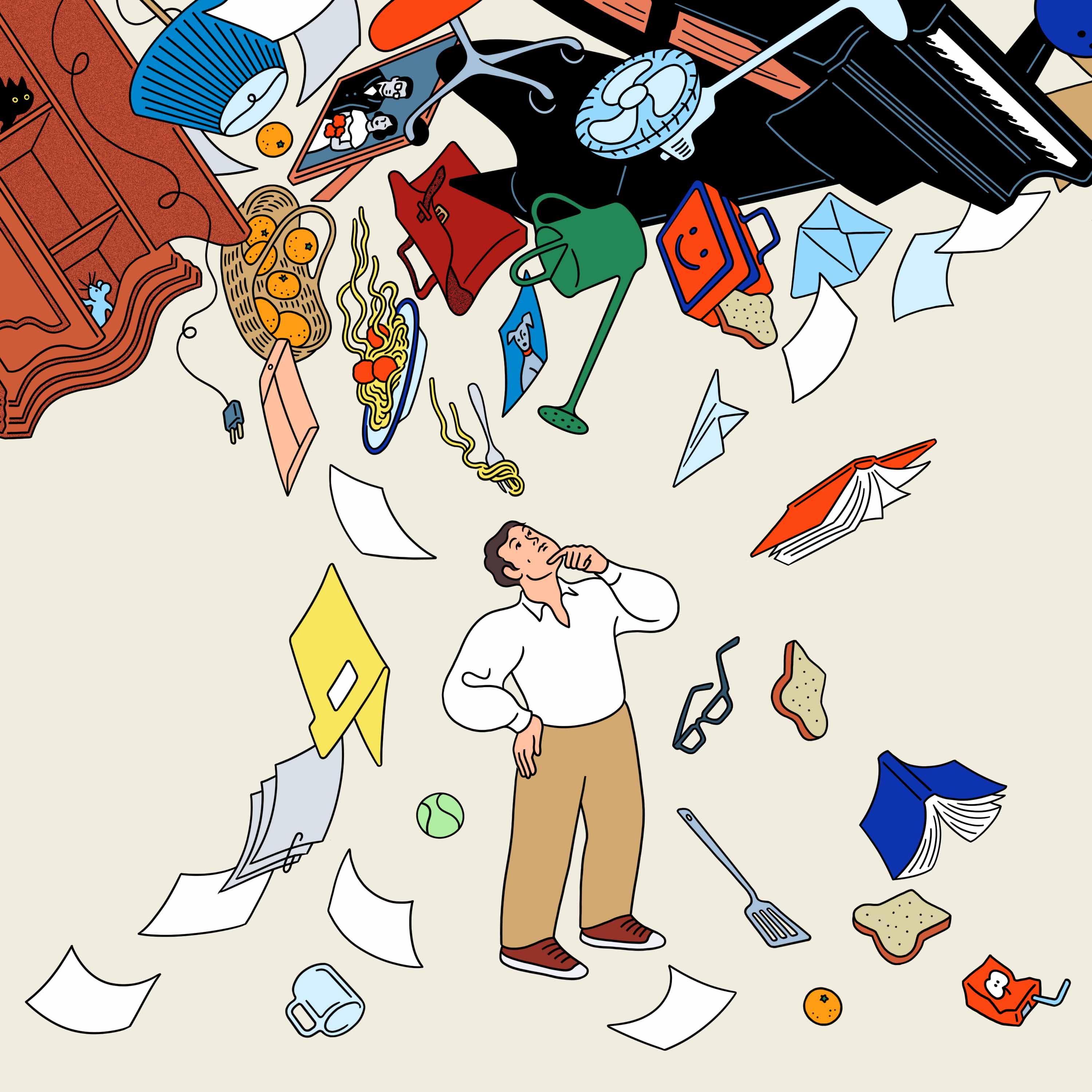
This American Life
878: New Lore Drop
01:00:08
People discovering information about their own lives that they did not know, and suddenly everything looks very different.
Loading summary
Transcript231 lines
- [00:01]
Ira Glass
Support for this American life comes from Amazon One Medical and Amazon Pharmacy. If you rely on medication, what you don't need is anxiety about that medication, wondering things like, are the meds going to get refilled on time? Do I need to renew my prescription? Do I need an appointment to get them renewed? Amazon One Medical has 24. 7 virtual care, and Amazon Pharmacy delivers meds to you fast. With Amazon Healthcare just got less painful. A quick warning. There are curse words that are unbeeped in today's episode of the show. If you prefer a beeped version, you can find that at our website, thisamericanlife.org.
- [00:37]
Ben Austin
Back when Pete was 18 years old, it was the summer before he went away to college. He's home in the living room with.
- [00:44]
Pete
His dad, and he turns to me and he says, peter, let's go for a drive. And that was not something that he ever said. That's not something that we did.
- [00:58]
Ben Austin
So Pete knows something's up. He has no idea what. They go outside, get in the Volvo.
- [01:03]
Pete
Pete asks his dad, shouldn't we get Will, my younger brother? Because he was at home, he was probably 13 or 14. And my dad just shook his head no.
- [01:13]
Ben Austin
This drive for Pete alone with his dad, turned out to be kind of a big moment in his life. Before the drive, if he had to describe his family, it wasn't hard.
- [01:23]
Pete
He could do it in two words, completely mundane. I mean, we lived outside of D.C. my parents worked for the government. I mean, they were good parents. They were kind and attentive. And we would have dinner every night. My dad would cook dinner.
- [01:42]
Ira Glass
Good cook.
- [01:43]
Pete
Oh, incredible cook.
- [01:46]
Ben Austin
The way Pete remembers it, he did salmon sundaes, made a great pot roast, had a pizza that he'd make on Fridays. His mom was the one who'd make sure they did their homework and cleaned their rooms. She was direct and more talkative than their dad, was.
- [01:58]
Jake
Really quiet.
- [01:59]
Pete
They were not gregarious. They didn't really have friends. They didn't really have hobbies.
- [02:07]
Ben Austin
Okay? And so now he is in the car with his dad, just two of them. Dad pulls out of the driveway.
- [02:14]
Pete
So we start driving through our neighborhood, and we get to the stoplight at the end of our neighborhood, and he says to me, peter, it's time to tell you about the family business espionage. I mean, my first reaction was like, what? What, What? What are you doing right now? What kind of joke is this? And then the next thing that he said is, open the glove box. And so I opened the glove box, and inside was a sheet of paper. And he said, take out that sheet of paper. And so I took it out, and I'm scanning the page, and it's his resume from the CIA.
- [03:12]
Ben Austin
Did you know he worked for the CIA?
- [03:15]
Pete
No.
- [03:16]
Ben Austin
Where'd you think he worked?
- [03:19]
Pete
Well, he said he worked at the State Department.
- [03:23]
Ben Austin
But now on the sheet of paper listed all the different countries that Pete had lived with his parents. Germany and the Netherlands and Jamaica. Countries where Pete had always thought that his dad was going off to an embassy or consulate every day to work for the State Department.
- [03:37]
Pete
And I'm seeing, like, counterintelligence and counterinsurgency and deputy chief, chief of station, case officer. I didn't know what to ask next, and I. And I honestly don't know that we talked very much at all. So we actually drove in a big loop and drove back down into the driveway. And I was like, oh, wait, does, like. Does mom know about this? And my dad goes, oh, she works there, too.
- [04:16]
Ben Austin
This stunned him. His dad, he could kind of see his dad was quiet, like somebody who keeps secrets.
- [04:23]
Pete
But with my mom, it was. It was completely out of. It was just a complete surprise because of how she was.
- [04:31]
Ben Austin
What do you mean?
- [04:32]
Pete
She just was somebody who. It just seemed like you were getting exactly what you got.
- [04:42]
Ben Austin
Mm.
- [04:43]
Pete
She just didn't really seem like somebody who could deceive, But I guess she was.
- [04:54]
Ben Austin
And were they the kind of CIA employees who analyze data and sit at a desk, work a desk? Or were they out in the field, spying, pretending to be people who they aren't, like, carrying a gun? Were they that kind of CIA?
- [05:10]
Pete
They were out in the field, yeah. They were undercover. They had passports with other names. And the way it was described to me is that they were not spies. They were recruiting spies from other countries, and in doing so, they were, you know, pretending to be people who they were not.
- [05:34]
Ben Austin
P says before this, he just hadn't really thought much about his parents and their wives and their jobs. He was a kid. He once asked his mom, like, what do you actually do at your government job all day long?
- [05:47]
Pete
And I think my mom said something like, oh, you know, it's just meetings and memos. And I was like, yeah, I figured. Just boring stuff.
- [06:01]
Ben Austin
Yeah. Which I have to say, I bet there were meetings and memos. So it's like, that is a 100% lie. It's just leaving some stuff out.
- [06:09]
Pete
Yeah. No, definitely using boringness as a kind of deception.
- [06:15]
Ben Austin
In retrospect, Pete says there were clues that he could have maybe picked up on. His mom spoke Several languages. The family lived most of his life in other countries. His dad owned a 9 millimeter pistol and was always up at 4 in the morning to go running on a track. There was the fact that his parents didn't have friends and never had anybody.
- [06:31]
Jake
Over to the house.
- [06:32]
Ben Austin
Which of course doesn't mean that you're a spy, but still.
- [06:35]
Pete
Yeah. It actually wasn't until a lot later that I realized that a lot of adults do have friends and still hang out. And there were things like, when I would go to the mall with my mom, she always made sure we knew a code word. And she would say, like, okay, so if. If mommy's ever not here and somebody comes to pick you up, make sure they know the code word. And the code word was always Teenage Mutant Ninja Turtles.
- [07:16]
Ben Austin
Wait. Anytime you would go to the mall, your mom would remind you of this.
- [07:23]
Pete
Yeah. We'd be in the back seat and she'd be like, okay, boys, what's the code word? And we'd say, Teenage Mutant Ninja Turtles.
- [07:30]
Ben Austin
At the time, he says he chalked it up to 1990s stranger danger stuff. But later he learned that other parents do not do this. But he told me there was one more clue about his parents jobs. A clue that was sitting right there during the years they moved back to Virginia.
- [07:45]
Pete
Maybe the biggest clue of all is that we lived right across the street from the CIA headquarters.
- [07:52]
Ben Austin
Wait, what?
- [07:54]
Pete
Yeah, that makes a lot of sense because my dad was super pragmatic and he hated traffic.
- [08:03]
Ben Austin
To be clear, they weren't literally across the street, but in a neighborhood right across the street, door to door, less than five minutes. Pete's parents are both dead now. They both retired from the CIA after long careers. Which is why it's okay to talk about it here on the radio, by the way. But when Pete learned about this, it really did make their lives seem so much more impressive.
- [08:23]
Pete
Like, they met in the CIA, you know, fell in love in the CIA. They were globetrotting and bringing their kids around and doing God knows what.
- [08:32]
Ben Austin
I'm not exactly sure how to ask this question, so I'm just going to ask this straight out. Like, the one thing that I know about spies from movies is that they're all really, really hot. Were your parents really hot?
- [08:47]
Pete
I mean. Yeah, they were.
- [08:47]
Ira Glass
They were hot.
- [08:48]
Pete
Yeah, they were hot. They were. They were very attractive people. My mom was like. Like, I have these old pictures of her, and she's just beautiful.
- [09:02]
Ben Austin
And your dad.
- [09:04]
Pete
Yeah. Handsome guy.
- [09:06]
Ben Austin
There's this concept that originally was in video games and then it spread to TV shows and to social media or where, okay, say in a video game, there's the universe that everything takes place in, right? And then at some point, the game creators do a new lore drop when they give backstory or reveal important details that suddenly make everything seem different and richer and more complicated. Shed a whole new light. Pete had that. He had a new lore drop in his actual life. He thought his parents were one thing, then went backstory that changed his whole picture of them. So what's it like to live through in real life?
- [09:45]
Pete
Yeah, I mean, I think at first it was a shock, the fact that they were able to deceive me for my whole life. And that is just weird. It did make me look at them differently. Like, wow, the rug just got pulled from under me. Everything I know is a lie. But then when that wears off, it's kind of like, well, it's still just mom and dad.
- [10:17]
Ben Austin
Pizza is. Everybody goes through the thing when they grow up where they learn to see their parents not just as the boring human furniture around the house of their childhood. And for most of us, the new information that we absorb about our parents happens over years. The new Lord Drop version, the peacock. It was just kind of the accelerated program.
- [10:36]
Pete
Yeah, I got it all in one drive.
- [10:40]
Ben Austin
Today on our show, we have other human beings who are not video game characters and they're not fictional people on long running television series who get hit with all new information about their own lives. Backstories that rewrite everything. New lore drops in real life from WBEZ Chicago CIS American Life. Today on the show, I will still be playing the part that I always play here. And I have not learned that. I am a princess from Genovia and my grandmother is actually Julie Andrews. I am still Ira Glass. Stay with us. Support for this American life. And the following message comes from Recorded Future. Every day millions of cyber threats compete for attention. But only a few truly matter to your business. Recorded Future cuts through the noise with actionable intelligence. That's why they're trusted by major corporations and organizations around the world. They foresee spotting the signals that others miss and acting before threats become crises. Recorded Future Know what matters. Act first.
- [11:53]
Jake
This message comes from Capital One. Capital One offers checking accounts with no fees or minimums.
- [11:59]
Eddie
What's in your wallet terms apply.
- [12:01]
Jake
See capitalone.combank for details. Capital One NA Member FDIC.
- [12:07]
Aviva DeKornfeld
Here at LifeKit, we take advice seriously. We bring you evidence based recommendations. And to do that, we talk with researchers and experts on all sorts of topics. Because we have the Same questions you do. Like, what's really in my shampoo? Or should I let my kid quit soccer? Or what should I do with my savings in uncertain economic times? You can listen to NPR's Life Kit in the NPR app or wherever you get your podcasts.
- [12:34]
Ben Austin
This is American Life. Act one. Save the drama for your grandmama. Sometimes a lore drop happens when you least expect it. Okay, this next story. Aviuda Kornfeld explains.
- [12:47]
Aviva DeKornfeld
When I first met Jake, it was obvious. This is a guy who is hardwired to try and connect with people. He's like this friendly bulldozer Kool Aid, manning his way into emotional intimacy. And Jake's always been this way, in part perhaps because he grew up surrounded by people. He comes from this big Irish Catholic family in Rhode island and. And he had a sort of sitcom upbringing. His aunts and uncles and cousins all lived close by. One grandma lived literally next door. The other set of grandparents lived a 15 minute walk from his house. Jake saw them every day. It was the best. And then when he was seven years old, his family moved to Vermont, away from his extended family. And he hated it, really missed them. And this missing only intensified when his grandma back in Rhode island was diagnosed with breast cancer. To little Jake, it was obvious what to do.
- [13:43]
Jake
I just started calling her all the time and I think because I just wanted to keep talking to her because I was so afraid she was gonna die.
- [13:49]
Aviva DeKornfeld
Oh, my God, it's so sweet.
- [13:50]
Jake
I know it's funny to think back on because it was so purely intentioned, but it's also so. The motives of it are so transparent that it must have just been like a reminder to my grandmother every day, like, this kid thinks you're gonna die. Cause you might.
- [14:03]
Eddie
You know what I mean?
- [14:05]
Aviva DeKornfeld
She's like, okay, relax.
- [14:06]
Jake
No, she was like, I was trying to have like one day a fucking peace. And I'm like, hi, Grandma, can I talk to you again before you die? I kind of have this memory of the calls kind of running out of steam a little bit because I was calling every single day. And I was like 8 or 9. So it's like, what do you have to talk about? You know? And so I think I had introduced her to Harry Potter just as I had started reading it. And I think we were then like, we would read them at the same time and we would read a chapter a night on the phone the next day to we would discuss the chapter, sort of like book club with my grandma. I remember my mom always jokes like the most. One of the Most upset times she ever saw me was I caught that my grandma had read ahead because she accidentally said something on one of the calls that hadn't happened yet. And I was like, what are you talking about? And she was like, well, it doesn't.
- [14:54]
Aviva DeKornfeld
It.
- [14:54]
Jake
And I was like, you read ahead. And she had read the whole book. Cause she couldn't put it down because she loved it, right? But I was like, never do that again. Like, swear to me that you'll know. Because I. I loved that I had that experience with her.
- [15:04]
Aviva DeKornfeld
This Harry Potter book club evolved into talking about other books. Books they were reading separately. The way it worked, they would each read their own book, and then they'd hop on the phone and summarize it for the other person chapter by chapter.
- [15:18]
Jake
It was part of my, like, nightly ritual. I feel like it was like, come home, do homework, maybe have dinner, then call Grandma and recap the book. Cause I loved. I always loved, like, recapping my book to her. Like, I loved having someone to tell this story to so that it was like, I loved being able to retell it. Like, I want to tell her this story in the way it made me feel. I want to make sure I hide this suspense. I want to, like, if there was a surprise in the book, I wanted to make sure I tell her the story of the book in a way that keeps the surprise so that she's a surprise when I tell her as I was when I read it. And then I'd be like, okay, and what about your books? And she would tell me. And I remember kind of clocking pretty early on that she definitely didn't have that same flair for, like. She just didn't. She would be like, oh. And then like, yeah, they are starting to fall in love. And I'd be like, well, how do they fall in love? Why do they like each other? I felt very connected to her through the books and through the storytelling. Because I think, you know, my grandma was not. She wasn't, like, particularly forthcoming about herself. She wasn't someone who, like, would come home and, like, drop her back. God, I gotta tell you about my day. Like, that was not her. And this was, like, the first time that I felt like I was having a conversation with an adult who was talking to me about stuff going on in their own life, even if it was just the book they were reading.
- [16:30]
Aviva DeKornfeld
Jake's grandma worked at Filene's in the shoe department. She was a real coupon hound. Loved to sail. She was nice, but not exactly sweet in a grandmotherly kind of way. She was often way too honest. Like, if you said you weren't feeling good about yourself because your clothes didn't fit right, she would offer, well, you gained weight. She liked reading all kinds of books, but she especially loved thrillers. Jake remembers one of her books in particular, Smoke and Mirrors, about a librarian whose half sister was murdered. The librarian tries to figure out who murdered her half sister with the help of a guy who knew her. It was suspenseful. His grandma loved a mystery. The two kept this book club going for years. Jake would pace back and forth in the hall between the dining room and living room in his house in Vermont, phone tucked under his ear, while his grandma sat nestled in her favorite armchair back in Rhode Island. The calls were long, sometimes lasting hours. Jake says his summaries were, unsurprisingly, pretty exhaustive. He didn't want to leave a single detail out until when he was 12 or so. He stopped being completely honest with his grandma about what he was reading because he started feeling like there was something off about the books he liked. He worried they were too girly.
- [17:53]
Jake
The ones where I was like, oh, like, these were the ones that really caused, like, a crisis for me. There was this series of books called Twitches, which was. Which were about twin witches. And they were like. The covers were like those old school, early 2000s photo shoots where they would do, like, stock image photo shoots. It wasn't, like, an illustration. It was a photo shoot of two teenage girls.
- [18:16]
Aviva DeKornfeld
Like Olsen twin style.
- [18:18]
Eddie
Totally.
- [18:19]
Jake
Exactly. Yeah, yeah, yeah. It was, like, about these two girls who found out that they were adopted and that they were twins. They're also witches. When they meet, they develop magical powers. And I was like, well, I literally have to read these. But, like, I don't want to tell my grandma that I'm reading a book about, like, two teenage girls that are, like, have magical powers and, like, boys. And also, I don't want to carry this book around at school. And so I think that's when I started editing a little bit. And, like.
- [18:44]
Aviva DeKornfeld
And why didn't you want your grandma to know you were reading those books?
- [18:47]
Jake
Because I think I knew it was speaking to something. I think I was also probably starting to realize, like. Cause I also was. I was a pretty effeminate child. So, like, at this point, I was already getting called gay. So I think this was all kind of, like, interwoven.
- [18:58]
Aviva DeKornfeld
And so do you remember deciding, like, intentionally deciding to start changing details?
- [19:04]
Jake
I remember in Twitch's, I think I changed their gender. I think I made them Both boys, I think I changed their powers. I think I said that one could move things with their mind and that one was like strong.
- [19:16]
Aviva DeKornfeld
And the details you were changing it was to make it align with what you thought a straight boy would be reading.
- [19:22]
Jake
I was like, I'll change these details because they don't affect the plot.
- [19:25]
Aviva DeKornfeld
Okay.
- [19:26]
Jake
And I. So I was like, I'm not going to change the plot. I'm just going to change like the details around to make it a little bit more masc. It's gonna be. Instead of being able to passively stop it through clairvoyance and telepathy, it's like they use their physical powers of telekinesis.
- [19:39]
Aviva DeKornfeld
And strength and do you think you were convincing? Do you think that she thought that you were straight at the time?
- [19:45]
Jake
No, I don't think that anyone ever thought I was straight.
- [19:49]
Aviva DeKornfeld
Really?
- [19:49]
Jake
No, I don't think.
- [19:57]
Aviva DeKornfeld
It's really sweet and really sad to imagine you like putting on this disguise by changing the details for your grandma. It's like you're wearing a fake mustache, but it's actually askew and you have no idea. And everyone's like, that's not a real mustache.
- [20:10]
Jake
Yeah, 100%. And like, as though, like if I'd been sitting here talking to you for an hour and a half and then just suddenly put the mustache on and expected you to think it was real. Like you've been talking to me without a mustache this whole time. And I also think this kind of led to the end of the book club a little bit. Was like when I started to be like, I don't want to read these books and have to tell my grandma, you know what I mean? Like, like also she beat the cancer. Congratulations. So I was less scared of her.
- [20:31]
Aviva DeKornfeld
Oh, so you're like, okay, it's not an emergency.
- [20:33]
Jake
Kind of. Yeah, yeah, yeah.
- [20:35]
Aviva DeKornfeld
It took Jake a few more years to formally come out to his family. He was 16 and he told me he thinks he remembers his grandma mentioning his coming out once and saying that she loved him, but it was such a non issue that he can't even really remember specifics. Jake's sexuality, that is not the lore drop in this story. There was one, but it came years later when Jake was in his 30s. By then his grandma had developed dementia and then got really sick. Jake made a point to visit her every month or two. And then one day I was visiting.
- [21:12]
Jake
My grandma and she was in home hospice and it was like kind of sad. And she was on the first floor in the living room. And then I went up to. To my mom's old bedroom. And my mom's bedroom, there's this, like, radiator that always was just, like, covered in my grandma's books. And I, like, remember being in. I went. I think I probably went up to the room to kind of, like, take a breather or something. And I remember, like, seeing the books on the windowsill and on the radiator.
- [21:40]
Aviva DeKornfeld
He saw titles he remembered from when he was a kid, the books she'd recapped for him.
- [21:45]
Jake
And I remember I picked up one of the books and thumbed through it and found a sex scene. And I was like, was she reading. They're romance novels. Like, these were sexy books. And so I, like, picked them up and I started, like, flipping through them. And I just remember it being, like, graphic in the way that it, like, described genitals. Like, it was like. It wasn't just like. And then we went to the bedroom. It was like. Like, you know what I mean? It was like that sort. And I was like, oh, oh, okay. I was like, are those all smut?
- [22:18]
Aviva DeKornfeld
Yes. Jake's grandma was an avid reader of smut. Jake sat there laughing out loud to himself as he started Googling his grandma's favorite authors. Jane Ann Krentz, who wrote the book Grand Passion, in which protagonist Max Fortune heads to a B and B in search of his hidden inheritance, only to find himself irresistibly compelled by the attractive innkeeper Cleopatra JD Robb. She wrote the book Naked and Death, where a woman somehow works through her past trauma by sleeping with a hot and mysterious Irish businessman. And another one from Janann Krentz, that Jake remembered his grandma recapping to him. Smoke and Mirrors, the one about the librarian traveling around trying to solve her half sister's murder with the help of a guy she meets along the way. That was the way Jake remembered it anyway. But now reading the book, the whole.
- [23:12]
Jake
Book is just her wanting to have sex with this man. That's the entire book. The murder is almost never mentioned. They're just walking around this town trying to find out if the murder. The entire time, she's just like, this man is so hot. She literally had to make up so much plot. Like, this is so central to the plot. Like, I remember thinking, like, damn, grandma doesn't give that much of a shit about the narrative. And I'm like, no, grandma was making up a narrative because, like, half of the plot was about these people having sex. So you want me to read this passage?
- [23:36]
Aviva DeKornfeld
Yeah.
- [23:36]
Jake
Okay. In this part of the Book. They just tried to break into a house to, like, look for clues. And, like, an unseen person, like, chased them out of the house and they, like, had to run away. And now they've, like, they're back at his place and they're, like, safe. Okay. Thomas shrugged out of his jacket and came to stand behind her. Their eyes met in the mirror. Unlike her, he looked terrific, she thought. Hard, tough, and totally in control. She had to fight an irresistible urge to turn and put her head into his chest. His hands closed over her shoulders. Take it easy. You're just feeling the aftershock of the adrenaline. It'll fade. I know. The weight of his hands was not having the calming, soothing effect he probably intended. She suddenly wanted to do a lot more than just put her head down on his shoulder. She looked at his mouth in the mirror and wondered what would it be like to kiss him, Wondered how his mouth would feel on other parts of her body.
- [24:39]
Aviva DeKornfeld
Let's stop there because we can't conjure an image on the radio. You guys were doing the same thing.
- [24:50]
Jake
We were doing the same thing.
- [24:51]
Aviva DeKornfeld
What went through your head when you realized that?
- [24:53]
Jake
It really tickled me. Like, I was like. Cause I remembered that feeling of being so afraid towards the end of the time when we were calling each other that I would, like, out myself or just feeling, once I became a sexual person myself or a pubescent myself. Those conversations about those books being like, don't see me, and realizing she probably felt a version of that the whole time or was just having to constantly think about, okay, don't talk about when they had sex in the kitchen, but what happened in the plot line? I don't know. It makes me feel closer to her that we were doing this song and dance.
- [25:25]
Aviva DeKornfeld
I love the idea that you and your grandma are lying to one another three times a week in the name of bonding.
- [25:30]
Eddie
Exactly.
- [25:31]
Jake
It's like lie almost feels like too harsh of a word. Do you know what I mean? It's just like two people translating what they're. What's going on in their lives for the other person, you know?
- [25:42]
Aviva DeKornfeld
Right. It's a version of what we all do all the time.
- [25:44]
Jake
100%. You know, like when we talk to, like, our parents about, like, our relationship, you might not be like, well, I think I might break up with him because the sex. Not great. Like, you.
- [25:52]
Ben Austin
You.
- [25:52]
Jake
You might. I'm just not feeling it. You know what I mean? We do these edits all.
- [25:57]
Ira Glass
Yeah, yeah.
- [25:58]
Aviva DeKornfeld
We were fighting and then we made up.
- [25:59]
Jake
Yeah, exactly.
- [26:04]
Aviva DeKornfeld
Jake's grandma Died this past June. She was 84. Jake and his grandma and their book club. It was never really about the books, obviously. The point was to spend time with one another, to feel close. And it worked. It worked so well that Jake still gets to spend time with her, even now, even in some very unexpected moments.
- [26:27]
Jake
I've been watching Heated Rivalry, which is like this HBO Max show that's based on a romance novel, but it's a gay romance novel. It's about hockey players. And I'm, like, loving it. It's, like, my favorite show right now. And I'm kind of, like, laughing to myself as I watch it. Cause I'm like, I come from a line of people who enjoy this. Like, this is like, you know, it's.
- [26:43]
Aviva DeKornfeld
Like I'm continuing my family.
- [26:44]
Jake
Not that I'm thinking. Let's be clear to the listener. I'm not thinking about my grandma necessarily when I'm watching a lot of those scenes. But, like, when I think about it now, I'm like, there is something kind of, like, nice about that.
- [26:52]
Eddie
Yes.
- [26:53]
Jake
Like, I found my version of it that I enjoy. There was a period of time in my life where I was, like, terrified of my grandma knowing I was gay. And now I'm like, watching Gay Cement on hbo, and I'm like, the gene that makes me like, this comes from her.
- [27:07]
Aviva DeKornfeld
Sometimes the new lore drop isn't some big revelation. Sometimes it's just a funny little detail. You get to enjoy it and carry on with your day.
- [27:27]
Ben Austin
Aviva DeKornfeld is one of the producers of our show. Jake is a comedian. He told a version of this story on stage, which is where we first heard about it. His work and his tour dates are on Instagram. Akewcornell. Coming up, one more reason to hate Mark Zuckerberg. This one I bet you did not see coming. That's in a minute from Chicago Public Radio when our program continues.
- [27:55]
Ira Glass
Support for this American Life comes from Mint Mobile. Feeling like you've got a big spending hangover after the holidays? This January, quit overspending on wireless with a limited time offer of 50% off unlimited premium wireless@mintmobile.com American upfront payment of $45 for three months, $90 for six months, or $180 for 12 months. Taxes and fees extra. Initial plan term only above 50gb. Network may slow when busy. Availability, speed and coverage varies. See mintmobile.com support for this American Life comes from Capella University. Sometimes it takes a different approach to pursue your goals. Capella is an online university accredited by the Higher Learning Commission. That means you can earn your degree from wherever you are and be confident your education is relevant and recognized. A different future is closer than you think with Capella University. Learn more about earning a relevant degree at Capella. Edu. Support for this American life comes from BetterHelp. The new year isn't about doing more. It's about carrying less. Therapy can help you unpack what's been heavy and bring more clarity, calm, and perspective into 2026. It's a small act that can lead to big relief and real perspective for the year ahead, because you can't step into a lighter version of yourself without leaving behind what's been weighing you down. Visit betterhelp.comtal for 10% off.
- [29:21]
Ben Austin
This is American Life from Ira Glass. Today's show, new lore Drop stories of people discovering information about their own lives that they did not know. Information that makes them see things very differently. Okay, so just a quick reminder as the show continues. If we get separated and. And you can't find me and somebody comes to get you, let's just review. What's the code word?
- [29:44]
Pete
Teenage Mutant Ninja Turtles.
- [29:45]
Ben Austin
That's right. Don't forget it. We've arrived at act two of our program, act two, bully pulpit. So reporter Ben Austin had a kind of ward drop happen to him recently. And it was not the clarifying kind of ward drop where everything suddenly makes sense, the world seems clearer. It's kind of the opposite. Ben says the whole thing started over Facebook. Ben is one of those people who hates Facebook. He hates but also keeps looking at. Maybe he's not the only person who ever does that. Ben had this rule. He would accept friend requests, but he'd never make them. Then one day sees a post that his sixth grade teacher had died. This was a teacher he loved and everybody loved. And all of his old classmates were sharing memories.
- [30:33]
Eddie
I was sitting there and I was like, man, these are my friends, you know, that I grew up with. And so I started friending them. I, like, broke my rule. And there was, like, this kid Chaka that I hung out with and this girl Alana and Malcolm Speller. I just started friending all of them. And then there was this one other kid, his name was Eddie. And I paused.
- [30:54]
Ben Austin
Should he reach out to Eddie? He got into school with Eddie from, like, since they were first learning to walk. Initially, this Jewish day school on the south side of Chicago.
- [31:03]
Eddie
We both transferred to this public school in sixth grade. And I remember hearing that his mom told, like, the office lady at the Jewish day school who told My mom that the reason Eddie transferred schools, followed him to the public school that is Ben Austin, meaning me. I was the reason he transferred.
- [31:23]
Ben Austin
You're the reason he transferred to public school, and then you turned out to go to some public school.
- [31:28]
Eddie
Yeah. So I was like, oh, he probably doesn't want to hear from me.
- [31:31]
Ben Austin
But on the other hand, decades have passed, right? They were adults now. They both had kids. This guy Eddie had actually become a rabbi, an adult. Ben didn't want adult Eddie to somehow see that he had friended everybody else and then not him, and then be hurt by that. So he sends the friend request very quickly. He gets a message back, and there.
- [31:54]
Eddie
Seemed to be like a 2000 word essay that he wrote me in response.
- [31:59]
Ben Austin
Let me ask you to read a.
- [32:00]
Eddie
Little bit of that, okay. Before I broadcast to the world via my 2100 Facebook friends that you and I are friends, I need to get something off my chest. This may sound petty, but when we were boys at Akiba Schechter, I felt insecure in your presence. From nursery school through fifth grade, I recall feeling verbally and at times physically threatened by you. I'm not going to go into specific incidents, and I don't think it matters. What matters is how I felt. I'm sad to say it, but when I teach my own children and students in my synagogue about bullying, the image in the deepest recesses of my mind is the memory of feeling threatened by you.
- [32:44]
Ben Austin
And then he goes on in his message to you to say, you know, we were kids. I realized, you know, it wasn't your fault. You were a kid. And then he says, but even as we got older, I have still carried with me all those years the burden of that experience. And let me ask you to read how he ends this message to you.
- [33:05]
Eddie
All right?
- [33:06]
Ira Glass
Oof.
- [33:08]
Eddie
I need to release myself from the burden that has plagued me for so long. I am sorry for throwing all this at you over an innocent friend request. I apologize for holding back all these years and not trying harder to bring about healing in our relationship sooner. If you are willing to acknowledge the hurt and the insecurity that I felt in your presence when we were boys more than 30 years ago, then I not only will forgive you, I will be happy to be your friend in all senses of the term. Best regards, Eddie.
- [33:41]
Ben Austin
What did you think when you got that boy?
- [33:45]
Eddie
Like, honestly, I was like, fuck Facebook. But I also thought, wait, you're blaming Facebook for this? Yeah. I was like, why did I. Why was I on that side? Why did I participate? It Was like, I knew it, I knew it. I mean, to be honest, like, the biggest thing I felt was like, I just. I couldn't think of something that I did to him. I don't have any recollection of a single incident of harming him or saying something cruel to him. And at the same time I'm thinking, like, that doesn't mean it didn't happen. I'm also thinking like, maybe I actually just don't. I just wasn't aware of it or I didn't recollect it. So all those things are swirling through my head.
- [34:35]
Ben Austin
Before this, Ben had never thought of himself as a bully. He says, yeah, as a kid he was unruly. He spent a lot of time in the principal's office, but generally fun loving. Nothing like what Eddie was describing. Still, Ben figures he'll apologize even though he doesn't remember doing anything. And so then what he ends up writing is this kind of carefully worded non apology apology, okay? He writes that he's deeply embarrassed, he's sorry he made Eddie feel this way. And then he can't resist. He goes on to tell this story. It's a memory he had from when they were little kids together. Their teacher had taken the class out to a park across from the school. They're sitting in a circle playing Duck, Duck, goose, and this dog runs over, off leash, golden retriever, mud. Maybe it was a puppy.
- [35:24]
Eddie
Ben thinks, you know, the most unintimidating dog you could ever see in your life.
- [35:29]
Ben Austin
And.
- [35:30]
Eddie
And I remember looking over and seeing Eddie's face as he saw the dog. And he looked like he had just seen a ghost. Just pure terror. He stood up and I remember shouting at him. And maybe I'm inventing this memory, but this is how I remember it. I said, eddie, sit down. You know, the dog isn't interested in you. And he starts to run. And the dog, being a dog, gave chase. And I said to Eddie that maybe I was a lot like that dog. You know, like rambunctious, playful. And like when things ran, I was the kind of person that would give chase.
- [36:07]
Ben Austin
Were you saying through that story, like, maybe I did something, but the problem was that you were too scared of me and I meant you no harm. Like that dog. Is that what you're trying to say with this story?
- [36:18]
Eddie
Totally. I was saying, like, I'm sorry and I don't want you to feel bad and I'm willing to, like, step up and like, you know, say the things. But then I also had to tell this damn story, which Is like, it's actually not me, it's you. Like, you know, I'm not sure that's fair, but, like. But, like, you know, you were. You were scared of a ma. Of things that weren't, like, actually threatening you.
- [36:39]
Ben Austin
Ben entered his message. I do understand. I do acknowledge. I am sorry. Sincerely, Ben. So he sends a message. Eddie writes him right back again.
- [36:54]
Eddie
It felt like the ping came back, almost like, you know, the moment I press in and he starts. Baruch hataranoi eloheinu melech ha' olam sheheki' anu vekiyamanu v' higianu lazman hazeh. I give thanks to God, who has given us life and sustained us and allowed us to reach this moment. Today is a joyful day. I can't adequately express how moved I am by your words. You are a mensch. I am stunned by the accuracy of your recollection of the 53rd Street park now, the Harold Washington Park. To be honest, I struggled with phobia of dogs well into adulthood.
- [37:34]
Ben Austin
And let me just interrupt you there. So then he sort of retells the story too, but he doesn't seem to understand the point you were trying to make with your story, that maybe he was the one who was a little too scared of things that weren't scary. And then he writes that he feels like he can literally bury the tension between the two of you that went unacknowledged for more than 30 years. Just read his closing lines here.
- [37:53]
Eddie
Yeah. I am grateful for this new chapter. Needless to say, at this point, but still important, I forgive you. I look forward to staying in touch and enjoying a true friendship. Your friend Eddie, at this point, do.
- [38:09]
Ben Austin
You feel like you might have done something to bully him, or do you actually not believe you did anything and it's all in his head? Because I think both things are possible, right? You really might have done something real that he could tell you if you asked him directly. And you realize, oh, yeah, I did that. But it also might be possible. Like, he can't come up with any incident. What do you think is the truth?
- [38:33]
Eddie
Yeah, I gotta. I actually don't know. I mean, the way you frame that, like, I have no fucking idea.
- [38:41]
Ben Austin
This got stuck in Ben's head. What had he done, if anything? Had he been a good kid or a bad kid? Ben decided to find out. Seemed like a good question to ask a rabbi, right? He prepared this report.
- [38:58]
Eddie
I reach out to Eddie, ask if he's game to revisit the messages we sent back and forth Our memories of each other. Sure. He says it makes sense to do this in person. He's in Florida, a short drive outside Boca Raton, in a subdivision. There's a palm tree right in front of us, sculpted bushes. There's also a house glowing with Christmas decorations. Another displaying a Beware of Dog sign. I know neither can be Eddie's. His is the one in between. Eddie emerges from the front door. Eddie, welcome. Thank you.
- [39:37]
Rabbi Eddie
Great to see you. Thanks for doing this. Hope you got some sun rays today.
- [39:42]
Eddie
I've seen Eddie only once since we were kids, and I'm struck by how much he looks like the kid I remember. Even though he's now about 6ft with gray in his goatee, he's wearing a yarmulke. He's also got this pouch attached to his belt for his phone. He leads me inside.
- [40:00]
Rabbi Eddie
This is my wife, Ariella. Hi. Nice to meet you.
- [40:04]
Jake
Welcome, welcome.
- [40:05]
Rabbi Eddie
I've heard a lot.
- [40:07]
Eddie
His teenage daughter is home. His other two kids are out in the world. He says one is about to get married. He's been a rabbi at different congregations, but he tells me he now works as a chaplain at a hospital. He likes it because he gets to tend to people of all religions. Eddie guides me into the dining room. Laid out on the table, there are all these photographs, nearly every one of them of us. All right. I'm a little embarrassed of seeing all these things.
- [40:37]
Rabbi Eddie
Yeah. Yes.
- [40:37]
Eddie
It catches me off guard. Eddie's been preparing for this meeting. We went to the same high school, too. Our yearbook is open to my senior picture.
- [40:46]
Rabbi Eddie
Yeah. So that's you.
- [40:48]
Eddie
Oh, yeah. Yeah, that's me. I just. This is.
- [40:51]
Rabbi Eddie
Your wife is in.
- [40:52]
Eddie
Yep, she is. My wife, Danielle also graduated high school with us. Obviously, I kept in better touch with her. Then Eddie points to a faded photo I've never seen before. It's of little kids in a classroom, around a table, eating cupcakes. There's Eddie standing, and not far from him, me.
- [41:13]
Rabbi Eddie
1977. You and I both turned six. So May was my sixth birthday. And this is my sixth birthday party. So that's me with a crown. And that's you, of course.
- [41:26]
Eddie
Yeah. Front and center. Both of us are smiling as wide as can be. But I know for more than 40 years of Eddie's life, he looked at a photo like this one and was haunted by me. Was he right to feel that way? Have I been wrong all these years about who I am? Eddie tells me about the moment he first heard from me again. He was just down the hall, here in the Kitchen, making dinner for his family.
- [41:51]
Rabbi Eddie
I picked up my phone and was getting the table set and whatever, waiting for dinner to warm up. And I saw a friend request from Ben Austin. And it stopped me cold in a strange sense. It surprises me even to this day because, I mean, you know, I've encountered a lot of people throughout my life and for something was different with you, and that's my memory of you. I felt threatened by you. I felt you were a bully towards me.
- [42:31]
Eddie
All right, this is why I came down here. This is a way harder question for me to ask you and one that I've probably avoided. I know I've avoided before. And what did I do? How was I your bully?
- [42:47]
Rabbi Eddie
Yeah, I'm glad to have the opportunity to discuss it. I didn't want to burden you about petty stuff. I mean, we're talking about stuff that happened between us when we were 6, 7, 8 years old. And here we are now, almost on the cusp of being 55 years old. So this is 50 years almost in the past. So it seems petty. But do you remember what you called me in those early years?
- [43:18]
Eddie
Not at all, Eddie. And I almost want to run out of the room like, I don't know.
- [43:23]
Rabbi Eddie
All right, so you called me Eddie Spaghetti.
- [43:27]
Eddie
My response right then. And I feel terrible for saying this. I want to laugh. I mean, I definitely could see myself saying this. I'm not denying that. But in the absence of any memory of what I did to Eddie, I had imagined, I don't know, something so much worse. I came all this way to Florida for a goofy rhyme.
- [43:48]
Rabbi Eddie
For the six year old version of me, I was hypersensitive. Every time you called me Eddie Spaghetti, I burst into tears. And the rest of the class would laugh, Mark would laugh, Ari would laugh, and other people would join in calling me Eddie Spaghetti.
- [44:07]
Eddie
You're pointing at the yearbook pictures here of these kids. Yeah, yeah.
- [44:11]
Rabbi Eddie
And it all seems so silly now.
- [44:13]
Eddie
It's utterly silly.
- [44:14]
Rabbi Eddie
But as a six year old kid, I felt like, you know, I was the. I was the. The one everyone made fun of in class.
- [44:29]
Eddie
I do get it. It's about what a hard time Eddie had back then, how much he felt like an outsider and how I. I was one of the kids who made it harder. But it's also just so weird, the two of us sitting here, two men in our 50s, and hearing him repeat what I said when I was like 6 or 7. I make a nervous joke about spaghetti being positive. It's noodley flexibility. Plus it's delicious. Those are the kinds of things I say to people always have. I recognize that how you react to Eddie's words, what you feel right now about him or me, probably depends on your relationship to your own past. Maybe you're remembering things being done to you or doing things to someone else. Or maybe you're the type who's forgotten all this sort of stuff and that's exactly where you want to keep it. Eddie pauses, and I think he's done. That's all he's got. I guess I wasn't such a bad kid after all. But then Eddie looks down at a yellow legal pad. It's covered in handwritten notes. Oof. There's definitely more.
- [45:39]
Rabbi Eddie
It must have been first or second grade, because most of us had those metal lunchboxes, usually with themes from TV shows on them. My lunchbox was the Six Million Dollar man, with Steve Austin, played by Lee Majors.
- [45:58]
Eddie
I love it. This turns out to be a story about a time I did something that seems worse. Physically worse, at least. He says, when we were six, I kicked his ass. I'm not sure why he didn't lead with that. Here's how he remembers it going down.
- [46:17]
Rabbi Eddie
So it's lunchtime. The teacher's telling everybody to get their lunchboxes in line up, and I pull my metal lunchbox off and someone else's metal lunchbox falls on you. Like, falls on your shoulder. Maybe you had a bruise the next day. But what I do remember is he then just started whacking me.
- [46:40]
Eddie
Like I hit you?
- [46:40]
Rabbi Eddie
Yeah, hitting me multiple times. And I really remember seeing your eyes and seeing rage in your eyes.
- [46:48]
Eddie
So you're like, you're physically, physically whacking me.
- [46:52]
Rabbi Eddie
And then finally a teacher came over and separated us. And I don't remember anything else that day. I just. I remember you hitting me, and I remember the rage in your eyes.
- [47:06]
Eddie
He says he wasn't seriously injured or anything. We were both just little kids. I don't recall any of this.
- [47:13]
Jake
Well.
- [47:16]
Eddie
I'm definitely sorry for that. I don't quite know what to make of it. What does it mean that I did that? I think Eddie. I probably fought a lot at those times. It's terrible. I beat Eddie up. This doesn't seem totally out of character for me. I mean, I remember on the playground back then, kids throwing a ball in my face. I'd get mad and throw it back in theirs, and then we'd go on playing. What I don't get is why what I did to Eddie that day stood out so much from the other chaos. Of childhood around us. In the middle school Eddie and I both attended, and it wasn't uncommon for one kid to say to another after school, meaning at 3:30 in the parking lot or on the playground, we're gonna fight. It was sometimes said to me when we got to high school, I tried to avoid fights as much as possible. The stakes were too high. I saw kids at my school swing bats, golf clubs once a hatchet. Our junior year, two guys jumped me for a gold chain. My wife says when I showed up at school that week with a broken nose and two black eyes, it was the first time she noticed me. Like, noticed me as a potential mate. Not sure what that says about either of us. I remember these moments, but I don't feel plagued by them. Not in the way Eddie was by me. But I realize in saying all that, part of me is defending myself. Little kid Ben. I'm trying to prove I wasn't a bully. Later, I even talk with an elementary school principal in Chicago to see whether my actions back then checked their four boxes of bullying. I did check at least two. Eddie has one more memory on his notepad that he wants me to hear.
- [49:17]
Rabbi Eddie
As I recall, we're at the 53rd Street Park. Teacher took us out on a nice day. We're sitting playing Duck, Duck Goose, and.
- [49:29]
Eddie
He repeats the same story I shared with him in our Facebook exchange. It starts just as I remember, but with a different conclusion. It's that story of how when we were 7 or 8 and our class went to the park, a dog was off leash.
- [49:42]
Rabbi Eddie
I had a serious phobia and I just hightailed it and I ran screaming. I don't know if it was that time, but I know there were other times that I ran across Hyde Park Boulevard, which is a busy street with buses and cars and trucks, back to the safe side where the school building was. And I remember being laughed at by you and other students in the class. Not saying you're the only one, but I perceived you as the ringleader, man.
- [50:19]
Eddie
I mean, in the story I told, it was the opposite of laughing. Yeah, like I was. I was trying to protect you. Of course, that's the part we remember so differently. Maybe I've held onto my version because in it I've cast myself as the good guy. I see his terror, and I'm the one calling out to him, telling him not to run. Eddie describes another boy who teased him that day about how fast Eddie ran from the dog. He could be a track star if there was always a dog behind him. Eddie Blamed me for that one, too. That's just how he saw me back then.
- [50:53]
Rabbi Eddie
My memory over the arc of our young childhood was being teased by you. And at some point, that became layered on my dog phobia. And so, in a way, you became the dog.
- [51:12]
Eddie
I became the dog for Eddie. I turned into this major figure in his life. I became this villain. Eddie tells me that when he changed schools, I wasn't the only reason, but I was part of it. And he tells me how, decades later, he saw a photo. It was from our 20th high school reunion. He spotted me in the background and was relieved he didn't go then. Classic me. I sent him that note, which was way more clever than honest. He opened it at a cemetery after presiding over a funeral. He tells me it was like a spell was broken. It set him free.
- [51:51]
Rabbi Eddie
I think I just wept at that moment. I was just so grateful to hear or, you know, to read that you had accepted what I wrote with such incredible grace. And I just felt blessed. It was big. It was a momentous time in my life. I mean, it was. It's a time that there was a. There's a before and there's an after.
- [52:27]
Eddie
Eddie, that's powerful and complicated. Yeah, complicated. I decided to tell Eddie the truth. How? In that message, the one that broke the spell, I had said sorry, but wasn't sure I had done anything wrong. My apology wasn't really an apology. Did he understand that when he got it?
- [52:49]
Rabbi Eddie
Um, I think I did. Or at least in retrospect, I did. I remember sharing it with other people, and they said, did he really apologize? And I'm like, my sense is that perhaps not fully, but it was enough. It was what I needed at that moment. And perhaps I chose to layer more apology on it than you were actually saying at the time. But you finished your note saying, I acknowledge and I'm sorry, and.
- [53:41]
Pete
That'S what.
- [53:42]
Rabbi Eddie
I needed at that moment, and that's what I embraced.
- [53:46]
Eddie
It's not just that Eddie and I see our memories of each other differently. I realize we also have a different way of seeing the world. Eddie, he's a man of faith. If it's enough, it's enough. Not me. I can't help it. I need to set the record straight. I'm embarrassed about the things I did and that I hurt you. But I'm also thinking that a lot of it is just. It's. It's about being kids.
- [54:12]
Rabbi Eddie
Yeah.
- [54:13]
Eddie
And I don't think I was a bully in that sense. And I wonder if you think I Am.
- [54:19]
Rabbi Eddie
No, absolutely.
- [54:20]
Eddie
I don't mean right now. I mean when you think back on those moments.
- [54:24]
Rabbi Eddie
How can I look at this picture of 6 year old Ben smiling.
- [54:28]
Eddie
But come on, but you looked at that picture for years and saw the dog.
- [54:33]
Rabbi Eddie
Yes, yes, but this little six year old Ben smiling, grinning, sweetest. I mean, look, you can pinch the.
- [54:42]
Eddie
Cheeks practically, but that feels like a revisionist history of how you saw that picture that loomed in your imagination.
- [54:50]
Rabbi Eddie
But I am revising it now. But we as adults have a right to change the narrative.
- [55:01]
Eddie
You know, Eddie, I. I feel like your version of me today and over time is both. I'm way worse than I am and I'm better than I am. There's a little bit of way of when you're saying you're seeing my true self. I guess what I'm saying is you're also seeing these two extremes and I'm not really either of those. As he's pointing at this photo of me, it's like everything has flipped. I'm no longer even a bully when I was a kid and as an adult, he's talking about me like this great liberator. He even compares me at one point to a famous rabbi who marched with Martin Luther King. In some ways what I'm hearing is I've sort of liberated you from this stuff, which is also feels. Yeah, I don't know. That doesn't feel exactly me either. I mean, I try to do. I want to do good.
- [56:00]
Rabbi Eddie
Yeah, yeah. Look, there's. People come to me and say that time you spent with me in the hospital or that sermon you gave, it changed my life. And did I really do anything? I did what I do every day. Every day I visit people in the hospital. Every day I study some piece of scripture or Jewish wisdom and try to make some meaning out of it for a congregation. And sometimes it lands and sometimes it doesn't. And with you, you did something good. And I'm holding it up as good. How does that sound?
- [56:49]
Eddie
It sounds like Eddie's a pretty good rabbi and that he got what he needed from me. See, I'm not such a bad guy. But I got something out of this too. It's clear. Eddie and I didn't know each other well as kids and certainly not as adults either. But here I am in Florida, in his subdivision, in his home. I can see the books on his shelves. His kid's artwork is on the walls. He's got a tree out back in his yard. It grows star fruit. Eddie's cut up slices for us. To snack on, and we've managed on this night to talk for hours. I do feel responsible for my past actions, even the ones from way back that I can't remember. As far as what to do about that we now know each other at least better. That feels real. Maybe at this point in our lives, it's about the best we can do. Amen.
- [57:58]
Ben Austin
Ed Austin is a writer in Chicago. His most recent book is Correction, about the parole system.
- [58:15]
Rabbi Eddie
Getting to know you Getting to know.
- [58:19]
Ben Austin
All about you Getting to like you.
- [58:25]
Rabbi Eddie
Getting to hope you like me.
- [58:30]
Eddie
Getting.
- [58:30]
Ben Austin
To know Today's show was produced by Aviva de Kornfeld and Tobin Glow. The people who put together the show included Sophia Bennen, Michael Comedy, Suzanne Gabber, Cassie Halley, Hana Jaffe Walt, Seth Lynn, Meeke Meek, Catherine Raimondo, Stone Nelson, Robin Reid, Nadia Raymond, Anthony Roman, Ryan Rummery, Alyssa Shipp and Christopher Sutala. Our managing editor, Saur Abdurrahman Our senior editors, David Kestenbaum. Our Executive editor is Emmanuel Berry. Special thanks to Adam Ross at the Sewanee Review. Shin Nee Pai, Lauren Herz, Sarah Veldhuisen Staley, Kara Dietz, Jody Kmel and Peter Kornblu. Peter Lang Stanton, who you heard at the beginning of the show talking about his parents being in the CIA, made a radio story years ago about his dad's involvement in covert operations in Laos during the Vietnam War. We link to it from our website, this AmericanLife.org this American Life is delivered to public radio stations by prx, the Public Radio Exchange. If you'd like to get bonus episodes, if you'd like to listen to all of our regular episodes without the ads, and most importantly, if you would like to help us keep making the show, please consider becoming a this American Life partner. There are more than 20 bonus episodes waiting for you right now, including a brand new one where one of the people who adds music underneath our stories here on the show explains the sometimes very puzzling situations that she has gotten in with certain stories and her attempts to figure out what music to use. Join at this American Life. The link is also in the show notes. Thanks as always, Joe Burgum's co founder, Mr. Tory Malatea. You know, he told me this week he's switching from Netflix to HBO Max.
- [60:03]
Pete
For one reason, they didn't really have friends.
- [60:07]
Ben Austin
I'm Eric Glass. Back next week with more stories of this American Life.
- [60:11]
Jake
Because of all the beautiful and new.
- [60:17]
Pete
Anxiety I am learning about you day by day.
- [60:36]
Ben Austin
Next week on the podcast of this American Life. Ten months after the fall of the brutal dictatorship in Syria. A group of Syrian comedians decides to go on a national tour. But it is really not clear what they can say with their newfound freedom or it's still going to get them in serious trouble.
- [60:50]
Jake
I don't think something bad will happen to us.
- [60:53]
Eddie
Nobody cares about us. I'm not George Clooney. A few people telling some jokes let them.
- [60:59]
Ben Austin
Turns out some people don't want to let them. That's next week on the podcast on your local public radio station.
- [61:15]
Jake
This message comes from NPR sponsor Capella University. Interested in a quality online education. Capella is accredited by the Higher Learning Commission. A different future is closer than you think with Capella University. Learn more@capella.edu.
- [61:33]
Ben Austin
This message comes from Bombas. Your feet hit the ground an average of 2,000 times in a mile. Bombus sports socks are designed to support you every step. Sprint to bombus.com NPR and use code NPR for 20% off.