← This Is Purdue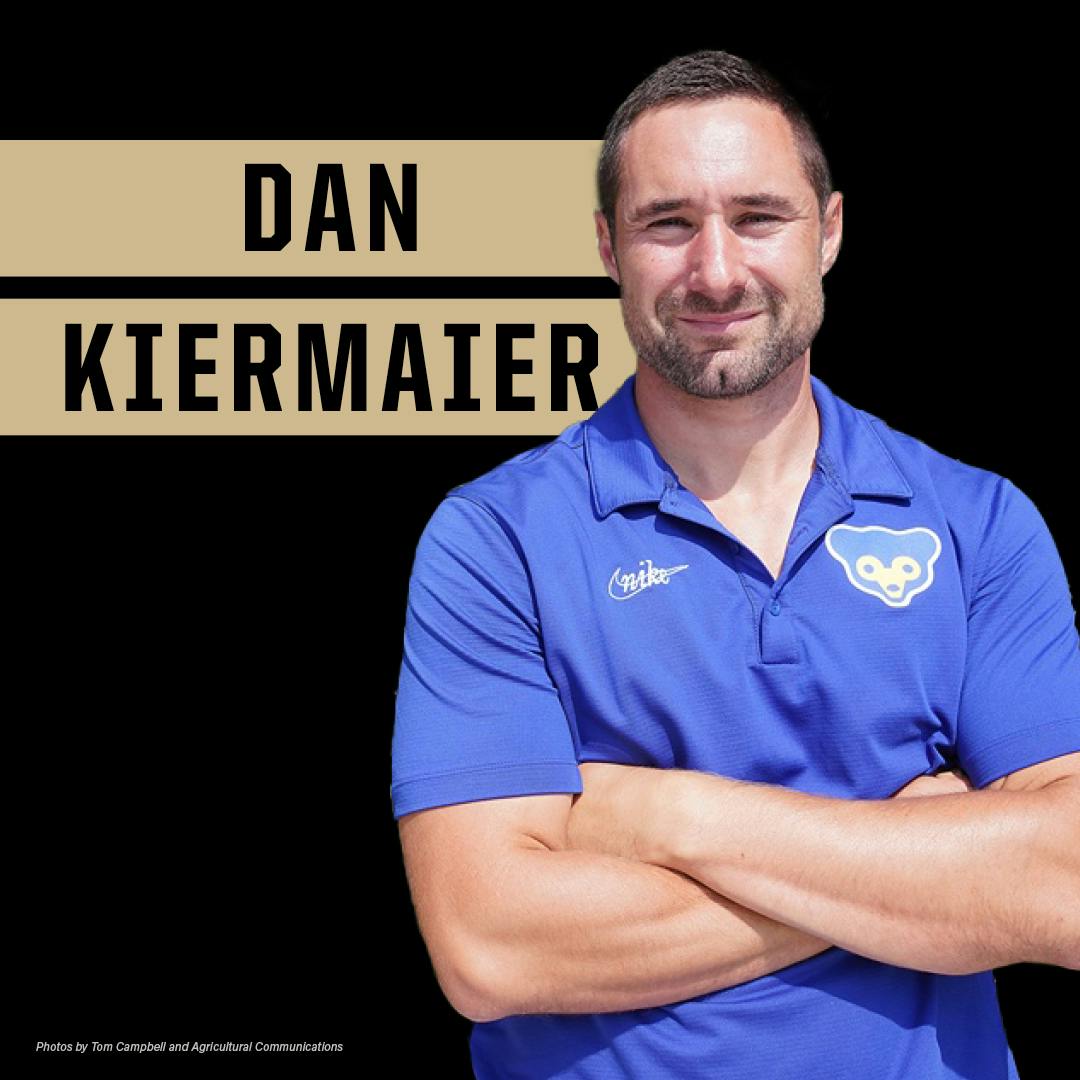
Loading summary
Transcript66 lines
- [00:00]
A
Hi, I'm Dan Kiermeyer. I'm the head groundskeeper here at Wrigley Field with the Chicago Cubs and you are listening to this is Purdue.
- [00:11]
B
Hi, I'm Kate Young and you're listening to this Is Purdue, the official podcast for Purdue University. As a Purdue alum and Indiana native, I know firsthand about the family of students and professors who are in it together, persistently pursuing and relentlessly rethinking. Who are the next game changers, day difference makers, ceiling breakers, Innovators? Who are these boilermakers? Join me as we feature students, faculty and alumni taking small steps toward their giant leaps and inspiring others to do the same.
- [00:46]
A
I don't think there's a bad seat in the house when you're here. You feel it and it's hard to describe, but it just has that it factor. And it's a really special place to me and I'm lucky enough to watch 81 games a year at this place and it's amazing and I still get goosebumps when I walk out there.
- [01:03]
B
In this episode of this Is Purdue, we're talking to Dan Kiermeyer, the head groundskeeper for the Chicago Cubs. Dan uses his Purdue College of Agriculture degree in turf management and science to maintain the safety, playability and historic atmosphere of one of sports most iconic venues, Wrigley Field. You'll hear more about Dan's career journey, sports turf maintenance tips, and behind the scenes stories from Major League Baseball's second oldest stadium in the country. Plus, we dig into Dan's experience attending that 2016 World Series win. Yeah, you know the one. And we discuss how Dan's team balances player, safety and innovation of the friendly Confines while maintaining the historic charm and and that unique ivy, which has a surprising link to Purdue, by the way. Dan is a fantastic storyteller. So enough from me. Here's my conversation with this boilermaker who's living out his dream career with one of the most celebrated sports teams in America. Dan, thank you so much for joining us on this Is Purdue, our official university podcast. You're a proud boilermaker. You're a big Cubs fan, so it's really amazing to see you living your dream with the Cubs now and you're using your turf and science management degree from Purdue's College of Agriculture as the head groundskeeper for the Cubs at the iconic Wrigley Field. We're super excited to dive into your journey and talk to you today, but let's kick things off with your earliest memory of the Chicago Cubs. You've said that you Went to visit Wrigley when you were about 10 years old. How did that visit influence you and change the trajectory of your life now?
- [02:46]
A
Yeah, it was the summer of 1998 when Sammy Sosa and Mark McGuire were having their historic home run chase. You know, I was 10 years old playing baseball, so that was the time that I really got into watching the Cubs. And I remember just coming to the ballpark and just being astonished by just the ambiance of the place and just how beautiful the grass was, the ivy, the scoreboard, all of the things that, you know, you hear about with Wrigley. But to walk into this place for the first time was something special and that, you know, I will always remember. And a little cherry on top with that whole situation was the fact that Sammy hit like, I think it was his 41st or 42nd home run that season and the place went crazy. So it was just a really cool moment as a 10 year old kid. And at the time that I was here, you know, I had no idea that groundskeeping or anything like that was even a career that you could pursue. I, like many people that come to the ballpark, I just kind of took it for granted. It's, I guess, cool now to have that perspective of, you know, looking back and just knowing what goes into this place each and every day, to make all of these events, you know, go on and just all of the hard work that takes place behind the scenes. But yeah, that was a cool first moment for me to step into this place as a big fan.
- [04:00]
B
So during that game, were you like, I want to work for the Cubs. I want to at least work within major league baseball.
- [04:06]
A
At that time, I was still hopeful that I could be playing for the Cubs. Fate would have it, I wasn't good enough to be a ballplayer on the field, but I found my own little path to get to Wrigley. And I'm happy to talk about it.
- [04:18]
B
I love that. What is it about that atmosphere of Wrigley? I have been there a couple times and had a grand old time and I'm not even truly a baseball fan. But what makes it so unique and spark such loyal, passionate fans?
- [04:33]
A
The Cubs have a very passionate fan base that is for me, like the fans make the place. And it's crazy because you can come to Wrigley on Wednesday or Thursday day game Friday, you know, and it doesn't matter when, what time of year you think all these people would be at work and at their jobs and it's packed full house. And those are Some of the funnest days. But it's just. I mean, everything. It's the fact that it's over 100 years old. It's a very tight. Or like, you know, some of these new stadiums, like, are so big and monstrous, and this place is just compact, and you're kind of on top of each other, so you're close to the action. I don't think there's a bad seat in the house. It's one of these places. I mean, when you're here, you feel it, and it's hard to describe, but it just has that it factor. And it's a really special place to me. And, you know, I'm lucky enough to watch, you know, 81 games a year at this place, and it's amazing. And I still get goosebumps when I walk out there.
- [05:27]
B
That's so exciting. So flash forward, you're the head groundskeeper at Wrigley. How do you help maintain that unique atmosphere that we just talked about?
- [05:36]
A
You know, I just try to do my part and make sure that the place looks as pristine in my area. You know, we want that field to wow people every time they walk out there or step into the ballpark. It's like, as I mentioned earlier, there's so many people that make this place go, and there's so much planning and execution that has to take place 81 times a year. Plus, you know, if we're lucky enough, playoffs, we have other events, too. It's. It really is a very cool place for a lot of different events. There's so many people that, you know, are talented in their fields to make it amazing. I just want to uphold what people know and expect from the field, you know, which is. The Ivy's nice and full and green from May and beyond because I. There's not much I can do in April when it's not warm yet. But, you know, we just want that field to be something that people remember and that it's a small part of it because they're there to watch the game. But we take a lot of pride in how the field looks and plays every day.
- [06:32]
B
How do you keep ensuring that the turf is updated, it's safe, it's playable, and then still keeping that nostalgia for all the fans as well.
- [06:41]
A
For us, like, player safety is number one. We want the ball to play as consistently as possible each and every day. And that's tough to do because, you know, we have different weather conditions all year round. There's different tactics that you have to take on in April than You do in July and August, you know, when it's hotter. But, you know, it's just a feel thing for us, you know, where you kind of develop an understanding of, like, the environment that you're in throughout all the years. This is. I'm going into my 11th season at Wrigley and 6th as head grounds keeper. So you just kind of learn and understand what to plan around what's going to do well, what's not. And it's just a lot of it is trial and error. But we try to talk to the team and the players almost daily, if not daily. Every home stand when they're playing, we want to get feedback. Hey, how are things performing? Is there anything you like or don't like? It's just always keeping that open communication line to make sure that their needs are being met. Like I said, we've developed some good systems and SOPs, you know, with how we do things and work around, you know, some of the bigger events that we do. And thankfully, I have a lot of good resources, too, to lean on, you know, with my counterparts in the mlb and then just a lot of people that have been valuable resources and just people that I lean on for some questions that I might have you talked.
- [08:00]
B
About the newer stadiums, they're getting bigger and grander. How difficult is it to maintain a baseball field in a stadium, though, that's over a hundred years old?
- [08:09]
A
There's unique challenges, definitely. I'd say logistically it's a little bit tougher here because the ballpark is. It's like 110 years old now. I believe when we're receiving sod or some dirt and materials like that, it's not as easy as just pulling up into a parking lot and dumping it out there. You know, we have to kind of work around. You know, we're in a neighborhood. There's definitely some nuance to work around. You know, when you have people walking on the sidewalks and you're trying to pull. Pull rolls of sod off of a semi, it can be quite difficult. Another thing is, like, some of these newer stadiums have service tunnels or shops. We're kind of stuck with the footprint that we have. The storage space, it's a little bit tight here. Thankfully, we have a warehouse a couple blocks away that we keep a lot of the equipment. But just like any other ballpark, though, every place has its challenges, and you just kind of find solutions to work around those. And, you know, thankfully, it's not just me. I have a very talented group, a lot of very smart people. That I work alongside with that help come up with different answers to some of the problems that we have. It keeps you on your toes, for sure, but we've kind of developed some systems over the years to work around them.
- [09:17]
B
Speaking of challenges, not every team has cold weather, obviously, but in Chicago, we know that the weather over the winter is quite rough. So how do you get the field ready for these home openers after the off season?
- [09:32]
A
We've done so many of them. Every spring is a little bit different. This time last year, we were actually prepping the field and getting ready, ready to lay sod. This year, we haven't been as fortunate with the weather. That being said, I'd say we're on a pretty normal trajectory where we're hoping to be out there and start laser grading the field, prepping all of the sand underneath, and then, you know, typically that sod the field after, you know, an off season. Because we had a couple events in the off season. It only takes two days to actually lay the turf. And then from there, it's just all the detail stuff. You know, we still have a mound to build. We still have, you know, a lot of clay work and laser leveling to kind of smooth everything out. But we have things that we do and that we know that are going to work, you know, with certain fertilizers or chemicals, or we throw grow blankets on the field every spring to kind of help trap some of the heat from the sun, to kind of create a greenhouse effect underneath, and that will help green up the grass and just move things along. But it's different every year. There's always obstacles with the weather. That's my number one headache with everything. And the first thing, you know, from the moment the season gets going till the day it ends, like, I'm always looking at the weather. The first thing I do when I. When I wake up every single day. So that dictates so much of what we do. So you have to be prepared, and you have to have an adjustment or a plan in place to kind of work around some of those tougher times when weather isn't as cooperative as you'd like it to be.
- [10:57]
B
We had a winemaker on from California who's a boilermaker, and he said the one thing you can't control is Mother Nature.
- [11:04]
A
So, yeah, I can speak to that. Thankfully, we have very good weather services and we have good operating procedures for different things. But Mother Nature, she is, you know, when you think you have it figured out, she throws a curveball on the thing and kind of just have to adjust and I guess pivot to another thing. So.
- [11:24]
B
Well, and speaking of that, obviously there's rain. There's other weather besides just, you know, it being cold and snowy. What is it like to get the field ready after an extreme weather delay? Do you all feel that pressure because there's all these fans watching you? How have you and your team worked out those processes?
- [11:43]
A
Yeah, no, there's definitely pressure in those situations because as good as the weather services are you trying to be exact, and we don't want our fans waiting around, we don't want the players waiting around. You know, as soon as that rain ends and we look like we have a window where it's not going to start raining again, it's all hands on deck. Everybody goes out there. And as I mentioned earlier, I've been very blessed to have a very cohesive unit with our team, and we haven't had a lot of turnover. So once we get the go ahead to start getting the field ready, everybody will run to their certain areas, we'll get the tarp off, and then we will begin throwing material out on the infield skin, which is like the playing surface area, trying to dry things up. Everybody just kind of. It's kind of organized chaos in a sense, where we just all know that we have maybe 20 or 25 minutes to get the field back to where it was before the rain, you know, interrupted play. That's where it gets very stressful for me is like, you know, we obviously have the fans looking at us, but it's just trying to communicate with all of the different parties that you need to like, obviously my crew needs to know when we're going out there, when we're going to do it, get everything off. I'm talking to both managers on both teams, the traveling secretaries for both teams, and just trying to notify and inform those guys, hey, this is when the tarp's coming off, this is when the field will be ready. And not to mention all the people within our own organization where we have to make sure that they're ready to go when. When play resumes as well. So, yeah, I probably gain a couple of gray hairs in my head, you know, on those days. But that being said, it's for me, I'm very lucky that a bad day for me is, hey, all it's doing is raining. Like, it's right when you take a step back, like, it's not the worst thing in the world. And I love what I get to do and where I get to do it. And if I have to put up with a little weather here or there, you know, so be it.
- [13:29]
B
Dan walks us through a typical day in a life as the head groundskeeper at Wrigley Field. Plus, he dives into what it takes to prepare Wrigley Field for big events outside of baseball games, such as the National Hockey League Winter Classic, Big Ten Conference football games and concerts.
- [13:46]
A
I wake up, I'm looking at the weather. I have to know what to anticipate and how we're going to attack the day. Our crew will show up. If it's a day game at 7 or 8 in the morning, we'll start mowing the field, getting all the areas, the home plate, the mound, the infield, the bullpens. Everything is going to be getting their hour of specialty work done. And then we'll start prepping for, you know, when the team wants to come out and use the field with batting practice, with any sort of early work and defensive work that they want to do, which varies, you know, if it's a night or a day game, but they're on a pretty strict schedule on, on both times. So I will communication with each team's representative to make sure that we're ready for what they want. And then if weather becomes an issue, we're trying to plan around that. And if we have to cancel anything, we'll obviously let both teams know if the tarp means to go out there to protect the field for the game. And then, you know, if there's any sort of weather issues. Obviously we're going to be in constant communication, not only with each team and all the other people that I'd mentioned earlier, but like the mlb, because there's obviously the TV production and just the understanding, the communication that, you know, needs to take place from each team to let them know if there's a weather, weather delay or anything like that going on. Obviously, those days I don't have as much fun as I do on the bright, sunny, beautiful, perfect days. Those are the, the truly the. Just the gems. They're, they're great, you know, and I kind of always tell people, I mean, there's, there's not a better place in the world. And then Wrigley Field in June, July or August, and you know, it's a weekend series and you have three day games and it's a very fun environment, especially when that sun is shining bright.
- [15:20]
B
So beyond Cubs home games, though, Wrigley hosts a lot of other different events, concerts. We've had Big Ten Conference football games there. Even our Purdue Boilermakers were there back in 2021. How do you navigate those events?
- [15:35]
A
You know, that's something that we've taken on a lot of the last couple of years. I try to talk to people in, like I said, in my field, so to speak, other groundskeepers that may have had some of the same events or similar events. And then you try to take all the information that they give you and kind of use it how you can with your facility. And there's some of the processes that we have to do for, like, football, where we have to remove a dugout and build, you know, a football field over top of it that other teams don't really necessarily have to deal with. But there's other, like, little tidbits that you can get from them to, like, understand how to transition, you know, the play to the grass and just make it so that it's nice and flush and it's going to be seamless. So you just try to do as much homework as possible. A lot of people often ask, like, hey, what are you doing in the winter? And what I'm doing is trying to make plans for what to expect and what big events we know are coming in the pipeline and just get out and, you know, get as much thought and just as many answers as possible, you know, ahead of the time that we have these big events, because, like, we've talked a lot about the weather, but the weather can, you know, change. You know, you can have a whole. You could have six months of planning and everything planned, the perfect plan in place. And then weather throws a major hurdle that you have to kind of quickly adjust and adapt to. And you try to, like, think of everything you can to make sure that things are going to go as smoothly as possible. You know, with concerts we have, thankfully, we've been working with a lot of the same vendors for most of the concerts over the years. You develop relationships with those people, let them know what's going to help you be successful. And you also want them to be successful in what they're they're doing and operating with. So, you know, we just try to keep an open communication and dialogue and really just try to mitigate as much risk or just anything that could go wrong as possible by getting out in front of it and kind of addressing it with anybody who's involved. As much planning as we can do, it just comes down to executing. I've been very fortunate to have an amazing group of people that I get to work with, and somehow, some way, they always pull these crazy big events off.
- [17:41]
B
So so Dan highlighted some of the challenges in his career as a head groundskeeper in the mlb, but now we're diving into the more glamorous parts. He shares his favorite memories and experiences throughout the past decade. Plus, he shares what it was like to witness that legendary World series game in 2016. You know, the one where the Cubs took the commissioner's trophy home to Chicago after a 108 year drought. Yeah, it was kind of a big deal. What's your favorite kind of behind the scenes moment over the past 10 years that you've been working at Wrigley?
- [18:16]
A
I have so many of them. It's hard to, like, pinpoint just one thing. For me, it's all the amazing people that I've gotten to meet because of this job and this role and a lot of the cool concerts, the big baseball games, the football games. There's not just one thing you could go back to any one year. I could say, this is what happened. That's what happened. I remember this. I remember that. There's just so many of them. And like I said, this place, it attracts a lot of very cool people that, you know, obviously you don't have the opportunity to meet or other places. And I've had such an amazing time here in the last decade, living here in Chicago and working for the Cubs. There's not one thing. It's just everything. It's all been so tremendous.
- [18:57]
B
We can't have this interview and not talk about the Cubs winning the World Series in 2016. That was just one year after you joined the organization. How can you even describe what that felt like to be part of that historic season, especially as a fan yourself? And then we got to go over, where were you watching? Who were you with? Tell us all those moments.
- [19:18]
A
Yeah, 2016 was a very magical year. I was fortunate enough. Like you said, I came on the year before, and the team kind of had some more success than anybody anticipated. You could kind of see that building going into 2016, and they got off to a very hot start, and it was something like 16 and 3 or, you know, and they're 17 and 3. It was something like that. Crazy in the first month of the season, and you just kind of knew then something was different about that team. And kind of looking back and been a part of a lot of different teams. Just the ball seemed to bounce their way every single time. They'd win all the close games. They didn't have many injuries. It was just a very special group. And going into that postseason, you know, I mean, everybody had the Hopes that, hey, this is the year. And then we get through the first two rounds of the playoffs, which there are some challenges there, too, but they got through them. And then going to the World Series, we were actually in Cleveland for the first two games, and it was freezing cold. Cubs, I think, lost game one, won game two. We come back here to Wrigley. It was Halloween weekend. It was a Friday, Saturday, Sunday on Halloween weekend. And the baseball gods were just looking out for us because it was 70 degrees. Perfect weather. We've had snow on Halloween multiple occasions here since I've lived here. It was just one of those crazy years that it was absolutely perfect. You could just feel the energy and the buzz. Like, I'd be driving into work and there would be lines around the block, you know, with bars, people waiting to get into the bars at 9am for a 7pm game. And it just had this looking back, and I'm getting the chills just thinking about it. It just had such an amazing feel. We felt like the center of the universe for those games. Then Cleveland comes in, and they win the next two games, games three and game four. Cubs are down three to one. And then thankfully, we win game five and we're going back to Cleveland. Thankfully. The Cubs handled it so amazingly. They took our whole front office. We were all allowed to bring a guest. We're all there for game six and game seven. So I actually watched game seven in the ballpark. And to have that perspective, to be there in the biggest moment in the biggest game in the Cubs history, and probably one of the biggest games in baseball history, to be honest, because that was one of those where were you Moments. You know, I was lucky enough to be in the stadium. I was with my wife, who was my girlfriend at the time, but we've since been married, and then the whole front office. I can take you back to that game. I mean, when the Cubs got off to a hot start, Dexter Fowler hit a home run to lead off the game. They're kind of cruising throughout the entirety of the game. And I think we got to the. I think it was seventh or eighth inning, you know, and Cleveland kind of made a comeback. Rajai Davis, who hadn't hit a homer, I think, all season long, maybe, maybe one. It was his first one since, like, June hits one off of Ralphis Chapman, who at that time was the closer and the guy that nobody could hit. And you just kind of like sitting there like, oh, my God, here it comes. And, you know, five. Five, you know, going into the ninth, and there was you know, obviously, everybody remembers there was a rain delay. Yes, and a very short one. But, you know, everybody. I think a lot of people have heard, you know, that Jason Hayward and the guys kind of rallied in there and they came out after that rain delay and thankfully scored two runs, which is important. I think a lot of people forget they scored two runs and. Because Cleveland did score on the bottom of the tenth, but, you know, on that ball, you know, it was a short little dribbler hit to Chris Bryant, and he throws it to Rizzo and kind of slips. And it all kind of happened in slow motion because it was such a big moment, and I can remember, like, every little detail about it. You had to pinch yourself almost when it actually happened. And I remember me and my wife just grabbed each other and hugged, and everybody was screaming and going crazy. And the celebrations afterwards were amazing. The parade, we were a part of the parade, you know, and just my whole experience with that, I don't know if it'll ever be topped. It was as a Cubs fan, as somebody who grew up watching them and kind of went through all the heartbreaks, you know, going back to 2003, and just. And that's me as a. You know, I'm 36 years old right now, so there's a lot of older Cubs fans that have been through a lot more of the devastation. I know 84 is one that everybody kind of looks back at. It was just a dream come true. I don't know how I got so lucky to join the organization, you know, the only organization that I'd ever wanted to work for, you know, to be a part of it at the time when, you know, it just seemed like it was just the magic moment. And it's something I'll never forget. It was just an incredible experience, you know, from the opening day until the last out of the World Series. It was just awesome.
- [23:48]
B
You're such a good storyteller. How cool to hear it from someone who was there firsthand.
- [23:52]
A
Just so lucky and just such an amazing ride for all the Cubs fans. I know everybody can relate to that because we all felt it, and it was such a huge, pivotal, monkey off the shoulder moment for everybody. And, you know, that's ever rooted for the Cubs.
- [24:08]
B
For our listeners who can't see out there, Dan is smiling very big right now. That's awesome. Okay. Dan could host his own podcast with stories like that. Now we're going to rewind a bit to years before that historic win. Dan discusses why he decided to go to Purdue and shares more about his path to pursuing a career in turf management and science.
- [24:30]
A
I'd always wanted to go to Purdue. My dad and my grandpa were big Purdue fans. Football and basketball. You know, for me growing up, neither of them attended. They were just fans for whatever reason. We grew up in Fort Wayne, Indiana, so I guess it was close in proximity. So I can remember going to games and I'm, you know, before I ever came to Wrigley, I was that Purdue game. So I remember I was 4 or 5 and my first experience at both Ross 8 and Mackie. So it was just something, a place, you know, that was always special to me and Die Hard boilermaker for my whole life. So it was somewhere that I always wanted to go. To answer your other question, I did not know that I was going to get into turf science. I had no idea that turf science was a major you could study. I did not know that this was a career that you could pursue. Initially, my first two years, I was actually just general studies. I had no idea what I wanted to do with my life. And then I got into physical therapy the second semester of my second year. And the only reason I'd gotten into that was because I knew some friends, dads who did it and they were successful. And, you know, I got into it just because I didn't have anything else. I was like, it's time to decide. So I got into that and I did not enjoy it at all. I thankfully was rooming with a guy that was studying turf science. And when he told me that, I kind of brushed him off, like, whatever. I don't know what turf science is at that. The end of the first semester of my junior year, I was just kind of at a crossroads and didn't know. I was like, this isn't what I want to do. I didn't know what else I wanted to get into. Like, I'm a junior in college and I still don't have an idea of what I want to do. And I just talked to my buddy again. I was like, hey, what is it that you do? And he explained, you know, that he was going to go try to be a golf course superintendent and get into that field. But he explained, you know, like, there's the landscaping side. And that was initially what I clicked with me. I grew up mowing lawns in the summers just to make some cash as a high school kid that was playing baseball and couldn't get a normal job because I had games at night and things like that. So I just. I mowed lawns for probably Four or five summers and always enjoyed it, never thought of it as a career. Now when I was done with it, you know, when it's college, I just never thought of it again. And then he's explaining that side to me. And so like I said, that's what I thought I was going to do. And he also mentioned, you know, there's a sports turf side. People that do this also maintain baseball fields, football fields, soccer fields, things like that. And I grew up playing baseball too, and football. And so those are both sports that I love. But I never thought of being a groundskeeper for a baseball field or a football field as a career. So fast forward, I get into turf, I have an internship at a golf course, enjoyed it, but I didn't grow up playing golf. So like, at the time, that didn't really click with me. And thankfully my next summer, I got an opportunity of the Staten Island Yankees up in New York and got introduced to Brownskeeping on a major league baseball field. And that's where I found my passion. I knew what I wanted to do with for the rest of my life. It goes back to a conversation at Purdue, and thankfully Purdue's turf science professor, he kind of explained the curriculum and how to fast track me and get me through, you know, everything. And it's just Purdue's been a big part of my journey and where I'm at right now.
- [27:35]
B
Yeah, that's incredible. And that's so cool that you pivoted again and pursued something that you didn't initially even know about. How do you apply the skills in your job today that you learned within Purdue's College of Agriculture?
- [27:49]
A
Looking back, Aaron Patton and Cale Bigelow were my professors for all of the TERP classes, and they did a great job at preparing us and prepping us for the real world that was to come. They did an amazing job just explaining everything from the scientific side of everything. And Kale's is somebody who I still lean on to this day. And if I have a question, I mean, those two, Aaron and Kael, they're the smartest turf guys I know. And Kale's been able to answer a lot of questions for me when I have something that comes up and I'm not really sure how to handle it or just how to proceed going forward with things. And just very tremendous people with a wealth of knowledge that I've relied on a lot throughout my years. And then Purdue also did a great job at creating a curriculum that wasn't just centered on turf itself. We had accounting classes, finance classes, Because a big part of what I do is also just budgeting here. You know, we have obviously budgets to work around and I use those skills that I learned in those classes to this day, you know, with, you know, my Excel spreadsheets and things like that that we're on track with where need to be from a monetary perspective. So it was just a very well rounded curriculum that they obviously taught you the turf side of things, but they exposed you to different things that you're going to have to use in your career as well.
- [29:03]
B
So that's a super interesting aspect about the budgeting and the money that goes into maintaining these professional fields.
- [29:11]
A
And it's like it doesn't matter if you're a Wrigley Field or a golf course or a little League facility. Everybody has a budget that they need to uphold and that you have to work with. And it's your job to go into the season knowing everything that you're going to need and trying to stay within those parameters. You learn to become sort of like a businessman, you know, from that aspect where you're not only you have to apply your science side, but you have to be pretty good knowing when to buy certain things, when to back off certain things and just things like that. So it's Purdue did a great job preparing me for everything that was to come in my professional career.
- [29:48]
B
Now, we knew going into this episode that Purdue and the Cubs have some ties. For example, we have a large alumni base in Chicago with its proximity to Purdue's West Lafayette campus. And the Purdue Alumni Club of Chicago is one of Purdue for life's oldest and largest alumni organizations. We also know our men's basketball head coach Matt Painter is a huge Cups fan. But another fun fact that ties Purdue and this historic MLB team together, the Cubs actually have backup plants and ivy growing up. Purdue's College of Agriculture. Dan explains more.
- [30:23]
A
About 20 years ago, the groundskeeper who was running the field, he realized not only do we need grass, a sod replacement or anything like that, when the ivy gets dinged up or anything like that, we're going to need some replacement plants. So he contacted a botanist at Purdue at the time to come out to Purdue to take some of our leaves and our our ivy to propagate them and then to grow them. So it's essentially like a clone plant that they've derived from Wrigley Field. And they started that process about 20 years ago. Fast forward to right now. Nathan Depp at Purdue. He's a botanist at Purdue. He still maintains the backup plants that we would need if anything would ever go wrong. We have had to lean on those because we've had construction projects over the years where the wall has to be worked on behind the ivy and we had to take the ivy down and lay it on the ground during the winter. And then it just. Things occur during those times where something gets a limb or a branch gets broken. And then when it starts growing back in the springtime, you have a spot that has a void. And like I said, going back to the origination of it all, it was propagated out of the ivy that we have here at Wrigley. It's not grown from the started ivy, but it all derived from the Boston ivy that we supplied with them a number of years ago. And so we have leaned on them and they've supplied us with backup plants if something does occur during one of those construction periods or if something crazy happens. So for me it's a nice, just a backup plan. Like some years we haven't had to use them at all. But it's peace of mind knowing that, hey, if something does happen, we're going to be okay.
- [32:00]
B
Dan isn't the only person in the Kiermayer family who is passionate about baseball and has made it his career. His younger brother, Kevin Kiermeyer played in the MLB for 10 years, most recently for the 2024 World Series winning Los Angeles Dodgers. And Kevin almost played baseball for Purdue. Dan shares more about this unique story and discusses what it was like to host his brother at Wrigley Field in 2022.
- [32:26]
A
He has a crazy story too. So Kev was somebody who was very late to hit his growth spurt. He didn't have a college scholarship until the last game of his high school career, which was the state championship. Going into his senior year, he grew about five or six inches and put on like 20 some pounds. And then he really excelled. His high school team won the state championship in football and baseball. And then that last game of his state championship, which they end up winning. A coach from Parkland Junior College in Champaign, Illinois was there to watch another player saw Kev. Kev had a good game, offers him a spot. Kev goes to Parkland. And then that's where his like career really took off. His freshman year of his first year there, Parkland, the team goes to the World Series, he wins mvp. And that's kind of when he started getting scouted, looked at by other major universities. His second year, you know, he does tremendous again. And then the coach at the time of Purdue, Doug Schreiber, offered him a scholarship and Kev committed to go to Purdue. But there was another curveball where he got drafted by the Tampa Bay Rays in 2010. And it was a. He was a 31st round pick. And not a lot of 31st round picks ended up making it to the major leagues. And there was a lot of people kind of in the saying, like, hey, go to Purdue, you're going to be a first round pick. But I think with him, you know, he felt like it was the right fit going to Tampa Bay, where they are an organization that have taken some chances on some lesser known guys, and it was just the right opportunity. So he decided to forego his scholarship at Purdue, made his way to the minor leagues, and then the rest is kind of history. He was up in the major leagues from 2014 until this last season when he was able to cap his career off because he just retired. But he capped it off with the Los Angeles Dodgers and won a World Series, so.
- [34:14]
B
Wow. And 10 years in the league is a big deal too.
- [34:18]
A
Yeah. So every ballplayer 10 years is like when they can get the full pension. And I didn't know this until he obviously hit that Milestone, but only 7% of all major league players play for 10 years or more. So to be included in that category was very special for him. I think if you'd ask him 15 years ago what you'd have done with your life, I don't think he could have ever dreamt that his life took him on the path that it did, much like mine. You know, it's. We are both very fortunate to have lived out our dreams and our respective avenues with baseball.
- [34:49]
B
Two World Series rings between the two of you too. No big deal.
- [34:53]
A
I know I got to one up. I'm here in the next couple of years and get my second so I can rub that in space again.
- [35:01]
B
So you hosted your brother at Wrigley in 2022. What was that day like? I'm sure there was lots of friends and family there celebrating that, but how cool.
- [35:10]
A
It was really cool because he played here in 2014, the year before I got here. And the way that it worked out at the time of the scheduling was, you know, it'd only be every three years that an American League team would come play in Chicago at the Cubs. So 2017, I think he ended up fracturing a hip when Tampa Bay came to Wrigley Field so he couldn't play. Then he was on the disabled list. And then 2020, they were supposed to come back and then the Whole Covid situation kind of threw a wrench. In the whole season where they redid the schedule, we only played 60 games, and you only played teams within, like, your geographic footprint. We missed out on that one. But then, thankfully, in 2022, I think it was the first or second home stand we had that year. It was in April. It was freezing cold. There were snowflakes out there wasn't ideal conditions, but it was a great, a really cool moment for the both of us to kind of just finally cross paths in that respect on our careers. And the Cubs, they were so gracious and cordial. And David Ross called me to his office one before the first game, and here I am thinking I'm like, oh, something's wrong with the field or something. And he tells me, hey, the managers often exchange lineup cards before the game and they meet with the umpires. And he let me know, hey, you and your brother are going to present the lineup cards to the umpires today. So we had that cool little moment before the game, and it was a fun moment for us, you know, and we had a lot of fun with it and to share with our friends and family. It was a cool little thing that we got to do and experience together.
- [36:37]
B
There's lots of crossover between Cubs fans and Boilermaker fans. How often do you interact with other Boilermakers in your role now?
- [36:45]
A
I do it quite often, so I'm still close with a lot of my classmates at Purdue and obviously guys that do what I do. So Steve Vonderheide, who is a classmate of mine, he runs the baseball field there at Purdue, and he's somebody I talk with pretty frequently about things, and then, you know, like, you end up doing some business with guys, you know, the guys that grade our field. Zach Ferguson, he runs a company now, JND Turf, based out of Indianapolis, and they do all of our laser leveling and things like that ahead of the season. Jamie Maringer with Advanced Turf, he's somebody that graduated Purdue back in the early 2000s, and he's become a big mentor of mine and advisor and he somebody that I lean on a lot. Joey Stephenson, who runs the Indianapolis Indians field, is another Purdue grad that he's been doing it for a long time now, and he's somebody I bounce ideas off of and will reach out to for just little things here and there. And there's just so many people that go through Purdue that end up with very successful careers in their own right, and they've been tremendous resources for me to lean on no matter what situation comes up or just to be a friend, you know, like a lot of them are just friendships and we don't even talk about turf, you know, it's just you develop a lot of those friendships in college and through the university and it's been an amazing ride and a lot of great people along the way.
- [38:04]
B
So we discussed before how impactful Dan's first visit to Wrigley Field was when he was just 10 years old. What would Dan say to his 10 year old self now about who he has become and where he's ended up?
- [38:16]
A
I would probably say, you can do this and get paid for it now. Like, if I could go back and just tell myself anything, it's just like, hey, follow your passions and dream big. Because if you work hard enough, crazy how things do play out, but you will end up where you want to be. And like I said, I'm just so thankful that I met the right people and was at the right places at the right time. And it's crazy how everything kind of works and ties together when you do look back. But I mean, I would just say, hey, man, follow your gut and your passions and the rest will take care of itself.
- [38:47]
B
Well, we can't thank you enough for joining us today. Is there anything else you want to share with our listeners, our loyal Cubs fans out there?
- [38:55]
A
I just can't thank you guys enough for considering me and having me on this podcast. It means a lot. Even when I was a student at Purdue, never in a million years did I think I'd be on a platform like this representing the university. So I just want to thank you guys for having me be a part of this.
- [39:10]
B
It was a pleasure. Like I said, you're a great storyteller, so I know our listeners will love this episode.
- [39:14]
A
Thank you.
- [39:15]
B
Dan ends this special episode with some fun rapid fire questions. What do you get on your hot dog at Wrigley Field? Dan?
- [39:23]
A
I didn't grow up in Chicago, but I've been made a true Chicagoan where I like the Chicago dog, you know, I like mustard. We're not doing any ketchup. You gotta have onions, relish, peppers, tomatoes. You don't want to wear a white shirt eating these hot dogs because you'll end up with a mess on yourself. But they are phenomenal.
- [39:39]
B
Who was your favorite player when you.
- [39:40]
A
Were a kid growing up? Sammy Sosa. I grew up a Cubs fan. He was the guy at the time. Sammy's my favorite player. You know, growing up, by far, you.
- [39:49]
B
Probably can't pick favorites in your current role, but do you have a favorite player right now?
- [39:54]
A
Well, up until last year it was my brother, Kevin Kiermeyer.
- [39:57]
B
Favorite slash most memorable game you've attended? I think I know the answer to this one.
- [40:01]
A
Yeah, Easy answer. Game 7, 2016 World Series Game I'll never forget. Unbelievable.
- [40:06]
B
Okay, so speaking of the World Series, when do you wear your World Series ring? When do you pop that out?
- [40:12]
A
It's few and far between. A lot of people. People would probably think that I would bust it out a lot, but it's probably got dust on it right now. I don't bring it out very often. I guess if we'd have like some sort of family get together or something like that, I might bring it out, but it's not brought out to daylight very often anymore.
- [40:29]
B
We can't thank Dan enough for joining us on this Is Purdue, and we wish him and the Cubs the best of luck heading into the 2025 season. We have additional bonus content from Dan's interview on our podcast YouTube channel. He dives into more detail on turf maintenance, how fast his team can get that tarp out during a weather delay, and so much more. Head over to YouTube.com/thisisperdue and click that subscribe button while you're there. And as always, you can follow this Is Purdue on Apple Podcasts, Spotify, iHeartRadio, or wherever you get your podcasts. This Is Purdue is hosted and written written by me, Kate Young. Our podcast videography for this episode was led by Ted Schellenberger. Our social media marketing is led by Maria Welch. Our podcast distribution strategy for this episode was led by Teresa Walker and Carly Eastman. Our podcast design is led by Caitlin Freeville. Our podcast photography is led by John Underwood. Our podcast team project manager is Rain goo. Our podcast YouTube promotions is managed by Kirsten Bowman. Additional writing and research assistance is led by Sophie Ritz and Ashwini Malshi. Our video production assistant is Delaney Young, and our this Is Purdue intern is Caroline Keim. Thanks for listening to this Is Purdue. For more information on this episode, visit our website at Purdue Edu Podcast. There you can head over to your favorite podcast app to subscribe and leave us a review and as always, boiler up.