← This Is Purdue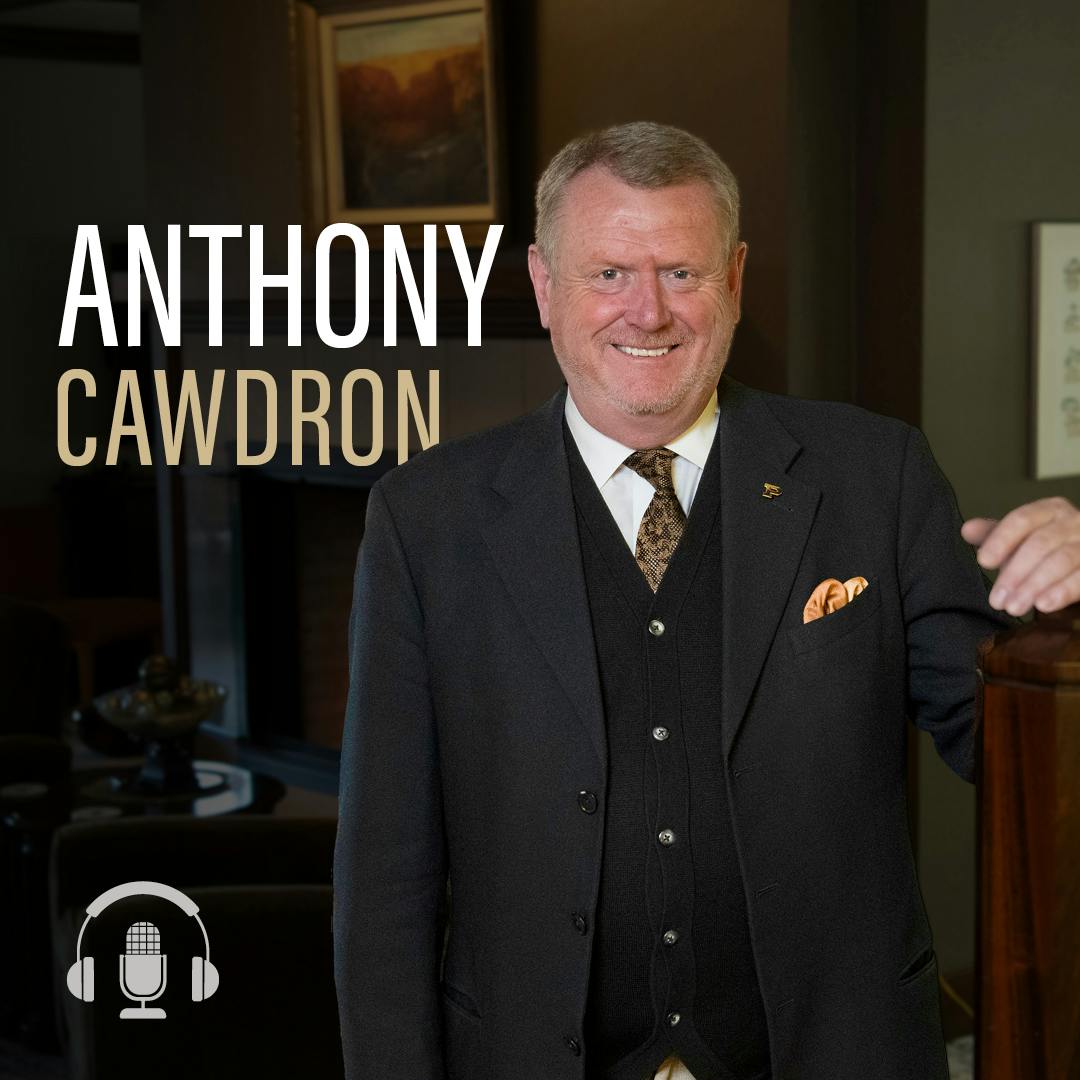
Loading summary
Transcript155 lines
- [00:00]
A
This is Anthony Cordran and you are listening to this Is Purdue.
- [00:08]
B
Hi, I'm Kate Young and you're listening to this Is Purdue, the official podcast for Purdue University. As a Purdue alum and Indiana native, I know firsthand about the family of students and professors who are in it together, persistently pursuing and relentlessly rethinking. Who are the next game changers, Difference makers? Ceiling breakers? Innovators? Who are these boilermakers? Join me as we feature students, faculty and alumni taking small steps towards their giant leaps and inspiring others to do the same.
- [00:44]
A
You know, your resume says a lot about you, but it's only two dimensional. I mean, the way people present themselves. If you look like you're looking after your own clothes and your shoes are shined, it's likely to tell me that you're going to look after someone else's assets just as well. I do start out by saying a lot of this is common sense. The problem is that sense isn't that common anymore, and it's not rocket science. It does help rocket scientists get better jobs.
- [01:07]
B
Are you looking to brush up on a few conversation starters, etiquette tips and holiday hosting? How TOS before Thanksgiving and the rest of the holidays hit this year? Well, look no further because this episode of this is Purdue has got you covered. This incredible conversation first aired last November, and since it's one of our most popular episodes, we wanted to share it with you all again as the holiday season approaches. Get ready to entertain and impress your guests or crush that big interview after listening to this one. In this episode of this Is Purdue, we're talking to Antony Codron Westwood, Event Coordinator and Estate Manager. Westwood is the official home to Purdue's presidents since the 1970s, and currently President Meng Chang and his family reside in this historic home. Now, if you've ever had the chance to go to Westwood for an event or a dinner as either a student, alumni or staff or faculty member, you likely know Antony. But just in case, here's a quick bit of background on him before we dive into this episode. Antony has been at Purdue for 25 years now, but he's originally from the UK. He's lived all over the world and has even worked in a few European castles. He also teaches a business etiquette course here at Purdue. So from job interviews to networking events to holiday parties, Antony is sharing his best etiquette tips with us. What's a great way to spur small talk? What should you order for an interview over lunch? And what's a polite way to leave a party? Hint it is not the Irish exit. Plus, during this special interview last year, Antony made us homemade English goodies and tea, which is very fitting for his background. There's really no better place for Antony to tell us about his boilermaker journey than within the walls of Westwood. Okay, so let's get to it. Here's my conversation with Antony.
- [03:04]
C
Antony, thank you so much for joining us today on this is Purdue. We're thrilled to talk to you. We have some lovely snacks and tea that are set up.
- [03:14]
B
Tell us a little bit about this.
- [03:15]
C
Before we dig into Westwood and your journey.
- [03:18]
A
Okay, so we have the classic English cucumber sandwiches, so the cucumbers on thin sliced bread with no crusts. Then we have some profiteroles with some gold dust, of course, and then some macarons with poppy seeds and key lime. And then we have some homemade scones.
- [03:36]
C
And you.
- [03:37]
A
There's a big debate.
- [03:38]
C
You made them, right?
- [03:38]
A
I made them, yes. I made them this morning. But there's a big debate on how you pronounce it. Some people say scones, some people say scones. I'm a scone. Side. So. And then when we eat them, there's a big debate as to which you put on first is the jam or the cream. And I'm jam first, then cream. So.
- [03:54]
C
Okay.
- [03:54]
A
That's just the way I. I do it. But a lot of people are wrong.
- [04:01]
C
Well, thank you so much for having us here and for making this lovely arrangement. We're at Westwood. This is the home to Purdue's presidents. You've been here as the estate manager and the event coordinator for over 20 years.
- [04:15]
A
Yes, 24 last week or last month.
- [04:17]
B
Oh, my goodness.
- [04:18]
C
Congratulations.
- [04:18]
A
Thank you.
- [04:19]
C
So you're actually from the UK Though. I'm sure our listeners can tell.
- [04:22]
A
But everyone in England thinks I have an American accent.
- [04:25]
C
Okay, well, we're excited to get into your journey. Like I said, this property is so beautiful. I'm sure no day is the same for you.
- [04:34]
A
No. Which is actually one of the good things that 24 years, if the days were all the same, you wouldn't. Would be able to do it. So I think that having variety and, you know, different events and different things going on and different people coming in and out and projects that don't involve guests as well, all of that kind of thing, keeping the outside looking good and redoing the driveways and all those type of things.
- [04:54]
C
Yes, absolutely. Tell us about your journey to West Lafayette. Since we do know you're from the UK how did your experiences overseas kind of set you up? For success here.
- [05:04]
A
Yeah. So my father was in the Air Force, so I was a military brat, if you'd like it that way. So we moved a lot when I was growing up and we lived in Hong Kong, Singapore, then returned to England where I finished my high school and then did catering college for two years and then went to work in Switzerland for a year and then came back and finished my degree at Oxford Brookes University. Then got into, by almost by accident, working at Blenheim palace that then turned into Sutton Place. Being the Butler there at 21, which was a little bit daunting. My first guest was Prince Philip, and so it was a little overwhelming at times, but did that and then went back into the restaurant industry, then had a call from somebody who said, would you like to teach? And so I moved to Switzerland again and taught in a hotel school there and then had an opportunity to do a work abroad project with Iowa State, ostensibly for a year. And so I left Switzerland intending to come back. And I haven't gone back yet. So that was 34 years ago. So I think that overall travel and just being involved in international hotels and restaurants and seeing things from that perspective is really what started me interested in the events business and catering type of thing.
- [06:25]
B
Antony explains how his experiences working within the Blenheim palace and set in place in England ignited his passion for event planning and etiquette.
- [06:34]
A
I think it gave me the opportunity to see exactly how things should be done and just the attention to detail and how to look after people and working with people from higher ranks, if you like, and royalty and all those type of things. So I think it set me up quite well as being able to and handle guests of every caliber and every background.
- [06:55]
B
As Antony previously mentioned, he left Switzerland for a work abroad project in the US at Iowa State's in Ames, Iowa. It was there that he met former Purdue president Martin Jischke and his wife, Patty. Anthony discusses how being at Iowa State and meeting this couple changed the trajectory of his career.
- [07:15]
A
So I was there, as I said, for a year. And then during that year, I think for the first time, people sort of really tried to nurture me and continue my education. And so it was suggested I take my master's degree there at Iowa State, which I did. And then the Jusquis arrived during that period and certainly were well aware that they needed somebody to be more involved with the event side of things because the previous president had not done as much entertaining as they wanted. And so they asked me to do a couple of things just to Help out to start with. And then it developed into part time, full time, and then eight years working with them at Iowa State. And, yes, it was a wonderful opportunity.
- [07:56]
C
So how did they ask you to come to Purdue? How did you finally end up here?
- [08:01]
A
There was a big debate in Ames as to whether I would or whether I wouldn't go. And it was actually the Des Moines Register put more interest in my leaving than them. So it was, will he go, Won't he go? Will he go? Won't he go? And so I flew here with Patti and Martin on a couple of occasions to look around and see whether we could like to. And so it was, you know, a pleasant surprise. And so I said, okay, I'll come for six months and see how it is. So I lived in the apartment above the garage for six months and got used to being here and decided I liked it and said I'd stay. And that was, as I said, 24 years ago.
- [08:43]
C
24 years ago. So tell us about your role at Westwood. I know every day is different, but what are some of your duties and responsibilities here?
- [08:52]
A
So basically keeping the house looking as good as it can. I have a team of wonderful housekeepers, Sheila and Tammy, and they do a fantastic job of making sure that the house is always ready, because you never know when the president's office may call and say, you know, somebody's coming over, and you can't be sort of just suddenly rushing around. So keeping the house ready. And then obviously, the events, working with the president's office in making sure that we're up to date on what's happening, who's coming, making name tags, making place cards, and then obviously working with Chef probably once a week to see what. What events we have coming up. Because there are weeks when we have fewer events, and then there are weeks where we have lots of different things. Yes, yes and no. Also during the day, I'd say that Mitch used to entertain more at breakfast time because he was, you know, there was no family and people getting to school and things like that. So we did it more entertaining in the mornings and with him. But I said the variety is what keeps it interesting. And obviously the seasons and the things inside, outside the house as well.
- [09:56]
C
What is one of your earliest memories of Westwood?
- [09:59]
A
I think the first time when, as I say, Patty and I traveled with Martin to come to see what Westwood Westlife, it was like. And I remember driving through the gates. Iowa State's president's house is like many Big Ten schools right in campus, and we had parking for about Five cars in the driveway. And I drove in here, and you've got almost a mile of drive. And so just the setting was very, very different from what we were used to. And just a sort of a sense of a big house. And then seeing the spaces that we had to work with was wonderful, because, again, the Iowa State House is Victorian. And so it wasn't necessarily designed or easy to use, as Westwood is. Westwood is very versatile, as we've hosted events for eight people or 250 people. So it's a lot of things like that. Can I pour you some tea?
- [10:53]
B
Yes.
- [10:54]
C
Oh, my gosh, please do. And we have to try one of the homemade scones. Did I say it right?
- [10:59]
A
You can do. And so this teapot is actually from the short china that was given to the house back in the 1990s. And we have some pieces. Unfortunately, it's aging, and so it does need some care. And it's not always leaking, but this one is not.
- [11:15]
C
It's beautiful. Now, do you enjoy milk with your tea?
- [11:18]
A
I do take milk in my tea.
- [11:19]
C
Okay, I do, too.
- [11:20]
A
And we're doing it the right way because if you put milk in first, then that's very good to know. And that's where the phrase miffed comes from. Mif. Milk in first. And people who put milk in first are second class.
- [11:32]
C
We're learning all types of things on this podcast.
- [11:36]
A
All right, I'll give you a sandwich.
- [11:38]
C
Thank you so much.
- [11:39]
A
You're very welcome.
- [11:40]
C
Okay, so fast forward. President Jischke leaves in 2007.
- [11:44]
A
Yes.
- [11:44]
C
What made you want to stay here at Purdue?
- [11:47]
A
And we knew that Dr. Jiske was going to retire in 2007, so that was all expected. And then when Dr. Cordova and Chris Foster came here on a sort of a sightseeing trip visit, I was obviously here and was cooking breakfast for them. And then they sort of said, will you stay? And I said, again, yes, we'll give it a try. And so it's sort of become a hand me down thing. I think. You get the house, you get him, too.
- [12:18]
C
I think they're thrilled to have you, though, with the house. So what has it been like for you to experience the Midwest back when you lived in the uk could you ever picture yourself where you are now?
- [12:29]
A
No, I really didn't. And when I was in Switzerland, some of my students there said, you'll absolutely hate it. You won't fit in. You'll. That would be awful. And you won't like it, and you'll be back and you won't Even stay the year. So I was somewhat not worried, but trepidation, I'd say, because I called the bank in London and said, you know, can I set up an account in America? They went, oh, not sure. Where are you going to live? And I said, Iowa. They said, oh. I said we think there's a bank in Des Moines. And I thought, well, you know, have to drive 20 miles to a bank. That's not the worst thing in the world, but. And then you arrive in Ames and there are multi story hotels, a huge stadium and massive, massive buildings. You think we'll be okay?
- [13:09]
C
So absolutely, yes. What are a few of your most significant memories from your 24 years here?
- [13:16]
A
Gosh, I think entertaining some. We've had three secretaries of state come to dinner. Adeline Albright, Colin Powell and Condoleezza Rice. They've been wonderful. The Secretary of the Navy. So I think it's guess Laura Bush when the convocation happened for her and the two girls. So that was interesting. Especially the time constraints placed on us for that event were amazing because they wanted a three course meal in 37 minutes.
- [13:46]
C
Oh my goodness.
- [13:47]
A
So it was, it was very, very tight timing but we pulled and everyone went away happy. But I think so it's the guests and the different personalities of people. And the nice thing about Westwood is that it is, as many people call it, the front door to the university. And so we have students, I'm hosting the Rima Club, come on an annual tour, the Rushman Reemers. And so they come on a tour of the house so that they know when they drive the train around what is behind those doors if people ask. And then we have faculty. So we have a faculty event. We have deans tonight. We have faculty event most months. So it's a nice use of the house for, for people who are on campus and then obviously alums coming back and we entertain many, many people. So I think that that variety is great.
- [14:36]
C
We've discussed, you know, you've lived through several presidents here. Do you have any fun behind the scenes stories? Anything that would surprise our listeners?
- [14:46]
A
Maybe you'll have to wait for the book. No, no, I don't. I mean it's. I think things just happen and in 24 years you just. It drifts away. But I suppose the cats coming in by mistake is interesting that, you know, suddenly somebody comes to me and says here's a cat. Because they live outside and keep our mouse population down. But occasionally they manage to sneak in when they're just because we had a dog and so that was also a challenge at times.
- [15:17]
C
Was he, he or she in the way?
- [15:18]
A
She. No, she was never in the way. But she would sometimes escape from the kitchen and be in places that she wasn't supposed to be and also like to get out and go and find the dirtiest, muddiest places to roll, as dogs do. Trying to think of anything else. Obviously the, the gates have been an issue. When power goes out. I'd get phone calls from the president saying I'm stuck outside the gate, so I'd have to drive over and climb the gate in the rain and release the hydraulics on the gates and open the gates so that they could come in. One time we had a power outage and the president at the time was trying to pack for a trip and so we had to get the Purdue fire department to bring one of their fire engines or the fire truck. Sorry, I'm not in England anymore, a fire truck up here and plug it in so that we had. They ran their generator so we could have a light in the packing area so that they could pack the suitcases.
- [16:07]
C
Wow.
- [16:08]
A
I don't think we've. We've managed to keep it pretty sane.
- [16:11]
C
How have you seen this iconic home change over the years? We were chatting before this and there's been all types of renovations and.
- [16:19]
A
Yeah. So the house has morphed from a two bedroom cottage when it was built in 1934 into 17,000 square feet that it is now. When we came in 2000, the house footprint was pretty much as it is. And so we've, we've made some tweaks, we've changed some things. We've, you know, we added a front, a different porch last, last summer. So we've made alterations. The house, I think, is pretty much at its maximum footprint now. There's really not much more room for anything, but it works well. And what was put in, especially with the big addition the bearings did, has made the house incredibly functional with the catering kitchen and the big dining room that we can seat 104. And if we have to, it's tight, but we can get in. And so, you know, it is a very workable house. So I think that's really the biggest change. And people, you know, when they drive up, they don't realize just how much house there is at the back. Really.
- [17:15]
C
It's so stately and beautiful. But yes, you don't really see the. When you, when you haven't been inside before, you haven't seen the, the depth of the house.
- [17:23]
A
Yes.
- [17:24]
B
The day that our Podcast team had the pleasure of visiting Anthony at Westwood. He and his team were setting up for a Purdue dean's dinner that evening. I asked Antony what a typical day of managing Westwood looks like. When planning for an event like this.
- [17:38]
A
We usually have a fair amount of notice about when these events are happening. So obviously we know what the room is going to look like depending on the table. We'll see the table another occasion, but the table is fairly versatile in that we can seat up to 22 at one table. And the President seems to like that feel of everyone being at one table more intimate, because once you separate people, and if the first lady is there, she can host one table and he can host another, but it still separates the guests. So we've done a lot more events with the big long table. And I will already have talked to Chef and we've planned the menu, and we do try and feature as much Indiana food as possible just because people like it. And we're using student farms produce at the moment as well. So we've already planned the menu. So then prior to that, I will give our two housekeepers, as a Tammy and Sheila, a list of what china we're using. We have five different sets of china, so depending on the time of day and maybe the type of guests that are coming, we make a choice of which china pattern we're going to use. And so they'll get that ready for me, and then I'll put up the tables, put out the chairs, and then start laying tables. And typically, if we have a big event, then I'll have set the tables up the day before just to. And if we've got flowers to be done, I'll try and get those done and put in the cooler ahead of time. Another nice thing about Westwood is it does have a lot of garden space. And so we try in the spring, when we're planting the gardens, we try and have things that can be cut flowers. And Paddy Jischke was instrumental in starting the cut flower idea so that we can harvest a lot from the gardens as long as we can. And so getting the flowers ready and then having everything on the tables. And then our staff arrive usually about an hour prior to the event. By that time, we've probably got name tags out. I've done place cards, so there's that arrangement that finalizing and then getting the final bits out so the glass is ready for the rival drinks and then always being ready for changes.
- [19:42]
C
Yes, yes, yes.
- [19:45]
A
That is the key to this game.
- [19:47]
C
So speaking of that, a lot of our Listeners and viewers probably don't know all of the behind the scenes details that go into event planning. It's a lot more than one might think.
- [19:56]
A
Yes.
- [19:57]
C
What are some things that you've learned over the years when it comes to event planning and facing some challenges or having to make those pivots?
- [20:05]
A
You definitely get to have a plan B, a plan C and hopefully never have to use it, but a plan D just in case. So there's always that backup and being ready for those changes, even if you don't want them to happen. It's just, you know that these things are going to take place. So I think that's always the, the key is trying to predict the unlikely ness of things. And that does sometimes get to be a challenge when we're doing the one long table because it fits 22, not 23. So if a 23rd guest comes, we have a real problem. We have had issues where the room has been full and so we've had to suddenly grab a small table from another area in the house and just throw some food and some silverware at it and there we go. But I think anticipating what might happen. So we've always got extra food, we've always got an extra place setting sitting somewhere so that it's as fast as we can to get it in people's diets. You know that they halfway through a meal they become vegetarian. So you. Oh, all right, we're going with that one. All right. Yes, that'll be fine. So just adapting and when I teach my classes, I always say, you know, two of the key elements to being good is adaptability and flexibility. You've got to read the situation, work out what's going to make it happen, and then be ready for something not happening. Right.
- [21:31]
B
Beyond working at Westwood, Antony also teaches a business etiquette course at Purdue and in the white lodging JW Marriott Junior School of Hospitality and Tourism Management within the College of Health and Human Sciences. I asked him more about this course and what role he believes etiquette plays in modern society.
- [21:50]
A
As I got into it, I was. When I was at Iowa State, a fraternity approached me and asked me if I would go in and do a presentation for a fraternity. And I thought it's a one off. And I would say that, you know, over 24, well now 34 years of doing these, you know, how many thousand times I've actually given the presentation. So it's still popular. I still travel. I was in New Orleans in August giving it to a fraternity conference there. I'm speaking next week and the week after to various agronomy classes. So that's also good. But I think it's something that people realize they should need. Many people may have been told by an aunt or a grandmother at some point, you know, do this, do this. And they go, yeah, whatever. And then they suddenly realized that, Matt, perhaps that was useful and that they might find it helpful. My classes are usually full, which is great. So we have about 60, 65 students every semester. This is an eight week class. But. And you know, I do start out by saying a lot of this is common sense. The problem is that sense isn't that common anymore and it's not rocket science. But I do it does help rocket scientists get better jobs. I think it really, what we're trying to do is make the students as comfortable as they could be in an environment that they're not necessarily used to. And being with your peers all the time and eating in a dining court, eating quickly, not worrying about things, and then suddenly you're placed in this situation where you do have silver, you do have plates, you do have glasses and you're being watched.
- [23:20]
C
Absolutely.
- [23:21]
A
That's the deal. You know, your resume says a lot about you, but it's only two dimensional. When you walk in the door and I sit you down and I watch you eat, I think, I don't think this is going to work. That's why we do it. And I think, I mean, I'm pleased that professors do ask me to go to the classes and give a presentation. I mean, what they remember of it is entirely up to them. I've done it for the rotc. And that one is a challenge in and of itself because they meet at 6 o' clock in the morning. So doing a presentation for people in uniform at six in the morning is interesting.
- [23:54]
C
Tell us some of these tips that you're telling the students. When it comes to networking, you know, interviews over a meal, that's something I have always struggled with. I don't necessarily want to be eating and worrying if I have something on my face or eating too slow, eating too fast. Right, right.
- [24:10]
A
And that is the challenge. And that's why they put them into that position, is they want to see can you deal with this. And so one of the key things I say is, you know, when you go to a meal, if it's somewhere that you're not familiar with, ask people what they recommend and you can gain from that information whether or not these people even have an appetizer course or if they don't recommend any Appetizer. I probably won't be ordering an appetizer. Choosing foods that you can eat without using your hands. Choosing foods that you can eat easily while still maintaining a conversation. So ordering something because you're trying to show off or think, oh, yes, I'll take advantage of this menu because somebody else is paying is generally going to backfire on you. So making wise choices at the table, keeping pace with the rest of the table. And I do tell people, if they're hosting and the guest of honor is being bombarded with questions, it's their job to step in and say, let's have our guests eat a little bit, and somebody else talk about their research project or what they're going to be doing this coming semester, whatever it happens to be, so that there's an opportunity for people to catch up. The other thing is to be aware of other people's needs. A lot of people are focused on their own little space now. We do live in a selfish world, and it's all about me. So they don't think about other people. So passing things that are in front of them, seeing that somebody needs something. You've got a cup of coffee. The cream and sugar is next to me. Would you like some cream and sugar? Could I pass this to you? Or just. Just keeping an eye on what's going around. I mean, they may be the guest, but if they're going to be hired by that company and they have taken an interest and said, could we get you some more water? Would you like another bread roll? All of those types of things show me that you are looking outside your own comfort zone and you are willing to take care of other people. So if I do hire you, I won't have any worries about sending you to a restaurant with our guests, because I know that you can do it. Balancing conversation and eating, taking time to actually take the food and then answer the question, don't try and do both. We have a lot of weaponizing of silverware at the moment. Students are, you know, making it look pleasant for other people. And I tell students, put yourself in front of a camera and watch yourself eat. And if you don't like it, this is why you're sitting in front of a camera.
- [26:30]
C
Humbling. Humbling.
- [26:32]
A
So, you know, just little details like that. Because it can come down to the fact that you are a better ambassador for yourself at the table. And that may be the key to me saying, you get the job. You don't.
- [26:45]
C
I love that. It's like you're. If you're attending to people's needs. You're going to be a team player. You're going to care for your coworkers similarly.
- [26:52]
A
I mean, the way people present themselves, if you look like you're looking after your own clothes and your shoes are shined, it's likely to tell me that you're going to look after someone else's assets just as well. So even though your suit may not be the newest, if it's taken care of and it looks good, then it says to me, you can take care of things. Again, little details like that, shaking hands, making eye contact. When you talk to people, speaking clearly, especially for introductions, people are so nervous, they speak so quickly. And then you have to repeat it and say really slow down, slow down. And if you have to say it again, it's fine, or ask somebody their name again type of thing. So I'm just. We're trying to make them as comfortable as possible and feel like their education is the starting point, but what they make out of their lives is something that they have to do and, you know, have some. A wide range of topics to talk about. Because if all you can talk about is your school, it's fine. But there's a bigger world out there. And I also told people, do some research before you go. If your interviews in Seattle, get the Seattle paper off the Internet, read it, find out what's going on so that when you go there, you can talk to people who live in Seattle about things that are happening in Seattle. They feel that you have tried to integrate yourself already rather than just assuming that everything is. And I asked my students in class, can you name me the mayor of Lafayette? No. Can you name me the wherever, West Lafayette? No. I say, you've lived here four years. You have to be able to think it. Because if you go to something here and you can't do that, people are going to think you really are so distanced from reality.
- [28:33]
C
Have you ever had students, I'm sure you have come back to you and say, I was in a really tricky interview or hey, I was at this networking event and I thought back to your class and what you told us.
- [28:43]
A
I'd say that the thing that I've had most people comment on after the fact is the ability to hold a glass, a plate, and a fork in one hand. So you've got your plate, your glass and your fork, and so your right hand is still free to shake hands and you able to deal with all of the food and drink in one hand. And you look sophisticated, polished, doing it polished. And you can multitask and you didn't even write it on your resume. But I've had several students come back to me and say I was the only one who could do it. Or I felt so comfortable because I knew what I was supposed to do, whereas everyone else was juggling things. So, yeah, so that one's probably the one that I get the most. So would you like one of these scones now?
- [29:23]
C
Yes. I'm so excited because I don't think I've ever tried one with this cream. So tell us.
- [29:30]
A
So English scones, typically. And you always split them, you never cut them.
- [29:33]
C
Okay.
- [29:34]
A
And usually you have red jam, we call it jam. You call it jelly, we call it jam. So you have to take some jam and put it onto your plate, come off, and then you have some cream. And in England you'll probably find it's clotted cream, which is hard to find here, which is a heated cream. So it's a little bit more weighty and fat content. Pass that over here. Thank you.
- [29:59]
C
Okay, so you're not taking the knife and directly putting it on. I've noticed. Okay.
- [30:04]
A
Now, sometimes when we do reception events here, Chef makes wonderful scones. We will actually split them and spread them so that people don't have to work with that. Because again, when you're designing food for large groups, you have to have things that are easy to eat quick and easy to pick up. So then the key is to take a little bit of jam and put it on about a bite sized piece of the scone.
- [30:25]
C
So not the whole thing.
- [30:26]
A
No.
- [30:27]
C
Okay.
- [30:28]
A
So complicated being English. And then you put some cream on the top.
- [30:33]
C
Okay. And we did jam first like you said. Okay.
- [30:37]
A
Some people even put butter first, then jam, then cream.
- [30:40]
C
That's a lot. The cream is insanely delicious.
- [30:43]
A
Good.
- [30:44]
C
And so is the scone this morning. Oh, my goodness. Okay, now see, See how I was taking both hands?
- [30:50]
A
You'll see. People do that as sometimes. That's another thing I tell students is if when I go around the class at the beginning of the semester, I ask them what their worst habit is.75% of them say procrastination, which I can't do anything about.
- [31:02]
C
Sounds like a college student.
- [31:04]
A
And then the next one is fidgeting because they're always playing with things that were probably from growing up. They were always playing with a phone or a game or something. So sometimes that has now secured both of my hands and I'm not doing anything silly with them. Whereas if I have one and I'm free, people Start to play with things or they fiddle or they play with their hair or they.
- [31:24]
C
Which in a job interview is just such a distracting.
- [31:27]
A
So sometimes adding that extra hand just gives your hand something to do. But generally you would only hold with one and stirring to stir quietly.
- [31:38]
B
In October, Antony received the special Boilermaker Award, which honors members of the Purdue faculty or staff who have contributed significantly to the improvement of the quality of life or the betterment of the educational experience for Purdue students. Antony shares what this award means to him.
- [31:55]
A
It was a very, a very special moment and it was quite a surprise being told I had it because I was at a meeting in Hovdi and we were leaving the meeting and Teresa Cadwalader, who's Mung's executive assistant, said, oh, could you just pop in here? And I thought, what is this? And so she opened the door and da, da. So that was, that was a big surprise. And then obviously going down onto the field last to receive. It was a very special honor. It was a wonderful honor. And obviously my co recipients, we had a great time and so it's a. It was very, very special. I guess it's, you know, I don't know whether there's like a bingo card of things that you, you know, if you Purdue this long, you get one of these and if you get this long, you get one of these. So I was in. Are in Iron Key Mortar Boardmaster. So my bingo card's getting full. But yes, it was a very nice honor, very nice summary. And I've had many, many messages and 450 messages on Facebook after it was Eric Barker, Dean Eric Barker took some really nice pictures and so they were on Facebook. So a lot of people responded to that. And then I had people text me from who were in the Buchanan Club saying, oh yeah, three of us up here are also Boiler Award recipients in the past and we're here cheering for you and thanks for joining our ranks, if you like. So it was very, very nice.
- [33:27]
C
I can tell Purdue means a lot to you.
- [33:30]
A
Yes, it does.
- [33:30]
C
Why have you stayed here this many years? Why?
- [33:35]
A
I sometimes ask myself the same question. I don't always give myself the same answer. It has worked out really well. As I say, I started out expecting to be in the US for a year and that turned into 34. I do love the variety of the US obviously we're here in the Midwest and we have our wonderful seasonal changes, which I really do enjoy. I think it's nice to still have winter, having lived in Switzerland and been in the snow for three or four months a year. You miss things like that if you were in a warmer state. So I really do like the seasonal changes and particularly I enjoy gardening and things outside. So it's nice to see and to be able to make changes and not that the landscape is going to be the same day in, day out as if you were in some other states to the west maybe. So it's nice having that variety, the ability to travel relatively easily. I do miss public transport, I do miss European trains. But you get around here. But it is an easy place to move from and to go and see different parts of the country and travel. So I think the Midwest is a. And many people who travel from here after they graduate, go and live in metropolitan areas, but then eventually return to the Midwest because they say it's just a better place to live and to bring up families and things like that. So people are very warm. It's a very accepting and very warm, welcoming community. And I think that that's why I ended up staying at Iowa State is that people probably said, no, we're interested in making you do something different and getting on with the master's degree. And then. So that also goes back to one of the things I tell students is that, yes, your degree may be in biomechanical engineering or whatever it happens, biomedical engineering. That doesn't necessarily mean that you are going to stay in that field. And if something comes along that says to you, that sounds interesting, let me try that. And I say, at 22, you have nothing to lose. If you don't like it, great, you can try something else. And you can at that point probably still fit all your belongings into one vehicle. So if you need to travel, you can do it now because as life gets more complicated, you're tied down more. It's a lot harder to make those changes. And I think when I first took my first job at Blenheim Palace, I didn't know that that would lead to this. I mean, it was a, a one off, three week job for the Christmas holidays with the Duke and Duchess. And then would you come back full time? Yes, why not? And then everything just sort of transitions. So you can never actually predict what's going to happen next. And so I think I've enjoyed the fact that having worked for four presidents, each one comes with a different background, different sets of needs, different requirements. So that has, in a way, I haven't really worked here for 24 years. I've worked here for two and a half, and I've worked here for 10 and I've worked here for five, and I worked here for seven with each of the four different presidents. So that's, I think, has sort of kept things fresh. To have stayed in one place, one person, one job routine might not have been the case. I'm not saying that people have tried to take me away from here. Purdue may be known as the cradle of quarterbacks, but it's also the cradle of presidents in that we've had three provosts go on to be wonderful presidents of big schools. Sally Mason, Randy Woodson and Tim Sands have all made wonderful presidents in their own right, and all three have asked me to go with them.
- [37:17]
C
There's a behind the scenes story. What does this boilermaker community and being part of it mean to you?
- [37:25]
A
I do really like living in Lafayette, West Lafayette. I live downtown. And, you know, when friends come to visit from England, particularly, you know, we'll walk around downtown or go to a restaurant, you know, people know you, they come up to you, they recognize you, they talk to you. I'll sit on my porch and people will say hello or stop and chat on the porch. And so it has a very nice feel that you don't always get in other countries because people are either too busy or they, they feel that they can't talk to people because they don't know them yet or they're not familiar with them. So there's a lot to the sort of the Midwestern warmth and welcoming feel. And as you know and I know, when we travel to different states, it's not always the same. It does feel, you know, you feel like an outsider in some states. So the community itself is wonderful, made lots and lots of friends either from guests coming here or from working relationships and then alumni and donors and people. And having traveled with Purdue as well, that's another really good way of establishing a bond, a friendship with people that you may not normally have had a chance to meet.
- [38:33]
B
Okay. With the holiday season in full swing, we couldn't let Antony go without asking some burning questions when it comes to etiquette. So for our listeners who may be preparing for holiday events, whether you're hosting or attending as a guest, Antony shares his top advice, including avoiding the rather popular Irish exit strategy. Are you guilty of doing this a time or two? I know I am. Here's Anthony.
- [38:58]
A
A little more tea?
- [38:59]
C
Yes, actually. It's delicious. Thank you. So for people hosting events or maybe attending events, what is a small, thoughtful gift that you could give to the host of a dinner party?
- [39:12]
A
Let's say yes, and the whole Notion of giving gifts is changing. Gift giving, certainly in the corporate world is now almost frowned upon because it's, it's, it's a difficult gray area. One thing that reminds that the host has asked you there because they want you there. They didn't necessarily want you to bring anything. So there was, I think, you know, in the past almost an obligation that people felt that I have to take a gift. And that's not the case. If you feel like taking something, that's fine. The host will appreciate it. But don't feel that you can't go empty handed.
- [39:48]
C
Okay.
- [39:49]
A
The other thing to think about is something that, if, particularly if the host is greeting you and you hand them this, it's. Then they've got to deal with it. So giving them something that they can easily say, oh, that's lovely, thank you, and put it down and then it's out. We don't have to. So when people bring flowers, it's very, very pleasant, very nice. But if they're not already arranged or in some container, then, oh, I've got to deal with these now, let me put them down. And oh, they should probably go in water. And if you've got someone at your event coordinator standing right there, yes, you can probably hand off a gift. But it makes it awkward for people. So particularly around the holidays, I think a small ornament or a handmade ornament, or if there are lots of little arts and craft shops here in town that sell small gestures, those are nice commemorative ornaments, are nice homemade food. If you're somebody who's very good at making chocolates or something like that. Just a little gesture. If you are going to take flowers, as I say, take them already in a vase or in some mess, something that the host doesn't have to, then deal with them immediately that they can just be placed. And also people have probably done their own decorating. They've probably already got flowers on the table. They've probably already got most of that. So unless you know them very well and you're just taking something that you know will fit in with the theme or the decor, it can be a little bit of a juxtaposition. A lot of people take bottles of wine.
- [41:16]
C
Yes, I've done that.
- [41:17]
A
Which is fine. It's fine. The expectation is that you take the bottle of wine and it's really a gift, don't expect to drink it.
- [41:25]
C
Right.
- [41:26]
A
If you have a particular wine. So if you were planning a dinner party and you were hooking and I said, let me bring the wine, I would ask you what you're making, and then I would bring a wine that was appropriate, and we would both know ahead of time. I would bring the wine in a. In a way that it was ready to be served by you, but you already knew about it. So if I bring a bottle of wine and I expect you to drink or to serve it and it doesn't go with the food that you planned or you've already planned your wines, again, that can be a little awkward. So if you bring it just as a gift, perfectly fine. But don't, as I say, expect to drink it. And I've seen some people awkwardly, if it hasn't been served, take it away with them at the end. So, yes. Okay, well, I didn't drink it, so I'll take it back. Oh, all right.
- [42:13]
C
I think it's awkward when they open it up and, you know, have it at this event. I was like, oh, no, that was a gift for you. But if they want to open it, I get.
- [42:20]
A
Yes. And again, I think it requires you as a guest. If we knew each other well enough and I'd been to your house several times, I'd say, oh, let me bring some of the wine that we had last time. Or, I know you really like this Sauvignon Blanc from New Zealand. Let me bring some. If you choose to serve, deserve it, entirely your choice. But if you don't choose it, then it's yours for the rest.
- [42:42]
C
You keep it, and you do not take it home.
- [42:45]
A
And sometimes host gifts, if they're wrapped, don't expect that the host is going to unwrap it then.
- [42:50]
C
Okay, that's a good tip.
- [42:51]
A
Because so sometimes if it is a little ornament, just bringing it unadorned so that they can see it immediately so that they don't have to then unwrap it. And then. Then thank you. They can say, oh, that's pretty. That's lovely. I'll put it on the tree. Something like that.
- [43:04]
C
Right, because they have enough going on.
- [43:06]
A
Yeah. So you just sort of want to confuse things. And that's why we have weddings and big events. A table for gifts that you just put them on, and a basket for cards. If people bring them, you know, there's no absolute necessity to physically hand it to me.
- [43:19]
C
Right.
- [43:19]
A
And then, you know, you can retrieve them and then thank people later.
- [43:23]
C
Okay, small talk. Some people hate it. Some people are gifted at it. What are some small talk? Dinner conversation starters.
- [43:32]
A
Right. So again, part of it, doing your homework. You don't have to be the NSA but you can do a little bit of background. The other thing that people don't do particularly well is actively listen. So while a conversation is going on, you may have said something that didn't then get developed into a further conversation, but I picked it up. And so then when you and I are sitting somewhere, I said, didn't I hear that you just say that you were going to the Bahamas for Christmas? Oh, that must do. That'll be nice. Or did you just come back from the Maldives? And anytime that you can ask people things that make them want to talk is a good way, because it's a conversation. It's not me lecturing, it's you listening and then adding in and back and forth. So having actively listened or found out some details, or that you just got a new puppy, or that I saw in the newspaper that you just received the special Boilermaker award, or you just became small business of the year, all of those things I have stored that I can bring out and use if I need to. We've talked a lot about the change of seasons and is fall your favorite season? And giving people an open ended question allows them to express. And then it should also then lead to further topics of things that we can talk about. Because as I listen, I can hear that you're someone who loves falling. Have you been to Maine or the east coast? Oh, actually we're planning that next year. How are you going to do it? By train or are you going on a cruise? Blah, blah, blah. And so it generates itself, but it needs someone to start the ball rolling. And people are afraid to just start a conversation because they don't know. So it sounds mundane, but the weather is a great way to start. Did you have trouble getting here? I saw that it was stormy in Colorado. Was it? How was your journey? And people have then the incentive to give more information and make you feel that this is a conversation. And I sometimes equate it to a tennis match and that your first topic is the serve and you send it over the net and you hope that someone on the other side of the net will hit it back. And then you hit it back and it's back and forth, back and forth. And we're adding to this conversation. We've all unfortunately been in the position where we start a conversation and people will not. And it's like, okay, try again, let's go this way. And we're going to try. And that one didn't work. All right, anyone else have anything interesting? So sometimes it is difficult and some people just don't want to engage in that. But small talk is really important because small talk leads you to big talk. The ability and students on interviews, when they go, I say, you won't be spending all the time with the interviewer. You'll be spending time with assistants, with other departments, other areas. And you have to be nice to all these people and you have to talk to them. When you're transitioning from this office to the HR department, we're walking. You have to be talking. You can't just leave it blank. Even though this person may not be the person you're interviewing. And I'm going to ask them afterwards, and we've all seen Undercover Boss. I tell them that I said the person that you go in to see who's sitting behind a desk isn't necessarily the person that you think it is.
- [46:47]
C
Or being rude to a waiter or receptionist. Right?
- [46:50]
A
Well, especially at the CEO level, a lot of times when the dinner interview, the people are looking to see how you treat service. And if you treat them well, there's a very good chance that you'll treat employees lower down the totem pole than you.
- [47:03]
C
Well, okay. The Irish exit. Are you familiar? The Irish goodbye?
- [47:08]
A
Maybe that's not really a goodbye. You just disappear.
- [47:11]
C
Yes, you just, you simply disappear. What is a polite way to, you know, maybe the host is busy talking to someone else. Maybe you just want to get out of there as fast as possible. What's a polite way to stand?
- [47:23]
A
A stand up event or a reception style event where it is a lot of mix and mingle, drifting around and you may have, you know, commitments to other things at different times. The key is to try and make sure that your host knew you came. So making it not necessarily a beeline for them, but making sure that when you arrive, you see your hosts quickly and so they're aware that you did come. Even if you're not going to stay very long, then do a circuit through the room as best you can. And then always try, even if the host is talking to someone else as you have to leave, you know, try and make eye contact, just something that signals that they are again aware of the fact that you have left rather than, oh, where, I don't know where she went. I'm not sure she was here just now. If you can just try and make, even if you have to slip away early, just try and make some contact with the host to say, this has been wonderful, but I do have to dash. Let's catch up next week, something like that, if you can. Or sorry to Interrupt. But I just wanted to say great party. Thanks for having me. We'll see you at the theater on Saturday or something like that. Just, it makes them feel that it was a good idea to have you at the event. Even though you couldn't stay for the full length and you appreciated them, you've made an impression. So as I try and meet them, when you first get there and try and at least acknowledge the fact that you've had a good time and you're heading out now.
- [48:48]
C
Okay, to wrap it up, the biggest do's and don'ts. What's like a top do this to impress people at an event, and a top do not do this at an event.
- [48:58]
A
One thing I do is that you shouldn't necessarily be just out to impress people. You should be doing things well, but not necessarily standing out, like showing off. So, you know, keep it subtle, keep it light. I think we do find people who dominate the table. And I do tell people, when you're planning an event, think of the personalities that you've got. Because if you've got a strong personality and you're hosting and we're doing a long table rather than a roundtable as we're at today. But if you have a long table and you've put somebody with a strong personality halfway down the table, that person will take over. And you have no way of controlling that. If you have a strong personality, seat them next to you because you can physically rein them in if you have to because they're right there. So again, that's a good way of working out where you're going to place people. And who would be a good conversation group. Do these people have something in common? So it does that. Try not to dominate. If you realize that I've done all the talking or nobody's had a chance to eat, again, try not to do that. Also, good manners can spoil good food. So waiting or listening to somebody talk and the foods that star somebody don't just let the food spoil. And that also brings up the buffet rule that if you go to a buffet, it's very likely that the rest of the people at the table are not immediately behind you in line. And so when you get to the table, if there are three of you or more, you can start eating, because those three people may not even arrive or those two seats may be empty or unoccupied and you've been sitting there waiting for them to fill and your food is spoiling. So I always encourage people to use the buffet rule three or more. Start chewing with Your mouth open. I don't need to see your food eating noisily. Sometimes it's overwhelming. All right. Yes. And these people are automatically getting a no for the next invitation list, because I can't just not have people watch that. Again, overindulging. There may be very nice things offered to you, but you don't have to necessarily take them all. And one thing I do tell students about events is that because when you arrive, it's likely hospitality is going to be offered quite quickly, your choice of whether to take it then or not, you're perfectly able to walk away and say, I'll be right back. Let me do some introductions. Because, yes, you might be able to hold a plate and a glass in one hand, but if you don't have to, don't do it. So go around, make some introductions, and then circle back and get your drink. Circle back and get some food. And so again, sometimes that is a test to see whether people have the ability to say, no, I think I'll wait. Using the buffet as your own private dining space, Take some food and move away. If there's something on the buffet you don't like, don't put it back. Appetizers are not easy to eat standing up. We in hospitality love to watch people fail. That's why we design food like that. Things will crumble. So look at the food and say, can I deal with that?
- [52:03]
C
It's exactly what I do at weddings.
- [52:05]
A
Yes. Can I eat neatly, cleanly, easily? Yes. Go. No, I think I'll pass. Take two bites. A whole egg roll is offered to you. Yes. It would fit in in one go. Should it? No. Again, just dipping. One dip. One dip only. Not turning the carrot stick over and dipping the other end in taking things to a plate, to a vessel, rather than just eating them out of the bowl. And sometimes events aren't set up in the way that makes that easy, that, you know, you've got to find the plates or the plates and the napkins are in the wrong place and you really want to get a plate, go down, and then at the last minute, pick up a napkin and a piece of silverware, because you don't need that for walking through the buffet. Just, again, I think it. A lot of it is learned, but unfortunately, we don't see the opportunities to learn anymore. I mean, I will set a table with a tablecloth and people suddenly, it's so formal because they're just not used to seeing tablecloths anymore. Sitting down before everyone else arrives. Not good. Because then anyone else who arrives at the table, even if they're on time, they feel that they're late. So in a restaurant situation, you're hosting, you're waiting in the lobby. Try and wait for all your guests in the lobby before you go to the table, even though the restaurant wants you to sit down straight away. If I arrive at 12:30, which is when I'm supposed to be there, and you're already at the table and I'm the last there, I say, oh, am I late? Because it's a psychological feeling that I didn't make the right call. So. And if somebody does arrive late, get up and greet them and help them to their chair, it makes them again feel less conscious about self conscious about being late.
- [53:39]
C
This has been fascinating.
- [53:41]
A
Thank you. Thank you.
- [53:42]
C
Is there anything I missed? Is there anything else do you want to tell our listeners and viewers?
- [53:48]
A
Listen, learn. And if copying in school not a good thing, somebody does something outside of school that looks good, do exactly the same thing. You can learn a lot by watching people. Oh, and when you split a check evenly, don't argue. No divisions of, well, you had two glasses of wine, so you. Oh, plus tax, maybe. And then it's so uncomfortable. Yes. You see people having this wonderful meal, great conversation, and then they're arguing, doing about $26 at the end of something. That's all I'm going to remember when I walk out, is that you were trying to short me for $2. Not worth it.
- [54:21]
C
That's a great tip to end on.
- [54:23]
A
Thank you very much.
- [54:23]
C
Thank you. Oh, it's been a pleasure.
- [54:25]
A
Thank you.
- [54:26]
B
I'm sure you all learned at least one tip from Antoni throughout the interview as we head into the holiday season. I know I did. It was a blast revisiting this special episode and celebrating Antoni's 25 years as a boilermaker. If you haven't been to Westwood, or maybe it's been years since you've been there, you can check out our videos from Antony's interview On our podcast YouTube page, YouTube.com/this is Purdue, and speaking of the holidays, we would be so thankful for a review on Apple Podcasts or Spotify. All you have to do is find us on one of those platforms and tap write a review to share why you enjoy the show. And be sure to hit that five star rating too, while you're there. This is Purdue is hosted and written by me, Kate Young. Our podcast videography for this episode was led by Thad Boone. Our social media marketing is led by Maria Welch. Our podcast design is led by Cheryl Glatzba. Our podcast photography is led by John Underwood. Our podcast team Project Manager is Rain goo. Our podcast YouTube Producer Promotions is managed by Megan Hoskins. Additional writing and research assistance is led by Ashwini Malshi and Sophie Ritz. And our Creative Production Manager is Delaney Young. Thanks for listening to this Is Purdue. For more information on this episode, visit our website at purdue.edu podcast. From there, you can head over to your favorite podcast app to subscribe. And don't forget you. You can also check out all of our podcast content on our podcast YouTube page, YouTube.com/this is Purdue and as always, boiler up.