← This Is Purdue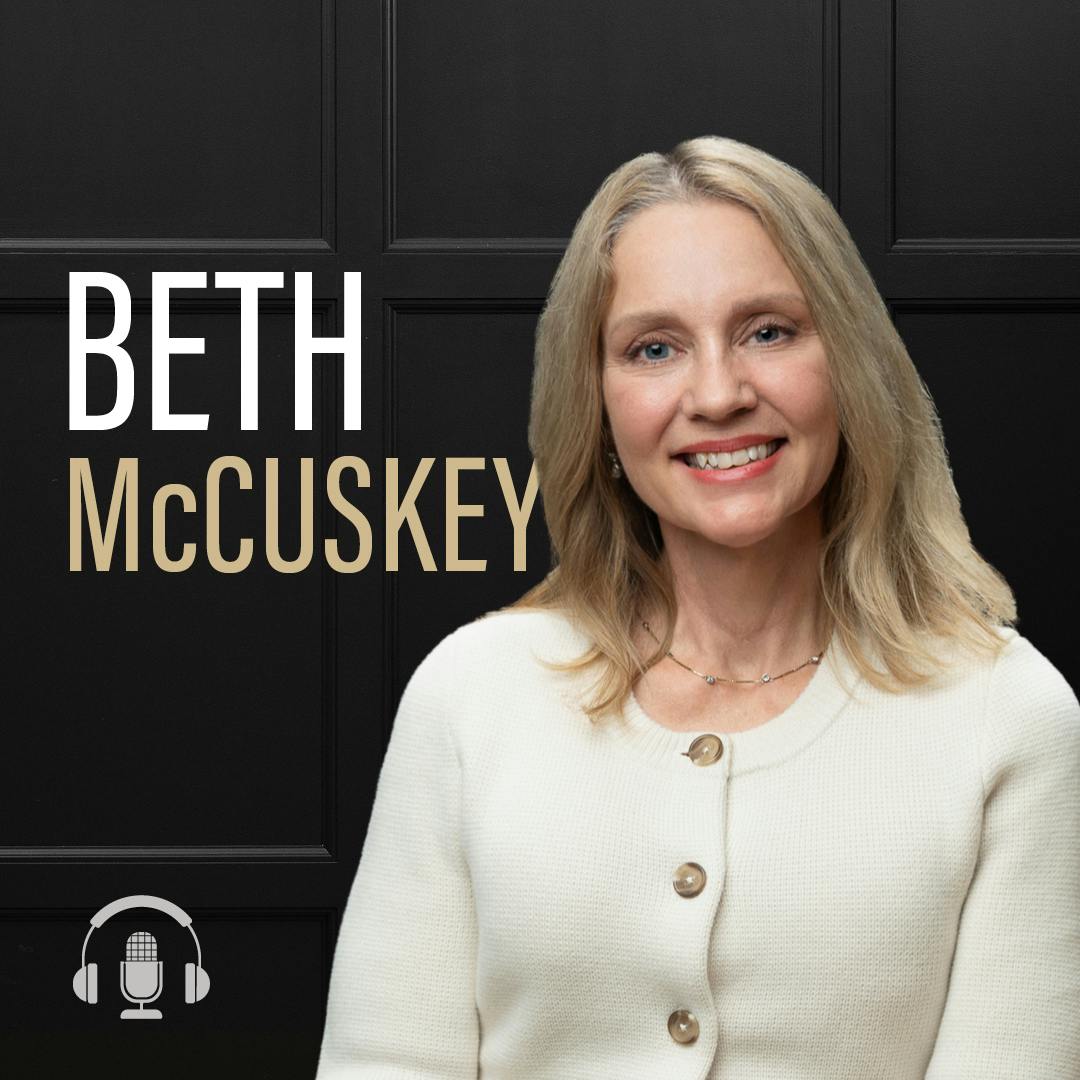
Loading summary
Transcript67 lines
- [00:00]
A
This is Beth McCuskey, and you're listening to this Is Purdue.
- [00:08]
B
Hi, I'm Kate Young, and you're listening to this Is Purdue, the official podcast for Purdue University. As a Purdue alum and Indiana native, I know firsthand about the family of students and professors who are in it together, persistently pursuing and relentlessly rethinking. Who are the next game changers, difference makers, ceiling breakers, and innovators? Who are these boilermakers? Join me as we feature students, faculty and alumni taking small steps towards their giant leaps and inspiring others to do the same.
- [00:44]
A
Resilience, in my mind, is really about how do you bounce back from failure, how do you take it? How do you handle disappointment? And teaching our students that skill set, I think is just so important. That's learned at home, too. That's the state finals that you didn't win as a basketball team. That's the work so hard to get a good grade and it didn't happen for you. How do you help students process that, learn from that, and move forward?
- [01:14]
B
In this episode of this Is Purdue, we're talking to Beth McCuskey, Vice Provost for Student life at Purdue University. Beth is a national thought leader in student mental health and she recently co authored an upcoming book titled the Oxford Handbook of well Being and Higher Education, which covers why wellness is critical in college, especially in today's day and age. Purdue's focus on student well being and Beth and her team's vital institutional efforts was also featured in Forbes. So she's the perfect person to help us dig into two timely questions. Number one, how generational differences have shaped what wellness looks like for college students. And number two, how parents, families, mentors and educators can prepare high school students to thrive in college. This conversation with Beth was super interesting and thoughtful. We discuss resiliency when it comes to overcoming failure and how adults and other mentors can help foster resiliency skills for their students at home. Plus, we dig into social learning loss, which many people experienced during the COVID 19 pandemic, and how the emergence of social media and now AI have played a role in student well being across generations. So let's get to it. Here's my conversation with Beth.
- [02:31]
C
Beth, thank you so much for joining us on this is Purdue, the official university podcast. We're going to dive into a topic that impacts all students today, and that's well being. We are thrilled to have you. Thanks for coming.
- [02:43]
A
I'm absolutely thrilled to be here. I admire your work and it's just great to be part of your podcast. Thank You.
- [02:48]
C
Thank you so much. Let's dive right into it because this is really pressing. This isn't just a couple students here and there who are struggling. It's a widespread issue. Your upcoming book cites that 44% of college students are experiencing depression symptoms and then 37% are struggling with anxiety. How do these stats underscore the need for stronger support and resources for students?
- [03:13]
A
The statistics are pretty profound. That particular set came from Healthy Minds, the Healthy Minds Network. They're a couple years old, but that number is pretty consistent with what we see here at Purdue as well as really with that. That age population overall, not just college students. When we think about that, we know that we have to be supportive. I mean, one of our jobs in student. Student life is to meet students where they are and they're coming in and needing this extra support. We do that in two ways. First, we ramped up what we're doing in caps. Our counseling center added staff to be able to meet those needs, build out a different timeline to support those students. And really just looking at it from a meeting, the mental health demand process, you know, took those steps. The other side of it, though, is really looking at the culture as a whole and how do we build those support networks to support students. And one of the things that's really important, every problem is not a mental health challenge. Every depressive moment is not necessarily a clinical depression. Helping our students tease out when we need that clinical support, but where we also might need a friendly face, a person to talk to, someone to help guide through a situation.
- [04:25]
C
I love that distinction. Sometimes it might just be a student having a bad day.
- [04:30]
A
Exactly.
- [04:31]
C
Instead of needing clinical help.
- [04:33]
A
Exactly right.
- [04:34]
C
Your upcoming book is titled the Oxford Handbook of well Being in Higher Education. You're a co author on it, so well being is part of that book title. But let's dig into what wellbeing means to you.
- [04:46]
A
I am blessed to be working with my co editor, who's actually the lead editor, Lewis Tay. He is a psychologist by training, organizational psychologist here at Purdue. A professor and extremely prolific. He is a great researcher and together he brings the research side and I bring the applied side. For our book, we looked at well being as very holistic in nature. We want to have our students be flourishing in various domains in life, not just academically, that's obviously very important, but also socially, even financially. Making sure that they're taking care of their finances appropriately and have options available to them to learn more in that space. Looking at how they get along, whether it's academically Socially or even just exercise and taking care of their body. Whatever domains are important to students, we want to be there to support them and we want them to flourish in those spaces.
- [05:39]
C
What are some of those internal and external factors that can influence students well being?
- [05:45]
A
We like to look at things both psychological, so how do I handle things as a human, but then also sociological, so how does the community support an individual? And so from the human side, it's how am I taking care of myself? Do I have the skill set? Do I have resiliency skills? Am I getting enough sleep? Am I going to the gym? Am I doing things to take care of me? And how do I build out that skill set? On the sociological side, it's really looking at our community as a whole and how are we really building out that safety net to support our students through their academic journey?
- [06:18]
C
And you talked about some of the ups and downs of life.
- [06:21]
A
One of the things we know is that failure is an important part of the experience. And if you're taking risks, and we want students, we want all of us to take risks because that means that we're trying new things. And so when we take risks, we are bound to fall on our face sometimes. That is a normal part of development. We want people to realize that just because you fail, you can still pick up and go. That doesn't mean you don't take time for yourself. You don't be mad about it or sad about it, that's normal, that's fine. But then what do you do? And can you learn from that mistake? Can you pick apart what happened? And then how do you translate that to the next phase?
- [06:58]
C
And you touched on, sometimes the really exciting highs of your life are also stressful. I was thinking wedding planning is a great example of that.
- [07:07]
A
Wedding planning is a great example with students. We think of those transitions and how stressful those can be. And so we think of our brand new students coming into higher education, super excited to be here, but that's also a stressful time. And then similarly, as you're thinking about that next phase and you're getting ready to graduate and take on life in a new way, that's also stressful too. Even those highs can be moments of stress. And so just helping people normalize that.
- [07:33]
C
And work through it, that makes total sense. I remember coming to Purdue and your parents aren't around, you don't have maybe home cooked meals. There are so many different things. And then again when you're graduating and.
- [07:46]
B
Maybe students don't have a job yet, or that stress, it's exciting to be.
- [07:50]
C
Graduating and being part of that next chapter. But if you don't know what's coming, that's also very stressful.
- [07:56]
A
It is. It's tough to. Even contemplating moving to a new place can be stressful.
- [08:00]
C
Absolutely. So how are universities like Purdue adapting to this need of this well being journey for students?
- [08:08]
A
I think on multiple fronts. And so when we first started seeing this demand increase for mental health services, I think the first thing out of the gate was to ramp up our counseling services. And this is true across the board. People added staff, we added therapists. But we got to this point where we realized it was definitely more than that, that we had to start building out a culture that supports. We have done things at Purdue and this actually predates some of the changes in caps. We have a. A model called Student of Concern and we talk about that all over the place. Students know this, faculty know this. Heck, we even had an Uber driver who knew this. So if there is concern about a student, they can fil a quick online form and our dean of students office will reach out to that student and just check in with them and make sure they're doing okay. That is one part of our safety network that we build in to be supportive. So we do things like that. We have the therapy services, but we're also looking at ways to help students help each other. So peer networks are crucial. Candidly, students would rather hear from each other than from me. How do we tap into their natural curiosity and their energy in the space? And so several examples include we have a group called the Mental Health Action Week. It's a student organization now, but that model was actually started by our student government several years ago. And it's just a time to celebrate understanding about mental health, making sure people are aware of resources, but also doing some fun things just for stress busters. And to make things a little bit easier, our CAPS office, we have a phenomenal guy that leads our wellbeing division and our counseling services, Chris Haynes. And he started a CAPS Ambassador program. And these are students who understand the services offered in caps can talk about mental health. They're absolutely not therapists. They're students, but they just help their fellow students recognize what's available to them. He just had the call out for the next season's ambassadors and had 80 students interested in the role. So students are very, very interested in this.
- [10:07]
C
From all of your experiences in higher ed, and even you said that your children are millennials, how is this conversation surrounding, well, being different across the generations from millennials to Gen Z and now Gen Alpha coming up.
- [10:21]
A
I love talking about generations, but I also, there has to be a caveat too, because sometimes we lump people together in generations and assume that you're a millennial, therefore you must be. And that's absolutely not true. Discussions about generations are really about shared experiences of an age group. So that's essentially what we're talking about here. But when we look back, you know, my career has been over 30 years in higher education. And I remember as a very early career person, the beginning of the millen millennials coming in. Millennials weren't talking about, well, being at all. Millennials were talking about their experiences. They wanted to touch and experience every facet of higher education. They wanted to join lots of organizations. They may have changed their major a few times. They wanted to experience it all. The other component of millennials that change higher education, I believe since, has been the involvement of parents. So millennials brought their parents to college. Parents jumped in in huge ways in terms of trying to pave the way for their students. So when I look back at that era, which was, you know, most of the 2000s, early 2000s, that was kind of what we were experiencing. So you flash forward and Gen Z entered college in the mid teens, and that's where we started seeing some of the increase from mental health services. And I attribute some of this to a generational shift that happened in terms of what this group wanted out of their colle experience. So where millennials were very focused on those experiences, Gen Z just wanted the outcomes. And so they're looking at what is next and how do I prepare myself for that. Looking at college as kind of a ladder that they're climbing to the next thing. Through this process, they are putting so much pressure on themselves to excel and to be the best and to have grand opportunities in life that they sometimes need that extra support. And so when we're thinking ahead now, Gen Alpha's, you know, by the numbers probably a few years out, but I'm already seeing some shifts in how students are approaching things. We are seeing far more desire to be involved. Again, I mentioned CAPS ambassadors jumping in at 80 people wanting to do this work. We're seeing that all over the place. Students are flourishing in huge ways. Another nuance we're seeing, we do the Gallup strengths, which is a component of the first year program, our BGR program. The last two years, we've seen in the top five strengths of our students empathy come out. And so this concern for others, I think is evolving. There is Definitely a shift from not caring too much about well being to very focused on well being, in part because of this outcome, to this, I believe will be a highly engaged group again. But with this focus on well being continuing. The other component I'd like to share here, I think technology has played a role in every one of these generations. And so when you think about millennials, millennials inherited the Internet. They were the first generation that grew up online, but they were doing this from dial up modems at home as children, not from the Internet in their pocket, which is what Gen Z brings to the table. They have the smartphone, they can access the Internet at all times. Social media has become prevalent and so they're engaged in that space considerably. And for the alphas coming in next, AI is going to be the big technology shift. And I suspect that that will transform how they expect their experiences to be, but also how we do our work to support them.
- [13:47]
C
Absolutely. That's all so interesting going back to Gen Z too. And I know when we talked earlier, you had said they want everything to be linear and that's not how life is. There's going to be things that don't work out their way. Do you think that social media had an impact on that? Like they're seeing these people with these quote, unquote perfect lives, or they're on Instagram and they see all these glossy, incredible things and they think that everyone can have that or they specifically can have access to that.
- [14:17]
A
I think social media absolutely plays a role here. You know, there's a lot of different research. In fact, we have a chapter in our book about social media. It's kind of all over the place. For students who have healthy self esteem and use online to explore new options, new ways of doing things, there is a healthy approach that works, I think, for students who are using their tools to compare themselves, who may feel that they're left out or that they'll never excel, that can be a problem. I also think that sometimes people put Personas that are a little, maybe not quite themselves. So they're putting these aspirational Personas on social media and seeing how those get likes. And sometimes that can be, it can just be problematic because if you're looking for likes for something that you're really not, you know, what, what does that say to you? And so I think there's positives with social media use, but absolutely the comparison component has been a major issue. There's just been a study, it's in the Journal of the American Medical association online version. They basically did a social media break or a smartphone break for a week. And they used mental health tools for depression and anxiety, for example, to assess pre and post. And these individuals that participated had higher overall well being, so lower scores on these indicators for depression and for anxiety. And so there's something there, too.
- [15:43]
C
Okay, so when I was at Purdue, I did not have Internet on my phone. I did not have a smartphone until I was 22 or 23. It was just so much more like living in the moment. And you didn't know where people were, and you didn't know what people were posting or what you know, and there was just something to that that made life a lot easier, I think.
- [16:02]
A
I agree. I think the online presence that's continually in our face has just added a layer of complexity. It's just tough to navigate.
- [16:10]
C
Going back to the younger generations having these more open conversations about mental health, older generations had to navigate a lot of different, tough things, too. So where do you think this shift developed when it comes to access to more mental health resources? And what do you think that means for current students?
- [16:30]
A
First, I think that every generation has kind of badgered the people who follow. I mean, I just think of the baby boomers, for example. I mean, they, you know, had the long hair, right? So cut your hair. Hippies, right? And. And they pushed envelopes right and left, and the music, right? Rock and roll. My goodness, you know, how horrible is rock and roll? You know, they rocked the world in the 60s and 70s and took a lot of flack for it from their elders. I think there are examples, you could probably just research this online where there will be some quote about the youth of today. And you think it's a current quote and it's some historical figure from years ago making those comments. So I think that's just part of human nature to do that. But with that said, my sense on some of this is that, particularly I think the 2008 financial crisis hit very hard. My theory. This is only my theory. I do not have research to support this. But my theory is that that moment in time, the leading edge of the millennials, had just entered the workforce. They, in many cases, might have been first in, first out in terms of layoffs. We had a group that was following that had a hard time maybe securing good employment, and they were very angry that they did not have a good experience, that their higher education did not guarantee them that dream job that they were looking for. And they, at that moment in time, were our largest generation. Their parents, the baby boomers, were the Second largest generation who was also ticked. And so I think we had this generation that was just upset that they weren't launching the way that they had hoped. And I think when the next generation came in and the teens, they believed that they were going to make the most of this experience. They weren't going to waste time in college, they weren't going to waste money trying new things. They were going to get through and they were going to get a good job. So I think it just transformed how they approach the experience from there. I think the pressures were just pretty significant in terms of trying to get the best job and believing that maybe other people might be doing better than I am in this space. And then that pressure just leads to that cyclical stuff that's really, really hard to navigate. The other point I want to make in this space, I think people are much more inclined to seek help now than they would have been a generation or two ago. And that's a good thing. We don't want to say that that's a bad thing. And so I think that factors in. But I also think, and this is not belittling mental health at all, I think that somehow the language that's used becomes more encompassing than what is actually happening. So saying, you know, I'm depressed, depressed, and maybe filling out a survey that says I'm depressed may not be the same thing as being clinically depressed. I think that we've just expanded language to broaden these terms, these psychological terms, to express our feelings as a whole. So that could be part of what's happening as well.
- [19:23]
C
Those are great points. It's something that I'm really interested in. I've listened to a couple podcasts about this and read articles. Obviously, the pandemic has changed so many things. So what are some of those educational and social challenges that are unique to Gen Z and Gen Alpha?
- [19:39]
A
I think the pandemic was a rough time for everybody. I look back at how we handled things at Purdue, which was just a monumental time for us in terms of staying open during this time period. One of the things that we did during that era, we were really worried about our new beginner students because they came in during the pandemic with the social restrictions masking and social distancing. The events that we had might have had fewer people, or, you know, sometimes we couldn't have events at all, depending where we were with the cycle of the disease itself. We did a survey just to see how are people doing, and then we looked at various variables in terms of the people who were doing well versus maybe not so well. And one of the key things for students for belongingness was having more classes in person. That in person, instruction matters in terms of people finding their home and finding that belongingness. It is that community of learning that residential campus represents, and that's just such an important part of the fiber and really make an impact, I think, on students. You know, we hear a lot about learning loss. We heard a lot about K12 learning loss, where these children were trying to take classes from home, their parents were trying to help teach them, and, you know, once school was back in session in kind of more normal ways, some of the test scores just weren't there. But we also saw what we would call social learning loss. And so students coming into campus with their last year in high school, maybe last couple years in high school, where they were socially distanced, where they weren't working with other people, where they didn't have to make hard decisions or argue over with our friends, should we go here or there and just negotiate things out? And we saw a real uptick in conflicts where people couldn't resolve conflicts. It feels like, you know, in this era, we want our students to leave being able to solve conflicts and bring people together and solve these huge problems. But we're seeing cases where students couldn't ask their roommate to pick up their dirty clothes from the floor. Right. So there's a little loss there.
- [21:43]
C
Sure.
- [21:44]
A
So we work to try to build out those skill sets for students. We got into doing some work in the conflict competence area. How do you resolve things? We have some online tools, and actually some of my team members are teaching a course this spring in that space, and the online tools have been helpful. One of the spaces that's using them is group projects. So if you think about it, when you're working in a group with other students, you've got to negotiate it all. Who's doing what part and who's turning what in, when. So having a bit of a skill booster in this space, I think is very helpful.
- [22:16]
C
And you just think about maybe they didn't get to go to their high school prom, their graduation, these huge, monumental social events in your life that they had to miss out on.
- [22:26]
A
Absolutely. Well, and just building the social skills to connect with people. When you come in from high school with, you know, smaller number of people to a large campus, I mean, that's tough in any times. So if you haven't had that background to be able to navigate and socialize and build those connections, that just made it even harder and so I think our work was a lot more how to bring people together, how to help support just those connections. A lot of our work was around our student organizations because a lot of the learning was lost when people graduated. And so if they didn't have a normal experience of what that student organization did, for example, having to kind of ramp that back up and teach again, what this organization does, let's say they're putting on a program, let's talk about what that looks like and how we get it done and how you build the structure to do it. So there were absolutely some scaffolding taking place on that front too.
- [23:19]
C
We touched on this a little bit. You know, this access to social media and now AI. How will that continue to impact the well being of Gen Z and Gen Alpha college students?
- [23:29]
A
I think that AI is one of the big unknowns. I think that there's a lot of opportunity for AI to help distill information, to help us think through things. But we're seeing more and more data that suggests that students are using AI tools as pseudo coaches or therapists asking mental health types of questions to these tools. And they're not trained therapists and you know, in some cases may provide false information, in some cases are trained to reflect back to you what you want to hear, which may not be what you need to hear. I think there's some danger with that aspect. But I also think that again, we're all going to be using AI and so what tools might we develop that support in this space that aren't algorithms that get people connected and hooked, but that are truly help tools that are grounded in research and how to best coach and help students.
- [24:22]
C
You used the word resilience earlier. What does resilience look like for today's young people?
- [24:28]
A
Resilience in my mind is really about how do you bounce back from failure, how do you take it, how do you handle disappointment? And teaching our students that skillset, I think is just so important and that's learned at home too. That's the state finals that you didn't win as a basketball team. That's the work so hard to get a good grade and it didn't happen for you. How do you help students process that, learn from that and move forward?
- [24:58]
C
Let's dive into how people at home, parents, educators, coaches, how can they help build and foster resiliency within their young people?
- [25:07]
A
I think out of the gate, normalizing failure, but learning from failure, I mean, none of us want to fail and we certainly don't want to fail. All the time. But when that does happen, how do we help people pick up from that and kind of learn to advance themselves through that, from what you learned from it? And so I think that's absolutely one of the ways to build resilience. Another huge component of resilience is your social network. And we're not talking online social networks, we're talking humans. And so having a robust network of humans that you can rely on, that you can talk to, that you can trust, that represent lots of different aspects of you, whether that's the field of study, whether that's an interest or hobby, whether that's spiritual family, There are just so many ways to go here. But just having that network to be there for you. The flip side of that, though, is for networks to be most effective, you have to give back to that network. You have to be there for other people. And honestly, that act of giving is such a form of wellbeing too, because you just feel good when you help people.
- [26:11]
C
It's rewarding, right?
- [26:12]
A
Absolutely rewarding. So helping students build those skill sets to pick themselves up from failure as well as ties into these networks and what that means for folks.
- [26:22]
C
Is there a top tip that you tell parents, hey, do this thing in high school to help prepare your students.
- [26:30]
A
For college out of the gate. Certainly the time management skills, study skills, you know, coming in with, you know, it's going to be tougher in college than it was in high school. And so how do you allocate your time and how do you build out those pieces? The other big one I would advocate for is help seeking. And so knowing when you need to ask for help. I'm just not getting this and not being afraid to reach out and find the resources. Purdue is just full of resources all over the place who are eager to help students. And so finding ways to, to support students to build out their own. I mean, it's a form of resiliency too, knowing when to ask for help.
- [27:09]
C
You touched on this earlier. You said that millennials brought their parents to college with them. What is a top piece of advice when it comes to parents supporting, well, being from afar?
- [27:20]
A
I think a couple things here too. First, I think helping their student help themselves, not getting into it to solve it for them, but helping them with the skills to take this on themselves and resolve it. There are times where families get involved and it makes perfect sense. There are times where people can't seem to get the right person to talk to or navigate the situation. And that's totally fine. But that self resilience in terms of being able to solve your own problems is just phenomenal. The other thing I would say, and this goes back to Networks, I just can't say this one enough. Purdue is such a rich tapestry of individuals. And once you join our community, you are part of this community for life. You are part of this vast alumni network. So take advantage of opportunities. You will have chances to meet CEOs in your classes. We have programs like Old Masters or Executive in Residence that bring people in specifically to talk to students and take advantage of those opportunities. But the other part of Networks is building your friend group. You are among and you may be the next CEO, you may be the next astronaut, and your friends are going to be in that space too, the innovators of tomorrow. And so building that friend group and maintaining that friend group throughout life just makes you part of this tapestry forever. And then of course, as an older student, perhaps paying it forward to the younger students, as alumni paying it forward to students, there's just that way to give back and keep this amazing system that is Purdue.
- [28:54]
C
I love that. Something else too is when you touched on being able to solve your own problems or kind of sourcing solutions. Being solutions oriented is so important when you graduate too in your job in the workforce, right?
- [29:08]
A
Absolutely.
- [29:09]
C
So in 2018, your team saw a need for mental healthcare access and resources and you developed the steps to LEAP's framework here at Purdue. Tell us a little bit about that initial need for this framework and how has it helped students over the years.
- [29:24]
A
So Steps to LEAPS evolved after we invested in some mental health services early on and realized we need to build out a culture here. And so we worked with students to build Steps to leaps. So these concepts were totally student driven. And so the themes embedded in Steps to LEAPS are well being overall, which is pretty self explanatory leadership, which we're framing as that self development and that professional development. So reinvesting in yourself throughout your life impact, which is a Gen Z thing, wanting to make a big difference. And so how do you make a big difference? And recognizing that small differences matter to Networks, which we've talked about a lot, being able to build that network and support that network and then grit or persistence, that resiliency set of skills. And so out of the gate we started by building some modules in the space. We tied with faculty who teach in these spaces and research in these spaces to bring their materials forward. We have done so much since we have a student organization that is step sleeps oriented. We give annual Steps to LEAPS awards. We have a program that embeds these principles in the classroom. And we have small stipends for faculty to work with these wellbeing topics in their classroom. Steps to LEAPS is the framework that we're using for wellbeing as a whole. So as we're looking at how our students grow in this space, the framework of these individual pillars are how we're looking at that growth. This has taken us far. We launched this in fall of 19 and had some of these online tools already set up and then hit the pandemic. So it was so fortuitous that we'd already thought through a lot of these things and had them available, but the model has just grown from there.
- [31:07]
C
That's exciting. I mentioned the 2025 Forbes article at the beginning of this interview, and it said Purdue is at the forefront of well being. What are a few of those key strategies and implementations that you and your team adopted that has made Purdue a true leader in this space?
- [31:24]
A
One of the things I think is so important is our president and his wife are so passionate about this topic, and that is crystal clear with how they're supportive. We had some investment in 2 caps right out of the gate with President Chang, and Kay is super, super supportive as a medical professional, as a doctor, she totally gets this and is supportive as well. And so I think that framing is really important. If you're building an institutional culture, the top has to tie in and be supportive of it. I think other ways are just the reach that we have with embedding faculty. Everybody has a different lens through their work on the student experience, on how we understand wellbeing, and so what tools can you bring to the table? And we encourage people to do that across the campus as a whole.
- [32:13]
C
What does institutionalizing student wellbeing mean?
- [32:16]
A
It means that we believe in this, that we have people across the board who are supporting the concept. It doesn't mean every single person has to do it and get it and do it, but it does mean that we have people who, from a faculty lens, how do we embed this from an academic side? It means our researchers who are doing well, being research, are tied in and we talk to them and try to understand from their learnings how to support students in new ways. It means the students taking the mantle as we have student organizations dedicated to this space. And so it's really kind of top to bottom. Everybody has a place in the space and we just work together to make it a reality.
- [32:58]
C
When you think of the work that's being done right now in student wellbeing what motivates you and inspires you and gets you excited about the well, I.
- [33:06]
A
Am always excited by our students. They are a joy. Purdue students are brilliant, they are curious, they are just wanting to learn and wanting to grow. And so that makes our job very, very easy to work with them. It's just phenomenal. I mentioned AI. I think AI is the new frontier for a lot of our work and how that works. How do we tackle our next set of challenges with these tools, I think is going to be important. I think it's going to be profound. We were already playing with AI in some of our operational spaces. So for example, our dining menus are driven partly through an AI model. We're playing around with student organizations and selecting a student organization. So what orgs appeal to you as a student and how might this work? We're playing around with our activity forms, of which there are thousands, because our students are doing thousands of activities. And is there a way to sift through these to bring the ones to the top that might need a little more support and attention? So I think operationally we're already playing in this space. I think the part that's going to be different, though, is that support piece. And how are these tools being used to support students directly or through a moderated approach? They're already using social media and AI tools to engage, to learn and kind of even as pseudo therapists. And so are there ways to support them through this space, but in an obviously very ethical approach. There's just a lot here that's so new that we have to think through and make sure that we're managing very appropriately. But it is the new frontier, I believe.
- [34:48]
C
Well, Beth, this was so interesting. I could probably talk to you all day, but is there anything else that I missed that you want to tell our listeners and our viewers today?
- [34:56]
A
Well, I absolutely have to plug our book so Louis Tay and I are co editors of it is the Oxford University Press Handbook of well Being in Higher Education. It will be released later this year. This book is unlike anything that's been produced thus far. It has 46 chapters reflecting tons of aspects of well being on campus, about 130 contributors from all over the world. And so we are super excited to be launching this this year.
- [35:26]
C
We can't thank you enough for joining us and it was a pleasure talking to you.
- [35:29]
A
Likewise, thank you so very much.
- [35:32]
B
We can't thank Beth enough for joining us on this is Purdue. Her upcoming book, the Oxford Handbook of well Being in Higher Education, will be available this summer with the online issue coming out in June and the print issue releasing in August. And if you're interested in learning more about student well being at Purdue, we have plenty of links and resources in our show Notes for you. Be sure to follow Thisis Purdue on Apple Podcasts, Spotify, or wherever you get your podcasts. Plus, we're on YouTube and you can subscribe to our show on there too. This Is Purdue is hosted and written by me, Kate Young. Our podcast videography for this episode was led by Thad Boone in collaboration with John Garcia, Ali J. Chaney and Zach Mogenson. Our social media marketing is led by Maria Welch. Our podcast design is led by Cheryl Glatzba. Our podcast photography is led by John Underwood. Our podcast team Project Manager is Rain goo. Our podcast YouTube promotions is managed by Megan Hoskins. Additional writing and research assistance is led by Ashvini Malshi and our Creative Production manager is Delaney Young. Thanks for listening to this Is Purdue. For more information on this episode, visit our website at purdue.edu podcast. From there you can head over to your favorite podcast app to subscribe. And don't forget, you can also check out all of our podcast content on our podcast YouTube page, YouTube.com/thisisperdue and as always, boiler up.