← This Is Purdue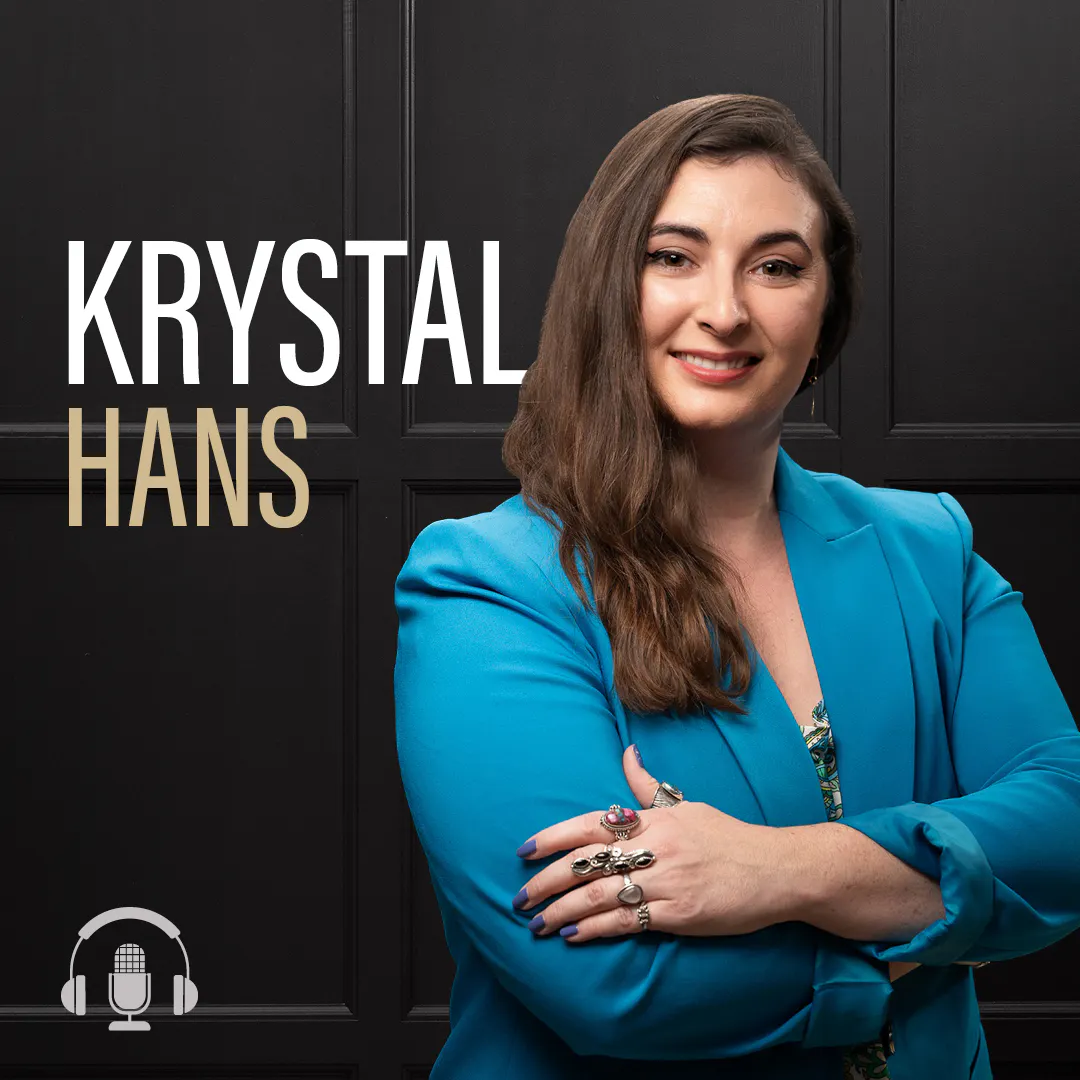
Loading summary
Transcript73 lines
- [00:00]
Crystal Hans
This is Crystal Hans, and you're listening to this Is Purdue.
- [00:07]
Kate Young
Hi, I'm Kate Young, and you're listening to this is Purdue, the official podcast for Purdue University. As a Purdue alum and Indiana native, I know firsthand about the family of students and professors who are in it together, persistently pursuing and relentlessly rethinking who are the next game changers, difference makers, ceiling breakers, innovators? Who are these boilermakers? Join me as we feature students, faculty and alumni taking small steps towards their giant leaps and inspiring others to do the same.
- [00:43]
Crystal Hans
We have what's called the CSI effect, and it's from living in this world with all of this exposure to what we think forensic science and investigation looks like. The reality is that if you have a group of people selected to be jurors in a trial and they come in with these preconceived notions of, okay, I've seen it on TV or I've listened to podcasts, I know what to expect. They get into the courtroom and they are disappointed. It's not nearly as exciting as what they show on Law and Order. They're expecting that every case, every scene has DNA evidence, has fingerprints, has all of these different components. And so then that disappointment can affect their decisions that they're making. So it can have a pretty significant effect in the real world.
- [01:32]
Kate Young
In this episode of this Is Purdue, we're talking to Crystal Hans, Director of Forensic Science and assistant professor of Forensic Entomology at Purdue University's College of Agriculture. Now, if I had to guess, I'm assuming most of you out there have listened to a true crime podcast series or. Or watched some type of real life cold case investigation documentary. In today's day and age, these stories have been embedded into our culture through all different forms of media. And just before this interview, Crystal and I were talking about different true crime cases that really caught our attention growing up. For me, it was the unsolved killing of JonBenet Ramsey in Colorado and the kidnapping of Elizabeth Smart from her home in Utah. Both were young girls who were around my age, and I vividly remember the headlines splashed everywhere when these horrible crimes were committed. Since then, the public's fascination with true crime has only grown. In this interview, Crystal is digging into what this true crime culture gets wrong about forensic science and cold cases and how she intentionally works to center education, empathy, and advocacy when it comes to solving cases and helping victims families. Crystal has a passion for engaging students, especially in her popular forensic investigation class at Purdue, where students have the opportunity to research real life cold Cases. That's right. We're digging into cases where boilermakers have made true impacts right here in Indiana. From talking to police, researching old case files, and more. Crystal is explaining her overall goal of reframing how her students think about these victims and their loved ones. And as the only board certified forensic entomologist in the Midwest, Crystal is explaining how insects affect crime investigations and cold cases. I guarantee you'll learn a thing or two in today's episode. So let's get to it. Here's my conversation with Crystal.
- [03:35]
Crystal, thank you so much for joining us on this is Purdue. We were talking earlier. Everyone on our team is so excited for this episode. I know our listeners are going to love this as well. Let's get to it. Society's obsession with true crime has really peaked in recent years with social media, with Netflix documentaries, with true crime podcasts. Where do you think this interest really comes from?
- [03:57]
Crystal Hans
I think it's been an interest for a long time. I think we're at a point in our society that we have access to so much information and it's so easy to spread that information through social media. We have all of these different media tools that are really fostering that kind of innate interest that people have in crime, interest that they have in death and in some of the horrible things that happen in our society.
- [04:20]
Kate Young
Why do you think this type of popular media can affect real life investigations? Have you seen this happen?
- [04:27]
Crystal Hans
We see this happen pretty frequently. Where people listen to a podcast, they have an idea of this is how an investigation works. These are the types of evidence that we would expect. And then when law enforcement doesn't report everything that they do, they're not communicating their findings, they're keeping things kind of close to the investigation. People are sometimes disappointed and frustrated because they don't see the same kind of movement or resolution. Podcasts always try to focus on success stories and seeing that resolution. People are sometimes disappointed when they don't see it play out in the real world.
- [05:01]
Kate Young
So how does the public interest in true crime impact your work as a forensic entomology professor?
- [05:07]
Crystal Hans
In terms of forensic entomology, that's one of those niche areas in forensic science where people sometimes are familiar that there's insects involved, but they don't necessarily understand the role that they can play as a type of physical evidence. By having access to podcasts and crime dramas, and going back to the early 2000s, with CSI being that early show kind of front runner, it started to give the public a little bit of insight into some of these niche areas. And other ways that we can provide a service. So I think it's beneficial for me because it exposes people and at least gets them. Oh, I've heard that term before.
- [05:46]
Kate Young
Let's dive into it. Tell our listeners, how do insects impact some of these crime scenes and cases?
- [05:53]
Crystal Hans
Forensic entomology is the use of insects as a type of evidence for different types of investigations. And we can use insects for a variety of different applications. We can use them in an urban setting. So we think about infestations. Bed bugs have been in the news pretty frequently, cockroach infestations. It could be something where there's a lawsuit, somebody wants to sue their landlord. We can use information about those insects to support or refute that lawsuit. More traditionally, forensic entomology is often used in cases of abuse and neglect or in death investigations of both animals and humans. And so our insects, our forensically relevant insects, are really well adapted to be able to smell very strong odors of decomposition. They arrive relatively quickly after death. And as a forensic entomologist, I can collect those insects, determine what type of species it is, figure out how old they are and how long they've been associated with the body. And that gives us an estimate of the minimum amount of time that the insects have been active.
- [07:01]
Kate Young
So that can help determine how long potentially the body has been there.
- [07:04]
Crystal Hans
Absolutely. So for an investigation that can speak to the timeline that law enforcement is looking for.
- [07:10]
Kate Young
Was there a specific high profile case that sparked your interest in forensic science when you were younger?
- [07:16]
Crystal Hans
So we had already mentioned a few of the cases that were popular when we were younger. But for me, my entry into forensic science wasn't because I saw a case or because I watched CSI or any of those shows. I always tell people that I was a weird kid and my nickname was Creepy Crystal, which I've turned into a career and I've come to embrace. But as a kid, I think I was a little bit hurt that people thought I was creepy. And so I'm allergic to animals that have fur and feathers. So I've never had a traditional pet. But my mom was always very supportive of my love of insects and arthropods. And I got into the habit of collecting them and bringing them inside for short periods of time to have, you know, pets. I just kind of always had a fascination wandering around trying to find insects. And there's a lot of insect activity on animal carcasses that you come across in the woods. So that association people found a little bit creepy that I was interested in things like maggots. And then when I was in my undergrad, I had a completely different career path. I thought I was going to go to medical school. I was interested in science, and my advisor said, you have two options. You can become a science teacher, or you can go to medical school and become a medical doctor. And back then I said, oh, well, I don't think I want to go into teaching, which is ironic considering my position now. And so I went along the path of medical school. And it wasn't until my senior year that I went to a seminar where a medical examiner talked about maggots being on remains at autopsy. And I went up and approached him. I said, tell me more about maggots. His response was, oh, you like maggots?
- [08:54]
Kate Young
He probably normally didn't get that.
- [08:56]
Crystal Hans
Yeah, most people. Most people don't have that reaction. And he said, forensic entomology, that's the field that you should be looking into. And that was a new area for me. Nobody had told me that along my path. And so it really changed my entire trajectory and kind of got me into this field.
- [09:11]
Kate Young
And what brought you to Purdue?
- [09:13]
Crystal Hans
Oh, I mean, Purdue has such a long history in our entomology department being one of the oldest departments. I mean, it was a very easy decision for me to make to come and be a part of this fantastic department.
- [09:25]
Kate Young
So we talked about csi. You think of Law and Order. There's so many spinoffs of these shows. What makes real life forensic scientists like yourself different from the public's perception? How are TV shows different from real life?
- [09:39]
Crystal Hans
Yeah, I always tell my students, because that's usually their perception of forensic scientists or the world of investigation. And what they see on TV is a much more dramatic, glamorized version. So on tv, they show the forensic scientists doing everything, going to the scene. They're back in the lab, they're analyzing, they're talking to suspects, they're getting search warrants. They confuse the roles of a lot of different people. On tv, they would show somebody in a suit at a crime scene with no gloves and no protective gear, collecting evidence. And then when the students learn about, what does it really look like and what are the precautions that we take and how are these different roles divided? I think sometimes they're disappointed when I explain the timelines for investigations. I have cases that I work on that they don't get neatly packaged and resolved within a short time like they show on tv. And sometimes it's years before it goes to trial, if it does go to trial. So I think there's sometimes that disappointment when they, they learn how it actually plays out in the real world.
- [10:43]
Kate Young
I was telling you before this, I just watched the Elizabeth Smart documentary on Netflix. I believe it took 10 years. They caught the man who kidnapped her, and it took that long to go to trial. So that was spread out that long. That the emotions that she had and having to go to trial and testify and everything. The fact that the system takes that long, it's not like TV or movies.
- [11:05]
Crystal Hans
That's one case that actually did see resolution. There's a lot of cases that unfortunately don't even get to that point.
- [11:12]
Kate Young
So let's get into your class. Your class has grown to over 200 students. That's incredible. And like I said at the beginning, students are working on multiple real life cold cases. They're gathering research and information, whether it's unsolved missing person cases, homicide cases. You and I talked before. This is generally for victims of communities that unfortunately don't receive a lot of media attention. But at the end of the semester, these students can really make a difference and an impact on these cases because the materials are sent on to the families of the victims. It's really hands on. So tell us a little bit about how the class is structured and why you think it's gained so much popularity, this class.
- [11:51]
Crystal Hans
I've been teaching it five years now, and when I first was offered this class to teach, I was trying to think about what can we do to train our students in different techniques in investigation, whether they plan to pursue a career in forensic science, law enforcement, or something else. What are the tools that we can provide to make them successful wherever they end up. And I started to think about, you know, there's an opportunity here for students to play a role in this cold case world. And again, building on that podcast and all of this exposure that they get, there's a lot of interest for students to participate. I actually had a student that was in one of my classes who is a survivor and her family member was a victim of a, a violent homicide. And in talking with her about advocacy and what she did to support her sister's case, I started to think about, well, how can undergraduates contribute to that mission? What can we do? And so that really led to me developing this project that tries to serve the families of these unresolved homicides and missing person cases and try to show that there's a lot of collective impact that we can do, even as undergraduate students in a class. And so the way that I've designed this project is I've partnered with Project Cold Case, who's my partner for a lot of different Cold Case missions that I'm sure we're going to talk about. And working with the families that are interested in having their loved one's case researched, I train the students throughout the semester about how to locate publicly available information, how to file records requests, how to try to communicate with law enforcement, to request a meeting or request documents or get some questions answered. And then what we try to do for the families is we try to focus on the visual elements in creating social media awareness campaigns. So my students create three different types of social media visuals that can be shared on different platforms. They create an infographic to summarize the case, and then at the end of the semester, they provide a presentation to explain to the rest of the class. Here's what we did, here are the challenges that we faced, and then here's the results of all of our work. And so the families, they get access to all of that information, and it's up to them. If they want to share it, it's their choice.
- [14:11]
Kate Young
Because I imagine sometimes digging into that stuff either brings up past trauma or they don't fully maybe understand it. But we talked about maybe some of the people are older and don't fully understand social media. So these students are handing them kind of this package. If you want to post this, here's how you do it. So that's just a really interesting way to handle that and make an impact.
- [14:34]
Crystal Hans
And for some of the families, they don't have access to some of the information, or the students have recovered a list of names of people that they think might be associated. And the families are, you know, they respond with, oh, I don't know who these people are. These are additional things that I want to bring up when I have my meeting with our detective or the, you know, we get access to case files and the family never got access to those. So being able to provide them with something tangible.
- [14:59]
Kate Young
Yes.
- [14:59]
Crystal Hans
And I always tell the families, if nothing else, there's no obligation. You don't have to respond, you don't have to use anything. But if nothing else, just know that there's a group of people at Purdue that are thinking about your loved one.
- [15:12]
Kate Young
What do you think that value is to have students working on real life cases?
- [15:16]
Crystal Hans
Because different cases have impact for different people based on relatability. And so for some of my students, they get to choose the case from a curated list that's provided. And some of them, they say, oh, we chose this case because this victim is our age. This Victim was a student. This victim is from my hometown or I remember hearing about this case, but I didn't really learn about a lot of the information. So I think for the students, they're able to see that these are real people. And I always try to stress, again, going back to those podcasts and the shows, sometimes the information that gets kind of sensationalized is focus on the perpetrator, focus on the violent nature of the crime, not that there is a whole family of people that cared about that individual. And so trying to reframe how my students perceive forensic science and how they communicate about the victim, making sure that they're using victim centered language. And I think that if nothing else, I want them to go out into the world with a more empathetic viewpoint of what these crimes can do and all of the people that are impacted by them.
- [16:24]
Kate Young
I want to dig into that shift of the perspective of focusing on that real human element and that victim centered language. I think certain documentaries or podcasts do a good job of talking about the victim and remembering who they were. And others really sensationalize the perpetrator. In the Elizabeth Smart documentary, it's just top of mind because I just watched it. They really didn't talk about the person who did it. They really focused on her and her family and her story. And I think that was purposeful talk about why that's a good lesson for the students to approach it that way.
- [16:57]
Crystal Hans
It makes them kind of see the human element that's involved. A lot of my students come in and one of the first questions I asked the beginning of the semester, how many people can name a serial killer? Almost everybody's hands go up and they can rattle off a whole slew of them. And I say, well, how many people can name a victim of any of those serial killers? And they say, oh, that really starts that conversation about how our society kind of frames and approaches a lot of these investigations and what types of material get released and what people have access to. So again, just trying to make sure that my students are thinking about that human impact so that if they go into law enforcement, forensic science, social work, advocacy, they're at least thinking back to this experience and they've learned that there's a better approach that we can do.
- [17:46]
Kate Young
So what lessons do your students usually walk away with from your class?
- [17:49]
Crystal Hans
I think one of the biggest things students say, okay, we're going to work on this case. I want you to look for as much information as possible. And sometimes they're under this assumption that, well, I'll just Google it and I'll get access to everything. And they'll say, I'll just ask for the case file. And law enforcement's going to give me everything I want. You know, the scene photos, all of the reports. And I think the students are often disappointed when they can't easily access this information and they have to learn about other channels and other mechanisms that they can use. And when law enforcement says, unfortunately, this is an active investigation and we can't provide you with the file, the students are like, but I thought I would easily be able to get this. What do you mean I can't have access to this? And so what that does is when we talk about those challenges, I put it in the perspective of, okay, now imagine you're a loved one and this is your family member and you're trying to get information and you're trying to meet with law enforcement, you're trying to get these files, and they say, no, we can't share that with you. How do you feel at that point? And so I think it really helps the students to understand how it works in the real world. And some of those challenges, I think, are good lessons that they can't just easily access everything just from their phone.
- [18:58]
Kate Young
Are there any well known Indiana cold case investigations that your students have worked on and contributed to?
- [19:04]
Crystal Hans
There's one in particular that I think was a really powerful case and very obvious impact. So when I first started this project, I had an incredible student, Braden Johnson. And I explained the project, explained what the purpose was. We were focusing on Indiana cases and I had this list. And he came up to me at the end of class and he said, there's one particular case. Would our team be able to work on it? And I said, well, let me know a little bit more information. And he said, well, it's my wife's great aunt. And I said, if you can get permission and consent from the family, absolutely, then we can have you work on that for the semester. So he showed up to the next class with a binder full of newspaper clippings, notes that the family had taken, basically all of their information. He said, here's the consent, here's the permission. And so because we had that permission, Braden was able to work with his team for the duration of the semester, completing all of the assignments, but really going above and beyond. Janet Shire was a. A schoolteacher in Kokomo who was violently killed in May of 1980. And there had been a suspect at the time, somebody that she was friends with that was supposed to be visiting for the weekend, and the investigation just really kind of stalled out. There was no real progress. There had been some evidence that had been recovered inside of her home. She had been stabbed multiple times. There was a knife that had been cleaned off. One of her outfits that she wore pretty frequently was missing from her closet, and she was found in her bathroom. Over the years, the family tried to pressure law enforcement to make some movement on this case and just didn't really seem to go anywhere. Now, in 2016, a chair from Janet's apartment had been tested because there was blood evidence that was found on it, but the results were never made clear to the family, and there was no more discussion about it. And so when Braden and his team started to work on this, they started to put together all of this very tangled web of people that are associated with Janet's case and tried to make kind of an association of who could be involved and why was there not more media coverage about this, and why did it just kind of fall to the wayside? And so Brayden was actually able to set up several meetings with the detective who was on the case, be able to go through the case and ask about certain key pieces of evidence, ask about, you know, follow up about that chair. What were the results of that? Here are the people that we think are of interest. And the detective was able to provide additional answers about the case. And then because of those discussions and because of all of the work that the students had performed, the detective was able to follow up with that person of interest and question her and get additional information what came from all of that. So Braden did incredible work. The whole team did. The detective had confirmed, we believe, that this is the person who committed this crime. There had been fingerprint evidence that had been recovered from Janet's home. They had identified that this woman had been in the house, and she said that she had been visiting. Unfortunately, the fingerprints that were recovered from the chair, they weren't able to make an association that those were her bloody fingerprints. So for the family, they feel that they've made progress. They have identified somebody that they're almost certain has committed this crime. But unfortunately, sometimes what we see in these cold cases is that lack of evidence is the reason why we can't get resolution. His work was really powerful. And again, having that case that he was connected to so personally, you know, married into the family and connected to him, made it a lot more compelling for him and his team to work on. And I actually invited him to speak at the Cold case symposium in 2023 to share the power of student work and kind of hopefully inspire some of the other undergraduates of, you know, this is what you can do, this is the collective impact that you can have.
- [23:03]
Kate Young
Have any of these cases influenced you personally throughout the years?
- [23:07]
Crystal Hans
Oh, I mean, I think they all do. I think I try to bring that to the classroom with my students and, and I'm very transparent about the emotional impact of the work and the emotional impact of forensic science. And so I'm intentional with what's called trauma informed pedagogy. So making sure that we're incorporating a lot of these themes of there is a lot of trauma when we're talking about violent crimes. Whether you're a student learning about it or you're a professional that's working and living in this world, whether you think it's going to affect you or not, this really does kind of shape our emotional impact along the way. And so I'm very intentional with students to explain, you know, these are my thoughts about this and these are real people, these are families that I communicate with regularly. The responses that I get from families, I think that's when I really. It hits me the hardest.
- [24:03]
Kate Young
And even like you said, if there's not a, you're not putting a bow on it and tying it up and that's that if there are some answers or some type of, wow, this is a new list of names that we didn't know about. I mean, some answers are better than none at the end of the day. And I'm sure they're so appreciative.
- [24:20]
Crystal Hans
And again, for the families, just knowing that somebody's thinking about them, that their loved one hasn't been forgotten, I think that that has a lot of power.
- [24:27]
Kate Young
So you lead your own forensic entomology lab at Purdue and you mentor undergraduate and graduate students and experiments. What are you guys currently working on within that lab?
- [24:37]
Crystal Hans
We work on a lot of different applications of forensic entomology. A lot of the questions that we have are based on real world experiences that I have from cases. So I'll get called to a scene, I'm collecting evidence. It's usually an unusual circumstance. And law enforcement will say, how does this affect the insects? And I'll say, that's a great question. Let's research that. And so a lot of our questions come from my own personal experience. So we had a student a few years ago, I was at a scene and the remains were concealed. And law enforcement said, oh, we had a body that was in concrete. How would that affect it? And I said, oh, I don't know. Let's do that project. So we did a decomposition project over a six month period so that we can answer law enforcement's questions. So that the next time I get approached about that or if I got a case related to that, I would have some information about how that affects our insects and how it affects decomposition. So we look at factors that affect decomposition, we look at insect behavior and how that can change with environmental parameters. So a lot of the behavior of our insects is driven by the environment that they're in. And then recently we've moved into what's called archaeoentomology. That's an area where we're applying the information about insects that are recovered from historic grave sites. And so we have some that are from 1770s and we have some that are 3,000 years old. So we're able to provide some analysis of those insect. It's usually fragments at that point to answer questions about the time of year that the remains were buried, when they were interred, or about the environment itself. So different types of insects that are associated with different environments. So we're trying to kind of expand those different applications. How we can use insects in lots of different areas.
- [26:34]
Kate Young
Is there a benefit to centering your research here in the Midwest with the entomology angle?
- [26:40]
Crystal Hans
Being housed in an entomology department is a really big benefit for me. Having access to so many colleagues with so many different specialties. And so one in particular, our insect diagnostician, we sometimes have these tiny insect fragments and we can say, hey, do you have any ideas of what we should be looking for? We think this is a part of a beetle.
- [27:02]
Kate Young
Can you help us?
- [27:02]
Crystal Hans
And he'll be like, oh, check this out. And he'll provide resources for us. So I think having access to so many different experts in entomology is a huge benefit. But in terms of the kind of casework and access to that, the Midwest has a lot of opportunities. So I'm the only board certified forensic entomologist in the Midwest. So I get contacted from all different surrounding states. So I think it's been a really great opportunity to be able to really expand my network and help as many different agencies as possible.
- [27:36]
Kate Young
How is Hans Forensics driving progress in this field? Sounds like you are working on all different types of cases. What strides do you hope to make in the future too?
- [27:46]
Crystal Hans
One of the areas that I've recently been trying to train different investigators in, so I train law enforcement across the country and a lot of them are traditional investigators. So going back to those death investigations and how we can use insect evidence. But there's also a really big need in the veterinary forensic science world, so. So a lot of the crimes that are committed against animals, so whether it's abuse, neglect, or death of an animal, we can use the same principles of forensic entomology to answer those questions as well. And so what we've been trying to do over the last couple of years is focus on animal investigators, focus on fish and wildlife, and be able to offer our services and explain, here's another tool that you might want to consider, and here's how forensic entomology can help your investigations as well. And so we've really been able to expand that network and hopefully convince some veterinary forensic scientists that this is a tool that they can kind of call on.
- [28:43]
Kate Young
We talked a little bit about the Cold Case Symposium. Every other year it is held at Purdue, and then this fall, it's going to take place at Purdue again. Tell us a little bit about this event and how it came about.
- [28:54]
Crystal Hans
The Cold Case Symposium. Kind of the idea started in 2022, going back to the conversation that I had with a student who's a survivor. I was thinking about the families and thinking about access that they have to resources. I've attended a lot of cold case trainings and other events, and they're almost always for law enforcement or forensic professionals. And the families are historically excluded from that. And I wanted to really offer something that that was specifically for those families so that, again, they knew that there's a community of people that care that their loved one's story matters and that we want to share that. The first one was in Arizona in 2022, and I brought that student along with me so she could share her sister's story. And we actually had all survivors that spoke that very first event. So all of them were family members that had a missing or unresolved homicide case. What we tried to do is offer a unique opportunity where we could bring together the families, the advocates showcase some of the resources that they have access to, as well as welcome law enforcement and forensic professionals. And then also being mindful of students and academics and sharing the work that students do and how they can contribute to this world. So from that first event, the feedback that we got, especially from the survivors and the families, was so positive that we said, okay, we have to host this every year. That first event, I had invited Ryan Backman from Project Cold Case to speak and share his story as a survivor who started this incredible organization that now supports almost 2,000 families across the US and tries to offer a lot of resources that are much needed in this space. After he shared his story, I realized this is an organization that I would love to partner with to be able to plan these future events. And so that's what we've done the last four years. We have partnered and brought this symposium to different locations. So to Purdue in 2023, Jacksonville, Florida, which is where Project Cold Case is based out of, in 2024. And in 2024, we expanded it to two days because we had so many speakers and so many resources and just so many things that we wanted to be able to offer for these families. And I think one of the things that Ryan and I are both really proud of in doing this work is that a couple years ago, we had US flags flown over the Capitol in honor of the missing and murdered. And at the end of each of the Cold Case Symposium days, we have what's called the Survivors platform, where we ask any survivors in the audience if they're comfortable, if they want to come up and share about their loved one, tell us who they are as a person, they share their story, and then we present them with this flag in honor of their loved one. And so we've been able to do that the last couple of years. And I think it's a really powerful statement that again, we are thinking about your loved one. We are all thinking about them, and just knowing that they have a community of support, that's really what we've been trying to focus on.
- [32:01]
Kate Young
There's also that community aspect for families to share that empathy with other families. And sometimes if you go through something like that, you can only relate to someone else who's gone through something like that, right?
- [32:14]
Crystal Hans
Absolutely. And that's some of the feedback that we hear from the families is they had an opportunity to meet other families in the same situation and discuss similar or different challenges that they've had or learn from others experiences. And it maybe triggers something where they're like, maybe we should ask our detective about this. I think there's a lot of impact in bringing all of those different people together.
- [32:39]
Kate Young
What can we expect this fall at Purdue?
- [32:41]
Crystal Hans
Well, it's a little bit early now, but we're hoping to host it in October here at Purdue, still planning on the two days. And we think that we're maybe going to include some kind of a workshop element that can focus on media involvement with families. And so going back to these podcasts and the true crime world, some of the interactions that these families have with media can sometimes be very negative. And it's not necessarily intentional on the reporter's side or on the podcaster side. They just don't know how best to approach some of these questions or the language to use to frame it. And so being intentional and not re traumatizing these family members just to exploit their story for a podcast or an article. So we think that we want to incorporate some kind of a workshop element to train people that are in media or students that are thinking they want to work in this world. How can you best approach it? And how should you be communicating these questions and thinking about these stories?
- [33:47]
Kate Young
So we started at the top talking about people's fascination with true crime. And then of course, we have all these Instagram, sleuths, Reddit, TikTok. They're kind of being detectives from their couch. How have you seen this shape real life cases?
- [34:03]
Crystal Hans
We have what's called the CSI effect, and it's from living in this world with all of this exposure to what we think forensic science and investigation looks like. The reality is that if you have a group of people selected to be jurors in a trial and they come in with these preconceived notions of, okay, I've seen it on TV or I've listened to podcasts, I know what to expect. They get into the courtroom and they are disappointed. It's not nearly as exciting as what they show on Law and Order. And then they're expecting that every case, every scene has DNA evidence, has fingerprints, has all of these different components, and
- [34:44]
Kate Young
it's open and shut.
- [34:45]
Crystal Hans
Yes, yes. And they're looking for, okay, well, if they didn't have fingerprints, then law enforcement didn't do their job. And so then that disappointment can affect their decisions that they're making. So it can have a pretty significant effect in the real world.
- [34:59]
Kate Young
On the other hand, though, we've seen different documentaries and different cases where the public has helped, or thousands of tips have come in. I'm thinking of the Amy Bradley documentary on Netflix where she went missing from a cruise ship years and years ago, and that new documentary on Netflix. Now there's thousands of new tips. I don't know if any of that will amount to anything, but what do you think of the positives that also
- [35:24]
Crystal Hans
come from, you know, we always hear this phrase, a fresh set of eyes. And so having that public interest and having these citizen detectives that want to take the time to go through all of these documents and watch these videos and try to piece this together, that can have some impact. And again, if they're able to generate leads and find information that's fantastic for the investigation. There's a lot of positive as well.
- [35:51]
Kate Young
So it all comes back to the education, the empathy, the advocacy that you center your work around for your students too. Why is that more effective when it comes to solving cases and helping victims families?
- [36:03]
Crystal Hans
My intention with that, again, is to make my students understand that in the real world, there are a lot of people that are impacted by these crimes. And in the symposium, we have law enforcement that speaks about how these cases impact them and what the emotional weight of this work is. And I think when the students experience that, they. They know that what they're doing in the classroom is having an impact in the real world, that somebody outside of the instructor who's grading their material, these families are going to get access to this. I think it makes them more committed to the work. They understand that what they're doing in the classroom goes beyond the class, goes beyond Purdue, and is going out into the world and is going to affect somebody. And so I think it makes them more dedicated researchers. I think it makes them more empathetic humans. You know, that's my goal, is just to make sure that they understand the human element of this work.
- [37:00]
Kate Young
For those who can't take your class, our listeners, our viewers, what are some practical ways that the public can practice empathy and ethical advocacy?
- [37:09]
Crystal Hans
I think it starts by the true crime content that you consume. Do a little bit of research into the background of the podcasters. If you hear something where there's crude jokes that are made about the victim, offhanded comments, don't continue to consume that content. If they're disrespectful to the victims and to the families. And some of the docu series that are made, they don't get consent from the families to be able to share that. And so I think just being intentional with what we're consuming is a great way to start. I think if you're interested in really sharing. Social media is so powerful. So if you see a poster about somebody who's missing or an unresolved case, it takes two seconds for you to share that poster on social media, share it on your platforms, because you never know who will get access to that, that might know information that can lead to a tip or a new lead. Something so simple as just sharing on social media does a lot to help that case. And again, to highlight to the families that somebody is thinking of your loved ones.
- [38:10]
Kate Young
Any empathetic or ethical, true crime books, podcasts, content that you recommend to anyone out there that really want to Dig into this.
- [38:20]
Crystal Hans
Oh, I have to say I think one of the most well produced and kind of forensically sound podcast that I've listened to is Bear Brook. It's about a case in Bear Brook State park in New Hampshire, I believe. And there was a big 55 gallon drum that was found that had two sets of remains in it, and then 15 years later another one that's found in the same park. And so through the podcast, they're able to explain the forensic science side of that, how to identify these individuals, how to determine that they were related. So it was a woman and three children and kind of piece together the science and also all of the people that were involved. And for that case there was resolution. They were able to identify the perpetrator that had committed those crimes. And I just think that that podcast does a great job at the storytelling element, but also being respectful and really showcasing the science behind him.
- [39:19]
Kate Young
Well, I could keep you here all day. I won't do that. Is there anything else that I missed that you want to share with our audience?
- [39:25]
Crystal Hans
I would say if there's anybody that's in the Lafayette or Indiana area that's interested in attending our symposium, it is open to everybody. You do not have to be a student, you do not have to be in the forensics community. We want to get as many community members involved. And so as soon as we have those dates and advertisements, I'll be sharing that. It's open to anyone and we'd encourage you. If this is something that you want to learn more about and you want to find a way that you can contribute, then please come to our symposium.
- [39:55]
Kate Young
We'll link that in our show notes listeners too. Well, Crystal, it was a total pleasure. Thank you so much.
- [40:00]
Crystal Hans
Oh, thanks for having me.
- [40:01]
Kate Young
Crystal is such an interesting person and a wonderful hands on professor. It's no surprise that her forensic investigation class continues to grow year after year. We linked more information about Project Cold Case in our show Notes for you, so be sure to check that out if you're interested. And if you want to watch our full video interview interview with Crystal in our podcast studio, head over to YouTube.comthisis Purdue and hit that subscribe button while you're there. Plus, be sure to follow this is Purdue on Apple Podcasts, Spotify or wherever you get your podcasts. And if you loved this episode, leave us a review. We'd love to hear your feedback. This is Purdue is hosted and written by me, Kate Young. Our podcast videography for this episode was led by Thad Boone in collaboration with John Garcia, Zach Mogenson, and Ally Cheney. Our social media marketing is led by Maria Welch. Our podcast design is led by Cheryl Glatzba. Our podcast photography is led by John Underwood. Our podcast team Project manager is Rain goo. Our podcast, YouTube promotions is managed by Megan Hoskins. Additional writing and research assistance is led by Ashvini Malshi and our creative Production manager is Delaney Young. Thanks for listening to this Is Purdue. For more information on this episode, visit our website at purdue.edu podcast. From there, you can head over to your favorite podcast app to subscribe. And don't forget, you can also check out all of our podcast content on our podcast YouTube page, YouTube.com app@sign this is Purdue. And as always, boiler up.