← This Is Working with Daniel Roth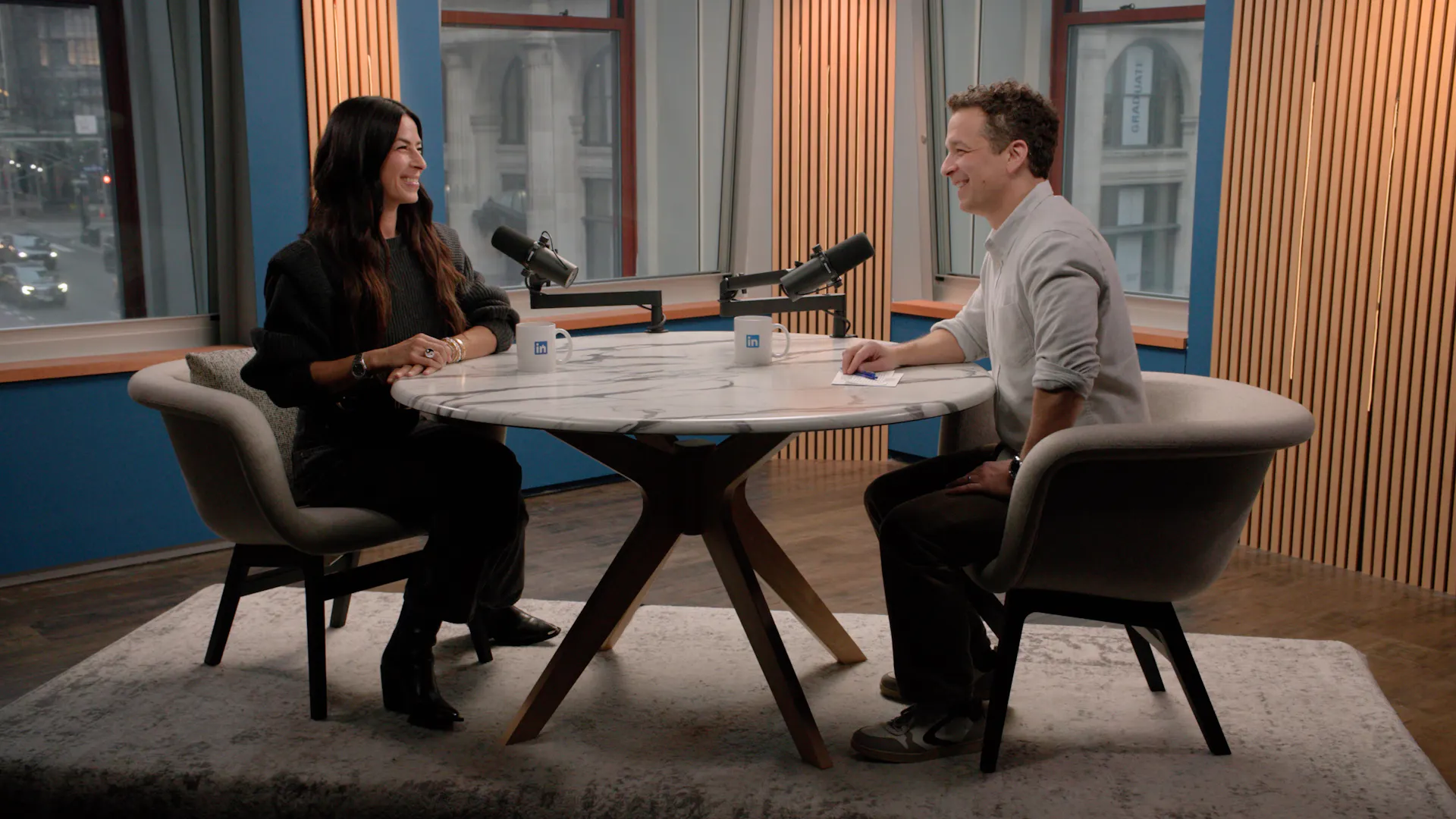
Loading summary
Transcript51 lines
- [00:00]
A
You can't go in as a founder thinking that getting an investor is the solution to your problem. It is fuel and gas, but it comes with a new set of problems. So you also have to be careful as a founder. What are you giving away when you sign that thing that you think takes away your pain?
- [00:17]
B
Welcome to this is Working, where leaders share their strategies for success and the lessons that shape them. From designing your own prom dress to launching a handbag that became a global cult favorite, Rebecca Minkoff is now a household name in the world of fashion. Nearly 20 years after that famous morning after bag, she is a leading voice for women entrepreneurs in an industry that's notoriously tough to break into. Rebecca, welcome to this is Working.
- [00:40]
A
I'm so glad to be here.
- [00:42]
B
We have new data out that looks at the growth of people saying that they are founders. This is like year over year growth in people. Adding founder to the profile, up 79%. It's tripled since 2022. As someone who has been there and done that, I would just love to understand from you, like, first of all, what. What should people know before becoming a founder?
- [01:03]
A
I think that you have to be ready to fall on your face more times than you can ever imagine. And I think it sounds sexy to call yourself a founder, but I think you have to understand the pitfalls and that this is a long game. It's not a I'm gonna go viral and then have a hit product, and in two years, I'm gonna be a millionaire. And I think, unfortunately, that's what a lot of young people are blinded by. If you're a designer, you're looking to have a long, stable brand. It does take a decade to est trust with a customer, or two decades, in my case. And so I just want people to know that it shouldn't be shocking, that it's hard, and you should embrace it.
- [01:41]
B
What were some of the early signs that you had that you had something, and then what were some of the setbacks that you had to sort of get over?
- [01:47]
A
The early signs that we had something is with no paid marketing, with no advertising. The heat around that bag, the morning after bag, it struck a nerve with a woman who was living in an urban city, who was looking for love, entrepreneurship, and living this sort of sex in the city lifestyle. And so. So that made a woman want that bag is like a badge of, like, I'm part of the club. And so that momentum was so exciting. It's intoxicating. I would say the setbacks we had was our first overseas factory you know, sent me the samples the day before our big shoot. And it was the first time we were spending money and nothing was correct or right. We had leather. It's called blooming, when wax rises to the surface in transit and it looks like mold, but it's not. And so we had $300,000 worth of bags with this blooming effect. And I had to call stores like Neiman Marcus and say, okay, I know this sounds crazy. Don't send the bags back. Just get out a blow dryer and gently wave it back and forth and it'll go away. You know, to convince a store that took a chance on you to now get a blow dryer out and, you know, and have the wax go back into the skin is a big ask.
- [02:58]
B
What was going through your mind when you opened those bags? Did you know? Were you like, oh, this is blooming. It's not. This is not a big deal, or did you have to learn yourself that that was.
- [03:06]
A
I had to learn it myself. We got the first, you know, batch of bags that we started seeing this happening. They were already at retail. And I called the factory, I said, I think there's mold that grew on the leather. And he said, send us a skin. And we sent, no, it's actually the wax.
- [03:21]
B
Yeah.
- [03:22]
A
And so then, you know, you're telling your stores like, hold on, give me a week. Trust me, I'm a new designer.
- [03:27]
B
You know, I remember an early, early on in LinkedIn, we had to pull back on a product that we had already launched and it was going to impact all these publishers. And I had the CEO call me up and he said, you have to call every single publisher and tell them this is coming. And it was new to me, this idea of getting on the phone and. And it's. And everyone's like, oh, yeah, we understand. Totally got it. Thanks for. Thanks for putting in the call. But I didn't realize the importance of doing those kind of one on one calls. All right, so let's go back to the beginning again. Your brother was the first one to give you the kind of money that you needed to be able to continue with the business. You had the hit bag.
- [04:01]
A
Yep.
- [04:02]
B
But in order to grow it, you actually needed outside funding.
- [04:04]
A
Yes.
- [04:05]
B
What's the process like as a founder to go to someone else, whether that's family or outside, to go ask for money? How do you know how much to ask for or how even to get someone, you know, to be on this journey with you putting real money down behind your. What? You know, what do you Believe in.
- [04:20]
A
Well, I'd say there's a professional process that should be followed. Ours was not that. It was me calling my dad, saying, please, I have more orders than I know what to do with, and I can't fund them. And he said, I am not giving you a dime. Call your brother. So the first check was 2,500 bucks. And then the check requests, you know, I was like, okay, I need 5, 10, 15, 20. And then he's like, let me fly up there and see what's going on. Like, what's your operation? And he could see right away I knew nothing about business. I knew how to design, I knew how to get my product out there. I knew how to get relationships. And so he said, all right, I'm gonna help you a couple days a week, figure this out. We didn't have a formal discussion at the time about he owns what. It was just kind of like, get in the boat, let's go. It's the. You know, the train's leaving the station. And we couldn't get funding. Vc, private equity, those things didn't exist for brands then. And so he mortgaged his house, he maxed out his credit cards, and that's how we funded it until we hit about half a million in revenue. And then we got what's called a factor, which is like purchase order financing.
- [05:21]
B
Right?
- [05:22]
A
And so I would tell someone that if you're looking to raise money, first off, don't just raise money based on an idea. You need to have a product that, you know, has heat, that people want, that you can tell has some momentum. I think the day of, like, I had this great idea, fund me are over. And so first get that right. When you have that right, go to someone, show your use case, show that it works. And then, you know, friends and family or angels that, you know, you can also be in a relationship with, that if it all goes away and you lost everything, you know, there's still something there. Because that's a risk you take when you work with family.
- [05:59]
B
Why do you think things have changed where you can no longer sell the idea? Something I've heard an investor say is the time where you have the most power with an investor is when you just have that idea. Like, as soon as there's an actual product, they can start evaluating it themselves. Otherwise, they're just buying the dream. So you're saying, don't sell the dream anymore?
- [06:16]
A
I'm saying the opposite. I think you're most valuable to an investor when you're saying, look at the rate of sale. Look at how much more we could do if we had A, B, C and D. Not I have an idea and let's go spend a couple mil developing it and then spend some money marketing it. We didn't do that. And I've seen my own investments lost on ideas. And I've seen, you know, real big investment companies lose their investments. And so now if someone brings me an idea, I'm like, come back to me. When you have product market fit.
- [06:44]
B
If you do have an investor, how do you deal with their input, especially in a creative business?
- [06:51]
A
Well, it depends how much of the company you own and what rights you have. So we had a lot of disagreements with our investors. You know, at one point, the gentleman looking at the spreadsheet said, you should close down shoes. You should close down your stores. You should close down, you know, men's. He just named the list. And I said, so we're just gonna have bags? He said, yeah, that's what's making the money. And we said, okay, but we're building a lifestyle, and that is why you're here. You invested in building of this. It's not going to make a return right away. Luckily, we had that power. So you also have to be careful as a founder. What are you giving away when you sign that thing that you think takes away your pain?
- [07:27]
B
All right, so talk about how you hire. Who are the people that you want with you on the ride?
- [07:31]
A
Everyone has a different opinion about this in the beginning. Who I want on the ride is someone that can get in and help drive that bus. It is someone who can do a lot of very different things. And then as you scale, you start to need those more sophisticated. We needed a finance person. We needed a production person. But I will say that every time we hired someone with some impressive degree from some big company, they would get in there and be like, I'm here to, like, push paper around and give someone else the work. So I think it depends too, on how you like to run things.
- [08:02]
B
So in the early days, you might be hiring people that are not going to be along then in as you grow, right?
- [08:08]
A
Yeah. That was my big mistake is I was like, we're gonna be one big happy family for the rest of our lives.
- [08:12]
B
Right?
- [08:13]
A
And I was on vacation and the first person resigned, and I felt like some. I had lost a family member. And you just have to learn that not everyone is there for that ride or can transform in what you need them to do.
- [08:24]
B
You sold your company to Sunrise Brands. What, how long ago now?
- [08:27]
A
Three Years ago.
- [08:28]
B
And part of the reason you sold is you needed to move production out of China and then into Vietnam. And basically Sunrise was you needed a company.
- [08:35]
A
We needed muscle. I mean, if you think about during COVID everyone with a bigger name was getting in line in front of us. So just to put it in perspective, once we were back making things and things were opening up, we got 3,000 of 300,000 units for fall, I think of 20, 21.
- [08:53]
B
Oh, my God.
- [08:54]
A
Right? So. And then you're, you know, your vendors still want to be paid. You're trying to sell things. I sold the same bag 20 different ways because that's all we had. And at that point, we said, we're not big. We're big, but we're not big enough that we can have the muscle.
- [09:07]
B
Yeah.
- [09:08]
A
And so partnering with a strategic like that gave us that capacity, again, to be able to say, okay, we mean big. Let's grow this thing.
- [09:15]
B
Looking back on it now, what are the. What kind of advice would you give to someone?
- [09:19]
A
The advice I would give to someone is do not treat your company like a poker game. You know, if you get an amazing offer and it feels like the right time, take it. I would also give people warnings that there's such a thing called drag rights. So with our prior investors at year seven, they had the right to sell the whole company, and they could have sold it for a dollar more than they paid for it, which would have left us with nothing. Right. When you sign that agreement and it's the honeymoon, you know, you're like, in seven years. Ah, whatever. Seven years goes by real fast. So we had a scenario where seven years came up, and we had to figure out what we were going to do and how to keep the company, which we did. So I think you can't go in as a founder thinking that getting an investor is the solution to your problems. It is fuel and gas, but it comes with a new set of problems. And so you just have to know what you're signing up for.
- [10:18]
B
I'm sure you get this question all the time. How do you keep up with trends? How do you know that you're designing something that in nine months is actually gonna work or however long it takes for the production to roll out?
- [10:30]
A
I think it's a mixture of data and art. I obviously know is selling what sold for us, why it's sold, the colors, et cetera. I think it's seeing what the consumer. You know, I'm looking at my consumer all day long. I am of her, and then I Think it's this thing. I said this on a podcast and someone was like, what is universal consciousness mean? And I was like, it's that thing that all of a sudden every designer is doing butter yellow or lilac or like, somehow we all. And I don't know why, we all just pick a color and it shows up in our collections before. It's not like everyone can copy each other. Right. It all sort of just happens and I don't know, you tap into it.
- [11:10]
B
Interesting.
- [11:10]
A
And I think social media obviously spreads that a lot further and faster than it used to be. But, you know, even before social media, you would just see certain things that were all, you know, all going down the Runway at once. A platform, a wedge. Like, it's just a sense that you get. And I can't explain it is social
- [11:27]
B
really, where you're getting a lot of your. A lot of these clues from a lot of clues.
- [11:32]
A
Not just big influencers. I look at a lot of nano and micro and I see what they're doing. And I know that people now are more trusting of them because they know they're not being paid to say, I'm wearing this. And so I also look a lot at how they're styling things, putting outfits together. And I'm looking all the time. You think I'm staring off in a space and I'm looking at your outfit.
- [11:52]
B
Talk to me about how you're deploying AI. Are you using it right now? What is your strategy for making sure that AI is part of how you operate or how the company operates?
- [12:00]
A
It's definitely used a lot with taking all the data from our wholesale, our own e commerce also how fast something sold through. I'll use it to iterate on a design idea before I want to bother a team member. We had an opportunity to get a bag to a celebrity that had to be made in a week. Sample cost is going to be two grand. And I was like, let me just see if they even like the idea of this. It was like late at night, and I was iterating with chat and I got it close enough to be like, okay, do you. Do you want me to make this? Do you want me to go bend over backwards to get this to you? So I've used it like that. And then I'll sometimes use it for copywriting. The person that does our copywriting, I know, will use it too. It's not taking the place of anyone though.
- [12:41]
B
Right.
- [12:42]
A
And I am firm on the belief that you can create amazing art with AI. But I never as an artist want someone to question, like, well, did AI design that bag? Like, I bought this bag because I thought Rebecca was working on it.
- [12:54]
B
And before we started rolling, you were saying that you think that there will almost be a pushback where people say, I need to know that a human is involved here, that a human is selling this, a human is talking about this, that this is not AI created.
- [13:07]
A
I think there's gonna be a big pushback. There's gonna be the areas where it works, but I think when it comes to a photo shooter using a model or creativity, I think there's gonna be some sort of authenticity stamp, like not created with AI. And I think that people are gonna wanna know that because they want to know that a designer designed this, that we shot it live, and where it doesn't matter. A still life shoot. I don't know that that matters. That could be AI or a PDP image. I think there are things where it's fine, but other areas, there's still the artistry of creating.