Loading summary
Transcript324 lines
- [00:00]
Theo Von
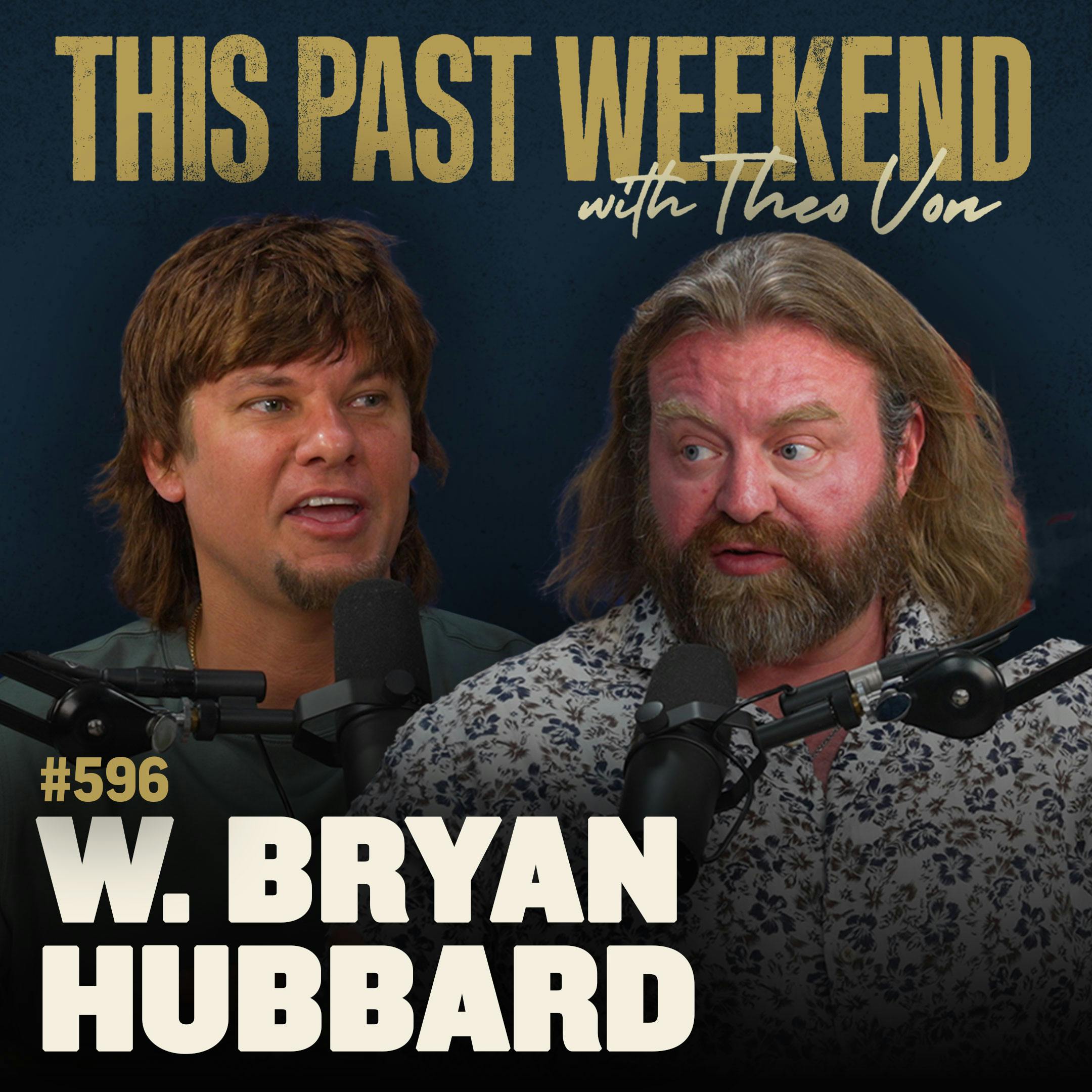
You know in the movies when the SWAT team rolls in all slow mo, everybody looking like action figures? Yeah, this ain't that. This is ready or not. And it feels real, like heart pumping, room clearing. Try not to get your teammates smoked. Kind of real. And it's finally coming to PlayStation 5 and Xbox Series XS on July 15th. You get 18 intense missions solo or with your squad of five, clearing buildings, protecting civilians, and breaching with brains, not just bullets. This ain't run and gun. It's strategy. It's tension. It's like diffusing a situation and your childhood trauma at the same time. You can fully customize your team. Armor, gear, outfits, weapons. And it's got full cross play, so no matter what system your crew's on, y' all can roll together pre order now. And they're throwing in some serious gear. The M32A1 grenade launcher, MKV pistol, and 590M shotgun P PC players. You're getting all that, plus the new Los Suenos stories DLC free on launch day. So if you're ready for the best tactical shooter of the year, a game that rewards brains, teamwork, and clean comms, this one's for you. Go pre order, ready or not now out July 15th on PlayStation, Xbox, or PC. Today's guest is a veteran attorney and policy advocate most known for his focus on ibogaine, a possible new treatment for things like addiction and ptsd. He's currently with the Reed foundation doing this research, and he's CEO of Americans for Ibogaine. It was a fascinating conversation. I'm grateful for his time. Today's guest is W. Brian Hubard. Dude, you brought me a cake today. That's nice of you. What is that you brought?
- [02:06]
W. Brian Hubbard
My wife, who's here sitting with us many years ago, found this bakery in Nashville that has this chocolate ganache cake. I had never had it before till about three months ago, and I like to eat especially chocolate. So she introduced me to this chocolate cake and. And it's the best chocolate cake I've ever had in my life. You can leave it sitting out on the counter for four days and it tastes just as good as when you bought it. So we wanted to give you a touch of something that once you taste, you can untaste.
- [02:34]
Theo Von
Oh, dang. Yeah. Something chocolate too, huh? Hell, yeah. I might end up meeting a mixed girl after eating that. You know, you just never know what could happen. But thank you. That's just beautiful, you guys. It's so sweet of you to think of me and. And thank you for coming. Thank you for making the trip over from you guys living Kentucky.
- [02:50]
W. Brian Hubbard
Yes, sir, we live in Lexington. And thank you for the wonderful hospital to visit with you.
- [02:55]
Theo Von
Yeah, we're looking forward to it, man. I know, I want to talk to you. So you've had a lot of experience with like ibogaine, with like treatment. I know there's a new laws that have been passed in Texas. I want to get into, into like what ibogaine is. Right. But first I just wanted to start with like, like I know that it's a plant medicine. Right. And so what is something you've seen? Like take me on a story of somebody that you've seen use a plant medicine, use ibogaine and an experience that they've had or a transformation that they've had. I just wanted to kind of start with an experience that you've witnessed in.
- [03:29]
W. Brian Hubbard
Terms of personally witnessing a transformation. My wife and I, we traveled down to the Ambio clinic in Tijuana, south of Tijuana, in November of 2023. And the way that the whole transportation system occurs is we flew from Kentucky to San Diego and then a shuttle took us from the airport in San Diego to a Sheraton near. And then the clinic sent a driver to pick me and her and the other folks who were coming down up to go there on a Monday. And when we landed at the airport in San Diego and went to check to the airport shuttle, there was a gentleman who was standing down about 30ft from us and Brandon Glasser, if you hear me talking, you know exactly who I'm referring to.
- [04:16]
Theo Von
Brandon Glasser, that was his name?
- [04:18]
W. Brian Hubbard
Yes, sir. He was kind of had longer hair, looked to be about my age. I pegged him probably somewhere in his mid-40s or so. He was kind of ashen. He kind of had that thousand yard star that comes with an individual who has experienced tremendous trauma. And just the way that he looked, the way that he was standing, the way that he was looking, he looked like somebody who came to the end. And my wife and I looked at each other, we said, I wonder if he's going to be getting on the shuttle with us on Monday morning. Well, sure enough, Monday morning comes along and the driver comes to pick us up and Brandon gets on the shuttle with us and we're sitting behind us and we'd go down the road and he makes a couple of observations about, you know, what's bringing him to have an ibogaine experience. And he talks about that he was in. He was a Green Beret and he had seen a lot and his entire affect was one of just. This was a guy who had had it, who had had it with life.
- [05:25]
Theo Von
Who had had it with himself, probably.
- [05:27]
W. Brian Hubbard
At that point, himself.
- [05:28]
Theo Von
Yeah. Oh, that's the worst sickness.
- [05:30]
W. Brian Hubbard
Yes, sir. So we get to the clinic on Monday, we go to sweat lodge ceremony. Monday evening. Tuesday we have some group activities with two of the other gentlemen who were there. It was a group of five of us. And then we go in for ibogaine on Tuesday night. And leading up to that, Brandon's affect was consistently just flat and what I would describe as just kind of checked out. So we go in on Tuesday night and they give us our ibogaine. The next time we all see each other is on Thursday morning at the breakfast table. And I don't know how many of your audience members may be familiar with the Bible story of Lazarus. When Lazarus had passed away and Jesus called him from the grave after he having been dead. And he emerged and they unwrapped his burial clothes and he was as he had always been. Seeing Brandon at the breakfast table on Thursday morning is the closest that I will ever come to seeing what the people who saw Lazarus emerge from that grave saw. His entire affect and demeanor had been transformed. This guy who had the thousand yard dead eye stare, his eyes were clear and bright. All that consternation and brokenness that was on his face and that had drawn it in was gone.
- [06:59]
Theo Von
Yeah.
- [07:00]
W. Brian Hubbard
He was a radiant being.
- [07:02]
Theo Von
Amen.
- [07:02]
W. Brian Hubbard
And when I sat down at the table, I just looked at him and I started crying. I said, dude, your transformation is unbelievable. I feel it. It's visible on your face. And I mean, it was just.
- [07:18]
Theo Von
It was a miracle.
- [07:20]
W. Brian Hubbard
It truly was a miraculous, beautiful transformation that had occurred over those 36 hours. Wow.
- [07:26]
Theo Von
And you could just feel it. I mean, that's so powerful when you can just. When you can see it in somebody. Yeah, because that pain of feeling, I mean, it's just like you're looking like somebody. So just they're broke and they're sick of themselves. You know, they can't even, you know, it's like they're hunting without a gun. That is. Had that look on their face, you know.
- [07:43]
W. Brian Hubbard
Yes, sir. And now I got to saw this at scale at a place called beyond, that's located in Cancun. My wife and I went there in December of 24 and there you have people coming and going at all times. And we were able to come in and see people who were coming to the door, who were at death's door. They had tried everything in the world to resolve either their trauma or their addiction, and nothing had worked. And as people are coming, people are also going. And as they walk out the door to leave, there is a community circle to celebrate their departure home. And the people who, as they were leaving, were coming through the door, you could see and feel that same radiant transformation that we saw individually through Brandon Glasser. And we got to watch that occur over the course of a week. And you could see when people would come through the door, they were just. They like, what am I here for? What am I doing here? How did I even manage to get into this place?
- [08:44]
Theo Von
Yeah.
- [08:44]
W. Brian Hubbard
But by the time they left, they knew why they had been there and it was to be restored.
- [08:49]
Theo Von
Amen, dude. Were you able to talk with Brandon at that moment? Like, you were able to speak with him and ask him how he was feeling and, like, was he able to iterate kind of what he felt like was going on with him?
- [08:59]
W. Brian Hubbard
At the breakfast table, he explained what his journey was like. It was very visual, it was very spiritual. And many of the things that had troubled him in mind and heart, he found relief, he found catharsis. And he felt assurance that what we see on this side of life is only a fraction of what true ultimate reality is all about. We are here as earthly creatures to have an earthly experience, but at our essence, we are spiritual beings who have eternal significance. And what ibogaine and some of the other plant medicines can do is affirm that reality as an individual has a new beginning to reorient their relationship with their self, the world, and their maker. It ain't going to solve all your problems. It ain't a magic wand, but it essentially provides you with an opportunity to establish a brand new. A brand new foundation that is grounded on your significance as a spiritual being with eternal value.
- [10:12]
Theo Von
Amen, God. Sign me up. My God, if that's a pyramid scheme, I want to get to the dang top saying, no, I mean, you say, I mean it just like, I feel it, dude. I mean, I've had my own experience with ayahuasca. And you even describe it like, God, I just remember, like, processing so much. Like, it was like all these things that I could, you know, in regular life, even by going to therapy, it was almost like pulling weeds, right? The weeds would grow and I could go in therapy and pull them, right? Or I could go through 12 step and pull them. But now with ayahuasca, it felt like I was underground, like I was part of the earth and I could. I could Pull the dang roots, right? Or I could at least see the roots. I could see the roots and I could organize them better and I could prune them. Even I could prune my own roots. And so it gave me a chance. So suddenly the stuff on the top, it wasn't just weeds. When I got back out of the experience, it was a little bit more like my garden made a little bit of sense. It wasn't just a constant struggle to manage my own little acre of existence. And it's hard to explain sometimes, but I will say this. I've probably done it, I think, five times over the past three years. And recently I have started having this feeling that, oh, man, this is just a little part of existence, right? Like, whereas I used to feel so connected and so scared about dying. And I do still. You know, I, like, I want to be alive. I want to spend time with my loved ones and see if I can see certain experiences or dreams through. But I don't feel like, yeah, you almost feel like, oh, we'll just be getting back on the train, you know, after that. Like, it'll be something else is going on. Like, this is just a stop at a bus, Bucky's, you know, down in the middle of space that we're stopped at, you know, and you can get you a damn snow globe with Dolly Parton in it, or you can do whatever you want. I mean, It's a BUC EE's, you know, it's Earth. So. But. But yeah, I start to think that, oh, there's more after this. And it does make me less afraid about just the weight of every moment of my life. And my life weigh every moment weighed so heavy, and I don't even know why sometimes. So take me through ibogaine itself. Like, what happens with ibogaine, like the medic in itself, right?
- [12:31]
W. Brian Hubbard
So the one thing that is cool about ibogaine is its intelligence and its ability to produce an effect within the individual which is unique for that individual. Now, there are certain common themes that exist within it. Let's go back to the very beginning, which is. This is an alkaloid found in three West African botanical sources. There's three plants that grow in Africa. One is called the iboga root. That is the mother plant. There's another plant called the Voiconga africana, the Voikanga. Voicanga Africana.
- [13:04]
Theo Von
Voicanga Africana.
- [13:05]
W. Brian Hubbard
And the third one is not named. It's the more minor.
- [13:08]
Theo Von
Okay, so the third one is a more minor root. Okay, so the.
- [13:11]
W. Brian Hubbard
The booty Peoples, the booties of West Africa. And they primarily reside in Gabon. They.
- [13:18]
Theo Von
Gabon.
- [13:19]
W. Brian Hubbard
Gabon. They are the cultural possessors of all the ancient knowledge around iboga and ibogaine. They have used iboga and ibogaine in their cultural and religious traditions for centuries now. They are humanity's caretakers of all the knowledge and wisdom that comes from this plant.
- [13:42]
Theo Von
So like the librarians, kind of correct.
- [13:45]
W. Brian Hubbard
They have known and understood its abilities to connect us with divine source for centuries.
- [13:51]
Theo Von
God. And they weren't sharing it, were they?
- [13:53]
W. Brian Hubbard
Well, there, there was no opportunity for them to share because they're a self contained society and the contact was made with them by the West. And of course that first contact came through the establishment of the transatlantic slave trade.
- [14:07]
Theo Von
Right. So they didn't. Not a good foot, not a good.
- [14:09]
W. Brian Hubbard
Start off, not a good start off.
- [14:11]
Theo Von
Got off on the wrong foot.
- [14:12]
W. Brian Hubbard
So you have this society that has ancient knowledge, knowledge which until now has essentially been dismissed by the reductionist perspective of the West. And now that the west is being strangulated by the consequences of its materialism, deaths of despair driven by a lack of any sense of spiritual significance, we find ourselves now looking across the Atlantic Ocean to a people who we have dismissed, who we have enslaved to say to them, please help us understand how to utilize what you've known from centuries to emancipate us from the prison that we've built for ourselves. And they know, as we start to create this process of medicalization within the United States. I firmly believe there is a beautiful unity opportunity here.
- [15:04]
Theo Von
Yeah.
- [15:05]
W. Brian Hubbard
For us as civilizations and for us as people within the United States, black and white alike, to come together to illustrate our universal kinship as children of our creator whose destiny is rooted and grounded in divine love.
- [15:25]
Theo Von
Amen, brother to the core.
- [15:26]
W. Brian Hubbard
I believe that, Theo, in all honesty, if someone had said to me five years ago, hey, you're going to be getting to go all around the country talking to people about plant medicine and the way in which it has been designed to affirm human divinity and your own experiences with these medicines. I would have looked at them and said, what in the world happened to me and what have I got to do to go in back in time to make sure it does not. I mean, I was the president of the teenage Republicans in high school.
- [15:58]
Theo Von
Oh wow.
- [15:59]
W. Brian Hubbard
I was president of the college Republicans in college. So to have gone.
- [16:04]
Theo Von
So you had Roche Limbaugh mixtapes probably at the house.
- [16:07]
W. Brian Hubbard
Oh yeah. I mean, to talk to 25 year old, conventional conservative, haircut Republican me and tell that I'd be Sitting here with you having this discussion, I would have been like, you're out of your effing mind. This. There's no way possible that that's going to occur. And yet here we sit.
- [16:23]
Theo Von
Here we sit, brother. And sometimes that's. We have. We have to realize sometimes I'm like, man, I don't know where I'm supposed to be right now, but I'm supposed to be right where I am. You know, that's what Cat Williams reminded me of. When I talked to him, I was like, man, he's like, if you're here and you're in a conversation, then this is the time to have it.
- [16:40]
W. Brian Hubbard
You know, you were talking about the earth being buckies and how this is a potpourri experience. But there's not all that there is. As I have walked the pathway to come to your studio for this discussion, I've come to conclude that everything that happens from those things that are our earliest memories in life all the way to. As we sit here and talk now, they are designed to prepare us to, to become who our maker wishes for us to be in this life as a preparation for the next. And plant medicines, I believe, have existed for thousands of years in cultures whose wisdom has been dismissed. They have been looked down upon, and that has been to our detriment here within Western society. And now that we see the garden that we have grown here expressed as 1.5 million people who have died since 2015 from a combination of drug overdose, alcohol related disease and suicide, we're missing some things here. We treat the body, we treat the mind, but we've done a bad job of acknowledging the soul, so.
- [17:54]
Theo Von
Well said, man. You know, this is just a rest area for your soul. You know, get you a snack and urinate and then we got to hit the high road, you know, because I think, and also when I start to believe that after this, you're off to something else even wilder. It's it make, it's all. It's like, adds so much more, like appeal to your own life. Right. That's what I've really. That's one thing I notice. But yeah, I do believe that. I do believe that God just got us here in the dang pet boys or whatever, you know, and he's just kind of sprucing some things up. Let's talk about ibogaine and what it is, because that's kind of your specialty. Is that fair to say?
- [18:30]
W. Brian Hubbard
That's fair to say. Okay, so pure accident, by the way. Not by design or ambition.
- [18:35]
Theo Von
You just Ended up just obligaining.
- [18:37]
W. Brian Hubbard
Yes, sir.
- [18:37]
Theo Von
Okay, well, look, hold on now. Were you like an after school user or what happened, really?
- [18:42]
W. Brian Hubbard
Well, I came to it in the same way that most people come to it, and it was through desperation. I practice law in Kentucky for 16 years and then went into state government service. I ran the state Social Security disability system and some other things. And after being in place for about six years, there were some folks who said, you know, he kind of does a decent job with some things, and we'd want him maybe to run the state's opioid commission. And Kentucky, like a lot of Appalachian states, has been ground zero for the opioid epidemic that began with OxyContin being introduced back in the late 90s. So all these opioid manufacturers and distributors had settled with a bunch of states and paid them money for all the damage caused by the opioid epidemic. So when it came time for Kentucky to get its money, they had to set up an agency to administer and. And oversee it. And they call it the Kentucky Opioid Abatement Advisory Commission. So a guy by the name of Barry Dunn, who was deputy attorney general at the time under my boss, Daniel Cameron, came to me and said, hey, the legislature has set up this opioid commission. Is this something you'd be interested in running the. Oh, I think you probably know, being a Southerner, that as much as we love home and the society at home, sometimes the governments have not always functioned the way they're supposed to. You know, Boss Hog and the Dukes of Hazard was a. Was an illustration of some of that old timey way of doing business where everybody who's a working person gets their bones picked clean by the people who are in power.
- [20:14]
Theo Von
Amen. Always.
- [20:16]
W. Brian Hubbard
So when Barry said, hey, would you be interested in doing this job? I said, barry, this is a very treacherous opportunity because we've got some aristocratic power structures here in Kentucky that are used to having their way with anything that involves the dollar bill. If y' all are willing to allow me to run the commission so that it is accessible to the every average, average everyday Kentuckian that grassroots organizations that ain't used to getting these sorts of opportunities can be resourced and that we do it in a way that is accountable and transparent, I'll be interested in the job. But I don't want to take it if the expectation is just going to be to hand the money over to the usual vultures.
- [20:55]
Theo Von
Amen.
- [20:56]
W. Brian Hubbard
And he said, we'll back you 100%. I said, all right, so I went through an interview process, and in the interview process process, I was asked, what do we need to do with this money? I said, well, let's put the big picture in context here. We're getting $842 million. Now, that's a big old bunch of money to anybody. Oh, yeah, massive. I mean, you just hope you win $842 million on the lottery.
- [21:19]
Theo Von
Oh, that's damn. Scrooge McDuck.
- [21:20]
W. Brian Hubbard
Yes, all the way. Richie Rich.
- [21:22]
Theo Von
Yeah.
- [21:23]
W. Brian Hubbard
But the problem is when you put it in context, per day, pharma made $100 million a month on OxyContin sales for 12 years.
- [21:34]
Theo Von
Yeah.
- [21:34]
W. Brian Hubbard
So the entire state of Kentucky with 4.8 million people is getting about eight and a half months of Purdue farmers OxyContin sales, but over 15 years.
- [21:43]
Theo Von
Right. So it's really spaced out and put up a picture of the Sackler family just so I can just tell them to go fuck themselves. If you don't mind throwing up there. I'm sorry if you ladies have to hear that language, but there you go. That's a group that got off scot free. This still alive while hundreds of thousands have been killed by their greed. So hope they're doing well. Hope you see them on the street.
- [22:04]
W. Brian Hubbard
And they've had a lot of enablers in politics.
- [22:07]
Theo Von
Oh, yeah, for sure. And you can. There's a lot of roads. You can go down that. And we will get down some of that road. I want to get down how politics has helped or not helped the opioid crisis, and what do you think, like, we can do to solve that? But I want to just stay on track of this story. So you're locked in with the government now. You have the ability to kind of administer how the funds are put out.
- [22:25]
W. Brian Hubbard
Yes, sir.
- [22:25]
Theo Von
Okay.
- [22:26]
W. Brian Hubbard
And they said, what do we need to do with money? And I named off a couple of priorities, beginning with children. And I've done a little homework on you, and I think you and I have probably had some things that we got in common. I said, the first thing we've got to do is take children whose families and communities have been destroyed by this and give them connection to, sanctuary from chaos, the stability of love and relationships, and an affirmation of their individual spirituality. Any child who's disconnected from these three things is going to have a tough time making it in this world. And if we can create a structure for that to happen, we've got to do it. So the next thing we've got to do is take people who are trying to get their lives back together and help them in whatever way we can. Because someone whose life has been ravaged by addiction, they face all kinds of legal problems and financial problems and just logistical problems like, where do I buy clothes to go to work? How can I get to work? We've got to do everything we can to give a helping hand to folks who are trying their very best to rebuild a shattered life. And I said, the final thing we've got to do is figure out a way to pioneer a therapeutic breakthrough for opioid addiction. I said, the options that we currently have are basically opioids with which we treat opioid addiction. And while it's better than nothing, government has as. As a job, an obligation to improve everybody's life.
- [23:49]
Theo Von
And that's methadone, Suboxone, things like that?
- [23:51]
W. Brian Hubbard
That's correct. They are opioids produced by the very same people who created the problem.
- [23:55]
Theo Von
Nah.
- [23:56]
W. Brian Hubbard
Really? Yes, sir. The companies that produced the opioid epidemic are the same companies that produce its treatments. Really? Yes, sir.
- [24:05]
Theo Von
Let's look that up. Who makes methadone?
- [24:07]
W. Brian Hubbard
And check out Endeavor, which is the parent company of Suboxone and Supplicate and others. And in dvor has its own criminal rap sheet with the federal government from the way in which it sought to manipulate an increase in the issuance of those prescriptions. There's something that's called the opioid record archive at the University of California in San Francisco. And in that record archives, a Harvard faculty member by the name of Dr. Matt Bevin has pulled out documents that show that the companies that created the problem very much celebrate the fact that they're the ones who are basically making money off of the treatment on the back end.
- [24:51]
Theo Von
Unreal.
- [24:52]
W. Brian Hubbard
And that's the system that we find ourselves with. It's there. Now, don't get me wrong, there's thousands of people that have been saved by these, and they should be options on the table. But we need to dispute, diversify, expand and improve upon those options if we can. Wow.
- [25:05]
Theo Von
That's unbelievable. I think a lot of times we don't realize, right, that evil. Evil has a plan. Right. Evil's not just running around your neighborhood just tickling people or whatever and yelling profanities and stuff, like in the street, like, way, you know, evil will. Will sell you the problem and sell you the solution. That's how far they've already thought ahead.
- [25:27]
W. Brian Hubbard
That's right.
- [25:28]
Theo Von
They've already made the solution half the time before they made the problem. If evil makes a solution, they won't Say let's offer the world a solution. They'll say, how do I create a problem so I can sell you this and then I can sell you that. Right. You know, I don't know. I'm preaching. Sometimes I don't notice for myself that evil is smart. Evil is not ignorant.
- [25:49]
W. Brian Hubbard
It's very sophisticated. And on the exterior it's not scary. If evil look like all the monsters of our imagination, it's easy to identify it and avoid it. But it's slick. And the Bible says the devil will appear as an angel of light. There's also phraseology in modern literature that refers to the banality of evil. It's very boring. Evil often appears in very high scale white collared business suits and ties carrying fancy degrees in law and finance from Ivy league institutions. All these measurements of external respectability. Evil knows how to put it on and shine. Yeah. And they're there to sell us whatever they can sell us to make us its subject.
- [26:36]
Theo Von
Yeah.
- [26:37]
W. Brian Hubbard
And that's where we find ourselves.
- [26:38]
Theo Von
Dang man. It's true. And it happens. There's a lot of ways it can happen. But yeah, I think just the psychology of evil. I've thought about that more recently in my life. Like evil is a strategist. Evil is a wizard.
- [26:49]
W. Brian Hubbard
Yes sir.
- [26:49]
Theo Von
You know, and you have to be a wizard for your own life. You know, we have to try and do our best to do that. Okay. So you accept the job. Accept the job and you're like. And one of the things you just mentioned, you have to find ways to create better pathways for people to get treatment.
- [27:06]
W. Brian Hubbard
That's correct.
- [27:07]
Theo Von
Okay.
- [27:08]
W. Brian Hubbard
Now in 2018. You know, I had heard about psychedelics growing up. I remember watching commercials and shows on TV of a bunch of hippies rolling around in mud on mushrooms. And I thought lordy mercy. This is how you, you collapse an entire society. Bunch of crazy nuts out of their mind, drug taking people. Those were my thoughts on psychedelics in 2018. One of my very close friends, he, his sister was somebody who I had known for years as underground psilocybin provider. And she's little out there and I never really give it much thought but.
- [27:45]
Theo Von
And shout out to all the underground psilocybin providers out there. I just want to. You guys never. You don't get a holiday. You know what I'm saying? Dude, where's the freaking juneteenth for underground psilocybin providers that have kept us all able to manage semi decently over the past few years?
- [28:04]
W. Brian Hubbard
At great risk.
- [28:05]
Theo Von
At great risk. At great risk. Dude, and half the time you're on mushrooms when they bust you. And so that's spooky, but go on.
- [28:13]
W. Brian Hubbard
In 2018, I do a lot of reading about things related to politics and society and science when there's opportunities for progress. And I come out of a family that has a championship history of alcohol, substance use and mental health issues. And my family has generationally had a wicked relationship with alcohol.
- [28:36]
Theo Von
Oh, yeah, I could see that. You remind me of Hacksaw Jim. Drugging. You know what I'm saying, dude? And I mean that in a loving way.
- [28:42]
W. Brian Hubbard
I appreciate. Okay, yeah.
- [28:43]
Theo Von
So your family, it's there a lot, huh, There.
- [28:46]
W. Brian Hubbard
Well, I put this way, I can remember certain great uncles of mine who had served in war, been to World War II in Korea, and sitting next to them and on a hot summer day and they wouldn't have had a drink, but you could smell the alcohol being sweated out of them.
- [28:59]
Theo Von
And do you think you had a problem growing up at all or. No.
- [29:02]
W. Brian Hubbard
You know, fortunately I never developed any sort of alcohol or substance use problem, but that was because of the presence of God's love in my life through my grandparents. My earliest memories as a child were of screaming and cussing and chaos between my parents. I scared to death as a kid. And I had two grade school educated, coal mining grandfathers who spent a lot of time with me for the first 12 years of my life. And they were both men who had grown up under tremendous hardship. They had no bitterness. They had nothing but love and grace within them. And when I would go and spend time with them on the weekends, as early as I could remember them speaking language to me that I could understand. At some point before they'd take me home, they'd put me on their knee and they'd say, now listen, Papa loves you. But more importantly, God loves you. And he has a special and unique purpose in your life. No matter how bad it gets, no matter how abandoned and scourge you may feel, no God has you in his hands. Don't ever lose sight of it. Because if you will maintain faith, he's going to bring you through. Theo, if those beautiful gentlemen had not given me those lessons consistently, if I were alive at all, and there's a substantially likelihood that I would not be, I would not be sitting here with you as I am. I'd be living in some dark hole somewhere wondering what someone who held jobs like I've held was going to do to come pull me out of them.
- [30:40]
Theo Von
Wow.
- [30:40]
W. Brian Hubbard
It made all the difference.
- [30:42]
Theo Von
Yeah, I think it's like you don't realize the effect you can have on somebody by showing them attention, showing them care, you know. You know, I believe that like parents, like, especially when they look at their children like whatever you look, whatever you, however you look at your children, you're like a picture and you are poor. That is the look that they will have inside of them, right? Like, you know, like in our family, I was, I always felt like there was a ton of look of like you were, you were wrong, you weren't doing it right. Like nothing was ever okay. I didn't never get one look from my mother that I, I, I don't think she looked at me until probably about 13. But when she finally looked over at, she pissed. I like God dang. I've waited all that time for that. I'd have freaking left sooner but. And no shade to her like that. You know, times have gone on, but I've just, I think to parents, and I'm not trying to preach, but I think if you always look at your child like what they're doing is something is wrong, then the feeling that they will have in them is that something is wrong. Right. However you look at your child the most, that is what they, that's the feeling that gets created in them. Do you think that's a possible thing or not?
- [31:47]
W. Brian Hubbard
Oh, the absence of love is lethal. We as human beings are animals. At our nature, our core, we are animals. And the existence of love within us is the surest evidence, the surest evidence of, of a divine creator whose essence is almighty, unconditional love for all of us. And but for that touch of divinity within us, I don't believe that any human being would have the capacity to feel or receive love. And it is being born on this side of eternity with the evil that coexists with the light that defines much of our lifelong journey of struggling to attain that light. I heard somebody say about six months ago that really the struggle in life is always the struggle to attain genuine, authentic love.
- [32:41]
Theo Von
Amen. In business they say you can have better, cheaper or faster. But you only get to pick two. What if you could have all three at the same time? That's exactly what cohere Thomson Reuters and Specialized Bikes have since they upgraded to the next generation of the cloud. Oracle Cloud infrastructure. OCI is the blazing fast platform for your infrastructure, database, application development and AI needs where you can run any workload in a high availability, consistently high performance environment and spend less than you would with other clouds. How is it faster? OCI's block storage gives you more operations per second cheaper. OCI costs up to 50% less for compute, 70% less for storage, and 80% less for networking. Better. In test after test, OCI customers report lower latency and higher bandwidth versus other clouds. This is the cloud built for AI and all your biggest workloads right now with zero commitment. Try OCI for free. Head to oracle.com t h e o that's oracle.com theo have you ever had a craving for that favorite panini you love so much? All you can think about is that perfectly toasted pressed sandwich. So you think about running out to get it, but it's too cold or you're too lazy, so you order it delivery instead. A client of Morgan and Morgan has recently been awarded nearly $1 million after jurors affirmed that her injuries slipping on ice outside of a Panera bread were the company's fault. Their client was working as a doordash driver when she slipped and fell on an icy walkway outside of the Panera in Fort Wayne, Indiana. The original settlement was for 125,000, but Morgan and Morgan fought to get her what she des. Morgan and Morgan is America's largest injury firm for a reason. They've been fighting for the people for over 35 years. Hiring the wrong firm can be disastrous. Hiring the right firm could substantially increase your settlement With Morgan and Morgan. It's easy to get started and their fee is free unless they win. Visit for the People.com Theo or dial pound law pound 529 from your cell phone. That's F O R the people.com Theo or dial pound Law pound 529 from your cell phone. This is a paid advertisement. Okay? So you're in there, you're mitigating where the funds go and stuff. How do you get to ibogaine? How do you get to be in this place where you're obviously like seeing that there's a lot of need for things, right? Having an emotional connection to humans so you understand maybe how the need can best be serviced. How do you get then into ibogaine? How do you come to that?
- [35:46]
W. Brian Hubbard
In 2018, I read a study that was published about the effect of the psilocybin, or psychedelic mushroom, on alcoholism and the fact that it had demonstrated within this study a profound ability to help people overcome alcoholism. And having come from a family that has just a generationally wicked relationship with alcohol, this caught my attention. A friend of mine has a sister who is a little out there, but she's an underground psilocybin Mushroom facilitator. I became curious after I read this article and I thought, well, there must be something to this, given this scientific research and what it shows about its ability to basically effectively treat alcoholism. So I reached out to her. I said, I know that you understand the mushroom and have for some time. I want to understand it. I'm curious and I want to see what this is all about. After four years thinking this is just a bunch of hate crazy hippie stuff I didn't want nothing to do with. So between 2018 and 2022, I had a series of psilocybin mushroom journeys. The first one was just very mild at 3 grams. It was enough to kind of get the extra sensory ability to kind of see and hear and, and feel things a little differently. And then I had probably eight to 10 additional journeys of various intensities. Most of them were beautiful, some of them were terrifying, all of them were profound. And at the end of that process, I became an absolute believer in what other civilizations have known for thousands of years. And that is our creator has put plants on this earth whose purpose is to work with human chemistry to provide us with just a small window of opportunity to look behind the veil and into eternity. So to understand who we are, where we come from, and how our true alignment is with the source of divine love that flows through all of us.
- [37:53]
Theo Von
Amen.
- [37:54]
W. Brian Hubbard
So I read about a lady who, she actually wrote about her own stories with psilocybin and how it helped her overcome her anxiety and depression that had crippled her for most of her life, as well as a near fatal eating disorder in addition to her atheism. So I reached out to her and I said, hey, I've been given this job in Kentucky. You wrote about your experiences beautifully. What can you tell me about the world of psychedelics and whether there's anything in it that has special application to opioid addiction? On July 29, 2022, down in Siesta Key, Florida on family vacations when I had this call and it was the day that I heard the word ibogaine for the first time. She said, are you familiar with this? Said I've never heard of in my life. She said, I'm going to put you in touch with another lady who can tell you about her recovery experience with ibogaine. She put me in touch with a lady by the name of Juliana Mulligan, who gave me her story. And basically she had been an opioid dependent individual for almost a decade. And she said she had done it all. Heroin, fentanyl, she'd been in and out of jail. She'd been homeless at different points in time. Wow. She said she had been through every recovery process that could be invented. Abstinence programs, 12 step programs, and she had been through Suboxone treatment. And she said, what they don't tell you about Suboxone is that the way in which it attaches to your system. She said, for me, Suboxone withdrawal made heroin withdrawal seem like a cakewalk. And she said it was the awfulest thing I ever experienced. She said, I became so tired of the life I had to live to secure my supply. I relocated to Columbia to teach English as a sacred language. And in Colombia, they have open pharmacy, meaning you can go in there and just get whatever you want.
- [39:42]
Theo Von
Oh, yeah. Most of my dreams take place in damn Columbia.
- [39:45]
W. Brian Hubbard
Well, that's. That's where she got herself and why. So she said, one day I got up and looked in my mirror, and she said, I knew I was going to die.
- [39:53]
Theo Von
Wow.
- [39:54]
W. Brian Hubbard
And she said, I was just desperate to give myself one more chance to be able to live because I knew I wasn't going to make it. She said. I got online and started researching, and I came across this thing called ibogaine. And she said it just sounded ridiculous in terms of what it was supposed to be able to do.
- [40:11]
Theo Von
And it sounds like a damn protein powder, you know?
- [40:13]
W. Brian Hubbard
Yeah. She said it sounded too good to be true. It just sounded like a bunch of kookiness, really. She said, but I was desperate, and I was willing to try anything that could give me my life back. So she said, I went to an ibogaine place in Guatemala, somebody who could provide it. And she said, but I didn't know at the time is that ibogaine comes with a very serious cardiac side effect, meaning if you take too much of it, though it is a stimulant, it will slow your heart down. Stop it and you'll die. You have to. Ibogaine is a very serious medication. It has no recreational purpose whatsoever. You know, you hear about parties and raves of different kind. Cocaine parties or heroin parties. Nobody's ever heard of an ibogaine party. Because unless you think being semi paralyzed for 10 to 12 hours and throwing up over that same time is a good time, you ain't going to have a good time.
- [41:07]
Theo Von
Yeah, it's gonna get food poisoning or whatever.
- [41:09]
W. Brian Hubbard
That's right. There's no food poisoning. Parties happening in the United States, just like ibogaine. So Juliana makes her way to Guatemala and she gets ibogaine Treatment, she was given about three times what she should have, and she went into cardiac arrest six times and almost died. She said she could somewhat remember her journey. She said, but the first thing that she remembered after getting her treatment was waking up in the intensive care unit of a hospital in Guatemala. And she said, when I opened my eyes, I felt the best I had ever felt in my life. And she said, despite the fact that it almost killed me, I would go back and do it all over again. She said my desire to use was gone. I didn't experience any withdrawal symptoms. She said I had spent years being told that I was diseased, that I had a disease that I could not overcome, that was going to be with me for the rest of my life, and the best that I could do was treat those symptoms. And she said for me, that led to this sense that I was not in control, I didn't have ownership of myself. She said, after I began, all that thinking went to the wayside. I came to recognize that I had ownership of myself and my destiny and that my future would be henceforth defined by my choices rather than any compulsion tied to a disease that was fictitious. Reach, brother. Wow. She said. Most significantly for me, she said there was no question in my mind after my ibogaine experience that there is an eternal creator whose essence is pure and unconditional love for all of us. She said, I know it, and that made all the difference for me. And that was the first ibogaine recovery journey that I got to hear about. What in now, three years later, has been hundreds of such similar stories of just unbelievable Lazarus, like restoration.
- [43:09]
Theo Von
Amen. Wow, man. Yeah. I think just having hearing you say that about how it gives you the autonomy over your life, because that's what I think you start to feel. I think that's one thing that that's like. I mean, I know for me is missing a lot of times is like just that belief, like that core belief that I'm in complete control of me. Right. I just like, yeah. Because you start to wonder, well, where does people's messaging come from? And I think a lot of times parents just don't know that a lot of it does. It can. Can come from them. Right.
- [43:44]
W. Brian Hubbard
Well, we all grow in the soul in which we are planted, whether we're children or whether we're parents. And when we look at where we're at, especially over the past 30 years in American society, there's a whole lot of messaging through popular culture, through government, through institutions of cultural influence that individuals are not their own they are in many ways captives of circumstance. And if they are captives of circumstance, they are also going to find a lack of empowerment, a lack of autonomy, a lack of control, which leads to feelings of a lack of worthiness, a lack of relevance and a lack of meaning.
- [44:21]
Theo Von
Amen.
- [44:22]
W. Brian Hubbard
It all goes together. And what plant medicine broadly, and ibogaine specifically seems to have is this ability to liberate the individual from the surly bonds of their earthly thinking that has been reinforced by systems of power and control that prefer people to live on their knees instead of on their feet.
- [44:44]
Theo Von
Yeah, it's really like a new. It feels like almost like an emancipation proclamation, kind of for the soul, you know, of a spirit. Because I think that's right. I think most of my life I've probably thought, man, something's wrong. How do I fix something that's wrong? Right? Instead of thinking, hey, I'm right. Right? Instead of like, stacking things on that other side of the scale that, like, I was created to be okay, Right. I was created to be right. There's like a lot of probably. I don't know if it's just Western society, but it's like, yes, something is wrong, right? This. How this is broken. Something's wrong, right? And that's from a place of being defeated, kind of. You're operating from a place not of power. Then you know.
- [45:28]
W. Brian Hubbard
There is a philosopher out there, you know, a guy by the name of C.S. lewis, who was this great Christian thinker. He wrote the Chronicles of Narnia. He wrote Mere Christianity. He wrote. Called the Screwtape Letters. He was a great thinker. He began his journey as a total non believer. And he went on this academic exercise of trying to disprove the authenticity of God. And through that process of trying to disprove it, he became a believer.
- [45:54]
Theo Von
Amen.
- [45:55]
W. Brian Hubbard
He was friends with another philosopher who I believe his name was Bertrand Russell. And they had this dialogue with each other. Bertrand Russell made this assertion essentially that there is no greater meaning, that everything that we see and experience now is all that there is. And that the universe itself is destined for total and complete distinction.
- [46:20]
Theo Von
Extinction.
- [46:20]
W. Brian Hubbard
Extinction. It is only through embracing and internalizing what he called the unyielding despair of. Of. Of nothingness that we find meaning as human beings. Now, I would argue to you that much of what folks our age and younger have seen in American society day is founded upon the unyield and despair of nothingness, where we are reduced to nothing more than physical beings who are accidents of astrophysics with no greater purpose or meaning. That follows us after the grave. That this is the totality of it all. And you better make the best of it now because once it's gone, it's over.
- [47:03]
Theo Von
Yeah.
- [47:03]
W. Brian Hubbard
Those are the roots of the anguish that we see today in American society where we've been told for 50 plus years God. God is dead. There is nothing beyond your material self. You better grab it. Smash and grab life while you can.
- [47:18]
Theo Von
Yeah.
- [47:19]
W. Brian Hubbard
The world is a target.
- [47:20]
Theo Von
Right now.
- [47:20]
W. Brian Hubbard
Is your target.
- [47:21]
Theo Von
You better get in there and get shit and wear a mask, brother.
- [47:24]
W. Brian Hubbard
That's exactly right.
- [47:25]
Theo Von
It's not the truth.
- [47:25]
W. Brian Hubbard
That is where we are at. That is why this society is in the condition that it is in. And the only way that folks like you and I are going to be able to help create a shift in social consciousness so as to create a future worth living in is if we acknowledge, elevate and celebrate our human divinity. When you look at our elemental composition, what we're made of, what is in our blood, there's only one place that iron that is in our blood comes from. And it is through the incredibly destructive force of the death of a star and a supernova.
- [48:04]
Theo Von
Wow.
- [48:05]
W. Brian Hubbard
A supernova is the only thing that produces iron. Our blood is the content of stardust. That is not my accident. And I'm not here to proclaim any sort of universal truth for a particular sect of human man made religion. But what I am here to say is that there is no question in my mind with the blessing of having received the plant medicine experiences that I have. Yeah. We are in fact spiritual beings who have eternal significance. And that is the only reality upon which our society can be reestablished to have a future worth living.
- [48:44]
Theo Von
Amen. Bring that up. Is that the truth too? And hell yeah. I'll have the damn pork sausage. I feel you today, brother. You know what I'm saying? I have patties. I hate when they have links and not patties, don't you?
- [48:55]
W. Brian Hubbard
You know I'm a link and patty guy together. I'll take a sausage links and put on a piece of bread with some mustard. That's good eating.
- [49:02]
Theo Von
Yeah. I just love the patty so much. Maybe I need to have a new experience. Let me see what that says. Supernova explosions are a crucial step in the chain of events that generate the iron we find in interstellar space and the solar system, including Earth. Iron is formed via nuclear fusion in the cores of the stars that are eight times more massive than our sun. I mean if you're looking out at the stars. You know what? Sometimes I've Thought, man, when I'm looking at the stars, it feels like they're looking back at me, bro. And that was a crazy feeling for me. I was like, why did it feels like they're looking back here, you know?
- [49:37]
W. Brian Hubbard
The starry sky is one of the most tangible and profound expressions of the specialness of the human species. Now, there are many creatures that are nocturnal that they become activated at night, and that's when they go about wandering and eating and killing and procreating with each other. But those creatures don't have the unique capacity to look up at that sky and be in awe of everything that it represents. There was a story that I heard out of a lady who defected from North Korea. She basically, there's an underground railroad organization called Durihana that is based in South Korea that helps North Koreans escape through China to get down to the south and have freedom.
- [50:23]
Theo Von
Durihana.
- [50:24]
W. Brian Hubbard
Durihana is the name of the organization. It's like the Korean underground railroad.
- [50:29]
Theo Von
And yeah, sorry, I've been looking at it. Durihana, North Korean North Korea Mission is a defector aid Christian organization based in South Korea. Founded by Peter Chun, the organization assists North Korean defectors escape from North Korea and China, often by helping refugees to pay their broker fees, which allows them to cross borders. Wow.
- [50:48]
W. Brian Hubbard
There was a North Korean defector who had grown up in that society her whole life. And of course, the first thing about communism is there is no God. It is aggressively and officially atheist. And this woman, when she left her home and crossed the river into China, she said, I looked up at the sky before I was taking a journey that I thought I may very well not survive. And she said, I was always taught there was no God, but when I looked at that sky, the only thing I could say was, God, please help me. Even though I had no frame of reference, all of my instincts said, there's someone there and they're going to watch me and see me through. She made it. Our human instincts all propel us toward the acknowledgment of human divinity that is rooted in love. And the estrangement from divine love, I believe, is the source of all human suffering. Through the advancement of plant medicine and specifically the medicalization of ibogaine for the treatment of trauma and addiction, we have the opportunity to refound modern American society on a spiritual foundation, which is necessary if it's going to have a future worth living.
- [52:08]
Theo Von
Agreed. To get. Literally to get back to our roots, right?
- [52:11]
W. Brian Hubbard
Yes, sir.
- [52:12]
Theo Von
And yeah, I mean, I think that's one thing. It's Just like when you look at the Native American cultures and like, the things that they were so in tune with, it felt like they knew so much that we came through and just like built like we're just like this strip mall of existence. It's great. And it's. I'm not discrediting being an American or like the gifts that it's offered us or that it's offered me just to be able to exist here. But I think, yeah, we've gotten so estranged from, like, connections to the source, right? Connections to the source. I mean, just from my own experience with plant medicine, with ayahuasca, I just. Just felt like, yeah, just like, man, it just makes everything so much less about you and makes it more about just love. It really does. I mean, it just. I met a shaman dude at a smoothie shop and then, dude, next thing you know, I'm back at his place and he had. This was in Maui and he has some like, dmt, but not like the gas station dmt, like the legit.
- [53:13]
W. Brian Hubbard
Gotta stay away from that gas station stuff.
- [53:15]
Theo Von
Oh, yeah, yeah, dude, that stuff will just make you sell your car and you get to walk home. Then you're high walking home.
- [53:22]
W. Brian Hubbard
Just about a high step away from melting down shoe polish to drink it. When you start buying out a gas station for something's gonna cure you.
- [53:27]
Theo Von
Yeah, that's bad. I've had a lot of friends have just like really wrecked their vehicles out there on that spice and that they're selling over there. But, yeah, next, you know, I'm at his house and like, I tried this. I tried this DMT and. And like, I just remember feeling like I was leaving the planet kind of, and that everybody I knew and everything was going to be okay because we were all going to leave the planet one day. And the feeling I was getting when I was leaving was like, man, all the, like, it was such an overwhelming feeling of love and of, like, light and that worldly thoughts and ideas didn't even matter. And there was one moment where I had like, oh, shit. All that mattered while I was there was did I love. Everything else was a ruse. Everything else was a trap door. Everything else was a waste of time. All that mattered was did I try to love the best I could? And yeah, I think as a society, we have gotten away from that. And as humans, a lot of times, especially in Western society, that we have gotten away from that. And I think at this point it is organized for us to stay away from that. People don't want you to know your creator. They don't want you to know you were created for a purpose, that you are here to love, and that you're capable of it. They want you to believe that there's always a problem with you.
- [54:41]
W. Brian Hubbard
The dividend of division is control. And the more that the powers that be can separate us from each other, the easier it is for those power structures can control us for their own selfish purposes and ends. And since hearing the word I'm again for the first time on Jan, July 29th of 22, I have come to very much believe that all of this that we see in front of us is spiritual warfare. Yeah, there are two sides at war with one another and these are the signs. It's all of us who can come to recognize that we are of God versus those among us who aspire to be God. And when the human hand aspires to be God, there is suffering at unimaginable scale spiritually and physically. And we have come at a time in our history where all those who can recognize that we are of God have got to band together to push back on the heels those who aspire in their arrogance to be God.
- [55:53]
Theo Von
Getting your sweat on might seem like hard work, but with Symmetry Sauna, it's a work of art. Premium custom saunas for your home or business. Plus a series of sleek pre built saunas. I just got myself a Symmetry sauna and I'm sweating out bad decisions. Like the time I tried to just fill my own chipped tooth in. Why sauna? Well, it relieves sore joints and muscles, improves skin, boosts heart health, and melts stress like hot butter. And I'm finally sleeping like a baby, which is rare since I'm usually up at 3am Wondering if penguins have knees. Pro athletes, fitness buffs. Big folks getting small, small folks getting big. Everybody's hot. Boxing and Symmetry Saunas can help. Designed in the usa. Made with aspen wood from ancient Estonian forests. Ooh, yep, fancy trees. Symmetry Sauna. The perfect balance of form and function. Learn more about how to get your own premium home sauna from Symmetry sauna@ symmetry sauna.com T H E O so Brian, so I interrupted you kind of about the roots and I've interrupted you a couple times and I'm sorry about that. But how did we come to. Once you. Once they figured out the ob Gain. The booty.
- [57:19]
W. Brian Hubbard
The booty.
- [57:20]
Theo Von
The booty, how did they come to use it? How is it used? What is the actual usage of it?
- [57:27]
W. Brian Hubbard
Like so in. In the 60s, this guy by the name of Howard Lotsoft, who's from the United States, he was kind of a substance omnivore. If it was there, he was going to take it. He took ibogaine. And on the other side of that ibogaine experience, though he had struggled with heroin addiction for a decade. On the other side, he didn't want no more heroin.
- [57:47]
Theo Von
Okay. So after the use, withdrawal. Wow.
- [57:49]
W. Brian Hubbard
So in terms of how it works, a person will usually receive in the clinic, if they go to Mexico, they'll receive two or three pills and within about an hour, you might hear some clicking in your ears and some heaviness, and then you lay down and dependent on the individual that begins what is about a 10 to 12 hour process whereby you go on and it's always respectful of your choice and internal journey within.
- [58:18]
Theo Von
When you say pills, what do you mean? It's pills.
- [58:20]
W. Brian Hubbard
It's like a capsule. Capsule of the root, of the root or of the ibogaine alkaloid that has been extracted from the root. It's kind of think of like it as like a vitamin supplement.
- [58:31]
Theo Von
Okay.
- [58:32]
W. Brian Hubbard
They've taken this tree bark, they've done a chemical synthesis and they have created a powderized version of vitamin ibogaine that they put into a capsule. And you take it. So that's the first thing. You take it by pill form and.
- [58:43]
Theo Von
Okay, so you take it by pill form. Then you have an experience. You're laying there, Are you by yourself? Are you in a hospital room? What's the experience?
- [58:50]
W. Brian Hubbard
If you're going to do it right, you have to be in a clinically controlled medical setting where there are medical professionals around you to monitor your heart at all times, to make sure that you are receiving magnesium in connection with the ibogaine to mitigate that cardiac risk that comes with it slowing of your heart. You have to have someone there with you at all times who has medical skill training and expertise to assure that it is a safe experience. So as you are laying down, because you develop what I called ataxia, it's a tremulousness in your joints. You can't stand or walk on your own, and you have to have mobility assistance when you, you are at all times oriented to where you're at and who's around you. Ibogaine is a respecter of individual choice and autonomy. It's not going to do what ayahuasca or psilocybin does in terms of, you know, when you take it, it's going to take you where it's going to take you. You really ain't got no Control over the experience. Ibogaine is an intelligent medicine, meaning if I don't want to see what it's going to show me, the only thing I've got to do is I up with my eyes. I could have taken two or three ibogaine pills three hours beforehand and be sitting here talking to you just as clear and coherent as I am right now. But if I close my eyes and let the dark come in, then I might start to see some things about myself, my life and what it means. That was certainly my experience as well as the experience my wife had. If at any time I wanted to interrupt up that or I didn't like what I was seeing, I could ask it. Show me something different. It may show me something different. If I don't want to see any of it, I just open my eyes and it's gone. It at all times allows you to engage with it or disengage with it as you wish. I can only really speak to my personal experience, and I've had to.
- [60:46]
Theo Von
Okay, but you're. So you're laying there, you've taken the medicine, you're in a facilitated environment.
- [60:51]
W. Brian Hubbard
Yes, sir.
- [60:51]
Theo Von
There's people around you that can take care of you.
- [60:54]
W. Brian Hubbard
That's correct.
- [60:54]
Theo Von
So you feel completely comfortable.
- [60:56]
W. Brian Hubbard
Yes, sir.
- [60:56]
Theo Von
Okay. Now you can open your eyes if you want it to stop.
- [60:59]
W. Brian Hubbard
That's right.
- [61:00]
Theo Von
You can close your eyes if you wanted to go there. If you close your eyes and start to. Do you. Is it like a day, a dream that starts up? How would you describe that feeling? And then. Does it feel like you've had your eyes closed for five minutes? Does it feel like you've had your eyes closed for five years? Like, what does that kind of feel like?
- [61:17]
W. Brian Hubbard
It's like a waking daydream. You know, different people will describe different levels of visuality. So, for instance, my first ibogaine journey, there were a few images at the beginning, but for the most part, it was something that I felt rather than saw. My wife, on the other hand, had a very visual experience. It was something that she felt and saw simultaneously. It was tremendously beautiful.
- [61:40]
Theo Von
Oh, yeah. Women are always like, well, guess what I saw.
- [61:43]
W. Brian Hubbard
Yeah. Yes.
- [61:44]
Theo Von
That's okay. We're not judging them, but yeah. I mean, you could send your woman into their mailbox and she'll see 11 things, you know, and that's fine, but I'm good. We need them out there looking at stuff.
- [61:53]
W. Brian Hubbard
I began, gave her a Van Gogh painting. In terms of. Of the beauty of it. My second experience was much more. I both saw it and I felt it. And my wife had kind of a similar experience where it built on the first for both of us. Each of our journeys built on the other in terms of what it showed us and affirmed for us by way of those things in our lives that we needed to have reconciled for us.
- [62:27]
Theo Von
That's. Go ahead.
- [62:28]
W. Brian Hubbard
No, that's what it does for the individual.
- [62:30]
Theo Von
Right.
- [62:31]
W. Brian Hubbard
It's going to go where you need it to go. And I remember being prepared. They said, you know, it may not give you what you want, but it's going to give you what you need.
- [62:39]
Theo Von
Got it. And is it male or female? What is it like? Is the medicine.
- [62:45]
W. Brian Hubbard
It can be. I've heard people describe ibogaine as having a very male energy. It's like the grandfather ayahuasca being the grandmother and with a more feminine energy. Now, I've never had an ayahuasca experience, so I can't speak to that part of it. But ibogaine is consistently described as. As the grandfather got. The grandfather might be corrective or the grandfather may be leaven, but the grandfather is going to give you what the grandfather perceives that you need.
- [63:13]
Theo Von
Got it? Now, say if you lay there, can.
- [63:15]
W. Brian Hubbard
You just fall asleep at a certain point through the effect people can and sometimes do fall asleep. If I again decides that you need that rest, you go get the rest.
- [63:27]
Theo Von
Yeah.
- [63:27]
W. Brian Hubbard
If what you need is different from that, then you're not going to get to rest.
- [63:31]
Theo Von
Got it. Yeah. I mean, that's just very similar with ayahuasca. It's like, you know, you can go on with a couple of ideas. They say, write down some things, like, I would like to know about this. Why do I think like this? Why does this happen in my life? And some of them will be addressed by like, mother, Ayahuasca. That's what they call it. And then some of them may not be right, but you'll kind of get what you need. And they're. Yeah, you can sit there and close your eyes and really get into a crazy experience or a unique experience. Experience. I shouldn't use the word crazy, but like a lot of times, yeah, I went back to my childhood and like, I would see why I behaved certain ways as a kid or be able to process certain things and kind of even a lot of it. For me, a lot of times was like, just crying, like crying over things that had happened a long time ago, but getting those tears out of my system. It was like squeezing a sponge so that now the sponge could hold something new. I mean, just I was just so waterlogged with pain from my past that I couldn't get it out of me. And so this thing was like really like just a damn spin cycle to pull that stuff out of you and not just do it in a way where it's just sucking the pain out of you, but to show you along the way and even to be there as almost like with ayahuasca, it feels like God or somebody has their hand right there with you on their shoulder or on the back of your neck and is just helping you process these things. It doesn't feel like you're doing it alone. Right. So that was always very fascinating to me. Like all these things that I. I don't know, I kind of knew, but I didn't really know. And it just helped me, like process them all. And so then I just felt like I could finally breathe. Like there was this room in my lungs for. For new air, you know, And I'd never felt that my whole life.
- [65:12]
W. Brian Hubbard
Yeah.
- [65:13]
Theo Von
You know, that's what it felt like. So. So that experience, now you get done with the experience you're there for. I mean, say you're. You say. Because it's like in a taxi, you can't move. Does that go away after a few minutes and then you're just laying there. What's that like?
- [65:24]
W. Brian Hubbard
It's 10 to 12 hours. So once you take them pills, you're on the front end of what's going to be a 10 to 12 hour experience. And that experience is the ataxia for many people. It is also nausea where you're throwing up a lot. It's also the visuals, it's also the feeling. So in that 10 to 12 hours, you are in the high wave AC.
- [65:43]
Theo Von
Acute phase to a paralyzed kind of.
- [65:45]
W. Brian Hubbard
In a way, yes. Now you can move your hands and arms and toes, but you can't stand, you can't support your own weight. You're real jittery. It's a neurological effect that it produces of immobility. And I would argue that it does so intelligently because it intends for you to be still so that it can do with you and speak to you quietly. And you don't have the capacity to be restless and distracted. It's got you, it has your attention.
- [66:12]
Theo Von
Got it.
- [66:14]
W. Brian Hubbard
And then usually the next day, most people have what they call the gray day. You've been up at this point for 24 hours. You're going to be up for at least another 12. You're physically exhausted. Your brain has expended all of these neurochemicals that ibogaine has produced, which is at the core of its restorative function for the organ of the brain itself. But you're wore out. For me, it felt like I had the flu on steroids for about 24 hours. I went back and just laid in the bed all day. You're somewhat emotionally dysregulated. I remember looking at my wife the day after and I said, this is the worst, one of the worst decisions I've ever made. I should have never came down here. I was filled with a tremendous amount of distress and doubt and felt bad and sad. I mean, you're just emotionally dysregulated. But then the following day, 48 hours out, everything starts to kind of come together mentally, physically and spiritually. And most of the clinics, the ones that we've been to, will give you 5 Meo DMT 2 days later. And the analogy that I've heard is that If Ibogaine sandblasts you, 5me O DMT polishes you. And that was certainly what my experience of it was. I made a volcanic analogy. If I began put magma in the mountain chamber, 5 Meo DMT blow the top off of that mountain.
- [67:47]
Theo Von
God.
- [67:48]
W. Brian Hubbard
And it is not recreational. It is not a party. Hell no. But it is profound, okay? And it is not an end. It is not a destination. It is a beginning. And what you do with that beginning is within your full and complete control. Looking at yourself in the world with a new set of eyes.
- [68:13]
Theo Von
Understood what? So the day between, just to go back to briefly, just to the actual day to day of it, of y' all you guys experience, are you guys back in a room together and you just kind of like, just kind of recovering that day before the 5 Meo DMT.
- [68:30]
W. Brian Hubbard
So the day after ibogaine, we were in a room together, we just kind of laid in bed. She cried tears of joy all day long while I was over curled up in a fetal position. Just couldn't wondering what in the world I had done to myself and why.
- [68:44]
Theo Von
Was she joyous then?
- [68:46]
W. Brian Hubbard
Ibogaine gave her a tremendous amount of love and affirmation that was connected to her own divinity, her relationship with her mother, whether she was a daughter that was worthy of the kind of mother that she had. Her mother was a saintly individual and she had always struggled with feelings of inadequacy, of not living up to who her mother was. Ibogaine helped her reconcile that conflict that had been at the center of her adulthood in a way that was just spectacular.
- [69:16]
Theo Von
Yeah.
- [69:17]
W. Brian Hubbard
When she Came over to me. I was. So you asked where we were at during the treatment itself. The first time we did it, we were in a treatment room and there were three special forces guys between us. She was on one end of the room and I was on the other. We were laying on mattresses in this big treatment room. And she came to quicker than I did. And I can remember she tapped me on the shoulder and I lifted my eye mask and I mean, she was just beaming. The radiance of joy on her. I looked at her immediately and I thank God, because, yeah, she's cute. Over the history of our relationship, she'd always been very much a life, a left brain rationalist. She wasn't somebody who would have any sort of real spiritual discussions or anything like that. A real. She is a left brain rationalist, alpha female kind of lady. I got time for a bunch of, you know, spiritual this or. Or foofy that or whatever. And when I initially talked to her about receiving it, she's like, I'm not into that. If you want to go do it, I'll go down there with you. But as she heard the testimonies in Kentucky when I was running the commission, we had hearings to have people come in and talk about it, to inform the people at home as to what this was and what it could do and why it was worthy of taking a little bit of our settlement money to try to have it developed as a drug. She said, you know, I think if for no other reason, I want to see if I can come off of my Celexa. She had had a mood disorder that she developed after her son was born in 2001. She went into a profound postpartum depression. Whatever that depression did to her mind or her brain caused a chemical imbalance. And that chemical imbalance became manifest through the development of a psychotic mood disorder where she would experience these really violent mood swings. And when she would have these episodes, she was. She could be a danger to herself and others. My face, you know what I'm saying? So before we went to the clinic in 2023, they said she's going to have to come off of her Solexa for five days, because if she's taking it, when she gets down here, it will blunt the effect. And Theo, I like, I had. I had just like broke into a cold sweat.
- [71:34]
Theo Von
Yeah, we got to keep her on it.
- [71:35]
W. Brian Hubbard
I said, gentlemen, we ain't gonna make it.
- [71:37]
Theo Von
Yeah.
- [71:37]
W. Brian Hubbard
I said, I can't be in this house with her one day without it, let alone five. There's it's impossible. I'm sorry, we ain't gonna come. They said, we hear you. We work with people like this all the time. We're going to give you a supplementation regimen. She's going to get edgy, but you'll get her down here now. She did get edgy. She got edgy, did she? But we got her down. I mean, a little bit more grumpy, a little bit more kissy.
- [72:01]
Theo Von
Alexa Bliss or something like a damn wrestler.
- [72:03]
W. Brian Hubbard
Yeah, she. Yeah, you could have put her in a pro wrestling ring and she'd been ready to rip some lady's head off. We could probably got her in that condition. So when we get her to Mexico, the. Her Last Alexa was November 23, 2023. Really? She's not had a pill since.
- [72:21]
Theo Von
That's true. And the metamorphosis, shocking to you that that's the truth? It is.
- [72:27]
W. Brian Hubbard
I would never, never have believed that it would have been possible. I thought on best case, you know, after we get home, she'll probably make it three to six months and we'll have to put her back home. She's been off ever since. And the metamorphosis that has occurred within her and that continues to occur demonstrates to me the reality of the fundamental evolution that an ibogaine experience specifically, and a plant medicine experience more broadly can produce for the human being when is approached with the right intention.
- [73:02]
Theo Von
Amen. So how, how do, how does ibogaine help for alcoholism, for drug addiction, for ptsd? How does it actually help?
- [73:15]
W. Brian Hubbard
Ibogaine's mechanism of action or what is the question of how is a mystery. No one understands how it does what it does. But we know what it does, okay? When it comes to polysubstance dependency and I mean opioids, stimulants like cocaine, meth, for which we have absolutely zero medical treatments in the entire sphere of western medicine. Wow. Alcohol or any other physiologically dependence causing substance, ibogaine has the unique and singular ability to essentially restore the brain itself and its neurochemical processes to the condition that it was in before an individual ever took the first substance. So for instance, with opioids, no matter how long somebody has taken opioids. Opioids, there is published literature which says that for 80% of folks who take a single dose, that a single dose of ibogaine? Yes, sir. A single treatment completely and fully eliminates any desire for reuse as well as any semblance of opioid withdrawal syndrome. So for somebody who's opioid dependent, their brain can't produce dopamine and serotonin. These are our instinct chemicals. There's what they're what drive eating, drinking, procreating, fighting and running dopamine and serotonin. When an opioid dependent individual can't get their pills and when they engage in what everybody thinks is just depraved criminality, where we're actually looking at all the symptoms of a profound neurochemical brain injury where that person is starved for dopamine and serotonin production, the brain has to be completely free from opioid exposure for at least a year and a half before it will begin to produce its own dopamine and serotonin. So Suboxone and methadone are substitute opioids. They're given at dosages that are lower so that an individual can have a restoration of functioning without experiencing withdrawal and the prolonged depression and craving that last sometimes for years that go with the absence of opioids. Ibogaine, essentially, in 36 to 48 hours, fully and completely restores the brain's own organic dopamine and serotonin production to that which existed before the person ever had their first substance.
- [75:49]
Theo Von
Wow.
- [75:50]
W. Brian Hubbard
So, for instance, Special forces veterans, we've been at war for 25 years now. We have thousands of young men and women who have returned home with wounds to their mind, body and soul. They have gone through the Veterans Administration, which has at its disposal all the synthetic pharmacology that the big pharma industry has produced, the sum total of which is to basically numb the individual to their pain. Whether it's in the case of opioids, the physical pain, or whether it is the emotional pain through which people get Prozac and Xanax and all those others that numbness and anesthetize us. As these veterans would experience these repeated treatment failures. For no matter how much numbing agent they were given, they could not escape the consequences of physical and emotional trauma of war. They became ready to end their life.
- [76:52]
Theo Von
Well, for sure, because I think one of the things that doesn't have it doesn't fix your soul. I mean, your soul doesn't want to be at war. Imagine like your soul is built for love and for connection, and then you go and are a part of something that is, you know, now I understand it can be good for the society you're from and that that is your job and what you committed to do and to do it well on behalf of the peace of your people. Right. I totally understand that. But I think there's a deeper part of us that doesn't want to do that at all. Right? And so, yeah, that part. How do you start to heal that part? Because big pharma can't do that.
- [77:29]
W. Brian Hubbard
You know, the consequence of war is profound trauma. And profound trauma cannot be resolved through medications that do nothing other than numb you to the consequences of that trauma. It is still there.
- [77:42]
Theo Von
30,177 suicides amongst US service members and veterans of the post 911 wars. Wow. The study finds that at least four times as many active duty personnel and war Veterans of post 911 conflicts have died of suicide than in combat. And an estimated 30,177 have died by suicide. The report notes that the increasing rates of suicide for both veterans and active duty personnel are outpacing those of the general population, an alarming shift, as suicide rates among service members have historically been lower than the suicide rates among the general population. The report finds that these high suicide rates are caused by multiple factors, including risks inherent to fighting in any war, such as high exposure to trauma, stress, military culture and training, and the difficulty of reintegrating into civilian life. But the study also finds there are factors unique to the post 911 era, including a huge increase in exposure to improvised explosive devices, ied, and an attendant rise in traumatic brain injuries. Huh.
- [78:53]
W. Brian Hubbard
Wow. So as veterans are returning from war war with traumas that could not in any way be adequately addressed by the treatment options that we have. There were people who had traveled to Cabone, who had come into contact with the weedy knowledge of the restorative effects that iboga and ibogaine can produce, and they set up shop south of the border in Mexico. And slowly but steadily, veterans in the late 2000s, early 2010s started going to Mexico to get ibogaine treatment. As the Hail Mary passed to save.
- [79:27]
Theo Von
Their lives, veterans were in 2010, they.
- [79:29]
W. Brian Hubbard
Started going late 2000s, early 2010s. This dynamic of veterans returning home, hearing word of mouth about ibogaine, thinking, this sounds crazy and out of this world, but I'm going to kill myself and I've got to do something to see if I can get some relief. Well, as they came back, you know, steadily and increase in numbers, there became this recognition that these veterans who were being treated with some cases, dozens of prescriptions, taken handfuls, appeals every day for conditions that were not being effectively treated with this bombardment of synthetic pharmacology. We're returning with these miracle stories of. Of recovery that just sounded too good to be true. Not only had they essentially obtained relief from treatment resistant anxiety and depression, post traumatic stress, and had seen a restoration in their ability to function globally. But they were no longer substance dependent.
- [80:34]
Theo Von
Wow.
- [80:35]
W. Brian Hubbard
They were not substance dependent on the alcohol that they were drinking to kill their pain. Didn't want no more of it, and they didn't need to take all those drugs that had been prescribed through the VA system produced by big Pharma. They were restored individuals who had been liberated from all of those chemical logical dependencies. A philanthropist wanted to understand what was going on, to explain what sounded like miraculous recovery experiences. And the question was, is there anything to this, or is this the placebo effect? These guys just gone down there, They've had some sort of, you know, they've had some sort of psychological experience, and it's just flipped this switch that's made them see things different. What is going on? So in 2018, a researcher by the name of Dr. Nolan Williams, who is a neuropsychiatrist at Stanford University, collected a cohort of 30 veterans who were ready to end their lives who were suffering from the effects of post traumatic stress treatment, resistant anxiety and depression, as well as traumatic brain injury. And each of these veterans, through an organization called vets, or Veterans Exploring Treatment Solutions, were about to go to Mexico to get ibogaine treatment. So Dr. Williams and his team conducted MRI images of the brains of these veterans before treatment so that they would have a comparison to make after treatment. Simultaneously, they constructed this enormous database of hundreds of thousands of MRI images of healthy brains covering the adult lifespan so that there would be a baseline by which to compare the veterans as they both before and after their treatment. After the results were produced and compiled and generated by Dr. Williams's team, he looked at them and he had everything deleted and told his team to go back and start from scratch because he thought the results were the result of a tremendous calculation error. And he told his team, there's no way this is correct. Delete everything, go back and rerun all of your data, and let's see if what you have produced is replicated. And sure enough, it was. And what the data showed was this. As you may know, there's not a single pill, medication, or treatment somebody can get that will regenerate brain tissue. When it's gone, it's gone. In the cases of these veterans, the white matter that covers the surface of our brains is the highway across which all of our thoughts and impulses travel grew and thickened in size. The centers of the brain responsible for emotional regulation and executive functioning grew in size. And according to Dr. Williams, the average reversal of brain age among the cohort of 30 veterans is one and a half years, with the top group of five seeing a reversal of brain age of almost five years. All the little black dots that were on the pre treatment MRIs which indicated dead brain tissue from traumatic brain injury, were gone on the post treatment MRIs, though this came from a single treatment for each of these 30 men. And the symptoms of treatment, resistant anxiety, depression and post traumatic stress for 88% of them was incomplete and total remission. Six months out, they continued to be monitored. All of them experienced a significant increase in their ability to just function and exist in day to day life. And in almost every case, none of them had to go back on any of the medications that were given to them through the VA system. Marcus Lutrell, who, as you may know is a lone survivor who was portrayed by Mark Walter Wahlberg, is probably the most notable living example of what ibogaine can do to restore the mind, body and soul of the traumatized individual. Whether that trauma was produced by war or through the horrors of a terrible childhood, captive to parents or no parents. And they were just left to be raised by the coarse hands of this world. He is somebody who exemplifies what it can do to reorient an individual's relationship with themselves and the world and to produce an entirely new reality that is rooted in their human divinity.
- [85:04]
Theo Von
Wow. And that's Marcus Luttrell.
- [85:06]
W. Brian Hubbard
Yes, sir.
- [85:06]
Theo Von
I'm not familiar with him. And he's a living man.
- [85:10]
W. Brian Hubbard
He is a living man. He's a big living man as well.
- [85:13]
Theo Von
Marcus Luttrell. He began Training for the U.S. navy SEALs at age of 14. Enlisted in the U.S. navy in March 1999. He went to Buds, became a Navy go back down. Buds became a Navy SEAL deployed to Afghanistan with SEAL Team 10. Wow. Involved in a lot of operations. His SEAL team was ambushed. Only Luttrell survived. Wow. He was awarded the Navy Cross for his actions during the operation. Man. Yeah, I know you mentioned. And thank you for your service, Mr. Luttrell. Yeah, I would like to meet that guy. He sounds very interesting. Do. And so you guys had an experience recently in Texas where you were able to achieve some litigation, right? Or was it litigation? Or was it.
- [86:04]
W. Brian Hubbard
It was the passage of the largest single public investment for psychedelic research and medical development in all of history. And we got it done in the state of Texas. It was the successful completion of the project that I began in Kentucky. We began our conversation discussing me coming into the role of running the opioid commission. In that state, I had proposed that we take $42 million of the state's opioid settlements to get ibogaine through the FDA's drug development process as a breakthrough therapeutic for opioid dependency. Because of what it can do within 36 to 48 hours to essentially fully resolve any withdrawal from opioids. That project was terminated. Well, let me. Let me back up. That project received great bipartisan support while it was under consideration in Kentucky. Yes, sir. And I am convinced that if it had gone to a ballot vote the way they do in California for different initiatives, people in Kentucky would have voted for it. 60, 40. But unfortunately, that state has a history whereby its power structure oftentimes serves itself first and foremost, often to the detriment of everyday people. And in the case of ibogaine in Kentucky, that's exactly what happened.
- [87:18]
Theo Von
Even in a state that was so afflicted by the opioid epidemic.
- [87:21]
W. Brian Hubbard
That's correct. Because you have some people in power there who have profited handsomely off of their association with the creators of the opioid epidemic. For instance, current Kentucky Governor Andy Beshear and his father, Steve Beshear, were partners in a law firm called Stetson Harbison, while Steinson Harbison represented Purdue Pharma and their litigation against the people of Kentucky. A case that was worth $1 billion was settled for a measly $24 million just days before Andy Beshear became the Attorney General of Kentucky.
- [88:00]
Theo Von
Wow. So that feels like allegedly, that is some stink to it. Because that should have been a much bigger settlement.
- [88:06]
W. Brian Hubbard
Should have been a much bigger settlement. And there certainly should have been some examination and interrogation in connection with how that settlement came to pass.
- [88:14]
Theo Von
Bring up a picture of Mr. Beshuda. That's how I even know what he looks like. So often we have people making choices for us and we just don't get a gander at him. Look at this fellow right there. And where is he from?
- [88:27]
W. Brian Hubbard
He is the son of former Kentucky Governor Steve Beshear. He is a guy who I think you and I, Theo, grew up around a lot. Born on third base. Thinks he hit a triple. Likes to talk a lot about his religiosity.
- [88:43]
Theo Von
Oh, yeah.
- [88:43]
W. Brian Hubbard
His positions in the church house. And likes to do a whole lot of using performative public piety to hide what happens behind them. Closed doors at the Capitol.
- [88:55]
Theo Von
Yeah. It's just unfortunate. I don't understand how you wouldn't give everybody opportunity for your people, especially in a state that was so devastated.
- [89:04]
W. Brian Hubbard
Yeah.
- [89:04]
Theo Von
Born in Louisville went to Vanderbilt. That's a bummer. I mean, Vanderbilt's great, but I just think he would, you know, that just bums me out because it's here in town. So he was willing. He was just milling around here. He was hired by the law firm Stites and Harbison.
- [89:21]
W. Brian Hubbard
Oh, you're not going to see that on his Wikipedia entry.
- [89:24]
Theo Von
Oh, they won't put that on there.
- [89:26]
W. Brian Hubbard
They're not going to draw the fine line of association between he and his daddy, their law firm and Purdue Pharma. They're going to try to run him for president.
- [89:35]
Theo Von
20 really is. Did that really happen?
- [89:37]
W. Brian Hubbard
That really happened.
- [89:38]
Theo Von
We just Googled it. Andy Beshear and did Stites and Harveson.
- [89:42]
W. Brian Hubbard
Bashir, the governor's office points out, worked for Louisville based Steins and Harbison law firm representing Purdue Pharma against the people of Kentucky.
- [89:51]
Theo Von
Wow, there we go. I can't believe $24 million.
- [89:54]
W. Brian Hubbard
It's grotesque.
- [89:56]
Theo Von
I remember thinking 24 million was an awfully low amount, Robinson said. I mean, look at what Oklahoma got and they haven't been hit with the crisis. We have. Let me see. Stumbo goes further in his criticism of the case is handling by both of his successors and lends credibility to an attack being levied by Republican Governor Matt Bevin, who has raised conflict of interest questions surrounding Bashir and Kamari Way. Bashir, the governor's office points out, worked for Louisville based Sites and Harbison, the law firm representing Purdue Pharma against the state before being elected attorney general in 2015. So he worked for the law firm representing Purdue Pharma against the state.
- [90:32]
W. Brian Hubbard
That's correct.
- [90:33]
Theo Von
So he worked for Purdue Pharma.
- [90:36]
W. Brian Hubbard
He worked for the law firm that worked for Purdue Pharma and Theo I am a lawyer. I went to law school. I was a partner in a couple of law firms. And I can tell you any law partner who draws a partner's draw from a firm is receiving cash from its collective clientele. There's not one part of cash that comes from one client to one lawyer and another pot of cash that goes from one lawyer to another. Particularly in an insurance defense firm like Steinson Harbison, there's one big communal potential of money. So if Steinson Harbison is making money representing Purdue Pharma against the people of Kentucky as partners in that law firm, Steve and Andy Beshear were making money off of Steinson Harbison representing Purdue Pharma against the people of Kentucky. And that is the very best that can be Said for the situation.
- [91:27]
Theo Von
I mean allegedly that would would be how it would work. But then how does he get over to represent, how does he retire from there and just get to come into office?
- [91:37]
W. Brian Hubbard
Well, it's his dad who retires. His dad retires as governor, he goes back into law practice and then Andy becomes the attorney General. In the meantime, while his daddy's governor, the firm's representing Purdue Pharma. And when Andy goes in to be attorney general, the firm is still representing Purdue Pharma. You see how all that works? And lawyers would tell you, oh, we have these ethical rules. And we didn't talk about it and we didn't discuss it. What was it that we talked about in terms of how evil operates? It does so with the respectability of white collar suits and fancy degrees, I think that we can see what underlying reality might be as opposed to what's presented.
- [92:18]
Theo Von
I mean it feels like there certainly would be a conflict of interest there. To me, that's what that does feel like and is so. But did he get elected to Attorney General?
- [92:27]
W. Brian Hubbard
He was elected to be the attorney General by.
- [92:29]
Theo Von
So the people voted on it.
- [92:31]
W. Brian Hubbard
They didn't know about this. So at the time that he was running for Attorney general, state media did not in any way confirm or advertise the fact that Andy Beshear was a law partner at the firm that was representing Purdue Pharma while he was running for Attorney General. This was not a fact that came out before he was elected. He was elected by I think a thousand votes in that election. And he received criticism from then governor Matt Bevin for the relationship and essentially Governor Bevin's criticisms, as you saw, they were repeated by one of the states paper. But that relationship has never received any sort of real in depth examination or investigation. Hopefully that'll happen before he runs for president in 28.
- [93:16]
Theo Von
That's pretty fascinating. And so who's the governor now?
- [93:19]
W. Brian Hubbard
Governor is Andy Beshear.
- [93:20]
Theo Von
It is.
- [93:21]
W. Brian Hubbard
So he went from being attorney General to being governor and now he has talked about as a top tier candidate for president in 2028. And anybody who listens to this show just needs to know he was a law partner at the law firm that represented Purdue Pharma against his own people while he was a partner there.
- [93:38]
Theo Von
And then that settlement happened. And then recently after that settlement, he ended up as Attorney General.
- [93:42]
W. Brian Hubbard
That is correct.
- [93:43]
Theo Von
Dang, dude.
- [93:46]
W. Brian Hubbard
What? So this is not a Democrat or Republican issue though. This is a bipartisan issue.
- [93:52]
Theo Von
Oh yeah. Well, I think it's at this point it's it's become the people versus the government. It's neither one of these sides. I think we've started to realize certainly here on this show, is that nobody has our interest. Very few people, it feels like, have our interest anymore. It's us against both of them. It feels like 95% of the time. It is scary.
- [94:14]
W. Brian Hubbard
It is the conflict between those of us who recognize that we are of God versus those of us who aim to play God. That is the conflict. And there are members of both parties on each team. And what's important in the here and now is that those of us who recognize that we are of God, regardless of what we call ourselves, gay, straight, trans, black, white, purple, green, red, rich, poor, middle class, we are all one human family under the hand of our benevolent, loving Creator whose stardust runs through our veins. And it is us versus every other hand that would seek to control and separate us from each other.
- [94:59]
Theo Von
Amen, man. Yeah. It's time for people who believe to rise up.
- [95:03]
W. Brian Hubbard
I believe.
- [95:03]
Theo Von
Believe, you know, and I don't mean that at any, like, yeah, anybody if. Because it's like, how. How much more proof do you need that they're trying to extinguish, like, what makes us us, you know, that they're. That. That, like, how much, like, what other proof do we need? You know, it's. It's dark.
- [95:24]
W. Brian Hubbard
So you had the convergence of Democrats and Republicans in Kentucky. The current Kentucky governor, the current Kentucky Attorney General, Democrat and Republican came together with the University of Kentucky to kill the Abigail Project there in that state. I came to work for a foundation called the Reed foundation, whose founder, Rexells, has had a son who he lost to a fentanyl overdose in 2019. His name was Reed. And the Reed foundation stands for reaching everyone in distress. Went to work with them for about a year and a half left looking for a state that would have the sort of leadership with the vision and courage to take this on. And then in the fall of 2024, I reached out to former Texas Governor Rick Perry, who had supported me in the Kentucky campaign, and advised him that I had been contacted by some stakeholders in the state of Texas who said, hey, our state passed a $2 million psilocybin research project back in 2021 called House Bill 820, 1902. And Texas has a $16 billion budget surplus for its 2025 legislative session. What do you think Texas's next big project around the advancement of psychedelics should be? And my answer was, Texas needs to finish the job that I started in Kentucky. So once I received confirmed interest that there were some legislators who would be willing to do that, I reached out to former Texas governor Rick Perry and I said, governor, I have, I'm not from your state, I ain't no Texan, but here's the telephone call I've had. What do you think? He said, you know, I've tried to stay out of the way since my great successor came into office in 2015, but if you're telling me that you're willing to come to Texas and help make ibogaine a reality here, I'm ready to get back in the scene. And so Theo, as we sit here, Texas is just a little under one month out and Governor Abbott has having signed the single largest public investment in psychedelic research and medical development in all of history, and that is $50 million to create a public private partnership to see ibogaine developed as a breakthrough therapeutic for substance use disorder, co occurring alcohol use disorder and any other mental health or neurological conditions for which it does demonstrates efficacy.
- [97:39]
Theo Von
Wow. Can that be include gambling, sex and love addiction? It could be a lot of types of addiction.
- [97:44]
W. Brian Hubbard
Do you believe there are individuals who have gone in for ibogaine treatment with substance dependencies have come away with the unintended reality of having some behavioral compulsions broken as well. It is an all purpose addiction interrupter which seems to give a folk person a window to basically reorient their relationships with substances and behaviors in a way which they have the choice of. They have the control of choice rather than being driven by compulsion.
- [98:16]
Theo Von
So when you say that they have a window like what does that window look like that's created by ibogaine and the experience from ibogaine, like after ibogaine, like you get back home after your ibogaine. Right. What does that window look like, feel like? How do you best operate within that window as someone who's just gone under the. Under the influence of the medication?
- [98:36]
W. Brian Hubbard
So there's another researcher by the name of Dr. Gul Gulan. D O L E N Gouldolen.
- [98:44]
Theo Von
It's a woman woman.
- [98:45]
W. Brian Hubbard
She is Turkish background and she has published research around what is called the reopening of the brain's critical period. When we are children, from birth until about three years old, our brains are very malleable as you previously discussed. And the things that we experience experience make a significant impression upon us. During those first three years, which is when people like you and I have had a series of what they call the aces or adverse childhood experiences, they can make a significant impact that become manifest in behaviors in adulthood that can be destructive. What Dr. Dolan has been able to do is quantify the reopening of the brain's critical period that can be triggered by different plant medicines that basically put us back in the same state of malleability within the brain that existed when we were born. So this is an exceptional opportunity to rewire the brain for new habits, thoughts and behaviors. Dr. Dolan has been able to quantify that among all the psychedelics or plant medicines that ibogaine opens up the critical period for the brain for the longest period of time among them all. Wow. If we think about medicalizing ibogaine as a treatment that we would introduce through the United States substance use and mental health care infrastructure, we are talking about a profound opportunity to revolutionize how we treat trauma, addiction, as well as a host of other neurological conditions that adversely impact the brain for which we have no effective treatment. There's another researcher I'll mention by the name of Dr. Dalibor Samish, and that's D A L I B O R S A M E S. He is a genius neurochemist with Columbia University, and he has coined a phrase called matrix pharmacology to describe ibogaine's effects. His goal is to apply artificial intelligence to pull apart this extremely complex molecule so that it can be specialized to address conditions of the brain for which we have no good answers. Among those would be Parkinson's disease, multiple sclerosis, Lyme disease, and perhaps even multiple forms of dementia, among which Alzheimer's is one. The Matrix Pharmacology, as Dr. Samish explains, is unparalleled in the annals of modern science. So what began as an understanding of. Of profound spiritual significance attached to this alkaloid by the West African bowedi peoples translated into knowledge of its addiction interruption properties within the US countercultural of the 60s has now emerged as an opportunity to create a number of therapeutic breakthroughs across conditions that are literally hobbling, if not ending the lives of millions of. Of people within the United States and around the world.
- [101:50]
Theo Von
Wow.
- [101:50]
W. Brian Hubbard
This is a once in a multiple lifetime opportunity to change the future trajectory of medical history in a way that can lift up and improve the lives of millions of people alive and yet to be born.
- [102:06]
Theo Von
And are there recommendations when you leave the facility that, that they're like, this is what you should do. These are things you should do in the next month here, like, like in this window. What do they recommend? Or is it just that you go back into your life and you're so relieved not having these Things that finally the new things you've already been trying to do are better able to take hold.
- [102:26]
W. Brian Hubbard
Oh. Ibogaine provides a beginning. That beginning requires ongoing long term engagement with support services that can maximize its potential to allow a person to essentially recreate who they are on the basis of new thoughts, behaviors, and relationships that can help them redefine their future in a way that is entirely different from their past. If we find ourselves prisoner to patterns of thinking, to think about it like a ski slope, When a ski slope opens, people go down the same slope thousands of times over the course of a season. That ski slope becomes almost ice. The pathway is frozen in. What ibogaine does is like a big blizzard coming through that dumps a whole bunch of fresh snow on all of those paths that previously had been entrenched in ice and were unmovable. You have an opportunity to create entirely new pathways. But if you take somebody. So for instance, with the generation that I come from, I think you might be about a half a step behind me. I'm Generation X and I'm going to be 50 years old in October.
- [103:42]
Theo Von
Okay.
- [103:43]
W. Brian Hubbard
Well, we are the children of a great social experiment, and that social experiment saw the dissolution of families for 50% of us who are alive. We've never known anything by way of a familial relationship that we didn't choose to create on our own. We had families created around us in the aftermath of divorce. Some of us have had no families at all and have been allowed to essentially free roam the world and to be raised by its calloused hands. That is why we see the symptomatology of disconnection as expressed through the fatal deaths of despair that we've talked about here today, with a recognition that these are our generational realities. The opportunity before us is likewise a generational opportunity to put a fresh coat of snow across our whole society, whereby we get to reform who we are and how we will relate to each other in the aftermath of what has been generational trauma.
- [104:46]
Theo Von
Yeah, I've walked out of plant medicine ceremonies and be like, man, this could change the whole world. You know, this could literally change the whole world. Because it just brings you back such like to what you're here for. It just takes all the bullshit away.
- [105:02]
W. Brian Hubbard
When the opioid epidemic began, you had individuals who were going in to have legitimate medical conditions treated, who came out on the other side of that treatment as dependent individuals. I'll use a story of a young woman whose name I. I'm going to use a pseudonym for, and I Heard about this lady in a town hall I conducted in Kentucky when I was running the commission. We wanted to hear from communities about how the money should be spent instead of just making the decision on our own and spending it. So in one of these town halls, I heard about the story of a young woman by the name of Tamara. And this lady who told her story had met her as a volunteer at a clinic for this survivor, survivors of childhood sexual abuse. She met a young girl named Tamara when Tamra was 10. Tamra had been horrifically sexually abused by one of her family members. For years. She had to undergo a series of reconstructive surgeries because of the physical trauma that this family member had inflicted upon her. As she had these surgeries, she was given opioids to treat her pain. This volunteer lost touch with Tamara after she had come to this clinic over the course of a couple of years. So after about age 12, she went off, went back to the family that was going to take proper care of her, and she didn't see her again. This volunteer several years later was going in to provide yoga therapy to inmates at the Perry County, Kentucky County County Jail. And she said one day she was in there providing yoga therapy and she noticed this young woman who was kind of standoffish and withdrawn under herself, but she had this look of familiarity to her. So she walked over and said, what's your name? You look familiar to me. And the young woman looked at her and she said, my name's Tamara. And she said, I know who you are. And she refreshed her memory about the context of their relationship and where they had met. And the volunteer shed, she looked at her, she said, how did you end up here? Because her last reference was this little 12 year old girl who she had worked to overcome the trauma of sexual abuse. She said, Tamara looked up at her and she said, well, you remember I had to have a series of surgeries and was given opioid. And she said, because you know what, while I got past my physical pain, I never got past the emotional pain that came with all the memories of what I can recall happen to me. And I kept taking the pills because the pills could give me some relief from that unending pain of those memories. And she said, I got busted. So a young woman who was traumatized at the age of 10, was treated for legitimate medical injury with opioids, found herself met by a system that imprisoned her for how she had to continue to treat her pain because there was no other effective choice for her to kill the affliction that was on her inside. There are millions of people locked up behind bars in this country who have had similar experiences. The fact that trauma and addiction have been met with the butt end of a gun in some jail is a criminal result for a society that is dying for restoration. And what we're here to talk about and what we have been talking about is an opportunity to pursue that restoration. And I thank God that however I have come to sit in this seat, this opportunity is here it is now. And I aim to do, do everything I can to serve it as best I can.
- [108:56]
Theo Von
Amen. With that said, how do we best move forward from here? Right. How do we best move forward to. Do you feel like. Like. I mean, Texas is granted $50 million towards. But will most of that go towards lobbying? What will go that. What will that go towards? Is there enough science behind it now for. Or is it like, how are you going to defeat Big Pharma like this? Obviously these giants that you're up against, you know, because it's true. It's like, you know, they. As long as we have a problem, then they have a medication. If you can't figure that out, then, you know, a lot of times those people still, the trauma's not healed, they end up in the correctional system. It's all a big route. It's all just a big circle of humans just being like. It's just this profit sharing between these kind of dark artist entities. And, and I agree with you, it feels like we have a pathway now to solution here, to actually have a chance to get back to our roots of humanity and being connected to a divine power. And I believe that it's through medications like this. How do you get from this judgment that's happened in Texas, how do you move forward from here? How do we best move forward from here?
- [110:05]
W. Brian Hubbard
Do you feel like I'm going to give you the answer? But before I give you the answer, I'm going to ask you a question. Okay.
- [110:12]
Theo Von
Yeah.
- [110:12]
W. Brian Hubbard
If someone had said to you just a year ago, the state of Texas is going to pass the largest single public investment ever to advance psychedelic research and medical development, what would you have said?
- [110:27]
Theo Von
I'd have said I could see it.
- [110:29]
W. Brian Hubbard
Really?
- [110:29]
Theo Von
Yeah. Now that Joe Rogan's down there, I could see shit like that.
- [110:32]
W. Brian Hubbard
Starting this is before Joe Rogan. Take yourself before Joe Rogan, before all this became a thing, if somebody had said, the state of Texas is going to give the biggest bunch of money that a government has ever given for psychedelic research, what would you have thought?
- [110:44]
Theo Von
I would have honestly thought. I would have thought that it was possible. I think. I mean, I know you have a lot of people that stick to their guns down there in Texas, but I believe that also we've gotten to a place where people that normally would stick to their guns, that they're people are desperate for something new. Right. And Texas, I feel like, has always been a bit of a pioneer state. Even though it's a lot of tradition in it, it's been a proud state of doing things on its own. And so here's what I would say. I don't know if I would think that they would, but I would hope that they would channel that pioneer spirit into something. I could see that enough of the story would have gotten around where they'd have been like, this is something that we could do.
- [111:22]
W. Brian Hubbard
What Texas has done, in my opinion, what we have done in Texas is make the improbable inevitable. However, inevitability requires work. Texas is the beginning of what Governor Perry and I hope to build by way of the unstoppable external force of a national movement whereby Texas has planted its flag to begin the medical development of ibogaine. And over the next 18 to 24 months, we'll see anywhere from 6 to 12 additional states emerge to partner with it to make the medicalization of ibogaine within the United States the Manhattan Project of our time. Amen. Governor Perry has founded an organization called Americansforibgain.org and it is my honor to be the very first chief executive officer of that organization. He's the chairman of the board, and he and I are going to. To spend every life's measure of everything that we are pouring ourselves into making ibogaine a medical reality within the United States as quickly and safely as we possibly can.
- [112:36]
Theo Von
Amen, brother. You think you can get it done?
- [112:39]
W. Brian Hubbard
I think that Governor Perry and I exist to make the improbable inevitable. And as long as we have the. The good hands and hearts of people like you and those who follow you engaged in this mission with us, using their voices, using their network, using their social media to make the demand that a federal system that has been corrupted for at least 30 years begin to reorient itself toward basic humanity and to the restoration of our society so that people with trauma and addiction can get help that can be transformative as a prelude to transforming our broader society. The time is now.
- [113:22]
Theo Von
I agree.
- [113:23]
W. Brian Hubbard
We've got the need, we've got the opportunity, and we've got the answer. And now we just got to get on it.
- [113:29]
Theo Von
Yeah, yeah. I mean, it's up. You're going to be up against the dark arts, you know, they're going to battle against you. But this is how we meet up and this is how we fight. You know, I think that we. All we can do is just tell the truth, you know? Yeah. My experience with plant medicine has been that it's nothing like, like taking drugs. It's like taking a chance. It's like taking an opportunity to give yourself something new, you know, that has certainly been my own experience. First of all, where can people go right now if they need help, if someone in their family needs help, if they want to try ibogaine? How. Because that is also going to create the message, right? Is people being able to go and get this help. Where can people go to get the help right now?
- [114:07]
W. Brian Hubbard
Here's why I'm going to have to answer this in the negative, because there are a lot of options out there, and I've got to be careful because I don't want to misdirect somebody to a place where they may or may not have experiences. I can tell you that my wife and I, we are personally familiar with the Beyond Clinic in Cancun.
- [114:23]
Theo Von
Beyond Clinic, you said?
- [114:24]
W. Brian Hubbard
Yes, the Ambio clinic that is south of Tijuana. We have both have experiences there. I can't endorse. I can't say, yeah, yeah, this is where you should send your family. I can just simply say that my wife and I have been to both places and each of them offer their own experiences. Your audience can do their own personal research. They can call and see what works best for them in terms of what we need by way of the movement within the society.
- [114:56]
Theo Von
Yeah. How can we best help. How can listeners of this episode best help people that feel inspired, people that have had a family member that's been positively affected by psychedelic medicine to overcome things? How can we help?
- [115:08]
W. Brian Hubbard
Please go to americansfore ibogaine.org and it is there that your audience member can follow the audio, see that we are undertaking. They can sign up to receive regular updates. They can sign up for social media. They can become not just an observer, but an active participant in helping us advance this mission to create the unstoppable external force that's going to break down the walls of the federal government to make this society have what it should have for restoration. In addition to that, I would just encourage individuals to be individual pollinators of our culture. Get the word out, take what you see on Americans for Ibogaine. Org and blast it through your social media networks, tell your friends, family and neighbors, because just, just as individuals went into the medical system and received oxycontin and came out as harbingers of the disaster to come, a disaster that has claimed almost the lives of a millions of a million Americans since OxyContin was approved in December of 1996, we have the opportunity to do the exact opposite by creating a genuine emancipation medication that can take and reverse the process of subjugation to one of restoration. That is the opportunity that is before us and that is one if we will be good and faithful servants we can see come to pass within our life.
- [116:32]
Theo Von
Amen. God, I mean, I want to thank if I need help, I think I need to go sometime to get a treatment, man.
- [116:39]
W. Brian Hubbard
Well, if a person does not need to come to the table with a substance problem or even with a wartime trauma problem, every single person in life has a problem. And even if that problem doesn't debilitate you, even if you're a highly successful individual, the ibogaine experience is one that has the capacity to optimize the human experience if it is approached with reverence and if it is properly supported as the beginning that it is rather than the destination. I saw and this would be the last thing that I would have to offer you independently. Okay, I want to make sure, sure that I get it out there. I remember in 2018, I went to a community center where there was a fatherhood program led by a gentleman named David Cozart. David Cozart is an associate minister at Lexington, Kentucky's second largest black Baptist church called Bractown Baptist. David Cozart, David Kozark. And he leads what's called the Commonwealth center for Fathers and Families. I first met David in 2018 and I met him at this community center and he was taking me on a tour of the fatherhood program that he runs to connect youth to their fathers. And within the context of that tour, I saw this Bible verse and it struck me like a bolt of lightning when I read it. And it stayed in my mind from 2018 almost like a. Like an echo that just would not go away. And as this mission has appeared around ibogaine, I go back to that verse in my mind and think about the reality that it demonstrates. And at this point, personally, in my quiet times, when I'm trying to draw the energy necessary to stay focused and to be an effective servant of the mission, the verse, while the declaration is one that I have turned into a prayer. And it's a prayer that I would articulate, not just for myself personally, but for you members of your audience and other folks who come into contact with this message, who can embrace it, and that is this. I hope, with everything that we are doing, Governor Perry and I, with Americans for Ibogaine, that we are able to hasten the day, whom we can deliver good titans into the meek, whom we have the ability to bind up the brokenhearted, to proclaim liberty to the captives and the opening of the prison to them that are bound. Lord, give us the strength, give us the grace, and may we succeed.
- [119:24]
Theo Von
Amen. Amen. W. Brian Hubbard, thank you so much, man, for spending time with me today, man. Thank you for just sharing the message. I feel inspired, and I do feel hope, man. I do feel hope, and I believe wholeheartedly, I believe wholeheartedly that these medicines, medicines like ibogaine and medicines like ayahuasca, are the purest opportunity we've had in a long time. And thank you today for being a messenger, and, yeah, we appreciate you so much. And thank you for just believing in yourself enough to. To go out there and fight the good fight, man.
- [119:59]
W. Brian Hubbard
Well, everything that I am has been given to me by the grace of love from on high. And I just hope that I can be the good and faithful servant that's necessary to get the job done.
- [120:10]
Theo Von
Amen. Amen, brother. Thank you so much, man. We'll see you in the future. And you guys can check out the support for Americans for Ibogaine. We'll put all your links below. Best of luck to you guys out there.
- [120:23]
W. Brian Hubbard
Thank you.
- [120:24]
Theo Von
Amen.
- [120:25]
W. Brian Hubbard
Now I'm just floating on the breeze and I feel I'm falling like these.
- [120:30]
Theo Von
Leaves I must be cornerstone oh but when I reach that ground I'll share.
- [120:39]
W. Brian Hubbard
This peace of mind I found I.
- [120:41]
Theo Von
Can feel it in my bones but.
- [120:46]
W. Brian Hubbard
It'S gonna take a little.