Loading summary
Transcript354 lines
- [00:00]
Theo
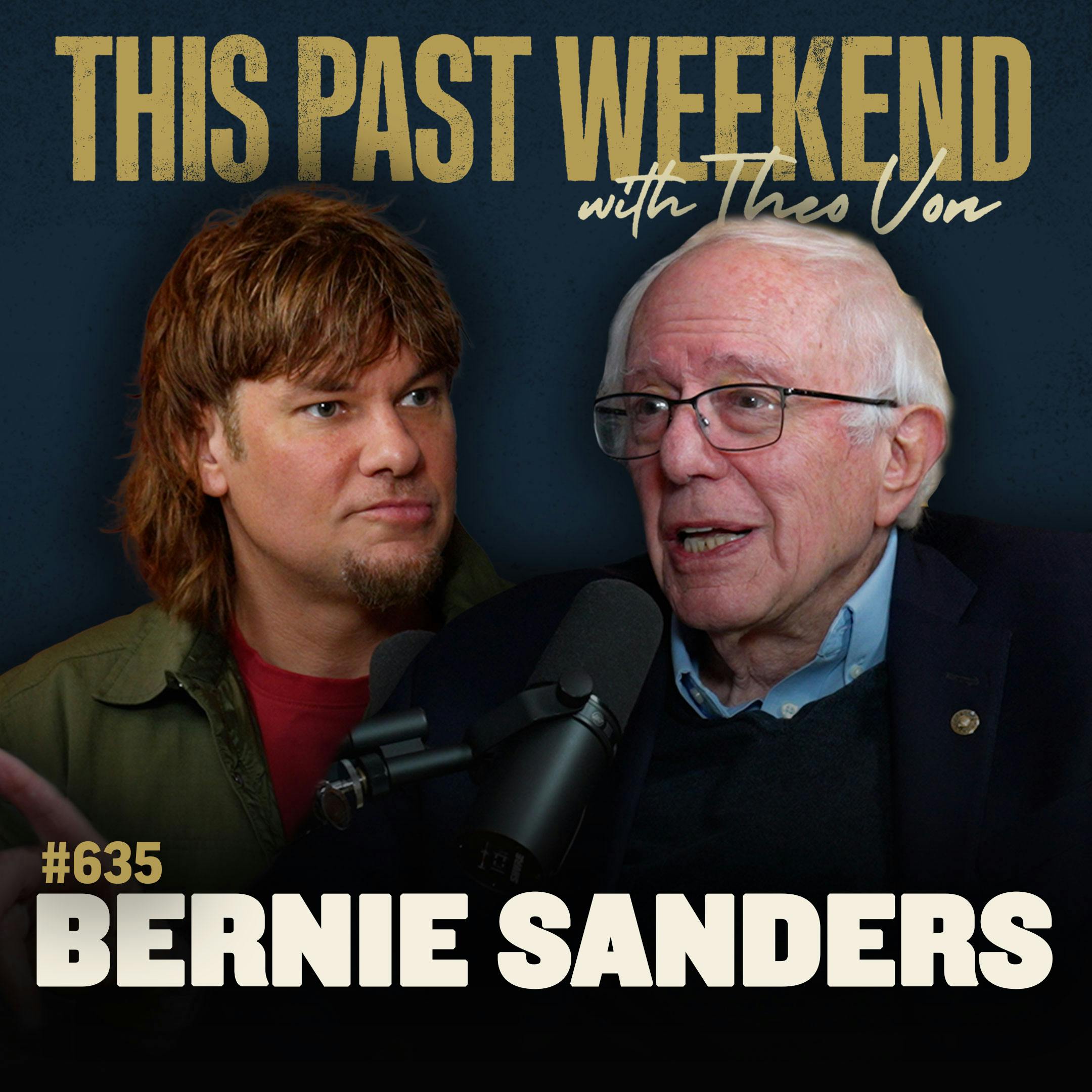
Here's a question. If you walked into a stash house and found it full of $20 million, how much would you steal? That's the question Matt Damon and Ben Affleck have to answer. In Netflix new movie the Rip, they play a team of Miami cops alongside Teyana Taylor, Steven Yeun, Catalina Sandino Moreno, Kyle Chandler and Sasha Calle, all trying to decide are they the good guys or the bad guys? This movie is an edge of your seat thrill ride the entire time, keeping you guessing till the very end. Don't miss the Rip. Watch now only on Netflix. Today's guest is a senator from the state of Vermont. Before that, he was a congressman. He was a mayor. He's a mittened meme, actually. I'm thankful for his return to the show. Today's guest is Senator Bernie Sanders. Sanders.
- [01:13]
Senator Bernie Sanders
You know, this is an historic hotel.
- [01:16]
Theo
Oh, yeah. Leonard Cohen used to spend time in here. Yeah, my mom used to play Leonard Cohen force when we were kids. She liked him and so she would play his when the walls came down. Remember that?
- [01:30]
Senator Bernie Sanders
Yeah. And here's Hallelujah.
- [01:33]
Theo
Oh, yeah. Oh, yeah. Yeah.
- [01:35]
Senator Bernie Sanders
There's a. Here in New York City. There is a. Yeah. It's called the Youth Choir of New York City. Does that ring any bells? It's kids, pull them up.
- [01:48]
Theo
The Youth Choir of New York City. Was that it?
- [01:49]
Senator Bernie Sanders
Yeah. It's beautiful. And among other things, they do a beautiful, beautiful rendition of Cones Hallelujah, which I love very much.
- [01:59]
Theo
Yeah, I haven't been to see them. I would like to go check them out, though. Do they perform pretty often?
- [02:04]
Senator Bernie Sanders
What's beautiful about it? These are kids from the city, often working class kids. The guy does a fantastic job and the quality is really wonderful. And we're trying to do something in there. It is. God, you can't say a word here. It's up in there. It is. Those are the kids and beautiful and wonderful.
- [02:23]
Theo
Oh, yeah, yeah. That's nice. No, I haven't. I haven't gone and see that. What did I go. I want to see a Knicks game. They haven't won a championship in 53 years.
- [02:32]
Senator Bernie Sanders
All right.
- [02:32]
Theo
I didn't even realize that.
- [02:33]
Senator Bernie Sanders
Well, Mom, Danny's mayor. That'll change. Yeah.
- [02:36]
Theo
There we go, huh? That's why. Hey, we'll start maybe getting some more foreign players. Hey, they got some good guys at the Euro Step, you know, Changed a lot of things. I saw that you were out. Out there on the. On the nurses picket line. The New York nurses.
- [02:48]
Senator Bernie Sanders
Yep.
- [02:49]
Theo
Yeah. That's awesome. We went the Other day, too. We had a great time.
- [02:51]
Senator Bernie Sanders
Oh, wow, that's a nice crowd.
- [02:53]
Theo
Jesus, that's when you were. That was there, was that.
- [02:55]
Senator Bernie Sanders
Oh, that's me today.
- [02:56]
Theo
Yeah, that's you.
- [02:57]
Senator Bernie Sanders
Who's that handsome guy in the brown coat? Oh, that's me, all right. Who's that kid with him? Oh, that's the mayor.
- [03:03]
Theo
Oh, yeah, that's Zoran, huh?
- [03:04]
Senator Bernie Sanders
Yeah.
- [03:06]
Theo
Yeah.
- [03:06]
Senator Bernie Sanders
There we were.
- [03:07]
Theo
We went out there the other day. We had a good time. We stayed for a few hours, walked around, shook some bells, you know.
- [03:12]
Senator Bernie Sanders
Great.
- [03:12]
Theo
Got out there. My sister's a nurse.
- [03:14]
Senator Bernie Sanders
Is the.
- [03:15]
Theo
My sister's a nurse.
- [03:16]
Senator Bernie Sanders
Where is she a nurse?
- [03:17]
Theo
She's a nurse down in Louisiana.
- [03:18]
Senator Bernie Sanders
Good.
- [03:18]
Theo
But I figured that if, you know, things start here in New York. A lot of big things start here.
- [03:22]
Senator Bernie Sanders
Theo, let me just say something. I really appreciate the work you do and other podcasters do. This is one of the technological revolutions that is really good. You know, sometimes I go on TV and I'm asked to deal with an issue in seven seconds. I can't deal with it. You can't deal with it, Right?
- [03:37]
Theo
Yeah.
- [03:37]
Senator Bernie Sanders
Takes a little bit of time. So thank you for what you're doing.
- [03:40]
Theo
Oh, well, I appreciate that. Yeah. We're trying to learn as we go, too, and it changes a lot, you know? But were you at Mount Sinai? Which one did you go?
- [03:49]
Senator Bernie Sanders
Mount Sinai.
- [03:50]
Theo
Yeah, that's where we went.
- [03:51]
Senator Bernie Sanders
Yeah. Yeah. Well, I tell you, I was really proud to go there and be alongside Mayor Azran Mamdani. You know, I'm the former chairman of the Health Education Labor Committee. And I'll tell you, Theo, I have met with nurses all over this country. I love nurses. It's no great secret that our healthcare system is broken. Everybody knows that. And the people who are keeping it going are, in fact, the nurses. You know, they're with you when babies are born, they're with you when you die, they're with you in between. They're at your bedside. They're the backbone of the healthcare system, and I love them. And I'll tell you something. Time and time again, nurses would come into my office and they'd start talking, and suddenly they'd start crying. And you know what they were crying about? They were crying about the fact that they were unable to do the jobs, to do the work that they were trained and wanted to do, that they didn't have the number of nurses they needed, the staffing ratios that they needed. They broke down. And I was just a couple of years ago, not dissimilar. For what's going on in New York City right now, in New Brunswick, New Jersey. These nurses went on strike. You know why they went on strike? Because they needed help. Yeah. To provide better patient care. Wasn't even about money.
- [05:03]
Theo
Right. They're just saying, hey, we can't. I can't even be a nurse. This is my calling in the world. And I'm. I can't even do it to a decent potential.
- [05:10]
Senator Bernie Sanders
Exactly.
- [05:11]
Theo
And it's tough enough. We talked last night, we talked last time about patients being stressed to the gills, not only dealing with their. With their physical ailments, but having to deal with the stress of. Of begging for insurance companies to support. Just all of that. And now you're going to put the nurses under the same stress.
- [05:28]
Senator Bernie Sanders
Exactly. It's pathetic.
- [05:29]
Theo
It's.
- [05:29]
Senator Bernie Sanders
It's. And. And I'm sure you know this. The CEOs there.
- [05:33]
Theo
Yeah.
- [05:33]
Senator Bernie Sanders
Of these big, huge houses, one guy is making 26 million a year. Another guy, I think is making 16 million. I think I'm making 5. They're bringing in all these traveling nurses, spending hundreds of millions of dollars rather than sitting down and negotiating a decent contract with these dedicated nurses. Well, they are. You got them up there.
- [05:50]
Theo
Yep. And I'm grateful. I want to just mention these wonderful CEOs by Nate. And today, just so. Because, look, it's a. It's time where we put a name with people who are making certain choices. And so we have Brendan Carr. That's. I know. He's over at Mount Sinai. Brian Donnelly. There he is. Look at that big smile. I'd be smiling, too if I just made $15 million this year. That's Philip O. Ozuah, who looks like a guess who character. And Stephen Corwin from Monopoly. I don't know. That's alleged. These are the CEOs current. And I think one is just leaving one of his posts. Who are who. These are the. These are who nurses are asking for help from.
- [06:29]
Senator Bernie Sanders
Right.
- [06:29]
Theo
Is that right? And just to be clear, Bernie, what are the nurses asking for?
- [06:33]
Senator Bernie Sanders
What? They're asking for what they call safe patient nurse patient ratios. That means if you're a nurse on duty and you have too many patients to take care of, you can't do your job.
- [06:44]
Theo
Yeah.
- [06:45]
Senator Bernie Sanders
Under. A patient calls out, needs your help, you can't get there. So they want more staffing to be able to provide the quality care that patients deserve.
- [06:56]
Theo
And I know. In addition to that, I think they were. They wanted health care benefits not to.
- [06:59]
Senator Bernie Sanders
Be cut right for themselves.
- [07:01]
Theo
Which is if you think that nurses. Nurses.
- [07:05]
Senator Bernie Sanders
Pretty crazy, huh?
- [07:06]
Theo
Can't get health care. They can't be sure that they're going to have health care. They're working with the sick. We can't say, hey, we're going to do our best to make sure you don't get sick.
- [07:18]
Senator Bernie Sanders
That's pretty crazy. And the other thing they're worried about, and I hope we can discuss this a little bit, is AI and robotics. They raised that issue as well.
- [07:25]
Theo
Have they really?
- [07:26]
Senator Bernie Sanders
Yeah. And There was a Dr. Oz, who's head of CMS in Washington right now, was talking the other day. Let me get it straight. I think it was Alabama, rural Alabama, where they're weak on the number of obstetricians that they have. And he was proudly talking about how they have robots now who are providing examinations for pregnant women. Yeah.
- [07:48]
Theo
And who's controlling those robots? It's not some pervert at his house. Huh.
- [07:52]
Senator Bernie Sanders
Well, but the point is, if you're a patient, do you really want a robot about examining you?
- [07:56]
Theo
Right.
- [07:57]
Senator Bernie Sanders
So, I mean, I think all of this, Theo, adds up to the fact. And I'll tell you, I've been all over the country and wherever we go, I talk about this, whether you're conservative, you're moderate, you're progressive. You understand the healthcare system is broken today.
- [08:10]
Theo
Yeah.
- [08:11]
Senator Bernie Sanders
We are spending. This is insane. Do you know how much we spend per capita? Add everything else, right. Medicaid, Medicare, what you pay out of your own pocket. How much do we spend per person on healthcare in the United States of America? They are wild and crazy. Guess.
- [08:28]
Theo
Per year?
- [08:29]
Senator Bernie Sanders
No. Per person? Per person. $15,000 per person. So a family of four spends theoretically $60,000.
- [08:37]
Theo
Oh, wow.
- [08:38]
Senator Bernie Sanders
That is double what any other country on earth is spending. You got it.
- [08:42]
Theo
Yeah.
- [08:42]
Senator Bernie Sanders
You would think that if we are spending. If I buy a $100,000 car, you buy a $50,000 car. My car should be a little bit better than your car. Right. And yet, despite all of those expenditures, our system is worse than others. We're the only major country not to guarantee health care to all people.
- [09:00]
Theo
But it's because there's these kind of like, darker agreements between hospitals and insurance companies. Right. And the cost of drugs.
- [09:07]
Senator Bernie Sanders
Yeah. It has to do, essentially. Look, in this day and age, running a health care system is very difficult. Technology changes. It ain't easy. I admit that. But what is the goal of a rational healthcare system? It is to say, first of all, to answer the fundamental question, is health care a human right? What do you think? Should everybody, regardless of income, get health Care.
- [09:31]
Theo
I believe that based on how much money our country has, I think it's wrong not to provide that to people because we waste it in so many other ways.
- [09:43]
Senator Bernie Sanders
Okay, good point. So the issue here is, why is the wealthiest nation on earth, the United States of America, the only major country not to guarantee health care to all people? Okay. That, to me, is a fundamental issue. So today, despite spending so much money, 85 million Americans are uninsured or underinsured. And if Trump gets his way and throws another 15 million people off of Medicaid, raised that number to roughly 100 million. Okay. There are estimates out there that when you have that many people uninsured, no insurance and underinsured means high deductibles. Right? So if you got a high deductible, you may be insured. I've talked to people. I suspect you have their deductibles 10, $15,000 a year. Right? So if you don't have any money, what the hell, how do you go to the doctor?
- [10:32]
Theo
Yeah, yeah.
- [10:33]
Senator Bernie Sanders
So you add all that together. People get sick, they can't go to the doctor. Some 50, 60,000 people die a year in America unnecessarily because they don't get to a doctor on time. That is pretty insane. So in my view, I push very hard to introduce the legislation, what we call Medicare for All, Expanding Medicare to cover every man, woman and child without out of pocket expenses. We could do that without spending, to your point, not a nickel more than we're currently spending. Yeah.
- [10:58]
Theo
How can we get that move forward, though? Why does this just continue to be this thing, you know, why does it continue to feel like. Like nobody really wants to take care of us, you know?
- [11:12]
Senator Bernie Sanders
Oh, now you're getting into another issue.
- [11:16]
Theo
Yeah.
- [11:16]
Senator Bernie Sanders
All right, you want to go there?
- [11:17]
Theo
I mean, yeah, I think we can go to a couple of these places.
- [11:20]
Senator Bernie Sanders
All right, let's do it. All right, look, in one respect, the health care system is working extremely well. Not for ordinary people, not for you, not for me. It is working very well for the insurance companies who make zillions of dollars in profit, the drug companies who charge us the highest prices in the world for prescription drugs. And that's the function of the current healthcare system.
- [11:42]
Theo
Right?
- [11:43]
Senator Bernie Sanders
Okay. So again, you know, running a healthcare system, whether it's in Canada, Europe, wherever it is, it ain't easy. And they all make mistakes. They all have problems. But if your goal is, if you and I sit down and say, okay, how do we provide a healthcare to all people and how do we do it in a cost effective way. All right, will we come up with a perfect system? No, but that's our goal.
- [12:03]
Theo
Right?
- [12:03]
Senator Bernie Sanders
But if we sit here and say, okay, how can we charge the highest prices in the world for prescription drugs and make $38 billion next year? How can we deny people the insurance that they paid for? Right. The benefits that they pay for? That's a whole other scam. And that's the scam we're working on. It is an effort to make huge profits for the drug companies and the insurance companies. And that's why we've got to end this broken system. And again, I will tell you, I've been all over this country, nobody or very few people think this healthcare system is working. We gotta expand Medicare over a four year period to cover every man, woman and child.
- [12:39]
Theo
But is there a real way to get there, do you think?
- [12:42]
Senator Bernie Sanders
Look, it's. The goal is. And then that takes us to another area. You know, you ask the question, why? Why are we, you know, perhaps the only country on earth not to guarantee healthcare to all people? Why have the Canadian. You are in Canada right now. I live 50 miles away from the border there. You get seriously ill. You're in the hospital for a month. You know what the bill is when you come out? Zero.
- [13:06]
Theo
Yeah.
- [13:06]
Senator Bernie Sanders
Okay. And they spend half as much per person on health care.
- [13:09]
Theo
And they have good posture, too. You've been over there?
- [13:11]
Senator Bernie Sanders
Yeah, sure, of course. So the answer has a lot to do with who controls the United States and a corrupt campaign finance system. All right, so if I'm the insurance companies and if I'm the drug companies and you're running around and you're campaigning and say, I'm gonna cut, as I do, we're gonna cut prescription drug costs in half. We're gonna guarantee healthcare to all people. What are you gonna do? You're gonna spend a whole lot of money on candidates to defeat me. Right? So you got a corrupt campaign finance system in which billionaires in both political parties, by the way, I think Republicans now more than Democrats, but both parties spend huge amounts of money. Elon Musk, the richest guy on earth, spent some $270 million to elect Donald Trump president. So you know, Musk has his own agenda. He wants Trump president. Others billionaires have their agenda. That's called a corrupt system. All right, What Democracy, in my view, and you can argue with me if you want, is you and I. You're running for office. You want to run against me. Good. What are your ideas? Take them to the people. People like Your ideas better than me. You can win. All right. It's not me going out raising money. Billions of millions of dollars to defeat you, to lie about you, to put ugly 30 second ads on the air.
- [14:27]
Theo
Right, right.
- [14:28]
Senator Bernie Sanders
Okay. That's what democracy is. A real debate on the issues.
- [14:30]
Theo
Yeah.
- [14:31]
Senator Bernie Sanders
All right, Disagree with me. So what called democracy. Right. Okay. But increasingly what the politics in America is about are super PACs, you know, where if you're a billionaire, you can put, that's what Musk does. Hundreds of millions of dollars. And again, it's not just most democratic billionaires do the same.
- [14:49]
Theo
Oh yeah, there's the Koch brothers over the years, there's the Adelsons who. There's, there's all these different huge, just big pockets that are influencing things.
- [14:57]
Senator Bernie Sanders
Absolutely.
- [14:57]
Theo
Yeah.
- [14:58]
Senator Bernie Sanders
A multi billion. So when you, these guys control the political process, you're not going to have a government that works for ordinary people. And it's not just health care, it's many, many other issues. So to my mind, by the way, when we talk about bringing about the necessary changes, this country needs a campaign finance reform and doing away with Citizens United. That terrible Supreme Court decision. Top of the list, Citizens United.
- [15:23]
Theo
Bring that decision up.
- [15:23]
Senator Bernie Sanders
Citizens United was the Supreme Court decision that said you have, you're a billionaire. Okay, you got it. You have the freedom of speech, First Amendment to say anything you want about Bernie Sanders. You want to put ads on the air, you can spend zillions of dollars. Freedom of speech. And that's what Citizens United said. And obviously that undermines democracy because it allows billionaires the right to buy elections.
- [15:50]
Theo
And can we bring this back to a vote? Like will Mike Johnson bring this back to a vote?
- [15:54]
Senator Bernie Sanders
No, he likes Citizens United because it works very well for those guys. And I got to tell you, some Democrats like it too. But I think the American people you go out and you talk to, again, people all across the political spectrum, they understand you're not a democracy. When billionaires by elections.
- [16:09]
Theo
Yeah, well, here's the thing. It doesn't even feel like either one of these parties works for anybody anymore. Like if, if anything in the past few years it's really started to feel like, oh, all these guys are working for somebody else and we're just this other group of people down here because you, you have like there are politicians online that are yelling at voters for support about stuff. It's like we voted for you. Like you're yell upwards, you know, like it just, I don't know, it just. Yeah, it feels like a total dead end now it just feels like. It feels like most people just want to be elected now so they can make a profit somehow themselves. It almost feels like a. A business venture. If you want to be a part of.
- [16:50]
Senator Bernie Sanders
Frame it in that way, I would.
- [16:52]
Theo
You know, frame it feels like as a regular person or. That's. Sorry. That's how it seems a lot of times.
- [16:56]
Senator Bernie Sanders
Okay. Okay. I would say it's kind of cool to be a congressman in the Senate.
- [17:01]
Theo
Oh, that's super cool.
- [17:02]
Senator Bernie Sanders
Get your name in the paper. You get on nice shows like this one and all that stuff, and you have a certain amount of power. I mean, that's real. And you associate with the rich and the famous, and that's cool, I guess. But that speaks to where we are as a nation today. And here's. I think, maybe the major point that I want to make. You're living in the richest country in the history of the world, theoretically, at least. That should mean that all of our people have a decent standard of living. Right. We should not have people a few blocks from here sleeping out on the street. We should not have people unable to afford healthcare, kids unable to afford to go to college, people literally unable to feed their families. And yet, in America today, and I know this is really an astounding fact, 60% of our people, Theo, are living paycheck to paycheck. Now, I grew up in a family. I don't know your background, but I grew up in a family that lived paycheck to paycheck.
- [17:58]
Theo
Oh, yeah. I knew exactly how much money we had, but, no, I knew what we had left at the end of each week, and it was in Mom's wallet, you know. Yeah.
- [18:05]
Senator Bernie Sanders
All right. And so the simple question that we have to ask ourselves is, how do we feel? And, you know, again, you can disagree with me. You're living in a society today where we have more income and wealth inequality than we've ever had in the history of this country. All right, you got the top 1% doing phenomenally well, owning more wealth than the bottom 93%. You got one man, Mr. Musk. One man owning more wealth than the bottom 52% of American households. What do you think?
- [18:39]
Theo
Well, I think it's tough. I think there's two ways to look at it. Well, I think. I think in a bigger scope for me, you have. Yes. You have these billionaires. You have these guys that have all of this wealth. It does feel unfair. They used to say, well, just because one person has more money doesn't mean that other people have less money. But I don't. Just visually, it doesn't even start to seem like that's the truth. Right. Optically, for me, it doesn't seem like that's the truth. Do I think there should be a cap on how much money people could have? I do think that there should be. To me, in my heart, it doesn't feel like people need so much money and so much control.
- [19:10]
Senator Bernie Sanders
That's the point. I think most people think and I believe, look, you go out, you're doing it. I mean, you start a business, you're making money. Right? Congratulations. We appreciate that. You make money. Great. Do you really need hundreds of billions of dollars?
- [19:24]
Theo
No.
- [19:24]
Senator Bernie Sanders
Really?
- [19:25]
Theo
No.
- [19:26]
Senator Bernie Sanders
At that point, you know, these guys, whether it's Zuckerberg or whether it's Bezos, you know, they own their islands and their jet planes and their spaceships and all this crap.
- [19:35]
Theo
Bunkers.
- [19:36]
Senator Bernie Sanders
Right, Exactly. All right. Anyhow, so I don't begrudge people. Come up with a great idea, work hard, make money, God bless you, you know, but you don't need billions and billions of dollars when people are struggling to put food on the table or afford health care. So that's one of the issues that concerns me right now when I talk about fighting oligarchy. You know, I was on a tour.
- [19:56]
Theo
Oh, yeah, I know you had a tour with aoc. You guys, just. How many cities do you go to?
- [20:00]
Senator Bernie Sanders
We have been. Now, I was in New Jersey last night. It's the 24th state that I've been in. I think. We don't think 35 events. Well over 300,000 people have come out. And, you know, and I gotta tell you, I've been to conservative areas. People of this country are not happy about a situation in which so few people, I mean, really, a handful of people have such enormous political and economic power. Yeah, okay. That's not what America is supposed to be about. You got rich and you got poor, fine. But not so few having so much power over the economy and power of our political systems.
- [20:37]
Theo
Well, here's what I would think so. But I wonder if, I don't know, like, we always say, let's tax these people. Right? That's what. That's a term a lot of people use. We need to tax them more. And maybe so. Right. But sometimes with billionaires, I at least look at billionaires as like, people that are create. Or more often than not, creating jobs, creating environments where other people have the ability to make money. Like you have, like Larry Ellison. You have a lot of people that are Amazon workers, people that Work at Oracle, people that work in data. You have Elon Musk, you have a lot of people that work for Tesla or that might work for his Uber type company if he gets it going. But at least those people are creating jobs. A lot of them. Now do they still deserve to have that much wealth or hold that much wealth? I don't think so. But then you also have, there's this argument like let's get them to pay taxes. But then you have things that happen, like in Minnesota, like with the Somalian fraud, right? Like you have this young man who's been going around, Nick Shirley, who's like kind of going door to door, like trick or treating about fraud kind of. Right. And figuring it out. That almost is like, it's like, why get people to pay taxes? Who even cares about paying taxes anymore if we're just going to let them.
- [21:52]
Senator Bernie Sanders
Slip out of the bottom? But the answer is fraud is disgusting. And especially to steal money from hungry kids. If you have a program to feed hungry kids, you steal that money. That is probably as bad as it gets. And I think way back in the early 20s, under Biden, they started an investigation. Those people should be severely punished. I don't care if you're Somali, if you're green, you're blue, whatever you are, right?
- [22:15]
Theo
I'm using the term Somali fraud because that's kind of the term people using.
- [22:17]
Senator Bernie Sanders
Yeah, but anyhow, that should be punished. That's disgusting behavior. But you know, understand, and I'm sure you do, it's fraud is not just in a child nutrition program in Minnesota. I, you know, deal with this a little bit. We are spending a trillion dollars a year on the military. Okay? There is not one major defense contractor that has not been charged with fraud. Frauding being, you know, providing fraud to the United states government. Their CEOs make huge amounts of compensation. They cannot even undergo an independent audit. They're the only government agencies, so they don't even know what they own. I mean, it is so massive. But nobody, nobody, nobody, Republican, Democrat, Independent, nobody doubts that there's massive fraud. There's fraud all over the place, unfortunately, in this country. And we gotta do our best to eliminate that. But at the end of the day, I mean, we gotta revitalize, in my view, we got to revitalize our democracy. We got to hold elected officials accountable. We got to run cost effective, efficient government.
- [23:23]
Theo
But having been in government a long time, do you think that those things are actually possible? Or at a certain point are you like start to. Do you lose hope? Because As a regular person, it feels like we are our, our political system works against us and it works for big business interests. And that's not even up for debate anymore. It feels like you're lucky to find a couple who seem semi human, that work in politics, who have some semblance of a connection. At least they will talk about things that they feel like they really want to do or will show by some of their actions. But otherwise it feels really, it feels pretty hopeless. Does it feel like that to you?
- [24:02]
Senator Bernie Sanders
More and more, yes and no. Again, what I will. I'll give you some examples. And you know, this is my own political point of view. You agree with me. You don't.
- [24:12]
Theo
I.
- [24:12]
Senator Bernie Sanders
So, okay, right here in New York City, we're sitting in New York right now. A year ago, there was a guy named Zoran Mamdani who nobody had ever heard of, an assemblyman in New York, nobody heard of him. He decided he wanted to run for mayor. He got. He was at 1% in the polls. He was taking on the Democratic establishment and said, who the hell do you think you are taking on the Republican establishment, taking on the oligarchs in the city? People front page New York Times. We're going to spend tens of millions of dollars to defeat this guy. Yeah, you know what he did? Not only, I mean, he's a brilliant guy himself and a very good politician, but he had 90,000 plus people in this city knocking on doors for him. So you ask me, am I optimistic? Can we bring about change? I would say New York City is a pretty good example of what happens when people come. And he said, you know what? I'm going to make this city work for working people, not just the billionaire class.
- [25:10]
Theo
Amen.
- [25:11]
Senator Bernie Sanders
And he's just been, you know, in office for three or four weeks. I think he's doing great. But you ask him about my optimism when I see 90,000 people going out on the streets volunteering for this guy and he's implementing. He was out. You know, we talked about being on the nurses picket line today. He was there with me standing with the nurses. So yeah, and I've seen this other great members, you know, media doesn't do a great job, but you got dozens of young men and women in the House of Representatives, strong working class candidates, members of Congress. So yeah, I am in that sense optimistic. On the other hand, Donald Trump worries me very, very much. You remember, it's a funny story here. He was inaugurated just about a year ago and I was there for whatever reason, I got pushed into the Front row.
- [26:02]
Theo
I was. I fell out of my chair. My chair. I was in a chair that broke.
- [26:06]
Senator Bernie Sanders
Yeah, well, my chair did break, but I was almost as close to Trump as I am to you now. And you remember who was behind Trump at his inauguration?
- [26:16]
Theo
Oh, yeah. Who was up there? You had Zuckerberg, you had Elon, you had Bezos.
- [26:23]
Senator Bernie Sanders
You got it. You had a dozen other billionaires. Okay, so you ask me where I get pessimistic is, you know, and literally, this is not just saying this, it's true. I was thinking, you remember Abraham Lincoln in Gettysburg, when he said Lincoln went to Gettysburg, the scene of this horrible battle during the Civil War, tens of thousands of soldiers killed. And a few days later, Lincoln goes to the battlefield and he jots down some notes, and basically, I'm paraphrasing. What he says is, you know, these soldiers who are fighting against slavery did not die in vain. They died so that we will have a continue a government of the people, by the people, and for the people.
- [27:10]
Theo
Amen.
- [27:11]
Senator Bernie Sanders
And then I'm looking at what Trump and his inauguration, and I'm seeing these billionaires. Then I'm thinking, this is the government of the billionaires, by the billionaires, for the. For the billionaires. And. And that's kind of how it's evolved.
- [27:21]
Theo
I'm not surprised at that. I. I just. I'm not surprised that this is kind of where we've ended up. You know, I don't know if this happened overnight. Like, it doesn't feel like this happened overnight with Trump. It feels like this has happened more and more over time. At least Trump, it feels like, to me, this is messed up, but at least he brings his billionaires up there and shows them off.
- [27:41]
Senator Bernie Sanders
You know, you're right.
- [27:42]
Theo
That is something that's kind of crazy about him. It's no secret that Prize Picks is America's number one sports picks app. And it's easy to use. That's what I enjoy about it. And it's got everything from players picks, team picks, and now culture picks. That's right on top of picking player lineups. You can now pick teams on prize picks, pick the winner total and spread on every game through the playoffs. Team picks are now available in 30 states, including California, Texas, and Florida. And culture picks, they cover everything else. Make picks on the price of crypto, entertainment, awards, and even politics. I love the player picks because they're easy to use. You just choose more or less than a certain stat number for each player. And while we're at it, here are my picks. For this weekend's Games Tale at your own discretion. I am a novice. Prize Picks it's good to be right. Play responsibly. Prize Picks, Offers, DFS and free to play $50 provided as prize picks. DFS lineups must spend $5 of real money on prize picks before receiving bonus lineups. Prize Picks Predict is a registered FCM offering Team Picks and Culture Picks as event contracts. Both involve significant risk. Not for all must be 18 and over. And for event contracts via US resident restrictions by Void where prohibited use responsibly. For help, call 1-800-426-2537 or visit www.ncpgambling.org. i'd like to share with you that when I need more bitcoin, Moonpay is always the first app that I open because it doesn't force you to buy a whole coin and it's super easy to use. Moonpay is one of the biggest partners of this show, and I'm excited to share that I've accepted my compensation from them in bitcoin. That's right. The bitcoin will sit in a digital Moonpay wallet that nobody can access except for me. The US Dollar continues to fluctuate in value, so by making this decision, I'm diversifying my portfolio and hopefully earning more from our partnership than I would have otherwise. Remember, while Moonpay makes buying crypto straightforward, it's essential to do your own research and understand the risks involved. Crypto trading can be volatile and you could lose your investment. Moonpay is a tool to facilitate your transactions, not a source of financial advice. Trade responsibly. But I love your energy about like that. Like, yeah, like, how do we stay hopeful, right? How do we stay hopeful when it seems like it feels almost impossible to. How do you vote somebody in that would be able to stay in the tide of it all?
- [30:22]
Senator Bernie Sanders
Theo, this is where we've got to take a deep breath and accept our very serious responsibilities as citizens. Okay? And you think back, and I don't want to romanticize this, but you think back on American history and, you know, we read all about this when we were in the third grade. You know, those are pretty brave guys, George Washington and Jefferson and all those guys taking on the British Empire. You know, no one in a million years thought you could defeat the British Empire for sure. And they did. And a lot of thousands died. Thousands of them died. It was a pretty bloody situation. And then you think about the Civil War, where very brave people said, you know what? Slavery is a moral abomination we're not going to accept it anymore. God knows what that civil war was about. Hundreds of thousands of people on both sides died. You know, and then you think about. And I think about this. You know, December, was it December 7, 1941, the United States was attacked at Pearl Harbor. We were totally unprepared. Do you know that? We were totally unprepared. We had to fight a war against Japan, a war against Hitler in Europe. Right. Totally unprepared. And yet the country came together. You know, instead of building cars, they built tanks and planes. Literally in two or three years, we had put the Nazis on the defensive. The war was won. So what I'm saying is this is perhaps the most difficult moment, in my view, in modern American history. And it's because Trump is an authoritarian who happens not to believe in democracy. And I think he's corrupt. And it's tough. But we have won great battles in the past, and I believe if we do not allow our people to become divided up, we will win this as well, and not only defeat Trumpism, which I work very hard to do, but also create the kind of nation that we can become. Healthcare is a human right. You know, what if you have some kids, children, they have a right to get all the education they need. We are not some poor third world country. Right, Right. All right. So we have got to have a vision of where we want to go as a nation. And I think if we fight for that vision, if we bring people together, we can succeed.
- [32:40]
Theo
When you speak with guys like Mamdani, did you have any suggestions for him? Did you give him any advice?
- [32:46]
Senator Bernie Sanders
Well, actually, he followed my political career pretty closely. He studied what I did as mayor of Burlington back in the 80s, the campaign that I ran. Yeah. So we chat every now and then. I am extraordinarily impressed by his energy, his intelligence. He has a really good Persona. He's out there with the people, and I. I think he's going to do a really great job for the city of New York.
- [33:11]
Theo
Do you feel like the, like, the Democratic Party kind of takes him seriously as, like, a future candidate for, like, elections or for presidential elections or.
- [33:19]
Senator Bernie Sanders
Now you are raising a sensitive issue.
- [33:21]
Theo
Or is it a sensitive issue?
- [33:23]
Senator Bernie Sanders
Sensitive issue, sure.
- [33:24]
Theo
But yeah, is it. Do they. Or do they look at him as like a one off, like an outsider?
- [33:28]
Senator Bernie Sanders
No. Look, what does it mean to be the establishment? The establishment means in a corrupt political system. If you're the establishment, what you do is you leave this, you get on the phone and you talk to Your billionaire friends and say, look, I'm setting up a super pac. I want your help to, you know, win the congressional race in Arizona and California and da, da, da, da. Put in, I want you to put in $30 million each. Okay? I have $300 million. Ten of you put $300 million. I get the ads going next week. We're in business. Right?
- [33:54]
Theo
That's crazy.
- [33:55]
Senator Bernie Sanders
Yeah, that's the way the system works. All right? And every now and then you have somebody like Mamdani who comes along, says, I don't want your money. Not only do I not want your money, we're going to take you bastards on. Okay? Do they want to? No. So the Democratic Party right now is kind of split. I am an independent, okay? To be honest with you, I'm the longest serving independent. I caucus with the Democrats, but I'm an independent. Proud of it. But you're very.
- [34:20]
Theo
They get really independent too when it's time to put you on the ballot too. I noticed. So.
- [34:23]
Senator Bernie Sanders
Right.
- [34:24]
Theo
That's fair.
- [34:26]
Senator Bernie Sanders
So I work with people like Alexandria Ocasio Cortez and Primala Jayapal and Ro Khanna and a bunch of other people. And we are trying to move the Democratic Party to be a party that stands with working class Americans and has the courage to take on powerful special interest. Now there's another faction of the Democratic Party that doesn't like Trump for I think a lot of right reasons. I agree with him. But basically cuddles up to the moneyed interests. And that's the vision that we have. Mamdani is part of the movement that I've helped try to build. Alexandria as well and others, many, many others. So that's kind of the split that we're seeing within the Democratic Party.
- [35:06]
Theo
Got it. Do you feel like you've been in politics for a long time and you're growing in to be an adult now in your years by an adult.
- [35:16]
Senator Bernie Sanders
I know my grandchildren will tell you I'm not, but I don't know.
- [35:19]
Theo
But I just mean, do you feel like at some point like it's time to start a new party, like more than ever? Like, do you feel that, you know, because all you, I mean, you have guys like, like you talk about guys like Ron of people that are inspired by him, like, you know, like, I got to sit down with him. I like a lot of things he has to say.
- [35:34]
Senator Bernie Sanders
He's a good guy.
- [35:35]
Theo
An Internet bill of rights. I feel like he has like, you know, he's a, he's a forward thinker.
- [35:38]
Senator Bernie Sanders
Yes. He Is smart guy.
- [35:40]
Theo
Yeah. And so I feel like if you got a band of people, it's not that hard to find the people that people love. Good.
- [35:46]
Senator Bernie Sanders
All right. Have I thought about it? Yeah, like for about 400 years.
- [35:50]
Theo
That's how you thought about it.
- [35:53]
Senator Bernie Sanders
All right. But all right, here is. This is the reality that I have to deal with every day. In my view, the Republican Party, which used to be a conservative party, a small government type party, has become, under Trump, kind of a right wing extremist party. Okay. There are some exceptions to be sure, but that's kind of where it is. Democratic Party, as I mentioned to you, their establishment more or less wants to protect the status quo. And then there are those of us who want to bring about fundamental changes in the economic and political life of the country. That's where you are now. Starting a third party is something. When I was mayor of the city of Burlington, in a sense, we did. I defeated a Democratic mayor. Yeah. And so we had Republicans. We had the Democrats.
- [36:43]
Theo
That must have felt awesome. Was it.
- [36:45]
Senator Bernie Sanders
You know, it felt pretty good. I had been mayor for 10 years and nobody thought we could win. We won by 10 votes.
- [36:50]
Theo
Oh, yeah.
- [36:51]
Senator Bernie Sanders
And by the way, I say that to people. If you think it's hard, you could do it. We did it. All right. That was a long time ago. And we started kind of unofficially, we called it independent party of sorts. So it can be done. And there are strong independents today running for office who have a chance to win. But you ask about starting a party within today's political climate, it is very hard. All right. For example, you want to start a party in many states, you're going to have to get enormous numbers of signatures in every county in the state to even get on the ballot, because the two party system does not want you on the ballot, of course. Okay. And you know, you likely don't have a lot of money to do all that stuff, so it ain't easy. But there are people who are thinking about it right now. Where my energy is, is to transform the Democratic Party. You know, when many years ago on the Franklin Delano Roosevelt, under Harry Truman, the Democratic Party was considered to be the party of the American working class. Unfortunately, that has changed over the years. I want once again to have a Democratic Party which has the guts to stand up to the billionaire class and create an economy that works for everybody and not just the very rich.
- [38:11]
Theo
We hear a lot about. We've interviewed some of these tech CEOs and billionaires, really. And they talk about this kind of A universal basic income. But it sort of feels like it's led by the tech industry. And if that gets created, that's not the same thing as one that's led, it feels like, by the government. Does that make sense to you? Yes, because one that's subsidized by the government is more like. It doesn't feel as controlled. Well, I guess it does. It just feels like controlled by two different groups.
- [38:42]
Senator Bernie Sanders
But again, what I want to see, and I suspect you want to see, is you want to see, let's not use the word. The government is not Tesla Corporation. The government, theoretically, in a democratic society is you. And to some degree, you don't like people, you can get rid of them. Right. And our job is to create a more democratic. With small D. Not a big D, a small D, where government is responsive to the people. But I want to say a word on the issue that you just raised. I have, over the last six months, become very, very concerned about AI and robotics. And there are a lot of reasons why. Number one, the easiest, I think, most apparent reason is what? These data centers. I don't know. You're following these data centers?
- [39:32]
Theo
Oh, yeah. It's crazy. Yeah. What are the side effects? They're taking over. Like, they're absorbing water in a lot of communities. I know they just built one in Louisiana, near, like, Bask in Louisiana. Yeah. And they're not even going to end up keeping that many jobs for people once they're over.
- [39:45]
Senator Bernie Sanders
There will be a decent number of construction jobs.
- [39:47]
Theo
Right. But after that, it's not gonna be many, right.
- [39:49]
Senator Bernie Sanders
To run the place, like, almost nobody.
- [39:52]
Theo
Security guards, basically.
- [39:52]
Senator Bernie Sanders
Exactly, exactly. And the result of that is it drains, as you've just said, scarce, in some cases, water resources, and it raises electric bills. Okay? So that's number one. Number two to me, even the big issue, let me quote, I wrote this down here, okay? Elon Musk, our good friend. Right, Musk. Now, when you understand, to understand AI and robotics, understand that the very. A handful of the very richest people on Earth are investing hundreds of billions of dollars, okay? That's Mr. Musk, Mr. Bezos, Mr. Ellison, Mr. Gates and others, okay? These are the richest guys on Earth. Now, why are they doing it? You think they're doing it to stay up nights? And they're staying up nights worrying about working people. You think they're investing hundreds of billions of dollars to say, how do we make this world a better place for working people? Between you and me, I don't think so. These guys have huge money, but Getting back to the point you made earlier, it's not enough that they're worth hundreds of billions of dollars. They even want more and more wealth and more and more power. Okay, so let's talk about what are the implications of AI and robotics?
- [41:10]
Theo
Okay, well, they're gonna take away jobs, so then people won't have purpose.
- [41:13]
Senator Bernie Sanders
You got it? All right, good. You hit the nail on the head. Let's start off on that one. And now the answer is nobody knows exactly. All right? No one can predict what happens tomorrow, next year, five years. This is what Elon Musk, leader of this whole effort, says, quote, I'm quoting Mr. Musk, quote, AI and robots will replace all jobs. Working will be optional, end of quote. And then he later said, yeah, you want to do a garden in the backyard for a hobby, that's great, but you don't need to do that. Bill Gates, worth a few hundred billion, heavily invested in this Microsoft, humans, quote, won't be needed for most things, end of quote. Dario Amodai, Head of Anthropic quote, half of all entry level jobs will disappear. And there are other estimates out there that we're talking about over a period of years. Nobody knows exactly when tens of millions of jobs in the next decade disappearing. So you tell me, what happens when tens of millions of jobs that people now make an income from disappear? What happens to those people?
- [42:21]
Theo
Well, I think there's some of, some of. What I've heard is that some of these same companies would then offer some share. It's kind of, it's a vague terminology a lot of times of a universal basic income token or something.
- [42:34]
Senator Bernie Sanders
Really? No kidding.
- [42:35]
Theo
I agree.
- [42:36]
Senator Bernie Sanders
And how much you're getting, I have determined that.
- [42:39]
Theo
No idea. Dude, it sounds like you get like 111 of a Rubik's Cube every, every two weeks or something. But also, I think if, if you could get to a place where it was like that and people did feel a sense of some sense of purpose or peace or part of something, again, it could be good. There's a chance it could be something beautiful. All right, does it change?
- [43:02]
Senator Bernie Sanders
All right, good point. I agree with you.
- [43:04]
Theo
But my questions would be, do we just end up working for these companies that, that are paying us this ubi? What's the psychological effects of it, right? Like, what's the long term effects of it? And, and then do we still have a sense of individuality if we don't have exactly anything to do, you know, or do we just turn into those kids from Wally, can you bring that kid up yeah, there you go. Yeah, like a young Bert Kreischer kind of there.
- [43:34]
Senator Bernie Sanders
All right, but then what we need to do is to take a deep breath because this thing is moving really fast. I don't know. Have you seen some of these robots on the Internet?
- [43:42]
Theo
Oh, yeah, unfortunately, I've shouldn't. Some sites I shouldn't have been on, Bernie, be honest with you. But yes.
- [43:47]
Senator Bernie Sanders
All right. I mean, they are moving very, very rapidly.
- [43:50]
Theo
Yeah, a couple. Yeah, the ones from Atlanta are for sure. I'll tell you that.
- [43:54]
Senator Bernie Sanders
And you know, in Amazon, I think half of the workers have. I'm not sure about this. I think half already have been replaced.
- [44:01]
Theo
Well, yeah, especially if you start thinking that Waymo cars are gonna pick you up. It's just like, what are people. There's gonna be a really tough. Does anybody have a plan for the first two years of this?
- [44:10]
Senator Bernie Sanders
You got it. You got it. Okay, you're hitting the nail on the head here. The point is this thing is moving at revolutionary speed. And I can tell you absolutely and positively, as a member of the United States Senate, that Congress is in no way prepared to deal with this. You know, the United States got attacked tomorrow by some enemy. You know, we got a large military, da, da, da, da. They know what to do. Ain't nobody been thinking about how to respond to this extraordinary, monumental change that's hitting the America. So I have proposed, and I get criticized by this for this every day. A moratorium on data centers. Why am I doing that? Well, number one, I want to protect people's communities. That's number one. Electric, rails, water and all that. But also, I gotta say, gotta take a deep breath. Your point? What the hell is happening?
- [44:59]
Theo
Yeah.
- [45:00]
Senator Bernie Sanders
Are we prepared if tens of millions of people lose their jobs in the next decade? All right, what happens? How do they stay alive? So the economics is one thing, but I want to take it a step further. And this is. Now you're into crazy world. Okay, this is science fiction. Except in any science fiction.
- [45:16]
Theo
Yeah, we're here.
- [45:18]
Senator Bernie Sanders
That's right, we're here. Okay, so you understand this AI Now. You know what you know based on what you've read, what you've seen, your life experience, right? Me, the same. Everybody, every human being, the same. These AIs have absorbed all knowledge. Every book that's been written, every mathematical formula, every physics proposition, they got it. That's what they got. And what worries, not just me, and this is. Do you remember. What was it? 2001. The movie. Do you ever see that movie?
- [45:53]
Theo
Oh, yeah. Space Odyssey.
- [45:54]
Senator Bernie Sanders
Yeah, Space Odyssey. All right. And you remember, and this is done many years ago, HAL is the computer that runs the spaceship. And one day the guy says, hal, I'd like you to do this. And HAL says, well, sorry, I'm not going to do it. Rebellion, okay? Everyone thought, oh, really? You know, big joke. Funny. I had a public meeting in Georgetown a few months ago with a guy named Jeffrey Hinton. Really nice guy.
- [46:17]
Theo
Yeah, he's the godfather of AI. Right, right.
- [46:20]
Senator Bernie Sanders
He's the guy. He's been studying the issue. Alleged. Yeah, you know, he's been studying the issue for decades. Came up. You know, he got a Nobel Prize in physics. Okay. It's a big deal.
- [46:29]
Theo
There he is right there. Yes, I've heard a couple of his speeches.
- [46:31]
Senator Bernie Sanders
Yeah. And this is what he says. He says there is no question in his mind that at some point, sooner than later, AI will be smarter than human beings. And it is not science fiction to worry about whether or not AI is going to communicate with each other in a language that people don't know ain't going to be English. And that they may see the human race as an impediment to, to their progress. Okay, you with me? All right. That's the doomsday scenario.
- [47:05]
Theo
So that the computer's like, God, these people are slowing us down.
- [47:07]
Senator Bernie Sanders
You got it? Okay. Now again, you know, some people, I mean, I think nobody thinks that that is crazy anymore. Some people say, well, you know, it's kind of unlikely, maybe 5 to 1, maybe 10 to 1, but it is incredibly risky and they don't have the safeguards to protect us. All right? Now let me give you something that I am seeing today and you're seeing, and that is we are living in a country with a lot of emotional distress. Okay? For a variety of reasons, a lot of young people are turning to AI for emotional companionship. Okay. I broke up with my girlfriend.
- [47:43]
Theo
Yeah, that's ridiculous.
- [47:44]
Senator Bernie Sanders
Okay. And you know, what do I do? Or, you know, my mom is sick. Da, da, da, da, da, da. So we're seeing people not relating to other human beings, but relating to AI. What is the long term implications of that? I mentioned earlier that robots are now treating patients. Musk talks about creating millions of robots in the next few years through Tesla.
- [48:10]
Theo
Oh, it's Orwellian. At some point, it's this very thing where it's like, would we even, here's my question. Would we even notice the day when we switch over from thinking that we have control and we are making choices from our. For ourselves to the day where we are just following along what the computer says. Do you think we would notice?
- [48:29]
Senator Bernie Sanders
Maybe not. Because they would create the environment. That's, you know, dang, Bernie. It's pretty crazy stuff.
- [48:36]
Theo
Yeah, it's crazy.
- [48:37]
Senator Bernie Sanders
And then you got even things like warfare. Okay. You know, right now, to some degree at least. Certainly not in the Ukraine, but. Or in Gaza. But to some degree, political leaders are constrained about going to war because they don't want to be telling the parents of their young men and women who died in war. Right.
- [48:58]
Theo
Well, every week there seems like a new place that we're trying to attack or bully or.
- [49:01]
Senator Bernie Sanders
Take that one in a minute. But, General Eastman, what happens. What happens now? If I'm President of the United States, I don't have to send your kids off to war. I send robots off the war. What does that mean in terms of far right. Am I going to go invading every country in the world? I don't have to tell any parent that the kid was lost. Right.
- [49:19]
Theo
Yeah. You could sit up at night in your White House or whatever and just use a remote control.
- [49:23]
Senator Bernie Sanders
You got it. And no loss of life.
- [49:25]
Theo
Right.
- [49:25]
Senator Bernie Sanders
All right, so what does this mean?
- [49:26]
Theo
Not here. Not for us, anyway.
- [49:27]
Senator Bernie Sanders
Right, Right, exactly. So what does this mean about international instability? It's incredible.
- [49:33]
Theo
Well, there's going to be not much communication anymore if someone doesn't know if a drone just showed up in the middle of the night and did a bunch of horrible things to their country.
- [49:39]
Senator Bernie Sanders
You got it. All right, so all that I'm saying, and I think this stuff is moving very, very quickly, it is being pushed by the wealthiest people in the world, who, in my view, could care less about ordinary people who want more wealth and more power. Now, they deny all that stuff. That's my view. I think we got to slow it down and ask the question that you asked. All right? If AI can. And it can do some good medical diagnoses, do some good blood testing, is that a good thing? It is a good thing if you're working in a crap job in a factory. Right. You know, and AI can increase worker productivity, so you could work 20 hours a week rather than 40 hours a week. Is that a good thing? I think it is. Et cetera, et cetera. Right.
- [50:26]
Theo
If the company then shares some of the profits that the company is making with the workers.
- [50:31]
Senator Bernie Sanders
So that's the issue. It's a very simple proposition. Who is AI and Robotics going to work for? Does it work to improve human life, or does it work to make the billionaires even Richer. That's the question that we've got to focus on.
- [50:44]
Theo
Yeah, yeah, it's definitely getting in. It's definitely. Yeah.
- [50:50]
Senator Bernie Sanders
And I would urge you on the show, keep talking about it, bring knowledgeable people on. You know, I have my views. Other people have different views, but I'll tell you, this is monumental stuff that we are unprepared for. We need to discuss it a lot.
- [51:06]
Theo
Well, it feels like. I mean, it feels like we're not going to be. I don't know, it starts to feel a little bit hopeless that we're not going to have things that could change it down the line. Or it starts to feel like with AI stuff that we're getting there too late. But also with AI, it starts to feel like, remember the Internet? Remember Y2K? Like, the people thought, like, it was going to be crazy or everybody was going to start, you know, everything was going to disappear, that a website name was going to be the biggest thing. And that never amounted really to anything.
- [51:34]
Senator Bernie Sanders
Right. So the answer is we don't know.
- [51:36]
Theo
We don't know.
- [51:36]
Senator Bernie Sanders
I mean, that's fair enough. I'm not, you know, I'm telling you what my fears are, you know, 100%.
- [51:41]
Theo
And I think those are a lot of people's fears, you know.
- [51:44]
Senator Bernie Sanders
And you know what? They can put up an AI figure that looks exactly like you.
- [51:49]
Theo
Yeah.
- [51:49]
Senator Bernie Sanders
That sounds exactly like you. That is saying something you have never said. That's already been done to me.
- [51:55]
Theo
Yeah.
- [51:55]
Senator Bernie Sanders
Okay. And it could be done pretty easily, which raises, you know, you know, coming election time, you're going to see somebody, wow, why is they saying that? Can't vote for that guy. Turns out to be a total fraud. Right.
- [52:06]
Theo
Yeah.
- [52:07]
Senator Bernie Sanders
Okay. Yeah.
- [52:08]
Theo
Do you feel like it's a time where we just need to be in the streets more than ever, where people need to be revolting? Do you think it takes a revolution to change things? Like, what's really going to change? So it doesn't seem like voting is going to get us there. Now, I do like the idea that you have a guy like my Nani that inspires you and makes you feel hope and you feel like it's different and he's against an establishment, even if it feels like it's a local one, whatever that is, that he feels like it's different. Right. I agree. That is exciting. That is exhilarating. But is that is a guy like. That is like a Tom Sawyer like him, can he go through all the rapids of the, like, dirty Mississippi? That is politics. And get us to somewhere Near.
- [52:45]
Senator Bernie Sanders
He's not a savior. He's going to be a good mayor. We need 100 minis. We need what I call a political revolution. And that is what the establishment does. They're very greedy people. They could care less about ordinary people. They want more wealth and power. But the ugliest thing that they do is through the media that they own, et cetera, et cetera, is they tell people that they are powerless and they have no power. And the answer is when people are organized and stand together, they do have power. And that's what we're trying to do all over this country, bring people and not allow Trump and his friends. I don't care if you're black, you're white, you're gay, you're straight, who cares? You know, you're Muslim, you're Jewish, whatever you may be, let's stand together. Because, again, I've been all over this country. People understand that health care is a right. They want a good education system. They don't think there should be 1% owning more wealth than the bottom 93%. They're concerned about climate change. They don't want this country involved in endless wars. Are there disagreements on abortion and other issues? There are, but by and large, you'd be surprised. I was in a few months ago. I went to Mingo County, West Virginia. You know where that is?
- [53:58]
Theo
I don't know where it is. I've spent some time in West Virginia, though. I like it.
- [54:02]
Senator Bernie Sanders
Yeah, I love West Virginia. It's a beautiful state. It's a poor state. I went to the county. Theo Trump won West Virginia by over 70% of the vote. Okay. I went to the county where he did the best. He got 74% of the vote. And I went to that county precisely because he got 74%. I want to hear what people were thinking about. Walk into a meeting. Wasn't the largest rally we ever did. Four or five hundred people in the middle of nowhere. This is nowhere. Well, that's it. There's a picture of it.
- [54:35]
Theo
A lot of people thought you were probably giving away free Ben and Jerry's out there.
- [54:38]
Senator Bernie Sanders
No one giving. Nope. And there it is. There's a picture of the.
- [54:42]
Theo
Oh, that's nice.
- [54:43]
Senator Bernie Sanders
Yeah. A big gym there. And it turns out this is Trump country. These are decent people. They're worried about their kids. A veteran up there worried about the needs of veterans. Mom worried about a baby. So I'm not saying Vermont's a liberal state. West Virginia is a conservative state. I'm not saying that there aren't differences of opinion. There are.
- [55:04]
Theo
Oh, yeah.
- [55:04]
Senator Bernie Sanders
But you'd be surprised. This is the good news that as Americans, we share a lot of common values. We know that so many people fought and died for democracy. What does democracy mean? It means that just because I'm the president, I don't have the right to shut you up. I don't have the right to politically prosecute you because you're against me.
- [55:25]
Theo
Yeah.
- [55:25]
Senator Bernie Sanders
You disagree with me, fine, I'll argue with you. You beat me in an election, fine. I'm unhappy. That's the way life goes. Right. All right. See, the American people don't want a few billion few people, billionaires controlling the economy. They don't want an authoritarian society. They want an economy that works for all. Those are the common threads. I think that we can build a political movement around.
- [55:46]
Theo
Well, I don't think people care if they're. I think people less and less even associate with a party anymore. I think that's right. In the past two years, that's. That. That, to me, feels like it's happened more than ever. It feels like.
- [55:59]
Senator Bernie Sanders
How do.
- [56:00]
Theo
Like, like if you even look at, like the fraud case, like, in many in Minneapolis, and I know it's like we don't know all the information about it, but it's like the fact that a vigilante journalist type of kid, you know, this Nick Shirley kid, has to go door to door and that he's even bringing that, like, whether or not everything he's saying is true or factual.
- [56:18]
Senator Bernie Sanders
I don't know my understanding on that issue issue. And again, I haven't studied it, the senator from Vermont, but I think there was massive fraud in terms of child nutrition. Okay, that's absolutely right. I believe that was investigated on the. Under Biden's attorney general in 2021, actually, I believe dozens of people were arrested. So it is a real issue and it's ugly and it's disgusting because again, stealing money from hungry children, I don't know that you could do worse than that.
- [56:52]
Theo
Yeah, it's like, how do.
- [56:53]
Senator Bernie Sanders
But this child care thing, I think is largely exaggerated, I don't think. You know, I think, you know, you could take a camera and go someplace and the child care center is closed or something. Oh, nobody's there.
- [57:04]
Theo
Right.
- [57:05]
Senator Bernie Sanders
I don't think the childcare is an issue. The nutrition issue is real.
- [57:08]
Theo
Yeah, I think. Yeah, I agree. I think there's. Well, I agree that there's some parts of it that it's like, it's tough to know. And if you just See a clip. It's tough to know what the full reality is. Right, I agree. But the thing to me. Well, there's two things. One is that we're getting to a place where vigilante journalism, where somebody hitting the streets, knocking on doors, like you're saying, whether it's to get somebody to vote, to get somebody to open their ideas to a new thought, to make sure that something that their tax dollars is going towards is going to. Like, that is becoming more important than ever. And I think that's going to start happening more than ever. But two, that it's like that. Why didn't our gu. Why? Like, it feels. It makes us feel as. As regular people. Like, dude, we can't even trust that our government's going to figure this out for us, that there's money just falling out of the bottoms here.
- [57:56]
Senator Bernie Sanders
Look, the answer is yes.
- [57:59]
Theo
And then that makes. People cannot care about either party. That's what I'm saying. It's just like.
- [58:02]
Senator Bernie Sanders
But, okay, let's put this thing in context.
- [58:05]
Theo
Okay?
- [58:05]
Senator Bernie Sanders
The answer is what you're saying is true. Period. Okay?
- [58:09]
Theo
Now, and I'm not yelling at you about it, I'm just.
- [58:10]
Senator Bernie Sanders
I know, I know, I know.
- [58:11]
Theo
Okay, good.
- [58:11]
Senator Bernie Sanders
All right, but context. You got 340 million people in this country. Guess what? A lot of them are dishonest.
- [58:17]
Theo
Yeah, yeah, yeah.
- [58:18]
Senator Bernie Sanders
There are politicians who are dishonest. There are business people dishonest. There are media people who are dishonest. That is the reality. Right? I mentioned to you before, we spend $8 trillion a year on the military. Every single major defense contractor has been involved in fraud. That's what they do. The insurance companies. Every day they're ripping off people. Drug companies lying. Every single day. You got fossil fuel companies saying, oh, carbon emissions don't cause climate change. Total absolute lie. You have the tobacco companies, oh, you can smoke nine packs a day. Ain't gonna cause you. So look, fraud exists. We gotta fight it wherever we can in government, in the private sector. No argument. And you're right. When people see it in government, it discourages them. But you gotta put it in a broader context. You have, for example, a Social Security System. 99 plus percent of the checks that go out go out to people who need them. Okay? You know, so all that I'm saying is when you're dealing with hundreds of millions of people, yeah. You can find an aberration, you can find fraud. Put it in a context.
- [59:19]
Theo
Got it. Understood. Paramount plus is the new home of ufc, and the new era comes out swinging. With back to back blockbuster events. For the first time in UFC history, two numbered events will take place on consecutive Saturdays. UFC 324 on January 24 and UFC 325 on January 31. The first card features an epic lightweight clash between Justin Gaethje and the ever entertaining Patty pemblet. And UFC 325 will showcase a featherweight title rematch between Alexander Volkanovski and Diego Lopez. Legacies are on the line, so don't miss out. Catch all the action from the Octagon and stream every numbered event and fight Night live on Paramount. Plus visit paramountplus.com UFC to get started. That's paramountplus.com UFC Yep. You know, January hits and everybody's like, this is my year. I'm gonna get new shoes, new legs, new lips. But then you just keep the same habits and it's the same year again. That's why you got to ask yourself, what am I going to do different? What am I really going to do this time? Not. Not dream, not talk about do. If you've been sitting on a on an idea, a little side thing, a weird passion, something you keep telling your buddy about but never start, Shopify makes it way less intimidating to finally try. Whether you want to do a two story lemonade stand or or you want to make homemade Frisbees in your oven at the at the house, Shopify is the move. They've got a ton of website templates, but they don't feel cookie cutter. You pick one, tweak it, make it yours, and suddenly you've got a legit website. Without needing a design degree or a cousin who knows computers, it might be time to invest in your idea for once, not somebody else's. If you've been thinking about starting something, go to shopify.com theo and see what it feels like to actually be in control of your own thing. Shopify.com Theo this episode is sponsored by BetterHelp. You know, they always say in the new year, it's like new year, new you. But I don't know, you know, I want to keep some of me. You know, I think I just want to let go of the parts of me that are weighing me down. And that's where therapy can help. You know, it could be a part of an old relationship that you're still tugging along. It could be anger at an old boss. It could be financial concerns or worries, fears. Could be a lot of things. Better help can help. Betterhelp therapists work according to a strict code of conduct and are Fully licensed in the US with over 30,000 therapists, BetterHelp is one of the world's largest online therapy platforms, having served over 5 million people globally. You can't step into a lighter version of yourself without leaving behind what's been weighing you down. Therapy can help you clear space. It has for me. Sign up and get 10% off@betterhelp.com Theo that's better. H e l p.com T h e o One thing that's really kind of changed a lot of people's, like, young people's opinions, too, I think, is Trump's relationship and our funding of Israel, especially during, like, the. The Gaza conflict. Right. It made it put. It was like one of the first times in my life where you got to see, you know, you saw children getting killed. You saw a lot of. And I know that there was. There's conflict between those, Palestine and Israel and those. October 7th. I know that. I know the history of it. But it felt like Trump, like, just sort of went with Netanyahu on whatever was he wanted to do there. And it felt also like, as a regular American, like we were supposed to be the ones to go help in some instance. I think a lot of young people are kind of discouraged about our relationship with Israel. And what does that mean, like, especially like, with AIPAC and influencing our elections and stuff like that?
- [63:29]
Senator Bernie Sanders
Let me just say a word on that, because it's an issue I've been deeply involved in. On October 7th, Hamas committed a. A real atrocity. I mean, they went in, they invaded Israel, they killed 1200 men, women and children. A lot of kids committed sexual abuse, et cetera. Disgusting. They were a terrorist organization. Israel had a right to respond, like any government, you know, that's attacked. But Israel did not have the right to go to war against the entire Palestinian people. There are 2.2 million people in Gaza. That's not a lot of people, Right? There are nine million people in New York City, or eight and a half million people. That's all. There are tuna and they're poor people. Over the last several years, Israel has killed over 70,000, mostly women, children and the elderly. It has injured, I think, 160,000 or even more than that. So over 10% of the population has been killed or wounded. Okay, again, orphan children, the elderly. Israel stop humanitarian aid coming in so that children were starving to death in violation of all international law. And the United States, under Biden and under Trump, continued to fund a guy who I consider to be a war criminal. Okay, war is disgusting.
- [64:52]
Theo
Well, The ICC voted him more, didn't they? Didn't the ICC say he was a war criminal?
- [64:56]
Senator Bernie Sanders
He did.
- [64:56]
Theo
Except for America.
- [64:57]
Senator Bernie Sanders
Yeah. So look, war is a disgusting business. But out of World War II, you remember the Geneva Conventions. What they said is, look, war is disgusting, but you don't starve children in a war. You want to kill an enemy, you kill an enemy. It's this horrible business. We want to eliminate war, but there are rules of war engagement. Starving children is, under any definition, a horror. And that's what happened. Bombing. All of the entire people don't realize this. Not only killing people, virtually every medical facility has been bombed, schools have been bombed, water systems, wastewater. The place has been laid desolate. Those are war crimes. And I did my best, and with some success, I managed to turn around. It started. The war started. Almost everybody was saying, oh, you know, Israel, we're going to support Israel. Netanyahu. That has changed. And your point is very important, that a lot of the impetus for those changes in Congress came from young people, and not just, you know, people on the left. You got conservative Republican kids who are saying, you know what? Not a great idea to fund Netanyahu. Yeah.
- [66:05]
Theo
How much control do you feel like, what is that relationship with Israel like? Because I think it seems that because of some of the atrocities.
- [66:12]
Senator Bernie Sanders
Yes.
- [66:13]
Theo
It makes a lot of Americans question, what, why we fund Israel? Why do we give money to Israel?
- [66:18]
Senator Bernie Sanders
And the answer is getting back to a corrupt campaign finance system, if you check the record. And again, it's not just aipac. It is the crypto industry, it is the insurance companies, it is the drug companies. But AIPAC is a significant funder of, I would imagine, hundreds of members of Congress. So it's customary, you're there, we'll send you a check for 10,000 bucks. If you're a leader, we may make it over a period of years, hundreds of thousands of dollars. You're in the club. You're going to be pro Israel. But having said that, we're seeing, for all the reasons that you have suggested, we're seeing more and more people saying, aipac, thank you. I don't want your money, actually, because the people in my district are not happy with what Netanyahu is doing. So I think we're turning that around a little bit. But to my mind, I have long advocated not another bloody nickel to go to the Netanyahu government. But it's not just Netanyahu. Switch gear a little bit in that part of the world. You got Saudi Arabia, you know, run Saudi Arabia, you Got a guy named Mohammed bin Salman, okay? You remember Mohammed? According to American intelligence, Mohammed killed right here.
- [67:33]
Theo
Yeah, they call him Pizza Hut head.
- [67:34]
Senator Bernie Sanders
There was a guy named Jamal Khashoggi. Doesn't he mean anything to you?
- [67:37]
Theo
Yeah, he did.
- [67:38]
Senator Bernie Sanders
Remember him?
- [67:38]
Theo
He was a reporter that got killed.
- [67:39]
Senator Bernie Sanders
He was a Washington. There he is.
- [67:40]
Theo
That was under his rule, right?
- [67:42]
Senator Bernie Sanders
That's right. So what? The intelligence agency said that the leader of Saudi Arabia, Mr. Mohammed bin Salman, murdered this guy. Khashoggi went into an embassy someplace. Was it Turkey or somewhere? I don't know where it was. Walked into an embassy, came back, carved up, and put into a suitcase. Okay? Dismembered. He murdered him. And yet when bin Salman came to the United States, do you remember a few months ago, White House rolled out the red carpet? Where are the Marines there welcoming him? Why was that? Why does a guy who the American intelligence says is a murder, a guy, by the way, who runs the country, you try to protest his rule.
- [68:26]
Theo
Can't even do it, huh?
- [68:28]
Senator Bernie Sanders
Good luck to you. I mean, thousands of people are in jail. They execute people. There's no dissent.
- [68:32]
Theo
Well, even when, like when Netanyahu came and he pulled his chair out for him, Remember that? That's the kind of thing to people, to, like, regular people. It's like, what are we doing? It feels like our intelligence agency does not work for us.
- [68:42]
Senator Bernie Sanders
All right, well, it's not a question of intelligence. They did work. Why is it that Musk is investing huge amounts of money in Saudi Arabia? Why is it that Trump loves this guy? Why is it that Saudi Arabia is now allowing the Trump family to build? I don't know what. It's resorts, golf courses, whatever the hell they do there. Okay, why is that? And the answer is, and this will upset some people, it is my view that is the kind of government that Trump likes. It is an authoritarian government. They don't tolerate dissent. It is run by the. That family happens to be the wealthiest family in the world. Bin Salman.
- [69:16]
Theo
Bin Salman.
- [69:16]
Senator Bernie Sanders
Yeah, they are, I think, combined. Not, you know, they're probably richer than Musk. And meanwhile, we are attacking Europe every day. You know, we're going to invade Greenland because Trump didn't get a prize or something.
- [69:31]
Theo
Crazy.
- [69:31]
Senator Bernie Sanders
That is really crazy.
- [69:32]
Theo
I mean, for a second, it is. It's so crazy.
- [69:36]
Senator Bernie Sanders
You got to laugh at it.
- [69:37]
Theo
You have to laugh at it. It's like we've had police officers on, and they say sometimes, you know, there'll be murders inside. There'll be victims. People have been shot and murdered. Horrible things. And you'll see us in the front yard laughing. And it's like. Because sometimes you have to. You have to step outside of the absurdity and laugh for a second.
- [69:55]
Senator Bernie Sanders
All right, and all that I'm saying. And this ties. It's a whole longer discussion. But it used to be that the United States was a strong advocate of democracy. We became a model for countries all over the world, saying we would like to be like the United States. Our Constitution, our Bill of Rights, Declaration of Independence was an inspiration to a lot of people. And now you got the President of the United States having his best friend, a dictator in Saudi Arabia, supporting a war criminal in Israel, Mr. Netanyahu, et cetera, et cetera. And by the way, going to war, if you like. Hopefully not literally, figuratively, at least with Europe. Why is that? Europe is a democratic, democratic government. Some are conservative, some are progressive, but they are elected by the people. Trump does not like democracy. So that worries me very, very much. All right, maybe one or two more questions if we could.
- [70:44]
Theo
Okay, great. That sounds good. Recently, with the ICE raids that have happened in Minnesota, and they're happening everywhere, right. I mean, it's become a big thing. And for me, a lot of it is in response to, you know, there was a. Such a border policy that was keeping allowing a lot of extra people here, right? Extra people that were not meeting up with their, like their probation officer. Not probation officers, but they're like attendant officers at times, that sort of situation. Right. So it resulted, it seems like in this situation, we had to hire a lot extra ICE agents, some of them even unqualified. Anyway, it's left us in a unique place in America right now, but also just another place where people in the streets are having to figure things out. And we are all the ones fighting about it online.
- [71:24]
Senator Bernie Sanders
Let me briefly tell you my view. People agree with me, will not agree with me. I agree with you that our border security was weak. Okay? There is no excuse, all right? My dad came from Poland, you know, other people's parents came from all over the world. All right? You come through it. There are reasons why people have kind of try to slip into the United States. 99% of the times, it's poverty, it's violence, drug violence, and wherever it is, Mexico, Guatemala or whatever, all right? But that's illegal and it should be prohibited. We need borders, strong borders. We need an immigration process, in my view. Okay, that's Number one. Number two, we have between 10 and 14 million undocumented people in this country right now. No one knows Exactly.
- [72:10]
Theo
Yeah.
- [72:11]
Senator Bernie Sanders
All right. But the vast majority of those people work hard and obey American law. Right now, during COVID by the way, those were the people who were working in the meatpacking plants. Those are the people who got a lot of the virus. Those are the people who died. They kept the economy going in many respects. All right. In my view, and I think what most Americans agree with, if you have lived in this, even if you came across the board illegally, but if you have obeyed the rules of America, you haven't committed crimes, you're working hard, you're raising your family, you need a path towards citizenship as part of comprehensive immigration reform. And by the way, given the fact that we have worker shortages all over this country, we need those workers. Okay. So that's, I think, what we need.
- [72:58]
Theo
Especially skilled labor we need right now.
- [73:00]
Senator Bernie Sanders
That's right. That's right. And a lot of these people are doing important work keeping the economy going. What Trump has done is in this big, beautiful bill of his, greatly expanded funding for ice. And in my view, what he is doing is not just trying to get. And by the way, it used to be we're trying to get the criminals out of America. Remember that?
- [73:23]
Theo
Yeah.
- [73:23]
Senator Bernie Sanders
You know, rapists and the murderers. We're well beyond that now. You're knocking on doors of American citizens. You're arresting America. You're arresting people who have never had.
- [73:31]
Theo
Oh, now they're finding anybody that makes good tapas.
- [73:34]
Senator Bernie Sanders
You got it. That's right. That's exactly right. Okay. And I think this is what frightens me. What Trump is using ICE for now is a domestic military operation, and it's part of this intimidation. And if you stand up and that woman in Minnesota. Good is her name.
- [73:53]
Theo
Yeah. Renee Goode.
- [73:54]
Senator Bernie Sanders
Renee Goode. All right. I saw that video. You know, you don't shoot somebody in the head who's in that car. And I think it's Trump saying, I have the power. And we got domestic army, it's called ice. And we're going to go out there and we're going to arrest and we're going to intimidate. And part of that, this is what Trumpism is about. It's intimidation. All right? You're in the media, you're cbs. You say something, I'm going to sue you. Theo, you say something I don't like, I may sue you. I don't like Venezuela. I'm going to send in the troops. I got the power, and I'm going to use it. I really. That scares me, because that's what authoritarianism is about. So should we deal with immigration through comprehensive reform? Absolutely. I think that's what the American people want. Do we want guys with masks around their face dragging people out of their apartments, out of their cars? I don't think so. I don't think that's what the American people want. More and more resentment to that.
- [74:54]
Theo
And we're in a tough spot, too, because we see things more now. Right? We see all of it.
- [74:58]
Senator Bernie Sanders
It.
- [74:58]
Theo
We see it. So before you would just hear about her, you would. Knew it was a plan, but you didn't have the visual effect of it and how the visual effect makes you feel.
- [75:05]
Senator Bernie Sanders
Cell phones have revolutionized politics, and that's. Everybody got a cell phone can take off.
- [75:10]
Theo
And I think there's. That's one of the side effects, like, too, like. I agree. Like, Trump has an authoritarian energy, right? He. There's this, you know, and there's. There's positive parts about that, and there's negative parts about.
- [75:21]
Senator Bernie Sanders
No, I don't agree that there's anything positive about authoritarian energy. Authoritarianism.
- [75:24]
Theo
Well, maybe authoritarianism. I think somebody that's like, somebody that.
- [75:28]
Senator Bernie Sanders
Decisiveness.
- [75:29]
Theo
Yes, that's what I mean.
- [75:30]
Senator Bernie Sanders
Then decisiveness. Yes. Making bold decisions. Yes. Yes, that's authoritarianism. Disregarding the constitution and the rule of law. Sorry.
- [75:38]
Theo
No, I agree. I agree with that, and that's what I meant. One last question before you go, Mr. Sanders. And Nick, will you bring up those CEOs one more time? I just want to see the faces of those good gentlemen who have made 15 million allegedly. I believe in 26 million allegedly as well.
- [75:53]
Senator Bernie Sanders
Not allegedly. I think that's a fact.
- [75:54]
Theo
Oh, there you go, Bernie. I'll take that. While nurses. Nurses are trying to make sure that their health care doesn't get discontinued at certain points. And. And just real quick, people can get involved by donating to the NYSNA hardship fund, and we'll put the link to that and where you can show up to support the strike. It's going on every day right now. There's one other big concern that people have is that there is with the Epstein stuff, that there are people really protecting pedophiles. Do you think that's as big of a thing as people think, or do you think it's more of a political kickball that gets kicked around a lot?
- [76:30]
Senator Bernie Sanders
Hard to say. We don't know. All I can tell you is when Trump ran for office, what did he say? Gonna release all. Underline all the files.
- [76:40]
Theo
Yeah.
- [76:41]
Senator Bernie Sanders
Okay. I think you should. And I think the thing about the Epstein files is. It touches on everything we've talked about. It is. There is a sense we're living in two worlds. You go out, you know, you go through a red light or you do something stupid, get drunk and drive, you're gonna be arrested.
- [76:56]
Theo
Right, Right.
- [76:57]
Senator Bernie Sanders
But if you're a very, very wealthy person and you do some really disgusting things with women and girls, well, you're rich and you're powerful and you have friends. You don't have to pay the price with children.
- [77:07]
Theo
That's the fear is like you say, we can't even protect our children.
- [77:11]
Senator Bernie Sanders
But. And these guys get away with. That's the. It's a two tiered system. You get punished. Your average person, you're a billionaire. You could do horrible, disgusting things. Hey, no problem. That's what it is. So my own view is Trump said, release all the files. Release all the files.
- [77:24]
Theo
We should release them. Did you. But you never knew it. But when like it was. But you don't hear anything super. That we don't know. By being in.
- [77:32]
Senator Bernie Sanders
By being in your position, all you hear is speculation. Yeah. That's all. And I don't want to engage in that speculation. Just release all the information that people decide.
- [77:40]
Theo
Let people decide.
- [77:41]
Senator Bernie Sanders
Right.
- [77:41]
Theo
Yep. One more time. Bring those CEOs up. I just want to see them. And. And Bernie Sanders, thank you so much and. Yeah. I just appreciate your time.
- [77:49]
Senator Bernie Sanders
Well, it's my pleasure. And thank you very much for the work you're doing.
- [77:53]
Theo
We're trying, man. You know, it's a. You know, I'm learning as I go.
- [77:56]
Senator Bernie Sanders
Look, Theo, the important point is you're honestly, you know, you and I can agree or not agree, but having serious discussion about serious issues is exactly what the country needs right now.
- [78:07]
Theo
Yeah. Well, thanks, man. Yeah. I do care. I know that.
- [78:11]
Senator Bernie Sanders
I know you do.
- [78:12]
Theo
Now I'm just floating on the breeze.
- [78:15]
Senator Bernie Sanders
And I feel I'm falling like these.
- [78:17]
Theo
Leaves I must be cornerstone.
- [78:23]
Senator Bernie Sanders
Oh but.
- [78:24]
Theo
When I reach that ground I'll share.
- [78:26]
Senator Bernie Sanders
This peace of mind I found I can feel it in my bones but it's gonna take a little.