← This Week in AI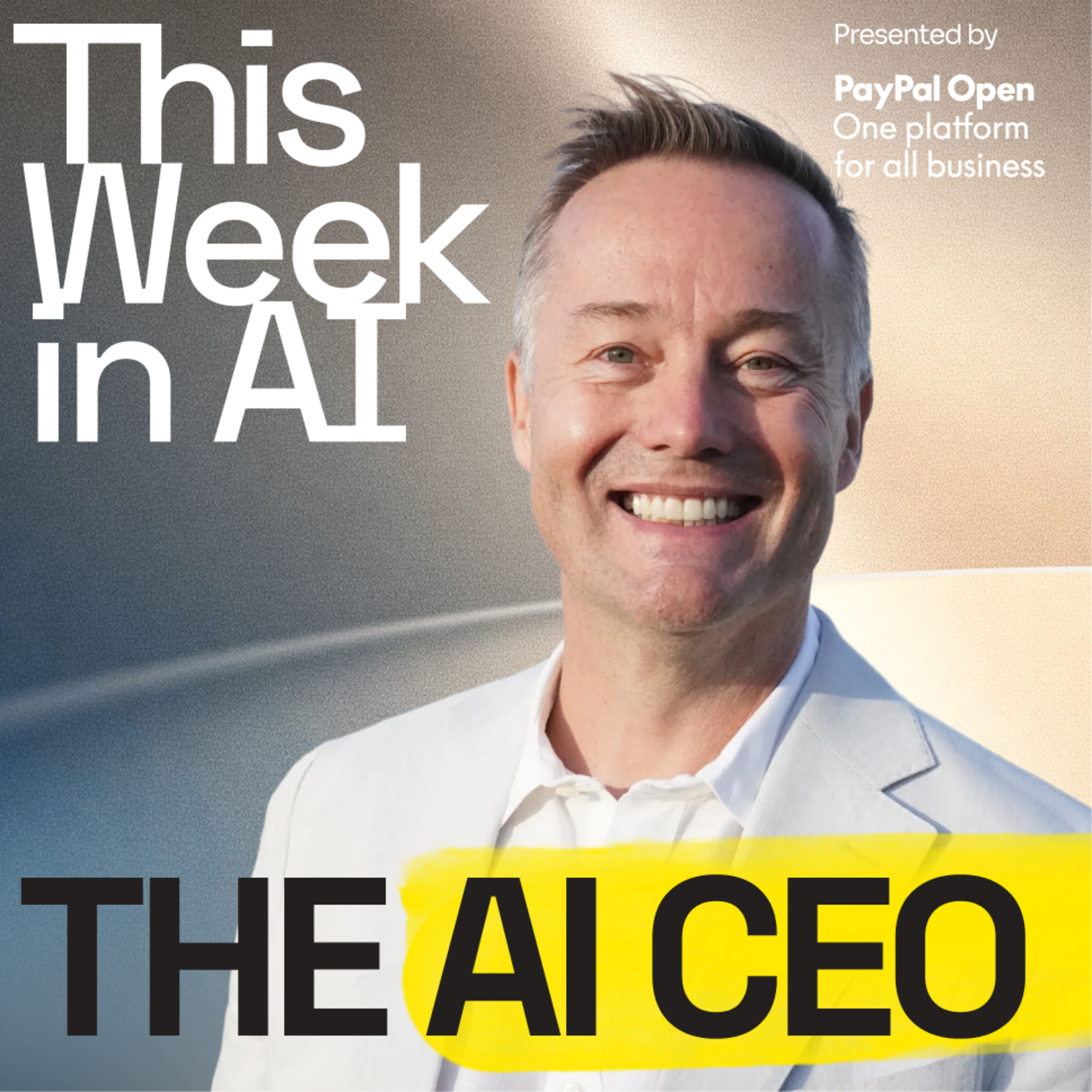
This Week in AI
How Focus Killed Sora and Saved Anthropic | This Week in AI with Victor Riparbelli, Nick Harris & Jeremy Fraenkel
01:11:50
Loading summary
Transcript144 lines
- [00:00]
A
Like, I was talking to a friend of mine, she's an accountant, and she told me accounting is never going to be replaced by automation. I'm like, what are you talking about? It's the first time we're really automating cognition as opposed to just automating the physical part of a job.
- [00:13]
B
70% of them think they'll have a decrease in job opportunities. Only 30% of Americans are worried in the same poll about themselves. So they all think it's happening to somebody else.
- [00:22]
C
I do think that humans will want to play status games. I think we'll find other jobs. I think we'll probably be doing less numerical and logical jobs.
- [00:29]
D
It feels like something very big is coming. The world doesn't appreciate that it's happening because most people are not very good at asking questions. You can taste the singularity at this point. I can't even imagine. The end of this year is going to be shocking.
- [00:43]
B
Thanks to our friends at PayPal, the exclusive sponsor for this Week in AI. Try the payment and growth platform that's trusted by millions of customers worldwide. PayPal Open start growing today@paypalopen.com all right, everybody, welcome back to not this Week in Startups, not all in. This is a new roundtable I'm doing. It's called this week in AI. It's in the name, folks. Every week, three amazing CEOs, just like on All in or the VC Roundtable we do over at Twist. Three amazing CEOs who are actually building the future and me, an investor in the space and an entrepreneur, talk about the week's issues and sometimes the bigger picture issues. You can find out more about the podcast this Week in AI AI or if you want to see the YouTube channel, this Week in AI. AI YouTube. And this is our seventh episode. It's March 31st, 2026. Three amazing guests with us today. Jeremy Frankel is here. He's the CEO and co founder of Fundamental. They're building large tabular models for enterprises. They emerge from stealth as a unicorn just 16 months after founding. 255 million Series A LED by Oak, with participation from Valor, Battery, Salesforce and more. Welcome to the program, Jeremy Frankel. So, Jeremy, explain what your company is doing and how it's going.
- [02:06]
A
So far things are going great. So what we are doing is we built a foundation model for tabular data. So what does that mean? So when people think about the AI boom or the AI revolution, everyone is thinking about LLMs and for good reason, right? Like ChatGPT. Like create a breakthrough where you can now you pre train one model on the entire Internet and you understand language and you can use it to power thousands of use cases. But what's less appreciated is that LLMs really mostly solves unstructured data issues such as text, audio, video, images, coding, but they really didn't impact structural data. And structured data means everything that comes in rows and columns. So think about spreadsheets, databases, CRMs, ERPs, it's all rows and columns. And that's the vast majority of useful data for enterprises. And that part of the enterprise AI has never had its ChatGPT moment. And so this is the modality we're going after. And for a variety of reasons, it's the one modality that acts very differently than others. And what we're building is really the ChatGPT moment for tabular data.
- [03:22]
B
So if I can repeat it back to you to make sure I understand this vision, it's what I always like to do with founders, see if I can repeat it back. You have large language models those are built, as we all know, like guess the next word and transformers. It's based on massive corpuses of text based data. Generally speaking, you're building an LLM to focus specifically on tables and tabular data structures that we all know as a, you know, might experience an Excel sheet or a database, a notion database, a, a SQL database. Am I correct?
- [03:59]
A
So it's not an LLM, it's a large tableau model. So it has a very different architecture than LLMs. Basically, if you look at the LLMs, as you said, they're built on being next token predictors. It's an autoregressive model. The problem with that is that if you look at the way transformers, for example, are applied to LLMs, they have a positional encoding as part of it, so the order of the sentence matter. If you change the orders of your of your sentence in Cloud or ChatGPT, you can get a different output, but with tables you actually don't want that. And the reason why is imagine if you have a table with a million patients and you try and predict which one of them have cancer and your first column has the weight of the patient and your second column has the heart rate of the patients. If you switch the order of those columns and you first list the heart rate and then the weight, you shouldn't expect or you wouldn't want to expect a different output. But with LLMs, if you change the order of the data, you get a different output and that's fine. When you write an email it's not fine when you, when you look at the deterministic outputs and so that's what we've focused on.
- [05:00]
B
Got it. So large tabular model and LTM is how the first. Are you the first people to do this or is this like a known alternative to an LLM?
- [05:12]
A
It's very nascent. There are a few smaller companies working on it as well, more in an academics environment and academic setting. But we are the first, like large company doing that at an enterprise scale.
- [05:22]
B
What is the benefit here? Is it because you'll have a better fidelity, better results, more trustable results than the problem we have with hallucinations in large language models? Would that be the reason to do this?
- [05:37]
A
It's very different use cases. So if you look at everything in the economy, for example, every time you swipe your credit card, one of the credit card providers has to make a split second decision of whether the transaction is fraudulent or not. When you work with retail, for example, forecasting demand, all of those. Or like, for example, if you order an Uber, Uber has to make a prediction on the ETF of your driver. Each one of those tasks is tabular by nature and it's predictive. But when you look at the way those predictions are being made, they still rely on traditional machine learning algorithms that predate LLMs. And those algorithms still do better than most LLMs at making those predictions. And so what we've built is a model that can essentially unify all of those use cases into one model to allow you to make much more accurate predictions than what you would otherwise be able to make.
- [06:27]
B
Genius. So the company is named Fundamental and your flagship model, the LTM large tabular model, is called Nexus. Am I correct there?
- [06:37]
C
Correct?
- [06:38]
B
Correct. All right. And we just had Perplexity CEO Aravind, who's really crushing it. He's one of your angels, huh?
- [06:45]
A
Correct.
- [06:46]
B
Awesome. Victor Riparbelly. I got your name correct, I hope. Ripar Belly. Welcome back to the program. You're with Synesthesia, Synthesia. Synthesia. S Y N T H E S I a. You're an AI video platform for business. 90% of Fortune 100 companies are your are customers. Already over 100 million in ARR and you've raised over 500 million $4 billion valuation. And we're seeing an incredible demo here. Explain to us how you're different Nano Banana, the free services out there, ChatGPT's image generation, and why you exist as a company dedicated to just, you know, working on video models.
- [07:29]
C
So I think it goes we start the company 2017 way before any AI video tech actually worked. So we've been like quite a bunch of like different companies all the way up to 2026. What we decided on like five years ago was we're kind of looking at the early iterations of AI video, right? Which is the models that we're seeing right now, like Veo Sora, which just being discontinued. Our models, obviously very high fidelity, fairly inexpensive to run, assuming you're just creating single videos and really getting to the point where you actually can't tell the difference, which unlocks a whole bunch of new use cases. But what we figured out five years ago was that the first iteration of this technology was not ready for primetime. It would definitely not make a Hollywood film, it would definitely not make performance marketing ads. But there was a very real use case in taking all the world's PowerPoint users and enabling them to communicate in video as opposed to slide decks or documents, which in 2022, when we launched the first product, was what everybody wants. People want to watch and listen to their content. They don't want to read that much anymore. And we essentially provide a way for PowerPoint creators to very easily switch to making video instead. And that has worked really, really well. And today we both have own models. We build voice models, we build video models, we have interactive models so avatars you can actually talk to in real time. That's launching very soon. And then use a mix of like, the big models from some of the bigger providers to solve some workflows for our customers.
- [08:56]
B
And for folks who want to hear from you, Three years ago, we had you on this Week in Startups as part of our next unicorn series. Before you were a unicorn, episode 1776. What a great episode number to have. Why did ChatGPT OpenAI shut down Sora? And why is Elon doubling down on video? He's been very vocal just this week talking about how video is the most important thing. Take us through your take on that. Obviously you were in video years before ChatGPT was even launched.
- [09:31]
C
I mean, I think it's kind of interesting that even a company like OpenAI found by like some of the smartest people in the valley, right? Like, some of those accomplished people still had to learn the lesson of focus. It's kind of, I think, I feel like it's one of the almost unteachable lessons that they had to learn the hard way. I think it's very obvious to anyone looking at the way that anthropic is ripping right now, that codegen is probably the most valuable near term use case for all these technologies. And I think OpenAI probably had a little bit of a flying too close to the sun moment where they decided to do absolutely everything all at once. Right. Which often in the PowerPoint it sounds doable, but in reality, I think anyone who's run a business knows that doing too many things at once is rarely a really good idea. And Fropic focused on no voice models, no video models, just like Codegen B2B, no freemium. And that has clearly paid off really well for them. So I think my take on what's going on OpenAI is just that they're like, let's cut all the side quests and focus on the market. That's really, really going to matter. And I think that's going to be probably screwing more towards B2B and it's going to be heavy on CodeGen and powering just this like campion explosion of products that we're seeing being built with the bytecode right now.
- [10:42]
B
I guess Claude's got people shaken. They've done. Or specifically it's got OpenAI shaken. They've added so much revenue, they've become such a darling. Jeremy, I see you smiling about this. This has become notable in the industry. Yeah, Jeremy.
- [10:57]
A
No, correct. And I mean it's funny, I was at the founder retreat a few weeks ago and everyone was just talking about cloud cod. No one was mentioning anything else. The cloud code.
- [11:06]
B
So what founder retreat was this?
- [11:08]
A
It was a lightspeed event.
- [11:10]
B
Ah, lightspeed, okay. The venture capital firm had. And that's fascinating. Nick Harris is back in the this Weekend family. You were on this Week in Startups. I remember this discussion August of 2023 as well, episode 1787. And so we, we got it right having you guys on early and we were talking about, and you were predicting just how important, you know, these data center was. These data centers and that photonics using light instead of electricity to connect AI chips would be critically important. And you explained to me back on that program, Nick, that energy and data centers were going to be a major, major issue. And here we are three years later. Energy is the bottleneck, isn't it, Nick?
- [11:56]
D
Yeah, it's exactly the bottleneck. You know, as a company, we've been focused on driving the future of computing. The central challenge that we're solving at lightmatter is around how do you create a new roadmap for Moore's Law, for Dennard's scaling? These are rules that drove computing progress for our entire lives. I Think about being a kid in the 90s and every 18 months, you get an incredible new chip, more performance, all these things. That's over now. And there's only two ways that computers get better at this point. One is big computer chips. You put more chips in a package. Computer chips are getting to the point where Nvidia sells nearly $100,000 chips. So those chips are getting really big, and the size of the chip is going to keep growing. And the other way is that at any given time, there's the biggest chip you can build. So networking them together is the other piece. So big chips network together. This is the future of computing. It's the new Moore's law. And we power both of these with our product passage. And we also, since we spoke last, started building lasers, which I never thought we would get into. But when you look at the photonics revolution, what's interesting is that you've got this device that powers all of the communication for these AI supercomputers, and it relies on the laser. It's kind of like batteries for electric vehicles. It's a really fundamental, huge part of the bom and it drives all the progress in how these computers are going to connect. One of the cool things to tie into the software piece of this is with photonic technology we've shown in research and so on that you can actually 3x time to train. If you guys are watching Anthropic and their incredible tear, I'm hearing about the new model Mythos that's coming out. We can actually, with 3x faster time to train. Imagine if you have PE to the RT where you've got R times 3 now. So the rate of takeoff is going to go up like crazy. The first companies that adopt this photonic technology for linking up GPUs in AI data centers, the foundation companies, they're going to have an enormous advantage.
- [13:59]
B
Got it. And for the audience, again, my typical technique of repeating back so we all understand what you're doing. Nick, matter Ethernet cables, that's how we connect computers. Typically, obviously, people are. Consumers are using WI fi. You would never use that because it's very limited bandwidth. But Ethernet, which is typically copper wrapped in plastic, versus photonics, which would be made of glass, I'm assuming here. And fiber optics. Yes. And the throughput is radically different. Maybe you could.
- [14:30]
D
Yeah, exactly.
- [14:31]
B
Give us a bit of a primer and then you could sportscast what we are seeing on the screen right now.
- [14:36]
D
The way that AI supercomputers are built. You think about NVL 72 from Nvidia, they take 72 GPUs and they link them all together in a very high bandwidth domain. So here we're talking about petabit per second bandwidths within a rack that's all linked together in copper. What's really interesting about copper is it can't go very far. The cables have to be quite short. And so what you're seeing is the racks are getting packed as tight as possible. Now people are building racks that are a megawatt. So you have a rack that's a megawatt. You have to reinforce the concrete below it because it's so heavy that it's actually a load on infrastructure. And you're building these custom racks that are just for delivering the cooling to these systems. That's kind of where people are at today. And the reason they're there is you have to bring the density because the copper can't reach very far. So just to give you an example of the delta and what we do, we just announced a chip with Qualcomm where with each glass fiber we're packing 16 wavelengths of light and we're pushing 1.6 terabits over a single optical fiber. That bandwidth is crazy. It's like 1600 houses worth of Internet. A normal house has one gig Internet, so 1600 houses. So copper really doesn't have very much reach. And the reason it matters is when you're building these AI supercomputers, if you want to have great performance, you want to link as many GPUs as you can tightly together. If you have optics like what we do, you don't need to put it all in one rack. You can separate it by a kilometer. It travels at the speed of light. There's very little loss in the optical fiber. And you can build giant systems that act like a single brain rather than a bunch of mini brains. With 72 GPUs talking in parallel, you could have thousands of GPUs working together on a workload. It drives interactivity, drives time to train. Both inference and training get a huge benefit out of switching from copper to optics. And we're kind of the leader in performance in this space.
- [16:33]
B
And just so people can conceive of a pet a bit, you're talking about thousands of 4K movies from, you know, coming from Netflix every second. So this and probably 100 million high res photos from your camera, your library per second. So if you had 100, if we as consumers had 100 million photos, somehow in our photo libraries, Victor, you could be sending Just, you know, hundreds of people's photo libraries. The entire. You could send the entire corpus of Netflix movies in 10 seconds. Yes, Nick.
- [17:12]
D
Yeah, exactly. And there's a kind of a cool analogy here. We have the chip M1000 that we announced last year. That chip is 114 terabit per second. So that's 114,000 gigabit per second. That's 114,000 houses worth of bandwidth. And a more interesting comparison is that that is about the bandwidth of the cables that connect North America to Europe for the Internet, the undersea optical cables. So we're building chips that have just an obscene amount of bandwidth and it's all needed to drive AI scaling.
- [17:43]
B
Jeremy or Victor, in terms of your data usage. When you hear about light matter and the impact it could have, what goes through your mind, Victor? Because obviously you're working in video and your data centers. I'm not sure what your standard platform is and where you host, but maybe thinking ahead to the future, how do you think about what Nick is building?
- [18:06]
C
I think it's super exciting. So there's kind of two big ideas we found at Synthesia. The first one was like, as AI increasingly can generate data, the marginal cost of creating video audio altar content has got dropped to zero. Right? Both in dollars, but also very much in time required and skills required. I think we're in the middle of that right now. But this is still video as we know it today. It's a broadcast medium. You make one video, you put it on YouTube, and everybody watches exactly the same version of it. The second part of our thesis was always around, when we invent new technologies as humans, we always invent new media formats that are native to those technologies, like the idea of a podcast or TikTok. Video wouldn't exist without modern technology. And for us, the big question is, what does video look like if you were to reinvent it in 2026 with all the new primes we have around us, right. We have LLMs with essentially intelligence on tap. We have offline video models that can create extremely high quality content. We have real time video models that you can interact with, advertise, you can talk to, canvases that can be drawn in real time and a whole bunch of other cool technologies around it. And so what we're building for and what we're actually launching, it's in private beta right now, launching in a couple of months, is real time video, which is the idea that if you if to take one of our use cases, if you're a salesperson and you're doing a bunch of training to understand like the competitive landscape, a new product that you are launching. Instead of just like receiving a video that you sit down and then you watch it and then, you know, you hope you understand it. It's got to be an interactive experience. You know, it's going to be maybe first you consume some content, you go into an agent, you role play with it, it pretends to be a customer. You have to answer questions, overcome objections, then you go to another thing where we actually, in real time, draw a diagram of a customer's potential tech stack, how you're going to work with this, how you going to integrate it. That's a very different type of video, which is almost closer to maybe a game or a website or something like that. But one of the bottlenecks here is of course that if we're actually going to do this with video and we're going to do this with avatar models, we're going to draw things real time. That's going to take up a lot more bandwidth. It's also going to have much higher inference costs. And so the more we can, we can reduce these, right. The more accessible this becomes. So I think in the next couple of years we'll see this becoming a new type of interface that's going to emerge. But for it to really take off and just be every interaction we have with the computer could be done with technology like this. We need the cost of serving that content to drop very significantly. And I think that's the core of what the problem Nick's working on. So I think it's very exciting, Nick,
- [20:34]
B
when we have this ready for Victor to experience it and it's, we could probably do a deal right now that he could be one of your beta customers because it would be amazing for Disney. I mean, I'm thinking in a consumer mind frame to sort of help the audience follow along here. But imagine, you know, Disney releases Mandalorian and they had done a deal with Sora to try to get the IP to work. Now imagine with Light Matter being able to enable Victor's company to be able to make a short film with Grogu and the Mandalorian and you're talking to them in real time and it's making that in real time. That's just.
- [21:12]
C
Yeah, that's absolutely put some economics on that. Right. I think, you know, if you were to do that today, let's say you were to like personalize like a one hour movie for a kid from Disney, that would cost you like A lot of money, Right. If you say like an 8 second clip with like a state of art video model costs like one or two dollars today. You can add that up for like an hour of eight second clips, right? That's not going to be sustainable. Within like a $15 per month it'll be.
- [21:36]
B
Yeah, if it was $6aminute. If we just made it like 6 bucks a minute, 120 minute. You're talking about $700 for a custom movie that you can live in.
- [21:45]
C
Exactly. And we're not, we're not that many years ahead of like I remember when I was a kid, right, And I had to like call my dad and ask him if I could download like a 10 megabyte file because it was like ADSL and you were like me on how much you would download. The idea of doing a video call for an hour with someone across the world, like that's an absolutely ludicrous idea. Right. But probably in like X amount of years this is going to be like completely normal. We're going to be just generating content in real time in front of people and we're going to be able to offer that at like, you know, within the subscriptions that these services charge today.
- [22:14]
B
Nick, you were going to add Jason.
- [22:16]
D
Yeah. We're actually busy building chips for a bunch of companies. We typically work with hyperscalers to build their own chips. Think about like the Google, Amazon, Microsoft, meta type companies who are building their own hardware to do both training and inference. And then we also work with semiconductor companies, both GPU companies as well as networking companies. So those are the people we build for. We're building a ton of chips right now. So I would say in the next year and two years you're going to start running on light matter hardware. These will be in the new data centers. Think about like the Texas stuff.
- [22:51]
B
What's the one? Not Star Bay, Stargate. Another great film. Speaking of film.
- [22:57]
D
Yes, excellent film.
- [22:58]
B
Yeah. And so there's a picture of, I think that's Stargate and what you see in the middle is that. Plus I think is, I think I was talking to Jensen or the CEO of Core Weave about this. Somebody on my team will tell me, I believe this is Core Weaves data center. You have the cooling there, that bottom line that looks like memory chips in a motherboard. These are starting, these data centers are starting to look like giant motherboards. But I think those are the cooling apparatus where the contained water system. What do they call closed loop water? Closed loop, yeah, Closed loop water system. So that was Crusoe's data center. I remember the CEO was walking me through it on a previous episode. That's the closed loop water system and the data exchange. Pretty compelling stuff, Jeremy, when you look at all this. Oh, by the way, Nick, Amazon making their own chips and I don't know if they're a customer, if they were, you could say so. But you gave us the sort of like Amazons are called Trainium for training AI models and Inferentia for running inference models. Somebody at Amazon needs to go to branding school. That's a little too on the nose. Training and Inferentia, I mean what did they do? They asked ChatGPT to come up with names. But these are going to be dedicated chips and I think Broadcom generally builds people their chips. Is that typically what happens? So if we explain it to the audience, you have Nvidia, they work with tsmc, they're making their own chipsets, they're the leader of the pack. Every single other hyperscaler, tensors from Amazon, from Google. Then you have these Inferentia, Trainium and Mtia from Meta. Mtia from Meta. So explain to the audience why people are doing two different supply chains, Nick, and then we'll get to you, Jeremy, on your thoughts on this next wave. Well, I mean how that'll affect your business.
- [24:57]
D
Yeah, if you look at the incredible spend, I mean they're over 100 billion a year. They're like 180 billion a year I think is what Google announced they spent. I think Amazon was over 200 billion for the year. When you're spending that kind of money developing your own custom silicon is a little bit of a rounding error. So I think that they're really looking at these costs. They're trying to figure out how they can optimize cost and they think they can build their own solutions. Now building a chip is one thing, but building all the software and the ecosystem around it is another. And that's where Nvidia has had decades of experience building out the moat there with CUDA and everything. But everyone's trying to build these chips and the reason is that it's a race on the infrastructure point. People are trying to get power. They're investing in these micro nuclear reactors to go power the data centers, 100 megawatts each, so you get 10 of those and you've got a gigawatt data center. They're working on that power delivery, they're working on building the chips, they do their own. These hyperscalers are becoming very heavy duty infrastructure Players from cement to energy, all the way to chips and obviously the software stuff on top. There's just so much money in this space that they're all kind of making the bet on doing it themselves. And it's all in service of powering technologies like Jeremy and Victors. It's really about the apps that run on top of this and getting the cost to the right point because the AI models are incredible. But we've got to keep driving down the token cost and driving up the inference rate and then we'll be able to keep unlocking incredible things like custom movies. And you're going to need blazingly fast interconnect for that.
- [26:32]
B
Jeremy, I'm assuming you're building on Cuda, which is the proprietary layer for coding and sending jobs to Nvidia hardware. Correct?
- [26:43]
A
Correct.
- [26:44]
B
And if you were to consider other platforms, other hardware platforms that were non Nvidia is there. Have you considered that? And is there a path for you or would you have to maintain, you know, CUDA plus some other open source software? I guess there's some abstraction layers for CUDA now to get on AMD processors. So as the CEO, how do you think about where to spend your energy? Is it just too much to even consider other platforms or are you like Amazon, Meta and Google saying, hey, we need to have two swings at bat?
- [27:20]
A
I very much think that we are in the process of exploring different chips as well. You mentioned Trainium, one of the chips we're in the process of exploring. And the idea here is that we don't want to just be dependent on one hardware or one type of chip. Of course it comes with qdr, gives you a lot of advantages and it's not easy to switch away from qdr, but it's definitely something that we're in the process of exploring. And what Nick is doing, it's really exciting because the funny thing about everyone knows, but with video, you know about the amount of data that is being moved from one place to another. But people also don't realize that you have the same problem with tables. If you think about a table with 10 million rows and 100 columns, which is not even that big of a table, it's like what you have a billion cells. That's orders of magnitude more than the context. The largest LLMs can even take in.
- [28:14]
B
Right.
- [28:14]
A
The largest LLMs can maybe take 100,000 rows. But when you're working, for example with banks on fraud detection, you're working with billions of rows. So you just need. And they're like millisecond matters. You make a decision when you swipe your credit card. You don't want to be waiting for 10 minutes before you get an answer. You just want to get an answer right away. And so the amount of data out there in tables is just massive. We've been talking to a few companies where they like, think about every IoT sensor, every time you get some data that comes in some form of structured form. And the amount of data that they are dealing with is petabytes of data. And so being able to move data much faster and having lower latency and as Nick said, also lower cost will really be essential.
- [29:05]
B
Yeah, I mean, if you were to think about, I have these air things. I don't know if you guys care about air quality in your homes, but it turns out, like in your office, in your home, like CO2 and Radon, all this stuff, very important for health, very important for like cognitive function, especially CO2. So I have these error things and it's taking recordings in six rooms in three different houses. For me, the amount of data that just one person consumes, or let alone your whoop or your Fitbit, like how many heartbeats is whoop and shout out to whoop? They just raised money at a $10 billion valuation. Like, what's the data processing there when they have to do my sleep and my recovery and my run and my heartbeat. I mean, my lord, it's huge amount of data.
- [29:47]
A
Yeah, exactly. It's unfathomable amounts of data. And people, you know, like. And as you said, right, you don't spend your day thinking about all the data that's being collected, but there's so much data. And I think that if you look at just in terms of volume, I think 70 to 80% of enterprises, data comes in structured form. Not all of that data is valuable and not all of that data is used, but the volume of data is massive.
- [30:15]
B
Well, it's not used because big data as a discipline wasn't able to use it. But if AI and this new hardware layer makes it affordable to do it, who knows what you could find in that data. It really is great.
- [30:30]
A
And that's exactly what we do. That's literally where we're at, where we realize that if I now go to, if you go for example, to whatever, an energy company and they have petabytes of data, what will end up happening is that some internal, some data scientists will summarize their data into a, whatever, two page document and give it to the CEO. But that's a compression of the information you much rather you work on that raw data as opposed to a compressed form of that data. And that's essentially what language really is. And what we do is really work directly on the raw data to get you to much better predictions and decisions than you could get by just compressing that data into higher forms of the
- [31:15]
B
way to think of that would be whenever you work with some, you know, some sysop or you know, somebody who's working in data engineering, you would do a roll up, you'd say, hey, what is it costing us to store all this data for the last 10 years? And like, yeah, just make a roll up table, you know, average it out for the last, you know, by hour or by day or by week and we'll just, we'll throw that data away. It's not worth storing. It's not, we can't process it. And this opens up a whole new world for health care, for finance, for Uber, you know, tracking rides. They may not have the fidelity to know every ride in every city on New Year's Eve. They probably just have some roll up table with that. But they could actually unlock all 20 years of that data by car, by second. It could be, you know, all kinds of interesting things in that data.
- [32:00]
A
Let's, and getting inside of that data is much, it's much more valuable than the cost it takes to store that data.
- [32:07]
B
Right. The, the analysis is now more than the storage. The storage was the issue 20 years ago. Storage is essentially unlimited free now.
- [32:15]
D
Exactly.
- [32:15]
B
It's kind of done. It's a solved problem. When will Nick and Victor, when will compute be, you know, when will be talking about compute like we talk about storage here, which is, it's a non issue, it's trivial.
- [32:28]
D
Yeah, so that's an interesting point. Right now. If you profile the runtime for a program like an AI model running on one of these, you know, supercomputers, these AI supercomputers, most of the time is spent on networking. So moving the data between the GPUs and moving the data from memory. Compute is actually a pretty small fraction. So it's funny you say that right now compute is not the limitation at all. We have these incredibly intelligent ultra high throughput processors from Nvidia and everybody else. And those guys can just work really quickly, but they can't talk. You know, a lot of people are like this too. When you get smart enough, it ends up getting hard to talk. And that's where the GPUs are. And we're trying to help those people talk.
- [33:07]
B
Yeah, it's pretty great analogy. Like you've got too much flowing out of your head at once, and you've got to figure out a way to structure it so that other people can process it. This is where neuralink will solve that problem for all of us. We'll be on this podcast, just neural linking, connecting our brains, and then there'll just be one output stream that'll be like, the four of them think this, the four of them debate this. It's like, it sounds science fiction, but it is coming. Yeah, Victor.
- [33:36]
D
No, I think it's definitely coming.
- [33:38]
C
I love this discussion because obviously I'm much more focused on the application there. Right. But there's a similar kind of thing with things like video. Right. Video is a much higher bandwidth way of communicating as opposed to if you're like, language and text is amazing. It's made the world what it is today. But ultimately it's very, very high compression. Way of sharing your ideas or your knowledge or whatever. Right. Like the archetypical example, there would be like, describing an image to someone is impossible. Right. It's literally impossible to, like, I call you on the phone, Jason, and I explain an image to you, and you see exactly the same thing I'm seeing in front of me. So there's so much compression that happens when we communicate in text, which is why I think people prefer video and audio so much more in the modern world. And I mean, this goes all the way down to how our GPUs and data centers work as well, which is interesting. So it just feels like the world is going into overdrive. Right. We can create and disseminate information at a faster and faster pace, which is fascinating.
- [34:38]
D
It's funny the way that content is delivered now. I mean, I think, Victor, you were talking about this. People kind of create a video and then they ship the video to everybody and it's the same video for everyone. And then with databases, people are looking at, Jeremy, like you're talking about, they provide an analysis, they give it to the CEO, and it's a compression of the underlying data. It seems like one of the principal things that AI is doing is it's allowing us to deliver the data and a genius along with it to interpret it in any way that you want to ask the question. And that's this new thing. It's like data is now completely interactive, but it's going to come with an enormous cost because, like typically with infrastructure today, we write programs, the program programs are easily distributable and you don't need to do all the work of designing that program every time. Now AI is taking on the job of it's going to rewrite the program every single time. Like, there's an enormous amount, right? Yeah.
- [35:30]
B
Literally, it's like, okay, I opened up Slack and it just coded Slack and customized it for me for my use case and then just ran it. And I think that was. You know, I was talking to Elon about this. Not to name drop, but, you know, he's talking about the idea of, like, you know, the. Somebody was talking to him about, like, are you going to make a phone, a SpaceX phone, a Tesla phone, or whatever. And he thought, you know, there's a decent chance we'll just buy a slab. It'll just be like a black mirror. And you. You just have an operating system of some type. It's a dumb terminal. Maybe it's got some processing power and it just. Boom, your software's here. Boom, your app is here for meditation. But your abstraction of the Uber app for when you're in Tokyo is different than the abstraction of the Uber app when you're in your home city. It's very hard to conceive of this,
- [36:16]
C
I think, even in enterprise software. Right. Like, what's going to happen to salesforces and servicenow? Like, this whole discussion that's going on. I think often we have a tendency to think that the world's going to look like it is today, and then agents are going to take a lot of the work. And that's, in many cases, I think, true. But I also think what we're going to see is that today the world's largest companies all have customized integrations of Salesforce, ServiceNow, SAP, like, pick your big software vendor, and probably what's going to happen in the not so distant future. It's just that no matter how small your company is, you're actually going to get a completely customized software stack that works just exactly the way that you want it to work. Because most small businesses today, they're kind of fitting into the paradigm of the software that they buy as opposed to the other way around. But with agents and bytecoding, you're probably going to have 50% of what you're using is probably still the system of record. It's the thing that makes it safe to use. It's the core of the product. But then the last 50% is probably just going to be either just in time for every single user, I think definitely for every single company. I think that's going to create a whole new category Almost of mix between salespeople for deployed engineer, product manager, whatever you want to call it. How do you take a mid market business and you actually generate an entire software stack that works just for them. That feels like the way all the stuff's going to go. And it's just going to be such a different world, I think in three or four years.
- [37:36]
B
I'm seeing. Go ahead, Jeremy.
- [37:38]
A
Yeah, no, I was saying I agree that and I don't think that it is. I think we're seeing the beginnings of it now. Right. How many startups do you know that still use Salesforce?
- [37:49]
B
Very few.
- [37:50]
A
Right. We've built our own agent.
- [37:53]
C
I actually disagree with that, but I
- [37:55]
A
can call out to you, I'm curious to hear your thoughts.
- [37:59]
B
Yeah, go ahead, Victor. We like the little ones a bit. Yeah.
- [38:02]
C
I think one of the lowest EV things you can do right now as a founder is to like try and replicate like a CRM system. If you have like 10amazing engineers, I think you should just buy like Adeo, Salesforce, like whatever things that you're using and focus those 10 engineers on building something that's not just going to remove like.
- [38:17]
B
So why would it be engineers? You could just literally have the sales, you know, customer success person tell their openclaw or Claude code or whatever, you know, or Perplexity computer. Yeah, you know, just Vibe code me this, build it. I mean, I think that's what's actually happening.
- [38:36]
A
That's exactly what we've done. We've built our own system like that's called Fetch. We essentially integrated within Slack and then you can just like it's essentially your CRM. You can ask any questions, get you the answers, get you anything you want.
- [38:47]
B
You Vibe coded your own CRM for the sales team.
- [38:50]
C
And how big is your team?
- [38:52]
A
The sales team is relatively small, 15 people. So it's like it's not like a massive, you know, team of hundreds of people. And I agree that a Microsoft or an Amazon is not going to viacode Salesforce, but my point is small startups can definitely do that because you don't need to have the same reliability
- [39:13]
B
as
- [39:13]
A
a big enterprise player.
- [39:14]
D
It's an interesting thing. The main problem with this is your CRM is so important. If it screws up, you've really got an issue for the business. One of the central challenges with Vibe coding is how do you build a verification framework to make sure that software actually works. And I think most of the work that goes into building these things is in the verification. I think if you go to Google and you talk to software engineers there, they're not spending their time on writing the lines of code as much as they are writing the hooks to test the software and make sure it works every time. So I think it really depends on how mission critical it is, whether you build it yourself. And verification is everything. When I'm prompting, a lot of the time I'll do engineering stuff, finance, sales, marketing, all sorts of stuff. A technical background. But I usually start out by describing the problem. I say, we're going to fix this, but before you give me a solution, I want you to come up with a whole verification framework. And really working on that piece. I think that's one of the really important parts of developing solutions that you can use because there's a lot of ways to get trash on of these AI models.
- [40:17]
B
Yeah. So if the fidelity is there and if the redundancy and the security, the stability is there, then we're going to see more people vibe code or just take me take vibe coding out of. It's just build internal solutions versus external. And there's that natural tension. Victor of hey, what is the highest use of our tech team? Is it what we do? Make videos, work on photonics, you know, make our ltm? Like, we need to really think about that resource. And I'm having this experience internally all the time because these, these tools, I think are getting better every two weeks. I was kind of feeling like they were getting better every month and you could like, keep up with the cycle. But now it feels like every two weeks, Claude Code, Perplexity Computer and openclaw do like, something so good that it makes you wonder, am I using the right platform? Maybe I should move platforms. And it's becoming disorienting for my team because we did this big investment in OpenClaw and then people were like, wait a second. Cloud code gives better results. And then somebody else in another group's like, perplexity is computer is just trouncing everybody. And then up the next week a clock code's got scales. So how do you think about managing multiple pla. And are you having the same experience, Jeremy, where these multiple platforms are lapping each other and is it disorienting for your team when you're making these solutions?
- [41:47]
A
I agree with both Victor and Nick that you need to make sure that you have verification in place and it depends on where you apply those models. But essentially not using them is also a decrease in productivity because at the end of the day, if you want to build something and something is fully. And now you know, enterprises especially, but startups as well, expect things to be fully customized. Right. And like, if I can have something that's fully customized to me and works fully for my team in the way we want it, it's just going to make everything much faster as opposed to having to teach people to learn a new system, sorry, an old system, and to go the old ways. Now, if you can marry that with the proper amount of verification and knowing when to use them and when not to use them, I think that you will just see more and more startups and enterprises start using them.
- [42:43]
C
Yeah. Just to make sure, of course, this is the way the world is going. I'm not saying it's not, and I think these things are extremely powerful. But I just think to your point, right, I don't know how big your team is, Jason. I don't know what you would spend on CRM system 21. Okay, so let's say a CRM system for 21 people. I don't know, how much is that? Like 10, 15k a year maybe or something like that. If your team has to constantly fight battles with new models that come up, OpenClaws deletes half the code base, you have to wipe code again. It's very fun. I just think your team could probably make more than 15k if they took that time and they spent their time and doing other AI.
- [43:20]
A
But Victor, why do you have to redo it every single time? You don't have to redo it every single time, right?
- [43:26]
D
I don't even think it's that. I don't think it's about redoing it. So, like, we just had a perfect example. We just had a perfect example of this. That is exactly what Victor's talking about. So I have this team that's doing chip verification work and they're spending so much money on tokens, they keep coming back like, hey, can we get more tokens for this? And you know, it's quite expensive at this point. We're looking at it and what it looks like from a spend perspective is we just hired another two engineers and so you start to take on this view of is it going, how much am I going to spend in tokens to do this task? And you can really quickly quantify whether it's worth it because you look at a subscription cost for a tool like what you're saying, Victor, you're talking about Salesforce. If the subscription cost is a lot cheaper than how much you're going to spend in tokens to try to make it Then don't do it. Don't waste your time. It's funny because there's such a really clear economic way to measure this. Just are you going to spend half a million or you're going to spend 30,000 a year?
- [44:21]
C
I think what's often is lacking in that calculation is like there's a monetary cost which you can calculate like you just did, and then there's a focus cost, right? Which I think OpenAI is learning the hard way right now of like, you know, trying to do like 16 things at once. If you also need to have a team that's like building all your tools, they're constantly doing that and it breaks half the time because they don't really know what they're doing. Like, I think the world is going to go this way. I just think I would rather just pay 15k and then focus on, like value because the cap, the maximum amount you can make on that team, right, is 15k if you're just automating a piece of software. So I think there's a bit of. Sometimes with this bytecoding thing, I think there's a bit of what I call the AI SDR fallacy, which people go like, oh, yeah, now my OpenCloud can do the job of an SDR now, but that's thinking of the SDR's job to write emails, right? That's like a part of an SDR's job. But an SDR's job is a lot more than just writing emails.
- [45:09]
B
I think we're going to get there.
- [45:12]
C
I think we are going to get there eventually, but I think that. I think that we're in a little bit of a bubble sometimes in the tech world, but I'm not sure that like a lot of focus is going towards, like the most productive.
- [45:23]
B
Here's. I think we're in the middle of the. We're in the eye of the storm. Victor is a way to sort of say it like it is choppy waters and we're in the soup. As like people in, you know, maybe flying a plane through a hurricane might say. It's like, it's a little bit soupy right now, so it's hard to understand. I was using. I wanted to get like root access to Slack so that my open claw could be like, here's everything that occurred on Slack. Here's every dm, here's every private chat room. Here's the report, you're the CEO, I have God mode. Give me everything. And I'm like talking to Benioff about it. And it's like, well, you don't really have God mode. Like it's kind of our data. I'm like, well, isn't it kind of our data? And like, so we use Slack bot. I'm like, I don't want to use Slack, but I want to pull all my data out. And so finally my open claw was like, I'm like, how do I get everything? They're like, well, you could export everything and then we could analyze it and you could just export it every Friday. And I'm like, well that doesn't work. And they're like, and the export feature on slack is like 50 bucks a person or something. It's like some crazy amount to be able to export. And I'm like, oh my God, they've locked up my data here. This is making me mental. And then I looked at what I'm spending and I was like, would you like me to make you with matter post? I think it was or something. There's some open source version of slack and my OpenCloud's like, this weekend we'll make an open source version of Slack and we'll just convert everything over, pay for the highest level, export everything, and then cancel it in the same month. And you'll only have to pay one month to get all your data. And like even down to the likes on the post. And I'm like, how much are we spending on slack? They're like 6,000 a year. I'm like, you know what? No, forget this. If I'm spending 300, 400 bucks a year on Slack, I'm not replacing it. It's just too much headache. But when it came to SDRs, Victor, I was like, wait a second, how much are we paying our Athena assistant to do this work? It's like 3,000amonth. Go to Athena wow.com and you'll get like a month off of my with my discount code. I'm an investment company. Give him a little promo here. I had the Athena assistant going through the sales for the podcast and making like a sales report every day, we were able to get openclaw to do it. Now that Athena assistant was able to move up the stack to do better work. Then when you're doing a podcast company and you might look at who's advertising on the other podcasts. So they would in their spare time, if the Athena assistant had nothing to do, they would go look at other podcasts and say, okay, who's advertising on Bill Simmons or Joe Rogan? Put it into the database and put it into the CRM open claw. We were able to automate that. So it's just every level of what an SDR does has been given to the open clause every time we get an iteration. I'd say it happens every two to four weeks. Like is the cadence right now. Were able to automate another thing that took somebody 10 hours a week. And where do you spend your time, Nick? Like, how do I reconcile? This is my time to free up everybody's time as the CEO of the corporation. Or is my job to focus on the thing that we do better than everybody else in the world? And how do I allocate my resources to do that? I mean, I think that's what we're kind of getting at here, is what do we do as CEOs of companies, as leaders?
- [48:30]
D
You know, it's so interesting. One thing I'm taking away from hearing all of you talk is we're able to so clearly put a price tag on how much a piece of software is worth. That's really weird because we can.
- [48:41]
B
It's a new thing.
- [48:43]
D
It's totally new. So I guess the way I'm using my time, obviously there's so much going on. One of the fun things about the company growing the way that it has is there's so much data. I wake up, there's so many cool emails, new partnerships, new things to build all this stuff, but it's too much to keep track of. And so I've always got an anthropic, you know, quad session up, and it's summarizing, you know, emails and slack and everything else, just like you were saying, Jason, I think that gives enormous leverage. And it's also the case that there's so many micro details that really matter. And these AI tools let you zoom in on those. I'm not missing anything. Like, my. My hit rate is very, very high at this point. As leader, as you can see the tension. Yeah. You know, when you're running a company, I don't know if you guys have felt this, but I can feel the tension on the rope. If you are not pinging the team, you're not checking on things. The rope's slack. Something happens and you all get jerked by it. The real task is to keep it tight. And these AI tools are allowing that to be possible. And meeting prep's amazing. You go and meet with other CEOs and you understand their whole worldview, everything they've said, their personality, whatever it is, it's just an enormous leverage. And I feel like you can Taste the singularity. At this point, I can't even imagine. The end of this year is going to be shocking.
- [50:01]
B
I think I feel like you could be, what was it? Dr. Manhattan from that superhero show where you're just like omnipresent, you're everywhere at all times. It's kind of like a Jesus. I'm not saying I'm a Jesus CEO, but it kind of feels like we're watching the show. I feel like we're moving into like Jesus CEO. When I was a kid and you're a Catholic, they tell you Jesus is everywhere. When you're like 8 or 9 years old and you're like, is he here right now? It's like, yes. And it's like, was he at lunch? Yep, Jesus was there too. I have now set there as there's Dr. Manhattan from Watchman. He's just like omnipresent. But Jeremy, like I set up root access obviously slack notion in Gmail and everything. So I was just working with one of my people and they're like, I'm going to be on vacation next week. I'm going to check email every day at like 6 o', clock, every morning at like 7 o'. Clock. I was like, don't bother, here's the operations person. And I said, check in report cir. I built a skill for my, I built a skill for my open claw agent to just summarize and prioritize the person's emails every day at noon and 6pm Put that in categories, investments, operations, human resources and then rank them by importance. And if we needed to get back to the person, got vacation message on and then the person's like, oh, you know, there was one email in there that like maybe people shouldn't see or whatever. And I had to like remind them like, please, it's a corporate email. It's like the company's property. We're a finance company. All emails are seen by all people. But like we just had perfect clarity into their inbox, their slack when they're not here. Then my team was like, would you like us to bring these three former employees back to work and make them an open claw Persona based on their old email and slack Jeremy. And I was like, am I allowed to do that? Because that's kind of like what's the Stephen King cat's paw or something? Pet cemetery where they bring the pets back to life. I'm like, I'm not sure if that's a good idea to bring past employees to life. But yeah, let's do it. So we just turned on the slack, turned on the Gmail, turn on the notion edits of the person who left two years ago and now you can talk to them and say, hey, tell me about this deal we did four years ago that we invested in the company. Give me the whole history. Very strange. How is it affecting you as a CEO, Jeremy? Are you becoming an omnipresent, you know, keeping the strings nice and tight on the guitar? How do you.
- [52:23]
A
I mean, yeah, you know, to the point back, what like, you know, the CRM, the reason why we, you know, build this is just to have like access to all of that data, right? To essentially be. Have one, one system where all the data flows into and it's not just me, but like pretty much everyone at the company has access to everything. And that's really amazing because now you can know what's happening at the company as opposed to just knowing what's happening within your own team or your own departments or your own reports. And I think that to us has been a massive boost in productivity.
- [52:56]
B
How about from your perspective, Victor? How has it changed you as a CEO and a leader, having this omnipresence and this cadence, this, you know, all these tools that didn't exist three years ago.
- [53:12]
C
Hugely. And also to set the record straight, it's not because I'm anti AI. I just think I just try to be very intentional about where I think there's actually value to be gained versus just like playing with toys. And that's something I try and instill in the organization, even though that can also in itself be valuable. But I think stuff like I'm right now building one for kind of what I call like an executive change lock, which just scans like everything that's happening in Slack emails, et cetera, just on a daily level, just like which decisions did we make today in which team, right? And that's actually really cool. Like you'll get a list of decisions that's been made and that could be anything from like we decided to buy this platform, we churned on this product, this customer upgraded with like X amount. And I used to always read every single Slack message in the entire. We were 650 people, right? So like six months ago that started to become like pretty challenging. But I thought it was really important always because it gave me the pulse of the company. You know, what's happening in every single team, right? And this is like one way I think of trying to scale that. You obviously use it in so many like, areas of the business, like on the go to Market team. It's hugely valuable for things like call prep, customer research, coming up with use cases.
- [54:17]
B
But you trained it specifically to say if a decision is made, I just want to know who was involved in that decision and what was it. So it's the change log. So you've narrowed the focus of this operation, of this cron job just to just tell me the changes, the decisions people made and you can just checkbox them or check in on them. Exactly.
- [54:37]
C
And the level of granularity is the thing that's difficult because if it's just like a decision at first, it would show me everything that's going on in linear GitHub. That's way too much information for my level. So you have to fine tune a little bit to figure out what's the right level. But that's one of the things I've done recently that's hugely valuable. Obviously connecting all your call, even just the fact that you record your calls and that becomes part of the context for whatever LLM you're using as a sparing partner for strategy stuff. It's just amazing. I think there's no strategic decision I don't make. I don't discuss it with a GPT, an LLM first. And the other thing I'd say, which is very basic stuff, but starting to use like Whisper Flow to actually.
- [55:23]
B
Oh, Whisper Flow is awesome.
- [55:25]
C
That's the thing has been one of the biggest productivity things for me because
- [55:27]
B
you really foot pedal yet? Did you get the foot pedal?
- [55:30]
C
No.
- [55:31]
B
Oh my God. Explain Whisper of Flow and why it's special versus just typical text to speech to text. Siri.
- [55:40]
C
I think so the way Whisper Flow works, you install on your computer and you set a hotkey and then any text field that you operate in, no matter if it's. If it's a slack, if it's an email you're writing, anything like that, just hold down the key and you speak. I think what they've done well is that there's some of these things that just transcribe you directly and that doesn't always sound great, but they fixed the last 5% of grammatical errors, speaking errors, stuff like that. So it actually comes out sounding pretty reasonable. I think that's a super cool feature and I think they did that better than any other product I've learned. What I've had to learn myself is that it's when you talk to Whisper Flow, right. It's okay to take a 15 second thinking break. That's weird. If you're speaking to another human being. So the way I speak or you speak to it, I think you kind of have to learn, right? Because I'll be like, you feel this, like, a pressure. If, like, I'm like, right now, if I stop speaking for 15 seconds, one of you would interject, right? But with Whisper Flow, you can sit in silence for five minutes if you don't know the next thing to say. And once I mastered that, which took me. It took me probably, like, a good week or so to, like, really internalize, like, how to use it. It's just, like, amazing.
- [56:46]
B
When you make a bullet point list as an example, you're like, okay, there's three things we need to focus on. We need to make sure that everybody's got a great microphone for the podcast. We have to make sure that we have great show notes. It will make it 1, 2, 3. It'll format it for you. If you say somebody's last name and it's like, Frankel, it's like, okay, I know Jeremy Frankel. It's going to spell his name correctly. It's really bizarre when you start using it and everybody gives up on Siri because the mistakes are. There's so many mistakes that you wind up spending more time fixing Siri. Then you do the gain from not having to type. So you just instantly are like, I'll just type this. Siri is. Whisper Flow is like a genius editor who. Or like the greatest executive assistant ever taking a memo. Like, they know the context of what you're doing. They know your last name. Producer Oliver, get everybody's address on the show. I'm sending everybody a foot pedal. This $26 foot pedal, this is my gift to you guys, is a $26 foot pedal for your hour.
- [57:52]
A
Wait, Jason, how often do you use that foot pedal yourself?
- [57:54]
B
I just started. I'm on the road right now. I didn't bring it with me. I looked at it when I left, and I was like, should I bring that with me? I used it 20 times a day in the first week because I was like, let me just try this. You put the foot pedal down, and I could be drinking my coffee. I'm talking. I could be writing in my notepad. I could be doing whatever and moving a window around the screen. But it's in that text box, as Victor was saying. And then when I release it, that's when it puts the text in. So as Victor was explaining. Nick, you know, you could be brainstorming here. Hey, here's my to do list for today. This is. Now add that to talking to an openclaw agent.
- [58:34]
D
Yeah. You know, I go on walks all the time with my team and by myself. And I'm thinking, and I'm constantly at this point, like, I wish I had an AI model that could keep track of this thought process, because I've just come up with a bunch of things and I lose them every time. I feel like probably companies are working on this. Okay, you've got something.
- [58:53]
B
I'm going to send. I'm going to send everybody on the show. This is becoming like the. The Johnny Carson show. Our guest today got, like, these three things. Not only am I sending you each a pedal, I'm sending you each a plot pin. I'm not. I didn't get them free. I. I'm going to pay for these, like, 150 bucks each. The plod pin you can pin on your jacket. I put it on my ski jacket when I'm skiing. Then you press this button. Boom. It turns red, it vibrates. Got a haptic now. It's recording everything. Then when you get back and you put it in this little cradle to charge, connects to your WI fi automatically. It then transcribes it, it makes a summary, and then you can do whatever you want with that. So. And it will do a mind map. So it's got, like, all these templates. So after I'm on my walk. Here we go. This, when this combines, I believe plot, at some point will have a native open claw agent in it. And I told them, like, why don't you build, like, an earpiece that connects to the plodding and, like, maybe we could have, like, a little back and forth. They didn't tell me anything. I don't have any inside information. I am so taken with this company. And they make one that goes, like, on the back of your phone, too, like a magsafe. Let's talk about AGI. It feels like to me that AGI has been achieved and we just haven't deployed it yet. That's my personal belief. Here's Dario, who talks a lot. It is surprising to me that we
- [60:18]
D
are, you know, in, in my view, so close to these models reaching the level of human intelligence.
- [60:25]
B
And. And yet there doesn't seem to be
- [60:29]
D
a wider recognition in society of what's about to happen. It's as if this tsunami is coming at us. And, you know, it's so close, we can see it on the horizon, and
- [60:37]
B
yet people are coming up with these
- [60:39]
D
explanations for, oh, it's not actually a tsunami. It's, you know, that they, you know, that's just a trick of the light. Like it's some, you know.
- [60:46]
B
And I think along with that, there
- [60:47]
D
hasn't been a public awareness of the risks. And, you know, therefore governments haven't acted to. To address the risk. There's even an ideology that, you know, we should just try to accelerate as fast as possible, which, you know, I
- [60:59]
B
understand the benefits of the technology.
- [61:01]
D
I wrote Machines of Loving Grace, but I think there hasn't been an appropriate realization of the risks of the technology. And there certainly hasn't been actions.
- [61:09]
B
Just specifically with Dario, he is on a heater. I don't think, like, we've ever seen an AI added more revenue in a month than like, anybody in the history of capitalism has ever added. I'm not sure if there's like, like the top drug dealers in the history of, like, moving heroin and cocaine and fentanyl around the globe. You put them all together, they didn't add as much revenue in a month. As he added, this is just a generational run, I think is probably a good way to sort of frame it. But he kind of thinks the shit's going to hit the fan. He kind of thinks we're here. And we were talking about singularity before. Where do you sit on the, hey, this could get acute. This could be society disruptive. And where are we in the AGI scale? How do you define AGI?
- [61:56]
D
I would say I'm not like on the alarmist camp. I think technology is fundamentally interesting and useful, and it's a tool. I'd say the rate of progress you talk about. Every two weeks, I'm seeing releases from anthropic daily. It looks like, to me, looking from the outside, it feels like the rate of progress is accelerating. So you had an exponential, but now this is like a double exponential. It feels like something very big is coming. I think that the world doesn't appreciate that it's happening because most people are not very good at asking questions. When I go around my company, I'll sit with engineers, I'll sit with people from any team, and what I find out is they're not that good at asking questions. And when you're not good at asking questions, it's hard to see the value in these things. And so I think most of the world isn't quite experiencing it yet, but they're going to realize it. There's sort of two skills with seeing the value in these, asking really good questions, which is a core skill from science. And the other one is management, because they're kind of like A person that you have to manage. So I think that's why the people don't see the wave. But from what I can see, it's just wild. The rate of progress is accelerating.
- [63:11]
B
Yeah, I mean, Dario Escobar is just delivering the good. He's got the high quality good stuff and it's crazy. Jeremy, your
- [63:24]
A
age, very much agree with Nick. But, you know, to me, I guess, you know, taking a step back, like, I don't really, I don't generally like the term AGI because to me it's a moving goalpost with no real benchmark. If I showed you what we have today, 10 years ago, you would have definitely said it's AGI. But now we're constantly moving the definition of what AGI really means. And I definitely think that from my perspective, when I look at AGI, I also look at the fact that I look at it as the two halves of the brain. We have one half of the brain that understands language and creativity and all of those things, and we're doing really well with that. The other side of the brain, which does math and understand structured data there, we've done very little progress so far. And humans generally are really bad at statistics. And I think that for whatever definition you really have of AGI, I think that if we want to get to true AGI, we really need to do both of those well. And I don't think that we're not there yet. And that's really where we are focusing on improving that other side of the brain. But to Nick's point, I definitely agree that most people have absolutely no understanding of what's happening. I was talking to a friend of mine in London and she's an accountant, and she told me, oh, yeah, in my lifetime, accounting is never going to be replaced by automation. I'm like, what are you talking about? It's probably one of the first things that's going to be replaced. And I think that it's funny because people talk always about creative destruction and the fact that it's the same thing as the agricultural revolution or the industrial revolution. And it's true that we've seen there's going to be new opportunities and new jobs. But the difference, I think, between those past periods and now is that it's the first time we're really automating cognition as opposed to just automating the physical part of a job. And I don't think that people comprehend it. And I think that in Silicon Valley, we often live in an amazing bubble where we see the world as it will look 10 years from now, or as people expect it to look 10 years now. And I think that that's. And so, yeah, I very much agree with, with Nick here. In terms of the rate of change is just unbelievable.
- [65:40]
D
And the physical is coming, by the way. The physical, yeah, correct.
- [65:43]
A
Exactly correct, correct. The physical is coming. I mean, I think that, you know, physical, it's a bit more. It's a bit further away. I saw, I was at an event a few days ago and I saw a bunch of, you know, robots, like, whatever. Like an event with a bunch of robots and whatever. And it was just like it's still lagging with where we are in terms of. On the LLM scale, I guess. But yeah, I agree that whatever, within a few years, we'll definitely get there on the physical side as well.
- [66:13]
B
So, Victor, I'll open it up to you with the additional context of Americans are scared. Generally speaking, they're in the doomer camp. For whatever reason. Chinese people seem to think it's going to be awesome and it's going to make life more fun and more efficient. Americans, they think 75%, 70% in this Quinnipack poll from yesterday think 75, 70% of them think they'll have a decrease, a decrease in job opportunities. Last year when they asked that question was 56%. Interestingly, only 30% of Americans are worried in the same poll about themselves. So they all think it's happening to somebody else. But are. Who's right here are. Are the optimists Nick and Jeremy, right? Like, hey, this is going to be awesome. Or is the 70% of Americans who think this is going to impact jobs correct? Is Dario correct? AGI is kind of landing this year. What are your thoughts?
- [67:12]
C
I tend to agree with Nick and Jeremy. I think obviously, like, the, the rate of progress is insane. We've seen how it works for text, now we're seeing it for video, we're seeing it for voice, we're seeing for physical intelligence. In the next couple of years that will definitely also start to get there. And I think, as Jeremy's point, right, AGI, I think it's a word that doesn't really have any meaning. It's a moving goalpost. If you took this 50 years back, you'd almost be burned at the stake. Or 100 years back, you burned at the stake. And people would definitely say this is definitely artificial general intelligence, which is what the word stands for. I tend to be more optimistic. I do think that humans will want to play status games. I think we'll find other jobs. I think we'll probably be doing less numerical and logical jobs and I think actually maybe a lot of the value that will accrue in society is going to go more towards things we actually all of us enjoy more. Things like going to a great restaurant, working out, listening to live music, all those things that most of us like to do in our free time. I think increasing the jobs are going to move more towards that's where the value in society accrues less on the I'm really good at maths, I'm really good at software development and I actually think that's a positive thing that most people would want to see. But I am a bit worried about There's a book by Alvin Toffler called Future Shock which was written I think 30 or 40 years ago which talks about this idea that if we see the rate of change happening too fast, we get this lag where that can create things like civil unrest, huge job losses, so on and so forth. And I'd say I am in the camp of optimists, but I don't think that's like a completely non zero scenario that something like that happens.
- [68:52]
D
We got to keep the rope tight. Right. You know, I think you have to tell everybody that you can about what's about to happen so that everyone's in on it and it's not so shocking. Like I try to evangelize it everywhere I can.
- [69:03]
C
I think also to your point, right. I think one thing I've also learned for the last nine years, building a tool for essentially creative expression is that you cannot underestimate enough how little creativity most people have, which is another version of the same thing you said, Nick, of people don't know how to ask questions or work with these things and they'll have to change. I think it's kind of interesting because if you go far enough back in time, the philosophers were the most well paid people in society. They were the titans of industry. They were going to go back to a world in which actually those kind of skills are going to be valued a lot higher than the kind of technical execution of like writing code or working in finance or those kind of jobs.
- [69:41]
A
Wasn't there a survey that said that most Americans hate AI or hate the term AI or believe that data centers is the main reason why energy prices are going up or things like that, let alone inflation or what's happening in the Middle East. People are really scared of it. And so to your point, Victor, about cinear and risk, how do you prevent that when the rate of change is happening so quickly.
- [70:05]
C
And I think also, unfortunately, the populace is not always right, but they'll want to find an explanation for potentially other things that's happening in the world. I think that's a different discussion. But I think, in general, the west is definitely in jeopardy. AI may help or may work against it.
- [70:26]
B
Yeah.
- [70:27]
A
It can be a risk also. Right.
- [70:29]
C
That's what I mean. It can end up becoming kind of like a scapegoat.
- [70:33]
D
Yeah. Well, we got to teach everybody we can.
- [70:36]
B
This is the most hilarious thing ever. If you will start from the bottom. 61% of people feel negative about the country. The leadership of Iran, 52% feel terrible about the Democratic Party. 46 AI. Yeah. Just below ice. And Iran is AI it also matches
- [70:59]
D
Gavin Newsom almost perfectly.
- [71:00]
A
Yeah, exactly.
- [71:01]
B
Yeah. Which, by the way, Gavin Newsom I actually think is an AI I think that's like Optimus 4 with great hair. He does not feel, to me like a human. I actually think he's like a bot sent from the future by Elon to then be a Manchurian Candidate. Manchurian Candidate, Gavin Newsom. All right, gentlemen, this has been amazing. Let me thank our guests, Nick, Victor, and Jeremy. Gentlemen, you guys were so great together. What a great team effort here, passing the ball around. I'm going to ask you each to come back on the same show. So we're going to try to coordinate your schedules. Hopefully, you guys will have such a great reaction to this episode of this Week in AI that you'll come back in maybe four or five weeks, and we'll chop it up again.
- [71:46]
D
All right, awesome.
- [71:47]
B
Thanks, everybody, and we'll see you guys next time.
- [71:50]
A
Bye.
- [71:50]
B
Bye.