← This Week in Global Development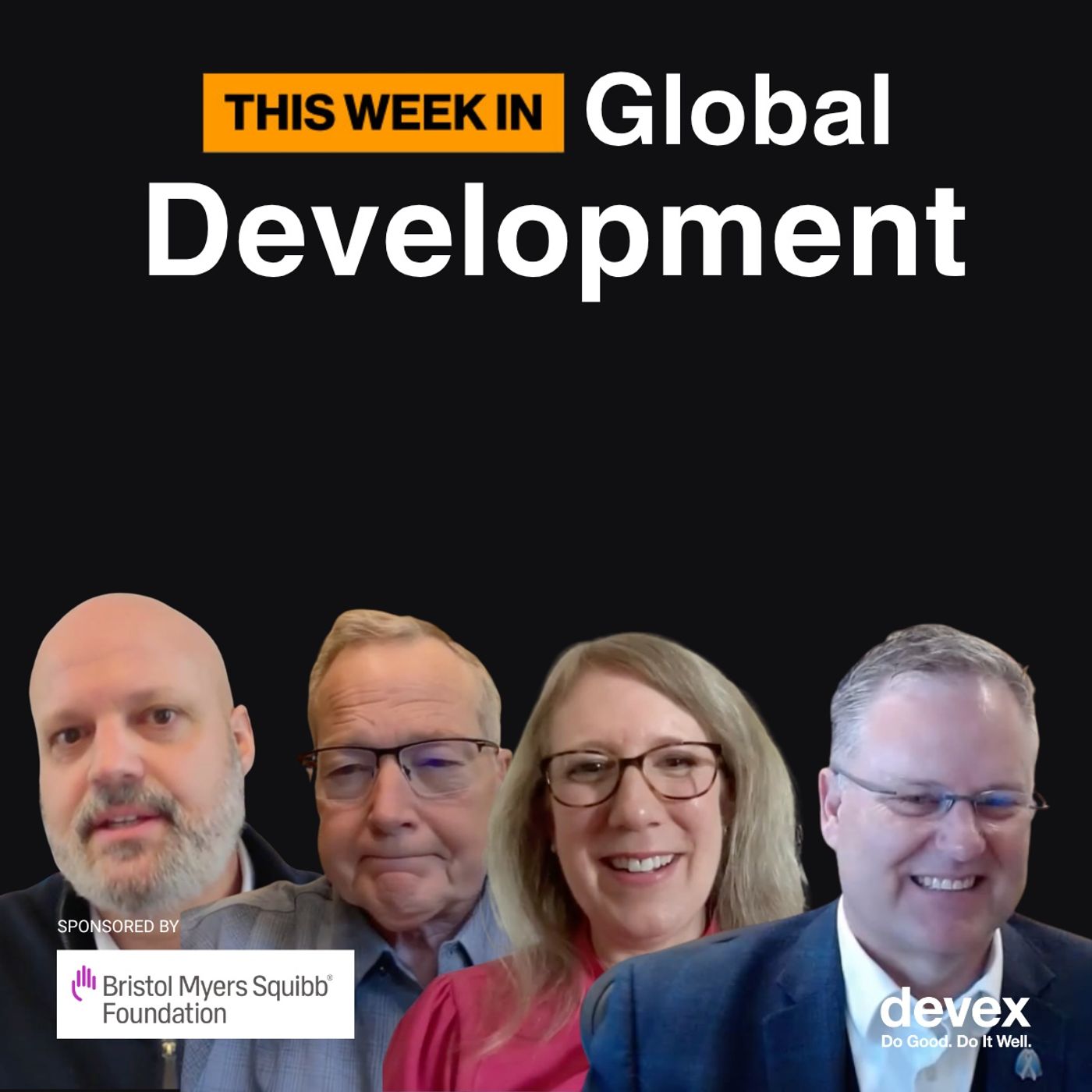
This Week in Global Development
Special edition: The blueprint for better lung cancer screening
00:30:38
In this special edition of the This Week in Global Development podcast, produced in partnership with the Bristol Myers Squibb Foundation, Devex co-founder and Executive Vice President Alan Robbins sits down with three architects of Kentucky’s...
Loading summary
Transcript31 lines
- [00:05]
A
Hi, everyone. I'm Alan Robbins, co founder and executive vice president at devex, and I'll be your host for this special edition of this Week in Global Development, which we're putting together in partnership with the Bristol Myers Squibb Foundation. DEVEX and the Bristol Myers Squibb foundation have been working together now for a few months on our Strengthening Care System series, which is all about lung cancer and how to best screen for and treat it using the best available methods, whether those are the best technologies, new collaborative models, or better yet, a combination of both. And today we're here looking at a case study and how to do just that. So without further ado, I'd like to welcome our three guests today. First, we have Dr. Jennifer Redmond Knight, who is associate professor at the University of Kentucky College of Public Health and a specialist in building powerful health coalitions. Jennifer, thanks for joining.
- [00:55]
B
So glad to be here. Thanks for having us.
- [00:57]
C
Great.
- [00:58]
A
And Second, we have Dr. Timothy Mullet, who is professor of Thoracic surgery at the University of Kentucky, and he's going to bring a great clinical and surgical perspective to this conversation. Tim, great to have you here, too.
- [01:12]
C
Thank you, Alan. It's great to be here. Appreciate the opportunity.
- [01:14]
A
And finally, we have Dr. Jamie Stutz, who is professor of medicine, medical oncology at the University of Colorado School of Medicine. He's been really working on the behavioral design and taking this model nationally. Jamie, really appreciate you joining.
- [01:31]
D
Thanks, Alan.
- [01:33]
A
Well, welcome to all. You're such amazing experts, and I'm looking forward to learning a ton today. Jamie, let me start with you. So the Kentucky Leeds Collaborative essentially built the launch pad for what is now the Queen Quills system. Now, I'll spell it out. The quills system is Q, U, I, L, S. I encourage everyone to check it out. But basically this is a structured way to make sure lung cancer screenings actually deliver results. Can you describe a bit about what Quills is and what you're doing with it?
- [02:10]
D
Thanks, Alan. With the support of the bristolmeyer Squibb foundation, we've been able to develop a quality implementation system that really focuses on optimizing the delivery and outcomes from lung cancer screening. And so we have a scoring system that helps people understand their strengths and limitations as a screening program, a resource portal which provides resources to help people improve the quality of the services they're delivering. We also have an audit and feedback system that provides information back to the community screening program, and then we also work with them through a practice facility rehabilitation process that helps, you know, deal with some of the struggles of modifying your program and really getting all of the potential benefit out of lung cancer screening that really helps the individuals, but also population health.
- [03:06]
C
Great.
- [03:07]
A
And. And as you take Quills out of Kentucky and scale it into states, I know you've looked at your scaling in places like Mississippi and Nevada. What do you see as the absolute non negotiables? What are the things that have to happen to make this successful?
- [03:24]
D
It's an interesting way to think about it, and we really think that all of it needs to happen. Unfortunately, in order to create an environment where the public is receptive and understanding of the lung cancer screening opportunity, you need a statewide coalition bringing people together at the community level. But we also need clinicians, our primary care clinicians, and other referral sources to be engaged and referring for lung cancer screening. And then when we're able to receive individuals into our lung cancer screening programs, we want to make the most of the care that we provide and really, like I said before, optimize the delivery and outcomes. And so working at those three levels really creates the synergy where each component of the. Of the project makes the other one better. And we really think that working at those multiple levels is a key ingredient in the entire Quills system.
- [04:31]
A
And Tim, just moving to you, if there is, let's say, a regional hospital or local clinic that wants to adopt a system like Quills, how do they build that own kind of clinical muscle that locally while still kind of leaning on those centralized tools and guidelines that you've all kind of helped to build and really could potentially help others as well?
- [04:58]
C
Alan, thank you. That's a great question. I think that. Well, first of all, my experience with this before I started, and this was 20 years of taking care of patients with lung cancer. And at an institution like the University of Kentucky and Markey Cancer center, we rely on referrals from regions, from out in the community, from programs that don't have surgeons, programs that don't have good connections to resources like that. And so expecting them to build programs that would, that would supply the complexity of the continuum of lung cancer would be really challenging. But starting when lung cancer screening came about as an opportunity to be able to really focus us on early detection and improved outcomes, that was a great opportunity for us to be able to recognize that the community is where all of this gets started. And so building on this was, with this, Quill's system was the opportunity that we had to be able to reach into the community and be able to give them tools to be able to help make this work. And so while they don't have to do lung surgery, they don't have to take care of the entirety of the lung cancer care. Being able to recognize the role of lung cancer screening and how the community can work together to be able to increase effectiveness was really the strength that became evident as we built this system. And so I think the opportunity to be able to work with the community and for them to be the face of the lung cancer screening program, a recognized resource in a local facility, probably speaking the same language and the same dialect, and probably being able to communicate effectively was, was really important for us to be able to provide those resources. So they are the face of the program and we're providing resources for them to grow, what they need. And so we, we leaned on evidence based guidelines, we leaned on resources and installed them in our portal so that they're available for the local community sites. It's web based. And so that makes it available for folks anywhere in the country. And that makes it a resource that's consistent across the, across the board.
- [07:31]
A
One thing that I think is really interesting about the model is that oftentimes people think that diagnosis or treatment is kind of a moment in time, but it's really a continuum. And even getting to the point of making the decision to go and get a diagnosis, whether it's positive or negative, that's an important decision. Then everything after that is also important. So, Jennifer, I just want to ask you and, and you know, you could have the best guidelines in the world, but without people engaging in the process. Yeah, you don't get anywhere. So, you know, coalition building is a massive part of this Quill's process. How do you translate kind of getting people to sit at a table together into concrete system changes that can bring these measurable outcomes? And how do you prevent a coalition from. Sorry, how do you prevent a coalition from just becoming a kind of support group or a monthly chat or to actually bring results?
- [08:36]
B
Great questions. Yes, absolutely. You're speaking my language. So, you know, I think one of the important pieces and most important pieces of that coalition building, that engagement, is having a clear purpose for what you're doing. And why are you gathering. Sometimes people come together and they're like, ooh, this seems like a good idea, but not really knowing what we're focused on. And I think one of the things we've learned in Kentucky and continue learning is we said we want to focus on lung cancer and even lung cancer screening, as well as some prevention pieces. Let's do it together. Let's start speaking Similar languages. And then let's get really clear on the strengths and the collective wisdom of the groups working in this space. And how can the folks who focus on community work have the tools and resources they need to really engage with the community and know what's happening? And then how do we help those working in health systems really have a sense of what can they do well and how can they deliver services well, and how can that be connected across different places? And what are some things that we really need to work together on to be successful? So oftentimes, you know, one of the things that can really help in the coalition space is to say, what is our goal? Like what? Why are we coming together? We could all do these things by ourselves, but what is it that we need to come together? And something like lung cancer screening is something that is a place where people can say, ooh, I don't even know that I know what that is, but I think it's important. So how can we talk together, come together, and then set a goal for. All right, we need to engage our communities in a positive way around this. We need to connect with the clinicians, as Jamie mentioned, in that space, where we need to think about policy changes that can impact. And one of my favorite questions as we think about coalition work that I think is important is what is it that we can do together that we can't do by ourselves? And that's part of what drives us together. And then where in that process are there win win opportunities? You know, if somebody's coming to a coalition space and the work that they're doing as part of the coalition to engage the community further also helps the work of their own organization, then they win. If they're coming to a place where only one person gets to talk and nothing happens that connects them, it's not really a great place to be. And so, you know, the other thing is all that work and that purpose and that goal being grounded in data and then seeing what's happening over time and saying, what are we aiming for? How do we work together? And then how do we share that collective credit when we do get there so that people keep wanting to work together and seeing the benefit of that.
- [11:14]
A
And Jamie just moving more on that kind of human element of what we're looking at here. Quills recognizes that the barriers to getting a lung cancer scan, it's not just the lack of clinics. There might be clinics around that people that just aren't going to. They're behavioral. There's a lot of fear, a natural instinct Fatalism, social stigma around this. How does Quills intentionally bake these barriers into its solutions, into the kind of clinical workflow so the patient doesn't have to carry the burden, have the burden of carrying these alone.
- [12:00]
D
So one of the things that the Quills system does in building on the data and the evidence for how to do quality screening, we infuse a person centeredness to this process. And one of the things that we have to understand is that lung cancer screening is being launched in a particular context that is really pretty toxic in a sense that it makes it very difficult to implement lung cancer screening. Public trusts, other cancer screening platforms, like mammography or colorectal cancer screening or cervical cancer screening. But lung cancer screening is new. Most people have never heard of it. And we haven't had the federal resources to make lung cancer screening normal. And so we need to put the community that we're trying to serve at the center of the process. Our data is incredible to support implementation, but the data is not what drives individual behavior. And what we need to understand is that this community is not starting out at zero and we are sub zero because we have a history of shaming and creating lots of fear around smoking. And, and that has worked to reduce our, the burden of combustible smoking in the US to the lowest levels ever. But it creates a uniquely challenging environment for which to build trust, for a new screening modality. So we work with programs to understand the community that we're trying to serve, the community that they are serving in their catchment area, and to understand the unique ways that these individuals think about their risk for lung cancer, to lower the temperature on their risk for lung cancer, to bring more empathy and compassion, to try to remove the stigma, the shame and the fear around this, which are not motivators to pursue lung cancer screening. So we're trying to replace the stigma and the fear with empathy and hope in order to engage this community, to help them see this as an opportunity for someone to participate once and continue to come back, because we're building trust with them in this platform, in our screening programs, in communities, in our screening teams, that we care a great deal. And that's one of the great benefits that the vast majority of individuals who are in lung cancer screening have a tremendous self sense of connection and empathy. And we really work toward unleashing that and helping people connect in a way that can be very productive for, for both the community and individual health.
- [15:00]
A
And we've been talking quite a bit about the community's role, which is a huge one and obviously, the patient's role is a huge one. It's a big step to make these decisions. And then of course, there's the provider's role, and that's a huge one, too. So, Tim, moving to that side of things, early detection only works if doctors actually order the scans and follow up on the scans. But they're busy. There's a ton going on. And so how does quills shift their own behavior to make it so that screening and tracking becomes kind of an automated reflex rather than depending on what they happen to remember to order that day?
- [15:45]
C
That's a great point. I think the understanding that, you know, especially in the primary care office, they have. Have a lot of things going on, they're focused on a lot of different areas, and they have a short period of time to be able to talk to patients. And so what one of the real values of this project is is that it allows us to raise the priority of lung cancer and be able to increase the awareness that that provider can actually change outcomes. And so I think the ability to assess the program and then provide feedback on where they're doing well and where they might be able to improve in terms of efficiency of referrals or in better communication with providers or better communication with the community are examples of ways that this system works. And so I think reaching into the facility and having a community, if you will, within a community of clinicians and providers and administrators to be able to support lung cancer screening and make it efficient for programs to be able to or for physicians to be able to make lung cancer screening effective. And you're exactly right. Which only works if we get these patients to come back for their annual scan. They get an initial scan, a low dose, low radiation exposure CT scan, and then come back for their annual scan. And that's when we find early cancers. And so having them come back is critical.
- [17:18]
A
Jennifer, just let me move to you really quick. So going back to the coalitions, you bring these diverse stakeholders together, there's going to be misalignment, there's going to be biases coming into it. What are the practical strategies you see, you use to bring these coalitions into path, like the awareness stage, into kind of coordinated and collective action?
- [17:45]
B
Yeah, well, you know, one of the things that I think is really important is to get to know who is at the table and what is, what is the conversation happening? I think sometimes we jump into assuming, oh, everybody here knows about lung cancer screening, let's now go and do. And folks are like, I have no idea really what the guidelines are. And as a matter of fact, we should screen the world. And we're like, whoa, whoa, whoa, whoa, whoa. Let's make sure we're thinking who's eligible, who can benefit. And. And so we come getting to know what people have an understanding of and then providing really some training and some resources and some conversations and some common messaging. You know, one of the first things we did in Kentucky with our Kentucky Cancer Consortium, Lung Cancer Network, is we said, you know, people are here at the table who have a real understanding of lung cancer screening. And then we have other people who really understand tobacco treatment and other people who understand radon and other people with secondhand smoke and, and other people with cancer survivorship. It doesn't mean they know what one another is doing or how that fits or what are those common messages and those common understanding. And so we really took some time to have collective understanding of those different pieces and really pulling together the evidence and pulling together what makes sense in terms of the content that we can all agree on and that we can gain an understanding. And then we, we really need to move to, okay, so what is it we're going to do? Who is going to do it? And clarifying roles and responsibilities and moving things forward and how can we do it collectively?
- [19:22]
A
And by the way, we've all been on sort of volunteer boards where it's like, okay, like all these great ideas that there's no one actually working it to actually to turn them into anything. So I completely understand what you're saying. And so I know that Quills has this emphasis on policy systems and environmental change, pse and is there. And I think that's what you're describing. That's kind of the process that you're talking about here. Is there like one kind of real world, concrete example that you can point to where this has made a real difference?
- [19:58]
B
Yeah, there's a couple, but I'll focus on one. I think one of the things that we find in lung cancer screening that people say, okay, there's lung cancer screening, but who has access to it and is it covered? And what does that look like? And so one of the things that's interesting about policy change is sometimes there's policies that people don't know exist and can be applied. So sometimes you need to move toward a policy change. For instance, access. Do we have access to lung cancer screening for those covered under insurance or for those who don't have insurance? And at the moment, there is access for those who have insurance, because lung cancer screening is labeled as A grade B and the United States Preventive Services Task Force recommendations. I won't go into those details. What that means though is a lung cancer screening is covered as a preventive screening. However, in those processes, what we have discovered is sometimes people either don't know that or there's some barriers along the way where there's additional prior authorizations or there's additional questions when people are coming to their clinic to ask for lung cancer screening. What does that look like? So what we've done is we've been able to say, all right, who knows what's going on and what is it that we can help clinics and systems break down some of those barriers and understand the insurance piece? And then at the same time, how do we help our constituents and those eligible for lung cancer screening know what to ask for and that lung cancer screening is covered. And so connecting people on multiple places. And so I think that's part of the beauty of a coalition is not everybody needs to focus on one thing, but there's multiple elements. So a policy change of, or even a policy implementation, if you will, of people have access to lung cancer screening. Okay, well what does that actually mean? And so really diving into those details is one example. I could go into many and happy to share more, but that's what comes to mind.
- [21:56]
A
That's great. Jamie, just moving to you. One of the key features of quills is its engine. There's more to it. There's things to an engine is the index, the data, the audit loops, the practice facilitation for an audience that's just learning about this system and is non technical audience. How do these pieces actually fit together to create this loop of quality improvement?
- [22:29]
D
Much like cancer screening, the quill system is a process. And it's a process that starts with self reflection. Unfortunately, when lung cancer screening was launched following publication of the nlst, followed by guideline development by the Preventive Services Task Force and the Centers for Medicare and Medicaid Services. After that, programs were launching fast and furious, but they were doing it without support and they were using models that. Well, it's sort of like mammography because it's an imaging study done on a regular basis. So let's take mammography and use it as an example. Unfortunately, that's not a great strategy because mammography has had 60 years of implementation experience to build on and we've had 60 days, you know, and so they're not equivalent and neither. And we also deal with, as we talked about before, a targeted screening modality which is based on risk rather than population based screening, which is based, driven by age eligibility. And so these are different communities. And when we focus on our process rather than service or putting the individual at the center of the process, we often go awry, particularly when we're in an environment where we're facing so many other challenges and the toxicities of our society and how we view individuals with a smoking history. And so we work through a process where we partner with a program to reflect on what they're doing really well and what their opportunities are to change, to improve. And then we provide them the feedback on those things and collaborate with them. We don't dictate anything. In the Quill system, the screening program maintains complete control over their operations and what they do. We are simply providing opportunities and resources and input into making some changes that might help them improve their program, program and their operations and their outcomes for their participants, maybe even the satisfaction, the job satisfaction for their team.
- [24:53]
A
Tim, let me move to you here. So a lot of our listeners today are going to be sort of global development public health experts, global health experts who are listening and saying, well this is all really fascinating. How do I what are some things that are applicable to me working in maybe a different country or a different region? So you know, the payoff that Kentucky has seen seems like it's been pretty incredible seeing real drops in late stage diagnoses, massive increases in screening rates. So for those listening of how do I achieve that? What are some things that the data tell you about the sort of the long term economic and the human value of investing heavily in the systems wide screening infrastructure and so forth that they might be able to take away from it?
- [25:45]
C
Oh, that's outstanding. You're exactly right. We have seen some great changes in it in a state that is not typically known for great changes in health care. Right. And so you're from West Virginia and so you're familiar with dealing with some of the challenges that are here. We have a lot of rural populations, we have a lot of isolated areas either by distance or geography or culture. And that's what we found working with the great folks at Rustel Myers Squid Foundation. Is it all around the world the same thing exists? It exists in different ways. And we've heard the same stories in Africa. We've heard the same stories in different communities. And so one of the real values of what we have is being able to tailor this to the local community and really enhance the value of the local community that brings it. And by standing with that community, it brings A degree of credibility to that local facility that we normally don't see. And so I think that it's exciting for us to be able to implement this. And frankly, now that we've been doing it for over 10 years and we've had a chance to look back at some of our data, we are seeing those outcomes. You're right. We're seeing a decrease in late stage diagnosis. We're starting to look at a ratio of stage one to stage four lung cancers and see if that's a sensitive way to be able to show early wins in this process. And we're finding that the programs that participated in our work early on have the best early to late stage ratios. So we're seeing that shift. We're seeing early lung cancers being identified. And so it won't be long. We're going to be seeing increases in survival as well, because that always lags behind.
- [27:32]
A
Okay, I want to put this one final question to you, Jamie. You know, Quills is described as kind of more of just. More than just a program as a whole implementation system with data, workflows, communities. If you were to boil it down to a single differentiator, what makes Quills fundamentally different from, you know, every other lung cancer and issue that's out there? And then also if you follow up on that, like, what's next for Quills?
- [28:00]
D
So I would say that the one thing that differentiates the Quills system is putting the individuals who are eligible, the candidates and the participants, at the center of the entire process and then building community around that. One of the other things that we don't often talk about is how much we spent time listening to the community, understanding community perspectives, understanding, listening to the challenges of navigators and medical directors in order to inform and design the processes and procedures that are embedded within the Quil system. As clinicians and scientists, we get very excited about the data and the potential of lung cancer screening. But unless we put that information in the context of the community that we're trying to serve, it doesn't matter. It doesn't matter at all. It's really the community that we're trying to serve that matters and trying to infuse as much humility and empathy and understanding and that that's really trans. Been transformed how Kentucky has leveraged the lung cancer screening environment and how we're really seeing those outcomes. And the community has rallied around lung cancer screening as an opportunity to change Kentucky Health. And it's really been powerfully led by Jennifer's work at the coalition. Our work with engaging primary care clinicians to help them embrace this perspective, as well as the lung cancer screening program. It's the words we use, the images that we use to talk with and engage and communicate with this community that respects them, recognizes their autonomy, supports them, and helps them navigate through this entire process. So it's about people.
- [29:57]
A
Well, congratulations to you all for the work that you've done. It's amazing. Unfortunately, that's all the time that we have today. Thank you for your time, your insights. Thank you to all of you listening. I hope you learned as much as I did. As a final reminder, I'd like to encourage everyone listening to check out the Strengthening Care Systems content series we're doing with the Bristol Myers Squibb Foundation. And yeah, see you next time. Thank you all for joining and see everyone next time. Really appreciate it.