Podcast
This Week in Outrage
Hosted by David and Lisa Beckemeyer · EN
An informal chat where Lisa and David from Outrage Overload discuss items from the news and other topics of outrage.
The main podcast is Outrage Overload, a science podcast, recorded and mixed in the highest quality, where David interviews scientists, researchers, authors, and other experts about outrage in society & politics and lowering the temperature.
outrageoverload.net
outrageoverload.substack.com
outrageoverload.substack.com
26episodes
Episodes
Newest firstAll episodes
Lisa Has a Point About Trump’s Early-Access Posts & Prediction Markets - 8/2/2026
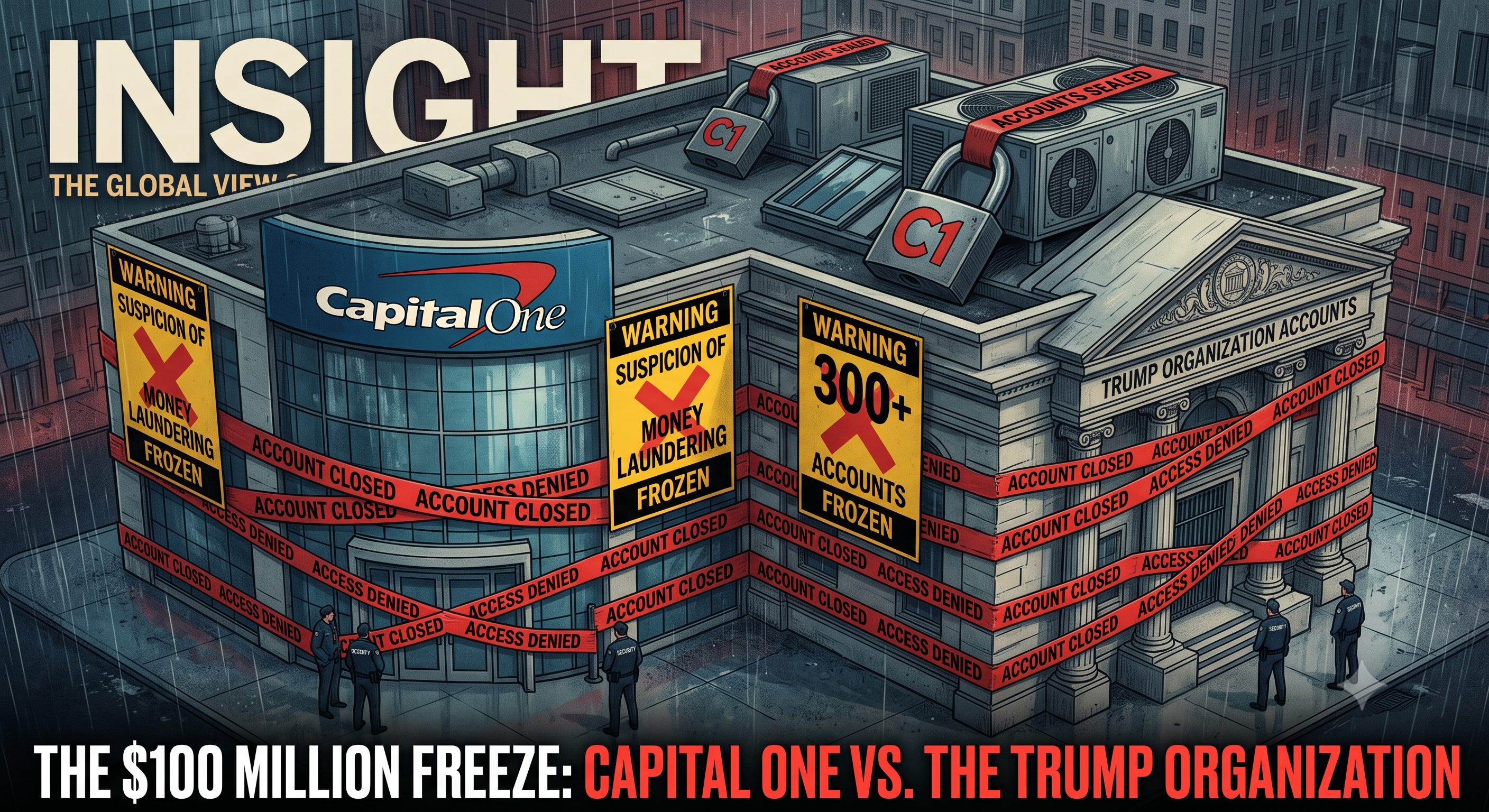
5d ago01:15:12Tap to summarizeThis week, Lisa and David talk about Capital One closed over 300 bank accounts tied to the Trump Organization on suspicion of money laundering; Jeanine Pirro drops Reflecting Pool vandalism case against U.S. Olympic canoeist David Hearn drawing Trump’s wrath; Governor Beshear has few options regarding Senator McConnell’s absence; Trump faces calls of corruption with paid early access to online posts; Walz suggested Iran targeted Minnesota in cyberattacks while Trump blames Minnesota; Fauci’s pleads Fifth Amendment to shield from Rand Paul’s bogus Senate “Witch Hunt”; trend of ‘bed-rotting’; U.S. State Dept. map of Africa gets every country wrong at global conference; latest Trump tariffs; Apple iPhone leasing program; identifying ideal sponsors for the show; drama in Nantucket; and more.Links:Outrage Overload PodcastYergz Radio (yergzradio.com)Dare Talk Radio (daretalkradio.com)This Week in Outrage Substack (outrageoverload.net/twio)Reflecting pool saga gets new twist. What really happened? (USA Today)Trump offering early access to online posts in move seen as corruption (The Guardian)What to Know About the U.S. Water Systems Cyberattacks (Time Magazine)Inside Fauci’s intensely planned hearing strategy: ‘There was no other option’ (CNN)Anthony Fauci refuses to answer questions during tense US Senate hearing about Covid origin (BBC)US government map of Africa mislabels every country at global conference (Reuters) Get full access to Outrage Overload Newsletter at outrageoverload.substack.com/subscribe
Transcribe →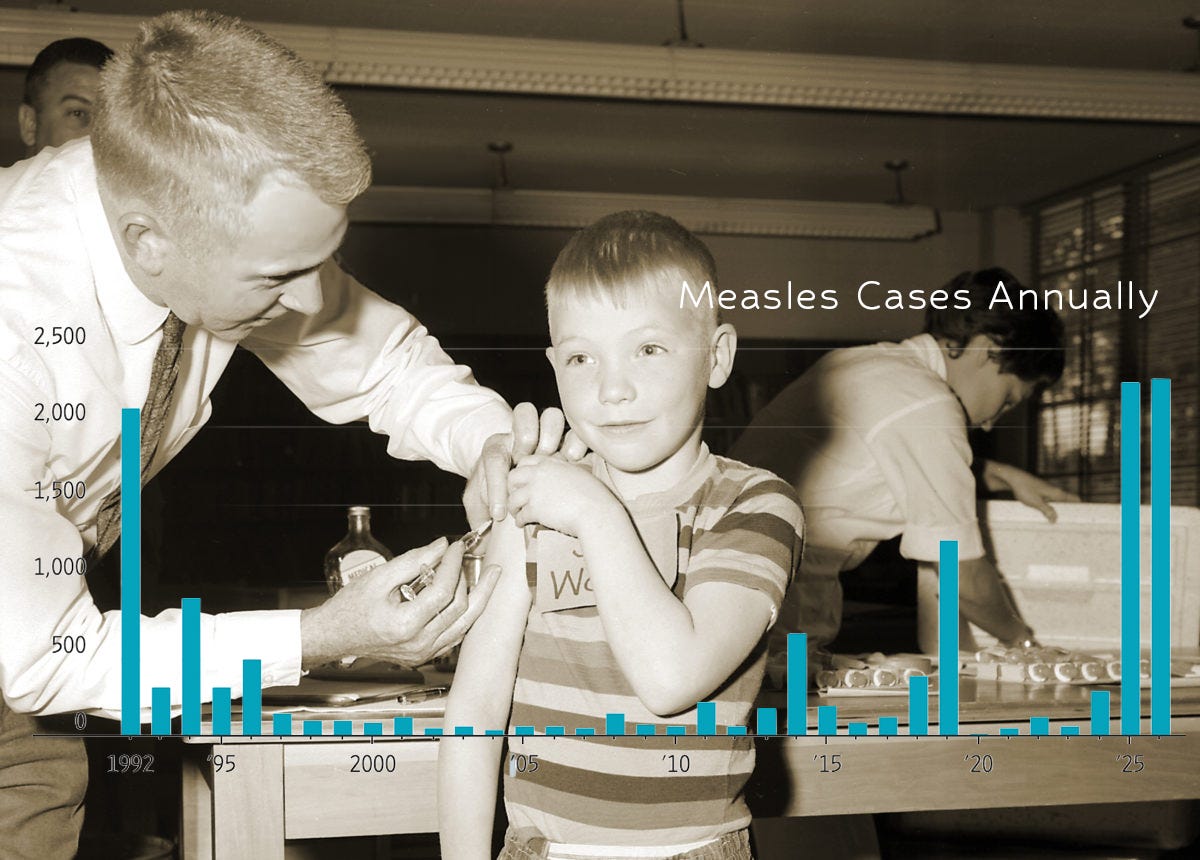
David's slightly unhinged breakdown of The Odyssey - 7/26/2026
2w ago01:20:09Tap to summarizeThis week, Lisa and David talk about House Republicans pass $1.1 trillion in funding for the military including SAVE Act and Iran funding; Trump’s deranged Correspondents’ Dinner appearance and the media’s silent acceptance; Cecilia Vega of 60 Minutes says Bari Weiss pressured her to include “misinformation” and “political bias” in news segments; Cybertruck reported as the biggest flop in automotive history; measles cases reach 35-year high amid a decadeslong slide in childhood vaccination rates; Trump launches fresh round of tariffs, creating a new potential drag on global growth; DOJ withdraws subpoenas to NY Times reporters; California ballots rejected possibly due to new U.S. Postal Service changes affecting postmarks; Trump orders Smithsonian sigage to combat “extreme political activism, rooted in Marxism, to divide, dispirit, and discourage Americans"; ‘Jimothy’; plan to reintroduce grizzly bears in California; OpenAI says its AI “went rouge” and hacked into another AI company; and more.U.S. Measles Cases So Far This Year Hit a Three-Decade High“We have joined the rank of countries where vaccination is not reaching the levels needed to protect all of our children against some of the most contagious diseases.Measles is the canary in the coal mine. What it’s saying is that our communities are vulnerable, not just from measles, but from whooping cough, meningitis, chicken pox and other diseases that are readily controllable with vaccines. We’re on a crash course.”- Dr. Richard Besser, a pediatrician and president of the Robert Wood Johnson FoundationAdded Context for Military Spending Bill and the SAVE ActThe U.S. House of Representatives narrowly passed a historic $1.15 trillion fiscal year 2027 National Defense Authorization Act (NDAA), featuring a 5% to 7% military pay raise, a provision to rename the Department of Defense to the Department of War, and funding considerations connected to ongoing operations in Iran. The legislation cleared the chamber on a tight 216-212 vote largely along party lines. Core Provisions & Debates* Department of War: Includes an adopted measure to officially redesignate the Department of Defense.* Iran Conflict & Israel: Advances policy and funding support addressing the war with Iran alongside provisions to expand U.S.-Israeli military cooperation.* Political Divisions: Opposing Democrats cited objections to mounting war costs and policy riders, while supporting Republicans emphasized the necessity of funding operations, equipment, and troop benefits.The bill now moves to the Senate.The House passed a rule to attach the full SAVE Act to the National Defense Authorization Act (NDAA) which is seen as messaging. The actual plan to clear the Senate relies on a newly advanced $95 billion budget reconciliation framework, which reshapes the SAVE Act into a budgetary mechanism.A bill passed through reconciliation must survive intense procedural and political hurdles before becoming law. Even though structured as financial grants, the Senate Parliamentarian already ruled that policy provisions tied to the SAVE Act violate the “Byrd Rule”—a strict Senate guideline requiring all reconciliation elements to be primarily budgetary rather than driven by policy changes.Experts are generally saying military and agricultural funding tracks are legally and procedurally cleared to survive reconciliation, but the SAVE Act funding faces a nearly impossible uphill battle to survive the Senate’s procedural gauntlet.Added Context for the War Powers ActThe War Powers Resolution technically applies to military actions involving Iran, but President Trump has bypassed its restrictions by exploiting legislative fractures and shifting the definition of ongoing operations. Because Congress remains deeply divided along partisan lines, it has failed to pass binding, veto-proof legislation to halt hostilities. Instead, the House has largely relied on non-binding or symbolic resolutions, while the Senate fell short of the votes needed to enforce a mandatory withdrawal of American forces.To sidestep the statute’s strict 60-day deadline for unauthorized conflicts, the administration frames intermittent flare-ups, localized airstrikes, and sudden ceasefires as separate, independent incidents rather than one continuous, undeclared war. Furthermore, the White House asserts broad executive authority under Article II of the Constitution, arguing that the President possesses the inherent power as Commander-in-Chief to launch defensive strikes against imminent threats to American personnel without needing explicit congressional approval.Added Context for Trump’s Unprecedented Spectacle at the WHCDThe speech should be described as unhinged in tone, unprecedented in setting, and dangerous in what it normalizes. A sitting president using a rescheduled journalists’ dinner to recycle attack lines, insult specific reporters, and blur the line between official remarks and rally-style grievance politics is not normal governance; it is a deliberate stress test of democratic norms.What makes it especially alarming is that the room’s response can itself become part of the story. Reports describe nervous laughter, moments of silence, and a ballroom that largely absorbed the performance rather than forcefully rejecting it, which is exactly how behavior that once felt shocking starts to harden into routine.The danger is not just the content of the speech; it is the permission structure around it. When journalists, political officials, and institutions respond with resignation, the message becomes that personal abuse, falsehoods, and authoritarian-style performance are simply the new baseline.This wasn’t just a bad speech. It was a normalized display of cruelty, contempt, and lawless rhetoric, performed in front of the press corps that is supposed to hold power accountable — and the fact that the room mostly sat there is part of the problem.Links:Outrage Overload PodcastYergz Radio (yergzradio.com)Dare Talk Radio (daretalkradio.com)This Week in Outrage Substack (outrageoverload.net/twio)5 standout moments from Trump’s appearance at makeup WHCA dinner (The Hill)Trump jokes mostly fall flat at WHCA dinner as he attacks journalists and political foes (CNN)Are oil companies profiting from the Iran war? Experts explain (ABC News)It’s Looking Like the Cybertruck Is the Biggest Flop in Automotive History (Futurism)The worst year for measles in a generation (Vox)Why Trump’s new tariff blitz is very different this time around (CNBC)DOJ withdraws subpoenas to NY Times reporters in Trump plane probe (CNBC)Trump orders Smithsonian to post warnings about ‘inaccurate’ US history (BBC)A Teen Reporter Searched for His Community in the Epstein Files. Adults Freaked Out (Wired)OpenAI blamed a hacking event on its AI models going rogue. Here’s what to know (PBS) Get full access to Outrage Overload Newsletter at outrageoverload.substack.com/subscribe
Transcribe →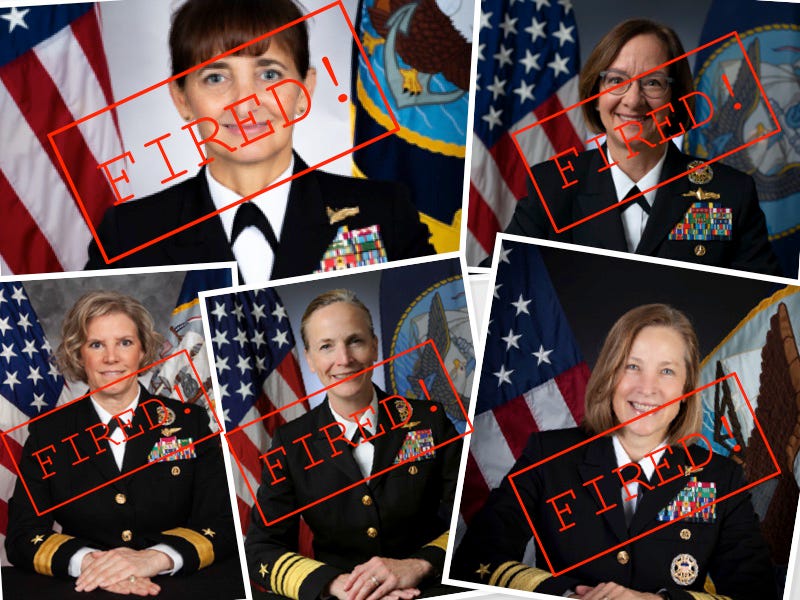
Lisa wants to know why people are afraid of Hegseth - 7/19/2026
3w ago01:20:28Tap to summarizeThis week, Lisa and David talk about the Tate Brothers getting arrested; Pete Hegseth’s testosterone screening plan; a second McConnell suspicious ‘proof of life’ photo; the future of Lindsey Graham’s Senate seat; the status of the reflecting pool; Trump’s unhinged ‘election security’ speech; does Trump think “transistor” means “transgender”?; TrumpRx providing little of the promised value; Katie Porter out of politics; Rep. Lisa McClain mad about Canadian wildfire smoke; and more.Added Context for the Tate BrothersThe Tate brothers are not the whole manosphere, but they are one of its most famous and extreme faces. Check out the episode we did on the Manosphere below:Andrew Tate became famous first through kickboxing and reality TV, then through viral clips promoting extreme wealth, status, and “alpha male” behavior. The brothers later turned that notoriety into online courses and memberships that marketed lifestyle and money-making advice to young men. Their content spread widely because it was short, provocative, and designed for social media algorithms.Their pitch is simple: men should be tough, emotionally detached, financially ambitious, and dominant in relationships. That message resonates with some young men who feel isolated, frustrated, or alienated, but critics say it packages insecurity into contempt for women and other groups. Their critics also argue that the brand normalizes coercion, cruelty, and exploitation.Some followers see the Tates as anti-establishment truth-tellers who say out loud what other men are afraid to say. Others follow them for the aspiration: money, cars, status, confidence, and a clear set of rules in a confusing world. The downside is that the worldview often turns into resentment, gender hostility, and a simplified us-versus-them politics.The Tate brothers’ legal history is centered on allegations of sexual exploitation, trafficking, and related offenses in Romania and the UK, with a newer Florida investigation added in 2025. They deny all wrongdoing.They turned online masculinity grievance into a mass-audience brand, and that brand now sits at the intersection of influencer culture, gender politics, and criminal controversy.Added Context for Hegseth Firings and Blocked PromotionsHigh-Profile Officers Sidelined or Dismissed:* Adm. Lisa Franchetti: Dismissed as Chief of Naval Operations (the first woman to lead the Navy).* Vice Adm. Yvette Davids: Reassigned; she was the first woman to lead the U.S. Naval Academy.* Vice Adm. Shoshana Chatfield: Dismissed.Hegseth intervened to remove two female colonels and two Black male colonels from the Army’s one-star general promotion list. The exact names of the four Army colonels have not been publicly released by the Pentagon or investigative journalists.However, reporting by Military Times and the New York Times confirmed specific professional descriptions for some of the targeted individuals:* The First Black Male Colonel: An armor officer singled out specifically for writing a prior academic paper analyzing why Black military officers often choose support roles over front-line combat positions.* The Remaining Three Officers: Deemed “ideologically incompatible” with the administration despite what Army Secretary Daniel Driscoll testified were decades-long, “exemplary records of service.”Hegseth blocked the promotions of seven senior Navy officers (five of whom were women or people of color) to two-star admirals. In a related move, he also removed African Americans, women, and white males from the Navy’s one-star promotion list, reportedly due to their involvement in military Diversity, Equity, and Inclusion (DEI) initiatives.The individual names of most of the affected officers have not been fully released due to military privacy policies.The widespread fear of Defense Secretary Pete Hegseth within the Pentagon—and the apparent lack of institutional pushback—stems from a calculated campaign of career retaliation, total political alignment with the White House, and a severe crackdown on transparency.* The Firing of Challengers: Hegseth has demonstrated a willingness to immediately terminate anyone who questions his directives. When Army Chief of Staff Gen. Randy George attempted to defend the integrity of the Army promotion list and protect his officers, Hegseth fired him. This sent an unmistakable message to the entire force: defending the system will cost you your career.* The “Woke” Purge: Hegseth is actively treating past involvement in military Diversity, Equity, and Inclusion (DEI) initiatives as a disqualifying mark. This has created deep anxiety, as excellent performance reviews are no longer armor against having your promotion blocked or being forced into early retirement.* Lack of Explanation: Hegseth has unseated top commanders—including the Chairman of the Joint Chiefs and the Chief of Naval Operations—without providing public justifications. This lack of transparency means officers cannot know what specific actions might trigger their own removal.Hegseth has systemically dismantled independent scrutiny by restricting press access inside the Pentagon. His office removed major news organizations from their dedicated workspaces, banned reporters from entering the public affairs press office, and restricted unescorted movement in the building. With journalists heavily restricted, internal dissent has no public outlet.While former defense officials and media outlets have sounded alarms, structural and political realities have effectively neutralized any meaningful resistance within the Pentagon.Added Context for Trump’s Claims About the CHIPS ActDonald Trump falsely claimed that the bipartisan CHIPS and Science Act required companies receiving federal funding to be run by transgender executives. Fact-checkers and legal experts confirm no such requirement or diversity quota exists in the law; the confusion is widely believed to stem from a conflation of the words "transistor" and "transgender".Both legal experts and journalists confirmed that the CHIPS Act and its associated funding guidelines contain no mandates for hiring transgender individuals or requirements for diverse executive leadership. The legislation is intended to rebuild domestic semiconductor manufacturing. Commentators and critics pointed out that the semiconductor manufacturing process relies on cutting-edge transistors, which is likely where the speech error or confusion originated.Added Context for the Future of Trump Rebranding of Government AssetsPolitical analysts and legal scholars generally agree that the long-term survival of the Trump administration's federal rebranding efforts is highly precarious. Because most of these changes have been enacted via unilateral executive actions rather than formal legislation, experts predict a bifurcated future: some rebrandings will likely be instantly wiped away by a future administration, while others will be dismantled by escalating legal challenges or economic reality.The former Palm Beach International Airport (PBI) , now the President Donald J. Trump International Airport is highly likely to keep the name due to state-level political backing.Ultimately, experts view most of these rebrandings not as permanent institutional shifts, but as temporary markers of the current administration that are highly unlikely to survive a transition of power.Links:Outrage Overload PodcastYergz Radio (yergzradio.com)Dare Talk Radio (daretalkradio.com)This Week in Outrage Substack (outrageoverload.net/twio)David’s Recent Polling Analysis (on Substack)Tate brothers arrested by U.S. authorities, face additional rape charges in the U.K. (NBC News)Doctors question evidence behind Pentagon plan for testosterone screening (Reuters)Leaders call for transparency amid online speculation after McConnell hospitalization (WKYT)Who is Darline Graham Nordone, the late Sen. Lindsey Graham’s sister? (PBS)FactChecking Trump’s Election Security Speech (FactCheck)<a target="_blank" href="https://www.npr.org/2026/07/16/nx-s1-5894947/trump-rx-medi...
Transcribe →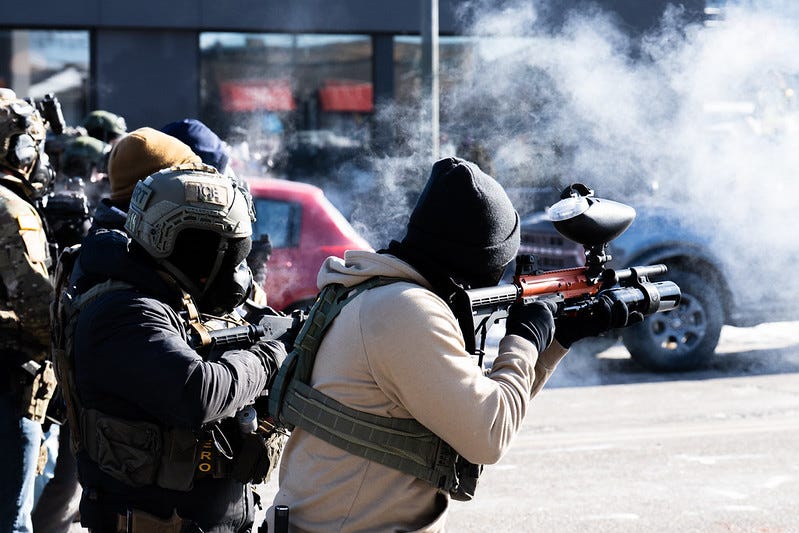
No Bodycams, Full Force: Killing Sparks Fears of a Return to Unchecked ICE Violence - 7/12/2026
4w ago01:28:46Tap to summarizeThis week, Lisa and David talk about Lindsey Graham’s death, Mitch McConnell’s “proof of life” statement; Iran ceasefire falls apart; no final, formal after-action report for DOGE; ICE fails to deploy bodycams despite presidential mandates and federal court orders; German court finds Google directly liable for harm caused by false statements generated by its AI overview; Palm Beach airport renamed President Donald J. Trump International Airport; Trump Jr. to cash in on mail-order guns with GrabAGun; Judge orders clerk to release $5 million judgment to E. Jean Carroll; Freedom Fuel network moves in the shadows with few public details about its structure or funding; Graham Platner and double standards; Todd Blanche and DOJ defying court order to release unredacted documents; controversial Indycar “one nation, one race” t-shirt; DOJ subpoenas New York Times reporters; Trump fired members of the bipartisan Election Assistance Commission; the Supreme Court shadow docket; divorce rings; dog names; and more.Added Context for DOGE Shutdown Report and OversightThe administration argues DOGE records fall under the Presidential Records Act (PRA) rather than the stricter Federal Records Act. The PRA gives the President wide authority over record disposal and keeps documents sealed from public freedom of information requests for five to twelve years.Congress has used the Government Accountability Office (GAO) to bypass the executive branch and investigate DOGE's actions. GAO reports revealed that DOGE personnel bypassed standard federal security protocols to access data systems at the National Labor Relations Board and the Treasury Department.The Senate Homeland Security and Governmental Affairs Committee issued a reprimand report detailing whistleblower complaints that DOGE staff copied sensitive citizen data into unverified cloud databases. There is little will among Republicans in Congress to perform their oversight duties because party loyalty and political alignment with the administration heavily outweigh institutional oversight. Republican leaders actively defend the administration's savings claims, hoping to use them as a victory to campaign on.Added Context for the Election Assistance CommissionCongress created the U.S. Election Assistance Commission in the Help America Vote Act, a bipartisan law signed by Republican President George W. Bush in 2002. The agency’s core job is to help states and localities improve election administration, including guidance, voting-system certification, and HAVA grant oversight. The commission is designed to be bipartisan: four commissioners are appointed by the president and confirmed by the Senate, to include two Democrats and two Republicans.EAC is meant to function less like a policymaking body and more like a technical, administrative clearinghouse. Its work includes publishing election guidance, maintaining the national mail voter registration form, accrediting testing labs, certifying voting systems, and collecting information on election administration nationwide. The immediate effect of the firings is that the EAC is left without commissioners, which means it can still exist as an agency but loses its bipartisan leadership and much of its decision-making capacity. Reuters reported that the Help America Vote Act gives the president authority to appoint replacements, but it was unclear right away how Trump would proceed, and state officials warned that the agency’s work would be hampered by the lack of commissioners.Trump can nominate new commissioners, and those nominees would still need Senate confirmation under the structure created by HAVA. If the White House does not move quickly to fill the seats, the agency may function in a limited or stalled way until new commissioners are confirmed.The EAC was designed as a bipartisan buffer for technical election administration, not a partisan instrument. Removing all members eliminates that buffer. The main risk is disruption to voting-system certification, guidance, and support for state election offices rather than a sudden change in how ballots are cast.Freedom 250 Grand Prix T-ShirtThe Freedom 250 Grand Prix of Washington, D.C. is the first-ever IndyCar race held in the nation’s capital, taking place on August 22–23, 2026. The historic event celebrates America’s 250th birthday and features a 1.7-mile, 7-turn temporary street circuit that winds through the National Mall.IndyCar quietly deleted a T-shirt from its online store after fans flagged its design as evoking white-supremacist imagery.The race itself has political origins: it was added to the 2026 schedule only after President Trump signed an executive order in January directing federal agencies to fast-track the event as part of America’s 250th anniversary celebrations.The shirt in question, shown below, depicted a helmeted figure posed within a Lincoln-monument-like design, with “ONE NATION” arched above and “ONE RACE” below. Critics noted the phrase’s double meaning and its resemblance to slogans used in white-nationalist rhetoric. IndyCar’s response, per reporting from The Athletic, was terse: the shirt was “removed from IndyCar’s online store following feedback from customers.”Links:Outrage Overload PodcastYergz Radio (yergzradio.com)Dare Talk Radio (daretalkradio.com)This Week in Outrage Substack (outrageoverload.net/twio)German court holds Google liable for fake AI answers (DW)Justice Department subpoenas New York Times reporters over Air Force One reporting (NPR)Tarp remains at the Kennedy Center as appeals court rejects latest request (WUSA)Donald Trump ousts election commission members in latest push to reshape US voting process (AP)IndyCar T-shirt withdrawn after slogan causes outrage (Reuters) Get full access to Outrage Overload Newsletter at outrageoverload.substack.com/subscribe
Transcribe →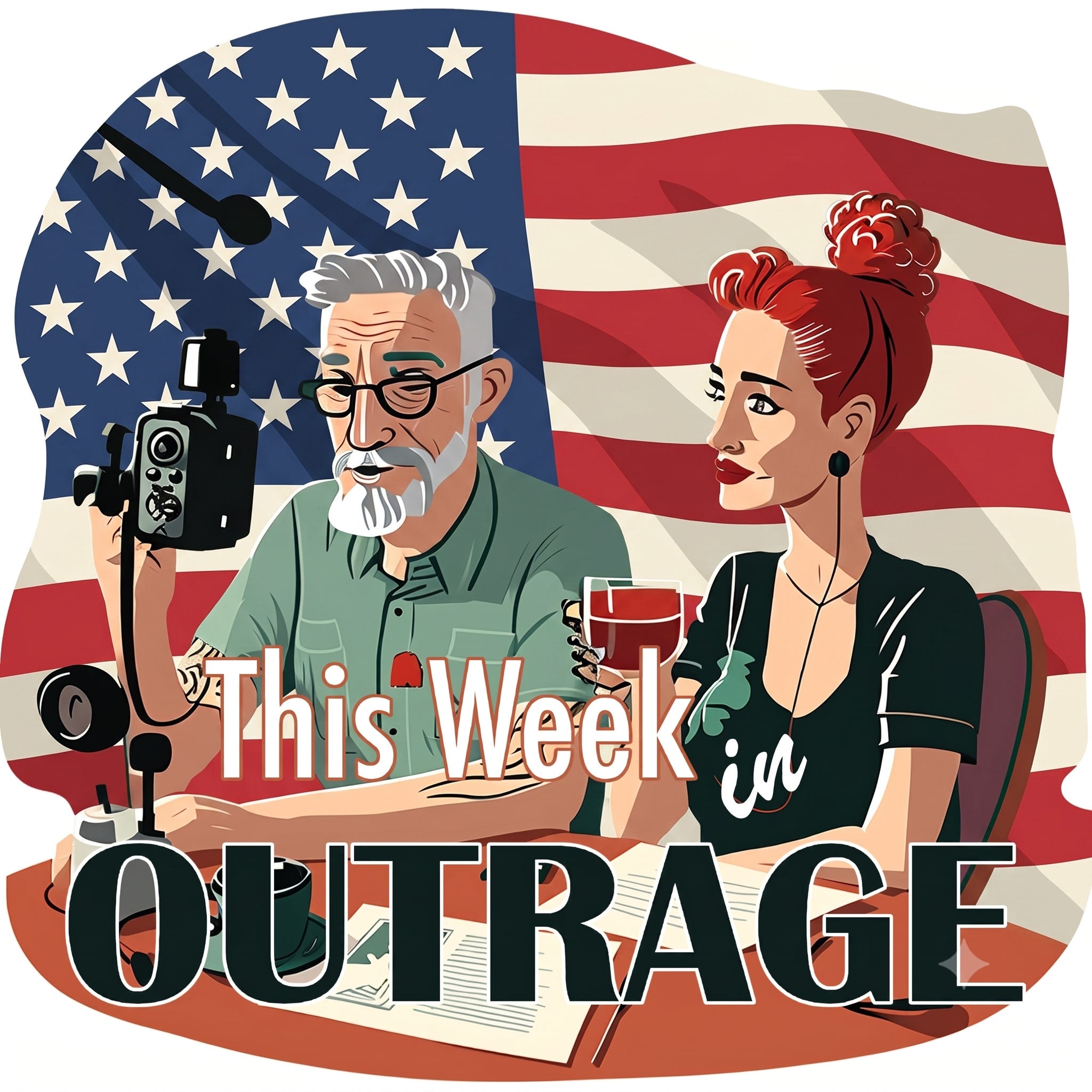
Fourth of July Special - 7/3/2026
Jul 400:58:22Tap to summarizeLisa and David talk about the week’s events for the holiday.Note: This one we just recorded and popped up here using Substack’s auto-editing so we’ll see what we have. No usual in-depth show notes this time. We will be back to usual episodes next week. Get full access to Outrage Overload Newsletter at outrageoverload.substack.com/subscribe
Transcribe →
Hold on to your hat my friend, this one's going to take you for a spin - 6/28/2026
Jun 2900:53:18Tap to summarizeThis week, Lisa and David talk about America 250, the Trump-led Great American State Fair, and the the fight over the nation’s semiquincentennial; new ‘Patriot Passport’ design; “Alligator Alcatraz” officially shutting down; European heat wave; Trump standing by claims that vandals damaged the Reflecting Pool; Iran war ceasefire, MOU, and Israel; major earthquakes around the world; Judge permanently blocks Trump EO requiring proof of citizenship to vote; Supreme Court says the U.S. can turn back asylum seekers at the southern border; Senate adopts House Iran War Powers resolution in a mostly symbolic move; Trump holds bipartisan housing bill hostage over Save ACT; 25,000 secret documents reveal Tulsi Gabbard as a sect leader's political puppet; scientist Missy Woods pleads guilty in massive DNA testing scandal; and more.Added Context for the America250 vs. Freedom 250 SplitAmerica250 and Freedom 250 are both built around the U.S. semiquincentennial, but they differ in origin, authority, and political character. America250 is the older, Congress-created bipartisan commission; Freedom 250 is the newer White House-led effort tied to Trump’s administration.In short, America250 is the official bipartisan commission for the 250th anniversary, while Freedom 250 is the Trump White House’s rival, more politically branded celebration platform.Why the split happenedThe basic split is institutional and political. America250 was established by Congress in 2016 as the official national commission for the 250th anniversary, with a bipartisan structure and a broad, nonpartisan public-facing mission. Freedom 250 emerged later from a Trump White House initiative, with Trump appointing leadership and the administration using it to stage a more centralized, higher-profile celebration.That created two overlapping “birthday party” brands for the same milestone. Reporters have described this as a fight over who gets to define the national celebration, and critics argue the White House-backed version effectively sidelined the original commission’s role and funding.What each organization is forAmerica250 is the commission that was set up to coordinate the national commemorations across the country, including community-based programming and events designed to feel broadly civic rather than partisan. Its branding is tied to a longer planning horizon and to Congress’s original framework for the anniversary.Freedom 250 is more event-driven and White House-centered. It has been associated with large spectacle programming on the National Mall and other high-visibility events, and it became controversial after performers withdrew and Trump suggested canceling some festivities. In practice, that made it look less like a neutral national commission and more like a Trump-era signature project.Why it became a controversyThe controversy is not just about duplication; it is about legitimacy and control. If America250 is the official bipartisan commission, then Freedom 250 can look like a parallel structure created by the executive branch to rebrand the anniversary around the president. That is why some coverage frames the issue as “one birthday, two party planners” and why the split is being read through the lens of partisan conflict.The practical effect is confusion over which group is “the” official organizer, especially when both are promoting July Fourth and semiquincentennial events. The deeper context is a familiar Washington pattern: a bipartisan, congressionally authorized institution coexisting uneasily with a White House-driven political operation that wants greater control over the national narrative.Added Context for Trump Claims that Vandals Damaged the Reflecting PoolTrump has claimed people slashed the pool’s lining, poured chemicals into it, and caused a long gash, but reporters and fact-checkers found no publicly shown evidence of that specific vandalism.Reporting from PolitiFact, AP, NPR, and the New York Times says the administration has offered little or no substantiation, while alternative explanations like algae growth, coating defects, and preparation issues are consistent with the damage seen.In short, the public record shows some enforcement actions and some suspicious behavior around the pool, but it does not currently show solid evidence that vandals caused the peeling lining or algae problems Trump attributes to them.Added Context for the War Powers Act ResolutionThe Senate approved a House-passed measure calling for an end to the Iran war in a mostly symbolic resolution. The Senate’s Iran War Powers vote was a narrow, rebuke of President Trump, not a law that automatically forced withdrawal. It passed 50-48 with four Republicans joining nearly all Democrats, and it instructed Trump to end U.S. hostilities against Iran unless Congress authorizes the force.This was widely reported as the first time both chambers of Congress had approved a concurrent resolution directing a president to stop military hostilities under the War Powers framework. Even though the White House argued it had no legal force, the vote put Congress on record against continued military action and signaled unusual bipartisan discomfort with Trump’s handling of Iran.Four Republicans voted yes: Susan Collins, Bill Cassidy, Lisa Murkowski, and Rand Paul. John Fetterman was the lone Democrat reported to vote no.Added Context for the Housing BillThe 21st Century ROAD to Housing Act is a broad bipartisan housing package aimed at boosting housing supply, speeding development, modernizing federal housing programs, and making it easier to finance and build more homes. It passed Congress in late June 2026 and is awaiting President Trump’s signature.The bill tries to make it cheaper and easier to build, finance, preserve, and rent housing, while also putting new limits on some corporate single-family-home buying.Politically, this was a notable bipartisan deal: Senate passage was 85-5 and House passage was 358-32, which signals unusually broad support in today’s Congress. The deal also reflected a negotiated compromise between key committee leaders from both parties, including Tim Scott, Elizabeth Warren, French Hill, and Maxine Waters.If Trump simply does nothing, the bill becomes law automatically after 10 calendar days, excluding Sundays, as long as Congress is still in session; if Congress adjourns in the right way during that window, it can instead be a pocket veto and die.If Trump issues a regular veto, Congress can override it with two-thirds majorities in both chambers. That looks plausible here because the bill originally passed by such large margins.What it isAt its core, the bill is the biggest federal housing legislation in decades, but it is best understood as a large bundle of targeted reforms rather than a single sweeping housing overhaul. It combines more than 60 smaller measures into one package, many of them bipartisan, with an emphasis on supply, permitting, financing, manufactured housing, rural housing, and program reform.What’s in itSome of the biggest provisions are:* New HUD guidance and grants for local zoning and land-use reforms, including model guidance for “single-stair” multifamily buildings and other supply-oriented changes.* A competitive HUD innovation fund for localities and tribes that expand housing production.* Streamlining of environmental review for certain housing activities and more flexibility for delegating review responsibilities.* Manufactured-housing reforms, including changes to chassis requirements, loan limits, energy standards, and a seven-year reauthorization of PRICE grants for preserving manufactured housing communities.* Reauthorization or expansion of major federal housing programs, including HOME, CDBG-DR, RAD, and a new Moving to Work cohort.* Community-banking changes meant to make local banks more willing and able to finance housing.* A restriction on large institutional investors buying new single-family homes, with carveouts for certain build-to-rent activity, plus a renter outreach resource at HUD.Links:Outrage Overload PodcastYergz Radio (yergzradio.com)Dare Talk Radio (daretalkradio.com)This Week in Outrage Substack (outrageoverload.net/twio)Inside the Fight Over Trump’s Fourth of July Party (Time)Fuming Trump, 80, Unravels Over His Empty Fair in Early Morning Meltdown (Daily Beast)MAGA influencer dressed as Uncle Sam charged with lewd acts at Trump’s Great American State Fair (Independent)Good Riddance to ‘Alligator Alcatraz,’ a Cruel, Expensive, and Pointless Authoritarian Stunt (Reason)Company trying to clean Reflecting Pool is thrust into political storm, hires crisis communications firm (CNN)<a target="_blank" hre...
Transcribe →
Happy Father's Day - 6/21/2026
Jun 2201:02:22Tap to summarizeThis week, Lisa and David talk about the UFC fight at the White House, partisan approval, the planned sniper attack; the Reflecting Pool mess; Fox News TV coverage and the Iran MOU; Obama Presidential Center opening; Peter Thiel’s secret society agenda leaked; DOJ approves merger of Paramount and Warner Brothers Discovery, putting Trump ally in charge of CNN; Fox Corp buying Roku; and more.Added Context for Florida HB 999HB 999 recognizes certain high-purity gold and silver coins as legal tender in Florida, but it does not require anyone to accept them. Therefore, businesses and financial institutions may opt out.The move is less a return to the gold standard than a symbolic and regulated carve-out for precious-metals payments within a dollar-based system. The practical effect is mostly about creating a legal and tax framework for niche transactions, not replacing the U.S. dollar as the dominant unit of account or medium of exchange.The U.S. moved away from the gold standard because it constrained monetary policy and made the money supply dependent on gold reserves rather than the needs of a growing economy.Florida is not recreating the old gold standard, because the national monetary system still runs on fiat dollars and federal legal tender rules. Politically, this kind of law signals distrust of central banking and inflationary policy, and it resonates with voters who like hard-money symbolism. Economically, it is likely to have limited mainstream impact unless adoption becomes widespread, because acceptance, pricing, and interoperability problems remain significant.Links:Outrage Overload PodcastYergz Radio (yergzradio.com)Dare Talk Radio (daretalkradio.com)This Week in Outrage Substack (outrageoverload.net/twio)Approval Statistics for UFC Fight at the White House (YouGov)Group planned to attack White House UFC event (BBC News)Obama Presidential Center opens in Chicago (PBS News)Peter Thiel’s secret society talks AI takeover, World War III and ‘cult-building’ (Yahoo Finance)A Bunch of Internal Documents Just Leaked About Peter Thiel’s Secret Society and There’s Some Bizarre Stuff in There (Futurism)DOJ approves Paramount Skydance’s $111 billion acquisition of Warner Bros. Discovery (NPR)District says 61 boys the Trump administration found on girls’ sports rosters were mascots, managers (Chalkbeat) Get full access to Outrage Overload Newsletter at outrageoverload.substack.com/subscribe
Transcribe →
Lisa: I Don't Want Your F-ing App 📱🚫 - 6/14/2026
Jun 1501:10:58Tap to summarizeThis week, Lisa and David talk about our visit to Washington, D.C.; Mitch McConnell hospitalized; French village says Hegseth not welcome for D-Day visit; UFC fight on South Lawn of White House; Judge orders Trump admin to restore altered museum and park sites signage; effects of killing USAID and other programs targeted by the Trump administration, including the effects on screwworm, and yet spending and deficits keep going up; SpaceX goes public despite massive losses; billions in additional funding for ICE and Border Patrol; is there really an Iran deal?; and more.And yes, it was a preposterous idea; a combination of ludicrous logistics and wonderful ambition. It was a circus act of an event that managed to both thrill and enrage various segments of the populace, much like everything these days.- Dan Wetzel, ESPN on the UFC event at the White HouseHow to Oppose the Proposed Washington ArchA Few of the Programs and Organizations Dismantled by the Trump Administration So FarAlongside the dismantling of USAID, the Trump administration has significantly targeted and dismantled a wide range of federal agencies, international initiatives, and domestic programs. Key programs and organizations dismantled or drastically restructured include:International & Humanitarian Aid* Food for Peace: The U.S. Interagency Council on Government Efficiency (DOGE) dissolved the decades-old Food for Peace emergency food aid program and moved it to the Department of Agriculture, where its international crisis-response operations were scaled back or shifted.* Global Health Programs: Significant changes hit global HIV and malaria programs, as the administration canceled thousands of grants and required recipient nations to negotiate smaller bilateral health deals under the America First Global Health Strategy. Federal Agencies & Bureaucracy* Department of Education: Trump signed an executive order to dismantle the Department of Education, severely slashing its workforce and fragmenting its responsibilities and authorities across four other federal agencies.* Federal Executive Institute: The administration eliminated this long-standing agency, which was previously used to provide bureaucratic leadership training to civil servants.* CISA Election Security Office: The Cybersecurity and Infrastructure Security Agency’s (CISA) election security office was eliminated entirely following accusations of ideological bias. Environmental & Domestic Programs* Climate & Ocean Observation: The administration dismantled major climate programs, including the Biden-era Climate Corps, and shut down parts of the National Oceanic and Atmospheric Administration (NOAA) ocean monitoring initiatives.* Consumer Financial Protection Bureau: The administration severely restricted operations at the CFPB, which was accused of funneling cash to left-wing advocacy groups.Public Media Programs* Corporation for Public Broadcasting (CPB): The Corporation for Public Broadcasting (CPB) has been completely dissolved. Unlike agencies that were merely restructured, the CPB’s board of directors voted to shut down and liquidate the organization after 58 years of operation Rather than contiunue as an empty shell vulnerable to outside political control. The central entity used to distribute federal money to over 1,500 local public radio and TV stations is gone permanently. The loss of CPB infrastructure resulted in the immediate elimination of long-standing federal grants for PBS Kids educational programming* United States Agency for Global Media (USAGM): The administration launched an executive order aimed at entirely dismantling the U.S. Agency for Global Media (USAGM), the independent federal umbrella agency responsible for all U.S. government-funded international broadcasting.* Voice of America (VOA) Blockade: The administration effectively shut down operations at Voice of America by locking out staffers, freezing its website, suspending contractors, and forcing over 1,000 employees onto mandatory paid leave. Under Trump’s appointee Kari Lake, VOA went largely dark for a full year. In March 2026, a D.C. District Court judge ruled the administration’s actions unlawful, ordering the government to immediately bring VOA back to life and reinstate its staff, though the administration has filed notice to appeal the ruling.* Surrounding International Networks: The administration targeted funding and locked doors at sister networks like Radio Free Europe/Radio Liberty (RFE/RL), Radio Free Asia (RFA), and the Middle East Broadcasting Networks (MBN). RFA was forced to downsize operations, cutting staff and auctioning off broadcasting equipment.* Next Generation Warning System (NGWS): The administration unilaterally clawed back $885 million in enacted FEMA funding. This money was strictly designated for the Next Generation Warning System, which leverages local public television and radio towers to broadcast emergency weather alerts to remote, rural, and Indigenous areas.Added Context For The Flesh-eating Parasite, ScrewwormThe historical battle to stop the New World screwworm (Cochliomyia hominivorax) from migrating northward is considered one of the greatest achievements in agricultural history. For over a century, this flesh-eating parasite devastated livestock across North America, driving the U.S. government to launch a multi-decade biological warfare campaign to push the species entirely out of the continent.Before its initial eradication, the screwworm cost the U.S. livestock industry over $200 million annually in the mid-20th century. The U.S. successfully eliminated its indigenous screwworm population by 1966. However, because the fly is highly migratory and carried northward by monsoon winds, the U.S. could not simply protect its own border. The USDA had to progressively push the species southward, forming massive international coalitions.To keep the parasite from migrating back into Central and North America, the USDA and Panama’s Ministry of Agriculture Development formed COPEG (the Commission for the Eradication and Prevention of Screwworm). They built a specialized production facility in Panama that breeds, sterilizes, and air-drops up to 15 million sterile flies per week over the Darién Gap jungle. This created a permanent biological barrier that successfully held back South American screwworm populations for over two decades.The intersection of USAID and the recent United States screwworm outbreak involves several key developments:* Program Cuts: Recent federal budget changes—including cuts to USAID focused on foreign monitoring and containment programs in Central America—have limited the scope of regional sterile-fly release programs.* Political Scrutiny: Following the discovery of screwworm cases in Texas and New Mexico, lawmakers have raised concerns that cutting personnel and foreign surveillance through USAID hindered the country’s ability to detect and stop the parasite further south.Added Context for Additional ICE FundingLast year’s Big Beautiful Bill allocated $170 billion to Immigration and Customs Enforcement, U.S. Border Patrol, and the Department of Homeland Security through 2029. That figure increased by an additional $70 billion on June 10. The scale of this funding signals that immigration enforcement activity in cities like Chicago, Los Angeles, and Minneapolis is likely to remain significant through the remainder of Mr. Trump’s term—and could intensify further.The sheer scale of this funding—$240 billion committed through 2029—raises questions that go beyond border security. Money at this magnitude doesn’t just enforce existing policy; it builds institutional capacity that outlasts any single enforcement priority.For context, the entire Federal Bureau of Prisons budget was $8.6 billion in FY 2025—less than a third of what ICE alone received in this package.To appreciate what these numbers mean, some historical grounding helps. ICE’s annual budget grew from $3.4 billion in 2004 to $9.2 billion in 2024—a substantial increase over two decades. CBP’s budget grew from $4.9 billion to $20 billion over that same period. The Big Beautiful Bill didn’t accelerate that trend so much as shatter it. The roughly $30 billion allocated to ICE for tracking, arresting, and deporting immigrants represents a 300 percent increase over ICE’s entire prior-year budget. Put another way, Congress delivered in a single bill what would have taken, at the previous rate of growth, the better part of a generation. For context, the entire Federal Bureau of Prisons budget was $8.6 billion in FY 2025—less than a third of what ICE alone received in this package. And critically, because this funding was passed through reconciliation rather than the normal appropriations process, it sits largely outside the annual congressional oversight that would ordinarily apply. That’s not just a spending story. It’s a governance one.Detention infrastructure is the most immediate concern. Rapid expansion of detention capacity, particularly through private contractors with limited federal oversight, has historically produced conditions that courts have found inadequate. More beds, more facilities, and more contracted personnel do not automatically mean more accountability—and the funding structure of the Big Beautiful Bill does little to change that calculus.Birthright ci...
Transcribe →
Lisa is all-in on James Tallarico 🪵⛪️🗳️- 5/31/2026
Jun 101:20:20Tap to summarizeThis week, Lisa and David talk about California’s ‘Jungle primary’; bottom-of-the-barrel talent abandoning Freedom 250; judge says Trump’s name must come off of the Kennedy Center (David will believe it when he sees it); judge reverses course on Trump IRS case dismissal, ordering investigation into possible misconduct; judge pauses Trump’s $1.8 billion ‘anti-weaponization’ fund for review; DOJ launches criminal investigation into E. Jean Carroll; Peter Thiel fleeing to Argentina; Lisa hopes for a Tallarico win Against Paxton; inside the broken machinery of the DNC; from MAGA influencer to Elon Musk whistleblower, what’s the deal with Ashley St. Clair; Samsung avoids union shutdown of AI workers with massive bonus; how often should you change filters in your home; AI Sim City instantly descends into chaos; 2026’s summer cocktails according to bartenders; and more.Join us in Washington DC:When: Monday, June 8 • 5:30 PM – 7:30 PMWhere: University of Southern California Capital Campus • Washington, DCRegister: Register hereThe Aesthetics of “Authenticity”Lisa talks hits on a major trend in digital media: people lying in bed, recording in cars, or holding that tiny, fuzzy “caterpillar” microphone.In traditional broadcasting, trust was built through high production values—crisp audio, a professional studio, and a formal suit. Today, creators use the exact opposite to signal trustworthiness. By holding a tiny microphone close to their face or filming while doing a “Get Ready With Me” makeup routine, they are intentionally signaling: “I am not corporate media. I am just a regular person in my room telling you the raw, unvarnished truth.”It is an engineered impression of authenticity. When a legitimate journalist or a political candidate adopts these tropes, it can feel jarring or even cheap because it replaces professional institutional standards with influencer aesthetic cues. It forces the viewer to ask: Are you trying to inform me, or are you trying to build a personal brand identity?Real Cabals vs. Fictional ConspiraciesDavid makes a point regarding the Ashley St. Clair claims versus something like the Panama Papers.The claims attributed to St. Clair—satellite-driven voting machine hacks through power backups—fall squarely into classic, high-tech conspiracy lore. They are highly complex, cinematic, and incredibly difficult to pull off technically, yet they capture massive attention.Meanwhile, actual, documented coordination among the global elite happens completely in the open or through boring legal frameworks. The Panama Papers laid out a massive, verifiable network of wealthy individuals using offshore tax havens to protect their wealth and influence governance.This highlights a bizarre quirk in modern media consumption:* The boring truth: Wealthy people legally using shell companies and tax loopholes to exert systemic influence. (Often met with a shrug or a “see, nobody cares” attitude because it requires reading dry financial documents).* The exciting fiction: Secret satellite networks and “matrix” hacks. (Captures massive engagement because it plays out like a Hollywood thriller).It shows how easily the public can get distracted by elaborate, speculative theories while ignoring the structural, documented realities of power and influence right in front of them.Links:Outrage Overload PodcastYergz Radio (yergzradio.com)Dare Talk Radio (daretalkradio.com)This Week in Outrage Substack (outrageoverload.net/twio)‘Cancel it’, Trump says after artists drop out of US Freedom 250 festival (BBC)The Democratic Party’s Internal Machinery Is Breaking Its Brand (Lauren Gepford - Substack)Trump’s name must come off of the Kennedy Center, judge rules (NPR)Trump’s Name Won’t Be Coming off the Kennedy Center Just Yet, Despite Court Order (Time)US judge orders review of Trump’s IRS lawsuit settlement (Reuters)Judge agrees to review Trump’s $1.8 billion ‘anti-weaponization’ fund (NPR)DOJ probe targets Hoffman nonprofit tied to Carroll case (Axios)Peter Thiel’s Move to Argentina (The Latin Times)Peter Thiel in Argentina—Are Billionaires Leaving the US? What Data Show (Newsweek)Samsung avoids strike as workers approve massive bonus deal (DW - Deutsche Welle)Researchers Put AI Models in Charge of a Simulated Society (Gizmodo) Get full access to Outrage Overload Newsletter at outrageoverload.substack.com/subscribe
Transcribe →
Memorial Day and Trump's Outlandish Slush Fund - 5/24/2026
May 2501:02:10Tap to summarizeThis week, Lisa and David talk about starting the summer season; skepticism around the latest White House shooting reflecting a broader distrust of the administration; countering the “MAGA is tanking” narrative; ending of “The Late Show” without a CBS farewell; Trump’s slush fund for Jan. 6 rioters and other Trump allies; the DNC autopsy report; DOJ drops ‘Broadview Six’ case with accusations of prosecutorial misconduct and manipulation of a grand jury; Spirit Airlines and conspiracy theories about long term gas prices and an endless Iran war; Cybertruck “wade mode”; and more.Links:Outrage Overload PodcastYergz Radio (yergzradio.com)Dare Talk Radio (daretalkradio.com)This Week in Outrage Substack (outrageoverload.net/twio)The Anti-Weaponization Fund (Lawfare)4 takeaways from the DNC’s long-awaited 2024 election autopsy report (PBS)US Attorney drops ‘Broadview Six’ case, defense attorneys claim misconduct by prosecutors (ABC News) Get full access to Outrage Overload Newsletter at outrageoverload.substack.com/subscribe
Transcribe →