← This Week in Startups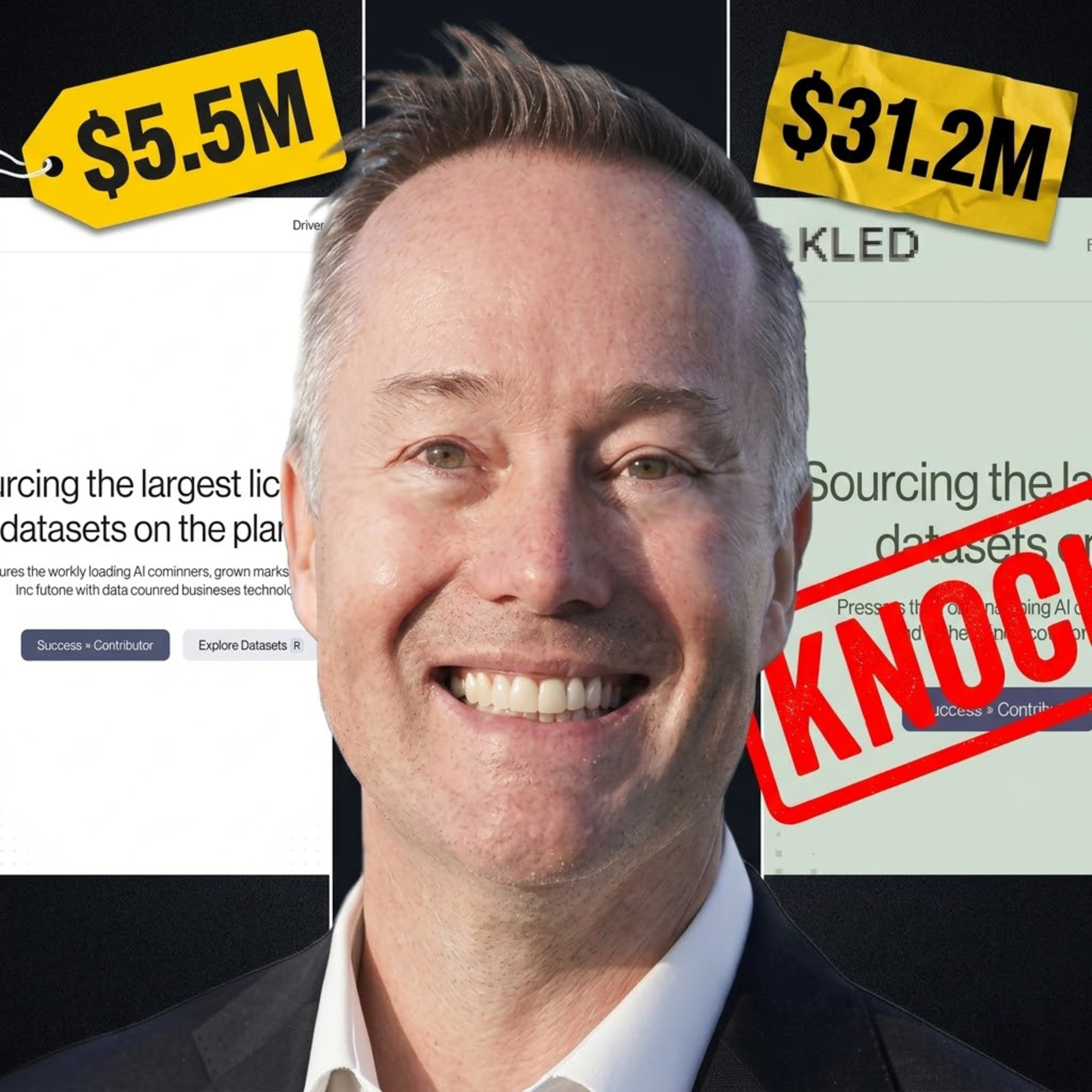
This Week in Startups
Avi Patel on the startup that copied Kled and why he called out General Catalyst by name | E2291
01:34:22
Loading summary
Transcript236 lines
- [00:00]
A
Another company cut and paste everything you do and steals your idea. Allegedly. After stealing your idea, you go public with it.
- [00:07]
B
I woke up to that post and noticed a very, very blaring resemblance to our website.
- [00:13]
A
Like they photocopied your website to a level that was absurd.
- [00:16]
B
I was talking to General Catalyst. They were going to invest that money into us. The first five minutes of the post, I was messaged by like maybe three of them saying, avi, you need to take this down right now.
- [00:26]
C
I call Novc by name. You really stepped on the plank. This week in Startups is brought to you by Grasshopper Bank. Time is money. Don't waste either. Go to Grasshopper Bank Twist and get an exclusive $500 cash bonus just for opening an account. LinkedIn jobs hire right the first time. Post your first job and get $100 off towards your job post@LinkedIn.com Twist and Northwest registered agent. Get more. When you start your business with northwest in 10 clicks, in 10 minutes, you can form your company and walk away with a real business identity. Learn more@northwestregistered agent.com Twist all right, everybody,
- [01:06]
A
welcome back to Twist for May 20th. May 20th. 5:20. It's not 4:20. It's 5:20. Summer is upon us. Graduations have occurred and it's going to be a wild summer. The pace at which things have been happening in AI, in global politics, it is just fast and furious. And we help you process it here three days a week. Monday, Wednesday, Friday on Twist. Today, we're very lucky because one of the great startup stories of the past 20 years, or maybe it's 15. Mercury bank is going to be on, talking about their latest fundraising. And then we're going to tell the story of what happens when you create a startup and allegedly another company from Y Combinator cut and paste everything you do and steals your idea. Allegedly. And after stealing your idea, you go public with it and that strategy. This is our two guests today. Yeah, Alex, absolutely.
- [02:08]
C
It's going to be an absolute corker of a show. But, Jason, before we get into talking about Mercury and their latest round, I think we should pause and discuss our favorite wearable gadget.
- [02:17]
A
Oh, well, I have a plot here on my wrist. Sometimes I wear it on the lapel of my jacket. You've got it on yours, too. You press the button, you hit the haptic, red light goes on. Now I'm recording. Anything I do, I can be like, oh, we're hiring six associates in training to start out our venture firm. This is a true story. And I know I have to catch up with Jackie, who's doing the hiring process, and we have to talk about how we're going to assign all that. So I can just say, hey, make sure we put on my calendar that I got to meet with Jackie, go over the six new hires for the associate in training program and how we're going to allocate them across our, you know, eight different business units. And let's put that on my calendar and let's make some training manuals for it. Now, you know, I gave it some basic instructions, all those notes. When I sync, which I can do either through my phone or by just putting it into this little charge pad, it's synced and it makes multiple versions of that conversation a mind map if it was a long one, like a rambling podcast episode. It'll make you notes, it'll make you bullet points, action items, and of course, just a perfect transcript. So you get all that out of the box super easy. One click yes.
- [03:33]
C
So you need a Plaud notepen S if you want to get one P, L, a U, D, AI twist, use the code twist, save 10%.
- [03:40]
A
And.
- [03:41]
C
And while you were talking, Jason, I had an idea. I was thinking to myself, I'm going deeper on Codex from OpenAI. I picked that as my current tool to play with and just really figure out to the studs. And I was just thinking, why can't I bring my plod into Codex? I don't want to actually do the importing work myself. And it turns out they have an MTP server, so you can just do that.
- [03:59]
A
Interesting. Yeah, I've been thinking about that. At some point, I'm going to connect, like either Open Claude or what's the French one that everybody's talking about now?
- [04:10]
C
Le chat.
- [04:11]
A
No.
- [04:12]
C
Oh, Hermes agent.
- [04:13]
A
Hermes agent. So my next goal is to connect those two. So then I would theoretically be putting all this into my Hermes agent, or maybe an Obsidian Locker, something like that. But yes, lay's Chat is even better than Hermes.
- [04:32]
C
Well, the chat is the. Is the offer. It's the chat GPT from Mistral. And I was just thinking French AI Talk to it. La chat. Okay.
- [04:40]
A
Go, Michelle.
- [04:42]
C
All right, so we're going to bring Ahmad Akund. He's the CEO and founder of Mercury Bank. Jason, we all know Mercury. It is the, I think, the leading name in where startups do their banking. It has a technology first focus. It's becoming a real bank. And this morning, Ahmad, you announced that you raised $200 million at a $5.2 billion valuation. We love to talk to people right after the news. Welcome to the show.
- [05:05]
D
Having me excited to be here.
- [05:06]
A
How long have you been running Mercury and how many customers are there now? Because, you know, I, I became aware of you guys since you targeted startups as your initial sort of ideal customer profile there and that initial customer profile, but it's, I know it's spread to other categories, larger enterprises, et cetera. But when did you start this and how many customers now?
- [05:28]
D
So we started as in, we launched in April 2019. I started the company end of 2017 but actually had the idea in 2013 because I've been an entrepreneur since 2006 and I just couldn't believe how annoying banks were for entrepreneurs. And every year I was like, oh, someone's going to build this idea. And then, you know, no one had. So in 2017 we kind of, we did it. Yeah, early on we were very startup focused. Now, yeah, tech still makes up about 25% of our customers, but we, we have a lot of other kind of digital first businesses, E commerce, professional services, things like that. About 300, 300,000 businesses altogether.
- [06:05]
A
That's a large number of businesses revenue Now I understand, 650 million a year annualized run rate, something in that range.
- [06:13]
D
Yeah, it's a bit high now. That's what we reported kind of towards the end of last year.
- [06:17]
A
And where does that money come from? How do you make money?
- [06:20]
D
We have like five or six different revenue sources. You know, we give both corporate credit cards and debit cards to our customers. So we make some interchange on that when we host people's revenue. Currently we're not a bank. We just applied for a banking charter that we got conditional approval for. But right now we work with partner banks and you know, we get kind of rev share on the deposits they host for us. And then we also have FX and a few other kind of fees. We try to make it like very simple and transparent. So most, most of the things you do on Mercury are free.
- [06:50]
C
I'm curious why you didn't update the revenue number, Aman, Because I was going back through your last announcements and you announced the $650 million run rate milestone I think in like November or maybe it was late Q3 of 2025. It's May, it's nearly June. You just raised a big round. I feel like this is the moment to flex so, so allay my concerns that you flatline and the business hasn't grown in seven.
- [07:12]
D
Well, the VCs wouldn't have given me the money if I flatline Alex, but
- [07:16]
C
that's what I was thinking.
- [07:18]
D
Yeah. Comm strategy, it's kind of boring, but I think they want to have like another news moment later in the year
- [07:23]
A
when we got it.
- [07:25]
C
Okay, fair.
- [07:26]
A
Like another media hit when you hit 800, 900 and eventually a billion. And I guess that puts you in an interesting position. You're still right below what people say is the benchmark to go public, which is $1 billion, but you're kind of consistently getting closer to that. So how do you think about how you want to run this business? What do your investors want to do? What do you want to do? Is it time to start considering going public? Obviously you probably were offered during the SPAC crazes to flip the company into a SPAC and you know, get public really easily. But talk about how you think about public markets now.
- [08:08]
D
You know, I think of ourselves like still a pretty young company, right? 2019 launch and so that's like seven years old and I have no rush. I really want to build this for the long term. Like, you know, we never want to sell the company. I think that's. Yeah, I think the potential for what Mercury is doing is unlimited. So at some point we want to be public and I think it'll be nice for our customers especially to own a part of Mercury. We actually did actually a we fund kind of crowdfunding campaign in 2021. So we had about 3,000 customers actually own a piece of Mercury, which is nice that they get.
- [08:41]
B
Really.
- [08:42]
D
Yeah. And they get a nice.
- [08:43]
A
And these are non. These can be non accredited.
- [08:46]
D
Yeah, that was like a fundraising reg CF fundraise. So that was completely non accredited. So I like customers owning Mercury. So at some point we'll do it. Right now we're very focused on kind of getting this bank charter live and kind of get through that. I also think like you probably want to be in like a $10 billion kind of market cap before you go public. So that's my kind of, you know, get the bank charter live, get to that kind of scale. But it's definitely in the horizon.
- [09:10]
C
Talk to me about the, the process of getting a bank charter. I know you've applied for one and you've gotten like conditional approval. Now I don't spend a lot of time reading the deep details of banking application relations, Ahmad. I know you do.
- [09:22]
D
Yeah.
- [09:22]
C
So where are you in this process? When does it complete? When are you safe in your status as a bank?
- [09:29]
D
It's a multi year process, especially when you're a pretty scaled up fintech, you know, we have to update all of our processes and procedures and controls and all these things to be at the level where we can have the bank charter. And we're also hiring a bunch of people, both last year and this year to be in a position to launch. So yeah, it's like conditional approval. And then you kind of go through the setup process and you eventually open the bank doors.
- [09:53]
A
Okay, so you have identified a real problem and you put together a solid solution and a business model that you believe in. So you're all set to launch your new company, right? Not so fast. If you want investors and potential customers to take your new business seriously, you need to consider forming a Delaware C corp. And that's where Northwest Registered Agent comes in. They're going to give your new company a real identity. That means an address for your public filings, a domain, a, a custom website, a business email, and of course a phone number. And that's going to take just 10 minutes and 10 clicks. They don't charge hidden fees. Customer service is available around the clock. They're not overwhelming your inbox with spam and they make it easy to cancel at any time. So get all the advantages of a Delaware C Corp. Independent, regardless of where in the US you're operating from. Visit northwestregisteredagent.com twist for more details. And the links are in the show Notes.
- [10:47]
C
So what does this bring to Mercury? Because we've seen a lot of neobanks build, build and grow without having a bank inside their own house. Right. They've used third party banks and so forth. And the model frankly worked pretty well. MODI seemed to abstract a lot of the complexity and regulatory overhead. You're going for it. So I presume there's a lot of benefits to doing this. What are those and what will that do to the quality of your business?
- [11:08]
D
You know, when we launched we were only nine people and frankly it's just completely impossible to launch with nine people without having bank partners that supported us and really were the, you know, were the reason we were able to go live at the scale we are, we are much bigger than our partner banks at this point. And at some point, you know, you're not like you're basically regulated entity, you're just regulated by a proxy. Yeah, you know, for us it's much more important to have that direct relationship. And I think we'll actually end up being easier, not easy, but like, I think we'll be able to deliver a better customer experience which, yeah, at the end of the day is what we care about. So yeah, there'll be some more control.
- [11:47]
A
Right. If you, if you are a bank, you don't have to ask the bank you're partnered with, hey, can we do this and that and get their buy in? You can just go straight and do it. Yeah.
- [11:55]
D
We'll be focused on our priorities and we can execute against them.
- [11:58]
B
Yeah.
- [11:59]
A
It's so funny. This was like. Do you watch the TV show industry? It's an incredible show on hbo. It's. It's like really about like banking and.
- [12:08]
D
Oh really?
- [12:08]
A
I should watch this year and season three and it takes place in the UK and this year the entire storyline was about a bank charter and somebody trying to get one for like a green energy company and trying. And it like all resulted in. Or maybe it was season four. It all resulted in the hand wringing of just how important it is. There's industry like the trailer, the government, whether it's the UK or United States, they're very judicious about bank charters because banks are moving money. Money can be used for nefarious things around the world. Human trafficking, terrorism. This is all the bad things that can happen. And then we have seen that allegedly people claim things like tether have become and stablecoins outside the US have become the place where people do that activity and we want those things to maybe come on shore and be more regulated. Know your customer. So you're trying to do all these things. Right. How do you think about stablecoins and will they become the default rails for us doing payments between companies and then what does that do for the banking industry yourself? Do you have to put provide that you don't make any money on that or do you make money on it? How do you think about all that?
- [13:34]
D
Yeah, I think stablecoins have a place. I think if you. Yeah. If Jason is wants to send money to a business or. Yeah, there's Zel and like other kind of local rails are like pretty simple and most people have access to them in the U.S. i think where stable coins work really well is globally. You know there's lots of people that want access to US dollars and having a stable currency. So having stablecoin accounts is powerful. Being able to send money internationally is still a bit of a pain. So I think there's some really powerful use cases and we will probably have allow you to kind of send and receive stablecoins soon. So yeah, I think it's interesting. I don't think it replaces the system, I think it augments it and there'll Be lots of people that get like a big benefit.
- [14:20]
C
So you're not going to go buy a stablecoin startup as we've seen Stripe and other companies do?
- [14:25]
D
Sounds like no, not in the current
- [14:26]
A
plan but you could launch one, right? I'm sure these companies are all pitching you on being the Rails to have a Mercury stablecoin.
- [14:34]
D
Yeah, it comes back to customer value. I think USDC is like pretty good and that's got a big network effect because people have it. So yeah, we don't have like a plan to launch our own stablecoin. If we, I guess if we come up with like a reason customers really want that then we'll, we might do it.
- [14:48]
A
Tell me about the journey from small companies and using them. You know, going back to your more like early entrepreneurial days and trying to find product market fit. A lot of young founders, year zero of their startup, they're not even corporated, they're building and vibe coding a project while they're working at you know, some big tech company working at Mercury and on the weekends they're working on their startup. And for those folks explain to them how you first got product market fit with startups, why you chose startups and then what you learned from that process.
- [15:22]
D
Yeah, one thing that was nice about Mercury is the first startup I've built that's been for myself which kind of made it easier because I had this very specific vision in mind. I was like we need wires which seems obvious but actually we were the first US neo bank with like wire support and you know it needs to be really smooth and you need like multi user permissions. So we spend a lot of time, we spent a year and a half actually just building it and getting you know, we went through a couple of bank partners because we were doing new things and there wasn't that much support for it. But I would say like the day we launched we had kind of instant kind of product market fit especially with kind of early stage startups. And the reason I chose early stage startups and why I thought it would work there is, you know, they tend to be very product minded, they want to use the best tools. If you do well in one part of them like you know a lot of Y Combinator companies use us. More than 50% of each batch uses us. You tend to become like a viral kind of solution to the ecosystem so you can quite quickly build distribution even though you start early and then they grow really quickly. So we quite quickly had our first seed funded startups and then series A and now we have many startups that have raised like more than $100 million using mercury. So you can start with like a very small set where you can like solve the needs and, you know, banking is very sticky. So as, as long as we keep delivering features and customer support and things like that, you can kind of grow to like, pretty big companies. Using Ahmad.
- [16:51]
C
Whenever I hear someone talk about like really quick or instant product market fit, my ears go up because I'm always curious about how you reach that so quickly. And it implies that you had customers very quickly. So talk to me about launch, getting those first customers in, and how you felt confident in having PMF that early because you didn't have a lot of historical data to compare to at that point.
- [17:11]
D
You know, I really thought we'll launch and then, you know, we'll have that moment and then everyone will forget about us and then we have to go figure out like GTM and like, you know, that's how every other startup I'd ever done was. But yeah, with Mercury, we really launched and yeah, it was really posted on X and like, you know, we had Andreessen Horowitz, which is our seed investors, kind of post about it, and Elad Gill and Justin Khan. So we, we had like, I actually had 60 seed investors. I thought it was good to get like the whole, as much of the ecosystem as I could get to invest. Shame, Jason, to not invest.
- [17:42]
A
Oh, I mean, and you guys are buying ads from the beginning. I'm such an idiot. It's the story of my life. Like, you guys were like, oh, we're doing startups and you guys were, I think you were one of our, you. I think we were one of your first podcasts that you, you know, got the word out on. And you know, it's so dumb. Every time somebody advertised those on this program, I just need to tell them, go invest 100k or 250k in that startup because that's what I did with Eight Sleep and Vanta. Both of those folks were advertisers on the pod. I had to get them on as guests because they were incredible businesses independently. And then I was just like, can I invest? And man, I missed Mercury, so I missed that. You know, gosh, I probably would have gotten in at 100 or 250 million. It would be a 25X right now. But I think actually maybe now's the time for me to invest because I have a late stage syndicate. How do you think about SPVs and syndicates and late stage financing now and allowing your employees to maybe get some liquidity or just using that as a vehicle. We just saw Anthropic say, hey, we're going to negate all these non cap table SPVs. But obviously on the other side of the ledger you have folks like Claude, SpaceX, Stripe and previously when there were private company Facebook doing very orderly secondary transactions to put primary capital into the company and or let existing employees liquidate. So how do you think about that as the founder and lease spv?
- [19:12]
D
I don't like being draconian about it. My thinking is, you know, if investor invested or employee, you know, vested their stock that like they should really be able to do what they want with it. And like, you know, if we were a public company, again like there would be liquidity. Right. So we try to make it flexible. Obviously, you know, I don't want a bunch of SPVs kind of. I think the issue with both anthropic and SpaceX SPVs is there's a lot of like liars out there, like people like taking advantage of people charging crazy fees. So there is like some problems in the industry which, you know, is not great. In our last year with our series C, we did do an employee tender. So, you know, if there's an opportunity, we'll try to just make it easier. I mean if you're, you know, if you are an employee and you have a few hundred K, it's actually kind of hard to like get access to secondaries. Secondaries are much easier when you have like bigger chunks to sell. So we do want to facilitate it, but in general we're like pretty flexible about it. But yeah, the SPVs are not unfortunately, like if it's, yeah, if it's done by the company, it can be like much smoother than like people.
- [20:14]
A
Adding a new member to your team is a crucial decision and you don't want to rush into a hiring situation that you will regret. But if you're a busy founder, you also don't want to spend a ton of time in the trenches looking for that perfect candidate. Instead you need a partner and you need a trusted partner. And LinkedIn Hiring Pro is that partner. How do I know this? Because I use LinkedIn Hiring Pro. You want a real world testimony. All right, here you go. We recently hired a new customer success manager. They handle all the advertising accounts here on this Week in Startups and they ensure that we're keeping all of our wonderful partners happy. LinkedIn helped us connect with an amazing candidate right here in Austin and he had exactly the combination of experience we were looking for. It's magic, it's alchemy, it's everything for me to find a great team member. So hire right the first time. Get started by posting your job for free@LinkedIn.com twist. Terms and conditions apply. That's LinkedIn.com twist. So if I wanted to theoretically put $5 million in for, you know, like, primary capital into the company, how would you look at, you know, me negotiating that with you? Obviously, you just topped off a bit with this 200 million, but, hey, an extra 5 million is great. Maybe I can tweet once in a while. Hey, you know, I'm an investor. How would you look at that if I wanted to? Like, just. I don't know, because people have brought up Mercury. Like, how do we get on that game, people?
- [21:38]
D
All right, Jason, you can do this. Let's. Let's do it.
- [21:41]
A
Is it okay if I'll.
- [21:42]
D
Well, this is actually get you on the gap table. How about that?
- [21:45]
A
Perfect. Okay, so put 5 million in at 5 million. 10 bips.
- [21:49]
C
Welcome to this 10 bit.
- [21:51]
A
1% is 50 million. I can get my 10 pips now. I should have got it earlier, but get my 10 pips now. It just cost me a hundred more. Listen, great job, continued success. Appreciate you supporting this podcast and independent media and banks. You're my bank. I love using you guys. Before you go, though, how do you think about AI as the CEO running the business? And then how do you think about AI vis a vis agents wanting to do transactions? Now, there's some new protocols. I know Coinbase has pioneered some of them. I think you might have been part of this new standard that's coming out, but people are going to want to use agents. Scary or just obvious. How do you think about agents touching money?
- [22:33]
D
I'm a big sci Fi guy. I love reading and watching Sci Fi. So I always think, what's the future? And I just feel like in 10 years from now, everyone's going to have a personal agent and just doing stuff for them. So, like, I want to. I want Mercury to be an enabler for that. So, you know, we launch a cli and we already have an mcp. So lots of people connecting their Mercury into cowork and Claude Code and ChatGPT and, like, you know, their workflows. And we want to be wherever people want to use Mercury. Yeah, Agentic payments people already using Mercury kind of virtual cards to, you know, give a card and, like, let. Let your agent go. Go do things. So we're going to enable more of that and then not everyone is bought into this future yet. And we're also introducing features on the Mercury app and Mercury website. So we launched Mercury Insights so you can kind of ask questions from your transactions and summarize things like, hey, your AWS bill went up by 30%. Are you sure about that? That kind of thing. And then later this summer we're launching Mercury Command where you can do kind of complex workflows. Like you're like hey, pay my landlord 5k and it kind of sets it all up for you and you just click approve kind of thing.
- [23:36]
A
Yeah, that's going to be a really cool future when you can just ask questions about what's going on with your bank as opposed to now where banking is just, you know, really hard to get a handle on what's going on with your money. This the easier it can be. And just my whoop makes it so I don't know if you're like a
- [23:55]
D
fan of whoop on heck, you got your whoop.
- [23:57]
A
Yeah, like I don't know if you've been watching their. Have you started using the AI?
- [24:01]
D
Yeah, it's kind of fine. You can ask a few questions. But you know, we actually do really neat. We actually do a lot more than banking now. So we started in banking but we have invoicing, corporate credit cards, bill pay. We just acquired a payroll company. So actually like the AI gets even more powerful when you can like do. Oh, you can hide all together and you can be like, hey, I just hired an employee, set up payroll, issue them a card, set them on expenses and like it just does all of that in like a couple of, you know, you just say it and does it does it in a couple.
- [24:26]
A
So now you're going up against like the expensifies, the ripples, the peos, you know, all those.
- [24:32]
D
I'm just like, you don't want to sign up to all this stuff. Like you're just want to, you know, banking is where your money is, it's where your finance team is. Like, let's just do everything in one place. That's my, my thinking.
- [24:41]
A
Yeah. And if you get to. I remember Jerry Yang in the Yahoo days told me at some point I was interviewing him for my old magazine Silicon Valley reporter to really date this conversation. And I said, hey, what's like what's the focus now at Yahoo? And he said the focus is 2.4. And I was like, what does it mean? He's like, if we can get you to use 2.4 services from Yahoo, you'll Never leave. And I'm like, I still don't understand. He's like, okay, do you have a Yahoo mail account? I was like, yes. He's like, okay, do you use Yahoo Finance or Yahoo. Sports? I was like, yeah, I put the Knicks in there. I get my schedule and yeah, I have some socks and Yahoo. He goes okay, so you're three. Yeah, you're never going to leave. And to this day I have Yahoo email account. Oh, you do? Yahoo Finance.
- [25:22]
D
I thought the story will end with like. But it didn't work.
- [25:25]
A
Well, no, I mean I still look at Yahoo Finance just out of like a creature of habit and the webpage is a bit of a mess. Like it, I mean it needs to be really overhauled and cleaned up but it's, it's kind of like this archaic.
- [25:38]
D
But I think the problem there is like it's not like these were interconnected services, you know, it's with, with more like money movement. And all of this stuff is just so closely connected that you can really like by doing like, you know, we also track this like we're like are using three products or more which is like I think 15, 20% of our customers use three products more. But yeah, if you're using them all and they work really well because like you know, we, we like if everything's a blue box, right? Like if every money movement that you do is like all within Mercury, it gets even more powerful. That's kind of the value.
- [26:07]
A
It is definitely the case with I think Robinhood as well. You know, any of the. Or Uber I think is also having this. They, they, they found that people who use Eats shopping, if you think about eats shopping and driving uber transportation as three separate products, the people who use two of those three or three of those three are like 10 times more active on the platform. So it's also a catalyst. Once you make that connection, they're in the app more so they use it more. It makes sense, right? So if you use the expensing in Mercury or the invoicing in Mercury, you're in the interface, you see the next product, you click on it and your acquisition cost for that person is 0.$0. Yeah, really great, really great observation and like an important one for founders maybe in later years, first couple years gotta stay focused on maybe.
- [27:04]
D
Well I was thinking like now that software development especially with new features got a lot easier, maybe multi product becomes like not, you know, maybe it's like earlier on because you can get a
- [27:15]
C
lot more, a lot faster.
- [27:16]
A
Yeah.
- [27:16]
C
Iman, can I ask you one question before we let you go, which is you raised less money this round than your preceding round by $100 million. And I could read that so many different ways, you're just burning less capital, et cetera. But I'm curious why less as your valuation went up?
- [27:31]
D
So we've been profitable for four years. So this was much more kind of raising money. Not for the money's sake. You know, the bank is fully capitalized, et cetera. We've had way more money than we've ever raised in the bank as well. So we're really doing it because it's a marketing moment. I get to be on this podcast and a few other things. It's good for acquisitions and hir. And yeah, it's.
- [27:54]
C
That's what I was curious is the money earmarked for acquisitions, because you guys have been talking about profitability for years now. Both, by the way, both non GAAP and GAAP to your credit. So how many startups are you going to buy over?
- [28:05]
D
What's not like a big strategy? I mean, we'll do it. We do it carefully. We've done two so far.
- [28:10]
A
Which two did you do and how did it go?
- [28:11]
D
So we just acquired Central, which is a payroll company. Yeah, it's still. We running it independently right now and we're slowly kind of integrating it. So it'll be like Mercury Payroll later this year. And then we made another kind of acquisition called Teal, which is in the book space you really think about so far. Like, you know, how do we get like one or two years of, like, in the case of payroll, probably three years of kind of progress in like a category that, like, is interesting for us to do.
- [28:38]
A
Ah, there it is. Teal, a seed stage accounting startup founded by Ian Crosby and Adam Saint. I think I know them.
- [28:44]
D
Yeah, they were the bench founders.
- [28:46]
A
Yes, yes. Oh, wow. So are you going to have like an accounting service for your customers? Is that the vision?
- [28:53]
D
Nothing announced yet.
- [28:55]
A
Well, I mean, it is interesting. A lot of people are using probably Mercury or your contemporaries, and then they have an outsourced, you know, virtual accounting company which they typically charge, I think 3,000amonth. Most startups pay 2, 3, 4,000amonth for these. I'm talking about like seed stage Series A. And it's just a much better way to do your accounting. You spend 30, 40, 50k instead of having to hire, you know, an accounting firm. Some of the accounting firms I think, are probably in a similar thing. But yeah, Pilot, I guess, is the other big one.
- [29:26]
D
Yeah. And yeah, because Mercury has all of these kind of core transactions. We already auto categorize for you. We already push all of that data to QuickBooks and you know, a lot of the things that you might think of as a bookkeeper, you can kind of do automatically and programmatically if you have all that kind of core data within a service. So yeah, we're already doing a bunch to make that much simpler for bookkeepers.
- [29:47]
A
Continued success. And yeah, I'll DM you about. Maybe I can get in on SPV here and get some of my investors together and we can get on that cap table.
- [29:56]
D
Yum yum.
- [29:57]
A
I smell a 10x from here. Great job and thanks for supporting founders and thanks for supporting this podcast. I don't know if you're a current advertiser or not, but I know in the past I've read some Mercury ads and I use it. It's a great product.
- [30:09]
D
Yeah, thanks for having me.
- [30:10]
A
Highly recommend. All right, well done. When you're a founder and you're moving fast and you want to close a big deal, a traditional bank can kill your momentum. Long approval processes, clunky, outdated systems, not intuitive. I mean, some of these systems look like they were made in the 1970s and have never been updated. Not all banks are designed to work for starters. We all know that. And that's exactly why Grasshopper bank was created. Grasshopper is a real federally charted bank, but with the kind of financial tech stack that you'd build for yourself. They're going to open your new account in just minutes, not days. That's a key pain point. An integration friendly platform with real time transfers and AI tools that are going to save you even more time, all without straining your budget on a bunch of unnecessary fees. That's where they get you. And because you're a valued twist listener, Grasshopper will drop a $500 cash bonus into your account when you use the promo code. Twist Twist. Start building without the slowdown at Grasshopper Dot Bank Twist. Terms and conditions apply. Grasshopper is a federally chartered bank member fdic.
- [31:12]
C
You make a point there, Jason. I'm a Mercury customer as well for my little, my little company. And you know what I would love is some hand holding. Because if you're filing your federal LLC taxes for the first time, it'd be great to have someone you could call and ask three dumb questions to.
- [31:26]
A
This is, I think the full stack is more achievable. The most interesting part of that was when he said, yeah, maybe it's easier now because software development is so Much faster to maybe add those next incremental products. I think he's right. It's just a matter of the distraction, customer service, maybe it's easier, but you still need to think about it. And then founders need to be able to keep multiple business units in their head at the same time and then have the enthusiasm and energy to keep growing them. So that is now becoming the finite resources. Is the founding team or the founders or the founder, their enthusiasm and energy, creative cycles to push something forward, as opposed to the blocker being, can I get three more developers? Or in the case of these larger companies, maybe a team of 15 or 20 or 30 of them to allocate to a new product line. And they get the new product line to a revenue level that actually impacts our bottom line. And that's why companies like Meta, Microsoft and Google don't go after very small niche products too often. Because even if they put 30, 40, 50 developers on it and they start making a, you know, interesting product, it doesn't move the needle for them. So then the founders are like, are we still doing that? Is it at a billion in profits yet? Oh, It's. It's at 500 billion in profits or it's. Let's say it's at the amount Mercury's at. Oh, it's doing 650 million. It's got a 10, 20, 30% margin. Whatever it happens to be. I don't know, they were like, okay, that's incredibly boring. I guess we should just reassign those 30, 40, 50 engineers to make people click on search ads a little bit more. Let's put them on Google flights or Google shopping. Whatever's the most profitable part of the business. That's why startups get to keep existing. And so really interesting future.
- [33:16]
C
So, Jason, it is summer, which means people are getting around the world, and I think it's time for a patented Jason travel hat.
- [33:22]
A
All right, I'm a big fan of Athena. Athena gives you a virtual assistant, right? $3,000 a month. You got an assistant. They work on whatever time zone you're on. I travel a lot, right? And so I have to book a lot of travel. So I made a travel playbook for myself. What I do now is whenever there is a potential travel, I have instructed them, these are the airlines in which order I like to fly. This is the pricing. If something is within 20%, there's no reason for me not to take my preferred carrier, which happens to be United right now. They're. They're like the best out of Austin. Then I have the hotels I like and the type of hotels I like. Now I like hotels that are funky, interesting, hip designer. I like them in a certain price range. And so I told them, hey, use monocle, use quad or OpenAI, whatever you want to search through. Content as travel and leisure eater, Monaco magazine, the New York Times Travel, I gave them, these are the places to look for stuff. So then go rank them, give me my options, call them on the phone, get the best price, then tell me what the prices are. Then when I tell you, call them up and say, hey, we're coming to Singapore, we'd like to stay here, we're going to be here for five days, I'm booking. Can you match the price? We had four options of hotels we gave to this executive, the executive being me. And I know this sounds crazy, like why are you trying to save money? Well, we should always try to save money. I said, hey, just call them on the phone and say, hey, you know we have a rate of $400 at this hotel. You're charging 600 wondering if you could match the 400 price or come a little closer for a five day stay. Nine times out of ten they're like, of course we'll do it for 450, we'll do it for 500 and we book it. That saves me the cost of the Athena assistant per year. Let that sink in. If you travel 100 days and you save a certain amount of money per day, it adds up the same thing with the travel costs of the flights, finding these different routes. Then when I go to the city, I like to go to the best restaurants. So I told them this is the places to look for the best restaurants. Here's how Instagram works. And then what I want you to do is when I go to that city, I want you to book me a 5:30 and a 7:30 dinner reservation for the entire five days. I'm there every day in the afternoon, ask me which one I plan on going to and we'll cancel the other. And sometimes I get charged ten bucks ahead. If I do it too short, I'm happy to pay to the restaurant. This has made travel so easy for me. Could I do this with an agent? No, but an Athena assistant who knows how to use agentic technology and knows how to use the software, they become superhuman and all I have to do is explain it to them. Once I look at the work I iterate explain it to them once, a little bit of work iterate that has led to my travel being cheaper, better and Just so deft. I would never ask an American assistant to do this kind of lunacy because they would look at me and be like, that's completely inefficient. But I have extra hours for my Athena assistant. So I say to my Athena assistant, I want to fill those hours. They want the work. Them being a little inefficient is no big deal because the arbitrage between what they're getting paid in the Philippines and what an American who will not take the job here. I couldn't find people who would take the executive assistant job. If you try to get an executive assistant in a major city In America, it's 100 to 150k. Why? Because the people who take that job are like, nobody wants to be of service and do this job anymore. What used to be a secretary then became an executive assistant. They just, People don't want that job. And if they do take it, they only take that job, Alex. As a springboard to the next job. Yep. So you lose them every 18 months,
- [37:29]
C
which retrain them, which is so much fun. If you want to get an EA, go to athena.com/j cal. It'll take you right to this page. The secret engine behind Jason Cal Kennes Productivity. Jason is my tip.
- [37:44]
A
Got to say, yes, I was. I'm glad that you. I'm glad that you reminded me to share this tip because I give this tip to my friends when they're like, hey, I got an Athena assistant. I heard you talk about it. Go to Athena wow.com as well. Just Athena wow.com. we'll send you to that URL too. And I think after us talking about it on all in and talking about it on this week in startups, they've started to build up their inventory. So if you were somebody who was on a wait list, if you go to my URL, they'll move you up the wait list because you're a friend of jcal's.
- [38:21]
C
Also, if you want to think about this in a different light, I was just listening to you talk about it. I'm like, well, it's a little expensive. Then I was like, wait, I pay a lot more than that for my nanny right now. You know, so as soon as I don't need a nanny, I'm going to get an EA.
- [38:33]
A
2,000 hours a year. If it was. Yeah, if it's $2,000 times $20 an hour is 40 and this is 36. So it's like whatever it is, 15, 16 an hour or something. So it's a Great deal for them. Athena has a little bit of margin in there, but not crazy. And go ahead and try to hire somebody who is a professional who wants to do this kind of like what would seemingly for an American be tedious boom nannies. Right now, minimum in a major city. I know in San Francisco, it's 50 bucks an hour, minimum.
- [39:08]
C
Yeah, yeah. It's 30 to 40 here in Providence. So it's a little bit of a disruption.
- [39:12]
A
So you live in. Yeah, you live in like a. I don't want to say second tier, but a smaller. Well, no, it sounds like a major city and then there's whatever. Minor cities. What do we say? Like, so, one, two, three.
- [39:27]
B
Correct.
- [39:27]
C
You're dead. I was just pretending to be annoyed, but I like living in a tier
- [39:31]
A
2 city because I can walk. Absolutely. I mean, I live. Is Austin a tier one city or tier two? I guess it's a million people now. Is it tier two, upper end of
- [39:38]
C
tier two, like Chicago, Louisiana. New York City, you know, like the
- [39:42]
A
big Washington, D.C. absolutely.
- [39:45]
C
So tier two is a pretty wide band. And I would put Providence at the lower end of it by size, Austin at the higher end by size, but I think they're about the same. Yeah.
- [39:53]
A
Yeah. San Antonio is like top 10. I guess it's in population, but yeah. So, yeah, Austin, I think, is Tier 2 at A. I think we're at a million here in population. All right, we have another guest. Let's get to work.
- [40:03]
C
We do. Next up, we're going to talk to our different Avi Patel from kled. Now, Jason, this is a company that reached my attention because it was going absolutely bonkers over on X. And what AVI was talking about was essentially being ripped off by another company. And unlike we. When we usually see this sort of thing, people don't name names. They just allege bad behavior or unethical behavior. In this case, though, AVI went nuclear by saying this company, this venture capital around. So let's talk to AVI about what's going on.
- [40:30]
A
And nice to meet you as well. Tell us, what does KLED do? K, L, E D. What is your company and what does it do?
- [40:36]
B
So CLIED is the first human data marketplace. We let anyone upload their personal data and get paid for it. You can think of it kind of like MERCUR or Scale AI, except they focus mainly on aggregation or they focus mainly on labeling. We focus on aggregation. We've collected over 1.1 billion files to date. In the last four months alone. We get over 5 million files uploaded to our platform a day, have over 300,000 users, have it number one of the app Store in multiple countries and have raised over $10 million from some really cool investors.
- [41:05]
C
Yeah.
- [41:06]
A
So to explain in plain English, there has always been this desire for people to reverse the meta model. Meta collects our information by providing free services like Facebook, Instagram and WhatsApp. They collect your data, you get paid nothing. You get a free product. In return, you get to share your images unlimited to your friends. You don't have to pay for it, but they collect your data, you get nothing from that. They resell your data to anyone who will pay them anything for it. Your idea was, hey, let's get people to upload their data and then you can then resell it and you give them a portion of what you get paid.
- [41:41]
B
Correct? Yeah. I think the added benefit to that as well is that you can guide participation very easily because you're being very explicit that you're paying people out for it. Meaning that we just have like a massive gig app with tasks directly from the leading labs that tells you exactly what we want and we can collect that data better than anyone else.
- [41:58]
A
So this is the wrinkle. It's really more like micro one, one of our portfolio companies, or scale AI, where you can say to somebody, hey, we have an LLM. You would abstract who the LLM is, but let's say it was OpenAI and they want to study people who play video games because they want to have better video game content or they want to study people who shop on Amazon and Walmart. You say, hey, we're going to collect your data for that. I assume you do that with a browser plugin or you do it with.
- [42:26]
B
We have an app, we just have a mobile app. I think it's the easiest form factor. Instead of going for like experts, which actually is typically what most of these labs do. We've shot for the general consumer audience. We let anyone upload. So yeah, we have an app where it's just a full feed where you can see pretty much anything on there from tasks, from any of the labs. And then you can also upload general data. So you can go on there, upload your entire camera roll. And surprisingly, because we have, again, that's what most people do, actually, surprisingly, that data is very valuable because it's consent driven. And right now, people like OpenAI, for example, are preparing for IPO. Cannot risk buying bad data that isn't legally licensed. Right. So when you upload on our platform, you're giving your 100% percent consent across the board. And when you license ROMs, you're confident you're not going to get sued.
- [43:12]
A
How much would I get paid If I put 100,000 images into the system?
- [43:17]
B
Depends on the images, but if it's on the higher end of quality, like definitely 500 bucks. We had a recent, we had a recent lab, I can't name which one that was willing to offer a thousand dollars for a full person's camera roll. Just the selfies on the camera roll actually. And they wanted a hundred thousand people and actively working on that contract right now.
- [43:41]
C
Yeah, that's a hundred million dollar contract, correct?
- [43:44]
B
Yeah. The, the blocker in that is our fraud detection pipeline, which no one will ever admit by the way, is what needs to be improved. We're almost there. I'd say another like two weeks and we're going to be at 90%. But fraud detection is really hard at scale. If you're collecting data from a bunch of different regions, you need to make sure duplicates aren't being uploaded, interrupt plagiarized images aren't uploaded, AI generated images and then even task specific. Like let's say the task is take a video. If you take out the trash, that task requires two hands in the video at all times, head down angle this time of day. Let's say you remove your hand from the video frame for five seconds, that task video becomes completely null and void. And we have to detect that at scale because the second you get bad data to a lab, they'll never work with you again. So we pride ourselves in the quality of the data that we provide. Yeah.
- [44:28]
A
Wow. It's such a fascinating business. So that would be for robotics in real world model building is, hey, we need 10,000 people taking out the trash and we're willing to pay for that. And how else are you going to get it? So people have had varying degrees of enthusiasm for these businesses. We have one micro one that we incubated that's doing phenomenal and I think it's a never ending business because models are constantly going to need data and they need quality data, verified data, bespoke data, and they need to make sure that they're not breaking any IP laws. And so you as the middlemen for these are responsible for that cohort. Okay, so you wake up one day, you've met with a venture firm and a venture firm has backed a company from y Combinator with $30 million. You've been funded with 10 million. You, according to a post that I read had met with that firm that Firm had passed. Most firms pass on 99% of investments. So that's not new. I guess it was General Catalyst here who led this $31 million round. But this company is a Y Combinator company. There is a belief in the market that Y Combinator companies who get that 500k something's not working, they get a bit desperate. There's a bit of a hacker culture there. These are all sort of what they optimize for. And they want people who are rule breakers. They're kind of upfront about that. And Paul Graham came up with the question. I don't know what the question is on the application. Give us an example of things you packed. And Sam Altman was one of those people who they thought fit this mold. Now of course we just got over a trial with Sam Altman and you know, there's all these allegations that he's not trustworthy by his former co partners. Put it all aside. They optimize for that type of person. If you don't get product market fit, the best way to get product market fit everybody else who has it and then be inspired by their recipes and then maybe open a similar restaurant a
- [46:41]
C
time you most successfully hacked some system to your advantage.
- [46:45]
A
So you're alleging here, Avi, that they hacked the system to their advantage. Explain what you woke up and saw and then how you reacted to it and why.
- [46:54]
B
I want to preface all of this first off that I am very non drama oriented. I, I love competition. I'm friends with Merkor and Turing. These are my colleagues, my partners, everything. But the, the sheer combination of factors that came together here was in my opinion absolutely unacceptable and deservingly needed to be called out. And that's exactly what I did. I one day woke up, I saw a post from Yuri, from General Catalyst, who I was talking to extensively. We had over five meetings with General Catalyst, was going to meet him on to the owner of the fund to discuss a. Actually the same exact terms, a $30 million investment at the same valuation. God knows how they came up with that number. Maybe General Catalyst told them to raise the same amount. And yeah, I woke up to that post. I then clicked the website and noticed very, very blaring resemblance to our website. You may put the side by side up. I think the better, the better thing is to scroll and look at the templates, the format, everything. Now naturally this is okay. I think tons of people have copied our website and tons of people have, have like tried to do the exact model. But then you look at their app a little Closely and they are not anywhere near us when it comes to the. The competition. It's not even close. The app has 500000 users supposedly, or 600000 users. And 50% of their web traffic's from Nigeria. If. If people are unaware, we had to ban the entire country of Nigeria from using the cloud app as of last week because of.
- [48:30]
A
And just to pause for a second, Avi, if we look at these side by side, which Alex is doing a good job of here, font color and then section by section, a complete ripoff. Complete ripoff.
- [48:43]
B
Yeah, just. I mean, look at this.
- [48:44]
A
Yeah, A level of stealing. You're a legend. And that just with the eye test. I don't know if these have changed since. Have they changed their website since you said?
- [48:55]
B
I can get into that. But yeah, they were misleading their compliance practices and now they fix them on their. On their trust page. So yes, they have changed slightly.
- [49:04]
A
But yeah, so they copied the exact. Like they photocopied your website to a level that was absurd. I think that's kind of established.
- [49:14]
B
Yeah.
- [49:14]
A
How does something like that occur? Did they address that allegation that they
- [49:18]
B
have not addressed anything. They have not even said anything publicly? I don't think they're actually messaging or talking to anyone because, I mean, that's like an admittance of guilt. Honestly, I don't know how bad it would be if they started talking publicly. But yeah, anyways, the main point is that, yeah, look, I was talking to General Catalyst. They were going to invest that money into us and we are a way more established app. Thousands and thousands of ratings on the App Store. All five star have not been accused of wage theft, which is something Luel is extensively accused of. If you even Google the company, it's everywhere. And yeah, 50% of the user from Nigeria. We had to ban the entire country of Nigeria as of last week because of a 95% fraudulent upload rate. So what they've done is they only have 113 people in organic traffic each month, or 300. Somewhere in that range is what Semrush and all the other services are saying. The rest is all paid. So these guys manually paid to get Nigeria, which is known to be a fraudulent region, to upload to their platform to bolster their user numbers to then look good in front of investors.
- [50:20]
C
Was little founded after you were talking to GC for cloud?
- [50:26]
B
Yes, yes. So. So they announced it after we were talking to GC March, after they were founded, way after we started, which was over a year ago now. And the last thing I will point out is they were using Delve for compliance. Right. So they were asserting that they had socked to gdpr, CCPA and HIPAA compliance on their website. I put a second video that not many people saw. I think like 2 million people saw it. So I can't say not many, but 2 million people saw that showed their website asserting those numbers, asserting those claims. And then you go to their Delft compliance portal and it only had SOC1 compliant and SOC2 in progress. So they weren't even compliant with SOC2 and it's Delve in the first place. So God knows if the SoC one was actually compliant or not.
- [51:09]
C
Probably.
- [51:09]
A
And just so people know, Delve was the Vanta competitor. Yes. That was doing allegedly AI slop SOC 2 compliance, destroying their customers allegedly reputation. So you had a. And this is I guess where you know, ethics and morality matter.
- [51:35]
C
Yeah.
- [51:35]
A
What did they come to YC with that idea or did they come to YC with a different idea and pivot.
- [51:43]
D
Luel.
- [51:43]
B
Luel came to YC with the same idea. Okay. So yeah. And we again, we've been building in public for a year, so every many people we've gone by.
- [51:50]
A
I wonder if YC knew that they were.
- [51:54]
B
They did. And the reason why I know that is because the day we announced our fundraising video, they announced demos for three exact replica products to kled. I think one of them was actually LUEL as well. So they were very well aware.
- [52:09]
C
Yeah. So do you think that Y Combinator is specifically trying to get companies to ape existing successes as a way to essentially create a series of follow up hits? Here is. You think this is a strategy or just.
- [52:22]
B
It's not a. I want to say that's not a bad strategy, by the way. I have no qualms with that or quarrels with that. It's just like the last thing I will say is that if you inspect element their site, the number counter where it says live users was a manual number counter going up and their heat map was manually set to where people were located. So it wasn't actually live or real. So God knows if the 600,000 was just again, take all of this into consideration and then General Catalyst gives $31 million. That's the problem I have.
- [52:48]
C
You said nepotism. I'm curious about why you think General Catalyst would go through all the trouble of backing this company, talking to you and essentially trying to pull the rug out from underneath you. Because it seems like a huge waste of time. They could have just invested in you and then moved on with life. So why nepotism and what was their impetus?
- [53:06]
B
The reason I say that is due to factors that are not actually public. I've messaged several people from General Catalyst and I can't say who because I respect them greatly, is one of the biggest investors in one of the really big data companies in their portfolio. And is usually the rite of passage that you have to meet this one person and become, in their eyes, impressed with what you do. And this person actually had no idea LUEL even existed prior to this investment or any idea about the company and had nothing to do with the deal, which is very strange to me. So I don't know how many people from GC knew about the deal or anything, but it's just very weird across the way. Yeah.
- [53:47]
C
Jason, I want to get your venture perspective here. You talk to a lot of startups. You probably heard every horror story there is when you hear all of this. To me it sounds like some behavior that I wouldn't do myself. But I'm curious what your take is on both yc, the startup and its competitor.
- [54:02]
A
Oh yeah, I'm prepared to give my judgment as the Judge and Jeremy and Chairman of the Internet Interwebs and startups as the official Judge, Jury, Judge Dredd of these kind of issues. I will give my ruling. First, I'll give my ruling on Y Combinator. Y Combinator encourages this hacking behavior because they know if you were to make a four quadrant chart, people who break the rules and who are competent, people who don't break the rules and who are competent, people who are incompetent, break the rules, don't break the rules. If you were to make those four boxes, rule breakers, rebels who are competent or incompetent tend to win over people who are not rule breakers. Now, rule people who are somewhere in the middle, they'll bend rules. They tend to do really well if they're competent. But there is a special place in the world for people who are willing to bend and break rules. And the problem with that is once you establish that culture of rule bending, breaking, reinterpretation, say Airbnb, reinterpreting how things work, obviously Uber, I was famously an investor in. They reinterpreted some laws, ride sharing laws, renting your couch laws. Hey, we're not a hotel. We're just renting a room. Okay? Distinction without a difference. I'll leave it up to you. But the problem with this is you have to explain to those rule breakers when you invite the rule breakers in some of Them will do criminal things. Some of them will do things that are morally unethical. And that's why UCYC has to do cleanup. I think with that company. That was. Yeah. Did they?
- [55:48]
B
Yeah, they had to remove them from the batch, basically. But that was only after all the allegations. They were well aware of all of this probably and just didn't do anything.
- [55:56]
C
And they initially supported them after it broke too, if you recall. Yeah.
- [55:59]
A
So the default stance is always to support your founders. That's what they should do. That's what I do. And then if they did truly do something wrong, you know, selling your shares back, breaking up and cleaning up the relationship is also the right thing to do. So I understand YC's position. YC should be a little bit more clear on the margins about this specific type of behavior, which is blatant rip offs. They've now become known for being the blatant ripoff shop. Because when you have 200 companies that have 500k each, they don't get product market fit. I know these founders, I know what they go through. They go through massive panic of oh my God, I'm going to fail. And you get the shame of failing. So with your last, let's say you did your first idea and you spent 300 of the 500k, you got 200k left left. You throw a Hail Mary, you stand up a website really quick, you copy somebody else's idea, you try to raise money, sometimes it works out. So now I'll move on to. So they should just be a little clear that that's lame, don't do it. I'm pretty clear with that. If somebody comes and applies and Y Combinator or any accelerator can't say we're going to just bet on one person in a vertical. There's all the companies pivot. Like literally the majority of the companies pivot from their original idea within the first two or three ideas when you're at the accelerator stage. So people pivot into each other. That's all good, but they should just say on a moral, ethical basis, ripping off and stealing and photocopying is just lame and unethical. Please don't do it. And that's what I say. Like it looks lame. Okay, now I will move on to this company. This company looks lame, unethical and immoral based on stealing the website pixel by pixel. Is that illegal? No. Can you trademark design and stuff like that? Yes, on the margins. But you can't really, you know, Avi can't stop his business and spend $10 million on a lawsuit over a website, it's just not possible. So when somebody does that kind of behavior, if you're an investor, if you're Y Combinator, if you're gc, whoever's investing, that is a blaring alarm signal. If somebody is willing to do something that's unethical, immoral, then that means you need to investigate if they are doing other things that are immoral, unethical, or illegal. So as a founder, you should never do anything with the appearance of impropriety, because it's a blaring alarm signal to double click on everything else you're doing. Your equity, your pay, your contracts, who your customers are, your metrics. And sure enough, Avi alleges a bunch of other things about this startup that don't look good. I'm not taking any of those and giving a verdict on them. But now GC is being pulled into this. It's a bad look for gc. The company looks really stupid. And now the eye of Sorong, the magnifying glass is on your startup and every single behavior you do. And what I found, of the first 400 companies I invested in, we had three that were doing things that were in that area of unethical, immoral, maybe illegal securities fraud, pricing of options, making claims when you're raising money that were bending the truth. Man. We had to cut loose from these because when I went to my counsel, I said, hey, this company said people worked for them who didn't work for them. They said, okay, that's. Were they raising money at the time? I said, yeah, it's in their deck. I said. They said, okay, that's securities fraud. I said, what? They said, yeah, that's the definition of security. You're making a claim while raising a security, while selling a security to investors. That's not true. Security is fraud. I'm like, great. Now I understand this really well. We train our startups. Don't ever mix your pipeline, your trials with customers. If they're on a trial, say trial. If it's a paid trial, say paid trial. If it's on a paid trial, say unpaid. If they're a customer and they're paying, say they're paying. But don't exaggerate. We had startups doing crazy things like taking four years of a contract value and then saying that was the revenue they earned this month. That's crazy stuff, right?
- [60:19]
B
So let's put that to add to this as well. This is. This is a human data marketplace, right? In order to actually Win in this. You need to grow in the US it's really important. And you also have to grow, like, pretty high. Like areas like Malaysia and Indonesia that are like low fraud rate and have good user bases. And in order to do that, like, they really rely on public reputation. The fact that this is something that has been put out there and there's Reddit articles and all of that stuff is just not good for the user base in the future. It's personal data that's like, really the whole point is your reputation has to be good, otherwise no one's trusting you with this stuff.
- [60:50]
A
Yeah. So we've adjudicated yc. They could do a little better on the margins, but the strategy is the strategy. Then we've adjudicated this specific company. Now, Avi, I'm going to pass judgment on you. You have come here to this week in startups, the official place where these judgments are given. And I think you did. You handled this exactly right. I appreciate that, man. I'll tell you why, you know, you're not. You don't have the resources, time, or want to waste time on a lawsuit. So then what are your other options? You can, in prison, let somebody F with you. You can let them, you know, take your cake from your tray or, you know, spitting your food. You've seen all these moves, and if that kind of stuff happens, then you become a prison. B word, you become a prison. Now everybody's going to F with you. If you go to the yard and somebody or you get in your meal and they take your cake, you got to take the tray, you got to smack them across the nose and break their nose. And then if you get your ass kick and they jump you, fine. But at least you stood your ground. You had no choice but to stand your ground on this. So I think it's great that you said, hey, listen, here's the evidence, here are the facts. Judge for yourself. And you called the venture capital firm out and you said, hey, listen, you guys invested in, that's your right. If you prefer them over us, that's fine. But it doesn't feel great to me. And I think you need to look at this startup and maybe just check the reality. So you did what you had to do. You had to defend yourself in the face of somebody effing with you. If this is all true, the same thing with Vanta and the company that was doing the AI, allegedly doing the AI slop soc. Two things, right? Like, what is Vanta or their contemporaries supposed to do? They have to call the company out because they're poisoning the well.
- [62:50]
C
Yes.
- [62:50]
A
You're in a category, this company, if what you say is true, they're poisoning the well of the same customer base. And now what you've done by calling them out, keeping it unemotional, not being drama, just saying, here are the facts. And now I need to get back to work. Now, I know your company. I saw your follower count went up. I noticed a lot of VCs started following you. I'm assuming some people are interested in like, hey, you're the high performer and you're alleging this other one is the copycat. They've raised more money than you. You seem to be the real deal. You're alleging they're not. Maybe people want to put a little more money into your coffers. Maybe people want to be on your team and now your profile goes up and you get more attention. So I think you did the right thing.
- [63:32]
B
I appreciate that, man. I do want to say that I did turn down pretty much everyone that asked to invest because I would rather raise my Series A on the. On the merits of my revenue and numbers, because I think that's the right thing to do rather than some Twitter virality. But I'm just glad that the reputation of this company has been properly called out. That was the only objective.
- [63:52]
C
What was your investor's response to this? Because you took a risk, right, by calling out a DC by name, you. You really stepped on the plank here. You could have fallen off. I mean, people talk a lot about reputation management in the fundraising game. So were your own existing backers concerned that you were about to kick the wrong beehive?
- [64:08]
B
For the first five minutes of the post, I was messaged by, like, maybe three of them saying, avi, you need to take this down right now. I love you, but you need to take it down. And then an hour later, they all said, avi, I love you, never change. That was a pretty consistent reaction from all. I have a lot of seed investors.
- [64:26]
A
Remember I told you, like the. The founders who win are a bit punk rock. They're, you know, a bit effervescent. Like, you obviously are signaling that, like, you're not going to. You're going to go down swinging, period, full stop. If they're going to try to stop you, if they're going to try to steal from you, you're going to go down swinging. You're not going to be a prison, you're not going to be somebody else's. I will say GC is a great firm. This is A great honorable. So it's.
- [64:53]
B
I said no to so many people. So many people because I wanted GC to do our round meetings.
- [64:58]
A
Here's what I'll say. I didn't adjudicate so that Judge Dredd J. Cal or just, you know, JCAL has spoken here. I will say I'll give my. I will adjudicate the issue for gc. I think GC probably made a speed error here. They didn't. They. They knew the category was emerging. They wanted to place a bet. There's 20 different companies going after it. They picked one, and they may have just made a mistake in vetting that company. Maybe they didn't vet them well enough. And maybe the company. If they. If that company, let's say, was not ethical or moral, as you've pointed out. And if that's all true, well, maybe they didn't present themselves ethically and morally to GC and GC got taken for a ride here. GC's up in their grill right now saying, why did you do something stupid like this? Why did you kick the hornet's nest here and do unethical things if these unethical things are all true? And it wasn't just random that, like, some AI just made the website for them and didn't.
- [66:07]
C
I don't have to work with General Catalyst or potentially raise money from them, so I don't have to be nice. My view of the firm has gone down dramatically because of this. And I've been to gc. I've known investors there. I've been in their stupid elevator pitching room. Like, this is a firm that I used to hold in relatively high regard. But when I see behavior like this and an unwillingness to admit possibly making a mistake, to me, you're just not a serious actor, and I'm. I'm going to judge you for it.
- [66:29]
B
Like, I mean, I was messaged by them telling me that they've been asked not to communicate with me at all. Ball, basically. So they don't even want to apologize or say anything on it.
- [66:38]
C
You can do better. And so I now have moved them down back to our tier rankings. Jason. GC is now a tier three firm for me.
- [66:46]
A
They're a great firm, great team over there. I think I'll give them a little grace here that they're in an impossible situation right here. Their choice now is to throw this person under the bus to. To, you know, take their money back. Who knows? Maybe they're talking to that for that company and saying, hey, we want our money back. And we want to, you know. And they're just in the process of settling that. They might be. You never know. Just like Y Combinator initially came out in support of that company, Was it Delve? I just want to make sure I'm
- [67:15]
C
talking about the right delve.
- [67:16]
B
Delve.
- [67:17]
A
Yeah. They came out in support of Delve and then they withdrew their support. And I think they just erased the note and let them keep the money. I think they just gave their shares back. I don't even know if they got their 125k back. So, yeah, there it is, folks. All right, great job,
- [67:33]
C
AI. Go take a look at it. Sourcing the largest licensable data sets on the planet. Avi, you're the best. Thanks for coming on.
- [67:38]
B
I appreciate it.
- [67:39]
A
Have a good one. Yeah, you gotta just put it into your work.
- [67:41]
D
Now.
- [67:41]
A
That's like what founders need to do is just stay focused on the work. These things can make a founder a bit crazy. And if you get in these kind of situations, what you have to do is channel that energy into the product, into growth, into hiring, into raising money. The only thing I disagree with him, he's like, oh, I shouldn't raise money.
- [67:57]
B
Whatever.
- [67:58]
A
Immediately open a note and get those investors on the cap table. Just open a note. That's 50% more than your last round, 50% less than what you think your Series A is going to be. So if he did the last round of 30 million and he wants to do the next one at 200, like just 100 million? Sure, yeah. 115. Just raise 15 million. 20 million. Start building up your chip stack so that you can go more aggressive and most of all, win. Just win. Winning is the greatest. Winning is the greatest revenge. Living well is the greatest revenge. I had some people I was partners with previously on conferences and whatnot. They turned out to be of not the moral character, allegedly whatever that I wanted to be involved with in the breakup. I lost millions of dollars in value in a conference. And then I went on to just absolutely flourish with the launch brand. So without mentioning anybody's names and all this theoretical stuff, like, sometimes just getting out of something toxic and moving on from it opens up so many other doors. I can tell you just from my personal experience, it's much better.
- [69:06]
C
I think we're going to see a lot more of this issue, though, because we talked earlier about making software. Everyone can make more features now when we're talking to Ahmad from Mercury. Now, a VC firm could meet with a founder, see a cool idea, just go pick some people they know and have them build it. And so I think.
- [69:22]
A
And that's not moral, that's not unethical or immoral. If you saw Uber or Airbnb being successful, you said, hey, that's an incredible category. We need to go for the silver and bronze in that category. Let's be a fast follower. Let's build something that's on the margins better. Let's take the margin out, let's change the business model. Great, go for it. Generally, that's not how to win. You want to go with the leader, but Facebook was a fast follower of MySpace and Friendster and they wound up being a colossal win. People would say Uber was a fast follower of Sidecar, even though it was just like the timing was there. But they did follow Lyft into ridesharing, right? Because Uber was Lincoln Town Cars. They saw rideshare was coming and they were like, well, that's illegal. We're not doing that. And then Lyft was like, yeah, we are reinterpreting the laws. And they had no choice but to include that in their product line. What people can't do in all of this is people cannot. People can't not do anything. If there's a new market, you have to go after it. That's part of it. But what people can't copy is your resilience, your self reliance, your enthusiasm, and you not quitting. The people I find who do derivative startups for the money, they wake up on the day it's hardest or the day it's second hardest, and they're like, you know what? This is hard. I'm playing for the bronze. I quit. That's what happens. You see it in professional sports. Sometimes somebody is like super highly intelligent. They've got this incredible physique, they've got all these physical gifts, but they don't pursue it with the level of discipline that Jordan or Kobe or LeBron do, and they just don't succeed. Then you see people with less gifts, like Jalen Brunson on the New on the New York Knicks, who's smaller than most point guards, who are slower than most point guards. But he figured out how to be the best point guard in the league and one of the top five players in the league somehow.
- [71:26]
C
Kelsey Mitchell for the Fever, same thing.
- [71:28]
A
Yeah. You just can't replicate that passion and the drive and the resiliency to not give up. I guarantee you, these companies that are stealing websites and just copying them pixel by pixel, not putting their own spin on it, they don't have the Enthusiasm that will carry them through the downtimes. They'll just quit. So you just have to understand that and keep going.
- [71:50]
C
All right, now, before we get into a couple of news stories really quickly, Jason, let's talk.
- [71:53]
A
You didn't put up the. You had these great images. You guys should have thrown them up while I was talking. Oh, it was so funny.
- [71:57]
C
Oh, okay.
- [71:58]
A
That would have been hilarious.
- [72:00]
C
Just. I'll show everyone now, because you brought it up. I was just messing around.
- [72:04]
A
Here it is. I am going to. If anybody has a case and you need a judge, I'm your judge.
- [72:11]
C
Here he is, ladies and gentlemen, Judge Jacaldred.
- [72:14]
A
I like it. I look good as Judge Dredd.
- [72:17]
C
It's not bad. Here's me. There I am.
- [72:19]
A
Oh, you. You look better. Yeah. You and I should just judge these things. We'll adjudicate these. We are the law. Bring us your startup cases, and we will pass judgment. You know, like, Y Combinator is just always going to have this issue where if you route for hackers, sometimes hackers take it too far. If you say, like, tell me a time you broke the rules to win, which is essentially what they're saying. That's what hacking means. Tell me the time you broke the rules in order to win, and then you invest in people based on that. Don't be surprised if people break the rules in order to win. And then some of it might be uncomfortable.
- [72:58]
C
A former head of the YC community, Mr. Sam Altman, recently swung by his old alma mater and announced that he's going to give out $2 million in OpenAI credits in exchange for equity to any of the companies in the current batch that want it. Now, I think this is going to be done in a form of a safe Jason, or perhaps a TAFE tokens for future equity. But I think it's a very interesting idea. Quite a lot of value on offer for YCU firms. I'm curious what your thoughts are about this and if they should accept it or they should spurn it.
- [73:29]
A
The most important thing to realize about any of these platforms coming in, because Facebook did the same thing, and you can look that up. And I made a video like, attention to Facebook founders. I forgot what the offer was, if it was like, platform credits or whatever, but I just did a thing. Hey, Facebook. Hey, YC founders. And it went viral many times over. And I said, listen, you're letting the fox into the hen house. Facebook is going to study whatever you're building and just incorporate it into the native platform. You can't Trust Zuckerberg. I turned out to be exactly right. I don't want to be right in these things. But as somebody who has experience, I can tell you what the platforms all do. The platforms study the app layer, they pick the best things and then they make them defaults. So Windows, Android, iOS, Facebook, they all do it. Apple. And the question is at what velocity and with what level of morality or ethics. People would say Apple is the most conservative in this regard. If you look at when they add something to imessage, they typically have let other people wring as much value out of that and then they finally add to the Apple watch the ability to get a sleep score. But for like years, Apple health is like, here are five different sleep apps, here are five different meditation apps, whatever. And then eventually they, you know, com.com is like a meditation app, but they put a breathing exercise into the Apple watch. Okay, great. So they tend to want to have a robust ecosystem and then do this. I don't believe Sam Altman is not going to just use this to study and to get a leg up and to buy them, which is his want. And right. He can do that to collect information about these startups. Now they know that you're part of this. So they take those 200 companies, the business development group looks at your usage, they study your usage, they see which one of those companies is growing best. Remember he was the CEO of YC for a while, so he knows the value. Oh yeah. And then he will just go to each of these companies, let's say 10 of them are breaking out and he'll say, hey, I want to buy the company. He knows. So now OpenAI can buy those companies, put them in there, or if they don't take his offer to buy them because he now owns 2% of the company already, he has some amount of information rights. By having that, he's got some connection to the companies. That's what makes this offer brilliant and dangerous. And then he can just say to his team, hey look, this person went from, you know, whatever, 2 million in tokens to 20 million in tokens. We need to study that company. Now does that mean they're going to study them in a unethical way? No, they can just watch usage go up. They need to understand the usage. So when they see these 20 yc startups now had their usage go 20x right? These are the 20xers. They can just say, look at their website, go hire their people, go compete with them. And then boom, all of a sudden you now have educated Sam Altman and the OpenAI team on what's working. That's why they're doing this. This is an information play. This is not out of the goodness of their heart. Oh, this is for them to. They don't need the return on the 2%. This is for them to get data to steal ideas from early stage startups. That's what it is. Now, I'm using the term steel ideas, but it's for market intelligence is the way you could say it, in the most generous way possible. The most charitable interpretation of this is it's market intelligence. Okay, you're stupid if you take this deal.
- [77:08]
C
I need to work through a disagreement that I have with you here because I presume that I'm missing something. But if I'm in a startup today, I'm going to be using probably some amount of inference, aka tokens from one of the major AI labs, probably OpenAI or Anthropic. They're very popular for a reason. They have excellent technology. Therefore, a lot of startups are already going to go use OpenAI's models and give them access to this information without OpenAI needing to go through all the work of offering them tokens and putting up together all these contracts and so forth. So to me, the risk is already there, Jason. And this doesn't seem like too much of an acceleration of that risk or an increase to it. It sounds more like kind of like subsidized API inference for a while. So to me, I don't see the reason to treat this differently than using their products commercially without the investment.
- [77:58]
A
I would study the individual making the offer.
- [78:02]
C
Speaking of charitably put phrases. There you go, Jason.
- [78:05]
A
No, I mean, listen, Sam is cutthroat. Have we learned anything from the trial last week? Mira leaving her impression of him, everybody leaving the nonprofit board blowing up. This isn't like, like, I'm not making this up. There's questions about his ethics or morality, his approach to business, his cutthroat nature. I mean, phrase it any way you want. The New Yorker article is certainly a little bit sensational, but people lined up to share, to share their experiences. They came to me and were asking me to be part of the article. I was like, I like Sam interpersonally. I think he's incredibly smart. I don't like what he did to Elon. I thought he stabbed him in the back. I think it was incredibly immoral, unethical, what he did to him. Okay. People do moral, do unethical things all the time. Okay, here we are. So just Be thoughtful if you're a founder. And this is why I think open source and maybe using Anthropic, XAI or other Gemini, there might be other places that maybe have less of a reputational issue and might be more in the acquisition camp.
- [79:15]
C
Yeah.
- [79:15]
A
Than OpenAI. So if a deal seems too good to be true, it might be.
- [79:20]
C
Yeah. Last thing on this, we made the market made such a big fuss last year over all the work that Sam did to get compute for OpenAI in anticipation of future demand. And now they're able to reset Codex limits pretty frequently. They're able to give out, you know, what is this, $800 million in compute credits to YC startups. I kind of think that if we could rewind the clock, we should have been slightly more positive about the compute work that OpenAI did last year, because it does seem to be today coming good as Anthropic scrambles to find any gpu, TPU, or ASIC that it can to get its inference through. So I think that's worth keeping in mind as we talk about this. But let's move on. Jason, you wanted to talk specifically about a recent union outcome in New York City. Now, hotel housekeepers are going to get a relatively large raise over the next next. I forget if it's six or eight years, but the headline here is that average pay for NYC hotel housekeepers that are part of this union, which is called the Hotel and Gaming Trades Council, will see their income rise to over 100k in time. Your thoughts?
- [80:22]
A
This, to me, was just incredibly notable about how much a housekeeper in New York city gets paid versus other cities. Other cities are paying 30,000. I think the average housekeeper gets paid $30,000 a year. 35,000. 39.
- [80:46]
C
Yeah.
- [80:46]
A
Okay, so this is triple. And then other cities, which would be very comparable to New York, they make like 50 or maybe 60. So this to me was like, whoa, we are been talking about wages and this fear of, like, not keeping up. This is incredibly notable. A housekeeper at a hotel in the New York City area gets paid $100,000 a year. And I was wondering, how is this possible? And I did just a wee bit of research, and obviously a very powerful union, New York City, has banned Airbnb. So there's no competition. In New York City, without competition, they are kind of getting the highest rates of any city. So going to New York City, I don't know if you've ever had to go and stay in a hotel, but it's extraordinarily expensive.
- [81:43]
C
Yes.
- [81:43]
A
Like a bad Hotel is 5 or 600. An okay hotel is 800 to 1200. And a great hotel is like 1500 a night. Yes.
- [81:53]
C
Now, across New York City, Jason, it has the highest average cost of a Hotel at 335 per night and the highest occupancy rate at 84%.
- [82:00]
A
So this is regulatory capture at its highest level. The hotels have basically banned Airbnb as a competitor. The unions know that there's not a lot of supply. So therefore, if there's not a lot of supply and there's a ton of demand, prices go up and then everybody benefits from it. And then I looked at what is the number of rooms cleaned by a housekeeper per hour? Turns out it's like 1.4.
- [82:33]
C
Yeah, that sounds good.
- [82:34]
A
And there's a. There's an upper limit. So they're not allowed to because of union regulations. You're not allowed to hit two in an hour. You're not allowed certainly to hit three. So. And you probably don't want a hotel room, like, being cleaned in 15 minutes. You probably want a thorough job for cleanliness and hygiene, and you're charging a high price. So, you know, it's not like, like you can have people come to a room and there's dust bunnies or like, you know, dirt or garbage in the room like you might see in some lower end hotels. This is just an extraordinary look at a regulatory capture market and the pricing of it, blocking Airbnb, combined with the demand, combined with the regulatory capture, the taxes. It is just extraordinary what's happened in New York City in this regard. They really need to figure out how to get Airbnb working in that city and how to create more units. They do have. Have done some experiments with micro units.
- [83:29]
C
I love that idea.
- [83:31]
A
Yes. Yeah.
- [83:32]
C
Yes.
- [83:32]
A
And capsule hotels in Japan and in other. This Japanese company, you can look it up, it just opened their first Hawaii capsule Hotel. And so these capsule hotels are really interesting. You can get a room for, you know, somewhere in the 50 to $100 range when you're stacked in a capsule, then they have ones where the capsules are next to each other. So it's like a bed with a side table and a door that closes and you use a common bathroom kind of like a hotel. And so I guess this is the one. Yeah, this is it. And really what has to happen for these things to change is competition. But New York is, you know, turning into a non competitive regulatory capture market, and I just thought it was super notable.
- [84:14]
C
So a couple more data points about this before everyone jumps and tries to go become a housekeeper for 100k in New York City, the wages will rise by about 50% over the next eight years, which works out to about 5% compounded annually. Their prior contract was 3 1/2% to 4%. And this will move housekeeper pay from about 40 to about 60 by 2034. So by then, Jason, 100K in New York City is not going to have the same bite.
- [84:39]
A
Sure.
- [84:40]
C
Also, if you are a family with children in Manhattan, the Median income is 186 and in Staten island it's 113. So these people will still be earning less than the median family with kids in the city. So it sounds extreme, but honestly, if you want people to do hard labor in expensive, high cost of living in areas, you're going to pay for them. I mean, I agree with you on the, on the we need Airbnb in New York City point. We also need to build more, but I don't know, these people do work I don't want to do.
- [85:08]
A
Yeah, no. It is definitely the future of our society that if we're not going to allow immigration, get ready for 30, 40, $50 an hour to be the bogey for this type of work, whether it's a valet barista, a housekeeper, these seemingly entry level jobs. If we don't have immigration, be prepared to experience what New Zealand, Australia, the Nordic countries have all experienced in this regard, which is a minimum wage that's around 20 bucks. $25 in those other countries is the max it's ever reached. It's kind of 15 to 20. And I have to say, and I was just on the Prof. G podcast with Ed Elson, they invited me. Prof. G didn't show up, but Ed Elson did. And we were supposed to have a debate, me and Ro Khanna, over the wealth tax, the seizure tax, and Ro Khanna dropped out, I think because it's kind of hard to defend. Anyway, broadly, Tusk came on and we were kind of aligned in it, but we were just talking a bit about solutions to wealth disparity, which has got a lot of hand wringing going on here in the United States. The upper middle class has massively increased, people in poverty has decreased in the United States. But it's really a tale of equity owners versus non equity owners. What's happening is I think, think we should really look, and I'm going to get called a libtard and a socialist for just even bringing this up. I do think we need to look at the minimum wage as a backstop. If we are going to be not letting people into the country. It's just naturally going to go up anyway. And if you study where they did this in other developed countries, including English speaking ones, that very much model the United States, it worked out okay. The only place that was problematic was underage workers. Underage jobs went away because 16, 17, 18 year olds are not worth $20 an hour. They're worth less than the minimum wage. So you just need to have like for 16 to 19 year olds or something, a different wage maybe, or 16 to 18 year olds. It's worked out just fine for New Zealand, just fine for Australia, just fine for Finland and these other places. And if you look at Seattle, San Francisco, New York, you did see fast food workers. Jobs get automated, they're getting automated anyway. It just pulls the timeline by 12 months. I think we should really just add a dollar to the federal minimum wage for 10 years. Just $1. Go from $7 an hour to 17 or from 7 to 13. Whatever. Let's make it a dollar for five years and see what happens. Like, would it kill anybody to pay 7 or 12? No, it's going to be no difference.
- [88:01]
C
No difference.
- [88:02]
A
So just, just, it's even, just on an optics base, even if most people are not getting paid just on an optical base, yes, it would look good for our society to say, yeah, seven's unlivable. So let's just add a dollar a year for five years and see what happens. We can always reverse it.
- [88:16]
C
Why can't people realize that it's okay to make a little bit less money in the near term to prevent the guillotine from being rolled out as you reformat the entire economy around AI. I'm a capitalist, but I would like to also not be shot.
- [88:30]
A
Well, I mean you bring that up, this would be an easy concession to make and what they found in those other areas. So I had a preconceived notion about minimum wage, which was bad. Just let the free market decide because you're going to eliminate jobs the second you increase minimum wage. I saw this in my portfolio. All the companies doing automation the second you raised the minimum wage in these major cities, San Francisco, New York and Seattle were the ones with the most aggressive programs. You saw automation take off in those areas. So I was like, ah, it's a quick way to retire a job. So what actually happened was yes, those jobs got retired, but there still wasn't enough people to work in these jobs. You still had low labor participation because the rates were so low. And what happened was In New Zealand, Australia and these other places, you created more consumers. It turns out people making under $100,000 a year do not save money, they spend it. And Bezos was on CNBC just saying, why are we charging a nursing queen any taxes? If they're making 75k a year, they're paying $12,000 to the federal government. It makes no difference to the federal government. 50% of the taxes are paid by the 1%. 80% are paid by the top 10%. We might as well just wipe out taxes under 75k a year. Makes sense to me. We might as well increase the number of people in the middle class by just slowly. I'm not saying dramatically. I'm not like saying go to $25 an hour or $50 an hour like these lunatics in California. That would be a shock to the system. That would cause people to leave. You don't want to do shocking things, just slowly. 50 cents a year for 10 years is $5 more. 75 cents a year for five years, you know, whatever it is, come up with something de minimis, not shocking to the system. And what you'll see is your cup of coffee goes from 450 to 5, your hamburger goes from 8 to 9, your french fries go from $4 to $5 or 4 out of 450. But you create more consumers who then buy more hamburgers and french fries.
- [90:30]
C
So it's still good for everybody. Model T, pay your workers enough to buy a car thing. Everything you said, right? Except for the let's not pay taxes are we as a country are watching right now? Yields on long dated government debts blow out because there's too much spending and there's too much borrowing and it's unsustainable and we can't afford it. So Bezos, thanks man, but fuck off. Like no, we need to have more money coming into government cuz otherwise Jason, we're gonna be bankrupt in like two years. And that's terrifying. And no one seems to be that worried about it because I know the Republicans are currently in power in Washington. So we'll talk about it when they're out of power and they can piss and moan about it. But like this matters now.
- [91:12]
A
You know neither party is going to stop the crazy spending. No, that's what I've come to. They were going to do doge. They were going to get rid of fraud, they were going to cut spending and they just move the spending around. Instead of having the spending on social programs, they're just adding a trillion dollars to the military, when we were supposed to cut the military, we're just going to increase it by a trillion and a half. Trump is adding more to the national debt than any president. Yep. Ever has. Biden added more than any president had. Trump won, added more than any president had. In other words, every president added eight or nine trillion dollars to the debt. There has to be some consensus here to stop it or else the country is going to go out of business.
- [91:59]
C
Like, like literally, like out of business. Like, collapse our currency, reshake up the entire global order. Like, everyone's like, whoa, you know, we
- [92:04]
A
can't just stone equities. It's the only way to, you know, if, no matter what happens to our country. If you look at Google, you look at Amazon, you look at Apple, you look at Uber, you look at Airbnb, you look at Coinbase. These are international companies that transcend any region or any dollar. They're truly international, diverse companies. Sure, they might lose a little bit in a seismic seizing of markets that could occur or devaluing. But Amazon people are not going to stop ordering from Amazon or using Amazon web services. They're not going to stop using their iPhones. They may buy one every three years instead of every two or one every four years instead of every three. The cycle could slow down, but these companies remain. Money printing machines. Just own equities is the advice I would give to my brothers.
- [92:51]
C
And you know what? It's good advice. Index funds, baby. 0%. Get exposure to the Mag 7 and you'll own anthropic shares by accident. Jason, let's leave it there. But we're back on Friday. Lots more to talk about.
- [93:01]
A
All right, see everybody on Friday. Bye bye.
- [93:03]
B
Thanks for watching this week in startups. If you liked this episode, check out more. If you're a startup founder founder university cohort 13 kicks off this fall. It's a 12 week program that provides guidance on building your product, launching to real customers and pitching to investors. Top startups receive $25,000 or $125,000 in investment. Apply now at Founder University. Slash twist. Already have traction. The Launch Accelerator invests $125,000 and connects you with 500,000 do hundred plus investors to help you raise your next round. Apply@LaunchAccelerator Co if you're an accredited investor looking to gain access to quality deal flow. Apply for Jason's angel syndicate@the syndicate.com we find two to three deals a month. And check out this week in AI Jason's experts only roundtable with top AI founders and operators every week. Find it this week in AI AI. Check out the Twist Ticker, our daily newsletter, at thisweekinstartups.com Ticker thanks again to our sponsors for making today's show possible. Follow the show on Instagram Follow the show on X.com this Week in Startups publishes three days a week, Monday, Wednesday and Friday at 5pm Central Time. You can submit an audio or video file question by emailing it to thisweekin.com.