Loading summary
Transcript116 lines
- [00:00]
A
This whole stablecoin thing is like, hey, if you, if tether is going to be buying treasuries of the United States or circle is doing that, we need to have this be regulated because these things are getting big. People like digital money, people like being able to trade money quickly. Now they'll in their defense say, well, we can track everything, therefore that's better than, you know, bricks of $100 bills perhaps. Maybe, sure, you can have that argument. The fact is they don't pass the US very granular requirements to be currently traded in the United States legally and to be like part of what USDC is doing. Why would Paolo even bother owning Bitcoin? Just if you want to make love to America, you want to be really sweet. If you want to experience affection and joy in America in that market, it's very simple. Buy our treasuries, we'll love you. Buy our debt, yes, we'll be friends. Now you're only going to make 4 or 5% on it as opposed to 15%. But then you'll be able to work here.
- [01:06]
B
This week in startups is brought to you by Miro. Help your teams get great done with miro. Check out miro.com to find out how Squarespace turn your idea into a beautiful website. Go to squarespace.com twist for a free trial. When you're ready to launch, use offer code Twist to save 10% off your first purchase of a website or domain. And quo founders move fast. Their phone systems should too. Quo formerly OpenPhone gives you a clean, modern way to handle every customer, call, text and thread all in one place. Try it free@quo.com twist.
- [01:45]
A
Hey everybody. Welcome back to this week in startups. It's December 1, 2025. There's a lot to talk about. Welcome back to the program. Alex Wilhelm. How are you, sir?
- [01:55]
B
I'm fantastic. And I'm absolutely blown away that my lack of a collared shirt has not yet gotten me public censure from you.
- [02:01]
A
Oh really? Are you? Oh, you know what, you look good. You look good and that's all that matters. Kids, life, dry cleaning, it's all part of the process.
- [02:11]
B
That is exactly it. But I did actually go ahead and buy more of those shirts that you recommended. So hopefully in the future we won't have this problem.
- [02:17]
A
But collars and company. This is the Sprint. Yeah. And what I like about it also with the travel is I have these like $400 shirts. I bought an $800 shirt ones from Tom Ford, $400 shirts from Eton. They're all great. But what I like about this collars and co shirt is they put extra material on the collars and on the front here to make it a bit more stiff. And then they seem to be made of like nylon or polyester or some kind of blend in them.
- [02:43]
B
Yeah.
- [02:44]
A
And what that does is it travels really well. So when I travel, my, my Eton shirts, my Tom Ford shirts, whatever, Ralph Lauren, Prada shirts, all of those get massively wrinkled. These shirts don't wrinkle, so that's like a big deal when you're traveling.
- [03:00]
B
And it's also great for shows if you have a lot of them and small children who ball up your attire into little things. Jason, before we dive in though, let's Talk about the 35th Launch Accelerator demo day.
- [03:09]
A
All right, everybody, let me make a quick announce announcement here. We have two demo days. One, two demo days. One's in person this Friday, December 5th in San Francisco. 150 early stage investors. You know, you could just leave work at 11. You know, don't even go to the office. Just work from home, have a leisurely morning workout, do your yoga, whatever it is, and then come to the city. Have dim sum with me and 149 other amazing early stage investors network. 90 minutes of dim sum. Then we'll have 10 companies pitch for two or three minutes each. You get to know the companies, we give you all their contact info. You can meet with them later if any of them are in your investment zone. And then, you know, there's another half hour hour of networking after that. We'll put the dessert out last, then you'll be done by 3 o' clock or whatever. You can bounce and start your weekend early. So that's my pitch for investors. That's filled up, but we can always squeeze in a couple extra people. Demo day at Launch Co. If you want to come and you're an active particip, early stage investor will try to fit you in on Friday. Now, Monday, Monday, Monday, Monday at 12:30pm Dec. 8, we will do a demo day live here on the this Week in Startups channel. So if you're subscribed to this week in Startup Channel, you'll get it and you can go and register for this and then be able to ask questions and interact with these companies. You don't have to be an investor to come to this. You can just be a fan of technology. Launch Co Live. Launch Co Live. Monday's the public demo day online in person. Friday, dim sum, December 5th demo day at Launch Co Monday online Launch Co Live. All right, that's it for the promos. Let's talk about tether. It's melting down. People are predicting it's gonna collapse. There's poly markets. I don't know who could have ever predicted that this complex, financially engineered 3 to 1 ratio of like net asset value to their market cap. Who could have ever predicted this, that there could be at some point the chickens coming home to roost.
- [05:11]
B
It's almost like anyone who's listened to this week in startups. Jason might have known that the excessive financialization on top of Bitcoin that MicroStrategy, aka strategy, has been doing now for what feels like years, but it probably hasn't been that long was end in tears. And today we're here to say that the company has lost quite a lot of its value. And, and a very important thing has changed, which is that after a long time, Jason of MicroStrategy, a bitcoin accumulator trading at a premium to its bitcoin holdings, a positive net asset value premium has now fallen to a net asset value anti premium. What is that discount?
- [05:45]
A
A discount to their market cap. So to explain this, if one bitcoin was worth $100,000 and they owned 10 of them, and they had a million dollars in bitcoin and, and their company was trading at $3 million, it would be three times the value of the company, be valued three times their asset value. Just like if. I don't know, I had a stock that owned gold and the stock was trading at three times the value of the gold. You'd say, well, should I pay whatever per ounce, three times the price of gold, or should I just buy the gold bar at Costco? I understand they sell gold bars there. Yeah. So should I buy an ounce of gold there or pay somebody else for three bars and get one? I mean, this is kind of like Popeye. And who was the guy. I'll gladly pay you Tuesday for a hamburger.
- [06:35]
B
Hamburger today. I forget his name exactly, but he was always very desperate for a hamburger.
- [06:38]
A
Wembley, I'll gladly pay you Tuesday for a hamburger today. So wimpy Wembley. That's what I thought. Correct.
- [06:47]
B
And here's the chart, Jason, that we're talking around. If you go back in time to late 2024, early 20, MicroStrategy had a net asset value premium of about 2.3x and then it came down to about 1.7x in July, all the way down to about 1.2x in October. And you'll note right here, very recently, in the last couple of days, it has fallen. And as of today, the net asset value discount on MicroStrategy is 0.856x.
- [07:16]
A
In other words, it went at its peak from trading at 3.1. If our math is correct and this website's correct, I assume it is. Do your own research. It's not financial advice, but I did say don't buy this and I did give financial advice and I said buy your Bitcoin directly. Either own your coins or have them custodial or I don't know, use Robinhood or something you trust. I'm an investor in Robinhood since before I bought, since the beginning. What can we learn from this? Well, when things seem too good to be true and things seem financially complicated, those are two of the biggest red flags. The third biggest red flag for me is a lack of auditing, and those are my big three red flags. Complexity, too good to be true, and a lack of auditing or systems in place in some way. So let's just keep those in your mind. But this is a tweet. I said, I don't know. This is back in August when this thing was trading at maybe two or three times, I don't know, maybe two and a half times Nav net asset value. Whenever a company can't explain its business model to a 12 year old, it's a massive red flag. MSTR, that's their ticker is so convoluted according to these threads that the people buying it don't seem to understand what they own and who will be ahead or behind them in if this thing unravels. That's ng. That's short for not good. Best advice, buy your Bitcoin on Robinhood or Coinbase. Okay, so maybe you can explain a little bit about how convoluted this is. I know you're a financial markets guy and I think even for you, as somebody who's been reading these things and obsesses over them, you might agree that when you start explaining the layers of preference stack for this public company, I don't know, is it complex to you, Alex?
- [09:04]
B
It's incredibly complex. So, for example, just prepping for this segment today, we were going back through the company's various preferred stock offerings. Now the company raises capital through preferred stock that has a coupon rate attached to it. And for example, in November they announced the, and I'm quoting here directly, Jason, the Stre Perpetual preferred stock that was euro denominated and yielded a 10% coupon rate in cash only unless they didn't pay it. And then there's another entire set of strictures around late dividend repayments. And we were just diving through these documents and it blew my mind that this is not only a viable strategy, but one that people were willingly putting their money into. It's a. It's a little bit crazy. It's excessively clever, if you will.
- [09:50]
A
This is an important message for all small companies and startups. We're all living in the future. Text everything. But people still pick up the phone and they call you in their time of need, like when they want to buy your product or your service. And that's why I'm here to tell you about, quote, Quo Q U O. They're the number one business phone system that's gonna cut your team's response time down to zero. With Quo, you can take calls from anywhere from your phone or your laptop, and your entire team can share a phone number and you can get access to Quo's AI agent, Sona. Sona is a totally customizable AI tool that takes calls when you or your team's not around and they'll capture all the important information and we'll write up a detailed summary and it hands it over to the next available human. So stop leav leads and potential customers hanging because we've got an exclusive deal. Get Quo and enjoy 20% off your first six months just by going to quo.com twist. That's Q-U-O.com twist. You can even keep your existing phone number for free. They'll port it over. So instead of just buying the stock which then owned the bitcoin and being able to do a basic calculation, they started to layer onto it loans essentially that people could buy into and you could give a loan to MicroStrategy to buy even more Bitcoin. And during this time, not helping the situation, is the effervescent way that Michael Saylor keeps promoting bitcoin. At one point he said, if you believe bitcoin is the future gold or whatever, the only logical thing to do is sell every asset you have and buy bitcoin. Buy Bitcoin? Yes. And he even literally said, you know, paraphrasing here, well, we can pull the clip up. Just sell your home. Yes, if now. And he did put a caveat. And I don't want to like, yeah, I'm not defaming here or just. I don't even want to mischaracterize it. He basically is saying, if you truly believe in it, then you should sell your house and you should own bitcoin instead. Okay, I got it. If I believed in Robin Hood or, you know, I always try to apply this. Like, would I say something like this if I owned Robinhood Uber? Would I say sell my house and buy more shares? No, I actually wouldn't say that. I think you should own your home and have like stability in your life and have that as like an asset and then build on top of that. That's my best advice. Now, if you're super aggressive and you're single, you don't have kids. Okay, fine. Here's the story. Michael Saylor from Fortune. Michael Saylor once told people to mortgage their homes to buy bitcoin. Now the cryptocurrency is down so much he wants them to harvest the kidney. Uh, yeah.
- [12:29]
B
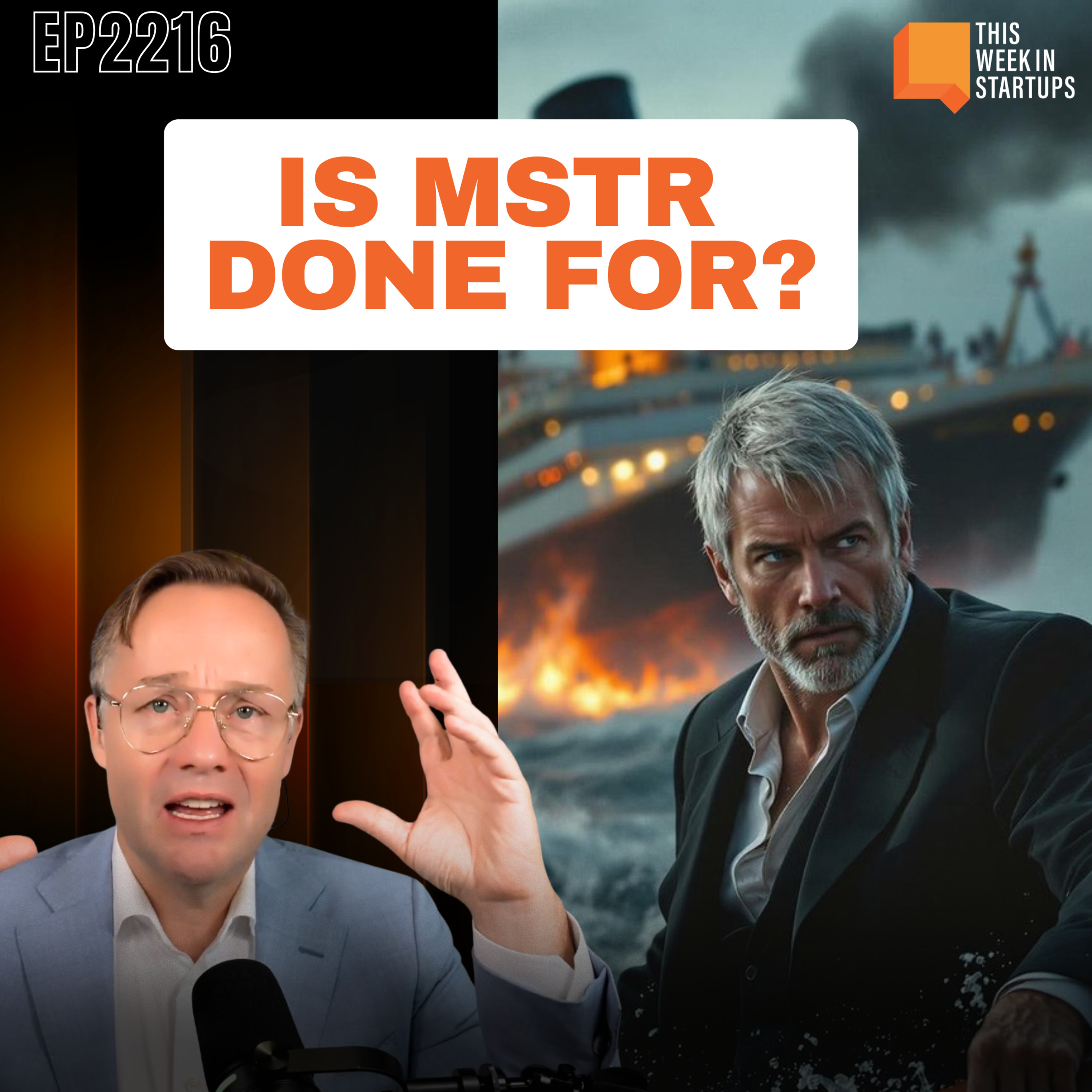
Suggested true believers sell a kidney before offloading his favorite crypto, even as prices plummet. You gotta say he's a very consistent guy, Jason. But he's been also tweet tweeting some very strange things. I don't know if you saw this, but this is an example of, of a Tweet from him November 14, a couple weeks back. And the, the text is just hodl, which is crypto slang for hold. And it's an AI image of Michael Saylor on a life raft with a sinking Titanic looking ship in the background. So is the Titanic. Bitcoin is the Titanic. Microstrategy. It's a very mixed message for me and it just doesn't show seriousness. And we're talking about billions of dollars, preferred shares and real money. And this just struck me as very tone deaf as we talk about these very important things.
- [13:13]
A
Yeah. And you know, I like to give room for people to make incredible strategies and pursue them. And he's doing that. So I just got attacked relentlessly by the microstrategy army, which now that we can see, like where they're based, it turns out like a lot of the right wing people who say horrible things online aren't actually part of maga. They're actually people in India, Philippines, Pakistan, Morocco. Sure, yeah. And they're like, oh, I can get paid and I can engagement farm on these platforms anonymously. Great, let me do that. So just take that with, you know, a bit of the more, you know, the concept here is, and the more, you know, people are, when there's financial gains to be had, people will try to find an angle. Yes. In one case, if the best way to get engagement is to say racist stuff under the MAGA umbrella or dunk on libtards, and socialists, you're gonna jump into that fight. If the smart thing to do is to buy some MicroStrategy and pump, pump up and tell people they're stupid and have fun staying poor, people are gonna do that. What you have to do is just sharpen your pencil and do the basic research. And that's what I did here, and that's what you were doing here, which is they have to pay back those loans. Their average price, I believe, is 74k Bitcoin. The goal is to just do some primary research here. When somebody puts a loan on top of a company, that has to come first before equity. Right. Loans come before equity. And so the equity can get seriously damaged if a loan is not paid back. How do I know this? How did I learn this? I learned it myself because a bunch of series A company started putting venture debt onto their companies. And I said, listen, there's plenty of venture capital out there. Why would we do venture debt? Well, it's being offered to us. It's low covenants. And sure enough, when those companies tripped up and they couldn't pay that stuff back, it became very hardcore. You know, the people who gave the loans would ask for 1 or 2 percentage points of warrants, you know, or ask for, you know, a 250k payment as a penalty plus, you know, whatever interest rate goes up. They basically were renegotiating their best interest. Why would they do that? Because they assume they're going to lose their money and they need to get back some of it. So it's reasonable. Loans are always scary and you never want to be able to have your margin called. Right. And these aren't margin loans exactly, but people were loaning money, getting offered, I don't know, 10%, 20% coupons, and they had the option to either get their money back or to get equity in MicroStrategy, which is kind of like a free option. Either I get my money back with interest or I get to own MicroStrategy stock at, I think it was a $600 price. And this thing peaked at maybe 400.
- [16:01]
B
And change, 457.22, currently at about 157 per share.
- [16:06]
A
All right, so if you invested at the peak, you've lost two thirds of your money and that's exactly the ratio of the nav. So just be intelligent folks, just do some basic math, take out your pencils. And then when somebody who is an evangelist. Yes, like I am for early stage investing, understand I'm talking my book, this is what I do for A living. When I'm enthusiastic about startups, it's based on the fact that I made my fortune on startups. You may not get the same result as me. In fact, I can guarantee you, you will not get the exact result as me. Some of you will do better than me. Some of you. More of you will do worse than me because I got very lucky and some of you do as good as me. Yeah, it's just statistics, folks.
- [16:47]
B
Absolutely. Do your own research. Be open minded and open eyed. But also know, Jason, one last thing here. This came out today. I think MicroStrategy has become responsive to the criticism that has been leveled at it given its expected dividend repayments and people worried that it will sell Bitcoin. And so the company today announced a $1.44 billion US dollar reserve to, quote, support the payment of dividends on preferred stock and interest on outstanding indebtedness. So the company is trying to shore up the balance sheet to make sure that it has the right amount of cash on hand.
- [17:17]
A
Explain to us how that works, just in plain English one more time as best you can.
- [17:22]
B
MicroStrategy sold some stock, they took all that money, they put it into a bank account, they gave it a fancy title and they're going to use that to repay essentially all the cost of their debts.
- [17:32]
A
Got it? The interest. So that means if they're selling equity, new shares, that's diluting the existing shares. So if you're increasing the share pool, if that's what's happening here again with this company, even though they're public, it is hard with the promoter, microstrategies sailor out there promoting heavily and then trying to figure out what reality is. And now he begged me to come on the podcast, especially All In. I said, okay, come on. Then all of a sudden things weren't going well for him. And Saylor doesn't want to talk anymore, but he'll talk to everybody else. But if you see him on cnbc, I'll be totally honest, I'm a little disappointed in CNBC for not throwing some more fastballs here. They need to get somebody in there to start throwing the fastballs at him because I think they gave him, I don't want to say a pass, but I don't feel they were as aggressive as you or I would have been with the lines of questioning of him. And he gets so excited and he's so good for ratings that I think maybe I don't want to say access journalism, but maybe people don't want to upset him. I've been going off and teeing off on this for years.
- [18:40]
B
We have a lot of your tweets pulled up, but I mean. Okay, Can I give you a victory lap before we move on?
- [18:45]
A
Sure, I'll take a victory lap. It's rare. Let me pat myself on the back here.
- [18:48]
B
Jason writes predict that MicroStrategy's Bitcoin strategy will fail in 2025. Goes on to say later on, MicroStatic should trade at a discount to their Bitcoin holdings, given their debt and because you don't own your keys. And now today, months later, they've lost two thirds of their value. Their bitcoin returns are very minimal, and they now trade at a discount to their holdings. There you go, Jason. 10 points.
- [19:09]
A
Okay. Yeah, I will run around in a circle and have a meaningless victory lap here because I didn't put the short on like my friend, I think Vinnie Lingham, I think.
- [19:17]
B
Oh, Vinnie did.
- [19:17]
A
Oh, I think he's been pretty public about shorting it or that he was going to short it. I mean, I don't know what reality is here, but he's pretty good. He also called the gold spike.
- [19:26]
B
Oh, shout out. Well, Vinnie, also, I watch him play a lot of poker. Lovely guy. Now, quickly, Jason, before we leave the whole bitcoin thing, we have a poly market to talk about. People are now taking bets on when Poly Market will begin to sell bitcoin. Recall, we just told people that they raised cash to avoid the need to do this. But even with that, there's a lot of belief that the company's going to sell Bitcoin and over about $1.8 million worth of trading. And here's the current stats. So only 5% of people think that MicroStrategy will have to sell Bitcoin before the end of the year. 22% think that it's going to be in Q1, and about 31% of people total think that it will happen inside of Q2. And we always want to check the rules. This market will resolve to. Yes, if MicroStrategy sells any of its bitcoin by the dates listed. Otherwise, the market will resolve to. No. Pretty simple. I just wanted to get you to weigh in here. Chance that you think, Jason, that MicroStrategy sells Bitcoin and before the end of Q2, 20, 26.
- [20:23]
A
Did you know Squarespace is our longest running sponsor in the history of this week. In startups, you can find episodes from more than a decade ago with me singing the praises of this wonderful platform, Squarespace, and how they're going to help you build an incredible website for your new business. That kind of longevity is no accident, folks. Squarespace has been in the game for some time because there's no better, easier way or four faster way to make your first website. And they're constantly upgrading and making their product better. They now have an AI powered blueprint feature which works right alongside you, helping you upgrade your design game. And it was just named one of Time magazine's best innovations of 2025. And it doesn't matter what kind of business you're in, this could be your personal branding. You could be an influencer, you could be an author. You want to have a beautiful, highly functioning website and Squarespace can help you with that. So check out squarespace.com twist for a free trial. And when you're ready to Launch, go to squarespace.com/to get 10% off your first website or domain purchase. That's squarespace.com/ I think it's a 5050 that they wind up selling by that time. I would put it at 50 50. Can I place wagers on polymarket yet.
- [21:32]
B
In the US I know they got more clearance recently. I don't know if you're actually allowed to.
- [21:38]
A
Yeah, I don't know. I'm going to start putting. I'm going to actually start putting these bets on live, on the air. I'll say sure winner. I like to define these things. Too complex. No audit. It's a sure winner. And then attacking the critics. Microstrategy fans can pound salt. Microstrategy fans who attack me can make me a fucking ham sandwich. Okay, go make me a hand sandwich. Get your shoeshine box. You lost two thirds of your money and I told you you would. So get your shine box and make me a goddamn ham sandwich. You anonymous promoters trying to bilk the public out of money. You know who you are? You anonymous promoters.
- [22:21]
B
Okay, let's keep going just to help the younger people. Jason and the shine box remark. It comes from Goodfellas, a fantastic movie from the 90s. If you haven't seen Goodfellas, go watch it. You'll learn a couple things and you'll learn why you should not tell certain gangsters to go get their shine box because it doesn't go well for you at your return.
- [22:39]
A
Does not go well. And get it. Go make me a ham sandwich is the way we used to dismiss people in Brooklyn. We just say, why don't you go make me a ham sandwich? Basically. It was basically at the time, put the fries in the bag?
- [22:53]
B
Yes, yes, it was very similar to that. Here's your McDonald's application from the old days. Yes. Okay. Tether. The big news from the last couple of days is that S and P global downgraded tether's ability. This is the company behind the USDT Stablecoin pegged to the dollar largest one in the world and the most famous. They downgraded their view of its ability to maintain that peg from a rating of 4, which is the second to worst rating, constrained to 5, their worst possible rating which is weak. So they really said we don't have a lot of faith in its ability to retain its peg. Why? Well, because the assets that back Tether USDT have become a bit more risky over time. And the S and P therefore thinks that because 5.6% of USDT is backed by bitcoin, which is greater than its 3.9% over collateralization, that there is a risk of if Bitcoin lost a lot of value then it could have not enough assets to maintain its one to one peg.
- [23:50]
A
This is another group that I've been super critical of. And listen, I'm not a tether truther. As they diminished people. So that's one of the four checked attacking the critics. Tether was banned in a bunch of markets. Bunch of reports that they are the best currency for doing illegal activity. You know the things that KYC and this is all alleged human trafficking, terrorism, money laundering. People say, people say, including, you know, senators and congressmen at hearings that this is the challenge they have with usdt. Now they have actually we said here that maybe they are increasing their risk over the longer. If you widen the aperture. There were reports that they were taking tethers which are supposed to be one to one. You have a dollar in a bank account and a dollar worth of tether that was supposed to be one to one. That's the whole concept of stablecoin. We all know that they were doing things like buying commercial credit, like commercial paper basically loans as we talked about earlier to companies and they were doing it in China to real estate companies which were upside down allegedly. And that was paying 15% or 20%. So this would be like you give me a million dollars and I go put it into something that pays 20% like somebody's credit card or some corporation with bad credit. Now I'm making 200,000 a year. You don't get that $200,000 a year tether. I would get that or circle whoever. I get that now with the new regulations that my friend David Sacks next.
- [25:23]
B
Story put in place with the genius act.
- [25:25]
A
Was it the genius that did the stablecoins?
- [25:27]
B
Yeah.
- [25:28]
A
So this whole stablecoin thing is like, hey, if you're, if tether is going to be buying treasuries of the United States or circle is doing that, we need to have this be regulated because these things are getting big. People like digital money. People like being able to trade money quickly. Now they'll in their defense say, well, we can track everything. Therefore that's better than, you know, bricks of hundred dollar bills perhaps. Maybe. Sure, you can have that argument. The fact is they don't pass the US very granular requirements to be currently traded in the United States legally and to be like part of what USDC is doing. But they did buy a lot more Treasuries and they do have over collateralization margin and they're very close. They're within, if this is true, 5.6 backed by Bitcoin, 3.9%. I mean we're only talking about a couple of billion dollars here. Sell your bitcoin. Just sell the bitcoin. Why would tethers, Paolo, the CEO who I've gotten into it online with and who's particularly spicy, why would Paulo even bother owning bitcoin? Just if you want to make love to America, you want to be really sweet. If you want to experience affection and joy in America in that market, it's very simple. Buy our Treasuries, we'll love you.
- [26:49]
B
Yes.
- [26:50]
A
Buy our debt. Yes. We'll be friends. Now you're only going to make 4 or 5% on it as opposed to 15%. But then you'll be able to work.
- [26:58]
B
Here and you can also make a lot of money off $100 billion, Jason, and 4 to 5%. I mean, I'm not going to cry for you by making only four or five billion dollars.
- [27:05]
A
I think they might have 180.
- [27:06]
B
So they do. I was just picking a, I was picking a round number to make the math.
- [27:10]
A
I mean you're going to pick a round number at 184. Let's make it 200 billion.
- [27:14]
B
Sure. Fair enough.
- [27:14]
A
Sure. Yeah, it's 10 billion a year and supposedly they did make 14 billion one year. I don't know if that was last year or this year, but that was the number I heard.
- [27:22]
B
I want to add though that the concerns from S and P Global are not just the Bitcoin point. That is I think a core element of their argument. They also said that these higher risk holdings include corporate bonds, precious metals, Bitcoin secured loans and other investments that are subject to credit market interest rate and foreign exchange risks. And those are now up to 24% of their total assets. And here is the chart, Jason, that shows the mix of assets held by.
- [27:47]
A
Tether according to an attestation.
- [27:51]
B
Which is, according to, which is not an audit. But if you observe this lighter color here is entitled other high risk assets. Now Bitcoin itself in this beige color is not that much of the company's overall holdings. Mostly it's still Treasuries. But I think when you combine the high risk and the Bitcoin, it looks a little scary. If you are a sober, conservative, old school financial type, if you're a crypto kid, this probably looks more stable than anything because compared to Dog with Hat Coin, you know, this is rock solid. But we have rules for a reason. We've gone through crises before. We've learned, we've applied them to the.
- [28:27]
A
Markets for what if there's a run on the bank is what everybody's saying. What if everybody cashes in their tether all at once? Yes. If they were to have 184.5 billion get redeemed, they might be under that if they can't liquidate those other things quick enough. So what you have to ask yourself is, is S and P a good actor? Do they do a good job? Are they thorough? You know, what's their track record? I know they've had some problems in the past with they graded stuff. The truth is, if you as a consumer want a trusted stablecoin, you should absolutely use my friend Jeremy Allaire's Circle usdc. Because they're publicly traded, they're audited, it's all on their website. And they don't have a history of being banned in countries and allegations and their management are in the US not like two Italians understand, living in who knows what market. Market again, too good to be true. Okay, is Tethered too good to be true as an investment because they are raising at 500 billion according to reports. I think that's probably correct, directionally correct, because I hear chit chat once in a while. So if that's true and they're making $14 billion, well then they're trading at 40 times 30 times 38.5. Yeah. So I mean they could be making 12, they could be making 14, who knows which number is exactly correct. But let's say 40 times 40 times top line revenue. That means you're going to have to catch up, you know, and double twice to catch up. I don't think that's going to happen. I'll be totally honest. And you do have risk. So why on earth would you buy into the company at $500 billion? It makes no sense. Now if it was a 10x or a 20x maybe that would paper out. This is in my, you know, feeble, inexperienced mind having invested in 600 startups but and hitting $200 billion company plus companies anyway, obviously lots of people are worried about AI coming for their jobs and you know, it's not entirely unreasonable. But that's not the only story for some people. Hey, AI is going to make them a lot better at their jobs and these individuals are the ones who are going to thrive in the next wave and they 10x their productivity. Enter Miro's innovation workspace. From a company that's been helping teams collaborate and brainstorm for over a decade comes an AI powered workspace that is not just going to take your ideas to the next level. It's going to help you progress from unstructured data and a bunch of random notes to product briefs and prototypes in just minutes. It's a solution that will keep us all organized. And it isn't just moving these things around, it's turning them into polished charts, slick diagrams, well designed slides. It's a massive time saver. Quickly start developing your next project without spending hours perfecting the ideal question or prompt. No, your whiteboard is Miro's prompt. So help your teams get great done with Miro. That's miro.com to find out how. Write it all down. Should I put my money in something that's 30 or 40 times revenue? I don't know, it seems like a big risk. So very simply here, if you're looking at this, no audit, that's one of my four. If you criticize them, do they attack the critics? Yes. In fact, Paolo came out and just said some crazy stuff. You'll probably read it in a moment. Is it too good to be true? Sounds like it to me. Is it complex? Maybe not so complex.
- [32:02]
B
Actually, no. Tether. Tether is simple. It's just behind a curtain in a way that I've never understood. The thing is, every attestation that's not an audit makes me worry more, not less. And I just don't understand why they won't get over themselves and just do the thing that everyone wants them to do.
- [32:16]
A
Ask yourself when somebody won't do something like, I don't know, Elizabeth Holmes didn't show the blood tracking machine. Now time will tell. You know, what happened in that story and if she was railroaded or how much of it was fake. Until you make it, I leave some room. I leave a little bit of wiggle room there.
- [32:34]
B
Generosity is not good. It's not bad.
- [32:36]
A
You know, listen, I do think that people do like to go after white collar criminals at that scale in a major way. But, you know, as I said many times, if you have the technology, just show it. And she never showed it, so why wouldn't she show it? Like, is there some reason? Did her lawyers tell her not to show it? Did she get bad counsel? I don't know. Tether. The reason they won't do an audit, Occam's razor would state. I'm not stating it. You're not stating it, just Occam's razor. The most logical reason is they wouldn't pass it. Yeah, if you'd pass it, you do it. If you're not going to pass it, you do an attestation. That's what Occam's razor. The most likely scenario is.
- [33:15]
B
Can I ask a question about this? Because you've gone through more audits than I've gone through, so you have a better perspective here. Let's say they did an audit right now and everything's completely clear. Right. How far back would that audit have visibility to potentially catch less than salubrious behavior in the past?
- [33:31]
A
Well, that you could negotiate with the auditor. You could say, I just want to do it. I want to audit 2025. I just do a one year audit. Just want you to audit that. You don't have to go look backwards. Just here's where we were January 1st. Here's where we are December 31st.
- [33:45]
B
Wow. All right. Well, that takes away my, my. I was trying to find some reason that they might be great now and not want to do an audit, but that doesn't help.
- [33:52]
A
Well, they would put in the top of the audit. This audit Is for only 2026. We do not have access to, nor did we look at anything prior to that. And that would be like a screaming red flag at the top of the audit. Just like an attestation is. According to my knowledge of it, an attestation is a moment in time when you prove you have these assets. So you take a picture basically of your bank account, or they log into your bank account, or they get a letter from your bank account, get a letter from your bitcoin custodian saying On November, on December 1st, we have this. This company has this much Bitcoin on December 1st, they have this much treasuries. So you're just making a proclamation and that the proclamation is confirmed by somebody. Now, the reason people were very concerned about Tether is because it was being done. The attestations by a little known. Yeah, I think it was the bvi, British Virgin Islands.
- [34:51]
B
Yeah, it was a small company in the middle of nowhere known for taxation. So like it's not. It's like if you told me you, you went to Federal Hill here in Providence and you found an accountant that came very well recommended by everyone who you knew in the Mafia. Like it just wouldn't help that much. It's not what we want.
- [35:05]
A
So what did Paolo say when he got downgraded by S and P Global?
- [35:10]
B
So Paolo Aldrino, which to his credit does just talk a lot. So we do get his perspective on things. He thinks that the S and P Group did not take into account retained earnings at the Tether company. So the Tether Group total assets in his reporting are about 215 billion versus stablecoin liabilities of 1 84.5 billion, which gives them a much larger cushion compared to just the assets that the S and P Global Group was looking at. That said, I don't think that corporate retained earnings are the same thing, Jason, as collateralization to support the liabilities inherent in having a stable coin. So to me, it's a little bit like different columns. His point that they have more money does hold, however.
- [35:52]
A
Yeah. And so I predict they're going to want to be public in the United States. They're going to probably have two versions of Tether. Let's say the more freewheeling one that's existed that maybe doesn't have know your customer, etc. And then they'll have tether 2.0 or tether us and there'll be USD T us to just sort of tell people, hey, this is the one that plays by the US Rules. Yeah. Shout out to my guy, David Sacks. This is really. When we look at these two companies, what we should take away from it is that the 45th and 46th administrations, a Republican and a Democratic one, totally bungled crypto regulation and they bungled it for eight years and they created all this offshore energy. If they had made these rules earlier, circle stripe, usdc, they would have become the dominant players in stablecoins. Not an offshore company that has been banned in different markets and paid fines and sanctions and all this other stuff.
- [36:51]
B
Yeah.
- [36:52]
A
So they bundled that. That has now been cleaned up. And now that's why we're even talking about this. So in a way I'll give Trump and Sachs a lot of credit by actually making some regulations. It's bringing people to the table who want to participate in the US market and don't want to get displaced by USDC or Stripe or whoever chooses Visa, American Express, bank of America, JP Morgan, Citibank, they're all going to come out with their own stable coins. Obviously they're going to lose. It's going to be death by a thousand cuts and people are going to look at stablecoins. This is my prediction. There'll be 10 other stablecoins in the US at this time next year from major entities. Those major entities will look at and say we don't need to make this our primary business. We're going to use this as a way to get customers. Therefore we'll make $0 off of it. We'll make 1% off of it. And all of the incredible gains that they get at Tether and the solid gains they get at Circle are going to be competed away where they're going to just face some headwinds, that's all. There'll be headwinds.
- [37:53]
B
To your point about companies making their own stablecoins, Jason, I just pulled up some reporting to make sure I had it right. Klarna announced on November 25 Klarna, the Swedish buy now, pay later giant that went public here in the US this year, a major venture backed victory for a lot of its early investors, announced its own stablecoin on Stripe's Tempo blockchain for stablecoins. So we are seeing this happen as we speak. All right, next up on the docket we have your friend Investi. Got the feature treatment and go. I read a lot of tweets about this, Jason. Before I read the article people were a little, a little hot. And then I read it and I learned a couple of things and I thought it showed a balanced portrait of Sachs. So I'm curious what you think about the New York Times piece and yeah, I just, I want to start there.
- [38:39]
A
Yeah, I mean it's, the headline was defamatory. If the headline was, you know, David Sachs is setting regulation as a part time employee of the government and he knows a lot of people in tech and they are pro AI winning, sure. But when they say that like they're benefiting. There was this major insinuation that he's doing something unethical. We need to have very qualified people in the government, people like Elon, people like Sachs, people like Lutnick. Whether you're a Democrat or Republican. I believe we should go back to the system the founding fathers liked, which was business people. The most successful people in society rotate into Washington D.C. or their local, like Bloomberg did, their local city and they then do a tour of duty and then they go back to their jobs. Now Sachs divested like almost everything he owned and I don't think it was even required for him to do that. And he took it on the chin, I am certain. And he, he's missing out on the greatest boom these four years that he's going to be there. If he does four years there is the greatest boom in the history of our careers. He's sitting it out. He's going to sit it out. Basically they put five people on this. They're kind of insinuating that the all in pockets, of which I am a 25% owner, in some way tried to make money or sell access to the President at the AI Summit. We told him over and over again we lost money on that. Which in a great paradox is me losing money or in some ways me giving money to the administration.
- [40:14]
B
It's actually you subsidizing David Sacks part time job. Like, I mean it's a funny stream of things. But the reason why the headlight didn't bother me, Jason, is because I think if you're going to take business people and have them divest entirely or the majority of their assets to go into government to help set policy for the segment of the economy they come from, they're going to lead and make decisions that do in fact help the people that they think are doing the good things. So I think the benefiting angle only becomes defamatory or unfair if they think it's net bad. But if the VCs and the startups that might benefit from his AI policy do in fact do well, he is benefiting his friends. But it's still a net good, if that makes sense.
- [41:01]
A
They're being super upfront about it. We want America to win the air race. If America wins the AI race, every American wins.
- [41:08]
B
Including the people who are backing the company.
- [41:10]
A
Correct. So you can play this game like, oh, the title of the story is like you know, logically sound and it's not defamatory and you'll win a case. The title we're talking about, Silicon Valley's man in the White House is benefiting himself and his friends. That is a defamatory, absolutely slanderous title. They should have done a better title. Now you can on the margins argue, well, isn't it correct. If America wins, they win. That's the problem is these logic jumps they're making here is just trying to damage David's reputation. That's what I think they're trying to do. And they would much rather the New York Times, as liberal as it comes, as in the bag for the Democrats as it comes. They are. They would rather have Lina Khan in there. They would rather have elites in there. They don't want this model where talented people from the private sector go in there. The jump that Nvidia does well in some way helps Sachs or the portfolio companies of Kraft of which he gets a percentage of the gain of those companies. All companies are AI companies. Now, we've talked about this here 100 times. My opinion, this would have been just fine if the title was Silicon Valley's man in the White House.
- [42:21]
B
David Sachs benefits Silicon Valley.
- [42:23]
A
Yeah. Are Trump's policies. Because they're really Trump's policies. At the end of the day, he's advising Trump. Are Trump's policies crafted with David Sachs benefiting his friends? I put a question mark on it. Are they. But they're saying it is. And that's what I. That's what I take offense to.
- [42:40]
B
I just kind of expected that. Because, you know, when you go to Washington with. With a perspective right now, the negative way to frame that is agenda or bias. But I think just perspective.
- [42:51]
A
It is an agenda. Make crypto legal as opposed to illegal.
- [42:55]
B
Yeah.
- [42:55]
A
Like we just talked about with the Teller story. And have America win the AI race. That's. These are actually the Trump administration's agenda when it comes to crypto and AI win both of these things in America. For American companies to benefit America and not have China win AI and not have Europe, the Middle east win crypto and run away with it. Which they were.
- [43:21]
B
I also think that the piece was interesting though, because it did highlight an intra GOP divide. Um, you and I have been talking about Steve Bannon since before Trump came back into office. And I've been noticing here and there comments from Senator Hawley about AI and jobs, Bannon on tech companies and so forth. And I think there is a bubbling division in the GOP in regards to how major technology companies should be treated. And I think that was an interesting flavor inside the story. If people haven't read it, go read it. I think this piece was interesting as a compendium of like, what's going on with powerful people in positions of power. And that's kind of.
- [43:58]
A
Yeah. And you can hear about it every week on all in or here we talk about it. Everybody's pretty upfront about it.
- [44:03]
B
But anyways, the point is it's a big piece. There's a lot of people talking about it. Next up on the docket, Jason, you wanted to talk about the power of glue employees. There is a new book out from behavioral scientist John Levy entitled Team Intelligence, How Brilliant Leaders Unlock Collective Genius. And he talked to the Journal about glue employees. I love this topic because I've seen them in my life. He defines them as a glue player is the team member who multiplies everyone else's results, helping the team win. These people are high eq, proactive, helpful, and put the team before themselves. This doesn't sound like Silicon Valley. Jason, what's going on?
- [44:36]
A
Actually, there's a lot of these people at Silicon Valley. You might put Sheryl Sandberg into this group. High eq, proactive, helpful, wants to see the team win, wants to help develop. So I think you don't hear about these folks because the opposite of this is not the glue employee, it's the hard driving employee, the CEO, the founders who might be high eq, they might be proactive, but there are stars in the system. Star program is star salespeople, and they want to excel for themselves. Sure. And the reason I think this is interesting for people to understand for startups specifically, is when you have somebody in the company who does help everybody do a better job, when somebody onboards, they give them a little bit of time. You don't want it to tip over into them becoming union organizers where they're like, everybody's upset about this. I squashed that very quickly by saying everyone means no one, anyone is upset about a policy. I had a big controversy about days off in terms of holidays. Explain in a second. People were like, oh, everybody's upset about this. I'm like, okay, I let you guys pick your holidays. This is how crazy it got during the dei. I said, we'll have six holidays that are locked in and then we'll have four that are floating holidays. You can pick because it was what I was told was the best standard for 20 years. So you take your Christmas, your New Year's, your Thanksgiving, Memorial Day, your Labor Day, those were the ones that were added. So then you have all the Jewish holidays, you have Juneteenth, Anna, you have Martin Luther King, you have Columbus Day, you have President's Day, you have Kwanzaa, you have the day after Thanksgiving, you have Greek, Easter, you got all these things. So then somebody's like, okay, Jason doesn't let his employees take June 19th as an example. And Martin Luther King day off. He hates black people. Was like, what? Literally, somebody said like, that's the back channel. I was like, no, no, no, no, no. I leave it up to you to pick which ones you want. So if you were Italian or you're Irish and you want Columbus Day or St. Patrick's Day and whatever, or your Greek Easter, whatever, go for it. Good Friday. Catholic versus Jewish. You want Hanukkah, that's up to you. So then I was like, okay, you know what? I acquiesce. We're gonna take Martin Luther King and Juneteenth, and you don't get to pick your own holidays. Then I get the other side. Why can't we pick our holidays? I don't want to take Juneteenth and Martin Luther King day off. I want to take these other ones. So then I'm like, oh, my God, this is becoming in crazy. Here's the new policy. There's pto, there's. These days we take off for the Canadian employees. It's a different set. And anybody who wants to take time off without pay, you can take time off without pay for every other holiday. You could be on holiday for 50 extra days a year. Pick every holiday in permutation. The point is, with these glue employees, there are some who would smooth these things over, and then there are some who would be rabble rousers because they. They want Columbus Day off versus St. Patrick's Day off versus Juneteenth. And those are the people you want to avoid. The rabble rousers who are trying to stir the pot. These are the antithesis of that. Now. What happened in Silicon Valley is they got rid of a lot of middle managers. I suspect when they purged the middle managers at Amazon recently or got rid of, you know, people who weren't builders at Facebook and Meta or Google, you might have lost some of these glue people. The thing about glue people is high performers are like, that person doesn't do anything like proactive in their mind. They're not serving as much of a purpose as the high end folks. The real killers are the 10x engineer, the 10x salesperson. The truth is, they're kind of like foundational employees. I have a number of them. The foundational employees create stability. So you as a founder need to understand, is this person who is a glue employee, a foundational employee, I'll call them, are they really creating a strong foundation for the company so that you don't have to worry about Things, and you need some of those. It might be 10%, 20% of the employee base. I don't know the exact thing. But I was fascinated by the story that somebody had sent me.
- [48:39]
B
Oh, this is so interesting, because I think it's a much lower percentage than that. So going back to. Going back to my time at Crunchbase, there was a particular woman on the marketing team who knew how every single internal system worked.
- [48:49]
A
Yeah.
- [48:49]
B
All of them. And nothing. When she went on vacation, the company struggled, and when she came back, everyone would just go. Her desk was like a line because she could run everything. And she was also super kind, super patient and helped everybody get so much done. She was the glue of the company.
- [49:05]
A
Yeah.
- [49:05]
B
And I hope I was not. She was not on my team. I was not in charge of her cop. I hope she was compensated like. Like. Like a. Like a God, because she did so much. But she's also not the person that I think was presenting to the board. So I think the reason why this interview, Jason, is so interesting is the guy says, try to find a way to find these people and then reward them. And if you want to find them, talk to your employees about who helps them. And I think that's a great way to build a better company and a better startup.
- [49:30]
A
Yeah. So you do need some of these people. The thing you also bring up is bottlenecks at Crunchbase. Like, if this person knows where all the corporations cruft is and the skunk works and the, you know, the hidden buried treasure and all that stuff, and that's really dangerous, so you have to break that as well, that there's no single point of failure in a company because that creates stress. What I like to have is a stress test. So I will take people off of a project and say, okay, you were running the accelerator, now you're off the accelerator. You're going to work in the fund management side for six months. And you. They can ask questions of you, but they're running it. They're gonna. Or they're gonna move from the fund management to the syndicate.com, they're gonna work just on that or they're gonna work just on this week. In startups, so I rotate people around, and then I always do things in two. Like the rule of two in Star Wars. An apprentice and a master. Master and a padawan. When you do that and you rotate and then you have the two I call pilot, co pilot. The pilot moves to another thing to become co pilot. The co pilot becomes the pilot, and then you put Another co pilot in. When you start doing that, people get upset about it and they resist it at first. But it's your company, so who cares? Just this is the way we run it here. And they become more well rounded, they have more exposure to different things and it's actually good for them long term. Just people don't like change and the company is anti fragile, which means in bad times or good times, it's going to do well. And if you can build an anti fragile team like you're saying it's, it's better. So you're like kind of, it's like hiking. When I go rucking.
- [50:59]
B
Yes.
- [50:59]
A
I have like three options. I could walk on the street, I can walk on the dirt road, I can walk on the ranch and just be out in the forest. I start with the forest, I come back on the dirt road. I never go on the paved roads. Why? I want a little bit of that like challenge. And that's what you're doing by rotating people around, giving them the challenge. They may not do it as well. By definition, they're not going to do it as well as the person who was the pilot last time because they've been doing it longer. The organization is. And then what I do is I do a transfer meeting where they record the zoom and then in that notion page we upload the zoom where they explain to them how everything works. Then the next time it gets transferred, we do another zoom. So then the people who are working there can go do the historical document and get that.
- [51:40]
B
So for example, I'm going on paternity leave next year because I'm having another baby. I'm going to take my to do list, both my digital and my paper one, and I'm going to pass them on and I'll walk anyone through the things. And you know what it means that the thing keeps working, which is good. Now next up on the docket, we're talking about Sunday Robotics. Jason, this is a company that is different than the other humanoid robotics companies because instead of having a humanoid robot with legs, it is instead a humanoid robot on wheels. And I'm going to play a little clip here if you'd like the fancy promo video from Sunday Robotics. But a fresh take on robotics for the house. Here is the robot. It is picking up wine glasses with a two fingered effector as opposed to a human hand. And it does not look humanoid. It looks human. Ish.
- [52:24]
A
This video looks like cgi. The base is a giant square. I would say the base looks like a large Amazon box. So it's weighted, it's got wheels. It looks like two Roombas put on top of each other. And what's great about that is the top half is like C3PO. So the bottom half is like a Roomba with a stick, but the stick goes up and down. In other words, the torso goes up and down. So when he. When they. Them.
- [52:53]
B
I'm going to go with it in this.
- [52:55]
A
When it. When it is picking stuff up, the torso can lower to the height of the table. Then it might have a different height for the top. For the bottom shelf, as you see of the dishwasher on the top shelf, they made it look friendly. They gave it a baseball cap, which is a cute touch. They have one in blue, they have one in orange. My favorite color. What's really smart about the base and the wheels is it's going to be much more stable than an Optimus. Obviously it's not going to be able to go upstairs, so the Optimus will be able to go up and downstairs. This thing is going to be limited, like the Roomba is limited. I don't think Roombas have figured out how to go up and down stairs yet, but you put one on both floors, I suppose, is going to be their answer to that question.
- [53:35]
B
I mean, I like where your mind's going. By the way, I just checked this video of Memo Jason, which is the name of their bot, is quote a Uncle Cut video of Memo cleaning up. So not AI, not a render and.
- [53:46]
A
Actually looks so fake.
- [53:47]
B
I think it's sped up.
- [53:48]
A
So the thing I'll say about this particular project that I like is I think that base gives it the ability to put a lot of battery power in it and a lot of compute in it. I don't know what's in the base, but the base has to be weighted anyway so it doesn't topple over. Yeah. So if you put a bunch of battery packs in it and you have an H100 or whatever, they're like Nvidia's, I forgot what they call their desktop, H100. But, you know, if you had two Mac minis in there, right? Or you had some sort of, you know, PC in there and a bunch of batteries, man, this thing, you don't have to worry too much about the compute power in it. So I think that's really magical. Mag and clever in terms of function and form. Function being it requires weight, therefore batteries are also required. So this, like, function is just really good and it has some form to it.
- [54:48]
B
It looks good, does look good. They're thinking about a cost of about $20,000. And to help train it, what they did was they took what they called memory gloves, which I think emulate the, the human hand. And then they just ship those out to thousands of people and then took all the data from them, grabbing things and use that to improve their model, which is quite nice. The thing that I'm, that I'm stuck on though, is just it's big and my house is old and has small rooms. And I think, I think this is definitely designed for the modern open floor plan. You know, it's not designed for historical homes. So maybe I'm not the, the target demographic.
- [55:24]
A
You know, on the website they show the, the hand. If you scroll down the website, it's really cool looking. And they show they have a video there of skill capture with the gloves. Really clever. So the gloves seem to have cameras in them.
- [55:38]
B
Here is the, the hand inside of the memory glove, if you will.
- [55:41]
A
Yep. When you go further down, the training glove. Yeah. Now if you go down a little bit, but you'll see like somebody was picking up wine glasses with that memory glove, the skill training glove. And then that goes into it just like, you know, a Tesla takes miles of actual real driving and also creates simulations and teaches us how to do things and not break wine glasses. I think these need to be 10k. I think they should be sold for 500 bucks a month. Yeah. Housekeepers. You know, if you have a Roomba, there's a new robotic vacuum washer AI version of the Roomba that uses AI first, I think. And people, it's with an M, I think, are losing their minds over it.
- [56:22]
B
The Matic robot vacuum.
- [56:23]
A
Matic robot vacuum. Everybody is losing their mind.
- [56:26]
B
And Toby Lutke of Shopify said, this thing is just incredible. At Matic, robots have made something incredibly delightful here. So, yes, our friends and family here in the tech world.
- [56:35]
A
Yeah. So it is supposedly really good at, you know, I have a housekeeper or two, so yeah, it's not a big deal for me, but. And it would be kind of silly to have this thing running around while the housekeeper is doing it. But if you don't have a housekeeper once a week, this thing doing it nonstop is pretty great. Now in an old house, you're right, it's problematic.
- [56:56]
B
Yeah. There's too many bumps and divots and like, you know, I'm not going to tear up my floorboards from 1800s just so I can have a better robot vacuum. But in the future, when I live in a modern house, Huzzah. It's going to be fantastic.
- [57:07]
A
I think 10k a year for that robot would be a better price. And actually, now that we're at it, one is a Matic. Be at the bottom of that.
- [57:14]
B
Oh, just make the whole base essentially a Roomba.
- [57:17]
A
Make the base a Roomba. Be washing the floor constantly. Matic and Sundae is the same product. Put these two together is my best idea. Put the Matic at the bottom of a Sunday and then it's cleaning the floors while it's picking up the dishes. All right, everybody, this has been another amazing episode of this week in Startups. We will see you on Wednesday. Bye. Bye.
- [57:40]
B
Bye. Bye.