← This Week in Startups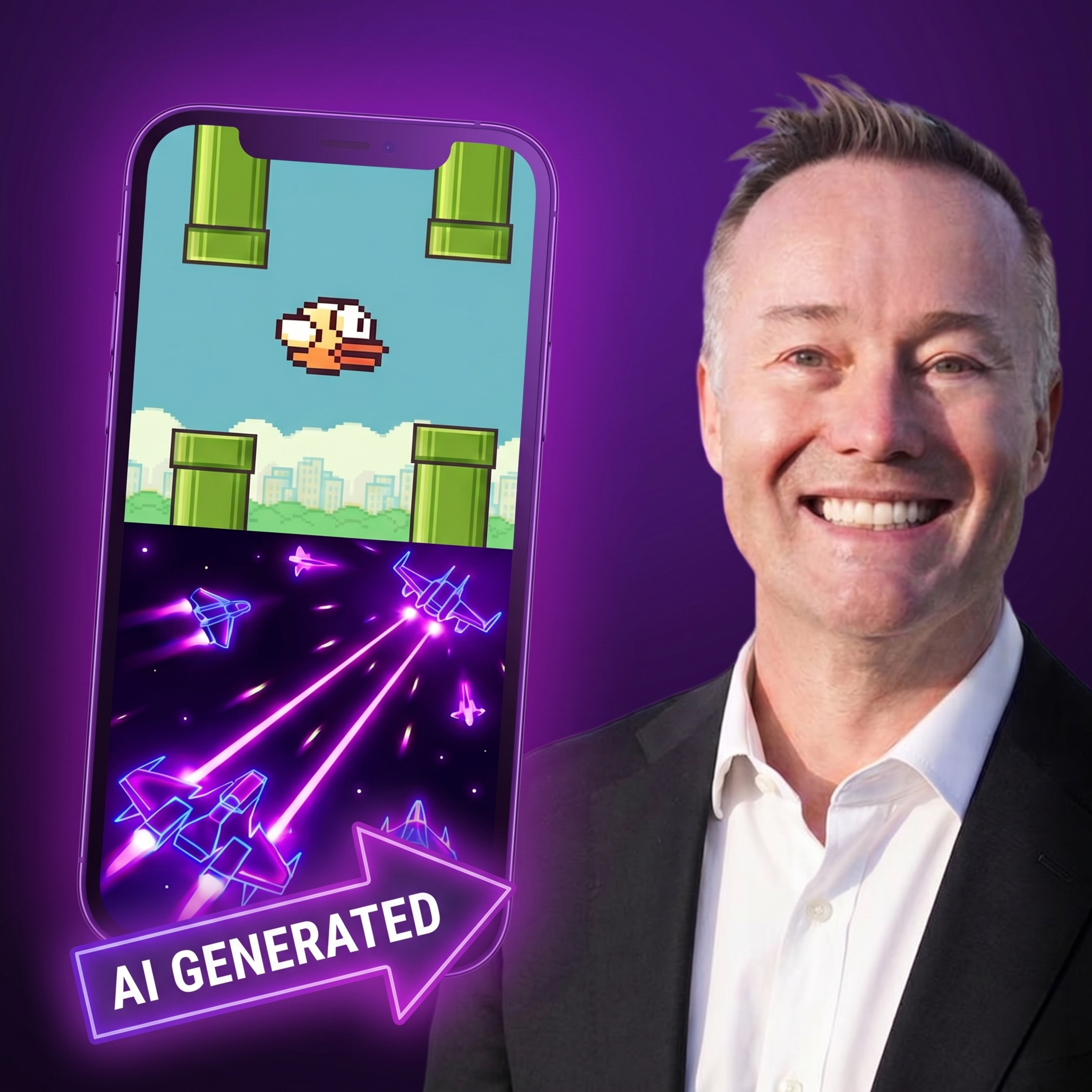
This Week in Startups
This 22-Year-Old Built TikTok for Mobile Games, and It’s Growing Fast | E2276
01:02:46
Loading summary
Transcript214 lines
- [00:00]
Jason Calacanis
Welcome back to this week in Startup with me, Lon Harris. I'm Jason Calacanis.
- [00:04]
Bernt Bernick
This Week in Startups is brought to you by Render. Find out why 5 million developers are already using the all in one cloud platform render. Go to render.com twist and apply for the Render Startup Program to get 500 to $100,000 in free credits depending on your stage and backers. Every IO for all your incorporation, banking, payroll benefits, accounting, taxes or other back office administration needs, visit every IO and LinkedIn jobs hire right the first time, post your first job and get $100 off towards your job post. @LinkedIn.com twist
- [00:42]
Lon Harris
we've got Albert Brotherton and Boris Radiloff, Jason. They're the co creators of Nanogram. I really like this. This is a cool thing. It's basically TikTok for mobile video games. It's available right now. It's in the Google Play store. It's in the iOS store. Guys, thanks for being here.
- [00:58]
Albert Brotherton
Thanks for having us guys.
- [00:59]
Jason Calacanis
So tell us what you're working on.
- [01:01]
Albert Brotherton
Yeah. Boris, do you want to kind of bring up, bring up the demo and walk them through it?
- [01:04]
Boris Radiloff
Yes, yes.
- [01:05]
Just give me one second to get my screen share.
- [01:07]
Lon Harris
And this is, I have it on my phone, Jason. This is, it's available now. It's basically work. It's like think TikTok. But people can create their own video games very quickly, like casual mobile games. And then you just scroll. When you're tired of playing one, you just scroll up and you go to the next game.
- [01:22]
Bernt Bernick
It's pretty remarkable.
- [01:24]
Boris Radiloff
Typical TikTok feed. This is the MVP we put out a month and a half ago. You're playing boards and you're going to the next game. You play this game, you get bored, you're going to the next one. It's very simple concept proving to be quite interesting. But the whole brain rom of playing multiple games in a row is just part of the flywheel. The second half of the flywheel is the creation aspect.
- [01:44]
Lon Harris
When you're looking for a new game to play, it can be that complete like tyranny of choice. Like choice paralysis. Like there's hundreds of games, I don't have time to research every single video game. This is just like open your phone, start playing a game.
- [01:57]
Boris Radiloff
The creation is even cooler. If you go on your create tab, you put create with AI and you have all these templates, you could go off or you could do a custom template. I'm just going to quickly demo something real quick for you. So when I was like 14. I started programming because I wanted to make video games. And, you know, now with AI and agents, something that would have taken me a week back then now takes 90 seconds. So, for example, if I want to make like a 3D version of Flappy Bird, all I have to do is go on 3D, write Flappy Bird, hit generate, and now it's going to cook up the game for me. And what's really cool is while you wait for the agent, you get to play other games that other people have made for inspiration. And usually on the first prompt, it takes about 60 to 90 seconds to one shot a full game. And after that, the cool part is that you're absolutely free to remix it. I'm having a hard time playing and talking here at the same time. Forgive my poor performance. But the idea is, after that, you can remix the game as many times as you want, and we'll just probably get that shortly. Additionally, you can remix other people's games. So, for example, if I make a really cool game, I send it to Jason here and he can remix it, change it in a way that he likes. So here is the 3D flappy bird that I made for us. And this is very basic. This is like a starting point for us. And I get to play this. And as a little kid, this would have taken me a few days to figure out before the age of AI. But interesting enough, I can now do this in like 90 seconds and I can go prompt it and I can say, hey, can you please add guns to this?
- [03:40]
Lon Harris
I like that you said please. Very polite.
- [03:42]
Jason Calacanis
So this is all just AI prompting to make games. What's the engine behind it? Is this Claude or something? Or is this like some bespoke AI engine to make games?
- [03:53]
Boris Radiloff
What we're doing is we've created a custom game engine and then we're using Gemini and a bunch of agentic harnesses and like, tool calling to give it the ability to create 3D assets, create 2D assets, and like pixel art and things like this. Basically, what we've created here is we're trying to rely on the native platforms as much as possible. So we're really relying on Gemini to do the tool calling for us. And then we're putting a bunch of tools such as, like, generate 3D mesh, generate 2D, pixel art, generate sound, things like this. And then it figures out how to code these, put it in the game, and do all sorts of stuff for the user.
- [04:28]
Jason Calacanis
Genius. Can I take lan's game and build off of it and fork it?
- [04:33]
Boris Radiloff
Yep, yep. Yep.
- [04:34]
Albert Brotherton
This is like, you can, like one can post like, you know, a flappy bird and you can say, I want to add guns to this. You could send a picture. I mean, at the moment, okay.
- [04:42]
Jason Calacanis
So that's inherent in it is you just fork stuff.
- [04:44]
Lon Harris
It's like the remixing.
- [04:46]
Jason Calacanis
It's remixing.
- [04:46]
Lon Harris
Yeah, yeah. It's like the remixing on Sora where I can see your video and I can say, make them say this instead. And it's just like everybody's idea builds on everybody else's idea.
- [04:53]
Boris Radiloff
Yeah.
- [04:54]
Jason Calacanis
What's the business model here? And who are you two dudes?
- [04:58]
Albert Brotherton
So I'm Albert, this is Boris, I'm the CEO. He's cto. And yeah, I mean, the business model is. I mean, look, at the end of the day, we're like a feed of interactive content, right? That's like, I'm not even saying games because that's the direction we're moving in. Right. Interactive content. And you know, we have a lot of rev experiments we want to do. Right. Because this is a very new field. We can't know exactly what it's going to be.
- [05:21]
Boris Radiloff
Right.
- [05:21]
Albert Brotherton
But I think it's a very interesting space where, you know, there is no accessible interactive ad space that's really easily distributed right now. Right. So I'll use an example here. So let's take like a big advertising provider like Domino's, right. And they want to, you know, do some easy ad space stuff. They're going to go on short form content, right. And they'll have a marketing team that's great at short form content. They'll post on Instagram, they'll post on TikTok. Right. But you know, at the end of the day, interaction is much higher. Converting, Right.
- [05:49]
Jason Calacanis
And yes, and it's engagement. So they're going to spend more time on it. So dominoes can come in and say, I want to make an Asteroids like game where the boulders and the asteroids are dominoes and when you break them apart, they turn into the pretzel bites. And then I want to have a spaceship go by. That's the brownie. Whatever it is. Genius.
- [06:07]
Albert Brotherton
Make the pizza. And the call to action can be order the exact pizza you've made in the game. For example.
- [06:12]
Jason Calacanis
Love it.
- [06:12]
Albert Brotherton
Yeah.
- [06:12]
Boris Radiloff
Very cool.
- [06:13]
Jason Calacanis
Albert and Boris, you guys went to school together. You're in high school right now. What's the story?
- [06:17]
Boris Radiloff
No, no.
- [06:18]
Albert Brotherton
So I'm 22, Boris is 24. We've worked together.
- [06:21]
Boris Radiloff
I'm glad I look so young. Jason.
- [06:23]
Jason Calacanis
I was referring to Albert, but okay. No, I'm joking. You're both pretty young, but. So you went out of college? Did you skip college? You went to college?
- [06:31]
Albert Brotherton
I, I, I skipped college personally.
- [06:33]
Jason Calacanis
Well done.
- [06:34]
Boris Radiloff
I, I went to college, unfortunately, and I went.
- [06:36]
Jason Calacanis
Where'd you go, where'd you study?
- [06:38]
Boris Radiloff
University of Leeds. I studied computer science and yeah, unfortunately it was right during COVID so for the two of the three years, I literally just didn't go to classes. So I guess I.
- [06:48]
Jason Calacanis
So you paid a fortune and got nothing. Got it.
- [06:50]
Boris Radiloff
Yeah, yeah.
- [06:51]
Albert Brotherton
That's ridiculous.
- [06:51]
Jason Calacanis
How much debt you got? Goris, how much you have debt?
- [06:54]
Bernt Bernick
Not much.
- [06:54]
Boris Radiloff
It's like 40, 50K in the UK, it's quite cheap.
- [06:57]
Jason Calacanis
Not much. 40, $50,000. Okay. We got to make startup work.
- [07:01]
Boris Radiloff
I mean compared to some of the people that like in the US where they're getting on.
- [07:04]
Yeah.
- [07:05]
Jason Calacanis
All right, Albert, what's your story? You're the business guy, you're a developer. Who are you?
- [07:09]
Boris Radiloff
You?
- [07:10]
Albert Brotherton
I'm the business guy. I'm the business guy. I'm the hustler. Yeah, I mean I've kind of, I've been a gamer since I was six, by the way. I'm like one of the weird people in Gen Z that plays a lot of World of Warcraft, which is kind of like more of a millennial thing.
- [07:21]
Jason Calacanis
Wow.
- [07:21]
Lon Harris
Very well.
- [07:22]
Albert Brotherton
Oris is two by the way. We play together, but I've played since I was 6.
- [07:25]
Jason Calacanis
Is that how you met? Did you meet in World of Warcraft?
- [07:28]
Albert Brotherton
No, we met through a childhood friend that kind of grew up with, you know, me and grew up with Boris and he just introduced us about three years ago and we kind of kicked off and became best friends.
- [07:36]
Jason Calacanis
Got it. And now you're sitting in a gamer chair, right? That's a gamer chair.
- [07:40]
Albert Brotherton
Razor? Yeah, it's a razor.
- [07:42]
Jason Calacanis
And see now this is what I'm like the Colombo of investors. Like I look for little clues and I'm like these line. I noticed Albert is sitting in a chair. The chair is a gamer chair and it's, it's the brand razor. And I had a razor, my brother in law had a Razer mouse and it was used for playing games like World of Warcraft. So you're very much into gaming, are you not, Albert? So you guys vibe coded all this. You did it. You have. There you go, Razer. And it has weights in it too. You can put different weights into it depending on the game you're playing. What's your story? You guys are going to raise money for this? You want to come to an incubator. You have raised money. You did go to an incubator. Have you incorporated? What's the story here? Because this is a great idea.
- [08:20]
Albert Brotherton
Yeah, yeah. So we have raised money. I mean, it's a really exciting time for us. We've raised from drive.
- [08:25]
Jason Calacanis
Awesome. Fantastic. Well, and where are you based?
- [08:28]
Albert Brotherton
So we're based out of London and Sofia at the moment, but with plans
- [08:32]
Boris Radiloff
to go towards New York.
- [08:33]
Albert Brotherton
Yeah.
- [08:33]
Jason Calacanis
Okay, great, man. My hometown. It's great. Just when you go there, please don't join isis. Okay, so when you get to Alice island, they're going to be like, would you like to go to the ISIS training camp? Or you like to go to Brooklyn or whatever it is?
- [08:45]
Albert Brotherton
Well, it's like that in London, to be honest too.
- [08:47]
Boris Radiloff
So don't worry, you know?
- [08:48]
Jason Calacanis
Yeah, you just have to defend yourself as young people against these ideologies. Don't blow anything up. Fantastic. New York's a place for you because there's marketing in New York and people experiment and this could be permissionless. So if you just tell brands, hey, you can just build whatever you want as a brand. Some young person at a brand. I don't know if you're watching the Staples Baddie. Do you know about Staples Baddie?
- [09:13]
Boris Radiloff
No.
- [09:14]
Jason Calacanis
Lon, do you know about Staples baddie on TikTok? Okay, so one of our team, Jacob, will very quickly.
- [09:19]
Lon Harris
Staples Baddie. I found it.
- [09:20]
Jason Calacanis
And Staples Baddie, she basically is passionate about Staples and she works at Staples. She is like a baddie in the Internet slang. And she just talks about like, here's the best pen. And she was talking about pens the other day and I was looking for a new pen and I don't want to spend a dollar on a pen, but I don't want to spend a hundred dollars on a pen. And I was searching for a pen and she came up and one of the pens that she liked was the Zebra G750 that I literally bought it. Now, I didn't happen to buy it from Staples, but I did follow her. So now I'm giving credit to Staples for it. Anyway, my point is she's getting more views and Lon probably has done a bunch of research on her right now. She's gotten more views and has done more for the brand online than anybody in corporate who spent $10 million or $100 million ever had because she connected with people authentically. Hiring can be its own full time job. And hey, guess what? I already have a full time job. I make podcasts and I invest. But when you're running a small company. We both know every hire. You don't want to waste any of the seats you have at your company. And the best partner you can have is LinkedIn Hiring Pro. Why? There's a billion people using LinkedIn. All the great talent are there. If you're proud of your work, you build a LinkedIn page and you update it. LinkedIn Hiring Pro is going to streamline and simplify the entire process for you. Nearly 60% of companies using LinkedIn Hiring Pro. You're going to get an incredible candidate to interview in the first week. And you know, we're looking for a new producer for the pod. We did shout outs here on the show. We posted it on my social media. We asked friends, you know, where we found our Next Great hire. LinkedIn. And it was competitive. We had like three or four really good choices. So hire right the first time. Post your first job and get $100 off towards your post@LinkedIn.com hiring pro offer. That's LinkedIn.com hiring pro offer. Terms and conditions apply. She went through journals, she went through pens. Now she's getting picked up or whatever. Now other people, Office Depot is trying to find their baddie. It's become like a whole thing.
- [11:20]
Lon Harris
It's like the, the fast food burger thing that you were following that last week. It's the same. It's the same concept. The McDonald's CEO did a TikTok where he.
- [11:30]
Boris Radiloff
That was really bad.
- [11:32]
Lon Harris
He ate a burger, but he took a really small bite and it looks like he's disgusted by his own burgers. And so now every other fast food CEO has done their own version where they love their burgers and they're eating stuff in their face with them. And it really became like every single fast food CEO had to do one. And to get the momentum from this viral McDonald's video.
- [11:56]
Jason Calacanis
I think the problem with his video, because I did see it.
- [11:59]
Lon Harris
Yeah.
- [11:59]
Jason Calacanis
And the problem was he's very robotic.
- [12:03]
Boris Radiloff
Yes.
- [12:03]
Jason Calacanis
He's almost like an NBA who's a bit on the spectrum. I don't want to diagnose people, but when I say, like, he's robotic, you know, you get the idea.
- [12:11]
Lon Harris
It's not awkward and it just.
- [12:13]
Jason Calacanis
He's awkward.
- [12:14]
Lon Harris
He's not a good enough actor to pull off, like, I really am enjoying this and I want to eat this burger.
- [12:19]
Jason Calacanis
Not even able to pull off. He's a human.
- [12:21]
Lon Harris
No. At one point he goes, and this. And this is going to be my lunch later. And that's not a hard thing to Convince me that you're going to eat a burger for lunch. But I don't believe him.
- [12:30]
Bernt Bernick
I don't.
- [12:31]
Lon Harris
In that moment, I don't believe him.
- [12:32]
Jason Calacanis
He referred to the burger as product.
- [12:34]
Boris Radiloff
Yeah, product.
- [12:35]
Jason Calacanis
It was like very awkward and he takes a very tiny bite.
- [12:38]
Lon Harris
He does not take a big bite. I thought the same thing about the Burger King guy. Honestly. The Burger King guy did one and I was like, he also doesn't really take like a, a big, like a man sized bite. Like he loves burgers.
- [12:49]
Boris Radiloff
The question is, who let them post this? Like there was probably a whole marketing department there.
- [12:54]
Yeah.
- [12:54]
Lon Harris
Like right. There wasn't a social media person there being like, can we, can you take a bigger bite? Like you like your, your burger? Because that looks so dainty. It's like it's. Yeah, he even shows it. It's like it doesn't look like bit
- [13:07]
Jason Calacanis
so clear, Albert, when you see this, that this person does not like their own product. There is a, there is literally a salad that has been made to his specification by his chef off camera and he is going to spit out whatever he ate, swish his mouth with some Pellegrino at the exact temperature he wants, and then he's going to eat that fricking salad that his chef made with that. Literally each item was weighed and put into his, you know, spreadsheet where he keeps his calorie count. What you need is somebody who actually is sitting there with the chef saying, put more onions on and like, you know, the mustard ratio's off. Which is what the croc. Which, which is what the McDonald's brothers were doing. Albert, what's the vision here for the. Oh, so anyway, back to the permission list and we're talking about brands. I think you just let the brands do whatever they want on and then you give them the ability to promote them. Yeah. Which would be just what brands are doing now. Brands just make content. There's no permission to do that. And if they get views and they do a good job, it gets views organically. But they can boost it and they can pay to boost. I think just paying to boost such a good idea. Then what about monetization from. I'm the creator. Could I put a game up there and say if you want more levels, you can buy coins? Or is that annoying to customers and against your philosophy, Albert?
- [14:32]
Albert Brotherton
So again, this is a big rev experiment. We want to do like, look, there's two ways I look at it. You can look at someone like Roblox. Right. That's done. Incredible creator Currency, right? However, their games are 100% more long form, right? Where you're not going to be playing like 100 games an hour or more, right? So, I mean, it's very normal to have microtransactions and create a currency where you as a creator can say, hey, look, I want to add an extra level. It's clear I got a million plays on my game. Let's add an extra level for my big supporters that want to do it, right? This is something we want to experiment with. So yes, we're looking at experimenting with a creator currency because I think there's a big incentive there for creators, right? So let's say you put a game up, right? Short form, you made it in two minutes, right? You did like three prompts and you get a million plays, right? And just so we have a game in our minds that we all know, let's just say it's like Candy Crush and Candy Crush doesn't exist, right? And you pioneered the first level. I want there to be a big incentive for you to kind of. This is something you don't see in socials, you know, like iterate on that already posted thing, right? Unit of content. This is something you don't do in like Instagram and TikTok. You know, the moment you press post, that's it. The ship sailed. So, I mean, there is an aspect that we want to test on this, but to be totally, to be totally frank, we're too early, I think, to really know how that will go. And we are not the ones that can decide if it will work or not on that.
- [15:51]
Jason Calacanis
I think you spend the first literal two years just trying to make the tool so good and so addictive that people get into it.
- [16:00]
Albert Brotherton
I mean, it's already kind of getting there. I mean, do you know anything about like our retention and like kind of our engagement?
- [16:06]
Jason Calacanis
Tell us a little bit about it. Yeah, quite cool.
- [16:08]
Albert Brotherton
So we launched like mid January and we've got about 100k users so far and 20% of them are what we call power users, right? And these guys play more than 25 games per session and their average session time is around 21 minutes and they do two sessions a day, so they're playing just under an hour a day and going through over 50 games. And I think this is really cool because, I mean, you saw a brief glimpse of the feed. We don't have an algorithm a which is what drives most social engagement on platforms like Instagram and TikTok. Again, the point on algorithm, I won't linger Too long is never been introduced to gaming before. Right. Drives most short form social engagement, but never been done in gaming. Right. So we have really high session times for, you know, basically giving you slop. Right. That's what it is, you know, until it gets better. And, you know, what we're seeing is kind of people are already really excited about it.
- [16:59]
Jason Calacanis
Yeah, I think this is going to be a breakout hit. And how do you get the first couple of casual users? Where do you find users for the product?
- [17:10]
Boris Radiloff
We started this with Discord, to be honest.
- [17:12]
Albert Brotherton
You know, we started a Discord community. Like, we had the idea in November. We started a Discord got it to like 10k people. But as Discord knows, not all 10k people were kind of super active. Kind of like 2k of them were. And these were like our test users. And we had like a running beta of 200 people up until we launched in January. And these guys loved it. Like everyone that made games back then are still making games today. So, you know, insane, you know, commitment to it. And at the time we didn't have like game generation. They were like doing it on their own and, you know, uploading it. But then, you know, a huge way, you know, and I won't really touch on ads because, I mean, ads are a quite obvious way to get users. But, you know, another really interesting thing is sharing games, right? Like, I don't know, you mention a lot about socials and sharing stuff. Have you shared a Twitter, a tweet, you know?
- [17:54]
Jason Calacanis
Of course, yeah. I mean, in the group chat, et cetera. So that's going to be. And high scores and sharing. And then not to mention, we have games that are a dual. So like Lon and I could play versus each other or we could invite each other to beat a score. So that's where like the loop could happen, right? A Wordle type game. And then I send it to LAN and say, look, I solved this in three out of five. You try and beat it.
- [18:17]
Albert Brotherton
But yeah, I think it's really interesting because, look, I think the big point I'm trying to make with this is it's not in our culture to share games, right? Like you say you share reels. That's true. You share tweets. But when was the last time you were playing a game?
- [18:30]
Jason Calacanis
I will say there is one. People will share clips of specific kills in Call of Duty on YouTube, whatever. That's like deep game. But that's not casual.
- [18:40]
Albert Brotherton
It's still content. That's still content. Still super niche at the end of the day like, you know you will. If you are an avid Instagram user, you will daily send reels. I mean this is a way of keeping in contact. Like I'm a middle child. I have two brothers, I send them reels every day and they send back, right?
- [18:53]
Boris Radiloff
Yes.
- [18:53]
Albert Brotherton
But games aren't something people share. They don't. So this is like one of two big questions we had before doing this of by the way, we have the answers. I think it's really interesting. But these are one of two big questions we had before doing this was like A, do people want to share games? Because they don't right now.
- [19:08]
Boris Radiloff
Right.
- [19:09]
Albert Brotherton
And B, will this shift look the same as the long form content YouTube shift to short form content Instagram TikTok.
- [19:15]
Boris Radiloff
Right.
- [19:15]
Albert Brotherton
So the answer for the first one is yes, per 100 likes on the app. Right now we're getting. Because we have likes and shares that you didn't see on Boris's beta version because it's a beta version that we're running right Now. But per 100 likes we're getting between 30 and 50 shares at the moment. So huge amounts, nearly one in two. And then when it comes to the long form, short form shift, I've already told you the stats of we have 20% of our user base going through 25 games per session in less than 25 minutes. Right. Around 21 minutes. So I mean the big thing here that was like a huge sign for us was look, when you are talking about long form content and before TikTok and Instagram there is a use case to spend three seconds on a video. It's your camera roll. Genius. The camera roll from iPhone, whatever Android has as well. Right. You can go watch three second clips that you've taken yourself or a friend to send you and scroll through them. But games are very different, right?
- [20:03]
Jason Calacanis
Yes.
- [20:04]
Albert Brotherton
Because with a game you go on flappy bird. What's the session time? It's like eight minutes. You know, you go Subway server, something like this. I mean don't quote me on those stats. I don't know exactly what Subway server session time's in, but it's not five seconds.
- [20:14]
Boris Radiloff
Right.
- [20:14]
Albert Brotherton
But I mean, so this was our big question, will people basically do this hyper casual doom scrolling but for gaming and well, the answer is yes.
- [20:22]
Jason Calacanis
Awesome. Great idea. Can't wait to get working with you and we will have you back on the program in six months and see what your progress has been. Really excited. Albert and Boris, thanks for coming on the pod.
- [20:35]
Boris Radiloff
Thanks so much, Kat.
- [20:36]
It's been a Pleasure.
- [20:37]
Jason Calacanis
I look at 10,000 startups every year. What is the essential nature of Uber or Robinhood? These incredible companies I was lucky enough to invest in, they focused on their customers, they focused on their product, and then they had support for chores. Let's call it what it is. You're incorporation, your banking, your payroll, your benefits, your taxes, all of that back office, you can drown in that or you can find a partner who loves doing chores. And every IO wants to do this detailed work for you. They're going to handle your Delaware C Corp, your ein, getting yourself a registered agent, all with no legal fees, all without delays. And if you're further along in your founder journey and you need to scale, every will help you hire contractors in over 200 countries. There's talent everywhere, but there are blockers or maybe, hey, health and dental benefits. That's all baked right in. And you're going to get 3% cash back on every dollar you spend with your every corporate card. So head over to every IO and stop wasting time on the stuff that isn't growing your company. That's E V E R Y IO Every IO.
- [21:40]
Bernt Bernick
Welcome back to Twist. My name is Alex and today we're going to solve one of the largest pain points in my life, which is picking up after my children. I have a great many children. They leave things all over the house, on top of things, underneath things. It's a mess. It's a constant struggle to keep my house up to a reasonable standard of care, which means that I'm constantly bending over and making bottles and changing diapers. Now, I love my kids, but oh my gosh, would I not appreciate a little bit more help. The good news for parents like myself out there is that there are companies building humanoid robots that are going to make our lives easier in time. And even more importantly, there's one company called 1X that's making a robot called Neo that's designed just for your home. It's my absolute dream. So to tell us more about it, how it's going to come to market and when. Please join me in welcoming to the show. It's Bernt Bernick. How you doing? Welcome to the show.
- [22:29]
Boris Radiloff
Hey, great to be here. Looking forward to this one.
- [22:31]
Bernt Bernick
So I've known about 1x for a while, you know, keeping track of your progress and so forth. But one thing I didn't know was that you guys actually got started building robots, not for the home, but for industrial settings. And you had a robot called the EVE industrial on wheels years back, but made a pivot towards the home. But take us back in time to the robot that you guys actually put into industrial applications.
- [22:55]
Boris Radiloff
Years back when I started the company, it's been 11 years, it's been a while. The first things that I really wrote down, they still stand today. It's like, we want to make robots that are safe so they can live and learn among people. They need to be capable. They need to have the dexterity, the strength, the agility that we have, or they're just toys. And then of course, it needs to be scalable and affordable so that it can have an impact. And when we designed Eve, it was very early, and we didn't have the power density and the technology yet to make this as general as we would wish. But we can make it very general for its time. And it was an amazing robot. And what people might not know is that I actually had Eve at home for multiple years.
- [23:37]
Bernt Bernick
Oh, really? So you had the robot that was designed for what appeared to be a
- [23:42]
Boris Radiloff
sign for industrial use cases, but it was like the sign for general labor. That's thing the thing about humanoids, right? So to me, humanoids is a play in like, you want to create general labor because at scale, if you look at the system at the limit, what is going to be the most reliable, the most affordable, the most intelligent, and the most helpful is going to be whatever has the largest scale. And all technology goes through these cycles. And maybe the simplest one to talk about is computers, right? Started with mainframes, and at some point, consumer PCs came around and it got scaled to this incredible number. And the ecosystem and the reliability and the cost and everything that comes with it, right? So now it's just this one tool is like the hammer that solves everything. And whether you're like typing something up or you're recording a podcast, we're all doing it on the same computer, right? There's no specialized. In the end, it actually goes full circle, and the market is so big that you get specialization. Again, it's happening in computers now. You have specific computes for inference, for training, for simulation workloads, for all kinds of things, right? Because each of these markets are gigantic at this point. This is happening with robotics or physical AI. It started with industrial robots. That's kind of like our mainframe. Now we're going through the general labor phase, where you just want to create the machine that is as general as possible. That can really unlock humanity from kind of being bottlenecked by access to productivity. In the end, it'll probably be all Star wars and there will Be different droids for all kinds. Anyway, eve, that's a long winded way of saying EVE was our best shot at making something that's as general as possible to get started on this multi decade journey of how do we create something that can completely and fully kind of empower us as humans to work on the things that matter. And I had it at home because it was very important for me to make sure that, hey, this is going to be in people's homes at some point, we need to start early. But it wasn't safe enough. That's actually the thing. It's an extremely safe robot for what it is. And I would argue it's safer than most of the other robots out there today. But it was a bit too heavy and not quite general enough. And that was really what led us to use this for industrial markets. Because I've been working all my life on robotics and we've built a lot of beautiful robots up through the years, but they didn't have any real world impact. And it was so important to me when I started 1X. We want to do something that has real world impact. So it can't be on YouTube, it can't be on the lab, it has to actually be out there doing things. And those industrial use cases were great early applications.
- [26:30]
Bernt Bernick
But if you want to make something that is generally useful to humans, you're going to need a couple of things to make that happen. Going off of the original EVE idea into neo, which is legs, and I would presume modern AI techniques that allow the robot to become more generally useful by learning new things on the go. So it sounds like you had a good proof of concept and then you refined it and then imbued it with the latest in kind of modern AI. And as a combination you've come up with neo, which we're going to put on the screen right now, and so everyone can see it. And the result is essentially a softer, lighter, more intelligent and more frankly, human robot. Is my read of neo. Is that a fair encapsulation?
- [27:10]
Boris Radiloff
There are many reasons for this. Let me start with a couple of very important ones that I think is quite unique to Onnax. We've been very all in on. We have to create something that moves and interacts with the world exactly like a human does, all the way down to the smallest interaction of what's the stiffness of the tissue and your skin and how does that interact with the world. If you get that right and the sensing and everything, then you can take all of humanity's Knowledge mostly encoded in video and other things that exist out there. And these priors hold and you can use them to get intelligence off the ground. And this is so important because the alternative is go out and create an Internet size data. I'm not saying these things aren't useful. We also use teleop. It's not the solution to bootstrap your way to having billions of tokens that you can train your models on. So you kind of have to find some way to bootstrap. And I think that's what makes me the most excited about NEO these days, is that we're getting to where we're clearly seeing that that works like the world model work that we've been putting out. And there's some amazing stuff coming right around the corner actually on this. That's the continuation of that really starts proving out that this bet is a bet that holds and we can get true general intelligence. Most of what you see robots do today on YouTube are kind of like fine tuned policies as we call them, meaning it's not necessarily one task, but you take a set of tasks and you gather a lot of data on specifically these tasks. You can have the robot do these tasks maybe in another environment, but the tasks are the same tasks and they're very similar. What we're building here is actually true general intelligence where you can ask the robot to essentially do anything and it will do a pretty good job at it.
- [29:00]
Bernt Bernick
Let's go back, we're going to get into world models in a second. But the point you made about neo, the robot for your home, designed for that, that having similar physical attributes to humans you mentioned, like finger skin tension, for example, that allows you to map how humans interact to the world to the robot itself. So that way it can learn more cleanly, accurately, quickly from how the world operates. So essentially as you make it more human, it learns faster.
- [29:31]
Boris Radiloff
It does, right. It's just like if I pick something up, I do that in a specific manner with my fingers. If I rotate that one like you just rotated that in your hand, right? The way you use your fingers to do that, it's very hard to transfer that to a three finger gripper or a claw or whatever. Right? It doesn't transfer. So yeah, then you would need to go out and gather all that data. So that's one part of it that's just so important. It learns faster.
- [29:59]
Jason Calacanis
If you've got an engineering team at your company, I'm betting there's a solid chance they're spending far too much time on info infrastructure. You need your team building your product to delight your customers, not configuring your virtual network. Render is the all in one cloud platform for developers that allows you to deploy, scale and secure your apps and agents with zero ops. Most cloud platforms ask you to split your focus between product and infrastructure, or they force you into platform constraints that you know you'll outgrow in six months. But just connect your GitHub repo to render and you are live. L I V E web services, Cron jobs manage postgres, the whole stack in one platform. It's time to find out why 5 million developers are already using Render. Go to render.com twist and apply for the Render startup program. You'll get anywhere from 500 to $100,000 in free credits, depending on your stage and who your backers are. That's render.com twist.
- [31:01]
Boris Radiloff
Now, the second one, of course, is that the world is made for us. If you want to get around the home and do all these things that you don't want to do yourself, you kind of have to be very close to a human. And I also think there's something quite magical about creating something that the embodiment kind of connects to us emotionally. And the companion part of the product is also so big part of the product that doesn't get talked enough about. It's not just about doing the labor, it's about doing the labor and being your companion throughout life and how this can kind of like, help you interact better with technology. And I think we're very quickly trending, at least for me now, that's using this every day in the direction of, like, I don't talk to my computer, I talk to my robot. Gets you away from screens and it gets you more present in, like, your everyday life. And I think there's a beautiful story to be told there someday about how this can get us away from screenshots.
- [31:57]
Bernt Bernick
Well, I think also there's an enormous elder care component to this. I mean, we've, we've all heard about how society is graying, how our elderly, you know, parents and friends are lonely. And so to me, like, sure, we have pets, that's great, but pets can't help you with dishes. And you know what, what if you're older, need help, and you're a little bit lonely? Well, we can kind of fulfill a lot of that with one device in the case of Neo. And I don't view that as dystopian at all. I view it as a way that humans are taking care of humans via Technology. And to me that's a good future.
- [32:26]
Boris Radiloff
100% agree. And this is actually one of the main things that gets me up in the morning. I think we are at a point in history where this is not optional. Like we have to apply technology to solve this because we have to be able to give everyone essentially like dignity in the way you get treated as you age.
- [32:44]
Albert Brotherton
And
- [32:46]
Boris Radiloff
people sometimes mistake this for being like a replacement. It is not. And I like to say as someone who has one at home, like, it doesn't replace my dog, it doesn't replace my kids, it doesn't replace my wife. It is something new. Right. And just like a dog is also something new that you add to your family. Yeah. This beautiful companion throughout life that like is always on your side, is helping you with everything. It remembers what's going on. And I kind of almost see it more like my Hobbes in Calvin and Hobbes.
- [33:17]
Bernt Bernick
Uh huh. Yeah, yeah, yeah, yeah, yeah. Well, if you don't know that reference, Covenant Hobbes is an American child focused comic strip. And a young boy has a stuffed tiger that he thinks is real and they play games and such. So that's, that's the context of it. So essentially it becomes.
- [33:33]
Boris Radiloff
If you don't get that context, go read it.
- [33:35]
Bernt Bernick
Yeah, go Bill Watterson.
- [33:38]
Boris Radiloff
It's a great, amazing, it's a great.
- [33:39]
Bernt Bernick
I grew up on it. So that's, that's very near and dear to my heart. So here's the thing though. You're talking about, you know, YouTube demos and we're not going to name out any names. We're not going to say figure. We're not going to name any of the companies out there who are famous for doing a lot of demos online versus the ability to make something that works in your home. So you have NEO at home right now and I know pre orders are up. It's going to start shipping later this year. We'll get to that in a second. 20k or 500 bucks a month. So how good now is NIO at general household tasks and how quickly is it improving against that problem set? And the context here, Berndt, is that. But I'm curious about the 1x world model and I'm also curious about how teleop plays into this because I love the idea of being able to call an expert into my NEO to help it learn a new task. But at the same time, to me with my unlettered perspective here, is that certainly after enough usage we'll have closed those gaps because enough people will have needed that bit of help. So I'm curious about, compared to YouTube demos, how we're doing today and how quickly we're improving.
- [34:42]
Boris Radiloff
Neo, I want to back up one step. I'll answer that from like, a bird's eye view. So, first of all, you asked a question earlier, which I kind of covered, but not all of it, which is why the home first, right? Because this is about general labor. So it's not just the home, but it has to start in the home. Because we want our machines to live and learn among people, and we wanted to hold the door open for grandma, and we wanted to understand the social context of work. And this enormous diversity is actually what gives intelligence. So if you're in this narrow environment where you're seeing the same thing every day, you don't actually learn. This is the same for people. Like, we need to learn. So that's why kind of the home has to happen first. And that's also why I think, like, this, let's call it the early adopter program. Like what we're shipping here, the 20k robots, literally was called the early adopter program. And it's going to be rough. I'm just going to tell everyone up front it's going to be rough because it's the first time in history anyone does this, but it's going to be one heck of a journey. And right now, I would say in my home, the robot is doing a reasonably good job. It's not doing everything, but it's like it's doing my laundry. It's doing a lot of the tidying and cleaning. It's doing a lot of fun stuff just around companionship and just being around opening the door if a guest's coming over or all these things, that's another party trip. Opening a door when the doordash guy comes over is actually a lot of fun. Just see if we can package. So now, the way this works right now is there are two modes, and we're going to listen to customer feedback also. So, like, no, this is locked in stone. But, like, the way it works is there's two modes. There's best effort autonomy mode, where you're running the world model and it's doing, like, whatever I ask it to do. And it'll do best effort.
- [36:30]
Bernt Bernick
And you can ask it to do things with just speech. You can talk to it.
- [36:33]
Boris Radiloff
You just talk to. And it's extremely general.
- [36:35]
Jason Calacanis
Right.
- [36:36]
Boris Radiloff
The thing that blew my mind the most is Solar Day was like, I was just ask the robot, like, hey, can you pick the post it note on the board over there and read it to me. And the robot could do that. That's not the training data. That's pretty magical to me, right? That's actual true general intelligence. Now, next time I ask it about the same thing because it was so fun. Hey, look at this. Like, Neo, go read the postit node. It didn't get the postit node. So it doesn't always work. That's my problem.
- [37:02]
Bernt Bernick
Probabilistic AI.
- [37:03]
Boris Radiloff
Dang it. And this is actually the magic of the world model because what it gives you is it gives you this incredible general base layer of intelligence where you can have the robot sensibly just based on voice. It'll have a sensible approach to essentially any task. Now all you need to do is to have it try better than it learns. And that's a lot of fun. There are tasks where this is extremely fun and just works like it's very good at laundry because if it screws up folding my shirt, I just ask you to do it again, right?
- [37:34]
Bernt Bernick
Not a lot of risk.
- [37:35]
Boris Radiloff
If it's taking grandma's ancient vase out of the cabinet to put it on the table, I would probably not do it that way. So there are tasks that are easily repeatable and where failure is not a problem, then the robot is actually very good. Opening a door is not a good example because we make the robots just like us, right? To be soft, compliant, low energy, lightweight, so it won't hurt itself, it won't hurt the door. It can just try against it. So for these tasks, it's starting to work extremely well. For tasks where you don't want it to fail, then we're still relying largely on scaling our fleet also internally to work on these tasks, to get them to where there's an extremely high probability of success. And also that you have a very good way of ensuring that if the task is going to fail, you identify it early and you stop. This is another thing that's incredibly cool about the world model because it works very similar to how we do when we're thinking, right? So you said you have kids. So if you're going to go over and pick up the coffee cup with hot coffee, then you will immediately kind of simulate forward what can go wrong through your mind. Immediately shows up, like you pouring coffee on the kid or all these things. And then you select the safest kind of trajectory to achieve your task based on all these constraints. And this is literally what the world model is doing. It is looking forward, simulating, like, if I take these Actions, what will happen. And that's kind of like a search. And then like, hey, here's the best way to do this. And we're working very heavily on the safety side of that currently. And like, how do you ensure that the robot always takes the safest possible paths to do things? And how do you ensure that if there's unduly risk that the robot does not do the task? Now, this is still working. This is still working in progress, but it's incredibly important progress because safety has two aspects. It's the aspect where the robot just is physically not able to harm you because it's light enough and low energy and soft and all these things that we've been working on for a decade. And that's kind of like, that's a separate thing because that's just. You prove out that this is safe, it's under certifications, and then you have the AI part of things. Where right now, for customers, we limit to some extent what the robot is allowed to do because we.
- [39:50]
Bernt Bernick
It's not allowed to cook, for example,
- [39:51]
Boris Radiloff
it's not allowed to cook, et cetera. Right. No hot liquids, no dangerous items, these kind of things. But of course, long term, we want to be able to do this with a very good safety profile. And that's really, like, I think now the bleeding edge of what's getting worked on on the AI side to ensure these things can be done safely.
- [40:10]
Bernt Bernick
Oh, sorry, Please.
- [40:10]
Boris Radiloff
I was just gonna say, like, so in my house, that best effort AI mode is what I use when I'm home. And it's a lot of fun. When I leave for work, I just take off my NEO app and I say that I'm leaving, do all the daily chores. When I come home, it's all done. And there is sometimes telep involved in that to make sure that everything gets done super well. Yeah, and I don't care. I'm not there.
- [40:35]
Bernt Bernick
I don't care either. I just, I just want the laundry to be done. I want there to be clean socks for every child when they're needed. You know, like, I mean, that's, that's why people are like, oh, 500 bucks a month. I'm like, yeah, but do you know how much this would save my life? Like, it's. It gets worth it pretty quickly. Now I want to talk about the world model for a second. You guys have written a lot about how VLMs are not a sufficient answer to general intelligence for physical AI, AKA robots. For folks out there who are listening, who are not as deep into AI as you are, can you explain what a world model is and what it took to build the one you guys have released and apparently are going to be updating very soon?
- [41:14]
Boris Radiloff
VLMs are essentially, take a language model and then bolt on some actions that a robot can do. And how does this work then in practice? Right. So, okay, you take a screenshot essentially of the world, and you have some text of what you want to achieve, and you have a picture of how the world works, and then you make a plan, and then you start executing this plan, and you take a new screenshot of the world and do this. And it doesn't really capture the dynamics of the world. And the beautiful thing about human intelligence is that we understand how the world works down to, like, we can visualize what will happen when we do things. And to do this, you need to capture the spatial and temporal dynamics, essentially. That's a complicated word, but what it essentially just means is we live in 3D and we care about time. We see how the world evolves in 3D over time. Language models is like a 2D screenshot. It doesn't have time, it doesn't have 3D, and it works incredibly well, by the way. Like, language models are incredible.
- [42:25]
Bernt Bernick
I freaking love them.
- [42:26]
Boris Radiloff
Yeah, it's just. It's not the full solution for general intelligence. It's a very narrow type intelligence that works really well on a subset of problems. And it's very exciting to see that when you actually train these world models, which then essentially what we're training them on is can you predict what will happen? So a very canonical example would be, if I take this and I drop it, what happens? That doesn't sound too complicated. You can do that. And that's like. It's not magical. It learns how physics works, essentially. But when you start doing this at scale, there's a lot of magical things that happen. So, for example, back to why the home and why among people to navigate a social situation? To get your coke in the fridge, the robot needs to understand how people will behave.
- [43:15]
Bernt Bernick
Oh, in the world model, you can
- [43:17]
Boris Radiloff
see now in the world model that, like, people appear in the world model. Right. Because the robot is thinking about what people, how they will look, what they will do, et cetera.
- [43:24]
Bernt Bernick
Right.
- [43:25]
Boris Radiloff
People appear in a world model and behave like people. This is kind of like an Inception type argument here. But, like, it's kind of like an AGI complete problem, because to be able to fully understand how to interact with the world, you need to be able to fully simulate how people work.
- [43:40]
Bernt Bernick
Yeah.
- [43:41]
Boris Radiloff
And it is just, in my opinion, it's the natural next step in intelligence. Right. So it's not that we're not using language. Clearly, language is a part of our intelligence, but language is not the base bone of our intelligence. That is our sensory, visual, body and how we interact with the world. And you can see this with kids, right? They learn how the world works and then they start to express this through language slowly. Yeah. So it's really exciting. And we are starting to see, like I said, the first kind of breadcrumbs of things with robot data like this working better than the pure digital data, getting us increasingly confident that the future of AI will be models that actually train on embodiment, not just the web. Now we still train on the web. It's not like instead of it's in addition to. But it's currently a missing component that I'm very excited about.
- [44:42]
Bernt Bernick
So when you get the early adopter neos out into the market this year, and I do want to ask you about how many when and so forth in a second, but putting that aside for now, as you get more of them out there, that increases essentially the NEO footprint in the real world to test its vision model against reality and I presume, greatly increase the flywheel of learning that you guys can then bring to bear on future iterations to its intelligence. Right.
- [45:08]
Boris Radiloff
100%. Like, this is one of the most important things we do. Right. And why we need to get it out there as early as possible.
- [45:14]
Bernt Bernick
That's why I'm excited actually, that you're saying it's going to be a little rough for the early adopter because that means you're getting that out probably as soon as you can to get the learning started to make it better. So how many NEOs do you need in homes to have the right influx of data to learn and improve the world model and embodied intelligence as quickly as you like? Is it 100neos? Is it 10,000? I don't have a good sense of scale.
- [45:42]
Boris Radiloff
The honest answer here is that no one knows because it's not been done before. I can give you some first principle numbers. Yeah, we know that pre training on a data set roughly the size of YouTube gets you very far with respect to general intelligence. Now, of course, that data doesn't actually have what we call agentic behavior and it doesn't have physical interactions with forces. The agentic behavior is actually extremely important. So Let me spend 30 seconds on it. When we train on video, you only know what's going to happen next. You don't know what was the action that the agent took. So, like, if I'm going to pick up my phone over there, I think first of all, I have a goal I want to achieve. I want to pick up my phone so I know the goal, and then I decide to take an action to go do it. And then you see the result. So these are like the three different types of data. Video only has the last one. Robot data has all three. It has the internal state of the robot. What was it thinking? What was it trying to achieve? What was the actions it decided to attempt? Here you see the result. So this data is way richer, so we hope we can get away with way less data. But if you look at YouTube as an example, about 10,000 robots, you will be having about the same influx of data as YouTube has. So that's a good baseline.
- [47:05]
Bernt Bernick
That's not a small number, but not an insurmountably large number, because you could get half of YouTube with 5,000. I presume it kind of scales up and down and the YouTube corpus is so big, like, that's actually a pretty impressive amount of data inflow from just 10,000 robots compared to all of YouTube.
- [47:25]
Boris Radiloff
And just tell a correct story. It's not all of existing YouTube, but the upload rate to YouTube, which is growing, is about the same as the influx from 10,000 robots.
- [47:34]
Bernt Bernick
Oh, okay, I see, I see, I see, I see. Okay, well, that's still doable.
- [47:39]
Boris Radiloff
It's very doable. But it doesn't stop there. Of course. The goal here is to create something that is so intelligent that it can really accelerate the progress of humanity. Right. You will have robots helping us build out all our infrastructure, make sure we have enough manufacturing, enough compute, data centers, power, infrastructure. Everything is done sustainably because we don't have to cut corners on cost and labor. Why not do everything sustainably? Progress science. These AI models will not really help us solve all of outstanding problems in science or especially medicine without doing lab work. Right. Your AI needs to design the experiments, run the experiments, qualify, and make sure the data was done correctly. Iterate on this. That's how you do research. And today it's extremely bold in that models are getting good at coming up with suggestions, but they can't close the loop and check whether it worked well.
- [48:38]
Bernt Bernick
We have to go into the real world for that. And if we're going to do that, we're going to AI human institutions like laboratories and so forth. So it makes sense to have a humanoid robot doing that. It's funny because when we're talking about Neo today I'm thinking about having a helper in the house because that's what I need and I'm fixated on that because it's what I want. But in your example of improving the intelligence of these general purpose robots over time to do more and more things, to me they're moving in some sense away from the home and into a dark factory or a dark lab where there's not humans per se, it's just robots doing what we need them to do. So it's interesting that we end up training them at home to be more generally useful out on their own. It's almost like we're raising children as a class of robots and then sending them out into the world. What's the time gap between Neo getting good enough at the home stuff that you're like, this is ready for everyone to buy one. And when we can have humanoid robots helping us automate laboratory work to accelerate science. Is that a short time period or is that relatively long?
- [49:42]
Boris Radiloff
It's quite short. The home is actually the most complex. Really. That's why it's such a good place to start because you have to solve. Then you just like you jump into the water and now you need to learn to swim. Right. So I do want to make sure that we really strive to satisfy all of our customers and the demand and that's kind of like what's constraining it now. So exactly when we roll out in some of these other markets really depends on how quickly we can scale manufacturing.
- [50:15]
Bernt Bernick
Okay, so let's talk about that. Before we jumped on, you guys just opened up a new facility in San Carlos. You're going to have, I think you said design and even manufacturing under one roof.
- [50:24]
Boris Radiloff
Absolutely everything under one roofer. So research, development, AI production, service. And in production, we also mean manufacturing, development and R and D. We build the machines and build the machine, everything under one roof. And this, you know, actually this is one of the things that I'm very proud of with 1x and it's quite unique. We literally go raw materials even further than raw materials. We develop new alloys and materials all the way up to the foundation walls on the AI side under one roof. And for zero to one technology, this is incredibly important because the development speed is just going to be a function of how quickly you can iterate across the entire stack. And if you're reliant on suppliers, it's going to be extremely hard. But even more importantly, almost all of the great discovery sets we have made on how to make Robots safer, more affordable, and just in general better. They are between the lines of these disciplines of science. Right. So it's when someone on the hardware side says, like, hey, I see you're struggling with that. If I do this, I think your model will learn better. Or like, oh, you need these tolerances in assembly, that's really hard. You don't actually need that. I can just use a neural network and learn how to calibrate this, and you can loosen up your tolerances and we can produce cheaper. And it's like this incredible, kind of almost like Bell Labs types think of science. And I think it's the most exciting place world of work.
- [51:57]
Bernt Bernick
Actually, it's one of the few, I think, really good examples of when in person work is not just better, it's much better. And I like that you're having that effect. But at this new facility in San Carlos, when you're at at early stages of productivity, how many NEOs can you make per quarter per year? Is it 5, 50, 500?
- [52:19]
Boris Radiloff
The factory that we have in Hayward that is now up and running fully, and that will be the factory that delivers home robots this year.
- [52:27]
Bernt Bernick
Okay.
- [52:28]
Boris Radiloff
That can do tens of thousands per year. The one that we're building in Hayward now can do hundreds of thousands per year.
- [52:35]
Bernt Bernick
Tens of thousands per year is a lot, given our earlier point about YouTube. But I'm curious, is there enough early commercial demand from early adopters to keep your factory running at that pace, or are you guys more looking to sell like a few thousand to get them out there to start the faster learning process?
- [52:54]
Boris Radiloff
There's demand, but of course the product quality needs to be there. So right now we're being very cautious and we're essentially doing very fast ramp of like a batch. Then we evaluate in the market because we do deploy. We're not at end customers yet, but we are in homes. Right. And things are under NDA and stuff. But like, we, of course, we're testing this so it goes into homes and some other industrial applications. And then we get data, we figure out how well this works, we figure out what's not optimal, we rev the design, we do a quick batch again. So we're kind of like running our factory at like full steam retool. Full steam retool. And we're doing this until the product is rock stable. You only get to do this once. Like this is the first time in history that anyone does this and ships robots like this. And we want to make it right. Yeah. That's also why we haven't really Given a specific date on shipment, we've said we're shipping 20, 26. And we will. We're good on track for that. But it is when it's ready. Because you'll.
- [53:59]
Bernt Bernick
No, no, I. That makes perfect sense to me. I can wait six months. It's fine. I will not wait six years, but I will wait six months. I'm a financial nerd, Bernd. So I'm really curious about the $20,000 price point. And everyone knows economies of scale bring down the price of things and so forth. You're doing smaller batches. But does $20,000 cover the bill of materials? Does it cover bill materials plus labor? Is it profitable? Is it super unprofitable? I just don't know where to, like, where to peg that number in terms of humanoid robots.
- [54:32]
Boris Radiloff
So I have to take you back all the way to the beginning then. Because if you don't think about the scale and affordability from day one, how are you going to manufacture this at scale? Then you're not going to get there because you essentially get locked into a corner because you're making specific decisions about the design and actually even the technical direction. So if I'm going to make a parallel, I'd say, do you want to make an electric car or gasoline car? You're not going to make a gasoline car in small volume. And then when you're like, now we're going to ramp, let's make an electric car. No, like, you spent the last decade making the wrong technology. It doesn't work. So we really thought about this from day one. There's going to be billions of humanoids on the planet. Meaning you need to think about, is there any special raw materials in there that are rare? Even further, like, how much raw material is in there? Nio just weighs 66 pounds. Right. Or 30 kilos. Almost a third of most of our competitors. Well, that's a third of the raw materials that really matters when you're going to make a billion.
- [55:35]
Bernt Bernick
Yeah, because it dramatically reduces the number of ships that have to bring gallium ore or whatever.
- [55:40]
Boris Radiloff
And finding refinement at a billion, you're starting to even think about, like, oh, that's a significant percentage of the world's aluminum and magnesium. Like, how are you going to refine that? Right.
- [55:50]
Bernt Bernick
So my first thought was when you said billions was, do we have enough metal available to us?
- [55:54]
Boris Radiloff
Because.
- [55:54]
Bernt Bernick
And then I think about how many cars we make per year. But it's not a. It's not an insubstantial demand on, you know, raw materials. Resources and commodities. Like that's a lot of new product
- [56:07]
Boris Radiloff
to bring to market. Clearly it is. So yeah, but you have to think about that and then you have to think about like tolerances. Right. How accurate does this need to be? Because it sets your the cost of refining essentially at these volumes. You take raw material cost and you refine it into finished product. And that refinement step can actually be very cheap if you have the right output, if what you need is something that doesn't need to be that accurate. So that has to be core part of your design. And what we're doing here with these unique motors that we have developed that allows us to pull on these tendons instead of the classical gears.
- [56:46]
Bernt Bernick
One of the earliest discoveries of the company, even before Eve went to the industrial applications.
- [56:51]
Boris Radiloff
Yeah, yeah, yeah. This is like NIO is just the nth generation of that technology. Right. That is extremely lenient with respect to manufacturing. Like we can get away with very few parts, very loose tolerances, no special materials. And. And if you then do all this and you start also working really early on how to automate assembly. And of course, we are using robots in our factory. Robots building robots. Neos are building NEOs.
- [57:18]
Bernt Bernick
Text me a picture of that when we're done. Thanks.
- [57:20]
Boris Radiloff
Then we can get very low on cost. That being said, it's an incredibly complex system. It's probably one of the most complex systems on the planet. So it's going to take us some volume to get the cost down to where we would make money on that and have a margin. But it is a sustainable business, which is the most important to me.
- [57:40]
Bernt Bernick
I'm just really glad to hear that because $20,000 is the point in which I can probably just buy one, you know, without. Without having to like do math. But if it was 50, then I'm going to say I'd rather have, you know, a year of my kids college paid or something. So if it works at 20, hot damn, that I can see, you know, the real volume coming out and just being tremendous. I'm really excited about this. And I take it, given the work you've done on supply and components and stuff, you're relatively de risked from China in terms of supply chain issues.
- [58:15]
Boris Radiloff
There are certain key components that is very hard to get. Magnets being the obvious one that everyone. Now we're deep into magnets, right? Because like even the first year of 1x, what I was working on was like designing new processes for magnetic because of the way we do our own motors and we have some great companies There that we've been working with in China on co developing these specific new ways of doing magnetics. We're working towards also ensuring that this is something we can do in the US and there are amazing programs around this that are getting spun up. So I'm very hopeful that this will be something that we can handle in the future. But it's not there yet. It's one of the many things that need to happen. But I mean, outside of that, most of it is raw materials that is generally accessible in the open market. Right? So copper, aluminium, et cetera, steel. It's cheaper in some of the countries in Asia, but it's also available here
- [59:16]
Bernt Bernick
and you don't have to worry about boats, shipping times, tariffs and other things. All right, last question before I let you go. Bankruptcy. You guys initially raised from, as far as I can tell, like some Norwegian investors, you went ahead and expanded your capital base with investors from around the world. How much capital do you need to get NEO through its launch this year and then into its next generation? Is that another couple hundred million? Is that billions of dollars? I'm curious.
- [59:45]
Boris Radiloff
The short answer is we have enough money to ship Nio.
- [59:49]
Bernt Bernick
Okay.
- [59:50]
Boris Radiloff
The longer answer is I think the impact that this is going to have on humanity is not yet fully understood. It's probably going to be one of the most impactful technologies ever. Everything we consume is physical in the end, and intelligence becoming general and physical is going to unblock essentially a new way of life. Right. I am very excited to push that to happen as fast as possible because I think it can build a very, very beautiful world where we all have what we need and where we can all focus on what makes us human instead of doing physical labor so that we can get paid. And that's a long way of saying we will probably raise money because we can accelerate the path, but we don't need it to ship to consumers. That's the basics.
- [60:54]
Bernt Bernick
I'm just trying to figure out how much you need because if you were a SaaS company, I could literally just sit down, think about your number of employees and your current cac, and I could do the math. Robots are so different.
- [61:06]
Boris Radiloff
Well, let me say it like this. If you want to go max, max here, we need as much compute as everyone else, right? We're going to train the best models now. We're going to train way better models than everyone else because we're going to have better data. I'm not saying we're going to be smarter than them. There's a lot of smart people there, but we're just going to have better data and then we need to also build out all the manufacturing. So it's going to be a very capital intensive race. That's a short way of saying that we do have a very potentially unfair advantage here though, which is that we can labor arbitrage our own scale because
- [61:44]
Bernt Bernick
you're making your own general purpose robots. No, I mean, have you thought about just calling up Jensen and saying, look, I'm in a hurry, I'm going to buy so much compute. You should definitely give me another pile of money so I can just go faster now. Like I guess I'm happily impatient if that makes sense. I would like this future to become even faster. So I just hope that the investors out there get it and are like knocking on your door constantly trying to give you more money because I don't think we can get to this feature fast enough.
- [62:14]
Boris Radiloff
I'm just excited. I love the positivity. It's going to heck of a future.
- [62:18]
Bernt Bernick
So come back on the show when Neo starts to go out to non NDA people because I'm really curious to see how the reviews come and I'm going to start asking my spouse if I can if I can throw my name down, but I think she's going to have something more practical in mind. But Baron, thank you so much for coming on and explaining this to me and walking me through it. If people want to learn more, what's the website? Where should they go?
- [62:40]
Boris Radiloff
1x tech clean and simple Enough.
- [62:42]
Bernt Bernick
Clean and simple.
- [62:43]
Boris Radiloff
This is a lot of fun. Thank you for the show.
- [62:46]
Bernt Bernick
I appreciate you.