Loading summary
Transcript172 lines
- [00:00]
A
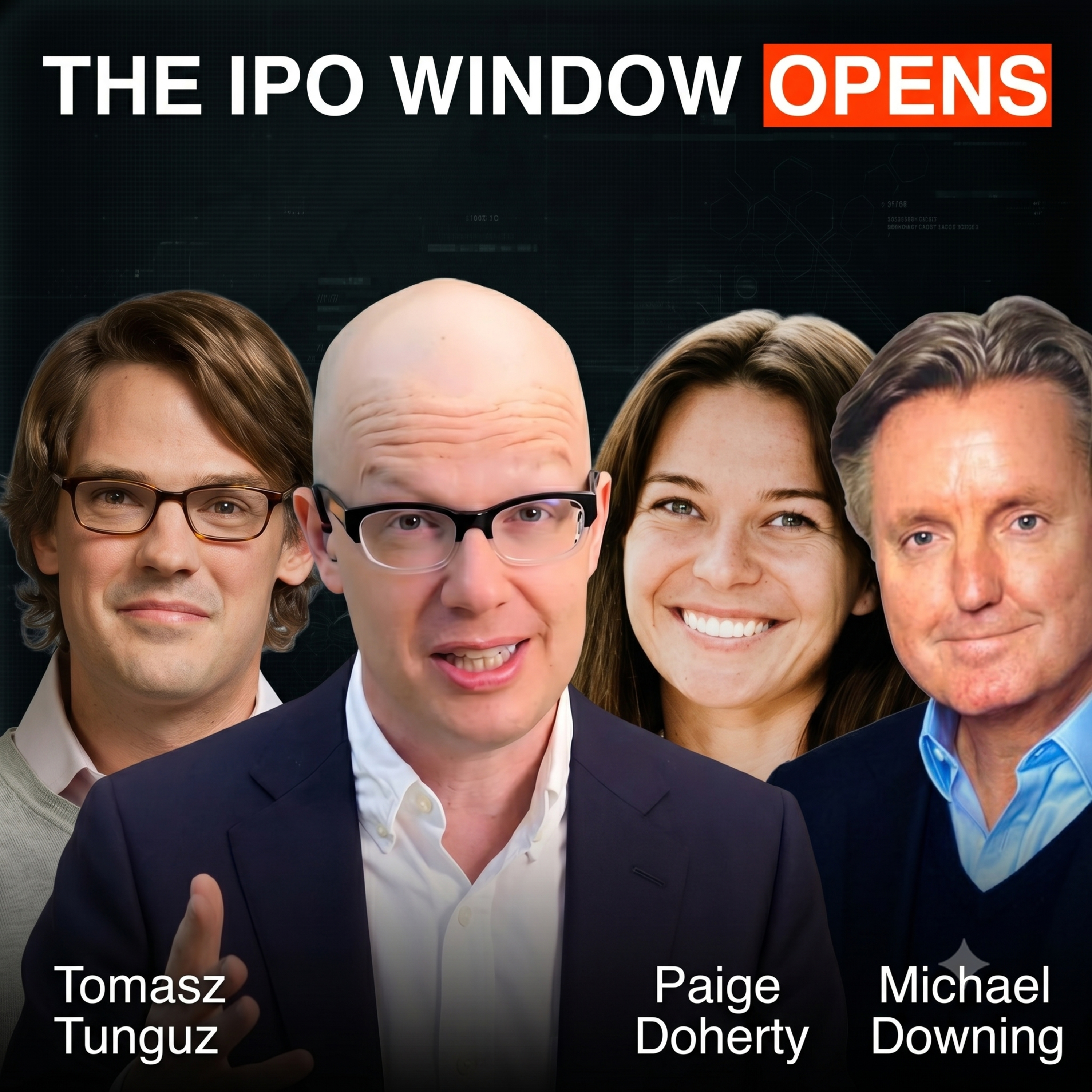
Hello and welcome back to Twist. Today is Wednesday, June 10, 2026. And if it's a Wednesday here on Twist, you know that means it's venture capital roundtable time. This week in startups is brought to you by netsuite. The business landscape is very chaotic right now. That's why you need NetSuite by Oracle. Get the free business guide Demystifying AI at netsuite.com Twist Deal Founders Scale faster on Deal. Set up payroll for any country in minutes. Hire anyone anywhere, get visas handled fast and get back to building. Visit deal.com twist to learn more. And Squarespace. Turn your idea into a beautiful website. Go to squarespace.com twist for a free trial. When you're ready to launch, use offer code Twist to save 10% off your first purchase of a website or domain. The good news is that this week we have some of my absolute all time favorite investors, including the Mr. Tomas Tungus of Theory Ventures. Tomas, you've been on the show before. You're brilliant. What's new in your world and how are you?
- [00:59]
B
I'm phenomenal. Thanks for having me on the show. It seems like the world is changing every day. Excited to talk about it more?
- [01:04]
A
Yeah, I feel like if we'd done this show a week ago, it would have been literally an entirely different topic list, which I think goes to show how fast things are moving along. Which is why I'm glad we have Michael Downing from Castalia Capital. Michael, welcome to the show. Welcome back, I should say. How are you?
- [01:16]
C
Thanks very much, Alex. Thrilled to be here.
- [01:19]
A
Also, I'm glad you're wearing a suit jacket like Jason makes me that way. I'm not the only person who looks like the waitstaff. Appreciate it.
- [01:24]
C
I got the memo.
- [01:25]
A
Good. I'm glad I made it to your house. All right. And then we have, once again, we have Paige Doherty from behind Genius Ventures. Latest fund was 8.9 million fund two, making her one of the rare emerging managers that's really powering through and making it happen even in the era of mega funds. Paige, welcome back.
- [01:41]
D
Thank you, Alex. I'm so happy to be here. I'm excited to dive into the discussion.
- [01:45]
A
Okay, so clearly we are sitting here two days before SpaceX will go public. Supposed to price at $135 per share. No range, just a straight price. Elon's offering one number. Take it or leave it. It's oversubscribed. We also have recently seen confidential IPO filings from both Anthropic and OpenAI setting us up for about $3.5 trillion worth of liquidity, if you add 1.7 plus 8:56 plus 950, whatever it is, adds up to about three and a half trillion. My question for you, Tomas, is pretty simple. Are we seeing three unique companies go out and possibly return a lot of money to investors and should not read into that about what it means for other companies that may want to find liquidity, or is this more an indication that the exit market is finally deicing itself and becoming a bit more amenable to the venture capital cycle?
- [02:35]
B
I think we're going to see broad liquidity. I mean, Reuters announced, I think this morning that the SpaceX IPO was two and a half, maybe three times oversubscribed, which was a stunning number just considering that the sum total of those three offerings that you mentioned, SpaceX, OpenAI and Anthropic, if they raised what they intended to, would be greater than the sum total of all IPOs dollars raised in the previous decade. So clearly there's just huge demand for exposure to AI and space. So I think that's really telling. And then you're starting to see some other S1s right, bending spoons came out, which is a holding company. They bought aol, which kind of blew my mind. And that business is doing incredibly well on the back of AI. I think about them as like an AI holding company where they buy legacy businesses and then reinvigorate them with AI native coding practices. And seems like there's more IPOs coming. So broadly speaking, broadly, it looks like it will be a very good year. 2026 will be an excellent year for liquidity.
- [03:37]
A
I mean, I'm here for it. The Bending Spoons ipo I didn't bake into the docket because it felt almost like, I don't know, Michael, something akin to like a, a PE roll up, but done under like a startup auspice. It's kind of an odd situation. Did you read that S1?
- [03:49]
C
I didn't read the S1, but I'm familiar with the company. I mean, it's a kind of IAC type of model where they've, you know, found slightly distressed businesses out there, kind of assembled them, fixed them up, you know, did some kind of fixer upper work and now taking it public. I think it's interesting, we'll see how that does in the public markets. But I agree with Tomas that the liquidity that's about to come into the market is going to be enormous. And there's a ton of companies lined up potentially to try to Jump through the window here.
- [04:20]
A
There are so many companies. I'm going to do an ad really quick for the live show. Watch this. There's so many companies going public that you may lose track of all the names that are putting out IPO filings or announcing major, major deals. So that's why you should get yourself a Plod pen. Plod's excellent technology is a great way to keep track of your notes while you're out and about. Just push the button, get a little haptic feedback. It takes notes for you, syncs them to all your computers, and that way, no matter what you're talking about with whoever, you won't lose it. It's the AI era, everybody. We're getting recorded, so get recording yourself. You can go to plod, plaud AI twist and use the code twist to save 10%. Jason loves plod. I love Plod. That's why it's on my wrist. Thanks, Plot. All right, Paige, so I want you to weigh in on this because I think if one of your report codes exited to bending spoons, it wouldn't be the outcome you're looking for. No one wants to see a Vimeo style acquisition from their own kind of leading lights. So I'm curious, what are you seeing in terms of inbound M and A interest or founder interest in outbound M and A from your own portfolio?
- [05:16]
D
We're still early on, so I started buying Genius around five years ago, so these discussions are starting to take place. We saw the acquisition of one of our portfolio founders, Magna, by Kraken, earlier this year. In terms of inbound interest from our portfolio founders, the ones that are getting the most interest are usually have a deep technology that incumbents are interested in acquiring before those companies get much larger. I think what we're seeing is there's a lot more frenetic energy around how fast these companies can grow. So we're definitely seeing that. From my perspective, I know you're only
- [05:53]
A
on fund two, but I think it's actually a useful kind of timeframe. A half decade is a long time in the AI era page. Are you seeing just aggregate growth rates for your port cos at the same stage over time increase? Because it feels like from watching these companies that they've. Okay, tell me about that.
- [06:10]
D
Yeah, so I think one of our biggest learnings from fund one to two was going really deep on the markets. And one of the things that we found in how the markets are changing is that the bar for IPOs has continued to rise in terms of revenue across the Last hundred most recent billion dollar plus exits, the IPO specifically, the average revenue is between 300 to 500 million in annual revenue. And so as we look at earlier stage companies, what we started underwriting to was asking those questions about the market much earlier on. And I think that's true of most early stage investors as well. But what that's resulted in is when we look across our portfolio, especially at the AI native companies, we're seeing growth rates at like 10x with like 100, 100x plus in a year from a revenue perspective. So we're definitely seeing that in our portfolio is that has. Well, I guess like one of the core metrics look at is it used to be like you could go 3x and raise a great series A, and now I feel like it's more you grow 10x in a year and raise great series A.
- [07:19]
A
Just to be clear, you're saying that if you have a 3x a year behind you and you go in to raise a series A, you're kind of middle of the pack.
- [07:26]
D
You might not get the best terms that you want to see. Yeah.
- [07:28]
E
Wow.
- [07:29]
A
All right, Tomas, back in the SaaS era, if you came to NAVC with 3x trailing result and your cash burn wasn't, you know, pre IPO box, people would literally roll out a wheelbarrow full of $100 bills. Why? Why are expectations up so much higher than they used to be? And is that a sustainable level of growth? Or are we in kind of a moment in time in which technology is shifting enough that we're going to get a particularly strong crop of startups, but this won't be the case in say five years.
- [07:57]
B
The companies are growing faster. I completely agree with Paige. One of the reasons is many companies are selling to labs and the labs, the contract sizes to the labs are measured in tens of millions to hundreds of millions. And so a single contract can grow the business 10 to 20x to 50x. And the dynamic, there is a competitive dynamic. Access to a particular technology or a particular data set can meaningfully move share with a single model release. And that can drive market cap by say 10 or 20 or 50 billion. And so the willingness to pay and the urgency associated with the procurement of those systems or data is extreme. The other dynamic that's really important is corporate America. Broadly, every board, right, this is not new. Every board is now pushing towards AI. And so the budgets are new, they're net new. I think Morgan Stanley ran an analysis, more than 50% of AI budgets are net new. Some of that is coming from future labor spend. In other words, we won't hire additional people and labor spend is three to seven times larger than software spend. So both of those dynamics are at play.
- [09:01]
A
All right, we're going to get into more about the realm of corporate AI spend in a minute, but I want to go back to what you said about these startups are able to sell to the AI labs and therefore drive a low a faker contract, dramatically increasing their growth rate. That makes me slightly worried and I'm not a person.
- [09:16]
D
I was going to say that's actually not where we're seeing growth happen. It's more like in companies that either like got skipped over in the software waves before that are now interested in buying AI applications. I might preface this with like, we mainly invest in application layer companies. So I think that's true of some of the more like infrastructure developer tools, even perhaps like chips and energy. But it's happening on the application layer as well. And I know you've invested in lots of companies in that space.
- [09:47]
E
AI tools are making it easier than ever to run your own business, even as a solo founder. But you still need a beautiful, beautiful, attention grabbing website to help your new company stand out in a very crowded field. And you don't want AI slop. Nope. You want to use Squarespace. That's the easiest and fastest way to turn your idea into a real business. Because the team at Squarespace cares deeply about design and functionality and a plain looking or generic or AI slop website, man, that's going to be a red flag for your customers, for your investors and people who want to come work for you and join your team. But Squarespace will, will take all the guesswork out of designing your first website with the blueprint AI builder, which has been finely tuned to make beautiful websites. Squarespace isn't just going to help you make a new web page either. They're going to be your all in one platform for launching your business. They're also going to help you set up your email. They're going to handle invoicing, paperwork, all your needs. Go to squarespace.com twist for a free trial and when you're ready to Launch, go to squarespace.com twist for 10% off your first website or domain purchase.
- [10:47]
C
Yeah, yeah. I mean one thing we've seen is especially in AI infrastructure and kind of application infrastructure, these companies that grow to like 100 million in revenue really quickly, it's incredibly frequent is what we've seen. So for example, one company that we're working with now they only raised a $4 million seed round. They're at $120 million revenue run rate right now. And for those founders, you know, they're like, should we raise money? Do we need to raise money? You know, should we go through that process? And you know, it's a totally valid question. Like at that point, I think they're making 750k a month in free cash flow.
- [11:24]
A
Okay. But I do hear from some people that raise quick successive rounds that they weren't looking to raise, but they went ahead and did it anyways. So. So, Michael, when you're kind of worrying about dilution versus maybe capital that accelerate that already impressive growth rate, where do you kind of come down on the advice side of things?
- [11:38]
C
Well, I mean, this is where the kind of balance of power has shifted, right? I mean, AI has created a lot of different impacts in the in landscape, but one of them is when you can scale a business that quickly and you've only raised 4 to 6 million dollars previously. I mean, you control your own destiny quite a bit. And so of course you have people coming in to preempt and offer crazy terms and so on. But it feels like founders have become more savvy and just more wise about what they want to do. I mean, obviously some are jumping in and taking the, you know, $75 million round on a $1.1 billion valuation, but we've seen more and more of them really think about, are there other ways we can go about this and maybe not the traditional route.
- [12:20]
A
I mean, I would sell 6% of my company for $75 million. I mean, that, that doesn't break my leg or pick my pocket and I can afford to buy a Goldstream 600.
- [12:29]
C
So yeah, I would love to do that.
- [12:31]
A
Yeah, it's a great time to be a founder with a hot company. I gotta say, I want to get to the founder point in just a second. But before we move on from the IPO week, I'm curious if you, if anyone here who doesn't already have exposure to SpaceX shares is going to go ahead and try to get allocation in the ipo. I'm only asking because the audience wants to know. And by the audience, I mean me. So let's start with Tomoz and go around.
- [12:53]
B
I think I'm going to wait. I'm sure there'll be a huge surge and then it will come back down and trade. So I'm going to give it a couple a quarter or two before getting some exposure.
- [13:03]
A
All right, Michael?
- [13:05]
C
Yeah, same. I'm Going to wait until the midterms, just after the midterms and, and then I'll buy in and put some, you know, hopefully anthropic open air and Space X and in my kids accounts basically.
- [13:19]
A
What, what hinges around the midterms that you think could impact the SpaceX business? Because I can make a joke about why I think that might be the case, but I'm curious if you can kind of put that into more concrete terms for us without getting in too much trouble.
- [13:32]
C
Well, without getting in too much trouble. You know, a number of my friends are kind of close to some of these companies and particularly SpaceX. And so the expectation is that historically midterms and shifting of kind of political views can certainly impact the public markets. And I think in this case they're expecting that there may be a little bit of a reset. And so I personally think that's pretty likely.
- [14:00]
A
All right, that was. See you didn't get in trouble and you got your point across. That, my friends, is media Training in action. Ten points. All right, Paige, over to you. SpaceX. How much are you buying?
- [14:10]
D
I think I may wait. I mean, I guess what I've seen in the public markets is there's an incredible amount of volatility based on narratives like we've seen this play out. But as I was reading the S1, one of the things that was, that surprised me was the focus on energy as the core bottleneck of AI. And I guess like I hadn't learned that they were like one of the core points was we're going to use the sun to make energy for AI. And I thought that was really interesting. So I think I'm going to wait until the lockup period or maybe earlier. We'll see.
- [14:49]
A
Wow. Wow. I really thought it was going to be two. I'm going to put in a flyer on this and one conservative. Not all three of you. If I lowered the price to 1 trillion, would your answers change?
- [15:00]
B
No doubt.
- [15:00]
C
Maybe.
- [15:02]
A
So it's a pricing question. And the thing is, I don't even have a dog in this fight. I'm not trying to cast stones or anything. I don't know how to value an Elon Musk company. So I don't even know if there's a right or wrong answer because having watched Tesla over the years, people are valuing it the way they want to and that's fine. It doesn't track fundamentals the way, you know, Tomas and I used to track, you know, SaaS multiples. Right. So it's a little bit more Esoteric, you might say, but I'm very, very curious. Paige, though, sticking with you, if you had to pick, you know, if you had X dollars to put into one of the three IPOs, SpaceX, OpenAI or Anthropic, which one would you pick?
- [15:35]
D
Anthropic. I've moved so much of my AI workflow over to Claude and been, like, super impressed by Claude code. So, I mean, that's like my personal.
- [15:48]
A
Does anyone disagree with what Paige said? Because I think that's probably going to be the answer, but I figured I would give you guys a chance to say no to Mars.
- [15:54]
C
Michael, I have a little bit different answer there, which is. And I love Anthropic and I of course, use the product, but I also use OpenAI's products and ChatGPT, et cetera. We're obviously in this kind of, to quote Geoffrey Moore, we're crossing the chasm with AI, right? Like, all of us in Silicon Valley love these tools. We think it's cool we can keep up with the two or three announcements per week of new releases. Nobody else outside of 25 miles from here even knows, you know, what it's about and what's happening. I mean, it's, it's, it's, you know, a different world out there. And so between OpenAI and Anthropic, I think one of the most interesting things that we'll see is, you know, what is going to be required to fully cross the chasm and get adoption going, you know, amongst a broader set. I do think what OpenAI is working on this, you know, potentially a headset or earbuds or something that's a consumer device may, if it works and if Jony I've and the team that's working on this, if that actually drives adoption beyond all of us nerds, that could be super interesting. Obviously, it's a big bet, but it could kind of change the velocity of how these two are competing.
- [17:08]
A
All right, Tomas, a billion weekly active users or a chokehold on every enterprise CFO. Which one delights you more?
- [17:15]
B
Well, I think OpenAI. I get really excited about them if they develop an ads model. I think Google is generating about $120 in ARPU average revenue per user per year. I think the information on top of ChatGPT could get you a multiple of that. A whole number multiple of that. And so I'm excited to see what happens with some of these trials, but in the short term, I'd probably take Anthropic. I mean, I'm a B2B guy at heart. And so got to be true to your school.
- [17:40]
A
Well, it's just amazing how I think it was last October I wrote a headline that was something like anthropic is catching up to OpenAI. And it felt so weird to say. I was like, maybe I won't publish this. Maybe I'll change the headline. I'm like, no, let's just go for it. And then by December and then by March, and then here we are today. It's, I think, a testament to how fast things can change. And speaking of which, Michael was talking about founders earlier raising less capital and having more optionality on how they approach fundraising down there. It feels, Michael, like we've seen a shift in the power dynamics between capital and founders. If you go back to the 20002021 boom era, founders were king of the castle. Money is being thrown at them at 100x200x revenue. Then there was a period of time in which founders had to cut, burn and raise bridge rounds and come, you know, kneeling to Sandhill Road writ large. And now it seems like we're going back. So tell me if that's right or wrong and if it is right, how far has power shifted back to founders?
- [18:37]
C
Yeah, well, it's totally true. I mean, I was just looking back two years ago, Jason and I did a podcast with David Weisberg where we were talking about these companies that had grown so quickly, like midjourney, and hadn't really raised, you know, any significant funding. And we speculated that, well, will they even need late stage venture guys? Like, why do you, why do you need to raise this late stage venture? And now I would say in the last four to five months, we know why it's not to hire 500 people and get offices in downtown San Francisco. It's because your token spend is going to be massive. And I've seen this amongst a few companies where they say, yeah, we're raising $25 million. I was like, great, what's the use of funds? And they're like token spent. I was like, oh, you're not doing this. You're not hiring these people and creating this division and whatnot. It's all about the cost of applying AI within the business. So it's a really interesting kind of shift that's going on and how they're spending money and, and also where that capital is going to come from.
- [19:41]
A
The episode that you're referring to with David Weisberg, who's Fantastic, is episode 1903. If anyone wants to go check that out, I'll Have a link to that in the show notes Paige. Jump on that and tell me if you agree to disagree with Michael and
- [19:53]
E
why founders scale faster on deal. That's the deal. You can grow your company without borders and you can set up payroll for any country in minutes. Hire anyone, anywhere, like a modern startup or large company does. And DL is going to get all the visas handled fast so you can get back to building. There is a great talent war that's going on right now and you need people with superpowers for your startup to be competitive, to beat your competitors, to get your products to market. But anytime you try to grow your team with overseas hires, oh my lord, you've got to reinvent the wheel and you got to navigate a tangled web of international laws, regulations and you can't get these things wrong. Folks you want to onboard new staffers in other countries, you want to get them set up on your network nice and secure IT access, all that good stuff. You want to manage their benefits. Trust me, this is all a nightmare unless you partner with deal. They are the people stack for startups. They're going to take care of all the onboarding, payroll, hr, it benefits, everything you need quickly in one place done perfectly. So visit deal.com twist that's D E L.com twist.
- [20:57]
D
Well, I think one thing that can get swept under the rug when we're just talking about like valuations and capital into the business is the relationship that a fundraising round like that unlocks. So if you were to work with a later stage partners. Help. Help. Predecessors go through IPOs, navigate challenging situations, the company's history. I do think there is something to be said for bringing on board really great advisors through a later stage fundraising round. That's what I would say to that point.
- [21:27]
A
So essentially help is the capital and that you think still has a lot of value to those founders.
- [21:33]
D
Yeah, like the guidance and experience of folks who have been through that path before.
- [21:37]
E
Yeah.
- [21:38]
A
Tomas, without gassing yourself up, how valuable is kind of the median vc? This is a completely innocuous question. Stop laughing. What is the value add of the median VC that a founder in a hot company might be able to access? So not your median vc period. People at the more elite firms and so forth, how helpful are they really? I think.
- [22:00]
B
Well, I think venture capitalists are really helpful in particular situations. Right. The dynamics around acquisitions, dynamics around IPOs, anything to do with capital markets. I think broadly speaking, they're a huge help because they're on the side of the company and can represent their interests and should all have a sophisticated view. And then there's sort of a gradient of what are the introductions you can make, which customers can you introduce me to, how do you fill out the board and then how do I navigate certain situations that arise within the life of a company. But I think on the whole we've seen later stage investors being extremely helpful. And if you wanted to be unbelievably reductionist about it, through an ipo, you are transitioning from a private investor base to a public investor base. And ideally you have crossovers that are investing in private and then are key members of the investor base through IPO and then beyond. So I think they serve an important function.
- [22:57]
A
Yeah, I mean, you can always notice when a company is going to go public because they've had Fidelity on their cap for 24 months and shockingly enough, they file. I mean, who could have seen that coming? I'm actually glad you said that, Tomas, because I think it's actually a good point. I think people get a little bit too productionist in their thinking about VCs and reduce the job to just capital allocation and then shutting up. But I do think that a lot of founders go into this game not as a repeat founder. They haven't done this dance before. They haven't taken a company through acquisition offers, dealing with board composition and so forth. And so I think having a bestie that's done this before with you makes a lot of sense. But that doesn't mean you need five of them, I don't think. And so I wonder back to Michael's point about making, you know, capital decisions based on other terms than just, you know, burn. I wonder if we'll see a even more concentration of partnerships between founders and VCs and reducing the number of them as companies maybe need less money to scale unless they blow out their token budget.
- [23:50]
B
I think it's a different manifestation, which is the board and the voting construct, where you see founders having tremendous voting control over a business. Rather than shrinking the size of a board, you still need an audit committee chair and a nomination, governance and then a compensation committee chair. So there's just a certain number of people on a board, but you definitely see founders with tremendous control over the board. And that I think is you're going back to a point that we were talking about before, a sign that echoes, say, 21 of how much control they have over a business.
- [24:23]
C
Alex, you bring up a really good point though, which is kind of interesting. Obviously we've seen over the last five to seven years the entry of new capital sources. So the crossover funds, some strategic funds, even large sovereigns coming in and participating in the later stage rounds of these companies. And so Tomas point earlier, it's possible that the role of the VCs and, or the composition of the later stage VCs is kind of a moment in time when founders have the options to load up and go to the next level of capital because there's more of those sources, be it sovereigns or crossover funds or whatever it may be. But it may just kind of change the choreography of how they scale these companies. And there's some pretty specific examples, Cloudflare being one of them, where it's a disproportionate amount of the capital that's come in is not from venture.
- [25:20]
A
Yeah, we'll get into why that's the case in a second. But you're telling me that essentially Tiger is not dead and that the crossover story is not over? Because I feel like for 18, 24, 36 months there, the idea of seeing all this quote, quote, tourist money coming into tech was written off again.
- [25:35]
C
Well, there's the crossover guys, there's your T. Rowe Price fidelities, others that you mentioned, there's Blackrock, Blackstone, and then there's the Mubadalist G42s and, you know, the milieu of kind of sovereign funds and sovereign spinouts that are getting wiser, smarter, and more aggressive about getting involved earlier. So I think that changes things a bit.
- [25:55]
A
I'm glad you said Mubadala, because if you can't say Mubadala or Tamasek, you pass the shibboleth test and therefore you can't come on the podcast. You have to be able to pronounce them correctly. And I learned that in a Tomasic conference room once when I butchered it and it was corrected by every single person in the room. So. Oh, geez, now you know, if you're listening to the show. All right, here's. Here's the thing, though. If people are raising money to go out and amp their token budgets, right, to cover their token spend, why do we need VCs at all? Why shouldn't anthropic and OpenAI just meter out tokens in exchange for equity? Cut out the middleman, Paige.
- [26:26]
D
I thought that that one of them was doing a program quite similar to that. I mean, like, we have partnerships. Yeah, Yeah, I think that's very interesting. I think we're starting to see more experimentation around spend because there's like a more of a clear line of return. I would Say so, yeah, I think it would be interesting to see OpenAI move more deeply into that. I mean, they also do have quite good partnerships programs. Like we have partnerships with OpenAI and Anthropic, and that allows our portfolio companies to access certain amount of tokens. And I would say they've been pretty aggressive about that for good reason. As those companies grow larger and spend more on tokens later on, it's a great acquisition for them.
- [27:14]
A
The thing that I missed that everyone just reminded me of is the OpenAI pitch to Y Combinator companies offering $2 million worth of tokens in exchange for equity on essentially, it's a saft, a simple agreement for future tokens.
- [27:27]
C
I mean, there's this notion of tokens, AI tokens for equity, the financialization of tokens, but then there's also the financialization of pur compute that's happening. And I don't know if you guys have seen this, but there's been a couple of funds who announced that basically, you know, they'll say, oh, I'm investing $20 million in a company, but half of that 10 million is actually in the form of compute. And so in a world where GPU hours.
- [27:52]
A
Michael.
- [27:52]
C
Like exactly. GPU hours for equity. And so, you know, this is really interesting because when you're kind of raw materials for what you need to actually build your product or deliver, your product becomes the currency. The financialization of compute and or tokens, that could create a very interesting environment and bring in some different participants for sure.
- [28:14]
A
So then the closer to the metal you are, the better of a VC you can be. Because if neolives are going to dole out compute GPU hours for equity and OpenAI is offering tokens, I guess beneath that's offering electricity access for equity at some point in time. Like, how far can we go down
- [28:29]
C
this rabbit hole eventually if power is the bottleneck, you know, potentially.
- [28:35]
A
This is what I love about the current moment in technology. Time. Everything seems completely unsettled and shifting. And if you go back to the SaaS era, it felt like it is entirely solved. Like you wanted to triple, triple, double, double, double. You wanted to have rule of 40, blah, blah, blah, blah, blah. And now everything feels upset. And so I guess, Tomas, is that why we've seen founders recently airing a bit of their venture capital dirty laundry in a way that in all of my years of hanging around this world, I haven't seen. It feels like founders are almost less afraid than they used to be. And I wonder if it's these dynamics that are Leading them to be a little bit more fearless when it comes to sharing spicy anecdotes about your team.
- [29:14]
B
Yeah, I think it's. It comes and goes, right? I mean, we had Valleywag and then there was Kash. When I started, there was a website where you could anonymously rate venture capitalists.
- [29:23]
C
That was, that was the fund idea. That was a DAO. Adeo created that site in 2006. Very spicy takes on bad behavior and meetings and so on.
- [29:33]
A
I think you would get sued out of existence today if you did that, like instantly. Yeah.
- [29:38]
B
So it's pretty sure he did get sued, did he? Yeah, I think it comes and goes. You know, it's kind of cyclical and I think it's. There's a cathartic, there's a catharsis that happens. There's kind of a big release of emotions every once in a while. That's healthy for the ecosystem.
- [29:53]
A
So this is just a Dam breaks, we'll rebuild the dam and everyone will kind of go back to normal.
- [29:56]
E
If you're not using AI tools to make your team more effective and increase your productivity, trust me, you are being left behind. Sitting on the sidelines is no longer an option. No more waiting. With NetSuite by Oracle, you can start putting AI to work for your company. Today, NetSuite is the number one AI Cloud ERP and it's trusted by over 43,000 businesses. It's not just an AI add on or a chatbot that sits in your browser. No, this is a unified source of truth that brings together all the data you need to run your business. From software to IT services, to healthcare equipment manufacturing, financial services and many other great American industries. NetSuite delivers a customized solution for your business. If your revenues are at least in the seven figures. Get your free business guide demystifying AI at netsuite.com twist the guide is free to you at netsuite.com twist okay, because
- [30:57]
A
some of the stories surprised me and I have friends who are VCs. I've been to LP meetings. I've gotten to be in a lot of rooms and I've never seen people falling asleep mid pitch like that blew my mind. And the fact that it was like 10 different stories of napping VCs, like someone asked is there like a plague of narcolepsy going through the valley? And I don't know, Paige, it doesn't feel like that would fly with kind of the modern founder who's in a hurry and has their eye on a pretty big prize. And so I'M curious, how do you manage to keep your eyes open when you're listening to founders pitch you and your fund?
- [31:32]
D
I know I'm usually pretty excited to be on the call, so I don't think I've ever fallen asleep in a pitch meeting before.
- [31:39]
A
Yeah, okay.
- [31:41]
C
Well, I think in fairness, when the markets are high and cranking as they are now, you tend to hear these stories and when they're really low and the stories are slightly different, like, oh, they asked for forex liquidation preference and they brought in Participating Preferred. So you get the unhappy peanut gallery when the markets are terrible. And then you get the I'm feeling my oats and I'm going to talk about bad behavior when the markets are high. It seems like the kind of natural flow of things.
- [32:10]
A
So venture transparency is the it follows the NASDAQ pretty closely. Then NASDAQ's high, everyone's doing well, valuations are up, VCs are on notice, NASDAQ is down, everyone's poor, founders are quiet. Okay, so essentially this is peak share your story mode. Okay, I want to click on one story. And no one here works at Sequoia, so we're totally safe. Brendan from Merkur, one of those AI data companies that's grown to $80 trillion in revenue, had him on the show a while back. Lovely Guy. Episode 21:59 if you want to watch that. He said the quote Sequoia scam is worse than a single horror story. In the last six months, I've seen a half dozen rounds where Sequoia invests in two tranches. Everyone pretends they only did the higher valuation. Founders misrepresent this to their employees and then shop it to angels. And he calls Sequoia's quote blended price as blatantly deceptive. So I'm curious one not to pick on Sequoia in particular, but is this something that's happening broadly, or is this a handful of examples being aggregated into what appears to be a trend but actually isn't? And Tomas, you're the perfect person to answer this.
- [33:09]
B
It's starting to happen more and more. I think it recalls like 2021 where you would have three rounds of financing happen within a single year. We see that. I mean, often you can look at the infrastructures, the service vendors. They're starting to see multiple fireworks and Base 10. There are many other companies because they're growing so fast and now because the anticipation is there. If you're an aggressive mid to late stage firm and you want to get in well, you can Structure it in a way where you can blend this valuation. So I. I don't think it's. I mean, I think it's like. I would guess, like, still 5% of rounds, but.
- [33:43]
A
Okay.
- [33:44]
B
It's not. It's not a red herring anymore.
- [33:48]
A
All right, Paige, have you seen. Oh, Michael, please.
- [33:51]
C
I would just say it's, you know, this particular concept is. Is not really new. I mean, if you had been an entrepreneur starting companies, even all the way back to the late 90s and early 2000s, you know, it was not uncommon that a lead investor would come and say, great, I want to lead the round. Here you are. We noticed that your last round, you know, you had authorized a certain amount to raise, but you didn't raise at all. So do you mind if we take that last couple of million in the last round and then come into this round and their blended cost ends up being lower? So, I mean, you know, I've seen a fair amount of that over the years, so it's not.
- [34:26]
A
Is that generous, Michael, or is that predatory? I can't quite decide. Or is it both?
- [34:30]
C
I think it depends on the situation. If you're super excited to have that lead come in and lead that round, and it helps consolidate and bring together other investors, then you. You may let them put in a small amount in that last round that didn't, you know, fully cap out.
- [34:44]
A
All right, Paige, how often do you see this kind of activity and do you agree with Tomas that is no longer a red herring, even if it's not a kind of the standard route
- [34:54]
D
once in a blue moon. And I think the situations are usually one of two things happening. Like, one, it's like an incredibly exciting company, and there's a lot of pricing power that the founder has and interest and they're interested in. They negotiate with the lead on a certain valuation, and then they have other folks who they want to bring in the round but don't want to take that dilution. And then in other situations, it might be, like, less advantageous to the founder and more pricing pressure from the lead, saying, like, hey, we want to discount on this round. Like, we'll do some of it at a lower valuation, but rare.
- [35:33]
A
So founders probably won't run into this, but you, as an investor, if you're being offered a round at a certain price, how much transparency do you expect the founder to tell you if they have one of these blended leads, let's say, in the same round?
- [35:47]
D
I think it's like. It's a very nuanced question, because usually in your docs, like, you'll have information access and information rights, and not every investor gets those information rights. So I think it is like a nuanced question. Like, obviously, I would, I would like to know, and I, I would like ask about how the round is structured. At certain points, we'll invest before leads involved and so then we'll be pricing our own. But in any situation, it's like, I'm taking a look at, is this a founder we want to work with for the next 10, 15 years? And then also is the valuation at a point that it makes sense based on what we think the potential outcome could be?
- [36:27]
A
This week we saw finally Anthropic Drop a version of its much vaunted Mythos model. It's called Fable 5. It's very expensive. Costs literally twice what Opus 4.8 does. First of all, who here has not played with Fable? I'm just. I presume we all have, but has anyone here not touched it?
- [36:44]
C
I have not.
- [36:46]
A
Michael. Okay, so Michael's the Luddite on today's show.
- [36:48]
B
That's fine.
- [36:49]
A
Paige and Tomasz, first impressions of Fable. I used it, but I didn't really put it through its full paces. So I'm curious if you think it's the step function that some people claim.
- [36:58]
B
I think it's really impressive. I mean, okay, so just to kind of set the context, you have new model releases approximately every 41 days. And most of those model releases on key benchmarks have 1 or 2 percentage points of improvement. This is a 10 percentage point improvement. So pretty fundamental. I ran it through its bases. I had it analyzed three code bases last night, and then was using it to optimize performance. And it did phenomenally well. Absolutely. There's the thanks for the model card. And so you have really some. I mean, the agentic coding going from 13.4 to 29.3 is just an enormous, enormous leap. So it is fundamentally much better. It's a bit slower. You can watch it like it will, I think about it as a central coordinator, where you give it a task and it will federate work to different agents and orchestrate them over long periods of time, manage its memory. It's incredibly effective, but also, like you said, extremely expensive. It's not the most expensive model, though. If you look at OpenAI's Pro models on a per token basis, those are three to four times more expensive than Fable.
- [37:59]
A
But OpenAI argues that GPT 5.5 Pro is token efficient to models. Are you taking that into account?
- [38:05]
B
I'm not taking that into account? I'm just looking at the input and output tokens.
- [38:08]
A
I thought GPT 5.5 was 5 per million in and 30 per million out versus 10 in 50.
- [38:15]
B
No, that's right. But my understanding is that there are certain pro models that are reserved for math and science and that are significantly more expensive and there, there's a tremendous amount of thinking tokens that need to be taken into account. But yes, for general purpose models, Mythos or Fable is the most expensive.
- [38:34]
A
Staying with you Tomas, you know we've talked a lot about how in the last couple of years AI has gotten better. Startups can do more with it either to improve their internal operations, to make better products, better services. We see a step function here. I'm curious if you think this is going to change the quality of what startups can bring to market and therefore possibly increase their growth rates and find even better product market fit faster.
- [38:54]
B
I do. There's no doubt. And you look at what you can build in a day or have the models operate overnight and self improve, it's extraordinary. So yeah, I think the pace of innovation the expect. Maybe put it the other way, the expectation of the software buyer will be that the software is secure, you're selling a suite, not a point solution and the software is improving every two or three days. This is one of the benefits of SaaS compared to package software was you were paying for an ever evolving subscription. You might see a release a month. Now I think the expectation is oh there's a bug next tomorrow morning. I think it'll be fixed.
- [39:30]
A
I mean now when I see people talking about Notion, Michael, I mean they literally like ping the founders and they're like can you please fix this? And they're like aye aye captain, we'll get on it. I presume that's something that's now mostly possible via agenta coding. But you know, Notion has been, I would say one of the leader in AI. We use Notion here at launch every day. What do you see from model improvements moving forward? Do you think they're actually going to help companies like Notion continue to improve at the current clip or is this more of a it'll look the same but just be slightly more intelligent when I prompt it.
- [40:00]
C
Well, I think there seems to be, you know, breakout successes with companies like Notion where they've been able to plug in so seamlessly to Claude and kind of orchestrate and do things in really unique and helpful ways. Which sounds like it's how you're using Notion plugged into Claude and other kinds of tools. And to me it's like a separation, you know, kind of a tale of two cities. There's the applications, we're figuring out how to perfectly blend in with the LLMs and kind of core models and make their product that much more valuable. And then those who are struggling to figure out how they coexist and work with the larger models. And it's interesting to watch for sure.
- [40:42]
A
Yeah, I'm curious to see what people will build. I've seen the usual slew of demos like, oh, he built a horror first person video game in one shot. Oh, look, it did my laundry for me. Oh, it's, you know, took my boyfriend out to dinner for me. Just people are very impressed. But I'm always kind of curious like what's the, what's the second week of this coming back to, you know, Tomas's wait for the IPO for SpaceX to see everything always looks really impressive. Day one. So Paige, do you think that your port codes that use AI, which I presume is most of them, are going to be trying out Fable in a production setting, or is this more of a, dear Lord, we can't afford that. That would tank our margins and turn us into a shop selling dollars for 50 cents.
- [41:21]
D
I have to ask them. I am curious about this question. I think what we've seen in most of our companies is that there's like a hybrid approach where they would use a lower cost model for something that is, is like more repetitive. And then for higher level reasoning or orchestration, they'll use a more expensive model.
- [41:41]
A
So does that work as well as people say? Just because Tomozzi said orchestration.
- [41:46]
D
Alex is nodding.
- [41:49]
A
He loves to nod while on mute. But I don't want to interrupt, but
- [41:53]
B
yes, it works exceptionally well, unbelievably well.
- [41:57]
A
Tell me how it works.
- [41:58]
B
Yeah, yeah, so I'll give you an example. So let's say you have a repetitive process for like updating your CRM or answering a particular email. What you can do is you can have a state of the art model, create what's called a skill, which is in markdown, which is a text file. This is how you do this. And you can pass that from. And I've done this, and I've done this where I can get 90% of the things I do with AI on my laptop to run on a local model on my Mac. And that has meaningfully reduced my overall token spend. And as I add skills, I've gone from 65% to say 91% as of yesterday in terms of local model inference. And then Stanford released a study yesterday, the day before, showing across a broad distribution of different skills. This is very true. So I'm a huge believer in this. Whether it's like model distillation or skill distillation, this will be the architecture for most applications.
- [42:55]
D
We're going back on prem.
- [42:57]
A
We're going back. I mean, maybe, because I think it's definitely happening.
- [43:01]
D
Because I think also if you look at the cybersecurity concerns of running some of that information in the cloud all the time, it does make a lot of sense. Especially we're seeing that in manufacturing use cases because they're one of the biggest targets for cyber threats.
- [43:15]
A
So explain that to me in more practical terms. Are we talking about small language models running on air gapped hardware or is this more just like we have a Dell computer in there, we can slap Quinn 3.7 on there and just have a good time.
- [43:27]
D
Well, so for example, one of our portfolio companies is a company called Miniva and they build applied AI for the factory floor. And the founder was previously at DeepMind and studying embodied AI. And so they use video to robotic action models, which I'm really interested in the continuing application of multimodal AI. So goes beyond just text to text input and output, you use about five
- [43:53]
A
terms, five big words.
- [43:54]
D
Yeah, I'll use some smaller words.
- [43:56]
A
No, no, you're fine. I just want you to explain them for everyone listening who is too lazy to google them as we talk along. So break that down into little person some words please.
- [44:03]
D
Okay, sure. So a factory operator on the factory floor. I'll give you an example from one of their early customers at a candy factory. So originally there was someone who had to individually check every single candy bar for defects as they went down the line and then press a button if there was a defect. And so what Miniva does is they have agents that do one specific task really well on the edge, so using off the shelf hardware and they can use Miniva software to basically do that task now. And what's really interesting is the folks on the factory floor are like, that's great. Like that's not the task I wanted to do. I wanted to help the factory run more efficiently and do higher level work. And so they're actually coming up with new ideas of where to use Miniva on the factory floor.
- [44:52]
A
So we don't need to use Fable 5 to see if the Hershey's with Alden bar is a rectangle or a circle, is your point.
- [44:59]
D
Yeah, well, what's interesting is like when you deliver a model, it's not going to be fully trained because you need that like actual in, in real life experience to fully train a model to be great at something. And this I have this like thesis around hyper specialized AI where you know, these models are great at general intelligence, but to get them really, really good at a specific application task, they need a lot of data that is stored, you know, somewhere in a company or on a factory floor in real life.
- [45:29]
A
So I'm who builds those because on one hand you think that the companies, the customers who have the data would want to be able to take a model and then bring their data to it. But also at the same time SaaS companies who sit on top of so much customer data want to build the AI workflows and therefore maybe also tune the models. So Paige, where does the value accrue in that setup?
- [45:48]
D
I actually think that it's more new companies and startups like what we're seeing. I think vertically is still very early on in the commercialization stage. We've been following the space since 2021 but as the models have gotten better there's been more and more applications. So I actually think that a lot of this is accruing in startups. We've seen some larger incumbents move into this space but ultimately it's challenging because you have to almost retrofit that software to fit with your existing company. So I think definitely these AI native founders are having have a strong advantage.
- [46:23]
A
I want to get to Michael in a second, but I need to ask Tomas a question. Tomas, does the space that makes a skill MD file different from an agent eventually collapse to zero?
- [46:34]
B
I don't think so. I think that's the domain of the application layer. I think if you're like a SaaS application, whatever, an AI software company today will be in the business of figuring out the managing a contacts database, the standard operating procedures associated with something, building the skills and the instructions and then selecting the models so that the customer can operate with state of the art AI without state of the art AI prices. And what do I mean by that? It's possible to run HubSpot entirely through Claude Fable 5. You'll pay for it, but you don't want to pay for it. So why don't we just condense that and then have an application company bundle that intelligence into a software application, diffuse it across a whole bunch of different people. I think, I think that's the future of the application.
- [47:22]
A
Michael, weigh in here on where you think the value is going to accrue across the application layer models, tune models, and private data sets.
- [47:28]
C
It looks like right now there's so much assembly required to really get these verticalized solutions to work in specific scenarios. It feels like the companies, the startups that can just create the kind of simplest, easiest onboarding and packaging of the orchestration, the workflows and package it in a way to where non Silicon Valley people can apply it, are going to be the ones who are moving fastest. And I think it speaks to why is OpenAI and Anthropic spending so much time and money building out these external consulting organizations with Accenture and Blackstone and all these guys? It's because there's a lot of assembly required to get this across the entire business landscape. And so I think you can't minimize that. And Silicon Valley has been great at creating companies that just dumb down and make the experience much simpler and easier. And I think that's thematically going to be an important concept going forward.
- [48:37]
A
Do you think we're still going to have These private equity AI lab partnerships in 10 years time, or is this simply just. We're going to bridge this temporary chasm in AI deployment that is simply a artifact of a immature technology reaching the market before it's fully baked?
- [48:57]
C
Well, I mean, it looks like we're going to have it for some period of time, but that period of time is really, can we materially impact adoption? Right. Because the amount of capital that's been raised, as we all know, the amount of capital that's about to be raised from the IPOs, you have to begin to create tangible ROI at a certain point, especially after you're public.
- [49:17]
B
Right.
- [49:18]
C
And so at that point, there's a measuring stick. People want to see the numbers. And so I think they're on the clock to be able to prove, hey, there's tangible ROI coming from this industry and this industry and these companies. And so they're just doing everything they can to load up and increase the likelihood of that adoption and kind of successful, tangible ROI being validated.
- [49:41]
A
All right, we're going to scoot through a couple of topics really quick before we run out of time, because there's a lot more I want to get you guys on. First of all, Tomas, if you look at openrouters data and you see what are the most popular models in the last week, the names are Deepseek v4, Flash, Mimo v2.5 from Xiaomi, Hi3 Preview from Tencent, and then Minimax M3 from Minimax. I view that as startups being Intelligent. Going back to our model routing question and kind of choosing what's the er, model to guide things that startups, even though they're very AI intensive, might already have in place ways to offload some compute away from these kind of frontier leading models. And therefore they're not going to get whacked by the cost concerns we've seen enterprise customers scream about for weeks now. Am I correct there or am I being too optimistic about where startups have been deploying their AI inference in the last six months?
- [50:30]
B
No, I think you're exactly right. You're seeing a lot of shift to open source models. I think it's why it's critical that There's a dynamic US open source model ecosystem. Google's pushing in Nemotron, RC, Nvidia. I think Nvidia's committed like 23 billion to open models. So open models are incredibly important for the ecosystem. I think they allow application companies to compete with the labs, just like we were talking about. And then if you look, we were analyzing the data about six months ago looking at open source adoption. The very first companies to adopt open source models were the ones with business models with small gross margins, which makes it makes sense, right? Like if I don't have a lot of money to spend on infrastructure, I'm going to go and buy commodity AI. Let's call it white label AI.
- [51:12]
A
Wait, negative gross margins are bad. Cursor, Tommy, Those are great.
- [51:15]
B
Yeah, it turned out pretty well, but yeah. So wherever, when there's a need and the market fills the beauty of capitalism, shout out capitalism.
- [51:25]
A
All right, does anyone else want to weigh in on this before I take us in an entirely different direction?
- [51:29]
C
Just one more point there, which I think Tomas is right. There's also one other part when you talk about where the value is a cruise, which is we're all talking about models and which model am I going to use for this and that? That's obviously going to be abstracted away for the vast majority of people and you're going to show up and say, I have this job, I want to do this thing. And whoever that solution provider will be, open router, you know, might say, great, this is the lowest cost and best model for you to use for that. And by the way, here's the compute that is the most regionally best placed and available and lowest cost for you. And so normal humans are not going to think about these things. It's like, what spark plug do I want in my car? It's like, I have no idea. Just give me a Spark plug. That works.
- [52:09]
A
Yeah. Well, this is why I think that the open router value add, or the moat that it has is its auto switcher that chooses models for you and providers for you. As an open router user, I love that because it takes that off my plate. But it also means that it becomes not just my gatekeeper, but also my tour guide into the world of AI, which I think is going to be a really important door to hold onto. Unsurprisingly, they just raised someone, helped me out here. 113, something like that.
- [52:34]
C
Yep.
- [52:34]
A
In the last month. I forget the exact number. All right, turning the page. Seed prices. Now, I've been a journalist covering venture capital since I was in college, which is getting to be pretty long ago. And if there's one thing that everyone agrees on is that for my entire career, seed prices have been unsustainable. Too high, they're breaking seed economics and no one can make money anymore in seed investing. And then people still do it. So if you take a look at this chart that I now have on your screen, this is some data from our friends over at Carta. And as you can tell, we have reached a new era of seed pricing. If you're on the audio version, imagine a chart that's kind of flat but trending up, that then goes parabolic in the last couple of quarters. And what it shows is that the 95th percentile for seed rounds in the US that Carta can see now have a valuation of $174 million. 90th percentile, 94 million. And those are up from about 66 and 50 back in 2022. So is this what finally breaks the seed market? And Paige, how are you managing to find entry prices into companies that actually are attractive enough to work for your fund economics?
- [53:35]
D
Great question. I mean, I think, like, when I think about it, I think about understanding valuations on a case by case basis. So when we think about the exit potentials of some of these businesses, there are markets where companies that may have been able to charge one price in software days, because they're now doing the work, can charge 3 to 7x. And so that means that down the road there may be an exit outcome that's 3 to 7x, like what we've seen before. So I'd say we, we take like a very case by case approach to investing. I think if you're looking at companies in the same pools that everyone else is, the prices will definitely be higher and we've seen them continuously go up in the past.
- [54:23]
A
Michael, Your fund backs other managers to some degree. So I'm curious, how are your horses in this race dealing with seed prices that to me look not just unsustainable, but just uneconomical for early stage investors.
- [54:39]
C
Yeah. So here's what we're seeing at the pre seed level, which is we're mostly in these emerging managers that are writing the very first check at day zero into these companies from a pre seed basis. It's still, you still see great managers getting in at low valuations at the seed stage. I mean, my take on this, as we track the companies and we see who's doing what, is that that median valuation that you have on the chart perhaps is a little overpriced based on our seasonal place where we are in kind of history right now. But I'm going to take the slightly more provocative angle here. That top 1% or top 5% is likely underpriced because the scale of the opportunity and where we are at this moment in time means that these outcomes are big. We already know that these companies are scaling revenues unbelievably quickly with less resources than ever before.
- [55:39]
A
Well, I didn't think that's most scorching take of the show will come from the other guy in a suit, but here we are, Michael, doing us all a solid. Okay, so putting that in perspective, Paige says that we're seeing outcomes get larger. You're saying that the leading companies might be underpriced. The implication being that the exit they're heading towards is going to be truly staggering. And if I could take that one step further, that the fact that we're looking at three roughly trillion dollar plus IPOs this year, therefore won't be an anomaly, it'll actually become more the norm down the road.
- [56:08]
C
Well, what we do know is that in each one of these movements, be it the late 90s, 2008 to 2015 or now, where we sit at this moment, the kind of destination point in terms of valuation, the outcomes are always way larger than what we anticipated or what we saw in the last run. And obviously we're seeing this now with a $1.7 trillion IPO that's happening in two days and a $985 billion round that anthropic just did. And so we're seeing this in real time. So you have to think that valuations are going to level set to accommodate and or just reflect that the outcomes are bigger. I would just argue the bigger issue here may not be valuations and it may not be, oh, are we Paying more for the same type of companies or the same kind of outcomes. The bigger issue is with these IPOs that are happening and all the liquidity that goes back into the market, we know that the typical kind of LP and early stage VC funds in all of our funds, family offices, high net worths, et cetera, just spent a disproportionate amount of their VC allocation in late stage secondaries over the last two to three years. They're now going to get generational returns for doing that. Are they going to reinvest in small early stage funds that, you know, go for 10 years or are they going to say, hey, this late stage pre IPO thing is the way to go? And I'm just going to continue to really look for those kinds of deals that I think has more of an effect on the market than the fluctuating valuation because it means the source of capital that kind of feeds that seed stage. The pre seed stage, you know, compositionally may not be there in the same way it was in previous years.
- [57:57]
A
The numbers are getting so big. I feel like what the, like the, the Mendoza line for technology poor just keeps going up. It's kind of staggering. Now what constitutes like wealth even, even in my friend group, like the people who worked for Anthropic for a while, like they carry themselves differently in group chats. It feels like they just have more, more swagger to them. But Tomas, the idea that these highly valued seed rounds are not overpriced because of potential outcomes being so large really does put a lot of emphasis then on selection. Because if you back one of these and it's not one of those outcomes, you're going to overpay dramatically. So does this mean that we should see greater differentiation in seed stage returns based on essentially GP discernment?
- [58:41]
B
Well, I think so. I mean, I think the venture capital market's evolving a lot like the public markets did, where you have indexes and then you have concentrated funds. We're clearly in the more concentrated category. Both strategies can work very, very well. But ultimately selection is what matters. Is power law underpinning all of this? And I agree with what Michael said. You look at, I think Venkat published, I think Apropos of Nothing, Vencap published a study. You look at rolling 5 year periods and then 75th and 90th percentile or 90th and 95th percentile exits and you can see them going up in each, in each year much faster than inflation or even venture inflation. So I think that's, that's Definitely true that the returns are there. I think the. And what we're seeing with this, I mean these IPOs is just the liquidity is tremendous. I do wonder, I wonder what happens to the secondary markets. We've seen huge inflows into the secondary markets. Do the secondary markets actually shift to the Next, say, top 20 companies? And will investors want access there? And then the other question is around M and A, right? M and A has been historically very difficult within AI. Now you have a lot of national security concerns and so you have many, many companies with large valuations. The total number of buyers who can afford say $50 billion exit is probably fewer than 10. Right? Yeah. So what do those dynamics look like? TBD.
- [60:07]
A
Okay, just for fun, because you kind of brought it up, do you think that we're going to see any nationalization of the major American AI labs? This has been discussed by both. This is a great list. Bernie Sanders, Sam Altman and Donald Trump. And I'm not quite sure if that's the coalition I expected to see forming, but I'm very opposed to this. I'll just be honest. But I'm curious if I should actually be afraid or not.
- [60:29]
B
I don't know what nationalization really means. I mean, the United States government took a position in intel and that's done very well. Right. There's been some talk of a sovereign wealth wealth fund. We will see what will happen. It's like nationalization, the creation of government appointed monopolies like in the case of alcohol distribution and also telephone networks. I really would not like to see that. I think there's a ton of regulatory capture that exists there. And the history of Silicon Valley is tied to the dual use technologies, where there are technologies that are used both for the government and the private sector. Bell Labs notably coming out of that. So I do think it's important that these major labs do have relationships with government. So I don't exactly know what nationalization means, but on the whole, being a capitalist, I think less regulation and less government involvement in the evolution of technology is a good thing.
- [61:19]
A
All right, we can boil that entire answer down from Tomas to hell no. All right, moving on. Now I have one question for each of you because I picked out my favorite of your portfolio companies and I want you to brag about them for a moment. This is your time to put the founders in the spotlight. And oh, Michael, you're first. So there is a war going on in the Middle east and there was a helicopter that went down and it was captured. Sorry, the pilots were Saved by a drone boat from Saronic. I believe it was a Corsair. And I believe you're an investor in this company. So tell us why Saronic is the coolest thing.
- [61:49]
C
Yeah, absolutely. We're an investor in Saronic via one of our fund position positions, which is Silent Ventures, an incredible pre seed defense tech focused fund. Suronic is just, I mean, incredibly impressive. They've executed like nobody's business. You can see in the valuation of the company and the rounds they've done just how fast that business has moved. So yeah, it was pretty cool watching the news last night and they talk about the Apache helicopter that was shot down and that, you know, immediately two of these autonomous boats were sent out to pick up the crew out in the Strait of Hormuz. I mean it's kind of a, you know, perfect sales video for Sironic. So yeah, we're thrilled about the company. I mean it's, it's a no brainer, you know, that kind of product. But you can start to also see, I mean, just FYI, how these defense tech focused companies who, where the demand and the, the instant revenue for them, you know, is coming strictly from defense. How that application, how that value proposition can be applied in many types of ways. So yeah, it's a phenomenal company.
- [62:57]
A
Shout out to them. Also Vatten Systems, Anduril makes some sea drones and Blue Water Autonomy I think is also in the mix. So it's one of those sectors, one of those startup niches that I think is really, really awesome and more deployed in the battlefield than I thought. I thought Saranic was still bouncing around the harbors to show it off, their cool tech. I did not realize we had enough deployed that two of them could go save some pilots. So I was very impressed by that. Shout out to them. All right, Tomas, you're next. Open source in the AI era. You are an investor in Mother Duck, which is the commercialized version of DuckDB. I actually got to meet them at a recent MCP event in New York. I got to talk to their head of AI, I think. So tell me about why Mother Duck is the right choice in the AI era and why open source will not lose all of its value to Vibe coded infra from the AIs.
- [63:46]
B
Yeah, great question. So Mother Ducky is a company that commercializes an open source technology called DuckDB. DuckDB is a very small analytics database that can scale to just as big as the very large analytics databases. But because you can have many small databases, it's perfect for agents so you could spin Up a million different agents. Each of them could have their own DuckDB or MotherDuck instance and then it's all controlled from a central layer.
- [64:12]
A
Awesome. And how's the company doing? My friend Carly works there, so I've invested into it.
- [64:16]
B
She's awesome. We just had the event at Snowflake Summit where we had dancing ducks outside the Jewish Contemporary Art Museum in San Francisco, right outside of Moscone and just a phenomenal setup.
- [64:29]
A
Oh, I know exactly where that is.
- [64:30]
B
Yeah, yeah, you know where it is. Yeah, the funny shape building. Yeah, yeah. Anyway, so the company's doing phenomenally well. Products is expanding quite a bit. We just launched interactive charts and dashboards and have some more product announcements coming. They're all AI native.
- [64:44]
A
I'm disappointed. I have a mother duck swag item which is two mechanical keys together with ducks on them and I brought them home for my kids to play with and I literally set it on the counter to bring out so I could show it to you. And I forgot it in the house.
- [64:58]
C
Damn it.
- [64:58]
B
That fidget toy is so fun, dude.
- [65:01]
A
More startups should do that. Good marketing technique. Hand out fidgets to nerds with ADD because we will just. We'll take picked six and we'll never let them go. They're fantastic. All right, Paige, to close us out, I want to hear about the progress of actual American reindustrialization. I know you're a backer of Knox Metals, one of my favorite startups in the entire nation. Talk to me about how this is not smoke and mirrors and we're actually going to get some damn cold rolled steel back in the country.
- [65:23]
D
Oh yeah, we are going back to the factory floor. So Knox Metals is a next generation, next day metal servicing platform. I had never heard of the metal servicing industry before. I talked to the founder Zane, who I met four years ago and we reconnected when they went through ic. But basically like there's multiple deca billion dollar businesses in the space, both public and private. And what Knox does is they are like, okay, like if we're building this new defense technology, space technology, we're going to need a supplier that is meeting the demands of these companies that want to move faster and innovating from a hardware perspective. And so yeah, they are. They have built an incredible suite of products that have helped them push metal out the door faster. So they're in Detroit. They just expanded their facilities there and have been cutting steel. If you check out Zane's Twitter, it's, it's really cool because they're posting like videos of their band saws and the team on the factory floor. And they have a big announcement coming out next week, so stay tuned for that.
- [66:32]
A
Michael, thanks for coming on. I really appreciate it. Where can people find more about your firm in case they want to get in touch?
- [66:38]
C
Castalia Capital Very simple, Tomas.
- [66:42]
A
What is the theory ventures URL theoryvc.com theoryvc why not theory VC was it? Take them.
- [66:48]
B
We have that one too. And theory dot ventures. But theoryvc.com is the dot com?
- [66:54]
A
Man, talk about traditionalism in the venture realm. Geez, I thought TLDs were free range now. All right, Michael Tomoz page. Thank you for coming on. Twist is back on Friday. My name is Alex. I'll see you then. Bye.
- [67:04]
F
Thanks for watching this Week in Startups. If you liked this episode, check out more. If you're a startup founder, founder university cohort 13 kicks off this fall. It's a 12 week program that provides guidance on building your product, launching to real customers, and pitching to investors. Top startups receive $25,000 or $125,000 in investment. Apply now at Founder University Twist already have traction. The Launch Accelerator invests $125,000 and connects you with 500 plus investors to help you raise your next round. Apply@LaunchAccelerator Co if you're an accredited investor looking to gain access to quality deal flow. Apply for Jason's angel syndicate@the syndicate.com we find two to three deals a month and check out this week in AI Jason's experts only roundtable with top AI founders and operators everywh week. Find it this week in AI AI. Check out the Twist Ticker, our daily newsletter at thisweekinstartups.com Ticker thanks again to our sponsors for making today's show possible. Follow the show on Instagram Follow the show on X.com this Week in Startups publishes three days a week, Monday, Wednesday and Friday at 5pm Central Time. You can submit an audio or video file question by emailing it to thisweekin.com.