Loading summary
Transcript259 lines
- [00:00]
Sponsor/Advertisement Voice
This message comes from Progressive Insurance and the name your price tool. It helps you find car insurance options in your budget. Try it today@progressive.com, progressive Casualty Insurance Company and affiliates price and coverage match limited by state law. Not available in all states.
- [00:16]
Rund Abdelfattah
Hey there, it's rund. Before we start the show today, I want to make sure you know it's a special week at NPR because it was just giving Tuesday. NPR celebrates this global day of generosity every year, but we've never had a year quite like this one before. NPR is now operating without federal support for the first time in our history, more than 50 years. It's a big change and at such an uncertain time. We can learn a lot from the past and Throughline works to bring you the stories that help us understand this moment. We're so grateful to the listeners who have already stepped up to donate like like Jessica from Arkansas who says Throughline is the greatest deep dive podcast ever. Thank you for all your reporting. Absolutely life changing. Thank you, Jessica. That really, really means a lot. And you all can be like Jessica, too. Please make your giving Tuesday gift right now by signing up for npr. It's a simple recurring donation that gets you perks to NPR's podcasts and and bonus episodes from Throughline. Join us at plus.NPR.org thanks again for your support. Now let's get on to the show.
- [01:41]
Ramtin Arablouei
A sip of Swiss Miss hot cocoa tastes so good and rich it makes me.
- [01:48]
Ruby. What are we about to do?
- [01:50]
Carla Martin
About to make some hot chocolate fam.
- [01:57]
Ramtin Arablouei
It's full of real Wisconsin milk and rich imported cocoa. This is my son, Rumi.
- [02:03]
Carla Martin
Empty delicious cocoa into the mug.
- [02:07]
Ramtin Arablouei
And this is us doing one of our favorite winter pastimes.
- [02:14]
You pour that one making hot chocolate.
- [02:19]
Classic.
- [02:22]
Carla Martin
Just add hot water and delicious, rich.
- [02:25]
Ramtin Arablouei
And foamy Nestle Hot chocolate takes the.
- [02:28]
Carla Martin
Brr out of winter.
- [02:31]
Ramtin Arablouei
This is the one I made when I was a kid.
- [02:37]
What did you just pour in the cup? What does it look like?
- [02:40]
Carla Martin
Cocoa.
- [02:40]
Ramtin Arablouei
What does it smell like?
- [02:42]
Carla Martin
It smells like chocolate. Street chocolate. Yeah, that's stir and sip like you deserve it.
- [02:51]
Ramtin Arablouei
Do we deserve it? Yeah, I think we deserve this hot chocolate. Oh, I spilled some. The only thing better than the way it tastes is the way it makes you feel. Yeah. Okay, so tell me what you feel like now.
- [03:05]
Carla Martin
It just makes my, like, insides warm up.
- [03:09]
Ramtin Arablouei
And what else? What about the taste?
- [03:11]
Carla Martin
The taste? How about the taste? It's hard to describe. It just makes you, like, happy and chocolatey and, like, warm and all fuzzy inside.
- [03:21]
Sponsor/Advertisement Voice
Okay, gang, what do you do For.
- [03:23]
Carla Martin
A warm up break.
- [03:27]
Swiss Miss instant cocoa. You lady.
- [03:31]
Shadrach Frimpong
Oh.
- [03:33]
Ramtin Arablouei
If you also felt warm and fuzzy inside listening to us make and drink hot chocolate, it's not your fault. Hot chocolate has this kind of nostalgic spot in our culture. It's a relatively cheap, sweet, warm drink that was accessible even for a working class immigrant family like the one I grew up in. And now as a grown man, I'm basically passing this tradition on to the next generation. Would you run a mile for a cup of hot cocoa?
- [03:59]
Carla Martin
I wouldn't run a mile, but I would run.
- [04:00]
Ramtin Arablouei
Like, how many laughs?
- [04:04]
Carla Martin
Hold on, like two.
- [04:05]
Ramtin Arablouei
Two laughs for a hot chocolate?
- [04:07]
Carla Martin
Three.
- [04:09]
If the hot coke was fresh, it would be three.
- [04:12]
Ramtin Arablouei
But this is throughline. And so, you know, we're going to ask the question, why? Why does chocolate have this place in our culture? Where did it come from? How is it produced and who is producing it? Usually this line of questioning would send us on a quest that leads into some kind of wormhole that eventually leads to, to a journal article or a lecture or a book or something like that that puts it all together. Well, in this case, shockingly, there wasn't a ton of scholarship on chocolate history.
- [04:41]
Carla Martin
Cocoa is considered an orphan crop in that it does not have the same research resources that we see for things like rice, potatoes, fish, et cetera. And as a result, it is less studied, it is less written about, it is less understood.
- [04:59]
Ramtin Arablouei
This is Carla Martin.
- [05:01]
Carla Martin
I am a lecturer in African and African American Studies at Harvard University.
- [05:05]
Ramtin Arablouei
She's also president of the board of the Institute for Cacao and Chocolate Research.
- [05:10]
Carla Martin
I think part of that is because we treat it as silly. You know, it's like the Willy Wonka fication of chocolate. And it is actually very serious business. And so I appreciate anyone who takes the time to think about it as seriously as we would any other part of our ethical or moral lives.
- [05:30]
Ramtin Arablouei
According to several different market research companies, the chocolate industry is currently worth about $150 billion. And as you might have guessed, it has a complex, fascinating history.
- [05:42]
Carla Martin
Chocolate's one of those things that kids love, and so I'm a big, big proponent of. If we want people to be educated about this, we have to start as early as they get access to chocolate.
- [05:53]
Ramtin Arablouei
This is produced on farms, basically, where sometimes kids your age, sometimes younger, work. Would you give up chocolate if it meant those kids didn't have to work?
- [06:04]
Carla Martin
Of course.
- [06:05]
Ramtin Arablouei
Okay, before you get all, oh my God, why are you ruining chocolate for your kid? First of all, he's used to it. His dad is a journalist second in the course of doing research and calling up experts like Karla Martin, I learned an amazing fact. Most of the world's cocoa, or it's also called cacao, comes from two West African countries, Ghana and Cote d', Ivoire, also known as Ivory Coast. Carla Martin was actually living off the coast of West Africa in Cabo Verde when she first became interested in cocoa production.
- [06:38]
Carla Martin
And while I was living there, I met some people who had returned from that work and who had been disabled by how difficult the work was. I met many other people who had family members who had never returned. And as a longtime chocolate lover, this was eye opening for me. It wasn't something I had been aware of. I wasn't at that time fully clued in to what it meant that my cocoa that I loved was coming from a supply chain that was fraught with these kinds of labor issues.
- [07:19]
Rund Abdelfattah
So how did this happen? How did this troubled supply chain of chocolate come to exist? The story takes us from the vast empires of the pre Columbus Americas to the journey of an early 20th century investigative journalist determined to learn the truth about chocolate. And finally, we'll speak with a young medical student who grew up on a cocoa farm in Ghana. In this episode of Throughline from npr, we take a deeper, often bitter look at the history of one of the world's favorite sweet treats, chocolate.
- [08:09]
Carla Martin
Hello, this is Rochelle from Vancouver, Washington, and you're listening to Throughline from npr. Thank you all for what you do.
- [08:21]
Sponsor/Advertisement Voice
This message comes from Schwab. Everyone has moments when they could have done better, like cutting their own hair or forgetting sunscreen. So now you look like a tomato. Same goes for where you invest. Level up and invest smarter with Schwab. Get market insights, education and human help when you need it.
- [08:40]
Learn more@schwab.com this message comes from Progressive Insurance. You chose to hit play on this podcast today. Smart Choice. Make another smart choice with Auto Quote Explorer to compare rates for multiple car insurance companies all at once. Try it@progressive.com, progressive Casualty Insurance Company and affiliates. Not available in all states or situations. Prices vary based on how you buy.
- [09:03]
This message comes from BetterHelp. As a dad, BetterHelp President Fernando Madera relates to needing flexibility when it comes to scheduling therapy.
- [09:13]
Ramtin Arablouei
I have kids under 18, so like, time is very limited.
- [09:18]
Carla Martin
That's why at BetterHelp our therapists try.
- [09:20]
Ramtin Arablouei
To have sessions, sometimes at night, depending on the therapist or during the weekend. So I think that's what we need to tell the parents. You're not alone. We can help you out.
- [09:29]
Sponsor/Advertisement Voice
If a flexible schedule would help you, visit betterhelp.com NPR for 10% off your first month of online therapy.
- [09:42]
Ramtin Arablouei
Part 1 the Money Tree.
- [09:48]
Carla Martin
Cacao grows on a tree.
- [09:52]
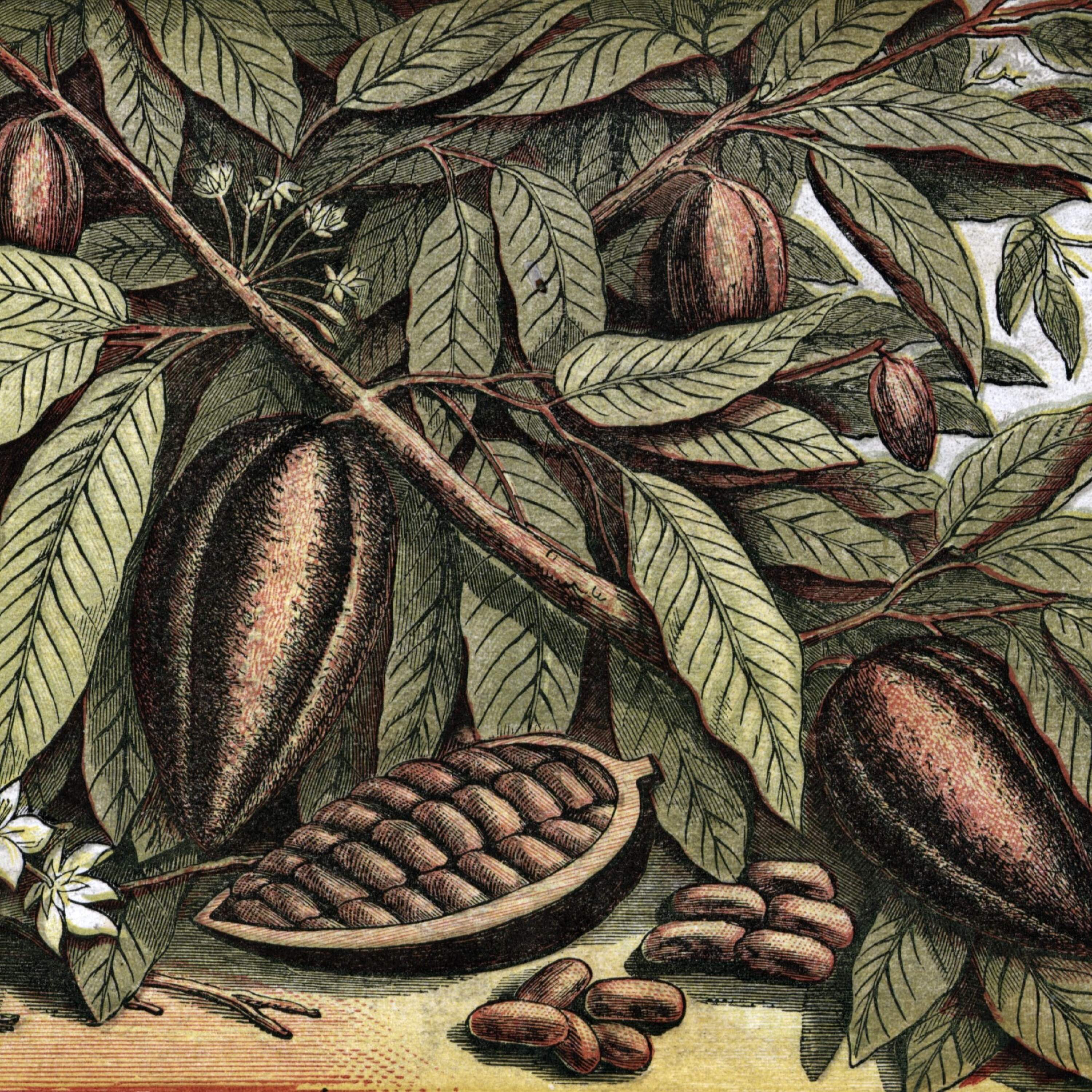
It takes cocoa trees three to five years to begin to produce fruit regularly. The fruit goes on the thickest part of the tree, the trunk of the tree. These fruits take on the shape of roughly like a Nerf football. They come in different colors. Yellow, reds, greens.
- [10:10]
Rund Abdelfattah
The cacao pods have a bumpy outer shell. And when you break into them.
- [10:17]
Carla Martin
What'S inside is 30 to 40 different seeds. And those are what we know as cacao beans. They are the seeds of the cacao.
- [10:26]
Rund Abdelfattah
Fruit, seeds that get processed and mixed with other ingredients to become what we know today as chocolate.
- [10:38]
Carla Martin
Cacao originally kind of came out of the primordial ooze in the Amazon region.
- [10:44]
Rund Abdelfattah
This is Carla Martin again. She's an African and African American studies lecturer at Harvard University.
- [10:50]
Carla Martin
And it then over time, spread into what is today southern Ecuador. We have evidence of its consumption at least 5,000 years ago there. It also moved up the Americas into what is today Central America and southern Mexico. And in that particular region, it took on a distinct cultural significance. It came to be used in four different ways.
- [11:18]
It was used as a food flavoring, it was used as a beverage. And there were thousands of recipes that used cacao in beverage form. It was then also used as a spiritual offering. So it took on an important social significance in these different groups of indigenous people.
- [11:35]
Rund Abdelfattah
For example, cacao would be present at official meetings and marriage ceremonies and was even used as an offering when rulers passed away.
- [11:45]
Carla Martin
And it was used as a currency.
- [11:51]
And that is where the big interest initially came with European conquest of Central America, because cacao was quite literally the money that grew on trees.
- [12:05]
Rund Abdelfattah
By the early 1500s, the first Spanish conquistadors had arrived on the shores of the New World. It was here that they would come across cacao for the first time.
- [12:16]
Carla Martin
The place in the world that produced the most cacao at this time was the Pacific coast of El Salvador, known as the Izalcos region, where the Papil people were producing enormous quantities of cacao. And the Papil people were also producers of something that we today say, every time we say the word, and that is chocolate. So the first recipe for chocolate came from somewhere in this region.
- [12:46]
So they were roasting and de shelling cacao beans.
- [12:51]
Grinding them into a paste, and then adding them with some kind of sweetener. It could be honey, it could be agave, and then also putting in at times, some vanilla. And that is very, very similar to what people who are listening might know of as dark chocolate today.
- [13:08]
Rund Abdelfattah
And when the Spanish brought cacao beans back to europe, they would be used as a kind of medicine for things like fatigue, digestion, bowel function, and so on. Meanwhile, back in mesoamerica, the spaniards wanted to stockpile cacao, since it was used as currency there.
- [13:29]
Carla Martin
Once the Spanish really began the conque, they were granted what was called the encomienda system by the spanish crown that allowed them to effectively enslave indigenous people working on, they called them, you know, cacao orchards. They were a version of plantations. And to require that those indigenous people would produce cacao beans for them in the form of tribute, they, you know, in a kind of cynical way, they promised that they would protect these indigenous people, that they would bring them the catholic faith. Of course, what resulted was utter destruction of their society's mass death, Great deal of violence.
- [14:11]
Rund Abdelfattah
Many indigenous people died from infectious diseases that the Spanish brought with them. It was also during this time that Spain, along with other European powers, began to invest heavily in another crop.
- [14:24]
Sugar cane.
- [14:26]
Carla Martin
Now, sugar plantations are notoriously brutal. Data that we see about enslaved Africans arriving, let's say, say, to the Caribbean shows that when they would arrive during the colonial period, they might live anywhere from five to eight years working on that plantation because the work was so intense.
- [14:47]
Even today, for people who are working on sugar plantations, they equate their energy expenditure to them running a half marathon six days a week. And so this is incredibly difficult work to work on sugar. Now, if we then transfer to what it means to work on cacao, it is actually less overall labor intensive.
- [15:12]
Rund Abdelfattah
And so growing cacao was seen as a way to get more profit out of enslaved people on plantations.
- [15:18]
Carla Martin
It became attractive as something that elderly people could do that children could do, that could be done in a less intense system. That would be on the side of sugar production in lots of places.
- [15:35]
Rund Abdelfattah
The work of growing cacao may not have been as difficult as sugar, but it was still very hard work. First, you would have to pick out the small beans from the cacao pods, ferment them, then dry them for a few more days. And when you consider the conditions and hours people were doing this work, Then it becomes even more evident that it was not easy.
- [16:03]
Carla Martin
If you're doing it for 16, 18 hours a day, six or seven days a week, it is still an absolutely brutal system of labor, Especially when one is enslaved, malnourished, et cetera.
- [16:19]
It was designed as essentially a Complement to sugar production.
- [16:23]
Rund Abdelfattah
And it was only the rich and noble class in Spain that could afford to have cacao, which they often had in the form of a drink. Over time, cacao slowly spread from the spanish royal court to other european kingdoms.
- [16:38]
Carla Martin
There's a long tradition of, you know, kind of marrying a princess to a prince in one country. She would often bring with her A tradition of chocolate consumption and spread it to a new country.
- [16:50]
Rund Abdelfattah
But a new class of people Was.
- [16:52]
Carla Martin
Emerging by the 1700s. There's a growing mercantile class in europe, People who are getting wealthy off of the slave trade and off of the trade in these commodities that are beginning to move around the world.
- [17:06]
Rund Abdelfattah
And by the 1800s, new technologies rapidly change how cacao is processed.
- [17:12]
Carla Martin
Specifically, that comes from the development of the hydraulic press. That's the tool that allows you to make cocoa powder and cocoa butter. It comes from large, larger scale grinding machines that will grind those roasted cocoa beans and allow you to turn them into a cocoa paste and then chocolate and a variety of other machinery. This allows cocoa chocolate to become cheaper as a whole. And all throughout the 1800s, into the late 1800s, demand for the product goes up in europe.
- [17:42]
Rund Abdelfattah
With the invention of the hydraulic press, this chocolate drink could be made faster now. And in turn, could also be sold for less.
- [17:52]
Carla Martin
If we think about britain, for example, in the 1800s, during the industrial revolution, People were encouraged to have tea with some sugar in it As a way of cutting hunger. And the same came to be true of promoting cocoa as something that kids would drink during the industrial revolution, because it was a way of giving them A relatively cheap and energy boost via calories. Also creates a kind of sense of well being in people who consume it. But it was cheaper than other foods at the time.
- [18:24]
Rund Abdelfattah
But at the same time that more people in Europe Were trying cacao or cocoa, Some of the european powers Were losing their grip on their colonies, where most of it was being produced.
- [18:35]
Carla Martin
Latin american and Caribbean nations Become independent from their European colonizers. And European powers Had come to see these extractive colonies as their crown jewels. These were the places that were producing Enormous amounts of resources and wealth for their populations. For the portuguese, that was brazil.
- [18:58]
Rund Abdelfattah
The portuguese were heavily invested in Brazil for its cacao plantations.
- [19:03]
Carla Martin
But by about 1822, Brazil is becoming independent from the Portuguese crown. There has been an intensification of cocoa production. And the portuguese king and queen Are worried that they will lose their crown jewelry as they're planning to move away from brazil. As they take cocoa trees and they plant them in another Portuguese colony. That's Sao Tome and Principe.
- [19:32]
Rund Abdelfattah
So Tome and Principe is an island nation today that consists of two main islands off the coast of west central Africa. It's volcanic and mountainous with a humid climate, perfect for growing cacao.
- [19:45]
Carla Martin
Historically, it was an enormously important place. In the late 1400s, early 1500s, the Portuguese experimented with what would become the model for sugar plantation agriculture all throughout the world by bringing enslaved people as chattel to grow sugar there. So there's already this tradition and population of people in Sao Tome who, who are enslaved and can be put to work working on these new plantations for cocoa.
- [20:19]
They kept enslavement there until the 1870s. So they were enslaving people and they were able to bring them quite simply to so Sumaie and Principe and force them to work.
- [20:35]
Rund Abdelfattah
These islands that paved the way for sugar production would play a major role in the modern cocoa trade, a trade that has historically relied on unfree labor.
- [20:48]
Coming up, rumors and murmurs. Bring a journalist to Sao Tome.
- [20:58]
Carla Martin
Hi, this is Heather from Charleston, South Carolina. And you've been listening to Throughline on npr.
- [21:08]
Sponsor/Advertisement Voice
This message comes from Babbel. Babbel's conversation based language technique teaches you useful words and phrases to get you speaking quickly about the things you actually talk about in the real world with lessons handcrafted by over 200 language experts and voiced by real native speakers. Start speaking with Babbel today. Get up to 55% off your Babbel subscription right now at Babbel.com NPR spelled B A B-B-E-L.com NPR Rules and Restrictions may apply.
- [21:41]
This message comes from Saatva, the official mattress and restorative sleep provider for the U.S. olympic and Paralympic teams. U.S. olympic cross country skiing athlete and Saatva brand ambassador Jesse Diggins talks about how sleep affects performance.
- [21:56]
Rund Abdelfattah
When it comes to my athletic performance, sleep is everything. It is the most important factor in.
- [22:02]
Sponsor/Advertisement Voice
Getting the most out of my training.
- [22:03]
Rund Abdelfattah
And and being ready to race as fast as possible.
- [22:06]
Sponsor/Advertisement Voice
Saatva believes you deserve that kind of restorative sleep, too. Visit saatva.com NPR to save $200 on $1,000 or more. This message comes from Instacart bringing magic this holiday season to the people who make it magic for others. Get delivery and deals on everything you need this season, whether it's a last minute holiday decor, emergency coverage for the holiday party, or just avoiding going out in the cold. Instacart is here. Plus, November 24th to December 23rd is deal month with savings from Your favorite retailers and deals on grocery, electronics, beauty, toys and more. Download the Instacart app to get a little magic delivered today.
- [22:49]
Ramtin Arablouei
Part 2 Nevinson's crusade.
- [23:01]
Bourneville, England, 1901.
- [23:13]
William Cadbury, whose family owned one of the largest chocolate companies in the world, cracks open a sales catalog. He looks closer and reads that there.
- [23:24]
Katherine Higgs
Are laborers listed for sale along with the property and the machinery on a cocoa estate.
- [23:31]
Ramtin Arablouei
The workers from a cocoa plantation being sold like pieces of farming equipment. William Cadbury quickly realized that this sale was from Sao Tome, one of the places where he sourced the cocoa that went into his company's candy bars and famous chocolate eggs.
- [23:49]
Katherine Higgs
And you know, he's very disturbed by this because he's a Quaker and Quakers are, you know, long history of anti slavery Quakers.
- [23:58]
Ramtin Arablouei
For more than a century, they'd fought to end slavery around the world. William Cadbury personally gave money to support anti slavery causes. So this was not a good look.
- [24:16]
Katherine Higgs
So he starts making inquiries.
- [24:19]
Ramtin Arablouei
He demands answers from the Portuguese government.
- [24:22]
Katherine Higgs
The Portuguese basically make the argument that the laborers are freely recruited in Angola.
- [24:31]
Ramtin Arablouei
A nation in Southwest Africa on the mainland that's also controlled by Portugal.
- [24:36]
Katherine Higgs
They sign a five year contract and once they get to San Tome and Principe, they're housed, they're fed, they're closed, they're paid. Therefore this is not slavery.
- [24:48]
Ramtin Arablouei
William Cadbury knew that so Tome was a major source of cheap, high quality cocoa that he needed for his growing chocolate empire. But he also didn't want anything to do with slave labor. So he reported the Portuguese government's response to the board of directors and continued to push the British government to do something about it. Then in 1904, a veteran investigative journalist named Henry Wood Nevinson reached out to.
- [25:13]
Katherine Higgs
Him and says, hey, I'd like to try and figure out what's going on in San Tome and Principe.
- [25:20]
Ramtin Arablouei
Also, before I forget, this is Katherine Higgs.
- [25:23]
Katherine Higgs
I'm a professor of history at the University of British Columbia in Canada.
- [25:28]
Ramtin Arablouei
She specializes in the history of commodities. My dream job. And she wrote a book called Chocolate.
- [25:34]
Katherine Higgs
Islands, Cocoa, Slavery and Colonial Africa.
- [25:38]
Ramtin Arablouei
Catherine says that as far as we know, William Cadbury was genuinely disturbed by the idea that his cocoa was being produced by enslaved people. And he knew there were murmurs in the industry about this issue. So he decided to reply to Henry Nevinson.
- [25:53]
Katherine Higgs
Nevinson is aggressive, certainly in the way I've seen journalists be aggressive. Absolutely right.
- [25:59]
Ramtin Arablouei
He asks for introductions to planters in so Tome and offers to help investigate for Cadbury and Cadbury basically Tells him.
- [26:08]
Katherine Higgs
No, he rejects Nevison. He's very polite to him, right? He's a Quaker, he's a pacifist, gives him a nice note, gives him a couple of references in Santa Domain principle and sends him on his way.
- [26:18]
Ramtin Arablouei
This move would prove to be a mistake.
- [26:21]
Katherine Higgs
Cadbury's concern is that Nevison goes into the investigation assuming the worst. And he's being paid to produce long form journalism that, you know, it's not going to be nice.
- [26:35]
Ramtin Arablouei
Henry Wood Nevinson, being a dedicated muckraker, had already gotten a deal with Harper's Magazine, one of the most successful periodicals in the US to investigate whether slave labor was being used on cocoa farms in Sao Tome. But he didn't go directly to the island. He started in Angola, where workers were being recruited.
- [26:56]
Katherine Higgs
Vast places with relatively low populations and lots of empty space.
- [27:08]
Ramtin Arablouei
Nevinson followed the path of workers who were brought from the interior of Angola, where it's green and humid, towards the highlands nearing the coast where it's very dry and arid, basically a desert. He wrote about everything he witnessed.
- [27:25]
Katherine Higgs
He saw skeletons of people who dropped dead along this recruiting route. You can die in a day in the desert. If you're walking across Angola.
- [27:38]
Henry Wood Nevinson
That path is strewn with dead men's bones. You see the white thigh bones lying in front of your feet. And at one side among the undergrowth, you find the skull.
- [27:50]
These are the skeletons of slaves who've been unable to keep up with the march and so were murdered or left to die.
- [27:59]
Katherine Higgs
And he saw wooden shackles.
- [28:02]
Henry Wood Nevinson
Even as you come down to the river, you find slave shackles hanging on the bushes.
- [28:07]
Katherine Higgs
So these would be a kind of yoke that went across your shoulders and held your hands. And sometimes your feet were shackled just enough so that that you couldn't run away, but you could walk.
- [28:19]
Henry Wood Nevinson
You find shackles of various ages, some quite new, with the marks of the axe fresh upon them.
- [28:27]
Some old and half eaten by ants.
- [28:31]
Katherine Higgs
And he can't.
- [28:34]
Unsee what he's seen.
- [28:50]
Henry Wood Nevinson
I passed a procession of 43 men and women marching in file like carriers, but with no loads on their heads.
- [29:01]
Four natives in white coats and armed with guns accompanied them, ready to shoot down any runaway on their way to the the ship for Sal Tome.
- [29:12]
Ramtin Arablouei
At this time, slavery was technically illegal in Portugal and all of its colonies. So Nevinson wanted to understand how these workers ended up in shackles. Some were desperate for work and entered into contracts they didn't understand. Others were forced into labor because they'd broken arbitrary laws like Loitering. He even got to witness workers being taken into possession by their employers.
- [29:39]
Henry Wood Nevinson
They are asked whether they go willingly as laborers to Sao Tome. No attention of any kind is paid to their answer. In most cases, no answer is given. Not the slightest notice would be taken of a refusal.
- [30:15]
Ramtin Arablouei
Henry Wood Nevinson followed the workers on their journey across the sea to the island of Sao Tome. By the time he gets there, he's extremely ill.
- [30:26]
Katherine Higgs
Following that pass nearly killed him, right? Disease, thirst, hunger.
- [30:31]
Ramtin Arablouei
But none of that stopped him from filing stories.
- [30:37]
Henry Wood Nevinson
The islands possess exactly the kind of climate that kills men and makes the cocoa tree flourish. It is a hot house climate, burning heat and torrents of rain in the wet season.
- [30:50]
Stifling heat and clouds of dripping mistakes in the season that is called dry.
- [30:55]
Katherine Higgs
He sees the people who had survived this labor recruitment process. He sees, you know, people are dressed kind of in identical clothing. Women have headscarves and blouses and striped cotton skirts, and men have wraps made of the same material.
- [31:14]
Henry Wood Nevinson
One early morning at Sao Tome, I went out to visit a plantation. There were 400 slaves on the estate, not counting children.
- [31:24]
I saw them clearing the forest for further plantation, clearing the ground under the cocoa trees, gathering the great yellow pods, sorting the brown kernels which already smelt like a chocolate box.
- [31:45]
Ramtin Arablouei
One of Nevinson's biggest challenges was that he didn't speak Portuguese or any African languages, so it was hard for him to conduct interviews. But one day he was able to have lunch with a plantation doctor and the plantation manager who spoke French, a language Nevinson did speak.
- [32:06]
Henry Wood Nevinson
The death rate on this rocher, he remarked casually during the meal, is 12 or 14% a year.
- [32:12]
Ramtin Arablouei
Among the servicees what the Portuguese called workers.
- [32:16]
Henry Wood Nevinson
And what is the chief cause? I asked.
- [32:20]
Anaemia, he said. That is a vague sort of thing. I answered. What brings on anemia? Unhappiness, he said.
- [32:36]
Ramtin Arablouei
He visited multiple plantations all over the island.
- [32:40]
Henry Wood Nevinson
On one of the largest and best managed plantations of so Tome, the superintendent admits a children's death rate of 25%, or 1/4 of all the children every year.
- [32:52]
Katherine Higgs
It's not possible for him objectively to look at those people and not think these people have been enslaved.
- [32:59]
Henry Wood Nevinson
Thus it is that the islands of Sao Tome and Principe have been rendered about the most profitable bits of the earth's surface. And England and America can get their chocolate and cocoa cheap.
- [33:33]
Ramtin Arablouei
Henry Wood Nevinson arrived back in England in 1905, a month before the Harper series was published.
- [33:41]
Carla Martin
He came back from this experience saying that unequivocally this was unfree labor. It was slavery by another name.
- [33:49]
Ramtin Arablouei
This is Carla Martin again, where people.
- [33:52]
Carla Martin
Were experiencing significant corporal punishment. That they were not receiving the basic kinds of shelter, medical care that they would need. That they were being pressed into these contracts tracks in entirely unethical ways. And that the working conditions in which they spent their time were profoundly brutal.
- [34:12]
Ramtin Arablouei
The following year, Nevinson put out a book that was a collection of all the reports from his time in Angola and Sao Tome. It was called A Modern Slavery. Outrage from the public towards the chocolate companies was immediate.
- [34:27]
Carla Martin
At this point in time, the British people have decided largely as a group, that they are anti slavery. And the Cadbury Company is a perfect example of a Quaker firm that is purportedly against labor abuses. It's part of how they've kind of made their name and won trust among the British people. So as British consumers are learning about this, they begin pressure campaigns against the Cadbury Company. Things like consumer Boycotts, letter writing, etc.
- [35:06]
Ramtin Arablouei
This is where things get weirder. Okay, so what the general public might not have known at this point is that William Cadbury had already started his own investigation into slave labor on cocoa plantations. Remember back in 1904 when he'd rejected Henry Wood Nevinson?
- [35:24]
Katherine Higgs
He shuts the door and thinks, oh, gosh darn, I better find somebody else to do this. So he starts looking earnestly for his own representative to send.
- [35:35]
Ramtin Arablouei
He finds a private investigator that was.
- [35:37]
Katherine Higgs
Not like Nevinson from William Cadbury's perspective. He felt that Nevinson went into the project determined to prove it was slavery rather than to consider other options.
- [35:50]
Ramtin Arablouei
So he gives him financial support and asks him to go to Africa and look into this. But Cadbury's investigator takes the opposite route. As Nevinson, he starts in Sao Tame and eventually makes his way to Angola. Initially, he didn't know if what he was seeing was slavery. But by the time he finished his journey in 1907, he basically agrees with Nevison completely. This is a quote from the investigators report. If this is not slavery, I know of no word in the English language that correctly characterized it.
- [36:29]
Katherine Higgs
For Cadbury, it was a personal affront.
- [36:35]
This notion that his cocoa might have been produced by slave labor. He was also a businessman and he needed a free source of cocoa.
- [36:46]
Ramtin Arablouei
Henry Wood Nevinson's reporting created an international scandal, an absolute PR nightmare for the Cadbury Company. People were wondering, how can this Quaker company with these progressive values be using slave labor? But the thing was, William Cadbury already knew through his own investigator that slavery was happening in the. And he'd privately been pushing both the British and Portuguese governments to end it. Yet publicly he went on the offensive.
- [37:16]
Carla Martin
The Cadbury's actually sue a newspaper based on what they consider libel.
- [37:21]
Katherine Higgs
The newspaper is the Standard, a conservative paper, and they accuse Cadbury of lying.
- [37:26]
Ramtin Arablouei
An article was published by the Standard arguing that the Cadbury Company had known for years that there was slave labor in so Tome but did nothing to intervene.
- [37:36]
Carla Martin
So they actually go through a very public court case where they're saying, you know, you can't say this about us.
- [37:41]
Ramtin Arablouei
Cadbury basically argued that they'd been fighting to end slavery in so Tome. And so the implication that they'd been hiding it from the public intentionally was liable.
- [37:51]
Katherine Higgs
The jury found the Standard guilty, the newspaper, the Standard newspaper, guilty of libel against the Cadbury Company.
- [38:00]
Carla Martin
The court essentially finds, okay, yes, maybe there was some libel here, but we're.
- [38:04]
Katherine Higgs
Only going to award you one farthing, which is one quarter of one penny.
- [38:09]
Carla Martin
As a way of showing that we actually agree that you've done something wrong and you need to take action on this problem.
- [38:15]
Katherine Higgs
So they're basically saying you are hiding this information.
- [38:20]
Carla Martin
And so for the Cadburys, this immediately becomes a kind of ideological problem. It is. Does not suit the way that they see themselves or interact with the world, but it also over time becomes a public relations problem.
- [38:38]
Katherine Higgs
Cadbury genuinely did not want his chocolate to be produced by forced labor. So his motivation was, and this is a pun on Cadbury pure chocolate. His motivation was. So obviously he had corporate interests, but he also had religious interests.
- [38:56]
Carla Martin
So as they're determining what to do to leave Sao Tome, they are also investing heavily in the Gold Coast, a British colony which goes on to become Ghana, to make sure that they will have a backup plan for their cocoa.
- [39:09]
Katherine Higgs
How do I employ free farmers who freely produce cocoa and make a more substantial profit for their cocoa? How do I make Cadbury cocoa pure again from a business perspective and from a Quaker perspective?
- [39:27]
Carla Martin
And so rather than relying on these contracted indentured unfree laborers, they're relying on free entire families working on small scale farms where children, parents, adults, you know, older adults are all part of producing cocoa.
- [39:46]
Ramtin Arablouei
In 1909, the Cadbury chocolate Company announced they would no longer source their cocoa from so Tome. Instead, they would begin working with small scale free farmers in West Africa, where the weather suited cocoa production.
- [40:00]
Carla Martin
It is actually what has now become the tradition throughout the world of cocoa production. It is small scale family farming.
- [40:17]
Ramtin Arablouei
Sao Tome would go on to lose its place as the largest producer of cocoa in the world. The Cadbury name eventually recovered from the scandal. Henry Wood Nevinson became a correspondent during World War I and is today considered one of England's most legendary journalists. The new system used by the Cadburys for cocoa production in West Africa lasts until today, but not without its own set of problems.
- [40:54]
Coming up, we speak with the son of a cocoa farmer from Ghana about the reality of child labor in chocolate.
- [41:17]
Carla Martin
Hi, this is Megan from Newport, Rhode island, and you're listening to Throughline by npr.
- [41:25]
Sponsor/Advertisement Voice
This message comes from NPR sponsor Viori. Featuring the core short receive 20% off your first purchase on any US orders over $75 and free returns@vuori.com NPR exclusions apply. Visit the website for full terms and conditions.
- [41:43]
This message comes from GiveWell. When you give to a nonprofit, how do you measure success? What is the real impact on people's lives? GiveWell researches the highest impact opportunities around the world. Over 150,000 donors have confidently used GiveWell's research, collectively saving an estimated 300,000 lives. Make a tax deductible donation@givewell.org first time donors can have their donation matched up to $100 as long as matching funds last. Select Podcast and NPR at checkout. This message comes from Mint mobile. Starting at $15 a month. Make the switch@mintmobile.com Switch $45 upfront payment for 3 months 5 gigabyte plan equivalent to $15 a month, taxes and fees extra first 3 months only. See terms part 3.
- [42:36]
Ramtin Arablouei
Amazing Grace.
- [42:39]
Carla Martin
There are today 5 to 6 million cocoa farmers around the world. About 2 million of them are in Ghana and Cote d'. Ivoire.
- [42:48]
Rund Abdelfattah
This is Karla Martin again. She's a lecturer at Harvard University.
- [42:52]
Carla Martin
And the vast majority, 90 to 95% of them, are small scale farmers working on a plot of land that you could walk around in a matter of minutes.
- [43:03]
Rund Abdelfattah
These farmers are the ones who make the cocoa that goes into most of the chocolate products we love.
- [43:09]
Carla Martin
If you buy hot cocoa, a chocolate bar, a chocolate bunny, and it does not explicitly say on the package what country it came from, the chances are that that is a blend of cocos from different parts of the world. The majority of that blend will be sourced from West Africa.
- [43:31]
Rund Abdelfattah
Okay, so what's the big deal? Chocolate production was moved to West Africa and put into the hands of independent small scale farmers in order to avoid slave labor. That is true. But as the 20th century went on, demand for chocolate increased. So basic market economics here, pressure was put on farmers to keep up with that demand. By Creating more supply. But as they did that, prices either couldn't keep up with inflation or went down, which meant doing more work for less money.
- [44:04]
Carla Martin
They were not being paid for their labor, but rather for the weight of the commodity that they produced. And so that's at least part of that kind of calculus that was being made strategically about why to in many ways, push for small scale farm production of cocoa.
- [44:28]
Rund Abdelfattah
And as the pressure went up to produce more cocoa, farmers had to do whatever they had to do to increase that production. Even having their children work child labor.
- [44:40]
Carla Martin
Could be something like my mom, when I was a kid, telling me to take out the trash, which was, you know, beneficial to my maturity, A way of me being involved in household chores. There are, however, other kinds of child labor that people have agreed upon internationally should be eradicated because it is labor that is seen as morally or physically injurious to children. There are cases where these worst forms of child labor take place, and they take place in a couple of different ways. In a small number of cases, these are taking place via the trafficking of children from one country to another or one region to another, where they are forced to work as unfree laborer on cocoa farms. And these are often vulnerable children who don't have any other recourse or way to kind of escape this system of labor.
- [45:32]
Rund Abdelfattah
According to Walkfree's global slavery index, about 16,000 children a year are trafficked in Ghana and Ivory coast to work on cocoa farms. They're usually forced to work for free on farms that don't belong to their own families. But this is not the majority of child labor cases.
- [45:53]
Carla Martin
The majority of cases where children are working on their family farms and they are experiencing injury because they might be carrying some something that's too heavy for their developing musculoskeletal systems. They might be exposed to pesticides. They have developing lungs. And this is the most common form of child labor that exists in cocoa.
- [46:27]
Shadrach Frimpong
When I was a kid, I knew my siblings and I, six of us, we had our job cut out for us. All we knew was just at the time is, you know, you work hard if you want to make more and, you know, you can have a good harvest and you can get some good sales.
- [46:39]
Ramtin Arablouei
Yeah, this is Shadrach Frimpong.
- [46:42]
Shadrach Frimpong
I am one of six children of cocoa farmers. I grew up on the farm, saw electricity when I was maybe like in my teens.
- [46:51]
Ramtin Arablouei
Shadrach is from a village in the western part of Ghana where there are a lot of cocoa farms.
- [46:56]
Shadrach Frimpong
It's insane if you have over 3,600 communities, right.
- [47:01]
Ramtin Arablouei
And almost 850,000 cocoa farmers in a country that has a little over 30 million people.
- [47:08]
Shadrach Frimpong
That's a lot of the population.
- [47:10]
Ramtin Arablouei
He has fond memories of growing up in the cocoa farming village.
- [47:14]
Shadrach Frimpong
A simple, peaceful life, A lot of discipline and structure because it's about survival. In those settings, there's not much luxury. One thing I appreciated growing up, the sense of communalism is insane over there. I could go to anybody's house and eat. I could go into people's house and then somebody can see me. Hey, what are you walking around? Come help me out on my cocoa farm.
- [47:35]
Katherine Higgs
Let's go.
- [47:36]
Ramtin Arablouei
Cocoa farming has actually been in Shadrach's family for generations.
- [47:40]
Shadrach Frimpong
We were told as young people that you have to continue the legacy. It's a spiritual thing. There's blessings and all of that attached to it. So it goes beyond just food and revenue to, you know, a spiritual thing where, you know, keeps blessing the family line.
- [47:55]
Ramtin Arablouei
Shadrach might have just stayed in Ghana and been a cocoa farmer himself, but something happened to him when he was a kid, something that happens to lots of kids who work on cocoa farms, that altered his life's path.
- [48:13]
Shadrach Frimpong
When I was a kid at one time, I had infection on my legs. And unfortunately, the year I got infections and things were getting really horrible and my legs were getting swollen, that was the same year my family had a bad harvest.
- [48:24]
Ramtin Arablouei
Shadrach's family, like many other cocoa farmers in Ghana, despite working very hard, didn't really have any rainy day funds. They were forced to leverage everything they had to pay for his medical care in a hospital hours away.
- [48:39]
Sponsor/Advertisement Voice
That's what they did.
- [48:40]
Shadrach Frimpong
They put the family land as collateral, got me to the nearest health facility. When we went, they were like, you came so close to getting it amputated.
- [48:48]
Ramtin Arablouei
He was lucky they saved his leg. He was about 9 or 10. But he realized just how shaky his family's financial situation was.
- [48:58]
Shadrach Frimpong
I mean, it just dawned on me, like, seeing how helpless my parents were, you know, the rest of my siblings were going to struggle to feed and, you know, and I became acutely aware how vulnerable families like mine were. Because at the time, my father started thinking of, you know, maybe my older brother may have to go, you know, work on other people's farms to help the family. So you see the child labor effect begin to kick in. And so for me, the thing he gave me at that time was, was, man, if a family member is sick, the implications are insane.
- [49:44]
That lit a fire under my belly to just. I remember going to school, I was. I think I just went from, like, the, you know, not caring, super chill to just being, like, a beast. I went to school, took it super serious. I became uber competitive.
- [49:59]
Rund Abdelfattah
At night, he would stay up late studying, using the family's lantern, just, like.
- [50:03]
Shadrach Frimpong
Do my homework steady. When I went to high school, same fire.
- [50:08]
Rund Abdelfattah
He did so well that he won a scholarship to study at a prestigious boarding school in Ghana. After high school, he moved to the United States and studied biology at UPenn.
- [50:19]
Shadrach Frimpong
At the University of Pennsylvania. We had one class, and the professor, he gives a lecture on the biology of food. And then he talks about cocoa and how chocolate and everything. And then he pulls up a slide and he's like, well, you guys know Ghana is the second leading exporter of cocoa. You know, the country makes, like, billions of dollars. I'm sitting there like, hold on, Buddy, what are you talking about? If cocoa farmers are that crucial, how come we're so poor?
- [50:48]
Rund Abdelfattah
Shadrach was able to bring his father to Pennsylvania to see him graduate.
- [50:53]
Shadrach Frimpong
This guy has worked so hard all his life, and his first time leaving the city, gets out, gets on, and then he's on a flight all the way to the U.S. he comes over, and I'm like, buddy, Hershey is down there.
- [51:04]
Rund Abdelfattah
Hershey, Pennsylvania, home of the headquarters of Hershey Chocolate. It's not far from UPenn.
- [51:11]
Shadrach Frimpong
He sees a chocolate bar for the first time. He's seen how all his hard work and sweat literally translates into this bar. He goes like, man, I had no idea. And then he tastes chocolate and gives me that look. Oh, that tastes different than the seed that we plant today.
- [51:29]
Ramtin Arablouei
Shadrach is finishing his medical degree at Yale, and he also started a nonprofit aimed at improving the conditions for people on cocoa farms in Ghana. He wants to help end child labor in the cocoa industry once and for all. And he told me his story from his childhood that he still uses as motivation.
- [51:49]
Shadrach Frimpong
When I was in elementary school, one of my classmates, my own cousin, she was called Grace, and she was the brightest student in the class. Well, on time, apparently. We had my uncle is sick. Then my uncle, you know, is a cocoa farmer. Get sick. Never had any health coverage. Nothing. Bad crop year. Guess what happens? Grace gets pulled out of school, and then she goes work on the farm, never came back. And so years later, I'm at an Ivy League institution. I call my parents, and I'm like, where is Grace? You know, she at Harvard, maybe? Give me her number. I'm at Penn. If I'm at Penn, she should go to Harvard. Give me her number so I can call it. My mom said, what are you smoking? Are you all right? Like, she has kids, is working on some cocoa farm, still working on the farms. And, you know, she's still struggling to live on less than a dollar a day. And that hit me so hard.
- [52:42]
Ramtin Arablouei
He thought, well, if I'm here having this chance to make a difference in medicine, what would Grace have been able to do? She was smarter than me. And when children like Grace have their chance at education taken away because they have to work, it hurts more than just them or their communities.
- [53:00]
Shadrach Frimpong
And I bet my last dollar that chances are that the cure for cancer is in the mind of a. The child, of a cocoa farmer's kid sitting somewhere. But because they never get opportunity and the injustices they face kick them into child labor. And all of these situations, all of us, we miss out.
- [53:29]
Ramtin Arablouei
I said, what a powerful way to put it. Do you want people, when they hear your story, to think about that, about that potential and about the hard work people have put in to create ultimately this product, chocolate?
- [53:45]
Shadrach Frimpong
I hope that especially in these very tumultuous times as a world we can see that, you know, we can all, we all want people. We can come together and great things can happen. And most importantly, we can make great things happen for the very few people, for the very people who make sure we get our chocolate and stuff, you know, and we all love. It's getting winter, it's coming, everyone's going to get hot chocolate. Every time they sip hot chocolate, hopefully they can remember my parents. But I keep saying, you know, these cocoa farmers, they have the same vision and dreams like the CEO of Hershey and Nestle. We should never forget that.
- [54:20]
Rund Abdelfattah
Over the last several decades, the chocolate industry, including companies like Cadbury, Nestle and Hershey, have worked with nonprofits and the Ghanaian government to reduce child labor. And they support a company called the International Cocoa Initiative that has the goal of reducing child labor in the cocoa supply chain. They have had some success, but despite these efforts, hazardous child labor is still a fixture of West African cocoa farming.
- [55:10]
That's it for this week's show. I'm Rund Abdelfattah.
- [55:13]
Ramtin Arablouei
I'm Ramtin Arablouei and you've been listening to throughline from npr.
- [55:18]
Rund Abdelfattah
This episode was produced by me and.
- [55:21]
Ramtin Arablouei
Me and Lawrence Wu, Julie Kane, Anya.
- [55:25]
Carla Martin
Steinberg, Casey Miner, Christina Kim, Devin Kadayama, Irene Noguchi.
- [55:31]
Rund Abdelfattah
Fact checking for this episode was done by Kevin Voelkel.
- [55:35]
Ramtin Arablouei
Passages from Henry Wood Nevinson's writing were read by Sebastian Walker, another amazing British journalist. Also, thank you to Johannes Durgi, Beth Donovan and Tommy Evans.
- [55:48]
Rund Abdelfattah
This episode was mixed by Robert Rodriguez. Music for this episode was composed by Ramtin and his band Drop Electric, which.
- [55:55]
Ramtin Arablouei
Includes Naveed, Marvi, Sho, Fujiwara, Anya Mizani. And finally, if you have an idea or like something you heard on the show, please write us@throughlinepr.org and make sure to rate us. And like leave us a comment on Apple or Spotify. It really helps other people find this show.
- [56:17]
Rund Abdelfattah
Thanks for listening.
- [56:34]
Sponsor/Advertisement Voice
Support for this podcast and the following message come from Strawberry Me. Be honest. Are you happy with your job? Are you stuck in a job you've outgrown or never wanted in the first place? Are your reasons for staying really just excuses for not leaving? Let a career coach from Strawberry Me help you get unstuck. Discover the benefits of having a dedicated career coach in your Corner and get 50% off your first coaching session at Strawberry Me. NPR.
- [57:04]
This message comes from Bombas. Treat your feet right this season with merino, wool, cashmere, long staple cotton and more premium materials. Better basics. Visit bombas.com NPR and use code NPR for 20% off your first order. This message comes from GiveWell, a nonprofit that provides rigorous, transparent research to help donors make informed decisions about high impact giving. Join over 150,000 donors who've already trusted GiveWell to drive real impact. More@givewell.org.