Loading summary
Transcript252 lines
- [00:00]
Ramtin Arablouei
Support for NPR and the following message come from Warby Parker, the One Stop Shop for all your vision needs. They offer expertly crafted prescription eyewear plus contacts, eye exams and more. For everything you need to see, visit your nearest Warby Parker store or head to warbyparker.com a note before we get started. This episode contains descriptions of racist violence. Yorkville, South Carolina July 27, 1871. Give us your best information with regard.
- [00:39]
Bernard Powers
To the disturbances in this county at.
- [00:42]
Ramtin Arablouei
The last election by men in disguise.
- [00:44]
Bernard Powers
Well sir, there is no doubt about the matter. There have been several men killed since the last election.
- [00:51]
Ramtin Arablouei
Can you give me the names and circumstances?
- [00:54]
Bernard Powers
The first killing I remember was Roundtree.
- [00:59]
Ramtin Arablouei
Tell us something about the raid you were on.
- [01:02]
Bernard Powers
The first raid I was on was on 2 December, a week or 10 days before the night Ned Turner came over to the shop where I was at work and told me that they were going to make a raid on Roundtree.
- [01:16]
Ramtin Arablouei
Who was Tom Roundtree?
- [01:18]
Bernard Powers
He was a black man.
- [01:20]
Kidada Williams
What position in his race?
- [01:22]
Bernard Powers
He occupied no position at all.
- [01:24]
Kidada Williams
What was his politics?
- [01:25]
Bernard Powers
He did not meddle in politics much.
- [01:28]
Ramtin Arablouei
I don't think you're hearing readings of testimony about a murder in York County, South Carolina that happened the year before in 1870. The men were testifying in front of Congress.
- [01:42]
Bernard Powers
Well, when the night came on, I went down there, Some four or five fellows there. I asked them what they was going to do. They said they was going to kill him. I asked them what they were staying there for. They said they were waiting for some people to come from the other side of the river. He then hollered for them all to form a line in the road and start. They went to about a quarter of a mile of Roundtree's house and got down and hitched the horses.
- [02:34]
Ramtin Arablouei
Roundtree was a cotton farmer who lived in York County. He had just come back from selling his cotton in Charlotte, North Carolina with $200 in his pocket. Around one o' clock in the morning, 60 or 70 Klansmen surrounded his house.
- [02:54]
Bernard Powers
And somebody fired, I don't know which side fired the first gun. When the first gun was fired, about 50 or 75 guns were fired into the cracks and windows of the house.
- [03:13]
Kidada Williams
He went up in the loft. They discovered it.
- [03:16]
Bernard Powers
Roundtree run to the edge of the loft and shot down at us in the entry. He then jumped out of the window. I run out and run around and just got around when I saw him fall. Henry Seppa came up and drew a long Bowie knife.
- [03:35]
Kidada Williams
Then they shot him and cut his throat.
- [03:38]
Ramtin Arablouei
It was moonlight.
- [03:41]
Kidada Williams
They had balls of turpentine and lit them.
- [03:57]
Guy Gugliotta
That got the attention of practically everybody.
- [04:03]
Rund Abdelfatah
Tom Rountree's killing was part of the Ku Klux Klan's campaign to restore white power in South Carolina by keeping black people from the ballot box.
- [04:13]
Guy Gugliotta
And it gets to be really chaotic. Over the next several months, Black folks start burning gin houses and crops of white farmers around York County.
- [04:29]
Ramtin Arablouei
Black resistance spawned white reprisal. The Klan embarked on a reign of terror in the South Carolina upcountry. The violence got so bad that the governor of South Carolina sent a telegram to President Ulysses S. Grant warning that South Carolina was in a state of war. He even threatened to declare martial law. The Civil War had ended only a few years before.
- [04:55]
Rund Abdelfatah
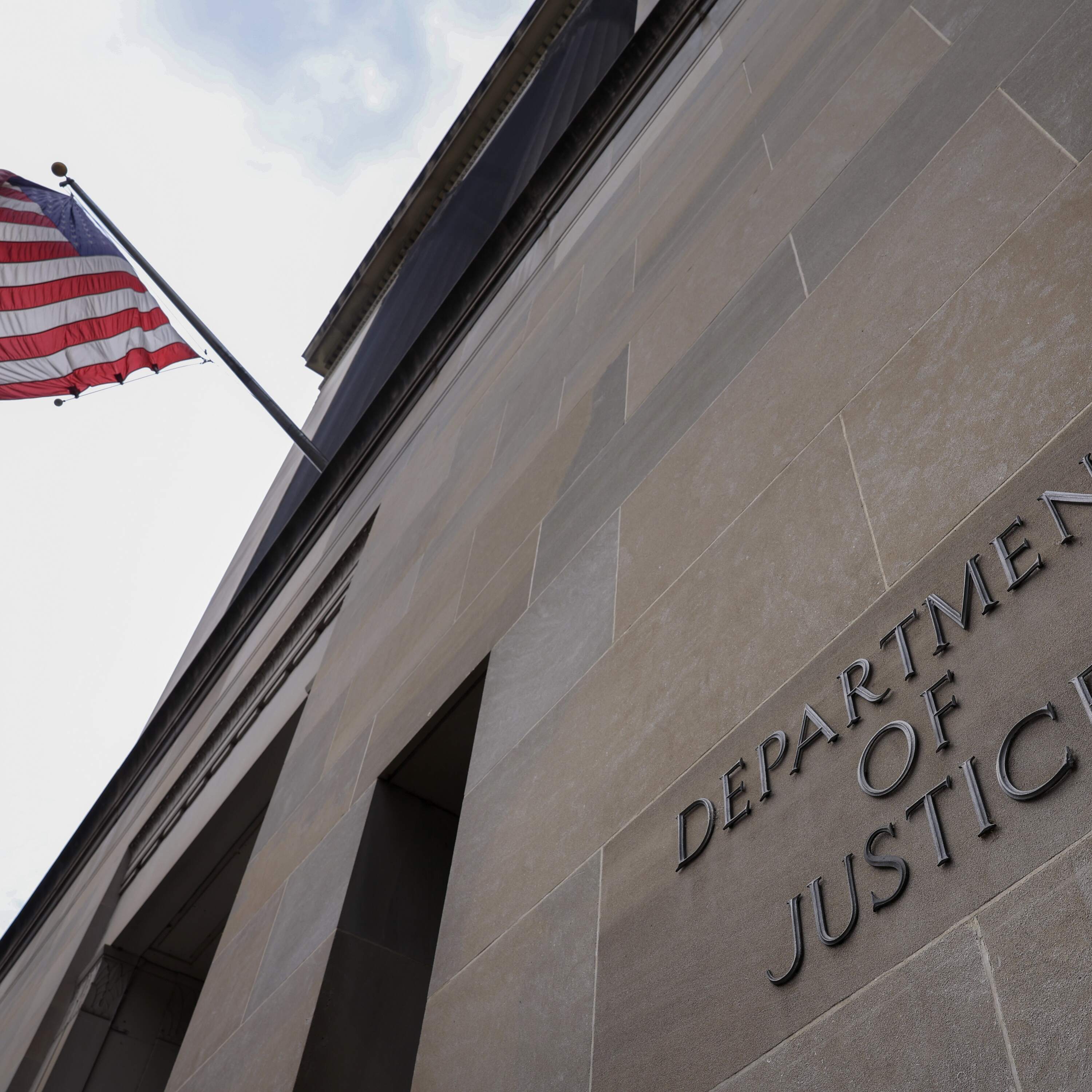
Enter Amos Ackerman, a former Confederate soldier and slaveholder and the new newly appointed attorney general of the United States. Akerman was in charge of the brand new Department of Justice, created to enforce federal law in the south and protect black people from violence. He believed in the rule of law and he had the power of the US Federal government at his disposal.
- [05:22]
Guy Gugliotta
He comes in and he's interested in one thing. He's interested in getting rid of the Ku Klux Klan.
- [05:29]
Ramtin Arablouei
But that would prove easier said than done.
- [05:32]
Rund Abdelfatah
I'm Rundab de Fattah.
- [05:34]
Ramtin Arablouei
And I'm Ramtin Arablouei.
- [05:36]
Rund Abdelfatah
Today on the show, the man who took on the Klan. Hi, this is Carolyn from Wappinger Falls, New York.
- [05:56]
Ramtin Arablouei
And you're listening to Throughline from npr. This message comes from Lisa from Night One. You'll feel the difference. Premium materials that deliver serious comfort and full body Support. Go to Lisa.com for 25% off mattresses, plus get an extra $50 off with promo code.
- [06:16]
Rund Abdelfatah
NPR this message comes from Carvana, who makes buying and financing your next car easy. Thousands of vehicles, terms up front and 100% online. Even get it delivered to your door. Buy your car the easy way with Carvana. Delivery fee may apply.
- [06:33]
Ramtin Arablouei
This message comes from NPR sponsor the NPR Wine Club, a place to explore the exciting world of wine, including wines inspired by popular NPR shows like Tiny Desk Sauvignon Blanc. Whether buying a few bottles or joining the club, all purchases help support NPR programming and fund quality reporting developed to connect people to their communities and the world they live in. More@nprwinclub.org Podcast must be 21 or older to purchase.
- [07:07]
Rund Abdelfatah
Part one. There had never been peace.
- [07:13]
Bernard Powers
When the war began and black Carolinians heard the first shots. A lot of those people heard the sound of freedom.
- [07:27]
Rund Abdelfatah
And that Was true for black people across the South.
- [07:37]
Ramtin Arablouei
The end of the war, it came just like that, like you snap your fingers.
- [07:45]
Rund Abdelfatah
How did you know the end of.
- [07:46]
Kidada Williams
The war had come?
- [07:48]
Ramtin Arablouei
How did we know it? Hallelujah broke out. Felix Haywood, enslaved in Texas.
- [07:55]
Kidada Williams
I remember someone saying, asking a question, you got to say, master.
- [08:02]
Rund Abdelfatah
And somebody answered and said, nah.
- [08:06]
Kidada Williams
Sarah Jane Patterson, enslaved in Georgia.
- [08:11]
Ramtin Arablouei
Something begins to work up here. I begins to think and to know things. And I knew then I could make a living for my own self. And I never had to be a slave no more. Robert Falls, enslaved, North Carolina. Everybody went wild. We all felt like heroes, and nobody had made us that way but ourselves. We were free. Just like that. We were free.
- [08:42]
Bernard Powers
Legally. There's a new situation, but the notion of freedom is, and it was for them, a vague and amorphous notion.
- [08:53]
Rund Abdelfatah
The civil war began in 1861, and within two years, President Abraham Lincoln had issued the emancipation proclamation, which declared that all people who were enslaved in the confederacy were free. And when the Confederacy was defeated in 1865, the federal government passed the 13th Amendment, which outlawed slavery across the United States.
- [09:22]
Ramtin Arablouei
The slaves where I lived knew after the war that they had abundance of that something called freedom what they could not eat, wear, and sleep in. Ezra Adams, enslaved in South Carolina. We soon found out that freedom could make folks proud, but it didn't make them rich. Yes, sir, they soon found out that.
- [09:47]
Bernard Powers
Freedom ain't nothing less.
- [09:49]
Ramtin Arablouei
You got us something to live on and a place to call home.
- [09:54]
Bernard Powers
And they knew that to really be free, they had to do things.
- [09:59]
Rund Abdelfatah
This is Bernard Powers. He's the director of the center for the study of slavery in Charleston at the college of Charleston in South Carolina.
- [10:08]
Bernard Powers
They had to determine what freedom looked like, and that's what they did. In so many ways, they're faced with.
- [10:16]
Kidada Williams
A constellation of options and decisions.
- [10:20]
Rund Abdelfatah
This is Kidada Williams, the author of.
- [10:23]
Kidada Williams
I saw death, a history of terror and survival in the war against reconstruction.
- [10:29]
Rund Abdelfatah
And professor of history at Wayne State university.
- [10:32]
Kidada Williams
Where do you live? Where do you work?
- [10:34]
Bernard Powers
And they make all of those decisions in freedom.
- [10:40]
Kidada Williams
First you go find your loved ones who were sold away from you.
- [10:43]
Bernard Powers
You can see advertisements that they put in local newspapers for husbands, wives, children that had been sold away.
- [10:53]
Kidada Williams
They wrote, rush into securing housing, create.
- [10:58]
Bernard Powers
Schools to learn how to read and.
- [11:01]
Kidada Williams
Write, doing what they can to acquire land, finding employment.
- [11:05]
Bernard Powers
They decided that if they were free, they could labor in whatever way they.
- [11:11]
Kidada Williams
Decided, pressing lawmakers to make sure that their rights are protected. And they have to do this because every single move they make is contested.
- [11:22]
Ramtin Arablouei
The master says, we are all free, but it don't mean we as white and it don't mean we as equal. George King, enslaved in South Carolina in the years after the war, much of the south was in shambles.
- [11:38]
Bernard Powers
Virtually all of the fighting during the Civil War occurred in the south. And so there was widespread destruction and disrepair, otherwise brutal. Those places were abandoned, and they suffered tremendous damage from the bombs.
- [11:59]
Guy Gugliotta
There had been a surrender, of course, in 1865 at Appomattox, but there had never been peace. I'm Guy Gugliotta, former journalist for the Washington Post.
- [12:14]
Ramtin Arablouei
Guy wrote a book called Grant's Enforcer Taking down the Klan.
- [12:19]
Guy Gugliotta
The south had lost one fifth of its male population, its economy based on plantation agriculture, and slavery was no more.
- [12:28]
Ramtin Arablouei
For both white and black southerners, the end of the war upended the social and economic order that had existed for generations.
- [12:37]
Guy Gugliotta
There was nothing to replace it.
- [12:40]
Ramtin Arablouei
Amos Ackerman was one of the many white southerners who now found themselves unsure of where they belonged in the world.
- [12:48]
Guy Gugliotta
Before the war, he was a very successful attorney in northern Georgia.
- [12:53]
Ramtin Arablouei
He had moved to the south from New Hampshire to escape the cold for health reasons.
- [12:59]
Guy Gugliotta
He was worried about two things as far as I could see. Worried about getting out of debt and worried about God. He spent a lot of time in church. He's really a bore. He's just super serious. Very, very, very dull.
- [13:16]
Ramtin Arablouei
When the war began, Akerman saw how the federal government responded to the first invasions of the Confederate army.
- [13:23]
Guy Gugliotta
He's disgusted because Confederates invaded this big federal armory and the federal government didn't do anything about it. Ackerman much later says, I like a strong government. He said, and this government wasn't strong. If this government wouldn't protect itself, I wasn't going to protect was federal weakness, which kind of drove him into the Confederacy.
- [13:50]
Ramtin Arablouei
Federal weakness, and also the fact that he himself was a slaveholder who enslaved 11 people.
- [13:59]
Rund Abdelfatah
After the war, the world around Ackerman had turned on its head. He basically saw the writing on the wall. The side he had fought for, lost. And above his devotion to the Confederacy was his devotion to the rule of law. Slavery was illegal, and that was simply the law. Now, however unlikely it might have seemed, Amos Ackerman did a complete about face.
- [14:24]
Bernard Powers
Some of us who had adhered to.
- [14:26]
Ramtin Arablouei
The Confederacy felt it to be our duty that we were to participate in.
- [14:31]
Bernard Powers
The politics of the Union to let Confederate ideas rule us no longer.
- [14:36]
Ramtin Arablouei
Regarding the subjugation of one race by the other as an appurtenance of slavery.
- [14:41]
Bernard Powers
We were content that it should go to the grave in which slavery had been buried.
- [14:50]
Kidada Williams
Reconstruction was an effort to reconcile the outcomes of the Civil War. So it's, you know, a series of policies, but it's also a process as the nation tries to figure out a new way forward. But it also means trying to figure out what it means to include newly freed African Americans into the body politic.
- [15:13]
Rund Abdelfatah
Among white Southerners, a certain kind of rhetoric started to emerge.
- [15:18]
Kidada Williams
White Southerners coming out of the Civil War, they rightfully, you know, one could understand that they might fear that black people are going to attack them. There is a sense of what will they do to us after what we have done to them. There are even federal lawmakers that are wringing their hands and saying, well, you know, are black people seeking revenge? The reality is that there is no evidence at all of black people instigating this violence. What they are doing is defending themselves against it in a way that they weren't necessarily doing in slavery. And that's why you see white supremacists, they kind of up the ante with the organized violence when it becomes clear that they're not going to be able to stop black people from seizing their freedom.
- [16:02]
Rund Abdelfatah
The Ku Klux Klan, the most notorious of these white terror organizations, was founded in 1866 in Tennessee.
- [16:13]
Kidada Williams
The Klan is engaged in its early days in these kind of pranks and they're performing musical entertainment.
- [16:19]
Bernard Powers
Just because the Klan is not organized in Carolina until 1868, it doesn't mean that there was an absence of white terrorist organizations. They exist for from the very beginning of the years following the war. The KKK is just the one that was probably the most well organized and the one that received the greatest publicity. And it's really triggered by the success of political reconstruction.
- [16:55]
Kidada Williams
Once black men, men have the right to vote, they really start to get involved in the political violence.
- [17:01]
Rund Abdelfatah
In 1867, the Reconstruction Acts were passed. They placed the Confederate states under military rule until they ratified the 14th amendment and established new state constitutions that guaranteed equal rights and protections to African Americans. Under the Reconstruction Acts, black men in Southern states could vote and hold office for the first time.
- [17:26]
Kidada Williams
This opens the floodgates and black men rush through them. In 1867, only about 1% of black men are registered to vote. But by the end of the year, upwards of 80% of black men are registered to vote.
- [17:42]
Bernard Powers
It's a complete metamorphosis politically. In South Carolina, you get the creation of the black body politic. And the thing to keep in mind is this South Carolina is a state that has a black majority. When the state elections are held in the spring of 1868, African Americans occupied the majority of seats. This is the only place, it's the only place during Reconstruction in the south where there was a black majority in either house of a state legislature. Obviously, black people had never seen this, had never participated in a process like this, nor had whites, and they were outraged.
- [18:38]
Kidada Williams
Rather than accept black political rule, they turned to violence.
- [18:47]
Rund Abdelfatah
Testimony of Henry Lipscomb Spartanburg, South Carolina July 11, 1871.
- [18:55]
Bernard Powers
Were the colored people there afraid?
- [18:58]
Ramtin Arablouei
They were not so afraid at the start, at the election, they were not afraid. They went up and voted, every one of them. And some swam the river in order to, and some waited. But after the coup, clucking started and they whipped some and killed some and got their guns. They were scared.
- [19:19]
Bernard Powers
In many cases. It was horrific, terrible.
- [19:25]
Ramtin Arablouei
They came about midnight. They came to take me or kill me, I reckon.
- [19:29]
Kidada Williams
How were these men dressed?
- [19:31]
Ramtin Arablouei
This man had on white altogether, plum all around and a disguise across the face. A little white and I could see red eyes and lips.
- [19:44]
Bernard Powers
There was relative safety in the cities. Charleston, Georgetown, Beaufort.
- [19:52]
Guy Gugliotta
The cotton counties are just overwhelmingly black. If the Klan tries to mess around down there, it's pretty dangerous for the. But up in the, in the upcountry, in Spartanburg County, York County, Union county, these counties are all pretty much equally divided between blacks and whites.
- [20:14]
Bernard Powers
When one went into the interior particularly, you're moving away from the street lights, you live out on farms and your nearest neighbors could be miles away. So your ability to receive aid and protection and even to band together is much more limited in the countryside because the population is much more diffuse.
- [20:43]
Kidada Williams
While black people were enslaved, their lives had value. Right? So enslavers aren't just killing the people they hold in bondage all willy nilly, but black people seizing their freedom. It's a completely different story. And so this violence is much more likely to be deadly.
- [21:02]
Rund Abdelfatah
Why were you afraid to sleep in your house?
- [21:04]
Ramtin Arablouei
They had killed Mr. Alf Owens, a white man down there, and a black man named Jim Peeler and one named Tom Rountree. I could hear them say they allowed to go to every radical man's house. And that scared me. Did you sleep in the woods? Yes, sir.
- [21:27]
Kidada Williams
There really is no peace for black people who are trying to live upright and to be free in the South. And that is very clear by virtue of the violence that they are experiencing and witnessing on a daily basis. People think, well, I thought this person was an ally. And then they were in the raid the night before. That's the reality of terrorism.
- [21:49]
Bernard Powers
The issue really then is how does the north, and how do Republican politicians in Washington, in Congress, respond? Well, they respond with hope. They hope that the situation will get better, but unfortunately, they don't respond with enough action.
- [22:13]
Kidada Williams
What starts to happen as the violence goes on and on and on, and as it escalates, there is a greater sense of moral injury that the federal government is going to let this violence slide. You had, you know, Northern conservatives who are in the Democratic Party at this time saying, this is just Southern culture. There's nothing to see here. There's nothing going on here. We don't need to pay attention, and we certainly don't need federal troops to do anything about it.
- [22:40]
Ramtin Arablouei
We.
- [22:40]
Kidada Williams
We don't need new laws. This is just the way the south is.
- [22:44]
Ramtin Arablouei
Just like before the Civil War, Georgia attorney Amos Ackerman saw the federal government failing to respond to challenges to its authority. He was getting frustrated with their weak stance, and he was not afraid to be open about it. I think that difficulties arise mainly from.
- [23:04]
Bernard Powers
The disturbances in the minds of the.
- [23:06]
Ramtin Arablouei
People on account of the war and its results and the changes brought in society by these causes.
- [23:12]
Guy Gugliotta
Akerman appeared before Congress and said, this is what you do.
- [23:17]
Bernard Powers
Some action by Congress is desirable, and that action should be founded upon the power which Congress possesses under the 14th Amendment of the Constitution.
- [23:27]
Guy Gugliotta
You've just passed the 14th Amendment. The 14th Amendment says that everybody born in the United States is a citizen. If you're a citizen, you've got rights. And so black folks are citizens. When the Ku Klux Klan just breaks into houses, terrorizes people, lynches people, murders people, steals from people, why don't you make those federal crimes, try them in federal court? Is civil rights violations.
- [24:02]
Ramtin Arablouei
I have no doubt of the fact.
- [24:04]
Bernard Powers
That Congress possesses such power.
- [24:08]
Ramtin Arablouei
Ackerman caught President Grant's eye, and he offered him a position as the nation's new attorney General, which took the whole country by surprise.
- [24:18]
Rund Abdelfatah
At this time, Akerman was a stranger to the national stage. Nobody knew his name, and he had fought for the Confederacy. So what made Grant think that Akerman was the best choice to enforce Reconstruction laws that most former Confederate soldiers saw as not only a humiliating reminder of their defeat, but also a huge overreach of federal powers.
- [24:44]
Guy Gugliotta
Grant wanted to reconcile with the south, and so he needed a South in the Cabinet. And Akerman was indeed the only Southerner ever to serve in a Reconstruction Cabinet.
- [24:57]
Ramtin Arablouei
When Ackerman took office in 1870, he was ready to use the federal power at his disposal to enforce the law.
- [25:05]
Guy Gugliotta
He comes in and he's interested in one thing. He's interested in getting rid of the Ku Klux Klan and that's all he wants to do. He's not interested in anything else else.
- [25:17]
Ramtin Arablouei
Coming up, Amos Akerman sends the Department of Justice into South Carolina.
- [25:30]
Rund Abdelfatah
Hello, my name is Imani Rosario. I'm calling from Princeton, New Jersey. I am a smarter, more informed and probably more interesting person having found and started listening to your podcast. You are listening to Throughline on npr. This message comes from Adobe. You need to make a huge presentation in an hour. Luckily, Adobe Acrobat Studio uses AI and Adobe Express to take your files and generate a presentation in a few clicks. Need a last minute pitch deck? Do that with Acrobat. Need to level up your presentation design. Do that with Acrobat. Have 30 plus documents that need to be simplified into a proposal. Do that with Acrobat. Learn more@adobe.com do that with Acrobat this message comes from NPR sponsor Shopify. No idea where to sell? Shopify puts you in control of every sales channel. It is the commerce platform revolutionizing millions of businesses worldwide. Whether you're a garage entrepreneur or IPO ready, Shopify is the only tool you need to start, run and grow your business without the struggle. Once you've reached your audience, Shopify has the Internet's best converting checkout to help you turn them from browsers to buyers. Go to Shopify.com NPR to take your business to the next level. Today, Evergreen trees are Pacific Northwest icons in journalism. An Evergreen story isn't tied to one news cycle. It goes deep and helps you understand the world. The Evergreen is also a podcast from OPB about the Northwest.
- [27:09]
Ramtin Arablouei
I'm Jen Chavez.
- [27:10]
Rund Abdelfatah
Listen to the Evergreen podcast from OPD every Monday, part of the NPR Network. Part 2 Enforcement.
- [27:23]
Kidada Williams
7 March they came to my house about 2 o' clock in the night. Came in the house and called him disguised men. I can't tell who it was. I don't know how many there was. I call them Ku klux.
- [27:45]
Rund Abdelfatah
In early March 1871, the Ku Klux Klan arrived at Jim Williams house in York County. He was there with his wife Rose and their children.
- [27:57]
Ramtin Arablouei
Jim Williams was an active civil rights leader. He was also the captain of a state militia company based in York county in South Carolina.
- [28:06]
Bernard Powers
The state militia is organized by the Republican administration. The state militia essentially becomes a black militia. It is comprised of black men because Southern white men would not really join it.
- [28:23]
Rund Abdelfatah
Jim Williams Co. Was actively engaged in resisting, they were one of the only lines of defense the black community had against the Klan. And so it was only a matter of time before Jim became a target. Rose Williams hid in her house all night with her children. It was only once the sun rose that she was able to go out. Outside. Her husband's body was discovered that next morning. He had been lynched by the Klan.
- [29:10]
Guy Gugliotta
It went off like an explosion in South Carolina.
- [29:15]
Ramtin Arablouei
It was clear that the Klan had targeted Williams because he was such a public figure. South Carolina's attorney general told the press that civil authorities were unable because of the Klan to enforce the laws. In other words, it was like another mini civil war was unfolding right in South Carolina and the government was losing.
- [29:36]
Rund Abdelfatah
The governor of South Carolina, a pro Reconstruction Republican, even sent a desperate telegram to President Grant.
- [29:44]
Bernard Powers
An actual state of war exists in York and Chester counties. Fighting for four days by Ku Klux from North Carolina. I will be compelled to declare martial law.
- [29:57]
Ramtin Arablouei
The federal government had a problem.
- [30:02]
Kidada Williams
Republicans in Congress recognize that their ability to continue ruling is going to be endangered if black men are being killed and if they can't vote or if they're being assassinated.
- [30:15]
Ramtin Arablouei
For the past year, Congress had been passing a series of laws designed to protect the rights of newly emancipated black people and regain order and control over white supremacist violence in the South. They were known as the enforcement acts.
- [30:31]
Bernard Powers
The final one of these acts was also known as the KKK act, the Ku Klux Klan Act.
- [30:36]
Ramtin Arablouei
Congress passed the KKK act in April 1871, a little over a month after Jim Williams murder. And this was the act that would allow Amos Ackerman to prosecute the Klan in South Carolina.
- [30:50]
Bernard Powers
When you see this at the top level, at the congressional level, you say, oh, my goodness. Well, Congress is doing things. It's acting, except the problem is at the implementation level. And so you see these measures occurring that have been passed by Congress seeming to indicate growing strength and commitment to Reconstruction, except at the state level.
- [31:14]
Rund Abdelfatah
In South Carolina, the Klan held a lot of power in local communities, from business owners to physicians to legislators. White South Carolinians from all kinds of backgrounds had ties to the Klan.
- [31:29]
Kidada Williams
What we know is that the political climate they create is that you don't need to be a formal member of the organization to partake in the activities. So it can be difficult to understand who's in, who's quote in the organization. You know, you move in and out of this activity. You know, you go to church on Sunday morning and, you know, Saturday night You participated in a Klan raid.
- [31:53]
Rund Abdelfatah
This made it really hard to enforce the law.
- [31:56]
Bernard Powers
And the Grant administration will begin to more aggressively implement the enforcement acts. Working along with the newly organized Justice Department that Amos Ackerman will head.
- [32:16]
Guy Gugliotta
Akerman's most important job was to prove that the Ku Klux Klan was a.
- [32:21]
Rund Abdelfatah
Conspiracy, that it was an actual organization with leaders and members, meetings and plans that they carried out to inflict the terror on black people. Looking back from our vantage point, it seems obvious. We know today that the Ku Klux Klan was a real organization, but back then, this was a group shrouded in rumor and mystery to the federal government. It wasn't clear exactly what it was or how deep the conspiracy went.
- [32:54]
Ramtin Arablouei
Akerman needed to discover its leaders, its members, and figure out what kind of planned violence the organization was responsible for.
- [33:02]
Bernard Powers
South Carolina was seen as kind of a test case.
- [33:07]
Rund Abdelfatah
If Akerman won, it would be a dramatic expansion of the role the federal government could play in enforcing civil rights. It could even mean the end of the Klan. But could he pull it off? That's coming up.
- [33:27]
Ramtin Arablouei
This is Todd from Minneapolis.
- [33:29]
Bernard Powers
I've been a listener since your very.
- [33:31]
Ramtin Arablouei
First episode, and I can't help but think that some people see history as.
- [33:38]
Guy Gugliotta
A tale of caution and others see it as a plan to be recreated. Here, listing the through line from npr.
- [33:49]
Ramtin Arablouei
This is Ira Glass. On this American Life. We look for stories that are surprising.
- [33:54]
Kidada Williams
That you won't hear anywhere else.
- [33:56]
Ramtin Arablouei
Like, for example, this one astronaut who went to the moon. You know what? He's not into space.
- [34:02]
Kidada Williams
Was it cool to float around weightless?
- [34:04]
Guy Gugliotta
No, no, no.
- [34:08]
Ramtin Arablouei
This American Life Unexpected stories. Wherever you get your podcasts on Planet.
- [34:14]
Guy Gugliotta
Money, we have covered a lot of.
- [34:16]
Ramtin Arablouei
Topics, like just try searching something on.
- [34:18]
Guy Gugliotta
The Internet and adding Planet Money to the end of it.
- [34:21]
Ramtin Arablouei
Tariff prices. Planet Money.
- [34:22]
Guy Gugliotta
That's an episode stop sign.
- [34:25]
Ramtin Arablouei
Planet Money.
- [34:26]
Guy Gugliotta
That too. Alaska halibut derby. Planet Money.
- [34:29]
Ramtin Arablouei
If you can ask it, we have probably answered it. Planet Money. Listen on the NPR app or wherever.
- [34:35]
Guy Gugliotta
You get your podcasts.
- [34:38]
Rund Abdelfatah
Valentine's Day is coming up, and the perfect gift for the NPR lover in your life is waiting at the NPR shop. From cozy sweaters and mugs made for slow mornings to our tiny desk hoodie, there's something for every NPR fan. Each purchase supports public media and the journalism you love. Find something meaningful@shopnpr.org Part 3 wins and losses.
- [35:04]
Ramtin Arablouei
If Amos Ackerman was going to arrest the Ku Klux Klan in raids, he was going to need men on the ground. And Lewis Merrill was one of those Guys. Merrill was an army officer sent to York county, which was one of nine South Carolina counties where the federal government wanted to investigate the Klan. But before Merrill and his troops could make any arrests, he needed to build strong cases against Klan members, a feat that was tough in the South. Merrill wasn't getting any help from local law enforcement, and his troops were met with insults by the locals. But the investigations persisted, and for months, Lewis Merrill developed white informants, followed leads from black residents. He reviewed legal records and coroner's reports. And In October of 1871, President Ulysses S. Grant gave Merrill and his troops authority to go after the Klan. The raids began.
- [36:05]
Guy Gugliotta
So Merrill goes after him. He just starts rolling them up. He goes to the house of a very big leader of the Klan. He sends one of his lieutenants there. They arrest the father, and then the lieutenant asks his daughter, where's the pledge.
- [36:22]
Rund Abdelfatah
The pledge taken by Klan members?
- [36:24]
Guy Gugliotta
The daughter says, oh, it's right here, and opens a desk and hands him the pledge.
- [36:30]
Rund Abdelfatah
Some of the Klan members fled the county. Some even fled the country during the raids. But Merrill and his troops did arrest several Klan leaders, including men accused in Tom Rountree's and Jim Williams murders.
- [36:45]
Guy Gugliotta
Merrill's people, the cavalry, are just riding through York county, just pulling people in by the dozen.
- [36:54]
Rund Abdelfatah
Most of the arrests happened in broad daylight with no resistance.
- [36:59]
Guy Gugliotta
So they start to come in, they start to confess, and he's collecting this huge body of material. These people are pleading out as rapidly as they possibly can. They're just taking confessions like one after the other and telling them everything about what's happened. It's absolutely chaotic.
- [37:19]
Ramtin Arablouei
In the end, almost 200 people were held in a building that had been converted into a jail, and hundreds more were paroled, waiting to be called to trial.
- [37:31]
Guy Gugliotta
The trials took place in the ballroom of the biggest hotel in Columbia, South Carolina, the capital of the state. Picture this T shape. The judges are at the head of the T, and along one side of the T are the prosecution, and on the other side are the defense lawyers. The jury is sitting over against the wall.
- [37:55]
Ramtin Arablouei
The jurors were mostly black men. South Carolina had a majority black population, and potential white jurors also refused to serve, either as a boycott or because they feared or were part of the Klan.
- [38:10]
Guy Gugliotta
The rest of the room is filled. Black folks sitting on one side and white folks sitting on the other side. Well, there are two things that the prosecution wants to do. They want to convict the Klansmen, obviously, but what they want to do is they want to put teeth on the 14th Amendment.
- [38:34]
Rund Abdelfatah
The 14th Amendment enshrined equal protections under the Constitution.
- [38:39]
Guy Gugliotta
I want to show that these crimes, hate crimes, are violations of the civil rights of the victims.
- [38:50]
Rund Abdelfatah
Amos Ackerman and his prosecutors argued that the 14th Amendment gave the federal government power over states to uphold these equal protections. And since the state of South Carolina hadn't protected black people from the Klan, they argued the federal government could. But the 14th Amendment had just been ratified a few years before, and what it meant had still not been totally tested. Prosecutor David Corbyn told the room.
- [39:18]
Ramtin Arablouei
What does the 14th Amendment mean? Is Congress going to pass an act.
- [39:22]
Rund Abdelfatah
To explain these words? I have no doubt that Congress cannot.
- [39:25]
Ramtin Arablouei
Explain what those words mean. It must be done by the court.
- [39:30]
Rund Abdelfatah
Akerman and his prosecutors also wanted to convict the Klan for violating other constitutional rights.
- [39:37]
Guy Gugliotta
If you break into somebody's house, you're violating the Fourth Amendment. If you break into somebody's house and take their guns, you're violating the Second Amendment. These people are citizens. There is no reason why these crimes can't be prosecuted in federal court, just like the civil rights violations.
- [40:00]
Ramtin Arablouei
But prosecutors weren't convincing enough. Even the judges were afraid of expanding the constitutional powers of the federal government. So if Ackerman and Corbyn were going to have a shot at convicting any Klan members, they had to stick with violations of the Enforcement act and prove that the Klan and its individual members conspired to prevent black people from voting.
- [40:22]
Guy Gugliotta
You're beating people up and you're lynching people, and you're doing all these crimes, and you're doing it because you don't want these folks to belong to the Republican Party and you don't want them to vote.
- [40:35]
Ramtin Arablouei
And these conspiracy cases had strong witnesses.
- [40:38]
Guy Gugliotta
From the black community, maybe give unbelievable testimony.
- [40:44]
Ramtin Arablouei
Are you the wife of Jim Williams?
- [40:46]
Kidada Williams
Yes, sir.
- [40:48]
Guy Gugliotta
Jim Williams wife Rose just describes in detail exactly what happened. How her husband was sort of found hiding underneath a floorboard, taken out.
- [41:02]
Kidada Williams
They told me to shut the door and take my children and go to bed. I shut the door, but didn't go to bed. I looked out of the crack after.
- [41:14]
Rund Abdelfatah
Them until they got under the shadows.
- [41:18]
Guy Gugliotta
Of the trees, walked out into the woods and hung from a pine tree. And this courtroom is just absolutely silent.
- [41:31]
Ramtin Arablouei
While the trials were underway, Amos Ackerman was fired up, pushing his rhetoric to sell these prosecutions to the public.
- [41:40]
Guy Gugliotta
He became more and more and more militant as time went on. By the time these trials took place, he was regarded as the most radical member of the Cabinet. He actually went up and gave a.
- [41:54]
Ramtin Arablouei
Speech Speech in Brooklyn where he commented on KKK men on trial in South Carolina. They are to be convicted. Some would be imprisoned, some sent to the penitentiary, and some would be hung.
- [42:08]
Guy Gugliotta
And he met it.
- [42:09]
Rund Abdelfatah
This new, radicalized Acreman hadn't just pushed the buttons of former Confederates. President Grant was looking towards the next election. The political tides were changing. Grant began pulling back on using the federal government to go after the kkk. The governor of Georgia requested federal help to deal with the Klan in his state, but Grant refused. Ackerman had also been getting a little too involved in Grant's business interests.
- [42:40]
Guy Gugliotta
He had gotten involved in a couple of cases against a big railroad. And Grant loved businessmen. He loved big railroad people and rich people. So the feeling was on Akerman's part that he had alienated too many rich people, had alienated the railroads, and he had to leave.
- [43:02]
Ramtin Arablouei
Then, in the middle of the trials, Amos Ackerman was pressured by President Grant to step down. Sir, I hereby resign the office of Attorney General of the United States.
- [43:21]
Bernard Powers
This resignation to take effect in accordance with the wish which you verbally expressed.
- [43:26]
Ramtin Arablouei
To me today on the 10th of January next at Akerman Department of Justice, December 13, 1871. Despite Akerman's resignation, the federal government won many of its conspiracy cases in the South Carolina klan trials of 1871 and 1872. In the end, there were about 140 convictions, mostly guilty pleas. But after Akerman resigned and after these first few trials, the political will to prosecute the more than 1,000 open Klan cases fizzled out. The white lawmakers in Congress soon no longer had an appetite for using the federal government's power to prosecute violence against black people like they had before. The advocates just weren't there.
- [44:17]
Guy Gugliotta
Thaddeus Stevens, the Charles Sumners, Lincoln. He was gone. They were gone. Carrying this flag was an increasingly difficult labor.
- [44:34]
Rund Abdelfatah
Grant would eventually issue a blanket pardon for all those convicted and for those cases not yet tried.
- [44:44]
Kidada Williams
For all of the people who are arrested, hardly anyone does time. And a lot of that is because of the local communities and ongoing resistance to black people being free, equal and secure, and resistance to the federal government presuming that it should, should be doing anything in order to stop white Southerners from attacking black Southerners.
- [45:08]
Rund Abdelfatah
On the surface, Ackerman's zealous pursuit of the KKK was a win for the federal government in the middle of Reconstruction. After the trials ended in 1872, the organization more or less disappeared.
- [45:22]
Guy Gugliotta
The Klan per se pretty much folded its tents all across the South. The Ku Klux Klan Just disappeared. But white terrorism did not.
- [45:35]
Rund Abdelfatah
And in the end, Akerman and the Justice Department never took down the big KKK leaders like they'd wanted. Most of them either fled the counties during the raids or just didn't face major consequences.
- [45:50]
Kidada Williams
A lot of people, they never surrendered themselves to the government. They just leave and go to another community. A lot of people are pardoned, right, for their activities. And so that's why hardly anyone does any time. And they just go back into the communities doing some of the exact same things they had done before.
- [46:09]
Ramtin Arablouei
In 1877, Grant's presidency came to an end, and Reconstruction went with him. The 1876 election was highly contested. In order to settle the disputes, the federal government promised to pull the military presence from the South. Once the military was no longer enforcing Reconstruction, Southern Democrats started passing Jim Crow laws. These laws upheld racial segregation and the disenfranchisement of black voters. They made it easier for white violence against black people to continue.
- [46:43]
Kidada Williams
So you don't have as many Klan raids after all of the arrests, but you still have lynchings, you still have massacres, you still have a lot of targeted violence around elections through the end of the 19th century. And that's how they're able to get Jim Crow installed, through violence and by seizing political power.
- [47:01]
Rund Abdelfatah
By the 1880s, all the black senators.
- [47:04]
Guy Gugliotta
And black congressmen from the south were all gone.
- [47:09]
Rund Abdelfatah
And the north, which still today gets a lot of credit for abolishing slavery, doesn't re up its push to use the federal government to change things. It doesn't go full Amos Ackerman on these laws in the South.
- [47:24]
Kidada Williams
These are not the abolitionists. They've styled themselves as Northerners, and westerners create this abolitionist cause, this mythology that they're all abolitionists. And the reality is that they were not. They only accept emancipation as a way to end the war quickly. And they can get away with that because white northerners and white Westerners are willing to turn deaf ear and blind eye to the violence in order to move on with the American experiment.
- [47:56]
Bernard Powers
What happens over time is the memories of the war and what it was about. They begin to fade.
- [48:06]
Ramtin Arablouei
How would you then characterize the outcome of these trials? Like, I mean, I asked this question. Would you consider it a success or failure if the measure is protecting the black population and ending the terror and what's effectively a local civil war happening? How successful or not was were these trials in helping to change that, based.
- [48:30]
Bernard Powers
On those cross criteria of stopping the terrorism and protecting the rights of black Carolinians to vote and hold office. I would have to judge the KKK investigations and trials a failure. What they showed, I think unequivocally that the federal government was not really willing to marshal the full power, authority and machinery to eradicate white terrorism in the South. They were unprepared beforehand. They didn't take the opportunity to correct the situation. And what it also probably does is to further emboldened the forces of terror and organizations like the KKK to control the display of violence in a way that could not be easily tracked and prosecuted.
- [49:42]
Rund Abdelfatah
The legacy of the Klan trials is one of political power, but also political will.
- [49:48]
Kidada Williams
You know, they do something really important during Reconstruction, but they don't do enough. What happened during Reconstruction, what happened with the Klan violence and the Klan hearings, I think it really kind of underscores that reality. The federal government could have acted. They chose not to. And they chose not to because the larger white American public did not want them to.
- [50:22]
Rund Abdelfatah
That's it for this week's show. I'm Rund Abdelfatah.
- [50:26]
Ramtin Arablouei
I'm Ramtin Arablouei and you've been listening to Throughline from npr.
- [50:31]
Rund Abdelfatah
This episode was produced by me and.
- [50:33]
Bernard Powers
Me and Julie Kane, Anya Steinberg, Casey.
- [50:37]
Kidada Williams
Minor, Christina Kim, Devin Kadayama, Irene Noguchi.
- [50:41]
Rund Abdelfatah
Kiana Mohattam, Thomas Coltrane. And we want to give a special shout out to producer Lawrence Wu, who I'm sure you've heard on the credits before. He's been with us since we started Throughline about seven years ago. And actually, really even before we started it, he was burning the midnight oil with me and Ramtin back when the show was just an idea in our heads. I can't say enough how grateful we are that he took a chance on us.
- [51:06]
Ramtin Arablouei
The show would not be what it is today without him. He's an incredible creative producer. Some of the best sound design on this show is thanks to him. And he's just like the coolest guy you'd ever meet. A kind, generous teammate and friend. Now Lawrence is on to new adventures and we're, of course, very excited for him, but also really sad to see him go.
- [51:29]
Rund Abdelfatah
Thank you, Lawrence, for being building this show with us and helping to make it better. We're really going to miss you.
- [51:37]
Ramtin Arablouei
Fact checking for this episode was done by Kevin Voelkel.
- [51:40]
Rund Abdelfatah
Thanks to Augie Nuzzer, Ellis Aureola, Mark Roth, Luther Pearson, Christy Miles and Ryan Muzzi for their voiceover work.
- [51:49]
Ramtin Arablouei
Thank you to Tony Cavan, Johannes Durgi, Beth Donovan and Tommy Evans. This episode episode was mixed by Robert Rodriguez.
- [51:58]
Rund Abdelfatah
Music for this episode was composed by Ramtin and his band Drop Electric, which.
- [52:03]
Bernard Powers
Includes Naveed, Marvi, Sho, Fujiwara, Anya Mizani.
- [52:10]
Ramtin Arablouei
And finally, if you have an idea or like something you heard on the show, please write us@throughlinepr.org and make sure you follow us on Apple, Spotify or the NPR app. That way you'll never miss an episode.
- [52:25]
Rund Abdelfatah
Thanks for listening. This message comes from Squarespace, a platform for building a custom on brand website. Choose from award winning templates, showcase your work and manage payments. Visit squarespace.com NPR to get 10% off your first purchase of a website or domain.
- [52:48]
Ramtin Arablouei
This message comes from Grainger. Grainger knows that if you're a school custodian, cleanliness is your top priority. That's why you can rely on Grainger for a range of cleaning products and equipment from disinfectants to floor scrubbers. Grainger for the ones who get it done.
- [53:05]
Rund Abdelfatah
This message comes from Charles Schwab. When it comes to managing your wealth, Schwab gives you more choices like full service, wealth management and advice when you need it. You can also invest on your own and trade on thinkorswim. Visit schwab.com to learn more.