Loading summary
Transcript181 lines
- [00:01]
NPR Sponsor Announcer
This message comes from the Council for Interior Design Qualification. Safety matters. That's why NCIDQ certified interior designers meet rigorous standards to protect health, safety and welfare. Learn more@cidq.org NPR.
- [00:18]
Ramtin Arablouei
Hey everyone, it's Ramtin here. So if you've been listening to the show recently, which I hope you all have, you know, we've been running episodes as part of our Winter Book Club series. And it just so happens that I was recently a guest on another NPR show where I got to talk about an actual book I really, really love. So we're going to share that conversation with you all today. Here we go. I saw myself projected into the future, or it felt like a world that somebody like me could live in.
- [00:55]
Andrew Limbong
You're listening to books we've loved from.
- [00:57]
BA Parker
Npr, the book show where we reread old favorites and tell you why they still matter today.
- [01:02]
Andrew Limbong
I'm Andrew Limbong.
- [01:03]
BA Parker
And I'm BA Parker.
- [01:05]
Andrew Limbong
This is a big one. This is, this is a hefty. This is a hefty. Flipping through this right here.
- [01:11]
BA Parker
Andrews.
- [01:13]
Andrew Limbong
Hefty boy.
- [01:14]
BA Parker
It's so, it's so much. And it's our guest's fault. And I mean, I did it.
- [01:21]
Frank Herbert (quoted)
I.
- [01:22]
BA Parker
617 pages.
- [01:24]
Andrew Limbong
Uh huh. Is that not counting the appendices and all that?
- [01:29]
BA Parker
Okay, so like almost 700 pages.
- [01:32]
Andrew Limbong
Yeah.
- [01:33]
BA Parker
Who do we have with us that.
- [01:34]
Andrew Limbong
We can thank for this? We have here Ramtin Arablouei from NPR's Throughline. Ramtin, what's up, man?
- [01:39]
Ramtin Arablouei
Hey, how y' all doing?
- [01:41]
Andrew Limbong
Thank you for this assignment. Thank you.
- [01:43]
Ramtin Arablouei
We're about to get through this heavy book.
- [01:45]
Andrew Limbong
The book we're reading today.
- [01:45]
Ramtin Arablouei
In many ways it's heavy.
- [01:46]
Andrew Limbong
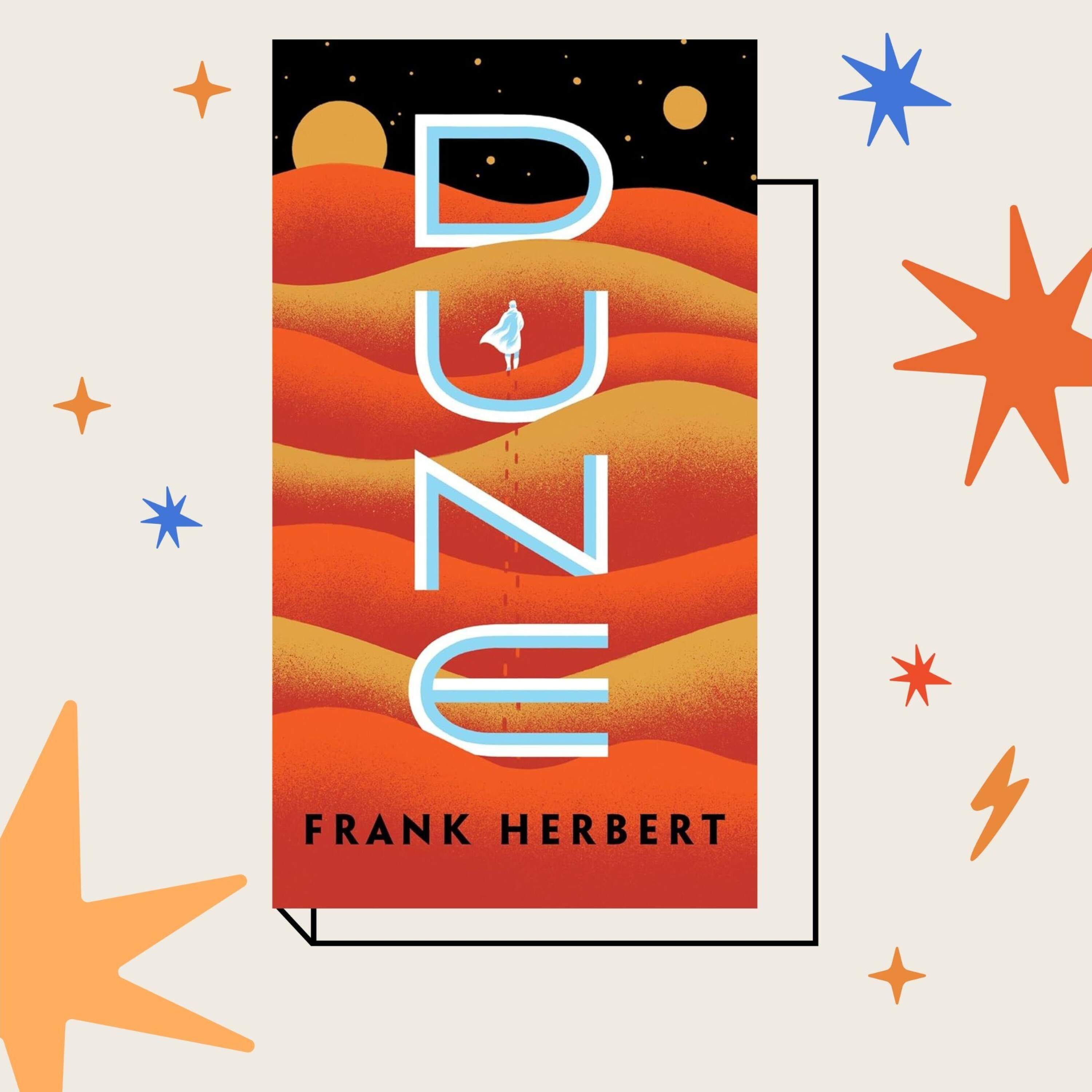
The book you brought us today is Frank Herbert's Dune.
- [01:51]
Ramtin Arablouei
Yes. All day, all day I told. I've been waiting, I've been waiting decades for this. This is your vocab. It's all going to pour out here. Okay. I've been waiting for years to talk about this book, which I would tell you that. And y' all might be completely disturbed by this, had a major part in building my worldview.
- [02:09]
Andrew Limbong
No, I believe what. I get it. Yeah.
- [02:12]
BA Parker
How old did you.
- [02:14]
Ramtin Arablouei
I was 13.
- [02:15]
BA Parker
Okay.
- [02:15]
Ramtin Arablouei
I was in middle school when I first read this. Reading came late for me. I struggled with it a little bit. I mean, partly it's because of my second language. You know, I moved here. I'd just gotten out of being a toddler when I moved to the US and so it was hard to learn English. And so I kind of was delayed a little bit. In reading. But once I started reading, I really got into sci fi books.
- [02:33]
Andrew Limbong
Yeah.
- [02:33]
Ramtin Arablouei
And I had a teacher who was like, hey, if you really want to get into some deep stuff, Dune. So I read it and I became obsessed. I read it like twice in a summer.
- [02:44]
Andrew Limbong
For listeners who haven't read it, I'm just gonna run through. I read this quick synopsis. We've been doing these quick, like, you know, summaries of the book. This is by far the longest synopsis. But here I'm gonna try to get through it. This is, here's, here's Dune summed up. It goes, so Paul atreides is a 15 year old boy next in line to lead the Atreides family, who they rule over their water planet, Caladan. Right. And Paul's dad, Leto gets a call from the Emperor, says, guess what? You're now in charge of this desert planet called Arrakis. Arrakis kind of sucks there. It's dry and it's hot, but it is rich with this drug resource called spice. Turns out you find out midway through the book that the Emperor was working with the Harkonnen who are rivals to the Atreides family. There's a big attack and now Paul's dad is dead and Paul and his mom Jessica are alone in the desert. There, Paul and Jessica intermingle with the Fremen who are the indigenous people of Honorakis. And it turns out, turns out it just so happens that Paul is this savior figure that they've been waiting for. Paul falls in love with a Fremen woman named Chani. And he eventually leads the Fremen to defeat the Harkonnen and then like overthrow the Emperor in a marriage in some sort of. I can't quite understand the deal that's made there. But Paul's at the top of the top of the castle at the end. Is that a fair once over? Yes. Okay.
- [04:09]
Ramtin Arablouei
Yeah.
- [04:09]
BA Parker
I mean, Romson has a better understanding of what. He's read it more than once. I read it once and I thought Arrakis and Atreides were the same thing for first pages. So I was like, wait, did they name the planet after themselves?
- [04:23]
Andrew Limbong
And I was like, nah, girl, just different stuff. Yeah.
- [04:26]
BA Parker
So I trust.
- [04:29]
Ramtin Arablouei
Yeah, No, I think that's one of the things I think that I loved about the book, but I think is a weak spot of it is it's like basically mostly context and world building.
- [04:37]
Andrew Limbong
Yeah.
- [04:38]
NPR Sponsor Announcer
Yeah.
- [04:38]
Ramtin Arablouei
It is building this world that is then expanded upon in the next five books that Herbert himself wrote. But I Think that part of it. For my mind at that time, I was super into this kind of context, world building. What does it say about our world? What does it say about geopolitics? I was in that place. And so it has that. But there's a ton of names and a ton of concepts and things are returned to and there isn't, like, narrative driving the way that like a typical sci fi novel would. So I can understand how you get those two mixed up.
- [05:08]
Andrew Limbong
But I respect.
- [05:09]
BA Parker
I'm thankful for the glossary in the back of the book as you move forward.
- [05:12]
NPR Sponsor Announcer
Yeah, exactly.
- [05:13]
Andrew Limbong
So, Parker, like, since you weren't. Were you like a sci fi kid growing up, were you reading stuff?
- [05:17]
BA Parker
No, I was reading like Roald Dahl and like John Cheever short story.
- [05:23]
Andrew Limbong
So, like, what was your impression of Dune? Like, did you know about that?
- [05:25]
BA Parker
I knew it existed. I saw. I've seen the mov. The two movies, David Lynch, Chalamet movies. I've never seen the David Lynch Dune.
- [05:34]
Andrew Limbong
Well, I'm just curious because when I was a teenager, I was big into sci fi. I was reading Ender's Game. I was reading Philip K. Dick, I was reading Ursula, Kayla, Gwyn. Da da. I remember I gave Dune a shot because I knew this was a big book in the genre. And I have this sense. I remember being in the backseat of the car, we were driving to church, and I'm reading my copy from the library. I get like 30 pages into it and I'm like, nah, bro, I'm done. I'm done. I'm out.
- [06:00]
Ramtin Arablouei
What made you want to be like, I'm out?
- [06:02]
Andrew Limbong
I just think I got confused. I was like, I didn't know what was going on. I didn't know who was who. And there was no. At the time, I just couldn't grab onto anything driving me through the rest of the book. And so I was wondering, maybe it is possible that you were just built different as a kid. But do you remember as a kid being like, oh, I don't really know what the world of the emperor is and his big corporation thing, but I'm very attracted to this one thing that is driving me through.
- [06:28]
Ramtin Arablouei
Yeah, that's why I read it twice. Because I also obviously was like, what is going on? At times I didn't understand. I had to keep going back, which is obviously not a. What you want as a writer, I think, to have people doing that. But at the same time, for me, it was personal. What this book had for me that appealed to me personally is like one of the first books, sci fi books that I read that projected the modern world into the future in the way that it did specifically for me. Islam was a big part of the book. I mean, very quickly into the first like hundred pages, there's Arabic words coming up, Islamic concepts, and I'm.
- [07:03]
Andrew Limbong
They're like celebrating Ramadan, right?
- [07:04]
NPR Sponsor Announcer
Yes.
- [07:05]
Andrew Limbong
They're going on Hajj. I was like, what's happening? Yeah.
- [07:08]
Ramtin Arablouei
For me it was like, wow, I saw myself and. Cause you're a kid, you're a narcissist, you're. You're really into yourself. At that point, I saw myself projected into the future or it felt like a world that somebody like me could live in.
- [07:21]
BA Parker
That's so lovely. I feel so bad for like growling and being so mad while reading this.
- [07:27]
Andrew Limbong
No, no, no, no, no.
- [07:28]
Ramtin Arablouei
Because that's legit too. Like I can hold both things right like at the same time. I understand that the book's weaknesses is. It's just not as narrative driven like what you're saying. That's totally makes sense. There isn't a thread that pulls you all the way through. It's not per se a like classically well written book. But what it has is the level of detail and research that went into it. If world building and if sci fi for you is a way to understand the world today, it has in my opinion, a lot to offer there meaning the way it projects, you know, economics, ecology, religion, gender dynamics, all of that into the future. I think is. Is really prescient in a way that a lot of other sci fi books aren't.
- [08:09]
Andrew Limbong
All right, I just want to take a quick break right here and then we'll get into all of.
- [08:19]
Sponsor Announcer
This. Message comes from Schwab. At Schwab, how you invest is your choice, not theirs. That's why when it comes to managing your wealth, Schwab gives you more choices. You can invest and trade on your own. Plus get advice and more comprehensive wealth solutions to help meet your unique needs. With award winning service, low costs and transparent advice, you can manage your wealth your way at Schwab. Visit schwab.com to learn more.
- [08:47]
NPR Sponsor Announcer
This message comes from Saatva, the official mattress and restorative sleep provider for the U.S. olympic and Paralympic teams. U.S. olympic cross country skiing athlete and Saatva brand ambassador Jesse Diggins talks about the importance of sleep. The best piece of advice that I've been given from fellow athletes or coaches about sleep is that it is the singular most important way to recover and get faster. Saatva believes you deserve that kind of Restorative sleep too. Visit saatva.com NPR to save $200 on $1,000 or more. This message comes from Intuit. TurboTax with TurboTax Expert. Full service match with a dedicated expert who will do your taxes for you from start to finish, getting you every dollar you deserve. It's that easy. Visit turbotax.com to match with an expert today.
- [09:40]
Andrew Limbong
All right, we're back. Before Ramtin just laid out the big ideas that Herbert was working with in Dune. I'm just gonna run through some quick bio stuff for Herbert to understand this interesting guy that we've been working with that we've been thinking about so really quick. So he was born in Tacoma, Washington, so he's a Pacific Northwest guy. He was growing up, I believe, during the Great Depression. His parents are alcoholics, so he ran away from home as an adult. He was a journalist, a photographer, a speechwriter, and he was writing sci fi on the sides. And he was originally working on a magazine article about the U.S. department of Agriculture's efforts to stabilize sand dunes in Oregon. He never finished that article because he got too obsessed with this image of the sand dunes and how to, like, live and survive in a desert world. So he spent six years world building and he was just like, working on this draft. It was originally published in serial form in sci fi magazines. The full novel was rejected by 23 publishers before Chilton Books accepted it, which is a company, a publishing company mostly known for auto repair manuals. I also read that the guy who worked at that company and bought the book for the publishing company, the book was such a flop that he got fired. Yep, it's a bummer, dude. But eventually the book was published in 65 and became. It won the Hugo and the Nebula, which are the big sci Fi awards to this day. And it is, I think, up there in the sci fi canon. Rumsey, since you were like a big fan as a kid, how have you seen Dune's influence throughout the years? Are there any things that you saw in culture be like, that's Dune. That's Dune. That's Dune.
- [11:16]
Ramtin Arablouei
Yes. I mean, I think for me it was retrospective, right? Like, after I read the book, I was like, let me go back and read, like, where the idea for Star wars came from. Like, immediately, oh, we gotta talk about Star Wars.
- [11:26]
BA Parker
Okay, okay.
- [11:26]
Ramtin Arablouei
Right. That's the big one. I was like, yo, these are one to one concepts. I mean, I think it goes beyond inspiration. So you could argue Herbert was inspired by the foundation series by Asimov. Like, there Is a lot of previous books and all art is a remix of some other art. In my opinion, it's influenced by something else. But some of the. Like Jabba the Hutt and the Worms. The desert planet. The desert planet, like the Baron.
- [11:51]
Andrew Limbong
Yes. Yeah.
- [11:53]
Ramtin Arablouei
Luke's story, Paul's story, like, it's just a ripoff in a lot of ways. And of course, you know, this. Hard to prove that or whatever.
- [12:02]
Andrew Limbong
Frank Herbert, I think almost he's been on the record be like, he ripped me off and he. He. I don't think he ever sued, but he definitely like Lucasfilms, that kind of check.
- [12:11]
Ramtin Arablouei
No. Nah, they did not. Lucas denied it. He said, like, you know, of course I read it like everyone else, but like, no way. I was sitting down thinking about while I was, you know, writing this idea through osmosis.
- [12:21]
Andrew Limbong
Yes.
- [12:22]
Ramtin Arablouei
What. I will say this. It makes me happy that. Or sad that that Herbert didn't live long enough to see the rebirth and rise of Dune as a film and as a. Like a franchise and the death of Star wars, because I.
- [12:35]
Andrew Limbong
Okay, all right. Come on.
- [12:36]
NPR Sponsor Announcer
Now.
- [12:37]
Ramtin Arablouei
I argue Star wars has just gone too far. It's wow, like the Disney ification of Star Wars. Whereas, you know, Dune is in the hands of like, a great filmmaker like Denis Villeneuve. So I just think Herbert got the last laugh.
- [12:50]
BA Parker
Hot take. I will say. When the First Dune Part 1 came out, I had a friend and I was like, this is the only time I will let you mansplain something to me. I need you to explain Dune to me before I see these movies. This movie. And he was like, well, it's basically Star wars for goths. And it's about. It's about like this spice and imperialism.
- [13:15]
Siyavash Madani
Yeah.
- [13:15]
BA Parker
And I was like, okay, okay. And then I got in and saw the movie, and then I was like, oh, I understand even less. But beautiful gowns, great score, and everyone's hair was fantastic.
- [13:28]
Andrew Limbong
Immaculate. Yeah.
- [13:29]
Ramtin Arablouei
Oh, yeah. Well, awesome. The movie. From a production standpoint, all that's a plus plus. I really love that the film has made it like a franchise. Like, it's entered the popular parlance. Like people are using those.
- [13:41]
Andrew Limbong
Yeah. There's an HBO series about the Benedict.
- [13:45]
Ramtin Arablouei
The Sisterhood, which I watched, which I thought could have been better, but it was.
- [13:50]
Andrew Limbong
So. Wait, are you thinking we're close to the Marvel ification of Dune?
- [13:54]
Ramtin Arablouei
I hope not. I hope not. I mean, it could. It could go that way.
- [13:58]
BA Parker
Can I ask you, like, have you read all of the Dune books?
- [14:03]
Ramtin Arablouei
I've read all of them.
- [14:04]
BA Parker
Like, even the Ones that's like POV of the Sandworm.
- [14:08]
Ramtin Arablouei
Yes, I've read all of them. I mean, the first six are considered canon cause they were written by Herbert. The rest were written by his son. But I'm just here for the universe, for if I'm being honest with you. And I love the first book because I again, the themes. One of the things I love is culture follows ecology that is really explored in the first book. The themes of how to view leadership, how to view someone proclaiming that they are messiah, to basically be suspicious of all leadership. The fact that this was presented also in the context of the 1950s and 60s in America, a time where, you know, the US has essentially presented itself to itself as the tradies family.
- [14:51]
Andrew Limbong
Yeah.
- [14:52]
Ramtin Arablouei
And that the Soviets are the Harkonnens. It's a warning, a complex warning. And what I find really fascinating is the reason why Herbert went on to write. Apparently he didn't want to write all those additional books. He wanted to go in a different direction. But he felt like critics and the fans really misunderstood the first book.
- [15:08]
Andrew Limbong
Okay, on that note, so I've got here this interview from 1982, who's on NBC. So he's a few books into the Dune series. He says a couple funny things in this interview. First off, he says, I want to write sci fi for the non sci fi audience. And I was like, that's an interesting. That's an interesting approach.
- [15:25]
Ramtin Arablouei
Or a guy who wrote this?
- [15:26]
Andrew Limbong
Guy who wrote this? Yeah. And then he's asked about like, okay, what is like your goal with these books? What did you want to accomplish? And this is what he says, don't.
- [15:34]
Frank Herbert (quoted)
Trust leaders to always be right. I work to create a leader in this book who would be really an attractive, charismatic person for all the good reasons, not for any bad reasons. Then power comes to him. He makes decisions. Some of his decisions made for millions of people, millions upon millions of people, don't work out too well.
- [15:59]
Andrew Limbong
Here's where I struggle with this book, which is that that is an interesting concept. That back half of that deconstruction of the hero mythology. None of that really happens in book one. All of that happens. Right. As I understand all of that happens. I'm like kind of interested in buying Dune Messiah. And I'm interested in. But none of that. If we're talking about specifically just about Dune, this first book, it's all about the come up and nothing about the crash. So it's like, is he successful if that is his goal with his book?
- [16:28]
Ramtin Arablouei
Well, I think this is My interpretation of what he's trying to do. The illustration of the visions that Paul is having about the future, once he, you know, goes through the kind of the ritual of basically being inculcated with the spice in its purest form, he sees that there's, like, multiple different futures, that there isn't one. And some of the futures he sees are horrible. And it's haunting him and it's scaring him. And I think Herbert thought people would then extrapolate, like, yeah, he came up, but now he's got an army of, like, fanatics basically wiping out the known galaxy in his name. And he's not. He understands the darkness of this, but then gives up to, like, it's inevitable. I can't do anything about it, et cetera. So I think he assumed that, but people misread it. People sometimes, and I think even with the movie saw it as, like, a white savior story, et cetera. But I think he meant it as the opposite. From what I understand, he had real problems with the hero journey itself, the hero's journey, which I do, and this is what I said about its worldview. I think it is picking apart that fundamental, kind of deep, I would say, European sense of story.
- [17:33]
Andrew Limbong
All right, quick break, and then we're gonna get into how Dune approaches technology.
- [17:46]
NPR Sponsor Announcer
This message comes from Dignity Memorial and Memphis Funeral Home, one of their nationwide providers. Funeral director Mike Perry, shares what motivates him to create celebrations of life that capture the essence of a loved one.
- [17:58]
H
We only have one time to do this and to get it right, even, like, the little small details. That stuff matters to the families that we deal with. They may not remember all the words that are shared, but they're always going to remember how you made them feel.
- [18:11]
NPR Sponsor Announcer
Find a provider near you like Memphis.
- [18:13]
Sponsor Announcer
Funeral home@dignitymemorial.com this message comes from NPR sponsor Capella University. Interested in a quality online education. Capella is accredited by the Higher Learning Commission. A different future is closer than you think with Capella University. Learn more at capella. Edu.
- [18:33]
NPR Sponsor Announcer
This message comes from Mint mobile. Starting at $15 a month, make the switch@mintmobile.com Switch $45 upfront payment for three months. 5 gigabyte plan equivalent to $15 a month. Taxes and fees extra first three months only see terms.
- [18:51]
Andrew Limbong
All right, we're back. I want to talk more about Herbert's approach to technology. I watched a couple interviews with him and read some stuff, and he was interested in technology. He said, you can't run away from it. You have to engage. You have to interface. So he wanted to write again, this is the thing that's tripping me up. He wanted to write about technology, but the story he chose to tell is like, after these people have eradicated technology, Sort of, yes.
- [19:19]
Ramtin Arablouei
But the idea is humanity itself is a technology, that ideas are a technology. I don't mean to get all like weird and academic here, but I think what he's trying to express is that we tend to think of technology as something we build, something that physically exists in the way that like a telephone will or a computer. But what I think he's saying is that when you don't have those things, you're forced to develop the mind as a technology. So the book, the world of the book depends on human beings and their mental capabilities to do things like travel from one star system to the next.
- [19:57]
Sponsor Announcer
Right.
- [19:58]
Ramtin Arablouei
And so two things. The human mind is a technology and natural resources are a technology that the ecology becomes a technology. So the spice melange is the technology that fuels space travel, it fuels long life, it fuels the ability of people to like Mentats, basically. They're all spice melange addicts, right?
- [20:18]
Andrew Limbong
Is that what they are?
- [20:19]
Ramtin Arablouei
Yes, that's why they have the certain, they have like lips that reflect a constant consumption of spice melange. And eyes, obviously the eyes of Abad.
- [20:28]
BA Parker
So were they human computers?
- [20:30]
Ramtin Arablouei
Yes.
- [20:31]
BA Parker
Ha.
- [20:31]
Andrew Limbong
Yeah, well, they're, that's. They turn into computers.
- [20:34]
BA Parker
Okay, okay.
- [20:35]
Ramtin Arablouei
So they're trained from a young age with the use of spice melange as like a, like a lost Adderall. Yes, exactly. Next level Adderall. If you try to come off, off, you die. Okay, so, so the idea is that humanity itself and our ideas and the way we develop our own mental state is a form of technology and that we should view it that way.
- [20:57]
Andrew Limbong
You know.
- [21:00]
Ramtin Arablouei
Probably sound crazy.
- [21:01]
Andrew Limbong
And I, and I think what's interesting is like I associate his generation of sci fi writer with like right leaning libertarianism that's like kind of like easy. You can generally like map onto like what Heinlein is thinking about. And I find what he's cooking way more complex and in an interesting and.
- [21:21]
Ramtin Arablouei
Fascinating way, profoundly morally dubious. The book. Yeah, it's morally complex. One example is the way the Fremen are portrayed, right? Like he became very, I think, infatuated by Bedouin culture, Berber culture, Mongolian culture. And the way they're portrayed is at once, it shows that he has a sort of nostalgic view of like Marxism and collectivism. Right? Like that like people can live collectively and literally give their bodies back to each other, the water from their bodies to survive at that level. But then at the same time, they are vicious and brutal and merciless towards each other and towards their enemies when they need to be. Meaning that like, the Fremen are basically like, no nonsense people. They are not sentimental. They are very much about survival. And they will kill enemies on the battlefield if they need to. If you're weak, they will drop you. And I think what it is is a morally complex view and not like necessarily romanticizing any of the characters in the book. It's pushing the listener in a time of black and white thinking in the United States during the Red Scare and all of that stuff to start thinking a little bit more complex about world affairs and understanding these things come from somewhere.
- [22:27]
Andrew Limbong
Yeah. So I want to move and start talking about religion here. Because you could read this as an anti religious book, right? You could say, like, oh, Messiahs are bad. Because, like, you know, Paul is going to lead them all into like hell and like kill a bunch of people in the name of religion. And religion sort of like the psychology of religion and how people get swept up in these stories. They're all like brainwashed. You know, you can do the whole anti religion thing and yet he treats it with such dignity and respect. Like there is a beauty to what like the Fremen people are doing.
- [22:57]
BA Parker
I mean, while reading it, I was distracted. Like, wait, this is a quote from Ecclesiastes. While we're going along, I think it also speaks to. I think in the book there is a respect for death in a way that I found interesting. Like there is a moment when Paul has to kill someone. And Jessica, his mother, Lady Jessica, has to be like, you just killed someone. How do you feel about that? Like, it's not discarded in a way that I feel like in contemporary art, it's kind of like you kill someone. Like, isn't that cool? Go past, like, no, this is a life changing thing that happens, treated as such and respects the body. When you like pause the ritual of getting the water from the body, there is like a ceremony and a respect to it that shows a spirituality. Call it spirituality.
- [23:52]
Ramtin Arablouei
Yes. Yeah, for sure.
- [23:53]
BA Parker
That I was really drawn to and thought interesting.
- [23:58]
Ramtin Arablouei
What I think is fascinating about that is Herbert read, like in preparation for this, did years of research. That's what's interesting. Like he took courses, I think, at University of Oregon and read about Islamic history and military history. And one of the things I think is a commentary on is like pre modern warfare. I mean, he's writing this on the heels of, like, atom bomb being dropped and of the horrors of World War II, where a lot of those deaths were happening either through a gun or a bomb. And I think what he's basically doing is harkening back to, like, pre modern warfare. You had to kill someone with a sword or a knife. It was brutal up close. Exactly. And so it conjured this sense of, like, honoring the person you killed. That like the death itself, it was so up close and so upfront that you had to develop some kind of mythology around it to justify it in your human brain. But I will say this. I think he's less anti religious and more anti determinism, anti prophecy. It's like he respects faith systems as, so far as they serve us in our lives. Like, meaning. You make sense of death through a ceremony. You make sense of the fact that you don't have any water around you by creating a religion around water. Right. That all, to him seems to make sense. But then when it comes to someone saying, I see the future, follow me, he seems really deeply suspicious of that. Which makes sense in an era of, like, Stalin and Mao and American mythology. Right?
- [25:19]
BA Parker
Yeah. And really questionable of fundamentalism and being like, question everything, but also, like, have your rituals.
- [25:28]
Andrew Limbong
All right, let's take one more quick break, and then let's talk about whether or not Herbert is a good writer. And then we're gonna give out some book recommendations, too. Stick with us.
- [25:44]
NPR Sponsor Announcer
This message comes from NPR sponsor Viori. Featuring the performance jogger from Viori's Dreamknit collection. Fabricated with their softest premium stretch fabric. Inspired by an active lifestyle, the performance jogger is incredibly lightweight and stylish. Invest in your happiness with some of the most comfortable and versatile clothing on the planet. Receive 20% off your first purchase at viori.com NPR on any US orders over $75 and free returns. Exclusions apply. Visit the website for full terms and conditions. This message comes from homes.com what kind of programs does this school have? How are the test scores? These are all things parents ask when they home shop. That's why Each listing on Homes.com includes extensive reports on local schools. Homes.com, we've done your homework. This message comes from Carvana, who makes buying and financing your next car easy. Thousands of vehicles, terms up front and 100% online. Even get it delivered to your door. Buy your car the easy way with Carvana. Delivery fee may apply.
- [26:49]
Andrew Limbong
Where I sort of want to almost wrap up here is ask, is Herbert a good writer? If we're talking about on a sentence level. Right. There's the chapter where Kynes, who's like a C tier character, he's an. He plays an important part, but he's not like a main character. But when this character dies, I don't know if that's the way, but it sort of deviates really quick from the main thrust of the narrative. And there's this intimate conversation that he has. I can't quite tell if he's imagining it, but with his father right as he's facing death. And I was like, oh, for all of my dogging on this book about being too mired in history and world building, this is a moment of quiet beauty. If I can get four more of those.
- [27:38]
Ramtin Arablouei
Yeah.
- [27:38]
Andrew Limbong
You know what I mean? This would be a 10 out of 10 book.
- [27:40]
Ramtin Arablouei
Well, have you read all of. This is the only.
- [27:42]
Andrew Limbong
This is the only one.
- [27:44]
BA Parker
I have never read a single one.
- [27:46]
Andrew Limbong
I'm Messiah curious. Okay.
- [27:47]
Ramtin Arablouei
All right. So if you can get to God, Emperor of Dune, which I think three more books for the fourth book. Fourth, yes. If you can get there. Or the third book. I'm sorry, third book. Children of Dune is the fourth book. The third book. That book is like philosophical banger after philosophical banger. The writing in that book, I think, is the best of the series. But there are moments of it in the previous book, which is what you're pointing out, where it's, like, deeply thoughtful and philosophical and emotional and just, like, beautiful.
- [28:16]
Andrew Limbong
It's like a pretty section to read, 100%.
- [28:19]
Ramtin Arablouei
Or, I mean, the Litany Against Fear, which is in the first book. Right? The, you know, fear is the mind killer. Like, that's the reason why it's like, people have it tattooed on their bodies or that it's like, had this kind of extended life is because it's such a beautifully written paragraph. But I agree with you. In this book, is he the best writer in the world? No. What makes the book special are the ideas in it versus the way that those ideas are expressed.
- [28:42]
BA Parker
I gotta get through, like, 1200 more pages.
- [28:46]
Andrew Limbong
This is like when someone recommends a show and it's like, oh, season one and two is ass. But like, season three, a baby.
- [28:51]
BA Parker
That's like, bro, man, No, I wouldn't.
- [28:55]
Ramtin Arablouei
You know, I hear you. I wouldn't go. I still do really love the book. And I think the reason why everybody should read it is that.
- [29:01]
Andrew Limbong
Yeah, that was my last question. Why should we read this today?
- [29:04]
Ramtin Arablouei
It gives you a better understanding of the world we live in now. Why the world is the way it is why certain wars are being fought, why certain resources matter, why we are in the place we are. And it gives you kind of a both, in my opinion, meta view of that, but also a deeply personal one, that in the end, all of us are living within circumstances that none of us decided. And every day we have to make decisions based on outside influences that are in our head, that are in our bodies, that dictate everything around us, and that we should be a little bit more forgiving of ourselves because we're living within that context and we should be really suspicious of anyone that tells us that they have all the answers. And I think the final thing I'll say, for me, this is very personal, but I think it's portrayal of Islamic thought is the most respectful. Even though it's flawed at times and shows some of his misunderstandings of it, it still portrays a deep respect from a white American author writing in the 1950s and 60s and beyond. I think it's really important for people to understand Islam from this perspective, from one that doesn't otherize it, that paints it as an integral part of the future world. And so for that reason, I think it's really important for people as a exercise to read this book, especially when they're young.
- [30:23]
Andrew Limbong
Yeah, I think, I think this book is definitely worth reading today because like I said, I've been like, getting Dune pilled. Like, my immediate reactions to it were a little rude. Like, you know, the text from the boys at the group chat who were all Dune fans. I was like, boys, what do you want? What do you want? But then it's like, oh, I had a question. I was like thinking about, oh, let me go back and read more about what this question he poses and let me go think about that thing. This week has been a lot of fun. Just like thinking about this freaking book.
- [30:48]
Ramtin Arablouei
Yes.
- [30:49]
Andrew Limbong
And just like unwrapping it and being like, wait, what is it saying? It's not saying nothing. And I was like. But then I gave it a couple days. I was like, he's saying a lot.
- [30:57]
Ramtin Arablouei
It's saying a lot.
- [30:58]
Andrew Limbong
He's saying a lot.
- [30:59]
Ramtin Arablouei
It's a lot. Maybe too much. I mean, that's one of the critics is like, there's a lot of ideas mashed into it.
- [31:03]
Andrew Limbong
Yeah. Parker, are you. How are you feeling?
- [31:06]
BA Parker
Okay. Earlier this week, I was really hostile towards the book. I will say I enjoyed. Then I realized I enjoyed the first and second book. And then I felt book three inside of the book jumped the shock a little bit with the abomination child. And then I was like, what is this?
- [31:25]
Andrew Limbong
The precocious dog.
- [31:26]
BA Parker
The precocious dog, yeah.
- [31:27]
Ramtin Arablouei
Running around, like, with an adult's voice, like, biting people and killing people. Yeah.
- [31:33]
BA Parker
I was like, all right, Herbert. But I will say, because I enjoyed two thirds of it, I would recommend it.
- [31:39]
Andrew Limbong
Nice. We did it. We did it.
- [31:42]
BA Parker
I could say I read Dune now, when a guy at a party is like, but have you read Dune?
- [31:47]
Ramtin Arablouei
No, you can say, but have you really read Dune?
- [31:49]
BA Parker
Have you really read Dune?
- [31:51]
Ramtin Arablouei
I understand that ecology drives technology and culture.
- [31:54]
Andrew Limbong
All right, let's wrap up by saying, if you like this, recommend that. Parker, do you want to go first?
- [31:59]
BA Parker
Okay. All right. So this is full circle for me because. So our first episode was about Pride and Prejudice.
- [32:07]
Ramtin Arablouei
Okay.
- [32:07]
BA Parker
And which is related.
- [32:09]
Andrew Limbong
I'm seeing a lot of threads.
- [32:10]
BA Parker
It is related to this. So years ago, I watched the movie the Jane Austen Book Club, and in it, there's a guy in the book club who is a big sci fi fan and is trying to convince a girl in the book club to read Ursula Le Guin.
- [32:25]
Andrew Limbong
Okay.
- [32:26]
BA Parker
And because of that, it got me to read Ursula Le Guin in my early 20s. And so I recommended, like, the very popular Left Hand of Darkness by Ursula Le Guin. I just. That wasn't an excited.
- [32:42]
Ramtin Arablouei
No, I have never read it.
- [32:44]
BA Parker
No, no, no. It's about, like, gender on different planets. And it involves a guy coming onto a planet and not trying to be a messiah or anything, but just trying to understand the people and is stuck in such a binary mindset that he's trying to, like, navigate this world.
- [33:05]
Andrew Limbong
Yeah. Mine is a comic book series. I brought it with me because I read it on the train Called Saga by Brian K. Vaughn and illustrated by Fiona Staples. It is similar Montague Capulet. Like two warring tribes, the two fall in love, have a child, and then they're just on the run. And one of the people in the relationship is a pacifist. And that gets tested a lot throughout the book about how much he's willing to sacrifice for his beliefs in pacifism.
- [33:38]
Ramtin Arablouei
It's been recommended to me.
- [33:39]
Andrew Limbong
It's so good. When you think about grand space operas, this doesn't have as much of the politics in it, but it is a vast scape of cultures and peoples and worlds that they're running away from.
- [33:50]
Ramtin Arablouei
Yeah. My turn.
- [33:51]
Andrew Limbong
Yeah.
- [33:52]
Ramtin Arablouei
So it's a completely different story, but for people who like the detail and the world building of Dune in the entire series. Another very popular sci fi book from a little bit later than this first book is Rendezvous with Rama, which Denis Villeneuve is actually apparently making a film out of. Is this Netflix?
- [34:11]
Andrew Limbong
I've never heard about this, but what.
- [34:11]
Ramtin Arablouei
Is this Rendezvous with Rama? It's by Arthur C. Clarke, another very famous sci fi writer of that time. It's a short book and without giving too much away, basically what it's about is an oblong shape. What they think is a meteor kind of rock or something basically appears in our solar system. And so a ship is sent to intercept it, get on board and see what it is, because it's behaving like a spaceship and it's about the astronauts who board it, what they see. And it's very richly detailed and it's immersive, right? You feel like you're there with them and you're in their heads the way you do in in Dune.
- [34:48]
Andrew Limbong
Dame Roundtable, thanks a lot. This has been a lot of fun.
- [34:51]
Ramtin Arablouei
Are you kidding me? I was waiting for this call. This is so much fun. I, you know, I really enjoy talking about books, so this is a lot of fun. Thank you.
- [35:05]
NPR Sponsor Announcer
This message comes from the Council for Interior Design Qualification Interior designer and CIDQ President Siyavash Madani discusses why certified professionals know that good design is more than just how something looks.
- [35:18]
Siyavash Madani
Being NCIDQ certified means you've qualified to protect the health, safety and welfare of the public in the spaces that you design. Good design is never just about aesthetics. It's about intention, safety and impact. So an NCIDQ certified interior designer must complete a minimum of six years of specialized education and work experience and pass the three part NCIDQ exam. All three exams emphasize and focus on health, safety and welfare of the occupants. Being NCIDQ certified means that you've proven your knowledge and skills through rigorous exams and are recognized as a qualified interior design professional.
- [36:00]
NPR Sponsor Announcer
Learn more@cidq.org NPR.