← Thru the Bible Daily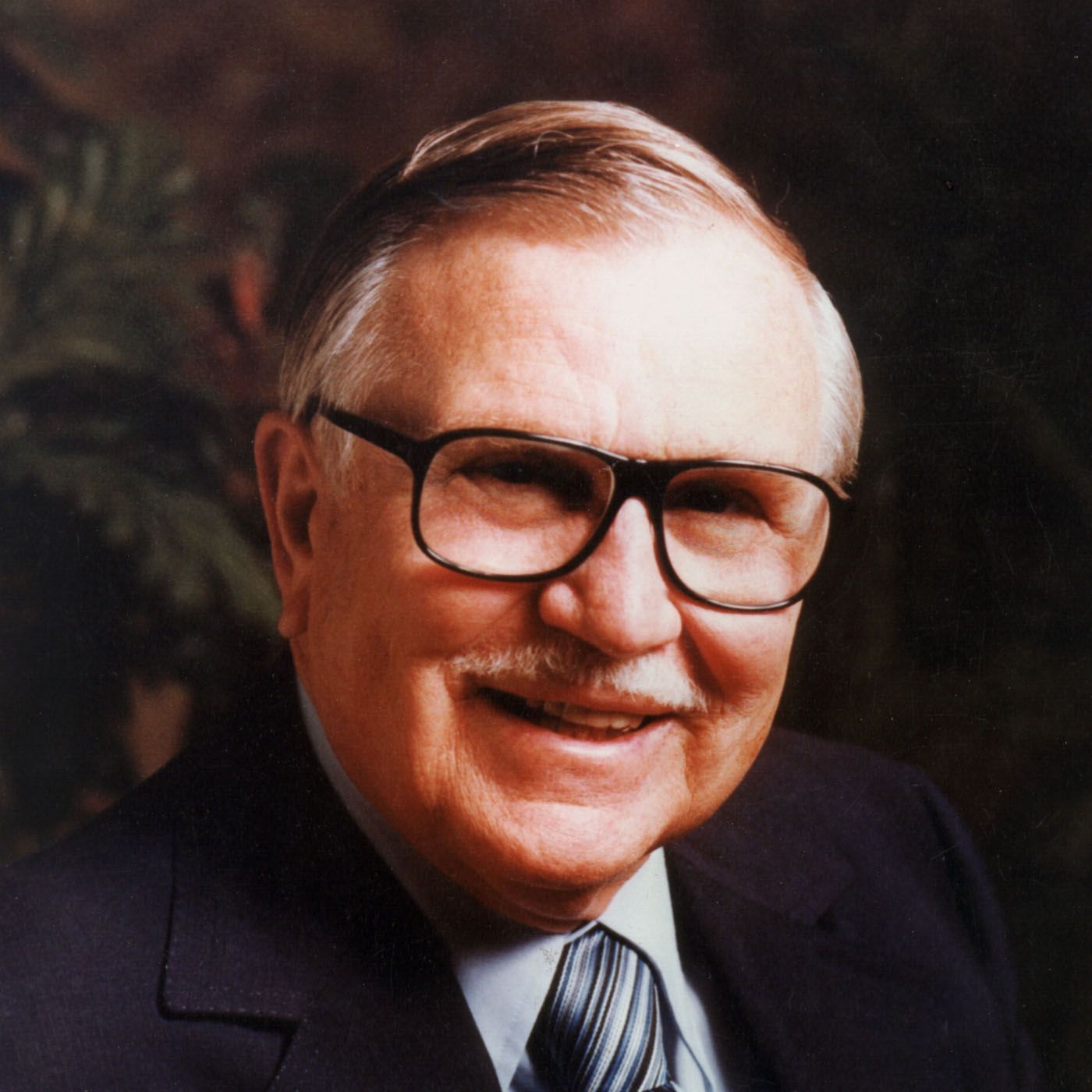
Thru the Bible Daily
Guidelines #3
00:26:01
Does God communicate with us? How? Discover the answer as Dr. J. Vernon McGee introduces four subjects about the Bible: revelation, inspiration, illumination, and interpretation. Understanding them helps us understand how God speaks to us today.
Loading summary
Transcript6 lines
- [00:00]
A
How firm a foundation, ye saints of the Lord is made for your faith in his excellent word.
- [00:18]
B
Does God communicate with us? How well, that's what our teacher, Dr. J. Vernon McGee examines in this study on through the Bible. I'm Steve Schwetz welcoming you aboard the Bible bus as we continue our introductory series called Guidelines for Understanding Scripture. I sure hope that you're enjoying this refresher as much as I am. And if this is your first time hearing it, I hope that you find it especially helpful as you begin your study of the Bible with us. So if you're just joining us and you want to go back and listen to the first two messages in this short guideline series, well, they're available in our app or@ttb.org anytime or call us at 1-865Bible if we can answer your questions about our five year journey through God's Word. Now Dr. McGee's got a lot to cover, so let's pray for each other as we begin. Heavenly Father, thank you for speaking to us through your word. And would you help us to understand and then apply all that we hear so that we can be more like your son, Jesus? Bless us Lord as we listen and then fill us with your truth as we learn. In Jesus name we pray.
- [01:19]
A
Amen.
- [01:23]
B
Here's through the Bible with Dr. J. Vernon McGee.
- [01:26]
A
Now today we return to our five year program of going through the Bible and this is a preface to it. For just a few broadcasts. We are giving guidelines on how to study the Scriptures, how to study the Bible and we have been looking at the Bible itself. Before we get into this matter of giving the mechanics of studying the Bible. We believe that this is essential. Now I said last time that the Bible is a most unique book. No book to compare to it in many ways. But this way primarily it is a book of dual authorship. And what we mean by that is that there is the divine side and the human side of the Bible on the divine side. This is God's book. He's communicated to man. He's spoken here and he's got through his entire word. So much so that if God had anything else to say that he hadn't said in the Bible, well, he's already said it. And if God spoke out of heaven right now, he'd just repeat himself because he said all that he wants to say to this generation. And by the way, he didn't learn anything when he read the morning paper. And when man went to the moon, he didn't discover anything that God didn't already know when he gave us the word of God. And you know, friends, it doesn't look to me like man discovered very much up there either. And it's a pretty expensive trip just to get a sack of rocks to bring back, by the way. And I'll be perfectly willing to go out here on the desert and get them a whole wagon load of rocks and sell them lots cheaper than that. And I think they're very much the same. You see, it's the same God that created this universe that we are in today. May I say to you that that's a thrilling day in which to live, by the way. So that God has communicated with man and that book is the Bible. That's the divine side, but it's a human book. God used about 40 authors over a period of 1500 years. Each one spoke, expressing his own feelings in his own generation. He had his limitations. He made his mistake. Poor old Moses made mistakes. But when Moses was writing the Pentateuch, somehow or another there's no mistakes that got in there. Now, today I'd like to develop these four subjects in reference to the Bible. That is Revelation. Second, inspiration, and third, illumination, and fourth, interpretation. Now, Revelation means that God hath spoken and that God has communicated to man. Inspiration guarantees the revelation of God. And illumination has to do with the Spirit of God being the teacher and not this poor preacher here in Los Angeles. If the Spirit of God does not communicate to you, I can't communicate to you, but the Spirit of God can. And since he wrote the Bible and we give it out, I find out he'll communicate. And that's the wonder of it. That's the glory of it, friends. And then the fourth is interpretation. And here's where we all pull each other's hair. Really, the problem is not that the Bible teaches many, many things. The problem is there are many, many people that are interpreted in the Bible. Unfortunately, they all don't interpret it my way. I wish they did, but they don't. And we just have to go along with them and be patient with them. Because when we all get into his presence, there'll be perfect agreement then. Now we see through a glass darkly. Then face to face, I'll be changed, you'll be changed, and we both will be made right. Someone has said there's always three viewpoints. Your viewpoint, my viewpoint, and the correct viewpoint. We'll get the correct one someday. Now let's look at these. First of all, Revelation. And again, may I repeat it, God hath spoken. And 2500 times we have in the Bible. Thus saith the Lord. The Lord didn't want you to misunderstand that he had spoken. And you will find that in the first chapter of Hebrews he made it very clear that God hath spoken. Let me turn and read. That God, who at sundry times and in divers manners spoke in time past unto the fathers by the prophets, hath in these last days spoken unto us by his Son, whom he hath appointed heir of all things, by whom also he made the world. Now will you note here, first of all, revelation. Wherever you'll find two persons endowed with a reasonable degree of intelligence who harbor the same feelings and desires, who are attracted to each other more or less, you will find a communication between them. Persons of like propensities separated from each other. They delight in getting in touch with each other. Communication, we call it. And they rejoice in receiving a communication from another. And this innate characteristic of the human heart explains the post office department, the telephone and the telegraph. Friends write to friends. Husband away from home writes to his wife and girl at school. They write home asking for money. And ever and anon they sent an epistle of a girl to a boy, and then the boy to the girl. And the sentence not so good there. All of this is called communication. It's the expression of the heart. The Scripture says deep calls to deep. You will recall the story of Helen Keller. I remember the thrill that came to me when I heard her story and read the account of it. Of how this woman shut out from the world in so many ways. Blindness, deafness, and no way to communicate, it would seem. And then that way was opened up and she could communicate probably better than many of us who can see and talk today. And now may I say, on the basis of that, I'd like to ask you a reasonable and certainly an intelligent question. Isn't it therefore reasonable to conclude that God has communicated with his creatures to whom he's committed a certain degree of intelligence, those he's created in his own likeness. May I say to you, if we did not have a revelation from God right now, I think that you could just wait there at your radio and he'd be speaking to you. Because of the fact, my friend, we could expect God to speak to us now. I think that God has communicated more ways than through the Scripture. You will notice that the writer to the Hebrews says that God in the Old Testament spoke through the prophets. And he now has spoken through Christ. And both the prophets in the Old Testament, the revelation of Christ and the New Testament. Both are in the word of God, of course, and that's the only way you'd ever know about the communication from either ones. But I think God communicated through creation. Paul says that. That the invisible things are seen by the things that are made. And the heavens do declare the glory of God. And the firmament showeth his handiwork. But I'm not interested in dealing with that. I believe also that God has communicated with man through the human heart. Don't misunderstand me. Not through visions or anything like that. But I believe that today God has communicated through the experiences that you and I have. I'm sure that many of us can look back on our lives and we can see the hand of God in our lives. But the thing that we're concerned about here is that God has communicated to us through the Bible. And that is His Revelation. And this book has 66 books. And I have in my notes that we send out how you can get the Bible on one hand. And if you have that, and I hope you do, if you don't know the books of the Bible, learn them like that. You put the Old Testament on your tips of your fingers. And you put the New Testament down in the valleys between the fingers. And on the thumb, you just start out there and put the pen at Genesis, Exodus, Leviticus, Numbers, Deuteronomy. Then go over to the finger, the index finger. And on that you put the historical books of the Bible, Joshua, and so on. And then you come to the poetic books. The next finger, middle finger, and you begin there with the book of Job. And then you put the prophetic books, major prophets, ring finger, and you begin with Isaiah. And then you put the minor prophets, Hosea, Joel, Amos, Obadiah, and so on. On the little finger now down between. Between the thumb and the forefinger, put down there the Gospels, Matthew, Mark, Luke, John. Then you put the historical book of the New Testament, Book of Acts. Then you put the Epistles in the next valley. And then in the last one, you put the prophetic book of Revelation. May I say to you that that's the way that God's spoken to us. And there is today an attack that's made upon the word of God. I recognize that. Dr. Elmer G. Homringhausen, former dean of Princeton Theological Seminary, in his book Christianity in America Crisis, he's made this statement. Few intelligent Protestants can still hold to the idea that the Bible is an infallible book. Some might still claim for the original copies of the Bible, an infallible character. But this view only Begs the question and makes such Christian apologetics more ridiculous in the eyes of sincere men. Now, I say that's a terrible indictment coming from a professor in a seminary. But it was made, by the way. And then the seminary up in New York, Union Seminary, a professor there, he made the statement that no intelligent person could believe the Bible is the word of God. Well, I believe the Bible is the word of God. And according to that, I guess that I would not be considered intelligent. According to these men, may I say, they boast of the fact that they are humble. I wonder what kind of humbleness is that. That says everybody that does not agree with them is a fool and they are the only intelligent people. That's a dangerous position for anyone to take in any way. But the very interesting thing is there have been some very intelligent people that have believed the Bible. And there have been some that haven't been so intelligent, apparently, that have brought in, may I say, damnable heresies that are a curse to the world today and plague our society. Let me give you this statement from Dr. Gregg. He says Aristotle's philosophy was the learning of the schoolmen. It cloistered the Bible. It worshipped bones in the churches in an attempt to link them with the apostles. The 10th century was the darkest. But in the 20th century, Aristotle's philosophy, through Maimonides, Spinoza, Hegel and Darwin, worships bones in the universities and museums in an attempt to link them with the apes. It has also given us Unitarianism through Emerson in America, Reformed Judaism through Moses Mendelssohn and Bolshevism through Karl Marx. It is the doctrine of demons and seducing spirits. May I say to you, I like that statement very, very much. May I also add that there have been men that have been intelligent men that have believed the Bible. Another great professor at Princeton Seminary years ago, BB Warfield, it is said of him that he probably had the most giant intellect of any man that America has ever produced. Would you like to know what he says? He says the Bible is the word of God in such a sense that whatever it says, God says. I like that. My friend and Bishop Hadley said there is more meaning in every word of holy Writ than we shall ever get out of it. And I personally believe in what is known as the plenary verbal inspiration of the Scripture. That means that we believe that the Bible is an authoritative statement and that every word of it is the word of God to us and for us in this day in which we live. And may I say to you, that's very important for us to see today the words are inspired. I heard the little story several years ago of the girl who had taken music lessons, singing lessons from a very famous teacher, and she was giving her recital and he came and after it was over with, why she was anxious to know what he said. He didn't come back to congratulate her. And she said to a friend, what did he say? Well, he said that you sounded heavenly. She just couldn't believe he said that. And so she asked again. She says, did he say, I sang? Heaven said, yes, he said that. She said, well, I want to know exactly what he said. What did he really say? Give me the words that he said. Well, if you really want to know the words he said, that was an unearthly noise. May I say to you, friends, an unearthly noise doesn't mean it sounds heavenly. And believe me that it's the words of Scripture that are inspired. And we need to recognize that. We need to keep that before us today. And I'd love to have time to develop that a great deal. But I want today to move on to this matter of inspiration. For inspiration guarantees the revelation of God, and that's exactly what this book says. And two men, Paul writing to Timothy and Peter writing his last epistle and second Timothy's Paul's last epistle. They had something pretty definite to say about the Bible. It's all scriptures given by inspiration of God. It's profitable for doctrine, for reproof, for correction, instruction and righteousness that the man of God may be perfect throughly furnished unto all good works, I.e. 2nd Timothy 3, 16, 17. All scriptures given by inspiration. The word inspiration means it's God breathed. God said through these men, as he said here through Paul, exactly what he wanted to say. He hasn't anything else to add. And the way Peter expresses it, he says in 2nd Peter 1:21, for the prophecy came not in old time by the will of man, but holy men of God spake as they were moved by the Holy Spirit. Now that's very important to see that these men were moved. They were, as it were, carried along by the Holy Spirit of God. It was Bishop Westcott. He says, the thoughts are wedded to words as necessarily as the soul is to the body. And Dr. Kuyper said, you can as easily have music without notes or mathematics without figures as thoughts without words. It's not the thoughts inspired, it's the words that are inspired. Satan was not inspired to tell a lie, but the Bible records he told a lie. It's the words that are inspired. And the Lord Jesus said it is written. It's what the Word of God said. And these men are giving out what God has to say. It's a perfectly human book, but it's an absolute God book, not any more human because it is a God book. And it's not any less being a God book because it's a human book. God used these human writers without destroying their free will, their expression and style. They were not fountain pens that he turned upside down and wrote with them. They are expressing their thought, the Gospels and the Word of God present that which is the living Word of God. And may I say that it follows from that in illumination that only the Spirit of God is the one that can teach us today. That's what Bishop Hadley meant when he said there's more meaning in every word, a holy writ than we shall ever get out of it. And it was Dr. Robinson, pastor in Leiden, who reminded the pilgrims when they set out from Holland. He said this to them. The Lord has more truth yet to break forth from his holy word. Luther and Calvin were great shining lights in their times, yet they penetrated not the whole counsel of God. Be ready to receive whatever truth shall be made known to you from the written word of God. And that, my friend, is the thrill of going through the Bible like this. You know what? I've never been through it and I've been through it now a dozen times teaching it like this. One year program, one and a half year program, two year program, two and a half year program. And now a five year program of going through the Bible. And very candidly, every time something new breaks forth from the page, because the Spirit of God must be our teacher, we're in for a wonderful treat if we'll just listen to that still small voice of the Word of God as he speaks to us from the page of Scripture. And he's wanting to speak. Now. Interpretation has to do with the interpretation that you and I make. That's the human side. And that's the reason they're Methodists and Baptists and Presbyterians and Vernon McGee is because we all have our interpretations. And may I say to you, some of us are evidently wrong. The Bible doesn't teach everything or doesn't teach two things. It teaches just one thing. And that has to do with interpretation. There are certain rules that we'll follow and we'll call attention to them as we go along. No Scripture should be interpreted by itself. I think that is a very important thing. I do not think any of us have any Right to just to lift out one verse and build a doctrine on that verse. And no doctrine should ever be built on an uncertain text of Scripture or a group of them, any solid teaching. And it was Dr. West Cottenhaught who said that actually in our translation, only one word in 90 was ever involved in any question at all. And none regarded doctrine, none regarding that which is vile. You and I can be sure today that the text we have is a reliable text. But there are many versions, and that's confusing today. And may I say this to you. I have all the versions. Every time a new one comes out, I put it in my library. I look at them generally, but I still stick with the Authorized Version. I personally have before me right now the old Scofield Reference Bible. I find it very helpful. I have the new Scofield, but I have difficulty finding my way around in it. It's so new. But may I say to you that the Authorized Version is still a good version, and many of these others are helpful to turn to. Someone asked me if I thought even Living Letters was a good translation. I think it's a marvelous interpretation, but not a translation. And there are some very fine versions today, but most of them are clouded with the personal viewpoint of the one who gave them to us. Now, this gives us something of the background of the book that we are going to look at. And I think that probably we ought to look at the definition of the Bible in closing. This book contains the mind of God, the state of man, the way of salvation, the the doom of sinners, the happiness of believers. Its doctrines are holy, its precepts are binding, its histories are true, and its decisions are immutable. Read it to be wise, believe it to be safe, and practice it to be holy. It contains light to direct you, food to support you, and comfort to cheer you. It's a traveler's map, the pilgrim's staff, the pilot's compass, the soldier's sword, the Christian's charter. Here paradise is restored, heaven opened, the gates of hell disclosed. The Christ is its grand object. Our good is its design, and the glory of God its end. It should fill the memory, rule the heart, guide the feet, read it slowly, frequently prayerfully. It's a mine of wealth, a paradise of glory, and a river of pleasure it's given you in life, it'll be opened in the judgment, will be remembered forever. It involves the highest responsibility, will reward the greatest labor, and will condemn all who trifle with its sacred content. May God richly bless you.
- [24:02]
B
Well, you know, there's no denying it. The Bible is an amazing and wonderful book and we're so glad that you're along for this five year journey through every book and chapter of God's Word. As someone who has been through several trips on the Bible Bus, I offer you one small piece of advice. Get your free copy of our digital book Briefing the Bible. It contains all of Dr. McGee's notes and outlines and they really do make a difference as we travel through each of the 66 books in the Bible, especially when you review them and then you read ahead in your Bible before each study. Now, if you want to download your digital copy for free, you can also get our app or go to ttb.org and look for Briefing the Bible or to get an abridged paperback copy by mail, send us a note through our app or at BibleBustTB.org or or call 1-865Bible and no matter how you get in touch, be sure to tell us how you listen to through the Bible. Do you use our app? Do you stream online? Or maybe you follow us with YouTube or Alexa? How about your favorite Christian radio station? Well, would you let us know how you hop aboard the Bible Bus? As we've mentioned before, this little bit of information is a huge help as we pray and make plans to take God's whole Word to his whole world. Guidelines for Understanding Scripture continues next time with some amazing testimonies from great thinkers and scholars, so don't miss it. I'm Steve Schwetz. Grateful for your company as we study God's Word together. Today's study is always available free to stream or download. Thanks to the generous and faithful investments from your fellow Bible Bus travelers. Just go to ttb.org or download our app to listen again anytime. As always, we'd love to know what's God teaching you.