← Timcast IRL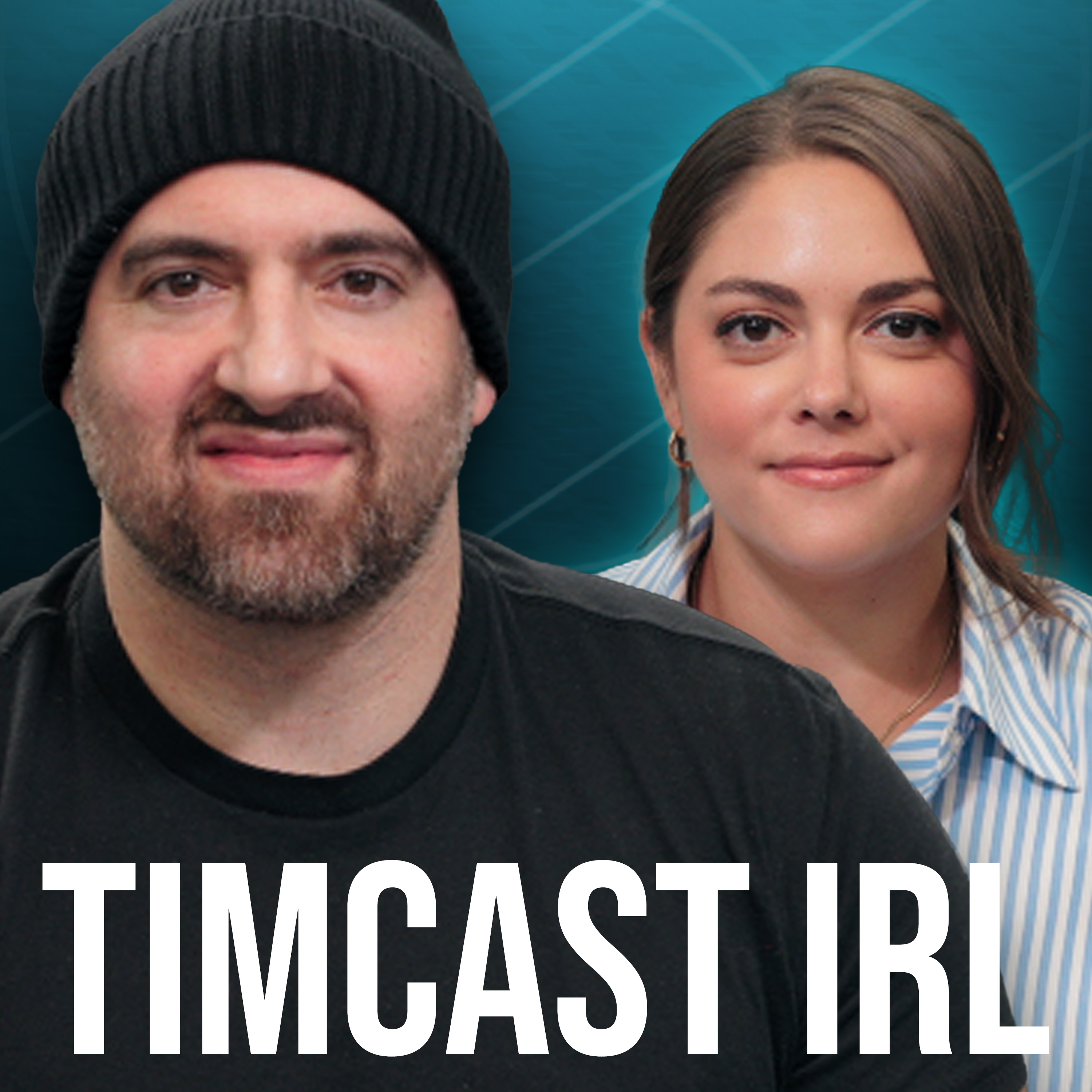
Timcast IRL
Corporate Press Refuses To Mention Minneapolis Shooter Was Trans w/ Amber Duke
02:01:53
Mike Benz, Phil & Mary are joined by Amber Duke to discuss the corporate press making no mention that the Minneapolis Catholic school shooter was trans, US seizing $15 billion from a Mexican cartel leader, Trump calling for RICO charges against...
Loading summary
Transcript408 lines
- [00:00]
T-Mobile Announcer
Back to school is better. With family freedom from T Mobile, we'll pay off four phones up to $3200 and give you four free phones all on America's largest 5G network. Visit your local T Mobile location or learn more@t mobile.com familyfreedom. Up to $800 per line via virtual prepaid card typically takes 15 days. Free phones via 24 monthly bill credits with finance agreement eg Apple iPhone 16128 gigabyte 820099 eligible trade in eg iPhone 11 Pro for well qualified credits end and balance due. If you pay off earlier, cancel contact.
- [00:29]
Amber Duke
T Mobile Phone Ever notice how ads always pop up at the worst moments when the killer's identity is about to be revealed during that perfect meditation flow.
- [00:41]
Tim Pool
On Amazon Music, we believe in keeping.
- [00:44]
Will
You in the moment.
- [00:45]
Amber Duke
That's why we've got millions of ad free podcast episodes so you can stay completely immersed in every story, every reveal, every breath. Download the Amazon music app and start listening to your favorite podcasts ad free included.
- [01:01]
Tim Pool
With prime, we're going to be covering Mexican drug cartels, developments in the pursuit of corruption around George Soros. We're also going to be covering the international censorship affairs and the Trump White House's dueling diplomacy with the European Union and UK and what that means for free speech in America. So let's talk about some great cast brew coffee that you can purchase. Lovely courtesy of the crew here. Our wonderful cast Brew coffee. I'm just gonna put some of this on screen. This is Queen Josie here with our featured products. I've been drinking Caspar coffee a long time. I know our whole team loves it. Appalachian Nights Whole bean. Stand your ground. Also whole bean. You can even drink Ian's Graphene Dream if you're not into coffee. Perhaps you like skateboards. Welcome to our Boonies store. We've got all sorts of boards. There's actually a sign in our skate park that says be gay. You can make of that what you will. We have our Declaration of Independence. Step on snack board. Anyway, it's great stuff, but let's turn now to tonight's lovely guests, Amber Duke.
- [02:22]
Amber Duke
Hi. Thanks for having me. I'm Amber Duke. I'm the senior editor of the Daily Caller, co host of the Hills Rising and Reasons Free Media. And you can find me on X at Ambermarie Duke.
- [02:32]
Mary Morgan
Hi, everyone. My name is Mary Morgan and you can usually find me on Pop Culture Crisis here at Timcast. I am happy to be back.
- [02:40]
Phil Labonte
Hello everybody. My name is Phil Labonte. I'm the lead singer of the heavy metal and all that remains. I'm an anti communist and a counter revolutionary. Let's get into it, Mike.
- [02:46]
Tim Pool
All right, first up, this is still trending in the news today. Corporate media is avoiding all mention of the Minneapolis massacre shooter being trans and all that entails. This is from the Post. Millennial major news outlets avoided or failed to report that the killer who massacred Catholic students at the Annunciation Church and School in Minneapolis on Wednesday on identified as transgender. Those included the New York Times, among others. This is a story that is creating kind of a bit of a cultural schism right now. What also broke today was that the Minneapolis school shooter Robin Westman confessed he was tired of being trans and wish I had never been brainwashed myself. So it's a little curious that the media would omit the key fact of him her being trans when what appeared to be motivating him was that he wished he had never been brainwashed into being trans in the first place. Reading here from the New York Post, he confessed that he was tired of being trans and wished he had never brainwashed himself. In a manifesto posted online before he slaughtered two children and wounded 18 more at a Minneapolis church, he said, I only keep the long hair because it's pretty much my last shred of being trans. I'm tired of being trans. I wish I never brainwashed myself. I too keep the long hair. But you never know because of, you know, how I like to keep my style. I can't cut my hair now as it would be an embarrassing defeat. I feel the pain and it might be a concerning change of character that could get me reported. It always just gets in my way. I will probably chop it on the day of the attack. That's why you gotta always keep your hair long. I regret being trans. I wish I was a girl. I just know I cannot achieve that body with the technology we have today. I also can't afford that. Can't afford a haircut. I like feeling sexy and cute, but my face never matches how I feel. I hate my face. Maybe that's why I like furries so much. You can give yourself a new body and face. I want to be that black face mask on Beyonce's body. Lamau. All right, how do you guys see the developments in this story?
- [05:03]
Phil Labonte
I mean, he was obviously. He was obviously totally tortured, right? Like, he thought that he was a woman or he wanted to be a woman. He aspired to be a woman. Realized that that's not possible. I mean, even referencing the technology today, there will never be a technology that can actually make a man woman, because being a man is something that goes beyond just your genitals or what reconstructive surgery can do. Like they're never going to be able to make men into women. But he acknowledged that and he had no recourse. He'd already kind of destroyed his life.
- [05:39]
Mary Morgan
And I imagine that's probably transitioning. Was he on hrt?
- [05:44]
Phil Labonte
I don't know.
- [05:44]
Mary Morgan
I only knew about the name change and not the rest of it. Obviously he had the long hair. But was he medically undergoing that process? We still have yet to find out.
- [05:53]
Phil Labonte
I don't know if that information has been released at all.
- [05:55]
Mary Morgan
So something that I'm really frustrated by.
- [05:58]
Amber Duke
Is.
- [06:00]
Mary Morgan
The point scoring, the political point scoring that people have jumped to so quickly before they even knew anything about this case. Like there was a point, minutes, maybe not even hour after the news broke that people found out who this was. But it wasn't confirmed.
- [06:20]
Phil Labonte
No.
- [06:20]
Mary Morgan
It was just from a bunch of Twitter accounts. And then people absolutely sunk their claws into this narrative on the right. And I don't want to sound like a fence sitter, I guess I don't care if I sound like a fence sitter, but I also don't want to be misunderstood for saying this. I just have a gut feeling that the trans aspect of this, while it is important to talk about and is not to be discounted for one combinating combination factor and why this happened, it does not explain the whole story. And I honestly, I don't think this was a politically or ideologically motivated attack. I think it, and this is controversial to say. I just think that this is spiritual in nature.
- [07:11]
Amber Duke
It's definitely demonic.
- [07:12]
Mary Morgan
And there's definitely something that rings to me like this person was communicating with a group or maybe a decentralized fragmentation of groups, including ones that I've just heard about in recent weeks, which include 764 and order of the nine angles 09A. I don't know a lot of details because it's borderline impossible to learn about those groups. And that. That is by design. That's on purpose because they're so decentralized. There's also terror gram, which I believe refers to groups on telegram that aim to groom and radicalize people. But they're not even radicalizing them into a political ideology. Their aim is to. Is toward violence for violence sake, evil for evil's sake. They aren't really chaos ideologically. Yeah, they aren't ideological. They're. They're maybe accelerationist, but they don't even know. They don't have an idea of what they're accelerating to. It's just Satanism. Like, they're very expressly Satanist. And the illustration of him looking in the mirror and seeing a demon in his reflection tells me enough that, like, all I need to know about this story, I would rather not learn more.
- [08:33]
Tim Pool
Well, this gets to the conflict between identity and ideology. And if you can pull up on screen here. So there are obviously a lot of ideological things in the manifesto. Pretty spicy opinions about Trump, Israel, Palestine, this sort of thing that made people think, okay, this is a leftist terrorist. Trans person. Glenn Greenwald pointed this out. The shooter also praised Anders Brevik and Brenton Tarrant. Anti Muslim mass shooters commemorated the murdered wife of white separatists Randy weaver and Timothy McVeigh. And saying the need to instantly impose a clear ideology is stupid. At the same time, you have what is an unavoidable pattern. This is From Don Trump Jr. Pointing out the Denver shooter was trans, the Aberdeen shooter was trans, the Nashville shooter was trans, the Georgia shooter was trans, the Philadelphia shooter was trans, the Uvalde shooter was trans, the Colorado shooter was trans, and now the Minnesota shooter was trans. And so there is. I think one of the things that you see being pointed out by the Walsh types is that even if there is no clear ideology, there is something in the water with the untouchable nature of the trans identity until just the past really year that you could even talk about it, frankly. And what appears to be a kind of underlying mental instability that tends to disproportionately give rise to these school shootings.
- [09:55]
Phil Labonte
Do you think that that's just trendy, though? And what I mean is, do you think that people that have sort of an outcast personality or an antisocial personality, do you think that they tend to gravitate towards that kind of trans stuff? Or do you think that there's somehow like the trans actually is part of what makes them outcasts?
- [10:18]
Amber Duke
I think that. So the reason why I think the trans identity is important, and this is actually sort of in line with what Mary's saying, which is that transness itself, I think, is a separation from God, right, Because you're rejecting the way that you were born, the way that God made you.
- [10:37]
Tim Pool
And.
- [10:37]
Amber Duke
And so it perhaps can portend someone becoming possessed or having satanic thoughts or becoming very nihilistic. So I don't see those two things necessarily as in conflict with one another. In fact, I think they're actually really connected.
- [10:55]
Phil Labonte
So the nihilism I get right the feeling like there's no point. And again, this is something. I wonder which came first, the chicken or the egg? Is it the nihilism? Because they don't feel like they, they're in the right body and they feel like there was a mistake or they feel like they should be a woman or do they feel like there should be a woman? And that's part of why they. They're nihilists. You know what I mean? The. The left tends to reject hopeful things. Like when you get to the far left, right. Like, they reject things that we consider good. They reject things like family. They reject things that tend to give people meaning. They say, well, there's no meaning. Even religion, like, so most people know. I'm not particularly relig. I understand that religion gives people meaning and it gives people a reason to get up. And it also gives them kind of a North Star. It gives them some kind of objective way to look at the world as opposed to everything being subjective. If you don't believe in a God, right, if you don't have religion, a religious foundation, then everything is subjective. That means that you have no way to actually judge what is good or bad or no way to kind of focus your efforts in your life to make your life better. And is that why they're nihilistic? Or are they nihilistic because they don't have a focus?
- [12:18]
Amber Duke
From the former White House press secretary Jen Psaki and the Minneapolis mayor Jacob Fry, when they were attacking the power of prayer, it's like, well, first of all, prayer is not a magic bubble that protects you from like, anything bad ever happening to you. That's not the point of it. I mean, to a certain extent, protection, yes, from evil. But isn't it interesting that as religion has declined and religiosity and spirituality have declined in America, that we see mass shootings and school shootings in particular, increasing.
- [12:50]
Tim Pool
Well, this is. Let's map out this week's amazing destinations and travel tips.
- [12:55]
Will
Honestly, Will, I didn't plan any trips, but I did switch to T Mobile with their new family freedom offer.
- [13:03]
Tim Pool
That's not the itinerary we're following.
- [13:05]
Will
Well, I'm departing from AT&T and embarking on a new journey with T Mobile. They paid off my family's four phones up to $3200 and gave us four new phones on the house.
- [13:18]
Tim Pool
Bon voyage.
- [13:20]
T-Mobile Announcer
Introducing family freedom. Our lowest cost will switch our biggest family savings all on America's largest 5G network. Visit your local T Mobile location or learn more@t mobile.com familyfreedom up to $800 per line via virtual prepaid card typically takes 15 days. Free phones via 24 monthly bill credits with finance agreement eg Apple iPhone 16128 gigabyte 8, 299 eligible trade in eg iPhone 11 Pro for well qualified credits end and balance due. If you pay off earlier cancel contact T Mobile.
- [13:46]
Tim Pool
Elon's point, I think he made a tweet that woke has stepped into the vacuum of the absence of organized religion. And to your point, I have on screen from the post millennial attacks on American Christian churches skyrocketed 730% during this exact time period where the T in LGBT really took over. All right, so let's move on now to our next story. And this is Mexican President Claudia Sheinbaum demands U.S. share of $15 billion in drug profits from convicted cartel PA cartel boss. So as the Trump administration is waging this counterinsurgency on Mexican drug cartels and seizing assets, the Mexican government is demanding a cut of the drug proceeds. Mexican President Claudia Sheinbaum said Wednesday she will press the United States to turn over money seized from convicted Sinaloa cartel leader Ishmael El Mayo Zambada. Sheinbaum has argued it should go to Mexico's poorest citizens. I'm sure that's exactly where the money will end up, Ishmael. Call me Ishmael. If the United States government were to recover resources, then we would be asking them for them to be given to Mexico. That's our drug money. Keep your hands off of it, the Mexican president is saying. And so this is the cartel boss is being sought for more than 20 years and was arrested last year. And now they are in the process of seizing assets. This is also happening, I should note, alongside the recent revelations by author Seth Harp on the relationship between Mexican drug cartels and the U.S. military and U.S. central Intelligence Agency, which maybe we can turn to in a little bit. What are your your guys opinions on should we should we give Mexico the drug money or is it ours now.
- [15:41]
Amber Duke
She'S prosecuted in the U.S. right? Like we caught the guy. We're the ones actually holding him accountable. Claudia Sheinbaum, if you talk to pretty much any immigration expert will tell you, is probably captured by the cartel, like at least paid for them if not actively doing policy that is helping them. So like where does she get off telling us what to do with the money that we seized from our investigation in our prosecution? It's none of her damn business.
- [16:05]
Tim Pool
Well, one of the issues is that Mexico became our largest trading partner currently. And so while we do have a tremendous amount of leverage with Mexico, they now have a fair amount of leverage on us. In fact, there's a lot of Texas oil money that depends on shared relationships with Pemex in Mexico. There's Tesla factories being built in Mexico. We're in a sort of pivot war to stop Chinese influence in Mexico and try to get them to commit more and more to our goods. And so there's the question of how much of this is a conflict versus how much is a cooperation. And are you trying to wedge Mexico off of China and if you push them too far, will they partner there? We know Mexico's building a new canal currently that China is trying to get rights over parts of. But what do you guys think about the leverage that we have in the Trump administration's current dealings with Mexico?
- [17:05]
Phil Labonte
I do think that it's in our national security interest to do whatever we can to stymie Mexican. I'm sorry, Chinese influence in Mexico. I do think that the Monroe Doctrine has value.
- [17:17]
Tim Pool
Right.
- [17:17]
Phil Labonte
I think that the. The rest of the world should kind of stay out of the. The hour. This hemisphere, you know, the Western hemisphere. China will do anything they can to attack the United States in whatever way they can. I truly believe that they're an adversary. So anything that they're doing in conjunction with Mexico, any kind dealings, they're not just doing it because they're looking to make some money from Mexico. They're doing it because they're looking for access, or they're looking to be able to access the United States, whether it be through. By working with cartels, you know, sending in the. Sending in the precursors for fentanyl, or whether it be sending Chinese, you know, young men up through the Darien Gap, from South America, through the Darien Gap and up into the United States as. As illegal immigrants. China's looking to do everything that it can to have as much access and influence over the United States as possible. And I think the United States has to do everything that it can to prevent that and stymie China's efforts, which up to. And including making sure that Chinese students can't come to the United States. There was a. I saw a tweet today about the 600,000 Chinese students that Donald Trump had made a remark about, and the White House just pulled that back. They said, this ain't happening.
- [18:30]
Amber Duke
Well, kind of.
- [18:31]
Phil Labonte
What was that?
- [18:32]
Amber Duke
Kind of.
- [18:33]
T-Mobile Announcer
Please go on, please.
- [18:33]
Amber Duke
Yeah, well, they said that it was 300,000 over a period of two years, which is basically an extension of current policy while they negotiate with China. But the number's still too damn high. Right. Like, we should stop all imports of Chinese students until we can figure out what the hell is going on. As Trump would say, maybe in his first term. I mean, not to get too far off the border topic, but Chinese students who are not connected to the CCP, who study in the United States, literally look at class rosters to make sure that there are no other students in the class with Chinese names because they're worried about getting spied on and having the things they say reported back to the ccp, which obviously can come down on their families. So even though they're studying here, like, they're still within the clutches of the Red Dragon, that's.
- [19:16]
Phil Labonte
That's. That's a point that I was making the other night. Like, having Chinese nationals here in the United States. They are going to report back to China. There is no Chinese national that's here in the United States that has family in China that China's not going to use their family to get that person to comply and do something that's just not going to happen. China has no problem throwing your. Your granny into jail to get you to do some action against the United States.
- [19:45]
Amber Duke
I had dinner with a Uyghur Muslim years ago during Trump's first term, and he was talking about how he was speaking out about the concentration camps and basically got a call from his family telling him that his mother had been disappeared.
- [19:59]
Phil Labonte
Yep.
- [20:00]
Amber Duke
And they would leverage that. Every time that he spoke out, they would tell him, well, you're not. You'll never speak to your mother again. And, you know, if he was quiet for a while, he'd get a phone call or there'd be some news report that she was still alive. So, yeah, anyone who's got family in China or has. Has. Wants the ability to travel back and forth like you are under their thumb, even if you don't like them.
- [20:20]
Phil Labonte
Yeah. So to think that. That there's going to be some different policy out of the CCP when it comes to Mexico, I think that's an error and the United States needs to act accordingly. You know, we have massive influence on Mexico, no matter how much Sheinbaum wants to run her face and say, oh, we're our own independent country, and blah, blah, blah, like, the United States is still the United States and has massive leverage power, whether it be soft power or, if necessary, you know, direct military power.
- [20:49]
Amber Duke
Well, we have. Yeah. And it looks like there's members of the U.S. military in boats off the coast now.
- [20:56]
Tim Pool
Yeah.
- [20:56]
Amber Duke
Preparing potentially for incursions if necessary.
- [21:00]
Phil Labonte
Yeah. And so whatever we, again, whatever we can do to stymie China's influence in Mexico, I think is good. And Mexico needs to get on, on board with what the United States wants because the United States is their biggest trading partner. The United States is the most powerful country in the world. The United States has the ability to really influence Mexico and whether it be to their detriment or. Or to their benefit, you know, and being in the good graces of the United States should be something that the United States makes clear is in Mexico's best interest.
- [21:33]
Tim Pool
Right.
- [21:33]
Phil Labonte
And as for the stuff at Fort Bragg and stuff, I haven't, I've not done any kind of digging into that, but I've heard stories about the possibility of like, you know, Special Forces guys.
- [21:42]
Tim Pool
Right. Well, this is what's very interesting. So much of American power in the 20th century grew out of the oil industry, which is really centered in Texas. And Texas and Mexico share a huge amount of oil wealth. And a lot of the oligarchs from both countries went into business together, famously Carlos Slim and the New York Times, the richest man in Mexico and the like. But there has the United States facilitated the drug trade in Central and South America throughout the 20th century to fund right wing death squads in El Salvador, to fund the Nicaraguan Contra war, to fund revolutions all over South America. And so there's been this very long time relationship with Mexican drug cartels, Colombian drug cartels, and the US Military and intelligence services. And another thing that broke today is that HBO just secured rights to develop the Fort Bragg cartel, drug trafficking and murder in the Special Forces into an HBO series which I am very excited to see. This is from Deadline. In what it describes as a quote, fiercely sought after deal, HBO has nabbed the rights to develop the nonfiction book the Fort Bragg Drug Trafficking and Murder in the Special Forces by investigative journalist and military veteran Seth Harp, who recently appeared on Tucker Carlson Democracy now and laid this out, also has this new book out. The book details the investigation into a string of unsolved killings in and around the special operations base, revealing a network of narco trafficking conspiracies that corrupt police abetted and the military covered up. And I'm going to read some findings from that so that folks can understand what's going on here. The scale of death at Fort Bragg is extraordinary. In the book, Harp documents 109 Fort Bragg soldier deaths in between 2020 and 21, with only four in combat. So 105 out of 109 deaths occurred on the base and they were all either murders or suicides. And the he argues that they intersect with a drug running network tied to elite elite networks compiling letters of soldiers involved in a wider trafficking ring, especially moving opiates from Afghanistan. There were the key bridge was a former DEA task force agent turned drug trafficker who was the bridge to the Mexican drug cartel the Los Zetas. This was famously the same cartel that the Obama administration ran guns to ran guns to the Sinaloa cartel to fight against during Operation Fast and Furious. If you remember, there was the gun running this was what forced Eric Holder, the head of the Justice Department, to step down during the Obama administration.
- [24:28]
Amber Duke
No scandals besides a tan suit though.
- [24:30]
Tim Pool
Unreal, right? Right. And so essentially he argues that there's this relationship between the Mexican drug cartels and the special operations forces out of Fort Bragg, who also Fort Bragg is also home to the Psychological Operations center and the Information Warfare center. And these are the same units that are on the ground in drug zones in Afghanistan, in Syria, in let's map out this week's amazing destinations and travel tips.
- [25:02]
Will
Honestly Will, I didn't plan any trips, but I did switch to T Mobile with their new Family Freedom offer.
- [25:10]
Tim Pool
That's not the itinerary we're following.
- [25:13]
Will
Well, I'm departing from AT&T and embarking on a new journey with T Mobile. They paid off my family's four phones up to $3200 and gave us four new phones on the house.
- [25:26]
Tim Pool
Bon voyage.
- [25:28]
T-Mobile Announcer
Introducing Family Freedom. Our lowest cost will switch our biggest family savings all on America's largest 5G network. Visit your local T Mobile location or learn more@t mobile.com FamilyFreedom up to 800 per line via virtual prepaid card typically takes 15 days. Free phones via 24 monthly bill credits with finance agreement eg Apple iPhone 16 128GB8299 Eligible trade in eg iPhone 11 Pro for well qualified credits end and balance due if you pay off early or cancel contact T Mobile Ever notice.
- [25:55]
Amber Duke
How ads always pop up at the worst moments when the killer's identity is.
- [26:00]
Will
About to be revealed during that perfect.
- [26:04]
Tim Pool
Meditation flow on Amazon Music, we believe.
- [26:08]
Amber Duke
In keeping you in the moment. That's why we've got millions of ad free podcast episodes so you can stay completely immersed in every story, every reveal, every breath. Download the Amazon Music app and start listening to your favorite podcasts ad free.
- [26:24]
Tim Pool
Included with Prime Colombia, in Mexico, in Cambodia, in Laos and Vietnam. In the Golden Triangle. So they sit on the drugs. These drugs are used in order to fund proxy wars. Famously, the US Institute of Peace, which was raided by the Trump administration when it refused to allow the US Government to take over the executive branch there. They bolted the doors. They kept a weapons stash in the building. The FBI had to come in and forcibly remove them. They famously, in 2023, told the Taliban to keep the drugs flowing. They said, congratulations on your new government, Taliban. There's one thing you can't do, which is get rid of the opium production in the Golden Crescent. These were the same drugs used by the CIA to fund the mujahideen in the 1970s, when both the CIA and the US military were working with Osama bin Laden and the narco trafficking squad that funded the mujahideen and then funded ISIS and Al Qaeda. The Biden administration told the Taliban to keep trafficking, keep producing those drugs. And now tons of revelations are coming out about the military trafficking the drugs that they ordered foreign governments to keep flowing. And I think this is part of why you never had a designation of drug traffickers as terrorists before, because the US Government, especially the military and intelligence services, are in on it. It's a key part of our war funding. And I'm very excited to see how these revelations are turned into policy actions by the Trump administration. What do you guys have to think about that?
- [28:05]
Phil Labonte
Do you think they will be?
- [28:07]
Tim Pool
I think it's an incredible opportunity to renegotiate the power balance with the uniparty blob as well as with foreign countries. The fact is, is just today, I believe it was a fist fight actually broke out.
- [28:22]
Amber Duke
That's right. It was today.
- [28:23]
Tim Pool
I don't know if you guys, if you can pull a link to that. It's crazy, but in the Mexican Senate, a fist fight broke out between Mexican senators about US Military involvement to stop drug cartels on Mexican soil. This was something that was never done before. This was why Operation Fast and Furious. Let's play this here.
- [28:50]
Phil Labonte
Terrible singers.
- [29:19]
Amber Duke
This is why people hate corporate media.
- [29:26]
Tim Pool
This looks like a UFC way gone wrong.
- [29:38]
Phil Labonte
There's a better video from Right Angle News Network. I tagged you and Tim Minute if you want to pull it up on.
- [29:43]
Amber Duke
X. Yeah, they have. They have some where the camera doesn't cut away.
- [29:46]
Phil Labonte
You can pull that, but because after.
- [29:49]
Amber Duke
The initial blows, another guy tries to step in and then the guy with the beer just like pushes him down to. It's awesome. And people were asking like, well, which one is funded by the cartels? Because they were arguing about that. And all the replies are like, it's Mexico. Both of them.
- [30:02]
Tim Pool
Right, right, right. No, it's like the cinemas on one side, new generation on the other. It's like they all have their squads. But that's because it's so. It's. It is the lifeblood of the economy in Central America, in many parts of South America.
- [30:16]
Phil Labonte
Talking about the drug trade, Right?
- [30:17]
Tim Pool
The drug trade. Right. It is. If you cut it out, then you end up gutting the GDP of the country. You have these populations who would revolt if they were to go hungry and not be able. Because a lot of this is grown by local farmers and the like. This is one of the reasons that so much US aid money would flood into these zones and actually take over much of the drug trade. USAID was busted during the Obama administration. We're gonna watch more of this fight.
- [30:50]
Phil Labonte
It's better view. But you can talk. We can talk while. You can talk while the video.
- [30:56]
Tim Pool
You guys don't want to do a. A bad annotation?
- [30:59]
Phil Labonte
I just don't speak Spanish.
- [31:01]
Tim Pool
He's the guy who does the, the WWE style annotations of these fights.
- [31:07]
Phil Labonte
What's his name? I forget his name.
- [31:09]
Tim Pool
He's still got the tie. I like. They still got the ties on. No one's. Oh, look at that.
- [31:13]
Amber Duke
Guy gets rocked.
- [31:14]
Tim Pool
He's going after the cameraman.
- [31:16]
Amber Duke
Shouldn't have been standing there.
- [31:17]
Phil Labonte
I wonder which one is getting paid more by the cartels. The aggressive guy. The guy that's getting the big checks from the cartels.
- [31:23]
Tim Pool
But this is what's so funny. What's so funny about it is you have these intra cartel wars, like for example during Fast and Furious, which was only a decade ago, and we still don't have answers to because Eric Holder, the Attorney General of the United States jumped on the grenade that was an FBI ATF operation to run guns to the Sinaloa cartel to fight against the Los Zetas cartel who was pilfering billions of dollars of oil. They were cutting open pipelines that were shared by Exxon and Chevron and Pemex, the big state oil company in Mexico. And so they were taking billions of dollars from American multinational companies. And the only alternative was to send in the troops to stop this cartel. But the thinking at the time was you can't send American troops into a foreign country without it being a war.
- [32:16]
Phil Labonte
But the US has used like special forces, like, like direct action guys, like Delta guys to, to go after El Chapo and after other cartel members before. Right.
- [32:25]
Tim Pool
Well, the issue is, is with Cooperation of, of the, you know, the Mexican and Colombian governments. But I think what you're dealing with here is a, is a, was a giant operation. These are multi billion dollar operations and they themselves have a huge amount of firepower. If you guys have ever seen compilation videos of what Mexican cartels are armed with, they're sending Mexican cartels, you can pull this up. They're sending these cartel fighter trainer units, elite squads to go to Ukraine to learn how to operate sophisticated drone technology. And they've got partnerships on the surveillance and weapons front with some of the most elite weapons manufacturers.
- [33:06]
Phil Labonte
Telegram's a great place to see those videos.
- [33:07]
Tim Pool
Oh, it's incredible. And so it is something that you've generally needed cooperation with the government to do at a large scale. And that was not something the Obama administration wanted to do. I believe that's because much of the Obama administration was in on it, just as I. It was the Republicans were in on it during the Ronald Reagan era in the 1980s and in the 2000s with George Bush. We literally went into Afghanistan just months after The Taliban in 2001 declared an end to opium production, to end to poppy development in the Golden Crescent. They took the heroin export in Afghanistan from 80% of the world's supply to 0%. We then promptly invaded and under US military occupation, it ballooned from 0% of the world's heroin to 90% of the world's heroin. While USAID was growing their drug crops, USAID was busted fertilizing the fields in order to make sure that the drugs could grow. Just like USAID was pushing for the drugs to continue flowing during the Biden administration. And, and I believe one of the answers to this on all things Mexico, foreign policy, on all things narco trafficking. And related to this Fort Bragg story is we need the USAID files. On the drug trafficking side of things, the USAID is in this drug business. And currently we have more transparency from the CIA and the NSA and the FBI than we do from USAID. It closed down, but we have 60 years of history that we can't get access to because they're not publishing any of the files from the agency that shut down. What are your guys thoughts on a pressure campaign on this White House to do what Tulsi is doing with the CIA to make sure the State Department now does that with USAID files.
- [35:15]
Amber Duke
Yeah, and I also want to know specifically what programs have been reconstituted under the State Department, because I don't think they've been clear with specifics about what is actually remaining and moving Under Secretary Rubio.
- [35:27]
Phil Labonte
Yeah. I mean, look, any. I don't know exactly what levers, you know, need to be pulled to get the administration to start releasing information about USAID and the, the policies and activities and what they've been done, what they've been doing in the past. But I do think that it's pretty obvious that that's something that the American people would want. Right. Like, they like the fact that these kind of blob for. To use Mike's term, these blob organizations have been significantly dismantled. And it was. It's very popular with the American people. And I think that the next step should be to make this, make their activities something that the American people are aware of. Maybe it takes congressional hearings. I don't know. Maybe it would take something. Maybe Marco Rubio in State has to do something. I'm not the gu to ask, but I think that whatever information can be put out there is something that the American people would want. Right.
- [36:24]
Tim Pool
Yeah. So just a little bit more on this. Then we'll move on to the next thing. We went through this scandal in the 1980s and 1990s, famously with Gary Webb, the journalist who published Dark alliance about the role of the CIA in drug trafficking. And there was a John Kerry, Senator John Kerry, investigation of the CIA's role in. In the drug trade. And the CIA director, John Deutch, had to travel to Compton in Los Angeles to apologize to the black community for the CIA's role in that. And I'll just read one last thing, then we'll move on to the next thing here, which is. This is from the Associated Press. USAID is going away. Here's what it's been doing in South America. And the Associated Press wrote this story arguing that the dismantling of USAID will deliver a major blow to drug control policies in South America. But when they actually interviewed people, it turned out that none of the folks in Mexico, Colombia or other or Peru actually had a problem with USAID shutting down. What they told the Associated Press was actually USAID's takeover of these drug zones in the name of stopping drugs led to a giant drug spike. They were actually not stopping the drugs. It looked like they were proliferating it. If you'll see here, for example, they spoke to. So Peru and Colombia are the two biggest drug zone production places in South America. And in a statement, they said they declined to comment on the US Administration's freeze, but the former chief of the drug control agency in Peru said that USAID's pause is an opportunity to review a partnership that has not been effective. It has always been conditional assistance with politics involved. It has been minimal, often delayed and not integrated. So a parallel structure with the Peruvian state. And then he said that neighboring Bolivia, which expelled USAID in 2013, has achieved better results in controlling cocaine production since then. So actually getting rid of usaid, this is what the former chief of the drug control agency, they formally don't offer an opinion, but they say if you actually look at what Bolivia did, they did better under it. And so I think that all these files around the drug trade and USAID would be incredibly explosive and an opportunity to go after corruption on totally non politicized grounds. Something that Democrats and Republicans I think would both support seeing their own. Just as the black community was enraged in the 1980s and 90s about the CIA's role in the drug trade, I think they'll be fuming when they see USAIDS roll. But let's move on. Let's map out this week's amazing destinations and travel tips.
- [39:15]
Will
Honestly Will, I didn't plan any trips, but I did switch to T Mobile with their new family freedom offer.
- [39:23]
Tim Pool
That's not the itinerary we're following.
- [39:25]
Will
Well, I'm departing from AT&T and embarking on a new journey with T Mobile. They paid off my family's four phones up to $3200 and gave us four new phones on the house.
- [39:38]
Tim Pool
Bon voyage.
- [39:40]
T-Mobile Announcer
Introducing family freedom. Our lowest cost will switch our biggest family savings all on America's largest 5G network. Visit your local T Mobile location or learn more@t mobile.com FamilyFreedom up to $800 per line via virtual prepaid card typically takes 15 days. Free phones via 24 monthly bill credits with finance agreement eg Apple iPhone 16 128GB8 2,999 eligible trade in eg iPhone 11 Pro for well qualified credits end and balance due if you pay off earlier.
- [40:05]
Tim Pool
Cancel contact T Mobile to our next story here, we're now going to turn to the question of George Soros. So this is from the Hill. Trump Soros son should be charged under racketeering law.
- [40:19]
Phil Labonte
There you go.
- [40:20]
Tim Pool
And I'll just go directly to the source. This is the truth heard round the world yesterday. We have the yeah right here at Real Donald Trump. George Soros and his wonderful radical left son should be charged with RICO because of their support of violent protests and much more all throughout the United States of America. We're not going to allow these lunatics to rip apart America anymore. Never giving it so much as a chance to breathe and be free. Soros and his group of psychopaths have caused great damage to our country. That includes his crazy west coast friends. Be careful. We're watching you. Thank you for your attention to this matter.
- [41:01]
Phil Labonte
I love the sign.
- [41:02]
Tim Pool
You got a lot of thoughts on this, but let me pass around the table.
- [41:04]
Amber Duke
Well, I love it. I think it's brilliant. Look, they've been funding, if not directly, at least indirectly, all of the groups that pay people to attend these protests that inevitably turn into riots. And he also funds all of the prosecutors who let the people out of jail. So it really is literally a racket.
- [41:21]
Tim Pool
Yes.
- [41:21]
Phil Labonte
Yeah. The fact that George Soros, the phrase a Soros prosecutor or Soros DA is something that's so well known throughout the United States is a massive problem. George Soros has been doing all that he can touch to fund left leaning, far left leaning DAs and prosecutors that release criminals back into society. You can have all the law enforcement you want in a city. You can have umpteen million dollars, whatever when it comes to law enforcement. But if the judges and the district attorneys don't prosecute and put these criminals away, it doesn't matter. And like we've seen in dc, the amount of people that you actually have to take off the street to radically change the crime statistics, it's not a. The police know the people that are committing these crimes. They can usually call them out by name. They, especially when you're talking about beat cops, they know who's out there committing the crimes. All you have to do is pick these guys up and put them in jail for an extended period of time. And the murder rates go down, the crime rates go down. And that's something that the populations of these cities want desperately. And it's people like George Soros and left wing financiers or whatever, they're the ones that make these cities unsafe because they are the ones that make sure that DAs that won't prosecute crime are elected. They're the ones that dump tons of money into these people's campaigns. This is, is a problem that is fixable if we were to go after the people that are dumping money into these campaigns.
- [43:02]
Amber Duke
It was just a couple of years ago, I think in 20. The D.C. police chief at the time, Robert Conti, said that the average homicide suspect had 11 priors in DC. So you're absolutely right. It's the same people committing crime over and over again. DC obviously has a specific problem with youth offenders, which is almost directly because of the D.C. city Council passing criminal justice reform for the worst of the worst and downgrading charges and letting them back out on the streets. But yeah, it's the same groups of people over and over again.
- [43:36]
Tim Pool
Yeah. Right now, specifically, I mean, there's so many elements of corruption in the Soros Inc. Story. One of the things that the RICO charge is obviously this kind of organized crime network. It's a very powerful weapon. It's a very big, heavy artillery weapon to use. And part of the issue is that. But the way the Soros machine works is that it's done through these philanthropic 501C3 fronts, and it's heavily lawyered up in order to basically use loopholes in the tax system, to use loopholes in the political influence machinery. But the Soros world really trades on national security secrets. I believe the best way to understand the Open Society Institute, the Open Society Foundations, is to look at it how we look at Harvard. Many people say that Harvard is a hedge fund with a university attached because it's a $56 billion endowment. And then you have the university, which is just a pittance compared to that in terms of what it actually requires in maintenance. It gets $9 billion in federal grants. Much of that has been trucked cut by the Trump administration. But then Harvard, their institutes and their centers, they go out and they take the actions that actually help the investments of the hedge fund, the Harvard Endowment, the Harvard Management Company. And so we saw this in the 1990s when Harvard was tasked by USAID, given actually hundreds of millions of dollars in USAID money to reorganize the economy of Russia, while the Harvard Endowment was investing in the. These Russian oil industries and steel industries. And so they were setting the policy inside Russia while profiting off of it. But these. And I do think that there needs to be an interrogation of the. The role of insider trading on national security secrets. Right now there's a lot of attention on the Nancy Pelosi stock trader side of things. Where you will invest. Members of Congress will have insider knowledge about a bill that will affect a business. And they will invest in the stock market to bet on the rise and fall of companies well before the market does well. The way Soros and many of these other big kind of oligarch sort of hedge fund slash philanthropy people work is they work with the State Department, usaid, NATO, their institutions serve as fronts for them. And then the hedge fund bets on those operations that they're facilitating. So the Open Society Institute will operate with the State Department in Mongolia to make sure that we get the rights to a copper or gold mine. But then the Soros Hedge fund will invest in the company that they are working with, the CIA and the State Department, the usaid, to get to get the rights to. They'll do the same thing in Eastern Europe, they'll do the same thing in South America. And I believe that there needs to be a full review of the Open Society foundation security clearance possession. Just this week, Tulsi Gabbard, I believe this is actually just yesterday. This is from the Wall Street Journal. Tulsi Gabbard blindsided CIA over revoking clearance of undercover officer. And this relates to, I think, something like 37 people had their security clearances cut along. The Wall Street Journal says this blindsided the CIA. Tulsi obviously is the head of the intelligence community. But how many people at the Open Society Institute have security clearances? Why has that not been reviewed? What was just, was just broke two weeks ago was actually this incredible revelation from 2016. At the very start of Russiagate in July 2016, Tulsi and the FBI declassified an annex that has been classified for years relating to intelligence from the very origins of Russiagate. And it started off essentially with a plot between Hillary Clinton and George Soros. And I'll read here from the actual annex itself, which was released by Chuck Grassley. And this related to the George Soros Eurasia center, the nonprofits Open Society foundation and Leonard Bernardo, who was the regional director for Eurasia at the Open Society foundation, as well as Jeff Goldstein there. And what they publish is this incredible section in here. Folks can see it. I'm not sure if we can control F in here, but there was a section that said that Hillary Clinton had just approved a plan from her foreign policy advisor to set Trump up to make it look like he was backed by the Russians, that the FBI would come and pour oil on it later, that CrowdStrike would do the media, that we'd come up with some reason, like our critical infrastructure is under attack. And this was an email purportedly from Leonard Bernardo, the head of the Open Society Institute foundation for Eurasia. So somehow George Soros's Open Society Institute knew that Hillary Clinton had approved this false flag plan to set up Trump, knew that the FBI was in on it, knew that CrowdStrike was in on it, to fake digital forensics and argue that Russia had hacked the DNC server. And so how did the Soros Institute know these deep details about the Hillary Clinton campaign to do this plot? Well, we know that they were meeting with the State Department at. When Hillary Clinton was the. I'm going to pull this up on screen here. When she was the Secretary of State, this was put who was in the room. So we know that Hillary Clinton met with George Soros personally at the State Department and they brought along with them the very people who turned up in the classified annex. Jeff Goldstein, the head of the, the senior policy advisor for Eurasia who was named in the FBI in the classified annex here. Does Jeffrey Epstein have a security clearance? Does Leonard Bernardo, how many other people. And I believe we need a full accounting. The same way we publish the JFK files, the MLK files, the Russiagate files. We need all USAID files, all CIA analyst memos that mention the Open Society Institute. Let's put on display for the world the full extent of US Government involvement in this. And I have one more thing to say about that. But what are you guys thoughts when I laid out.
- [50:37]
Amber Duke
Well, this is pretty much all of the former NATSAC officials or IC officials who are on the left wing, which is that they trade in secrets, whether it's leaking things to mainstream media or after they leave service. I use that term very loosely. After they leave the government getting these massive media contracts where they're basically paid to go on and speak with an air of authority about things of which they're not privy to anymore. Like the 51 officials who signed the letter claiming that the Hunter Biden laptop was Russian disinformation, like they didn't have any special secret knowledge about that, but they were using the guise of we have security clearances and we worked in the intelligence community in order to try to provide veracity to that claim. Clapper, Brennan, all of these people had developed these relationships with the media so that they could secure these six figure contributor contracts by. Well, what do we think they were doing while they were in government? They were giving them access to information that they otherwise wouldn't have had access to. And actually this is pretty much exactly what John Bolton is accused of doing, right? Of keeping classified documents or emailing them himself so he could use them for a book deal so that he could write a memoir about his time in the Trump administration.
- [51:59]
Tim Pool
And he, John Bolton, interestingly, was the head of policy and budget for USAID under Ronald Reagan in the 1990s. Right. When George Soros started out the Open Society foundation and partnered with USAID during the Cold War. So this was this left hand, right hand alliance that George.
- [52:20]
Phil Labonte
40 or 50 years at least.
- [52:21]
Tim Pool
Right.
- [52:22]
Amber Duke
And Mike, you were talking earlier about how USAID is often Actually inflating the problem that they're supposedly trying to solve, and how there's going to be so much revisionist history about what they were actually doing if the files aren't released. And I mean, just to provide another example of that, during the AIDS epidemic in the 80s and 90s, the revisionist history is that the US government and Ronald Reagan specifically were homophobic, and that's why the epidemic was able to get so out of control. It's actually precisely the opposite. If you read Marty Makary's book that he released, I think it was two summers ago, I apologize, I can't recall the name, but you can Google it. He talks about how they were stopped from prohibiting gay men at that time from donating blood because it would be viewed as homophobic. And what happened was a whole bunch of people who required regular blood transplants for various diseases or for whatever reason that they were getting infected blood because they had no prohibition on gay people donating blood. In fact, they couldn't even ask them about their sexual activity. So you had a bunch of gay men, specifically in Los Angeles, who had been very promiscuous or were prostitutes themselves, going in to donate blood for drug money or for rent money or whatever it was. And the government basically were like, well, we can't tell them to stop because we would get accused of homophobia. So actually, by doing the opposite of what they accused them of not being homophobic, they made the problem so much worse.
- [53:58]
Phil Labonte
The accusation of bigotry has been incredibly detrimental to our society because it's been used against people so many times when they bring up legitimate concerns. And just this particular one, you know, as an example. But the accusation of, oh, you're just mean. You just. You just have a hateful opinion has done significant damage to the United States.
- [54:20]
Tim Pool
Well, it's fascinating you bring up that example because USAID has a crazy history with using AIDS as a. As a way to have AIDS programs be a front for covert CIA operations.
- [54:35]
Amber Duke
Exactly.
- [54:35]
Tim Pool
I have on screen here USAID program. This is under the Obama administration. USAID program used young Latin Americans to incite Cuba rebellion, saying that an HIV workshop would be the perfect excuse for political goals in Cuba. And you see is beginning in 2009, a project overseen by USAID sent Venezuelan, Costa Rican and Peruvian young people in Cuba in hopes of ginning up rebellion. The travelers worked undercover, scouting for people they could turn into political activists. In one case, the workers formed an HIV prevention workshop that USAID memos called the perfect excuse for the program's political goals, basically arguing that Cuban counterintelligence would never think to look at a USAID AIDS program as the locus point for doing CIA covert action.
- [55:24]
Amber Duke
Do you think that's what Pepfar was?
- [55:26]
Tim Pool
Yes, 100%. And, and I think this is why the military is, is the main blocking point for cutting PEPFAR funds. This was a major PEPFAR was, was a major way. In fact, almost all of aids. If you look at AIDS in Africa, the test that they actually used for it was a I was named after let's map out this week's amazing destinations and travel tips.
- [55:52]
Will
Honestly, Will, I didn't plan any trips, but I did switch to T Mobile with their new Family Freedom offer.
- [56:00]
Tim Pool
That's not the itinerary we're following.
- [56:02]
Will
Well, I'm departing from AT&T and embarking on a new journey with T Mobile. They paid off my family's four phones up to $3200 and gave us four new phones on the house.
- [56:16]
Tim Pool
Bon voyage.
- [56:18]
T-Mobile Announcer
Introducing Family Freedom, our lowest cost. To switch our biggest family savings all on America's largest 5G network. Visit your local T Mobile location or learn more@t mobile.com familyfreedom up to 800 per line via virtual prepaid card typically takes 15 days. Free phones via 24 monthly bill credits with finance agreement eg Apple iPhone16128 gigabyte 802999 eligible trade in eg iPhone11 Pro for well qualified credits and and balance due if you pay off early or cancel contact T Mobile.
- [56:44]
Tim Pool
From unsolved mysteries to unexplained phenomena, from.
- [56:47]
Phil Labonte
Comedy gold to relationship fails, Amazon Music's.
- [56:50]
Tim Pool
Got the most ad free top podcasts.
- [56:53]
Phil Labonte
Included with prime because the only thing.
- [56:55]
Tim Pool
That should interrupt your listening is, well, nothing. Download the Amazon Music app today. A place in Congo I believe the name of the test but it was did you experience significant weight loss in the past 30 days? Do you have diarrhea? Do you have a prolonged headache? These are the sorts of things that happen every day in Africa. While the population rate was skyrocketing, there was no sort of diagnostic. The definition of AIDS kept changing. But what happened was is USAID and military money flowed in and US influence over African governments became a vice grip. In the same way that Big Pharma functions as a lobby in the United States, it functions as a lobby on African governments. And also most of the money for AIDS relief goes to the military warlords and it's used for guns. I documented when Bono came out and was on the Joe Rogan episode arguing that US aid cuts had killed 300,000 people so far. I pointed to the fact that when Bono did the Live Aid and Band Aid fundraisers during the AIDS pandemic, they raised $100 million. And the BBC reported that $95 million went to CIA backed warlords in Somalia, not to AIDS relief. But when you control the relief, you control the logistics. You're riding around in medical vans, you don't get stopped. You have diplomatic immunity. You can transport weapons and drugs and diamonds and guns through the logistics chain that you control. And so the aid really functions as the front line of the operation. It might as well go directly to Special Forces. And so I think that's what's happening here. But I do want to get to one other aspect of this because what we've talked about so far has been reviewing the security clearances, mapping out the other aspects of the corruption. But Trump specifically pointed to RICO because of support for violent protests. And this is something as a free speech activist and maximalist, I'm very wary of what the counter argument will be, which is that protest activity is protected. And even if protests are large or sometimes get unruly, you should be careful about not going after the right of freedom of speech and the right to protest. But to that, I would like to point the Trump administration to where I believe the RICO case is strongest. And this is when it comes to not just being in the streets and making noise and banging pots and pans, but when it comes to organized criminal activity. And I'm going to play from the Soros partnered US Institute of Peace that we referenced here. I'm going to play part of a video here from their own video archive where what they propose is actually this is what they call nonviolent action. And this is what the Soros groups do under the guise of a kind of Gene Sharp Color Revolution style. Nonviolent action is what they call it. This protest activity. Now this is from the US Government. This is on the US Government's video archive. I'm going to play just this section and then I'll get you guys thoughts on this.
- [60:30]
Amber Duke
Third category of nonviolent tactics is nonviolent intervention. These include such actions as sit ins, blocking roads, overloading facilities, establishing parallel or alternative institutions, occupying buildings and acts of civil disobedience and even deliberately seeking imprisonment.
- [60:55]
Tim Pool
So this is the US Government guide that I have pulled up now. Again, this is produced by our taxpayers. The U.S. institute of Peace gets $55 million a year from taxpayers and as a mandatory board spot for the Secretary of Defense and the Secretary of State. These mandatory board spots to have the head of the State Department and the War Department and created by an act of Congress funded by the US Government, our taxpayer dollars. I have their advanced course on civil resistance. Now all of the folks involved in this course have been involved in the violent riots of the past decade, from backing the BLM Summer of Love riots to the ICE riots. And even in their own written guide, they propose that groups. Blockades, blockade roads, blockade shipments, blockade the city. They have an entire training seminar here where they get people to strategize about how to block city intersections. And like. So I believe when it comes to rico, it's, it's one thing, there's no problem with establishing parallel or alternative institutions or being in the streets, being, being a, an annoying person. But blocking roads is a violation of the law. And when that is organized and premeditated, that becomes rico. Occupying federal government buildings. These are the same people who called for a thousand years in prison for anyone who occupied the Capitol building. And yet they will propose to occupy police buildings or government buildings during the Brett Kavanaugh case. These acts of civil disobedience, all of this stuff that means legal disobedience, breaking the law. And so I think when we need a full accounting of the. If a subpoena were to be fired off at the Open Society Institute and Churla in LA with the ICE riots to get their internal documents under court order to see how much of that was premeditated, it's no problem. If you want to protest the ICE raids, no problem with that. But the moment you block the i10 and cut off emergency services and the ability to get mail delivered to people's homes, the moment you do that, that becomes rico. And this is not an accident. What I've just showed on screen are formal U.S. government guides from the very institutions partnered with the source Open Society Institute on instructions to do it and training scenarios for how to do it. So we know these groups did it. There's just never been a court ordered subpoena to actually force them to turn over these documents or to bring the case. And I believe this is where the magic is when you get to this sort of organizational planning. What do you guys think of that?
- [63:46]
Phil Labonte
I mean, anything that you can do to push back on this kind of behavior. The government shouldn't be instructing people on how to, to basically to protest or inhibit, you know, what other citizens are doing to live their lives. Right? Like if you're talking about blocking highways and stuff like that. People have to live their lives. And in the United States, you're free to say, I don't want anything to do with your protest. And the fact that the government is, is helping to instruct protesters, probably paying money, but helping to instruct protesters in how to do nonviolent protests which will harm their fellow citizens.
- [64:30]
Tim Pool
Right.
- [64:30]
Phil Labonte
Like whether it be making people late and possibly losing their job or you got someone trying to go to the hospital and they're preventing people from getting through. Whatever it may be. People have the right to decide to not be involved in your bs and the fact that they're taking the government is funding this kind of stuff, telling people how to frustrate your fellow citizens lives is absolutely abhorrent. It should be stripped from the government and any kind of criminal charges that can be brought up, I think they should do it.
- [65:02]
Amber Duke
I just, I don't view blocking the free movement of people as nonviolent. Right. Like that alone is a fallacy.
- [65:12]
Tim Pool
Well, what's amazing is so this instructor here, Maria Stefan, who founded the US Institute or directed the, she was the head of the program on Nonviolent Action at the US Institute of Peace. She's on record saying that they've cleverly redefined, defined the term non action to specifically exclude property damage from the definition.
- [65:35]
Phil Labonte
Yeah. Insane.
- [65:37]
Tim Pool
So she's asked her opinion about the book how to Blow up a Pipeline and whether or not it's okay to blow up pipelines. And she argues that technically it's okay because under our definition of non violent action, property damage is not included.
- [65:52]
Amber Duke
Convenient.
- [65:53]
Tim Pool
Yes. Right. So these are the same people, but that sort of thing is RICO. And one RICO case on this network would make 200 other actors in the network never want to do this sort of thing again. And so I completely support the Trump administration's pursuit of it. And I think this is the answer you get to these deliberate law breaking sides of it. You go after the organizers, the main institutional cells, you force them under oath to testify and turn over documents and discovery. And I think that would break the whole thing open. But let's move on to the, to what's happening in the, in the international free speech world. So right now, the EU US trade deal is stalled over digital censorship disputes. This is from Reclaim the Net. Efforts to finalize a trade agreement between the European Union and the United States have run into roadblocks, with unresolved disputes over digital policy and market access holding up the release of a long anticipated joint statement. Talks have dragged on as Washington pushes back against what it labels as non tariff barriers, which includes EU's censorship law, the Digital Services Act. Now, if folks remember, during the 2024 election cycle, the head of the EU Digital Commission threatened Elon Musk for talking to Donald Trump on X during their first Public X space. He sent a threat letter saying, if you guys talk about what's happening in the UK right now with the Tommy Robinson street protests that were popping off then you will be fined by the EU for non democratic discourse that impacts hearts and minds in the eu. Now, the irony of that was the UK is no longer even in the eu. So the EU is telling one non EU citizen, Elon Musk, not to talk to another non EU citizen, Donald Trump, about a non EU country, the United Kingdom, and threatening to find them. So what both the EU and the UK are doing right now is attempting to seize long arm jurisdiction over American speech. And they're working with Democrats in the US and never trump Republicans in the US in order to try to take out both of their mutual opposition by using the power of the in power government in bodies in the EU and the uk. And related to this, we have just out today the very guy who threatened Elon Musk for talking to Donald Trump during the 2024 election cycle. Thierry Breton wrote in the Guardian, the EU surrendered to Trump over trade tariffs. Now it's in danger of capitulating again. A fresh US assault is aimed at Europe's right to regulate tech. It's an outrage and we must resist it. And so what he writes here is that essentially he's calling on the EU to not bend to Donald Trump or J.D. vance and to keep the censorship power that they crafted into law in 2022 with this censorship law enforce. And he's cautioning them against basically allowing free speech on the Internet because American free speech impacts hearts and minds in Europe. And Europe will undergo a dramatic surge in right wing populist political parties who undermine Democrat discourse. And so you see this attempt to kind of prop up Europe's censorship apparatus from within their institutions there. And while that is happening, the uk, not to be outdone, passed its own version of the EU Digital Censorship Act. This was, this is called the UK Online Harms Bill. And they are now charging 4chan and kiwi farms $20,000 a day for failing to adhere to the UK's censorship standards under this law. And so now I'm going to read here from an attorney in the case. The 4chan is fighting back on behalf of our clients, 4chan and Kiwi Farms, the law firms of Burn and Storm and the Coleman Law Firm have today filed a federal lawsuit against the UK Office of Communications Ofcom in D.C. federal court. American citizens do not surrender our constitutional rights just because Ofcom sends us an email. In the face of these unlawful foreign demands, our clients have bravely chosen to assert their constitutional rights and I'm going to read a little bit before we get back to the discussion. I'm going to read a little bit of the complaint. This is kind of a legendary page one for Chan Verse. Let's map out this week's amazing destinations and travel tips.
- [70:45]
Will
Honestly, Will, I didn't plan any trips, but I did switch to T Mobile with their new Family Freedom offer.
- [70:53]
Tim Pool
That's not the itinerary we're following.
- [70:56]
Will
Well, I'm departing from AT&T and embarking on a new journey with T Mobile. They paid off my family's four phones up to $3200 and gave us four new phones on the house.
- [71:09]
Tim Pool
Bon voyage.
- [71:11]
T-Mobile Announcer
Introducing Family Freedom. Our lowest cost will switch our biggest family savings all on America's largest 5G network. Visit your local T Mobile location or learn more@t mobile.com FamilyFreedom up to $800 per line via virtual prepaid card typically takes 15 days. Free phones via 24 monthly bill credits with finance agreement eg Apple iPhone 16128 gigabyte $829.99 Eligible trade in eg IPH for well qualified credits end and balance due if you pay off earlier. Cancel contact T Mobile is the world here.
- [71:39]
Tim Pool
Plaintiffs 4chan and LOLCAL LLC in their complaint against Ofcom Introduction the Internet is a global system of communication between computer servers located in data centers around the world. Despite the Internet's global reach, it is more or less universally acknowledged that the Internet is predominantly an American innovation built by American citizens, residents and companies, and the United States is the largest and most thriving technology sector of any G7 member state. Foreign governments, particularly those in Europe, which have not managed to build technology sectors of their own, have sought to control the American Internet hobble American competitiveness through a range of legislative and other initiatives, and they're now threatening us, essentially, they argue, with arrest, imprisonment, I see this as being one of the most fundamental issues of our time. While we have done an incredible job of gutting the censorship industrial complex in the federal government by shutting down the DHS censorship operation, the State Department censorship operation, the USAID one, the National Science foundation one, now the threats are really an international one. Working with the censors in exile in the US with in power governments abroad who do have that power. And so it now falls to the Trump White House and State Department to protect American speech, not from the threat from within that we've had so much for the past six years, but the threat from without that are working with our forces within. I for one, completely commend the Trump White House and State Department. It would have been very easy for them to have ignored this issue and signed a lucrative trade deal that Wall street and donors would have loved. I have to imagine that most donors to the Republican Party care more about getting a favorable trade deal than they do about 4chan's right to free speech. But this to me is really responsive to the base and they're really putting it on the table and putting on the line to fight for our reach, our right to talk smack. What do you guys think?
- [73:41]
Amber Duke
Well, I'm sure the big tech companies wouldn't be thrilled about a trade deal that didn't include these stipulations. Because the UK has fined big tech companies in the US over $30 billion for failing to comply with their speech laws. They threatened to jail not just Elon Musk, but also Mark Zuckerberg. He said recently that he was told he could be jailed if he did not use Meta to silence speech. And then the EU tried to get Google to add fact checks to its search results and next to YouTube videos that popped up on Google search, which they rejected. But of course they'll be fined and threatened with jail as well. So all of these major American innovative, innovative companies and like, I'm not a big tech fan by any means. Right. I mean, they steal Americans privacy. They do censorship on their own terms all the time. But the idea, it's sort of like, you know, you're allowed to make fun of your sibling, but when other people make fun of your sibling, it really pisses you off. That's how I feel about big Tech. It's like, yeah, I want to go after big tech, but like the EU and the UK don't get to do it for me.
- [74:41]
Phil Labonte
No, especially because of the way that they'll go after him. Right. Like, I want to see their policies change and I want to see them more in line with less censorship.
- [74:49]
Amber Duke
They want to do more censorship.
- [74:50]
Phil Labonte
Exactly. And, and these, these European countries are looking to actually find them and possibly do whatever they can to harm their business model just because they won't censor their own citizens, which is completely antithetical. What? Completely antithetical to what we in the west consider normal standards for a Government. Right. Like, it's generally agreed upon in the west that we all believe in the freedom of speech. Now, granted, the United States has the strongest protections because we have it in our Constitution. But if you ask, especially 10, 15 years ago, if you ask anybody from France, anyone from the uk, anyone from Germany, they'd say, no, we have the freedom to say whatever we want. We can share opinions that are controversial. We can do that. They would say that in the UK put something like 3,000 people in jail last year over Facebook posts. It's ridiculous to say that they're even. That they, they have a concern for their populations to be able to express controversial ideas. To say that that's something that they actually care about. Now, that's laughable. That's an absolutely ridiculous statement. So, yeah, I mean.
- [75:59]
Amber Duke
I mean, they'll literally throw you in prison for criticizing immigration policy.
- [76:02]
Phil Labonte
Absolutely, yeah.
- [76:03]
Amber Duke
It's insanity.
- [76:04]
Phil Labonte
Completely insane. And to be honest with you, that is. Isn't a controversial thing. To be honest with you, the idea of, I don't want to have more immigrants in my country.
- [76:13]
Amber Duke
I don't want rape, gangs, like, God forbid.
- [76:16]
Phil Labonte
Well, so, I mean, like, fair enough. That's. That's exactly what they're saying. But just to say something as simple as, no, I think our immigration policy is bad and we should have significantly fewer immigrants into our country. That is a. That is a boring, boilerplate policy preference that should not be controversial in any way. But you can still get picked up by the UK by the police.
- [76:38]
Amber Duke
All of these illiberal losers, by the way, in the US who think Trump's a fascist. Like, if you can't criticize your own government, they love Europe. These people love Europe. If you can't criticize your own government, like, you're not a free person.
- [76:51]
Phil Labonte
No, not at all.
- [76:51]
Amber Duke
You're living under tyranny.
- [76:53]
Tim Pool
No, that's exactly right. And I'm delighted to see that there is. Now, this is an easy thing to do, but it's an easy thing not to do. And it also gives an opportunity for the Trump base to grow up and understand the international picture. I think what drew most people who support Donald Trump for president or are sort of populist in the modern age was not necessarily because of foreign policy or international relations, but rather because they cared about their own country. They wanted to make their own country great again. They cared about their own schools, their own cities and crime rates. And so there has always been this kind of knock on the MAGA movement or the supporters of Donald Trump that they're isolationist or they're little 10. They don't understand the big wider world. They don't understand trade and international relations. And this issue with Europe right now has forced us to in order to so that I think we have a clear lens on our own place in the world. I want to play a clip here to drive home the importance of this issue to the audience. This post is titled Censorship Industry Insiders Plot to Leverage EU Censorship Laws to Force X to Restaff Fired Censorship Workers. This is in 2023, after Elon cleared out the Trust and Safety team. Featured here are the head of Toxic Conversation research for Twitter 1.0, a fellow at the Atlantic Council, which has seven CIA directors on its board and is funded by the State Department, the USAID and the US military. Four branches of the US military, as well as another member of the National Noun for Democracy, which was set up by the Central Intelligence agency in the 1980s to fund money to groups that the CIA didn't want to look like it was funding. They admit this as much publicly. This is 1 minute and 22 seconds. And this is from two years ago. And by the way, every person on this panel is an American. And here's what they said in the aftermath of Elon Musk's acquisition of X and all of their inside contacts in the censorship industry at X being fired. I'm going to play this. If it weren't for Europe right now, I think that I would feel pretty defeated and despondent in this moment. It is certainly become much, much more.
- [79:20]
Mary Morgan
Difficult for outside research to do the.
- [79:22]
Unknown Guest
Sorts of right of the options that.
- [79:24]
Tim Pool
You list, Sameer, to actually engage directly.
- [79:28]
Mary Morgan
With people at the platforms because there.
- [79:30]
Tim Pool
Are simply fewer of them. Right.
- [79:32]
Unknown Guest
We spent literally years building up relationships.
- [79:35]
Tim Pool
With good folks at all of these platforms who are trying to do the right thing. And for the most part, they're gone. Right.
- [79:42]
Unknown Guest
It's really, really difficult to know who.
- [79:45]
Tim Pool
To reach out to, who to work with.
- [79:48]
Unknown Guest
If it weren't for the European Union.
- [79:50]
Tim Pool
And the Digital Services Act, I don't know that we'd have much hope of rectifying that situation at all.
- [79:57]
Mary Morgan
But given the sort of requirements that.
- [80:00]
Unknown Guest
For performing risk assessments, for sharing more transparent information with the public, and crucially.
- [80:06]
Tim Pool
For sharing data with researchers, I do think that we still have some options.
- [80:13]
Unknown Guest
For leverage to continue the work that.
- [80:15]
Tim Pool
We'Ve been doing and hopefully ultimately that leads to a sort of restack. Staffing of some of these positions increased focus again as the DSA begins to come to force and the platforms feel.
- [80:29]
Unknown Guest
The real pressure of actual enforcement action.
- [80:32]
Tim Pool
So this, so these are American censors with multi six figure censorship jobs from 2017 to 2022, saying that they would feel desperate and despondent if not for a foreign government, a foreign regulatory body's censorship law, which will put real pressure on the tech companies to restaff them, get them their old power and money back and that once it comes into force, it will exert that leverage on them and it will force them. Now she says risk assessments, that's for quote, disinformation risk. Because now every American tech company has to submit a report to the EU about their own assessment of the risk of allowing different kinds of speech. Allowing what? Disinformation. The risks there are to allowing people to challenge COVID vaccine mandates or support for different anti democratic candidates in the EU and the like. And so these are the same people who are explicitly plotting with the eu. If folks recall Nina Jankovic who was the head of our disinformation governance board earlier this year, she testified to the EU that they need to stand up to another foreign, another authoritarian country besides Russia and it's the United States of America. And what was she doing? She was testifying to the EU about the need to keep this censorship law in place and maximize it. She also did that. She registered as a British foreign agent. She had a far registration for her work after the disinformation governance board at a USAID funded censorship shop called the center for Information Resilience. So what you have again are these censors in exile who see that they've lost power over our own federal government. But the only way to get the tech companies to censor political speech at the scale that they need in order to win is to have a government with regulatory power. The ability to find these companies into oblivion, to box them out of markets. If Facebook lost Europe, if X lost Europe, that would be huge. There's more people in the EU than there are in the United States. It's 550 million customers. They need that. And so those regulatory have bodies. But Facebook and Google and X can't fight that. They can only turn to. They don't have a military to leverage, they don't have a trillion dollars in trade to leverage. Only the White House and State Department can do that negotiating. And I'm happy to see that this is now becoming front and center because this has been the issue since the start. And next week I believe Jim Jordan's House Judiciary Committee is going to be hosting a specific hearing on this. And I'm delighted to see this action. Is there anything else that you guys think that you'd like to see the Trump administration like to do on this issue?
- [83:29]
Amber Duke
Well, I just wanted to give a little more context on these individuals who were hired by Twitter in 2017 and 2018. All of them are academics. The woman we heard from, Rebecca Tromble, works for a university in the Netherlands. So she's over there researching, talking to colleagues all day, probably about censoring people. All of the academics had a history of studying right wing populism, diversity, and Islam, so it's pretty clear what they were brought in to do. And her statement when she was hired, she said, in the context of growing political polarization, the spread of misinformation, and increases in incivility and intolerance, it is clear that if we are going to effectively evaluate and address some of the most difficult challenges arising on social media, academic researchers and tech companies will need to work together much more closely. So it wasn't even just about disinformation, but about really any political speech that could be categorized as uncivil.
- [84:28]
Phil Labonte
Well, it's worth noting, too, and you know, this is probably stating the obvious for a lot of people, but, like, these people haven't gone away. So when the Democrats come back, or if Democrats get back into power, these people will be ushered back into the government. All of the organizations, the bureaucracies that they once inhabited, they will be propped back up. They will be reinstated, and they will go after conservatives. They will come after conservatives that have been speaking out against them. They will align with Europe, and they will try to go after businesses in the United States. They will go after people that do podcasts, people that are influencers. They will go after everyone that they can. And if you think they won't, if for a second you're like, no, they won't, that stuff's gone. Remember what they did to parents that went to complain about what their children were learning in school?
- [85:21]
Tim Pool
School, yeah, right.
- [85:22]
Phil Labonte
Like, if it wasn't for Covid, parents wouldn't have seen what children were learning in schools because the remote classrooms that were going on, parents saw that. And that was kind of the first step where parents were like, holy crap, wait a second, what are my kids learning? And the government interceded on behalf of the schools because the government believes that your children are actually the government's children. So all of this stuff is going to be brought back full force when Democrats get back into power. So don't think that it isn't.
- [85:52]
Unknown Guest
Let's let's make it not like. Not if or like when. Let's, like, make sure we don't ever let that happen. But I think it's a huge part of what people have been saying. If the right doesn't use these tools now, we'll never get the chance to use them again. We'll never be able to do this because they will get into power and then they will do it. They have no fear of doing it. They never had any fear of separating families, actually. Not at the border like they claim that we've done so many times.
- [86:11]
Phil Labonte
Grandma died alone, and you had to look at her through a glass. You had to stand outside the room and watch your grandmother or your mother or your father die alone. They will do it. Do not think they won't.
- [86:26]
Unknown Guest
We have to use these things now. Have to do it now.
- [86:29]
Tim Pool
Right. And to Amber's point, I caution people to X ray through the academic label because you can't spell academia without CIA.
- [86:41]
Amber Duke
Yeah, it's a red flag.
- [86:43]
Tim Pool
Academia is the shadow diplomacy realm. There is this revolving door. What is Hillary Clinton doing now? She's at Columbia University. What is Mike Pompeo, the CIA director, doing? She's right next to Hillary Clinton at that same SIPA school at Columbia University. What's Victoria Nuland doing right now? She's at Columbia University with Hillary Clinton and Mike Pompeo at the same SIPA School for International Affairs. What did Mike Pompeo do during the latest attempt to have a peace deal negotiated before the Alaska trip between Ukraine and Russia? Mike Pompeo from Colombia went straight over to Ukraine and advised them to take offensive action effectively if they wanted to scuttle the deal or get more favorable terms. And so they use academia as the front. This was the same thing done through the Stanford Internet Observatory to censor the 2020 election. And who was running that department? It was Michael McFaul, who was the US ambassador to Russia, the guy who's coordinating the statecraft intelligence, who was the head of the technical affairs there. It was Renee Diresta, who started her career in the CIA, who was the. Who was the actual head of the place itself. It was Alex Stamos, who was doing the Russiagate crap at Facebook during and during, you know, working essentially to try to maximize censorship at that time. And I'm going to actually pull a quote here because you mentioned something else, which was that another thing that gets leveraged is pressure on companies. And this we saw happen during the Elon Musk fight with the Brazilian government when they shut down X Not only did in 2024, I believe in April, the Brazilian government force X to close for a time, but they also seized assets from Starlink, a completely unrelated issue, just because it was connected to Elon Musk. And so this is the head of, again, you can call it an academic institution, but this is essentially a cutout front for a statecraft and intelligence linked network to try to achieve foreign policy goals by destroying political candidates who get in the way of those foreign policy goals. And so this is the head of the Stanford Internet Observatory here I'm gonna. This is the clip where he, right after Elon bought X, he said, taunted Elon Musk that he bought himself into a hellish existence the week Musk acquired Twitter. And then he goes on 14 times to name Tesla and notes it has a vulnerability that governments could exploit to force Musk to censor speech. And I'm just gonna play this one where he says, this is the head of the Stanford Internet Observatory, which worked in a consortium with the very Atlanta Council that two of these folks in this clip, both Katie Harbath and Dean, this whole crew is affiliated with the same NED at Land Council Network. And so he goes on to. I'm just gonna play this clip. It's a minute long. And this was, this was from right after Elon acquired what was then Twitter. The really hard thing for Musk, and this is where I'm saying I think this is a huge strategic mistake for him. And the people who should be really angry today are Tesla shareholders, because most of Musk's net worth is tied up in Tesla shares. Tesla is a company that actually makes stuff that has to follow the law to ship products around the world and has huge exposure to all of these different regions that want to control the Internet. That is, you know, as you and I talk about all the time, the number one fight over. Let's map out this week's amazing destinations and travel tips.
- [90:26]
Will
Honestly, Will, I didn't plan any trips, but I did switch to T Mobile with their new Family Freedom offer.
- [90:34]
Tim Pool
That's not the itinerary we're following.
- [90:36]
Will
Well, I'm departing from AT T and embarking on a new journey with T Mobile. They paid off my family's four phones up to $3200 and gave us four new phones on the house.
- [90:49]
Tim Pool
Bon voyage.
- [90:51]
T-Mobile Announcer
Introducing Family Freedom. Our lowest cost will switch our biggest family savings all on America's largest 5G network. Visit your local T Mobile location or learn more@t mobile.com familyfreedom up to $800 per line via virtual prepaid card typically takes 15 days. Free phones via 24 monthly bill credits with finance agreement eg Apple iPhone16128Gigabyte8,299 eligible trade in eg iPhone11 Pro for well qualified credits end and balance Pay off early or cancel Contact T Mobile.
- [91:17]
Phil Labonte
From unsolved mysteries to unexplained phenomena from comedy goal to relationship fails.
- [91:23]
Tim Pool
Amazon Music's got the most ad free.
- [91:25]
Phil Labonte
Top podcasts included with prime because the only thing that should interrupt your listening is, well, nothing.
- [91:33]
Tim Pool
Download the Amazon Music app today. The next 10 years is going to be who gets to control what speech is allowed online. And every government outside of the US with our First Amendment wants to do that. And so Musk has done something that is unprecedented here, which he has said I am personally responsible for content moderation on this platform. And by the way, most of my money is in a car company that makes and ships cars in all of these jurisdictions. Tesla has a factory in Berlin. Berlin, the headquarters of European Content Moderation. Right with Germany and that's dg. So he's basically you know, suggesting that if they want to coerce censorship on X, they should target the personal assets or equity holdings or the, the essentially go try to get the shareholders to do a color revolution ground up, you know, revolt at a corporate level against Tesla in order to compel censorship at X.
- [92:41]
Amber Duke
That's basically esg.
- [92:43]
Tim Pool
Yes, yes, true. But we also saw this during. These are the same folks who are involved in the Tesla takedowns that you know, I think helped drive a wedge between the, the Trump and Elon sides of the White House. I mean there's a. If I played clips earlier from Maria Stefan and the US Institute of Peace and this is, we saw this same thing with this group being involved not just in, you know, essentially hinting to the, to the German government that they could go after Tesla there three years ago, but this very same network. And I'll play this clip here. This is Erica Chenoweth who is, who was a visiting expert at the US Institute Institute of Peace on their nonviolent action program. She was a co author of books on how to do color revolutions with Maria Stephan, the head of the program on nonviolent Action action at the taxpayer funded and founded US Institute of Peace. Here's her from just two months ago. This clip is called how to impose Direct costs on Fascists. Erica Chenoweth on moving beyond protests. And I'll play a little bit but I of, of this because there's 2 minutes and 45 seconds. But then I'll, I'll want to focus on the end part of the clip.
- [94:02]
Unknown Guest
Just gotta mute that. Sorry man.
- [94:07]
Tim Pool
Is that right?
- [94:07]
Unknown Guest
Yeah, I'll just take it for you.
- [94:14]
Tim Pool
I think sometimes people look at movements and they think, okay, there's persuasion and.
- [94:19]
Phil Labonte
That'S for voters in an election.
- [94:21]
Tim Pool
And then there's protest. And that's separate from persuasion. That's just bodies in the streets. But it seems like they really are. They need to work together.
- [94:30]
Unknown Guest
Yeah, that's a good question.
- [94:33]
Amber Duke
She looks exactly how you'd expect.
- [94:34]
Unknown Guest
Jean Sharp, who is considered by many as being a really like potentially the key intellect in the latter part of the 20th century on nonviolent action.
- [94:44]
Tim Pool
Now she keeps citing Gene Sharp here as their godfather, as they all do. And I want to just point out a couple facts about this to again connect this to the larger network. Gene Sharp was. His institution was given $50 million by the US military. He and Henry Kissinger were part of something called the CIA at Harvard. It was a cleverly named clever acronym. It was the center for International Affairs. So the acronym is CIA. So it was colloquially called the CIA at Harvard. And they received $50 million from the US military as part of Project Camelot, one of the most infamous Cold War social science projects. The Manhattan Project of social science, whose goal was, was methods for predicting and influencing social change and internal warp potential. How to essentially create civil wars in order to overturn governments who didn't give the World bank or the US State Department what they wanted. And this was a. It was run by the office of the Chief of Psychological Warfare, which you know, is going to get us back to this Fort Bragg sort of idea. But this was $50 million in military funding in order to come up with this playbook for how to topple governments through a, a bottom up people powered color revolution instead of a direct military coup or military invasion. But it was still a military thing. Mobs in the streets, as George Soros does, as these networks do, are a paramilitary action. They're essentially a kind of special forces, small wars type thing. But that's who she's citing here. The $50 million in Pentagon contracts for psychological warfare. This is the guru.
- [96:37]
Unknown Guest
The theory of civil resistance kind of makes the kind of categorizes methods of nonviolent action into three buckets. And the first bucket is what he actually calls protest and persuasion. That's the first bucket. The second bucket is non cooperation. And the third bucket is what he calls alternative institutions or methods of nonviolent intervention which Includes alternative institutions. And the reason in the first bucket he puts protest and persuasion in the same category, I think, is because of this kind of tacit acknowledgement that protest is a largely symbolic action.
- [97:15]
Tim Pool
The reason that she's bringing this up is, you'll see it's called moving beyond protests. And this was at the time of these Tesla takedown attacks. And so I'll let it play here.
- [97:24]
Unknown Guest
Protests as such, as opposed to, say, strikes, are there to make a point. And it sort of depends on what the movement is trying to do. Is it just trying to make a point or is it also trying to articulate new values? Is it trying or the movement's own values? Is it trying to set the agenda? Is it trying to put pressure, you know, on particular policymakers to advance new policies or plans or to get on their side or whatever? So there's lots of things that can be done with protest, but it's largely a sort of communication device between the movement and the public. Sometimes it can serve an organizing function because it's a way of people to find themselves in a movement and then they can be further engaged through mass organizations and things like that. But it's largely like a communication and signaling device that's compared to things like mass non cooperation like the strike or different types of social ostracization campaigns and things which are meant to impose direct costs. And they do impose costs. Right. So if you look at things like the Tesla sellbacks and the suggestion to people that they should not buy Teslas or to make showrooms like uncomfortable places for people to be and therefore they.
- [98:46]
Tim Pool
Don'T go to make showrooms uncomfortable places to be in. This is showing up in someone's place of business. And not just because it's one thing to say, okay, we're not going to buy this product. I wouldn't buy a George Soros product product. But to make showrooms uncomfortable places to be in. And these are the same people. And I'm just gonna show you guys this on screen. I showed you guys earlier the official. You paid for it. Taxpayers Civil Resistance advanced course, a 312 page guidebook from the US government on how to organize riots and block roads and deliberately get yourself arrested so that the media can portray you as a martyr.
- [99:24]
Unknown Guest
Institute of peace.
- [99:25]
Tim Pool
You'll see that she is actually one of the contributing experts to this very guidebook. But I know that we do have to get to the super chats. So let me remind everyone to go to Timcast.com and check us out on rumble and YouTube. You guys have been with me here for so many years. I really appreciate it. I know my reconstruction surgery is a little off putting, but you'll get used to it. It. I hope the beard implant is aesthetic. I'll have no regrets being trans faced years from now. Schools are safe, but let's turn now to the super chats. All right, should I just start off.
- [100:10]
Unknown Guest
Just mention the name and then just read off the comment.
- [100:12]
Tim Pool
All right. $2 from Raymond G. Stanley Jr. Tim. I can't place it, but you look different. Well, you know, I. I let the.
- [100:20]
Phil Labonte
Beard grow while Tim was away. He became a member of the clean plate club and started lifting heavy weights.
- [100:27]
Tim Pool
All right, so Heron Gaming News member for 33 months. All right. Thank you for the sport.
- [100:32]
Unknown Guest
Thank you.
- [100:33]
Tim Pool
I wonder how the left can continuously deflect and blame guns rather than just admit that these events are about mental health, not the tool.
- [100:41]
Unknown Guest
Yeah, it's wild because they'll tell you that they have all these mental health problems and then immediately after, say, and this is how we should do, do our structure, our. Our monetary policy going forward for the next 15 years. What are you talking about? It's just complete. It's nonsense to me. But anyways, let's keep going to this right here.
- [100:57]
Tim Pool
All right? Oh, okay. Court. Okay. Well, Corey, you've got a love letter. David Bricken, $50. All right, thanks. I need proof of life at this point. Let me see Tim and we'll discuss the terms of release. Tim Rose. Go. I'm right here. Ready to rumble. We got. Okay. Shane Wilder.
- [101:20]
Phil Labonte
Shane H. Wilder.
- [101:21]
Tim Pool
Shane H. Wilder. The corporate media doesn't want to call a spade a spade because that goes against their narrative. That. And they only care about the quote, evil guns, not a demon possessed trans dude killing Christians.
- [101:32]
Unknown Guest
True. Yeah, true that.
- [101:34]
Tim Pool
True. Yeah. They, the trans community, a lot of.
- [101:38]
Mary Morgan
People blaming it on guns as much as they've been blaming it on misgendering like that. I've seen more people blaming it on this person getting misgendered than guns.
- [101:48]
Phil Labonte
Person misgendered himself.
- [101:50]
Tim Pool
I know.
- [101:50]
Phil Labonte
Yeah, he was doing it himself. I don't know what they're talking about so openly.
- [101:53]
Mary Morgan
Like, I'm a man.
- [101:54]
Tim Pool
Yeah.
- [101:54]
Phil Labonte
I, this is. He's like, I, I don't know. I don't like what's going on here. I wish I was a woman, but clearly I'm not.
- [102:00]
Tim Pool
Yeah.
- [102:00]
Unknown Guest
I've seen so many people like claiming like, oh, well, this person was clearly like a straight male. Like, he said it themselves. I'm like, yeah, I mean, you're totally ignoring major context in his story where he said he was mad that he. That he convinced himself of this. Frustrated with the situation, frustrated that he couldn't back out of the situation because his own community was then going to rally against him and cancel him. In all these ways that we just talked about, just removing, removing or like, I guess, holding them accountable. Again, it's the same cancel culture. So we've heard a thousand times over. And he says that in the manifesto that was released, and people are still saying no, no. He claimed he was a straight guy. Like, what are you guys talking about? It's. It's so disingenuous, and it's what they've been doing for so long that to have this happen like this and then them to go, no. Well, it's the guns again. It's just. It just drives me insane. You guys probably see me posting on Twitter about it, but it's. It's just ridiculous. Like, right here is a good example of this one right here.
- [102:52]
Tim Pool
Oh, what? When it. When should the shooters back. That one.
- [102:54]
Unknown Guest
Yep. That one there.
- [102:55]
Tim Pool
Okay. AK storm 49 for $2. When should a shooter's background be highlighted and when should they be suppressed? I've always heard we don't want to give the POS the airtime because they wanted that, but how do we learn from it?
- [103:07]
Unknown Guest
And then this next nerve of it.
- [103:08]
Tim Pool
Yep. And welp, that is bad for the optics. A trans. Not wanting to be trans. $1 from Saint Miles. Thank you.
- [103:14]
Phil Labonte
Yeah, I mean, the fact that it's someone that kind of was basically, you know, stepping away from the religion. It's. It's, you know, you can't. It's an apostate situation. If you are. If you express any kind of, you know, doubt in the religion, in the ideology, you know, they want to do all they can to disown you or at least or to, you know, discredit you as much.
- [103:36]
Mary Morgan
They don't want bad pr.
- [103:37]
Phil Labonte
Yeah.
- [103:38]
Mary Morgan
Too late, though.
- [103:39]
Amber Duke
Yeah. They hate you. Detransitioners with a passion.
- [103:42]
Tim Pool
Yeah. 9.9.99 from the skull kid. How is literally writing Kill Donald Trump on his magazine not politically motivated?
- [103:52]
Mary Morgan
Because his political statements were a total cacophony of nonsense in, like, three different languages. Like, he's obviously a lunatic, and I don't think we should just take the things that were written in his journal, the manifesto, the guns, at face value. Obviously, he's crazy.
- [104:10]
Tim Pool
Yeah. It's like when they couldn't find a motive for the Butler shooter. He. He shot the President. In the face in broad daylight. What was his motive? Yeah. Oh, that's the President of the United States. Oh, I thought that was just a random speaker.
- [104:23]
Mary Morgan
Think about, about the, the shooter in Tennessee from. When was that? January of this year.
- [104:28]
Tim Pool
Yeah.
- [104:29]
Amber Duke
The black guy.
- [104:30]
Tim Pool
Yeah.
- [104:31]
Mary Morgan
The through line there is that he had a manifesto of sorts talking about how he's a Nazi and he's, he hates all non whites. That obviously is a, it's a political statement but it makes no sense because he's a black man. Why is he saying that? It's just probably because he's, he's brainwashed and we never found out more information about who he was in communication with. I just saw a through line between this shooter, the shooter in Tennessee and the shooter in Wisconsin. Like all the same aesthetics, all the same language, all the same speech patterns. They kind of look the same, dress the same. The obsession with the Columbine shoot.
- [105:15]
Tim Pool
Let's map out this week's amazing destinations and travel tips.
- [105:19]
Will
Honestly Will, I didn't plan any trips but I did switch to T Mobile with their new family freedom offer.
- [105:27]
Tim Pool
That's not the itinerary we're following.
- [105:30]
Will
Well, I'm departing from AT&T and embarking on a new journey with T Mobile. They paid off my family's four phones up to $3200 and gave us four new phones on the house.
- [105:43]
Tim Pool
Bon voyage.
- [105:45]
T-Mobile Announcer
Introducing family freedom. Our lowest cost will switch our biggest family savings all on America's largest 5G network. Visit your local T Mobile location or learn more@t mobile.com familyfreedom up to $800 per line via virtual prepaid card typically takes 15 days. Free phones via 24 monthly bill credits with finance agreement eg Apple iPhone 16128 gigabyte 82999 eligible trade in eg iPhone 11 Pro for well qualified credits. End and balance due if you pay off early or cancel contact T Mobile.
- [106:11]
Mary Morgan
But obsession with so many different mass murderers that had all different motivations.
- [106:18]
Tim Pool
We saw that here.
- [106:19]
Mary Morgan
Different ideologies.
- [106:20]
Tim Pool
Talking about Anders Brevik and Timothy McVeigh and even completely unrelated. He was like left wing on everything except he liked right wing mass shooters.
- [106:28]
Mary Morgan
Yeah, it's not supposed to make sense.
- [106:30]
Unknown Guest
No it's not. That's who I think are making the mistake of like it's like the whole facts, the feelings don't care about your fact situation. It's like yeah, facts don't care about your feelings as well but they don't care about facts. It never was about facts like we have people that are saying the crazy stuff and everyone needs. They just need to realize, like people are talking to. Don't care if you write 500 word response on Twitter. They're just going to ignore you and call you an idiot. So don't even try and do that. It's not going to help. Like. It's not about that. It's not about that.
- [106:54]
Tim Pool
No, exactly. All right. From Stacker of things. Is Nytol a sponsor now? Who is this guy hosting? I'm the same guy I've always been. All right. Just get used to it. Had a little surgery. Everything's okay. Okay. All right. From Lurch. 685 Cross sex hormones destroy one psyche. I can't imagine why we have. From plastic cup Politics. Shout out to the crew for running long last night. And I raised my glass to Philly Cheese 45 for reading the names of our 13 fallen brothers. Glad I didn't have to follow him. I need a few minutes. Get in the Discord people.
- [107:25]
Unknown Guest
True that.
- [107:26]
Phil Labonte
In the discord. Go to timcast.com join the discord.
- [107:30]
Tim Pool
From Art James, Border Patrol. Brian Terry was a casualty of Fast and Furious. Yes, indeed. And that's another thing. We got to get that declassified. That was approved at the interagency level. That had National Security Council approval, CIA approval, State Department approval, and it was run by FBI and atf. This DOJ has the documents. This FBI has the documents. We need the Fast and Furious files. Make it happen. White House. All right, next. From Pinochet, Helicopters Tours. Sounds like a interesting commercial venture there. Mexico wants seized money. US and Russia are on the brink of war because of socialist Europe. Is it me, or has the last 10 years been some Tom Clancy novel brought to life?
- [108:15]
Phil Labonte
Tom Clancy? Got some ideas from somewhere.
- [108:17]
Unknown Guest
Yeah, from real world, man.
- [108:19]
Tim Pool
Probably got from John Bolton's classified. All right, from our sergeant 31. Look, y', all, whether Tim is sick or working on something or spending time with this, okay? He'll be back when he's back. Guys, he's right here. Come on.
- [108:36]
Unknown Guest
What are you guys talking about? It's so weird.
- [108:40]
Tim Pool
From AK Storm 49 for the Catholic ladies. What kind of guys have you seen your friends dating? Do they have their pick of the litter? Is it a lot of guys that are beaten down by feminism and angry at women?
- [108:51]
Mary Morgan
Do they mean Catholic women?
- [108:54]
Tim Pool
For Catholic ladies?
- [108:57]
Amber Duke
My cat. Well, my Catholic friend who is on the dating scene says that. And granted this is in D.C. that she has a hard time finding Catholic men who are not effeminate.
- [109:09]
Tim Pool
Yeah.
- [109:10]
Amber Duke
Yeah. And so it's like, ouch. The dating pool is very limited. She hasn't been able to meet someone who is willing to lead, particularly in the faith.
- [109:25]
Tim Pool
Why is it afflicting the Catholic community more than.
- [109:28]
Amber Duke
I think it's all men in D.C. and it doesn't matter if you're Catholic or not. Maybe. I don't know.
- [109:33]
Mary Morgan
There's still men in today's society, so.
- [109:36]
Amber Duke
Yeah, exactly. It's sort of inevitable. But honestly, a lot of my friends are married, so that's, like, the only one I can really speak about.
- [109:42]
Tim Pool
Right. Well, D.C. is, like, 93 Democrat, so you. You know, you're probably gonna have an overlap there between more effeminate men in D.C. regardless of whether they're there.
- [109:56]
Mary Morgan
There's also something in the water. I don't know if you would agree with my read on this, but do.
- [110:00]
Amber Duke
You think that there's a.
- [110:01]
Mary Morgan
An asymmetry in the amount of female Catholic singles compared to male Catholic singles? It seems like there is a majority female user base on, like, any Christian or Catholic dating site.
- [110:13]
Amber Duke
Yeah, I totally agree with that. And even just going to church and seeing, like, who's partnered up or has a family and who's. They're single, it is more women than men. Like, I mean, my husband converted, so, like, I didn't even find a Catholic man. I had to.
- [110:28]
Phil Labonte
Yeah, make one.
- [110:30]
Amber Duke
Yeah, I had to make one.
- [110:32]
Tim Pool
So you're saying that the video game community, which is disproportionately mentally, should mingle with the church community, which is disproportionately single? Okay. All right.
- [110:40]
Amber Duke
The young women's group at my church, which is very traditional, is much larger than the young men's group. Just saying.
- [110:46]
Tim Pool
I believe it. All right. From Brahm Van Dop, as is tradition, coming in from the delivery room in Vernon, bc, we have two new additions to our family. Abraham and Boaz.
- [110:56]
Phil Labonte
Awesome.
- [110:57]
Tim Pool
Congratulations.
- [110:58]
Phil Labonte
That is great news.
- [110:59]
Tim Pool
Their five siblings are excited. Mama's a champ. Keep up the good. Good. Worst. Good work, Tim. Cast.
- [111:04]
Phil Labonte
So that means you have seven kids. Bravo. Very good. That's awesome.
- [111:08]
Unknown Guest
Mazel tov. Congratulations.
- [111:10]
Tim Pool
Huge. Daniel Irving. You've inspired him. He writes downloading. Christian mingle immediately. All right. We're. We're making matches here. All right, cool. Are there. There's a. There's a bunch more.
- [111:24]
Unknown Guest
I saw this one right here. It's good. Pretty good.
- [111:25]
Tim Pool
Okay, that's.
- [111:26]
Unknown Guest
Are we impressed?
- [111:27]
Tim Pool
Okay. From JD Fix 721. I have four amazing kids homeschooling from. Homeschooling them outbreed the wokeness. Love the show. The teachers are being brainwashed in colleges and spreading their liberal ideals. Best way to combat it is homeschooling. True. And I'm happy to announce actually this week I debuted model legislation to help get that out of schools to take out the quote, media literacy programs that are, that are required. This is this idea that if you read the wrong media sources you are illiterate. And they basically ban anyone who watches Tim Cast from being able to access Tim Cast on a school device or cite it on school research questions. And I am now trying to work to get state legislatures to kick that the smack out. All right. From secession. Now we got Trump is going to send them. Okay, well maybe we'll move on to the next one there.
- [112:22]
Unknown Guest
Hey.
- [112:25]
Tim Pool
Okay. 10 from Corey USMC MC I don't believe we need to make this complex. The guy was a mentally ill leftist and mentally ill because he believed he was trans. Trans isn't a real thing.
- [112:39]
Phil Labonte
Yeah, yeah.
- [112:40]
Mary Morgan
I think you need to make it less reductive. I don't think you can accurately describe someone as a leftist who's that out of their mind.
- [112:49]
Unknown Guest
Yeah, true.
- [112:50]
Mary Morgan
And possibly most likely possessed by a demon.
- [112:54]
Amber Duke
Yeah, okay.
- [112:55]
Mary Morgan
Like that's not a political act.
- [112:58]
Unknown Guest
Yeah. It's just like pure chaos.
- [113:00]
Amber Duke
Well, remember everyone was saying that the buffalo shooter was right wing because he was into like ethno nationalism, but then he also described himself as a left wing eco fascist. Like yeah, these things are rarely neatly confined to a political box.
- [113:14]
Tim Pool
Right. Well, they're usually not kind of of. It's weird because only an academic can kind of build a Jenga tower of logic to twist themselves into like really believing the sort of Karl Marxian, like super far left or the sort of, you know, kind of hyper fascist like like you. Only an academic can really like be, be a true like cohesive zealot in that way to like pretzel themselves into the logic. And so. So I don't think that these folks are particularly well read about it. They just kind of have an instinct that the world is unfair and that they are being sort of persecuted and this is their revenge on the world. But I don't think they're necessarily scholars who've ingested or put together a comprehensive mosaic in order to resolve contradictions in a sort of cohesive way. From Ted Bundy's Volkswagen, Seth Harp lied in his book named real names without contacting the individuals he also accused used Delta Force of heinous misconduct with no evidence. Low level journalism. Don't take that book, seriously. Well, here's my issue with that Volkswagen. The. The history of narco trafficking and the US Special Forces did not start in 2020. 2021, you know, with, with these murders. The role of the US military in drug trafficking around the world goes back before we even had a Department of Defense, back when it was the Department of War. It was the U.S. department of War that helped traffic drugs in the Golden Triangle in Laos, Cambodia and Vietnam. And also to help the, to help the Kuomintang, the Chinese nationalists, against the Chinese Communists in the 1940s. They have been in this game for now seven centuries. There's a long history of this tie between the military and the narcotics industry. This is how we ended up in our mess with China in the first place. We got Mao because of Britain's opium wars. Mao was revenge for the quote, century of humiliation for when China refused to buy British drugs. And that's how we ended up. The British ended up with Hong Kong. They seized Hong Kong and bombed half of the cities on the South China Sea because China refused to buy the drugs. That was enforced by the military. So I think that in order to solve the drug problem, you have to solve the Fort Bragg problem. And I'm happy that these issues are now being amplified. And we have another shot at the apple. From the disclosures we almost had before Gary Webb shot himself in the back of the head twice. All right, from Seth Burton. He had Rupno on his gun. Christian school shooter from Wisconsin last December. Everyone misses this one on their lists. Same KMFDM shirt. Anyone know what Rupno is?
- [116:09]
Mary Morgan
The girl from Wisconsin.
- [116:12]
Unknown Guest
I think it was your last name.
- [116:14]
Mary Morgan
It was, it was difficult to discern which of the excerpts from her manifesto were real, but I believe there were, were also self contradicting statements in there as well where she was expressing like misandry, like in like extreme radical feminist views, but also extreme racism. And again, I just want to point out like I think that's intentional. Like I think the rhetoric is deliberately self contradictory and chaotic. That's for a reason. That's because these people are not politically motivated. In my opinion. That's just going to piss people off because they're so hasty to jump to a conclusion that's politically expedient and get retweets.
- [117:01]
Unknown Guest
I think a lot of this maybe comes as well from like the, just like the mental cogs crushing against themselves with the cognitive dissonance of all this, of like convict, like you've mentioned with academics, people to like structure these logic, these Logic trees to eventually say something that is not normally said in like regular discourse because they've gone through all the quote unquote rigorous understanding of all these different books and different things that inform the positions that they take so as they can say like oh I have this because of this. And they'll cite all these sources to construct this discussion piece for like an academic circle. But it like I think the average 22 year old that's undergoing MTF transition, if you want to call it that, and taking all these exogenous hormones. Randy, they're exogenous. I don't think that they are going to be able to. Oh like Niya Nietzsche speaks of this. Like they don't, they don't have this framework to discuss these things. They hear such bombardment every single day of all these things. I think it literally grinds your gears and like to what Mary is saying. Like they don't know how to, to cope with this. And I think that they just lash out in their anger and their frustration and what they. Look at what they mentioned. Look at all the stuff they said in this, in this, in this stuff and what they clearly. What they went and did. They killed children at a Christian school regardless of what faith it would be even like it could be any faith. It could be a Hindu study and that you wouldn't kill children there. Like it would be reprehensible act regardless. But the point is still like I think that this is coming from like be it a demon. I believe it's probably demons. I'm sure that you would say the same thing. I. I just. I don't know. I don't know. Like I don't know why everyone's ignoring that. It's like they're, they're definitely. There's definitely some lodge there. This person as well too. There's definitely some logic there coming out. But.
- [118:39]
Tim Pool
Well, there is this kind of schizophrenic kaleidoscope mind phenomenon.
- [118:42]
Unknown Guest
Exactly.
- [118:43]
Tim Pool
It's often associated with, you know, the use of prescribed drugs at a young age and the like. And I know that. Right. And I believe that RFK came out and said that he's going to be looking into that or maybe the. Some, some HHS folks. Five from. I'm sorry, from Spooky Toucan 2. I'm a big Mike Benz fan. He's amazing. Can you get him on IRL sometime soon? I've never heard of the guy, but sounds interesting. Side note, if you do want to follow along my alt account that I've been Secretly running for the past three years, weirdly is a similar name. It's ikebencyber on X, also on YouTube and rumble, but it's not associated with. With that guy. All right, From. From you, mum. Make me happy. What if the shooter used a Sig P320? Whose fault would it be?
- [119:37]
Phil Labonte
It would definitely be Sigs.
- [119:41]
Unknown Guest
I had to bring that one up for Phil. I was bringing up a mansion.
- [119:47]
Tim Pool
Awesome.
- [119:48]
Unknown Guest
I think I'm just trying to get through these.
- [119:49]
Tim Pool
The guys me happy.
- [119:51]
Unknown Guest
Just so you guys.
- [119:51]
Tim Pool
What if the shooter used a sig p?
- [119:54]
Unknown Guest
YouTube's giving me the business here.
- [119:56]
Tim Pool
Here.
- [119:57]
Unknown Guest
It's really been difficult to use today. So everyone knows I'm trying to get these chats to pop out and I have to refresh it every single time here. So give me a second. Guys.
- [120:05]
Phil Labonte
Serge is literally fighting with a computer.
- [120:07]
Unknown Guest
It's. It's so frustrating. Let's see if I can pop this out right here.
- [120:12]
Tim Pool
From Heisenberg. Love Ben's cast. Great job, Mike. Don't know what you're talking about.
- [120:16]
Unknown Guest
Who that is. Let's see if I can go to this. Like this. Sorry, guys. Why isn't that.
- [120:22]
Tim Pool
I see from Raymond. I can just do it this way. I see from Raymond G. Stanley Jr.
- [120:26]
Unknown Guest
Let me just go like this. So you can read them all. Yeah, there she goes.
- [120:29]
Tim Pool
Okay. From the Xbox gamer. White males in TC are so emasculated by lib women and vilified by new and prolific minorities that extreme behavior transing mass pew pewing is a natural consequence.
- [120:44]
Mary Morgan
White males in.
- [120:45]
Tim Pool
What he said tc, but maybe he meant. Meant. I'm trying to look how close on the keyboard the T and the D are. I presume he meant DC by vilified by new and prolific minorities is. What's the new minority? Is that like the growth of the trans community type thing?
- [121:03]
Unknown Guest
I imagine that's what he's talking about. Just in general.
- [121:05]
Tim Pool
Okay. From Raymond G. Stanley Jr. You can be a feminist racist. Not contradicting. This is sort of like turf. You know, the trans exclusionary radical feminist. Like a. It was like racist. Exclusionary.
- [121:16]
Amber Duke
Sanger is literally a racist.
- [121:18]
Mary Morgan
You can. I'm just saying it's incredibly uncommon and it would be shocking for someone to be radicalized by that specific ideology into shooting up a school. Like, it just sounds far fetched to me.
- [121:32]
Unknown Guest
True.
- [121:33]
Mary Morgan
Like that's not plausible.
- [121:35]
Tim Pool
I see that. Lurch685 asks, how is Bolton worth $80 million? Government workers are overpaid, but not that much. Okay, let me explain this. Remember John Bolton was the National Security Advisor and one of the highest level military and intelligence officials in the US government with huge influence for 40 years in this country over the foreign policy decisions that our Pentagon, our CIA, our State Department and our humanitarian aid organizations give. So when a foreign country or in multinational business or hedge fund wants the American government to do something, they pay a John Bolton type as a consultancy fee or a speaker fee to appear there but then go back into D.C. and tell his friends at the Pentagon or the National Security Council or the CIA or the State Department to go do the thing that helps company X, whether that's Lockheed Martin as a defense contractor. John Bolton famously Trump said that if he had kept him for another three months months as National Security Advisor, we'd be in World War six by now. John Bolton I say this a lot, but find you a woman who looks at you the way that John Bolton looks at predicates to war. He threatened the head of the OPCW that he knew where his kids lived reportedly by the Chemical Weapons Review when they stood in the way of the war in Iraq. How much do you think the weapons industry loves that? Or the oil industry who relies on the battering ram of the Pentagon to secure their markets or any multinational company or foreign governments who want the US to go after their enemies. What you have is a kind of prostitute class with these intelligence officials and national security bigwigs that they do favors for these stakeholders on the outside while they're going to these big think tank cocktail parties they are getting promised board seats or big fat consultancies or speaker circuit or book deal type arrangements for doing favors for them. This is how you have Nikki Haley going from the Trump administration to then be. Let's map out this week's amazing destinations and travel tips.
- [123:43]
Will
Honestly Will, I didn't plan any trips but I did switch to T Mobile with their new family Freedom offer.
- [123:51]
Tim Pool
That's not the itinerary we're following.
- [123:54]
Will
Well, I'm departing from AT&T and embarking on a new journey with T Mobile. They paid off my family's four phones up to $3200 and gave us four new phones on the house.
- [124:07]
Tim Pool
Bon voyage.
- [124:09]
T-Mobile Announcer
Introducing Family Freedom. Our lowest cost will switch our biggest family savings all on America's largest 5G network. Visit your local T Mobile location or learn more@t mobile.com FamilyFreedom up to $800 per line via virtual prepaid card typically takes 15 days. Free phones via 24 monthly bill credits with finance agreement eg Apple iPhone 16128 gigabyte $8,229.99 Eligible trade in eg IPH for well qualified credits end and balance due if you pay off early or cancel contact T Mobile.
- [124:35]
Amber Duke
Ever notice how ads always pop up at the worst moments? When the killer's identity is about to be revealed during that perfect meditation flow.
- [124:47]
Tim Pool
On Amazon Music, we believe in keeping.
- [124:49]
Will
You in the moment.
- [124:51]
Amber Duke
That's why we've got millions of ad free podcast episodes. So you can stay completely immersed in every single story, every reveal, every breath. Download the Amazon music app and start.
- [125:03]
Tim Pool
Listening to your favorite podcasts.
- [125:05]
Amber Duke
Ad free included with prime being put.
- [125:09]
Tim Pool
On the how did her net worth suddenly skyrocket? $8 million well came because she got put on the board of Boeing while she's calling for war. So this is this relationship. What is Mark Milley doing right now? Mark Milley, the four star general, the head of the Joint Chiefs of Staff. He's a banker. He's working for J.P. morgan Chase. Do you think he's ever opened an Excel spreadsheet in his life? You think he can do a discounted cash flow analysis of you know of a private. No, he doesn't know f all about banking, but what he knows about is blobbing. And who was the guy? Bill Burns was the CIA Director for Joe Biden. But he was a second pick. You know who the New York Times reported was the top pick for CIA director? It was the guy who's currently the head of the BlackRock Investment Institute, the brain for investment decisions inside BlackRock. Tom Donilon. Tom Donilon was the National Security Advisor, the John Bolton for Barack Obama. And he won the CIA Director's award. And then he was asked to be the head of the CIA by Joe Biden in 2021. He turned it down because he wanted to continue being a banker. He had never done banking in his life. He went from the State Department to the CIA and National Security Advisor, National Security Council straight to the banks who bet on the direction of companies by taking equity investments and serving as hedge funds. And so anyway, that's how they make all this money. Sorry. Okay. All right. Awesome. Matt Brown. Matt Brown. Matt Brown. Matt Brown says Matt Brown. We're good. Win. 750 for drinking 10 beers.
- [126:50]
Unknown Guest
Congratulations.
- [126:51]
Tim Pool
Congratulations. JH said Trump let Putin do what he wants in Ukraine. In exchange Putin let Trump deal with Venezuela. That's. What do you guys think of that?
- [127:00]
Unknown Guest
I mean, isn't Venezuela like ours to deal with? Wasn't that like the Mono Doctrine? Where's the doctrine again, that refers to, like, South America being our responsibility, essentially. I don't know what that is.
- [127:09]
Phil Labonte
And it's not like Trump let Putin.
- [127:10]
Tim Pool
Do whatever he wanted.
- [127:12]
Phil Labonte
Putin was in Ukraine in control of the Donbass when Trump came back into office. That might be the most ridiculous super chat about that.
- [127:20]
Tim Pool
But another thing is, you know, the glut of oil from Venezuela competes with Russian oil. There are some, you know, I think that there is a kind of axis of resistance. But I think, you know, Venezuela's also gotten closer to China in this period. Brady Sava says, Tim, next time you see Benz, tell him, sorry I missed him when he was in my hometown of New Orleans, as I'm on the road, too. Maybe next time. Yes, in the house of the Rising sun. I will tell that guy when we have him on here. Finally, to check you out down there from Cornelius Butt Knuckle. Protesters are gay.
- [127:57]
Unknown Guest
Yeah, we're. We're running a bit.
- [127:59]
Tim Pool
Are we over time?
- [128:00]
Unknown Guest
No, we're just a bit thin on all of our super chats today. So I guess we got this one here.
- [128:05]
Tim Pool
I saw a couple more. Homeschooling is a stupid. This is from Eric Shaver. Homeschooling is a stupid idea because you still have to pay taxes for everyone else's kids to put into public school. Idiots. Well, you know, they. It is a cartel, definitely. It's.
- [128:20]
Unknown Guest
Do you think there's a way that you can maybe make that a credit or a tax credit for people that.
- [128:24]
Amber Duke
Are not like the premise of school choice policy. Yeah.
- [128:28]
Unknown Guest
Okay.
- [128:28]
Amber Duke
Which is that you get the amount that you would spend educating your child in a public school in a stipend that you can either use for educational materials or put it in a 529 plan.
- [128:37]
Unknown Guest
Okay.
- [128:38]
Tim Pool
If you pop the. I. I know we skipped over a bunch in the other display. If you rumble.
- [128:44]
Unknown Guest
Rants trying to do that, it's just.
- [128:46]
Tim Pool
It's unwieldy. Oh. Because you got to go between YouTube and rumble.
- [128:51]
Unknown Guest
And then this gives me the business every single time here. So. Sorry, guys. I'm trying my best here. It's just. It's basically just broken in the browser. I don't know why they're doing this, but let me try and pop this out really fast.
- [129:01]
Tim Pool
Oh. Oh, yeah. Because I can just scroll from here if that's easier.
- [129:03]
Unknown Guest
Yeah, it won't get any lower than that. That's a problem.
- [129:05]
Tim Pool
Oh, I see. See? Pop it out.
- [129:08]
Unknown Guest
It's all right. Can show it again. Almost there. I think we're about a minute. Out from. Anyway. So let's just do one more here. Let's see what we can get.
- [129:20]
Tim Pool
All right, Here, let me. Okay. From Daniel Irving, Serge. I made software for that and tried to get to you guys.
- [129:27]
Unknown Guest
I don't know what you mean. I'd have to review the code of the software before I should put on this computer here. But just. Just DM me on Twitter and I'll look over what you sent me, man. Sorry for missing it.
- [129:36]
Tim Pool
Okay. Xbox gamer says TC is Twin Cities. And he. And for the new and prolific minorities, he means the Somalians, which is another sort of accidentally hilarious sort of dark humor. Part of this is like, what do you think the Somali population's view on transgender? This is a very. One of the things they box themselves into with intersectionality. It's like, do you think that the new Somali war refugee population, you know, loves the kind of, you know, protected class, transgender issue?
- [130:10]
Phil Labonte
First of all, I don't think that the Somalis even have a concept of transgender. Second of all, I still don't want Somali immigrants.
- [130:19]
Unknown Guest
True. All right, I think that's it.
- [130:21]
Tim Pool
Okay. All right. Awesome. So next up, we're doing the members.
- [130:25]
Unknown Guest
Yeah. Next we're on the member show. So if I'd like to ask everyone to shout their stuff out, that'd be great.
- [130:29]
Tim Pool
All right. So everyone shout their stuff out.
- [130:31]
Amber Duke
All right. Check out daily caller.com the hills rising reasons free media and follow me on X at Amber Marie Duke.
- [130:38]
Mary Morgan
Go subscribe to Pop culture crisis. We go live every Monday through Friday at 3pm Eastern. You can send me validation on Instagram at Mary archived. You can send me hate on X that is also Mary Archived. And help me get Tick Tock famous. That is also Mary Archived.
- [130:55]
Phil Labonte
I am Phil that remains on Twix. The band is all that remains. You can follow the band on YouTube, Apple Music, Amazon Music, Pandora, Spotify and Deezer. Don't forget the left lane is for crime.
- [131:06]
Tim Pool
I am Tim Poole. I stream here every night at 8pm Eastern. If you want to follow my spicy alt account, it has nothing to do with the individual, but it's ikebencyber on X. That account also has an associated YouTube and rumble. You can subscribe there's there. And thank you all for joining us tonight. This is a ton of fun. I think we're going to move now to the members only content.
- [131:28]
Unknown Guest
The members on Rebel. Cheers, guys.
- [131:30]
Tim Pool
Cheers. Sam. Marketing is hard, but I'll tell you a little secret. It doesn't have to be. Let me point something out. You're listening to a podcast right now and it's great. You love the host, you seek it out and download it. You listen to it while driving, working out, cooking, even going to the bathroom. Podcasts are a pretty close companion. And this is a podcast ad. Did I get your attention? You can reach great listeners like yourself with podcast advertising from Libsyn Square Ads. Choose from hundreds of top podcasts offering host endorsements or run a pre produced ad like this one across thousands of shows. To reach your target audience in their favorite podcasts with Libsynads, go to libsynads. Com. That's L, I B S Y N Ads. Com. Today.