← Timcast IRL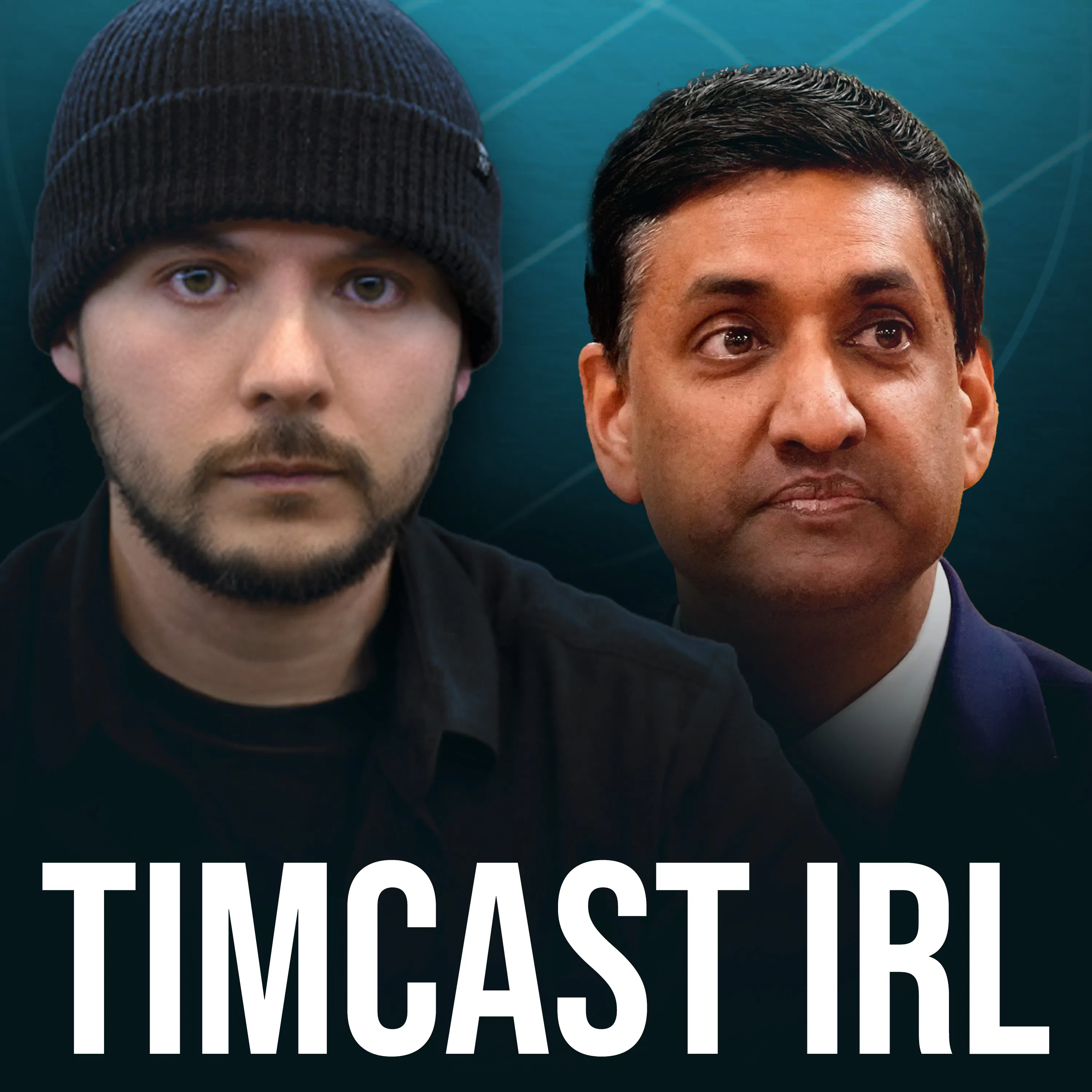
Timcast IRL
Trump Is Now President, Biden Pardons His WHOLE Family, Fauci & Others w/Rep Ro Khanna
02:07:59
Trump Is Now President, Biden Pardons His WHOLE Family, Fauci & Others w/Rep Ro Khanna
Loading summary
Transcript415 lines
- [00:15]
Tim Pool
Nope, That's Josie. Say hi, Josie. Ladies and gentlemen, today was a monumentous day. Donald Trump was sworn in as the 47th president, solidifying himself as only the second president to serve a non consecutive term. Of course, that was Grover Cleveland. And then, wow, did a lot happen. As we were preparing for the show, 1500 J6 defendants roughly have been pardoned. There have been a series of executive orders already pertaining to the southern border. We've seen riot police lining up at the southern border, shutting down ports of entry. Joe Biden, before leaving the office of the presidency, issued blanket pardons for the J6 committee, Mark Milley and Dr. Fauci, which we think is kind of strange. And then with five minutes to go for as Donald Trump was about to be sworn in, issued blanket pardons for his entire family, going back 11 years for nonviolent offenses. So we have a lot of news to break down. Today is absolutely insane. Elon Musk is under fire for a strange gesture, the media calls it. He says he was throwing his heart out to the crowd, but it looked an awful lot like what they call the Roman salute. So now we've got a million one stories, but I do think going over everything that is happening, happening right now with the, with the presidency of Donald Trump. And as we speak live now, Trump is still signing executive orders. We've got some video of this. It's insane. There some, some reports say between 100 and 200 executive orders. So before we get into all the news, make sure you head over to cast brew.com, pick up some cast brew coffee. We've got two weeks till Christmas. We're three weeks from Christmas, but it's okay. Phil is still dressed like Santa Claus. And I'm assuming we're just out of Ian's graphene dream. What do we have? We have 680 bags left. Ian sells this stuff like hotcakes. If you want to support the show, you can buy our coffee at Cast Brew. Of course, the other news the other day, of course, of course, was that Joe Biden declared the 28th Amendment, the equal Rights Amendment, which I find offensive because if you go to boonieshq.com you can pick up the real 28th amendment skateboard. And that is the right to keep bear and breed chickens shall not be infringed. And I just want to give a shout out to that picture of that little chicken right there. It is amazing. And of course, as always, become a member@timcast.com to support our work directly. We have a green room episode that's Right before this show went live, we recorded ourselves talking about all of this crazy shenanigans, talked a lot about health, talked about philosophy of authoritarianism and libertarianism and when the government should intervene. So if you want to support the show and watch that uncensored segment, become a member@timcast.com but it is an honor and a privilege today. Smash the like button. Share the show. We've got someone whose insights I think will be particularly interesting considering this is a Republican victory. We are being joined by Congressman Rep. Ro. Congressman Ro Khanna.
- [02:56]
Ro Khanna
Thank you for having me. Looking forward to mixing it up.
- [03:00]
Tim Pool
Absolutely. Do you want to just briefly introduce yourself? What you sure.
- [03:03]
Ro Khanna
I'm Ro Khanna. I represent Silicon Valley and the United States Congress. And I went to inauguration. Then boycott it because I believe that you have to respect the American people. And we can get into what everyone thought.
- [03:19]
Tim Pool
Yeah, this is going to be interesting. Of course, we've got a whole bunch of really awesome people. Of course James Klug is here.
- [03:24]
James Klug
What's going on, everyone? James Klug, host of the James Klug YouTube channel and apparently the only person wearing a tuxedo in this room. But that is. All right, you guys, thanks for having me. Appreciate it.
- [03:32]
Tim Pool
I'm wearing a baseball field. What would you expect of me? Josie's here.
- [03:36]
Josie
Hi, I'm Josie of the Red headed Libertarian. I do outside media work@timcats.com and I have a show called Space Faces ex Josie and where I talk to really cool people, interview really cool people, celebrities and congressmen and you know, people are important to the culture war. And then I have a channel called 1776 XJosey where I talk about revolutionary history.
- [03:56]
Tim Pool
We've got Tyler O'Neill.
- [03:58]
Tyler O'Neill
Yeah. Managing editor at the Daily Signal. Like to say I was born in the People's Republic of Boulder but revolted into orthodoxy in early youth. Grew up in golden, went to Hills Hill College, wrote a book. But we can talk later.
- [04:11]
Tim Pool
Yeah, we did talk a bit about that on the the green the uncensored Green Room show which people can find timcast.com Interesting conversation. We are basically talking about whether or not Trump is going to succeed in destroying the tentacles of the beast. We'll see. And Phil is here.
- [04:23]
Phil Labonte
Hello everybody. My name is Phil Labonte. I'm the lead singer of the heavy metal band all that Remains. I'm an anti communist counter revolutionary.
- [04:29]
Tim Pool
Let's jump to the first big story, ladies and gentlemen. Trump pardons roughly 1500 criminal defendants charged in the January Six Capitol attack. The sweeping Pardons would mark the beginning of the end of one of the largest investigations in FBI history. They say that President Donald Trump said on Monday that he was issuing roughly 1500 pardons and commuting the sentences of six of his supporters in connection with the J6 2021 attack on the US Capitol when thousands of them stormed the building amid his false claims that the 2020 presidential election was rigged against him. He made the remarks after returning to the White House Monday evening. An attorney, an attorney for Enrique Torio, the proud boy leader convicted of seditious conspiracy, told NBC News on Monday that his client was being processed for release from FCI Pollock, a medium security federal prison in Louisiana. Tarrio is serving 22 years in federal prison after being convicted of seditious conspiracy. He is being processed out now. There is a viral tweet that I believe it's from his mom saying that he is out of prison. So we expected this. Trump said he was going to do it. The rumor is that I suppose as he's saying, some of those who are violent and did go to prison and were convicted have been commuted. And then it's a blanket pardon for some 1500 other people. I'm curious what you guys think. I'm curious what you, a congressman, think about all of this.
- [05:47]
Ro Khanna
Well, look, I was there in the Capitol. I was in the Cannon Building when that took place. And here's my view of it. If someone was out there, caught up in the protest and just showed up and was swept in and, and went inside, I have a very different view of it than people who smashed down buildings, threatened people with violence, hit law enforcement officers. So I don't know the pardons, but my guess is that some of the people, from what you're saying, who pardoned it actually engaged in violence and destruction of property. In my view is I thought Trump was going to be against crime. I mean, the law and order president. So why is, why is any kind of violence on federal property not zero tolerance?
- [06:33]
Tim Pool
Do you mean? So there's, I think there's only six commutations, you're saying of the 15, you think it's likely that some of those probably did engage in violence?
- [06:39]
Ro Khanna
Yeah. And the person for the seditious conspiracy, I mean, did he, if 22 years, you're sentenced to 22 years, you probably have done something that led to an imminent threat of violence? Maybe not.
- [06:50]
Tim Pool
Wasn't he probably done something as a dangerous way to phrase it?
- [06:53]
Ro Khanna
Well, I, I trust the law, I trust the jury process there. And yeah, I mean, we're probably going to disagree on this issue, but I fundamentally believe that you can't go into the Capitol or plan things to go into the Capitol, engage in violence. That's different. Look, there were schoolteachers, they're dentists. They show up, they wanted to show their support. They got caught up in a frenzy. The doors are open. They go in. If they don't threaten anyone, don't have violence. I get that there was some of that, that that was taking place, and I wouldn't go after that. But the people who were engaged in actually breaking the buildings, hurting law enforcement officers or planning to do that, those people.
- [07:32]
Tim Pool
I completely agree. I think that's why I've said commutation makes sense. Only because if someone shoved a cop or pushed them, three years, four years is a long time to be in prison for, like, shoving a cop. But for people who didn't know was going on and walked into a building when the gates were down or open and got trespass, I agree with. I'm curious.
- [07:49]
James Klug
Well, I think the biggest problem here is trusting that process. It was obviously abused. I have a friend, he's a photojournalist, he's independent. He was there that day. He's not. He wasn't even a registered Republican, but he was in there. He went inside, took photos, and walked out. He ended up getting sentenced to four years in prison for doing just that. So when it comes down to the actual process, it was obviously being abused there. They're painting him in court as a hardcore Trump supporter, and this was an insurrection. And, you know, painting him that way in court, that's obviously completely. A completely abused system right there. Because just getting walking around nonviolent, didn't do anything violent. Walking around taking photos and getting four years from that, that's completely unimaginable.
- [08:34]
Josie
And there were a lot of enhancements on the sentences that turned out to be all unconstitutional. By scotus, they were adding to the sentences where they shouldn't have been. But to add to all of this, George Washington.
- [08:45]
Tim Pool
You can tilt your mic down.
- [08:46]
Josie
Okay. Is that better?
- [08:49]
Tim Pool
Yeah.
- [08:49]
Josie
Okay, good. I feel more comfortable. George Washington pardoned everybody who participated in the Whiskey Rebellion, and then Abraham Lincoln and Andrew Johnson pardoned everybody, all the Confederates. So it's kind of a thought that once this is done, once you've made it through, once one side has won and one side has lost, quote, unquote, just. It's good. It's good for the country to just move forward and not to hold onto it, just to. Just to start to heal in that way. What do you think about that?
- [09:17]
Ro Khanna
I think, first of all, if it was a Democrat engaged in reconciliation, that's different than your own party. But look, that's why I said if someone was there, if this photojournalist is true, that he just walked in and took pictures, and if those facts are true, that I'd be very sympathetic to that person not being behind jail. And in general, I do think we have to find ways to come together as a, as a country. But there were people who actually smashed the Capitol building, who committed assault against law enforcement officers, and that, that should just be, Forget the politics of it. This is, I view the Capitol as a sacred place.
- [09:55]
Josie
Like, do you believe in the, the, the pardons for the confederates, who probably did some pretty bad things too?
- [10:03]
Ro Khanna
As much as some of the pundits want us think, to think we're in a civil war, we're not. So I think that was a different, a different context.
- [10:11]
Tim Pool
Let me ask you this. So I think the challenge that many of us have is on May 29, 2020, there were several thousand far left activists, I would say many of them extremists, who tore down the barricades of the White House, firebombed the White House grounds, set fire to St. John's Church. We did not see Capitol Police launch an investigation. We did not see FBI raids across the country. The President was forced into the emergency bunker. The corporate press, the media mocked him over it, calling him Bunker Boy. So that happened well before January 6th. Seeing the photos of the smoke rising up in D.C. all across the city from the chaos and the rioting, seeing no law enforcement action. For me, I'm kind of like, well, what else is new? I've been covering protests for a decade. Then when January 6th happens to see a nationwide raid that actually resulted in, there was a woman in Alaska who was wrongly identified. They stormed her house. And I'm thinking to myself, they're willing to send the feds to Alaska to raid the wrong woman's home, and they won't even do a simple local investigation into who set fire to St. John's Church. More importantly, who firebombed the guard post of the White House? I mean, the White House grounds was on fire.
- [11:23]
James Klug
Yeah, There was about 60 Secret Service agents that were injured that night. Dozens of police officers, dozens of vehicles. Obviously St. John's Church as well.
- [11:30]
Ro Khanna
There should be accountability for that. I'm not defending left rioters and protesters. And if they are committing damage to the White House, if they're threatening Law enforcement officers. Absolutely. They should be going to prison for that. I mean, with. After a trial. I get your point. You're saying that the police, you feel the law enforcement are singling out people because they're conservative in supporting Donald Trump in a way. They aren't on the left now, I'll tell you, on the left, they feel the opposite in this country. I mean, it's everyone where is coming from their perspective of Biden, the left says no. The cops target folks on the left more. My view is how do we get to a point in this country where we can agree that we should allow for protest, give people the benefit of the doubt, but when people are engaged in violence, there should be zero tolerance.
- [12:20]
James Klug
Honestly, it seems like the Democrat standard right now, just pardoning every single person, even if they were violent, even if they did do crazy things, that's like the Democrat standard that I noticed the last four years. So maybe we just do that.
- [12:30]
Phil Labonte
Yeah, I really don't, I don't want to. I don't want to engage in what about ism. And I share your, your opinion, but it's really hard to say that, you know, we need to hold the J6 rioters accountable and that we do have to worry about the rule of law when, you know, there was. There have been multiple times. Not that I'm not going to get specific because again, I don't want to get into what about ism, but there have been multiple times where it seems like one political opinion is suppressed and. And another political opinion isn't. So it's really. So I agree with you and position, but it's really hard to, to accept that it's. That now it matters when there have been multiple times in the past, you know, five or so years that, I mean, that hasn't been the standard.
- [13:13]
Tim Pool
The George Floyd riots were some of the worst we've seen in decades, the.
- [13:17]
Tyler O'Neill
Most destructive in US history.
- [13:20]
Tim Pool
I think it's somewhere in the mid-20s of confirmed deaths from the writing and.
- [13:24]
Phil Labonte
$30 million or something like that in damage.
- [13:26]
Tim Pool
There were an additional 10 deaths from ancillary instances. There was the murdering. Murdering of retired officer Dorne. What? A police department was burned to the ground.
- [13:36]
Phil Labonte
A federal building was under siege for 30 days.
- [13:38]
Tim Pool
No, no, it was like over 100 days.
- [13:41]
Tyler O'Neill
It was over 100 days.
- [13:42]
James Klug
That was over 100.
- [13:43]
Josie
They had the Chaz and the Chad.
- [13:44]
Phil Labonte
Where they actually, I mean, they murdered two people. They completely agree with you. And in that, I would love to be able to say, you know, we should, we should stop Having these kind of, these kind of like ignoring the law and stuff. But it's, it's really, really tough to be like, well, we're going to be the people that are going to actually start doing that. And we expect the opposing political party to do the same when we don't really see that same kind of, that same kind of incentive feeling from the left.
- [14:14]
Tyler O'Neill
That double standard we see over and over and over again. And I think it's really interesting. We're talking about Enrique Therio, who is a Proud Boys leader. The Southern Poverty Law center brands the Proud Boys as a white supremacist group. Enrique Terrio, as you guys should know, is black and Hispanic. So like again, this kind of thing. And of course the SPLC monitoring hate, unless it's antifa, unless it's Jane's Revenge. So yes, we should have a blind justice system that treats attacks on police and attacks on federal buildings as serious, no matter which side you're coming from. We should also have a little bit more of an investigation in the pro abortion, vandalism and violence that we saw.
- [14:59]
Tim Pool
Oh, yeah.
- [15:00]
Tyler O'Neill
I mean, and I mean, it's like there's case after case after case where we can say, and I do say in this book about the weaponization of law enforcement, that there is a clear bias. And I understand, you know, a lot of people on the left feel embattled too. And it's partially because we have these echo chambers where we say, oh, we're the ones who are embattled. We're the ones who are embattled. We're the victims. But if you look at this issue of crime, the left has a lot more sway. You have a lot more prosecutors who've been funded by George Soros and the Open Society Foundations around the country.
- [15:36]
Ro Khanna
We have more prosecutors. I don't know the facts.
- [15:39]
Josie
There are 72.
- [15:40]
Tyler O'Neill
How many are there of funded by George Soros?
- [15:43]
Josie
Yes, he did like 72 elections. So how many total?
- [15:47]
Tyler O'Neill
Yeah, I don't, I don't know how many are still in thousands, I think, but they're.
- [15:50]
Josie
Well, I think it's. I think it's like in cities.
- [15:52]
Phil Labonte
Yeah, but the locations that his foot.
- [15:54]
Tyler O'Neill
The main thing is the blue cities where they've taken over. It's emboldened crime because they're not prosecuting people.
- [16:01]
Tim Pool
2300.
- [16:03]
Phil Labonte
The policy is called restorative justice. The idea that, that people that have been in oppressed groups or marginalized groups have to be treated differently under the law, which is, is completely and totally antithetical to what we're talking about that's.
- [16:18]
Josie
Antithetical to the Constitution. That's antithetical to what our country was built on when it comes to the the Declaration of independence. The grievances 8, 9, 18 and 19 all deal with captured courts, and the grievances 12 and 15 deal with two tiers of justice.
- [16:36]
Tim Pool
I feel like the large shift that we've seen politically, like how Donald Trump ends up winning the popular vote, comes from a lot of moderates. You see Joe Rogan, Elon Musk, Tulsi Gabbard, RFK Jr. Even someone like me. We are all liberal. I never consider myself like a Democrat Democrat, but if I went and voted, it was just like straight Democrat the one or two times I ever did. And then what ends up happening is I watch the news and what do I see? I see far left rioters throwing firebombs, smashing things repeatedly over and over again. I personally end up going down and covering some of these riots and these protests, and I see instances where they get arrested. I was at Trump's inauguration in 2017 and there were hundreds of far left extremists who set fires, smashed windows. A limousine was torched, it was owned by an immigrant, it was a contractor who was doing rides, numerous fires. And then they mass arrested several hundred people. I end up getting caught up in what they call a police kettle. And I, as well as a few other journalists, presented our press cards, waited patiently, and eventually got released. These individuals who got arrested who were clearly engaged in violence, ended up not only having their charges dropped, but they sued the federal government and won over a million dollars. So here's someone like me where it's like, you know, I grew up Chicago, liberal, punk, rock, all that stuff. And then I'm like, oh, that's how it goes. Then I see a bunch of right wingers go out and protest and it's nationwide manhunt and to the point where, well, I certainly agree anybody who's violent should go to jail. You hit a cop, you go to jail for that. You know, I met one couple that showed up to the Capitol several hours after everyone had already left, and there were just people standing in the lawn. They walked up an open sidewalk up to a building where the doors were wide open, no broken glass, on the other side of the building. And they walked in and looked around and didn't know what was going on, didn't see anything, and then just left. And then I think it was a year later they got their home raided and this man and woman were sentenced to 18 months in prison, and they had no idea why. So when I see them like that, I think that is why you end up with people saying, Trump pardoned everybody. We don't trust the system anymore. We've seen too much violence go. I mean, you had those two individuals in New York who were giving up Molotov cocktails got a slap on the wrist.
- [18:59]
James Klug
You talking about the lady that firebombed the cars in Philadelphia?
- [19:03]
Tim Pool
Two lawyers were giving out Molotov cocktails in New York City.
- [19:06]
James Klug
Yeah.
- [19:07]
Tim Pool
Slap on the wrist, no federal charges. Akash Patel talked about it.
- [19:09]
James Klug
Right, right.
- [19:10]
Tim Pool
So that breaks my confidence in the justice system being fair and reasonable. And then when someone comes to me and says that Donald Trump is guilty of a crime, I say, yeah, I'm reading those documents. Someone comes to me and says, enrique Tarrio committed seditious conspiracy. I say, yeah, right. I just don't believe it. I can't believe it. And I think that's the reasonable take. Not that it's wrong, but to start from a place of skepticism and then say, show me the actual evidence. Because the word of a jury in a 90% Democrat district is not enough for me to believe someone actually did something wrong, at least right now.
- [19:41]
Tyler O'Neill
Well, and that's the real tragedy of all of this, is that the weaponization of the prosecutions is the one thing. And of course, not a majority of the prosecutors across the country have been supported by George Soros. That wasn't what I was.
- [19:54]
James Klug
I think you're saying more liberal.
- [19:55]
Tyler O'Neill
I was saying, yes, they tend to be more liberal. These, you know, rogue prosecutors tend to represent the cutting edge, and they're seen as the cutting edge among the prosecutor community. And then you see many of these examples over and over again where there is not equal justice applied. And usually that's because of the prosecutors. Sometimes, unfortunately, it's also because of the juries. And I love our system of justice. I think the jury having the ultimate say is, you know, it's ideal. But the problem is we're almost living in two different worlds where the right and the left can't see eye to eye on. Almost.
- [20:35]
Ro Khanna
Let me ask you this, especially because we're on Martin Luther King Day, if I concede that there were some people who, like your couple, went in, shouldn't have been in prosecuted for 18 months.
- [20:49]
James Klug
Hey, I'm Ryan Reynolds. Recently, I asked Mint Mobile's legal team if big wireless companies are allowed to raise prices due to inflation. They said yes. And then when I asked if raising prices. Prices technically violates those Onerous two year contracts. They said what the are you talking about? You insane Hollywood. So to recap, we're cutting the price of mint unlimited from $30 a month to just $15 a month. Give it a try@mintmobile.com Switch $45 upfront.
- [21:15]
Tim Pool
Payment equivalent to $15 per month. New customers on first three month plan only.
- [21:17]
James Klug
Taxes and fees.
- [21:18]
Josie
Extra Speed slower above 40 gigabytes.
- [21:19]
Tim Pool
Details.
- [21:20]
Ro Khanna
And I also will tell you that anyone who engaged in violence, looting, rioting, whether they're doing it in the LA fires right now, should be locked up or if they did it in the in response to George Floyd, which was in my view a total case of police gone broke. But if the response to that has to be in the King's tradition of peaceful protest, well you could. Would you though concede that historically and still today, if you're black in America, there is still often bias from the police force where you could be pulled over in a way that you wouldn't be if you were Indian or if you're in a certain neighborhood. And can you understand from the other perspective of some of these folks who were protest. I'm not justifying it. How they see what you see is the law enforcement biased against those who are conservative and they're saying no, the law enforcement actually has been in certain places biased against us. Or do you think we're passing?
- [22:20]
Tyler O'Neill
There could be some bias there. The way the media covers it makes it suggest like it's a epidemic and it's not.
- [22:26]
Tim Pool
I absolutely want answers. I will not concede that. And, and the reason why is from, from a logic standpoint, it would be impossible for a person, or largely impossible for a person to know what the experience of another race is. So we hear stories and we are told that black people in this country experience bias at the hands of police officers. I, I actually believe some of these stories are probably true, but it's hard to quantify it literally or numerically. And so the issue I run into is from the south side of Chicago myself, I saw no difference between the Mexican, white, mixed Asian black people in my community when the cops were giving us were hassling us. Then I see these stories from the left where they say the talk something that white people don't understand. And I'm like what are you talking about? Everybody in my neighborhood got the talk. When you were a kid in the south side of Chicago, be it white, black, Mexican, Asian, no matter what you were, your parents told you if you get pulled over, you turn your car off, you put the Keys on the dash, you turn the dome light on, you turn the radio down. Wallet on your dash, hands on the wheels and don't move because a cop could shoot you. Everyone got that story. So then when I'm told that there are these racial disparities because cops are treating certain minority groups a certain way, I say, okay, tell me the story. I hear a story from someone who's a minority, be it black, Mexican or Indian or otherwise, and I say, that's crazy. I can't believe that happened to you. I have stories, too. But then people tell me my stories don't count, or what ends up happening to me is if I say I'm mixed, they say, see? It proves it. If I don't tell them I'm mixed and say you're white, you don't understand. There's.
- [23:57]
Ro Khanna
For me, you're getting to the heart of the issue. I think. I think. And part of the reason Trump won is that there are a lot of people in working class neighborhoods, white working class neighborhoods, who have suffered tremendously because jobs were offshored because of the opioid crisis, because they have not had economic opportunity. And one can say that is true and not deny their experience or look down upon them or make it kind of a pyramid of. Of suffering or victimhood, and still acknowledge, in my view, that race also has a factor. It's not just. And that doesn't take away from the issue of people who are white and working class. And I think that's part of the challenge in this country is how do we have that conversation.
- [24:47]
Tyler O'Neill
I think humans are tribal, so race plays a factor. Politics can also play a factor when you are perceiving someone who's different from yourself and you haven't been trained, as I think many of us rightly were in this room, to judge someone based on the content of their character, not the color of their skin. It's very easy to see in the other something that you dislike, that you think they're singling you out, that they're being. You know, I think that inherent distrust of tribalism is at the root of a lot of the perceptions of this supposedly widespread.
- [25:25]
Tim Pool
We had a video from. Do you guys know King Randall? Personality? I think we've had him on the show before. Yeah, he's a black man, and he made a video just last week and he said, I can't believe this happened to me. I got pulled over by the police. And he films himself as he gets pulled over. The officer basically says, I pulled you over. He's like, no, he's like, well, you're speeding. He says, okay, license and registration. He hands him his ticket and says, just sign here. It's not an admission of guilt. It's just acknowledgement of a receipt. He signs it and says, slow down for me, buddy. He says, you got it. Thank you, sir. And that's it. End of story.
- [25:54]
James Klug
Congressman, I think today, I think agreeing with your point, maybe back in the day was certainly more easy. It's pretty fair that discrimination was pretty rampant in policing, let's say, in the 50s, right? I would say, yeah, yeah, sure, 60s, 70s, whatever. But today, I would argue that there's probably more demand for that racism than there actually is supply. Look no further than all the hoaxes we've seen recently. How much Democrat politicians leverage this, push this on their audience. I mean, I genuinely. I interview people all around the country, and most people are pretty darn good, right? You talk to a lot of people. They're honestly pretty great people. But you do run into people that genuinely are, like, fearful of. Of white people walking around because they believe that maybe they're connected to the proud Boys or they're racist and they'll hunt them down in the street or something like that. You're just like, in what reality is this the case? Or how is this even possible? But it's because people, politicians and media figures leverage this stuff to, a lot of times push fear on the American people. I genuinely don't think there's that much supply for it today as there is demand for it.
- [26:56]
Tim Pool
I will tell you, though, I do think systemic racism exists. And so I'll clarify what that means, because I know a lot of people in the audience are gonna say, tim, you're wrong. There are systems that were built over a long period of time back when this country had overtly racist laws and policies that remain in effect as barriers. For instance, redlining and blockbusting, which were legal practices in Chicago and in many other places, left behind structural remnants that exist today. So if someone comes to me and says, my family is impoverished largely due to the actions taken in the 1950s, which segregated US, and now we are struggling to get out of this area, that's absolutely 100% factually correct. The issue of individual biases. I think you made a great point about humans being tribal. I do agree with and think exists, but I think outside of these structures, we have largely passed these laws to make that all illegal. And now I think the majority of the population is trying to avoid being racist, and they don't like being called Racist. And we don't want that to be the principal issue. I do think we've largely dealt with it from a legal point, and now it's gonna require, you know, I think we have to be cognizant of these systems. Redlining and blockbusting, for instance, for those who don't know, redlining was when real estate companies would only sell property to black people in an area near the red line in Chicago, creating isolated pockets of racial segregation. And that results in, you don't have the same industry, you don't have the same tax base, you don't have the same schools, you don't have the same skill sets as a robust, eclectic, you know, educated area. Being aware of that, I think is important. But I think blaming cops and calling them racist when, you know, police departments in big cities are even, right. They've Affirmative action for the past 20 or 30 years, I would say I think we may have swung the pendulum a little bit too far in the other way, which is causing more problems.
- [28:43]
Ro Khanna
A part of the challenge, I think, is that we've been having these conversations in silos. So if someone says, your point that you think that there isn't as much racism, the reaction on the left often could be, well, that's just a racist thing to say. And that puts you in a position of anger and defensiveness. And on the right, on the flip side, if someone says, no, I actually experience the world through race and come live in my shoes on the right, people say, oh, they're just engaging in identity politics, and they're just making this about race for advantage as opposed to being authentic. And the reality is those two groups aren't talking to each other. And one of the things we got to do is have their authentic people in the George Floyd protest, not the ones who rioted, who, you know, my friend Jamal Bowman. I mean, whatever. He will tell you what he thinks it's like being a black person in New York, and you should talk to him about where you think being white in a neighborhood was. You had the same experience. And we ought to be able to have these conversations without labeling each other in a derogatory way. I mean, that's.
- [29:53]
James Klug
We need.
- [29:54]
Tim Pool
I agree. Let's. Let's move on to this next story, because this is a big one. This is from Fox News. Biden pardons Mark Milley, Anthony Fauci, and the J6 committee members. Now, I will also add that he pardoned his entire family, which is another story. But I want to start with this one, because Mark Milley I think is the most damaging to our nation. For those who don't know, and maybe Josie or whoever James, maybe you guys know better than me. Mark Milley subverted the chain of command to communicate with China, a codified adversary of the United States. That pardon is shockingly egregious.
- [30:28]
Phil Labonte
I'm not, I'm most interested to find out who accepts the pardons because the accepting of the pardon is an admission of guilt.
- [30:35]
Josie
Yes.
- [30:35]
Phil Labonte
You can't, you, you can't be pardoned if you haven't done something wrong. So I'm really excited to see if the j. If the whole J6 committee accepts, then it's one thing. But if there are members of the J6 committee that accept and some that don't, you can subpoena the ones that did accept. Their. They have immunity, but they no longer have fifth Amendment protection. So they could test before testify against the other J6 committee. So that's what I'm, I'm interested.
- [31:03]
Tim Pool
Let me clarify one point. If, if the argument is Donald Trump will target his political opponents on the J6 committee. I understand the argument. I disagree, but. I understand the argument. But Anthony Fauci.
- [31:13]
Josie
Yeah.
- [31:13]
Tim Pool
And then to make it worse, Mark Milley. Mark Milley engaged in very questionable actions in his communications with China outside the chain of command in defiance of the Commander in Chief. That terrifies me. I mean, it should absolutely be investigated. And if Mark Milley is guilty of sedition or, dare I say, treason, I mean, there's got to be some, some action that we take as a nation to prevent that.
- [31:34]
James Klug
Milley was essentially saying he would give them a heads up, is that correct? Just in case Donald Trump was going to do anything.
- [31:39]
Tim Pool
And he said that, he said he would defy the chain of command if need be. That, that, that's, that's communication with, with a. China is listed in the US In US Law as an adversary of this nation.
- [31:50]
Ro Khanna
You know, to be fair, it's, to be fair.
- [31:52]
Phil Labonte
Congress does declare war. So I would hope, and if I'm going to give the benefit, you know, be charitable towards Mark Milley, I would hope if Congress were to declare war on China, then Mark Milley would rethink that position. But to say I would defy the Commander in chief, like that's a bad.
- [32:09]
Ro Khanna
Look, man, let me just say this. I. One place I have appreciated Trump's speech today is his commitment not to get us into foreign wars. And he was, I think, bold in criticizing the Iraq war in his own presidential primary. And as a lot of times said we shouldn't be getting into these endless wars. I feel differently about Milley in the sense that he was trying, if, to prevent the escalation of a conflict than if he was doing something in defiance to start a war. We've had so and so. If we've got generals out there who are saying, and by the way, I don't think Donald Trump wants to start an actual war with China. I don't. I agree.
- [32:49]
Josie
I think.
- [32:49]
Phil Labonte
And I think it's good that people. People need to articulate that.
- [32:51]
Ro Khanna
And so if. If we've got generals in the Pentagon, as opposed to a lot of other generals and in our history or in our. In our country who are saying, you know what? I want to make sure that we're. We're doing everything we can not to get into a war. I'm not concerned that this country is going to be too timid about getting into war when we really need to.
- [33:11]
Tyler O'Neill
Well, I think the other aspect here is Fauci. And Fauci repeatedly said in congressional testimony that we were not funding gain of function research over and over and over and over again. And the quantity and just the disruptive nature of these lies during the COVID 19 pandemic, when he presented himself as the figurehead of science, and yet he was telling the American people exactly the opposite of the truth in many cases, often saying, you know, this was a white lie. Like when they said that PPE wasn't helpful, you know, that you shouldn't wear masks during COVID And then they said, oh, you should wear masks. And then you wait for the reason. And they said the reason was we lied to the public because we didn't want them to buy all the ppe. And then all of the scientists and all the medical staff wouldn't be able to get ppe. So they admitted they lied, and then they come out and say that they are the science. There has to be accountability for this.
- [34:13]
Tim Pool
And this goes beyond that. This is Newsweek. September 9, 2021. Fauci was untruthful to Congress about Wuhan lab research. New documents appear to show Senator Rand Paul held up a document that outright said gain of function research was performed and funded through the United States, through Eco Health alliance, through hhs, under Fauci. And he said it didn't happen and they didn't do it. Why would this man be pardoned? I mean, here's what I don't understand. Fauci was Donald Trump's advisor during COVID Donald Trump brought him on TV every step of the way. And Defended it, much to the chagrin of his supporters and many libertarians after he got out of office. Sure, there was a little bit of back and forth, but why would Trump politically retaliate against the guy he chose to be his advisor to make him look bad? I think the reality is Joe Biden is protecting Fauci from willful crimes that Fauci committed.
- [35:04]
Josie
Yeah. So something about that is. So the pardon, you admit that you're guilty. It's an admission of guilt, essentially. And that goes Back to verdict 1915. And essentially what that says is you cannot be compelled to accept a pardon because if you are, then that violates your right to not self incriminate yourself. However, this pardon for Fauci says this is not an admission of guilt. So that directly violates the verdict ruling for scotus. Wait, the actual thing says. The actual text of it says this is not an admission of guilt. You could find it and look it up. Yeah, says that. No, he's not. It's not saying he's guilty. I don't know if the other ones. I know Fauci said that. I don't know if the other ones did.
- [35:52]
Tyler O'Neill
Lawlessness of this president.
- [35:53]
Ro Khanna
As a Democrat on the panel, let me just say this about Dr. Dr. Fauci, just so folks have a slightly opposing or differing point of view. Look, he's dedicated his whole life to public service. The guy could have gotten rich. He helped George W. Bush with the. With pepfar, which in my view was one of the great achievements of America under President George Bush, where we saved millions of people in Africa for aids. And Fauci, in my view, whether he was right or wrong, largely was acting in the public interest, I don't think we should be. And one of the things I give Trump credit for is Operation Warp Speed, which Foushee was also involved in, which was giving government procurement guarantees so we could develop the vaccine. It's mind boggling to me that Trump has not bragged about that more. To me, that was his singular best thing that he did in terms of working on the vaccine cures that we did for the world and for humanity. So my view is, whether you agree or disagree with Fauci, do you really want to create a criminal standard for people in public service who are coming and doing what they think is they committed crimes?
- [37:02]
Tim Pool
Well, if he lied to Congress, it's lying to Congress.
- [37:05]
Ro Khanna
You know how many people come to our committees? You want to put them all in jail?
- [37:12]
Tyler O'Neill
And how many times do they say, I can't recall if Anthony Fauci had said, I can't recall, instead of full stop, we don't fund game of gain of function research, we would be having a totally different discussion right now.
- [37:24]
Phil Labonte
This is one of the worst ramifications of the impeachment of, of Bill Clinton. Right. Bill Clinton was found to have lied to Congress and it was, it was. He admitted it later and nothing happened. And that was a terrible precedent to set. To set the.
- [37:41]
Tim Pool
The. I believe I have the. It's from justice.gov, executive grant of clemency. Joseph R. Biden Jr. Dr. Anthony S. Fauci. A full and unconditional pardon. It does not say. It's not admission of guilt. His statement said that on the, on the, on the White House website, saying that accepting this is not an admission of guilt. But that's his personal statement. That's not the case.
- [38:01]
Josie
Okay.
- [38:01]
Tim Pool
You know, I do recognize a lot of people lie to Congress, and that's the point of swearing them in. They shouldn't. And unfortunately, there are a lot of people commit perjury all the time, and the aggrieved parties will always complain about it. And it's very difficult to prove someone lied. So that, that I recognize in this instance, Rand Paul held up the document that said gain of function, and Fauci lied and said, nope. And he's like, pretty.
- [38:26]
Josie
So Fauci accepted the pardon. That is an admission of guilt. And then he said in a personal statement, I'm not guilty.
- [38:32]
Tim Pool
He did say that.
- [38:33]
Josie
Yeah. That's his personal statement there.
- [38:36]
Tim Pool
Yeah.
- [38:36]
Josie
Yes. So, so how does, how does, how does that work? Like, does he think he keeps his Fifth Amendment?
- [38:41]
Tyler O'Neill
I guess, legally, he confessed.
- [38:43]
Tim Pool
Honest, honest question. So these pardons go back to January 1st, 2014.
- [38:47]
Josie
Quick question. What was going on in Ukraine in 2014?
- [38:50]
Tyler O'Neill
Huh? I wonder.
- [38:51]
Ro Khanna
Burisma to your point about moving on, right? Just like the JC wouldn't we want to move on from Fauci? I mean, isn't that part of, part of Trump? I mean, he said today he doesn't want any retribution. He wants to move on. He doesn't want to politicize things. Isn't that part of what we need to do as a country?
- [39:06]
Tyler O'Neill
So sometimes we need to resolve. The problem with COVID in general is that it peeled the band aid off of the way that a lot of our elite institutions are abusing their power over people. And so one of the things, you know, be it school closures and then you had, you know, you have this big focus on looking at education and trying to figure out you know, having parental rights, trying to balance these different issues. And suddenly you have a governor, a former governor of Virginia running for governor again, coming out and saying that he doesn't want parents deciding what their kids learn in school. And over and over again, you see. And, you know, I'm glad to be sitting with you, Ro, because I think you have a track record of standing against some of the worst abuses I've seen from your party and the elites who generally agree with it. But I think a lot of the corruption that we've seen in this country was unveiled in Covid, and we have to solve it. And that's why we have a big populist movement. That's why we had a populist movement on the left, too, with Bernie Sanders. But, you know, one of the things I really focus on in my book is how these big donors are funding these initiatives that are pushing, you know, all these nonprofits are pushing, pushing ideas that are being almost forced on the American people through the elite apparatus there.
- [40:30]
Ro Khanna
I agree with you sometimes, and I'm going to. I don't want to interrupt you, but I said sometimes my staff, they. They send me their 200 groups who have come out for something. And I said, there are 200 groups run by 100 people. You know, this biggest myth in terms of all these groups. So I agree with you that sometimes they can make us be out of touch on certain issues.
- [40:51]
Tim Pool
Let's jump to this next set of pardons. We have this tweet from Philip Wegman. He says, breaking with just minutes left in his presidency, Biden issues a full and unconditional pardon of his family, most notably his brother, James B. Biden. And it reads, executive Grant of Clemency. Joseph R. Biden, Jr. President of the United States of America. To all whom these presents shall come greeting. Be it known that this day, I, Joseph R. Biden, Jr. President of the United States, pursuant to my powers under Article 2, Section 2, Clause 1 of the Constitution, have granted unto James B. Biden, Sarah Jones Biden, Valerie Biden Owens, John T. Owens, and Francis W. Biden a full and unconditional pardon for any nonviolent offenses against the United States which they may have committed or taken part in during the period from January 1, 2014, through the date of this pardon. In testimony whereof I have here unto signed my name and caused the seal of the Department of Justice to be affixed.
- [41:47]
Josie
Over the past 75 years, more than 10,000 chemicals have entered our food supply. But the EU allows just 300 additives at Thrive Market. We prioritize quality, banning over 1,000 ingredients found in conventional grocery stores. Our Healthy Swap Scanner helps you find better versions of your pantry essentials without the junk dyes or fillers. And everything is delivered right to your doorstep. So shop at a grocery store that.
- [42:10]
Tim Pool
Actually cares about your health.
- [42:11]
Josie
@Thrivemarket.Com get started for 30% off your first order and a free $60 gift.
- [42:18]
Tim Pool
I think Joe Biden's family committed a bunch of crimes.
- [42:21]
Josie
Does it go back to 2014?
- [42:23]
Tim Pool
It certainly does.
- [42:24]
Josie
It sure does.
- [42:25]
James Klug
Congressman Rowe, what is the takeaway?
- [42:27]
Ro Khanna
Well, I don't know.
- [42:29]
James Klug
What is your takeaway?
- [42:31]
Ro Khanna
I didn't like it when he did Hunter Biden, because I've been for the curtailment of the presidential power. I mean, we don't live in King George's time. I don't think presidents of any party should have this kind of power, broad power to just wave their wand and say, okay, some family members, some friend is going to be pardoned. And I think as the Democrats, we, if we're going to be the party of reform that says we want to get money out of politics, we want to stop members from trading stock, then we should be for reforming the pardon party. So the pardon power. So I, I'm not, I can't defend, defend this. What I will say is that we should have some amendment in this country to at least restrict the pardon power in my, in my view, especially for friends and family.
- [43:17]
Tim Pool
Outside of that, I, that's interesting, interesting thought and I don't completely disagree. But outside of that, there's the more granular of why would Joe Biden pardon all of his family members?
- [43:28]
Tyler O'Neill
We all know, I mean, Frank Biden, Jim Biden, they were trading on his name in Delaware. They got rich just because he was a senator.
- [43:35]
Tim Pool
I don't think it's, it's not reasonable just say that Donald Trump is going to go after Valerie by Owens. I think the reality is that this, this literally five minutes before Trump was sworn in, issuing of a pardon. I would be more inclined to believe based on what we know, and I'll cite Politico magazine, going back several years to Biden Inc. James Biden was accused in that magazine of peddling influence and taking contracts from his brother illicitly. I think this is indicative of what we've long known. I don't think it needs to necessarily single out the Biden family. I think the issue may be perhaps this is the first time there's reason for or a president willing to go after the corrupt influences of prominent families in government.
- [44:18]
Josie
So I want to ask Roe something. So Article 2, Section 2 grants the President the power to grant the pardons and the reprieve. So if you were to limit his power, would that be a constitutional amendment?
- [44:31]
Ro Khanna
It would have to be. Yeah, it would have to be because it's in the Constitution that gives him, gives the President broad powers. I think this goes back to Hamilton, who kind of viewed the presidency as almost analogous to a king. And I think we've moved far away from that time. Now, I will say the only thing, and I'm not, I don't defend the pardon, but, but we don't want to criminalize politics. I get that there are people on, on the Republican side who blame the Democrats for doing that, but I think at some point it's got to end because people are not perfect. You know, usually you don't get angels in politics. I will say this surprisingly. I mean, the Congresses of the past have been a lot more corrupt. I mean, you act, you had the robber barons who actually like bought members of Congress and senators. And by criminalizing it, what you're doing is you're telling every young kid in this country, yeah, you don't want to really be in Congress, you don't want to be in Senator, you don't want to run for president, you don't want to go be in the Cabinet. So how do we somehow figure out how we have accountability without everyone thinking, okay, if I run for office now, everyone in my family, if they've done anything wrong, now there's going to be a big spotlight, you know, and because.
- [45:43]
Tim Pool
People aren't maybe this is, this is, this is POLITICO From 2019, Biden Inc. Over his decades in office, middle class Joe's family fortunes of closely tracked his political career going on to mention how his brother got lucrative contracts in Iraq. I think the reality is perhaps it's time to start doing this. My whole life I've had almost no faith in government. The first time I voted was for Obama. And then I instantly regretted it because he blew up a village of women and children by executive order.
- [46:10]
Ro Khanna
Where was that?
- [46:11]
Tim Pool
I believe it was Pakistan. This is 2009, January. It was immediately reported that a drone strike ordered by Obama killed like 20. It was a village of some sort. And I remember being an anti war activist marching against George W. Bush, told by everybody, gotta vote for Obama. For the first time in my life seeing this just absolute corruption ripping at the soul of this country. It looks like something's being done about it. Now you can say that Donald Trump's doing it because of revenge. And I can say, well, I don't know his motivations, but I would like to see the Biden family, the Clintons or the Trumps, whoever, anybody peddling influence illicitly, corruptly to enrich themselves. I'm not a fan of Trump's meme coin. I don't view it as a crime, however, I just think it's crass. When Donald Trump tried to have the G7 at Trump Doral, I called that out immediately. He should not be using his properties. It's a conflict of interest no matter what he charges. And when there were reports that Trump properties were advertised on military websites, or I believe it was a State Department website, I said this wrong. It shouldn't be. I don't view those as overtly criminal. When I look at the Biden family, you've got a litany of accusations, charges. You've got Tony, Bobby Linsky, you've got Devin Archer all coming out saying that they were engaged in illicit activities, and then Biden comes and pardons his whole family. So I would agree that we don't want someone to believe that if you get into politics, they're gonna target your family, because show me the man, show me the crime. But at the same time, I don't know how this country survives if the Biden family's activities, which have been widely documented going back to, again, not even 2019. Well, before that, if we ignore these things and say that's par for the course, Trump's gonna go ham. And then whoever comes after Trump next is gonna be like, I'm the president. How much are you gonna pay me to sign an executive order? And no one will be able to do anything about it because of precedent.
- [47:54]
Tyler O'Neill
Well, and this is also part of that elite apparatus we saw, the legacy media, you know, Politico, to their credit, covered this. There were a lot of things that were covered like that. But in the past four years, we've seen the legacy media act as though it was the height of mendacity to suggest there could anything be wrong with Hunter Biden and all, and that Joe Biden could be involved. And every single time, it was like, how dare you suggest. I mean, we had big tech, you know, as you rightly condemned, censoring a story. And I spoke out again, reporting on the Hunter Biden laptop. Oh, yeah, No, I mean, that's being on your party and standing for that kind of thing. That's so Roe.
- [48:36]
Josie
How would you. In your constitutional amendment, how would you limit the presidential Pardon power. Would you say you can't pardon your family? And would that go against some sort of equal rights protection?
- [48:46]
Ro Khanna
That I would probably, I mean, I'd have to think it through, but I'd probably say it has to be through some independent board or some independent review where if a president wants to have that power, there, there has to be some check to it and some, some review. Now look, I, here's the thing, and I don't want to just take political shots at Donald Trump on the day he was inaugurated. But it's not like he's been a paragon of virtue. I mean, you know, making billions of dollars on this meme coin. There were, there have been allegations that, you know, people would, he'd want people to stay at his hotels. There's things about his family. But I wouldn't want, there is going to be a new, another Democratic president. I don't know when, hopefully in 28. But maybe it's, you know, the pendulum swings back and forth. I wouldn't want that president to say, you know what, we're going to go and investigate all of Donald Trump's family and all of his dealings. Now, if there's an independent justice, attorneys and people in law enforcement who are doing it, that's one thing. But I don't want the president on either party directing the, the Justice Department to be going after their political rivals.
- [49:56]
Tim Pool
I will say to your idea about the Independent commission, a lot of states do this. The governor can issue a pardon, but it has to go through a panel to get approved. And I don't completely disagree with that. I do understand the original arguments that they were making for why the president would have this power. But then there is an interesting point about show me the man and I'll show you the crime. If we exist in a society where political retaliation will always be, the next president is going to investigate the last.
- [50:21]
Ro Khanna
They do that in third world countries.
- [50:22]
Tim Pool
Right. They will find crimes. They will just be like, you jaywalked and that, oh, and you were carrying too much money. That makes it a federal offense.
- [50:30]
Tyler O'Neill
Yeah.
- [50:30]
Tim Pool
So that, that we definitely want to avoid. But then there is the, the problem of the double edged sword of if we don't do it, then people are going to abuse it and if we do it, they're going to abuse it. So what do we do? I mean, how do, how do you, how do you solve for that? We know powerful individuals have utilized the office for financial gain corruptly, but we also don't want an abuse of the DOJ to go after people for political reasons.
- [50:55]
Josie
Well, I. That's one of Trump's promises that he made is he's like, the lawfare's over, and that's why he's really not. Doesn't seem to be wanting to push any of these investigations on any of his political adversaries. So maybe that could be the way to reset it. Say, I've, listen, you did all this horrible stuff to me, and I almost died, and, you know, I was assassinated and. Or almost assassinated. And we don't know how. We don't know anything about that. You know, but maybe that's his way of trying to heal. Like, this is our reset. I'm gonna. I'm not gonna retaliate.
- [51:23]
Ro Khanna
I give him a lot of credit. I think people, if he. If he restrains from that, in my view, that would be a credit to him. But one way to go after this, Tim, is, I think, podcasts in the media and X and Tick Tock, you know, I have the smallest of things that people think may be a conflict of interest and their TikTok videos and Instagrams all over the place. Right. And, you know, it can be annoying because everyone now in America has the baseline assumption that every politician must be a lying, corrupt person and that we got to fix because that's not the case. But the fact is that it is much harder to get away with stuff today. And. And we may not need a criminal fix on it. We may need more transparency in media so that you don't have independent media, so you don't have a legacy media protecting people.
- [52:12]
Tyler O'Neill
Well, when you say that because of your stance on the Hunter Biden censorship, I think you really mean it, and I'm very glad to hear, because I think that more transparency is largely the answer. We have systems in place where people are held accountable through elections. We have checks and balances in our Constitution. We don't need to reinvent the wheel. We have a lot of protections there. We just have to use them. And so long as we have more transparency, the chance that we will use them, I think, increases.
- [52:46]
Tim Pool
Well, let's jump to this. This story here from the Post Millennial. El Paso port of entry shuts down as Trump takes office. We also have this from NBC News. Trump shuts down immigration app dashing migrants hope hopes of entering the U.S. one of the viral stories that's been going around is an image of a video of a woman who's breaking down in tears because she will now not be allowed into the United States. There was a journalist who posted this, but it's always something like that. There's no video of the cartel members with rifles running away, the drug traffickers or the child traffickers. It's always gonna be the humanitarian crisis. And there's a meme where it's a child crying and a person saying, oh no, the child's crying quickly burn the constitution. The joke being when the press comes out with this sad sympathy story, or even someone like Ocasio Cortez says these, these poor asylum seekers, it's ignoring the other, other side of that coin, which is the evil we are trying to stop. So I would, I would, I would say I largely know the opinions. I could guess everybody here that their opinions are largely going to be in favor of this. But Congressman Khan, I'm curious what you think about the shutdown of the border and the, and the immigration happen.
- [53:53]
Ro Khanna
Look, there's no doubt that we needed a more secure border. And I'm not going to defend that, that the process was messed up and that people were coming here without the legal way. I mean, my parents came as immigrants. They came legally that my father came to study at University of Michigan and then got a green card and my mom, then they became citizens. That's the way you come to America. And the Democratic Party does need to be clear about that. And it's factual that a lot of people came in an illegal way under the Biden presidency. That said, I believe that this country is also a humane country and that when people are coming with legitimate cases, either of asylum or in my view, if they want to come and work here and then and make money here and send it back to their families and they, or go back to their families, I think there should be a process for that. Or if they're fleeing for persecution. And I don't think just shutting it down is the right way. By the way, if you shut it down in a port of entry, they're probably more likely to come in a non port of entry way. So it's an issue that we need a secure border. But I still believe that there needs to be a humanity to allowing asylum. So I don't support sort of a blanket. We're just going to shut it down.
- [55:13]
Tim Pool
Tyler, are you basically just ban all immigration?
- [55:17]
Tyler O'Neill
No, no. I mean, so we talk, and I don't want to go too down this road, but we talk a little bit about race. And I like to think, you know, I came from, I'm descended from two groups that were not considered white until very recently. Irish and Belarusian Jewish. So my own Ancestry is complicated. And you talk about redlining, you talk about the history of racism. Those things are real. I think today we're being told that racism is something simple, binary. White bad, black good. And it's a lot more complicated. But when it comes to the border, I think we need to have a law that applies equally to everyone. And right now, we have illegal aliens who are being told, you can enter the country, you can abuse the system. I grew up in Colorado. Two of my classmates when I was growing up were Mexican legal immigrants who went through the process. And they're the ones I think are most offended, most harmed by this illegal immigration crisis, besides the people obviously like Lake and Riley, who lost her life. And, I mean, I've really enjoyed our conversation. Ro, I see that you voted against the Lake and Riley Act.
- [56:40]
Ro Khanna
I'm happy to explain.
- [56:41]
Tyler O'Neill
Yeah, yeah, I'd love to hear.
- [56:43]
Ro Khanna
So my view is, of course, I have deep sympathy and genuine sympathy for the family of Lake and Riley. And the. My view of it is I have deep sympathy for the family of Lake and Raleigh. My view of it is that if there is someone who's convicted of a violent crime or a sex crime, they should be deported. In fact, I just voted for Maces, HR30 that says if you're convicted of a sexual. Sexual offense, you should be deported. The way the Lake and Raleigh act was worded is it said if you're arrested, you should be deported. And I don't. I'm a due process person. I mean, we gave the Nazis trials because we believed in the rule of law. I just think people here should have the rule of law. Now people say, okay, if they came across in an undocumented way, they're already illegal. But I don't have the view. And here I may just disagree. I don't have the view that every single person who came here in an undocumented way should be. Should have mass deportation of 11 million. I do have the view that if you're convicted of a violent offense or a sex offense, that you should be deported.
- [57:50]
James Klug
Is that ultimately, and I don't want to misrepresent your argument here, I guess wait until they committed a crime against an American citizen and then deport them after they've committed a violent crime. No, when you send them to jail, why would you deport them?
- [58:04]
Ro Khanna
Well, you. You would. You would send them to jail and then deport them in terms of the.
- [58:09]
James Klug
Extradition, but wait for them to commit a crime and then do something?
- [58:11]
Ro Khanna
Well, for. I think, first of all, most the statistics show that immigrants commit statistically less crimes than those of us like me.
- [58:19]
James Klug
They're crimes.
- [58:22]
Tim Pool
Real quick, guys. Real quick, quick. I pulled the bill up. It's. It's for unlawfully present in the United States. So this is not just immigrants in general. It's any, any unlawful, unlawfully present individual in the United States who has been arrested for burglary, theft, larceny, or shoplifting must be detained by the Department of Homeland Security.
- [58:44]
Josie
It says, under this bill, DHS must detain the individual who, one, has unlawfully present in the United States or does not possess necessary documents when applying for admission, or two, has been charged with, arrested for, convicted for, or admits to having committed acts that constitute essential elements of burglary, theft, larceny, and shoplifting.
- [59:03]
Tim Pool
That's interesting. I actually agree with Rep. Cony here because it says if you were to separate sections one and two, and this is just a summary, so I'd have to go through it. But under the summary, you could read it as, under this bill, DHS must, must detain an individual who has been charged with, arrested for, convicted of, or admits to having committed acts that constitute essential elements of burglary, theft, larceny, or shoplifting. That could apply to Americans. I mean, again, it's just a summary. So I don't know what they're. What they're. I think the spirit of the act, I think they're.
- [59:31]
Ro Khanna
In fairness to the, the authors, I think there are talking about those who are undocumented. Who is it?
- [59:37]
Tim Pool
But that would mean a 100% crime rate.
- [59:40]
James Klug
People that are in the country.
- [59:41]
Ro Khanna
No. Well, they said, well, their argument is this. So my view is like, okay, you got a DACA kid, hypothetically, with someone, basically, it was undocumented because their parents came here, grew up here, they go out, they go, they, they have a dui, they commit shoplifting. If they're arrested at the moment of arrest, they could be, they could be deported. And my view is it has to be a violent crime or a sex offense that you're convicted of. The response is, well, shouldn't the crime is entering the United States. Shouldn't everyone be deported? And that is Donald Trump's position. That's Tom Hammond's position. Let's deport 11 million folks. And my view is that the vast majority of those 11 million undocumented are people like someone in my district who is a dental hygienist. She's been here 25 years. Her daughter is studying for med school in Southern California. She drives down every day, once a month and drives back the same day because she can't afford a hotel, because she's underpaid as a dental hygienist. And I want a person like that not to be deported. I think there should be a path to citizenship, and that's the genuine definition.
- [60:49]
Tyler O'Neill
But how do we make the system fair? You know, you talk about paths to citizenship, and I think a lot of Americans, heartstrings are pulled by these people, and to some degree, rightly so. But what you have is a massive amount of illegal aliens in this country who are not here legally. We have a system that's complicated, that allows people to come here legally, which we all. I think most of us support. I mean, there's a growing faction on the right who opposes all immigration, period. I'm not part of that group. I think immigration, when it is rightly tailored and welcomes the right people who actually love this country and want to follow our laws. And the number one way that, you know, if somebody loves this country and wants to follow our laws or doesn't is if they're following the law when they first enter the country.
- [61:40]
Tim Pool
I do have a. Correct. I do have a correction. Yeah, I did misread it. It's. And not. Or meaning they have to be unlawfully present. And so it's both criteria. That was my mistake.
- [61:49]
Tyler O'Neill
Okay, but. But what I. I'd love to have. So I. I think there are two problems we have with the border, Right. First is the open border. The policies that Trump is, you know, rightly reenacting after Biden got rid of them immediately. He was following a lot of these groups where you say 200 organizations, you know, ACLU, center for American Progress, that wanted to transform the Department of Homeland Security into a welcome mat for illegal aliens versus actually applying the law fairly and evenly so that we can have legal immigrants and we can. So one of the problems with this issue is that always the issue of, you know, a path to citizenship is brought up, amnesty is brought up. And that usually kills debate among Republicans, because what we saw in the 1980s was that amnesty was the first thing that got through, and then the rest that was promised in the law didn't get enacted. And what we've seen the right shoved aside on this and the concerns about illegal immigration dismissed as if they don't really matter.
- [63:00]
Ro Khanna
Well, I hear that. And first, I just want to say on the ACLU and Center for American Progress, those groups are, in my view, constructive. I'm not saying I agree with all their policy, but I didn't want People to think that I was saying that they're one of the groups that don't matter because I do work with them on civil liberties issues and policy. But your broader point is, I think that if you have my view that America is going to become the first truly cohesive multiracial democracy in the world, that no other nation has ever done this, and this is something truly remarkable about America, I don't think having an influx of those who are undocumented coming to America is helping that goal. I think it has created resentment. I think it has created anger. And so if you're telling me that we need to do a better job of securing the border and having a process and in ensuring Americans who. I believe, given my own upbringing in Bucks County, Pennsylvania, in a 99% white community when I was growing up in the 70s and 80s, I believe Americans are fundamentally decent. I think that it's a kind country. I think it is a. It's a country that at its core is one that embraces people today. And so if we want that, I think we have to get a fix on the border. But my, you're right that, that always gets caught up because we Democrats say we want to fix on the border, but we also want a path to citizenship and in a place for asylum. The Republicans say, no, we don't want that part. You guys aren't serious about a border fix. My view is maybe there's going to be. We had Biden, now we're going to have Trump. I think he may overreach the other way and maybe eventually we're going to get a, a path forward on this where 80% of Americans are.
- [64:38]
James Klug
Yeah, I really feel like a lot of Americans have shifted on this issue just because of how out of control it was the last four years. I mean, I'll talk to people that are pretty moderate that are just like almost saying, hey, just close down everything, like, we need a five year pause because this is out of control. That was the worst border crisis in American history. You have people that enter the country, they're unvetted, they just cruise on in, you know, and we have no clue who they are. You end up with experience with situations where Americans get murdered. And that's why a lot of people are up in arms when they hear stuff like this, where it's like, oh, hey, the thing is we don't want to enforce the laws, the position. And, but we will enforce the law once somebody's inevitably murdered, and then we'll deport them, even though we should. We're not actually going to deport them, we're going to put them in jail, and then taxpayers have to, you know, pay for them to be in prison for the rest of the life.
- [65:23]
Phil Labonte
It's fair to say that the past four years have really done a lot to, to, you know, I guess maybe radicalize the average American, because before, before the Biden administration, I don't think that 70% of Americans were okay with deporting.
- [65:40]
Ro Khanna
And now Biden was winning by 15 points on immigration against Donald Trump in 2020. Yeah, and we were losing by like 25 points.
- [65:47]
Phil Labonte
And they absolutely, they annihilated the, the trust the American people have in the Democrats. There's no reason for the American people to say, yes, we believe the Democrats are going to be responsible when it comes to the border, not just because of the fact that they have, you know, rescinded all of Donald Trump's effective executive orders, like remain in Mexico and reinstating, catch, release. Those kind of things were, were looked at positively by the American people. And now it's gotten to the point where, like I said, 70% of the American people are okay with things that would have been almost shocking to, to most people 10 years ago. The idea of rounding up people, you know, the idea of deporting people like that.
- [66:29]
James Klug
We used to be really, really majority of Hispanic Americans as well.
- [66:32]
Phil Labonte
Yeah. It used to be something that would make your average American Blanche. And now they're like, build the wall and just go and round them up. I'm down.
- [66:39]
Tyler O'Neill
When you welcome 11 million people, that's what happens. You don't have a choice.
- [66:43]
Tim Pool
We, we have to have zero tolerance for illegal immigration because we have people who are good, that we want to come to this country, who want to raise families and go to school, who are trying desperately to apply the legal way, and then what they end up seeing, Vi So I actually know people who are trying to flee Ukraine, for instance, and they said, we can't get to the United States. They won't let us in. And they were like, should I, I literally said, should I just fly to Mexico? Because they let everybody just walk in. They ended up going to some Baltic countries and they ended up fleeing in some other direction. When you allow people, Chinese nationals, African from African nations, fly to Brazil and then come up to southern border, and then we as a country say, but we have this person who's here illegally, who's a good worker. We're telling everybody who's trying to do the right thing that they don't matter.
- [67:36]
Ro Khanna
But then we have to create pathways, in my view, for people to be able to do that legally. I mean, what George W. Bush was trying to do, he was saying that, you know, you can come here, you can work, you can get paid a higher wage, not be exploited like some are abused on an H1B or abused because of your immigration status. And then many of those folks would go back. I mean, look, there are a lot of people, obviously, who want to come to America for economic reasons. Some of them are now coming illegally. And there is a way to have folks come legally in a way that's going to benefit our economy, our community, and also be a legal process.
- [68:17]
Tyler O'Neill
But you have to punish them. Otherwise, you send the message, well, let's.
- [68:20]
Tim Pool
Let'S, let's take a look at the, the Bay Area specifically where, and correct me if I'm wrong, because you would know this better than me, but the story was that they were no longer enforcing shoplifting under a certain number.
- [68:30]
James Klug
$900, was it?
- [68:31]
Tim Pool
And then we saw a wave of closures of stores. Walgreens just issued a statement.
- [68:35]
Tyler O'Neill
Funny how that happened.
- [68:36]
Tim Pool
We had to lock up all of our merchandise, which resulted in even worse sales and worse shrink.
- [68:41]
Ro Khanna
So when I think that's changing, I mean, we've had two new mayors come in. Matt Mahan in San Jose, Dan, Lindsay Looney in San Francisco, and they both ran on Common Sense public safety.
- [68:52]
Tim Pool
But, but, but, but. So the point is, when you say if you break the law, there's a tolerance we have for the crime, the crime skyrockets to the point where the city panics, you get new politicians, the corporations start shutting down. That's no different for immigration. If you say there's a certain degree of illegal immigration we will tolerate and protect, it's going to skyrocket, and then you're going to get the Donald Trump backlash.
- [69:12]
Phil Labonte
I imagine it's fair to say that there are probably, probably a significantly fewer amount of people that decided to leave for the southern border today than there were six weeks ago.
- [69:22]
Tyler O'Neill
What an idea.
- [69:23]
Josie
So it sounded like during his speech today that Donald Trump might have used his emergency powers to declare an invasion. And I think that that's the way that it would have to be to do the Alien enemies Act of 1798, because that act says that we need to be either in war, in invasion, and then you can apprehend, restrain, secure, and remove the.
- [69:46]
Tim Pool
So we do have this. The way you said today describes it, Trump to declare border emergency to, quote, repel forms of invasion.
- [69:53]
Josie
Yes.
- [69:53]
Tim Pool
So I wonder if that's the right.
- [69:54]
Josie
He's going, yes. So, so if that's the case, if he did declare an invasion, that still needs congressional affirmation. So you guys would have to make a joint resolution or do something just regarding the Constitution, Article 4, Section 4, that he needs to have Congress to kind of back him up on this invasion. He can declare it with his emergency powers, but it still needs the affirmation from Congress to say yes. But then I'm thinking of the AUMF, which is the, what they declared after 9, 11. That pretty much exactly. So, so I don't know if that comes into effect now because that's, that's not constitutional, but I don't know if it comes into effect now because, because it's an invasion. Like, I'm not sure how does. Do you know how that works?
- [70:37]
Ro Khanna
I don't, I don't know all the details of the constitutional law. I, my view on the secure border and why, if you have Democrats who aren't going to support declaring it as an invasion is just that we do have a view that people who have legitimate asylum claims and legitimate claims should have a process. But here's my problem. If I will concede that the Democrats did not do a good enough job in, in the border over the last four years, it was hard to argue with, with, with those facts. But what I dislike about what Trump is doing and fine, you want to talk about securing the border and having a humane process, yes, we need to do that. Let's find the balance. But the fact that there are so many Americans in this country who have had opioid crisis, jobs leave, economic dislocation, no prosperity, declining wages, in my view, is not because of the southern border. That is not the reason that that's happened. That's happened because we outsourced our jobs to Mexico, because we outsourced our jobs to China, because we got a $1 trillion trade deficit while China has a $1 trillion trade surplus. And so just blaming the undocumented. It's a separate point. If you.
- [71:51]
Tim Pool
Because here to all of that. Yeah.
- [71:54]
Ro Khanna
Yeah.
- [71:54]
James Klug
You're like, you're. That's absolutely correct.
- [71:56]
Phil Labonte
I feel like you're saying, I feel like I hear you saying get rid of the minimum wage and get rid of unions.
- [72:03]
Ro Khanna
I don't know how you got that.
- [72:05]
James Klug
Wait, but would you not acknowledge that it's a total punch in the face, after all of that that you just talked about right there, Would you not acknowledge that unvetted mass migration is just an absolute punch in the face? Look, no further than 2020. You know, shutting down businesses, people being out of work, all that stuff. 2021. What did they get rewarded with? Just unvetted mass migration, free hotel rooms.
- [72:24]
Tim Pool
In New York City, hotel rooms, foods, can't afford a place to live. And, and, and these illegal immigrants are giving, are given hotels in New York.
- [72:30]
James Klug
Do you see how it would be looked at as a serious punch in the nose?
- [72:34]
Ro Khanna
Yeah, I mean, this was the mistake of the left that we thought globalization somehow was going to lead to this multiracial democracy and the world would all get along and four countries would come up and the reality is a lot of people got left out. Income equality soared, towns were hollowed out. Ordinary Americans felt left out and not feeling this. And then you had this, what you call a large amount of people coming in undocumented mass migration and that. And people are saying enough. And it was the wrong strategy. If you have my goal, which is let's have a. What Frederick Douglass talked about, Martin Luther King talked about a cohesive multiracial democracy. This was the wrong way about going about it. And I think the, but the answer to that, I'm not saying there are not serious answers on, on crime, on, on, on, on gangs, but the answer, we can't tell people in Johnstown, Pennsylvania or Paintsville, Kentucky that if we fix the border that their kids are going to have the American dream that's lying to them. You want to fix that area, you got to figure out how are we going to invest.
- [73:44]
Tyler O'Neill
But it's a contributing problem. It's just like, it's just like with the crime. Like you're right that a lot of prosecutors are taking it seriously now that the American people have woken up to the soft on crime, the dangers of being soft on crime. George Soros, though, just got the Presidential Medal of Freedom like the left. And I mean, I love hearing you talk with us because you're part of the left that I like and I wish more Democrats thought like you did. But the left, in the way that it pushes the elite's agenda, it brooks no dissent. And then you have these groups like the center for American Progress and the ACLU that they may do some good things, they may have a decent perspective. Their perspective is the only perspective. And then they push it to the nth degree and you get a system that is welcoming. I mean, in this past administration, we had Border patrol agents told not to refer to illegal aliens as he or she until they knew their preferred pronouns. That's what they were being told in the middle of A border crisis that.
- [74:49]
James Klug
The worst border crisis in American history.
- [74:51]
Tyler O'Neill
Exactly. And so when, and with all respect, like I talk about the Southern Poverty Law center, which I think is, is the worst example of this, which by the way did really great work when it first started, but then it started comparing mainstream conservatives and Christians to the Ku Klux Klan.
- [75:09]
Ro Khanna
That's a plus attack.
- [75:11]
Tyler O'Neill
There was a.
- [75:12]
Josie
Supplied them.
- [75:14]
Tyler O'Neill
Do you condemn the Southern Poverty Law Center?
- [75:16]
Ro Khanna
I don't know if I condemn comparing Christians to, to, to, to the Klux Klan. I mean, I condemn, I, I condemn that. And I, I think there are, I think my party has to recognize that, that we have to respect people who may have different cultural, religious, social views as us. And that too many people in this country view the fact that we look down on them or that there's condescension and that's a big, big, big problem in the party that has to be fixed and I think will be fixed. But you know, one thing that Trump shows, and I, I think it's such a dumb idea in my view to rename the Gulf of Mexico the Gulf of America. But here's what I'll give Donald Trump. He throws out a lot of ideas that some of them are really dumb. And he just keeps on like saying, okay, I'm going to try something new. And one of the things the American people want is just out of the box thinking. One of the things that Democrats have to get out of, which is what Bernie Sanders did, right? He said, medicare for all or we're going to get there. And the whole party said, oh, you can't do that. That's it. That's dumb. That doesn't fit within our think tank Washington Post editorial board opinion. And I think the next generation of politicians has got, have got to be willing to think outside the box, say things that could be a gaffe, say things that may be dumb. FDR did a lot of things that were really dumb, but he got the New Deal, which I view as an extraordinary achievement. But you've got to have a sense of not being just conventional cardboard cutouts. And I do think that's been a problem in our party.
- [76:49]
James Klug
Do you think he was just poking fun at the President of Mexico though? And by the way, it is, it is the Gulf of America.
- [76:54]
Tim Pool
By the way, he signed that order, didn't he?
- [76:57]
Josie
Yeah. To be fair, AOC says a lot of really smart, stupid, out of the box things.
- [77:02]
Ro Khanna
Okay, there you go. I don't know the stupid part, but out of the box, I'll give you. Well, But.
- [77:08]
Tyler O'Neill
But that's the. The bureaucratic group think that you're talking about is really the centerpiece of what I wrote this book about. Because I think when you get that on one side, that tends to have the media echo chamber, tends to have a lot of the elite institutions following it, edging out people who have alternative points of view. You often end up with really horrible policies on the ground. And that's what I think we saw these past four years. We saw the weaponization of law enforcement because the Biden administration brought the Southern Poverty Law center in to educate people on domestic terrorism, according to the SPLC president. But you saw every radical idea that's being championed by people like George Soros was embraced by the bureaucracy, and the bureaucracy still tends to favor those ideas.
- [78:01]
Ro Khanna
I grew up admiring the Southern Poverty Law Center. I'll look into your points, but I just. From my perspective, they did a lot of work on anti poverty and work in the South Africa.
- [78:12]
James Klug
I think it's largely been ideologically captured over the last decade or so.
- [78:16]
Josie
Yes. And they did really great work when they started. They did wonderful work when they started. But then when, once, once they did such good work, they. There's less of a need for them to. To be there. So they almost had to have people create issues for them. So there was like a supply and demand issue when it came to that. Yeah, when it came to the. When it came to the Southern Poverty Law Center. And it's. It's a lot like some politicians who run on. Run on problems that they want to fix, but then if they fix them, then they don't have a platform to run on anymore. So the whole deal is getting it out there, getting the word out there, but never truly fixing it all the way. That way they can continue to have their power. And I think Southern Poverty Law center might have kind of been in that. Whether they were ideologically captured or whether they had malicious content, I don't know.
- [78:58]
Tyler O'Neill
My first book is all about that, called Making Hate Pay, the Corruption of the Southern Poverty Law Center. I could send you a copy.
- [79:03]
Tim Pool
Just nonprofits in general, they can't go out of business. They become addicted to their cause, and solving the cause would end them. And so what I find is that smaller nonprofits do a great job. There's somebody who actually cares about something. They want to raise money, and they do their job. And then there are larger ones that claim they have a mission, but the mission never stops. No matter what happens, there's always some reason why the mission can't stop. And I remember reading from, I can't remember the guys, was it Patrick Moore or one of the founders of Greenpeace and said that, you know, they started Greenpeace to target nuclear testing and then all of a sudden they opposed nuclear energy, which was totally different. And that was, actually could help offset carbon emissions. And they, they became very much just generic environmentalism because that was the brand and that's what signed up members that made money for the machine.
- [79:53]
Ro Khanna
I don't question that some nonprofits go too far and that there's bureaucracy, but don't you think that there's something about like today's inauguration? And I saw up on the platform, by the way, all these tech multibillionaires from my district who were not Trump supporters in 2016 or 2020 or 2024, four in the primary. And I'm thinking, what about people who don't go into sort of starting companies and entrepreneurs, but are nonprofits on the left or the right or all the people who voted for Donald Trump who weren't actually in the room because they couldn't buy the 15,000, $20,000 or didn't contribute a million dollars to, to the inauguration. Part of me is sort of like the real problem in this country is not the, the kid who says, okay, I'm going to work for a non profit the rest of my life. It's how do we have all this outsized influence of wealth in this country?
- [80:47]
Tim Pool
In terms of the, I think it's, it, it's because it largely correlates with merit. It doesn't always. And you know, I look at a lot of these, there's a lot of people who, I'll be nice and not name industries, they contribute nothing and they extract from the labor of the American worker and become wealthy off of that and they use that influence to maintain that influence and that wealth and that sucks. But there's, there's, there's a direct correlation between being wealthy and, and merit. That's why they say wealth lasts only three generations. It's not, it's not absolutely true, but it tends to be because the grandkids of a wealthy individual don't know what it takes to build the machine and maintain it.
- [81:23]
Ro Khanna
So I love, without thinking too much, who would you say are the three greatest Americans? Oh, wow.
- [81:29]
Phil Labonte
Currently or in history?
- [81:31]
Ro Khanna
My guess is you wouldn't name the three wealthiest in. My point is, you know, the people we admire the most are people who, you know, scale the cliffs of Normandy or Martin Luther King or, I'm not saying that there's Alzheimer. I'm not saying that there is not some correlation between wealth and merit. And I'm not one of those people who says we shouldn't reward excellence or that people who build things aren't incredible. A lot of the entrepreneurs sacrifice, but there's, there's a higher thing, higher calling in America to, just, to wealth. It's, there's a, there's a sense of our allegiance to the Constitution, to these ideals, and those are the Americans we usually embody.
- [82:05]
Tim Pool
And then there's multiple forms of what we refer to as capital. So there could be an individual who's worth billions of dollars, but for the life of them, they can make crackers, but they don't know how to buy politicians. And then there can be some guy who's got a podcast with millions of followers who doesn't know how to sell ads, but can convince a million people to bombard a senator with, with, with, you know, emails and letters. That changes policy.
- [82:29]
James Klug
When I see that room today, I mean, you know, I interview thousands. Last year, I probably interviewed like thousands of people, right? And I interview all different types of people. Rich people, people that are in inner city, whatever it may be. And a lot of people, doesn't matter if they're left or right. A lot of people look at Donald Trump and they're just like, what do they always say? What's, what's a reason? What's, what's something that they like about him? They like that he's an entrepreneur. They like that he's a businessman. And so I would say that mixed in with his policies and his stances makes people feel as though he's looking after them more. Look no further than the unions having massive support for Donald Trump. A lot of the American, you know, the working class Americans see Donald Trump and his positions as more of looking after them. And so, you know, I guess to Tim's point, yeah, you can have a lot of billionaires in there, and perhaps those people aren't relatable, but the movement is more so than what we're seeing from the left. I think that's just what I hear from a lot of people on the street. It's one of the most common things I hear.
- [83:27]
Tim Pool
We do have some relatively breaking news from the last hour. I want to jump on this one. This is from NPR. Trump signs executive order to pause TikTok ban provide immunity to tech Firms I will say as of right now, Google Play has still banned the TikTok app, so you can't download it. The app is still available. NPR reports. President Trump signed an executive order Monday seeking to hit pause on the law banning TikTok and provide a liability shield to business partners on the popular video app. According to the order, the law will be paused for 75 days and companies that work with TikTok will not be liable for doing so. Off, right off the bat, I don't believe that the president has the authority to do that.
- [84:07]
Phil Labonte
It's illegal.
- [84:07]
Tim Pool
Yeah. So simply declaring that there will be no liability for third parties in violation of the law, I don't think he can do that. I believe he can instruct law enforcement not to seek restitution, but that liability will be on the books. Aside from that, I'm curious, Congressman, what your thoughts are on the TikTok ban and if you support or oppose it.
- [84:26]
Ro Khanna
I oppose the ban. I've actually been going viral on TikTok. It's 1.4 million petition signatures in 48 hours hours to oppose this ban. I give President Trump credit for this. I mean the real threat that China poses is a $1 trillion trade surplus they have compared to our trade deficit. They've taken a lot of our jobs, they're building more steel, they're building more ships. And so there are ways of protecting data without suppressing the speech. We're talking about being group think. I mean TikTok has a lot of unconventional opinions on the left and the right. I was calling for President Biden to do this pause. I'm glad that, that, that Trump has.
- [85:06]
Tim Pool
And, but with, with 170 million users in the United States, if, if TikTok decides to push an algorithm that creates a 51% weight towards supporting China taking our jobs, that's going to affect an entire generation where they're going to vote on behalf of Chinese interests.
- [85:22]
Ro Khanna
Well, I'm opposed to, we can have a law that says you go to jail if you're an executive of a company here and there's any evidence, a shred of evidence of algorithmic interference by the CCP or a foreign adversary or if you're any company data brokers or social media and you sell or transfer any of Americans data to the CCP. But I think singling out tick tock with 170 million Americans was a, was a, was a mistake. And I, I also think I have a lot of confidence. People say well China bans the apps. Yeah, I rather that they have our apps in there. And Elon just tweeted out about why can't you get X into China? Let's get Facebook into China. Let's not have TikTok banned in China. But you know what? We're better than China in terms of our political system. And I think I have a lot of confidence in the wisdom of the American people. This is why I tell my own party that let's spend as much time figuring out why people were drawn to Trump as criticizing Trump. There's a wisdom in the American people, even if they don't always get it right. And I trust the free speech of this country to get the right solution.
- [86:27]
James Klug
Does the CCP not have an influence over the algorithm though? And do we have anything to do with that influence at all? Like how would we figure out if they are influencing it?
- [86:36]
Tim Pool
Well, how would we even investigate that?
- [86:38]
James Klug
How do we investigate?
- [86:39]
Ro Khanna
Well, there's a, it's a domestic subsidiary. We could, we could have the subpoena that the CEO. We could have a law that says you need to ensure that the Tick Tock operational in the United States is not going to have any connection to the ccp. I will say it's impossible.
- [86:53]
Tim Pool
I mean, that's basically what this bill is, to be honest. No, but this bill is saying forcing divestiture.
- [86:57]
Ro Khanna
It's forcing, forcing divestiture. Or, and there's no evidence in the public record because, because everyone is saying they can go on the public record. There's no evidence that the CCP has either gotten a significant amount of American data or that the CCP is telling Tick tock, hey, let's make sure that there's suppression of Tibet or the Uyghurs.
- [87:20]
Tim Pool
There is evidence of that.
- [87:21]
Tyler O'Neill
No? Yeah.
- [87:22]
Tim Pool
Then the Axios report, which is, which kicked this off we talked about the other day, was that shortly after October 7, with 123,000 posts stand with Palestine, there are only 11 million views. But within the span of only a few days, it jumped to 285 million views with 87,000 posts. A lesser amount of posts, some 26 times the amount of views, was indicative of an algorithmic change to promote pro Palestine content.
- [87:46]
Ro Khanna
There are also a lot of young people who were pro Palestine.
- [87:48]
Tim Pool
Except when, when, when October 7th happened and there were 123,000 posts, nobody cared to watch it. It was only getting 11 million views. So in my experience with social media, having worked in this industry and built a company based around this, we, we, we, you know, I, I can look at an influencer and I can tell you if they're botting and if it's fake. I, along with many others saw that data and instantly said, oh, that Looks like an algorithm switch intentionally done by TikTok. Now, I'm not saying pro Palestine, pro Israel. That's not the point I'm making. I'm just saying that it looks like as it pertains to a major component of U.S. foreign policy, TikTok made a decision.
- [88:23]
Tyler O'Neill
Well, and TikTok has also been promoting the sorts of causes that divide Americans more and that tend to enrich China, which will enforce.
- [88:33]
Phil Labonte
And beyond that, just the division is, is the often the point of any of, you know, foreign countries, you know, meddling in the United States. Having the United States being divided and bickering with each other is good for China, it's good for Russia, it's good for our, our, you know, international rivals. Whereas having the United States generally on the same page is bad for them.
- [88:53]
Ro Khanna
Sure. But I'm not sure Tick Tock is doing it more than X. It's also the division look.
- [88:58]
Tim Pool
But we have recourse against X. We and American companies, we can sue, we can subpoena, we can FOIA from.
- [89:04]
Ro Khanna
Against TikTok is us. They were doing the Texas project where they were keeping the data. And my sense is if Trump has a resolution to this, he's either. He's going to insist on enough American ownership, it's already 60% American investors, and he's going to insist on some mechanism that if there is evidence or any sense of suspicion that there is algorithmic interference from the Chinese party, that those folks could have criminal.
- [89:29]
Tyler O'Neill
China has the ultimate authority over bytedance and can claim any data that we don't have. The. The buck doesn't stop with us. It stops with that.
- [89:38]
Ro Khanna
Yeah.
- [89:39]
James Klug
I don't think the storage really has any influence in that, does it? They're keeping it from the algorithm, isn't it? I mean, Oracle doesn't call the shots on the algorithmic changes.
- [89:49]
Ro Khanna
No. They're two different issues. One is the concern about data that I think can be managed with. With it.
- [89:54]
James Klug
Yeah, with easier.
- [89:55]
Ro Khanna
It's easier. And the other is on the algorithmic interference, which is to say that you have to. You can have an affidavit, but for Tick Tocks folks to say that their, their algorithm going forward is not going to have any changes recommended by anyone in the Chinese Communist Party now.
- [90:12]
Tim Pool
But then, but then they could just do bad things, I guess, outside of the Chinese.
- [90:15]
Josie
Yeah.
- [90:16]
James Klug
I'll just trust them as far as you can throw them at that.
- [90:17]
Ro Khanna
There are a lot of them are. Are Americans or not or America. They're not. They're not. It's not like Chinese Communist officials are running TikTok. I mean, the guy's a Singaporean.
- [90:26]
James Klug
No, but don't they have complete access to it if they want. So if they want to snap their fingers and say I have access to this algorithm, they do.
- [90:33]
Tim Pool
And, and they're required under the law in China to provide the data for their use.
- [90:37]
James Klug
Right.
- [90:38]
Ro Khanna
But they don't have the ability to demand a change in the algorithm. And if they, if the US they do. If the US Made it a conditional that it's a crime here, then TikTok would have to shut down.
- [90:49]
Tyler O'Neill
What's your evidence that they don't have that authority?
- [90:54]
Ro Khanna
Or if they, if they do, we can make it criminal that for a US Executive to, to submit to the, to, to that change.
- [91:02]
Tyler O'Neill
How do you prove that? But.
- [91:07]
Tim Pool
I just don't understand in any capacity why we are saying yes, China can have a mass media operation to 170 million people in the U.S. there's no argument for it.
- [91:16]
Ro Khanna
But I don't, I don't think it's Chinese control. I think you've got 60%, here's US investors.
- [91:22]
Tim Pool
China. China owns a mass media operation in the United States to 170 million people. The fact that I can get a congressman or another prominent personality to defend Chinese interests in the United States terrifies me. I feel like any member of Congress should be like, yeah, China shouldn't own a mass media in the United States. There's no argument for it.
- [91:39]
Phil Labonte
That's why when the Soviet Union still existed and they, if they owned a, A, a broadcast network, I mean right now rt, RT is, is banned. There's, there's, I believe there's an Iranian network that's banned. So I don't think that the, the Tik Tok ban is that much of a different animal than, than banning something like RT or, or whatever.
- [92:00]
Ro Khanna
I think the difference is it's a U.S. subsidiary and, and if there was actually evidence that the, you pass a law saying if there's criminal, in criminal liability, if there is interference by the Chinese party. Now you may put TikTok in a situation that they have to shut down. If the Chinese Communist Party is demanding to do something and the executives are facing criminal penalties in the United States. But I think we went to the, the solution of shutting it down and I think a lot of people view it as well, they're shutting it down because we're saying things on the app, whether it's on Palestine or whether it's anti vaccine or whether it's speech that the Establishment doesn't like. I mean, Donald Trump is very popular on that app. He was more popular than Kamala Harris.
- [92:43]
Tim Pool
Only recently and only after he said he wanted to ban the app because of it was. It was, it was biased and censorious. And we were on TikTok to tens of thousands of followers, two accounts, my personal one and the show. And we largely agreed there's no argument for China to own any piece of mass media, no matter how big or small. We have to have mass media in our national interest. They banned us arbitrarily for breaking no rules. This clearly shows, in my opinion, that if you speak, speak out against their interests, they will kick you off the platform.
- [93:11]
Ro Khanna
They kicked you off. I didn't know.
- [93:12]
Tim Pool
They absolutely did. And no recourse. And we weren't, there's no, there's no path by which we can say, hey, we're a fairly moderate show. We don't do anything crazy. You know, we sit down with people, we have conversations like this.
- [93:21]
Ro Khanna
And you shouldn't be on. I mean, I'm happy to push. I mean, you shouldn't be censored from that point.
- [93:26]
Tim Pool
Well, the issue is we have researchers pointing out that in the app, for instance, they use Java. They inject Java to key log when you're using web, when you open, when you open the links through the app. I should say the reporting states, maybe it's wrong that they inject a keylogger. That means if the evidence that we have of data collection means the only way I can really use that app is if I buy a brand new phone and do nothing with it. Which is why we largely don't want to go near it. Now, we do know that American apps have CIA interests and things like that. But hey, if the CIA stole my info, I could FOIA request some of these things. A journalist could go after it. We could file lawsuits. I don't have that recourse with China.
- [94:06]
Josie
I think that the issue is never the issue. I think that the US Government doesn't like competition in collecting Americans data. And I think that if it was really about spying, Chinese spying, you had Eric Swalwell who was sleeping with a spy. You had Diane Feinstein who had a Chinese spy driver for 20 years. You had Janet yelling, Janet yell. I'm just saying they're, they're targeting certain people. You had Janet Yellen who just had her, her computer hacked by the Chinese. You know, then we have the open border with the Chinese nationals coming through there. We found there was largely a lot of Chinese nationals But that wasn't a problem. But TikTok, this whole ban stuff was happening under Joe Biden with the open border. Well, China is coming over the border and God knows who. But I think that the issue is never quite the issue, but it opens up the door for your issue, for your issue, for your issue.
- [95:00]
Tim Pool
The issue is clearly Israel. The Democrats did not want to ban this until after October 7th. And we have this story from Axios, which we highlight all the time. It appears that there was an intentional change, and maybe it's not. But it appears, either because the algorithm does change or because someone changed it, it appears the algorithm changed to massively promote pro Palestine content. Now, I am not saying one way or the other pro Israel, pro Palestine. I'm saying that as soon as this happened, American foreign policy interests became threatened and Democrats and Republicans got on board to ban it.
- [95:34]
Ro Khanna
I actually agree. Mitt Romney and Tony Blinken had a conversation where Romney basically says what you're saying.
- [95:39]
Tim Pool
Exactly. Yeah, it was. It was. The threat to. The fear among both parties was that young people were being indoctrinated through trickery into opposing Israel. By all means, you're allowed to hate Israel. I am not saying otherwise. I'm just saying you can argue their concern was protecting Israel, not stopping manipulation, but it was this action that triggered it.
- [96:00]
Josie
So you had said the Democrats weren't on board until they were not. Okay, so are the Democrats largely pro Israel?
- [96:07]
Tim Pool
What do you mean?
- [96:08]
Josie
So you said the Democrats weren't on board.
- [96:09]
Tim Pool
Democrats are largely pro Israel. Yes.
- [96:11]
Josie
Okay. Yes. I didn't know that. So. So can I ask something without maybe risking canceling myself? Did Jonathan Greenblatt really say, we have a TikTok problem?
- [96:21]
Tim Pool
I don't know if he said that specifically, but I'm pretty sure the ADL very much was posting saying TikTok is a problem. And this was the core reason. And there were pro Israel groups and pro Jewish groups that were lobbying TikTok, saying there's a lot of anti Semitic content. So the issue largely comes down in this area with there's a lot of people who just hate Israel and hate Jews. And of course, they latch onto this and they say they're only banning TikTok to protect Jews or whatever. And I'm like, make any argument you want. The reality is Donald Trump in 2020 signed an executive order to ban TikTok. The concern was that TikTok was heavily biased against conservatives. People were getting banned like crazy. If you had even the slightest moderate opinion, they would delete the content, ban You.
- [97:02]
Ro Khanna
What do you think made him change his mind? Other than he's now popular?
- [97:05]
Tim Pool
Yeah, that's it, I think. Well, there's a few things. Kellyanne Conway, I believe it's reported she's been lobbying on behalf of TikTok. They got a powerful right wing billionaire as an investor. I could be wrong. Is it Jeff Yass? Am I wrong about that? There have been. Yeah, yeah. A lot of prominent conservatives have been hired to lobby on behalf of TikTok. There's a couple of reasons. I see. For one, obviously getting a paycheck will sway a lot of people's motivations. I do see this masterful, manipulative move that was just played where TikTok pretended to shut down and then pretended Trump brought him back. That's not what happened.
- [97:36]
James Klug
Right.
- [97:37]
Tim Pool
The ban as of right now. We checked in the Google Play Store. It says looking for TikTok. Downloads are paused. It's not back even with Trump's executive order.
- [97:45]
Ro Khanna
What about an Apple? Is it on the App Store?
- [97:47]
Tim Pool
I believe it's still gone, but I don't have an Apple.
- [97:49]
Josie
Is that a separate. Is that a separate issue though? Whether or not Apple wants to bring it back? Is that, is that separate of. Of TikTok coming back?
- [97:56]
Tim Pool
So TikTok was never obligated to shut down their service. They. Is it, is it gone? They decided they would shut down in protest and the rumor was they wanted to shock 170 million Americans. And so they shut down with a message saying due to US law, we're shutting down, but hopefully Trump can save us. And then I think within a matter of hours, by the next day or whatever, they said, yay, Trump saved us. But Trump hadn't actually done anything. So why Trump may BE Advocating for TikTok now is because that move resulted in people like James Charles With 30 some odd million followers saying begrudgingly, Am I MAGA now? Trump just saved TikTok. Oh, heavens me. It was masterful manipulation beyond what we've seen from the narrative machine. That's a huge motivating factor for Trump to utilize it.
- [98:43]
Ro Khanna
I agree with that.
- [98:44]
Tim Pool
Perhaps Trump then later on says, my executive order didn't do anything anyway and we don't like TikTok. Perhaps he forces some kind of co American investment so American interests are monitoring at the same time. But I think the lobbying played a role, the American interest investors played a role and I think that they're all largely wrong. Though I will acknowledge the masterful PR stunt that Tick Tock Dig did was masterfully pulled off and hugely beneficial to Donald Trump.
- [99:10]
James Klug
I also think that people like Jake Paul and all those other influencers that he was doing shows with, I think that they actually had an impact on Donald Trump as well, to be honest with, with you.
- [99:18]
Josie
And Donald Trump had come out and he'd said that he wanted a little bit of government into, like, maybe the solution is adding a little bit of government. No, that is not the solution.
- [99:28]
Tim Pool
Imagine. Imagine what happens. We thought it was bad enough that you had federal feds in the slack. Right. Or the Biden administration reaching out to big tech saying, we don't like this, we want this banned, we want this removed to be at Trump or whoever else you're mad at for doing these things. Imagine if the government owned outright a piece of social media. There's two ways to see it. The first is they will surreptitiously be censoring Americans without them knowing. However, government ownership of any degree does put the First Amendment in play and may guarantee free speech on the platform. If Donald Trump successfully gets TikTok with US ownership, like directly under the government. I don't know. I feel about that.
- [100:09]
Josie
It goes against his executive order that he just signed or is going to sign. That's not his proposition. It says, I'm going to take saying.
- [100:16]
Tim Pool
US Investors would own it.
- [100:17]
James Klug
Yeah, right.
- [100:19]
Ro Khanna
And I do think it's fair to say that there should be enough US Control that you should have some redress if you're getting kicked off the platform like you would on X or Facebook or, or, or, or any other social media platform. And so, you know, hopefully there's a resolution here that gets it in a better place.
- [100:36]
Tim Pool
I think they'd have to open source. If China wants to remain involved, the algorithm must be open source and viewable by anybody, and there has to be direct recourse for censorship.
- [100:46]
Ro Khanna
Would you have transparency for American companies though? Facebook, Instagram? No.
- [100:50]
Tim Pool
So I think the companies should be. But I think as the law prescribes, a foreign entity operating mass media, there's going to be certain limitations on that. I think, you know, we can look at Facebook X, YouTube and say they're heavily biased and they have been for a long time. They've censored a variety of ideas and there are problems with government involvement. As Trump just signed this executive order and we've had leaked documents, we've had the Twitter files, et cetera, it should be that Americans are allowed to argue with each other. If an American starts a company and says, this is my view and how I want to moderate, so long as they're violating section 230, I say, okay, fine, but we will challenge you because we want to make sure you're abiding by the law. If a foreign country, especially an adversary, wants to operate mass media in the United States, I say you got to be completely transparent. We got it. We get to see your code because we don't trust you. Americans trying to sway Americans and playing political games is what Americans do. China doing it to us is an act of war.
- [101:42]
Ro Khanna
Yeah, I mean, I. Look, I think that there has to be some safeguard against Chinese manipulation of the algorithm. I'm not going to argue that China should be allowed to do that on mass media. I mean, it's one thing if they would have a newspaper or some, you know, publication, but on mass media, you can't have that kind of manipulation. The question is, can you structure this in a way that can achieve that without shutting down the app? And I think you can. And I think the law was overbroad. I mean, they rushed to do this. They rushed to do it partly because of what you're saying, what was happening with the, the algorithmic amplification of pro Palestinian voices. And again, I'm, I support the U. S. Israel relationship. I, you know, but I, I think that was part of the motivation.
- [102:26]
Tyler O'Neill
Well, if China has this impact and can push back, and, you know, it, I think the US Government had to move quickly if they were going to do this at all. Because what we're already seeing, if our discussion is illustrative of anything, is that China is working both sides and trying to prevent this in any way that they can. And China is usually. I mean, Trump came into office and made waves because he said the United States is not going to be taken advantage of. One of the things we constantly saw under both Republican and Democratic administrations in the past was that the, you know, the globalist consensus often led to America getting screwed and China stealing our stuff. And now if we actually want to take a stance against China, sometimes you have to have a broad instrument that, you know, you want something a little more tweaky and specific, which I appreciate, but sometimes you have to just go full bore, otherwise you're going to be taken advantage.
- [103:31]
Ro Khanna
I think Trump got the politics on this right compared to our party. Our party said no to the tariffs. Basically, we were running ads saying, no tariffs in Pennsylvania. It's going to raise your taxes. And that was telling all these auto workers and steel workers that we were basically fine with the jobs going to China. That's. I'm not saying that there isn't an argument against blanket tariffs, but basically we're against tariffs and we were for banning this app. Trump was like, most people like this app. I'll be for the app. And most people don't want their jobs going there. I'll be, again, I'll be for tariffs. So he got the politics right on it, in my view.
- [104:06]
Tim Pool
Let me, let me ask you one more. We're going to Super Chats in a second. But just one last question to clarify. Do you believe that Trump does have the legal authority to pause this law?
- [104:15]
Ro Khanna
I think he believes he does. So he, what he is doing, in my view I have to look at it is there is. You can find that TikTok is in compliance with making a good faith effort to resolve the issue on divestiture. And then the way divestiture is defined is very technical. Right. It doesn't mean it has to be a U.S. interest. How do you define it? So I think what Trump is going to do is he's going to find basically TikTok in compliance now.
- [104:40]
Tim Pool
But, but, but the penalty is not for TikTok. It's for Amazon, Google, Apple, Oracle, etc.
- [104:45]
Ro Khanna
Right. But not if, if there's a pause then that. If TikTok is in compliance, then the, the penalties don't apply. Now, you can have a lawsuit saying that Donald Trump has found that in compliance, in violation of the law, like Congress has set certain standards, and that Trump is just finding it in compliance. And my guess is Google and Apple may be cautious. They may think, yeah, Trump's going to find it in compliance, but it's not really in compliance. And then the other small technicality is the ban actually took place and Trump is there a day later. So it would have had to have happened a day before. But courts may defer to him.
- [105:19]
Tim Pool
I think there's two big things at play with these tech companies. One is the disclosure. They're publicly traded companies, so if they choose to act in violation of the law simply because of an executive order, that's a risk they'll have to disclose. And then there's also their insurance companies, which may not allow them to take any action regardless of executive authority. So that's why I think right now Google. Has Apple reinstated it? They have not. Have they?
- [105:41]
Tyler O'Neill
No, they haven't.
- [105:42]
Tim Pool
And neither has Google. And I think it's largely because they don't want to issue a declaration to their shareholders that we've decided to violate the TikTok ban because Trump said it'll be fine for A couple months. And I think their insurance companies told them, hey, if you decide to break the law, regardless of what Trump said, we're not going to insure you because that's risk on us.
- [105:57]
Ro Khanna
Yeah.
- [105:57]
Tim Pool
Then you got reinsurers and I'm willing to bet that Google and Facebook, Apple, they probably got like 300 different insurance companies across the board. But let's go to super chats if you haven't already, my friends, would you kindly smash that like button? Share the show with everyone you know. Become a member over@timcast.com becoming a member. We're not gonna have the members only show tonight because it's inauguration night and there's too much going on. But we did film a behind the scenes green room episode episode. So if you want to see us hanging out behind the scenes talking about health, where we think all this stuff is going, it's I think we recorded for about a half an hour of behind the scenes conversation on a variety of issues that'll be available on Timcast.com so become a member to support our work and check that out. But let's read some of your super chats. We have this one from Just Because I'm Free, he says to echo a post of rose from June 2021. Our legislation is popular because it will help people. That's our job. It's why we were elected in the first place. Now that Trump and MAGA is in power, will you stand in the way of progress the American people voted for?
- [106:56]
Ro Khanna
Well, I'm not a oppositionalist just for opposition. I wouldn't have shown up to the inauguration. And as my comments over the last hour and a half have said, there's places I've agreed with Trump like on the TikTok ban. So I'm going to try to call balls and strikes now. I'm a proud progressive Democrat. I supported Bernie Sanders. I don't hide where my politics are. But I if there's a good idea, I'm going to be for it or an idea I agree with. And I'm also certainly not going to try to demonize people on the other side.
- [107:24]
Phil Labonte
Perfect.
- [107:25]
Tim Pool
Das Rouse asks how does Roe justify the pull out of Afghanistan? We own the night was the US Motto. Now they have night vision capabilities or they sell them, which they have done to enemies of the U.S. well, I.
- [107:37]
Ro Khanna
Was opposed to this idea of an endless war in Afghanistan. I think we had to get out. Could we have gotten out in a way that was better planned and where 13 of our Marines didn't die? Yes, I mean, and that needs to be looked at. But I give President Biden courage for doing something that he knew was going to be politically risky and politically unpopular. That's why presidents don't pull out of these wars. Because usually when you pull out of these wars, things sometimes go wrong and you get the blame.
- [108:06]
James Klug
Sorry to interrupt. Couldn't he have. Have avoided that disaster by just using Bagram Air Base, which is much, much, much bigger compared to Kabul Airport?
- [108:17]
Ro Khanna
Sure. But I think the miscalculation, which in the administration was that we thought that, that the administration thought that the government was going to be stronger and last longer and that they were going to have more time. It was a miscalculation. But my sense is these things. Look, when you look at how we would drew out a Vietnam under, under Gerald Ford, I mean, there were people who were. It was a mess. There were Americans who were dying. There were people we left stranded. I'm not defending the process. I'm just saying it's a tough call for a president. The easiest thing to do as a president is just let it be. I give Trump credit when he called for originally getting out of Afghanistan. I give Biden credit for actually pulling out, though I acknowledge that the actual evacuation had. Had mistakes, and we've got to learn from it.
- [109:02]
Josie
Do you know about the Cheney Crow amendment?
- [109:05]
Ro Khanna
I don't remember the details, but I remember when it came up, what did it say?
- [109:11]
Josie
The Cheney Crow amendment blocked Donald Trump from pulling out of Afghanistan.
- [109:15]
Ro Khanna
I voted against it.
- [109:17]
Josie
Yes.
- [109:17]
Ro Khanna
I voted against that amendment. Yeah.
- [109:20]
Josie
So. So that was. He had a plan to pull out. He was ready to end the war. He'd actually closed a huge base down. I think the second biggest one he'd already closed. He was ready to pull out. And Elizabeth Cheney and Jason Crow blocked him. You can look that up. Glenn Greenwald wrote an article about it.
- [109:34]
Tim Pool
Nolan Musk says Trump pulled us out of the World Health Organization. That was breaking news earlier. We didn't quite get to it. But I'm curious what you guys think. We're. We're out of the World Health Organization.
- [109:41]
Josie
Is that amazing?
- [109:42]
Tyler O'Neill
Thank God.
- [109:43]
Josie
That's amazing.
- [109:45]
Ro Khanna
I'm going to disagree with that.
- [109:47]
Josie
They were trying to leverage legislation that would essentially abolish like, like let them into control our, our state and that's that sort of thing. And that was, that was getting really hazy and kind of violating the 10th amendment. So what.
- [110:02]
Ro Khanna
Here's my disagreement. There are two countries that are going to be competing for who leads the 21st century. US and China. And Given all our imperfections in our democracy, our commitment to freedom, human rights, democracy, free enterprise is far from far better than China's system. And when we withdraw from international organizations, we basically are saying, china, why don't you take it over and why don't you build more alliances? And I'd rather America be the leader of the free world than ceding these to China. Now, if we want to push for reform, fine, but withdrawal, I don't think is in our interest.
- [110:41]
Tyler O'Neill
Well, the difficulty is the strongest way to push for reform is to withdraw, because these agencies want the United States there. They get a lot of United States funding. Most of the global organizations are reliant on us to one degree or another. So by withdrawing, Trump sends a message that we don't trust you. And I think the WHO is one of the key organizations that really needs to hear that message. After what they did during COVID after what they're doing, they're pushing. And I mean, I know this. This may be an issue you and I disagree on, but gender ideology is the biggest scandal in health care right now because we have doctors who are pushing in the name of public health and in the name of setting someone's head right, pushing people to change their bodies physically. That can't be reversed. And then when people like Chloe Cole come out and say, oh, I was abused, I was led down this path, I harmed myself, and now we have to prevent this from happening to other people, they're being brushed aside.
- [111:46]
Phil Labonte
I think it's fair to say that the United States membership to any type of organization or any kind of treaty, it has to be that what the organization is doing is something that the American people agrees with and finds at least reasonable. And when you're talking about the type of transition surgeries that are, or transition surgeries, I say with. With air quotes. I think those are extremely unpopular with most Americans. I think that most Americans reject the concept of the idea that you can go from being a man to a woman. It's one thing to say you want to live your life as something, and you ask people to accept that and say, would you please use the. These pronouns that I prefer? It's totally different to demand that people believe what you believe. And that's something that.
- [112:33]
Ro Khanna
That the.
- [112:34]
Phil Labonte
The World Health Organization has been. Has been essentially doing. And so I think that it's perfectly reasonable for the American, for. For the. The US to pull out of organizations that we as a nation disagree with, whether it be the World Health Organization or any other, you know, international organization out there. Even up to and including the UN and NATO. If they don't.
- [112:54]
Ro Khanna
If they.
- [112:55]
Phil Labonte
If their policies don't align with what's best for the United States, I think it's reasonable for the American people to say, we want out, just to be clear.
- [113:01]
Ro Khanna
So, you know, I do believe in basic transgender rights and treating people with dignity, and we just disagree on that. But I also believe that we need to have these conversations, difficult conversations. I went on Megyn Kelly's podcast for a half hour where she was telling me why my position was wrong. And I. I was trying to say where I was coming from with people, but I. I don't think either way that that's, in my opinion, reason to pull out of an organization. I get that. If there is a. Something so. So offensive to. To the United States, and maybe for some people, it is. I doubt that I would be surprised if. If there was a majority of Americans who, on just that issue, wanted to pull out.
- [113:42]
Tim Pool
How would. How would you define transgender rights?
- [113:45]
Ro Khanna
I would. I would say that there. That we need to treat every person with basic dignity and that there are people who identify with a different gender than they are born at. In birth, and that. That we should let them and their families make that decision.
- [114:07]
Tim Pool
Right.
- [114:08]
Ro Khanna
That. It's a very small.
- [114:10]
Tim Pool
Can I play this clip for you? Based on what you just said, can you listen to this?
- [114:12]
Ro Khanna
Yeah.
- [114:13]
Josie
With her, I'm worried about, like, her mental well being and her dilation. The minute she leaves my house, we have a dilation problem.
- [114:24]
Tim Pool
That is a concern.
- [114:25]
Ro Khanna
When you don't have that watchful eye.
- [114:27]
Josie
They tend to go back to old patterns. I have woken Jazz out of a dead sleep and taken the dilator and put the lubrication on it and said, here, you take this and you put it in your vagina.
- [114:38]
Tim Pool
If not, I will.
- [114:39]
Josie
But Jazz is bad. Even when I'm home once a day, I will be so, so mad. If she goes away to college and that thing seals up, I would wring her neck.
- [114:49]
Tyler O'Neill
Can you imagine?
- [114:50]
Tim Pool
So just to. Just to clarify, this sounds like Jazz Jennings was a child, I think seven years old when it was declared for Jazz that Jazz was transgender. Put on puberty blockers, given multiple surgeries, and hearing now that an adult human male who has gone through these surgeries is resisting the medical treatments. But the individual's mother on television says, if you don't do it, I will force this into your body and wring your neck. This is mainstream, televised, gender affirming care. When we talk about parents getting to decide what they do to their kids. We're talking about that.
- [115:21]
Josie
Can I add some. I just want to give some statistics. 60% of boys who are transgender children, they have mothers with a cluster B personality disorder. So narcissism, bipolar, manic depressive, Munchausens by proxy, essentially. And this is a lot of what.
- [115:42]
Tim Pool
I mean, this is television. This is, I believe it's tlc.
- [115:46]
Josie
Yes.
- [115:46]
Tim Pool
So this is from a few years ago.
- [115:48]
James Klug
Congressman Rowe, how is that not child abuse, would you say?
- [115:51]
Ro Khanna
Well, I don't know the details of this, but certainly no parent should be, should be telling someone what their identity is. I mean, the whole point of recognizing people's dignity and rights is that they get to fulfill who they are. What I will, what, what I will say, though, is that, you know, that that means that you respect the, the person and, and, and that there should be, there should be a clear respect for, for that individual.
- [116:22]
Josie
But children, there's more.
- [116:25]
Tim Pool
Let me, I just. But what about children? I mean, under minors.
- [116:27]
Ro Khanna
Well, my understanding of the few, few transgender families that I have talked from kids who have, who are transgender and parents is that they often have such agonizing decisions. I mean, usually if someone's kid is transgender, they think it's a, it's a huge challenge in society, and they are the, the most reluctant to have surgery. I mean, that's, that, that, that's. And it's agonizing and it's painful. And so I'm not saying there are not cases in outlier cases or I don't know the statistics, but my, my own experience in terms of terms of talking to kids who are transgender, they often get bullied. It's a tough life. They often have statistics of suicide. Their parents are often, often worried about their safety. And I just think we're a compassionate nation. Let's, you know, let's, let's have some space for people to.
- [117:18]
Tyler O'Neill
Gender dysphoria can be real and the solutions can be mental health.
- [117:22]
Tim Pool
Right. The direction issue, largely chopping body parts off desistance rates, the rate at which a child will stop being trans is upwards of 65 to 90%. And suicidality for transgender youth is around, I believe it's 40 or some odd percent. That would mean that there is a greater probability of reducing suicidality by doing nothing. Despite this data, we have large industries and television shows advocating that children be put through this process. That is for these families with agonizing decisions, typically if the child just goes through, through puberty, they have a 60 to 90% chance of just accept of coming into their body and being happy with it. But if you then affirm them, their suicidality skyrockets to some high. 40%. That's increasing suicide in children when Big.
- [118:10]
Tyler O'Neill
Health and the NIH have suppressed the studies showing this everywhere.
- [118:18]
Josie
All right, I have the studies. I have the studies. Okay. 88% of boys who thought they were trans and were not given any. Any intervention outgrew it with puberty. Puberty is the cure. So what is the treatment? Puberty blockers. So they block the cure. 80% of girls who believe that they're a boy were sexually abused. 44% of boys who believe that they're a girl turn out to be gay. So these are. So what they're doing is. And then it comes down to other horrendous statistics. 30% of children in foster care believe that they're trans. 30%. So it comes down to children who are looking for a community, children who are confused about their sexuality, children who don't feel safe in their bodies. And instead of saying, no, you're perfect. We love you just the way that you are, they say, no, you are right. You are actually a boy, and we need to change everything about you. And this doesn't fix what's internally the matter with them. This is why the suicide rate continues to stay. So. Hi.
- [119:17]
Tim Pool
We do have very limited time, but I wanted to give the congressman the last word on this.
- [119:20]
Ro Khanna
Well, I would just say, as a. We've been talking about family rights, parental rights, individual rights. I think that these decisions are best made by the family with the consent, of course, of the. Of the. Of the person. And they should have access to all of the medical opinion. I don't think that the Met. There should be censorship in the medical opinion, but the people I know who are transgender. I do know some in my district, you know, I could tell you that they are transgender. They believe that they were born in a different body than their identity. And I just think. I also think one point out of this. I mean, it's you. I think everyone would concede, as less than 1% of Americans still today. And it has torn. This issue is tearing our country apart in terms of the.
- [120:08]
Tyler O'Neill
Yeah, because where are the guardrails? It's not the problem. Isn't the actual person who suffers with gender disposal dysphoria abusing women in women's shelters. The problem is the man claiming to be transgender. It's the guy who raped somebody in prison because he was put in a women's prison. And my book. I mean, not to go Crazy on this. But like my book lays out how the Human Rights Campaign pushed the federal government to go whole hog on this. No debate, no dissent allowed. And you had people, public health officials, like Rachel Levine, who, like, I can feel for Rachel Levine. I think he has problems he's dealing with. But he has said he's glad he didn't undergo transition until after he had his children because his children wouldn't exist otherwise. And he loves his children to death. Of course he does.
- [120:57]
Tim Pool
We have limited time.
- [120:58]
Tyler O'Neill
We live. Why should children not have the same option that Rachel Levine had?
- [121:04]
Tim Pool
Agreed.
- [121:04]
Tyler O'Neill
He wants to remove that. That.
- [121:06]
Tim Pool
So we actually do have a hard stop for the space war and everything. So I just want to thank the Congressman for coming.
- [121:11]
Ro Khanna
Thank you. I enjoyed it. I appreciate it. And I think, I hope you'll have other progressives, Democrats on board and I hope more of my party will go on conservative outlets. Of course, you've got a big following and. But you've all been very respectful. I think we need more of these kind of conversations in this country to be fair.
- [121:28]
Tim Pool
Whenever issues come up, we find that you're usually on the better side of things. And like when I was saying preach earlier, talking about the American working class being held, all that stuff, your eyes weren't lighting up.
- [121:39]
Josie
That's my big issue in the Cheadle hearings. You were great there, too. When it came to President Trump's attempted assassination, that was awful.
- [121:47]
Tim Pool
Do you want to shout anything out? Do you have a Twitter account or X account or anything?
- [121:51]
Ro Khanna
Should I shout out my Twitter, my TikTok? No, I'm just kidding. Whatever you want.
- [121:57]
Phil Labonte
Shout out whatever you want.
- [121:58]
Ro Khanna
Maybe at Ro Khanna. Across the board at Ro Khanna.
- [122:02]
Tim Pool
Thank you so much for coming.
- [122:04]
James Klug
Well, thanks for having me, Tim.
- [122:05]
Tim Pool
Appreciate it.
- [122:05]
James Klug
Appreciate everybody. Congressman, thanks so much for joining us. And then you guys can find me YouTube.com James Klug check it out. Thanks again.
- [122:15]
Josie
You can find me on X at trhlofficial. And thanks for having me, Tim. And thank you.
- [122:21]
Tyler O'Neill
Yeah, I'm on X. Tyler to the number two O'Neill. New book launches tomorrow, so.
- [122:26]
Ro Khanna
Oh, good luck with that.
- [122:27]
Tyler O'Neill
Thank you.
- [122:29]
Phil Labonte
I am Philther remains on Twix where you can subscribe to my page. Fill the remains official on Instagram. The band is all that remains. New record drops January 31st. It's called Antifragile. Go check out Forever Cold. Let you go. No Tomorrow Divine on YouTube, Amazon Music, Apple Music, Spotify Music, Pandora and Deezer Pre save on Pandora and don't forget the left lane. Is for crime.
- [122:48]
Tim Pool
And of course head over to timcast.com we have an uncensored green room. For those who don't know, the green room show is when we record behind the scenes before the show starts so you can watch us hanging out. We talked for about a half an hour about a wide range of issues as we are getting everything set up because like I mentioned, we do have a hard stop for the space that we're in. You can follow me on X and Instagram Timcast we are back here once again tomorrow. We got a bunch of really great guests this week because everybody's in town for the inauguration and we will see you all then.
- [123:15]
Ro Khanna
At your job.
- [123:17]
Tyler O'Neill
Do you ever have to deal with a nose roller?
- [123:19]
Phil Labonte
How about a snub pulley?
- [123:21]
Tim Pool
Well, if you're installing a new conveyor belt system, dealing with the different components.
- [123:25]
Tyler O'Neill
Can sound like you're speaking a foreign language. Luckily, you've got a team ready to help. Grainger's technical product specialists are fluent in.
- [123:34]
Phil Labonte
Maintenance, repair and operations.
- [123:36]
Tim Pool
So whenever you want to talk shop, just reach out.
- [123:38]
Tyler O'Neill
Call clickgrainger.com or just stop by Grainger.
- [123:42]
Tim Pool
For the ones who get it done.