Podcast
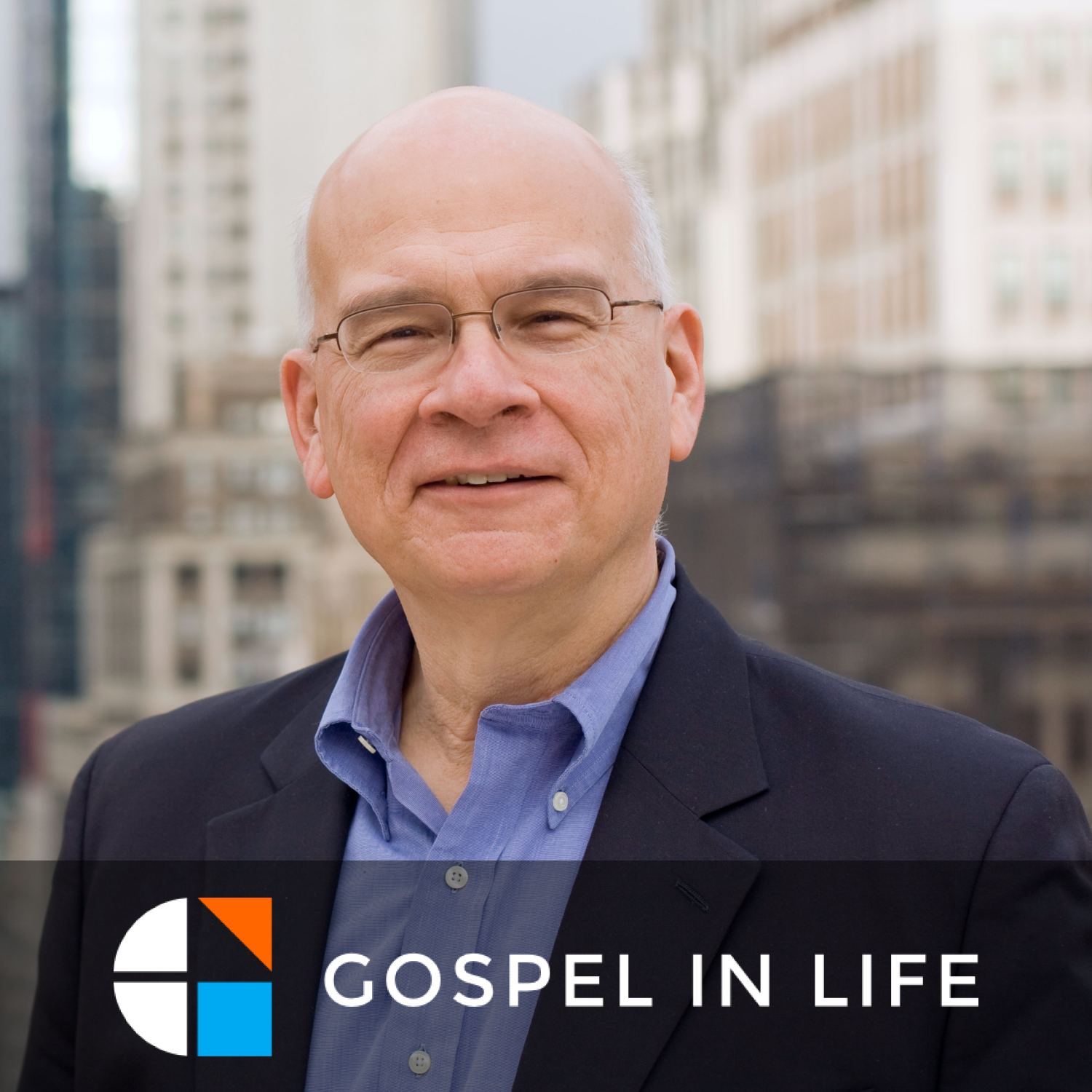
Timothy Keller Sermons Podcast by Gospel in Life
Hosted by Tim Keller · EN
Sermons by Tim Keller, founder of Redeemer Presbyterian Church in NYC and NY Times best-selling author of ”The Reason for God: Belief in an Age of Skepticism.” For more sermons and resources, visit www.gospelinlife.com.
266episodes
Episodes
Newest firstAll episodes
Choose Life
Aug 2900:40:20Summary readyAt the end of the end of the last of Moses’ sermons, he says something so simple that it’s difficult. Moses starts saying, “I’m offering you this personal relationship with God.” He’s saying, “It’s not too difficult. It’s near you. You don’t have to go up to heaven. You don’t have to go over the sea.” And actually, people miss this personal relationship with God because it’s so simple; the simplicity is its difficulty. We’re going to see here, when it comes to this personal, covenant relationship with God, 1) its deceptive ordinariness, 2) its threatening graciousness, and yet 3) its unimaginable promise. This sermon was preached by Dr. Timothy Keller at Redeemer Presbyterian Church on September 23, 2007. Series: The New Heart God Gives. Scripture: Deuteronomy 30:11-20. Today's podcast is brought to you by Gospel in Life, the site for all sermons, books, study guides and resources from Timothy Keller and Redeemer Presbyterian Church. If you've enjoyed listening to this podcast and would like to support the ongoing efforts of this ministry, you can do so by visiting https://gospelinlife.com/give and making a one-time or recurring donation.
SummaryA New Heart
Aug 2700:37:58Summary readyWhen you’re about to die, there are no tangents; you get right to the point. You only say the things that are the most important that you’ve ever learned in your whole life. Here, at the very end of the end of his sermons, at the very end of the book of Deuteronomy, Moses gets to the most crucial things he could possibly tell anyone. Here he gives us the solution to what could be called the ultimate human problem. So let’s ask 1) What’s that problem? 2) What’s the solution? 3) How do you know if you have it? and 4) If you don’t, how can you receive it? This sermon was preached by Dr. Timothy Keller at Redeemer Presbyterian Church on September 16, 2007. Series: The New Heart God Gives. Scripture: Deuteronomy 30:1-10. Today's podcast is brought to you by Gospel in Life, the site for all sermons, books, study guides and resources from Timothy Keller and Redeemer Presbyterian Church. If you've enjoyed listening to this podcast and would like to support the ongoing efforts of this ministry, you can do so by visiting https://gospelinlife.com/give and making a one-time or recurring donation.
SummaryA Covenant Relationship
Aug 2500:33:05Summary readyIf the last thing, practically, that Moses said before he died was, “You need to be in a covenant relationship with God,” then it would behoove us to figure out what that is. What is a covenant relationship with God? In Deuteronomy, we have a series of sermons that Moses preached just before he died. And Moses thought a covenant relationship with God was that important — that this would be almost the last thing he said. In this passage, we learn three things: 1) the uniqueness of the covenant, 2) the mystery surrounding the covenant, and 3) the hero of the covenant. This sermon was preached by Dr. Timothy Keller at Redeemer Presbyterian Church on September 9, 2007. Series: The New Heart God Gives. Scripture: Deuteronomy 29:2-4, 9-18. Today's podcast is brought to you by Gospel in Life, the site for all sermons, books, study guides and resources from Timothy Keller and Redeemer Presbyterian Church. If you've enjoyed listening to this podcast and would like to support the ongoing efforts of this ministry, you can do so by visiting https://gospelinlife.com/give and making a one-time or recurring donation.
SummaryWho is this Jesus? (Open Forum)
Aug 2200:44:32Summary readyIf we look at Jesus Christ, at the case for Jesus being who he said he is, there are five things to see. First, there was a man who claimed to be God. Second, he apparently did miracles. Third, he got the people closest to him to believe he was God. Fourth, after he was dead, many people saw him risen to life again. And fifth, those people were so transformed by the experience of meeting that risen Savior that they spread the word everywhere. How do you account for those five facts, for the data of who Jesus is? You have to come up with something. There are only five options for how you account for this. We’ll look at these five options, and what they mean for us. This talk was given by Dr. Timothy Keller at Redeemer Presbyterian Church on May 1, 1994. Series: Redeemer Open Forums. Today's podcast is brought to you by Gospel in Life, the site for all sermons, books, study guides and resources from Timothy Keller and Redeemer Presbyterian Church. If you've enjoyed listening to this podcast and would like to support the ongoing efforts of this ministry, you can do so by visiting https://gospelinlife.com/give and making a one-time or recurring donation.
SummaryFinding Jesus
Aug 2000:34:14Summary readyIn John 5, Jesus heals a lame man, and then he begins to teach about himself. He makes some astounding claims, and the people challenge him. “Why should we believe you?” In the context of Jewish jurisprudence, if a claim was made, you had to have two or three corroborating witnesses. Jesus responds to the people’s challenge with three: John the Baptist, Jesus’ own works, and the scriptures. In the process of looking at what he says here, we learn three things Jesus himself believed about the scripture. Jesus believes in the Bible’s 1) complete authority, 2) unity, and 3) vitality and power. This sermon was preached by Dr. Timothy Keller at Redeemer Presbyterian Church on November 24, 2013. Series: A Public Faith. Scripture: John 5:31-47. Today's podcast is brought to you by Gospel in Life, the site for all sermons, books, study guides and resources from Timothy Keller and Redeemer Presbyterian Church. If you've enjoyed listening to this podcast and would like to support the ongoing efforts of this ministry, you can do so by visiting https://gospelinlife.com/give and making a one-time or recurring donation.
SummaryDiscovering the Gospel
Aug 1800:45:21Summary readyYou can’t talk publicly about Christianity unless at some point you get down to say, “Well, what is it?” There’s great consensus that 1 Corinthians was written just 20 years after the death of Jesus Christ. So when Paul says he’s summarizing the message the Corinthians heard and believed before this, he’s talking about something that happened a handful of years after Jesus’ death. If you want to get down to the irreducible core of what Christianity is about, here it is in this passage. This is the gospel. The gospel is about 1) Jesus, 2) sin and substitution, 3) history and resurrection, and 4) astonishing, transforming grace. This sermon was preached by Dr. Timothy Keller at Redeemer Presbyterian Church on November 10, 2013. Series: A Public Faith. Scripture: 1 Corinthians 15:1-11. Today's podcast is brought to you by Gospel in Life, the site for all sermons, books, study guides and resources from Timothy Keller and Redeemer Presbyterian Church. If you've enjoyed listening to this podcast and would like to support the ongoing efforts of this ministry, you can do so by visiting https://gospelinlife.com/give and making a one-time or recurring donation.
SummaryFinding God
Aug 15, 202500:42:45Summary readyOne of the best ways of having a discussion about faith is to not simply talk about what you believe, but also how you came to believe it. Not just the content, but the process or the journey you went on. It’s often very helpful, because everybody is on a journey. We’re looking now at a famous passage: Moses and the burning bush. Moses already believes in God, but until this, he’s never encountered him. This is Moses’ conversion experience: he actually meets God. Four things bring Moses to this moment, and they’re the same four things the Bible says usually have to happen if you’re going to meet God. What are they? They are 1) a disrupting sight, 2) an expanding concept, 3) a personal problem, and 4) a surprising grace. This sermon was preached by Dr. Timothy Keller at Redeemer Presbyterian Church on November 3, 2013. Series: A Public Faith. Scripture: Exodus 3:1-14. Today's podcast is brought to you by Gospel in Life, the site for all sermons, books, study guides and resources from Timothy Keller and Redeemer Presbyterian Church. If you've enjoyed listening to this podcast and would like to support the ongoing efforts of this ministry, you can do so by visiting https://gospelinlife.com/give and making a one-time or recurring donation.
SummaryKnowing Good
Aug 13, 202500:47:18Summary readyWe all have very strong moral convictions about what we think is right and wrong. And in a pluralistic society, we need to find ways of sharing our beliefs and being honest about who we are in a way that’s respectful and promotes peace. One of the ways we can make for a more civil conversation is to ask a more fundamental question: Where do you get your moral convictions? How do you determine what is right and wrong? There’s almost no place I know that has a more interesting answer to this question than Romans 2. It tells us three things: 1) no one can succeed in being a relativist, 2) no one can really succeed in being a moralist, and therefore, 3) this is our only hope. This sermon was preached by Dr. Timothy Keller at Redeemer Presbyterian Church on October 27, 2013. Series: A Public Faith. Scripture: Romans 2:12-29. Today's podcast is brought to you by Gospel in Life, the site for all sermons, books, study guides and resources from Timothy Keller and Redeemer Presbyterian Church. If you've enjoyed listening to this podcast and would like to support the ongoing efforts of this ministry, you can do so by visiting https://gospelinlife.com/give and making a one-time or recurring donation.
SummaryKnowing God
Aug 11, 202500:44:59Summary readyIf we’re going to have a truly open society, we have to learn how to be public about our deepest faith beliefs, and yet to do so in a way that’s respectful to others and promotes peace. So how do you talk about God and God’s existence? One way to talk about this with more reflection is not to ask, “Does God exist?” but to ask, “How do you know whether God exists?” I don’t think there’s any more brilliant answer to the question, “How can we know whether God exists?” than in Romans 1. Paul actually gives four answers, all at once. He says, 1) we can know God, 2) we do know God, 3) we don’t know God, and 4) we can truly know God. This sermon was preached by Dr. Timothy Keller at Redeemer Presbyterian Church on October 20, 2013. Series: A Public Faith. Scripture: Romans 1:16-21. Today's podcast is brought to you by Gospel in Life, the site for all sermons, books, study guides and resources from Timothy Keller and Redeemer Presbyterian Church. If you've enjoyed listening to this podcast and would like to support the ongoing efforts of this ministry, you can do so by visiting https://gospelinlife.com/give and making a one-time or recurring donation.
SummaryFacing Doubt
Aug 8, 202500:48:04Summary readyTo become a mature society in which we’re able to talk about faith, we also have to be able to talk about doubt. We don’t get much help here from either religious people or secular people. Religious people tend to see doubt as a bad thing. And secular people tend to think perennial doubt is the only sophisticated position. However, what the Bible says about doubt is unique, nuanced, and multidimensional. The Bible sees doubt as something that’s not all good and not all bad. Only when you begin to see it in a nuanced way can it be something through which we make progress. Let’s look at doubt in this famous psalm of Asaph: 1) what is it? 2) what causes it? and 3) what transforms it? This sermon was preached by Dr. Timothy Keller at Redeemer Presbyterian Church on October 13, 2013. Series: A Public Faith. Scripture: Psalm 73:1-3, 12-26. Today's podcast is brought to you by Gospel in Life, the site for all sermons, books, study guides and resources from Timothy Keller and Redeemer Presbyterian Church. If you've enjoyed listening to this podcast and would like to support the ongoing efforts of this ministry, you can do so by visiting https://gospelinlife.com/give and making a one-time or recurring donation.
Summary