← To My Sisters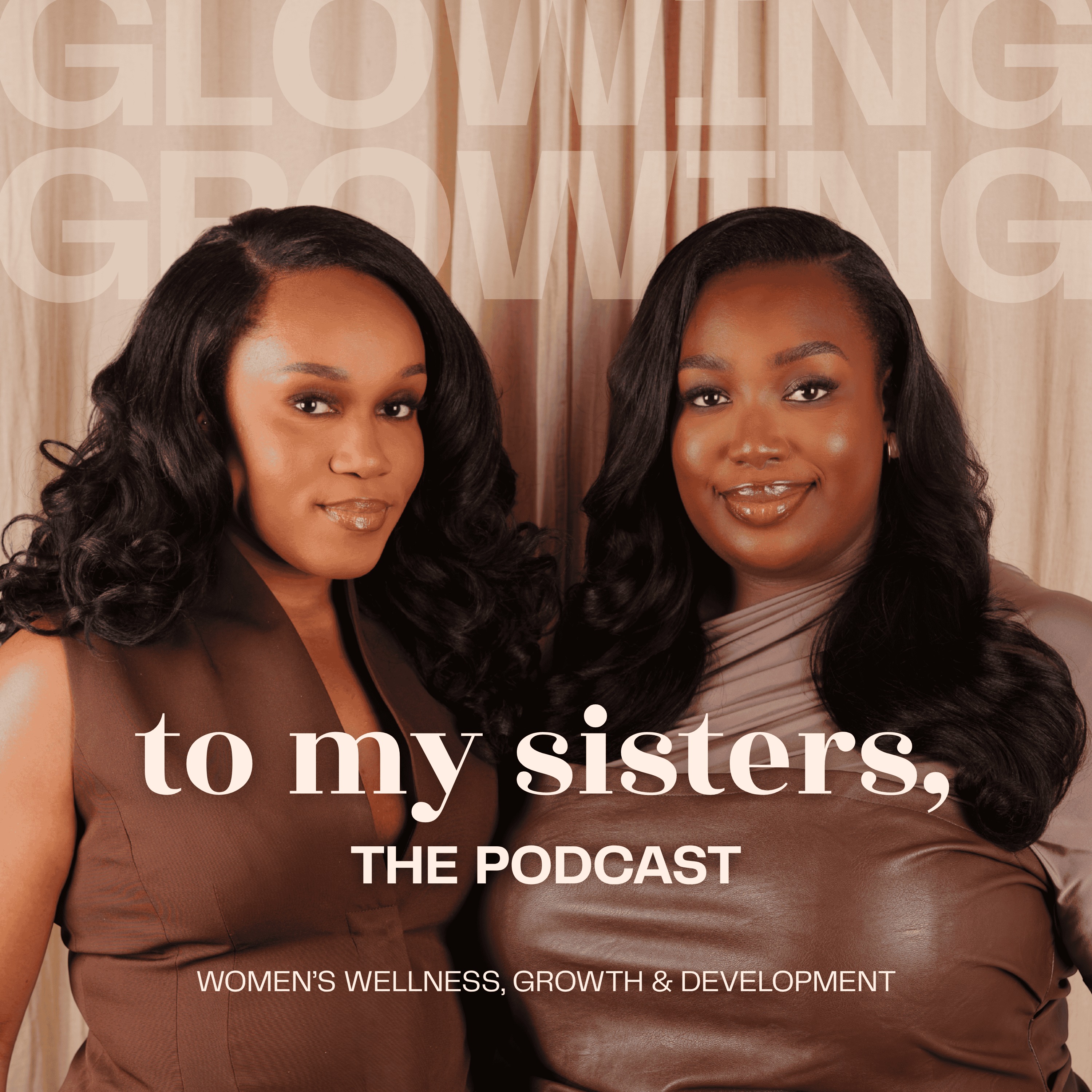
Loading summary
Transcript416 lines
- [00:02]
Courtney
Acast powers the world's best podcasts. Here's the show that we recommend. If you've ever dreamed of quitting your job to take your side hustle full time, listen up. This is Nikayla Matthews Akome, host of Side Hustle Pro, a podcast that helps you build and grow from passion project to profitable business. Every week you'll hear from guests just like you who wanted to start a business on the side. If you can't run a side Hustle,
- [00:29]
Renee
you can't run a business.
- [00:30]
Courtney
They share real tips and so I started connecting with all these people on LinkedIn and I saw Target supplier diversity
- [00:35]
Renee
was having office hours. Real advice.
- [00:37]
Sponsor/Ad Voice
Procrastination is the easiest form of resistance
- [00:41]
Courtney
and the actual strategies they use to turn their side Hustle into their main hustle. Getting back in touch with your tangible cash and sitting down and learning to
- [00:50]
Renee
give your money a job like it changes something.
- [00:53]
Courtney
Check outside Hustle Pro every week on your favorite podcast app and YouTube. Acast helps creators launch, grow and monetize their podcasts everywhere. Acast.com
- [01:10]
Renee
confrontation and conflict in a Relationship
- [01:14]
Courtney
Confrontation, tension, friction is a normal part of any healthy relationship and we have to lean in at some point, obviously before they become toxic.
- [01:27]
Renee
There's safeguarding that comes with relationships. As much as it can be deeply uncomfortable, as much as, you know, friction can be something that we don't want to sit with, I think we forget that friction can be overcome.
- [01:39]
Courtney
There's something there about the illusion of options. I think within friendships we kind of believe that I can just make another friend.
- [01:46]
Renee
We see friction or discomfort in our relationships or that person irritated me as a sign of the end of the end.
- [01:54]
Courtney
The friendship would end if I brought up everything that this person had done to me then. Is this a friendship you want?
- [01:59]
Renee
Yeah. And we've even seen the models, right, of, you know, aunties that will be around each other and dislike each other
- [02:05]
Courtney
and that's why they have fibroids. I am sick of people not saying sorry anymore. Hello and welcome to the To My Sisters Podcast. I'm Courtney.
- [02:16]
Renee
And I'm Renee and we are your online sisters and hosts of the Two My Sisters Sisters podcast.
- [02:20]
Courtney
We are all about promoting the wellness, growth and development of a community of sisters around the world.
- [02:25]
Renee
And in today's podcast episode, we're going to be talking about confrontation and conflict in relationships because it seems like the girls are struggling with confrontation and conflict. And what does it really look like to be able to do these things within the confines of a healthy relationship? I am very Excited about this because I feel like conflict and confrontation are those two things that people claim that they do really well. Like, they want to be those people that are comfortable and confident when it comes to challenging these things. But everybody got a story on TikTok, so we gonna dive into it. But before we do that, do we have any housekeeping? Any.
- [03:08]
Courtney
I don't think there's anything.
- [03:09]
Renee
So, yeah. I just hope that all the UK girlies are keeping well in.
- [03:14]
Courtney
The heat wave has been very hot. Unbearably so, actually. Yeah, it's actually been challenging.
- [03:23]
Renee
So please, sisters, just keep. Stay safe. Keep safe. Keep safe. Because. And for context, because I feel like a lot of people in other countries are like, why are you guys complaining? It's hard every single time. The heat in the UK is different to the heat elsewhere.
- [03:41]
Courtney
Yeah.
- [03:41]
Renee
It's not something that you can necessarily prepare for. All of our institutions and our buildings are literally built for cold weather.
- [03:48]
Courtney
Exactly.
- [03:49]
Renee
So imagine cold weather, buildings in like, 35 degrees, even 40 degrees Celsius heat, and you guys have aircon. Most homes, we don't have aircon. We just have fan pushing the same warm air.
- [04:03]
Courtney
Yeah. Literally.
- [04:04]
Renee
So please, guys, take care in this. Be drinking your water. In fact, as you're listening to this, make sure that you drink your water. Stay hydrated. Stay. Stay hydrated. But I guess we can go straight into the dm. Oh, my gosh. Wow. The house is sweat. It feels very, very nice and steady. Okay. Hey, Sistren.
- [04:26]
Courtney
Hey, darling.
- [04:27]
Renee
Hope you are both doing good.
- [04:28]
Courtney
Good. Thank you.
- [04:29]
Renee
I watched the Friendship talk episode on your podcast, and I think my situation can be addressed. I would be glad if I'm being helped out because I am losing my mind over this issue. My best friend recently requested a break and asked me to reflect on our dynamic. I think this is the first time I've heard of a friendship break. You know, we were on a break. Ross and Rachel.
- [04:53]
Courtney
We were on a break. Okay.
- [04:56]
Renee
Yeah. Through this process, I have realized that my behavior has been a major part of the problem. I want to change, but I am afraid of appearing desperate to save the friendship. She has expressed frustration that I treat her exactly the same way I treat my other friends, and she feels that I don't really care about her or show interest in her life. I struggle with opening up, which creates a barrier between us. Additionally, she feels overshadowed by the fact that I have many other friends and has even suggested that I need to cut others off to prove her importance.
- [05:27]
Courtney
Oh, let's not be silly.
- [05:30]
Renee
Oh, no. I really Value this friendship and want to save it. But I don't know the best way to move forward. How can I show her that she is my priority without losing myself or feeling like I'm begging for her? Courtney, stop it. Your face.
- [05:44]
Courtney
I'm a bit confused. Are they romantic partners?
- [05:46]
Renee
It's giving romantic. I was yeah, thinking the same thing. How should I address her concerns about my other friendships whilst also learning how to be more vulnerable with her? What can I be doing? As we are on a break? I really want the better version of me when we get back along. Also, how do I bring up random conversations for us to talk about when nothing is happening in our lives? Please help me because I really am losing my mind. I would appreciate it. I would appreciate being helped. Thank you.
- [06:14]
Courtney
Okay, this is an interesting one. I don't think you've heard anything like this before. So well done to you for being unique. Honestly, sis, thank you for sending your dilemma. This is very interesting in my opinion because I've never in my life heard of something like this. So I don't quite know what to tell you apart from what I'm about to say, which will sound very harsh. Your friend sounds unhealthily attached to you in some way.
- [06:41]
Renee
Yeah.
- [06:41]
Courtney
And I think for someone to insinuate, suggest or demand that you cut off some of your friends so that you can prove to them that you are a priority or they are a priority to you. Sorry. Is so unhealthy and just screams insecurity and anxious attachment in my opinion. I think that your friend is clearly going through something in her own self esteem, her own mind, I don't know, in her own heart. Maybe there's, you know, insecurities around self worth there feelings like okay, people maybe don't appreciate her or she wants to be validated or whatever. But I don't know about you, Renee, but I just feel like there is a healthy level of dependence in a relationship and then it crosses over into a toxic place.
- [07:31]
Renee
Yeah.
- [07:32]
Courtney
Where you begin to now make this person your everything all in all, as you often put at the center of your universe. And it sounds like your friend, this friend is trying to do that.
- [07:41]
Renee
Yeah.
- [07:42]
Courtney
In my opinion, I would in this time of a break. Shoot. The concept of a break in a friendship is absolutely crazy. Oh, this is the first time because. What do you even mean? I understand that maybe we need to take a step back, things are getting a bit and then we'll come back at a great time to talk about a situation. But in this, this for someone to Say we should go on a break so that you can reflect on your actions is absolutely insane and sounds like borderline punishing behavior. Yeah, that's not. That's not how any healthy relationship or friendship is even built. You are not a child being parented. You're a peer being in a relationship, a reciprocal relationship. And so I would just shoot her a message if you maybe don't have access to seeing her in person and just be like, hey, I have been doing quite a bit of reflection. I think that this is quite unhealthy in the way that this has kind of manifested itself. And I really do enjoy our friendship. If it is that both of us desire and. Or you desire to still continue in a relationship or in a friendship, I would love to deepen our friendship. Can we meet out and go. Can we meet up and go out? But the idea of, oh, we're on a break. Reflect on your actions. And until you want to put me higher up in your hierarchy of friends, I'm not going to give you access to me is so easy, immature, it is insane. So I would pay attention to her response to that kind of message. But also, the onus isn't just on you to deepen this relationship.
- [09:08]
Renee
Exactly.
- [09:08]
Courtney
Friendships are two ways. And if both of you aren't going to put in the work to foster intimacy, safety, and therefore pour in your vulnerability, there's no point. And it sounds like she wants you to really be there, really open up. But the question is, are you ready for that? And number two, is she creating a space? Space that is conducive for that and safe for you to do so. And so it could be an opportunity for you to dish her back some feedback.
- [09:34]
Renee
Hello.
- [09:34]
Courtney
Like, listen, babe, even the way you handled this whole we should go on a break thing shows me exactly why I don't want to be vulnerable. Exactly why I don't want to speak with you about certain things. And I think it's. I think what Sis said in the later half of the dilemma around how do I not force certain things for. Force certain conversations when nothing's happening in our lives? You don't. You know, friendships are built on more than just gisting about what's happening in each other's life or opening up every can of worms from your past and every skeleton that's in your closet. It's also built on common interests. It's also built on common passions and hobbies. And if that hasn't been cultivated, I would recommend cultivating that in your friendship spaces where you can Coexist and enjoy other things outside of the both of you. But if you haven't got that at the moment, it's on both of you to build that. And that's also something that can't be forced. Neither of you can force each other to like something. So it sounds like there's in the background of this, a backdrop of a lot of dysfunction on her part. And I hate that it's making you uncomfortable. I hate that because I can imagine how awkward it feels. And now you're thinking, am I actually doing something wrong? You shouldn't relegate your other friends to try and show this person that they're important. If in this time of reflection, you have actually taken a step back and realized, okay, the way I do friendships across the board, or maybe with her for some reason isn't actually conducive to an intimate relationship being fostered here, and maybe she has some valid points, then great, do the work. Right. But there's a part of this where she needs to also be willing to do her part. And for her to completely remove herself and be absent from this actually shows a whole bunch of emotional immaturity, in my opinion. So my practical tip would be, shoot. Shoot her. That message. That's like, hey, I have reflected. This thing goes two ways. I do want us to have a friendship. Let's build that together. I will try to open up more, but this is what I need in order to open up. Let's do this journey together and see what her response is to that. But if she responds negatively, if she tries to enforce some kind of punishment for some kind of perceived relegation, Please, no one has time.
- [11:50]
Renee
This for football.
- [11:51]
Courtney
Team relegation is crazy. Yeah. But how about you?
- [11:54]
Renee
Oh, God. I think you. You hit the nail on the head. This is a weird situation to me. It just feels strange. Almost reminds me of the kind of girls that, you know, when they don't have a man, so they start acting as though their friend is their replacement man. It's giving. Does she like you? Like, does she want you to play a romantic place in her life? Like, that's what it's giving. The whole show me that you care about me, it's giving. Are you guys in a toxic romantic relationship or something? So, yeah, the boundaries there, the dynamic there does feel. Feel a bit weird. And I feel like the sister can tell as well. Like, when you are having friction or issues with your friendship, this whole feeling of not wanting to come across desperate. I don't know, I just feel like in a lot of our Friendships that fear for that fear to be present. There's something wrong in that friendship or that dynamic that there's a part of you that knows, oh, this dynamic feels a bit strange. Or like I feel like I have to hold parts of myself back in order to not appear a certain way. That to me was a straight ding, ding, ding. Is everything okay? It doesn't sound is too much. It's too much. And the whole concept of having a friendship break to me you haven't shared how old you are, but I hope you're, I Hope you're under 16. I hope you're under.
- [13:10]
Courtney
But even though that's such a primary school thing to do, you're not my
- [13:13]
Renee
best friend until you prove yourself to me.
- [13:17]
Courtney
Come on, relegate your other friends elementary school. Relax.
- [13:20]
Renee
We are working nine to fives. We are busy doing building businesses. We have friends, we have relationships. Are you what me?
- [13:28]
Courtney
But even if we were lying at home doing nothing, we're grown ups. Who acts like that.
- [13:39]
Renee
To me? I will be looking at you.
- [13:41]
Courtney
It's not love and hip hop. This is friendship edition as well.
- [13:45]
Renee
Insane. Talking about, oh yeah, prove yourself to me. In this economy, I'm stressed about so
- [13:51]
Courtney
many things and now I need to bend over back.
- [13:53]
Renee
Ah, that's it. It's too much. And I think even as you are doing this reflection during your Ross and Rachel stint, you should also be thinking about what do you want in your friendship? Because at the moment it sounds like, oh, how do I please her? How do I please her? There's a very distinctive people pleasing element to this relationship that I think is very, very toxic. Especially because not once did I hear, actually I need this. Okay, cool. You have an issue with being more vulnerable and that's a very valid point for anyone to bring up. But have you considered, okay, what do you actually need to feel comfortable enough to, you know, share the fact that you're even groping around thinking, oh, what random conversation starters can I bring up for a friend?
- [14:32]
Courtney
Yes, you're really in the tread for a friend.
- [14:35]
Renee
Because if I have nothing to say, that's it. Yeah, like it's actually.
- [14:37]
Courtney
It shows she cares though.
- [14:39]
Renee
Exactly. It shows that she does care. But it also signals to me that there is a certain discomfort that she has around this friend. Because for you to have to be thinking in the back of your mind, how do I start a conversation with you? How do I feel the silence? It shows that there's something that's occupying that silence and that's discomfort. You have some kind of discomfort with this friend. And I think she absolutely needs to sit with that. And you really need to ask yourself, okay, why? What is it about this person or this situation that makes me feel uncomfortable? And to me, it sounds like this baby's doing a bit too much. Too much, Too much. It's people pleasing.
- [15:15]
Courtney
Yeah.
- [15:16]
Renee
So I think, yeah, doing that reflection, but then coming back honestly and saying, my sister, this behavior that you've exhibited to me is bad behavior.
- [15:25]
Courtney
Yeah.
- [15:25]
Renee
And to any of the sisters that are listening to this, in fact, if it's you, bad behavior, oh, my gosh, that is such red. The flags are.
- [15:34]
Courtney
Yeah.
- [15:34]
Renee
You know, they're really waving. So take your time. Obviously, everybody has got their own flaws and character work that they have to work on, but don't think that this is indicative of it being just a you problem. This is a YouTube problem.
- [15:49]
Courtney
Yes.
- [15:49]
Renee
And perhaps distance might be a good thing for you.
- [15:52]
Courtney
I agree.
- [15:53]
Renee
So, yeah. So sending lots and lots of love. We know that this is a weird, dynamic, weird situation, but we are sending love to you and your sister and hope that you guys can come to some kind of resolution. And sisters, if you are listening, if you have been in this situation, if you have been on either ends of the spectrum of the sister's perspectives, we would love you to chime in. And you can do that either on Spotify comments. I think they can still do Spotify comments. That's exciting. YouTube comments. If you're watching us live and direct here. And whilst you're at it, please subscribe because we are approaching the 80k 80, 000.
- [16:26]
Courtney
We might actually be there by the time this comes out. You know, I am hoping we're recording this two weeks in advance so we might actually be there. But get us to 100k, guys.
- [16:35]
Renee
I didn't want to be too flashy. I didn't want to be too flashy and too much in asking for the 100k. But as my sister has confirmed, we're almost out. Okay. Please come on, join the party, join the sisterhood. But please share your thoughts. But I think this is actually a perfect dilemma given the topic of conversation, of conflicts and confrontation and problems within relationships. So I actually wanted to start this conversation talking about friction. Yeah, I feel like in today's society for friction, it almost feels like friction has been demonized, especially in the context of female friendships. Friction is a perfectly normal and sometimes healthy thing to have within relationships. But what we are noticing, or at least what I've noticed, especially on social media platforms, that also translates into Real life is that it's almost as though the first sign, at the first sign of friction, we gotta cut a girl off, she gotta go like, we can't, we can't do this. So I wanted to talk first and foremost, like, what, what is it about friction that makes people deeply uncomfortable, especially in the context of female friendships and those kind of relationships. And why do you think that we're seeing this trend of people being very, very quick to dip at the first sign of friction?
- [17:58]
Courtney
That's a good question. I think, first of all, no one wants to be uncomfortable, right? Discomfort is something that we're all averse to, we all want to run away from, whether it be physical discomfort, mental discomfort, and fair enough, it's a survival mechanism because there is a fine line between being stretched and being harmed, you know, and so I think within these friction moments, sometimes our natural kind of survival instincts kick in and we're like, no, no, no, I don't need the drama, I don't want any of this. But I think like you said, confrontation, tension, friction is a normal part of any healthy relationship. And we have to lean in at some point, obviously before they become toxic, but actually allowing ourselves to not run away at the first sight of things. But I do think that people run away because discomfort is just hard. And we need to be able to discern that line between a growth opportunity and actual danger. And I think we have it too blurred. And I actually think we've brought that middle fine line of a boundary too far up into the growth area. And now as soon as we, you know, experience the tiniest bit of discomfort, we're like, no, no, no. We're approaching this danger zone of being harmed, being exploited, being used, being abused. But actually we're far from that point yet. Right. So a lot of people stop themselves from even having a hard conversation them. The hard conversation is the line. The line of, once I have this hard conversation, we're entering into combat, we're entering into a danger zone for me.
- [19:40]
Renee
Yeah.
- [19:40]
Courtney
And that's not necessarily where the line is. Obviously that depends on who you're talking to. Some people are walking bombs. Like they will blow up on the, even the little, the littlest moment. And so some, some people are dangerous to have friction with because they do not yet have the capacity, capacity to not blow up, blow up situations, blow up emotionally at the littlest touch of tension or friction. You know, some depending on, I mean, from a physics point of view, depending on the material of a substance, friction can actually be really dangerous. Right. Because it can ignite something. So you have to know that you're actually dealing with someone who can handle friction before you bring up that confrontation or that, you know, initial spark of let's have a conversation. Not everyone can handle it. And I completely understand that. But I do think we've. We've become a bit too. I would say, hypersensitive.
- [20:34]
Renee
Yeah.
- [20:35]
Courtney
To the point where we don't even want to get close to that line.
- [20:37]
Renee
Yeah.
- [20:38]
Courtney
And would rather just stay on the opposite end and stay in our comfort zones and stay in a place where we're like, you know what? This rubs me the wrong way, but I'm just gonna leave. I don't need this. Right. Every day, therefore, denying ourselves the growth opportunity in the first place. Right. But another thing I think that you brought up, which is really interesting about. Why is it that when we face friction, we just want to run away? And I do think that there's something there about the illusion of options. I think within friendships, we kind of believe that I could just make another friend.
- [21:12]
Renee
Yeah.
- [21:13]
Courtney
That's just.
- [21:14]
Renee
Yeah.
- [21:14]
Courtney
Like, I don't need to fight for this. I'm a box.
- [21:18]
Renee
Believe it.
- [21:18]
Courtney
There's a million other people out there. Or I'd rather be by myself.
- [21:21]
Renee
Yeah.
- [21:22]
Courtney
I can do all bad. I can do bad all by myself. And I do think there's that lone ranger, lone wolf, individualistic mentality that comes into play at times. And I understand it, because isolation does give a false sense of preservation. Right. If I am by myself, there is no external threat it feels. But I think that kind of downplays the benefit of community and simply demonizes community. Because it means that whenever I think of having friends, I think about the drama, but you don't think about all the benefits, all the safety, all the protection, all the comfort and all the benefits of community that there are. And I think we don't think of those benefits. Therefore, community seems easy to dispose of because there's no stakes in it for me. Right. It just comes with problems. But actually, that's not true. Good and healthy friendship, although it may come with friction, comes with way more benefits that outweigh that discomfort.
- [22:23]
Renee
Yeah.
- [22:23]
Courtney
And so I think there's this illusion of options. I can make another friend, or the option of being alone feels better than being in community, feels simpler, feels easier. And therefore, I'm gonna go with the. The road or the path of least friction.
- [22:38]
Renee
Yeah.
- [22:38]
Courtney
Right. And less resistance. But I think both of those have us a bit deceived about what it actually takes to build community. And I find it interesting that obviously culturally now we're having big conversations about community. We wrote a whole book on female friendships. Right. Like everything is community building. Community building. But when you bring up the nitty gritty of building relationships, not necessarily just oh, everyone wants a village and you need a vi. And it takes a village. But actually what it takes to be a villager. People run away from the sight of having to do their part.
- [23:14]
Renee
Yeah.
- [23:14]
Courtney
And I just find it so interesting and it goes to show human nature.
- [23:19]
Renee
Right.
- [23:19]
Courtney
Shout out to Michael Jackson where it's like we want all the benefits.
- [23:22]
Renee
Yes.
- [23:23]
Courtney
But we don't want to do the work. But then who will benefit if no one is doing the work?
- [23:28]
Renee
There's no benefactors, there's no benefactors, everybody's gone.
- [23:33]
Courtney
Doesn't work. Like everybody ran off then. And I was talking about this with Susan Debras. The there's huge supply, there's huge demand, not enough supply. People want friends. And it then makes me suspicious of do you actually want friends? But I think we do this, as funny as that is, I think we do this in everything.
- [23:56]
Renee
Yeah.
- [23:57]
Courtney
Right. Like I want a man. Do you actually want a marriage though? Let's be. Do you actually. Right. I want kids. Do you actually want to be a mom though?
- [24:06]
Sponsor/Ad Voice
Yeah.
- [24:07]
Courtney
Do you know what I mean? Like I want a wife but do you actually want to be a husband though? Like it's just you can want to have, but do you want to become. I think we're very obsessed with possession. I want friends. It's like this girl in the dilemma. Right. I want friends. But do you want to become a friend? Because it's a two way street.
- [24:26]
Renee
That's so good.
- [24:27]
Courtney
It's the, it's the same thing in business. I want wealth. Do you want to be a worker? Like do you actually want to work?
- [24:34]
Renee
You got a labor everyday CEO.
- [24:40]
Courtney
Yeah, I mean we see it. It's like the more I've been pondering on it because obviously we did that episode on conflicts in friendships.
- [24:46]
Renee
Yeah.
- [24:47]
Courtney
A couple of our clips went viral when people in the comments like, well I just can't come every time I do it. People call me sensitive. People don't want to hear it. People. And I think it's such amazing insight into what we see happening in other echo chambers, other spaces in the world, work, family, politics, everything. People want position without becoming, they want the power without doing. They don't, they don't want the responsibility that comes with the benefits that they're seeking out. And I just think that's Such an interesting landscape to observe.
- [25:24]
Renee
Courtney. That was deeply sociological. I really enjoyed that. You know what kills me when people say that was in what I found interesting. There's just something that's so loaded.
- [25:32]
Courtney
Yeah, yeah, yeah.
- [25:33]
Renee
There's something that's so loaded about the word interesting. That was point, evidence, explanation, link back to the question. Absolutely fantastic. I love everything that you said. I think there is a detrimental shirking of responsibility when it comes to our relationships. And I love the fact that you highlighted when it comes to friendships, on the pecking order of relationships, they seem to be the most disposable women. And I hate to see it within female communities, within our women's communities, where women are discarding other women so quickly. So, so quickly to the point where. And obviously we spoke about this in one of our past episodes, but this whole badge of honor of cutting people off. You won't get your degree in cutting people off, baby. You keep cutting, there gonna be nobody left. You'll end up cutting yourself.
- [26:24]
Sponsor/Ad Voice
Go.
- [26:24]
Renee
End up cunning yourself. And the deception of the lone Ranger.
- [26:28]
Courtney
Yeah, yeah.
- [26:29]
Renee
There's safeguarding that comes with relationships. As much as it can be deeply uncomfortable, as much as, you know, friction can be something that we don't want to sit with, I think we forget that friction can be overcome. We see friction or discomfort in our relationships or that person irritated me as a sign of something that is we're not able to overcome it. This is the end of the end in comparison to a lot of our romantic relationships. The way some of us will be fighting. Yeah, we are fighting. We are going to therapy, we are going to counseling. We are doing the communication circle, circle time with our partners. And I think it goes to show where we as a community and as individuals, where we value friendship. Is our friendship worth. Worth fighting for?
- [27:16]
Courtney
Yeah, that's a good question.
- [27:17]
Renee
And sometimes it doesn't even have to get that far. It's just friction. It's not a fight.
- [27:21]
Courtney
Say it again.
- [27:22]
Renee
Not everything is a fight.
- [27:23]
Courtney
Oh, my days.
- [27:24]
Renee
It's actually not like, oh, she couldn't come to my birthday part. That's. It doesn't have to be a fight.
- [27:28]
Courtney
It doesn't have to be a fight. But I think people think confrontation and they think fight. Yeah, they think aggression. Like, I always tell people I'm a confrontational person.
- [27:38]
Renee
Right.
- [27:38]
Courtney
And they're always like, oh, my gosh,
- [27:40]
Renee
I've got a tip toe.
- [27:41]
Courtney
No, no, I'm not angry.
- [27:43]
Hayden
Yeah,
- [27:46]
Courtney
I'm not angry. Confrontation simply means, by definition, to face an issue.
- [27:50]
Renee
Yeah, right.
- [27:51]
Courtney
It's the opposite of being avoidant. We confront.
- [27:54]
Renee
Yeah.
- [27:54]
Courtney
And I think that misunderstanding of, oh, confrontation means aggression is what leads to the anxiety that then makes people want to avoid it. Right. Confrontation is very simple. It's simply looking fear in the face. And yes. Me, if I, for example, if I have an issue with you, we've had the issue. These kind of discussions and vice versa. Just me being able to overcome that initial anxiety, to be like, okay, instead of turning my back on this issue and acting like it's not there.
- [28:21]
Renee
Yeah.
- [28:22]
Courtney
Let me actually face it head on and face you about it. Not in a, hey, we're both in opposite corners of a wrestling ring and let's fight this out. But in a, let me put this thing on the table and let's not act like the elephant in the room isn't actually there.
- [28:36]
Renee
Yeah.
- [28:36]
Courtney
And let's discuss this as two mature adults. But I think what you're hitting on is so profound. I think a lot of people don't bring up their concerns in a relationship.
- [28:48]
Renee
Yeah.
- [28:49]
Courtney
Because they doubt the other person's emotional maturity and their own as well. I think there's a fear around. Can this person handle the feedback?
- [29:02]
Renee
Yeah.
- [29:03]
Courtney
And also can I. Right. Feedback is two ways this person can say something in response to you putting on the table that I didn't like this and it could hurt you.
- [29:17]
Renee
Yeah.
- [29:18]
Courtney
In response. And I completely understand the human desire to therefore self preserve by not putting on the table in the first place. I'm not going to give you an opportunity to weaponize my pain against me.
- [29:31]
Renee
Yeah.
- [29:31]
Courtney
Right. However, that is indicative of the fact that we are in relationships with people who might not even be healthy people to be in relationships with.
- [29:42]
Renee
Right.
- [29:44]
Courtney
Companionship should not just come from anywhere. Companionship needs to come from capable people. And I think people doubt that a lot like people. No, no. I'm being so serious.
- [29:56]
Renee
No, I know. That's why. That's. That's what is ticking.
- [29:59]
Courtney
I don't understand because every time I have this conversation about conflict, relationship confrontation, communication, stuff like that, people are just like, oh, well, I don't want to bring it up because I just know they'll blow up. So I'm just gonna, you know, keep it inside of me because the friendship will be preserved if I just swallow it.
- [30:15]
Renee
Yeah.
- [30:15]
Courtney
Why are you trying to preserve a relationship with someone who has proven to you that they do not have the emotional maturity and capacity to be in a healthy, functional, adult relationship? Does that make sense to you, what you're saying? It's like telling Me, I don't want to bring up to my boss that I am actively being abused in my organization because I want to keep my job.
- [30:42]
Renee
Yeah.
- [30:42]
Courtney
In my dream organization. This is not your dream organization. I'm sure your dream organization doesn't contain abuse.
- [30:51]
Renee
It's a nightmare.
- [30:52]
Courtney
So what are you trying to preserve? You're trying to preserve this imaginary perfection.
- [30:57]
Renee
Yeah.
- [30:58]
Courtney
An image of perfection that doesn't even exist. A lot of times when people say it, they're like, oh, you know, Because I just know the friendship would end if I brought up everything that this person had done to me. Then. Is this a friendship you want?
- [31:12]
Sponsor/Ad Voice
Yeah.
- [31:13]
Courtney
That doesn't make any sense. Why would you remain complicit? At the beginning stage, you were a victim. Absolutely. But now you're remaining complicit.
- [31:22]
Renee
Yeah.
- [31:23]
Courtney
Right. You need to be able to bring up, this is harmful to me. Now understand, in more extreme cases of this, say within romantic relationships where there's abuse, speaking up is when you actually become at your most vulnerable. So I completely understand the tensions that exist there. I'm not talking about that end of the extreme. I'm pairing it back to platonic relationships where there isn't that. That danger per se. There's just you treading on eggshells with somebody who hasn't got the emotional intelligence to be able to deal with that feedback. Right. In that context, why would you want to be in friendship with someone who cannot handle being told the way you're doing, friendship with me is actually harmful towards me. That person isn't your friend. That person is a placeholder for you. Right. They've become this figurehead in your life. But you don't actually like that person, nor do they really like you. Like you're not. Because I understand. People tell themselves, oh, no, but we have really great moments. Absolutely. But your bad moments will begin to overshadow everything.
- [32:27]
Renee
Just a litany of nightmarish incidents of us together.
- [32:31]
Courtney
Why are we acting like being in a friendship we can just forget the bad things that people do to us? It actually builds up up. A lot of people are carrying traumas, pains and wounds.
- [32:42]
Renee
Yeah.
- [32:43]
Courtney
From relationships and friendships where they didn't bring up, this is my boundary and you crossed it.
- [32:49]
Renee
Yeah.
- [32:50]
Courtney
And so therefore their boundary kept being crossed and now they have self worth issues. A whole bunch of self doubt and a whole bunch of insecurities because somebody kept crossing your boundaries and you didn't want to bring it up. And I'm not doing this to victim blame.
- [33:04]
Renee
Yeah.
- [33:04]
Courtney
I'm doing this especially for Women, Women. To tell them we must be bold enough in these seasons of our life as grown women to tell people. I don't like that. I know. It may get you labeled a diva. It may get you labeled too sensitive. That's somebody projecting onto you the fact that they fear expressing their own boundaries.
- [33:27]
Renee
That's it.
- [33:28]
Courtney
That's it. If I communicate to you my boundaries and you say to me, you're just being too sensitive, it actually shines a mirror on you or a light on you, because you think that if you were to bring this up, somebody would call you oversensitive. I don't know who told you that in the past, but where I come from, I was raised to be told, swallow your emotions. Right. And as I got older and I went to therapy, I understood that that's actually doing me more harm than good.
- [33:53]
Renee
Yeah.
- [33:54]
Courtney
A lot of the ailments and chronic illness.
- [33:56]
Renee
Thank you.
- [33:57]
Courtney
That is in my body. A lot of black women's body is because we've been swallowing our pain in the name of being mature and keeping the pe. Not airing our dirty laundry. So, no, you're not being too sensitive. You are doing what every human in their instinct is programmed to do, which is maintain their safety.
- [34:17]
Renee
Exactly.
- [34:17]
Courtney
And protect themselves. And so any other rational, emotionally mature human being should be able to see that and see, hey, for somebody to have gone out of their way to overcome this, the fear and the anxiety that comes with confrontation, to tell me what you're doing makes me uncomfortable. I should actually pay attention to the fact that I'm being an idiot.
- [34:41]
Renee
You can't affirm it.
- [34:41]
Courtney
Do you get what I mean? I should actually take notice of the fact that this isn't something that can just be swept under the rug. This is actually a problem. But I think it comes down to that there's a concept in therapy called repair. Rupture and repair. Right. Rupture and repair requires emotional maturity.
- [34:59]
Renee
Yes. Yeah.
- [35:00]
Courtney
If you do not trust that you and the other person are emotionally mature, you're not going to do that process. And therefore, at the rupturing of trust in your relationship, you're just going to let it go. You're going to let the break exist. And letting it go doesn't always look like cutting the person off. Letting it go sometimes looks like resentment. It sometimes looks like comparison and envy. It sometimes looks like pure suspicion and paranoia.
- [35:27]
Renee
Yeah.
- [35:28]
Courtney
It looks like being in relationship and friendship with girls and your sisters who you don't even trust or like.
- [35:35]
Renee
And we've normalized it so much, man, it's so weird.
- [35:38]
Courtney
That's how we get mean girls.
- [35:39]
Renee
This is it. Everybody has a tale of, I'm friends with this person, but they don't really like me.
- [35:44]
Courtney
Yeah. Or I don't really like them.
- [35:46]
Renee
What are we doing? What are we doing? And I think our Courtney. So many things. So many things. I think firstly, we as women do this in so many different arenas of our lives.
- [35:59]
Courtney
Yeah.
- [35:59]
Renee
Where we are taught to placate. We don't want to ruffle feathers. We have to be the person that keeps the peace.
- [36:06]
Courtney
Facts.
- [36:08]
Renee
You gotta start ruffling some feathers. And you are so right. There's been a couple of studies that are coming out now that are talking about the effect of repressed negative emotions that are contributing to chronic ailments that we're seeing. I'm so tired. Do you know why you're tired? Because you actually need to speak up. So this is just one arena that we're seeing this kind of thing manifest in. And the template starts from when we were children.
- [36:33]
Courtney
Yeah.
- [36:34]
Renee
Especially as women, we're taught to placate, placate, placate. Keep the peace. Keep the peace. Don't ruffle too many feathers. You know, some of us around our primary caregivers, we felt like we couldn't share nothing. Nothing. The moment that you say something, it's causing issues. Somewhere somebody is fighting.
- [36:50]
Courtney
Yeah.
- [36:52]
Renee
Learning to self censor from as young as three to whatever and self soothe. And we've brought that into our relationships. And we've even seen the models.
- [37:01]
Courtney
Right.
- [37:01]
Renee
Of, you know, aunties that will be around each other and dislike each other,
- [37:05]
Courtney
and that's why they have fibroids.
- [37:13]
Hayden
Howdy, howdy, ho, and welcome to Fantasy Fan Fellas. I'm Hayden, producer of the Fantasy Fangirls podcast and your resident lover of all things Sanderson.
- [37:21]
Renee
And I'm Stephen, your bookish Internet goofball. But you can call me the Smash Daddy.
- [37:25]
Hayden
And we are currently deep diving Brandon Sanderson's fantasy epic Mistborn. But here's the catch. Stephen here has not read Mistborn before.
- [37:33]
Sponsor/Ad Voice
That's right.
- [37:34]
Hayden
Hey.
- [37:34]
Courtney
Hey.
- [37:34]
Renee
So each week, you'll get my unfiltered raw reactions to every single channel.
- [37:39]
Hayden
And along the way, we'll do character deep dives, magic explainers, and Steven will even try to guess what's next. Spoiler alert. He'll be wrong.
- [37:46]
Renee
News flash, I'm never wrong. Episodes come out every Wednesday, and you can find Fantasy Fan fellows wherever you get your podcasts.
- [37:53]
Hayden
Still waiting in line.
- [37:55]
Courtney
Again,
- [37:57]
Hayden
that's time you will never get back Save time and money with stamps.com. over 4 million businesses have skipped the line with stamps.com join them to save up to 90% off carrier rates from your computer or phone right now. Print postage for certified mail, registered mail, and packages in seconds. Then schedule a pickup right from your home or office for a limited time. Go to stamps.com and use code podcast for a free welcome gift. Taxes and fees apply.
- [38:32]
Renee
No,
- [38:36]
Courtney
no, no, no, no, no. Shout out to my girls with fibroids and like, endo and PCOS and all that. Do you know how many studies are there linking these endocrine issues with stress and trauma? These things are stressors. If someone has done something to you on however far the spectrum, on the spectrum of harm it is, and you are internalizing that. That. All in the name of keeping the piece. All in the name of not ruffling feathers. And I'm not saying this to be insensitive, because I understand why we do it as women. We are told, like you said, don't ruffle the feathers. Don't. If someone does something to you, just take it. Do you get. I mean, we are the doormats of society. And then we wonder why we're battered and bruised. It's because people have been stepping on us like doormats our whole lives. Exactly. So we. If we're going to preserve our health.
- [39:27]
Renee
Yeah.
- [39:28]
Courtney
As much as it may lead to other parties being uncomfortable, we must still say, I don't like that. And if you. I'm going to give you opportunity to change. And we can talk about the four pillars of rupture and repair, because they're actually really important for us to master. I'm going to give you the opportunity to change. But if you don't, I will remove myself from this situation. Right. Because like we always say, accountability without consequences is a joke, essentially.
- [39:56]
Renee
What's actually the point?
- [39:57]
Courtney
Okay, so if you don't honor my boundaries, I'm gonna have to dip. I'm first going to give us an opportunity to repair this rupture. Yeah.
- [40:08]
Renee
Oh, I love that. Courtney. You know, it's okay. And you know what? I know we've spoken a little bit about friction.
- [40:14]
Courtney
Yeah.
- [40:15]
Renee
But I also want to talk a little bit about fighting.
- [40:17]
Courtney
Not like physical fights, but actually you
- [40:19]
Renee
get into a genuine disagreement or argument or whatever with your friend and being able to come back from that, too, because again, we'd be fighting with some of these men and we're still trying to.
- [40:30]
Courtney
Some of us don't even.
- [40:31]
Renee
No, actually, some of us don't. But Quite a few of us do.
- [40:35]
Courtney
Yeah.
- [40:35]
Renee
We're out here arguing, fighting with men.
- [40:38]
Courtney
Yeah.
- [40:39]
Renee
And with our friends. Being able to overcome genuine grievous difficulties.
- [40:47]
Courtney
Yeah.
- [40:47]
Renee
Like, is it possible in today's day and age to overcome a grievance with a friend?
- [40:54]
Courtney
Absolutely.
- [40:55]
Renee
Like, I'm trying to think of an example or examples that we see on,
- [41:02]
Courtney
like, social media of, like, genuinely.
- [41:05]
Renee
Yeah. Not even trying to repair just, like, actual disagreements or, like, arguments or whatever. How to overcome, like, a common situation that a lot of friends may go through or, like, former.
- [41:15]
Courtney
Maybe a lot of us just haven't seen it.
- [41:17]
Renee
Yeah.
- [41:17]
Courtney
Because obviously, like, a lot of things thrive off of drama.
- [41:20]
Renee
That's true.
- [41:21]
Courtney
You go. I mean, and also, let's not act like we're all coming from functional families place. It's not like we're coming from environments where we've seen conflict handled well. So I. I'm not shocked that a lot of us are emotionally immature. I've also been there to get what. I mean, I've also been a very problematic person.
- [41:37]
Renee
Oh, girl.
- [41:37]
Courtney
And, like, struggled to take feedback. Been very heavily in a place of no one can tell me anything. And also had. Have peddled this, like, impenetrable strength which makes other people feel too sensitive for being reactionary or having human responses to pain. Right. I think that. Okay. The whole four pillars of rupture and repair. In order to repair a rupture.
- [42:03]
Renee
Yeah.
- [42:03]
Courtney
Is firstly, apologize. And, you know. I stay saying this.
- [42:08]
Renee
I know you do.
- [42:10]
Courtney
We don't say sorry anymore. People don't say sorry anymore. And it starts there. It starts right there. No big.
- [42:19]
Hayden
Biggest.
- [42:20]
Renee
I think it's pride, you know?
- [42:21]
Courtney
Thank you so much.
- [42:23]
Renee
I think.
- [42:23]
Courtney
God bless you. Because a lot of people think that the enemy of emotional maturity is emotional immaturity. No, it's pride.
- [42:32]
Renee
Yeah.
- [42:34]
Courtney
It's the moment you start thinking, I don't need to mature. You've already arrested your development right there. That was the moment. That's the year. That moment you told yourself, I don't need to do any more growing. Was the moment you said, I'm gonna live in this at this age forever.
- [42:58]
Renee
Have you seen that spongebob meme of him.
- [43:00]
Courtney
Him in the handcuffs? Yeah. You arrested your own bloody development. Biggest man thing. And I. I think a lot of people are walking around with arrested development and don't even realize it because of how much pride they have. Pride is the opposite of emotional maturity. You cannot be emotionally intelligent if you do not have enough humility to admit, I did something wrong or I got Something wrong. And I think it shows just how little self compassion we have and how little compassion we have in general for people. If you cannot not accept that people around you are going to make mistakes, it's probably because you haven't accepted within yourself that you can make mistakes and that they can be overcome.
- [43:50]
Renee
Yes. Good.
- [43:51]
Courtney
Do you get what I mean? And so that, that first, that first pillar is you have to apologize. And I am sick of people not saying sorry anymore.
- [43:59]
Renee
Oh my goodness.
- [44:00]
Courtney
You, it's, it literally I think the fabric of society is breaking because we keep violating social contracts which say if you do something, something that violates a social contract, you apologize.
- [44:12]
Renee
Yeah, yeah, yeah.
- [44:13]
Courtney
If you are late to meet your friend, this is not a I'm here now. No, say sorry.
- [44:20]
Renee
And worse still is when they make that character flaw a personality, personality trait. Oh, I don't need to say sorry because you know how I know how I am.
- [44:30]
Courtney
I do know how you are and I don't want it anymore. How about that?
- [44:36]
Renee
Even that whole, you know folks that are quick to blow up at consultation, I'm just a firecracker. I'm just a bit of a hurricane.
- [44:44]
Courtney
You are a walking unhealed six year old in an adult body talking about
- [44:50]
Renee
that's just who I am. Who you are sucks, sucks.
- [44:53]
Courtney
And you need to change it. So yeah, it starts off with apologizing. Yeah, either party needs to be able to apologize. But on the other side of that is the second pillar which is, is forgive. A lot of people don't apologize because they don't think they'll be forgiven. And a lot of people struggle with forgiveness. They struggle with. Because forgiveness to some degree also requires a certain degree of humility. And it's hard to be humble when you're the person who was offended because you now have the upper hand. And it's easy to now exercise that as a form of power because I can now lord this thing over you. A lot of our parents did it to us, right? You can apologize to your parents, but they'll still bring up every year that you did this thing. They're lording it over you as a tour mechanism to some degree of control. They're trying to control the power dynamic by reminding you of when you did something wrong. And we can do that in friendships a lot. Even if we don't express it within our hearts, we're still holding our friends prior actions against them. Right. Forgiveness is necessary. If we're going to repair a ruptured relationship and rebuild trust. We must, after the apology after the repentance, after the change in behavior, be able to say, okay, I forgive you. Right. But what's beautiful about it is after the forgiveness, it's not just apology and forgiveness.
- [46:12]
Renee
Yeah.
- [46:12]
Courtney
Now you go on to the third pillar, which you teach. We have the right to teach our friends how to love us and treat us.
- [46:19]
Renee
Yeah.
- [46:19]
Courtney
We must also become good, compassionate and clear about teaching them that. Right. So not from a place of condescending condescension, but actually wanting to. To see them win in friendship with us. Which is okay, you know, for. I'll use myself as an example. I don't like lateness. Right. I like punctuality. But if you are going to be late, then you apologize. I'm sorry I was late. Then I forgive you. It's okay. Then I'll tell you next time, if you're going to be late, I would just appreciate a text message before the time we're meant to meet. That.
- [46:54]
Renee
No. Because after. It's crazy.
- [46:55]
Courtney
Thank you so much. That says, hey, I'm gonna be late. Right. Just so that I can now plan my time. I can go get a Subway sandwich. Yeah. I could go and do whatever I need to do other things. Right. And I can make use of my time. So I've taught you from a place of wanting to see you succeed.
- [47:13]
Renee
Yeah.
- [47:13]
Courtney
How to make sure that this rupture doesn't happen again. And that brings us to the fourth pillar. You have to have the humility to learn. Right. And actually say, okay, next time I'm going to implement that.
- [47:24]
Renee
I'm gonna try and do this.
- [47:25]
Courtney
That's how you repair a rupture. Very simple. Very simple.
- [47:30]
Renee
It just requires so much humility.
- [47:32]
Courtney
Thank you so much. Which is why I say adult friendships is a game for adults, emotionally mature people. Right. People who have that, like actual maturity, the humility, the self awareness to be able to engage with other grown people, whether they act grown or not, in a grown and mature way. Like, I think a lot of us are still trapped in teenage ways of thinking, even though we're nearing 32nd.
- [48:02]
Renee
Some. Ah. Some of us don't pass. Some of us don't pass literally.
- [48:06]
Courtney
Some of you are hitting like mid-50s
- [48:09]
Renee
that you're still talking about.
- [48:10]
Courtney
Thank you so much. It's emotionally immature and we need to. It's hard. I'm not saying it's easy.
- [48:16]
Renee
Yeah.
- [48:16]
Courtney
But that's the only way lifelong friendships will actually survive. That's the only way relationships will actually, actually grow. And please, again, don't do the bean soup thing. And hear me telling you to stay in an abusive friendship. There is a far spectrum, a very far spectrum.
- [48:34]
Renee
You know, people don't like nuance.
- [48:35]
Courtney
Thank you so much. And that's all we serve over here.
- [48:40]
Renee
Right?
- [48:40]
Courtney
There is a very, very wide spectrum of discomfort and harm. No one is telling you to stay in a harmful situation. But what we're acknowledging is, is somewhere along the line in your relationship, you're going to experience a little bit of discomfort. Right. You're going to experience a bit of friction, a bit of tension at that. Don't just run away. Because on the other side of that, as long as you do those four steps with the person, or even if it's just one sided, as long as you display the humility, there's something called a growth opportunity. And I think so many of us are missing out on becoming the people that we actually want to become and need to become for our own futures because we always run away from that, that discomfort. But actually most of the maturity and the growth and the capacity which you're praying for and you know you need for another area of your life is going to be found in that hard conversation you're not trying to have.
- [49:32]
Renee
Do you know what? I. I think that God is very funny. I think he has the best sense of humor. Because you will pray for growth and he will send you somebody that will cause you serious discomfort coming to force you to grow serious discomfort that you'll even finish the prayer and somebody's bellowed off your line. I don't like the way that you did this immediately after the prayer.
- [49:54]
Courtney
And you must swallow it. You must chew on it and swallow it.
- [49:59]
Renee
But you know what? I also think that we have lost the art of being able to swallow.
- [50:04]
Courtney
Yeah.
- [50:05]
Renee
Like to actually firm it firm when somebody gives you feedback. Because one of my personal frustrations is whenever I do see some of these conversations happening is it is is filled with people who are the aggrieved. This person has done this to me. And I think that our capacity for grace will increase once we realize and we put ourselves in the position of the person. That is the problem.
- [50:30]
Courtney
Yeah.
- [50:31]
Renee
Because for every 50 people that say I have been aggrieved, there's 1,000 that are the perpetrators.
- [50:39]
Courtney
Including the person that's aggrieved.
- [50:42]
Renee
Including, like these things are not mutually exclusive. We are both the people that are hurt.
- [50:48]
Courtney
Yeah.
- [50:48]
Renee
But we also perpetuate.
- [50:49]
Courtney
Yeah.
- [50:50]
Renee
We have to occupy that space of gray. And I think that's where we're constantly butting heads.
- [50:55]
Courtney
Exactly.
- [50:56]
Renee
Like you're I love the fact you can say I'm the problem. Me, too. I've been a problem.
- [51:00]
Courtney
Yeah.
- [51:00]
Renee
Big problem.
- [51:01]
Courtney
Yeah, but that's. That is one of the key pillars of emotional maturity. Do you get what I mean? Being able to accept that nothing is black and white. You might have hurt me. Doesn't make you the devil. Do you get what I mean? And I think we see this sometimes, even as people of faith.
- [51:16]
Renee
Yeah.
- [51:16]
Courtney
Someone can do something wrong with you and suddenly you demonize them. As a witch. Can you not understand that everybody is walking with gray areas? There is a bit of bad and good in everybody. Right. Because we're all works in progress. Like, there's a scripture that I've been reflecting on recently. Right. Which is that even God remembers that we are dust. As in, he acknowledges that whilst his spirit is in us, we are also just us. We're mere clay. We don't know what we're doing. It's duality. I expect great things from you. But I also remember that you are capable of being weak.
- [51:54]
Renee
Yeah.
- [51:54]
Courtney
You're capable of being fragile. You're capable of being tempted. You're capable of falling. Right. Therefore, I can. I can. I can see those things in their duality. Therefore, I offer you grace to help you be what I want you to be. But also mercy when you can't live up to it.
- [52:11]
Renee
Yeah.
- [52:12]
Courtney
Right. That's why the grace and the mercy live together. Because I understand that you and yourself are a dual being. You are both spirit and dust. You need the help that come to level out both. Do you get what I mean? You actually need help.
- [52:30]
Renee
You need help.
- [52:31]
Courtney
And we need to see that in people that we are dealing with, people that we love, that, hey, I see that you are both good. You're capable of doing great things. Okay? We're capable of laughing. We're capable of loving each other. We're capable of being each other's safest place. But I also recognize that you're just dust. You have the ability to, in the same conversation, say something which ruffles me the wrong way or let me down or disappoint me or do something that I don't fully agree with. Because I recognize you in your duality. I'm going to offer you two things which you need. Need grace and mercy. That's it.
- [53:08]
Renee
Yeah. We need more grace and mercy, man.
- [53:12]
Courtney
For ourselves first, though. Oh, for ourselves first, Courtney.
- [53:17]
Renee
I think that's where fundamentally the issue lies, because I think our interpersonal relationships really give us a window as to how we see ourselves Facts. If you are struggling with articulating how you feel and you know you're wondering whether this person is going to receive what you have to say. Well, are you receiving you? Well, genuinely speaking. And I say this as somebody that I have grown up for the majority of my life as an avoidant. I like to. When it comes to this whole emotional stuff, like, I am a logical thinker, but when it comes to emotional confrontation. Oh, baby, I gotta be outside. Yeah, I gotta go. I don't like that. It's too much. Oh, smells like emotion.
- [53:57]
Courtney
I gotta go. I gotta go. I hear it.
- [54:01]
Renee
I gotta go. And I realized that my tendency to do that in relationships mirrored my tendency to do that with myself. I would mask my own emotions, even to myself. I would repress my own emotions. And then I was there confused as to why this was happening in my relationships too. Like genuinely your relationship. If you want a mirror held up to how you are and your internal being truly is not just how you think of yourself, but how you are.
- [54:26]
Courtney
Yeah.
- [54:27]
Renee
It's the inter. It's the interpersonal relationships that you have
- [54:30]
Courtney
and you've caught on to something so brilliant there. A lot of people think I'm not a problematic person. It's because you've never allowed anyone to give you feedback.
- [54:36]
Renee
Ah.
- [54:38]
Courtney
Because if you actually give us the floor, you'll realize that the image you have of yourself and your mind isn't actually very accurate. It is nonsense. And it could actually be on either side, on either extreme.
- [54:50]
Renee
Right.
- [54:51]
Courtney
You can actually become a very hypercript critical person. Exactly. Because you do not welcome feedback.
- [54:55]
Renee
Exactly.
- [54:56]
Courtney
Right. And you can also be serendipity oblivious to your own nonsense. Right. What do you mean? Thank you so much. Because you don't welcome in people's feedback.
- [55:09]
Renee
Sorry, do you know how funny that is?
- [55:13]
Courtney
Literally. Why are you mad?
- [55:15]
Renee
I didn't know this was an issue.
- [55:17]
Courtney
What be so fluent? Cause every time I'm trying to tell you, you're running away.
- [55:22]
Renee
Just running. Your boots are even on as we speak. Where are you running to? So I do think that there is a little bit of self deception that we have sometimes in our relationships. We're wondering, why is this not working in our relationships? Because there's an aspect of yourself that remains hidden to even you and your relationships. The people that are closest to you are the people that can tell you and shine light small. Small on the kind of person that you are.
- [55:44]
Courtney
Yeah.
- [55:44]
Renee
I think this might be controversial, but you know how a lot of people say, oh, you know, there's a Lot of strangers that are quick to support me or like me versus the people that are around to me. For some people, that may be true. Actually. You're surrounded by a lot of people that genuinely are not good for you. But for some people, maybe it's because the way that you treat people is bad, because there's a lot of people that actually treat the people closest to them worse than they treat strangers or people that are a little bit removed. You are awful to people that are familiar to you.
- [56:14]
Courtney
Yeah.
- [56:15]
Renee
But to people that you have some kind of distance.
- [56:18]
Hayden
Yeah.
- [56:19]
Renee
All of a sudden you're treating them so wonderfully. And I think it's that distance, that anonymity, that there is something about distance that allows you to create the falsity of perfection. Whereas when you're up close to somebody, you can see it all, baby.
- [56:33]
Hayden
Yeah.
- [56:33]
Renee
You can see the pores.
- [56:34]
Courtney
Yeah.
- [56:35]
Renee
You can see the setting spray. You can see everything. Whereas when somebody is far away, you can maintain the illusion of perfection.
- [56:42]
Courtney
Yeah.
- [56:42]
Renee
And I think we're seeing that play out in real time on social media where people will have horrendous personal relationships and yet maintain a perfect image that crowds are seeing. People think of you as a wonderful person, but everybody around you thinks you suck in real life. So even as we're speaking online, obviously it's an online platform. Do the work in person.
- [57:07]
Courtney
Yeah.
- [57:08]
Renee
Don't just present as somebody that is self aware. I can self manage. I'm just, just cutting people off. I'm actually a good person. If nobody in close proximity to you in your real life can speak highly of you. If it's only strangers on the Internet, if it's only people that are far removed from you.
- [57:25]
Courtney
Yeah.
- [57:26]
Renee
That can sing off your praises, you
- [57:29]
Courtney
have a big problem.
- [57:30]
Renee
What does that say about your character?
- [57:31]
Courtney
Yeah.
- [57:33]
Renee
And just to come back, circle, circle back quickly on feedback.
- [57:36]
Courtney
Yeah.
- [57:37]
Renee
I want to talk about why and how feedback is, is so, so important, even if it does turn into a bit of a bloodbath.
- [57:43]
Courtney
Yeah.
- [57:44]
Renee
And we've used this example before, but I often think about the intervention that we had with our squad. Yeah. Whereby, yeah, it was covered time. Everybody was going through their go through. And we had an equal opportunities feedback session. Yeah. It was. Please step on the virtual podium. We sent the zoom link and everything.
- [58:02]
Courtney
Express your grievance.
- [58:03]
Renee
Come to this stage here and express your grievance. And granted, we could have done it in a much more softer way because I'm not gonna lie to you, we did, we did set some. Because guys, we were younger and we were still working through things. We did set some ground rules. I think the framing was important because even as we went into the conflict, we knew who we were actually facing. We're not just facing the person, but we're facing the grievance, the issue that we actually have. And I think in giving feedback and receiving feedback, you need to be able to separate the person and the grievance. I think we conflate the two. So much so that we have created an enemy of our friend in our mind before we've actually addressed the grievance. So part of us addressing these issues was, okay, guys, we are doing this because we want our friendship to continue. So everything that is said here, please say it as much as you can in a way that is conducive to that goal.
- [59:02]
Courtney
Goal. Yes.
- [59:03]
Renee
And I think when it comes to feedback, we need to decide what is our goal here.
- [59:08]
Courtney
Good.
- [59:09]
Renee
Is the goal that we genuinely want to, as you mentioned, Courtney, repair this relationship, or do we simply want to rupture it and be going? Because those are two very different things. And the delivery is going to be different as a result. If in your mind, you're looking at your friend and saying, babe, I love you so much and I want to continue this relationship, your delivery will follow that.
- [59:26]
Courtney
Yeah.
- [59:27]
Renee
But if you're constantly just thinking about what has been done to you, you clearly are not in that space where you want to continue this relationship. And in that example, we had to say that before, granted, we stepped on the podium and it was getting real personal. I ain't gonna lie to you.
- [59:45]
Courtney
I feel like we did okay.
- [59:46]
Renee
I think we did fine.
- [59:46]
Courtney
Yeah, I think we did the pandemic.
- [59:48]
Renee
We tried, but it was quite funny because it wasn't just, oh, you know, guys, I felt this, but also. You did this.
- [59:54]
Courtney
Yeah, yeah, yeah. No, it got quite specific.
- [59:56]
Renee
It was like. I don't like when you.
- [59:58]
Courtney
Yeah.
- [59:59]
Renee
Named person did this. And I think that when you do this specific person, I think you're a problem.
- [60:04]
Courtney
Yeah.
- [60:05]
Renee
So, hey, people have different tolerance levels as to what they can handle.
- [60:09]
Courtney
Yes.
- [60:10]
Renee
But I think setting the intention of your feedback before you give it is very, very important for you. But also the other person. But I want to talk very quickly, I guess, to wrap up this conversation. The importance of feedback, but also how to give and receive feedback in a way that is conducive to repairing a relationship.
- [60:28]
Courtney
So good. I'll talk on the. Because I think we've talked a lot about the reception. I think I'll talk about the giving, because I think that is where a lot of people's hang up kind of is. Yes. When you give feedback. One of the core pillars of confrontation or communication when confronting an issue is understanding how it can be received by the recipient. Right. It's one of the main pillars of communication. You're laughing, but it's not funny. No, it's genuinely like when we think about it. Yeah. Maybe because I do. Speaking for a living. Right. You're thinking about, how can I communicate this thing in a way that will be received well by the person I'm speaking to? There are a million infinite way. Infinite ways. More than a million infinite ways to say one thing. Yeah, Right. But you need to say it in a language, in a tone, in a cadence, which makes this other person open up to receive it. A lot of us think that our valid emotion gives us the right to say anything anyhow, and then put the onus on the other person for not receiving it well. But actually, the reason why it wasn't received well is because no one wants what you're dishing up.
- [61:46]
Renee
Come on now.
- [61:46]
Courtney
And how you're dishing out.
- [61:48]
Renee
That's rude for no reason.
- [61:49]
Courtney
So you need to learn how to. To speak to people. It's something that I'm always trying to drill into, like my younger cousin. If you're a young person around me, I'm gonna be very hot on your tail about how you communicate certain things. Right? Yeah, because I. It's one of the hardest things to unlearn as you get older. Right. Which is why a lot of people, as they get older, they become fixed in their ways. This is just how I am. It's because when you were younger, no one taught you, you don't talk like that. Yeah, when I was younger. This is why. Because when I was younger, whenever I'd be out with my parents. If you spoke to an adult, sometimes, to be fair, my parents weren't too strict on it. But sometimes if you. If you speak to someone in a way that's not good, even if it was an adult or a cousin or a peer or a friend. They would tap your lip.
- [62:35]
Sponsor/Ad Voice
Yeah.
- [62:36]
Courtney
Yeah, they would tap my lip.
- [62:37]
Renee
I gotta do that, man.
- [62:38]
Courtney
And be like, you don't talk to people like that. Right. And so I learned over time. Okay. It's not just. I want to preserve my mouth.
- [62:47]
Hayden
Let me.
- [62:47]
Courtney
Let me actually be sensible. Do you? I mean, and it even started at home. Like, my mum would never allow us to answer her. What if she calls you and you reply with, what?
- [62:56]
Renee
My mom is the Same, actually. What is not.
- [62:58]
Courtney
Who are you talking to?
- [62:59]
Renee
Crazy work.
- [63:00]
Courtney
Do you get what I mean? What is non answer? So I think I learned over time that in order for things that you are saying, even if they're valid to actually be received, they need to be said in the right way. And so over time, I think we as adults are part of emotional maturity and a part of relational and emotional intelligence is knowing that the way I communicate feedback is about 50% of the work to it actually being received.
- [63:24]
Renee
Good. Yeah.
- [63:25]
Courtney
Right. So let me communicate it in a way that not necessarily feeds ego or feeds pride, but actually shows that I am also coming in with the intention and the end goal of what I want this person to also have in their heart, which is that we both want this to be repaired. If I come in all guns blazing, they're also going to be all guns. Sun's blazing, and there is no way we can repair this rupture. And so I need to come in from a place of compassion so that they can respond from a place of understanding, compassionate understanding. And so framing your feedback around, I always go in with vulnerability because I think every human can understand when somebody shows them a human weakness.
- [64:07]
Renee
Yeah.
- [64:08]
Courtney
Because they can resonate with that human weakness. Right. So I never go in with, oh, you did this, did that, did that.
- [64:14]
Renee
Honest.
- [64:14]
Courtney
I'm always trying to be quite vulnerable and transparent about. There was this thing that happened last week. Right. And I don't know what your intentions were. I can't fill in that gap. But it made me feel like this, and it probably made me feel like this because it reminded me of this, this, this. You've already let this person know. I'm not coming in telling you you're a bad person. I'm just letting you know that you threw a bullet. You didn't know it was a bullet, but it hit me and I caught astray. That lets a person know damn as much whether it was my intention or it wasn't. I'm sorry I hurt you. Right. You're not coming in trying to sound intelligent. You're not coming in trying to diagnose someone. You're not coming in weaponizing therapists language or psychotherapist language. You're coming in as a human being and hoping that this person sees your humanity and responds. Bonds as a human being.
- [65:09]
Renee
Yeah.
- [65:09]
Courtney
That is the best way to disarm a conflict situation. I am talking to the human in you. You're talking to the human in me. I'm not going to come in treating you like you're the devil incarnate if I want to continue relationships. Because you'll never forget that. Yeah, you will never. If I come in making you sound like a villain, even if we make up in your mind, you'll now always be thinking, damn, do you think I'm a bad person? And that can also be a bit hurtful.
- [65:38]
Renee
Yeah.
- [65:39]
Courtney
To somebody. But I think the. The pain about that is you then struggle to even express that you were hurt because the context in which you got hurt was when somebody was addressing the fact that you hurt them.
- [65:50]
Renee
Yeah.
- [65:50]
Courtney
So now you feel like you don't have the right to say, damn. The way you went about that was actually quite hurtful because you think it invalidates their experience. So we just need to learn to communicate with each other quite maturely.
- [66:05]
Renee
I think that is such a wonderful little mini segue to the end of this conversation. But if you want more of that. So my friend is a YouTuber, and if you're here following TMS and you're not following Courtney. Hey. Because she has a video where she actually addresses speaking. Well, articulating. Articulating yourself. It's not funny. It's actually true. Chevy is true. It's true. She has an actual video where she helps you with your communication. So I would, you know, run along now. Right. Yeah. Don't want to have to stop your mouth. Yeah. Because of the way that you're speaking. I'd run along to her YouTube channel immediately to go and watch that video because it certainly blessed me. But I'm sure it's going to bless some of you guys that are really thinking about how do I communicate myself well across all contexts as well. It's not just friction of fighting with your friends, actually, in professional settings. So make sure you check that out. But sisters, please start communicating yourselves now. Drop it like it's hot. In the comments, let us know what you think about friction. Communicating some of the challenges that you've had in friendship. What are some of the strategies that you have employed to overcome? We want to hear the overcomers as well.
- [67:24]
Courtney
Yeah.
- [67:24]
Renee
Yeah. And also, if you do have problems, drop them like it's hot. Our community loves answering any issues that you have. So if we can't get to them, they certainly will for sure. And sisters, whilst you are still here, you should follow us on all social platforms. Subscribe on the YouTube. Make sure you're following us on Spotify. Come over to Instagram, Tik Tok, LinkedIn. We're on everything to my sisterhood, and you can follow us individually. You can come and follow my lovely gorgeous friend at cdboate and you can come and follow me over at Renee Maffadon.
- [67:55]
Courtney
We love to see it and make sure that you sign up to our mailing list to get exclusive and early access to ticket releases, Exclusive announcements Listen, it's a fun time over there. We send you a weekly love letter straight to your inbox so you can sign up for free over on our website to my sisters.com to receive that every single week. Well, crazy times. We hope you enjoyed this episode and until next time, keep glowing and growing.
- [68:50]
Sponsor/Ad Voice
Still waiting in line again. That's time you'll never get back. Save time and money with stamps.com over 4 million businesses have skipped the line with stamps.com join them to save up to 90% off carrier rates from your computer or phone right now. Print postage for certified mail, registered mail and packages in seconds. Then schedule a pickup right from your home or office for a limited time. Go to stamps.com and use code podcast for a free welcome gift. Taxes and fees apply.