← To My Sisters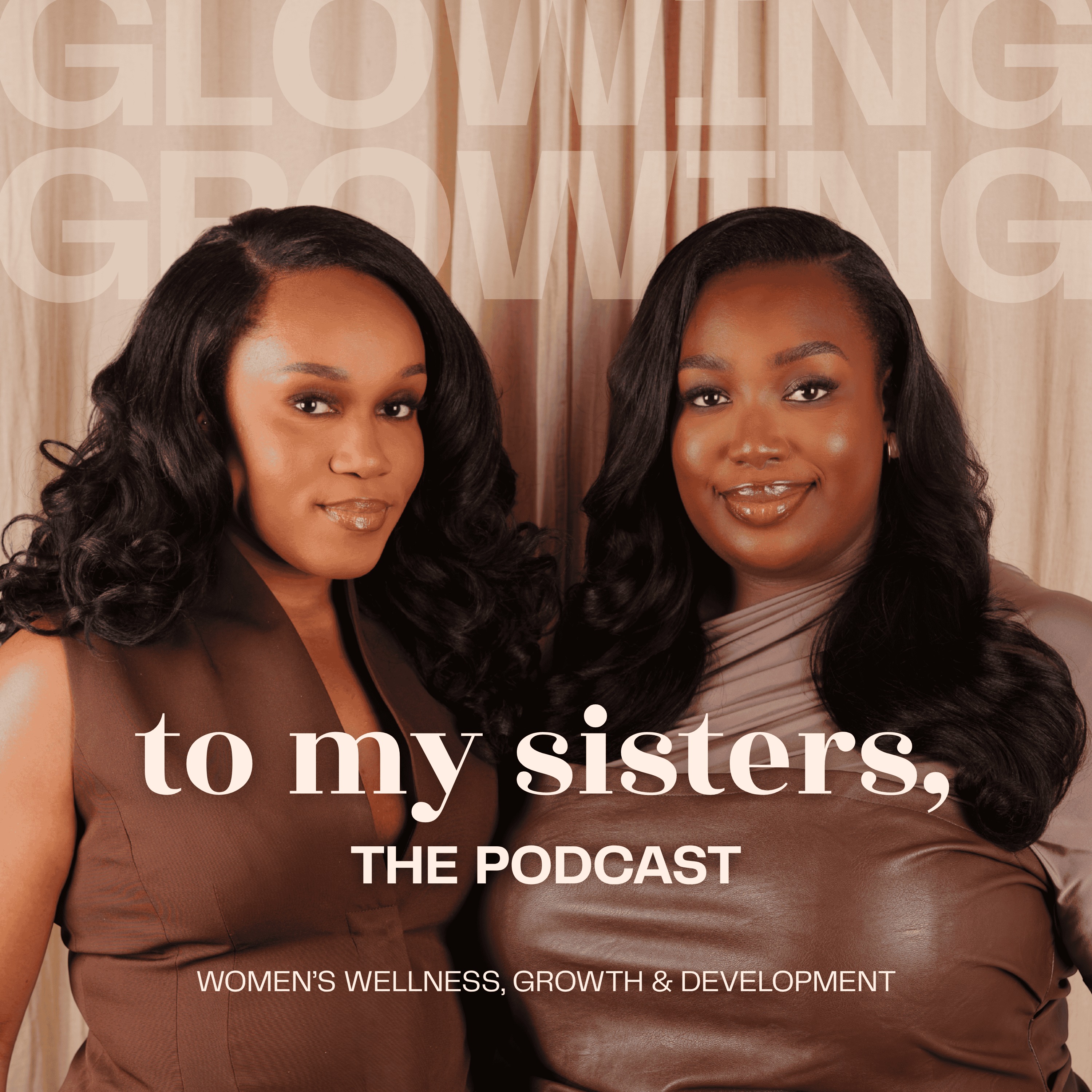
To My Sisters
Healing The Girl Within: Finding Yourself After Being There For Everyone Else ft. Mpoomy Ledwaba
01:22:51
Loading summary
Transcript182 lines
- [00:00]
A
This is not a drill.
- [00:01]
B
You can get the new iPhone 16e.
- [00:03]
A
With Apple Intelligence for just $49.99 when you switch to Boost Mobile.
- [00:06]
B
Wait, that's the actual fire alarm. We need to go visit your nearest.
- [00:10]
A
Boost Mobile store for full offer details.
- [00:12]
B
Apple Intelligence requires iOS 18.1 or later.
- [00:14]
A
Restrictions apply. Hello and welcome to the To My Sisters podcast. I'm Renee.
- [00:23]
B
And I'm Courtney. And we are your online big sisters and hosts of the To My Sisters podcast.
- [00:32]
A
We are all about promoting the wellness, growth and development of a community of sisters across the world.
- [00:37]
B
And in today's conversation, we are going to be talking about reclaiming the season of you. Yeah, let's get into it. So before we actually backdrop this conversation, we actually have some help. Today. It's not just us. We get to feature we with one of the most amazing leading women of Africa. Not just South Africa, the whole continent. We had the honor of having a conversation with the one and the only Mpumi Ledwaba from Wisdom and Wellness. Can we give her some love as she comes on?
- [01:19]
A
Yes, Queen.
- [01:22]
B
Come on. Looking like a goddess. Come on.
- [01:27]
C
I'm a lady now.
- [01:30]
A
Welcome.
- [01:31]
B
Welcome, sis. Honestly, this is a conversation all about reclaiming the season of you. And we are so honored to have you here with the sisterhood to talk about reclaiming yourself, right? How to go from maybe being parentified, maybe being an adultified woman, somebody who when you were a little girl, they were not allowing you to be a little girl. They said you have to grow up and grow up quickly how to reclaim putting yourself at the center of life or really allowing God to show you who you are outside of other people's expectations, right? So we're going to be talking about the different seasons of life from childhood. Being an eldest daughter and also being married and being a mother and how as women, a lot of life is serving other people. But then what happens when we need to discover who we are? Right? So let's get into it. Honestly, this conversation, as I said, we actually weren't meant to talk about this at all. We were going to talk about building sisterhood, but we had an opportunity to talk with the lovely ladies who were here for the meet and greet. Make some noise if you're here earlier today, we love to see it. We had an opportunity to talk to them and a lot of you mentioned that a episode or a topic that has resonated with you from the 2 My Sisters podcast has been about eldest daughter syndrome. Can you lift your hand if you're an eldest daughter? Oh, wow, our people are in the room.
- [03:02]
A
Wow.
- [03:03]
B
We are in the room. Yes. Guilty as charged.
- [03:06]
A
Support group.
- [03:07]
B
Support group. Honestly, don't worry, it's a safe space for us all. But if you are a younger sister, don't worry, we're not coming for you today. Yeah. It's not your fault we were born first. But honestly, it's just a conversation about being a woman who may have had too many much false responsibility.
- [03:24]
A
Yeah.
- [03:25]
B
And I think starting from there, for yourself, Renee, for yourself and for me. Do you feel like you grew up with a disproportionate amount of false responsibility that was put on you that really shouldn't have been yours?
- [03:37]
A
Yeah.
- [03:40]
C
As I was writing my book, that's when I realized it. And so I'm a picture person. Right. Excuse me. So I see in pictures, I think in pictures and everything makes sense for me in pictures. And I wrote in my book that the last time I was a child was when I was 10 years old. The last time I felt like I was a child was when I was 10 years old. And I can identify that with the house we lived in. And I recognized that after we left that house, everything changed for me. And I don't think it's that our parents were trying to do that, but one, they didn't have as much information as we do. And I think the intentionality to parent us differently wasn't necessarily there. Another part is when I was pregnant. So I have two kids, right. A seven year old and a five year old. And when I was pregnant with my second, I remember intentionally introducing my first to my son, introducing my daughter to my son from the belly, that this is your brother, your brother is coming. But we love you. You are special. There's only one Nuri, there's only one Zani. And the reason for that is I was never introduced to my sister. And this is what affected our relationship. So my sister and I had a very difficult relationship until adulthood. Because one minute, for the first four years of my life, I'm the most important thing and the next minute, bam, there's just someone else. And all of a sudden you don't matter anymore. And that for me, kick started a relationship of overachieving, trying to be seen, needing to be important, needing to be heard to a point where I will get everything done, even if it costs me my health. And I don't know if I've undone it or unlearned it after 10 years of therapy, but it's something that's always there. I have to remind myself that Your value and your worth is not based on what you do.
- [05:39]
B
How about you?
- [05:39]
A
Oh, deep.
- [05:40]
B
That was deep.
- [05:40]
A
That resonated so strongly. Yeah, that's a hectic start. Yeah, we're getting, peeling the onions, the layers real quick. Yes. Going deep today, it seems. But yeah, no, a lot of that resonates with my experience. I had the very interesting but peculiar experience of being eldest daughter, middle child, and so I had an older brother. He was the pearl of my parents eyes. So. I know, guys, cry for me. Teardrops. I'll take all the teardrops. Cry for me. Cry for me, please. So in terms of having responsibility, but then also battling that with wanting to be seen, I really do feel like that was my struggle. It was the Rene is going to be okay because she's our eldest daughter. But then at the same time, the legacy of the family is being carried by the first son. And so having to walk this tightrope and this tension of feeling the need to constantly validate and prove myself as being worthy of being the first, despite the fact that, you know, as a middle child I was well within my rights to actually just disappear and live my life and, you know, be that person. But then also seeing that my brother, for all intents and purposes, I think he did have the experience of the firstborn, but also the last born because of his gender. Right. So that was a very interesting dynamic for me whereby I had the responsibility of the first, but I didn't have the visibility and the validation of the firstborn child. And so I found myself in so many situations, especially like you and Pumi, trying to find my validation in the work because it's something outside of myself that I can point to and kind of say, look, I'm valuable. Look at this thing, I'm valuable. Look at these grades. I'm valuable. Look at this career. I'm valuable. Because I didn't really feel like I had the intrinsic validation that I was valuable. And then that coupled with the fact that I have not one, but two younger sisters who are twins, adore them. But that twin trouble is hectic. Once one has finished troubling you, the other will now wake up and decide that they're looking for your trouble. So then having this kind of sense of responsibility for my sisters as well meant that I didn't necessarily feel like I was covered. Right. I've got my older brother who. And I love my brother, I love my siblings. I love them all to death. They're genuinely, really, really good people and they're wonderful friends of Mine, when I was younger, not so much. We were scrapping like cat and dog. I don't know if you guys have that experience with your siblings where you realize, I don't know, maybe it was frontal lobe connection, but I was like, wow, you guys are actually decent now that you've grown up.
- [08:07]
B
Not too bad.
- [08:07]
A
You've settled, you've developed a little bit. You know, you seem like decent people now. But pre frontal lobe connection, me and my siblings, we scrapped a lot because of those different dynamics and playing into cultural norms and having to be an example for my sisters, having to find validation in all of these things. And I think the false sense of responsibility, because I think there's an acknowledgement of having responsibilities, but then there's false responsibilities which have been burdened onto you and you lack the capacity to carry. So for me, there was a whole bunch of false responsibilities that I felt that I had to carry as middle child, but then also first daughter, shielding my sisters from certain realities that I didn't want them to experience that I had experienced while simultaneously vying for the love and affection of not just my parents. But actually that translated and I started to project that in all of my other relationships. And that manifested as a false responsibility of being the perfectionist in a lot of my relationships. So I'd be with my friends, and yet I would still want to be the perfectionist. I would be in, you know, romantic relationships and still think that I needed to perform in order to gain love and attention and all of those kind of things. So that's how responsibility, but more importantly, false responsibility manifested for me. How about you, Courts?
- [09:28]
B
Oh, I can't lie to you. My situation is kind of awkward. Like, I definitely. I definitely resonate with what you both said. But child, being the. The child of an African father, I am not as much as I'm the oldest daughter. I actually have five older siblings, however. So I have five older siblings, however, I grew up with none of them. My eldest siblings came into my life when I was about 18 years old. So growing up, I was the one who, out of my parents children, I was the first child. So. So in my household for a good four years, I was an only child. So like, I'm da, da, da, da, da. It's just me living my best life and then literally living my best life. And then, you know, I was like, I don't like this anymore. And so I literally prayed to have a younger sibling. Wow. Yeah. But, you know, I don't regret the decision. There was a time where I Was thinking, God, take her back.
- [10:27]
A
Shout out mj.
- [10:28]
B
But now I love her, shout out to mj. But I pray for a younger sibling. Then my younger sister comes, and of course, feeling that pressure of, like, I'm the eldest daughter, literally everything that you said, you know, I'm an example to my younger sister, but also for me, when my parents divorced, I was now suddenly a husband to my dad, to my mom. I was my mother's partner. And suddenly it was, babe, I have not got the maturity for this dynamic, but I learned it very quickly because I loved my mom, you know, I love you, I love my sister. I love our dynamic. I want us to have a family. But there's been a huge break in our family structure. And so now I'm gonna step in and be parent big sister. But then it left me no room to be me. Who am I? You know, four year old Courtney. That was the last time I was a child at 4, where it's like, now you're. My sister was born premature, so there was a lot of attention, attention on her to make sure, obviously she stayed alive. And then my parents were going through their situations, and then suddenly it was, we only pay attention to you when you do something well. And even when you've done that, the attention is only for a few seconds. And then we're moving on to firefighting, another problem. And that became my definition of life. You're just. You're going through life carrying other people, but no one cares about the fact that. That what you're carrying is too heavy for you. And then I got to 18, and suddenly I had all these people emerging into my life. Like, literally, I get a call one day like, hey, Courtney, it's your older sister. I said, whoa, wait a minute. You couldn't have come 13 years ago? You knew about me. And now, obviously, preparing to get married, planning a wedding every day, we thank God, we thank God, we thank God, thank God. God is so good. Hallelujah. Thank you, Jesus. So, but now, obviously, going through this phase of planning a wedding, you begin to realize, oh, no, you have older siblings, and that means something in our culture. And it's like, you know, not to sound resentful, but that breeded a lot of resentment in me where I was like, suddenly I'm being treated like a little sister. But I never had any of the perks. I never got to run to anyone to ask for advice. When I got my first period, that was on me. When I liked my first boy, that was on me. Because I wasn't Going to my mum with that, you know, that was on me. But now I have people who are telling me, your younger daughter sit in your place. And it's like, oh, that's tough. Because how do you let go of people and the resentment you have towards them who are trying to help you for all wants and purposes? But it's like, but do you have the privilege to help me? But also, have I learned to be helped by a sibling? Have I learned to be helped and loved by people? And so it's been a huge journey of forgiving, forgiving parents. I'm sure my little sister looks at me and thinks, I had to forgive you several times. But then also now, looking at my older siblings and being like, you know what you are also going through, what you were going through. I've got to learn to also forgive you. Right, Right. So I think also going into this conversation about reclaiming the season of you, I think a huge part of it revolves around forgiving.
- [13:51]
C
Correct?
- [13:51]
B
Yeah. Forgiving people who may have let you down. Not because. And this isn't a hating spree. When you meet my siblings, they're actually really cool people, but they were going through their own stuff because. Child of an African dad.
- [14:02]
C
Yeah.
- [14:03]
B
So I think to myself, like, how do we go about forgiving people who we didn't know better when they were inflicting what we now call. Because we've, you know, been privy to books, education, podcasts, what we now call trauma, they did not realize they were inflicting that. So how do we now forgive people and actually let them go so that we can start reclaiming all of who we are without the bitterness and without the resentment?
- [14:32]
C
I actually wanted to jump in there. By the way, I am a firstborn child of an African father, so. So I have two older siblings. Yeah. Welcome to the club. I think a lot of us are in that club, but we. I actually had them in my life. Right. But they would come over for holidays, and they were my best friends. Like, I looked up to my older sister, and I looked up to my older brother, and it was lovely. And I never understood why this relationship was hard for my mother. Right. And I'm going to go to the point of forgiveness why this relationship was so hard. Why couldn't they just live with us? You know, we all get along, we're best friends, it's nice. And then you grow up and then you start seeing, oh, this is why, you know, and for me, I stopped talking to my sister when I was 21, I think. 21. And it was just such a painful experience which I'm not yet ready to share. And so my default setting is avoidance. Like, you hurt me, I'll put you over there and we'll come back in 10 years time. We're healing, okay? Don't judge. We are healing. And what I realize is that. And to my question now, with the privilege, do they have the privilege to help? Is that what happens if the mother of your sibling wishes death on you and your mother? Because that's, I think that's what we, a lot of us face where it's like, I want to have a relationship with you. I love you. But you don't love my mother. You and your mother don't love my mother. So what do we do about that? Going back to then, the forgiveness element and reclaiming of self? I. In the beginning of the year, we all, we do a fast, right? And the last two years, I went through a phase of just a lot of bitterness where it was God said to me, girl, look at all this unforgiveness and bitterness that you were holding in your heart to a point where it caused a lot of sickness in my body. And I mean, I started a journey of repentance and asking God to teach me how to forgive, right? And I walked that journey. And during the fast, I said, God revealed the areas where I have not forgiven. And my sister came up. And it's not so much that I'm angry at her, that I wish her bad. No, I love her, but I've just like over there, right? And Holy Spirit said, well, you need to forgive like you need before you come to me and ask for anything else, I need you to forgive. And me and her had a conversation. And through that conversation, I understood her perspective. And when you get perspective, then that's when we get to decide, okay, where does this proximity lie? How much of your health can I now start taking as an older sister? And then now I start feeling free. I'm no longer. Every time I do something, I'm not thinking, oh, my older sister. And that's the reclaiming of self, right? When you're no longer thinking of the people who you haven't forgiven yet. But there's so many dynamics. I know the focus is not on the older siblings of an African father. But the point is, you're right in saying it starts with forgiveness. Because for as long as we are holding people, we can't reclaim self. They have a hold on you.
- [17:50]
A
That's good. Exactly. That's so good.
- [17:52]
B
Someone get their deliverance Someone that was so good. How about you, Renee?
- [17:59]
A
No, I feel. Girl, don't let people hold you hostage. That's what unforgiveness does. It holds you hostage. Because forgiveness really is more about you than the other person. And I think forgiveness can be hard when the other person is unrepentant. Right. A lot of us are unyielding, or we. We don't want to forgive because we're waiting for the other person to make the first move. I'm waiting for a sorry. You hurt me.
- [18:22]
B
Right.
- [18:23]
A
If someone's hurt. If somebody has hurt you part of the time, like, you want to hear that sorry so you can move on. But how can we move on if you haven't said sorry? Especially for a lot of us, whether it's like parental figures, especially parental figures.
- [18:35]
B
Like, you know, they're not.
- [18:38]
A
You might not ever get a sorry.
- [18:40]
B
Are you hungry? You might. I made food. All of a sudden there's 20 years of trauma erased because of what, Pap?
- [18:50]
A
Let me give you a little bit of pap, and we'll be fine. Sorry. That is so funny. But why are some of our parents like that? They'll just be making us food, thinking that everything is okay. They say, you beat me anyway, I think what has been particularly helpful. And you know what? Don't get me wrong, I adore my parents. I think humanizing my parents has really helped me. Me a lot because. Right. Because I think where a lot of our parents go wrong, and this is not me criticizing for criticizing sake, but I think this, where a lot of us go wrong, but especially parents, is we fall into this trap of trying to be perfectionists. We try to be the super parents. We try to be that authoritative figure. But it's only as I've grown older that I really see my parents as human. Like, they've gone through a lot. When I think about, you know, some of the challenges that both of my parents faced individually, but then also together, the level of empathy that I have for them rises so much that even when they're wilding to me, wilding, I'm like, do you know what? I understand why you're a wild one. Because there were wild ones that came before you. Your madness, the seed, started long before you. And this is just a manifestation. Right. So I think it is really empathizing with people, Empathizing with human stories and human experiences and not excusing. Empathizing. Right. Because I think there is still space to hold people accountable.
- [20:17]
C
Yeah.
- [20:18]
A
It won't necessarily be in the form of someone saying, I'm sorry. But also it sometimes comes in the form of recognizing this behavior or this response that has manifested in me. I can hold accountable. This is where it comes from. And being okay and getting to a place where you feel comfortable with saying, you know what? This situation may not change, but I can change my situation. This person may not change, but I refuse to let you hold me captive. And I love what you were saying around being intentional about your relationship with God and speaking to the holy spirit about it, because there's often so much that goes on in the supernatural that manifests in the natural. And sometimes we have to use our spiritual discernment to see, okay, cool, where am I giving the enemy leeway, a doorway leeway to grow some of these natural seeds into a supernatural forest. And that's how unforgiveness starts to take root. Like when we talk about, you know, unrooting or uprooting unforgiveness, it's about understanding, okay, where did the seed start? And where have I allowed the enemy to have space to be able to water some of those seeds into this entire forest that now exists within me? And so sometimes we need to get that weed killer. There's weeds in our hearts. And I think what you were saying around, okay, thinking about your own relationships and thinking about yourself as well. We are not perfect people. But also thinking about, like, forgiveness being a free gift that we have had and that we experience extending, or at least trying to extend that to the people around you is the first step in really reclaiming yourself in totality. You can. You have to let go of people because they're holding you hostage. And it's only somebody that is free that can claim things prisoners cannot. They don't have a claim for anything. They don't have bank accounts. They can't go to the shop. They can't go. That literally their liberty to do things and claim things is stolen. So long as you're a prisoner, you won't be able to claim. So for you to reclaim yourself, you need to let go of the bondage. You need to, you know, like, you need to enable yourself to be free. And the gag is it's often ourselves that are holding ourselves in captivity. We're waiting for somebody to come with the jail keys to open up the door, but the keys are literally there. The keys are under the bed in your prison cell. So we need to actually wake up, get up, pick up the keys. It may hurt. I don't know if you've seen some scenes where People have to reach for things. Sometimes reaching for freedom is painful, but on the other side of pain is freedom. And it's only from a place of freedom that you can claim yourself. So that's what I would say.
- [22:52]
B
That's so good. Wow. Wow.
- [22:54]
A
How about you?
- [22:55]
B
Cause, yeah, everything you guys said is spot on. Like, unforgiveness holds you hostage, right. And it breeds something in you which stops you from becoming the woman you've envisioned yourself being and also the woman, you know, you're called to be. And when I think about forgiveness, I think about Jesus when he's on the cross and he says, father, forgive them, for they don't know what they're doing. And I love that you brought out the empathy part. Right. It took me taking a position of understanding where my older siblings were coming from. What were their restraints? Like you said, tension between parents. Right. And then also just the politics of it all, but also them dealing with their own pain. You know, it's quite painful to know that, oh, I have other siblings, but we don't share the same mother. Like, what does that mean about my relationship with my father now and having to navigate that? And for a long time, I carried this identity of whenever my siblings see me, they see the person who robbed them of a father.
- [23:52]
C
That's the thing.
- [23:53]
B
And that was hard. But that wasn't an identity they put on me. That wasn't an identity they put on me. That was a lie the enemy told me that I internalized and allowed to become my identity. Right. And so I think it's also understanding that, one, they were kids, too, the same way I've made mistakes towards my younger sibling, they've made mistakes towards me. Right. And so I need to say, father, forgive them, for they don't know what they're doing. But I also think, and I think this is the beauty of our faith. God is in the business of turning pain into glory. When I think about what Jesus went through on the cross, he had to relinquish that forgiveness so that he could have the name above all names. Right. I believe it's in Philippians 2, where it talks about when Jesus was crushed after he took on the humility to be killed on the cross to go through the crucifixion. He was then given the name above all names. And I think to myself, if I hadn't gone through a lot of what I went through, I wouldn't have the power and the maturity to actually do what I now do. And it's not to glamorize suffering at all. But I believe every single woman in this room has been through something. You've experienced some kind of pain. And God has an ability to turn pain into glory. He turns it into something. It's something that you can now share with other people. And pain is the one thing that connects us all. You know, no matter black, white, old, young, whatever, we can all resonate with the fact that pain hurts. It hurts us. And so when you can connect with another woman, whether you're in the UK or you're in South Africa and say, I feel the pain you felt. I've actually feel. I actually have felt it before. And now you can have this closeness. It talks about how Jesus has felt every affliction that we have felt. And so we can go to him knowing that we have a high priest who can empathize with our sufferings, right? And so I think it's realizing that actually there's something God can do with this trauma. There's something God can do with this pain. There's something God can do with my history. He can do something with everything that I've been through to lead to purpose. And I think overcoming and choosing to forgive is what allows you to leap from pain into purpose. Forgiveness is what unlocks one door and unlocks the next, right? It unlocks you. And like you said, it frees you from that bondage that pain was keeping you in. But it also opens the door of purpose so you can step into it, right? And so with this whole vein of like, harnessing for forgiveness, once you've chosen to let those people go, and you said something so powerful, like, you can't reclaim yourself if other people holding you in bondage, how do you now, after you've let go, you've let go of people, discover the you that you're reclaiming. How do you decipher what your goals are, what your calling is, what you're now called to do at this stage of your life? Because I think a lot of us may be struggling to find our purpose or even stay step into it, because we know that God has called us for something, but we don't quite know what it is. How did you go about discovering what it meant to do you.
- [27:08]
C
Do you want me to go first? I was actually talking to a lady, I can't see her now. We were talking about this purpose thing. And I said to her, I've never really struggled with a purpose, identity, right? And I think it's because I'm a doer, Like, I'm active. I do Everything. And I find meaning in everything. Even in school, I paid hockey, I played netball, and whatever I was doing, I made sure that I'm fully in it. So I never, ever felt like, what's my thing? You know, I would sing at school, at church. I mean, I did everything to the best of my ability. And one, obviously, to get the validation and to be seen. But two, because generally I just. It was fun for me. I loved it, right? And so even as an adult, I went into varsity and I studied accounting, but something was always there that this is not where you belong. And so then I go into. I get into a job, a corporate job. And what I did know was that this is not it. I might have not known what is it defined by the words purpose. Because when you ate, when you 19, 20, the word purpose starts becoming a thing, a reoccurring. What are you going to do? What's your purpose? What do you want to be? What I did know was that this is not it. And so I left it all, dropped out, left my job. And I'm not saying this is what everybody should do, but for me, that's what I did. And then I just started again, doing every single thing I possibly can from a cleaning company. And then when all my cleaning staff left and I had to clean the house, I was like, this is not it.
- [28:41]
B
Wow.
- [28:42]
C
This is not it. A beauty salon, all these things. And what I do now, I said to the lady, I said to her, this year, beginning of this year, and perhaps it's then tied to the forgiveness. I got my why. I called my mom and I said, mom, I think I understand why I'm challenged so much in these areas of my life. And now I can almost understand. I can take the suffering because I know the why I am doing this. So to answer your question on how to find the purpose, for lack of a better phrase, I think it's being intentional in everything and in every place you are put in, in every conversation, in every relationship, being present. Because what being present does for you is that if you and I are talking, Renee, I can. There's something in my gut, my intuition, the Holy Spirit, spirit in me is. Is speaking, if I've invited him, that this conversation is not the one. That's a level of purpose, to understand that I have to remove myself here because whatever's happening, this interaction here is not giving God glory. Purpose is the use of something. The purpose of this mic is so that it can amplify my voice. So our purpose is so that glory is given. To God. So if I'm having a conversation with you and it's not giving glory to God, then I'm out of purpose. Purpose. So purpose is not necessarily limited to making money out of it, finding importance out of it, feeling goosebumps. But it's am I of use to God in what I am doing?
- [30:23]
B
So good. Wow, wow, wow, wow, wow. How about you, Renee?
- [30:29]
A
No, I resonate with that strongly. I think that purpose is so overall in our discussions today because we have romanticized, dare I say it, idolized, trying to find this big important space for ourselves. And that has led to the paralysis of so many of us because we're waiting for purpose to drop on our heads. Purpose. Whereas many of us. Listen, I'm speaking to myself when I speaking to you ladies. Many of us will be waiting for the Lord to speak to us in a great booming voice. We're waiting for the burning bush. We're waiting for, you know, the, the visions, the signs and wonders to have that surety and confidence to be able to move. But I think what's very interesting about God is he loves to operate in the small still voice. He loves to operate in the small convictions, and he loves to operate in the internal voices that we have. And the issue isn't necessarily that God hasn't revealed to us our purpose. Sometimes it's that we're just not listening. We're actually just not listening. We're waiting for it to come to us in a way that is palatable to us. We are waiting for it to be these snappy bios that we can put on Instagram. My purpose is, this is my mission. I've been called to, called out. Everybody is called something, mission to something purposeful, something, something in. We're waiting for it to be palatable to us before we move. But the way that God often operates is he gives it to us in its most raw form and it's our responsibility for us to refine. Many of us have gifts. In fact, all of us has a gift, whether it is, you know, even in the Bible, like people had gifts of service, people have gifts of empathy. People have gifts that are not necessarily the ones that are hyper visible, especially in today's social media culture, but they're things that matter. Being an empathetic person, being somebody that's called to service, being somebody that is good with their hands, being somebody that can transform situations, being somebody that can speak life into people, these are all purposes that are equally important in the body of believers. So there is the question of like, oh, you know, what is my purpose? And I have to go on that journey of discovering what my purpose is. But I would also challenge you and ask, are you actually paying attention? Are you listening? What are the things that you're actually good at? Everyone here is good at something. And what are you doing to steward the things that you're good at? And if you haven't stewarded the things that you're good at, why do you think that any of these things will grow? Because you have to start with the seed. You actually need to cultivate the seed. The Lord is, like, even in the way that he ministers to us. Even in the Bible where it says the Lord is like a gardener, and we've been charged with being like Christ. That means that we, too, need to be gardeners, much like Adam and Eve were in the Garden of Eden, and it was given to them to steward. So, okay, purpose, purpose, purpose. But are you stewarding your garden? Have you planted the seed? Have you paid attention to the seed? Or are you waiting for somebody else's harvest? Pay attention to the seeds that God has actually given to you. Water those seeds. And there's something that you often say. Courtney, I love that you always talk about, you know, keeping up with the Joneses.
- [33:46]
B
I was about to say. I say many things. Please don't. He said, I was about to throw.
- [33:51]
A
You under the bus with something. But there's like. Courtney always talks about the fact that so many of us are preoccupied with watching other people. We're distracted by the harvest of other people, that we are neglecting the seeds that God has given us.
- [34:05]
B
Yeah.
- [34:06]
A
So is it that you don't know your purpose, or are you just distracted by the plentiful that you're seeing by your gardeners, by your friends, your sisters and whatnot, that you've actually neglected your own seed. And the worst thing is. The worst thing about, you know, keeping up with the Joneses is it was fake. There's so many people that we see, and this is obviously, you know, not to rain on anybody's parade, but there's so many. Many of us that we see and we idolize that are so preoccupied with image that their gardens are actually empty. I don't know if you guys have actually seen, like, gardens that are fake. Like, they're not nice. They're really not.
- [34:40]
B
When you get up close, when you.
- [34:41]
A
Get up close, they are not nice. They're pretty from afar, but they're not nice. When you get up close. So many of us are, like, idolizing fake gardens or things that, you know, we don't even know how much it cost the person to get, not knowing that we have the gift inside of us that also needs to be stewarded and cultivated. So for everyone that is, you know, going on this journey of trying to discover themselves, start with actually what you have. What are the seeds that God has actually given to you that you have not stewarded or needs more of your attention.
- [35:13]
B
Yeah, that's so good. That's so good. I think the only thing that was ringing in my mind. Well, so many things were ringing in my mind, but something that came to mind was, I think we are a generation that's so obsessed with purpose that we miss our assignment. And I think as women, we have to realize, especially if you're a woman of faith, that we are all called according to God's purpose. So I think this obsession that we have with purpose in this time is a ploy for people to sell us stuff. Like, when we really think about it from a kind of more sociological angle, if you see how much we've invested in trying to discover our purpose, and yet none of us have found it, it's actually a big scam. People are inviting you to seminars and webinars and writing books to help you find your purpose. And yet after you've read it and you've bought all the journals and you've gone on all the courses, you still don't know. In fact, you are more confused. Yeah. And I love what you brought up as well. It's like now suddenly, your purpose sounds like the sister next to you suddenly. Oh, we're all called to women, babe. You know, is it a calling or just. Just an expedition for you? You know, are you just exploring? Because I think and. And the reason why I'm harping on it, not because purpose isn't important, but I think we then begin to build empires and not our kingdom. You then begin to build something which you can take the glory for and be like, hey, I built this women's community, but maybe God was calling you to build with someone else, but that wasn't attractive to you because it felt like you couldn't put your name on it. You. You couldn't take all the glory for it. But is it about getting the glory for yourself, or is it about building the kingdom? Right. And being a builder of something bigger that is actually just for the king and not for you? And I think for a lot of us, it's this obsession with what's my purpose? My purpose, my purpose. And not asking God what's your purpose? What do you have on the call for me? So what we actually need to be praying and girls, you need to write down this prayer. God, what is my assignment for this season? What is my assignment for this season? We're all trying to find the purpose for our lives and not the assignment for the season. What is the assignment for this season? And the reason why I say that's an important prayer to pray is a lot of us in the search for big P purpose. If you go onto Spotify, shout out to our partners, Spotify. If you go onto Spotify and scroll to the oldest to my sister's episode. We literally have an episode on this called Big P purpose versus just link living a purposeful life. And for a lot of us, because we're searching this big P purpose, we actually fail our daily assignments. You're grinding so hard to fulfill your big P purpose that you haven't called your mom to check in to see if she's okay. You haven't gone to your friend's birthday dinner, her baby's christening because you're so busy chasing purpose, forgetting that God has a assigned to you sisters, a mother and people in your life to actually serve and help and love. And in pursuing those assignments, you'll actually get your key to the next stage of your life. You won't have to manufacture it by yourself. It will naturally come to you. And I think that's how we show God that we are content. I'm not just trying to make my life big, big, big and see my name in lights because I feel like I'll find purpose and identity in it. I'm actually content with the calling you have put on my life. I'm content with the assignment that you have given me. I'm content with if it's a hundred people in a room, I'll take it. I'm not going to go and chase 10,000 people because I feel like that would make me feel more important. Because ultimately all that reveals is I don't care about what you want from me. I care about what I can get out of my life. And that is the antithesis to what we've been called to and what purpose is.
- [39:10]
C
Courtney, you said something about empires building, being obsessed with building these empires. And Pastor Stephanie spoke about the spirit of Babylon and our current Babylon is the importance of self. And when they were speaking about the Babylon building, half Babylon in that time, biblically, people were obsessed with pleasing themselves. And that's what this sounds like, this pursuit of purpose, neglecting our daily Assignments is that God, I need the biggest tower so that I can look important or look like I'm doing important things for you. Meanwhile, within our own homes, hearts, within our own families, there's no fruit, but we've got towers of Babylon. If you read the Book of Judges and studying the Book of Judges, and I'm trying to understand why God raised up these judges. Specifically Deborah, who doesn't have the lineage of coming from royalty, you know, she was a homemaker, she was busy tending to her husband. You know, when the Bible introduces her, they introduce her as a wife, right? And I'm trying to understand. And throughout scripture, it shows that because they had no leader, they did what pleased them. They might have said, in Jesus name, oh, God, we pray. God, we pray, this, this, this. But ultimately they disobeyed God because they continued to do what pleases them. So then God allows the oppressors to take over. God says, okay, you want to do your own thing, you want to build your own little empires, do it. The enemy will have his way with you because you're not. You no longer submitted to me. And so then that's when God starts raising up people, normal people, so that he can restore them back to him. Now, this is a story of hope because it is exciting. And I think the influencer culture, which I am part of, has created this big world over consumption, big things, big that, big that. And I'm part of that now. The responsibility is now to go back and say, hey, seek first the kingdom of God and all these things shall be added. There's nothing wrong with wanting to do big things for God, but it is wrong when that becomes the idol, the tower. But there's hope. And the restoration is return to God, reclaim thyself, commit to the daily assignment, and then everything else that purpose will. You won't even have to ask, what's my purpose? How do I find my purpose? You will find yourself in contentment, in fulfillment, and in producing the fruit of the Spirit. And in producing the fruit of the Spirit, the gifts of the Spirit start manifest, manifesting through you. But there's order. God is a God of order. And that's what I'm trying to understand is that if God, God is so great, he could have created heaven and earth in one day and just went, but he's a God of order. He took six days and rested on the seventh. Meaning, even with us, we might want the thing, whatever the thing looks like for you, or the purpose, whatever it looks like for you. But he's a God of order. He says, I know you want this. I have it for you. I promise I have it for you. I want these good things. But there's order, there's process, me first, people first, this first, then everything else will be added once our focus shifts from the thing to. To him. So.
- [42:47]
A
That is so beautiful. That is so beautiful. As you both were speaking, actually, especially what you were saying around God being a God of order, it really made me think about the fact that God is the God of the big things, but he's also the God of the small things. And both of you mentioned a really, like, poignant point in the beginning around, when were you last a child? And it's very interesting because they were quite, you know, young ages, respectively. And I think for a lot of people, especially in this season, it's even trending right now in terms of I'm just a girl reclaiming girlhood, la dee da, living a lackadaisical life and all that kind of thing. And I think the underlying sentiment is this idea of I was robbed of a childhood, or there were things that happened in my childhood which meant that my girlhood was cut short. And so for a lot of people, myself included, going through that process of being a child again. And, you know, even in the word where we're encouraged to be like children before our heavenly Father, what does that process of reclaiming your girlhood, reclaiming your childhood look like as an adult?
- [43:58]
B
Oh, girl, that's such a good question. I think one, it's. It's funny. It's a conversation that I had with my therapist a couple of weeks ago, and it's remembering. It's okay to have needs. It's okay to have needs. I think what happened when we were going through that process of adultification or parentification is we were kind of subconsciously told, you can't have needs because no one's available to meet your needs. You can't need help because you need to provide help to everyone else. You can't need somebody to be present for you because we don't have time to be present for you. We're trying to provide for you. So suddenly you start putting all of your needs into a box. And I'm sure you can attest, as a mother, children are needy. They need you. They need your attention. They need your help. They need your guidance. They need your affirmation. And I think as we're getting older, I think a lot of us are getting back in touch with our needs. I actually need my friends to affirm me I need people to show up for me. I need people to be there for me. I need help and admitting that because a lot of what we've gone through has made us very hyper independent and we can do life on our own. But I think reclaiming this idea of being a child is even telling God, God, I actually need you. I need you. I need your help, I need your guidance, I need your strength. And, and I think in my life right now I'm going through a season of learning to be dependent and that's hard. What does interdependence look like in my relationships? Interdependence look like with my fiance. What does interdependence now look like with my siblings as they want to be in my life? Like, what does it look like to depend on someone? Especially when you're used to being the strong one. Everyone leans on you. You don't know how to lean, you just know how to stand strong so that other people can lean on you. And so I think it was being humble enough to say, you know what? Inside I am to somewhat a child who needs a father to help them. I am just a girl who needs somebody to show up for them, right? And so it's learning to be humble enough to ask because asking is a humility thing. Saying I actually need your help is a humility thing. So you have to let go of the pride that has come with being the strong one all the time. Because it goes from being a vice to being a badge, right? Like, oh, I hate being the strong one. But low key, you kind of like it. You like a little bit girl. I'm the one everyone comes to for advice. I'm the one who's always got it together. I'm the one who always has money per, you know, and then suddenly it's like, how do you actually let go of the clock touches of this identity you now have which actually isn't serving you anymore, right? That's a pride thing. You've now taken pride in this thing. And I think, yes, embrace the humility to ask, but also recognize that other people are dependable, which is why it's important to surround yourself with people who you've discerned and you've allowed God to guide you to and say be in relationship with this person because they can actually handle carrying that cross with with you. Right? There will be people you meet along the way. I can't remember the, the name of the man, is it Simon or Stephen, but someone who God meets Jesus meets on the way of carrying the cross, he. That wasn't one of his disciples. He just popped out of nowhere. That was the first time he met him. And yet he came forth and said, let me help you carry this cross. And I think that's life. As we get older and we reclaim our childhood or reclaim our childlikeness, I'll say, as we reclaim our childlikeness, there'll be people on the way who we meet who can actually help us to carry the burden. Right. And it's discerning who those people are, but also having the humility to say, I'm actually weak. And that's okay. Yeah. How about you guys?
- [47:54]
C
For me, it's learning to play. I don't know how to play.
- [48:01]
B
That's good.
- [48:02]
C
I genuinely do not know how to play to a point where. And my husband knows how to play. My. Listen, Mans can play. He loves to play. And it's so easy for him to play with our children. It takes everything in me to actually let my guard down and play with my children. I'm good at listening. How was school? How are you doing? Dealing with their emotions, teaching them how to do this, teaching my daughter confidence. My son how to be gentle, that loving and firm. I'm good at doing their hair. My kids have manners. My kids speak well. They're intelligent. They can read. Then it's time to play. Yesterday they asked me to play hide and seek, and I said I have to pack my bag. And it could have taken five minutes. They really just want to play for five minutes, hide and seek. But for my husband, it comes because of our different characters, personalities, upbringing, and. And for him to put down whatever he's doing and play hide and seek for five minutes comes naturally. Like, I can see that he has. He doesn't have to think of it. For me, it's. It's like I don't know how to explain. Explain it. Like my. All of my whole body almost stiffens up. That. What do you mean I have to play. What do you mean? I have to relax. What do you mean? Nothing else. What do you mean? I'm not solving your problems. What do you mean? I'm not taking. Making sure that I'm holding everything together. If I play hide and seek, what if I. I don't get dinner ready on time. If I play hide and seek, I won't pack in time, and then I won't sleep on time, and then I'll miss my flight, and then I won't be able to be here, and then I'm gonna disappoint My clients. And then, and then, and then, and then, and then. So for me I realized that I don't know how to play. My play is scheduled. If I go on holiday, I need to know where I'm going to play. I need to know where I'm going to play. What do I need to wear to play, how long are we playing? When can I use it? Sounds like, oh wow, you're so organized. No, we don't know how to play. We don't know how to play. And for me we played PlayStation the other day and I was the loser because I don't know how to play. And now naturally, now I'm thinking, okay, I have to schedule one day a week to play, play, stoosh the kids so that I can get good at what that's not playing. Look at me planning how to play so that I can be better player. And so it's something that I've had to talk a lot with my therapist as well, is that I just simply don't know how to play. And I don't know how to over think it. But what I found now in reclaiming my girlhood is walking. So I think now walking is my playing because I get to listen to music and because I walk so early in the morning, nobody sees me. So I dance and I look crazy, sometimes I cry, sometimes I do whatever. But it's the one time I feel, I feel there's no responsibilities at 5am in the morning. So then I guess that's a. That's. I think that's what playing feels like. That's what reclaiming my girlhood feels like. But then as soon as it's like quarter to six, the playing is leaving. Because now my mind starts. I actually want to ask, who here knows how to play?
- [51:40]
A
Listen up. You can get the new iPhone 16e with Apple Intelligence for just $49.99 when you switch to Boost Mobile. We pulled so many all nighters to give you this deal and hey, stop.
- [51:52]
B
Messing with a mic. I'm just helping this catch people's attention. This is a great deal.
- [51:57]
A
Exactly. So it doesn't need all that. Fine.
- [52:02]
B
Get the new iPhone 16e available at.
- [52:04]
A
Apple Store locations and the Apple Store online.
- [52:06]
B
Visit your nearest Boost Mobile store for full offer details. Apple and t intelligence requires iOS 18.1 or later.
- [52:10]
A
Restrictions apply. Hi, this is Joe from Vanta.
- [52:12]
B
In today's digital world, compliance regulations are.
- [52:15]
A
Changing constantly and earning customer trust has never mattered more. Vanta helps companies get compliant fast and stay secure with the most advanced AI.
- [52:23]
B
Automation and continuous monitoring out there.
- [52:25]
A
So whether you're a startup going for.
- [52:27]
B
Your first SoC2 or ISO 27001 or.
- [52:30]
A
A growing enterprise managing vendor risk, Vanta makes it quick, easy, and scalable. And I'm not just saying that because I work here. Get started@vanta.com.
- [52:43]
B
Love that for you guys.
- [52:46]
C
Do you guys know how to. Do you guys know?
- [52:49]
B
I'm learning. I'm learning now.
- [52:51]
C
What does it feel like to play?
- [52:53]
A
Oh, it's fun.
- [52:54]
B
You know what? I think it is fun. It is fun. It is fun. And I think what. When you were talking, talking, I think what really came to me is for a lot of us, life is about obligations.
- [53:06]
A
Yeah.
- [53:07]
B
And responsibilities. And also, like you said, perfection. Perfect picture, but play invites you to. It's not a responsibility, it's not an obligation. It's about willingness and the ability to look silly.
- [53:22]
A
Yeah.
- [53:23]
B
And a lot of us don't like that. I like to look completely put together, and I don't want to be rolling on the floor. Like, I can't lie to you. Even learning to be in a romantic relationship, it's a men thing. Men are like, let's play. Shut up. There are bills. There are bills. And there's a future. There's a legacy.
- [53:45]
A
Let's build.
- [53:45]
C
It's so well done.
- [53:48]
B
If you tickle me one more time, I'll punch you in the face. Like, we don't have time. And I think it's been learning to. For me, like, it's been learning that life and memories are actually those moments. Those moments when you get to enjoy people and enjoy being you and not.
- [54:06]
C
Try and fix them.
- [54:07]
B
And not try and fix them. And also realize that people won't judge you.
- [54:10]
A
Yeah.
- [54:10]
B
Like, people actually won't judge you if you get the game wrong. They'll tease you, but it doesn't mean they don't love you. They still love you. It's just a part of life, and that's how we build bonds. Yeah.
- [54:21]
A
How about, you know, I'm feeling triggered, but in a good way. In a good way. But, yeah. No, I think for me, reclaiming my childhood is exactly that. It is. Doing things without worrying about embarrassment, shame, or rejection. Yeah. I think sometimes, especially for me growing up, looking and desiring for, you know, validation and being the perfect child and all of those kind of good things. You know, you had said something in our conversation earlier about the power of being a beginner. And I feel like for me, for a lot of my life, I haven't had the privilege of Being a beginner, there's always been expectations of a certain level of expertise which meant that I couldn't freely explore. And so for me, reclaiming my girlhood is doing things for the first time. And if I look silly, I look silly, and that's that. Even embarrassment. Like, why do I feel embarrassed? Like, I had to even dig deep. I was like, why do I feel embarrassed because of how people see me or whatnot? I pay my own bills, and those things are expensive. And so if I'm paying my own bills, I' ma do what I like. But I think it does also kind of beg the question around, like, how a lot of us as women are socialized. Like, even when I think of some of the men in my life, they know how to play. My brother knows how to play. My fiance knows how to play. There was one particular moment where we were out and about, and he loves getting on scooters. He just loves it. Just, ah, Renee, I've seen a scooter.
- [55:50]
C
I want to jump on.
- [55:50]
A
Let's go. And I'm like, I'm not trying to be on the scooter.
- [55:53]
C
And he's like, oh, babe, you can.
- [55:54]
A
Be on the back of my scooter. And I was like, that's literally my worst nightmare. Not only do I not want to be on the scooter, but now I'm behind you, and I'm holding on for dear life. And you definitely don't have training on this. So if we crash, that's double embarrassment, Both me and you, I'm embarrassed, but secondhand embarrassment, because you as a man, you haven't held. You haven't held this thing. And he was like, oh, what's the problem? It's really not that deep. If we crash, we crash. Like, whatever. And I was like, oh, but, babe, but people.
- [56:24]
B
And he was like, but people what?
- [56:25]
A
And I was like, but people what? And so he got onto that little E scooter. I, too, holding on for the dear life, got into that scooter. We definitely crashed a couple of times, but it was one of the best memories that I have. And there's so much fun on the other side of shame. There's so much fun on the other side of the, you know, prospect of embarrassment. There's so much memories to be had. There's so much learning to be had. And I think even as you two were speaking, like, the things that we don't go back to heal will hold us captive. And I really don't ever want to be the kind of parent because Obviously, I desire kids. I don't want to be the kind of parent that perpetuates that. I want my kids to be free. But in order for my kids to really internalize and be free, they see it from the example of freedom. And so I can't, you know, be somebody that's, you know, held hostage and then expecting my kids to go and live in freedom without showing them that. Exactly. Example. So it's a double effect of me reclaiming my childhood, me enabling myself to be embarrassed, me enabling myself to live on the other side of shame. Because I also want to cultivate a culture in my household where my kids are free from embarrassment and shame. And it's from there that they can really pursue and do the things that they were called to do. Because how many of us are being held back by embarrassment and shame? How many of us are being, you know, held back by. Oh, gosh, I looked a little bit silly there. Okay. And do you know how little people think about us?
- [58:00]
B
Very little.
- [58:03]
A
Like, there's probably somebody wearing. Oh, my gosh, that interaction that I had with that person, like, two days ago when I dropped my coffee in front of him. That man hasn't thought about you since that moment.
- [58:12]
B
Not once. Not since the moment I'm telling you, move on.
- [58:15]
A
Move on quick. Even the people that, you know, maybe thinking, oh, I have an embarrassing moment in front of you, you probably have even forgotten.
- [58:21]
C
Yeah, yeah.
- [58:22]
A
We think that we take up more real estate in other people's minds than we actually do. Stop it.
- [58:29]
C
Stop it.
- [58:30]
A
Live your life. Do you know what I mean? Like, be free. And that's my mantra for this year. Like, literally this year is, Renee, reclaim your girlhood. It's okay. Be a little girl in this area and then come back. Go back, heal, and then come and be the woman that I've called you to be.
- [58:46]
C
So, yeah, I have a question for you guys. This is not biblical. It's my imagination. Don't say bumi said in the Bible, they said, okay, in the beginning, when Adam and Eve go to the forbidden fruit, the serpent speaks to Eve, and Eve convinces Adam and Eve. I guess Adam is not being the head of the house, and he goes and he eats. And then when God asks Adam, he says, it's the woman you gave me. Now my question is going back to girlhood. Why are you guys laughing? You already know where this is going. We know it's slow now, going back to the girlhood, the responsibility, the wanting to have it together. I look at my daughter and my son and they're my greatest teachers in life. My greatest teachers. My son easily plays carefree. I mean, he's. He's been in hospital. Listen, medic, if you have kids, just have medical aid because.
- [59:47]
B
Wow.
- [59:48]
C
Anyway, so he's carefree, you know, and whereas my daughter's very calculated, responsible, cares about everything. And I look at her and I said, girl, I wish you. She does play, but I wish she played a little more. So going back to the story of Adam and Eve, do you guys think that perhaps that thing of taking responsibility for everything and for everyone comes from when Adam said, it's the woman you gave me?
- [60:18]
A
That's juicy.
- [60:20]
C
Let's take it back.
- [60:23]
B
That one is deep. That one is real deep. I guess, like you said, I mean, there isn't a scripture about it.
- [60:32]
A
This is mere speculation.
- [60:35]
B
There isn't a scripture about it. But I definitely do think there's something there. I think there's something about thinking that you are with someone who is meant to take responsibility for you, who you're meant to follow after, and that person doesn't shield you. That experience of not being shielded makes you guard yourself. Right. If you won't protect me, I'll protect myself. And I won't put myself in a position where I will have to be vulnerable again. Because the last time I did it and I made a mistake, I was punished so harshly for it, and you didn't recognize your responsibility in it. So now I'm almost reclaiming that and being like, you know what? I'm not going to share a burden. I'm not going to share a responsibility. I'm going to do it myself. Because then at least if it fails, I can own it. For real. For real. And it's not going to be projected onto me. I think there could definitely be something in that. Definitely.
- [61:32]
A
Yeah. I think, gosh, that's deep. I think it even kind of speaks to the fact that many. For many of us, there has been some kind of failing from a caregiver's perspective, but that has been. The blame has been. We've been used as scapegoats for that. So many of us may have experienced, like, for example, a parental failure, but then the blame has been placed on us as to why a parent or a caregiver has failed in that particular respect. Many of us may have even gone to our parents and said, listen, I'm being honest and open with you and saying, you failed me in this particular area. And they've come and said, well, actually, that was on you. So I think that actually speaks to an experience that's actually more widespread in that many of us have been failing, failed by those who were actually meant to be our designated caregivers. And I think it's interesting that you use that example because I think it also speaks to the fact that God is a redeemer. There's a reason why Jesus is the second Adam. Where Adam didn't take responsibility for Eve, Jesus has come to take responsibility for us. So we know how the story ends. And we know that where we may have experienced a failure in the care and the responsibility that was given to somebody else concerning us, we know that the end of the story is that there's somebody up there who says that I will take it all, and somebody there that cares for our every need and somebody there that is taking responsibility for us. So, yes, it started there. But, hey, we know the end of that story.
- [63:07]
C
My last note on that. When you speak about Jesus as the second Adam, in fact, I've been studying gentleness and trying to understand it. And he says, take my yoke.
- [63:17]
B
Yeah.
- [63:18]
C
And what this, what he means when it's explained is that submit under me. Take, take. Like, let me lead you. Let me be the one who holds this whole thing together. And then he says, he. He calls himself. He says, because I am gentle and I am lowly. What does gentle mean? It means I forego my power. I give away my power for the benefit of others. And what you're saying is that because of parental failure and the people who are supposed to protect us, letting us down, we said, okay, I'll take this yoke. I'll be the one who calls the shots. He says, no, I'll take the responsibility. I'll take the covering. I will bring myself to your level so that you can experience freedom. So going back to. We're going to keep circling back to our girlhood. Our girlhood can only be reclaimed through Christ.
- [64:17]
B
Yeah, that part.
- [64:19]
C
Only through Christ, who freely said, I'm gentle and lowly by virtue of that, I'm saying I will come down to your level so that you can be free.
- [64:32]
A
Yeah.
- [64:33]
C
So when we're not reclaiming our girlhood through him, we literally say, the work that you did was in vain. So we don't get to stay in bondage. Because then the work on the cross was in vain.
- [64:44]
B
Yeah.
- [64:46]
C
We don't get to choose to stay. Stay in bondage. Because him calling himself gentle and lowly within. What are we saying?
- [64:54]
A
Yeah.
- [64:56]
B
That's so good. That is so.
- [64:59]
C
I love them. Can I come Work.
- [65:01]
B
This podcast was for us too. Wow. And I think as you both were speaking as well, what came to me was that story about them in the garden isn't just about Adam's failure. It's about the same serpent's deception.
- [65:14]
A
Yeah.
- [65:15]
B
And I think we also need to be careful to unlearn the deception.
- [65:18]
A
Yeah.
- [65:19]
B
Eve was deceived, and she was deceived by a simple lie, which was, if you eat this fruit, you will be like God. And I think a lot of us also need to work on that desire to be like God. Right. Because it's not just about Adam's failure. It's about our own ambitions. It's our. About our own self sacrifice, centeredness. It's about our own desire to be like God because we don't trust God. We don't trust that his wisdom is better than our wisdom. We don't trust that his desires are better than our desires. Right. His Word says that his ways are higher than our ways. His words, his thoughts are higher than our thoughts. His ways are not our ways. But we don't trust what is not known to us. We don't trust the thoughts that are higher than ours because. Because we cannot know them with our human mind. We do not trust the ways that we are being directed because they are not ways that we would have chosen for ourselves. Right. But in that moment, Eve decided, I'm not going to trust you. And for a lot of us, this whole deciding to reclaim our girlhood is because we haven't had anyone we could trust. Or when we did put our trust in people, they let us down. But God's track record is so perfect. Why don't we trust Him?
- [66:33]
A
Him?
- [66:34]
B
And I think for a lot of us, it's going back and deciphering and really getting to the bottom of, why don't I trust you? I know you died for me. I know you love me, but I. There's something disconnecting it from here to here. Right. Because this is what controls our feet, not our minds. We can know what to do and not do it because our heart's in a different place. And so we need to allow that reality of, okay, Jesus died for me, he's taking the responsibility, responsibility for me. He is gentle towards me. We need to let that go from head knowledge to heart knowledge. Right. And choose to trust him so that we're not also being deceived into thinking we can be the God of our lives. Because it takes trust in God to allow him to be your Father and you just be a Girl.
- [67:20]
C
Just being a girl.
- [67:21]
A
Just being a girl.
- [67:23]
B
Yeah. Well, sisters, was that a good conversation y' all enjoyed? Not gonna lie. I'm taking many, many points from there. Shout out to Spotify for the Notebook so that you guys can take those notes. We will be watching this. Back to get ours. We have time for just two questions, and then we're going to take a short break. We know it's warm in here. I can see a hand already up. Yes, we know that it's warm in here. So we're going to take, like, a very quick break after this Q and A to just stretch her legs, cool down, and then we'll come in for part two. Are you guys ready for that? Fantastic. Okay, hit us with these two questions. Oh, our sister, with her hand raised, she disappeared suddenly. Oh, there she is. Okay, cool.
- [68:09]
C
This is fun.
- [68:10]
B
Oh, thank you. This is very fun.
- [68:14]
A
Hi, ladies. Hello. So I have a lot of notes here.
- [68:18]
B
Okay.
- [68:20]
A
So on the topic of forgiving people so that you can be set free and be able to move forward and reclaim your girlhood, right? I have to say, it is easier to forgive people who you like. How do you go about forgiving people who you just don't like? You don't see eye to eye. You don't see yourself ever being in a close relationship with them, but, you know, you need to forgive them. And then another thing, okay, yes, we can forgive people we like and who are close to us, right? Like your mom. And it's also easier to forgive someone when you empathize with them, like you said. And when you humanize them, when you realize that they didn't mean to hurt you, then you're like, okay, let me forgive this person. Let me try to understand where they're coming from. What about those people who we know? They know what they were doing when they hurt you? How do we go about forgiving people? Forgiveness is a very important thing as a Christian, but it's so hard to do. How do we go about it? Yeah, that's my question.
- [69:30]
B
Thanks. Such a good question. I can't lie. I can only take the first part because I feel like I'm still learning. The second part. You got to be honest about where you are. The first part of this question, I will definitely say I've learned that there is a difference between forgiveness and reconciliation. You can forgive without receiving an apology. God forgave us without us ever saying sorry or even being aware of the fact that we had something to be sorry for. He had already forgiven us. He had. He said, listen, it's fine and it will be fine. You don't even know what you're doing about to do, but it's fine, right? There is a way to relinquish people and let them loose from the clutches of your own unforgiveness so that you can maintain your Christlike character. Right? The reason why we are instructed to forgive is because God forgives. And if we're called to be like Christ, as you mentioned earlier, we have to forgive. And so I forgive so that I can maintain my Christlikeness. Right? I can't say I am a Christian, Christian as in a disciple of Jesus and beholding onto unforgiveness because it's not like my master. However, reconciliation requires one thing, actual repentance. If this person is unwilling to change, it's going to be very hard for them to re engage in relationship with you. And that's completely fine because we see the same blueprint from God when God is trying to reconcile with us because he makes the first move, the first thing he calls us to is to repentance. You actually need to turn away from your wicked ways in order for us to continue to journey together on a relationship, which is why we are constantly being tugged on by the Holy Spirit. And he's like, change, obey. Don't do that sin again. Don't go to that man's house. Don't do that. Do you get what I mean? I'm saying, I'm just saying that's the Lord trying to reconcile with us. The Lord is trying to reconcile with us, but we're trying to reconcile with somebody else else. So I think for us, it's learning that with other people, right? I can forgive you. I have forgiven you, and God is helping me to forgive you. But reconciliation requires a change in behavior. And so observing that changing behavior helps you to rebuild the relationship. Yeah, I think that's beautiful. Who wants to take the second half? Y' all already know I'm struggling.
- [71:43]
A
I mean, the second that is hard. It's hard, but I don't. Just because you've forgiven someone doesn't necessarily mean that there won't be consequences to their actions. And I think we even see that in the Bible, right? Where we've seen many a man come to God and say, God, I'm sorry for what I did. And God is like, yeah, I forgive you, but we can't erase what you did. There's consequences. Like, you know, David was a repentant man. He said, listen, the whole Bathsheba situation killed her husband. I'm sorry, Sorry. God is like, don't worry about it. But we can't bring him back and we can't undo that which was done. And I say that to say if you are in a situation where you know somebody has harmed you and you know that they want to cause you harm, you can forgive. But the key word is boundaries and consequences. As a consequence of their actions, you can no longer be close to them. In the same way that you can forgive your ex boyfriend, but you don't need to be in a relationship with him again. Especially if, like you were saying, he's unrepentant or you have seen that there is a cycle in his behavior. I can forgive you. I can love you from afar. Very far. In fact, specifically different countries far. That's okay. If you move, I will wish you well. I won't help you pack, pray for your visa, but I will put a, you know, maybe a light blue emoji, not a red heart because that's too romantic. Light blue. You know, when you're like, let me, I love you, but, but from afar. I think there is nothing wrong with implementing boundaries to protect yourself. Especially when you know the person is unrepentant or especially when you know they actually intend, you know, to cause you harm. It's okay to prioritize at least your well being and your safety, psychological as well as, you know, mental, etc. If they have shown that you know they do want to harm, reconcile, then I think it's worth giving it a shot. As long as you're on the same, like you're in the same playing field. When it comes to reconciliation, that can mean very different things to different people, unfortunately. Whereas your reconciliation may be I want a friendship, their reconciliation may be I'm trying to be your Mr. Man. You know what I'm saying?
- [73:53]
C
Yeah.
- [73:53]
A
And the two cannot coexist and that's okay. It's okay to walk away unscathed, but it's okay to walk away. Forgiveness doesn't mean that you have to stay in the situation. It means that you've just not let the situation have power over you.
- [74:06]
C
Yeah, sure. I think just in addition, I love what you lady shared and I think you touched on very important parts of forgiveness. I believe it's Luke, chapter six. I might be wrong. It's either Luke or Matthew where Jesus is teaching about forgiveness. And I believe it's Peter. Peter comes to him and he says, jesus, how many times should we forgive people? Is it seven times? And Jesus says 70 times seven? And that whole number. And what that meant was Jesus was not giving a legalistic or a lawful way to forgive. He wasn't saying, this is how you forgive. Da, da da, da da. And he gave an almost an unrealistic number to show that as many times as necessary, you forgive everyone as many times as necessary. And he goes on to share a parable that there's a man who comes to the king and he owes the king. And the king says, give me what I need, otherwise I'm going to kill you or throw you in jail. And the man begs and begs and begs, and the king says, okay, it's fine. You can go free. That very same man, someone comes to him who owes him something. And he says, give me what you owe me. And he says, no, I'm throwing you in jail. How dare you? This, by the way, is the man who's just been forgiven, who's just been given mercy. And then he comes back and the man says to him, how dare you, you wicked person. I forgave you. And that speaks to our relationship with God and our relationship with man. Every time we go back to him, he gives us mercy and he forgives us, no matter how dark and deep. If I had to put down, the things here that I've been forgiven from, everyone who's done me wrong would be like, hi, girl, we don't even need to apologize to you. And I think we can all relate that there's some things that if they had to be displayed, we would need somewhere to hide. And that alone should give us the mercy and the grace and the wisdom and the love and the depth to say to someone else, you know, you might have done it on purpose like I did other things on purpose. There's things we choose to do knowingly that we're not supposed to do them. So we need to always look at grace from that perspective. What grace am I receiving? What grace should I give? Easier said than done.
- [76:21]
B
Facts so good. All right, one last question, please. Make it a quick fire one. The team is ablazed.
- [76:32]
C
Hi, sisters.
- [76:34]
A
I'd just like to thank.
- [76:35]
C
Thank you for shedding the light on.
- [76:37]
A
Some of the struggles that our older sisters go through.
- [76:39]
C
Because I think, as we've already discussed, that sometimes our older sisters choose to.
- [76:45]
A
Carry the cross on their own.
- [76:46]
C
Right.
- [76:47]
B
So I guess my question is, how.
- [76:49]
C
Can I, as a lastborn, hold space for my older sister just to let them know that they. Not alone, they don't have to carry the cross?
- [76:57]
B
Al, on behalf of all the older sisters, thank you. That is so beautiful. Such a beautiful question. I think in this conversation we've identified sometimes it can be hard for someone to come and ask for help or to say that they're going through something when they're so used to being the strong person. And I think what I'm learning is, as much as I've identified that I'm in a season where I want to lean on people, it can still be very hard for me to say, I need you, or I need help. And I think the most powerful thing has been seeing my younger sister recognize, especially now that she's old enough to see and understand life. Seeing me and actually seeing me. Right? She's not just seeing the mask that I wear. She's not just seeing her older sister. She's doing what we were discussing before. She can empathize with my suffering, and she can see me as a human. So she humanizes me. And so I think it's not even about necessarily, like, being on her. I want you to open up to me because that's also very hard for us. You know, we don't know that. We also will lie to you and say we don't need to. But I think it's actually more so going and saying what you said. Like, if you see your sister's going through something, or maybe you're thinking, I know my sister's going through this season, or she's got this responsibility, but she hasn't really told me how she's really feeling, or maybe what she actually needs, go to her and be like, sis, I love you, and you're amazing. And I've seen that you've got these things going on in your life. Is there any way that I can actually support you? And I'm not going to take no for an answer. What can I do to help you? Right? Or even in moments where she may seem flustered or overwhelmed, choosing to actually take time to speak life into her. Because when you're the strong person and you, you know, someone asks you, how are you? And you say, I'm fine. They take that I'm fine so quickly. No one. And this is one of my biggest pains in this season. People don't dig deeper. You're the one who always digs deep, right? So, like, somebody will be around me. I'm the leader of the women's ministry in my church, right? So I'm the, like, mama bear. I'm, like, talking to people. They're about, how are you? And they're like, I'm fine. Are you really, though? Like, we can talk about it. Like, here's my number. Message me. But when it's me, I'll be like, I'm fine. They're like, oh, yeah, great. I love that for you.
- [79:21]
C
Oh, my gosh.
- [79:22]
B
Blessed. So what's happening with me is. And it's like, actually, inside I'm crying. Inside I'm dying. Inside I'm hurt. Inside I'm anxious. And because people know you as a high performer, they don't take time to dig deep. So I think it's also taking that. Giving your sister that space. Space to be like, but are you really, though? Like, is everything actually okay? I'm here if you want to talk to me. Because I understand that, like, you're the one who always carries stuff, so let me carry some stuff for you. Right? And just saying that it invites them in to be vulnerable. That's what I would say. Yeah.
- [79:55]
A
No, very similar to me. I'll tell you mini story, but my. One of my younger sisters, recently, we went out for brunch. And typically, older sibling, younger sibling dynamic. That girl has got nothing but lip gloss since inside her purse. Truly, every time we go out to you, she, oh, you know, I'm just. My Vaseline. I said, yeah, because you licking your lips after you finish eating for free. And she. We went out to brunch and, you know, the bill came and she was like, oh. And she reached for her purse and I was looking at her like, is everything okay? Like, you know, we're past that. You don't have to bring it out. This ain't a first date situation where you're testing me. You don't have to act. And she was like, no. Like, I was like, oh, you like paying for your portion? She's like, no, I'm paying for brunch. I'm taking you out. I was so shocked. I was like, whoa, are you okay? Like, you going through something or is this a. Do you want me?
- [80:47]
B
Yeah, you're about to break some news to me.
- [80:49]
A
Are you about to break something? Do you want us to do another activity after this? Are we going out for. And she was like, no, I just really want to take you out for brunch. And I was like, oh, okay, I'm going to let you do that. That's very, very kind. And it's not even necessarily that I needed her to do that, but it's really nice to be taken care of. And I think finding opportunities for you to take care of somebody that is used to being a caregiver is one of the best Ways that you can support them. And it really worked for me. And honestly, like my younger sisters right now, they are. I know it's so cliche to say, but they are amongst my best friends for that because they take care of me. They actually do things. There's the asking, but then there's also the doing. They're such doers. They're actually. They have a heart of service. And when I was younger, I discounted the love language of acts of service, not because I didn't like it, but because I didn't believe that anyone would serve me. And as I've gotten older, I find it such a beautiful thing that I've actually started to believe in service again because I've been so served by my younger self, sisters. So finding ways that you can actually serve your older sisters, whether it's taking them for brunch, hey, it doesn't have to be expensive, but if you can, you know, something cute, something nice, that's really nice. But it can be small things like sending a message like, hey, good morning, thinking of you, or, hey, is there anything that I can do to support you in this particularly difficult season? Or even, oh, you know, our parents are doing too much. My sister actually being the one to say, do you know what? I'll handle these two for now. You go and swan off and be just a girl. So finding ways to take care of the person that traditionally is the caregiver always lands very well.
- [82:29]
C
And I think just shortly from me, it's maybe be curious about her life. You know, be curious about the person that she is outside of everything that she does. One of the nicest things my sister's done for me is book me, take me to the spa, because she knows I love a girl massage, and just, you know, take me to the spa. My march, I'm traveling every weekend. My sister says I'm coming for the month of March. You know, she can work from home. She's coming to be there so that I don't have to worry on weekends what I do with my children. I know that my sister is there, so it's really just little things where she's just actually curious. How was date night? I know you go on date nights on Thursdays, and that for me is like, oh, you know, that I go on date nights on Thursday. It just shows that I'm a person above and beyond everything that I do. So I think we all basically saying the same thing. Just be curious about the person. Yeah.
- [83:25]
B
Oh, that's so wonderful. Ladies, we have come to the end of this conversation. Yes, but don't worry, there's a part two. All right, well, I guess there's a way for us to kick out this conversation. So we hope that you enjoyed this and as always, do you know this one in Pumi? Okay, we'll say it to you too. We said it in there.
- [83:46]
A
We did, we did.
- [83:47]
B
But it's fine. You ladies can say it with us if you know how we close out all our episodes. Yeah, I'm seeing nods. Okay, so in true TMS fashion, we hope you enjoyed this conversation and as always, keep glowing and growing this Back to school. Hear your teen say something you never thought possible.
- [84:21]
A
Thanks Ma.
- [84:22]
C
Come to your booth store and take home iPhone 15 with its amazing camera and all day battery for only 99.99 per.
- [84:29]
B
Perfect for back to school.
- [84:30]
A
Thanks Ma.
- [84:32]
B
You won't get tired of hearing it. Visit your nearest Booth store. Requires ID verification, port in and activation on $60 per month plan and $35 device setup fee. Taxes extra.