← To My Sisters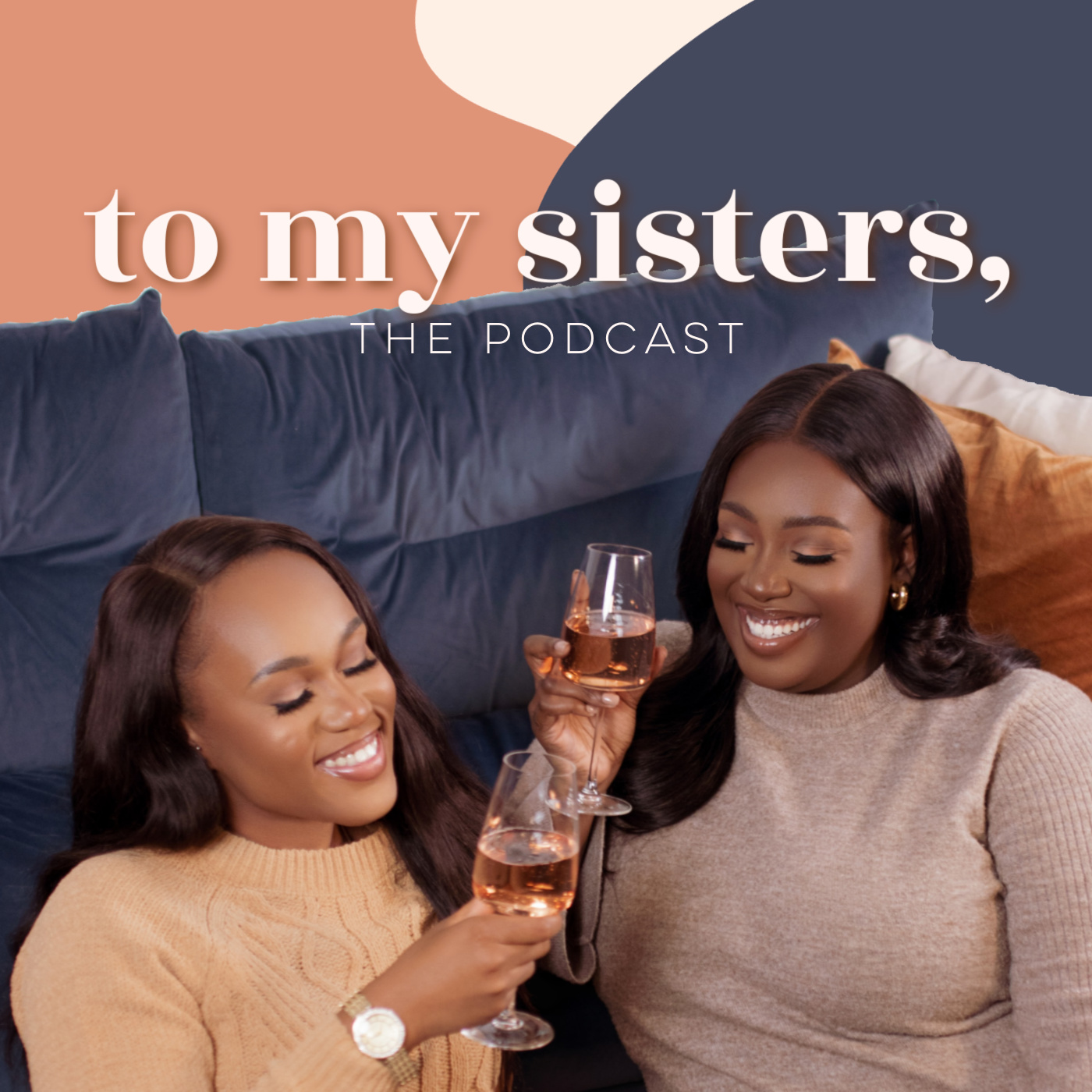
Loading summary
Transcript221 lines
- [00:02]
Courtney
Race the rudders. Race the sails. Race the sails.
- [00:05]
Renee
Captain, an unidentified ship is approaching.
- [00:07]
Courtney
Over. Roger, wait. Is that an enterprise sales solution?
- [00:13]
Renee
Reach sales professionals, not professional sailors. With LinkedIn ads, you can target the right people by industry, job title and more. We'll even give you a $100 credit on your next campaign. Get started today at LinkedIn.com results, terms and conditions apply.
- [00:34]
Unknown
Embracing Strength and softness as Black Christian.
- [00:38]
Courtney
Women I don't want to act like things don't hurt me. I don't want to act like I'm not tired. I don't want to act like I don't want to give up. I'm going to embrace being soft because.
- [00:49]
Unknown
Of your seasons where you have to be strong, that you actually deserve to actually be soft. You need the seasons of softness, and it's because of the time that you've had in softness that you're prepared to do the strength work.
- [01:02]
Courtney
But I think strength birthed out of stress is the problem.
- [01:07]
Unknown
When you rely, or rather over rely on your strength too much, you can become injured very quickly. You put yourself in harm's way very, very quickly.
- [01:16]
Courtney
In order to be a Christian woman, your femininity needs to be expressed like this. And it is through this perfect image of softness. She speaks softly and she dresses in her pastel.
- [01:27]
Unknown
Why is she always whispering?
- [01:28]
Courtney
And exactly do you have the kind.
- [01:30]
Unknown
Of friendship where your friend's vase can break and they can still bring the shards of glass to you and say, sis, I need some help putting this back together again.
- [01:38]
Courtney
That word endurance is so weaponized against women and it's code for tolerate anything, some nonsense, tolerate anything foreign. To the To My Sisters Podcast I'm Courtney.
- [01:55]
Unknown
And I'm Renee. And we are your online sisters and hosts of the To My Sisters podcast.
- [02:00]
Courtney
We are all about promoting the wellness, growth and development of a community of sisters around the world.
- [02:04]
Unknown
And in today's podcast episode, we are going to be talking about embracing strength and softness as Black Christian women.
- [02:13]
Courtney
Yes.
- [02:14]
Unknown
All the feels. Oh my gosh, in art.
- [02:16]
Courtney
It's a good conversation.
- [02:18]
Unknown
Oh, you're not serious.
- [02:20]
Courtney
Not serious at all. A good conversation to have.
- [02:23]
Unknown
I'm very excited about this conversation and I think it's a necessary conversation to be had, especially off the back of some of the conversations we've been having privately. But also our last conversation where we were speaking a lot around Black women strength, all of that kind of good stuff. So I love that we're now talking about strength and softness in tandem with each other. So kicking off the conversation, I want to Hear about your thoughts when you hear the word soft and softness. Like, what's your relationship with softness as a black woman? As a black woman, as a black Christian?
- [03:00]
Courtney
Oh, gosh. I think for me, though, my association or my relationship with the word soft definitely does involve embracing a sense of weakness, a sense of embracing my humanity, and also entering into a state of rest and grace. Like, for myself, I think softness really does sound like that antithesis to me of strength. Right? Like, or strong or more so hard. Like, being hardened by situations, taking life really harshly. Like, just being super, almost like, I am iron bullet vest kind of vibe, where it's like, no, actually, I don't want to act like things don't hurt me. I don't want to act like I'm not tired. I don't want to act like I don't want to give up. I'm going to embrace being soft. And I don't think there's anything wrong with softness. I think growing up, we're kind of taught, like, don't be soft. Be tough. Be strong. And it's like, actually, it's okay to be soft because sometimes softness means vulnerability. Sometimes softness means welcoming and help. Sometimes softness means not pushing yourself to the limit too much. And I think we have to then assess our relationship with the word strength, which I actually think is way more colored and complex. Like black women and even Christian black women, our relationship with the word strong because strength is a virtue. And as much as we are seeing the rising trend of, like, softness, and we grew up in that era where it's like, don't call me a strong Black woman. I'm sick of that title. I'm sick of that title. But then also growing up as a generation who was raised by really, really strong, really resilient women, I think we have to remember that strength is in itself a virtue. But I think stress. Strength burned. Sorry. But I think strength birthed out of stress is the problem. And I think you can. There's a place where you can embrace strength that isn't birthed out of stress. And that means that strength can actually coexist with softness. Because I think, like, as we explore it, softness really is about refusing stress. Like, when I think about the soft life, not just trend, but like, the actual Nigerian definition of, like, soft life. It's like, take this stress away from me. I don't mind doing hard work. I don't mind, you know, being a powerful woman. But this idea of stress, I don't want it. And I love that for us because I think For a lot of black women in particular, we have very unhealthy relationships with stress, and stress makes us unhealthy. And so it's actually reassessing our relationship with stress and stressful relationships, stressful workplaces, stressful work patterns, stressful habits, stress. How about yourself?
- [05:53]
Unknown
I love that. I love that. And I also love that you made the association with, like, stress and strength. Chef kiss. I definitely agree. I think for me, growing up, when I heard the word soft, you know, from roundabout, the way when someone said, oh, you're too soft, it was an insult.
- [06:07]
Courtney
Right.
- [06:07]
Unknown
It's like, oh, you're being too soft, you're being too moist, you're being too wet.
- [06:10]
Courtney
Yeah.
- [06:11]
Unknown
Like, you're easy to, like, manipulate or easy to be too quick. Exactly. You're too quick to give in to your emotions and your feelings. Like, it was always like, a bad word or an insult. And so my relationship with softness, I started to associate softness with weakness. I started to associate softness with, you know, that's not the place that you actually want to be. You also. You want to live a hard life as even.
- [06:36]
Courtney
You want to be tough?
- [06:37]
Unknown
Yeah. You want to be tough?
- [06:38]
Courtney
Yeah.
- [06:38]
Unknown
Even as I'm saying that, you know, I'm struggling to say it because I don't want that for my life. And I'm sure people listening, but anyways, let me not speak for other people.
- [06:44]
Courtney
That's your business.
- [06:46]
Unknown
But, yeah, there was that association of softness and weakness, and it meant that I really struggled to live a soft life, even though I desired it, because I had associated softness with weakness for so long. When there were moments to rest, when there were moments to reject stress, I started to feel guilty whenever I experienced any softness. And I'm sure there are women that are listening that might still be experiencing that and are going through the motions of like, oh, okay, so I've achieved a relative level of softness in my life. I kind of feel guilty a little bit about that. And even now, I'm still working for it, where, you know, there's moments in my day where I experience softness to me, which is, you know, having time to, like, read a book or having time in the morning to do the things that I really enjoy or, you know, when they're isn't an earmarking of my time for that toughness or I have to do something that's quite stressful. Even when it comes to things like exercise, we 75 hard. You think of the hard balls to the wall. You know, you've got to be giving everything you got You've got to be doing that hiit workout. When I've now learned that actually my body doesn't take too well to doing, putting itself under that level of stress for a prolonged time and coming to a place where there can be a balance between softness and, and strength and, and oftentimes it's through softness that strength is actually empowered. And so for example, in like exercise for like I, I love strength training and I used to be that person that would be doing strength training. But I also do hiit. The problem is you're damaging the same muscle fibers. Literally. You're put your. Literally, ah, it's too much. You're putting your body too much. A lot of stress and strain. But actually embracing more low impact soft workouts in conjunction with my strength training workouts have actually meant that I've had better strength training workouts. So there is a balance or a co dependence. And I've learned this between strength and softness.
- [08:44]
Courtney
Yeah.
- [08:45]
Unknown
And that the two coexist. They don't fight each other. They actually coexist and actually empower one another. It's because of your seasons where you have to be strong that you actually deserve to be soft. You need the seasons of softness and it's because of the time that you've had in softness that you are prepared to do the strength work.
- [09:04]
Courtney
That's it.
- [09:05]
Unknown
So really embracing for me at least like that there can be a balance between strength and softness and it doesn't have to. I don't always have to be fighting myself. And those, those spaces that I occupy where I am both soft but strong can coexist peacefully together. And that's okay. And I love that for me. Good. But I would love to talk a little bit about the myths that we often hear around both softness but also strength. I think as you mentioned, we have as women, but particularly as black Christian women, we have a checkered history with softness and strength, especially depending on who we hear it from, some of the cultural narratives and norms that are related to both words. So on the one hand, the linking of softness to femininity, the linking of softness to us performing our, you know, duties as women, and then the cultural norm of, you know, for a lot of black women having to be strong, but also in, you know, as you mentioned, like strength being a virtue and trying to find the balance between the two, and then also having to carry sometimes the heavy burden of not really fitting anywhere in those descriptions. Right. Especially as black women with our relationship to like, femininity and often being rejected or kept outside of those ideals of femininity and softness, but then also the tiredness and the exhaustion and the burnout that comes with holding too tightly onto strength. So I'd love to hear some of your thoughts on, as a black Christian woman, navigating the tightrope between strength and softness on a day to day basis.
- [10:51]
Courtney
So good. So good. I do think there is quite a bit of tension that can lead to confusion with these two things. And it's. I've definitely experienced it in my life where it's like, okay, I want a soft life, but does that mean I don't get to be strong? Or I need to be really tough.
- [11:07]
Unknown
But I want to be soft.
- [11:08]
Courtney
And it's like, actually the two can exist and sometimes you need to lean into one, sometimes you're in a season where you need to lean into the other, and that's okay. And I think, I guess the best thing to look at really is the Bible and it's examples not just of women, but also of Jesus. But let's take the former. Like, I think one, we see so many different examples of women in the Bible who went through so many different things. And I do think for a lot of Christian women, we grow up in a culture. And key thing here is culture which is telling us, in order to be a Christian woman, your femininity needs to be expressed like this. And it is through this perfect image of softness. She speaks softly and she dresses in her pastime and. Exactly. And you know what? There are parts of the Bible that talk about especially women who are speaking to their husbands, like, mind how you speak.
- [12:01]
Unknown
Yeah, yeah.
- [12:02]
Courtney
And that's called wisdom. Do you get what I mean? That's called wisdom. Of course, that doesn't mean that it needs to be abused. That doesn't mean that your voice doesn't matter. It just means that, hey, here's some advice. It doesn't necessarily also mean that you need to eradicate your temperament and your unique personality from you. Because we all know over here, I hate the feminine energy trend. I hate it because it's so prescriptive.
- [12:28]
Unknown
Yeah.
- [12:28]
Courtney
It makes one certain manifestation of femininity or one standard for femininity universal. And it's like, no, if, if you want to be feminine, you have to be feminine like this.
- [12:39]
Unknown
And it's like too much.
- [12:41]
Courtney
My Jesus didn't say that to me that part. So no, but we do see examples of, you know, you've got your Esther's, but Esther did some strong things. She did, you know, but then you've also got Your Deborahs. But Deborah was a prophet and a wife and a judge. And, you know, it's. It's embracing the multifaceted nature of who we are as women. And that doesn't always manifest as, yes, sir. No, sir. Oh, my gosh, yes, sir. Like, that's not how femininity is all the time. Right. But there are some people whose natural predisposition is to speak softly to. They love pink. They were out of the womb. Ah, pink. You know what I mean? And I also think there. There's dangers in associating softness with these kind of superficial things, because you can still love pink and speak softly and be mean. That's not soft, babe.
- [13:30]
Unknown
Oh, Jesus.
- [13:31]
Courtney
That's just passive aggression.
- [13:32]
Unknown
Yes. Give.
- [13:33]
Courtney
Do you get what I mean? That's just passive aggression. So I think we have to define what do we mean by soft.
- [13:39]
Unknown
Yeah.
- [13:39]
Courtney
Are we just saying that soft means feminine? For me, soft means rest. Soft means vulnerability. Soft means emotions. You know, and like I was saying about different examples of women in the Bible. There's Jael, there's Ruth, there's Naomi. There are so many different women who had different histories and different paths which impacted how they approach life and what their personality was to. Towards people. However, as Christian women, our highest calling is to be like Jesus and to be like Christ. And we see Christ manifest strength, ultimate strength, but also softness and ultimate softness. And if we're really looking at a true definition of, okay, being soft. It takes softness to allow people into your circle. It takes softness to allow John to rest on your chest. It takes softness to allow yourself to weep in Gethsemane. It takes softness to. To move with compassion and heal people as you see them, you know, in pain because of their sickness or being treated unfairly. It takes softness to see a woman about to be stoned and be like, you know, it takes that softness inside, but it also takes immense strength to carry across and die on it. It takes immense strength to do ministry and have thousands of people tugging on you and still pour out the gift, the talent, the anointing that you have on people. It takes strength to be able to rebuke a friend. It takes strength to look your betrayer in the face. That's strength.
- [15:10]
Unknown
Yeah.
- [15:10]
Courtney
Do you get what I mean? And so I think we also need to reassess what is our relationship with the word strong, because it's a word that's been abused against us so much, where it's like, strength means you tolerate abuse.
- [15:23]
Unknown
Right.
- [15:23]
Courtney
Strength means. And it's a lot of black Christian Women's hard relationship with the word endurance and long suffering. Because those are words. I remember When I was 19, I was working as an intern in business development for a hair company, and we were on a shoot day. Loved the shoot days, loved the team. And we're working with a certain photographer, and we just, you know, normal bands. And my whole team was black, so it was great. And we're just, you know, normal bands, normal chat, and we're like, what you guys look for in a woman? And the photographer was like, you know, women of this generation, they've lost their ability to endure. I was so riled up. I think I physically became hot. Like, hot. And the reason why is that word endurance is so weaponized against women. And it's code for tolerate anything.
- [16:15]
Unknown
Some nonsense.
- [16:17]
Courtney
Tolerate anything. I don't think so.
- [16:20]
Unknown
Ah, you know those Instagram captions when people are with my couple, you know, I put her through hell.
- [16:27]
Courtney
Hell and high water. Did you want me to drown and.
- [16:32]
Unknown
Burn at the same time? Yeah, basically. So we went through hell together. You were the hell.
- [16:36]
Courtney
You were the devil. That's the problem. That's the problem. And so I think also there's this perversion of the word strength and endurance and long suffering and all of this stuff to make coerce women into accepting substandard behavior. Abuse, infidelity, lack of loyalty, disrespect with the lie of rewarding her with a strong woman trophy.
- [17:05]
Unknown
It's not. I would have thought it would have been cash. Just the title was just a tiny imagine.
- [17:11]
Courtney
She's a strong, good woman. You a bad man.
- [17:15]
Unknown
You bad.
- [17:15]
Courtney
You are a bad man. And we need to talk about that.
- [17:18]
Unknown
Go to jail.
- [17:18]
Courtney
That's not this episode. Yeah. I genuinely think a lot of us have that negative relationship with the word strong because of how it's been perverted. And I think a lot of us need to start remembering that the word strength can actually be reclaimed. And as you mentioned, and I've been saying it, it's a virtue to be strong, to be resilient is a virtue. Because life throws you many curveballs. Your strength isn't just to tolerate relational abuse. Your strength is there. Your strength is there. When your friend is going through something, she's going to need someone to lean on, and it's going to be a strong friend, a friend who can be a pillar, a friend who can think, you know, and give counsel and say, you know, I know you're crying in my face right now, but let me encourage you. That's strength. Right? Strength to be Able to say, I know my family is going through absolutely everything, but you know what? I'm going to take some extra shifts.
- [18:09]
Unknown
Yeah.
- [18:10]
Courtney
And I'm a send that money to that person because they need it. That's strength. Right? Strength that is driven by compassion. Strength that is driven by a true desire to love and to serve, not to necessarily be mistreated. It's a strength that isn't inspired by stress. And I think a lot of us didn't see those examples. We saw our, maybe mothers or aunties display their strength as a response to a really stressful situation and a really stressful trigger. And that is not their fault. But it doesn't necessarily mean the cycle needs to be repeated with us. Right. And a lot of us are suffering with a lot of physical issues, health issues, because we are stressed. But we are covering up our stress with our strength. And we are still going to work. We're still showing up. We're still the perfect friend. And we refuse to lean into vulnerability that says, okay, I'm going through something. And sometimes we need to accept that it's okay to be weak. Like, I've always been talking about how, like, I hate this rebranding of vulnerability as strength because it's actually a weakness. Like, and, and it's the. It's not a weakness. It's the ability to be weak.
- [19:19]
Unknown
Yeah.
- [19:19]
Courtney
The ability to embrace your humanity and reveal it. And I think a lot of people struggle to do that because we struggle with this word weak. We struggle with this idea that we are not supernatural beings, that we can actually be hurt, that we can actually experience. Experience pain, that we can actually burn out, that we can actually be tired. We can be in physical pain and anguish. But why?
- [19:44]
Unknown
That's the issues.
- [19:45]
Courtney
That's what's stopping us from embracing true grace and softness. How about you?
- [19:50]
Unknown
Beautifully put. Beautifully put. There were so many points there that resonated with me. Just coming to your last point, the fact that even embarrassment was such a natural response to that. Right. It makes me think of, there was one time, like maybe last year or the year before, where I herniated my disc. And again, I love exercise. I love it like, it's something that I really, really enjoy. But when you rely, or rather over rely on your strength too much, you can become injured very quickly. You put yourself in harm's way very, very quickly. And as somebody that was in that instance, very, very used to being strong and very used to, you know, form all of that kind of stuff, it didn't occur to me that I could get injured. It wasn't at the forefront of my mind that in this situation I could get injured because I was so used to being strong here. And so when I lifted up the weight, it was a deadlift, of course, because those things always take out your back. They always do.
- [20:52]
Courtney
That's why I got my back injury.
- [20:54]
Unknown
You do one thing wrong on a deadlift, it is curtains. It is curtains and not curtains for a day. No, no, no, no. You're out for months. Ah, that thing showed me. Pepper. I was, listen. Remote working. I was kneeling.
- [21:07]
Courtney
Yeah.
- [21:07]
Unknown
Because I couldn't sit down.
- [21:08]
Courtney
Yeah.
- [21:08]
Unknown
But I couldn't. This is for the benefits of the systems. I've not seen it.
- [21:13]
Courtney
Yeah, yeah, guys.
- [21:14]
Unknown
I would be kneeling. I would be on Microsoft Teams. I would be kneeling. Be like, Renee, how you doing? I'm not well. Yeah, I'm now kneeling. I'm in pain because I thought that my strength was sufficient and it would be sufficient all the time. The issue with drawing on your strength is you're going to fail at some point. You are going to fail at some point. And when your strength fails, are you prepared to relinquish control and are you prepared to accept softness? Because for me to rebuild my strength, I had to really, really grab onto softness. I couldn't be out here. I even tried to do, oh, let me try and see if I can do, like a modified deadlift. I couldn't do anything. I couldn't. Let me do a modified. I was there Googling. What can I still do?
- [21:56]
Courtney
Put it down.
- [21:57]
Unknown
How can I still use my strength in this situation? How can I still perform? I couldn't do anything.
- [22:02]
Courtney
That's so good.
- [22:03]
Unknown
I couldn't do anything. I had to rest. And it's unfortunate that we're often pushed to the extreme and we let ourselves get to a place of harm before we realize it's not good to be in our own strength.
- [22:16]
Courtney
We wait.
- [22:17]
Unknown
We always wait until that point of extremity before we appreciate that. Ah, I need rest. I need these things to actually survive and thrive. I actually need to experience softness in order for me to be empowered in my strength. And so that was a real learning curve for me in that, oh, my goodness, do I actually have reserves to receive softness when I'm actually out, down and out? And it was hard because I realized that, wow, there was a big part of my identity that was fixed in being strong. It was fixed in me. But, yeah, I can deadlift. How many kilograms, man? I couldn't even bend over. It was excruciating pain. These are back injuries.
- [22:56]
Courtney
Yeah.
- [22:56]
Unknown
People don't talk about those things enough. With enough seriousness. Pain is crazy with enough seriousness. And it was also the thing about the back is that is a serious pain. That's a serious trauma. So it's not even just about, like, being strong and like, you know, resting in my strength, but because I've rested in my own strength, I've now injured a very critical part of myself. If you rest too far in your strength for too long, you are at risk of injuring a very critical part of yourself. You will injure yourself. I am telling you, it won't be a finger. It won't be a foot. Oh, I wish it was a foot. I wish it was an ankle. I'd still be doing single legs. And you know what? Sometimes it's a humbling mechanism, but sometimes when we do experience that pain, we realize, ah, I can't rely on my strength. And again, I can't rely on my strength. So in a way, I was actually, obviously, in hindsight, I can look to it and say, oh, wow, that was a teaching moment. But how many teaching moments are we going to have?
- [23:57]
Courtney
Yeah.
- [23:57]
Unknown
Before it gets really serious. There are some people that, you know, they've done that kind of thing and they've been. They're out of the sport. Do you know what I mean? So it's even a grace that I can still continue. But I've been humbled. I now embrace softness because I felt that pain and I know that my strength is not sufficient.
- [24:14]
Courtney
That's so good.
- [24:15]
Unknown
How many of us will experience that pain, will experience our strength failing us, and yet go back to the same thing that harmed us in the first place. Accept softness. Accept rest. And for those of you that are actually injured as well, because there's some of us that have rested in our strength and we're actually injured, and all we can think about is, when can I get back to it? Yeah, when can I get back to doing the exact same thing that got me here in this place in the first place? Let it go. Embrace the softness. Ah, please rest. Rest. And I know that the world is constantly telling us that rest is a bad thing. I recently read. Oh, what's that book by John Mark Comer, the Ruthless Elimination of Hari Boy. I love that book.
- [25:03]
Courtney
Yeah. So good.
- [25:04]
Unknown
It's so, so good because it just reminded me the importance of. Of rest. The importance taking the Sabbath seriously. Oh, my gosh, guys, if there's one person that's really inspired me this year, it's really Courtney in terms of taking a Sabbath and being so serious about rest.
- [25:18]
Courtney
So good.
- [25:19]
Unknown
Being serious. Because it is an act of worship.
- [25:21]
Courtney
Yeah.
- [25:21]
Unknown
Rest is our worship. So convicted.
- [25:25]
Courtney
Yeah, it's. It's a symbol of trust.
- [25:27]
Unknown
It's a symbol of trust. And I think also unpacking the fact that there was a. There's a pride that also exists in thinking that you can rely on yourself. It is thinking that if I don't rest, then things wouldn't work. And do you really have faith in your Creator? If you can't spend at least one day resting, do you think that things are going to collapse because you're not there? And maybe that may have been your reality when you were younger. Perhaps you were the glue that held your family together. Perhaps you were the eldest daughter. Perhaps you went through trauma. Perhaps you had to stand up and take, you know, false responsibility. The word is false. The responsibility is false. And I know not everyone can extricate themselves from those situations, but as best that you can, you cannot rely on your strength alone. Alone. And I think that actually leads nicely into the next conversation point around the role of, like, strength and softness in friendship. We often talk about these things relationally from a romantic. Right. Like, embrace your strength and softness for your husband and all these kind of very gross. Grinch. It's just so gross. As if women are just these perfectly formed things for men's consumptions. But we've spoken too much on that in past episodes. Yeah, patriarchy. But in terms of the role of strength and softness in friendships, what are your thoughts on that? Like, how do we. How do we support one another, first and foremost, in enacting strength and softness within female relationships and female communities? Because oftentimes we can. Rather than being our biggest advocates or supporters, we can find ourselves becoming competitors. We can find ourselves repurpetuating a lot of the things that society and culture and all of these different places throw at us. So how do we conceive of strength and softness in friendships? And how can we support more women that are around us to embrace the balance between.
- [27:25]
Courtney
So good. I think the first thing that comes to mind is thinking about this trope you've written about called the strong friend. Right? Like, when you're the strong friend, you're the friend that everyone comes to because they need advice, they need help, they need support. You are the safe space. And it sometimes makes you take on this responsibility that tells you you cannot afford to be weak because everyone is relying on you to be strong. And so you don't give yourself that Space to just be a human, to. To be the friend that needs a shoulder to cry on sometimes as well. And I think that's the danger of the strong friend. A lot of us think that the strong friend is so admirable because she's always got it together. No, it's just that she can't show you she's falling apart. She can't. Like. And I think that's what we need to create room for in our friendship. Like, if you are the strong friend, just try to rely on somebody. Find somebody who may not be stronger than you, as in they've got it all together, but can actually support you, can actually support the weight of your burdens, too. And our hope is that we are building reciprocal friendships, which means sometimes I carry your burdens, but I also know that you are strong enough to carry mine in my seasons of burdens as well. And so if you're the strong friend, try giving your burdens to someone else to carry, to advise you, to counsel you, to hold you. If you are the friend who. Who has a strong friend, be intentional about creating a space for your strong friend to be vulnerable. Right. Like, I know I'm always talking about me. I know what I've been going through is a lot, and you've been showing up for me, and you've been there, but I genuinely want to know what's going on with you. What can I support you with? What can I pray about you for? What can I do to support you in this season? It could also be something like, you know, life is going really great for you, but is there something I can do to help with that greatness? Like, is there something that you are currently doing that's got you really busy and I can take some of that load off for you or just to cheer you on and affirm you, like, show me and tell me how I can show up for you. Because I also know that you need people, and I am one of the people who has been sent to help with that need. And so remind your friend, remind your friend that you are a friend and not just. Just a case to support. Like, you are their friend as well. And it's not to say that sometimes in seasons of friendship, there won't be an imbalance, but reciprocity is important. And sometimes it's seasonal, sometimes it's in a conversation. I do something, you do something for me. Sometimes this conversation is for me. Don't insert yourself.
- [30:03]
Unknown
The next conversation will be, we can schedule.
- [30:05]
Courtney
We can even schedule that one in for tomorrow. But Being clear about, about that just to let your friend know you also matter. And you can take up space here as well. And another thing with the vulnerability thing is vulnerability is a two way street in regards to if somebody is vulnerable to you, it's now your responsibility, what you do in response to that. And I think we forget sometimes the response in responsibility or the responsibility of response, like the way you respond to somebody really will determine whether they're ever vulnerable again. And that goes with relationships, friends, friendships, family. The way you respond to somebody, exposing their innermost weakness or their pain will really determine whether they'll ever feel comfortable doing that to you again. And I think with us as friends, as sisters, you have to think really carefully and considerately about how you respond to your friend coming to you for help. You know, has your sister reached out for help and is, I don't have time for this or babe, I know you'll figure it out, or let's get back to it at another point. But you can tell there's a sense of, even if she hasn't communicated it, there is a sense of urgency or deep need. Like how many of us have. This is a kind of different context. But like when you're a kid and you go to your parents and you're like, I need help with something, they kind of brush it off.
- [31:23]
Unknown
Yeah.
- [31:24]
Courtney
But it's like deep down, you know, no, I actually really need help or like, I really want to talk to somebody. It's like, mom, can we talk? No, I haven't got time right now. And it's like, okay, yeah. And then you just kind of move on.
- [31:34]
Unknown
Yeah.
- [31:35]
Courtney
And it's like that was your attempt to be vulnerable and no one gave you the time. And so I think the same thing can sometimes happen in friendships where it's like, you know, I always tell my friends, I know I'm terrible at texting, but if you ever need to talk, just send me a hey nine one one.
- [31:48]
Unknown
Yeah.
- [31:48]
Courtney
And I will drop everything to talk to you. Because you need to know there is a space for you to be vulnerable. There is a space for you to cry. There is a space for you to vent and complain and rot. But there's also a place for you to be prayed for. And as friends, we need to be intentional about cultivating those safe space basis for our friends. And that also goes for sharpening our character so that our friends trust us enough to be vulnerable to us. Which is why, like, I'm always harping on don't be a gossip because you shut down Your friend's ability to even want to come to you and be vulnerable because they don't know whether their secrecy or their vulnerability will be safe with you because you're a yappa. So it's just important to keep a safe reputation and also create a safe environment and be responsible with your respect response to vulnerability so that the people around you who are called sisters can actually be soft around you as well.
- [32:44]
Unknown
Yeah, I love that. No, I absolutely love that. I think. Uno paramama papa. Los ninos solo. Verizon Unlimited 5G for GLT.
- [33:20]
This is a mini meditation guided by Bombus. Repeat after me. I'm comfy.
- [33:26]
Courtney
Comfy.
- [33:26]
Unknown
I'm cozy. Cozy. I have zero blisters on my toes. Blisters. And that's because I wear bombus the softest socks, underwear and T shirts that give back. One purchased equals one donated. Now go to bombus.com acast and use code acast for 20% off your first purchase. That's B O M B A S dot com acast and use code acast at checkout.
- [33:53]
From the perspective of the friend that sometimes struggles with vulnerability or struggles with opening up, especially navigating the space between softness and strength, I think it's necessary to give your friends an opportunity to come through for you, whether it be in the place of strength or softness, but giving your friend room and giving them an opportunity to show up for you. I think oftentimes, especially as black women, because we're coached into having that independence mindset or thinking about ourselves or checking for ourselves, we don't allow room for people to show up for us. We might have low expectations. We might feel uncomfortable articulating ourselves. I think it's important that we give people an opportunity, especially if you want the strong friend. People can. Yes. You know, people can disappoint you, but also they might not.
- [34:45]
Courtney
Yeah.
- [34:46]
Unknown
And sometimes the hope that they might not is enough. It's enough. I've seen in my own life so many times where I've given friends the opportunity to show up for me and have been surprised, elated, all the feels, all the feels, all the happiness of knowing that, you know, I've got people that actually care about me enough to either come, you know, come through for me as a strong friend and helping me, you know, toughen up or get through stuff or come through as the soft friend and give me a place to be soft. And a big association that I often have with softness is safety. I love the fact that as friends, we have to create safe spaces for our Friends, to be soft, to be strong. All of these things preceding these two words is safety. In order to be strong, you need safety. In order to be soft, you need safety. And we often use safety as a buzzword nowadays. Cultivating safe spaces for people to be vulnerable where they want to be, but safety where, as you were saying, like, you actually hold in high regard and high esteem the fact that your friend trusts you enough to share parts of her life. Right? The fact that this is a place that they can bring all parts of themselves, not just a part of themselves that is digestible, not just a part of themselves that they think will be accepted, but actually bringing every part of themselves, especially the parts that are actually broken, the imperfection. It's like when you break a vase. A lot of people see the beauty in a vase when it's, you know, put together and pretty. Do you have the kind of friendship where your friend's vase can break and they can still bring the shards of glass to you and say, sis, I need some help putting this back together again. You know? And I think some of us are. There's so much shame associated with being broken. There's so much embarrassment, there's so much difficulty that surrounds being a work in progress or someone that's in need of safety, which, when you think about it, doesn't even make sense. Like, if you're going through it, yeah, you actually deserve safety. And sometimes it's up to us to come to people and say, look, I am broken, and trust that they would actually help you to glue the pieces together piece by piece. Whether you've got the tiny shards, you know, those tiny bits that be pricking your finger. You're like, I don't even see the gloss on my hands. You know, I'm saying. Or whether it be the big shards of glass which are easier to put back together. Do you have, first of all, the faith to bring those shards to other people? And then for the friend that is receiving these shards, do you have enough love in your heart and enough capacity to hold space for that, too? And I think that's where we as women can really, really come together as a community, creating those safe space spaces. Like, especially. Especially since there are so few safe spaces for black women.
- [37:39]
Courtney
So good.
- [37:39]
Unknown
There's so few. Heaven forbid that we don't have safe spaces amongst our own women. Heaven forbid. And I know that we've got all sorts of narratives and stuff. Listen, that's how you know that these things come from the enemy. The only place where it actually makes the most Sense for you to have a big, safe space, people that experience the same things as you. Of course, there will be narratives of I don't trust her. Of course there will be narratives of I'm competing with this person. Of course, there will be all of these lies that are told that prevent you from actually getting close to possibly somebody that could be holding onto your breakthrough. Of course there will be those lies. So it really is our responsibility, especially on behalf of the strong friend. You have to do the work yourself, too. It's not just your friends. It's you two. You actually have to. You have to open up. You have to go through the motions. You have to accept safety, and you have to be willing to bring the hardest parts of yourselves, the ugly parts of yourselves, the weak parts of yourself, and trust that there will be softness and strength from somebody else to help you. And, yeah, when it comes to friendship as well, because, boy, too many of us are drawing from such places of emptiness, such places of emptiness, not knowing that there's so much life to be poured into you simply by taking advantage of the fact that there's people around you that love you.
- [39:00]
Courtney
That's it.
- [39:02]
Unknown
People love you. That's it.
- [39:03]
Courtney
And this part of the conversation is actually really important because it's even broader than friends. It's also just community in general. You want a safe family. You want a safe church. You want a church that actually allows you to be vulnerable. And you know you can do that safely. How many people have experienced or seen, you've gone, or you've told your counselor, you've gone and you told your pastor, and now suddenly you're the example on the pulpit. You're the example in the sermon. That is not an environment of safety where people can actually be weak.
- [39:39]
Unknown
That's crazy.
- [39:39]
Courtney
How can you be confessing without your confession?
- [39:42]
Unknown
It's the sermon's title.
- [39:44]
Courtney
That's crazy.
- [39:44]
Unknown
The sermon's title, that is crazy. The actual title, Brokenness.
- [39:48]
Courtney
There is a reason why priests be taking that vow of confession because that's the only way people are going to come and actually confess what's going on and what they need prayers for. Of course, if it's criminal, call the police.
- [39:59]
Unknown
Yeah, you have to.
- [39:59]
Courtney
And that's when they can break it. But you can't like gossiping about somebody's vulnerability in a structure where they should actually bring all of their weaknesses. Because I love what you identified. Oftentimes we're scared to bring our vulnerabilities to the place where we can actually get the breakthrough. The place where we can get the healing, the place where we can get the comfort for the place where we can get the prayers. Right. But that's where you need to bring it. Everywhere else is a bit of a dead end to some degree, you know, and so I think it's allowing ourselves to also create and build local communities, whether it be churches, families, whatever. And like you said, friendships and sisterhoods where people are allowed to be vulnerable, but there is safety around their vulnerability as well. And I wanted to also touch on this idea of strength in friendship, too, because there is need for your friends to also be strong sometimes and you encourage that strength in them. Like, I'm not going to lie to you, sometimes I've been talking to my friends and I'm the friend who's a bit of a coach, and I'm like.
- [41:01]
Unknown
Come on, get it together.
- [41:02]
Courtney
Get it together. Like, nip it in the butt. You knew it was going to be like this. Like, let's, let's. Let me remind you of what's going on here, you know, let me see it from a different perspective to remind you that you're bigger than this or you're strong, you're tough. You can handle this, you know? So, yeah, cry. This is your space to cry. But I don't want to be. I don't want to hit you crying.
- [41:20]
Unknown
And after you've done this. Yeah, after you've done this, you know.
- [41:23]
Courtney
Because you can get through this. And I'll be the friend to remind you, babe, you are the person who's done this. You're the person who's achieved this. You're the person who's overcome this. Don't let this come and intimidate you into thinking it cannot be conquered. Like, that's a lie. And so I definitely think there is a place where you have to be very strong for your friends when they're in a place of weakness. And also there's a place where you also need to ride out at the. That dawn with your friends.
- [41:48]
Unknown
Yeah, right.
- [41:49]
Courtney
Like, especially when they're going at the things of life, especially when they need to toughen up. Sometimes season changes require you to change your level of strength. You know, if you're. If your family, heaven forbid, but if one of your parents, like your main caretakers, passes and you're the eldest sibling or you're somebody who, you know, holds a lot of responsibility in your family, that responsibility is only going to heighten now that another person of responsibility has passed. Right. This is not the time for your friends to be, oh, My gosh. Like, it's okay. You can cry here. I don't really have time to cry. I know I can cry here. But now I also need to find an action plan.
- [42:29]
Unknown
Yeah.
- [42:30]
Courtney
For my life and my new reality. What does strength look like in those situations? Okay, how can I help you plan? Okay, how can we. Okay, let's look at your finances. Let me see if I can take care of some of your younger siblings for you. Let's share this burden. But let me prove to you I'm also strong enough to carry this burden with you. I think it's important to show your friends that you are strong enough to carry the burden with them, because a lot of friends don't want to burden their friend because they don't know that their friend is strong. They don't trust if their friend is strong. And so reminding your friend, like, I know I'm busy, but girl, I have the capacity, the desire, the patience and the strength to be able to help you carry this. And if we need to carry it together, give me my half of the load so I can carry it with you. You know, it takes a certain heart, posture of service and humility to be able to use your friend, to use your strength for your friends burdens. And I think a lot of us need to start displaying that. And I think that's the ultimate sign of sisterhood. Like when I think of Jesus and him dying on our behalf, it's like he was flesh. Everything he went through hurt, but he took it. He let the anger, the hell fury boy of the father, rain out on him so that it wouldn't fall on me. That's true friendship. That is true friendship. And that's using your strength in such a selfless way. And so defend your sister, advocate for your sister, carry things for your sister, but just make sure your sister doesn't have to do it alone because she knows you're strong, too.
- [44:02]
Unknown
Yeah, Sisterhood and strength. Strength and softness, safety. I'm trying to find, like a little tagline there somewhere that's coming. You know, we have glowing and growing. Maybe strength and softness is strength and softness. Our next ministry. To round off the conversation a little bit, I kind of want to come back to thinking about black women, specifically black Christian women, and thinking about the importance of cultivating safe spaces for this particular community. And look, we're not trying to exclude women of, you know, all these faiths and all that kind of stuff, but I do think that there is something about using this subset of women that we really do speak to at this point of intersectionality, especially because the tension between the different identities can mean that it's difficult to find and access safe spaces, especially safe spaces that honor both strength and softness. So for the struggling Black woman of faith, for the, you know, I've lost my faith in finding the community. I don't know why she's.
- [45:16]
Courtney
I don't know either.
- [45:17]
Unknown
She could be from Essex, from Manchester. She could be from India. She has lost faith in finding community and finding friendship, in finding spaces that honor her as all of these things and give her the opportunity to be both strong and soft.
- [45:35]
Courtney
That's so good.
- [45:36]
Unknown
What would you say to her?
- [45:38]
Courtney
Oh, there's a lot that I could say to her, I think. One, we are here. We are a community of women who are both strong and soft and celebrate all and in between. Come on, now. It's. It's really about just embracing women's real stories, like real women, and being a platform that shares that, but also being a sisterhood that can cover that as well and just pray for you and share the realities of what goes on behind the scenes of the glowing and growing journey. So if you feel like you don't have it, or maybe you do have it, but you want to expand it, join the sisterhood. Like, it's a community platform of women who share, like, really are sharing and are vulnerable with their sharing. I would also say learn to embrace strength and softness in your relationship with Christ. Like, especially in the place of prayer.
- [46:25]
Unknown
Yeah.
- [46:26]
Courtney
Prayer is such a beautiful thing because there's the decrees, the declaration, the binding and the loose thing, which means you stand in your authority. Right. But then there's also a place where you just stand in your identity and in your need. Right. Like, I can weep in prayer as well. I can let the Lord know I've messed up, like, big time. I can confess. I can repent. I can ask for all the help and the mercy that I need, and it's all in this. It could be in the same 20 minutes. Yeah, that part. That whole roller coaster, you know. Devil, I will not let you destroy my heart. Jesus, I need £5,000.
- [47:05]
Unknown
Do you know how rare that is? Are you in my room? Do you know how real that is?
- [47:11]
Courtney
Yeah, yeah, yeah, yeah. That's how it goes. That is how it goes. And that's. That's the epitome of strength, true softness. I will stand in my authority, but also identify my need. And that is beautiful to be able to do in front of the Lord because he's able to support both. Both forms of you, all forms of you. And so embrace that in your relationship with God, because it will actually overflow into your relationships as well. Like, sometimes you need to pray to find the language for what it is you're going through. I'm not saying that everything. I'm not saying that prayer is purely language as well. Sometimes prayer is tears. Sometimes prayer is singing songs. Sometimes prayer is silence and listen to the echoes of my heart. Yeah, that's all it is. But also in community, sometimes what you discover in prayer is a pain or a need. And you can express that now with people who you trust and who you love. And it's great because it's helped you find that language. And so letting your friend know, like, I don't know what's going on with me, but I'm just feeling a huge amount of spiritual warfare. I need you to pray. I can't give you the prayer points, but I just need you to pray, you know, or this is what's going on in my family, and I haven't been able to tell anybody, but the other day I was praying about it, and I just feel like I can share it with you. You know, just allowing yourself to. To bring your needs to spaces. Like, bring your needs to spaces and know that you're not the only one who can supply those needs. God can, your friends can. And hopefully he matures you to the point where you can attain it and you can. You know, you wouldn't need this thing again. But, yeah, I would say that. And I would also say if you feel like your church is lacking something that allows you to be strong or safe or soft, try and see how you can go about being the change that you want to see. As cliche as it sounds like, flag it. You know, I was going through this, and I didn't feel comfortable enough to tell you guys. And I feel like that's a problem because the church is meant to be a community of people supporting each other. So why is that? Like, is it a cultural thing? Okay, how do we change the culture? Do we need smaller groups? Maybe church is entirely too big. Yeah, it's entirely too big. And I don't want to tell my business to 3,000 people, so. And also, pastor's always unavailable. So maybe we need some cell groups. Maybe we need some leaders. Maybe we need just closer discipleship. Family group. Maybe we just need a weekly Bible study. Or we don't even need to meet. I just need a group of six people.
- [49:43]
Unknown
That's it.
- [49:43]
Courtney
Who you point me to. Maybe we need a Welfare department, you know, and once you make those suggestions. Not complaints, suggestions.
- [49:50]
Unknown
Suggestions. That's right.
- [49:51]
Courtney
Do the work as well to help build the church. Because you're not the only person who probably needs it.
- [49:56]
Unknown
Yeah.
- [49:56]
Courtney
As well. Because I've seen a lot of instances within church communities where it's like someone is in need, they can't bring their need. Their need is gossiped about. Or the church doesn't have the infrastructure to support the need. Practically. Not just we'll pray for you, but genuinely, do we have a welfare pot? Do we have something for people who are exposed, experiencing grief and loss? Do we have, you know, safeguarding policies in place for somebody who is having a mental health crisis? Do we have something in place for women who have children with autism? Can they bring their children to church? You know, all of these things. We need to help build God's church and help bring the change within it that we want to see, but we need to be builders in that instance as well. And so whilst you may have gone through an experience which made you think, I'm not safe here, before you run away, also ask yourself, and obviously, please find your safety first, find your healing first. Absolutely. But also I think something that can complete our healing is knowing that we're also helping to set other people free from the same thing that held us in bondage. We're now creating a safe space for other people to run to. Even if we ran to this place and the door was closed, now the door is open. And there's something so powerful in knowing that you help to open it. So I think it's. It's also doing that work as well as Christian women building God's house in a soft way.
- [51:17]
Unknown
That's so beautiful.
- [51:18]
Courtney
Yeah. To be a softer church because things.
- [51:21]
Unknown
Be hard and it doesn't have to be this harsh and abrasive. Doesn't need to be abrasive. This whole conversation. Well, this whole conversation is making me think of a pumice stone.
- [51:33]
Courtney
Oh, yeah.
- [51:34]
Unknown
Insofar as, you know, the. To get to softness, sometimes you have to.
- [51:38]
Courtney
Yeah.
- [51:39]
Unknown
Rub away. You need to grate away. Chip away at some of that. That hardness, the toughness. Because some of y'all know your back foot a little bit tough and it just needs to be smoothed out a little bit.
- [51:51]
Courtney
Yeah.
- [51:51]
Unknown
And I think it's that. Right. Like what you were saying reminded me that sometimes in order to achieve a particular outcome or to get to a place of softness, you have to be willing to do the work of sanding away. And I think I love what you were saying about our relationship with God, because that's what God does with us, to reach a place of perfection, of softness. It's the sanding away, it's the pruning, it's the. Ah, okay, cool. You know, there's some parts of her that I would prefer. You sanded that down a little bit or like. Oh yeah, that is definitely giving back foot skin. Yeah, Crusty, dusty.
- [52:29]
Courtney
Crusty, dusty thing.
- [52:30]
Unknown
And you know, it's quite a serious thing. Cuz I ain't going to lie to you. And you know, when you haven't done the process for a long time. So I think of like when I get pedicures, I fully believe in pedicures. I think that they should be an essential for most people. Not just women, but also men too. I think you need to get your harder back foot sorted out. But I think of like pedicures. Yeah. And when you've left it for too long to go, you know, and get the sanding down exfoliation process, your tech can tell and it's a longer process. It's a much longer process. So you can literally see that. Sorry to get graphic for folks that don't like skin flake related imagery. But you can literally see how these massive flakes and sometimes your tech will look at you and be like, so how long? How long?
- [53:15]
Courtney
There's a lot going on.
- [53:16]
Unknown
There's a lot going on. And I think of that image and it reminds me of our relationship with Jesus and how we sometimes need to keep up that process of sanding down in order to achieve a life of softness. And I would apply the same to our relationships too and the way that we interact with people. We have to get used to this sanding down process and being a part of that sanding down. Remove the skin, the flesh. In fact, remove the flesh. You won't be able to get to the smoothness until you remove the flesh. So I think for the black women, black Christian women, to be honest to anyone, this one, you need to sand down the flesh.
- [53:52]
Courtney
Yeah, that's so good.
- [53:54]
Unknown
Exfoliate. Remove the deadness, the dead weight that is preventing you. Because oftentimes we say these things out of hurt or fear and you know, these are valid emotions, but they can cause us to act in our flesh and it can cause a buildup of that flesh and then it becomes very difficult to get to a place of smoothness because you have to go through all of these layers. So don't allow the flesh to, to build up before you start that process. Tomorrow.
- [54:18]
Courtney
So good.
- [54:19]
Unknown
Sand down tomorrow.
- [54:20]
Courtney
Yeah. And do a bit every day.
- [54:22]
Unknown
Do a bit every day.
- [54:23]
Courtney
If you can do it every day. Like our. Our calluses tell the story of our neglect. Like, we need to show up every day consistently to make sure we don't get to that ultimate toughness.
- [54:34]
Unknown
You know, them hands that, like, I appreciate, obviously people have different roles in, like, life and society. Different jobs. No, because they are different jobs.
- [54:42]
Courtney
Different.
- [54:42]
Unknown
Yeah, different jobs. Different jobs. Different jobs. But some of those calluses be hard.
- [54:46]
Courtney
Yeah, yeah.
- [54:46]
Unknown
They're really like lumps and they can prevent you from closing your hand fully. And they have. The reason that we often get calluses is because we've acclimatized to a toughness.
- [54:56]
Courtney
Yeah. And it's a buildup of things like in the. In the means. Obviously, like you said, our calluses are there because our feet have. Are used to walking a certain path all the time. But once you're learning that, it's also. Now maybe you need to rest and recover more frequently than the average person. And it's that self awareness that says my life requires a different dimension of rest than most people. You know, I know I walk my 12k steps involuntarily every day. Okay. And I gotta come home and deal with these children. So, yes, I'm gonna do a pedicure every week.
- [55:33]
Unknown
And that's okay.
- [55:34]
Courtney
I know some of you can stretch it a month.
- [55:36]
Unknown
Not me.
- [55:37]
Courtney
Not me.
- [55:37]
Unknown
Not me.
- [55:38]
Courtney
I will come home and dip my feet in that bath.
- [55:41]
Unknown
Leave me alone for 20 minutes with a little Epsom.
- [55:43]
Courtney
I need it. I need it. And so it's knowing the degree of rest that's necessary for your life. Right. And I think as you were speaking, it just reminded me of that scripture that is in psalms that goes, your rod and your staff, they comfort me. Right. There is a need to sometimes do hard things and pass through hard things and do strong things in our lives, like discipline, like the hard work in order to enter our rest. Right. In order to be comforted, sometimes you need the structure of the rod and the staff strength to be comforted. Softness. Right. And so the two really do work hand in hand. But also the softness and the comfort allows for us to not despise the rod. Yeah, Right.
- [56:29]
Unknown
Like, yes, yes.
- [56:30]
Courtney
You begin to despise the disciplines you have and the habits you have to do and the structure in your life because you haven't enjoyed the comfort. You haven't really taken time to be like, okay, waking up at 5am every day, hate it in the moment, but it Allows me to enjoy my mornings. Right. It allows me to feel like I'm not losing my sense of myself before the world takes the rest of me. Right. Because of work, because of other commitments, responsibilities, and people I have duties to. And so whilst I may sometimes not like the discomfort of the rod, I love the comfort it does afford me. And celebrating that and looking at your life that way as well, and making sure that the rods in your life, hopefully the Lord's and his guidance really are producing comfort in your life as well. Because, you know, the Lord maketh rich and addeth no sorrow, as the KJV be saying, Hallelujah. He will help you to prosper. And it won't be a sorrowful one, you know, So I think I love this idea of embracing strength and softness because I think so for so long we've been taught we can't. We have to have one order. Yeah, I can have both.
- [57:38]
Unknown
We can have both.
- [57:39]
Courtney
And both is good for me.
- [57:40]
Unknown
Oh, period that part. Entering into our strong and soft era. Officially trademarked by tms. Please do not attempt to steal because. No, no, no, no. Because I've been seeing the hashtag glowing and growing and I love it for you girlies. Give credit where credit is.
- [58:01]
Courtney
I'm not gonna lie though. We don't create that.
- [58:02]
Unknown
Courtney. Please let me be delusional. Let me. We may not have created, but we might have popularized it.
- [58:13]
Courtney
There we go.
- [58:14]
Unknown
And we're about to popularize. And strength and softness. Softness and strength. Which one is the first?
- [58:18]
Courtney
I don't know.
- [58:19]
Unknown
It's you.
- [58:19]
Courtney
That's strength and softness. Okay.
- [58:21]
Unknown
Yeah.
- [58:21]
Courtney
Softness is both of it.
- [58:23]
Unknown
Both of them. Yeah, yeah, yeah. Strong, you know, like how when somebody gets a trademark, they trademark all of it.
- [58:29]
Courtney
All variations.
- [58:30]
Unknown
So it's not just to my sisters, to my sisterhood, it's to my sister. We're going to take. To my sister, to my sister, to my kin folk. Taking all of them. Anyways. Anyways, we have massive on. What a great conversation.
- [58:46]
Courtney
Yeah. Thank you, friend.
- [58:48]
Unknown
This was good. Sisters, if you enjoyed that conversation or if you have got a comment that you would like to share on embracing strength and softness, we want to know. So make sure that you comment down below for my YouTube girlies. But you can also comment on Spotify. How exciting. And while straddling, how about you give.
- [59:04]
Courtney
Us a five star review. Do yourself a favor, do us a favor, do the world a favor. Rank this podcast. First of all, sir, I'm at work screaming, Relax.
- [59:18]
Unknown
Keep that in for love. Was that strength or softness Both. Both. There you go. Wow.
- [59:26]
Courtney
Flow, flow, flow, flow.
- [59:29]
Unknown
It's a commit strength.
- [59:31]
Courtney
But yeah, sorry. Rate us five stars. Do something for the world. Yes. So that our podcast can reach more people. Because I think it's helpful.
- [59:42]
Unknown
Yeah, I think, I hope, I would hope that it helps. But whilst you're also doing that, make sure to follow us on all social media platforms so you never miss any TMS news. We are literally out to my sisterhood everywhere. Instagram, LinkedIn, tick tock. You already know the drill.
- [59:57]
Courtney
Yeah.
- [59:57]
Unknown
Anywhere you we gonna be there. Unless it's inappropriate, you ain't gonna find it. Anywho, if you would like to follow us individually as well, come and follow my lovely, strong and soft bestie at CDGuarte. And of course come and follow me over at Renee Kaputi.
- [60:12]
Courtney
We love to see it. Well, sign up to the mating list. Sign up to the sisterhood on our website teamysisters.com and we will see you in our next episode. We love you dearly and stay strong and soft. But as always, keep blowing and growing.
- [60:45]
Renee
This tax season at Boost Mobile. When you buy six months on our best unlimited plans, we will give you the next six months for free plus enter to win up to $10,000 and double your tax. Tax refund your refund your rules requires upfront payment, taxes and fees. Extra terms and exclusions apply. Visit boostmobile.com for full offer terms and sweeps details.