Loading summary
Transcript342 lines
- [00:00]
A
Par le tu francais hablas espanol? Parl italiano? If you've used Babbel, you would Babbel's conversation based technique teaches you useful words and phrases to get you speaking quickly about the things you actually talk about in the real world. With lessons handcrafted by over 200 language experts and voiced by real native speakers, Babbel is like having a private tutor in your pocket. Start speaking with Babbel today. Get up to 55% off your Babbel subscription right now at babbel.com acast spelled B A B B E L.com acast rules and restrictions may apply. Let's get into this conversation about beauty maxing.
- [00:44]
B
This generation has been very, very transparent about the fact that they are investing into their appearance.
- [00:50]
A
I think with every social media trend, there is a good, a bad, and an ugly.
- [00:56]
B
I get it, because especially for women, making money is hard to come by. But using your beauty to access these resources today is on steroids.
- [01:04]
A
It's almost like squid game. That's exactly what this Beauty Maxine trend is.
- [01:09]
B
Beauty cannot be the thing that your entire life rests on because beauty fades.
- [01:14]
A
Why should we be telling young girls you might need to get the GLP XYZ and fly to Turkey and do your teeth?
- [01:20]
B
Obviously there's some things I wouldn't recommend that you do, but that's my personal opinion. You know what I'm saying? It's giving handsome Squidward.
- [01:27]
A
If you don't play the game, you don't win.
- [01:29]
B
You don't win.
- [01:29]
A
Do you get what I mean? And so you're the loser of society. You're pretty great.
- [01:34]
B
What now?
- [01:35]
A
But now what?
- [01:38]
B
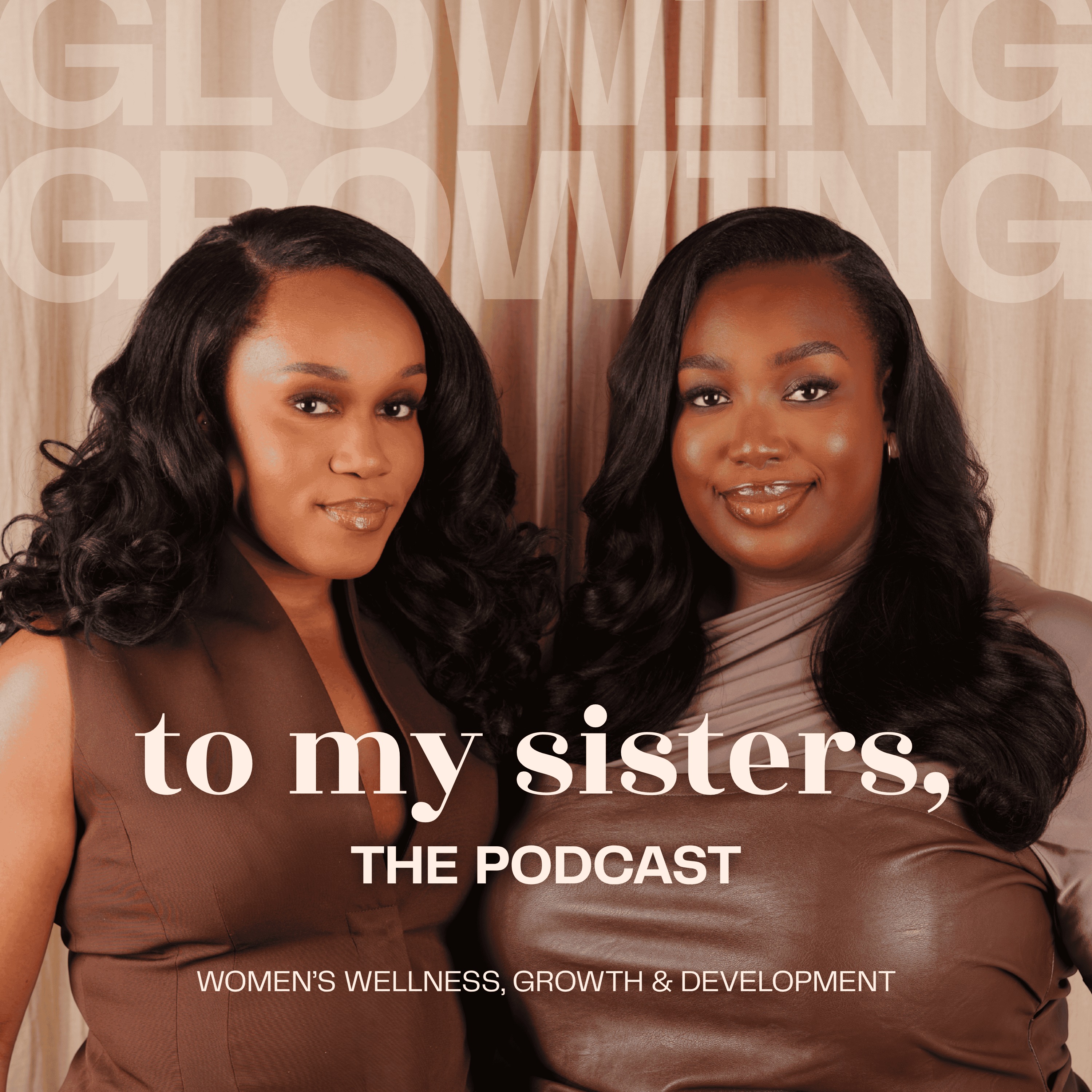
Hello and welcome to the To My Sisters Podcast. I'm Renee.
- [01:41]
A
And I'm Courtney. And we are your online sisters and hosts of the To My Sisters podcast.
- [01:45]
B
Now we are all about promoting the wellness, growth and development of a community of sisters across the world.
- [01:51]
A
And today we are talking about beauty maxing. You might have seen a couple videos across your timeline. Girls sharing their beauty tips, beauty secrets, things that they have done to glow up. But is there something a bit more dangerous about this beauty maxing trend that we aren't talking about? We are getting into it today, right?
- [02:18]
B
Beauty maxing. Beauty maxing.
- [02:20]
A
Yes, Beauty maxing. But first of all, thank you so much, guys for the love that you've been showing us in our recent episodes. We are so glad to be back like
- [02:30]
B
again. Ain't it back in better, baby.
- [02:33]
A
Love that. Yep. And are there any housekeeping announcements?
- [02:36]
B
There is A big housekeeping announcement. Well, guys, if you have been on the Internet streets, you will have found out that none other than Mrs. Courtney might have been appointed on the World.
- [02:49]
A
I didn't even know you were gonna
- [02:50]
B
say this on the podcast from breaking News. There seems to be a hater in the room right now as I'm trying to share some important news. But no, Courtney, you've been appoint as on the board of trustees for World Vision. So do you want to tell us a little bit more about your work?
- [03:09]
A
Thank you so much. Yes. So I was recently appointed to the board of trustees of World Vision uk. World Vision is a global partnership. It's a charity. It's a charity, one of the world's biggest charities, actually, in international development for children. And it's something that we have been exposed to very recently. And we came to know about the world of work, World Vision, through a meeting that we had had with some of the team. And they were just telling us about what they were doing with women with children programs around the world. And I think what struck me was one, they were, they were founded on Christian values, right? It's a Christian charity, but they help everyone in the world. People of all faiths and no faith, in some of the worst places in the world where you can be a child, right? Some of the most literally the worst crises that the world has seen, humanitarian crises the world has seen. They step in and provide resources that community leaders need to actually bring around the change they want to see. And I think that's a really powerful thing because growing up, I don't know if you can relate, but I would watch adverts of charities who are like, we're going to Africa to, you know, help their children because depravity and just crazy.
- [04:27]
B
They keep 99p every month.
- [04:29]
A
But I think what's so powerful about World Vision is that they don't go in and impose anything. There's not this like Western developmental lens of, oh, we need. You need to do aid this way or you need to help your community this way. They actually listen to community leaders in whatever territory they are going to help in, and they're like, okay, what do you actually need? What do you think will work here? What is the program? We can give you resources and insights into how to make it sustainable, but we actually believe that you know what's best for your community and we will provide you with the resources you need to be able to do that. And I think it leads to such a sustainable way of doing charity because people are now you're not making people dependent on you. And I love that there's not that savior complex kind of coming into it. And so, yeah, they've been doing this for 75 years. They've helped hundreds of millions of children in that time. There are. There's probably a. No matter where you are listening to this from, there's probably a world vision in your country.
- [05:30]
B
Yeah.
- [05:31]
A
But, yeah, I'm on the board for the UK one, which is doing a lot of work at the moment. One of the biggest things we're working on actually at the MO is the crisis in Sudan.
- [05:39]
B
Yeah.
- [05:40]
A
Sudan is currently facing one of the world's biggest and worst humanitarian crises and yet is not getting that much press about it. So if you want to help or do anything, even find out more. Sorry. Or support a child or the work that World Vision is doing in Sudan, go to the World Vision UK website, find out more. But it's actually a really big issue. Like, I recently met with the director of one of the world visions doing work in Sudan. When he was telling that story, Renee, of what's going on on ground, I said, yes, it's much. We don't even know half of the story. Like, children, teenagers, the way they are suffering and going through things because of obviously, political instability, violence and conflict and just in general, like, the outbreaks of certain things, I'm just like, this is insane. This is absolutely insane. So if you can donate money, if you can sponsor a child, just know that the work is actually going to the money, so is going towards really good work.
- [06:44]
B
Yeah.
- [06:44]
A
So, yeah, that's a bit about world vision. And, yeah, I kind of get to be on board helping with their Gen Z and millennial engagement, helping with them just really getting more out there. Right. But also getting to see how the team is working and hold them accountable as well to doing what they said they were going to do. So pray for me. Pray for them, pray for them, pray for them. Pray for the world. Literally. Pray, please pray, please support if you can. But yeah, I'm really honored to get to be a part of it. Well done, friend. I hope I even did the explanation justice.
- [07:18]
B
I'm sure there are people listening that are like, oh, my gosh, Like, I didn't really know that much about world vision. And I think if there's anything that I know about you, you would never align yourself with something that you didn't believe was authentic.
- [07:29]
A
I try not to.
- [07:30]
B
So, I mean, please don't use this again. Based on the information we have as available to us, now that's presently available.
- [07:39]
A
Yeah.
- [07:39]
B
But it's a beautiful thing, especially because I know that you are so keen on philanthropy and, like, really doing real work to impact people's lives. So congratulations. Looking forward to seeing all the change that you folks are going to be able to enact through World Vision.
- [07:53]
A
Thank you. Thank you.
- [07:53]
B
And we'll drop all the information about World Vision and how you can support in our newsletter. And probably underneath this, if you're watching this on YouTube, somewhere in the description. So please join. Support Courtney, but also support the people that actually need the people's vision 100%.
- [08:09]
A
I think it's a really big thing because something we talk about on the podcast a lot, I was thinking about it this morning, is that, you know, we love personal development, we love personal growth. We love all of that, you know, glow up talk and stuff. But we've said this on the podcast before, there are some people who cannot personal develop their way out of poverty.
- [08:26]
B
In fact, actually most of us.
- [08:27]
A
You get what I mean. It's actually called systemic inequality for a reason. For a reason, exactly. So I think it's important in. In being somebody who cares about people reaching their fullest potential and stuff. Like, the whole. The whole mission of World Vision is to see every child experience fullness of life. Right. The life that God wants them to have. And there are some people who are never going to reach that unless, you know, us who have privilege, resources, whatever, actually help in being generous, in being compassionate about. About what they're going through. So, yeah, it just made me think, like, it's nice to have a platform like this, have a community of women, but it's good to be reminded of the bigger picture as well, that there are so many sisters around the world who a podcast episode is not going to help.
- [09:13]
B
No.
- [09:13]
A
Do you get what I mean?
- [09:14]
B
Like, you might start the conversation, but baby.
- [09:17]
A
Yeah, exactly. What's actually going to finish the work and bring around the transformation. So we've done it before, obviously. We built the Bright Future Academy. We've done, you know, fundraising work for girls in Tanzania and stuff like that. And I think it's. What's beautiful about those moments is that we get to see that sisterhood is about much bigger change.
- [09:34]
B
Yeah.
- [09:35]
A
And so, yeah, this sisterhood is doing. Capable of doing such amazing things. We've done it before and we could continue to do it. So please do support World Vision uk.
- [09:45]
B
We love to see it.
- [09:46]
A
But also, somebody passed their probation at their new job. Oh, my God.
- [09:51]
B
Yeah.
- [09:52]
A
You're looking at a senior programs Manager.
- [09:54]
B
Emphasis on the sinner. Sinner. Because there's no, you know. You know when you abbreviate senior and it's snr, sinner. I'm a snur.
- [10:03]
A
She's a snur. No, but that's actually a really, really big deal. Like, you guys don't. Maybe we don't talk about enough, but Renee is an actual corporate girly. Like, guys, she actually works at night to fight.
- [10:18]
B
Dude, there was like, who was it? Hosanna Halle. I really like her content. She's fantastic.
- [10:23]
A
Girl, you are wonderful.
- [10:24]
B
At some point, I know you're listening 100%. She is.
- [10:27]
A
She would definitely.
- [10:28]
B
At some point, we'd love to hear,
- [10:29]
A
but I think she'll be that.
- [10:30]
B
Yeah, I hope so. Unless you don't like us. Then we can talk about that privately.
- [10:35]
A
I wish you would have said that to my face. I bet you, girl. I hope you actually don't have a problem. I'm joking. Right? Anyway,
- [10:45]
B
but she said something like, she created a post recently that was like, oh, something for the girls that do, like, the whole entrepreneurship thing and the nine to five, what should you get? Like, some kind of break. I was like, girl, we need a tax break and a spa break because it's tiring. But honestly, especially in today's economy and just life in general, I am so, so grateful. Like, I'm so grateful that I get to do this kind of work, but then I also get to do, like, other kinds of work that also speaks to supporting specifically underrepresented communities. So it's a real privilege. It's been a joy. It's been tough.
- [11:17]
A
Yeah.
- [11:17]
B
But I think that the greatest things and the most fulfilling things in this life are dead tough. So, yeah, I'm just. I'm glad that they still want me.
- [11:27]
A
How could they not, man? You are amazing at what you do. And it's not like you're new to this girl. You've been. You've been in this kind of field for years.
- [11:34]
B
It's crazy when you think about it.
- [11:35]
A
Like, yeah, yeah.
- [11:36]
B
It's like, oh, this is no longer an entry level situation.
- [11:39]
A
This is like your experience.
- [11:40]
B
You're definitely a slur when they put
- [11:42]
A
that two, three plus years. In this. And you're killing it. You are killing it. So, yeah, guys, that's. That's what's going on with us, I guess, isn't it?
- [11:55]
B
Yeah. Offline.
- [11:56]
A
But before we get into the conversation about beauty, Max, sing. Because we have to talk about it. We have a ding, ding, ding, ding. Someone is in need of help. All right. Hey, ladies. Firstly, this podcast has been such a friend to me this year. Oh, thank you. Feels a bit weird considering that I have no sisters, but it feels like sitting with older sisters who will tell you the truth.
- [12:18]
B
Yes.
- [12:19]
A
I'm 27, engaged to a man I love deeply. Congratulations. And I'm facing something I didn't see coming when I said yes to forever with him.
- [12:29]
B
Okay, Ms.
- [12:29]
A
Poet, my fiance is a good man.
- [12:31]
B
Okay.
- [12:32]
A
He is kind, consistent, faithful, and he loves me in ways I can feel daily. We've been together for four years. I know him. I trust him. About two months ago, as we started getting into the practical details of building our life together, he told me that he would like me to stop working once. Once we're married. Not immediately, maybe, but his vision for our home is one where his wife is present, available, and not divided.
- [13:00]
B
Oh.
- [13:02]
A
He grew up watching his mother run their household, and that picture clearly shaped something deep in him. I'm a primary school teacher, and I was the first in my family to go into education professionally. I love my job, but I see how much his vision means to him, and I don't want to be the one who dismantles it. We're getting married in seven months. What should I do? Sister Renee?
- [13:32]
B
Let me even make myself more comfortable. So you mentioned that we actually answered a dilemma that was very similar to this. And funnily enough, there was another dilemma that was released on our social media that was also very similar to this. It seems that a lot of us are getting into this kind of situation. Yeah, it's true. And the girls had some really great tidbits of advice there, too. You, sister, you know how she started with. You are the older sisters that will tell.
- [13:59]
A
Yeah.
- [13:59]
B
The truth. Please hear me.
- [14:03]
A
That was about to be brutal.
- [14:04]
B
Hear me. I'll try and be soft about it. It's beautiful that you are with a loving man, a kind man. It's great that you can see those qualities of him. But there is a fundamental misalignment, especially concerning what you perceive your life to be like once you guys are married, that it's a conversation that should have been had a long time ago. Because for you guys to have gotten to this place of like, you're about to get married seven months, you've been together for four years. Are you guys really telling me that this did not occur to you to have a conversation about in the four years that you guys were caught in?
- [14:41]
A
Maybe they were busy.
- [14:42]
B
Busy doing what for four years?
- [14:45]
A
Brunching,
- [14:51]
B
Branching. Just Eat an egg and an avocado and for four years this is, you know, what, yeah, there's, there's, there's multiple layers to this. I think firstly, what I'm even hearing is there is a fear, I think she said, a fear of dismantling his vision.
- [15:08]
A
Yes.
- [15:09]
B
When you are in a relationship with someone, it is not just about his vision, but it's about our vision. You're crafting a life, a partnership together. And so you are already showing the signs of somebody that will be willing to abandon parts of themselves or abandon their needs or, you know, abandon the things that bring you so much joy in order for this relationship to thrive and, you know, continue to progress. But that is going to lead to deep seated resentment, deep seated dislike of your partner and it won't sustain you for the long run. It simply is just not tenable. It's not sustainable. And I think adding fuel to the fire is the fact that you love your job. Babe, you said you're the first person, like in your family to get into education, to pursue education, but you love it. And so I think the bigger question is, do your values actually fundamentally align? The fact that she also mentioned the fact that it was ingrained in him from young, this sounds like something that is, is, it's a value that he has that he would like to be with a partner where he's the provider and she is the person that is dependent on him. And me personally, if you were to hear my opinion as someone that fundamentally believes in feminism, I fundamentally believe in the equality of the sexes and the importance of women retaining their money making power. I think that as much as, you know, it may not be a media, it may be some, you know, later down the line, you giving up your money making capabilities will land you in a vulnerable place if you do not have a robust enough plan around it. So, okay, let's, you know, let's walk this out and I would, I would very much encourage you to have that conversation with him. Let's, let's walk this vision out practically. Right, okay. You want me to leave my role? Are you planning to supplement. Are you planning to pay me from your income? Because it's not just, oh, you know, we're living off of your income. The income that you bring in will now become our income. Yes, there's no, you're going to be giving me a, you know, subsidy or not going to be the one that I have to constantly ask. Because there's also agency that is tied to money. There's freedom that's tied to money. Right. So what are some of the protocols and what are the systems that you would put in place to ensure that me as your wife would have access to your resources equally, despite the fact that I am no longer in a money earning position?
- [17:28]
A
Exactly.
- [17:29]
B
If he cannot confidently answer those. Better still, if you are in a place where you do not feel confident with his answers, the baby girl, you might need to postpone that marriage for a little bit. No, no. Because. Because this is a very threat. We have seen this time and time again where a lot of women, because they want to preserve their relationship, preserve their husband or whatever, they've decided I'm going to be the traditional wife or I'm going to abandon certain parts of myself that are very important to my freedom, my agency and my sense of self.
- [17:59]
A
Yeah.
- [18:00]
B
That is not enough to sustain a relationship. Your singular sacrifices are not enough to sustain a relationship. It needs to be mutual and it needs to be decided upon. And you also need to feel as though you are empowered enough within that dynamic to be able to feel comfortable in that relationship. And also the fact that it's come this late in your relationship is a red flag to me. From both of you. From both of you. It's a red flag because this is something quite significant that he hasn't mentioned. So as much as he's nice and he's kind and stuff like that, that's a red flag. Baby, I don't care how many branches you take and meet. You talking about you want me to be dependent on you? Like, even this whole notion of, like, oh, I want you to be present and doing what? What and doing what? You mean I can't be present for you if I work? You want me to be a maid? You want me to be made?
- [18:50]
A
Like, that is hilarious.
- [18:52]
B
Like, walk it out with me. Like, walk it out with me. For some women, they may want to take a break once they get pregnant or they, you know, may want to have a period where they want to find themselves. Like, I think it's about understanding what are the reasons for you, if you were willing to do that, what are the reasons that you would be doing that for that sit outside side of trying not to disturb his vision for your relationship, is this something that you genuinely want? Will you use the time where you are not working to do other things? Do you know what I mean? So I think, girl, y' all need to have the conversation immediately. In fact, yesterday, if you could have done it three years ago, that would have been fantastic. Best recommended. Like, you know, when you're doing a subscription and they're like, this is the recommended. Yeah, yeah, yeah. We're now at the second best recommendation, which is today. Please have the conversation. And before you have the conversation, you need to outline what is your position? Because you're not going into that conversation to be persuaded. You are going into that conversation to try and figure out what is the best partnership that we can mutually agree to. And if you don't have a preconceived, strong notion of what it is that you want your marriage, your life to look like after you say, I do, maybe that man's gone run all the way over you, and you will find yourself in a life wondering, how did I get here? And it's because you weren't intentional about describing and setting firm boundaries about what it is that you want and what it is that you're called to. The job that you describe sounds more than a job. It sounds like a calling. It sounds like this is something you care deeply and passionately about and you worked for. Are you willing to set that aside at an appointed time for what sounds like his vision? Maybe only you can answer that, but, Courts, I would love to hear your thoughts, man.
- [20:36]
A
You've covered it. I completely agree. I think what I haven't heard in this dilemma is the part where he actually said that he'll provide, you know, because I want a wife who, you know, she's at home, she's present, her attention is not divided. Okay, but what are you bringing to that equation? Because the only way that works is if you bring something to the table. And when I say the only way that works, the working here.
- [21:00]
B
Yeah.
- [21:01]
A
Isn't necessarily his vision being achieved.
- [21:03]
B
Yeah.
- [21:03]
A
Right.
- [21:04]
B
Yeah.
- [21:04]
A
I think I completely agree with you when you said you keep bringing up that this is his vision and you want him to have his vision, but his vision will only lead to his satisfaction.
- [21:13]
B
Yes.
- [21:14]
A
And marriage is a partnership of two people in which both of you need to flourish.
- [21:19]
B
Good.
- [21:19]
A
So you can't lay yourself down to the point where there is nothing in this for you. You do not benefit whatsoever. You are giving him the life that he wants. That's not fair. That's not fair. So I think that the conversation needs to be, what does working actually look like for you in marriage? Working or a marriage that works is you being able to, like you said, financially, emotionally, physically, spiritually thrive. And if going into a marriage where this man makes you give up your job because he wants a wife to stay at home makes you not thrive in life, then this is not, that's not a working marriage. It might be working in his eyes because he's gotten what he wants, but it doesn't work for you. And I think unfortunately a lot of us have, have seen how a lot of women step into marriages and it doesn't work for them. Yeah, it works for the man, works perfectly for them, but it doesn't work for them at all. And so I think put at the center of this thing, especially for now as you, I know you're engaged, but you're not married yet. Considering that you're still your own person, a free agent, you, you are basically single in the eyes of the law. And the Lord put your, put your development and your growth at the center of your vision right now, right for yourself and ask yourself will this type of marriage actually help me? It can if you're willing to. Which the dilemma doesn't sound like you are. Put aside your career ambitions, your love for your career and the fact that it does sound like a calling and something you hold very dear because hey, no one in your family has entered into this profession before and you love your job. Right. If you can put that aside and throw it at the bin, which some people can then put it aside, but it doesn't sound like you can, babe. And so I think bringing to the table, okay, the only way that this can work is if one, maybe it happens a couple years down the line. Like you said, you give me a salary, you match my pension contribution so that you know, if anything happens, I'm not left high and dry from this career break. Like, I think we've been exposed enough to the negative sides of this going wrong. Yeah, this kind of dynamic going wrong. We've been exposed enough to know what we can do to kind of mitigate some of the consequences of this kind of action.
- [23:41]
B
Exactly.
- [23:42]
A
I also think that he hasn't. It sounds like he has an over romanticized idea of what his mum being present meant. And I think sometimes we can. I think you should have a conversation with him about what he thinks that did to his mother because I think we can think about it through. Oh, my mum was happy because she got to be there with us and you know, she was. You, you might have been thinking, oh, my mum had a soft life. And maybe she did think that maybe your mum was like, this was my absolute dream, to not have to work, to be present with my kids. Fine. But I think it's recognizing that that's not every woman's dream. And also you should actually ask your Mum about how she truly felt about that dynamic, right? About the fact that she had to stay home or she stayed home, take care of her kids and ask her what did that actually cost her. I think it's easy to romanticize it and be like, of course you wanted to stay home with their kids. Now, your mom might be regretting the fact that she didn't pursue her career or she didn't pursue her education, or she sacrificed so much so she could be present with you, but you're thinking about it and you see it sounds like you're still thinking about it from a what did you gain from this? You had a mum who was always there, right? And now you want a wife who is always there because of how it benefits you. When you were a kid, having your mom readily available to take care of you must have been a seem like a huge blessing to you, which it was. But to her it came with a whole bunch of sacrifice. And it's the same with your soon to be wife. As the guy you're thinking, oh, my wife being available all the time to, you know, take care of the kids and her attention not being divided is great to you, but to her this is an immense sacrifice which is costly and after some decades she might regret that. And so it's worth having a conversation with him about outside of its benefit to you. How do you think this actually makes the women in your life feel? Because this isn't just about your vision, this is about their life. Yeah, the whole life, their life, their legacy, what they do. So a real conversation needs to be had. It would have been great if it was had before. And if you are listening to this, not the sister that submitted the dilemma, but other sisters, if you're listening to this and you are starting to date someone or whatever, if you're dating with the idea of getting married, it's important for you to have these kinds of conversations so that, that two years, three years, four years down the line, the rug doesn't get pulled from under your feet because it's very easy to get so caught up in that, oh, we're having fun, we're dating or whatever. But you haven't talked about the practicalities of alignment and whether, you know, you two actually have the same vision for where you're going. And it's better to find these things out at the beginning and decide we're not really going to work than to have to unravel so much. A couple years in a couple years in my sister, we are wishing you the best. Hopefully you both can come. Sorry, the last thing that I would say, because I was about to say, hopefully you can both come to a compromise. Compromise is not you laying down what you desire to go after what he wants. That's not compromise. Okay. That is what you call surrender. That is compromise is both of us.
- [26:45]
B
Yeah, we have meeting in the middle. Yeah.
- [26:46]
A
Yeah. He also needs to move from this ideal that he's working with and meet you somewhere closer to you. So hopefully you can come to a compromise so that the relationship doesn't have to end. But if the relationship does have to end, then be at peace with it. Let it go. It wasn't meant for you. You'll meet someone else. I'm sure you're an amazing person. And if the relationship continues to move forward and you do decide that you are just gonna, you know, quit your career and follow him, then, you know, no judgment at all. Actually have that conversation and make sure it works for you. Protect yourself. Protect yourself financially and economically because there is something really powerful. You said there is a very powerful thing about having economic agency, even if you are not the main breadwinner, making sure that your partner is also respecting you by giving you your own right. By giving you something so that you're not always having to ask for money.
- [27:40]
B
Exactly.
- [27:41]
A
You're not always having to think about, oh, my gosh, if he died, would I be able to survive? You're not a kid when we talk about being independent. You're not a child. You are your own person. You're still an adult, and you deserve to have that freedom as well. So if you do end up following his vision, then make sure that you're having that conversation with him to make sure that you are protected. Please watch your back. Watch your own back. So, yeah. Well, that's our dilemma for today's episode. Let's get into this conversation about beauty maxing. Beauty maxing. So beauty maxing is a trend that I've been seeing a lot on TikTok, Instagram, stuff like that. And I really wanted us to have a conversation about it because I've seen a few of my favorite creators. Beauty creators. Creators talk about, you know, the things that they've done to maximize their beauty, make sure that they feel their best glow up, transform their look. And, you know, it involves a lot of. And one thing I will say is I love the transparency.
- [28:38]
B
Yeah, yeah, yeah, yeah.
- [28:39]
A
Because people are like, oh, you know, I got filler. I took Mounjaro. I, you know, did a million face chemical pills to get rid of My acne scars or whatever. I don't think there's anything wrong with that. In fact, I think we're coming from a place where people used to be very secretive about the beauty procedures that they would have done and they would just frame it as natural beauty or I went to the gym, I worked hard for this, but they're just like, you know what? No, actually I worked hard with the money that I used surgery.
- [29:06]
B
Okay, you're not ugly, you're just broke.
- [29:08]
A
That's it. And I actually really, really love that aspect of it. But I think with every social media trend, there is a good, a bad and an ugly. Right. And I really wanted us to jump into that because. Because I personally think that there is a rhetoric that is behind this which could be a bit harmful for women. And to my sisters is all about being a positive space for women, their wellness in particular. But a lot of that starts with mindsets, cultural pressures. So, yeah, talk to me. What is your view on this Beauty Max intro?
- [29:42]
B
I can't lie. I also like it. One thing about me is being transparent. I love a glow up challenge. Who doesn't like having an opportunity or something to kind of be bought into or in, invest into to help them self improve or like, if there's certain parts or elements of like your looks or whatever, it's always nice to have an idea or like some kind of reference point to be able to say, oh, look, these are some of the things that I did to achieve a particular look that I wanted or whatever. I think beauty maxing also, as you mentioned, it shines a light on. This is the real tea. And I think more so than any other generation before, this generation has been very, very transparent about the fact that, that they are investing into their appearance. They're investing money. Whether it is the glps or whether it is the buccal fat remover. I've seen everybody,
- [30:31]
A
everybody got cheekbones all
- [30:32]
B
of a sudden everybody's looking a bit hollow, a bit gaunt and you know, the teardrop filler or whatever it is, like all the stuff that's becoming super popular right now. I think what Beauty Max reminds us of is the fact that beauty is a currency. And the more that you can maximize your opinion, your appearance. Sorry, the more that you can maximize your appearance, the more that you can leverage whatever beauty that you have within today's society still gets you somewhere. Think about content creation and social media. It is the business of aesthetics. People are now tuning into the things that they find beautiful. And you know, back in the Day, it used to be the models on the Runway. Back in the day, it used to be, you know, the people that you would see in your community or your village or whatnot that are particularly beautiful. You know, the bells of the ball. Right, Right. We're doing the exact same thing, but we're seeing it on masse on the Internet. I do think that beauty maxing is another way of, particularly for women, another way of using or leveraging some of the attributes that they have to access certain things or resources. Right. When we think about beauty maxing, there's an element of it that is for the individual. I want to create a particular look that I like that helps me to feel comfortable, helps me to feel confident in my body. But we also can't deny that there's an element of beauty max waxing that is for the beholder. Right. When we think about beauty, the popular phrases of beauty is in the eye of the beholder. The reason that beauty is a currency is because other people are exchanging the value of that beauty. Other people are perceiving you, other people are looking at you, other people are deeming you as beautiful. And I think that we need to be careful that our semblance of beauty doesn't just become something that we can change and morph and, you know, whatever are. We are basically handing our depiction of beauty to the masses. Sometimes when we do this whole beauty maxing thing, suddenly it's not about me feeling good in myself, but more about what actually sells. Right. Like, what is the look that sells? What is the look that will give me access to the most resources? What is the look that will get me the most views or the most clicks or the most money or whatever. And I understand it, and I get it, because especially for women, resources are hard to come by. Making money is hard to come by. But using your beauty to access these resources is also a tale as old as time. But it today is on steroids. It is on steroids. And I think what's also interesting, we can come to it in a little bit. But how beauty maxing, or looks maxing is also affecting men. And I think a lot more so in today's generation now that we have the height of the bodybuilder coming on, you know, Instagrams and stuff, or like the guys that are in the gym and all that kind of stuff. Because I've seen some really horrendous stuff that are targeted towards men around looks, Maxim boxing. It's very, very scary. It's again, I would say before it's given Handsome Squidward. Handsome Squidward. So I think there is something to be said about, like, oh, I'm genuinely looking for tips because I want to experiment with my style and see what looks like nice on me, things that I like, and things that make me feel good. But there's a dimension of beauty maxing that we have to be careful and we have to examine and see. Am I really doing this for myself or helping? Like, am I really doing this because I want to increase my confidence or am I doing this because actually I want to be more palatable? I want to access certain things. I want to access money, which in of itself is not a bad thing. But when that becomes your whole thing, like your actual whole life and your whole everything that you value and you possess is as a result of your beauty, well, these things fade and these things change. So I think it's. It's being careful that we don't put front and center beauty as the only thing that needs to be maxed. Like, I made a like, like very unserious tik tok. That was like, babe, beauty maxing it your prayer life. You didn't want to max. Your bank account is not max. You know what I mean? So it's really just thinking about what do I prioritize? Like, what is my priority? And am I beauty maxing? Am I following these trends at the expense of taking care of a lot of things that really are important to me as a woman? And also knowing that beauty is not the only way that you can level up beauty. Like, like, listen, who was it? I think it was Patricia Bright.
- [34:47]
A
Yeah, I was gonna bring that up.
- [34:49]
B
Yeah, yeah, yeah, yeah, yeah. Well, in fact, I'll leave that to you, Courtney. No, no, no, but there was this. I was about to say this content creator, like, she's any content creator. I'm so serious. Mrs. Patricia, please. I'm so sorry. I said, oh, there's this content creator. Anyway, so the Patricia Bright. You know, it's almost so serious. You have to put the V before their name. Yeah, yeah, yeah, yeah. The Patricia Bright Esquire. She.
- [35:22]
A
No big respect, though. You know what's mad?
- [35:25]
B
She's been around.
- [35:26]
A
Yeah, yeah. So recently I was. I was. She came up on my LinkedIn. Yeah, love Patricia Pry down, right? And I was just like on her page. I was like, damn. Like, do you know how iconic it is to be the first black woman to hit a million subscribers in the uk?
- [35:41]
B
Insane. Insane.
- [35:43]
A
That is actually history book stuff. Like, anyways, just respect on her name, Patricia Bright. Is not a small. Do you know what?
- [35:52]
B
Maybe this is a separate conversation that we're gonna have about privacy and people feeling entitled to like, comment on people and stuff like that. Sometimes I see some of the criticism about Patricia Bright. I said, ah, you would hand on me.
- [36:02]
A
She's not your mate, she's not your friend.
- [36:03]
B
Yeah, that's antsy. Please, please.
- [36:06]
A
No, we actually. Sorry. We have an episode coming up on Bean soup theory and the lack of critical thinking skills. And this will probably come into it, but I think the Internet has us way too familiar. People are. They're not on your level. You're talking. We wouldn't even be on the same.
- [36:23]
B
And the thing is, you're lying on your sofa like this, like this. Like, you know, when you're in your. In your house and you're just looking like anything.
- [36:31]
A
But then again democratization, you know, no one is.
- [36:34]
B
We need to remove it.
- [36:37]
A
Bring back.
- [36:37]
B
What is it? Oligarchy? What is it? Tyrann?
- [36:43]
A
Bring back hierarchy.
- [36:44]
B
I said bring back hierarchy because. Yeah, but we'll come to.
- [36:47]
A
Just joking.
- [36:48]
B
Well, yeah, we're just. Please. We're just. Please, please. The fact that we would have to give all these caveats. Anyway. Coming soon. But Patricia Bright, she created some content around this.
- [36:57]
A
Right Around.
- [36:59]
B
Okay. Beauty. And. And she is a YouTuber that is heavily invested in beauty.
- [37:02]
A
Right.
- [37:02]
B
She has showed us back when she was Brit pop princess, baby, I loved you back then, I love you now. She was invested in showcasing her beauty routines and she still is. She is very much invested. Beauty maxing or glowing up or, you know, investing in her appearance. But I think what's also very apparent about Patricia is beauty was not the only thing that she maxed. She has the break platform, which is an incredible platform which talks about, you know, financial independence for women. Like, here's the gameplay, like, here's how I was able to take this beauty platform, this fashion platform, and make it into something that is worth millions.
- [37:41]
A
Yeah.
- [37:42]
B
So it's above and beyond beauty maxim for beauty maxing sake. It's not just about looking pretty or accessing fame, but also how can I use this as leverage and how do I make sure that this is not my only priority when it comes to leveling up my life as a woman. Beauty cannot be the thing that your entire life rests on because beauty fades. You know where they talk about that, the Bible, they said beauty is fleeting. It's flitted.
- [38:12]
A
Yeah.
- [38:12]
B
And back in the day, you even had a stretch of time that you were even beautiful.
- [38:16]
A
Yeah.
- [38:16]
B
Nowadays. Oh, by the time you hit 25, you've lost it. Yeah, you've lost it. That's why we are eternally chasing youth in our beauty. We're eternally chasing youth because you have a finite period of time to appeal to the masses. So when you find yourself in that position where you can. Beauty Max, do it. Of course, do your things. Whatever you want. Obviously, there's some things I wouldn't recommend that you do, but that's my personal opinion. I'm saying, you know, there's some things you might not want to do. But, babe, I gotta stop you. Yeah, but when you do have that time to access those things, it's not just about access. It's also about investment. What are the other things that you are investing in?
- [38:57]
A
Round.
- [38:58]
B
And about the beauty. What is the beauty enabling you to access so that you can then invest? And I think Patricia Bright's video really did put that into context amidst a whole bunch of other content creators that I've shared. But, like, dude, what do you think about beauty Max especially recurs. Like, obviously you make a lot of incredible content, but also, like, babe, you also do the beauty. Like, you're actually a beautiful girl. You know what I'm saying?
- [39:22]
A
Like. Like, don't be shy.
- [39:24]
B
No, don't be shy. Because I know the girls have been waiting for your updated foundation. Please.
- [39:29]
A
I tried a new concealer today. I don't even know if it's working, but it's looking good. It's looking. When I took it out of the pocket, I said, this is too light. This is too. Oh, my God, it's the worst days. I have to be using this white concealer under my eye. I hope if. Guys, don't worry, I'm not bleaching. I. I hope it looks okay. Anyways, actually, I was very scared. I was trying to do so many things, and it's always on days like this where you have somewhere to be and some things to do that your makeup.
- [39:58]
B
Wow. Wants to do and you're talking about something important.
- [40:02]
A
So please don't drag me the comments. I. I agree with everything that you just said. I love beauty. Right. I've always been in the beauty space, particularly hair. But I think we are all, to some degree, walking contradictions. Right? Right. I want to start off by saying that. Including myself. Right. I think from a feminist lens, from a sociological lens, trends. Beauty maxing as a trend is really interesting because like you said, beauty is a currency. And we can talk about beauty from a personal grooming, personal care angle, and to some degree it can be very fun, it can be experimental, it can be all these things. But in a capitalist world we cannot deny that beauty, like you said, is a currency that people trade with and we are living within a social system in which there are rules, rules unspoken but very real rules. Right. Unfortunately. And I I think the beauty maxing trend for me when I see it, I'm a bit like Double Tap but also is because I love the girls are talking about the honesty, the fillers, the bbl, the I got this, I did that, whatever. This is how much I invest a month in looking good and also this is what it affords me. I feel good about myself but also I have noticed that my life has changed changed since I lost this weight. But the reason why that sometimes then irks me a bit is because it's the same way when people are giving advice on business. Right? Yeah. It's them saying we know that capitalism at its fundamentals or you know, we know that politics, that is fundamentals can be very harmful for people.
- [41:54]
B
Yeah.
- [41:55]
A
And as much as we would want to disengage from this game game and we don't want to play it, we are in a world where we are forced to play. So I'm giving you the playbook on how to win and I think that can be a very difficult pill to swallow.
- [42:10]
B
Yes.
- [42:10]
A
Because then when people say okay, this is a game that we don't want to play but if we're going to play, let's it's almost like squid game.
- [42:22]
B
This is a vacation with Chase Sapphire Reserve. The butler who knows your name.
- [42:27]
A
This is the robe, the village view,
- [42:29]
B
the steam from your morning coffee. This is the complimentary breakfast on the
- [42:32]
A
balcony, the beach with no one else on it. This is the Edit, a collection of handpicked luxury hotels you can access with Chase Sapphire Reserve and a $500 Edit
- [42:42]
B
credit that gets you closer to all of it.
- [42:44]
A
Chase Sapphire Reserve now even more rewarding.
- [42:47]
B
Learn more@chase.com Sapphire Reserve cards issued by JP Morgan, Chase bank and a member FDIC subject to credit approval.
- [42:54]
A
Acast powers the world's best podcasts. Here's a show that we recognize world if you've ever dreamed of quitting your job to take your side hustle full time. Listen up. This is Nikayla Matthews aome, host of side Hustle Pro, a podcast that helps you build and grow from passion project to profitable business. Every week you'll hear from guests just like you who wanted to start a business on the side. If you can't run A side hustle. You can't run a business. They share real tips. And so I started connecting with all these people on LinkedIn and I saw target supplier diversity was having office hours.
- [43:28]
B
Real advice.
- [43:29]
A
Procrastination is the easiest form of resistance. And the actual strategies they use to turn their side hustle into their main hustle. Getting back in touch with your tangible cash and sitting down and learning to give your money a job like it changes something. Check outside Hustle Pro every week on your favorite podcast app and YouTube. Acast helps creators launch, grow and monetize their podcast everywhere. Acast.com you don't want to play this
- [44:03]
B
game, but since we're here.
- [44:05]
A
But since we are here, I'm coming out of that. You have to do all the things. Because I'm, I'm winning.
- [44:11]
B
I'm coming out with that yen.
- [44:12]
A
Right? Wow. Squid Game is actually such a great show. Like, it's such a great show because, like from, from that kind of philosophical, sociological angle, that's exactly what this beauty Maxine trend is. Especially from the women who know. Know that. Listen, girls, we are actually feeding into the, the system that we are in. Right. Why should we be telling young girls, you might need to get the glp, you might need to, you might need to pay XYZ and fly to Turkey and do your teeth. Do you get what I mean? It's all you, you know, I mean, you might need to lose that weight. It's because we're saying this is the game.
- [44:54]
B
Yeah.
- [44:54]
A
And if you want to win, this is how you gotta play.
- [44:56]
B
You have to play it like that.
- [44:57]
A
But I think what's challenging sometimes for me to then swallow about that. And like I said, we are all walking contradictions, including myself because here I am wearing a wig. Right?
- [45:04]
B
That's it. Up.
- [45:05]
A
But what's challenging then for me is this can become a slippery slope. A very slippery slope in us choosing to submit ourselves to mainstream beauty standards. Standards which historically have been extremely harmful, especially when people take it and run with it to its furthest extremes. I'm talking about like eating disorders, body dysmorphia comparison, all the things that people do, medical tourism, like all the things that people do and how far they go to have to invest in their beauty. Yeah. At no fault of the influences do you get. I mean, it's not, it's not about the content creator, it's not about the influencer. It's about society structures around women and how, how we have to be quite confined if we are going to succeed. Right. Because it is about perception, like you were saying. But it's like, why do I have to jump through all these million hoops, bro, and literally hate the version of myself that I currently am? Because that hate doesn't come organically. Like, there. There are some things we see, and we're like, oh, you know, maybe I'm feeling sluggish today. I don't like that. Or whatever. But it's another thing to look at your. We always bring up hip dips, but I think that's actually a perfect example. It's another thing to at your hip dick something that's actually very natural about your body. I'd be like, I despise this thing that I'm seeing in the. Where did that come from?
- [46:30]
B
And you're doing everything. When I get rid of my hip.
- [46:34]
A
Do you get me? Where did that actually come from? I'm actually so sorry. Or like, my breasts are saggy. You're not the first.
- [46:41]
B
You won't be the last, baby. You won't be the best.
- [46:43]
A
Do you get what I mean? Like, and. And. And the. The sheer hatred you have of that. Right. And the fear that you have of. Of that being perceived in that way.
- [46:53]
B
Maybe.
- [46:53]
A
Whatever. Where did that come from? We can't ignore that. A lot of what beauty maxing.
- [47:02]
B
Yeah.
- [47:02]
A
Is telling us to fix, we shouldn't have hated in the first place.
- [47:05]
B
That's so good.
- [47:06]
A
Do you get what I mean? So that's. That's why sometimes I'm like, I love that the girls are putting the girls on.
- [47:12]
B
Yeah.
- [47:13]
A
Because they're being honest about the fact that, hey, looking good does get you far. I'm so sorry. Like, when you step into the room, people are going to take one look at you and come to certain conclusions who you are, and that's going to give you access or deny you access to opportunities that you actually need to change your circumstance. Right. Unfortunately. But if you're gonna play this game, here's how you win this game. I love the honesty around that, but at the same time, I hate that we have to play this game.
- [47:42]
B
I hear it, man. I hear it.
- [47:43]
A
I hate that we have to play this game because I just. I was watching one of my favorite YouTubers. Her name's Ms. Jamima, she's American, and she's recently lost 100 hundred pounds.
- [47:54]
B
Nice.
- [47:54]
A
Right? Massive milestone. She does such a great job. Right. But she was saying how she doesn't. She doesn't feel like how she thought she would feel about hitting this weight milestone. And also, people are looking at her, like, why don't you seem more excited that she lost. You lost this 100 pounds of weight. She was like, as much as. It's a massive milestone. I didn't hate my bigger body. Do you know what I mean? So to you, this is like a really big. But to me it's like, yeah, it's a big deal, but I didn't hate who I was before.
- [48:24]
B
I was fine.
- [48:25]
A
I love myself then, I love myself now. Do you get what I mean? And I, I think genuinely, when I think about it, I'm like, yeah, because we can pursue change, but not from a place of hating ourselves. It's one thing to want to have better health.
- [48:39]
B
Yeah.
- [48:40]
A
Do you get. I mean, it's. That's one thing, but health and beauty are not necessarily the same.
- [48:44]
B
So true.
- [48:45]
A
What we're chasing sometimes within the beauty industry is this perfection that we are told is the standard of beauty, bro. Which actually, it's gonna sound so radical. But see, and this is why, again, come on, actually push back on me. But this is. This is where I get a bit sticky.
- [49:06]
B
Yeah.
- [49:06]
A
Because I, I want to tell women to unsubscribe from that.
- [49:09]
B
Yeah.
- [49:10]
A
But then at the same time, that can be dangerous in itself because was, okay, you're gonna under subscribe from that. But that comes with real social consequences and ramifications because when you choose to, okay, I'm. I'm unchecking from capitalism and I'm pursuing, I don't know, career from a passion perspective or an impact perceptible that has real economic consequences, it has real social consequences. And if you, if you don't play the game, you don't win.
- [49:39]
B
You don't win.
- [49:39]
A
Do you get what I mean? And so you're the loser of society. Do you? I mean, and I think that's. That's what can be really tough. Not everybody wants to be a radical activist.
- [49:48]
B
Sometimes I just want to exist to be them. Yeah. Just want to exit. Do you know what? Yeah, I. Courtney, you know when you're speaking. Yeah. I'm just hearing the lights are going
- [49:58]
A
on like the light.
- [49:59]
B
Ping, ping, ping. There's so many things to unpack there. I think one, like, thread of what you're saying that I think is very interesting is that I think beauty maxing also disproportionately affects people of minoritized communities too. Because I think of. I was thinking of like black women, for example, the beauty maxing. Who are we beauty maxing for? And some of the traditional beauty maxing tips that we See, online are actually not for us. They're not. There was one babe on Tik Tok recently, I think, Shaz something, Sharon. And she basically came online and was like, all of you black women, you must hate yourselves, clearly, because all I'm seeing is these lace fronts. I'm seeing all of these, like, even you, lots that wearing braids. You can get this smoke, too.
- [50:39]
A
Oh, was it the lady who was saying unnatural our natural hair?
- [50:42]
B
She was like, none of you guys. Guys like to, like, wear your natural hair. Yeah.
- [50:46]
A
Oh, the person you're talking about. Okay.
- [50:47]
B
Yeah, yeah, yeah. Like, even you people that dye your hair. And she was like, yeah, me too. I dye my hair.
- [50:50]
A
Yeah.
- [50:52]
B
It reminds me exactly of what you were saying around being this walking contradiction, being so aware of the fact that, okay, we live in a system that rewards people that adhere to the system, but then at the same time, you know that this system is fundamentally wrong. So where do we land? And I think what you were saying around that self love piece is important. We have to learn to love ourselves. Ourselves, irrespective of where we are at in the system at any given time. And I think that's, like, the most radical that we could afford at this time. Because to dismantle the system is not going to be like, one of us can't. Unless y' all want to be like the Malcolm X.
- [51:29]
A
It has to be all of us.
- [51:30]
B
It has to be all of us. But some of us, we're not ready. Do you know what I'm saying?
- [51:35]
A
Like, you know, ready. To be fair, I think you're actually right in bringing up the Malcolm X example, because it's actually that deep. I'm not gonna lie. It's actually that deep.
- [51:43]
B
It is.
- [51:43]
A
It's actually that deep deep. Like, because if. If all of us don't unsubscribe, even
- [51:48]
B
if you look at the game, you will look mad.
- [51:50]
A
Do you get what I mean? Like, you will look crazy. You will actually look crazy. And I. I think I've always, always, always struggled with this. Always struggle with this in so many different arenas of life. When it comes to, I guess, social politics, right? You just think to yourself, okay, I remember. So this is a tangent, but at the same time, this is actually the same thing. Just. I remember when we were in uni.
- [52:18]
B
Yeah.
- [52:18]
A
And everyone was like, yeah, F the system, F capitalism, blah, blah, blah, blah. Like, we're gonna. We're gonna change. Radical. Everyone is radical because everyone has just been exposed to social theories and, you know, do you get what I mean? Everyone is like, yeah, we're on our. Yeah, we're gonna change things. We're gonna open doors. We're gonna do. Those are the same people who got the corporate internships. They. The grad schemes and went off to work at the top fives in their industries. And I'm not calling them sellouts. I'm not. Because I understand where. Why you have to. I actually understand money as a neck but. Exactly. It's the same damn thing. It's the same thing of we can stand and criticize the system, but when we really, really take in what it's going to cost us to not participate.
- [53:17]
B
Yeah.
- [53:17]
A
In the system.
- [53:18]
B
Yeah.
- [53:19]
A
Silently. We don't want to play that price. So I'd rather play the game and win, girl.
- [53:24]
B
You know what do you get where I'm coming from? You know. No. Because again, the lights are going on and it's unfortunate. But you know what? This is all the. This is all part of critical thinking.
- [53:33]
A
Right.
- [53:34]
B
You have to. You have to decide one at a time what are we going to tackle.
- [53:38]
A
Yeah.
- [53:38]
B
Because I could. No, actually because I could. You could say the same about like five fast fashion. Right. How.
- [53:45]
A
Okay.
- [53:47]
B
You could say the same.
- [53:48]
A
It's very true.
- [53:50]
B
Everything is made out of polyester. Oh my God. Then what do we wear? Because some of us. We can't afford it.
- [53:56]
A
Can't afford it.
- [53:57]
B
We can't afford. Oh, just save up or go thrifted. You think those thrifted clothes are not made from 100% polyester. Ah.
- [54:04]
A
But at least it's.
- [54:05]
B
You would like to match that thick wool.
- [54:07]
A
We're not reproduc.
- [54:08]
B
This is it. So I think it's really is you have to count the cost and the level of the cost that you're willing to pay. Because people. People think it's just that, oh, I just have a high price to pay. No, no, there's actually levels to it. There's. It's a subscription.
- [54:21]
A
It costs different people.
- [54:22]
B
It costs different people more. And I think it doesn't necessarily make you a bad person, but I think it makes us flawed individuals. We are flawed humans at the end of the day. But I think it is better that we are at least aware of it and we're taking the steps to address things.
- [54:37]
A
Yeah.
- [54:38]
B
Which are in alignment with our core principles and our core values. Because I think it would be worse if we were blind. Well, is it?
- [54:45]
A
What.
- [54:45]
B
Maybe if we're blind to it, we could just say ignorance. Yeah. I do think that there's going to be costs for everything. And we have to do what we can. And I think one of. Actually, I do think that one of the most frustrating things about like, systems and systemic inequalities and stuff like that is I think a lot of people at the top that are probably doing the worst amount of these things are. Are forcing the individuals to take disproportionate amounts of accountability for their involvement in systemic inequality. So when I think of like, for example, fast fashion, well, it is, to be honest, you know, consumer demand and whatnot. But I'm like, y' all could probably radically change the conditions under which people are working in sweatshops.
- [55:29]
A
Oh, very easily.
- [55:30]
B
That would. We're living in a cost of living crisis. And yet I'm seeing some of you guys are making your profits are skyrocketing, yet the conditions that your are working in or how much you're paying them continues to be low. In fact, they're getting lower. And I think the same of things like beauty maxing. I think there are some, for example, influencers that are doing fantastically well. And you're out here doing up beauty maxing knowing full well that you were able to do this beauty maxing because you've profited off your community. Do you know what I mean? So I think even that dimension of transparency, it's not just about having access to the resources, but knowing where did the resources come from? It's come from the fact that you've created like content or you've created a community, community that has enabled you to access wealth. There was another babe that I've been watching recently. We're just shouting at all our favorite content creators. Jewel Amina.
- [56:19]
A
She's like, what a. What a great thinker. A great thinker. If you're listening to this, oh, my gosh, she's amazing. Yeah, yeah, yeah. She's very, very interesting.
- [56:31]
B
And she was talking about a prominent figure. Oh, what's her name? Elsa. Elsa Majimbo. Yeah, yeah, yeah. And she does just in general, I think that she is a very astute video essayist. Yeah, she really doesn't just talk about the individual, but she actually talks about the systems that contribute to who they become, how they become it, all that kind of stuff. And she was talking about. It was very interesting how there's content creators like Elsa or other content creators in general. Like, I love Elsa. I love the fact that she's been able to create really relatable content. She's been able to take herself out of the situation, you know, her situation. And she warned us. She said that when I get rich, I'm going to move, move different. And she did, and she's moved differences. I think she. Jewel was highlighting the fact that a lot of people will amass a lot of wealth and then they will abandon not just their principles or their original principles, but they will also abandon the people that enabled their wealth in the first place. And so I think that's where that's a dimension of beauty maxing or a dimension of, like, systemic inequality that can be very frustrating. It's not just our individual responsibility, but it's also the fact that the people that are often, often profiting the most off of the backs of exploitation then turn their backs on the very people, communities, individuals that enabled them to get to that place in the first place. Some of y' all couldn't have done the fillers back in the day. I was there liking your YouTube videos so that you can go and do your teardrop filler. You understand? Like, I was dead. Oh, yeah. You know, like, I've changed my life now. Like, this is how I beauty Max. I. But I think what we're speaking about, like, the reality of there's levels to beauty maxing, too. There's a difference between going to the gym and, like, you know, brushing your teeth and just like, the basic stuff and the beauty. Beauty maxing, which is I buy my designer clothes now. Like, I go and get my Dominican blowouts. You know, I know black. I Dominican. All of a sudden, you know, I change. I change.
- [58:25]
A
What is wrong with you? I know black.
- [58:30]
B
I don't I Dominican. You see? No, no black. No black. My hair is swings. I know black. No negra. No negra. They need to stop us.
- [58:44]
A
Yeah, yeah. But I feel you.
- [58:48]
B
Like, it's not just the individuals. It's the people at the very top.
- [58:52]
A
It's tough. It's actually really, really tough. I completely hear where you're coming from. I think it's challenge and it's challenging. And I do think for me, I guess, sometimes when I hear this, I always think to myself, damn, like, when people say stuff like this, it definitely creates that dichotomy of in n out groups. You've beauty Max. And like now you're this, I guess, example of beauty, you know, that what you're saying that you did or the things that you undone or fixed is someone's current reality.
- [59:28]
B
Yeah.
- [59:29]
A
And so would you look at that person. Person and think to them, you need to change this about yourself? There's something very sinister about that.
- [59:39]
B
Yeah. You. Yeah, yeah.
- [59:41]
A
To me, you Know.
- [59:42]
B
Yeah.
- [59:43]
A
Like, oh, this is how I beauty maxed. Knowing the, the meaning of that term and what it symbolizes and being like, I lost 150 pounds. So to the woman who is 150 pounds heavier than you, what do you think?
- [60:01]
B
What do you think of them? Yeah.
- [60:03]
A
You know, so sometimes that's where I'm just like. Or like, you know, I. I closed my gap. So what do you think about the girl with a gap?
- [60:12]
B
Or like, oh, I got. What's that treatment that everybody is. It's not texturizing. Now, what is it called again? Hair Botox.
- [60:20]
A
What the heck is that?
- [60:21]
B
Courtney.
- [60:22]
A
What's that?
- [60:22]
B
Courtney, I even thought that maybe you'll be able to share.
- [60:26]
A
You're the one that does hair. Hair Botox.
- [60:29]
B
Hair Botox. Yeah. Yeah.
- [60:32]
A
But genuinely, do you get what I mean? I think to myself, like, what does this mean about your internalized thoughts about the woman who's still there?
- [60:40]
B
Because. Exactly. Especially because it's framed as something that you wanted to fix.
- [60:45]
A
That's very good. That's. I think that's where, like, a lot of my discomfort with it sits. Because if you tell, like, for example, if you tell me, oh, the way that I beauty max, like, I maximized my beauty in a way that has given me access to joy and happiness and also opportunities, is I lost 50 pounds, which you have. Right. I would then be thinking, so what do you think about me as a size 24? Do you get why.
- [61:15]
B
Yeah.
- [61:15]
A
It naturally brings this contention of I had to level up from there. And it's like, damn. So you think so?
- [61:24]
B
Yeah.
- [61:27]
A
You know, and they're up there. I think that's the tension.
- [61:30]
B
Yeah.
- [61:31]
A
That we, we aren't addressing per se. And to some degree, some people's answer to that will actually be, yes, yes, yeah, yeah, yeah. And that is like, okay, so let's have that conversation then.
- [61:44]
B
Because now you're actually fat phobic.
- [61:45]
A
Because.
- [61:47]
B
No, actually. No, actually.
- [61:49]
A
But also. And also what. What does this say about the world that we are living. Living in? And I'm. I know. Especially when you bring up weight and like, fat phobia, people are like, but it's the health. I'm not talking about health.
- [62:00]
B
We're not talking about health. We're talking about beauty. That was so gaudy.
- [62:10]
A
We're talking about cosmetics.
- [62:11]
B
Cosmetics.
- [62:12]
A
Okay. That is a very, very different conversation. Yeah. And that's what I think is lingering at the foundations of this beauty maxing trend. That it's like, I love that you're sharing your tips, baby. But this is coming across like a bit of a girl a tone deaf situation at the bo. Especially if we are talking about decolonizing beauty standards, de Westernizing them, like actually embracing who we are. Also the rise of a lot of what is plaguing young women at the moment. And that's not me seeing saying like I said, as someone who loves beauty and is in themselves a walking contradiction in some respects, that's not me saying, let's silence this entire conversation around beauty because I think there's something so lovely about it. I love to watch a makeup tutorial. I love to see somebody like I'm not even controversial. I will watch your BBL vlog.
- [63:07]
B
Yeah. 100%. Yeah.
- [63:09]
A
I'm fascinated. You've got me. You got me.
- [63:16]
B
Multiple parts.
- [63:17]
A
I'll be there. I'll be there. You know, I might even like it might even. Comments, babe. I'm glad you did you do you. You do you. I probably won't comment, but I think that those things are interesting.
- [63:35]
B
Yeah.
- [63:36]
A
But we should also balance it with the message, which is why I also love Patricia's video. Which is now that you are on this field playing this game to win. I also need to remind you that there is a bigger game at play. And that's simply beautif yourself is not going to secure you a trophy. Right. If you actually want to win, these are the other systemic things that you are fighting again it against. It's not just how you look. It's the amount of money you make and what you do with that money. If you're going to have leverage in this space. Right. So many people will beauty max their way into poverty. Right. If you are not equipped to actually leverage the beauty beauty to create wealth for yourself. We are talking about beauty opening doors. Some of y' all don't need to know what to do when you get in the room. You're pretty great.
- [64:26]
B
What now?
- [64:27]
A
But now what do you get what I mean? Now you're being exploited. Now you're being. Because no one gave you an idea of what happens at this level. I think a great example is that what you were saying about Jules video about Elsa.
- [64:44]
B
You're.
- [64:44]
A
You've elevated into a space. You're now at a new, different social level in a different social class. You're operating now in a different world. You know, Elsa went from making tick tock videos to now chilling with Naomi
- [64:58]
B
Campbell on the Runway.
- [64:59]
A
Do you. I mean, on the Runway, that's a very different conversation. But now you're in that room. Do you Actually know the mechanisms of this level to be able to protect yourself in this, this space? A lot of women don't. And that's one of the, that's one of the challenges of social mobility and this concept of meritocracy, right? And being able to move to a new social bracket. If you're not actually aware of what happens at the new level you've entered into, you can still find yourself being demoted, finished going back to where you came from, losing your relevance. Because there are social media crucial rules that occur at this level which simply getting fillers won't teach you. For example, with the influencer space, okay, you're beautiful, you've done, you know, the cosmetic surgeries, whatever. Now you are drawing in hundreds of thousands of views a week. But do you know what to do with that money to secure your new social status?
- [65:57]
B
That's it. Some of you are not even making money yet. You just have the views there. Some of you are, you're beauty maxing,
- [66:04]
A
you're pretty or you just have the money now, but one, these brands aren't even paying you well. They're not paying you what you're actually worth. And this is not your fault. It's because you're entering into a system which has bigger social rules than you even knew. You got in the door and realized this is a bigger world than you even could see from the outside. Right? And so it's also allowing yourself to learn. If you're going to play, play this game, you must learn the mechanisms of it if you're gonna stay in it and actually win at it. Which is why if you're gonna beauty max, looks max, you should also financial max and education max, and books max. Because if you don't know what's going on here, it's not gonna work for you, Right? It's the same way with the dating conversation. Make yourself look nice so that you can hypergamy, right? So that you can marry up. But then you marry up. And then when your husband dies, you're left with nothing.
- [66:56]
B
Nothing.
- [66:57]
A
Because you did it. Books back. So do all the maxing the same type prayer max. Prayer max.
- [67:07]
B
Do them all your max and everything. Like your maxing beauty, your bank account minimum bank max.
- [67:13]
A
Do everything you maximize it all you need to make, make it all big.
- [67:18]
B
Just maximize everything.
- [67:19]
A
Max it back, the whole enlarge your territory because.
- [67:22]
B
Stop, you say no, no, no, no.
- [67:24]
A
Real.
- [67:25]
B
Because when they're making those prayers, you guys are laughing en territory. No, no, no, it's very serious.
- [67:29]
A
Cuz it genuinely if you're going to. If you are going to play this game, win it.
- [67:34]
B
That's it.
- [67:35]
A
Win it. It's not against squid games. If you don't win, you die. So either stay on the outside or fight to win on the inside. And fight well, it might leave you a bit messed up.
- [67:48]
B
Was that bad? He, he.
- [67:49]
A
I'm putting that out there.
- [67:51]
B
When he wants good games, he ain't say two words ever.
- [67:56]
A
Trauma.
- [67:57]
B
That man went mute. Drama.
- [67:58]
A
But if you are gonna play the game, play to win.
- [68:06]
B
We could talk about this for an era if you will, but let us know your thoughts.
- [68:11]
A
Obviously you don't have to agree with us, but you will have to keep it respectful.
- [68:15]
B
That's it.
- [68:15]
A
Okay, so put your comment down below. Shout out to all the women we spoke about in this episode. If we remember, we will put the links. If you didn't go and search them and support the girls. Sometimes you can't always remember. I mean, from Patricia Bright to Jewel Amina, to all the girls who are making the videos on Beauty Maxing, even Elsa Majimbo, please go and support them. Because at the end of the day, a lot of us are still black women who are just trying to make it in fact, okay. In fact okay. So please go and support them and. And support us by leaving a comment. Rating the podcast 5 stars wherever you are listening to it and subscribing to our YouTube channel. We are at nearly 80000 subscribers. So if we can get to 100k by the end of the year or share with a friend. Share with a friend.
- [69:08]
B
Guys, we're going to be insufferable if we get there. I'll tell you that for free. Oh cor blimey. You're gonna be sick of us for then. But yeah, whilst you're helping us in those endeavors, make sure you follow us everywhere.
- [69:23]
A
Yeah.
- [69:23]
B
At two more sisterhood, come and be a part of the community. I want to do a Stephen Butler, you know, when he does that whole. So 60 of you that listen in, we have found from our demographic data are not subscribed to this channel. Please support us and subscribe so that you know we can continue to give you this groundbreaking content. Thank you. But yeah, make sure to follow us on socials. You can also follow us individually. Come and follow my board member. Come on speaker, entrepreneur extraordinaire in the fine pantalons. If you haven't seen it already, shout
- [69:56]
A
out to my Auntie Jackie who made me these trousers.
- [69:58]
B
Big up Auntie Jackie because she's been eating recently.
- [70:00]
A
Like for real.
- [70:01]
B
For real. You can come and follow her across all of her platforms at CDparting. And of course, you can come and follow me over at reneemaffadon.
- [70:09]
A
We love it. Well sisters, we will talk to you in our next episode. We love you dearly and as always, keep glowing and growing it. This is the Chase Sapphire Lounge at Boston Logan. You got clam chowder in New York, dirty martini over 1300 airport lounges and one card that gets you in Chase
- [70:51]
B
Sapphire Reserve now even more rewarding. Learn more@chase.com Sapphire Reserve cards issued by JP Morgan, Chase bank and a member FDIC, subject to credit approval.