← To My Sisters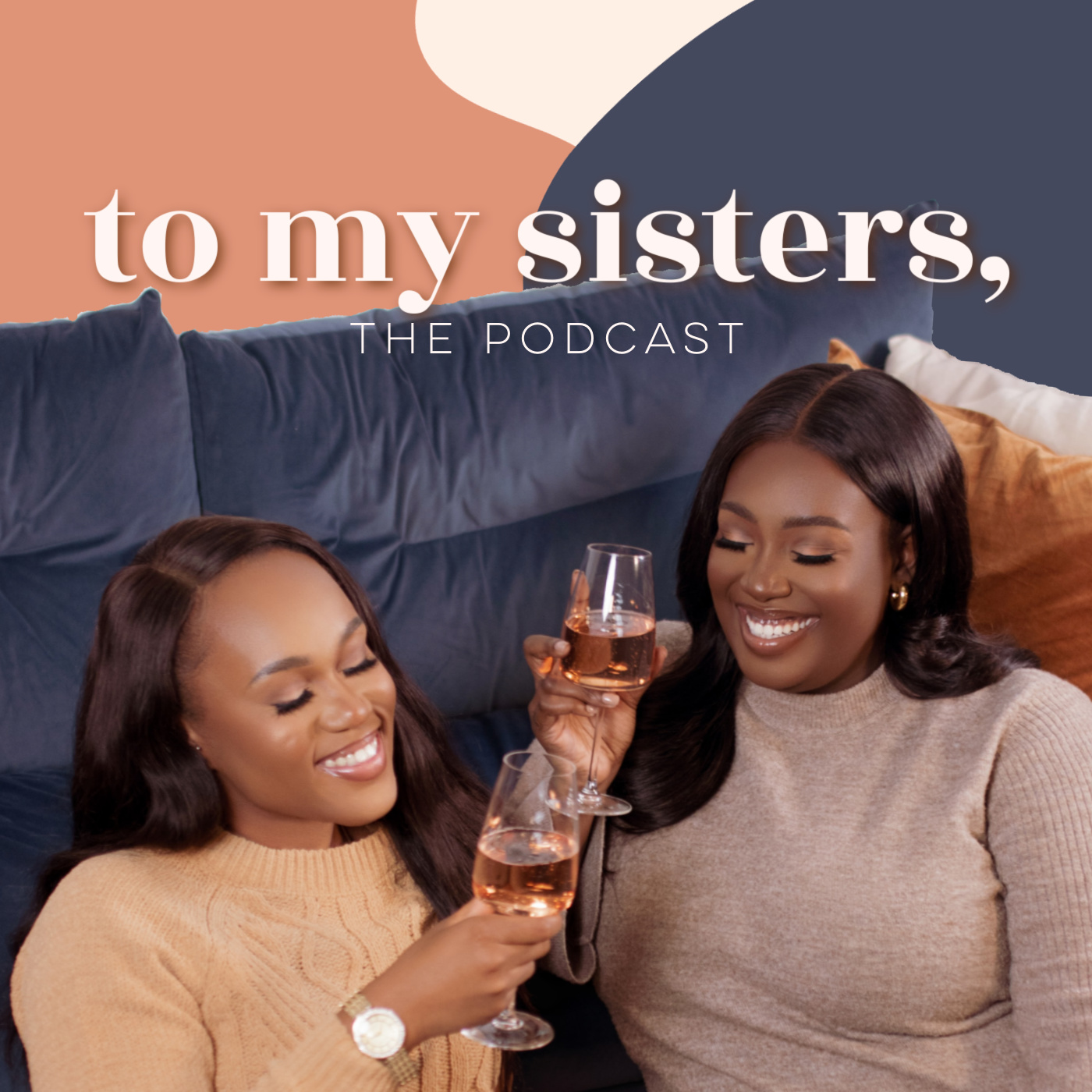
Loading summary
Transcript34 lines
- [00:00]
LinkedIn Advertiser
Does it ever feel like you're a marketing professional just speaking into the void? Well, with LinkedIn ads, you can know you're reaching the right decision makers. You can even target buyers by job title, industry, company seniority, skills. Wait, did I say job title yet? Get started today and see how you can avoid the void and reach the right buyers with LinkedIn ads. We'll even give you a $100 credit on your next campaign. Get started at LinkedIn.com results. Terms and conditions apply.
- [00:34]
Courtney
In today's episode, we are going to be talking about the female hustle versus the male hustle.
- [00:40]
Renee
Your body is one of the most intelligent things that have ever been created. Your body knows you best, often is.
- [00:48]
Courtney
The reason why you know when you're PMSing or that stage right before your period, it's like you want to kill everyone.
- [00:54]
Renee
You're not going to function the same way anybody else does. You just won't. It just doesn't happen.
- [00:59]
Courtney
As someone who is who was diagnosed with PCOS at 19 and like has met so many women who have PCOS, endometriosis, fibroids, like just all these different things, you start to realize like, wow, actually a lot of women are going through the experience of your cycle not even being 28 day.
- [01:17]
Renee
If your why is not clear enough and not like motivational enough, you will find yourself in a place where you're actually in a state of inertia and you can't really move. You're actually in a place of stagnancy. But because your why was not it wasn't big enough. It wasn't bad enough.
- [01:31]
Courtney
Well, men have it all, but they don't. Like they actually trade off a lot of things in order to pursue career success.
- [01:44]
Renee
Hello and welcome to the To My Sisters podcast. I'm Renee.
- [01:48]
Courtney
And I'm Courtney and we are your online sisters and hosts of the To My Sisters podcast.
- [01:52]
Renee
Now we are all about promoting the wellness, growth and development of a community of sisters across the world.
- [01:58]
Courtney
And in today's episode we are going to be talking about the female hustle versus the male hustle. Why Women Work different I love this topic because as someone who loves productivity, loves entrepreneurship, and also loves the personal development space, it's really interesting to see how people talk about these things in relation to men and in relation to women. And actually a lot of scientific studies and research have shown that women actually work very differently. Right. And have to work quite differently because of things like hormones and our reproductive cycles and also just what we seek out of life. And so this Episode we're going to be diving into things like cycle singing and how to actually work in a way that is sensitive to, I guess, typical female biology or like more of a generalized sense. And also how we can shape our definition of success.
- [02:57]
Renee
I love that.
- [02:58]
Courtney
So, yeah, let's get into this. What are some of the fundamental differences actually between the way women express productivity and men express productivity, especially bearing in mind our reproductive system and the differences?
- [03:16]
Renee
Yeah, yeah, yeah, that's such a great question. I think what's very interesting about that question is recently there has been such an embracing of women as a category of study, if that makes sense. So whenever we look at clinical trials around productivity or physical health, mental health, women have often been either excluded from clinical trials or seen as mini men. Basically whatever happens with men is the same, you know what I'm saying? Just reduce it a little bit and you have yourself a woman, a mini man. So it's been really pleasing to see kind of the latest studies incorporating a lot more variation not just in including women, but different types of women as well. Right. So you have, you know, Asian women, black women, Mexican women, all different types of women from all different types of all different walks of life. And I think that's really important even as we're having this conversation, to realize that there's also variation not just in terms of men versus women, but even in and amongst women, we have differences in the way that we can approach productivity or our health and well being. And I think one of the very interesting things about women and I guess social differences and one really nice trend that I'm seeing now is women really focusing on their well being as one of the key outputs of productivity. Right. Like typically when we look at self improvement or productivity literature, content, all of that kind of stuff that's been predominantly male focused. It's often on key metrics like how much revenue are you generating? You pushing 75 hard. Like we need to see bodybuilding, body fat percentages sub something something sub zero. You might be dead, but you know what, just you're slim enough. So it's very much output orient. Rather the outputs are very much oriented around quite hard, tough metrics. Whereas right now we're seeing a rise of women actually incorporating wellness and wellbeing as a productivity metric. Do you know what I mean? It's really much, it's very much about, you know, how are we taking care of ourselves, how are we feeling, how much are we sleeping. There's new studies that are coming out especially by, I believe it's by The National Sleep foundation, don't quote me, but there has been literature coming out that actually talks about women needing more sleep than men and that actually being so, so like huge when it comes to our own productivity. So whereas the National Sleep foundation has previously said, you know, the seven to nine hours is typical for most adults, there's new studies that are showing actually maybe women need between 8 to 10 hours of sleep to actually function well. And so we're actually seeing a rise in embracing the fact that women are different, women have different needs and they have different outputs. And I this is not to say that there isn't any overlap or crossover. I think there's still very much some overlap in terms of some of those key outputs. So when it comes to for example maybe productive productivity around like physical health and well being, yes, there are a couple of differences between men and women, biologically speaking. But for example like training modalities and stuff like that, they don't have to be super, super different. They do need to be tailored but the actual activity itself doesn't necessarily have to be super different when it comes, you know, things like reading or other things that we might have as like key outputs for our productivity. They don't necessarily again have to be super different but they do have to be tailored towards women. So I think one of the biggest like societal differences that I think is so, so meaningful is the fact that we actually have women as a category of their own with outputs of their own. And it's very much around well being, it's very much around decreasing stress and cortisol levels especially because I think as women we are so susceptible stress. Yeah, we really, really carry stress. And I know that for the most part for a lot of women we've gotten into a lot of routines and instances where we've started to mask symptoms of stress. And I think what I'm really enjoying right now about yeah, society, social media trends, it feels like people are listening to their bodies more. It very much if especially a lot of women focused content around productivity is very much about being in tune with yourself and listening to your body. And so those are some of the like societal trends, societal changes that I'm starting to see which really speak to the differences in modalities of productivity for like men and women. But would love to hear your thoughts.
- [07:45]
Courtney
Yeah, I completely agree. I think fundamentally a big difference is the fact that like women have a 28 to 30 day hormonal cycle whereas men have a 24 hour one. Right. So the man's like hormones will Reset. Like he'll go through a phase of 24 hours and it will reset and it will be that same kind of story again. Unless something, you know, he might be a bit ill or something is wrong or he's reacting to something like medication. So men go through it too. I'm not taking away from that. However, for women we are on a 28 day cycle, which means pretty much every week is actually quite different. And it's, you know, typically divided up into, you know, your follicular phase and your luteal phase where you have these rises in estrogen, varying levels of testosterone, all these different things happening in your body which are causing you to differ in fatigue or strength or sometimes even confidence and also your mental well being as well. Like is the reason why, you know, when you're PMSing or that stage right before your period, it's like you want to kill everyone most. For most women, it's like the worst time for us because our hormones are just out of whack. And so that's one week out of a month. Let's say that you're not yourself, like you're really not yourself or you may be feeling weaker than usual. And so for a lot of productivity content or even studies on productivity, it's done, like you said, studies done on men who have that resetting cycle of 24 hours and it's like, oh yeah, every day can look the same for you. If your hormones are resetting every 24 hours, every morning at 6am, you're ready to go because your testosterone level is at this level. However, if my cycle is changing every 28 days, how I perform this Monday is not the same. I'm going to perform next Monday. How I perform this Monday is how I'm going to perform next month. Monday. Yeah. Do you get what I mean? Like that's actually what you need to compare it to. And so I think for a lot of us, the pressure for women in particular has been every day needs to be about highly efficient and effective output and productivity. And so a lot of us can start to feel like, what's wrong with me? I'm not giving my dreams my all, I'm not doing my best because our body is not cooperating with the way we think we should be functioning as, as ambitious people. And like I said, that is quite like typical in terms of the 28 day cycle. But a lot of women because of stress are having endocrine issues. And like, as someone who is who was diagnosed with PCOS at 19 and like has met so many women who have PCOS, endometriosis, fibroids, like, just all these different things, you start to realize, like, wow, actually a lot of women are going through the experience of your cycle, not even being 28 days and being an unpredictable length and also having unpredictable rounds. Like, your luteal phase might be longer this month, but next month it might be your follicular phase. Do you get what I mean? And so now you're having months where you're more depressed than you're actually happy or vice versa. And so with that lack of predictability, sometimes it can also be very hard to keep your output, productivity wise, consistent. And I think that can also have a huge knock on our confidence as well, because it feels like I'm not doing enough or I'm not as, you know, productive as I was last month. And then, like, if you then introduce into that things like pregnancy or miscarriages or, you know, actually giving birth in the postpartum phase, our productivity, our relationship with work, our relationship with business can often be a bit topsy turvy. And I think for a lot of us, we've been taught that that makes us. Us bad at these things, right? Like, oh, that's why you shouldn't hire women. Like, I think Mark Zuckerberg recently said, like, we need more masculine energy here at Meta. And it's like, actually, no, once we understand our bodies, we can actually start working around these things and not see it as a drawback, but an opportunity to work in alignment with our body versus against it. And I think for a lot of us, we felt this guilt because we've been trying to work against our body or society has told us that our output should be something that completely contradicts the way that we've kind of been designed. And I think reconciling that looks like, okay, this is how my body works. And I'm going to try my best to be at my healthiest. But I also understand that productivity for me now needs to be redefined to look like what works for me. And it's not just for me as a woman, but for me, Courtney. For me, Renee, because our reproductive situation is also very different. Our hormones are very different. Our approach to life is very, very different, you know. And so how do you think we should go about defining success and productivity for us as women based on all of these changes?
- [12:48]
Renee
Yeah, I think you have hinted to it already, literally in what you were saying. We have to have a tailored approach. I think it is beautiful to be a researcher. You know, you Go on Google and you find out information. And I think that's part of the step, is the first step, right, Understanding me as a woman. The fundamental truths about, you know, my reproductive system, about how I function as a unit, as an individual, as a human. I think there's a couple of biological truths that help as the foundation in creating a productivity routine. So it does look like, okay, cool. I do have to ensure that I am in the healthiest state of mind and healthiest body to be able to carry out a certain level of output or be productive. However, I think where a lot of us go wrong is we don't adopt that tailored approach. We actually don't listen to ourselves and advocate for ourselves and advocate for our own bodies. Your body is one of the most intelligent things that have ever been created. Your body knows you best often. And I think that obviously aside from the fact that there's a whole lot of like medical professionals and misinformation and all of that kind of good stuff, I think a lot of us have actually lost trust in our own bodies and lost trust in the validity of our experiences. And I think because especially when it comes to women reproductive wise in healthcare institutions and systems, when your experience is brushed off as anecdotal, you seem to think that you're not expert on your body. Anecdotal doesn't mean that you know it's invalid. It doesn't mean that it's not true. It just means that this is an experience that's highly individual to you. That's not a bad thing. Embrace the fact that this is an experience that you have. Even when it comes to things like endocrine issues. A lot of these things were anecdotal before they became entrenched in society. So don't be thinking that just because you're experiencing it that you have to like hide away or mask it or brush it away. If it's a genuine concern, note it down. That's part of your experience and that's what will help you tailor your productivity or tailor your outputs and tailor the way that you view yourself and the way that you work and function. Stop working against yourself. Work with yourself. You need to work. You literally need to partner with yourself and partner with your body to be productive. And that means you have to recognize that you're not going to function the same way anybody else does. You just won't. It just doesn't happen. And I love the fact that you spoke to the variability, like the real practical variability that we have as women in like, it's actually okay to be different. Like, it's actually okay. So I think it does start with understanding the fundamental truths, but then you need to understand the fundamental truths of your own personal experience. What are the things that make you tick? When are the times that you are feeling more tired? When are the times that you're feeling most energized? And you build your routine around you. You don't fit into a productivity routine. Take, for example, 75 hard. A lot of people are doing it, and that's great. I'm glad that, you know, people are taking an approach to trying to, you know, get into the routine of being more productive, more healthy, all that kind of stuff. 75 hard does not work for everyone in its rawest form. You have to adapt it to fit you, for you to see the results that you desire. And more of us need to take that approach. Take things with a pinch of salt. It's actually okay. Says take that with a pinch of salt. One of our really good friends, Jamelia from Treasure Tress, has recently been doing a variation of 75 hard. And I was like, I really love this because it's very you. It allows you to be consistent. It allows you to show up. It allows you to be the person that you want to be. And I think that's where we as women need to find ourselves, in a place where we are creating systems and things and, you know, rituals that enable us to show up as the best version of ourselves, but as enablers, not rulers, not things that are super, super rigid, not things that are built to discipline us solely and punish us. We actually need to create something that's congruent to our experience and enables us to, you know, show up as the best version of ourselves possible. So actually embracing that tailored approach and listening to ourselves, like practicing the art of listening to ourselves, especially as women, ah, the world is already not listening to us. So it's important that we create individual and internal spaces where we listen to ourselves. I think we often brush off the pain that we're experiencing as well, even in amidst us trying to be productive for the sake of productivity. And I think because our conception of corporate working spaces, a lot of spaces that we frequent in general, are often characterized as masculine. They're very capitalistic. So the focus is, I want to extract as much as possible that may not be for you. Yeah, you should not have that mindset towards you. And you need to recognize where you've adopted that mindset towards yourself. Am I working with myself, or am I simply trying to extract as much as possible from myself. And you don't want to be. No one wants to be in a relationship that is toxic and extractive. So why as we, so why are we as women allowing ourselves to be in an extractive and toxic relationship with ourselves? Where our worth and our identity comes from, how much we can produce, as opposed to creating sustainable systems for us to produce things that last? Well, so I think for us as women it is the, the fundamental truths, it's the tailor made approach, but then it's also practicing the art of listening and taking seriously the things that will ultimately add color to whatever productivity system or outputs we decide to have. And then I think it's also deciding, okay, what does it actually even mean to be productive? Is it simply just about producing stuff or is it really about making sure that I'm in the possible state to be able to produce? Where's the focus? Is it on the output or is it on the input? And I think too many of us are focused on output, output, producing, producing that we're not actually taking stock of the producer because ultimately the producer dies. You ain't producing nothing. Like nobody is going to enjoy anything. Right? So we need to stop focusing on the things that we can create and actually focus on the creator, the producer, the person taking care of our inner person. But yeah, that's what I would say.
- [19:25]
Courtney
Yeah. How about you? No, I really love how you put it and I think it would be really nice to see from an external point of view, workplaces that are more sensitive to that. So workplaces that are really aligned with the fact that women are still being productive. But like you said, that productivity may be tailored and shaped around their well being and I think it is a massive trend that we see. I was speaking at an event yesterday and we were talking about this like the future of the workplace, workplace culture and our attitudes towards work. And one of the biggest future trends that we're going to see are women opting out. Hey sisters. Well, this conversation is going really well, but of course we have to help one of you guys out with this in real time. So we have a ding, ding, ding dilemma. Let's go. Hi lovely ladies. I found your podcast over a year ago. I'm glad and it has inspired me, me so much. Thank you so much. I'm glad that's the case. I'd love your advice on something I'm struggling with. I'm 21, majoring in environmental health and just started my third year. I plan to pursue a master's or PhD in forensic toxicology and have worked hard towards that goal, earning an undergraduate research award. Well done. Presenting at a national conference, writing a grant, and landing internship. But lately, I feel like my spark is gone. I'm constantly exhausted, unmotivated, and even dreading anything academic. I've already missed classes and feel far less successful than I want to be. I don't know if I'm just being lazy, since I tend to hold back from giving 100% or if I'm burned out. I have downtime, one full day off, and time for video games or sleep. So I wonder if I'm simply not pushing myself enough. But I also feel like I've worked so hard and still have years to go, which makes everything feel overwhelming and unending. How can I figure out whether I'm dealing with laziness or burnout? And if it's burnout, how do I get out of this slump? Thank you so much. No, thank you. Thank you for sending this in. I think a lot of us can actually relate to feeling like this. And, girl, one thing I want you to take out of your head is that you are lazy. I don't think you would have gotten to this level of success and accomplishments as you defined earlier on, if you were truly lazy. So I don't think it's actually about being a lazy person. Oftentimes, laziness is actually an attribute of our identity, and it doesn't seem like that's the case for you, girl. And trust me, you know me, I would call you out on it if you were. I don't think you're being lazy at all, and I think you have the evidence to prove it. I do think you have gone through a season of really applying yourself. And, baby, I think you're tired. I think you're really tired. And that's actually okay, sis. It's all right to have gone hard and now be panting for breath like that's where you're at. And I think maybe you may have had, like you said, a vision for how long all of this stuff would take you. You know, the years that undergrad would take. Masters and then PhD. And in your head, you were going to give 100% to every year and it was going to be smooth sailing. But actually, oftentimes our energy levels really do depreciate over time. And so you may have gotten to the middle of this journey and you just don't have as much, much energy as when you started to push this thing to the finish line. And it doesn't necessarily mean you won't get there. But maybe you need a bit more time. Maybe you want to take a bit of a break. Maybe you want to take some time off from school or you want to reduce the responsibilities you have at this moment so that you can replenish and restore yourself. I think one thing that we need to embrace is resting along the way. And like you said, you have time to rest, play your video games and actually sleep. You have a whole day off a week. But maybe, girl, you need a holiday. Holiday. Maybe you need a bit of a career break or a study break so that you can actually fully recover. Rest. And maybe you explore other passions as well. It could be that you have fatigue from having narrowed yourself in and focused on this so much for the last couple of years that now is kind of getting a little bit boring and as. Not as inspiring as it was before to pursue this path. And so it's okay to take a bit of a step back to explore maybe other passions or other things that may. Other things that may spark joy for you on your journey so that you can come to this refresh with a fresh outlook and other experiences that you could apply to your research or whatever workplace you step into and so lean into the other parts of you that you may have put on hold because you've been giving your all to studying and working at these internships and applying for these, these grants, etc. Etc. The last thing that I would say is if it is burnout as well, a huge way you can get out of that slump is make sure that you are actually finding joy on this academic journey again. It could be that you may want to tailor your curriculum a bit or the things that you are reading or studying to be more aligned with your present interests on this journey. I think the education system is very interesting in that it kind of makes us narrow ourselves into a particular track, track or road before we actually get there. And then when we finally get there, we're like, oh, actually this isn't the topic of interest anymore, or this isn't actually what I'm passionate about anymore. It's completely okay for you to change your mind, girl. You could jump to a whole different subject if you wanted to, or maybe tailor what you're studying within your current domain to something that fits your joy and your passion right now. And the last thing that I would say, if you still have doubts as to why it is you're not giving this thing your all, to me, it sounds like you think that giving something your all is you literally working your way down to the bone, working yourself dry. And that actually isn't true. That isn't the marker that we're giving ourselves or giving something our all. To give something your all shouldn't cost you all of you. Like sis, you really need to understand that you don't need to die in order to prove that this matters to you. You, the fact that you've been on this journey and have, have applied yourself so well up until this point is proof that you're giving it enough. It doesn't have to be a hundred percent of you. It's a hundred percent of what you've allocated out of your life to that. And so if it requires 40 hours a week, give it 40 hours a week. And if it's, you know, revision week, give it 50 hours. But once you hit those 50 hours, baby, go outside, breathe, go for your walks, take care of yourself, you'd still be Giving this thing 100% of what you've got. And so I want you to detach this idea that giving something 100% means that you have to run yourself into the ground. Because no, you can give something your all without it costing you everything that you have. And so.
- [26:23]
LinkedIn Advertiser
Does it ever feel like you're a marketing professional just speaking into the void? Well, with LinkedIn ads, you can know you're reaching the right, right decision makers. You can even target buyers by job title, industry, company seniority, skills. Wait, did I say job title yet? Get started today and see how you can avoid the void and reach the right buyers with LinkedIn ads. We'll even give you a $100 credit on your next campaign. Get started at LinkedIn.com results, terms and conditions apply.
- [26:53]
Renee
Buscando un cambia tudia dia con pelizan transforma tudia con entrenamientos que se adapting a T test.
- [27:25]
Courtney
Yeah, I hope that that is helpful for you. I hope that you make it to whatever point of success that would make you happy and that fulfills you. I hope that maybe one day we are calling you doctor. And if you decide that that's not what you want anymore, baby girl will be proud of you nonetheless. And so keep us updated on what's going on. And back into the episode. Women actually taking a step back from really this aggressive pursuit of career advancement in order to put their wellness first. Not because they don't want to advance in their careers, but they're realizing that they're literally killing themselves working, like you said, against their bodies for very little gain. And I think a lot of women are going to Start entering into careers which are more tailor made to them and can fit around their actual well being. Because that's quite important. Like for a lot of women, they are the ones who pick up the slack for you know, men who go to work and are aggressively pursuing their career, they have to work around that. I think women are going to start demanding for society to start accommodating them. Not in a super selfish way, but in a way that truly is harmonious. Like we want to also put ourselves in a place where we can feel important and like our work and our contributions are actually fulfilling and didn't cost us our whole lives, didn't cost us our health, didn't lead to things like stress induced X. Do you get what I mean? Like stress induced fibroids, stress induced cysts, stress induced cancer. Like all of these things are related oftentimes to stress. And so women like you said, inputting their health first, I don't think it's them pursuing, doing lower productivity, I think it's them redefining. Like you said, what is productivity to me, but also what is success to me as well. I'm not just waiting on external validation to be considered successful. I'm not just going to accept, and I'm talking for a more universal kind of approach. I'm not just going to accept the idea that I'm not successful until I make seven figures because actually maybe I can be content with six, maybe I'm content with five, you know, and so this constant grind that is being promoted to me to reach a certain lifestyle may not actually be applicable to me. And so I can actually center my joy, my well being in my pursuit of work and purpose. And I think it's also seeing work as purpose driven versus metrics driven because a lot of us maybe work or have experience working in organizations which are so profit driven, metric driven, KPIs and all these other indexes for success that we forget that actually for a lot of us what fulfills us about our career is how purposeful it is and how impactful it is. And I think that's another future trend of work like impact. And you don't have to kill yourself to make impact. Like actually in order to make impact effectively your wellness is actually really paramount. Like actually making sure that you are well and can sustain the change that you want to make. And so I think what I want to see is like women reframing the way they view work and the way they've attached it maybe to their self worth because of how society has told us we need to perform in order to be great contributors to society. Actually, great contributors to society are people who care about people. And you show that you can care about people. You learn to care about people at least by caring for yourself. And so if we're going to be empathetic leaders, if we're going to be emotionally intelligent, if we're going to have thriving homes and relationship as men and as women, we're going to need to reconfigure our relationship with work and how much we chase that in order to fuel our self esteem. So a practical implementation of this or a way that it plays out is if you are constantly at work all the time, what amount of energy does that leave you to give your spouse or your children or, you know, your community and actually doing impactful service work? Now, I know that there will be seasons of grind, there will be seasons of hard work, but I think the key is in that it's seasonal. And when we push ourselves to work, work like we are machines 24 7, we're going to abuse ourselves. Like that is literally just abnormal use. And I think for us, we need to recognize that we can lean into seasons of grinding, seasons of hustle, and we can do it like women have proved since the war and beyond, that they can do it, they can work hard, they can do amazing things in their career. But the question is, what does it cost us? Like what does it actually cost us? And is it if it's sustainable, if it's seasonal, it's not meant to be sustained past that season.
- [32:12]
Renee
Exactly.
- [32:12]
Courtney
And so allow yourself to figure out what is sustainable for me and what is my definition of success, because that will determine the amount that you give to your work ethic as well. So from your perspective then, what does success actually look like now for women, considering that they are putting well being first? How can assistants make like a success plan for their approach to productivity? Because they do want to get fit. Yeah, they do want to, you know, have flourishing relationships and a budding social life. They want to make money. They want to make money and they want to look good, they want to go on holidays and all of that stuff. And in order to do that, you need money, but also you need time. And they're telling you your skin should be glowing. And it's like, how do I do it all? Because to me this is what success is. But is it?
- [33:03]
Renee
Yeah, I think again, oh, Courtney, look at you with your little plantains of the seed and whatnot. It's giving one, one body, one host. It really is first of all, clarifying where your motivations come from and what is your intention. I think so many of us look at what appear to be markers of success without really thinking, is this what success looks like for me? Will I be content wanted? Once I achieved this, what is my modus operandi of getting this why? And as basic as it sounds, you know, many of us are very well acclimatized with the book. Start with your why by Simon Sinek. There is a reason why you need to start with your why, because your why is going to persist not just in the pursuit of the thing, but also in the sustenance of the thing. So, for example, take like, fit body, right? A lot of people are like, oh, yeah, I want to be fit. Okay, but why? Is it just for the aesthetic? If so, you're not going to have enough gas in your tank to sustain that, because you'll always be focused on the way things look rather than the way things function. Take something like making money, right? What is your why? Oh, I want to make money so I can afford pretty much anything that I want. It's like, okay, cool, I understand you're seeing money as a resource. There's a level of freedom that you attach to having money. How is that going to sustain you when you find yourself in periods of lack? Because the thing about money is, as much as you can make it in terms of sustaining it, there may be some peaks and troughs, right? Is your why enough to get you through those seasons? And so we're finding a trend here where success needs to be something intrinsic and it also needs to be something unshakable. And so for a lot of us as women, we have to go back to first principles. What is your why? Why are you doing this? And pursue it. When I was a kid, my dad used to find me incredibly annoying because I was one of those kids that kept on asking, why? Why, why, why, why, why? Oh, you know, dad, why is the sky blue? Oh, it's blue because of various forces, blah, blah. No, but why, but why? But why? And I kept on pressing until I got to the. I don't know. I think a lot of us need to work harder to get past that. I don't know, we need something immovable, we need something unshakable. And that's where true joy comes from. And that's what I also believe to be the distinction between happiness and joy. Happiness is often the fleeting emotion, but joy is the internal presence that we've cultivated. That decision that to actually be content in the Things that we have. So what is your why? Why are you doing these things? And what do you believe that it will bring you? And do you have a plan in place to sustain that as well? And not just sustain the achievement, but also sustain the why? Because I think even with things like motivation and whatnot, if your why is not clear enough and not, like, motivational enough, you will find yourself in a place where you're actually in a state of inertia and you can't really move. You're actually in a place of stagnancy. Because your why will was not. It wasn't big enough, it wasn't bad enough. And going back to first principles in terms of things that really motivate me, I love people in my life. I really, really do. A lot of the things that I would like to achieve in terms of financial freedom, in terms of, you know, getting fit, in terms of, like, taking care of myself, are actually centered around other people. My relationships, not to say that anybody is an idol to me, but, you know, I want to get fit so I can. Can carry my kids around, so I can partake in, like, sports days, especially the kids, like parents sports days, because I have to win the egg and spoon race. I want to be able to have enough money, not just to be able to buy anything, but also to have really exceptional experiences with other people. I am very, very keen to continue pursuing impact because I think it's important that everybody actually lives a life that's comfortable and they actually have people that care about them. Those, for me, are some of my whys. And I think even taking it a step further, obviously we are not any strangers to the fact that we're women of faith as well. That why is tremendous, tremendous in terms of laying our life down because of the fundamental truth and why that we believe in, in that Jesus did the same for us. So I think for a lot of us, it's going back to that why, why, why, why, why? And is that why, why strong enough to help you persist through not just the pursuit, but also the sustenance of the thing. So I think that's kind of like one thing that was milling around in my mind in terms of redefining success and then I think, also taking your time, but also revising what success looks like for you. I think if there's anything that I've learned fairly recently, it's actually okay to go back to the drawing board when you find that something doesn't work for you. And I think it's very tempting to cast A vis a vision, and stick to it in all of its entirety and all of its detail. When sometimes visions are actually progressively revealed. So it's not that we'll have all of the exact details as to the things that we want to achieve straight off the bat. Sometimes you actually have to go through a process of exploration to really add color and add features to your success. Think about when painters are painting, or think about when Michelangelo's David was created. Right. There's the first kind of vision that you have in your head. You have to create the body, the head, and all of that kind of good stuff. But then you have to go back to the. The sculpture to add in and fill in the details. So even in this journey of success, it's okay if it's a progressive revelation. The details can be filled in on the way. And it's always okay to go back as well to fill in other things. And that's something I'm actually doing this year insofar as this is the year where I've written down a couple of goals, but I've actually gone back to revise them across the whole of Q1, because things happen, things change. You get different revelations, different information. You learn, you grow. It's okay to go back to first principles and add some color and definition to your vision of success. You can revise it based on where you're at in the season as well. If you're. If this is a time where you want to, like, rest, you actually need to rest. But you have the vision, vision of go, go, go. It's okay to go back or vice versa. Like, you wanna. You actually wanna go, go. But you said, oh, this is my time of rest. If you know that you can actually go, go, go in this season, it's okay to go back and say, you know what? I had envisioned that it was going to be just rest for me, but actually I can go, go full speed ahead. So I think making sure that you've given yourself space to add in the color are to add in the details and not allowing yourself to be so rigid around what you believe success to be, because oftentimes it's actually a progressive revelation.
- [39:48]
Courtney
Yeah, that's good. That's really good. Yeah, I really like that. I think my thing around it as well is what, like, what are you actually pursuing? And I remember when I completely burned out from my first company and was like, oh, my God, gosh, I just don't want to do this anymore. And I think it was the leaning into the, okay, what do you actually want then, right? What is it that you actually want? And I didn't know, Like, I didn't know what I wanted out of my career anymore, because so much of my goals of success and my visions for the future tied around this specific manifestation of productivity. It looked like having a beauty company. And now that I didn't have that anymore, I was like, oh, damn. Like, what? Who am I? What do I actually. Actually want. Want out of it? And it's, I think, through mentorship and having conversations with different people who have had different kinds of careers, having gone through different phases of success and failure.
- [40:44]
Renee
Yeah.
- [40:45]
Courtney
That I realized that, like, oh, okay. I can actually, like you said, change my what. But also what I thought success was. It doesn't have to be. And I think we're learning that more and more as we get older that a lot of us want to aspire towards lives that may be, like, one of the biggest. Less. I'll say that I learned through mentorship. Very early on with my relationship with Claude was he sat me down through an exercise and was like, okay, tell me about your vision for your life when you are 50. And we did, like, an immersive exercise. And he was just like, I just want you to envision, what do you enjoy? What do you feel? Who is around you? What have you achieved? What are you celebrated for? What do you say that you have done, like, retrospectively? And I described it to him, and he was like, okay, cool, let's reverse engineer near your way from here to that life. And when we sat down, he was like, so how much do you think you'd need to make this happen, like, to have that moment? I was like, oh, maybe like X amount. And he was like, see, you're trying to push yourself to make £2,000,000, and you only need 100k to get the life that you truly actually want. Right. Like, when someone sits you down and asks you, what does that defining moment of success look like?
- [41:59]
Renee
Yeah.
- [41:59]
Courtney
You're not describing. I want there to be news articles of how I've made billions and how I've gone to the moon. You're not saying that's your desire. You're saying you want to be surrounded by family. You're saying that you want to live in this particular place, in this particular house, in this country, girl, you don't need all of that. And I was like, wow, I've been chasing something that isn't even my. What? Yeah, like, that's not even what I even want. That's crazy. And so for me, it was re establishing. Okay, okay. What do I actually want out of life? Not what, what people tell me I should want, what people tell me I should be. What do I want? What is innately, intrinsically in me. And I think when you detach yourself from the external markers of success and you start to get in touch with your actual desires, you unlock a very powerful thing. And it's that thing that keeps you fueled up and going because you know you'll reach ultimate fulfillment. And I think there's something so beautiful about women, women redefining what that pinnacle of success is. However, and I don't want to neglect that there are women who, their ultimate success is 8 figures, 9 figures, 10. And I remember a couple weeks ago I came across, I think, a quote or a video from Shonda Rhimes and she was saying how, you know, every success you have to realize, you're viewing a trade off, right? Every award show that I'm at, there's a piano recital I'm missing, every bath time that I'm present with my kids, there is a premiere that I'm not at, there is something, right? And I think as women, we have to accept, and it's going to sound tough, that we actually can't have it all, but that doesn't mean we can't have good things, right? And I think for a lot of us, we struggle with that because it feels like, well, men have it all, but they don't. Like, they actually trade off off a lot of things in order to pursue career success. Like how many people have the testimony of. My dad was always at work, I never saw him. So he traded off his relationship with kids. I think the discomfort for women is we're told we're not allowed to do that, and so we have to trade off our career. But I think fundamentally the principle is there is a trade off. Because you're a limited person. You can't be in multiple places at once. You don't have an infinite, infinite amount of energy. You are going to have to make a trade off. The question is, are you trading something for something you could believe is worth it? Yeah, because for a lot of us, we're pursuing things that people are telling us this will be worth it. And then we do it. And we're like, it wasn't, you know, the career to this or the promotion. Let's say not, not even say the career blanket statement. The promotion was not worth my health. Imagine, you know, working at this organization that was my dream organization, was, wasn't actually worth the Grind. It wasn't worth me not being at my best friend's wedding. It wasn't worth. And, like, that's the real regrets that people have. And I think it's taking this time and this opportunity in our 20s, 30s, 40s, wherever you're at, sis, to be really directive about the life that you want so that you don't get to the other end and say, oh, I regret that, because I was doing it from a place of not really wanting it, like, not. And just having it dictated to me. And I think what's beautiful about that is also listening to the stories of women who have gone ahead of you and who can tell you, actually, no, it was worth it. Yeah, I missed a couple piano recitals.
- [45:21]
Renee
But I wouldn't trade it for them.
- [45:24]
Courtney
Kids went to school debt free. You know, I don't regret any part of that. And I think that's also really powerful as well. And in a world where women are raking serious boss moves, I think we can embrace becoming the who. Like, you can embrace becoming whoever you want to be. Become whoever you want to be, but know that that's who you want to be. Know that that's what you want to be and own it. And don't let people make you feel guilty about it either. If you're that woman who's like, I want to open up my bank and see eight figures zeros, baby, do it. Do it with your full chest, right? But if you're that woman who also says, you know, soft life. Yeah, soft life to the core. I just want to be at home. I just want to leave. Leave. Because do it and do it well. Do you get what I mean? And so I think it's dedicating yourself to be whoever you want to be, and that will decide what does productivity in your life look like. And again, these things may be seasonal. There may be a season where you are grinding out so that in another season you can live the soft life. Or there may be a season where you have to do soft life by force because health has parked your career endeavors, right? And again, lean into those things as well. Lean into the moments where you're body is screaming, rest. Yeah, please rest. So that we can keep going. Because ultimately we're doing all of these things for the long haul. And we also want to be able to see the results. And so it's very easy for the grind that you put in in your 20s to catch up with you at some point. And when it catches up with you, it's ugly. It looks like Arthritis, it looks like heart disease, it looks like stress, it looks like broken down families. And I think men need to take ear to that kind of message as well that like actually you're currently sewing see seeds into your future. And so make sure that this is going to be worth, worth the trade off as well. Because a lot of these productivity narratives don't actually put things like family and our well being and our peace at the center of it. And like you said, a really key word, joy. They don't put joy at the center of things. Again, they're defined by capitalistic structures which require you to almost be like a machine and you're not. That, that is not your human design. So. So it's okay to honor the way you've been designed.
- [47:41]
Renee
Yeah.
- [47:41]
Courtney
So yeah, sis, we hope that that was actually really, really helpful for you. And honestly, whatever kind of career you're on, no matter what journey you're on or where your health is at, as long as you make that vision for what success looks like for you, you can put yourself on the right path. And don't feel intimidated by people on the Internet and their path ass. No. Study your body like you said. Study your body and make a tailor made plan for you.
- [48:10]
Renee
That part. Hey sisters, we hope that you enjoyed that episode. It was juicy, wasn't it? We were talking all things success metrics, redefining what success and productivity looks like for you and really just cultivating joy in a life that is literally built brick by brick for you and by you. And so sisters, we really want you to take away that money message. Having a tailor made life, a tailor made success story, a tailor made success narrative that fits in with you, your experiences, your life, and the kind of woman that you want to be. And so the reflective question, the journal prompt for you is really unpacking and analyzing. Is your definition of success in line with what success should look like for your life? What does success actually look like for you moving forward and from this point onwards. Now to pair that question with an activity, the activity we'd love for you to do is write down what is your current definition of success? It can be rough, it can be raw, it doesn't have to be perfect, but it does need to be honest. What is your definition of success? And then we want you to go back and actually dig into. Can I rewrite this? Without the key metrics that I've ascribed that may include money, recognition, or any kind of external validatory things that we attribute to success, the key, key thing to this activity is really identifying not just the things that you want, but actually how you want to feel, how you want to experience, and what success really looks like internally. We really want to focus on those intrinsic six success factors because at the end of the day, all of these things will fall away. But in terms of how happy you feel in your life and how joyful you feel in your life, those are the things that will remain. And we're really keen for you ladies to start building a life that has a solid and firm foundation. Now, sisters, you do not have to do that alone. One thing about us at two My Sisters, if you haven't already clocked community is so, so important to us. And we believe that you should do this work not just individually and by yourself, but also in community. And so we have created the sisterhood, our pride and joy, where we actually have a private sisterhood digital community where we vibe, we gist, we hold each other accountable to our goals. We talk about last week's episode, we talk about all things moving forward. We just like it's literally everything and more. So if you are a sister that is currently crafting her own success journey, if you are somebody that would love to dig into female community and have people around you to hold you up, especially when things are going down, then we would really encourage you to join and sign up to the Sisterhood. Now. You can get all of these details below. It will be in the description on Spotify as well as YouTube so you can't run away. It's also available on our website, which is our one stop shop for literally every everything to My Sisters. So make sure that you sign up. And for those of you that want to be kept up to date with all things To My Sisters, make sure you sign up to our newsletter over@wwysisters.com that's the place where we share all of our tidbits of wisdom for the week for free. We know that it can get hard out here, so we want to make sure that things are accessible as possible to all of our sisters. We also share a personalized love note to our sisters, literally written, handwritten every single week from us to you to encourage you, to affirm you and give you that bit of energy, joy, sustenance that you need to really take the week by storm. And that's available every single Monday. So sign up and keep your eyes peeled. Make sure that it doesn't go to spam as well. I know some of y'all don't be checking your inboxes and be asking where are the Sisters in my inbox we might be in your spam box so make sure that once you have signed up, you've checked your spam box to make sure that you're receiving all of those goodies. You can also keep up to date all things to My Sisters by keeping up to date with our Social media We are available on all social media platforms from TikTok to Instagram to LinkedIn, all of the places even X. I know some of y'all have some interesting thoughts on on X right now, but we are available everywhere literally at to My Sisterhood. So make sure you follow us across all of those platforms so that you can also stay up to date with all things happening in the sisterhood. You can see some of the highlights as well in terms of some of the events that we've got cracking as well as being plugged into the wisdom of the week that we share on a daily basis across all platforms. Sisters, how did you find the episode? Episode? We would love to know. Make sure you drop it like it's hot in the comments sections below. You can share either on Spotify or on YouTube. We'd love to know what are some of those key success metrics for you? What are the ways that you have really started to tailor make your own productivity journey and also what are some of the tips that you can give us as well as the rest of the sisterhood as they embark on this exciting journey of rediscovering what success means to them and for them. Sisters, we absolutely adore you. Don't forget to share this episode with another sister that you believe that it would help because hey, we're all in this together. But until the next episode, Sisters, we absolutely adore you. Until the next one, keep glowing and growing.