Loading summary
Transcript164 lines
- [00:00]
Renee
So good, so good, so good.
- [00:03]
Nordstrom Rack Announcer
New summer arrivals are at Nordstrom Rack stores. Now get ready to save big with up to 60% off brands like Rag and Bone, Levi's, Adidas and free people. Join the NordicLub to unlock exclusive discounts. Shop new arrivals first and more. Plus, buy online and pick up at your favorite rack store for free. Great brands, great prices. That's why you rack.
- [00:33]
Courtney
Privacy on the Internet.
- [00:35]
Renee
People often use social media as a means to gather people together that think like them can validate them, especially when it doesn't feel like they have that in real life.
- [00:43]
Courtney
Now we've gone past just breaking the fourth wall to breaking every single boundary.
- [00:48]
Renee
Oversharing cells. This is when trauma and capitalism meet. It's the how can I capitalize off of my trauma? Because I can't find a suitable outlet to be able to process these things.
- [01:00]
Courtney
The Internet never dies, nor does it ever forget. So once you've put something out there, you have to be fully 100% ready to deal with what comes after that.
- [01:12]
Renee
Creators or individuals stop moving stush and acting like the audience is the mad one. How dare you be entitled to. Babe, I was in the birthing room with you. The camera was here.
- [01:25]
Courtney
We are seeing a lot of people over share in everyday life, in friendships, in at work.
- [01:30]
Renee
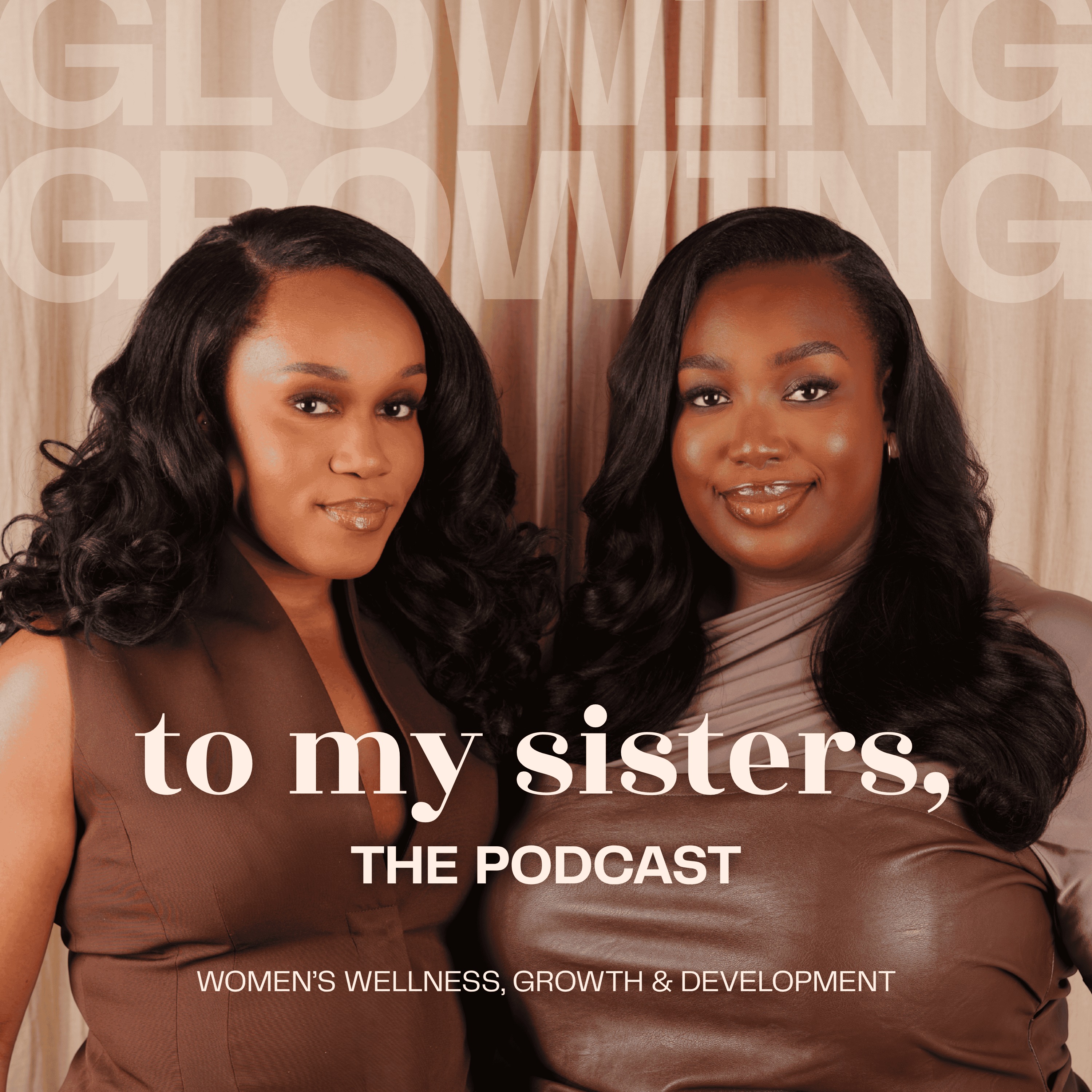
Stop that. Hello and welcome to the To My Sisters podcast. I'm Renee.
- [01:39]
Courtney
And I'm Courtney. And we are your online sisters and hosts of the to my Sisters podcast.
- [01:43]
Renee
Now we are all about promoting the wellness, growth and development of a community of sisters across the world.
- [01:48]
Courtney
And in today's episode, we are taught talking about privacy on the Internet, the lack of boundaries, parasocial relationships and when over sharing goes wrong. Yeah, because we're seeing a serious move of oversharing on the Internet. And I've recently been talking about privacy and the necessary, the necessariness of it all. And so we're gonna get into it today.
- [02:18]
Nordstrom Rack Announcer
Yes.
- [02:18]
Courtney
But before we do any housekeeping announcements,
- [02:21]
Renee
please can you go and follow Courtney on her YouTube channel. Thank you. Because Courtney breaks down a lot of these topics fantastically well. Like it's giving the voice. You know, where people say the voice of a generation.
- [02:32]
Courtney
You know, someone described me at that the other day, literally at a event. I was like, please. I'm very shy. Sometimes I say wayward things.
- [02:40]
Renee
Of course. But in amidst the waywardness, you got the voice of the voice of the nation. So please go and follow and subscribe
- [02:47]
Courtney
to my girl's newsletter. Optimize she all about wellness, health, productivity for the women. Okay. From an angle of your spiritual, physical and emotional health. Because she's a writer.
- [03:03]
Renee
I need to go and get my professional hyper women.
- [03:06]
Courtney
I love it. Yeah. Like I said, I'mma make noise. I'm a maximizer.
- [03:09]
Renee
Maximize.
- [03:09]
Courtney
I'm a maximizer.
- [03:13]
Renee
Any other housekeeping think that's it, girl.
- [03:15]
Courtney
Fantastic. Well, then let's get straight into the. Ding, ding, ding. D so, so good. Hope you're well. Greetings from. No, that's a different one. Take two. Hey, ladies. Hey, ladies. Love your platform and the podcast. Let me get straight into it. No stress. I recently made a big life decision making. Turned down a serious relationship because, honestly, I just wasn't ready. I didn't feel the connection. Right. Was right for me. My family, especially my mom, was devastated or are devastated. They keep saying I'm being too picky, that I'm prioritizing my career over everything, and that I'll regret it when I'm older. The worst part is that I'm starting to believe them. I'm in my early 30s, and the noise around me from family, from social media, from friends, friends who are all getting married is so loud that I can't hear my own voice anymore. How do I stay grounded in a decision that felt right when I made it, but now feels like something I have to constantly defend? Help.
- [04:23]
Renee
Oh, sending lots of love, sister. And hey, hey. To be in your early 30s, baby. 30s. Have you heard the phrase that the 30s are like the 20s with money?
- [04:34]
Courtney
Yeah.
- [04:34]
Renee
Yeah, baby. That's where you enter in. You are in your roaring 30s. You are so young, you have so much life ahead of you. And if there is one thing that will derail any part of your life, it's getting in the wrong relationship. And so if you have come to a conclusion that the relationship that you ended, it was not for you, then it was not for you. And it sounds like I would hope so, that you've really thought about this. You sound like somebody who, you know, got their values aligned and all that kind of good stuff. So you've made this decision for you. The problem with making decisions is it's going to be unpopular with somebody. You cannot please everybody. It is impossible to live a life where you are pleasing everyone. So even if you were in the serious relationship, heaven forbid you end up in a relationship that you actually hate, because people around you say that actually it's your time. What does that even mean? Like, it's your time. It's your time to actually live in despair and despondency. Ask Again, because that's where the relationship will lead to if you are genuinely misaligned. And, baby girl, it's okay for you to be unpopular with your parents and it's okay to be unpopular with your friends.
- [05:39]
Courtney
Say that again.
- [05:40]
Renee
Don't allow societies. We've literally done a podcast episode on celebrating milestones and looking beyond the societal milestones that people think are worthy of celebration. Sister, this one is worthy of celebration. You know, we're living in a different time. And I think not to demonize your parents too much, because often our parents typically share their opinions because they care about us, they love us. They're coming from a completely different background as well. A lot of us have parents who, for the best part of their life, patriarchy was a reality. It was very important for you to be in close proximity to a man or your validation and your social worth and standing was very much wrapped up in you achieving these specific milestones of getting married, being in a relationship, having babies. Times have changed, my sister. Yeah, times have changed. And it's important for you and every single woman that is listening to live a life on your own terms. That is the biggest and most important thing that we have been given in this life. It's to live a life on our own terms. Exercising your autonomy, exercising your freedom. And, baby, this scarcity mindset that people have when it comes to relationship, we know that the times are hard, but that doesn't mean that you are incapable of meeting the love of your life in your 30s.
- [06:53]
Courtney
Yes.
- [06:54]
Renee
Or your 40s, or whenever is the time. Like, it's better for you to hold out and wait for the right person, the right relationship, the right alignment, than to settle with somebody just because you feel external pressure. Maybe that external pressure is not coming with you into the relationship.
- [07:10]
Courtney
Absolutely.
- [07:10]
Renee
It's not. It's not. So don't forfeit your right to freedom and liberty and autonomy based off of what other people have to think of you. And trust me, we get it. It's hard when it feels like everyone around you is living in that milestone that you want. So you're seeing the friends get married, which is a beautiful thing. It' always lovely to be able to celebrate other people's joy.
- [07:31]
Nordstrom Rack Announcer
Yeah.
- [07:32]
Renee
But, girl, I'm sure that there are incredible milestones and incredible things in your life that are worth celebrating. Incredible things that you've been able to achieve. And this other incredible item is around the corner, too. Sister, you have time. Don't let scarcity mindset force you or compel you into making decisions that you'll regret, especially when it comes to who you decide your life partner to be. That's one of the most important decisions that you can make in this life.
- [07:59]
Courtney
It's a big choice.
- [08:00]
Renee
It's a big one. So it's okay. And like I said, it sounds like you're very much in tune with your emotions, the things that you need, and hold that, hold that. Especially when you're entering into the dating space. So, girl, I think very much. I think it's also helpful when you take a step back as well. Sometimes you actually need to, like, go away or you need to throw yourself into the things that also bring you joy because you correctly identified what all of this stuff is. Noise. And the best thing about noise is noise can be decreased because you're amping up the other things, and you're amping up the volume of the other things that bring you joy. So amp up the volume of the things that bring you joy. Amp up the volume of the milestones that you have in your life. Amp up the volume of the friends that are celebrating you for the great, incredible things that you're doing in your life right now. And, baby, you have time.
- [08:50]
Courtney
You have time.
- [08:51]
Renee
So, yeah, that's what I would say.
- [08:52]
Courtney
I agree with you.
- [08:53]
Renee
I'd love to hear what you got.
- [08:54]
Courtney
I completely agree with you. I think you're spot on. I think that thing you said about noise can be decreased. Spot on. I think if you can decrease those voices, you know, it may look like disengaging from conversation or just being like, you know what? Respectfully, I don't want to talk about this right now, please. And I know sometimes it's hard to lay those kind of boundaries with our parents, especially if they are of, you know, a different culture where parents are just allowed to reel off their thinking in their mind. So sometimes it's not even you trying to get them to shut up. It's you just learning to close your ears. You just learning to just tune them out and la de da di da in your mind. And also not letting things go too hot, too much, because you know what's already in your heart, which is that you're waiting for the right relationship, not just any relationship. And so definitely can understand how the pressure can be mounting up, especially with the other factors. Social media, friends around you, getting married as well. It is huge. So you're not crazy for feeling like this, nor are these easy emotions to overcome.
- [09:57]
Renee
Yeah.
- [09:57]
Courtney
So it may take time, it may take revisiting, but like you said, it is better to wait than to jump prematurely into something that will be toxic, unhelpful and not well suited to you. So remember that. Just remember that that is better to wait than to be in the wrong relationship. Yeah, that's what I would say. That's all. So start hoping and praying the absolute best for you. Like Renee said, when it is your time, it will be your time. But also I'm sure there so many other things about your life which are so beautiful, worth celebrating. So please celebrate them, even if the people around you might not be. Listen to our last episode for more on that. But praying the best for you. And if you ever want to submit a dilemma to the to my Sisters podcast, go to our website to my sisters.com and we will answer it hopefully on the podcast. Yeah, hopefully. Hopefully. A lot comes in. A lot comes in. But the conversation at hand over sharing. My first question is to you, Renee.
- [10:59]
Renee
Hit me.
- [10:59]
Courtney
Why are so many people over sharing in general? Because I understand the principle of breaking the fourth wall. You know, social media has really done that. Yeah, we've gone from watching people on the big screen to now watching people on small screens. And those people are speaking directly to us, per se. But now we've gone past just breaking the fourth wall to breaking every single boundary that actually exists, everyone in society. So talk to me about oversharing. Why is it that we are going on TikTok or, you know, seeing videos of people crying and sharing dark secrets and childhood trauma and all the things,
- [11:40]
Renee
oh, you know, it. It makes me sad to see oversharing sometimes just because I know sometimes I watch something and I'm like, oh, I know the comments are going to be hot.
- [11:51]
Courtney
Right?
- [11:51]
Renee
I know the comments are going to be hot. But I think people overshare on the Internet for a couple of reasons. So the first is when you don't have healthy outlets in your real life. Social media and these platforms can be a cathartic experience. People often use social media as a means to gather people together that think like them, can validate them, especially when it doesn't feel like they have that in real life. So they may not have access to therapy. They may not have friends necessarily to confide in in this way. They may not have a partner that's really that responsive, responsible, or has a space for them or a safe space. So for a lot of people, social media become somewhere where they burst at the seams because they just have all of this pressure building up in their real life that they've now decided, oh, gosh, this is my only Place where I can really share my honest thoughts and feelings. And it feels like almost like an open diary or open book where I can share these emotions. So that's one class of people. There's another class of people that are over sharing because over sharing sells or oversharing garners attention. And there's a controversy that is associated with oversharing. And when you have built your platform, a lot of us, a lot of them masquerade under this notion of relatability I am unearthing. I'm sharing my raw feelings and my emotions because I'm relating to other people. And a lot of people can resonate with the experiences that I'm going through. But the trouble with building your platform on oversharing is that you create entitlement with the people that are viewing and watching your content, and you give them access without intimacy or empathy. A lot of people are consuming social media for consumption's sake. It's not just about relatability or feeling validated or, you know, feeling like they're represented on the screen. It's also an opportunity for a lot of people to judge. And because they don't necessarily have access to the fullness of you, all they have access to is these unfiltered thoughts, these unprocessed emotions. Half of the people that are watching you do not have any kind of physiotherapy, psychological anything, any kind of educational background as to how to process this. And they don't have the context of your life at all. So all they can judge by is these seemingly erratic outbursts that you keep on sharing in the name of garnering controversy, relatability, building community. And that becomes problematic because those people, it's a mix of finding the cathartic outlet, but then also understanding that this thing sells and this. And this is when trauma and capitalism meet. It's the how can I capitalize off of my trauma? Because I can't find a suitable outlet to be able to process these things. So you find quite a few creators are stuck in this cycle. Not even creators shot, just people in general, because I'll be scrolling on my TikTok and then the algorithm will dump me anywhere.
- [14:50]
Courtney
Right.
- [14:50]
Renee
And you found this person that's sharing quite intimate details about their life, their relationships, what they're going through, and they're getting money for it, or they're getting the clicks, they're getting the affirmation. And that's the problem with oversharing on social media as well. The algorithm rewards attention. It doesn't necessarily reward Processing properly. It doesn't reward well thought out created production. It just rewards attention. And so some people have found their trauma and their experiences as a means to get that attention or that validation that they also may lack in their real life. And like I said, it becomes a problem because most people, as much as we like to think that we are empathetic, there's a whole bunch of us out here that are viewing this stuff, that baby, take care. I'm a scroll now. You've had my like and you've had my attention for like 60 seconds. But I can choose to disengage. And after that, now I'm holding a part of yourself that you've given to me for free and I'm going about my day. So I think that's another reason why people overshare on the Internet. You are rewarded. The algorithm rewards you for sharing as much as you can. Give me everything. I want a microscope on the things that are going on in your life. Think about any controversy that has gone viral on TikTok. People are stitching it together. People are. And it's like all of a sudden people are psychoanalyzing you. You've shared that your husband doesn't take out the bids.
- [16:17]
Courtney
All of a sudden you're a case study.
- [16:20]
Renee
You will find yourself in one alpha, beta, whatever, podc, you will find yourself there as a case study. And you were just sharing this intimate moment, not realizing, or perhaps for some of you, realizing that this would lead to controversy and folks overanalyzing or feeling an entitlement to the situation that you have shared or over, rather overshared. So I think oversharing, it's rewarded. Unfortunately, whether it's rewarded, you don't necessarily get the response that you may want, but you get a response. It's almost like negative press or press. Yeah. Some people say oil press is good friends, but I'm just gonna say the Internet's history is long and your digital footprint is also longer. And I think people are not thinking about the long term implications of oversharing, which is why they do it.
- [17:14]
Courtney
Yes.
- [17:14]
Renee
They are not thinking about where will I be in about five years, 10 years time. And now the Internet has access to this part of myself that was not ready to be shared with anybody, forget the Internet, with anybody. Like, I don't think we've really deep the implications of that. If we did, people would be a lot more cautious about what they put on the Internet.
- [17:37]
Courtney
Yeah.
- [17:38]
Renee
So I think it's a combination of those three factors. They don't have the outlet, they are being paid for it or they are being rewarded for it. And they don't think about the long term implications of sharing such a vulnerable part of their story online.
- [17:51]
Courtney
That's so good. And I think like you've identified, we are living in an attention economy, right? The attention economy is driving brand sponsorships, is driving the amount of time we spend on these platforms. And so it's incentivized and loads of people, I mean, it's like looking at a train wreck. How many people can drive past a train wreck or a car accident as gruesome, as traumatic, as much as within us we can remember that there are victims? How many of us can drive past that without gawking at it and having a look, you know, and feeling something towards it? But as much as the attention economy is rewarding in terms of monetarily, because, you know, it's capitalism, at the end of the day, you're going to make your AdSense, you're going to make your couple coins. Talk to me about the negative ramifications of this though, because like you said, not all press is good press and not all attention is good attention. So what happens when attention goes wrong?
- [18:48]
Renee
Oh, gosh. The problem with the Internet and social media is that there is no gray area, there is no room for nuance. I think the way that a lot of these social platforms is built is it is skewered towards those that can create the short form content or, you know, the snippets and whatnot. So most people will interact with the parts of your life that you have overshared and believe that that is who you are, that's your identity, that's everything. And now people are flaming you for it. They are absolutely flaming. Like I said, they will be psycho. A great case study is Love Island, Love is Blind. All of these reality TV shows, Right. It doesn't even necessarily just have to be individuals going and over sharing, but also what would normally be quite an intimate process of getting to know somebody and then getting to that place of engagement and getting married has now been something that has been packaged and produced for us to watch.
- [19:47]
Courtney
Yeah.
- [19:47]
Renee
And we are watching in real time. People probably oversharing, especially because a lot of these shows don't have therapists on deck, which they probably should. Say it again, girl, they probably should. So we're seeing people in real time trying to process their emotions and that then becomes your legacy. And that's the problem with oversharing. This small snippet that you thought, oh, it's Fine. It sells for now.
- [20:11]
Chase Sapphire Preferred Card User
Yeah.
- [20:11]
Renee
Will become your identity and become your brand. And because it exists on the Internet, it's out there now. It is very difficult unless you have like Beckham level money or, or you have to be royalty. Even royalty, they can't record some stuff. Do you know what I'm saying?
- [20:29]
Courtney
Once it's out there.
- [20:30]
Renee
Once it's out there, it's out there. And so if you are over sharing or sharing parts of yourself that ah, it's making you feel uncomfortable or rather you should take some time to process. You cannot control what happens after it has shared, nor whose hands it ends up in. And sometimes it ends up in the hands of people that care nothing for you. Nothing. Like not more time. It ends up in the hands of people that don't care about you or the things that you're going through at all.
- [20:55]
Courtney
Yeah.
- [20:56]
Renee
At all. When people use it as a case study, it's often a very dehumanizing process. Don't be like this person. I think of all the stay at home mom content or people that. And don't get me wrong, I love my stay at home moms. But for the people that are coming online and sharing, oh, this is my experience of being a stay at home mum and I've been disempowered and I have no earning potential. Now you've become a case study and that becomes your whole life and identity on this Internet. Even when you rebuild, you'll be reminded of this thing that you have shared on the Internet willingly.
- [21:30]
Courtney
Yeah.
- [21:30]
Renee
How many people have tried to rebrand again and again? How many people. The Internet does not change its mind. So you need to be sure that what you're putting out, if you decide, you know, you want to change or whatever, you need to be sure that that's in line or that you're comfortable with that being out there about you. Because the Internet is unforgiving. It is relentless and it is unforgiving. So you need to be careful. And people do not care about you.
- [21:55]
Courtney
Yeah.
- [21:56]
Renee
And I think in the extreme cases, people have actually suffered mental health breakdowns. There's some serious implications of constantly reading negative comments about you. You shot even me sometimes I'll see something that's mildly. Hey, hey. Somebody typed this about me. They decided I'm gonna come with my full authority to type this about me. But imagine that. But like 10x hundreds of thousands of people making content about your pain. Your pain. Maybe if you don't go to a therapist immediately, at least it's just one person. Do you know what I mean? So I think it is, you have to brace yourself for the fact that once it's out there, people can do whatever they like with that content and that might even become who you are as a person for better, for worse. So yeah, those are some of the negative ramifications. But what about you? Cause especially because I feel like you've had such a long and illustrious illustrious. That's why I said to follow her. YouTube will fly on YouTube. But you've had, you've gone through the highs and lows of being a creator, right? So like in terms of
- [23:07]
Boost Mobile Announcer 1
he's dribbling the ball with everything on the line, he's driving down the pitch, he's facing price hikes and cuts past him, carrier contracts, tries to block him. Oh, he leaves him in the dust. He's at the edge of the box. He cuts past the non stop group chat, trash talk. He clears on goal. He shoots no unlimited data for 25amonth forever.
- [23:26]
Boost Mobile Announcer 2
Visit your local Boost Mobile store today to get unlimited data with a price that never changes. Boost mobile after 30gb, customers may experience lower speeds. Customers will pay $25 a month as long as they remain active on the Boost $25 Unlimited plan.
- [23:39]
Chase Sapphire Preferred Card User
This year's girls trip to Telluride was the best. We one upped ourselves with my Sapphire Preferred card and with 5 times points on Chase Travel, plus 3 times points on vacation homes with top brands, we got this incredible cabin.
- [23:50]
Courtney
It was a mansion.
- [23:52]
Chase Sapphire Preferred Card User
And with three times the points on dining, we ordered a Wagyu steak dinner
- [23:55]
Courtney
and that Pist macchiato gelato was too good.
- [23:58]
Chase Sapphire Preferred Card User
So where should we go next year?
- [24:00]
Courtney
I've got ideas.
- [24:01]
Chase Sapphire Preferred Card User
Chase, Sapphire preferred the card that's preferred for a reason. Cards issued by JP Morgan, Chase bank and a member FDIC subject to credit approval terms, apply
- [24:12]
Renee
the boundaries around sharing. And like what, like what does that process look like for you in terms of making the decision to share something online?
- [24:20]
Courtney
Yeah, yeah, that's a really good, good question. I think I agree fully with what you're saying. I think first of all you have to be aware of there are negative consequences and once you share, it's very hard to pull things back in the ether. The Internet never dies, nor does it ever forget. So once you've put something out there, you have to be fully 100% ready to deal with what comes after that, whether it be positive or negative. So I think it starts with can you back what you're putting out there? Also, have you thought critically enough to see what you are putting out there from every angle. Right. Because not everyone is going to see it from your angle. Not everyone understands the context that you are coming from. And so whilst you may think, oh, everyone like knows me, they know where I'm coming from. No, this piece of content is going to land on some random user's page. This is going to be their first exposure to you. Do you think this is a good representation of who you are? And have you thought about it from those angles? Not to get you to overthink, but to get you to just think from a PR level, from a, a marketing level, from a storytelling angle, Just from a point of wisdom, if this is someone's first interaction with me, what would they think? You know, if it's me crying on camera about something, does this actually shed put me in the best light? Should this be the first place I should be crying? You know, and so my approach to content, I always tell people this when they say, oh, you've been extremely vulnerable online, transparent over online over the last 10 years. I always tell them I do not share anything I'm going through in real time. Good. I will only share things online that I have already overcome because there is no value in me coming online to bleed freely. People will use me for bait. Yeah, the Internet is full of sharks. If you're coming on here bleeding, people will sniff that out and you'll think they're coming to your aid. They're not coming to your aid, they're coming to rip you to shreds. That's how the Internet works. So it's better you come on here with your wounds already healed. And so for me, if you've ever heard anything about my experience, most times it's going to be because I've already taken it through a process which is there's my experience, there's what I've observed from it, there's my revelation from it. And then I'm giving you the application for it. Right. I'm not giving you my raw experience. This is not where I process. Yeah, I have a journal, I have a therapist, I have friends. This is not where I process. This is where I conclude.
- [26:58]
Chase Sapphire Preferred Card User
Good.
- [26:59]
Courtney
You know, this is where I share from all the things I found on this journey of healing, on this journey of self awareness, from this journey of really examining what happened to me and going through my feelings that now I can finally come to share the valuable part which is the lesson. Right? So this is where we conclude things, this is where the lessons can exist. But the processing, that's for behind the scenes. Because if you bleed on the Internet, people will eat you up. They will eat you up. And they don't mean to. They don't mean to. It's just commentary. It's what we do online when we see celebrities and we think, oh, I don't. I don't really like her outfit, or I didn't. You wouldn't say that to their face, but because it's not to their faces, to your phone, you will say it, you will type it, forgetting that someone's going to read this and it's going to get to their heart. So it's better to just not put out stuff when your heart is in a vulnerable place. Put it out there after you've overcome it. Put it out there once you can control the story.
- [27:57]
Renee
Yeah.
- [27:57]
Courtney
Put it out there once you can put it out in a way that you can fully back and be confident in. And that I can. That kind of brings me to my question. Because we're creators, we share online, but a lot of creators have gone through different relationships with the idea of boundaries and privacy. And I want us to discuss a bit about people's relationship with creators online once they start having boundaries around how much they share. Because some creators may start off their journey, you know, without that wisdom, without that knowledge of how crazy things can get. Because sometimes things don't get crazy until things go wrong.
- [28:39]
Renee
That's it.
- [28:40]
Courtney
Right. So you are just openly sharing because it's a happy moment. You're openly sharing because things are positive. Right. And then the tides change.
- [28:50]
Renee
Yeah.
- [28:50]
Courtney
And things are no longer overwhelmingly positive. Now you're dealing with something that you would prefer to deal with in private. However, the culture you've created on your corner of the Internet has been one of openness and transparency. And now your audience is having a negative reaction to your request for privacy, and you're in, you know, erection of boundaries. So talk to me about that. How are you observing that change in culture when an influencer or creator or celebrity comes and says, hey, we want privacy after living their life so out in the open?
- [29:30]
Renee
Yeah. It's a tough one, honestly, because I can see both sides. I think as somebody who values privacy in general and completely understood why it's any intimate moment in your life, you don't owe anybody anything to share, really. However, if you have created a culture whereby certain things or certain values, one of them being openness in this particular way has been normalized, you cannot be surprised or shocked at the fact that there will be some audience members that don't like that. And that's life. I think as a creator or anybody that shares anything online, you just have to be okay with the fact that there will be people that do not agree with you. There will be people that don't like you. There will be people that start off liking you and end up disliking you. You just have to be okay with that reality, no matter where you are at in your journey. And I think for a lot of us, we assume that we are always going to be liked. So I think it would be easier for a lot of us that use these platforms to live our lives once we realize actually not everybody is going to like me. And that includes people within my own community or people that. Oh, whatever. It doesn't matter.
- [30:45]
Courtney
Yeah.
- [30:46]
Renee
And that's just part of the unfortunate dehumanization process that a lot of people that post stuff online go through. They. People watching. Oh, you're a celebrity.
- [30:56]
Courtney
Yeah.
- [30:56]
Renee
Oh, you're not a human. You're not a this. You're. Do you know what I mean? That's actually part of the process. Part of the parasocial relationship is to dehumanize the person that you're in that relationship with. And I think where I've seen it done really well is the creators that come out and they articulate it right in that same vein of openness. Being open and saying, all right, babes, I'm going for a tough period in my life right now. I'm gonna take a step back.
- [31:24]
Courtney
I know I would share, but. Nah, not this time.
- [31:26]
Renee
Normally. And acknowledging that. Right. But I think the problem comes when creators or individuals stop moving stush and acting like the audience is the mad one. How dare you be entitled to. Babe, I was in the birthing room with you. The camera was here. I was inside your cutie, basically. And now you have the audacity to act like I'm the bad guy. When you have cultivated a culture where that is normal. So I think if you have created a community where openness to that degree is normal and you have to come with your big chest and say, baby, not this time. That's how boundaries are erected. And that is also how people trust you. It's not about withholding. It's about communication and transparency.
- [32:10]
Courtney
Yeah.
- [32:10]
Renee
Do you know what I mean? It's really saying, I know that I've contributed to this, and I know that you think this way because of what I have done.
- [32:17]
Courtney
Yeah.
- [32:17]
Renee
So owning up to that, but then also requesting and saying, because I know the love and trust that I've built Up. My request is, let me take some time. I've seen creators do that all the time. And I'm like, oh, baby, I'm gonna pray for you. I love you. Do what you need to do. We are not entitled at this particular moment. But for those of you that have now started to do active deception. Do you know what I mean? Like, there's genuinely a difference between privacy and secrecy. So secrecy to me is, you are intentionally trying to deceive me. You are concealing something. Privacy is acknowledging that there are boundaries that you want to now communicate or erect.
- [32:56]
Chase Sapphire Preferred Card User
Yeah.
- [32:56]
Renee
And with something like deception, with something like secrecy. Sorry. That's often motivated by fear or motivated by shame. It's. I don't want to share this with you because it's going to change the way that you see me. That's how I see secrecy. Whereas privacy is. I'm acknowledging that for me personally, in order to exercise my own autonomy here, I need to have boundaries, and I need to work on this thing by myself. And I think a lot of us do not know how to enact privacy. We are doing secrecy, thinking that we're being private, when really, it's looking a bit deceptive.
- [33:36]
Nordstrom Rack Announcer
Yeah.
- [33:36]
Renee
Because I'm being deceived. You haven't told me anything. You've told me everything now.
- [33:40]
Courtney
You've told me everything about this part.
- [33:42]
Renee
Think about it in any other relational context, right? If the relationship between me and you, it's mad open. I'm going through something. There's nothing stopping me from saying, oh, Courtney, do you know what? I'm going through something right now. I can't articulate it right now. I need my own privacy right now. I need some to put a boundary up so I can work for it. And then I'll come to you. Yeah, that's normal to do. It doesn't necessarily stop you being hurt, but you understand it and you can extend grace rather than me keeping something a secret. And then you find out. Now you're looking at me like, but you've deceived me. Do you know what I mean? Like, you've actually just. You've intentionally deceived me.
- [34:20]
Boost Mobile Announcer 1
Yeah.
- [34:21]
Courtney
Withheld this.
- [34:21]
Renee
Exactly. Even if it was motivated by fear or shame or embarrassment, it's gonna land worse. Because you have actively kept this away from me rather than articulated that you're going through something. And I think the same for any relationship. But I just think that because we don't think of the relationship between a creator or somebody that's on the Internet and their audience as a Legitimate relationship. That's where the disconnect comes, where the audience feels super entitled, but then also a bit hurt.
- [34:51]
Courtney
Yeah.
- [34:51]
Renee
But then the creator and the individual doesn't. I think the dehumanization works both ways. Where now the creator is looking at these people like, I don't owe you anything. Yes, you do. Yes, you do.
- [35:02]
Chase Sapphire Preferred Card User
You.
- [35:03]
Renee
You couldn't have made that money without your community or your audience. Don't be acting brand new. Like I said, we was in your kitchen. Do you know what I mean? We was in your kitchen, your first one. I was there with your husband in that room. And now you're coming to tell me, oh, I need some prior. Not even I need some now. You're coming to tell me I'm being entitled as an audience member. So I think we need to recognize that this is a legitimate relationship and both sides owe each other something. And in the same way that in any other relationship, it requires intentional communication and genuine transparency and vulnerability. Sister, if you're an influenza, you owe us that.
- [35:42]
Courtney
That's good. That's so, so good. So then talk to me about the importance of privacy in general.
- [35:48]
Renee
Oh, yeah, yeah. Oh, I love privacy so much.
- [35:50]
Courtney
Yeah, I love it.
- [35:51]
Renee
I love it. I think privacy, as I mentioned, is an exercise of your autonomy. Not everything that you have, not everything that you go through, not everything that you feel is something that is for other people. Sometimes it's just for you. And depending on the kind of person that you are, you genuinely need to process. Not every initial thought or experience or something that you're going through is ready to be shared, and that's okay. I think because of the. Because of the theater that social media has become, we're feeling pressured to perform even our healing. We're feeling pressure to put our healing online. It's okay. Oh, God. Healing private. When I think about people that have a broken arm or anything that will land you in the hospital, they're not outside. They're in the hospital.
- [36:46]
Courtney
Yeah.
- [36:47]
Renee
Behind the closed curtains, they've had that intentional time to heal. Whenever you get sick, people say, go and rest. Because if you're not resting, if you're sick and you're outside, you're aggravating the wound. Many of us are aggravating the wounds internally by posting it on social media. We need to go and rest. Go and pack it up.
- [37:06]
Chase Sapphire Preferred Card User
The.
- [37:07]
Renee
Everything needs to be done.
- [37:08]
Courtney
Yeah. Yeah. Right.
- [37:09]
Renee
Because now you're putting too much energy towards the performance as opposed to the healing process.
- [37:14]
Courtney
Yeah.
- [37:15]
Renee
It's performance over process. And in the same way when it comes to healing, the way that the body works is when you are doing too much, when you're sick, the body doesn't have enough energy to do that. Healing quickly. Yeah. So some of us are even slowing down our healing process because our energy and attention is diverted towards creating a performance or making it content.
- [37:36]
Courtney
Right.
- [37:37]
Renee
Some of us are wondering, why have I not healed through that? Well, baby girl, it's because you're performing. You're not processing. You're performing. There will be people that will come on the Internet. I'm just.
- [37:46]
Courtney
I'm going through.
- [37:47]
Renee
I'm processing, baby. You're performing. You are performing. And it's not everyone. I don't want to, you know. Yeah. Generalize or anything like that. But more often than not, I love the distinction that you made, by the way, in terms of your process. You have to overcome it before you're sharing it. It all comes down to what is the purpose of your platform? What are you using this platform for? Because if you are using this platform to, as you mentioned, bleed, what does blood attract? It attracts the sharks. That's. That's what this platform is. But if you are using this platform to empower, you need to ask yourself every single time you post something on the Internet, who is disempowering and how?
- [38:26]
Courtney
Right, Right.
- [38:27]
Renee
This person or these random people or these audience members having access to this part of my pain, how does it empower them? It's not enough for them to relate to you. If you're mad, there are mad people everywhere. There are mad people everywhere. I don't have to look at your platform to find mad people. There. There is not a cheap as chips.
- [38:53]
Courtney
Cheap as chips.
- [38:55]
Renee
Nary a scroll and I've seen a mad person. Do you know what I'm saying? Because if it's under the guise of
- [39:01]
Courtney
relatability, we can all relate.
- [39:03]
Renee
We can relate. We don't have to see time lapse. We don't need to see you set up your camera and start crying or your.
- [39:13]
Nordstrom Rack Announcer
Ah.
- [39:14]
Renee
And the thing is like over sharing, it also causes. When you overshare to that extent, sometimes it causes people to question your authenticity. Right. So I think about some of the creators that, for example, all they do is you pray online all the time. Do you pray in person? Are you sure? Are you sure you're praying? You set up your camera. You set up your camera. The Holy Spirit has actually gingered you to pray. But the first thing you thought about was, let me capture this on camera to then where's my tripod where's my tripod? I had an unction from the Holy Spirit to pray. Do you know what I mean? It now becomes about the performance and not the process. Or you're going through a tough time and you are. I have seen people have arguments online and somebody will let me put a camera here.
- [40:00]
Courtney
Yeah, tough.
- [40:02]
Renee
And it's different if you. In that scenario. I know some people log things because they may be in an abusive environment. It's evidence that's different from performance. Because I don't work with the Metropolitan Police. I don't. No, I don't. I don't work with the Met. If you're collecting evidence and you're sharing it online before you've contacted, You've contacted the Met, and I'm sure somebody in the comments will eventually act the Met police, so that you can then do that. But the order of priority is making me think misaligned priorities. Do you know what I'm saying? So I think there's a dimension of oversharing that can erode your authenticity because you become so focused on the optics and the performance that you forget that the process needs to happen behind closed doors.
- [41:01]
Courtney
Such a good point.
- [41:01]
Renee
That's what I would say.
- [41:02]
Courtney
Such a good point. I love that. I love that. And I think you've hit the nail on the head. Like, I think privacy, like you said, there are some things that are very sensitive in our lives. Whether it's decisions that we are making, processes we're walking through, big life changes as well, emotional things, traumas, even exciting things that just require our focus and our attention. All of these things do require us to have the privilege of privacy. Privacy is a privilege, an opportunity to go behind closed doors, to just sort yourself out, to compose yourself. You know, I've even seen people when, you know, and I've experienced this when you. Something big has happened, and it's great. Like, it's a really good thing. But you just need a moment by yourself to gather your thoughts, gather yourself together and soak it up for yourself. And also the same is true for negative experiences. You know, something really bad has happened. Sometimes you just need the privacy to go through your own initial process. Right. Like you were saying, and processing of this event or this, you know, something you've just been told or something you're going through as a family or as a person. And so I think privacy is in itself a privilege because there are sensitive moments in our lives, sensitive seasons in our lives that require so much focus and attention that if we welcome in everybody's opinion we can ruin the moment, we can lose the moment. We can make the wrong decision. Right. And things in our lives. I use this analogy in the video I made about privacy. Initially, we have to treat things in our lives as precious and as dedicate as newborn babies.
- [42:35]
Renee
Yeah.
- [42:36]
Courtney
First of all, when a baby is conceived, they are in the privacy of a womb. People don't have access to them like that. The only thing that has access to. To them is the nutrients that they need. Everything else is just.
- [42:47]
Renee
That's it.
- [42:48]
Courtney
Keep on the outside, please. None of it's none of my business. My concern right now is my nutrition. Do you get what I mean? But once the newborn comes out, the first people that it's exposed to, yes, is its parents. It's not exposed to every single person, but also it's exposed to experts, the doctors, the nurses, the midwives, people who can give it the attention that it needs. If anything is wrong, even if nothing is wrong, it needs expert care to be nurtured. Right? To make sure that in that very delicate and sensitive moment of making a transition between the womb and the world, it has the necessary people who have the right education, the right language, the right knowledge to tend to it and keep it the same with us. When something is in its infancy, whether it be a business idea or a divorce or a book or whatever, an idea, whatever. You need expert people. Everybody else, stay out in the waiting room, please. I know you're excited to see baby. I know you're excited to see mummy. I know you're excited. But we need experts in the room. And so the experts are the people who can actually help you deal with the situation. It can be family members, sometimes it's not. It can be friends, sometimes it's not. Sometimes it's a therapist, sometimes it's a lawyer, sometimes it's the police. Sometimes it's someone who has the expertise actually help us, us deal with this delicate transition and this delicate scenario. And then when you bring the baby home, yes, more people have access, but it's not everybody, because some people are dirty, filthy, they have germs, they have herpes.
- [44:22]
Renee
That's it.
- [44:23]
Courtney
Okay? So you can't just come and carry my baby. You can't just come and give it a kiss on the face. I don't know you. I don't know your intentions. Back up, back up. Because also this baby does not have the immune system yet. And so I have to, as the parent, or, you know, you have to, as the parent, protect the baby because they cannot protect themselves. The Same thing with things in your life. There are some things that cannot handle the weight of exposure.
- [44:50]
Renee
Yeah.
- [44:50]
Courtney
They cannot handle the, the dangers that come with exposure. Not everything in your life needs to be exposed because it cannot handle it.
- [44:58]
Nordstrom Rack Announcer
Good.
- [44:59]
Courtney
It cannot handle it. And then as things mature, as things get more certain, as things grow, roots and a spine and the ability to hold up its own head, then we expose it to other things, other strangers. Do you get what I mean? Because we know it's not as fragile. A stranger might come and knock over, you know, a baby, the baby could die. But if a stranger comes and knocks over my five year old kid, they'll rub their knee and go play in the sandpit. Do you? I mean, why? Because they've developed the structure, they've developed the ability and the strength to actually recover and hold themselves up. And so giving yourself privacy is, it's about protection. You're protecting yourself. You're protecting the things that you hold dear to your heart. And so I think that privacy is so important. Important and wide to cultivate because you recognize that not everything can handle the weight of exposure. Not everything can handle the trouble that being exposed actually comes with. So I think it's a really wise thing whether you are a creator. I like that you are making the distinction whether you're a creator or just a normal person. And it doesn't even have to solely do with social media. We are seeing a lot of people over share in everyday life, in friendships, in, at work. Stop that.
- [46:10]
Renee
Like back it up. What am I learning about? And you know what, because you even mentioned that, yeah, this is, that's assuming that people are over sharing about their own business. There are some people that are over sharing about business that concerns other people.
- [46:23]
Courtney
Oh, it's a giving gossip.
- [46:25]
Renee
You are here like I think about like work right now, but there are people that will be sharing like, I hate my wife. She sucks. She does this, she does that, that. Sir, we've been working together for two weeks and because you've had a little vodka, lime or something like this, you think that's a license for you to overshare this information? And you expect me to hate your wife? What?
- [46:51]
Courtney
This ain't.
- [46:52]
Renee
Or people, whenever they share, for example, their relationship has broken down. Oh, now I'm looking at your partner like he's a villain. But he did, he asked to be part of this narrative that you have now shared. Shared with us online. Yeah, you know, and there is, and this is not saying that you shouldn't share these kind of things, but being mindful about the fact that this may also impact other people. Yeah, you've implicated other people and the degree to which you share that also creates a narrative for them that they may not have consented to.
- [47:23]
Courtney
Word. Word. Wow. This, this is such a deep conversation. It's a really deep topic. And at the end of the day, it just comes down to wisdom. It comes down to actually being wise and especially knowing how far the Internet can carry things and also having seen so many people's lives be ruined by sharing too much too soon to the wrong people. Wow. Sisters, please let us know your thoughts comment down below. If you're listening on Spotify, you can also leave a comment. You can also come and follow us on socials, O my sisterhood, to share your thoughts under the content that that we share. We would really love to have you over on Instagram, on LinkedIn, on so many different places, O my sisterhood. You will find us there and you can follow us individually as well. We share our thoughts and our lives at Reneeimaphadon and at CDBoating.
- [48:17]
Renee
And whilst you're at it, you might as well make sure that you're signed up to our mailing list. It is private, so you actually have to sign up. Yeah, yeah, yeah, you got to sign up. See what I did there? It's a private members club kidding thing. All you have to do is sign up and you'll have access to the weekly glowing and growing tips as well as our journal prompts as well. So we might put a little bit of something to get the girls thinking about this whole privacy situation. But sisters, we love you. Go be great.
- [48:42]
Courtney
And as always, keep glowing and growing.
- [49:12]
Boost Mobile Announcer 1
He's dribbling the ball with everything on the line. He's driving down the pitch. He's facing price hikes and cuts past him. Carrier contracts tries to block him. Oh, he leaves him in the dust. He's at the edge of the box. He cuts past the nonstop group chat, trash talk. He clears on goal. He shoots no unlimited data for $25 a month. Forever.
- [49:30]
Boost Mobile Announcer 2
Visit your local Boost Mobile store today to get unlimited data with a price that never changes. Boost mobile after 30gb, customers may experience lower speeds. Customers will pay $25 a month as long as they remain active on the Boost $25 Unlimited plan.