← To My Sisters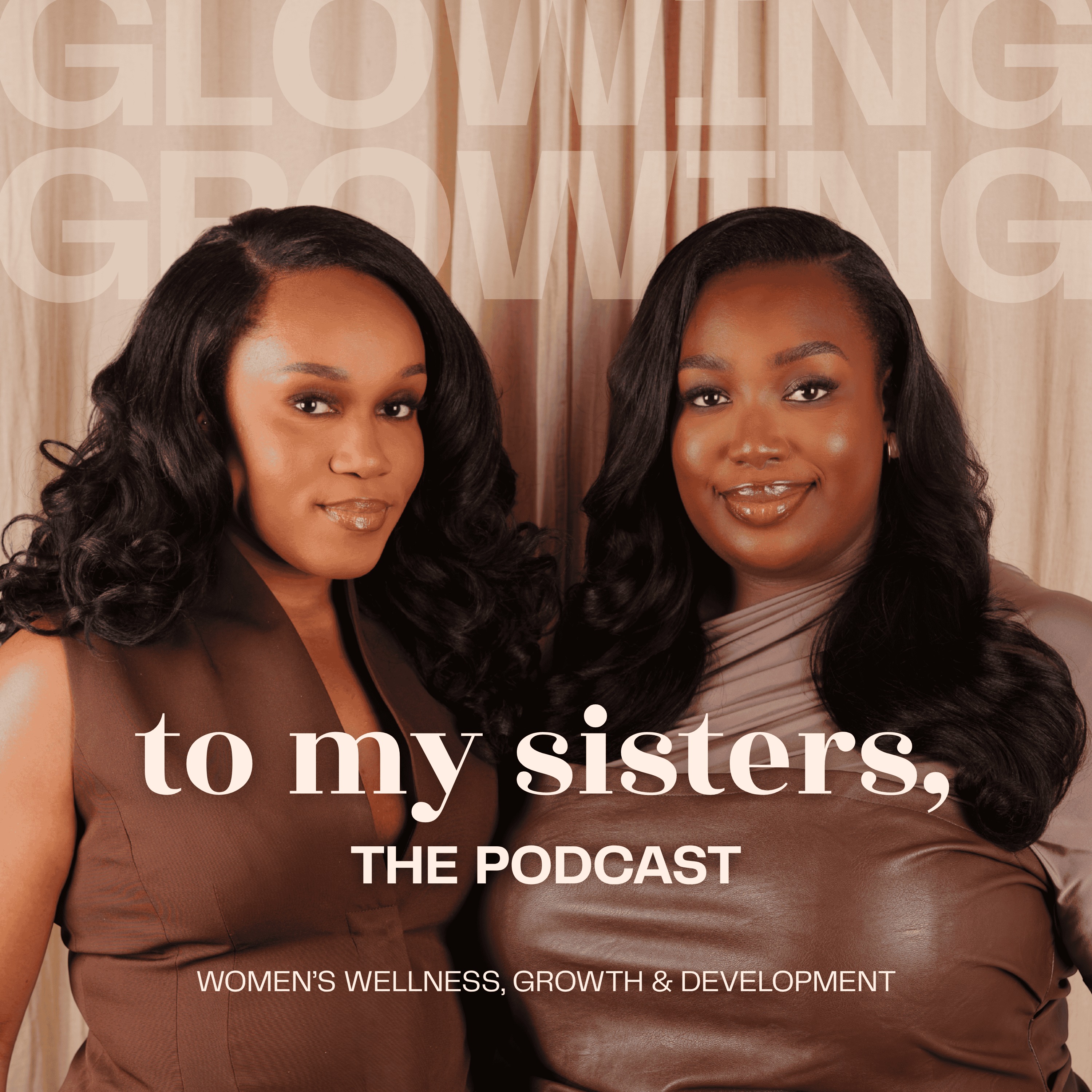
To My Sisters
Why You’re Still Struggling With Money (And How to Finally Build Wealth) ft. Benedicta Egbeme
00:42:05
Loading summary
Transcript105 lines
- [00:00]
Fin AI Representative
AI is transforming customer service. It's real and it works. And with fin, we've built the number one AI agent for customer service. We're seeing lots of cases where it's solving up to 90% of real queries for real businesses. This includes the real world, complex stuff like issuing a refund or canceling an order. And we also see it when FIN goes up against competitors. It's top of all the performance benchmarks, top of the G2 leaderboard. And if you're not happy, we'll refund you up to a million dollars, which I think says it all. Check it out for yourself at fin. AI,
- [00:32]
Benedicta Egbe
when you just put your money in a normal savings account, it's losing its value.
- [00:36]
Renee
Money should be someone else's problem.
- [00:38]
Benedicta Egbe
As a woman, your child is not your retirement plan. You cannot have your whole entire dependence on a child.
- [00:45]
Renee
We're talking about everything to do with money.
- [00:48]
Benedicta Egbe
I am yet to see a person who is financially free with one stream of income.
- [00:53]
Renee
Talk to us about hacks as to how to make build wealth. How to build wealth.
- [01:00]
Benedicta Egbe
God give me miracle money.
- [01:01]
Renee
People don't understand that there are ways in the system legally to allow yourself to be tax efficient.
- [01:08]
Benedicta Egbe
Sometimes the reason why business goes bad is because you mix your holy and covenant self with somebody else who is doing other things with their money.
- [01:16]
Courtney
I love that you've touched on this, because this is actually a dilemma that we have seen several times. Several times.
- [01:22]
Renee
Several times.
- [01:22]
Courtney
And I think it's something that really afflicts women particularly. Yes, because women. Hello and welcome to the To My Sisters podcast.
- [01:30]
Renee
I'm Renee.
- [01:30]
Benedicta Egbe
And I'm Courtney. And I am Benedicta.
- [01:33]
Renee
And we are your online sisters and hosts of the To My Sisters podcast.
- [01:36]
Courtney
We are all about promoting the wellness, growth, and development of a community of sisters across the world.
- [01:41]
Renee
And today, we are talking money. And not in the typical way. We're not just here to giving you tips on what to do with your money. We're talking about everything to do with money. Today we are delving into your journey from financial slavery to financial freedom. And we are joined by. Oh, come on now. A woman. Okay, a woman. That's what I'm gonna say. We are joined by Benedicta. You are an accountant. You are an author, a creator, a business owner. And we are honored to have you on the Two My Sisters. Thank you for having me. Oh, my God.
- [02:19]
Benedicta Egbe
So happy to be here. She's a pleasure.
- [02:21]
Courtney
We've been excited. Yeah,
- [02:25]
Renee
I guess, jumping into it, Right. This book that you've written, your journey from financial slavery to financial freedom. Talk to us about why you wrote it. Because you are an accountant by day, but also you have such insight and wisdom into money. And money is a wisdom thing. So tell us, why did you write this book?
- [02:46]
Benedicta Egbe
I wrote it because, you know, many people when it comes to money, first of all, they don't even understand it. They don't know what to do. So first of all, there's guidance needed. But even in terms of the guidance needed, I see that there's a lot of people who will focus on like mindset, money mindset. You know, they want to just declare, say some 5, 10, you know what they call them?
- [03:05]
Renee
Affirmations.
- [03:06]
Benedicta Egbe
Affirmations. And then they think, then tomorrow they'll just be a millionaire, or in six months I'll just be a millionaire mindset. And then sometimes you see some people, oh, you must budget, you must invest, must do this, buy crypto, buy this, buy that. They don't think about the mindset, they don't think about anything else. You also see the other side, right? The Christians church, God give me miracle money, you know, prayer, fasting, I'm going on a five day fast. And it's like for me, you can't do one without the other. And that's actually the journey that God really took me through. Like, first of all, the mindset has to be right. And then you move to the practicalities, the doing. There is a do that must be done right. And then you move into the aspect of, you know, your things, like your tithes and your offering. And don't get me wrong, I know that that has its own question marks. People have, you know, or should I say some pastors have milked that cow. But you know what, the fact that there is fake, as they will say, does not mean, is actually evidence of the real, right? The fact that some people try to maximize on things like that. And so for me, like that aspect of your giving, your tithes, just understand it. Because that's another thing actually people do actually give. They think, oh, if I just sow all my seeds, then tomorrow I'll be a millionaire. But they're not doing the practical, they're not doing the mindset or they don't even understand what it means to give. Like what does, what's the difference between tithes and offering? Why don't we just call it all offering? For example, what does the tithe do that is different from the offering? What about things like first fruits? What about things like sacrifices? So for me it was like the one stop Shop that goes from mind to practical to spiritual. When you combine that together, you what devil will stop that 1 million from entering your account?
- [04:44]
Renee
Say it. I love that. Absolutely love that. And like, yeah, very interesting.
- [04:51]
Courtney
Yeah, no, absolutely love that. And it sounds like you've got like a proper system as to how we want to approach our money moving forward. We're going to dig into that in a, in a.
- [05:00]
Benedicta Egbe
But I want to reel it back
- [05:01]
Courtney
a little bit because to my sisters is a community for women. We have a real passion for women. And for a very long time, women and money has been a touchy, sensitive subject. As we are hustling further and further into the modern world, it is now becoming a thing that women are concerned about money. So Benedicta, from your point of view, what are some of the common pitfalls that women are falling into or experiencing when it comes to their money?
- [05:29]
Renee
Especially women of faith.
- [05:31]
Benedicta Egbe
Especially women of faith. Come on. Yeah, so. So there are so many. And this is. These bits are quite touchy and they go into stereotypes. But do you know what's so funny about stereotypes is that sometimes we don't even realize when we ourselves have fallen into the stereotype, if that makes sense. Sometimes we're like, oh, yeah, no, you know, those kind of women that do that. And you don't realize that subconsciously you've also taken on. So what are they things like over submission. And don't get me wrong, I am a Bible believing woman that believes in the S word submission. But over submission to the point that you do not have your own. For me, that's not, that's, that's, ah, you have to have your own. I don't care if your husband is Jesus, have your own.
- [06:21]
Renee
But even Jesus empowered his bride, the church, to have their own.
- [06:25]
Benedicta Egbe
Their own.
- [06:25]
Renee
Yeah, Right.
- [06:26]
Benedicta Egbe
And so this over submission, you carry your whole salary and you give to your husband and then whatever he decides to give you is what you take. Now don't go get me wrong, like in my house, we have full openness, transparency. My husband sees my pay slips, he sees my whatever. But in terms of dividing it, we divide it together. It's not the crumbs that you want to give me or it's not, you know, I'm empowered to also earn my own and have my own from what I earn, if that makes sense. A lot of women are dependent. They are so dependent to the point of, you know, crippling themselves. And this is especially on the negative side, I dare to say, where, you know, I was at a women's Event not too long ago, about two weeks ago, and there was a lady who, who asked a question. It was anonymous. I don't, we don't know who it was, but she asked a question, she said, you know, she feels like she. What do you do when the person who is helping you financially is actually like rude and abusive, but you can't leave them because you don't have your own? And that is because of, you know, you've, you've, you've literally been so financially dependent on someone that even when you're in a bad and abusive situation, you cannot get out of it. That is bondage. And I don't think that that's biblical. That's not the kind of submission that the Bible was talking about. He said, submit yourself one to another. It's a two way thing. So that's one side. The other side is this. Oh, you know, money is just for men. You know, my husband, whatever. If my husband says we should buy this, no problem. My husband said we should invest in this. You don't have no idea about what crypto is. You don't know what land is. You don't know the going rate of nothing. So they tell you that, oh, the land is 500 million. Oh, okay. You just believe. You just take it like you don't do research. You think it's for men or whatever. The man says, okay, yeah, my husband said it was a good idea or my partner or whatever. No, you should know, like, what is the price of goods in the market? Not just tomatoes and plantain, but stocks, land, gold. It's not just about rice and chicken. What is the price of land in an area? What is the price of rent in an area? Like, being informed. A lot of women just play this, oh, you know, Fairy Barbie kind of life. Like, oh, you know, my husband or a man or my father, that's another one. My father. Your father will not live forever. Sorry, I'm not saying he should die now, but he will not live forever. You need to get your act together. Like, you should know. So those are just two. If not, I will keep on going.
- [09:00]
Renee
But they dig into quite a bit, right?
- [09:02]
Benedicta Egbe
A bit.
- [09:03]
Renee
Which is this social narrative and cultural narrative that money should be someone else's problem. As a woman, right? It's my husband, it's my dad, it's someone else other than me. And I think we're seeing women come to the forefront and say, no, I need to understand investing. I need to understand pensions. I need to understand how to set my life up. Not just for me, but also for my children.
- [09:25]
Benedicta Egbe
Yes.
- [09:26]
Renee
I think from that angle of legacy and generation. Generation. Generational wealth. And thinking about the fact that generational wealth isn't just something you pass down, it's also something you inherit. Right. I think there's a conversation we were having back in December around what direction the money flows. And I want to delve into this concept of financial slavery, because I think what keeps some people, especially if you're of African or Caribbean descent or if you're black. Yeah. What keeps us in financial bondage or slavery is. Is the wealth flowing in the wrong direction. Right. Where it's not flowing down, it's going back up. Yeah.
- [10:06]
Benedicta Egbe
Yeah.
- [10:06]
Renee
Talk to us about that.
- [10:07]
Benedicta Egbe
The Bible says that a good man leaves an inheritance for his children's children. That doesn't mean he skips his children. It means he has settled his children and has enough to settle the next generations. So if we're going to talk about it from a biblical point of view, from what the Bible says, wisdom and all of that, it's. It is actually not right for inheritance wealth to be going backwards. Now, don't get me wrong. There's a place of giving and sowing, you know, to your parents. Right. The Bible says, honor your mother and your father so that your day shall be long. And that can mean, oh, Mom, I bought you this. Dad, I bought you this. You know, whatever. Oh, Mom, I just want to help you with this. That is absolutely necessary and a blessing is attached to it. But when it becomes an obligation, that is now not allowing you as a child to be able to have roots in downward and to grow, I always say, you don't. You cannot take shade from a tree that has not grown if you keep on taking, taking, taking from a child. As a parent, how do you want the child to grow and flourish and become, you know, the tree that everyone can even benefit from? And so black tax, having to give to parents. Again, it shouldn't even have to be an obligation. As a parent, if you've done the right thing, your own house should be in order. It shouldn't be that. Oh, until my mom, until my first son and my second daughter. Don't give me abc, then I can't eat. No, that means as a parent, you have failed yourself. You failed yourself. Let's tell ourselves the truth. You were never designed to live off your children. When you. You're not designed to. God did not create us to live off of our children. We're supposed to be the ones even setting things up for them. When Richard Branson and other people are giving their children lands and stuff. Where are you, like, what are you giving. These people are your age mates, with all due respect, they're your age mates.
- [11:54]
Renee
So you can.
- [11:54]
Benedicta Egbe
And, and your child, in summary, your child is not your retirement plan. Your child can help and nourish and take care of you in retirement by choice and because they've been allowed to grow. But you cannot have your whole entire dependence on a child. It's not, I don't, I'm not sure that that's written in the Bible. I've not seen that anywhere. I've not seen it. No.
- [12:17]
Courtney
I love that you, I love that you've touched on this, because this is actually a dilemma that we have seen several times. Several times.
- [12:23]
Renee
Several times.
- [12:23]
Courtney
And I think it's something that really afflicts women.
- [12:26]
Renee
Killing.
- [12:26]
Benedicta Egbe
Yes.
- [12:27]
Courtney
Because women. Various stereotypes and all that kind of stuff. Our caring nature, our sense of obligation,
- [12:34]
Renee
our sense of losing or us being forced into that role.
- [12:36]
Courtney
Exactly. First daughters parentified for the woman that is listening and that's currently in that situation. How do they practically break out of the black ties? Because it's one thing to acknowledge that it's an issue. It's another thing. And it can be quite uncomfortable and really difficult to pull yourself out of this idea. Yeah. So what does that look like?
- [12:55]
Benedicta Egbe
Yeah, I will not like you say, I simplify. By the way, I'm a first daughter. Yeah. My goodness. I know what that feels like. I know what that means. And so, yeah, I know, like you say, the emotional battle when I was growing up and my parents first, in the early days of their, of them splitting up, I remember actually feeling burdened. And actually my pastor at the time, God bless him, he said to me, you cannot carry your, your parents burdens. Like, I remember him saying that to me at that time. And it, for me to remember it now tells you how deep that hit. Because I was like feeling the poor, you know, once splits happen, finances and blah, blah, blah and all of that. And I remember him saying that to me. And if you are, if you are in that kind of place, I'm saying this from someone who's been there and understands basically, I'm not just judging, but what I would say in terms of practically getting out of it is number one, no is a full sentence. And you are allowed to say it to your parents. It's not only for your friends and colleagues. You can say, I don't, I'm not giving, I don't have, or I don't want to give you. If you don't want to say, I don't have, no, I'm using my money for something else, that is okay. And don't get me wrong, you will have mixed feelings when you're saying it, but just stick to it. Right? And then number two, I would also say it's not also just about being like, you know, I'm not giving anything. Zero. You just cut everybody off. No, I don't believe in that, that either. You know, I do believe in giving to parents. And so what I would say is as part of your plan, as part of your budget, just like you budget for your hair and your makeup and your holidays, budget for your family, budget for your parents, so that what you are giving them is within the plan that you already have, it's not taking from something else. Still do your savings, still do your investment, and then whatever you can afford without breaking the bank, without putting yourself into debt. Because sometimes parents be putting children under pressure to go into debt, taking out loans and credit cards. Whatever you can do without, you know, going that way, then do it that way. From a plan, a planning point of view, this is how much I can afford and let them know, so then they know what to expect and what not to expect. And then I would also say, you know, for things that come around all the time, if you do find that you are the one, for whatever reason, having to pay certain bills maybe every year or whatever, plan for it. Just like you plan for yourself, plan for those bills so that it doesn't stop you from still being able to have those roots downwards, to be able to grow and invest.
- [15:16]
Renee
That's so good. I love that. And I, I love that we've naturally pivoted into the systems that you can implement into your life to allow yourself to thrive financially. So talk to us about that. Talk to us about the practical things, the hacks. I mean, you're an accountant.
- [15:31]
Courtney
Hello.
- [15:32]
Renee
And as a business owner, I call my accountant like once and I'm like, dears and this money, how do you. Right, so talk to us about hacks as to how to make.
- [15:48]
Warby Parker Advertiser
If your eyes are the windows to your soul and your glasses are the windows to your eyes, then it's pretty important to find your perfect frames. That's why at Warby Parker, we've made shopping for eyewear as easy and fun as can be. Peruse endless styles in our stores, or use our app to virtually try on frames and get personalized recommendations to find your next favorite pair of glasses, sunglasses or contact lenses, or to Locate your nearest Warby Parker store. Head over to warbyparker.com that's warbyparker.com par
- [16:18]
Benedicta Egbe
le tu francais hablas espanol par le italiano.
- [16:23]
Babbel Advertiser
If you've used Babbel, you would. Babbel's conversation based technique teaches you useful words and phrases to get you speaking quickly about the things you actually talk about in the real world. With lessons handcrafted by the 200 language experts and voiced by real native speakers, Babbel is like having a private tutor in your pocket. Start speaking with Babbel today. Get up to 55% off your Babel subscription right now at babbel.com acast spelled B A B B E L.com acast rules and restrictions may apply.
- [17:01]
Renee
Build wealth. How to build wealth, but also how to navigate, I guess, this current economic landscape, right? Because a lot has happened, especially in the uk, but all over the world, especially post Covid, where economies are everywhere and so many people are trying to navigate how do I make my money go further and, you know, be able to last from generation to generation when I'm facing different taxes, laws, I'm facing inflation, I'm facing a cost of living crisis. Like talk to us about the hacks and the systems that women can implement now to take themselves from financial slavery to financial freedom.
- [17:42]
Benedicta Egbe
So there's so much, so much, so much, so much that can be said in that. What I would say overall in terms of, I always say from the A to Z of money in my world is it's budgeting. So managing it, budgeting, budgeting, spreadsheet, whether you use whatever template you find online or you make your own or whatever, but budgeting it, saving it, investing it, and the cycle continues, right? Because when you invest it, you're going to get returns, so you're going to get more money. You need to, you need to budget again, save, invest. Yeah, so that's the, that's the whole cycle now from your budgeting. If you ain't budgeting, you're not going to really be able to save properly because it's the budgeting that helps you to have, okay, I'm going to save £200amonth or whatever it is you decide. So when you do your budgeting properly, you will be able to save properly. When you save consistently, you'll be able to invest because it's from the savings that you invest, right? If you keep on saving, saving, saving, at some point you should have a thousand pound, two thousand, three thousand and it's that money that you then decide to say, oh, I want to buy shares or I want to buy stocks. Saving is a type, can be a type of investment as well. Rather than just putting in a normal savings account, you should be using higher rate, fixed, fixed savings accounts for money maybe that you need over 12 months or 0 to 12 months. But then if we're talking about long term, you want to start looking at things like, you know, the stock market. So investing, investing via platforms like Training 212, eToro or Vanguard, etc, which allow you to save, slash, invest. It's the same thing, right. You're putting money away for the future, but allow you to save with a higher rate of return. Because a higher rate of. The average rate of return in the stock market is about 8 to 8 to 12%, which is higher than inflation. Inflation as of this month was about 3%. So the idea is that you're saving it, you're getting a return of 8%. Yes, prices have gone up by 3%, but you've made like 5% gain. Because when you just put your money in a normal savings account because prices are going up, it's losing its value. Right. And so. But it doesn't mean you shouldn't have money in a savings account because some money you need to just access regularly. Exactly. So that's another thing I always recommend dividing your savings. You should have a minimum of free savings accounts. You shouldn't just have one saving account. So you've got your short term, which is like for things from 0 to 12 months. Oh, in May I'm going to go to my friend's wedding in, I don't know, wherever it is. And so I need to save for that. Yeah, or in December this is going to happen. Christmas is coming. Right. And then. So that's your short term. And then you can put those in things like pots, like on your Monza. Yeah, Or Stalin. I think there's a few other banks that have those kind of pot type systems where you're just putting money in there. So it's not for more than 12 months, you're going to use it within the next 12 months. And then from 12 onwards, let's say 12 to 18 months, there are things that happen every year. I always use a car insurance example. Every year you need to buy car insurance, you need to pay for it. Whether you like it or not, you can save for things like that. And your. Every year your anniversary comes. Every year your birthday comes, you know, or your family's birthday, family member's birthday comes. You should be Saving for it. So you're saving for that and you can put that maybe in a fixed account that will give you a little bit of a higher interest rate. Right. If you know you have exactly 12 months to go and then you've got your longer term savings slash investing. So that third savings account is like a savings investing. Okay, I'm going to put this in the stock market for, you know, a very long time, especially things like emergency funds that you know that it's like, it's for when, heaven forbid, if you lost your job or whatever. It's not money that you're trying to just take out. You should be putting that in that kind of pot, should I say? So that's your savings. And then in terms of investing, I've already started touching on it, but you should be looking to invest in a diversified way because we just talked about how the economies are doing all kinds of things. I always say do not put all your eggs in one basket if you're going to save money. Oh, do you know what, let me rewind before I talk about eggs in one basket. Because you see, even with the, the savings you can use things like cash ISAs and stocks and shares ISAs. So cash ISA will give you a little bit lower interest rate, but you can access your money quicker and probably you're less susceptible to ups and downs. Stocks and shares will give you, you will be more susceptible to ups and downs because it will be dependent on, you know, the environment. If gas is going crazy, if tech is going crazy, you know it will affect you. But if you're saving for the long term, you should be able to ride it out anyway. Yeah, but then there's also this aspect of, with your investments, including stocks and shares, cash isa, whatever, of putting it inside a wrapper, a tax efficient wrapper. That wrapper is what we call the ISA. So the ISA is where in the UK you can save up to £20,000 per year inside this wrapper. That means that no matter how well that that investment does, no matter how much profit you make, you are not going to have to pay any tax. Because a lot of people don't realize that when you have interest from your savings, interest from your investment, HMRC, Mr. Charles and his family, they want some of that, they want some of that. And depending on how much you're earning, it's either going to be 20, you know, and so on and so forth. So that tax wrapper is very, very important. So that's another hack, one more for the business girlies. And actually I think everyone should be a business girly, but also using things like the limited company structure.
- [22:56]
Renee
Talk to us about.
- [22:58]
Benedicta Egbe
So as you know, I'm an accountant, that's what I deal with. Open up your limited company and have your business money go through there. Why? Corporation tax is 19% and so no, even if you earn 2, even if your profit is 200,000, you will still pay 19 tax. If you earn £200,000 as an employee, oh my gosh, the amount of tax that you're going to, you won't even probably see half of it. So you know, using limited company, but not also, it's not just about the tax rate. It's also the fact that you can take away business expenses before you pay your tax. So a standard employee is taxed at the gross level and then whatever lands in your bank account when they finish dealing with it is what you have to spend. But with a business owner, you spend at the gross level and then whatever is left is what you then tax, if that makes sense. So you have those benefits and from your limited company you can pay directly into your own pension. From your limited company you can have so many business expenses. Life insurance for example. Talking about women as well, if you want to go there, life insurance, whether for yourself or for your other company director, which might be your husband, you know, you can put that all through as a business expense before tax and then you pay tax on the rest. So there's so many little things that you can do. Don't get me wrong, it's not, it's not like it's going to take away the need to pay tax. You will still pay tax, but it can, it can just make it more tax efficient, basically.
- [24:24]
Renee
I love that. And I think that is a lesser known hack for people. So I was introduced to this at the tender age of 21 and I've never.
- [24:33]
Benedicta Egbe
Wow.
- [24:35]
Renee
Just because I think coming from a working class background, coming from a place where no one in my family was a business owner, at least in the uk, that was something that I did not even have. I couldn't fathom that you could do. I used to think like, okay, business owners are the big business owners, right? But the fact that you can go on company's house, obviously it's not something you do frivolously. It's not a light decision that you take because as a director of a company you have responsibilities and they will send you the letters to remind you, hey, all these privileges you got ain't free, right? But I think being able to go Open up a company. And I, I saw my mum do it later on in life because she started working agency as a nurse which is a form of like self employment. And my mom would send us to go and buy groceries and she'll give us the Barclays business card. And she was like and, and I remember asking her why are you doing this? She's like because my accountant said so. I mean yeah, yeah. Because obviously you can expense food certain things. Yeah, certain things, certain things depending. And so obviously she played around
- [25:35]
Benedicta Egbe
but,
- [25:38]
Renee
but things like that that made me realize okay, actually all the money that you make you can like you said, spend from the gross and then what's left can be taxed. And I think people don't understand that. There are ways in the system legally to allow yourself to be tax efficient. That may actually work for you a bit better than you know, having your SA 302s and being, you know, employed. So I think that's a really, really powerful.
- [26:02]
Benedicta Egbe
Another, another really good one. Cars, right? If the car is in the business name, every expense, I mean the petrol, the mot, the everything, the insurance can be in the business name. Now don't get me wrong, your business needs to be able to afford it because that's another thing. I have people trying to open a business. You ain't made no money, you're trying to get some kind of benefit. There needs to be cash flow to the maximum shop with what you're basically.
- [26:31]
Renee
And I know especially as well for women who may be doing the like service based businesses, right Like I'm thinking when I used to do hair and like my girls that were doing hair makeup and everyone's like bring cash and all of that stuff. It's just like but girl you need some records somewhere that you are a money maker. But I think that's so it's a lack of education around being a business owner doesn't mean that the tax man's going to come and take all your money. If you get a good accountant and you're compliant, there are ways that you can actually navigate the system that will be in your best interest and you can build well and cover your back as a business owner but also as a self employed or a employed guys as well. Because I love what you said that every woman should have a business. Talk to me more about that because I think that road to financial freedom from financial slavery, I think business plays a huge part in it. I think we've seen that in our journey as women coming from different past backgrounds talk to us about that so
- [27:24]
Benedicta Egbe
first thing I would like to say is that you, it's not one or the other. It's not, I'm just an employee or I'm just a business owner. You can legally, it's not illegal. You can have a 9 to 5 job and you can have a limited company. You can even have a self employed business as well. And you can have multiples of them. Now talking about from financial slavery to financial freedom, one of the key components is multiple streams of income. The Bible says in Ecclesiastes chapter 11 and verse 2, investors in seven ventures, yay in eight. Because you do not know what may come upon the land, what disaster may fall upon the land. And so financial freedom. I am yet to see a person who is financially free with one stream of income. And so that's why I say everyone should be a business owner. Because when we talk about seven streams of income, there is your earned income, which is your salary, then there's your business income, then there's things like rental income, then there's income in terms of like capital gains. When you sell assets, there's income from like royalties. So there's different types of of income. And one of those things is business. Which is why I say everyone should have a business. Now will everybody's business be an Amazon business or be a Coca Cola business? Maybe not. But it can be something that brings something in that you can benefit from. As a limited company get, I always say play all the sides. We want all the benefits from everywhere. I'm not just getting the benefits from option A or option B. If there's, if there's employee benefits, I have a free life coverage or I have a, you know, private health care from my nine to five, I want that. If there is a private pension and benefits and you know, business expenses from my limited company, I want that. If there are benefits as a landlord, I want some of that. Like basically do all the things that you need to do to get the benefits from all of the financial streams. So that's what I mean. Like I say, I know that some people think that, you know, oh, you know, business is too scary and it doesn't have to be what you think. Yeah, it can be something as simple as I bake cakes on the weekend. And so therefore, you know, I'm going to put that money through my limited company because I still have a 9 to 5 and therefore I'm not going to be taxed as much as if that money was just coming straight to my bank account. It's as simple as that.
- [29:32]
Courtney
Yeah, it really is having an abundance mindset how you approach money.
- [29:36]
Benedicta Egbe
Yes.
- [29:36]
Courtney
And it was something that you mentioned before, actually, in terms of that abundance of doing it with other people.
- [29:41]
Renee
Yeah.
- [29:41]
Courtney
Now, sometimes when you think of money and another person, there can be a
- [29:45]
Benedicta Egbe
lot of suspicion, especially in our culture, especially, particularly in our culture, contributions.
- [29:54]
Courtney
The house that that uncle was supposed
- [29:57]
Benedicta Egbe
to build, he was not building it.
- [29:59]
Renee
The land isn't even yours. The land is not even yours.
- [30:02]
Benedicta Egbe
Scandal, scandal, scandal.
- [30:04]
Courtney
And so there's a lot of suspicion and hesitation when it comes. Or rather we have not seat. And so there's a lot of suspicion when it comes to doing money with other people, whether it be your spouse, whether it be your friend, whether it just be with people in general. So I would love to know from your perspective, what are some of the pros of doing money with people and what are some of the ways that women in particular can leverage community or relationships to build better with money?
- [30:35]
Benedicta Egbe
Really good question. Yeah. All of those concerns, they, they are, they apply. And the truth is there's two sides. There's two things that you can do. One, I'm going to be very practical. The other side is going to be all the way spiritual. The first is contracts. Right. If you're going to go into business with someone, you should have the right contracts and paperwork. A lot of people don't have those things. And they do things on trust, you know, oh, I've known this person since. But you don't realize that when money enters the picture, they are a different person. And so have all the contracts, have the paperwork. So that. And when I talk about paperwork, by the way, this is slight digression. You know, this even is down to family. Right. You see, when we were talking about women in particular and children, legacy people think that automatically once you die, your. Your property goes to your child. No, that you have to have the paperwork. If not, it will go to the courts and it will go, you know, go through all those processes, things like a lasting power of attorney, which basically, if you lose your mind, you can allow, whether it's your child or whoever you decide as your next of kin to make decisions, whether on your finances or on your health. If you don't have that in place, don't think. This is not Africa. It's not. I'm the first son of the house, and so therefore I'm gonna. No, that's not how it works. So paperwork, paperwork, paperwork. Back to the. Doing business together. So paperwork, contracts and all of that. But I'm not gonna Lie to you on the other side. It's spiritual. The Bible says, know no man after the flesh. You have to have discernment. Let God guide you. Don't use sentiment to do business with people. Like, let the spirit lead you. I've. I don't even want to go there because maybe I might put too much of my family business out there. But like, there's been certain people even in my wider family. And I literally remember as a child telling my mom, you're getting this person to help you do your house, right? I had this dream about them. And later, later, later we find out that so, and so, uncle, auntie, brother, sister, cousin, because I want to code it, somebody was, somebody in the family was not as, as genuine as they thought that they were, you know, so no, no man after the flesh. When you've had a dream like that, I'm not doing business with you. I remember there was a time, oh God, I was actually going to do something with a couple of girlies. These are friends now, not family. And we were actually started the process and from my finance point of view, I was going to be like the finance person and blah, blah, blah. And I remember for whatever reason, there was just a bit of a resistance. We couldn't really get the bank account sorted. We couldn't really do some things, although we were trying to push. And I remember God saying to me in my quiet place, did you ask me before you, you went to go and say, you want to do business? You want to. He said, you don't combine your money with them. You know what you practice, you know the tithes and the offerings you give. You know what you are serving? I do. You know what they're serving? Are they covenant people? Because sometimes the reason why business goes bad is because you mix your holy and covenant self with somebody else who is doing other things with their money. And so the devourer is able to eat up. And because the devourer is looking for them and your stuff is attached to them, it eats you up too. So like I said, that's all the way spiritual. But like I say, practicalities in terms of contracts and all of that. Now again, limited company is a simple one. Even without having so much paperwork per se. The fact that you're a company director and whoever else, if you decide to do it with other women or other men or whoever, the fact that you have a company and you're all directors, you all have equal shares, means that if something was to happen, nobody, not one person should be taking all the Money. And you could literally take them to court. Right. Because you have just as much equal rights. So I'll just give that as an example as well.
- [34:03]
Renee
I love that. Thank you. That was so practical. And I think to close out this episode, it would be lovely to lean into that sense of financial freedom and how we are to steward it. Because I think a lot of people are looking for financial freedom right now because of individual ambition. Right. I want to be successful. I want to prove that I can make it. But I love what you were saying earlier around, actually, as people. As faith of people of. As people of faith, there is something deeper about our financial journeys because it is anchored in this sense of giving. Yeah. And I want to talk from a woman of faith angle, because I think women of faith are not strangers to giving. They give a lot. But sometimes that giving is coerced, sometimes that giving is pushed out of them for selfish means, sometimes even good things. But they're not giving from a sense of their heart and their mindset around giving and who their duty is to, but rather maybe for selfish gain. This idea of if I sow, I'll reap. Right. So let's talk about money and giving and how our financial freedom is not just for our own freedom, it's also to free other people.
- [35:18]
Benedicta Egbe
Absolutely. Absolutely. Like who the Bible says, what does it profit a man to gain the whole world and lose his soul? When you gain all these millions, who has benefited? If it's just you, it doesn't really give God glory. Right. And when I talk about losing the soul, not necessarily losing the soul, because maybe somebody is, I don't know, become Illuminati or something like that. But like, you know, you've just. You're just selfish with it, basically. Like. And I feel that giving is actually one of the ways that we bring ourselves down to remember, look, it's not all about you. It reminds you that when you have. You have to give to other people. You know, that God gave us. Right. And he's a giver in terms of, like, stewarding the scripture that I will always go to. And forgive me for anybody who's heard me quote this many times already is Luke, is Luke, chapter eight. You know, it talks about the women who minister to Jesus from their substance. I'm not aware, apart from Joseph of Arimathea, who he didn't even use money. He just. He went and demanded for the body of Jesus and put it in his tomb. But I'm not aware where it talks about anybody else giving and ministering to Jesus from their substance. Now, obviously that says ministering to Jesus, but I see it as ministering to his, his work at the time. And so in, if they could be ministering to Jesus, helping the ministry to move forward, food, clothes, shelter, whatever, at that time, I feel that as women, that obligation continues. You know, women were the first people to, you know, marry with her alabaster box and the oil, the expensive perfume. And the Bible says that wherever the gospel is preached, that her story would be told and that she was preparing him for his burial. And when Jesus died and resurrected, it was the women that saw him first. And I think that that came because of the place of honor. When you give, it's a place, you know, you're especially to God in particular, you're showing him. The Bible says, give unto the Lord the first fruits of your substance. You're showing him that look, God, I know that you gave me this. I could never have earned this money by myself. And so do you know what? Here is a little bit just to say thank you. It brings you back down talking about gaining money but losing your soul. Because a lot of people gain money and then they become somebody else.
- [37:31]
Renee
Yes.
- [37:32]
Benedicta Egbe
But when you're given, every time I give my tithes and offerings, I'm like, like God, thank you, Lord, thank you that I can even earn to even be able to give. So it just brings your soul back down to reality that you are not the bee's knees. God. God is helping you. Don't lie to anybody that you know what you're doing. He's the one that makes you look like you know what you're doing. You know, and so for me, that's where the reminder is. And then of course, from the kingdom point of view, you know, it says, freely you have been, you have received, freely you should give. Like what you. How many houses do you want to have? How many bedrooms can you sleep in? How many cars can you drive? How much food can you eat? Eat. How much food can your children eat? Like, think about other people who don't even have half or a quarter or. It's a general kingdom principle. Like, you can't be a kingdom person and be selfish.
- [38:19]
Renee
How like that. And I, I think that is not emphasized enough because when we talk about giving within a Christian context, it's often to church. Yeah, and I think there's that there was this big wake up call even for me, because I got caught up in this, right. Based on like church culture and all of this stuff. When we built our school in Ghana, I Was like, God, I've been thinking about money so wrong. Because, I mean, 10k, like, we spent 10k to build. Well, not we, our community actually raised 10k to build a school in Ghana and to see hundreds of children receive a free education. Right. With just 10k. And I say, I know 10k is a lot of money, but just 10k. Because 10k come and leave my account very, you know, that's every site I can do. You know what I mean? It can come and go so quickly invested into different things or just frivolously spent on different things. Right. But I'll be telling myself, oh, but I've given my tie, I've given my offering, I've done enough. But when you really realize what you just said, how far your money can go for those who do not have. Yes. You'll start to realize that you actually can carry the weight of a family.
- [39:24]
Benedicta Egbe
Yeah.
- [39:24]
Renee
You can carry the weight of someone's entire educational journey. You could be the key difference between somebody literally dying or surviving and thriving in their lives and having different outcomes that they may have never been able to or because of what you would have spent on a Chanel bag or what you would have, you know, spent on whatever. So I think we need to expand our giving mindset from just the church, even though that's important, because church often is and should be the outreach to solving these communities. Right. So it's a way you can actually put your money together, these things without having your hands in it.
- [40:00]
Benedicta Egbe
If your church does that, if your church does it, Some churches do not.
- [40:04]
Renee
Because the tithing and the offering is just to line some people's pockets.
- [40:09]
Benedicta Egbe
Let's be real. It is. And, and don't get me wrong, I, I absolutely do not agree with that. And I'm, you know, never, ever, ever, never. But at the same time, we do and should still give to our local churches. Because I always say, even from a basic level, you went to a church, you sat down on a chair, there was heating, there was light, and people showed up and people showed you. Do you understand? So you should give back to that, just like you would in your house as well. But like you say, if your church is only thinking about itself, that's where the problem is. But if you're in a community or a church environment where they are also doing outreaches and they are also, then of course, you know that your money is being channeled in the right way. But if you can't see that and your pastor is showing up in Gucci, Prada, Louis Vuitton head to toe every day. And your church has never done an outreach preach. Your church has never given to the homeless, never done anything for children, never done Christmas gifts for nobody. No, there's a problem, especially like I say, if your pastor is dripped in designer, no church is mentioned.
- [41:10]
Renee
I think as women as well, we should have the confidence to also hold our institutions, our churches accountable for that. Right. But also be willing to do the work surrounding that. Like okay, what, what, what is our giving committed? Right. What is our outreach strategy? And if no one is available to do that, be the one who stands on business to make sure that the church becomes a channel to make sure and a funnel to make sure other people are experiencing freedom too. Because financial bondage is not just about your personal finances. It's also a systemic thing. Yeah, it's an economic yes. And there are some people who can't goal boss their way out of financial stagnancy because it's set up against them. So I love that.
- [41:49]
Courtney
I love no Benedicta girl, it's giving. We need you back on the podcast.
- [41:54]
Benedicta Egbe
Amen. We've just started.
- [41:58]
Courtney
We've just started me a scratching of the surface and I'm sure that the ladies have benefited from this conversation but will continue to benefit from the great work that you do. And as we close out the episode, girl, we want to know the book. Where can we get it? How can we.
- [42:14]
Benedicta Egbe
You can obviously follow you like what
- [42:17]
Courtney
all the things means.
- [42:18]
Benedicta Egbe
So you can find me on Benedicta Egbe on Instagram. You can also get my book on benedictegbema.com but of course you can get it on Amazon as well. So just search Benedict Agbe. And yeah, the book From Financial Slavery to Financial Freedom it's available but yeah, follow me on socials, send me a message, you'll see. Oh yeah, I also have a. I don't know what to call it a podcast but I do, I do videos on YouTube as well. Business, faith and finance. So I'm always trying to bring the business with the faith and the finance. And then from an accounting point of view it's Benny Ratio finances. That's B E N I R A t I o finances.com or Bennyratio Finances on Instagram. And we will sort you out with all your tax stuff. We will deal with HMRC for you.
- [43:03]
Renee
We need it honestly. Thank you so, so much. And the link to Benedicta's book will be down in the description. Sisters, we hope you enjoyed this episode. I am personally refreshed. Such a great conversation. And so yes, if you did enjoy it, make sure you subscribe to our YouTube channel here. Or if you are listening to the podcast on audio streaming platforms, be sure to rate it 5 stars if you're liking what you're hearing. Okay, but sisters, you can keep up with us on all social platforms. O my Sisterhood. We can't wait to see you over there.
- [43:36]
Courtney
And also make sure you sign up to our mailing list so you don't miss out on the weekly tidbits of growing and glowing tips. Sisters, we adore you. We hope you have a fabulous week ahead.
- [43:45]
Renee
And as always, keep glowing and growing.
- [43:54]
Chase Sapphire Reserve Advertiser
This is a vacation with Chase Sapphire Reserve the butler who knows your name. This is the robe, the view, the steam from your morning coffee. This is the complimentary breakfast on the balcony, the beach with no one else on it. It this is the Edit, a collection of handpicked luxury hotels you can access with Chase Sapphire Reserve and a $500 edit credit that gets you closer to all of it. Chase Sapphire Reserve now even more rewarding.
- [44:19]
Fin AI Representative
Learn more@chase.com Sapphire Reserve cards issued by JPMorgan Chase bank and a member FDIC, subject to credit approval.