← To My Sisters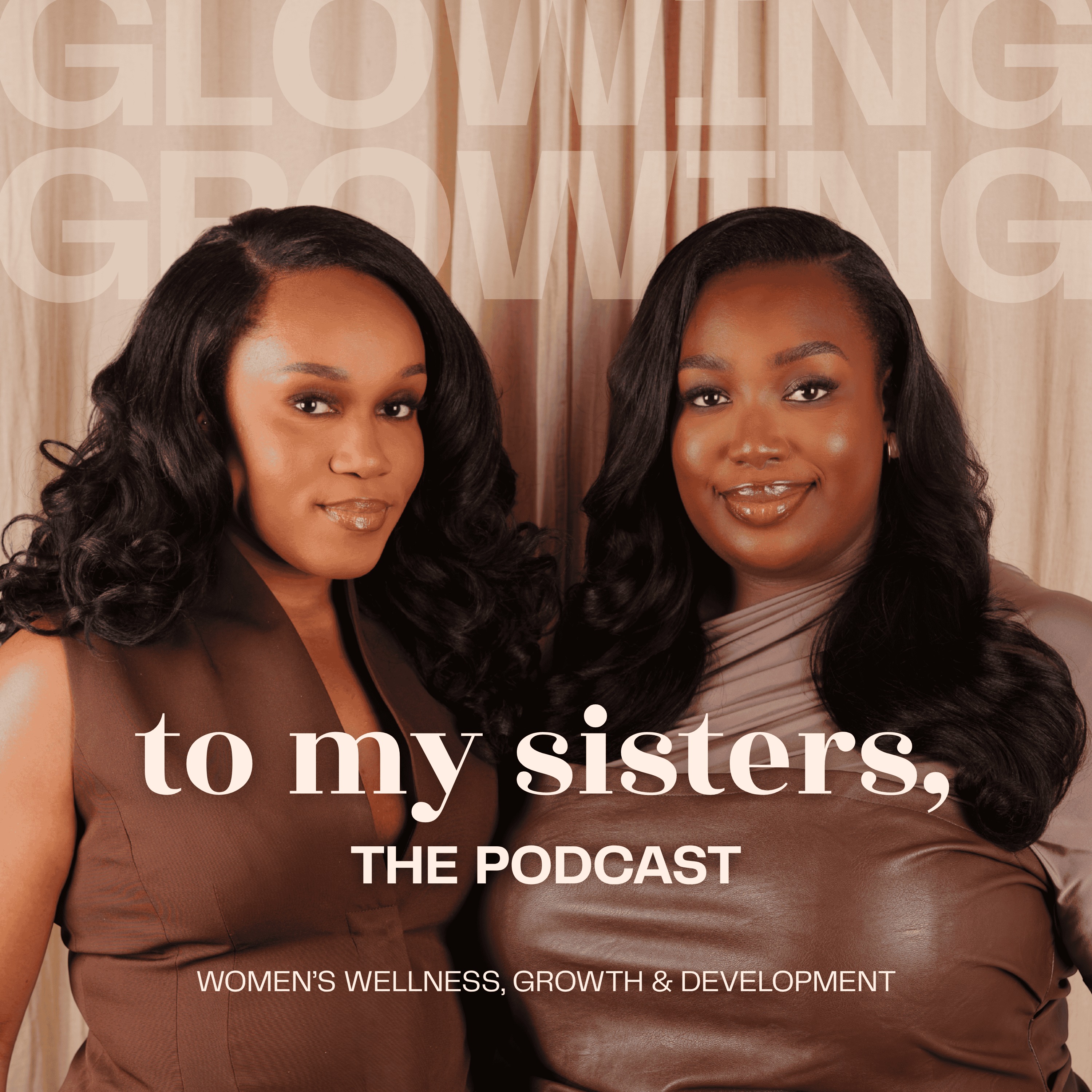
To My Sisters
Your Body Is Changing. Stop Hating Her For It: Ageing, Body Image, PCOS & Learning to Love Yourself
00:46:00
Loading summary
Transcript196 lines
- [00:00]
Chase Sapphire Reserve Advertiser
This is a vacation with Chase Sapphire Reserve, the butler who knows your name. This is the robe, the view, the steam from your morning coffee. This is the complimentary breakfast on the balcony, the beach with no one else on it. This is the Edit a collection of handpicked luxury hotels you can access with Chase Sapphire Reserve and a $500 Edit credit that gets you closer to all of it. Chase Sapphire Reserve now even more rewarding.
- [00:25]
Renee
Learn more@chase.com Sapphire Reserve click cards issued by JP Morgan, Chase bank and a member FDIC subject to credit approval.
- [00:32]
Courtney
We are talking all things our body.
- [00:36]
Renee
Your value is defined by your youth.
- [00:38]
Courtney
What conversations should we be having as women?
- [00:42]
Renee
Your wrinkles are an issue.
- [00:43]
Courtney
Going through puberty whilst your mum is going through menopause.
- [00:48]
Renee
We celebrate men for being the silver fox. You know, you've got some balding men out here that are talking about being a bachelor for forever.
- [00:54]
Courtney
Sir, your sperm is deteriorating.
- [00:57]
Renee
Stop making girls women early. I don't care if she has the biggest breasts at 14. She is a girl. She's a child.
- [01:05]
Courtney
We grew up not liking our bodies, you know, experiencing body dysmorphia, having experiences with eating disorders, at least for me.
- [01:12]
Renee
You can't be this great women's advocate when you are failing the one woman that matters the most, and that's me.
- [01:18]
Courtney
Getting diagnosed with PCOS at 19 was just the beginning of that story. My experience. Experience every single day living in this
- [01:27]
Renee
body like the doors do not shut to us simply because we are getting older. Hello and welcome to the To My Sisters podcast. I'm Renee.
- [01:36]
Courtney
And I'm Courtney. And we are your online sisters and hosts of the To My Sisters podcast.
- [01:40]
Renee
Now we are all about promoting the wellness, growth and development of a community of sisters across the world.
- [01:46]
Courtney
And in today's episode, we are talking all things our body. Okay, we are talking about our body, accepting it, loving it, and adjusting to its various changes. As women who recently turned 29, we are approaching the 30 mark.
- [02:04]
Renee
Fast, fast.
- [02:05]
Courtney
And we are already noticing changes in our bodies, right? Not just the way it looks, but the way that it functions. From our menstrual health to our physical capability to the way we feel in it.
- [02:19]
Renee
Yeah, that's true.
- [02:20]
Courtney
And we want to have a whole conversation because we know so many women in the sisterhood are facing the same. Whether you are entering menopause or, you know, you're dealing with maybe new realities in your menstrual cycle, from PMS to endocrine issues, we want to be the space where we talk about it all because this affects our real life. It affects the way that we perform in our business, in our careers, in our relationships. And so we're going to be talking all about it, vulnerably from our own developments and standpoints, but also scientifically and talking about some of the things that affect us as women in the grand scheme of things. So we hope this episode can help you embrace your body, understand it a little bit more, and just act as a support so you know you're not alone. Okay. But yes, we're so excited to talk about this. But first, before we get into it, do we have any housekeeping announcements?
- [03:07]
Renee
Housekeeping announcements? Aside from support the sisters, Buy the book. Yes, all the things.
- [03:13]
Courtney
Yes, all the things. All the things. We appreciate your support. And also, also tell Renee. She looks so stunning in this blonde hair girl. Okay, let's get into the ding, ding, ding.
- [03:23]
Renee
Oh, I'm melting.
- [03:26]
Courtney
You do? It's gorgeous. Absolutely gorgeous. But yeah, let's get into the ding, ding, ding dilemma. Let's go. Hello, girls. How are you doing?
- [03:33]
Renee
Oh, that's kind.
- [03:33]
Courtney
I'm doing good.
- [03:34]
Renee
That's. Thank you for asking. Thank you so much.
- [03:37]
Courtney
Love the podcast. I'm looking for advice about a situation with a long term friend group. Okay. Lately, I've been noticing some distance and I'm not sure how to handle it. Everyone has their own responsibilities and schedules now, which I understand, but I still feel. Oh, but I still miss the conversations and closeness we used to share. It feels like we've quietly drifted apart, even though no one has done anything wrong. At one point, someone mentioned going through a difficult period and it made me realize that any of us could be struggling without saying, saying anything. That moment made me more aware of how much things have changed overall. It wasn't about one specific person, just the general shift in how connected we all feel and how we don't share as much as we used to. I really value these friendships and the idea of losing them scares me. But I also don't want to push or pressure anyone. I'm unsure whether I should bring it up again, give things space, or try to slowly rebuild the connections with light, casual conversations. Any guidance on dealing with changing friendships and growing distance would really help. Thank you.
- [04:46]
Renee
Oh, sister. I love that. And I feel like this resonates so. Yeah, I feel like this resonates so strongly because I think our friendship group
- [04:52]
Courtney
went through the exact same thing.
- [04:55]
Renee
It was second 2020, the pandemic. Everybody was feeling distant from each other, and I think we were all in our little, like, bubbles where we were all experiencing the exact thing that you mentioned. There's a lot of people that are going through life changes or new things and that kind of stuff. Slow, progressive distance that we feel as women. The first thing to say is, this is completely normal.
- [05:17]
Courtney
Absolutely.
- [05:18]
Renee
This is so, so normal. There's. I wouldn't necessarily say that there's alarm bells ringing, because this is just life, Right. It goes in ebbs and flows, and everyone is an adult now. And I'm not too sure how your friendship was, you know, formed or forged, but for us, a lot of us were friends in secondary school and then, you know, university and then after. But as life got real, real, it became very, very difficult to maintain our friendship as it was, because at the time, it on proximity as opposed to intentionality. So in our instance, we had a massive zoom call, and we just said, look, this is gonna be the ground where everybody has to say their part.
- [05:53]
Courtney
Yeah.
- [05:54]
Renee
Because it sounds like everybody needs a space to say their part. So it doesn't necessarily have to be as dramatic as the zoom call that everybody is popping into. It can be the just dropping in the group chat and saying, hey, girls, I miss you. Yeah, like, everything that you have expressed here is probably something that your friends would love to hear. I think sometimes we underestimate the importance of vulnerability in friendships and especially in groups, because I think sometimes the group dynamic is such that as we're a group, it will just maintain itself. No, in a group, you even need to maintain it more, because there's the group dynamic, but then there's your individual relationships with the ladies that are within that community. So there is almost like a double responsibility or a double sense of intentionality that needs to be crafted when it comes to maintaining these friendships. So I would very much encourage you. Hey, if you're feeling this way about our friendships, I'm sure the others have noticed it too. And it sounds like they have from some of their admissions. There's nothing wrong with saying, oh, you know, no pressure, but I would love for us to, like, you know, let's hang out, or let's even hop on a call. FaceTime calls, dude. They're very, very helpful. They make so much of a difference. And just hearing everybody's piece, and it may be that, you know, certain people do not feel comfortable or they're in different spaces. I think it's just about creating the space and seeing who turns up and building from there. But this is very much natural feature of a lot of female friendships, just friendships in general. As you get Older, it's that life gets in the way and you have to be a bit more intentional about articulating yourself, making time and space to spend time with each other. And I think even thinking about the ways that you can approach some of your individual friends as well is very, very helpful. If there's one thing that I've learned, I would say over the last, like three years, it's that the group is the individual compounded. You really need to, you know, have those individual relationships that will make the group stronger. So think about some of the people that you care about in this group and think about, can I start reaching out to them outside of the group chat? Yeah. Is there ways that we can either spend time together that are very, you know, low barrier again, it doesn't have to be we're going out for this dinner or, you know, the high ticket stuff. It can be, I'm going out for a walk and I really want some company. Can I come to your bit? You come to my bit or hey, I am going, you know, to run some errands. Can you stay on the phone with me whilst I'm doing that? It's these kind of things that give our friends the opportunity to do life with each other because as you get older, it gets harder to do life with your friends because you're in your adulting. We sometimes relegate our friends to, I'm just going to have this space to hang out with them and call that we're friends. So we're doing the brunches and stuff. I think sometimes lowering the barrier of entry to spending time with your friends can be very helpful to try and patch up some of the distance that you may be feeling. And I think honestly, honestly being honest about how you feel, like, I miss you. There has never been a time where I've told a friend of mine, I miss you, and they haven't responded with, oh, girl, yeah, I love you. Yeah, I wanna, let's, let's figure out how we can fix that. Yes, it may take a little bit of time, but it sounds like you're committed and you're already at the stage where you can see, oh, there's distance in my friendship and I want to fix that. That's important because too many of us just let our friends fall by the wayside and let our relationships fall by the wayside until it's too late and we have no idea why this distance occurred in the first time.
- [09:16]
Courtney
That's so good.
- [09:17]
Renee
So be honest, take your time, drop it in the group chat. Like, hey, ladies, let's hop on a FaceTime or something, you know, something light. And then spend maybe the next six to 12 months trying to fortify some of those individual relationships in a low cost, maybe low barrier. If you got money like that, though, do that. You know what I'm saying? Like, yeah, I ain't gonna say no to if you want to take me out, but it can be the low cost, low barrier stuff where you. You're giving your friends the opportunity to do life with you and then trying to build this next phase or next season of your friendship differently, because, again, you know, everyone's going through something different. So you need to accommodate for the fact that not. It's not just you and your friends that are changing, but your friendship has to change too. So, yeah, that's what I would say. Course. But I would love to hear what you got.
- [10:03]
Courtney
Completely perfect answer. I think, you know, the truth about female friendships is a time will come in our lives where we grow up and it's no longer convenient. Our friendship is no longer convenient. But that is not a reason to throw it away. That is not a reason to give up on it. That is an indication that intentionality needs to kick up a gear.
- [10:24]
Renee
Yeah.
- [10:24]
Courtney
Right. We need to be more intentional because we now know that those moments that allow us to build trust and intimacy are no longer just going to happen.
- [10:33]
Renee
Good.
- [10:34]
Courtney
They have to be made. And so let's be intentional about making those moments. And I love that you highlighted that. It's not just moments when we catch up. It's not just the moments of brunch. It's those moments of we are doing life together. We are truly standing side by side with each other as we walk out this thing called life.
- [10:53]
Renee
Yeah.
- [10:54]
Courtney
So, you know, when we're going grocery shopping or come with me to pick my wedding dress or come with me to pick a new. Some new glassware for my kitchen. Like, literally, I need. I need someone to come with. The other day, I went to John Lewis.
- [11:07]
Renee
Yeah. Yeah.
- [11:08]
Courtney
Oh, yeah. I went with you to brunch beforehand, but I went to that John Lewis. It's like six floors.
- [11:13]
Renee
Excuse me.
- [11:14]
Courtney
I was like, you know, it'd be really nice to have a friend to just walk around here with right now because I'm overwhelmed.
- [11:18]
Renee
It's too.
- [11:19]
Courtney
I'm overwhelmed. But things like that, like, I needed to go and buy a new backpack. Giving Dora the Explorer I needed to go and you buy a new backpack. And I was like, oh, you know, these moments are the perfect time to bring a Friend, a cousin, a sister, your mom, or, you know, it's like, let's, let's catch up. But I also have stuff to do, so let's do it together. And also you have stuff to do, you know, and I think it's integrating ourselves into those new dynamics in our lives. You know, come out and hang out with your friend or go and celebrate the thing that she's doing at work. You know, go and celebrate her mom's 60th or her mom's 70th. Do you get what I mean? Like, show up for the parts of life where you are no longer just a person who's in the calendar to catch up with. All our memories cannot be made over brunch. I need to look back at pictures in my life of key moments and see you there. And so let's be there for our friends in that way. And I think adulthood welcomes us into that so beautifully. So we have to work on making ourselves available, but also letting people know, hey, I'm here for you, and let me know how I can show up for those moments, for those memories. And yeah, it's the part of adulthood. But once you get past the awkwardness of that, like that initial phase where schedules are clashing and everyone's busy or whatever, it's such a beautiful thing when you recognize, recognize that you don't have to schedule in your calls with your friends. You can just randomly call them, hello, you know, and just be like, hey, girl, haven't heard from you in like two weeks.
- [12:48]
Renee
And you know, when it's even accusatory,
- [12:49]
Courtney
like, yeah, yeah, yeah, where you at?
- [12:51]
Renee
What's going on? Did you get called me during the morning pick up? Like, what's going on? I missed my job.
- [12:56]
Courtney
No, genuinely, or one thing that I've been loving as well. I have standing prayer calls with my friends. So I have certain people who, you know, Wednesday morning at 8:30, yeah, I'm calling Stephanie and we're praying for like an hour and we catch up. Or, you know, I call this so and so and we catch up and we also pray for each other. And it's a great way for us to stay in the loop, but also share each other's burdens. And so if you are a person of faith or whatever, I find that those kind of things allow us to build that relationship even further. But it's a standing thing. So I know that every 8:30, especially if you're like me. And sometimes it can be out of sight, out of mind. Like, I've recently moved out of London. And so it can be very hard to feel like, oh, I'm catching up with friends and stuff like that. So sometimes having a standard standing thing, like, we meet every Tuesday. Right. Even if it's virtual. I know that. Okay, Tuesdays at 2pm Whatever. I'm gonna see XYZ and we're gonna catch up about life or about work or whatever. And that's also a very beautiful way to see still flow with the constraints that adulthood brings.
- [13:57]
Renee
Yeah.
- [13:58]
Courtney
But still integrate the people that matter to you.
- [14:00]
Renee
Yeah, for sure. For sure.
- [14:02]
Courtney
Yeah. So that's what I would say. Yeah. Sister. We hope that that kind of helps you as you are navigating the changes that female friendships can bring. Definitely would recommend that you read our book, all about female friendships, but also sisters. Chime in down below in the comments section on YouTube or on Spotify, and let us know what your thoughts are, because it's not an easy thing. We've all been there and share your lessons, the good, the bad, and the ugly. Okay. But let's actually jump into today's episode. Let's talk about it. I think when we were, you know, outlining what topics we wanted to talk about and stuff, you mentioned a clip that you had seen of Keke Palmer and Taraji P. Henson talking about body and body changes. Tell us more about that.
- [14:47]
Renee
Yeah. So I believe Taraji P. Henson, who I absolutely adore, I think she's an incredible woman. She really is in everything that she has. And Kiki, wow. We're just talking about. About some of the lessons that they had learned as they had gotten older. And Taraji was reflecting on the fact that she really just didn't give a. Insert expletive here. You know, she didn't give a. Use your imagination. And Kiki was like, you know, tell me more about that. She's just like, when you get into your 30s, because a lot of us talk about you get older, you get into your 30s, and that's like the defining decade now. Like, you've really. It's like your 20s, but with money, you don't care about people's opinions, all of that kind of stuff. She was like, I'm getting into my fear. Like, I go into my 40s. I'm in my 50s now, and the level of I don't care has increased exponentially. Like, I am unsubscribing from, you know, the. All of these societal norms. I am so above it right now that I'm really finally starting to enjoy my life. And it just got me Thinking and pondering on the fact that, wow, it feels like we're continually as women having to do this work of rising above or unsubscribing or moving away from a lot of the narratives that society has placed on us about a woman's peak. And the fact that I just don't think that it's a coincidence that for society to say, okay, a woman's peak is at like in her 20s, 25, when her frontal lobe has just connected, if at all. Because now there's new evidence to suggest your frontal lobe fully connects in your 30s.
- [16:19]
Courtney
Right.
- [16:20]
Renee
Is it true that your peak is now in your 20s when there's so much left of life to live, so many physical, mental, emotional changes to reckon with, that how could it even be even conceivable that you've reached your peak with nary a 20 plus years on this earth? So much. And I just think of someone like Taraji, who and so many other incredible actresses or even actors that reached their peak in their 30s, in their 40s, in their 50s, in their 60s, and they're still going. And for me, I was really just reflecting on, wow, we have such a serious anti aging sentiment when it comes to women. We hate women that age. Why? Why? It's a beautiful thing. And we had this conversation like a while ago, but I had asked you, like, what do you think about, you know, entering into the 30s and 40s? And you said you were excited.
- [17:12]
Courtney
Yeah.
- [17:13]
Renee
And I was like, wow, you are one of the few women that I know that is excited to get older. And I think that's such a shame considering that there is again so much left of life for us as women to live, to experience, to come into ourselves. And I love that we are now, like, I think especially in this generation, starting to embrace that we can do whatever the heck we want to do at whatever age. Like, the doors do not shut to us simply because we are getting older. It makes me think of, you know, in like X Factor and Brains Go silent.
- [17:44]
Courtney
The over 25 cast that we thought were super.
- [17:46]
Renee
Oh my, I thought these people were dinosaurs. I was like, oh, Lord, they're really gonna struggle getting into the music industry. They are not spring chickens. And now being a 29 year old thinking, wow, that was abominable. Like, to really think 25 is crazy. Do you know how many decades are in over 25 compared to they had.
- [18:09]
Courtney
No, no, no. Like deep in there, literally Boys, boys, boys, girls. Over 25. Yeah. Crazy. Crazy. And then bands.
- [18:22]
Renee
And then bands, the groups that they mind You. The bands also had to be under.
- [18:26]
Courtney
Yeah, yeah.
- [18:27]
Renee
So it's not even like, oh, it's bands. And then they're like, in their 30s. No, these bands were all 18. And it's just the. The. The disproportionate amount of pressure that is put on women to have blossomed and bloomed into everything that society has told her to be by 25 is. It's. It's insidious at best. Right? It's insidious at best to think that your value is defined by your youthfulness when there's so much about women's wisdom with women's experiences, women's aging. That's a privilege. Like, we really need to reframe aging and getting to that place as a privilege. Do you know, not too long ago, a couple hundreds of years ago, the life expectancy was very.
- [19:11]
Courtney
People were dying in their 30s, 20s, tens, even tens.
- [19:14]
Renee
Some of us, we didn't make it. Thank you. Yeah, thank you. So tangential, but I'm a history buff, so I was watching this documentary on King Tottenham.
- [19:24]
Courtney
Oh, yeah.
- [19:25]
Renee
He was barely a boy when.
- [19:27]
Courtney
I'm telling you, when. Even when you look at these British monarchs, some of them couldn't even make it past 40.
- [19:36]
Renee
You're small.
- [19:36]
Courtney
Yeah.
- [19:37]
Renee
You're small. You're doing all the things. And I'm just like, wow, what a privilege it is to see more of life as women. And so, yeah, that. That clip put into context for me. And I'm. I'm just reflecting on how it's so inscribed within our society to hate aging. Even the whole notion of anti aging skincare, like, the fight against aging. How can you fight something that's inevitable?
- [20:01]
Courtney
And why. Why do you want to.
- [20:03]
Renee
Why do you want to fight that so bad? Why have we programmed ourselves into seeing signs of aging as signs of degradation? Like, your wrinkles are an issue. People are getting Botox and filler. Obviously, do what you want with your face, but is it really coming from a place of, oh, I just want to, like, nip and tuck, or is it coming from a place of insecurity? And make no mistake, there are systemic factors at play. The women that look younger or present younger, they get access to things because they're seen as more beautiful.
- [20:32]
Courtney
Yes.
- [20:32]
Renee
Youth for women. And it's funny, because these are the things that we like, we. We penalize women for, but we celebrate men for right? We celebrate men for being the silver fox, for the maturity, for getting older, for. You know, you've got some balding men out here that are Talking about being a bachelor forever, sir. Forever, sir. Talking about men don't really reach their peak until 30s and 40s.
- [20:58]
Courtney
What were you doing?
- [20:59]
Renee
Why are you taking this? Deteriorating quickly, sir, as we speak. Like, as we speak. This is a present issue. You should be reckoning as we speak, you know?
- [21:08]
Courtney
Yeah.
- [21:08]
Renee
And yet for women, it's the narrative of by the time you get to 25, you're going to be washed up.
- [21:14]
Courtney
Yeah, yeah, yeah. It's very, very crazy. Yeah. Very crazy. And I. I think what's tough about it is for women there is that pressure, like you said, to remain ever youthful.
- [21:26]
Renee
Yeah.
- [21:27]
Courtney
So it's the creams, it's the makeup, it's the beauty procedures. And because that's what's pushed to us to fear aging and to avoid it like the plague, we don't acquire the knowledge necessary to enter into our 30s, 40s, 50s, 60s, 70s.
- [21:47]
Renee
Well, exactly.
- [21:48]
Courtney
And so for a lot of women, menopause comes as a shock and the symptoms associated with it. The way your body will drastically change after 28, 29, 30, the way your metabolism slows down, the way your menstrual cycle might switch up on you. All of these things come as a huge shock, despite the fact they are the experience of the majority of women. And I always get really jarred by the fact that generations after generations after generations have all gone through the same thing. And yet it hits women like a surprise every generation. Right. The amount of women who are still shocked by the fact that they get to 40 something and suddenly their body temperature is like they're descending into hell.
- [22:36]
Renee
Literally.
- [22:37]
Courtney
But your mother went through that.
- [22:38]
Renee
Yeah.
- [22:39]
Courtney
And your grandmother went through that. And because of this fear around aging, we didn't have that conversation. So now you're left to deal with the symptoms as if you were the first one, but you're just the first, the. The last of many and the first of many to come. Right. And so my question to you is how. No, not how. What conversations should we be having as women? And also, how can we acquire that knowledge so that as we age and we enter into our 30s, which is not that old, I mean, I mean, old is so subjective anyway. But when we enter into these decades and all these life milestones, how can we glow and grow with grace and giving grace to ourselves?
- [23:24]
Renee
Yeah, that's a beautiful question. I think, firstly, what pops into mind to me is celebrating these milestones properly. Right. A lot of us, when we get to a certain age, I've seen it on social media as well. Like, we just Put the plus one symbol. Oh, another age.
- [23:39]
Courtney
Oh, my gosh. Yesterday, I saw. Not to call you out, but it was his birthday and he put 30 plus 4. I said, Brother, there's only so many pluses you've got left on this. 30 plus 1. I understand. 30 plus 2. You're pushing it. 30 plus 3. What are you afraid of? Well, come on, it's like 30. You don't want to drop it. Okay, Just embrace it, sweetie. 30 plus 4.
- [24:03]
Renee
It gives me the same energy as, you know, those people that are like, oh, my kid is like 34 miles. So how old is he?
- [24:10]
Courtney
My 46 month old.
- [24:12]
Renee
How old is that? How old? I think I can't do the.
- [24:14]
Courtney
Please.
- [24:15]
Renee
It gives me that same age. So. So we need to celebrate these milestones properly and we need to reframe, like, again. It comes with reframing aging, right? It's the. I'm not even gonna lie to you. Some of our aunties know how to do it well, because they're 60 and they're still doing those whole parties and we're tying. She's reached 60. Do you know what I mean? So I think it's reframing how we see the milestone of aging and using it as an opportunity to celebrate as opposed to having a little bit of embarrassment or chagrin at the fact that, oh, I'm getting older. Oh, you know, another lap around the sun and this is it. No, I've.
- [24:50]
Courtney
I've done.
- [24:50]
Renee
I've lived another opportunity to live another privilege of getting older. You know, yes. Lap around the sun. But you've seen a lot of things happen under that sun, baby, and that's worth celebrating, especially women. So dropping the embarrassment, really praising people for their life's work and committing to life as it is in that one year that they've added to their life. And I think also in terms of what we need to be talking about, we need to have honest conversations about what happens at each milestone, physically, mentally, emotionally. Women don't just stop developing. And I think it also starts with us allowing women and girls to be women and girls at the appointed time, right? Because we've been fed this narrative that women mature. Girls. Let me use the proper term for it, girls mature faster. And so you felt it? I felt it. A lot of us, a lot of, like, sisters that are listening have been privy to that narrative of. Of, oh, you just mature faster. And because we've been stripped of our girlhood, our youthfulness, because we've been forced into womanhood early, a lot of us are still trying to retrieve that sense of youth that was robbed from us in the first place. So we as a. It's not even just about celebrating the milestones as they come, but also allowing the phases that women go through to be the phases that they go through in earnest. Stop making girls women early. I don't care if she has the biggest breasts at 14. She is a girl, she's a child, and there is nothing. I hate the fact that society sexualizes girls. I hate the fact that they are pushed into doing things that they shouldn't be doing just because they look a particular way. So I think honoring our seasons and honoring age, whether we're older or younger, is very important for us to feel like we are being given the chance to live out the fullness of our life from girlhood to being a teenager to being a woman, and then the decades that you are a woman. Because we have such a short period to be a child and it goes fleetingly quickly. And then now we're spending the rest of our lives chasing that same thing that we let go so flippantly and so quickly when we were young.
- [27:07]
Courtney
Yes.
- [27:08]
Renee
So I think it's honoring those different seasons and yes, having the honest conversations about what happens when you hit this age, what happens when you know. And don't get me wrong, obviously I love the previous generations, but now we have platforms, we have friendships, we have community groups. We have a new responsibility and a new time for us and a new burden for us to share these experiences. It's important. Everybody is going through. Had I known that baby, my mom was going through menopause where she was out here, the octaves of her voice was a bit too loud whilst I was going through puberty.
- [27:42]
Courtney
That sounds like oh my days.
- [27:44]
Renee
A perfect recipe for nonsense.
- [27:46]
Courtney
That is a whole podcast in itself. Let me tell you something. No one talks about that enough. Going through puberty whilst your mom is going through menopause.
- [27:58]
Chase Sapphire Reserve Advertiser
This is the Chase Sapphire Lounge in Boston. Logan, you got clam chowder in New York, dirty martini over 1300 airport lounges and one card that gets you in Chase Sapphire Reserve now even more rewarding.
- [28:08]
Renee
Learn more@chase.com Sapphire Reserve cards issued by JP Morgan, Chase bank and a member FDIC subject to credit approval.
- [28:14]
Courtney
So good, so good, so good. Everything you want for summer is at Nordstrom Rack stores now and up to 60% off. Stock up and save on the brands you love like Vince Sam, Edelman Frame and Free People.
- [28:29]
Renee
Join the Nordy Club to unlock exclusive discounts.
- [28:32]
Courtney
Shop new arrivals first and more. Plus, buy online and pick up at your favorite rack store for free. Great brands, great prices. That's why you rack.
- [28:47]
Renee
Can you imagine?
- [28:49]
Courtney
That is what they call spiritual warfare.
- [28:53]
Renee
As in your hot and flustered. And then your teenage daughter is moody.
- [28:57]
Courtney
I hate you angry.
- [28:58]
Renee
Oh, me too. I'll throw a brick at you.
- [29:00]
Courtney
But also, you're pissing me off because you're pissed off and I don't understand. Yeah, genuinely so.
- [29:06]
Renee
I think it is having those. Exactly. Having those conversations with our daughters and vice versa. Our mothers having the conversations with our friends. One thing I'm very, like, passionate about is just having those conversations with our friends. Like, hey, girl, like, I've been going through this.
- [29:20]
Courtney
Yeah.
- [29:21]
Renee
I do not shy away from talking about my menstrual cycle with my friends. Like, hey, girls, how you doing? I'm not so good. I'm on day two of my period. Baby, I ain't got nothing for you.
- [29:29]
Courtney
Yeah.
- [29:29]
Renee
And my friend understands. Or vice versa. Like, I'm feeling great today. And she comes and says, baby, I got PMS or, you know, I've got this. Or, like, I'm feeling tired, I'm feeling fatigued. We need to stop feeling so ashamed about the realities that our bodies go through as women. This is my biological reality. I am tired. I'm fatigued. I am anemic. I am this. Or, you know, girl, I can't go out with you to go eat those sweet treats. My metabolism. Yeah, I can't do that no more. I gotta decrease my sugar intake just a little bit. That's the reality. Listen, I love her. I love sweet treats. If I could come back in, like, life and be resurrected or something, I would be a sweet treat. Like, I know. I love cookies. I love cupcakes. I love ice cream. I love me ice cream. Ice cream, dice, sweet, me die. But now that I'm getting older, it's not even on a tip of, oh, you know, like, weight maintenance or whatever, but it's actually being conscious of what are the effects of the things that I'm now putting into my body that it can no longer tolerate. That's an aging conversation. As we get older, our tolerance to certain things starts to decrease, which means we now have to make changes and make adjustments for that. These are conversations that we have to have. So for the sisters that are listening that are in your early 20s, maybe, enjoy. But as soon as you get to your late 20s, you might start seeing certain things change with your body. That's okay. We've started hearing conversations online as well, about this whole grown woman weight when you hit your late 20s, early 30s. That's real. And it's real because your metabolism starts to slow down slightly as you get older and you start to lose muscle mass naturally when you get to the age of around 25, 26, and every year after that, your muscle starts to decline, your collagen starts to decline. Yes. You can do things to counteract these measures, but it's less so about counteracting and more so about ensuring that you are as healthy as possible as you age. I've been watching a lot of, like, YouTubers and content around what does healthy aging look like? Not anti aging, healthy aging, because aging is inevitable. And I think it's framing the conversations around that. This is all about healthy aging. How can I enter into this place and into these decades as healthily as possible?
- [31:43]
Courtney
Yeah.
- [31:44]
Renee
Because I can't. I can't. I can't fight against it. This is a natural gravitational pull. Listen, two things that are true that you cannot escape. One is taxes, the other is death. Yeah. We are all heading towards both of them.
- [31:56]
Courtney
Yeah.
- [31:56]
Renee
And as we are heading into these places, it's about making sure that we have as much information as possible, as much community support as possible so that we don't feel alone in this. Because I think that's also a big thing that you highlighted, Courtney. So many of us, our mothers, our aunties, our friends, have felt so alone.
- [32:14]
Courtney
Yes.
- [32:15]
Renee
What you're going through is not abnormal. And you're not the only person going through it.
- [32:20]
Courtney
Yeah.
- [32:21]
Renee
Millions of women before you and millions of women after you are going through it. And I love that there are a lot more, like workplaces, organizations, communities that are even talking about menopause.
- [32:31]
Courtney
Yes.
- [32:32]
Renee
I. At work they had a whole. We talking about menopause. Yeah, yeah, yeah. And obviously there were some people who were there, like, why is this relevant to us
- [32:41]
Courtney
if you don't want me to eat your head? That's why it's relevant to you. Baby.
- [32:46]
Renee
Baby. Because I will eat.
- [32:47]
Courtney
I will bite.
- [32:50]
Renee
50% of the population, in fact 51% of the population are women.
- [32:54]
Courtney
Yeah.
- [32:55]
Renee
That means it is very likely that at least half the population are going to go through some kind of biological reality where menopause is part of the conversation. Right. How can that not be something that is important to you? How can it be that something, these experiences that is affecting more than half the global population. How is that not relevant to your everyday experience as somebody?
- [33:19]
Courtney
Yeah.
- [33:19]
Renee
And so I think the last thing I'll say is we need to also widen the conversation so that we bring it into. Into systems. It's not just about, oh, this is something that women are dealing with and that we should be talking about within our communities. It's about making sure that we are empowered externally as well, that men are part of that conversation too, and that this isn't just a woman's issue. This is a life issue. Because women's menopause, women's periods, women's life changes women aging affects you. You will have sisters, you will have mothers, you will have daughters, you will have women in your life.
- [33:57]
Courtney
That's right.
- [33:58]
Renee
And it doesn't even matter if you don't have any of these things. You will come across a woman.
- [34:01]
Courtney
That's right.
- [34:02]
Renee
You will.
- [34:02]
Courtney
That's right.
- [34:03]
Renee
And so I think it's taking these things from the extreme. This is not a, like, alternative conversation. This is a mainstream, systemic issue that we need to bring to the forefront of conversations that we have amidst other communities as well as our own. I have nutted on because I'm very passionate about this, but, yeah, that's what I would say.
- [34:21]
Courtney
No, I love it. I love it. And I think we can sense that you're extremely passionate about it, and you have been for a long time. And even within this podcast, we have talked very vulnerably and transparently about our own feelings towards our own body and how, you know, that has changed over time. We grew up not liking our bodies, you know, experiencing body dysmorphia, having experiences with eating disorders and, and fluctuating weight and different relationships with our weight as well. And I love that you touched on the fact that once you get. Get to your late 20s, your weight is going to really fluctuate. You might gain. And with all of this, like, anti weight gain, anti aging, preserving your youth and your skinniness rhetoric out there, it's very easy for maybe thoughts that you had about yourself when you were a teenager to reemerge in your late 20s. And you go back to being this young girl who hated her body and now being this girl in her 20s who can't even look in the mirror anymore because, you know, the images that have been pushed to you through social media or the conversations you have or just your own internalized messaging is, my body's not good enough. And I'm now getting back to that place where it even feels like I'm even less in control of it. And so I wanted to touch on kind of the. To close out this episode, one thing that you are doing practically to help you manage is not the word, but to help you feel your healthiest. But also one mindset truth that you tell yourself to help you love yourself no matter what's going on. Because I think the two things there is. Our health is a real thing. Our health affects how we show up every single day. If you are having debilitating cramps.
- [36:15]
Renee
Yeah.
- [36:15]
Courtney
You're gonna struggle to show up for your career. If you hate the person that you see in the mirror, you're not going to be having comfortable sex. You're not going to be happy in your clothes. You're not going to show up as your most confident self. And so there is an element here of you need to address your health and also your body image and your relationship with it. It. And so there's two things. It's a mindset thing, but then there's also a health thing. And sometimes those things can become conflated that, you know, if you spend time eating zero calories and drinking zero calories and taking all your GLP ones, then you'll love yourself. But actually most of these things fuel a negative mindset more. So there is a need to cultivate healthy habits. Zero calorie diet is not a healthy habit. Right. But also a healthy mindset towards our body.
- [37:05]
Renee
Yeah.
- [37:05]
Courtney
So, yeah. Hit us with, with something you're doing to help you increase in health.
- [37:11]
Renee
Yeah.
- [37:11]
Courtney
But also something you're telling yourself to help you love yourself on that journey.
- [37:14]
Renee
Yeah. Those are so such beautiful points. And it's often that where the mind goes, the body will follow. So even if you do the zero calorie, does zero calorie even sound zero? Zero?
- [37:26]
Courtney
Jeez. Yeah.
- [37:27]
Renee
I don't think there's something in there. You're drinking this thing, you don't think there's something in there Anyway.
- [37:31]
Courtney
Yeah.
- [37:32]
Renee
One practical thing that I'm doing is I'm protecting my time. Very, very important to me. Especially as we are getting older, there's going to be so many competing responsibilities. So I guard my morning like it is gold. Like, I. I'm very, very strict. I don't speak to anybody before 10am If I can help it. And that just means that I'm giving myself time to pour into myself. Whether it is, you know, doing the workouts or sometimes it's the walk, sometimes it's the. I'm just gonna have a coffee and slow things down because I realized I'm very pent up, very neurotic sometimes. Like I'm very fast paced for no reason. And I realized that was causing a Lot of stress on my central nervous system. And so my mornings are my opportunity to recalibrate to, hey, hey, Renee, let's be present with ourselves first before I go out into the world or go out into any of my relationships. So practically protecting my morning has been paramount to me, I think, in terms of mindset shift for me as I'm getting older. One big thing that I've continued to work on is I need to be a friend to myself first. You cannot, you can, you cannot be this, at least for me. You can't be this great women's advocate when you are failing the one woman that matters the most, and that's me. I had such a negative relationship with myself. My body, my confidence, whatnot, not. And the practice of keeping my morning sacred has given me time to become a friend to myself and to try and change the negative self talk that I have often worked with for a very, very long time. So I think it is. I am genuinely trying very hard to be Renee's friend. And it manifests in sometimes I'll write myself letters, sometimes I will, I will speak to myself. And one practice I really encourage is trying to think of yourself in the third person. So I, rather than just doing the thing, I'll be like, okay, if I was a friend, if Renee was outside of myself, what would you say to her? And then I realized that there's a difference. Why is there a difference? Because we don't realize how much we criticize ourselves internally as opposed to try and be friendly to ourselves. So that has been pivotal to really understanding. Oh, okay. As I get older, things are going to change, and I'll try and control the controllables. But am I a friend to myself because you can only advocate for the people that you care about.
- [40:12]
Courtney
Yes.
- [40:12]
Renee
How can you advocate for yourself if you don't care about yourself?
- [40:15]
Courtney
Yes.
- [40:15]
Renee
And I think we, as women, in order to be our best advocates, must first become our best friends. So, yeah, those are the two for me. But I would love, love, love to hear. What about you, Courtney? That's so beautiful.
- [40:28]
Courtney
I think what you shared, one practical, one mindset. I love that you shared that. I think one practical thing for me is understanding how PCOS is affecting me.
- [40:41]
Renee
Yeah.
- [40:42]
Courtney
A lot more and a lot better.
- [40:43]
Renee
Yeah.
- [40:46]
Courtney
So even this week, I've been pondering on to how I've been noticing that a lot more of my symptoms are flaring up.
- [40:51]
Renee
Yeah.
- [40:51]
Courtney
And it's been tough on me. I can't lie, because I think I'm a super ambitious person. And you wake up, like, I need to, what they call it, Eat the frog or whatever.
- [41:01]
Renee
Oh, yeah. Eat the frog.
- [41:02]
Courtney
Yeah. Why is the frog that we must eat the frog? I don't. They don't do that in my tribe. My people, we don't do that.
- [41:11]
Renee
We don't need dance.
- [41:12]
Courtney
They actually bite, though, so we don't speak too quickly.
- [41:15]
Renee
But anyways, there's somebody in Ashanti
- [41:20]
Courtney
anyways. But anyways, you're waking up knowing, I need to be productive today. I have a million things to do, and I want to do them. I'm eager to do them. But then you wake up to the reality of my body is in pain. I'm really, really tired. Even though I've slept for eight hours, I could sleep for another 18. Do you get what I mean? Like, I'm actually so shattered. Or, you know, if I'm on my period, it's like, raw. I could bleed out right now. This is. There's a lot going on right now. There's a lot going on. Right. And I think one thing that I've recognized with my health practically is if you are going to heal, you must first identify where the dysfunction is coming from. And getting diagnosed with PCOS at 19 was just the beginning of that story. But unfortunately, the healthcare system did not equip me with the practical information. I needed to know how this diagnosis, this PCOS diagnosis was going to affect me moving forward. And a lot of research hasn't been done into how this affects women. And so that it felt like there was such a lack of information out there. So even if I wanted to educate myself, I didn't even know where to kind of start. And I'm grateful that we're living in the information age where so many people are sharing their stories now, but even now where like. Like PCOS has been renamed pmos, Right. I think acknowledging that, okay, this is a metabolic issue, this is an endocrine issue. This is. I had a conversation with one of my friends who's a doctor, Dr. Ya. And she's amazing. She has PCOS, but she's doing a lot of research into PCOS. And she was like, you know, because polycystic ovarian syndrome points people to look at the ovaries, women are pushed to think of this as a reproductive issue. And so we don't start confronting it until we're trying to have babies, and maybe we're dealing with infertility. But actually it's a metabolic and endocrine issue. Liken it to diabetes of the ovaries. And so if you start seeing of it like that, you think of it less. And I started to think of it less as, oh, this is just about me being able to reproduce.
- [43:31]
Renee
Exactly.
- [43:32]
Courtney
Actually, it's about my experience every single day living in this body. Right. How does this hormonal imbalance affect me? How does this sensitivity or this insulin resistance affect me every single day? And the more I educated on my. Myself, on that dysfunction in my system, I was able to analyze, okay, this is how I heal it.
- [43:54]
Renee
Yeah.
- [43:54]
Courtney
And that helped me feel so much more empowered than just this idea of I just have to live with this forever. I think a mindset shift, though, is. Is, Courtney, whether it feels like your body is working right or it's not. Heal it from a place of love. Because you cannot expect your body, this thing you're gonna be with forever, to perform. Well, if you're hating it, yes. If every time you look at it, every time you think of it, every time you describe it, every time you clothe it, you are demonstrating that you hate it. It. That you absolutely loathe how you look and how you feel in your body. Imagine journeying through life with someone who hates you, who criticizes you all the time. It's going to be a hell. A hell of an experience. Going to be hellish. But also, you're not going to perform optimally. And so I think, like what you said, becoming a friend to yourself, really recognizing that you cannot afford to dishonor this body through the way you think about it and talk to it. Because this is the body, whether you like it or not, that's carrying you to the grave. So you better learn to like me at every stage. You can change me, but change me from a place of love. You can work me out, but work me out from a place of love. Because if you drive me into the ground, that's the end of you and
- [45:17]
Renee
I. I'm taking you with me.
- [45:20]
Courtney
Simple as.
- [45:20]
Renee
She's so dramatic.
- [45:21]
Courtney
She taking me with you. We're all out of here. Body, mind, Dad's song. Bye. So, yeah, that's. That's what I would say. You have to love this body. You have to learn to love it. Even if you feel like you're being told you shouldn't like what you see back, you must learn to love it in an unconditional way.
- [45:41]
Renee
You must love your body.
- [45:42]
Courtney
You must love your body. You must love your body in an unconditional way. Is the vehicle by which you are carrying purpose. And if you hate, will tap out.
- [45:51]
Renee
I hate the fact that we've been conditioned to see insecurities everywhere as well. Man. Oh, this wrinkle here, this stretch mark here, this disgusting.
- [45:59]
Courtney
It's disgusting. Leave women alone.
- [46:01]
Renee
Ah, little rage.
- [46:02]
Courtney
Society stop.
- [46:05]
Renee
Do you know how funny that man is?
- [46:09]
Courtney
Society's tough, but yeah. Guys, we hope that you enjoyed this episode. We have to wrap up on the unfortunately, but thank you so much, Renee. Thank you for sharing your passion as you always do, and hopefully you guys can chime in as well and let us know your thoughts and your experiences down below in the comments section. We want to hear from you if you're here on YouTube or on Spotify. Leave us your thoughts. Make sure that you like this episode and you subscribe to our YouTube channel or follow the podcast and rate it five stars while you it. Can't you see that we're trying so sister, yes, we absolutely love you. Be sure to follow us all across socials to my sisterhood, Ena Madon Celibuate and we will talk to you very, very soon. We love you lots and as always, keep glowing and growing.
- [47:25]
Chase Sapphire Reserve Advertiser
This is a vacation with Chase Sapphire Reserve the butler who knows your name. This is the robe, the view, the steam from your morning coffee. This is the complimentary breakfast on the balcony. The beach. Beach with no one else on it. This is the Edit a collection of handpicked luxury hotels you can access with Chase Sapphire Reserve and a $500 edit credit that gets you closer to all of it. Chase Sapphire Reserve now even more rewarding.
- [47:50]
Renee
Learn more at chase.com SapphireReserve cards issued by JPMorgan Chase Bank NA member FDIC subject to credit approval.