Podcast
Wonder Cabinet
Hosted by Wonder Cabinet Productions · EN
Wonder Cabinet is an independent podcast from Anne Strainchamps and Steve Paulson, Peabody Award-winning creators of public radio's To The Best Of Our Knowledge. For 35 years, that show brought long-form conversations to 200+ stations nationwide; its interviews are now archived in the Library of Congress.
Episodes feature intimate, long-form conversations with scientists, philosophers, writers, and artists who are re-imagining our relationship with the planet. Some study black holes or quantum entanglement; others map mycelial networks or count ancient tree rings. And some explore dream worlds, myths, and fairy tales to revive ways of knowing that challenge what we think we understand about the nature of reality.
The name references Enlightenment-era cabinets of curiosities—private collections of shells, fossils, astronomical instruments, and saints' relics that existed at a moment when the scientific revolution was still in conversation with older ways of knowing the world. Today, another shift is taking place, as mechanistic models give way to more holistic, relational understandings of life on a sentient planet. Wonder Cabinet lives at that threshold.
About the hosts
Anne Strainchamps and Steve Paulson co-founded To The Best Of Our Knowledge. Steve hosts Luminous, a podcast about the science and philosophy of psychedelics, and is the author of Atoms and Eden.
Learn more at wondercabinetproductions.com.
24episodes
Episodes
Newest firstAll episodes
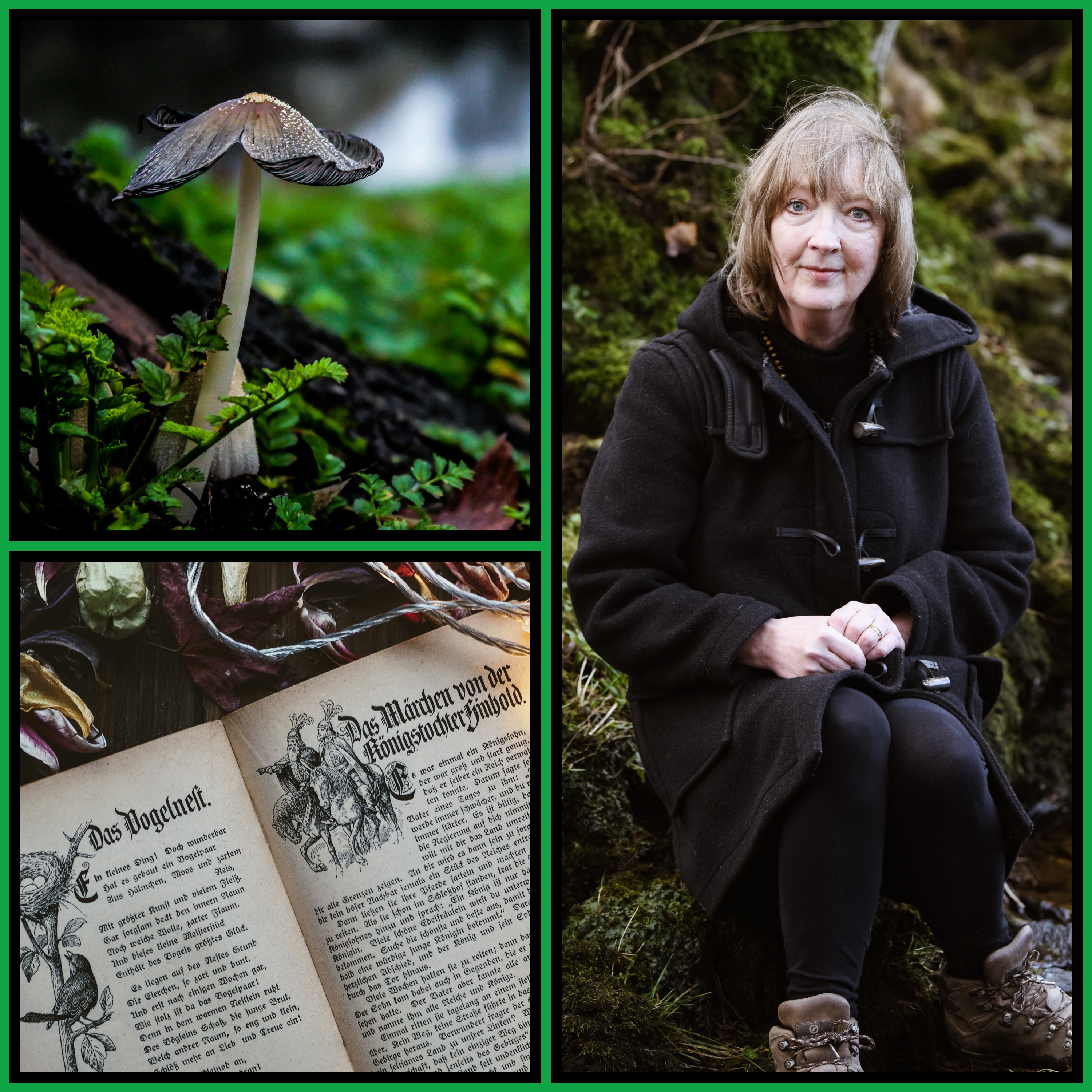
Why We Need Fairy Tales Now — with Sharon Blackie
May 900:45:22Tap to summarizeSharon Blackie is one of our foremost fairy tale interpreters. In her new book, “Ripening: Why Women Need Fairy Tales Now,” she reclaims the subversive fairy tale heroines of the past. Not passive, well-behaved princesses — think Tatterhood instead of Cinderella, the Fox Wife instead of Sleeping Beauty — figures from centuries-old European folk tales that were whispered over hearths and spinning wheels, and handed down from one generation of women to the next, not as children’s entertainment but a blueprint for survival, maps for soul retrieval and cultural regeneration. The brave, smart heroines and wise old women in these tales offer us an alternative, “post-heroic” model of psychological development, Blackie says. A code of ethics based on kinship with the more-than-human world of animals and plants, and a celebration of old-fashioned virtues like compassion, kindness and reciprocity. Fairy tale heroines, Blackie says, don’t slay dragons — they make them part of the team. Fairy tales are part of our collective unconscious, a storehouse of archetypes and images that predate the modern world. There's a bridge back to the enchanted landscapes and animist sensibilities of our ancestors — a gateway to wonder. In this conversation, Blackie shows us how to unlock their power and find our way back the imaginal world. – Website "The Art of Enchantment" Substack "Ripening: Why Women Need Fairy Tales Now" The Nostos Institute Sharon’s other books –0:00 Introduction2:25 Why Fairy Tales Are Survival Stories12:25 Beyond the Hero's Journey27:05 Jung, Hillman, and the Imaginal World41:45 Active Imagination and Closing Thanks Wonder Cabinet is hosted by Anne Strainchamps and Steve Paulson. Find out more about the show at https://wondercabinetproductions.com, where you can subscribe to the podcast and our newsletter.
Transcribe →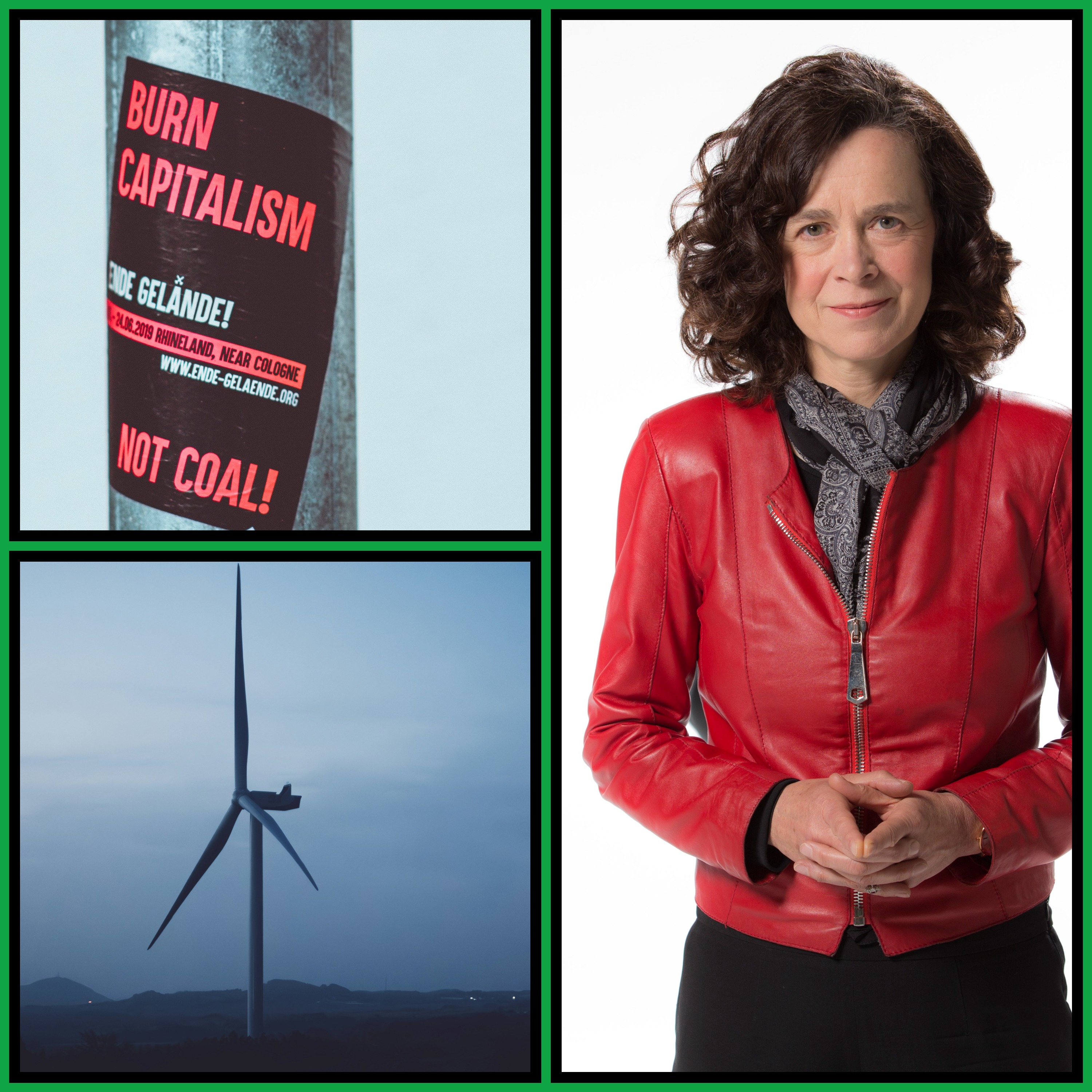
Rebecca Henderson: Can Capitalism Save the World It’s Destroying?
May 200:49:50Tap to summarizeCan capitalism save the world it's destroying?Rebecca Henderson thinks so. An economist at Harvard Business School and author of Reimagining Capitalism in a World on Fire, she has advised some of the world's biggest corporations and argues that capitalism itself — and what drives corporations — urgently needs to change.She's clear-eyed about capitalism's failures — the inequality, the exploitation, the environmental destruction — which is precisely what drives her passion for reforming it from within. And as a climate activist, she's haunted by the consequences if we fail to act.But this conversation goes deeper than economics. Henderson opens up about hitting a personal wall in her climate work — and the unexpected turn that brought wonder back into her life.– Website Book: "Reimagining Capitalism in a World on Fire" More writing by Rebecca Henderson –0:00 Introduction3:00 Capitalism Reimagined8:30 The Norway Turnaround16:50 Hitting the Wall28:40 Reweaving Ourselves43:00 Finding the Way Through Wonder Cabinet is hosted by Anne Strainchamps and Steve Paulson. Find out more about the show at https://wondercabinetproductions.com, where you can subscribe to the podcast and our newsletter.
Transcribe →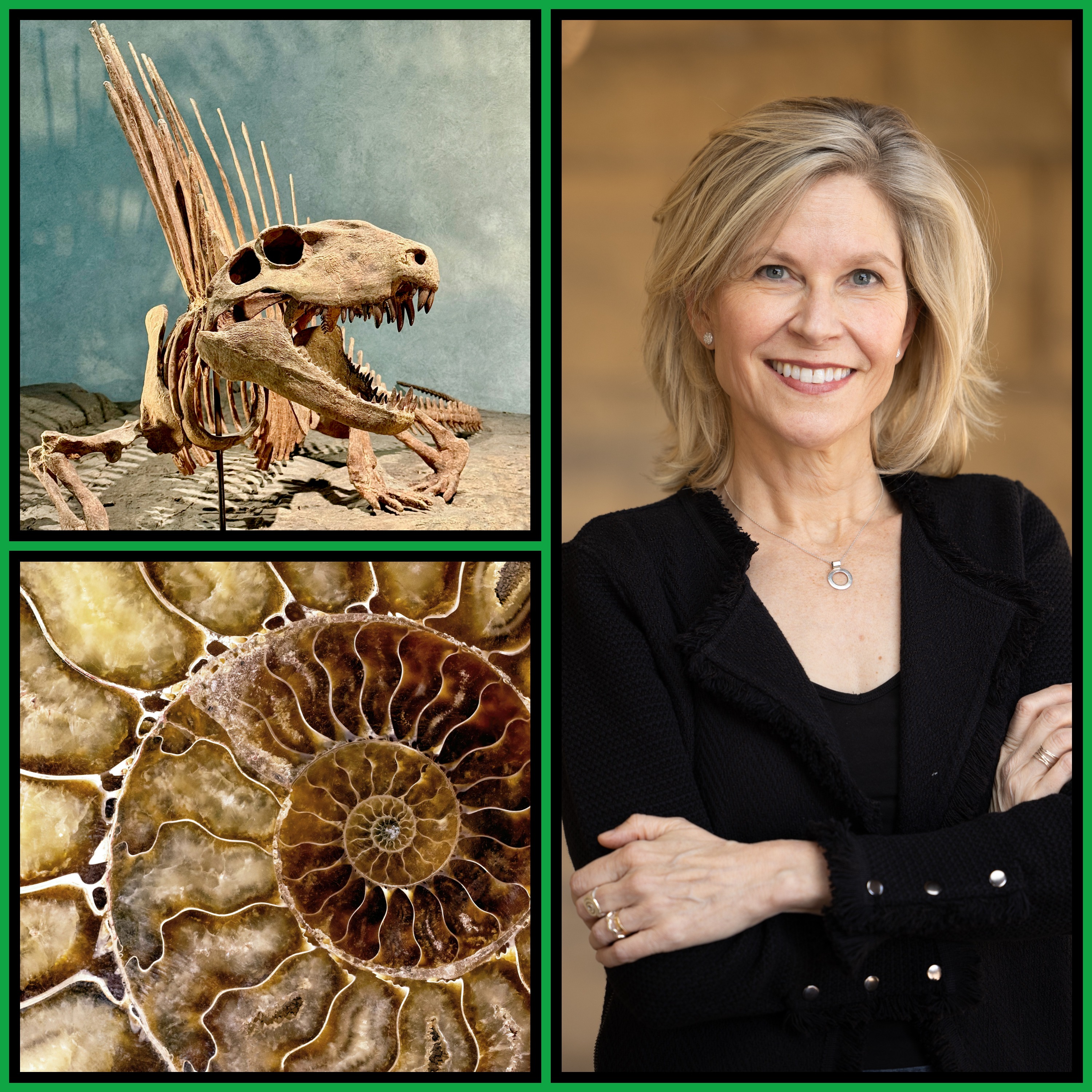
Caroline Winterer: Dinosaurs, Deep Time and the American Soul
Apr 2500:36:38Tap to summarizeT-Rex. Brontosaurus. Diplodocus. Just the names conjure something enormous — a sense of scale that dwarfs human history. Standing before dinosaur tracks in the Utah desert, or gazing up at a towering skeleton in a natural history museum, you feel it: the vertigo of deep time. Millions of years of life and death, compressed into bone and stone.Two hundred years ago, Americans began unearthing mysterious fossils and giant bones they didn't even have names for yet. Almost overnight, something remarkable happened: the New World became old. The United States went from infant start-up nation to the blueprint for all of creation.Stanford historian Caroline Winterer traces this deep time revolution in her book How the New World Became Old — and she shows us how profoundly it shaped American identity. We still think of dinosaurs as fun, as children's toys and museum spectacles. Few of us realize how deeply they underwrote a national mythology — one that fueled American exceptionalism, manifest destiny, Christian nationalism and genocide.This is a story about wonder and awe. And it teaches us that those emotions are neither simple nor neutral.— Caroline’s website Caroline’s book "How the New World Became Old: The Deep Time Revolution in America" —00:00:00 Introduction00:03:20 Dinosaurs and the Deep Time Revolution00:10:10 Darwin and Fundamentalism00:16:10 The Shadow Side of Wonder00:29:00 Deep Time Today Wonder Cabinet is hosted by Anne Strainchamps and Steve Paulson. Find out more about the show at https://wondercabinetproductions.com, where you can subscribe to the podcast and our newsletter.
Transcribe →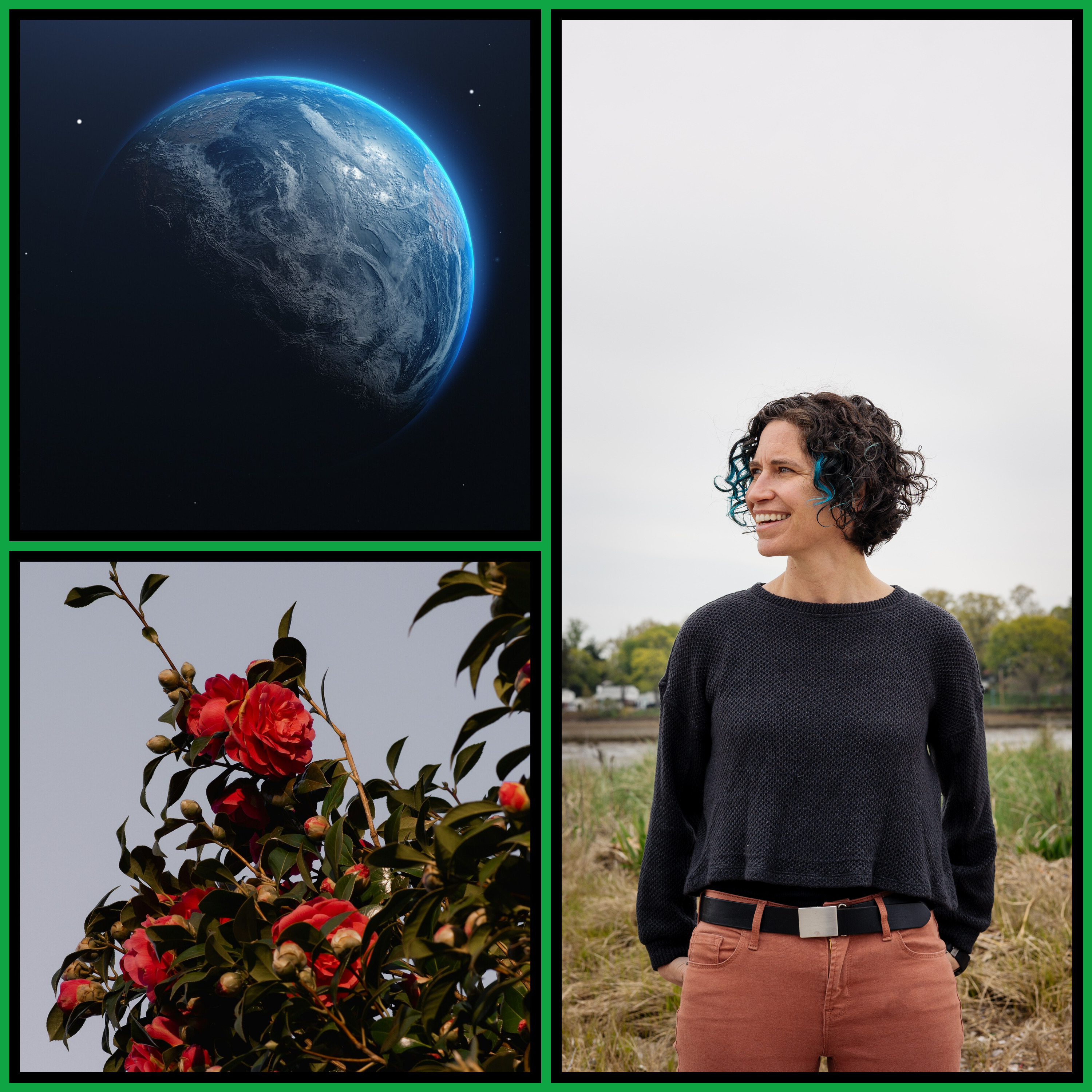
Mary-Jane Rubenstein: Pantheism and the Godness of Nature
Apr 1800:42:02Tap to summarizeWhat if nature isn’t just alive—but divine? Pantheism, once branded heresy, is finding new adherents among those who don’t consider themselves religious but still sense something sacred and wondrous in the living world.Mary-Jane Rubenstein, a scholar of philosophy and religion, traces the long, contested history of wonder—from medieval mystics to modern seekers. She reflects on the Overview Effect, that disorienting moment when astronauts gaze back at Earth and feel both its fragility and its radiance. And she talks about the obsession that tech titans like Jeff Bezos and Elon Musk have for space exploration, which may be the new frontier of awe—even a new religion.But awe is never simple. It can be as unsettling as it is beautiful, as terrifying as it is astonishing. It breaks us open even as it draws us in—leaving us to reckon with a world that is stranger than we thought.– Faculty profile "Astrotopia: The Dangerous Religion of the Corporate Space Race" "Pantheologies" "Strange Blood" –0:00 Introduction3:50 Pantheism: History and Ethics11:15 Personal Spirituality19:55 Awe, Wonder, and the Overview Effect28:35 Space as Religion35:50 The Wonder Cabinet Wonder Cabinet is hosted by Anne Strainchamps and Steve Paulson. Find out more about the show at https://wondercabinetproductions.com, where you can subscribe to the podcast and our newsletter.
Transcribe →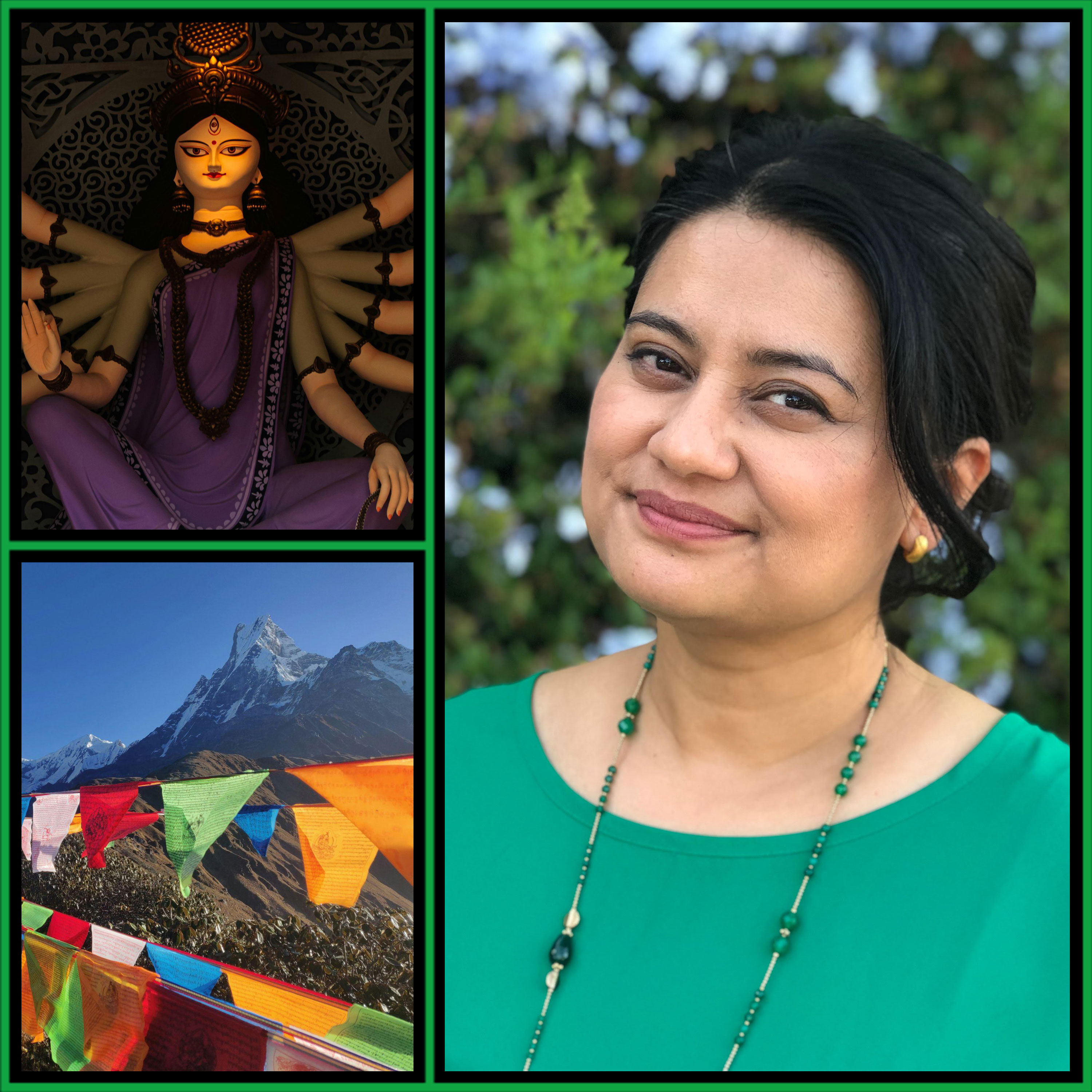
Dekila Chungyalpa on the Sacred Feminine and the Living Earth
Apr 1100:39:21Tap to summarizeImagine growing up believing that at the heart of existence is a Primordial Mother—and that She is the Earth.For Dekila Chungyalpa, that idea is not metaphor. It’s inheritance.In Tibetan Buddhism, the feminine divine appears as Prajnaparamita, or Yum Chenmo—the “Mother of All Buddhas.” As the daughter and granddaughter of nuns, Dekila was raised in a world where spiritual teaching and healing was often female, and where land itself—especially the sacred Himalayan landscape of Sikkim—was alive with presence, meaning, and obligation.Today, she is a global conservationist and founding director of the Loka Initiative, building unlikely partnerships between climate scientists and religious leaders across traditions—from Buddhist monastics to Catholic clergy, Indigenous elders to Muslim clerics and Evangelical pastors. Her work suggests that the climate crisis is not only scientific or political—but spiritual. — UW: About the Loka Initiative Loka Initiative website Center for Humans and Nature: Dekila on ecology and the Buddhist concept of interdependence —0:00 Introduction4:05 Sacred Mountains of Sikkim10:20 The Sacred Feminine16:30 Rituals and the Land21:25 Scientist by Day, Buddhist by Night28:25 Bridging Faith and Science Wonder Cabinet is hosted by Anne Strainchamps and Steve Paulson. Find out more about the show at https://wondercabinetproductions.com, where you can subscribe to the podcast and our newsletter.
Transcribe →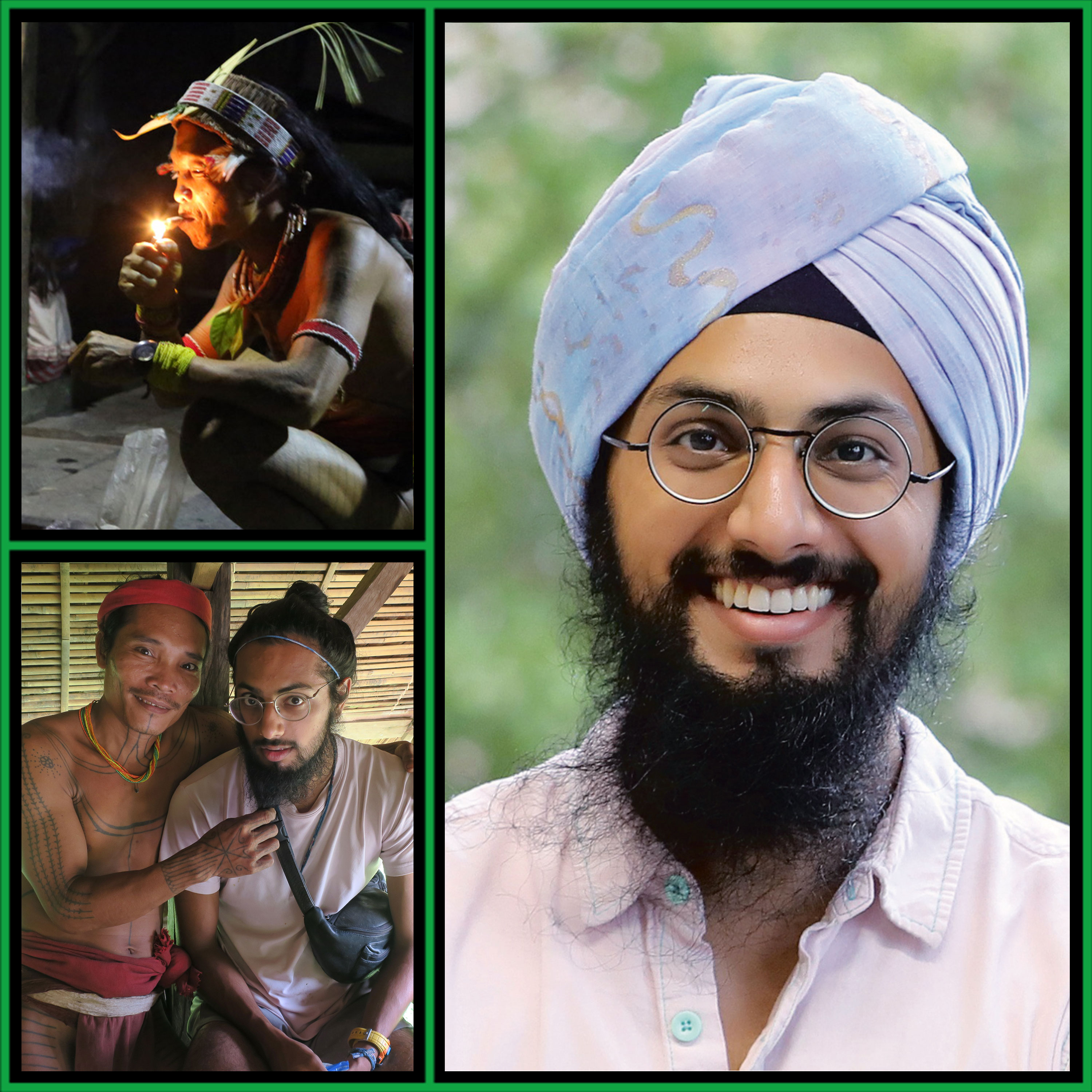
Manvir Singh: Was Shamanism the First Religion?
Apr 400:34:03Tap to summarizeShamanism may be humanity’s oldest religion – a tradition found across cultures, where healers slip into unseen realms, speak with spirits, and bring back knowledge from beyond the visible world. But in a modern, scientific age, these practices can seem like little more than superstition. But what if they reveal something deeper in human experience? Anthropologist Manvir Singh set out in search of answers. On a remote island in Indonesia, he lived with the Mentawai people, watching as their shamans — the sikerie — drummed, danced and entered trance, their tattooed bodies painted in turmeric. In these altered states, they appeared to move between worlds. How does an empirically-minded scientist make sense of such experiences? Singh combines immersive fieldwork with cross-cultural research into shamanic traditions, past and present. He calls shamanism a “timeless religion,” one that may go back to our earliest ancestors — and still lives on in the world’s major religions.Along the way, he asks a provocative question: Was Jesus a shaman?— Manvir’s book, Shamanism Manvir’s article in The Guardian on the debate over the history of psychedelics in indigenous cultures —0:00 The Macumba Exorcism in Brazil4:35 Meeting the Sikerei of Siberut8:30 Inside a Shamanic Healing Ceremony17:05 Psychedelics and Altered States22:10 Shamanism as the First Religion29:25 Was Jesus a Shaman? Wonder Cabinet is hosted by Anne Strainchamps and Steve Paulson. Find out more about the show at https://wondercabinetproductions.com, where you can subscribe to the podcast and our newsletter.
Transcribe →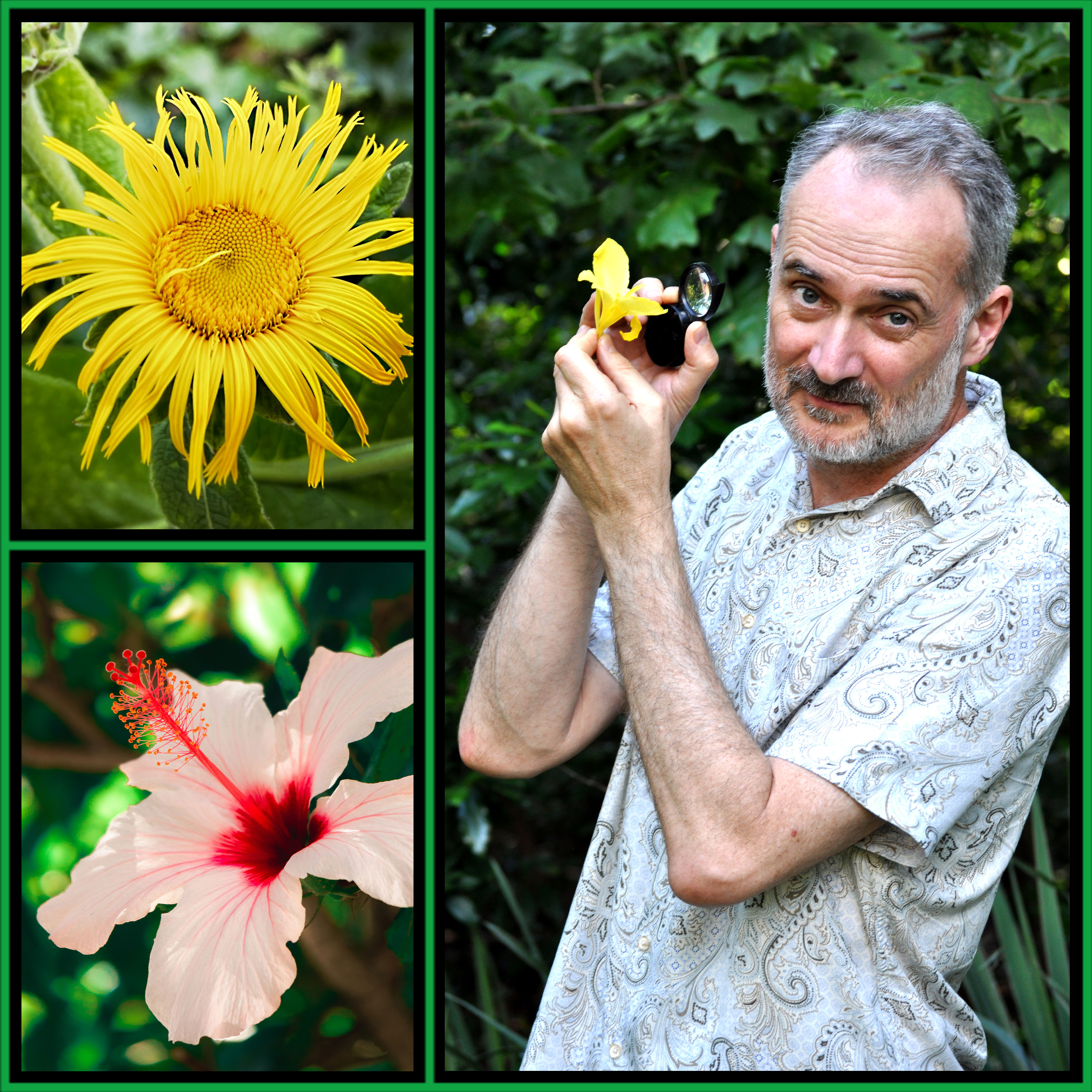
David George Haskell: Flowers and the Revolutionary Power of Beauty
Mar 2800:42:20Tap to summarizeFor thousands of years, flowers have threaded themselves through human life—into our rituals, our art, our language, even our names. We decorate our homes and altars with them, distill their scents, celebrate them in poetry and song. But what if we’ve misunderstood them entirely?In How Flowers Made the World, biologist and writer David George Haskell invites us to see flowers not as delicate embellishments, but as one of the most powerful forces in Earth’s history. When flowering plants emerged more than 200 million years ago, they didn’t just adapt to the world—they transformed it. Through strategies of beauty, attraction, and reciprocity, they turned rivals into partners, reshaping ecosystems and making possible the rich diversity of life we know today.In a lyrical, science-rich conversation, we explore:— Why Haskell calls flowers “nature’s revolutionaries”— How beauty, pleasure, and desire function as evolutionary strategies— The deep interdependence between flowers, animals, and humans— What flowers can teach us about resilience in a time of ecological crisis— How re-centering flowers might change the story we tell about life on EarthWe live on a floral planet, Haskell says—and more than that, we are a floral species, utterly dependent on flowering plants for food, habitat, and survival. The lessons flowers offer—about creativity, cooperation, and transformation—may be exactly what we need to navigate a rapidly changing world.What would it mean to tell the story of life not through predators and conquest, but through seduction, partnership and bloom? David's book: How Flowers Made Our World: The Story of Nature’s Revolutionaries To the Best of Our Knowledge (2020): David George Haskell on the forest unseen To the Best of Our Knowledge feature (2021): Listening to trees as fellow citizens 00:00:00 Introduction00:03:50 Flowers Remade the World00:12:40 The Scent of Ancient Flowers00:22:00 The Language of Perfume00:30:30 Belonging to the Living World Wonder Cabinet is hosted by Anne Strainchamps and Steve Paulson. Find out more about the show at https://wondercabinetproductions.com, where you can subscribe to the podcast and our newsletter.
Transcribe →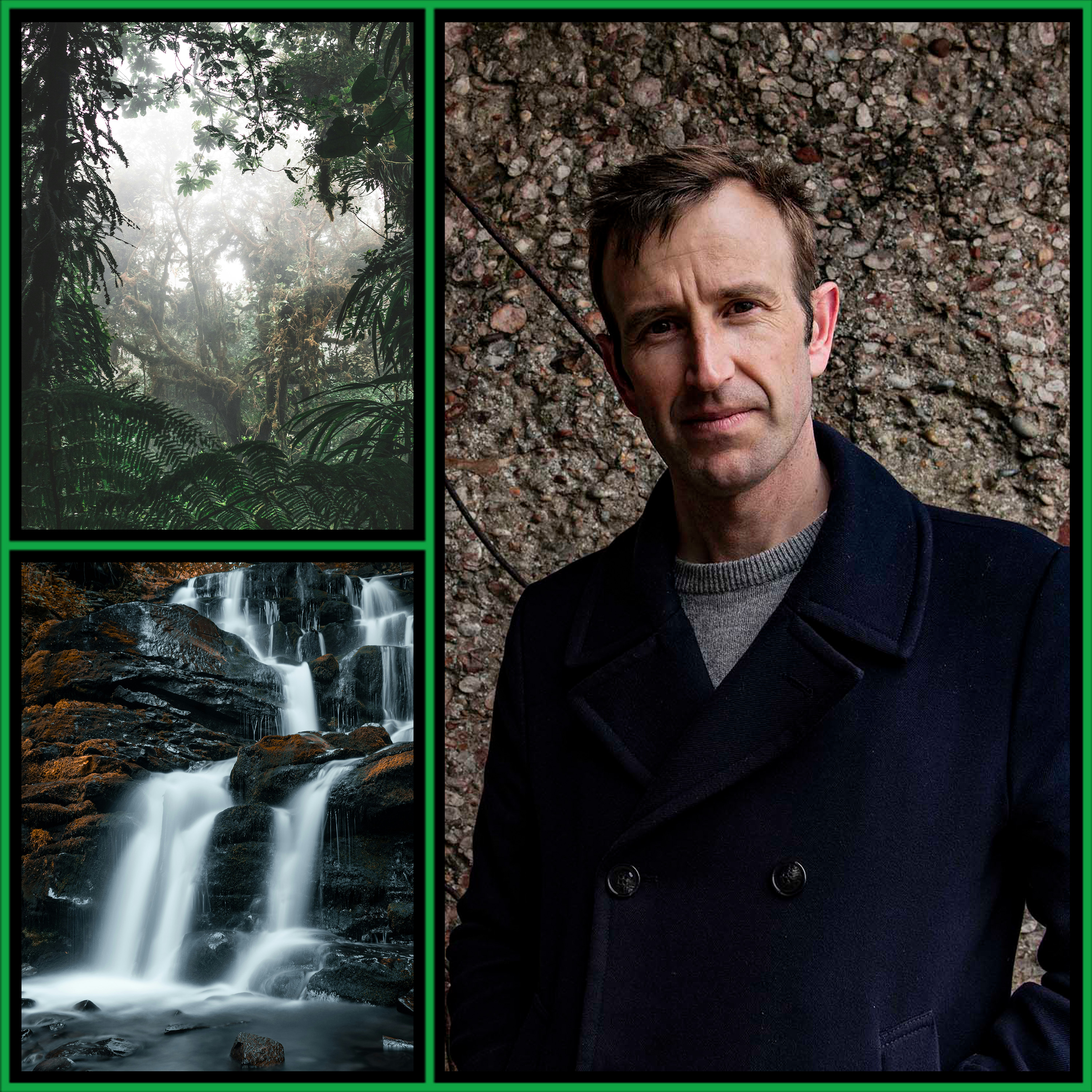
Robert Macfarlane: The Soul of Rivers and the Rights of Nature
Mar 700:37:47Tap to summarizeWhat if a river is alive–but we’ve forgotten how to recognize it?This is the radical idea at the heart of the global “rights of nature” movement, which seeks to grant rivers, forests and ecosystems legal standing. Rooted in ancient traditions and emerging in modern law, it challenges the notion of nature as property and a resource to be exploited.In “Is a River Alive?”, acclaimed writer and explorer Robert Macfarlane travels to remote waterways in Ecuador, India and Canada, meeting mycologists, Indigenous river-keepers, and activists who see the natural world as animate and ensouled. Known for celebrated books like “Underland,” “The Old Ways,” and “Mountains of the Mind,” Macfarlane blends storytelling, natural history and philosophy in an invitation to reimagine our relationship with the living Earth.If rivers have rights—and perhaps even a kind of consciousness—how would that change the way we see the world?— To the Best of Our Knowledge – Macfarlane describes the allure and our fascination with the underground world of caves, mines, catacombs and glacial shafts beneath the earth's surface. To the Best of Our Knowledge - Macfarlane offers a book recommendation: “The Living Mountain” by the Scottish poet and writer Nan Shepherd. University of Cambridge – Robert Macfarlane’s faculty page —00:00:00 Introduction00:03:00 Is a River Alive?00:10:50 Ecuador's Cloud Forest00:19:40 Chennai's Dying Rivers00:24:15 Wild River in Quebec Wonder Cabinet is hosted by Anne Strainchamps and Steve Paulson. Find out more about the show at https://wondercabinetproductions.com, where you can subscribe to the podcast and our newsletter.
Transcribe →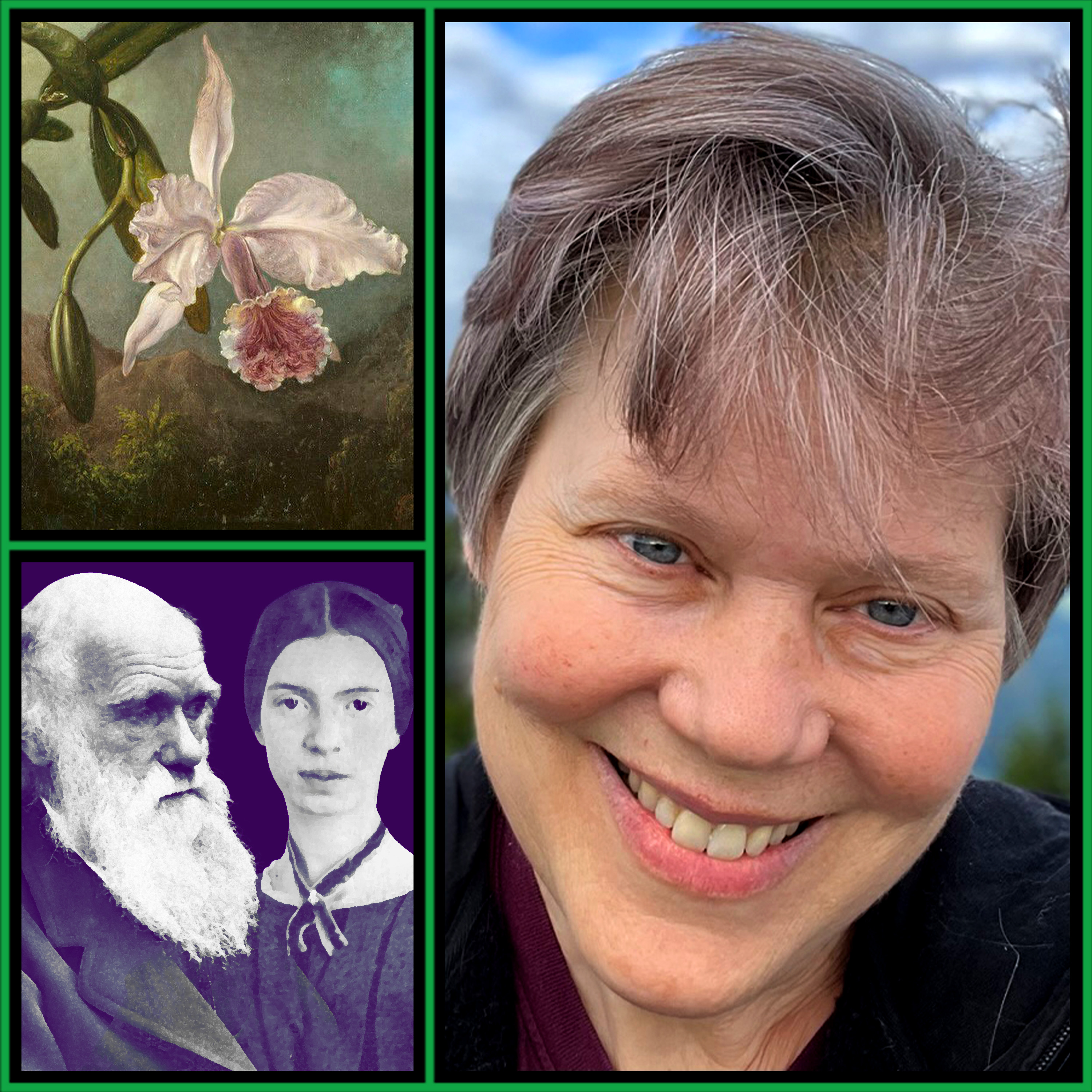
Renee Bergland: The Enchanted Science of Emily Dickinson and Charles Darwin
Feb 2800:39:28Tap to summarizeEmily Dickinson and Charles Darwin both saw nature as alive with mystery – and treated wonder as a way of knowing. Literary scholar and science historian Renee Bergland, author of "Natural Magic," is our guide to the forgotten kinship between the reclusive poet and the celebrated naturalist. Dickinson and Darwin never met, but they had at least one close friend in common. Both were both fascinated by fossils. Both wandered the woods and swamps near their homes, studying insects and documenting rare plants. They shared a vision of the interconnectedness of all life. We know that Dickinson, with her background in botany, geology, astronomy and chemistry, was enthralled by Darwin’s evolutionary theory. And it certainly seems possible that Darwin, with his degree in theology and his lifelong love of poetry and literature, might have admired the American poet whose close observations and delicate perceptions echoed his own. Bergland’s dual biography, just out in paper, is vivid, sparkling intellectual history – a window onto a time when scientific thinking still embraced emotion and wonder as modes of perception. Could the belief in “natural magic” that infused Dickinson’s and Darwin’s ideas restore our own faith in a universe alive with meaning? Our conversation about the poet who studied natural history and the naturalist who loved poetry suggests a way forward – by reclaiming their shared ecological wonder. — Now out in paperback: "Natural Magic: Emily Dickinson, Charles Darwin, and the Dawn of Modern Science" Previous books from Renee Bergland: "Maria Mitchell and the Sexing of Science: An Astronomer Among the American Romantics" and "The National Uncanny: Indian Ghosts and American Subjects" —0:00 — Meeting Renee Bergland9:00 — What Is Natural Magic?20:00 — Beauty, Truth, and Evolution34:00 — Hope and the Garden of Change Wonder Cabinet is hosted by Anne Strainchamps and Steve Paulson. Find out more about the show at https://wondercabinetproductions.com, where you can subscribe to the podcast and our newsletter.
Transcribe →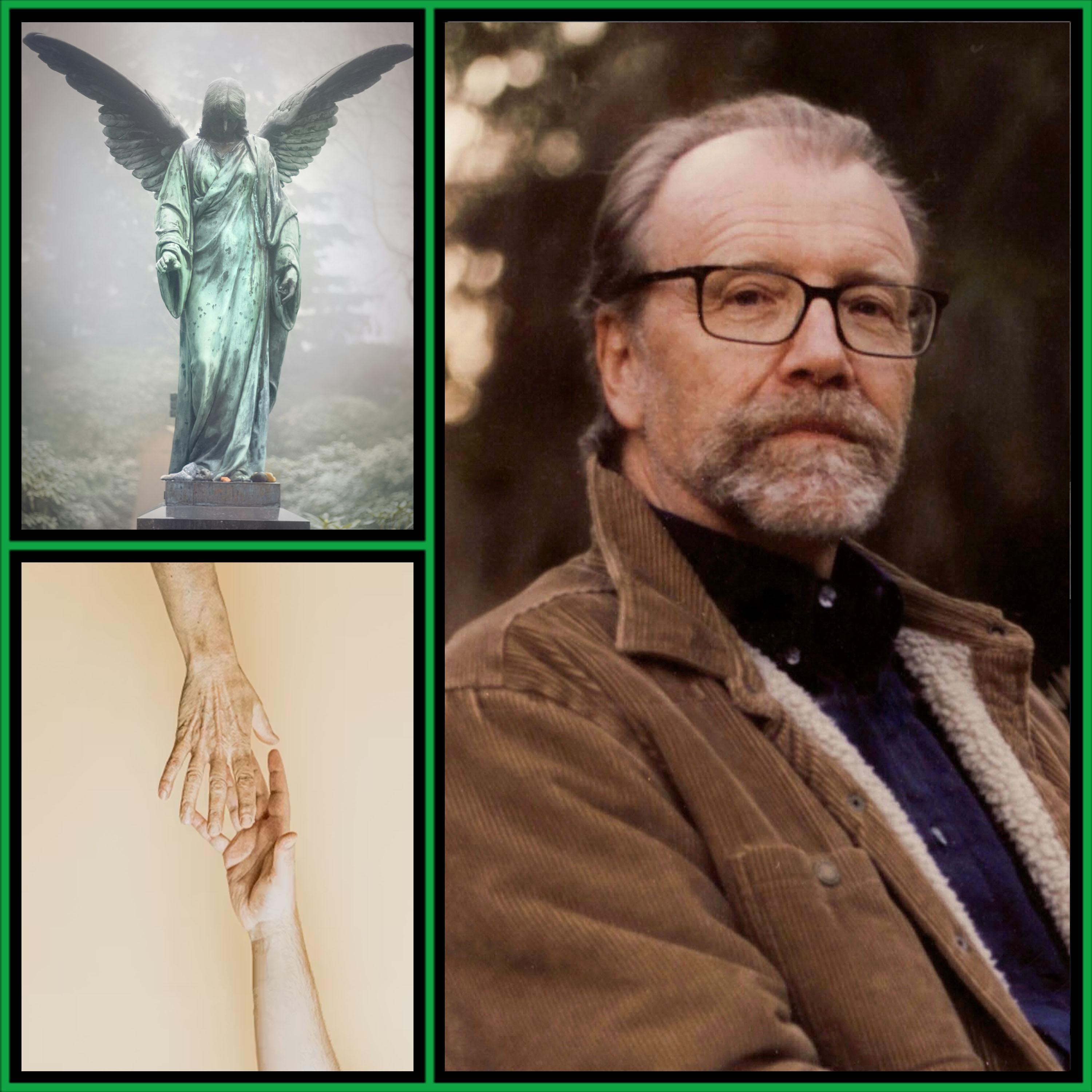
George Saunders: Angels, Ghosts and the Moral Imagination
Feb 2100:44:35Tap to summarizeWhat if dying is not an ending, but a moment of radical clarity? In his new novel "Vigil," George Saunders conjures a strange and often comic world of bickering angels visiting a dying, deeply flawed man—debating and waiting to see whether he can face the truth about himself before it’s too late.In this conversation, Steve Paulson talks with Saunders about the evolution of his ideas about death and the possibility of an afterlife. Dying, he says, may be “the ultimate experience of wonder,” and he believes ghost stories can open powerful imaginative spaces for novelists. Saunders reflects on his own Buddhist practice as he considers these life-and-death questions, and he tells us why he thinks fiction is uniquely suited to grappling with complex moral issues and why Tolstoy and Chekhov are his personal sources of inspiration.Saunders is the author of such celebrated books as “Tenth of December,” “Pastoralia,” and the Booker Prize-winning “Lincoln in the Bardo.” His nonfiction book about the great Russian writers is “A Swim in a Pond in the Rain.”This interview was recorded at the Central Library in downtown Madison shortly before Saunders spoke at the Wisconsin Book Festival.— To the Best of Our Knowledge — On his short story collection “Tenth of December. To the Best of Our Knowledge: Reflecting on “Lincoln in the Bardo.” Substack Story Club with George Saunders —00:00:00 Introduction and Reading from Vigil00:07:50 The Plane Crash and Death Obsession00:15:00 The Writing Process and Wonder00:24:30 Moral Accountability in Fiction00:32:20 Chekhov, Succession, and Accuracy00:40:00 Kindness, Criticism, and Final Thoughts Wonder Cabinet is hosted by Anne Strainchamps and Steve Paulson. Find out more about the show at https://wondercabinetproductions.com, where you can subscribe to the podcast and our newsletter.
Transcribe →