← To The Contrary with Charlie Sykes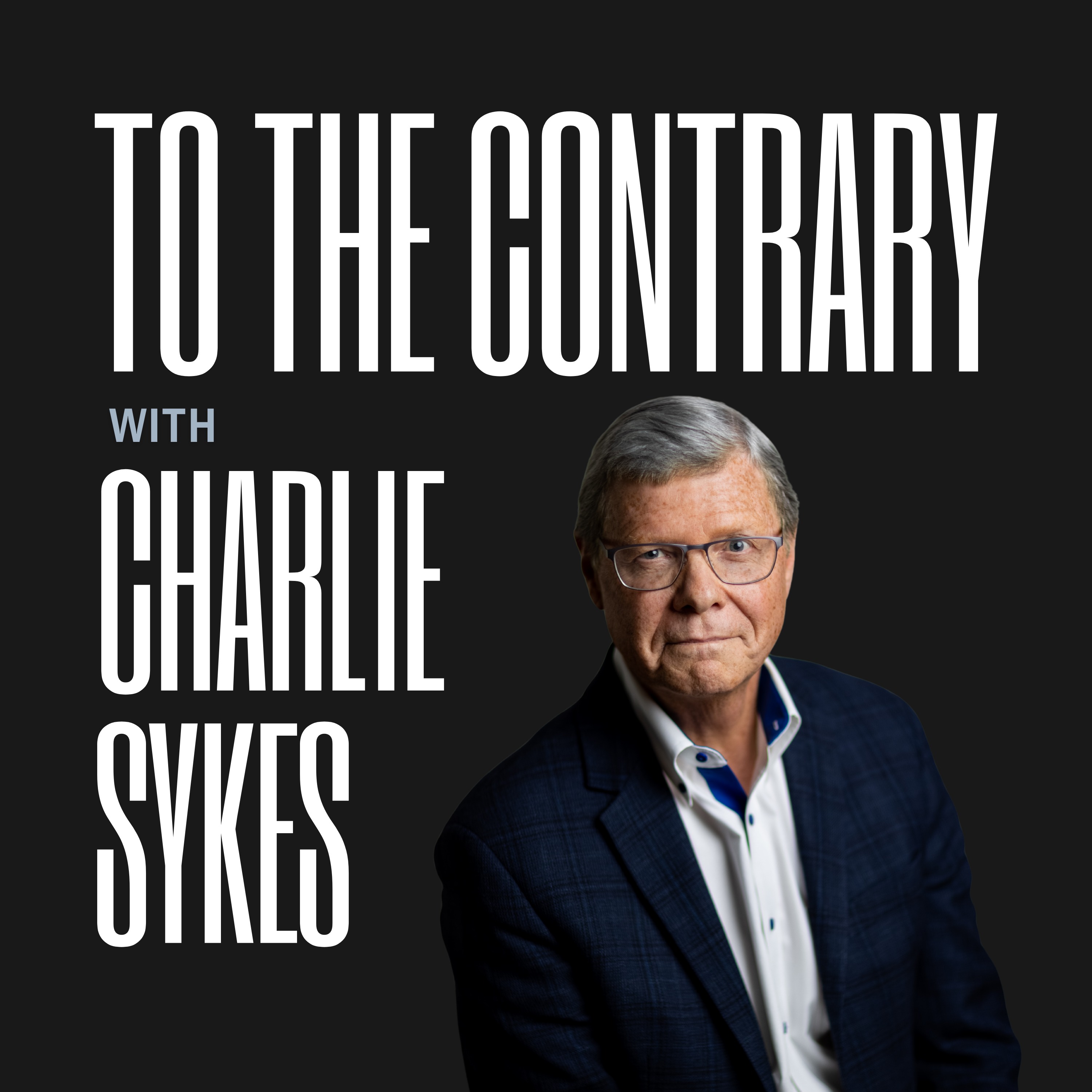
To The Contrary with Charlie Sykes
Daniel Drezner: Trump 2.0, Free Speech, and Foreign Policy Failures
00:40:41
Loading summary
Transcript69 lines
- [00:00]
Daniel Dresner
Did I talk too much? Can't I just let it go?
- [00:04]
Charlie Sykes
Thank you so much.
- [00:09]
BetterHelp Advertiser
Take a breath. You're not alone. Let's talk about what's going on. Counseling helps you sort through the noise with qualified professionals, and online therapy makes it convenient. See if it's for you. Visit betterhelp.com randompodcast for 10% off your first month of online therapy and and let life feel better.
- [00:30]
Daryna (OpenPhone Co-founder)
Hi, I'm Daryna, co founder of OpenPhone. My dad is a business owner and growing up, I'll never forget his old ringtone. He made it as loud as it could go because he could not afford to miss a single customer call. That stuck with me when we started OpenPhone. Our mission was to help businesses not just stay in touch, but make every customer feel valued, no matter when they might call. OpenPhone gives your team business phone numbers to call and text customers, all through an app on your phone or computer. Your calls, messages and contacts live in one workspace so your team can stay fully aligned and reply faster. And with our AI agent answering 24. Seven, you'll really never miss a customer. Over 60,000 businesses use OpenPhone. Try it now and get 20% off your first six months. And@openphone.com business and we can port your existing numbers over for free. OpenPhone no missed calls, no missed customers.
- [01:30]
Thumbtack Advertiser
Avoiding your unfinished home projects because you're not sure where to start. Thumbtack knows home so you don't have to. Don't know the difference between matte paint finish and satin or what that clunking sound from your dryer is. With Thumbtack, you don't have to be a home pro, you just have to hire one. You can hire top rated pros, see price estimates and read reviews all on the app download today.
- [02:03]
Charlie Sykes
Welcome to the to the Contrary podcast. I am Charlie Sykes and we are joined by a very special guest, Daniel Dresner, who is the academic Dean and Distinguished professor of International Politics at the Fletcher School of Tufts University at Tufts University. So first of all, Daniel, good to talk with you again. I talked with you in a previous life. We met at a recent conference about the future of liberalism in Washington, D.C. and decided that we were definitely gonna be doing this again. So I appreciate it. So, okay, just a quick flashback, quick flashback. I became acquainted with your work, became a big fan of your work when you were doing the Donald Trump as toddler in chief. Now in the years since then, I have become acquainted with more toddlers and we've become more familiar with Donald Trump. And I wonder Whether or not you still think of him as a toddler in chief, because most of the toddlers I know are actually pretty decent folk, and Donald Trump seems somewhat more malign. Would you want to update that?
- [03:07]
Daniel Dresner
I would update it in the sense that I would characterize him as a petulant toddler. You're right that toddlers. Toddlers have positive qualities. Very often they sort of have a sense of wonder, you know, and can often be very charming. Trump doesn't display those traits nearly as much. So, yes, I grant you that. And also, let's be honest, you know, what's becoming increasingly clear this year is that he also has the traits of a very old man that is starting to lose it. So that. That's another problem. I was. I was asked repeatedly when Trump got elected again, was I going to restart that thread? And I decided for both my own sanity and a few other reasons not to do it. First of all, I wasn't going to do it on Twitter if I did. And second, unfortunately, this has been the real problem. I don't doubt that Trump is still acting like a toddler. Like there's. There's still the occasional thing I see that reminds me of the thread. The difference this time around is that in his first term, there were plenty of people who were working for him who were willing to tell the media that he was doing this. Unfortunately, his staff is far more loyal to him this time around.
- [04:11]
Charlie Sykes
Okay. It's funny you should mention that, because I was doing a podcast earlier this morning, I think it was a Dutch podcast, and we got to talking about the difference between Trump 1.0 and Trump 2.0. And I said, and again, I don't know why I woke up thinking about Mike Pence this morning. Mike Pence, the ultimate loyalist, the ultimate loyal vice president, the guy who would pick up the bottle of water when Donald Trump picked up the bottle of water, who would walk out of NFL games if Donald Trump told him to do that. And yet, at the very end of that Trump 1.0, Mike Pence, did something that was extraordinary, particularly in retrospect. He refused Donald Trump's sentinel. It was order to violate the law, to overturn the election, to violate the Constitution. And as I was thinking about that, I was thinking about that Trump 2.0, in many ways, in order to understand it, is that this administration is. Pence proofed that Donald Trump very specifically set out to stack his administration with people who would never do what Mike Pence did, who would never have that moment where he would say this is my red line. I am not. I'm putting the country and the Constitution ahead of my loyalty to you. And that really explains his staffing and his cabinet that you have people like Pete Hegseth and Pam Bondi and Kash Patel who will never, under any circumstances say no to the president, no matter how outrageous his demands and requests are. So it's pence proofed. Yeah, yeah, yeah. And that's the big difference. Okay. Let's not talk about Donald Trump, though, for a moment. Okay.
- [05:50]
Daniel Dresner
Okay.
- [05:51]
Charlie Sykes
I mean, I want to get to, for readers and listeners, you write a substack newsletter, Dresner's World. And I want to talk about some of the pieces that, you know, might have gotten lost in the shuffle with Charlie Kirk and et cetera, involving foreign policy. And I want to talk about a variety these other things. But before that, and this relates to absolutely nothing, I just, I posted this on social media for no reason whatsoever, but somebody forwarded this article from the New York Times, Saturday, February 4, 1939. Okay. Goebbels ends career of five Aryan actors who made witticisms about the Nazi regime Berlin, February 3. Propaganda Minister Joseph Goebbels today ended the professional careers of five Aryan actors and cabaret announcers by expelling them from the Reich's Chamber of Culture on the grounds that, quote, in their public appearances they displayed a lack of any positive attitude toward National Socialism and therewith caused grave annoyance in public and especially to party comrades. The five include perhaps the best known German stage comedians who survived previous Chamber of Culture purges and still dared to indulge in political witticisms. And then it goes through the names Werner Fink. I'm not going to pronounce all of them. As regards the details of the crimes of which the five are accused, Dr. Goebbels mentions they made political witticisms about the colonial problem, the Four Year Plan and Chancellor Hitler's monumental building program. And one of them even raised the question of whether there was any humor left in Germany today. Oh, man, I just bring this again, not in relationship to anything else. So again, hard segue to your thoughts about President Trump on Air Force One flying back from meeting the king of England and declaring, obviously feeling rather exultant and emboldened and empowered by the Disney ABC's firing of of Jimmy Kimmel or Canning of Jimmy Kimmel for making some inappropriate witticisms, saying that the networks had been that networks who had been too critical of him that were against him should have their broadcast licenses pulled and it would be up to Brendan Carr and once again talking about the quiet part out loud, essentially saying, yeah, I am prepared to use the power of state coercion to pull the licenses from broadcast networks that are, that hit me, because they're not allowed to do that.
- [08:42]
Daniel Dresner
I mean, we, we saw the sort of trial run of this during his first administration. You know, Trump would occasionally articulate a desire to interfere in media mergers and acquisitions in the hopes that this would get him more favorable coverage. Think about this. The, the Time Warner merger, for example. What has changed this time, I think, is a couple of things. First, he's clearly willing to do it. I mean, it's been an explicit, pretty quo, quo when it comes to mergers and acquisitions in particular, that unless corporations suck up to him, he will order the Justice Department not to, you know, the antitrust division not to approve. So, you know, this leads to, you know, Even before this, ABC, I think, had agreed to a. Pay Trump $15 million in a lawsuit that everyone knew that Trump was going to lose. You know, it comes up, right, it comes up in the Paramount Skydance merger where that led to the, you know, among other things, the creation of an ombudsman for CBS News, the of the concessions were made at 60 minutes, and of course, the firing of Colbert or the, the termination of Colbert's run show beginning next year. Yeah, you know, I would say that it's part of a larger, it's part of a larger, I would say, attempted bullying that Trump has done to implicit. It basically try to send the message that if you disagree with him, he will take the powers of the federal government and try to make your life miserable. Now, some of these threats. Well, yeah, some of these threats, though, are not as potent as others. Like whenever he threatens to withdraw the FCC license of a broadcaster. My understanding is that that's actually fantastically difficult, that he probably would not be able to do that. But the mergers and acquisitions thing is real. That's something that clearly corporations have decided they don't want to be on the wrong side of that. Or think about the law firms that decided to settle in a similar manner, I think potentially because of mergers. And I think what. And, or think about universities that are dependent upon, you know, federal funding in terms of research to be able to do what they do. And so what, what Trump, Trump's one gift in politics is that he can spot human weakness. And yes, he can spot institutional weakness as well. And so he has taken a look at the array of civil society institutions and private firms that have occasionally been thorns in his side and figured out where he can squeeze.
- [11:22]
Charlie Sykes
Right. And he's been remarkably successful at doing this. But this is where, in the area of free speech and the First Amendment, I guess I expected there would be much more pushback from the media and from Hollywood. And the willingness to acquiesce is a little bit startling. Although, as you point out, he understood what the, the most vulnerable points were, these mergers and acquisitions. So what's interesting is the Supreme Court has been very, very clear, at least up until now, very, very clear, that you cannot use government coercion to force certain kinds of speech or activity. So it was just last year, 9 nothing unanimous decision by the Supreme Court in a case involving the nra, of all people. Government officials cannot attempt to coerce private parties in order to punish or suppress views that the government disfavors. Now, clearly, that's what's happened with ABC and Disney. But the problem is that if ABC and Disney voluntarily cave in and then they do not sue and they don't go to court, what is the remedy? Right.
- [12:30]
Daniel Dresner
Parallel.
- [12:30]
Charlie Sykes
I mean, if they did sue, they would probably win, but if they go, no, this was our choice. We wanted to do this anyway.
- [12:37]
Daniel Dresner
Yeah. The parallel here is like when people talk about how has Trump been able to do so much in his second term in terms of wreaking carnage across the executive branch, Part of the issue is, is that you need a Congress that actually cares about their powers. You know, Congress, a Congress that cares about their separation of powers would take action against the executive branch. But since Congress is controlled by Republicans, and again, in contrast to 2017, when the Republican Party was not fully MAGA this time around, you know, there you've got members of Congress, Republican members of Congress sort of shrugging their shoulders and saying, we're not going to do that much. You know, maybe even we might not even agree with what Trump is doing, but we're not going to stop him. And so he's been able to get away with a fair amount because there is no, no one has standing to stop him, or the ones who do have to stop him won't choose not to do it. Yeah.
- [13:29]
Charlie Sykes
I mean, the good news is that I, despite all the disappointments, I'm pretty optimistic that the Supreme Court would uphold First Amendment rights. The bad news is it may never get. It may never get to them. And you're seeing this with the civil lawsuits as well, the kind of a mixed bag. I mean, as you and I are speaking, you have a federal judge in Florida that threw out the, you know, another One of the bogus lawsuits against the New York Times. But, you know, what Donald Trump is doing is he's throwing. He's throwing these libel suits, these defamation suits up against the wall like spaghetti. And the point is not necessarily to win them. It is to instill fear. It's to get reporters and other commentators to begin to second guess themselves, edit themselves, censor themselves. And there's some evidence that that's successful.
- [14:16]
Daniel Dresner
Yeah. Can we take a small moment, though, to savor the opinion by the Florida judge on the. Oh, it was throughout the lawsuit basically complaining, why is this so damn long? And saying they can refile.
- [14:29]
Charlie Sykes
Badly written, right?
- [14:30]
Daniel Dresner
Badly written. But, like, what I love is that they can refile, but it has to be less than 40 pages, which any academic in the universe identifies with the knowledge of. Oh, thank God he imposed a word count. That is so good. Yeah.
- [14:44]
Charlie Sykes
I mean, this was 83 pages, and I guess there's two counts. And it just.
- [14:47]
Daniel Dresner
Right.
- [14:48]
Charlie Sykes
I like the way the judge basically said, you understand that a complaint in a. In a court like this is not supposed to be like some guy ranting on the soapbox in the public square.
- [14:57]
Daniel Dresner
Exactly.
- [14:59]
Charlie Sykes
Which will. Which was hilarious. But, you know, just the other day, I was listening to Anne Applebaum, who has really been a student of authoritarianism, and she made a very, very interesting point. She was pointing out that many of the things that Trump is doing follow the Viktor Orban playbook in Hungary. But. And then she made the very strong distinction. Orban took 15 years to do many of these things. Orban was very careful not to go too far and too fast to provoke a backl. So it was kind of the boiling frog thing. The speed with which Trump is going moves him out of the Orban world into. And again, this is going to sound edgy, but into Vladimir Putin. Now, I don't know. When you and I were at that conference in Washington, did you hear Vladimir Kara Mirza, the Russian dissident, speak?
- [15:51]
Daniel Dresner
No. I know he made quite an impression, but I was unfortunately.
- [15:53]
Charlie Sykes
Well, he did. And one of the points that he made. And it's the same point that Karamurza, Garry Kasparov, and Ann Apple. Mom. All make the same point, which was the way that Vladimir Putin went about consolidating his power and the process of destroying democracy, that it was not inevitable and that he went after the media, he went after the oligarchs. And, you know, one of the interesting stories about Putin is one of the first ways he consolidated his power to destroy democracy was to go after independent Media. And one of the first things he did was to go after, I'm not sure what the name of it was. It's a. The puppets, the Pup. It was a satirical puppet show and he didn't like the puppet that made fun of him. And so once again, I think you see the pattern here.
- [16:47]
Daniel Dresner
So Trump, if there's something about Trump, it's that he hates being lampooned. This is. And I think it's connected to his theory of power, which is, you know, part of the reason Trump has been successful by his own standards in the second term is because he continually does things everyone expects, like a legal pushback or a political pushback. And if they don't encounter any, then Trump just keeps going. He doesn't, you know, he does not recognize, you know, constraint. But anything that punctures the sort of myth of Trumpian, you know, invulnerability is a threat to his power. Because the reason that Trump has succeeded is because in order to oppose him, you actually have to engage in collective political action. And that's really hard. It's extremely difficult. I think it's also connected to all of this AI slop that the MAGA folks like, which posits Trump is a muscle bound, Rambo esque, you know, kind of person. And, and, you know, you've seen these, I'm sure you've seen these vigils. That was actually an interesting liberalism conference. Right, Exactly. That was an interesting topic at a different panel in that liberalism conference. But it was, it was interesting to see the idea that, you know, it's all this junky stuff, but the MAGA folks love it. And I think the idea is they want to get everyone else a nerd to it.
- [18:14]
Charlie Sykes
Yes. And I, and I think that they, yes, they, they do want to do that. All right, so one of the other things that I think has become manifestly obvious about this president is that the administration is doing things that apparently continue to shock people, even though they are things that Donald Trump has been saying he was going to do for years. I mean, there's almost nothing that's happening that he did not say explicitly that he intended to do, including his absolute fetish for extrajudicial killings of drug dealers and things like that. He talked about that endlessly, over and over and over again how much he admired what they were doing in the Philippines, how much he admired what he believed they were doing in China, where they would have, you know, summary trials of drug dealers and they would execute them the same day, which is why he said China had no drug problem, et cetera, et cetera, et cetera. And then we have the story of, you know, blowing up this boat with 11 people in it. Trump says they are drug dealers that he has renamed as narco terrorist, and he's continuing to blow up these. These boats. We get a report in the Wall Street Journal on Friday that apparently there are still lawyers. This is actually the surprise to me. There's still lawyers in the Pentagon who are telling, you know, the leadership, you know, you know, that's legally questionable. You generally don't have the right to kill people. If you have other alternatives, there is due process. You could have interdicted them. And also, we're hearing that there's now legislation floating around Congress and the White House that would explicitly give the President of the United States the power and the authority to kill people, you know, that he thinks are drug dealers. But this is interesting that I think that, first of all, that seems like a real expression of Trump's id, But is this what the state of Internet. I've asked other people this, the state of international law, that if you do see a boat and you think that there are drug dealers, that you have the right to just blow it up? Is that.
- [20:22]
Daniel Dresner
No, that's not how it works, as I understand it. You know, my understanding. Right, My understanding is that the Trump administration expressly overrode what the Coast Guard normal procedures would be if they anticipated a ship carrying drugs, which is not to blow the ship out of the water, but to board it, find out if their drugs are aborted, and then you can engage in legal action. As you say, this is. Donald Trump is an unconventional president in a lot of ways. One way in which he is exactly like every other president is that he actually does want to follow through on the campaign promises that he makes.
- [20:55]
Charlie Sykes
Yes.
- [20:55]
Daniel Dresner
And one of the promises is that he wants to be sort of very violent and involved the US Military in halting the import of drugs into the United States. I anticipate this will not work terribly well, because if there's anything drug runners are really good at, it's avoiding detection. But nonetheless, that led to this event, as you pointed out. I'm pretty sure there is no legality on this. It's probably a violation of international law. Of course, this raises the awkward question of, well, who's going to enforce it? Therefore. Yes. And it'll be interesting. You know, the problem is, who would have standing to sue in a U.S. court? And I'm not sure anyone would. This is where I confess, while I am Technically, a professor at the Fletcher School of Law and Diplomacy. I am not a lawyer, so I don't want to. I don't want to speak about things that I don't know that much about. But it is undeniably true that like everything I've seen from those who understand about U.S. law, us, you know, what innate, under what conditions the U.S. military can fire on someone. This ain't one of them.
- [22:07]
Charlie Sykes
Yeah, but I would expect to see more of that. And I guess I'm going into a dark, darker place right now that if it turns out that these were 11 refugees instead of drug dealers, I don't think that there'd be any consequence. I'm not even sure that there would be a blowback. One of the questions that I think people haven't fully gotten their heads around, every once in a while I'm asked, well, here's a public opinion poll showing this is not very popular. Is Donald Trump under pressure? I actually think I'm just going to throw this out there, that Donald Trump has made a very specific decision. I can imagine him in the Oval Office. They present him with the numbers saying, you know, 60% of Americans disapprove of what you're doing. And he would say, I don't care about that. What does the base think? As long as the base is solid and happy with him, he's okay. He is prepared to govern with policies that are approved by only 38, 39, 40%. And given what they're doing with the hyper gerrymandering of Congress, he doesn't really have to worry about public opinion in a traditional way. So what do you think about that?
- [23:19]
Daniel Dresner
Well, so this is where I guess, as someone who does not want Trump to succeed on these things, I'm a little more optimistic about this for two reasons. First, while I'm aware of the Texas redistricting and his attempt to push other sort of red states to engage in a similar exercise, the fact is this is causing California and other blue state jurisdictions to retaliate. So there's a reciprocity angle here such that I think in the end, it winds up being a wash. I'm not sure that Trump locks in as many Republican safe seats as he thinks. And even in the Texas case, my understanding is that it's not obvious that all of these seats are necessarily going to be safe. The second reason I'm optimistic is that, you know, midterm elections are pretty predictable at this point. They tend to favor the opposition party, and so Democrats should be expected to do pretty well. In the midterms. And I think there's an addition. There's two additional reasons for that this time around. The first is, again, what Trump is doing is not well, actually. Three, the first is what Trump is doing is not terribly popular, as you say. Like even if 40% of Americans support it, generally speaking, you want to have the 60% advantage when you go into the ballot box. And so that's a big thing. The second thing is, is that I think we are sort of in a Wile E. Coyote moment when it comes to the repercussions of what Trump has been doing, particularly in the economy, which is to say things are not great now, but they're still pretty good. I mean, you know, we came into the year with a pretty strong US Economy. Trump with the tariffs and with a variety of other things, is trying his darndest to torpedo that. The economy is still doing pretty well, although that's mostly fueled by AI spending. And the interesting question becomes what happens when unemployment numbers really go negative, when growth goes negative? And that'll be when we're going into an election year. I'm pretty confident that the US Economy is going to be slowing down and that's not going to be good for him. The third reason, and this is the basic one, is that Trump has actually inverted what used to be the traditional rule, which was that off year elections favored Republicans. You know, when I was growing up, when you were growing up, the fundamental rule was if a president wasn't on the ballot, Republicans tended to overperform. The reason being that the two demographics that tend to be likely to vote in off year elections in non presidential years are educated people, you know, college educated people and older people. And those two groups used to be very solidly Republican. They are now solidly Democratic. Those are the two. That's the sort of cleavage that Trump sort of populist revolt triggered. And so it is going to be more motivated voters who vote in the midterms. And those are going to be Democrats, I suspect, or will vote Democrat.
- [26:08]
Charlie Sykes
Well, okay. And there's a lot of evidence to support that thesis. You know, it's interesting you mentioned that because I remember back in the, in the 1990s, in Talk About Wisconsin politics as the quintessential swing state, we were two states. I mean, it was two completely different political states. People ask how could you have, you know, how could one state have, you know, Tammy Baldwin and Ron Johnson? Well, you know, part of it was that in off year elections, Republicans always won and then Democrats would win in the Presidential election years. Tommy Thompson was our legendary governor who was elected four times as governor, never in a presidential election year. But then again now that shifted. So the lowest turnout elections that we have now in Wisconsin are these high profile Supreme Court elections used to be, you know, and conservatives used to win those all the time. Those Supreme Court elections will obviously, and people know this, that has completely turned around. So as a measurement of the thesis of who turns out in lower turnout elections, you're seeing it in Wisconsin. Just look at what's happening in these. And of course, you know, Elon Musk coming in, dropping $20 million in a state our size. We're not Florida, we're not California. $20 million and then getting absolutely shellacked. Absolutely shellacked. All right, so let's talk about. Yeah, go ahead.
- [27:31]
Daniel Dresner
I was just gonna say this is why, for example, Trump in the end doesn't nominate Elise Stefanik to be U.N. u.S. Ambassador, United Nations. Remember that? It was because he knew that if she did that she, the seat would be vacant, there would have to be an open special election. And even though Stefanik won by 20 points and was probably, you know, a Republican, probably would have won that seat, you couldn't be entirely sure about that given the state of off year elections.
- [27:56]
Charlie Sykes
No, And I think we're going to get a pretty good indication of, of the country's mood in the November elections in New Jersey and in Virginia as we, as we often do. I'm sorry, what did I say?
- [28:07]
Daniel Dresner
No, no, I was repeating you. Yeah, New Jersey.
- [28:09]
Charlie Sykes
Oh, yeah, yeah. You know, and I think both of those are going to be very, very interesting. Okay, so let's talk about your piece that you wrote about the foreign policy, like blunders or things that have gone under the radar screen because I mean, what was your headline him? The foreign policy hits just keep on coming. The Trump administration continues to throw it all away. And this is a huge story, you know, whether you're talking about, you know, what's happening on the international, I mean, whether you're talking about the politics of the summit, which now in retrospect looks like a complete disaster. I mean, that whole Alaska thing, I mean, that's going to go down as, I mean, are people going to be teaching that in the future as like, this is how you don't do summits. This is what a diplomatic failure looks like.
- [28:56]
Daniel Dresner
I will say if I was teaching a course in Fletcher on statecraft, I would use that an example of what not to do. And yeah, I mean, there was no advance work whatsoever you know, it was Trump freewheeling and, you know, thinking that by getting put into Alaska he could somehow, you know, push on the ceasefire. And it became very clear that it was, you know, much ado about. It was, it was basically just another delaying tactic by Putin. But the, the, the thing that is becoming increasingly clear is that first of all, the US Foreign policy machine is now so threadbare, you know, to put it gently. Marco Rubio is no Henry Kissinger, but nonetheless has, you know, he has four jobs, I think, at this point. Right. Like he's Secretary of State, he's National Security Advisor, he's acting USAID Administrator, and I think he's also running the National Archives in his sort of, you know, spare time.
- [29:45]
Charlie Sykes
And his spare time. Yeah, right.
- [29:48]
Daniel Dresner
The point is the Foreign Policy consultation machine is not working very well. And we knew this from the signal chat, I would add, like that. That signal chat is not, we're not talking about high level discourse going on in that, in that conversation. And so as a result, no one necessarily notices this unless things start going wrong. And frankly, things are starting to go wrong. So, you know, the three things I focus on in that article, the first is the Israeli strike on Qatar to try to take out the leadership of Hamas. Now, I have no love for the leadership of Hamas. I certainly understand Israel's fervent desire to decapitate Hamas. But they did so by attacking a country that is supposedly sort of acting as a mediator for a ceasefire and Qatar, which had taken no action against Israel. Furthermore, they did so without consulting the United States, ostensibly a stalwart ally of Israel, and understandably so because Qatar hosts the largest U.S. military base in the region. If I'm gutter, I'm pretty pissed about this, especially given that they, you know, ostensibly gifted what, the new Air Force One to the Trump administration, but it basically highlights what are the benefits of any sort of security guarantees from the United States if they're going to let Israel do whatever it wants. And I think one of the responses to this, Trump was not happy about this, to be fair. And it sounds like they're going to sort of sign an enhanced Defense and cooperation agreement with Qatar. But if I'm Qatar, I don't put much stock. I mean, it's nice to have, but I don't know, I'm skeptical of how much they're going to be able to check Israel in the future. And that's going to be a real problem in terms of trying to build any kind of actual peace in the Middle East. And this also leads, by the way, to more recently Saudi Arabia signing that deal with Pakistan, essentially for security. That's Saudi Arabia hedging its bets and wondering who we can counter on. So that's area one. Area two is NATO's eastern flank, which, as you point out, in the wake of the, the Alaska summit, you know, it obviously spooked the Europeans and the Ukrainians. It appears to have emboldened the Russians because they have now, you know, engaged in drone drones, violated the, the airspace of Poland, they violated the airspace of Romania, and now I believe we have a Russian fighter jet violating the airspace of Estonia. And, you know, Charlie, I'm old enough to remember just a year ago when you had folks like Neil Ferguson or J.D. vance claiming that had Donald Trump been President, Putin would have never invaded Ukraine, that Trump was such a deterrent, that Russia would have been, would never have contemplated taking such action because they would have feared Trump's response. You know, they don't seem terribly deterred right now.
- [32:39]
Charlie Sykes
You know, if this is a great point, this is a really, really, really good point.
- [32:44]
Daniel Dresner
I'm not seeing much deterrence value in terms of the Trump administration when it comes to Russia. And so I think they're going to continue to engage in these probes just to see, you know, how NATO eventually responds. But actually, those two are, relatively speaking, not great. They're actually horrible. But without question, the biggest foreign policy screw up of the last, you know, of this month was the ICE raid on Hyundai, a Hyundai plant in Georgia. Yeah, by far, because the, the evidence has come in that basically what happened is ICE conducted a raid on this plant. Apparently, there were four Mexicans that were. There were illegal, you know, working there illegally. But what the ICE officials did when they got there was they encountered the Mexicans. They also encountered something like 500 South Koreans. Now, they were not expecting them because ICE didn't bring a Korean translator to this plant. But nonetheless, because they wanted to meet Steve Miller's quota of how many, you know, bodies to deport, they arrested all of them, they shackled all of them, they put them into an ICE detention facility and did so and, you know, highlighted the fact and bragged about it. And indeed, President Trump, you know, in the 24 hours afterwards, said, hey, countries have to obey our laws. Even though it turns out that the bulk of these South Koreans, I think, were entirely, you know, acting legally, they had the proper visa to do what they were doing. But the problem was, of course, the ICE officials weren't listening to them. This has caused a massive, you Know, outpouring of anger in South Korea, understandably so, because this is just a brutal treatment of South Korean citizens in the United States. It was clear that ICE paid no attention whatsoever to the legality of what they were doing. And they just arrested and shackled all of them.
- [34:41]
Charlie Sykes
And the stories are pretty horrific, right? I mean, the way they treated them as well, the treatment in captivity was pretty brutal.
- [34:49]
Daniel Dresner
This is how bad it is. South Korea is opening a human rights investigation into this to see if the United States violated the human rights of the South Koreans. The real tell that this is a problem is that the Trump administration has been forced to do something they hate doing, which is they have apologized. The Deputy Secretary of State had to fly to Seoul and express regret over what had happened. But I don't think it's going to stop there. And then Trump, if you saw, posted something on Truth Social about a week ago, basically saying, no, we actually want workers and investors to come here to help train American workers. But, you know, it was not the, the, it was typical Trump, but the fact that he showed even any kind of contrition is, is remarkable. But I don't think this is something that's going to go away for the South Koreans. And I think it's going to lead to a freeze of a fair amount of foreign direct investment from South Korea into the United States. There's already evidence that, that some of the foreign direct investment that was planned has been frozen at this point. And also evidence that these firms are pulling out South Korean workers based in the United States because they are fearful of another of these raids happening.
- [36:01]
Charlie Sykes
So those were three areas where we, you know, the hits keep on coming. We also had a fourth, which I wanted to ask you about our relations with India. You know, a major, a major power which now seems to have been utterly alienated and, and is now you have MODI showing up at that big summit in China. So can you talk about that? Because that seems like an own goal.
- [36:28]
Daniel Dresner
Oh, yeah, no, no. At the Shanghai Cooperation Organization, when I said the hits kept keep on coming. This was a follow up to the India story.
- [36:34]
Charlie Sykes
Okay, Right.
- [36:35]
Daniel Dresner
Described as the Trump administration's biggest foreign policy follow up. So I agree with this. Yeah. I mean, the evidence is increasingly clear that the Trump administration has decided that they are hostile to India primarily for personal reasons. What sounds like where basically, you know, when, when Pakistan and India agreed to a ceasefire earlier this year.
- [36:56]
Charlie Sykes
Yeah.
- [36:57]
Daniel Dresner
Trump wanted credit. And the Pakistanis cleverly said, yes, we're going to nominate you for the Nobel Peace Prize. You know, absolutely. And Modi was not having any of this. You know, that was not what actually happened. And he refused to acknowledge it. And apparently they had a phone conversation where things. People got pretty snitty on it. So as a result, Trump has, you know, taken actions or approved actions that are incredibly unfriendly to India. I could say this. I know for a fact that the Fletcher School, you know, we. Half of our student body is international. We want half international students, half domestic students. It's a great arrangement because everyone gets to learn from everyone else. We have had a dramatic reduction in the number of Indian students that have. We had that came at. In this fall. And not because they didn't want to come, but because they literally could not get visas because US Consular officials in India stopped issuing them, basically, that they have essentially, you know, shut down on that, which is the only people that hurts are the Indians and US Institutes of Higher Education. And then another thing is the application of tariffs. So the Trump administration has slapped prohibitively high tariffs on Indian goods. And the claim that the administration is making is, well, we're doing this because India buys Russian oil, which is absolutely true. India does buy Russian oil.
- [38:15]
Charlie Sykes
But.
- [38:15]
Daniel Dresner
But the convenient thing that is left out is that China buys a lot more oil, a lot more, and the administration is not doing anything about that. So, you know, as you would imagine, the Indians are not pleased about this. And, you know, what is striking has been we are, for most of this century, president after president, regardless of party, and this includes Trump, have taken pains to try to foster a stronger partnership with India, essentially, in part because it's a counterweight to China and in part because, as a democracy, it does share some, you know, more values with the United States than the Chinese do. And Trump appears to be throwing this all away in a fit of personal pique. And, you know, as a general rule, if you are concerned about China, you know, International Relations 101 says, hey, maybe you want to befriend India then, because they're going to have a good. They have incentives to, you know, potentially, you know, be worried about China as well. And Trump did the exact opposite of that. And that led to the SEO visit by Modi. It led to the pictures of Modi and Putin and Xi, you know, proclaiming that their friendship has never been better. Now we will see how much all of this actually leads to real changes in foreign policy. But if you're. If you're the United States and you are, your primary strategic concern is China, don't alienate India. That's like, you know, That's Foreign Policy 101. You don't do that.
- [39:43]
Charlie Sykes
Well, you know, there's a through line to everything that you've been talking about here. Going back to your point about, you know, the Trumpists claim that, you know, Vladimir Putin would never have invaded Ukraine because he had so much respect and so much fear for Donald Trump. The through line here is the fact that the lack of actual real respect for, for Donald Trump, Benjamin Netanyahu figures he can just simply play him, that he'll ask for forgiveness rather than permission. Putin is, you know, flipping a middle finger to Donald Trump on a virtually daily basis. Xi, obviously, is seeing a vacuum where he can, he can step up. And the South Koreans are completely disillusioned. So we've alienated many of our friends and our enemies rather than being intimidated, actually just don't seem to take him that seriously. And do you want to talk about, you know, the image of Donald Trump? Donald Trump, you know, all that maga porn, you know, the AI slop of Donald Trump being the world be striding global leader that's taking a hit as well, if people are paying any attention, which you never know when you're talking about foreign policy.
- [40:58]
Daniel Dresner
Well, this is the problem. I mean, you know, as I said, this is all real bad. And any other president who would be doing any of this would get painted as weak and flailing. You know, Trump has benefited somewhat from the fact that really the last two weeks or last week or so, you know, everyone's been consumed about Charlie Kirk. And also when it comes to foreign policy, the truth, you know, what I always like to say is that I care about foreign policy. But fundamentally, if you poll Americans, what you discover is it's not their top priority.
- [41:28]
Charlie Sykes
Yeah.
- [41:29]
Daniel Dresner
So they don't like to see, you know, Americans don't like to see America disrespected or mocked. And so that will come back to hurt Trump. But this isn't top of mind yet. It might become top of mind as the economy goes down because again, it's further sign of potentially America decline or.
- [41:48]
Charlie Sykes
Or if, if there's a real hot war that becomes, that becomes problematic for, for us.
- [41:54]
Daniel Dresner
Yes.
- [41:54]
Charlie Sykes
Daniel Dresner, thank you so much for coming on this podcast. I've been looking forward to this for a long time. I appreciate it very much.
- [42:02]
Daniel Dresner
Thank you very much. I hope next time we can talk about happier subjects.
- [42:06]
Charlie Sykes
Yeah, that could possibly happen. And thank you all for listening to this episode of to the Contrary podcast. I'm Charlie Sykes. You know why we do this, why we have these conversations, why it sometimes is dark. Because it is so important to continually remind ourselves that we we are not the crazy ones. Thank you.
- [42:37]
Boost Mobile Advertiser 1
Only Boost Mobile Boost Mobile will give you a free year of service Free year when you buy a new 5G phone new 5G phone enough.
- [42:44]
Boost Mobile Advertiser 2
But I'm your hype man. When you purchase an eligible device, you get $25 off every month for 12 months with credits totaling one year of free service taxes extra for the device and service plan online only.
- [42:52]
Derek Clason (Athletic Football Show Host)
Hi, I'm Derek Clason, host of the Athletic Football Show. Today I want to talk to you about Boost Mobile offering reliable nationwide coverage backed by a 30 day money back guarantee. Love your service or get your money back, no questions asked. Boost Mobile offers the same nationwide coverage, network, speed and service consumers are used to, but at more affordable prices. Why would you pay more if you don't have to? Boost Mobile also understands that change can be scary, which is why they allow you to try their service risk free for 30 days. And if you're not happy, you can get your money back. So start saving on wireless today with Boost Mobile's unlimited plans starting at just $25 a month. Visit your nearest Boost Mobile store or find us online@boostmobile.com After 30GB, customers may experience slower speeds. Customers will pay $25 a month as long as they remain active on the Boost Unlimited plan. Customers who cancel within 30 days of activation will have Boost service fees refunded, activation fees if applicable, and phone payments will not be refunded. The Boost Mobile network, together with their roaming partners, covers 98% of the US population. 5G speeds are not available in all areas.
- [43:58]
Boost Mobile Advertiser 1
Only Boost Mobile Boost Mobile will give you a free year of service. Free year when you buy a new 5G phone new 5G phone enough, but.
- [44:06]
Boost Mobile Advertiser 2
I'm your hype man. When you purchase an eligible device, you get $25 off every month for 12 months with credits totaling one year of free service taxes extra for the device and service plan online only.
- [44:14]
Trimble Advertiser
Trimble knows that for the work we all depend on where speed counts, there's no room for mistakes. Every turn matters. Trimble is the technology company that connects your physical and digital worlds across industries like construction, transportation, geospatial and beyond. So you can get hard work done faster than you ever thought possible. You can check them out@trimble.com with Trimble on your team, you're in command of connected solutions to overcome unknowns and keep work flowing. See what's coming. Take intelligent action. Stay on time and budget, time after time, with confidence at every step, every decision, every turn. Because work doesn't move in a straight line, keeping it going requires the agility to adjust. In the field, at the office, on the road, everywhere. When you're ready to turn data into decisions, turn deadlines into finish lines, and turn possibilities into profits, it's time to turn to Trimble. Trimble Confidence at every turn.
- [45:14]
Warby Parker Advertiser
Every idea starts with a problem. Warby Parker's was Glasses are too expensive, so they set out to change that. By designing glasses in house and selling directly to customers, they're able to offer prescription eyewear that's expertly crafted and unexpectedly affordable. Warby Parker glasses are made from premium materials like impact resistant polycarbonate and custom acetate, and they start at just $95, including prescription lenses. Get glasses made from the good stuff Stop by a Warby Parker store near you.