Loading summary
Transcript76 lines
- [00:00]
A
From building a business to building an ecosystem to building a legacy. Overcome tomorrow's challenges together with our industrial partner ecosystem. Transform the everyday with Siemens.
- [00:15]
B
Did I talk too much? Can I just let it go? I wish I would stop. I was thinking so much.
- [00:21]
C
Take a breath. You're not alone. Counseling helps you sort through the noise with qualified professionals. Get matched with a therapist online based on your unique needs and get help with everyday struggles like anxiety or managing tough emotions. Visit betterhelp.com randompodcast for 10% off your first month of online therapy and let life feel better.
- [00:44]
D
Imagine a world of extraordinary comfort where Bolen Branch Bedding wraps you in the softest. Embrace the coziest experience made from the world's finest 100% organic cotton, all so you can sleep, sleep better. Start building your fall sanctuary with Bolen Branches iconic signature sheets made with a buttery, breathable weave that gets softer with every wash. Enjoy. 15% off your first set of sheets with free shipping and returns at B O L L& Branch.com with code BUTTERY. See site for details and exclus.
- [01:30]
A
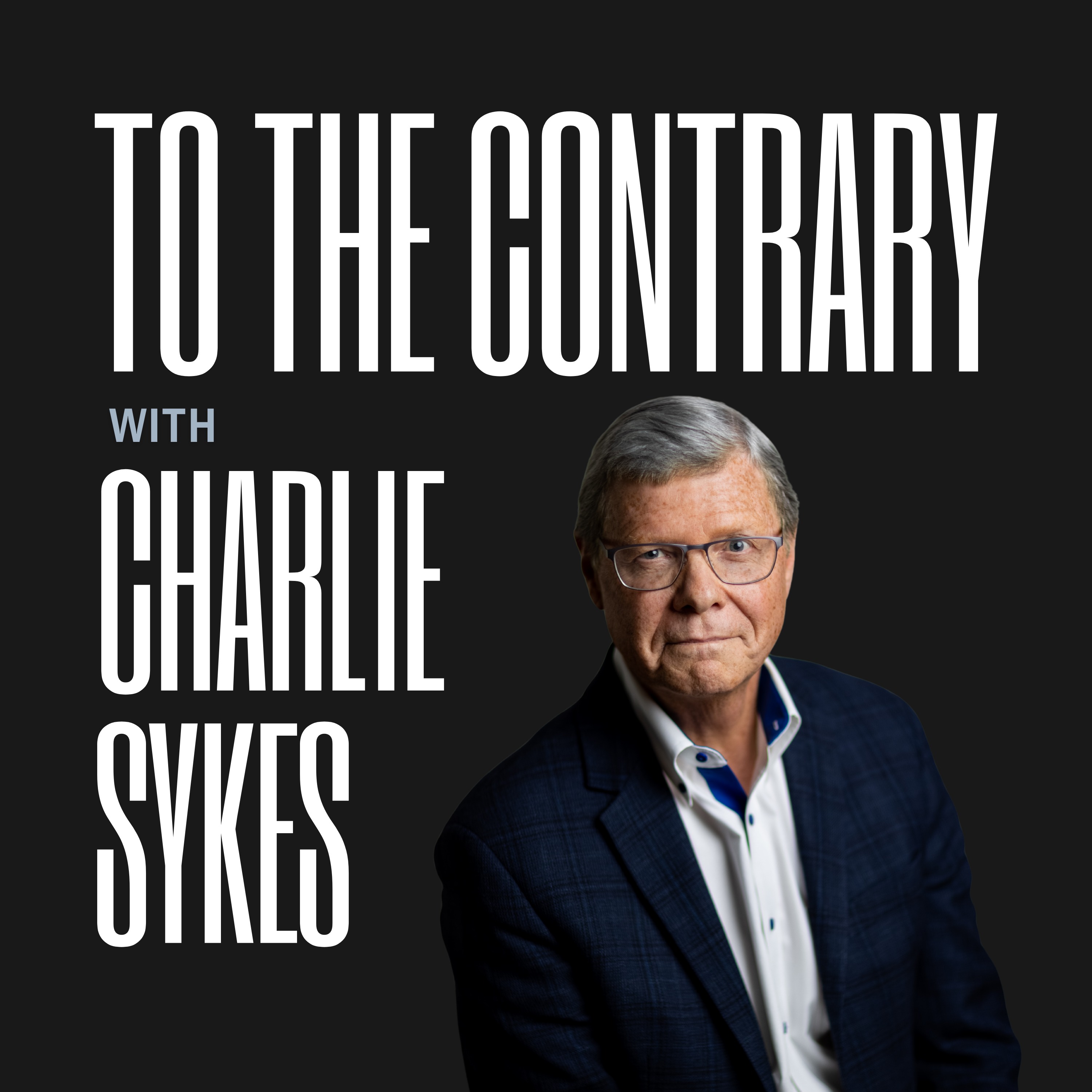
I'm Charlie Sykes. Welcome to the to the Contrary podcast. Before we get started, just a few minutes ago, before we began taping this, we got word of the shooting of Charlie Kirk at an event in Utah. Horrifying, horrifying videos of it. Horrifying event. A reminder of the, the real dangers of political violence. And even, you know, people who disagree with Charlie fundamentally on politics, you know, have to be deeply concerned about this horrifying event and the, and the escalation of the tensions. You know, we talk a lot about, you know, the breakdown of civil society. We talk about the increased anger and polarization of our politics. But the real danger is this goes from rhetoric and conversation to this kind of violence. And it's too soon at the moment to comment on it more, more deeply. But again, this is something that we're just going to have to deal with the violence directed at public officials, which is not a new phenomenon. But unfortunately, it feels as if we're on the uptake. And we're joined on the podcast today by Jonathan Rauch, who is a senior fellow at the Brooking Institution and a contributor to the Atlantic magazine. Jonathan, thanks so much for joining me today on the podcast.
- [02:52]
B
I'm a friend and fan of the show. I'm just very happy to be with you.
- [02:57]
A
Well, you know, let's just talk briefly about the violence and the concern about violence. I mean, I think we toss around things like, you know, the incredible divide in American society. And I guess the fear has always been that it was going to break out. We had the assassination attempt on Donald Trump back in 2024. We've seen other acts of violence, mass shooters who are ideologically violent, motivated. And yet I feel that the danger is gathering momentum. What is your sense? I worry about this.
- [03:33]
B
Yeah, I do, too, Charlie. America has, let's face it, always been a pretty violent country. It's always been a place where people tended to settle disputes with their fists and sometimes with their guns. But it's waxed and waned and we seem to be in a, In a waxing period. I have often wondered whether the general deterioration, maybe disintegration of norms, of basic decency in the online world would creep into the offline world. I mean, it's way too early to know what happened in Mr. Kirk's case. And whatever it is, it's a very bad thing. So I don't want to say anything too sweeping at this point, except I, I share your concern. I think the country is just generally in a dark place and right now headed toward a somewhat darker place.
- [04:23]
A
Well, I mean, it's a dangerous combination. Guns, hatred, political extremism, mental illness. And again, we don't know how that all plays into all of this. So, speaking of the. And this is what I really wanted to talk to you about, the breakdown of norms and standards that has now become just, you know, part of the. Feels like just part of the environment. And I don't want to dive too deeply into the Epstein files and get into all of that, but what did strike me was watching some of the reaction to the most recent revelations about Donald Trump sending a birthday card to Jeffrey Epstein. Is that maga? And by the way, this would include. Most elected Republicans appear to have two basic responses. Number one, they either pretended not to believe that it was true, or two, that they didn't care. And I guess kind of the irony slash paradox here is that, you know, I don't know why they're investing so much effort in saying that. You know, the. It looks like it's faked, it's a forgery and everything, because the reality is that we're at the moment now where if everything was true, it wouldn't make a difference to a lot of folks in American politics and maga, including people that, you know, describe themselves as Christians on their social media bios. And you've written about this very extensively about the post modern. Right. And does this play into all of that? The, I mean, we've talked endlessly about how, you know, there's this inversion of morality. But it does seem like we're at the moment where, you know, Donald Trump joked, you know, eight years ago that he could stand in the middle of Fifth Avenue and shoot somebody, wouldn't lose any votes. It feels now as if Donald Trump could rape a child in the middle of Fifth Avenue and it wouldn't make any difference. What does that say about the culture and our attitude towards what is true and what is good and what is acceptable?
- [06:33]
B
Well, obviously it says nothing. Nothing good. I'd be curious to get your take on. Imagine, worst case, Trump Epstein scenarios, whether that would really sting or not. There is a group in MAGA world that is prepared to justify anything that Trump does or really anything that they believe works. They believe we're in a population apocalyptic moment. We're in a fight against the left, which is out to destroy our country. And the post modern element of that group believes that. That there's no such thing as real truth. There's only such thing as power. And that truth comes from the wielding of power. If you have power, you have power over truth. The postmodern formula is that discourse creates power and power creates reality. So in that world, you know, what really happened or didn't happen with or around Jeffrey Epstein is not the important thing. The important thing is being able to win the narrative. Which is. Which is how they think about it. And if they think they can win the narrative one way or another, that's what they care about. And this is, you know, this is the world of political propaganda. The question, I don't know that you have a much better fix on this than I do. I think probably, Charlie, is how much of the Trump base thinks like that and how many really do care about what they were telling us before Trump got involved was a mega scandal involving real pedophilia or real, at least underage sexual. Sexual deviance and assault. I mean, some of them must. Right.
- [08:23]
A
See, I think this is a fascinating question, and I think that it's. The answer's unknowable at this point because we've seen this erosion over time. We've seen the window, what to call it, the Overton Window, continue to move. We've seen standards continue to slide. We've seen things that were unacceptable, accepted and rationalized. So I don't know the answer to your question. I mean, there obviously were. There was a large segment of Trump's base. They cared very, very deeply about the Epstein story, cared very deeply about the idea that there was a pedophile ring and that there was trafficking. And there's a sincere concern about whether or not elites for years were getting away with this, were exploiting women, and whether it's been covered up. The question is, going back to your point, though. If it's all about power, if it's all about our side versus your side, are they prepared to give that up? Are they prepared to find a way to put their head down and say, well, that's true, but let's talk about Bill Clinton or let's talk about something else. I mean, you and I have talked about this in the past. The incredible power of whataboutism or shifting the focus to something else, that no matter how bad your side is, you can always find somebody on the other side who's more outrageous, who's more, you know, who needs to be called out. And we've seen this before. Can I ask you one other point in the article that you wrote, this very entertaining article you wrote for Persuasion about the woke right, you wrote about something that I had not seen before, and it goes to this asymmetry of standards between the right and its opposition. And you talk about the Star Trek because of course, all of this goes.
- [10:15]
B
Back to Star Trek, always dominates from Star Trek.
- [10:20]
A
In Journey to Babel, an episode of the original Star Trek series, the Enterprise encounters an alien spacecraft whose unprecedented speed of attack the Enterprise cannot match. Eventually, Spock figures out, of course, Spock, that the enemy ship advantage is not technological but tactical because the aliens are on a suicide mission and therefore can use speeds that will destroy their ship. And you see, the post modern right is a bit like that. Can you talk to me about that? Is basically they're working on a completely different standard of tactics and aren't they?
- [10:53]
B
So the postmodern right, some people call it the woke right. I think postmodern is a little better. But so just as a, as a little bit of background for listeners, I did a deep dive on this because it's so interesting. There's this thing, it's called the postmodern left. It went through three stages. It came out of deconstructionism and radical skepticism. And then it got politicized, and then it turned into the far left, hardcore ideology that then spilled out of American campuses and into the Democratic Party and sometimes corporations and newsrooms. And people then called that woke. The original form of postmodernism, the kind of radical skepticism kind, wasn't especially left wing. It just said there's really no such thing as truth, there's only power. Truth is A construct made by those in power. In its original academic version, it was designed to get people to ask hard questions. It morphed into this kind of political ideology of if you have power, you can control truth and who's to tell the difference anyway? So it becomes about winning the narrative, not telling the truth. And this has advantages and disadvantages. Among the disadvantages are it's really unattractive to live in a world without truth. People don't like it, and it's really deleterious to your own political viability if you can't tell truth from. From fiction. I think you know what, what RFK Jr. Is doing at HHS is going to redound against Republicans because it's not truth based. People are going to start to d. Measles. Right. They won't like that. So in the long run, that's a problem. So that's where I come up. Of course, all wisdom begins with Star Trek original series. What the post modern movement, both on the left when it conquered academia before anyone really knew what was happening, and now in the postmodern right when it just bulldozed the Reagan faction, the libertarian faction, a lot of the Christian conservative faction, and just took over with this blinding speed that you saw of maga. Yeah, is it's just very good at demolishing things, at moving very quickly to grab and consolidate power. Because it's not concerned with truth, it's not concerned with norms. All of those things are simply imposed by whoever has power. So if you can get to the power, then everything else follows. We see that, for example, in some of the attacks on universities and science and so on. But like the alien spacecraft in Star Trek, you have to win quickly with that model. So you've got to get in there before the enemy figures out what's going on and develops defenses. Because you can't really build a system based on these postmodern ideologies. They're about seizing power and holding power, but they're not very good at governing. They're not even very interested in governing. They're about, remember, winning the narrative. Right. So what they're always doing is finding somebody that they argue against, refute the threat from the woke left, lgbt, whatever it happens to be. So if you can slow them down and get your bearings and keep their hands off of power over time, you can build a case against them. You can show that they don't really know what they're doing. That's what failed to happen in academia. But there's still time for that kind of resistance. That kind of intellectual and cultural resistance in the American conservative movement, if it gets its act together over to you, which is will it? And so far it hasn't.
- [14:47]
A
So it's interesting that you mentioned RFK Jr. Because, you know, the, if the, for the, for the postmodernists, there's never a reality check, or they act as if there's never going to be this moment when truth stands up and says, okay, I'm sorry, this is bullshit. You know, this is, this is. This is the hard rock and pandemics and disease is, Is a real reality check. So RFK Jr. Can peddle his. His disinformation, his conspiracy theories, but the reality is history is full of the germs reasserting their reality. I mean, you know, the history of the rise of civilization, you know, has been massive, deadly pandemics. Whole armies have been wiped out by pandemics. You know, ships have been decimated, civilizations have been destroyed by all of this. You know, within our memory, we've seen what disease can do even to, you know, highly organized civilizations. And yet here we are in this world, this postmodern right woke, right movement, where we're pretending as if we, you know, can rewrite the rules or ignore what the science is. And I do wonder whether that's that, whether that's the real vulnerability.
- [16:01]
B
Yeah, of course it is. It comes back to bite. Exhibit B would be. So what do you do in postmodern world if you don't like the economic statistics.
- [16:11]
A
Yes.
- [16:12]
B
That the Bureau of Labor Statistics is reporting? Well, you fire the person in charge of the Bureau of Labor Statistics in hopes of intimidating that agency into changing the data. The problem is the data is the data. At some point. Right. You could, I guess, do what I understand China does sometimes, which is just kind of make it up.
- [16:36]
A
Yeah.
- [16:36]
B
But in our system, that's really hard, and you couldn't get away with it if you tried. And so we just came off of, what does Trump do? He fires the head of the bls, and a month later, the next month's statistics on jobs, not good, Worse, not better, worse. So now he can fire another three or four people over at bls, but it won't change the reality of what he's in fact doing to the economy. And this, this will matter.
- [17:07]
A
Well, the other thing that I think has been most disorienting in this area has been watching these various things that we had counted on, things like truth and knowledge and various other institutions, the law, civil society, instead of resisting, caving in, not slowing them down, as you suggested, if you slow them down, maybe you can stop them. But it's been. This agenda has been at ramming speed. We could talk about the Supreme Court, where they're going, but you've written very extensive. Your most recent book has been about what's happened with Christianity. And I have to say that I have been thinking about this and talking about this and writing about this for a decade now, and it still is very difficult to reconcile what Donald Trump is doing and what he stands for and the values of that movement and with my understanding of Christianity. So help me once again, explaining what has happened, how people who read the Sermon on the Mount and actually read the New Testament will go along with this celebration of cruelty and deception and brutality that we get from Donald Trump.
- [18:27]
B
Well, I should. I should say, to put this in context, that my most recent book, just out last February, is called Cross Purposes, Christianity's Broken Bargain With Democracy. And its argument is that America is becoming ungovernable, in part because Christianity is failing. And it's failing in a number of ways. One is people just not going to church very much. So they're not getting the socialization and community ties that used to go with that. But another way it's failing is that churches used to be something of a bulwark against partisan politics. The white evangelical church, over a period that really begins in the 80s, in the era of Falwell and Robertson and Reagan and Moral Majority, but then accelerates considerably in the Trump era, is that white evangelicals become effectively an auxiliary of the Republican Party. 83, I think, is the number percent of white evangelicals voted Republican in 2024. And this is despite a candidate who we know does not pray, does not think that he needs to be forgiven for anything, has compared himself to God, and so all kinds of blasphemies, plus the way he behaves, which, as you point out, is not consistent with the teachings of Jesus. So what's going on there? Well, this will be interesting, Charlie. I want to see if anybody would know this. You would know this. But it's so interesting. You quoted Trump a few minutes ago as saying that he could shoot someone on Fifth Avenue and his supporters were so loyal they would stay with him. Do you happen to recall where he said that?
- [20:26]
A
Geez, I do not.
- [20:28]
B
Okay. I didn't know this either until I started doing this research. That's from a January 2016 speech at a place called Dort University, which is an evangelical college in Iowa. In that same speech, not long before he makes the comment about Loyalty. He says, if you elect me, you won't need anyone else because you will have power. Remember that. Now, what's he doing there? He's proposing a bargain. The bargain is, I will give you power and you will give me unquestioning loyalty. Okay, so now go back to your Bible. I'm not a Christian, but even I know this part. Jesus is baptized, and then before he begins his ministry, he Prepares by spending 40 days in the wilderness, where he encounters Satan, who tempts him. And the third and greatest of the temptations, Satan leads Jesus to the highest mountain in all the planet, shows him all of human dominion, and says, I will give you power over all of this if you bow down and worship me. Jesus's ministry begins at that moment when he says, satan, get thee behind me. Satan, go away. He does not turn down that deal. He does not allow his ministry to be corrupted by politics. What you see among white evangelicals has been a very different calculation. Now, that's not to say you have. You have tons of. Of course, you have tons of decent people in white evangelical world. You have tons of wonderful things going on by way of charity and community. You have a lot of earnest and sincere prayer. You don't have a whole lot of pastors who are politicizing their sermon. The pastors don't want to. But what you do have, at the same time as the pastors are complaining, it's more and more hard to keep politics out of church. The parishioners are coming in saying, we are losing the war for our country and culture and Christianity. We need to fight, fight, fight. They want to take sides in the partisan debate, and that's what they've done. The problem with that, from the point of a democracy, is when religion becomes politics and politics becomes religion, you can't do either very well anymore. Because religion's supposed to be about the next life, not the next election. And politics is supposed to be about making deals with people, not about ultimate redemption.
- [23:16]
A
And those differences become irreconcilable. In a democracy, you have disagreements, but you'll find ways to compromise. But if it becomes the word of God versus the word of Satan, not much to compromise on. Right? And your opponents are not merely wrong, they are. They are demonic and real threats to eternal life.
- [23:40]
B
Yes, yes, that's exactly right. Where I'm coming from, I am an atheistic, gay Jew. I could not be more outside of Christian culture. And 22 years ago, the dumbest thing I ever wrote was an article in Atlantic celebrating secularization, the decline of basically religious commitment in America. And boy, was I wrong, because it turned out, as the church lost its power to help us build communities, to socialize, to focus on the larger missions in life, on the godly things, secular life, political life rushed in. It took over those things, then it took over the church. Everything became politics all the time. Politics acquired these apocalyptic stakes that we talk about.
- [24:27]
A
Yeah.
- [24:27]
B
And then that in turn gives rise to the deification of a political figure who, as unchristlike as it's possible to imagine.
- [24:37]
A
So let's segue there to Donald Trump, because I think that even though he has been in our lives, it feels like he has been dominating our discussions for again, the last decade. I do wonder whether there's people. People are still struggling to understand exactly what he represents politically. You know, there are people who say, well, he's like Mussolini now, or he's, you know, he's. He's Hitler, or he's an authoritarian, or he's a dictator. You've come up with a way of describing him that I want you to talk about here, which is like the personalist approach to government. What do you call it? The.
- [25:20]
B
The patrimonialism.
- [25:23]
A
The patrimonialism. So not a common word. So what is a patrimonial government, and how does it describe Trump and distinguish him from some of these other more cliched figures?
- [25:39]
B
So credit where credit is due. Of course, I didn't invent the word patrimonialism. It's an ugly word. It dates back to the great German sociologist, would be German Max Weber, 100 plus years ago. And these are ideas taken from a couple political scientists named Jeffrey Kopstein and Stephen Hansen, who wrote an important and way, way, way under noticed book called the Assault on the State. They'd be great to have on the show, but what they point out, that brings a lot of other things into focus, is that what Trump is instituting in the United States is the oldest and most common form of government, and that's patrimonialism. Okay, what's that? Patrimonialism is when the state is run as the personal property and family business of the leader. In other words, the state belongs to me. Now, this is what a lot of monarchies were well into the modern era. It's what authoritarian governments can be, but it's also found in the mafia and in gangs and in tribal groups. It's a very standard form of government. So the Western world, starting, you know, with the Enlightenment and then on into the revolution of modernism, discovers the problem with patrimonialism. Is, first, it's corrupt, and second, it's incompetent. It can't distinguish public benefits from personal gain, so it's always corrupt. The person in charge is always looting the government, using it for personal ends. And second, the way patrimonialism works, it hates bureaucracy. The opposite of patrimonialism is not democracy, it's bureaucracy, because bureaucracy is about standard procedures and rules and laws. Patrimonialism is about loyalty. Only loyalty counts. So what it does when it gets in charge is it goes through the state and it snips as many as it can of those bureaucratic procedures and replaces them with personal loyalty by installing people who are personally loyal to the person in charge. The problem with that is, in a giant modern world where you've got to run a modern military and a modern economy, if you go through the government replacing knowledgeable experts with family and friends, it's not very long before the government becomes incompetent. So Trump is a classic patrimonialist. He believes he owns the government. He said that. He said just recently, I'm president, I can do whatever I want. Throughout the government. The one criterion that matters is personal loyalty. His personal word is a substitute for what used to be careful policy processes. We used to have all kinds of processes to figure out what trade policy would look like. Now it's. He gets up in the morning and makes his mind, then the next day he changes it. We're already seeing the corruption on a scale like we've never seen before. We can get into that, but, I mean, on the Charlie Sykes show, I probably don't need to. And second, we're seeing the incompetence, you know, the firings by Doge of the people who are monitoring nuclear weapons, who they then had to go out and. And rehire. They can't keep someone in charge in the cdc. All of the capacity that's been demolished in foreign aid, you know, we can't. We don't really know how to do that business anymore because we fired everyone who knows how to do it, but they're going right through the government in this way. So, problem is, after four years of this, how much is left?
- [29:42]
A
What?
- [29:42]
B
There you are.
- [29:43]
A
What I really like about this is that it connects the dots between the authoritarianism and the corruption and the incompetence that you have this. And I think people have a hard time sometimes they toggle back and forth between thinking of him as, you know, some of this fascist leader versus he's more like a mob boss. He's more like John Gotti than he is like Mussolini, who at least did make the trains run on time. Although I would point out to people that Mussolini's reign is not remembered primarily for his efficiency in, in running the transit system. That's not what we remember him for, but this is the thing that connects it. And for Donald Trump, while you have the destruction of various norms of decency and of the democratic polity, you also have this massive corruption. And it's not that we don't need to do it. We don't have time to go through all of the massive corruption. We've never seen anything remotely like it. There's not even a pretense that he is not using his office to enrich himself. And in any other context, this would be world historic in terms of this corruption.
- [30:56]
B
If I could just interject, just notice, as bad as the financial corruption is, the political corruption is much worse. Political corruption is when you use public office for personal political gain. And when you are using the Department of Justice as your personal weapon against Democrats, that's corruption. When you are using your public office to extort payments from law firms and universities and intel, that's corruption.
- [31:29]
A
Deep corruption to the point of incompetence. And this is where perhaps we'll get the reality checks. I mean, when you put a Dan Bongino number two in the FBI, when you put RFK over in another Department of Health and Humans Services, and you know, where he's wrecking the cdc, when you have Elon Musk bringing in his teenagers named Big Balls to dismantle, you know, key elements of the Energy Department, you don't really need to ask the question, what can go wrong? Because so many things can go wrong and it's all going wrong at the same time. Which leads me to, I guess, the political question, the political moment, because there's been a lot of criticism of the inability of Democrats to block Donald Trump or to counter Donald Trump. They will have to make a decision in the next several weeks, maybe the next two weeks, whether or not they are going to continue to fund the government, they're going to shut it down, whether they're going to get their act together in time for the midterms. You had a very interesting piece with Peter Wehner recently looking at the state of the Democrats, and you were actually, I was a little bit surprised by this. You were somewhat more optimistic about their position than much of the punditocracy. So talk to me about that. What are they getting right?
- [32:52]
B
So the Democrats have noticed one of the Salient political facts of our time. And that's about prosperity and the party of prosperity. So you and I are old enough to remember that. One of the basic polling questions Since I think 1951, Gallup runs it almost every year, is which party is better able to bring prosperity to America? And that party almost always wins the national election. Democrats dominated Prosperity through the 1970s and the Carter era. Ronald Reagan and the Republicans flipped the switch. Excuse me, flip the script with the supply side movement and saying we're getting you out of stagnation, we're moving to growth. That brings an era of Republican resurgence which continues until recently. Now, however, you have a Republican Party and a Republican leader whose message is less of everything, but at least we'll get a bigger share. It's beggar thy neighbor. Instead of a growing global economy in which trade is rising, raising all boats, it's beggar thy neighbor. We're going to tariff the crap out of you. You're going to try to tariff us, but we're stronger. It's about prices are going up. Too bad you don't need 30 Barbies. Maybe you can get along with two. For the first time in two generations, the Republicans have no growth message. The Democrats have figured this out. You've heard not all of them, but a lot of them have. And Zoran Mamdani has just for example. You may have seen the famous halalflation. Adam, brilliant piece of political advertising. This is Zoramdani's the front Democratic nominee and front runner for the New York mayoralty. He goes to these halal stands in New York and interviews them and finds out that the price of halal sandwich is inflated by $2 because of crony capitalism. Because you've got these people who buy government halal stand licenses for $300 and then lease them out for $20,000 a year just because they can. He says this is rigged and I'm going to fix it. That's a classic supply side argument of reducing these constraints that rig the economy to restrict supply and raise prices. You see the left talking about that in the context of got to do more on antitrust and tame these giant corporations in places like health care where they're squeezing you for more and more money. Education, same thing. You see it in the center of the Democratic Party, I guess the right of the Democrats. The center of the country in the so called abundance movement which says you've got so much red tape and regulation that you've constrained the ability of government to build things, to create more, to help create More supply of housing to energize the economy. People say there's a conflict between these two things. There's not. In fact, they're both versions of the same message. It's the classic Reagan esque supply side message. It says we can take the boot of crony capitalism and excessive regulation off the windpipe of the economy and when we do that, we can bring more prosperity. Now they're at the beginning of this process, but they figured it out. Rahm Emanuel is talking this way. Zoramandami is talking this way. Pramala Jayapal is talking this way. She talks about corporate greed and cronyism who raise prices. They're on to something. Whether they can execute on that, I don't know. They don't have the Ronald Reagan yet, that's for sure.
- [37:04]
A
Yeah.
- [37:04]
B
And they're still hung up on the cultural issues and that's still a big problem for them. But it's a start, right?
- [37:11]
A
Well, there is some cognitive dissonance here because there is, I mean, obviously some connection between the affordability agenda and the prosperity agenda, the growth agenda. And obviously you do have certain people saying that it is rigged and it is affordable. Does that necessarily translate into we are now going to grow the economy? There is some tension, I think, between some of that, if they can figure out how to put that together. Because you're pointing out that a growth economy, a prosperity economy is absolutely crucial because, you know, starting with Jimmy Carter, Democrats started to talk about, no, we need to limit, you know, the limits of growth. We need to learn to live with less. Whereas Republicans were the party of I will help you buy your, you know, big ass truck. And I think it comes down to which party is going to let you buy that big ass truck. And right now the Democrats may have an affordability, but I think the people who are sitting out there in rural Pennsylvania, Michigan and Wisconsin thinking, who's going to help me get the big ass truck? They're still thinking it's going to be Republicans. And the Democrats have other things that they care about more than their big ass truck.
- [38:21]
B
Well, as we alluded to earlier, execution is the big challenge on a move like this. And the obstacle continues to be the cultural issues where Pete and I interviewed a whole bunch of Democrats, leading people you've heard of as well as state party chairs. And they're the people who have boots on the ground. And they all say the right things about, about getting to the center, getting back in the mainstream on culture. They say they understand that they sound like Martians Space aliens.
- [38:51]
A
What are we talking about? We're talking about trans issues. Crime.
- [38:56]
B
Religious liberty.
- [38:57]
A
What. What. What issues are we talking about when we say culture?
- [38:59]
B
You know, pregnant persons, intersectionality, the faculty lounge talk. I think, personally, I say this as a gay American. I think personally that it will not be possible to elect a national Democrat who is not comfortable and confident, saying there are only two sexes and they're not chosen and they're not changeable, and the Democrats aren't there yet. Even though that is, in fact a true statement, they're still not ready to confront that suite of issues in the forthright way that I think they'll need to. So that's a credibility threshold. People want a stronger economy, and I think actually the case for prosperity is the solution to rising prices, more supply of everything, more abundance, more plenitude. That's a pretty easy sell in terms of affordability. To get there, you do have to convince people that you understand their basic values on stuff like crime and immigration and sexuality, trans, all of that stuff.
- [40:16]
A
Yeah. I think the most, again, the most powerful ad of the 2024 cycle, and I think people obviously recognize this, was the $100 million that the Trump folks spent on the anti Kamala Harri about trans prisoners and everything. But the key line in all of that was, she's for them, we're for you. And that's what the cultural divide is. If people think that you're on my side, they're willing to accept a lot of things. If they think that you look at them with contempt or that you are for them, then the economic issues, the cultural issues, I mean, not cultural issues. The issues of Democratic governance and everything simply don't matter. You're either with me or against me. And right now, I still think the Republicans, well, obviously they have a great deal of confidence in that dividing line to cover a multitude of their sins. And so Democrats are gonna have to figure out how they're gonna say, no, no, I am for you. I share your values. I am one of you, and I'm gonna buy you the big ass truck. I'm gonna get you the big ass truck. I keep coming back to that because people do conceptualize these things in interesting ways.
- [41:33]
B
Yeah. You know, Senator Gallego in Arizona is talking about big ass. He gets it. He's talking about big ass trucks. He's talked about as a. I got it from him.
- [41:43]
A
I stole it from him. Yeah.
- [41:46]
B
But you've got Richie Torres from New York talking that way. Mondani is a person of the left. He's too far to the left to be a national candidate.
- [41:54]
A
Yeah.
- [41:54]
B
But he's figured out how to talk to New Yorkers in a way that's not talking down and addresses their needs. There's a guy getting a lot of press, a Democrat in Texas by the name. Is it Telerico?
- [42:07]
A
Yeah. Yeah, I'm interested in him.
- [42:10]
B
Who's. Yeah. So what you're seeing is a generation of Democrats who have not been captured by the faculty lounge. And here's the other thing, Charlie, I'd love your opinion on this, but it seems to me is, tell me if you think this is wishful thinking, but that the Trump administration is so far outrunning its actual mandate in terms of the extreme measures it's taking on immigration and ice, the ructions that it's causing in global affairs, the failure to deliver on the peace that was supposed to break out in the first day after Trump was elected in Ukraine and in the Middle east and so forth down the line. I have to think that Republican credibility is on the line here and that that will create openings for a different kind of Democrat. Do you think that's true?
- [43:16]
A
I do think it's true. And I think that they're suffering from the classic danger of overreach and hubris, where they've, they've taken issues where they had the wind at their back, but they've gone into such an extreme, you know, to, to so many extremes that public, their, even their own base is having a little trouble keeping up with them. And you're seeing this in some of the public opinion polls. I think there's, there's sort of a residual loyalty that may be buoying them a little bit. But. Yeah, no, on, on one issue after another, I am, I am amazed at the way they have squandered their advantage on immigration, how they've thrown away their advantage on the economy, how they've thrown away their advantage on inflation, all of these things. So we'll have to see how it actually plays out. What Democrats have to do, though, and there are a lot of traps there. You know, that Democrats, you talk about the faculty lounge. I would also describe the whiteboard tendency of Democrats where the Republicans will talk about a particularly grisly killing or murder or crime, which most people react to in a very visceral, emotional way. And too many Democrats bring out the whiteboard and say, well, this is why, you know, look at the, what the statistics here are on crime. This is why we shouldn't, you know, care about this as much when we need to have a new kind of Democrat who will say, yeah, I am just as upset about that crime, that killing, you know, on the light rail train in Charlotte as you are. And let me tell you what my plan is. It is not to defund the police as Donald Trump is. It is not to shut down, you know, the various service things. You know, here is my plan to keep you safe. And I think that's the kind of, and it's not necessarily a new kind of Democrat. It's the kind of Democrat that you and I grew up with back in, you know, in the, you know, in the Kennedy era who were had credibility on cultural issues, had credibility on issues like crime that I think has eroded over time. So I do agree. I think there's a tremendous amount of overreach going on with this administration.
- [45:29]
B
Yeah. Nothing is baked in. And I hope it doesn't sound cynical, but I guess it was Will Rogers who said, I'm not a member of any organized political party. I'm a Democrat, and everything here is in the execution. But my tempered optimism is on the basis that Democrats have more to work with and more space to do that work than a lot of people quite recognize at this moment when it seems like Republicans have such a lock on everything.
- [46:03]
A
Well, I hope that's true because I do think that the one problem that Democrats have is they do have those elite organizations, you know, the groups, the groups which I think do limit the flexibility of Democrats on some of this. But what you need is you're going to need to basically have somebody who stands up and be able to challenge it once you broke the glass. And people go, okay, you know what? I think there's going to be a sort of sense of relief that in fact they are going to be able to deal with all of this. But, I mean, Democrats are going to have to break that grip of the faculty lounge and the group if they're going to do what you're describing. Do you agree?
- [46:41]
B
Well, yeah, of course. And what you need to do that, in a word, is a candidate.
- [46:48]
A
Yes.
- [46:48]
B
One of the shortcomings of the US Political system compared to, say, the British or parliamentary system, we don't have an appointed leader of the opposition with a shadow cabinet who can do all the work of building a party in waiting. There is no one a party can rally around until that party is well into the presidential campaign and has a nominee. People complain about the leadership of Chuck Schumer and Hakeem Jeffries, and there's plenty to complain about, but their job is to lead caucuses in Congress.
- [47:23]
A
Right.
- [47:23]
B
They're not. No one made them leaders of the national party. It's not why there is no leader of the national party. What might happen is that they never Dems never get their act together. On the other hand, what might happen, we saw the Republicans do this with Reagan, we saw the Democrats do it with Clinton. We could well see it again. Is that if the Democrats can put their finger on the right kind of candidate and they've got a pretty good bench, they could come together. Really. They could snap pretty quickly into place behind that person. If that person is able to then pick up a prosperity, growth, abundance, whatever you call it, agenda and say we're going to relight this economy and if they can promise to perform and if they've got a lot of Republican screw ups to point to, which of course they will, and corruption points multiply. Yeah, things could change very quickly. I'm not saying they will, but they could.
- [48:27]
A
Well, I agree. I agree with that. Well, I want to agree with that. Jonathan Roush, senior fellow at the Brookings Institution, contributor to the Atlantic. Thank you. So it's so good to have you back on the podcast.
- [48:39]
B
Well, I'll be here next week and the week after, just waiting by the phone.
- [48:44]
A
All right, thank you. And thank you all for listening to this episode of to the Contrary podcast. I'm Charlie Sykes. You know why we do this, why we're going to continue to do this through thick and thin? Because now more than ever, we have to remind ourselves that we are not the crazy ones.
- [49:10]
C
Did you know Tide has been upgraded to provide an even better clean in cold water? Tide is specifically designed to fight any stain you throw at it, even in cold butter. Yep. Chocolate ice cream. Sure thing. Barbecue sauce. Tide's got you covered. You don't need to use warm water. Additionally, Tide pods let you confidently fight tough stains with new coldzyme technology. Just remember, if it's gotta be clean, it's gotta be Tide.
- [49:39]
E
Think you know your breaking point? If you're a woman with weak bones due to osteoporosis after menopause, sadly, you may not. Women can lose up to 20% of their bone density within five to seven years after menopause, making bones weaker and more likely to break. And after the first fracture, we're five times more likely to break another bone within a year. It could happen from a simple slip or just bending to lift a bag of groceries. Don't wait for a breaking point. Visit bonebreakingpoint.com to learn about how osteoporosis medications can reduce the risk of fractures.
- [50:15]
F
Hi, I'm Derek Clason, host of the Athletic Football Show. Today I want to talk to you about Boost Mobile offering reliable nationwide coverage backed by a 30 day money back guarantee. Love your service or get your money back, no questions asked. Boost Mobile offers the same nationwide coverage, network speed and service consumers are used to, but at more affordable prices. Why would you pay more if you don't have to? Boost Mobile also understands that change can be scary, which is why they allow you to try their service risk free for 30 days. And if you're not happy, you can get your money back. So start saving on wireless today with Boost Mobile's Unlimited plans starting at just $25 a month. Visit your nearest Boost Mobile store or find us online@boostmobile.com After 30 gigabytes, customers may experience slower speeds. Customers will pay $25 a month as long as they remain active on the Boost Unlimited plan. Customers who cancel within 30 days of activation will have Boost service fees refunded, activation fees if applicable, and phone payments will not be refunded. The Boost Mobile network, together with their roaming partners, covers 98% of the US population. 5G speeds are not available in all.
- [51:16]
A
Areas, only Boost Mobile.
- [51:18]
E
Boost Mobile will give you a free year of service.
- [51:20]
B
Free year when you buy a new.
- [51:22]
A
5G phone new 5G phone enough, but.
- [51:24]
B
I'm your hype man.
- [51:25]
F
When you purchase an eligible device, you.
- [51:27]
B
Get $25 off every month for 12 months with credits totaling one year of free service, taxes extra for the device and service plan online only.
- [51:32]
D
Imagine a world of extraordinary comfort where bowl and branch bedding wraps you in the softest. Embrace the coziest experience made from the world's finest 100% organic cotton, all so you can sleep better. Start building your fall sanctuary with Bolen Branch's iconic Signature sheets made with a buttery, breathable weave that gets softer with every wash. Enjoy 15% off your first set of sheets with free shipping and returns at B O L L and Branch.com with code buttery. See site for details and exclusions.