← To The Contrary with Charlie Sykes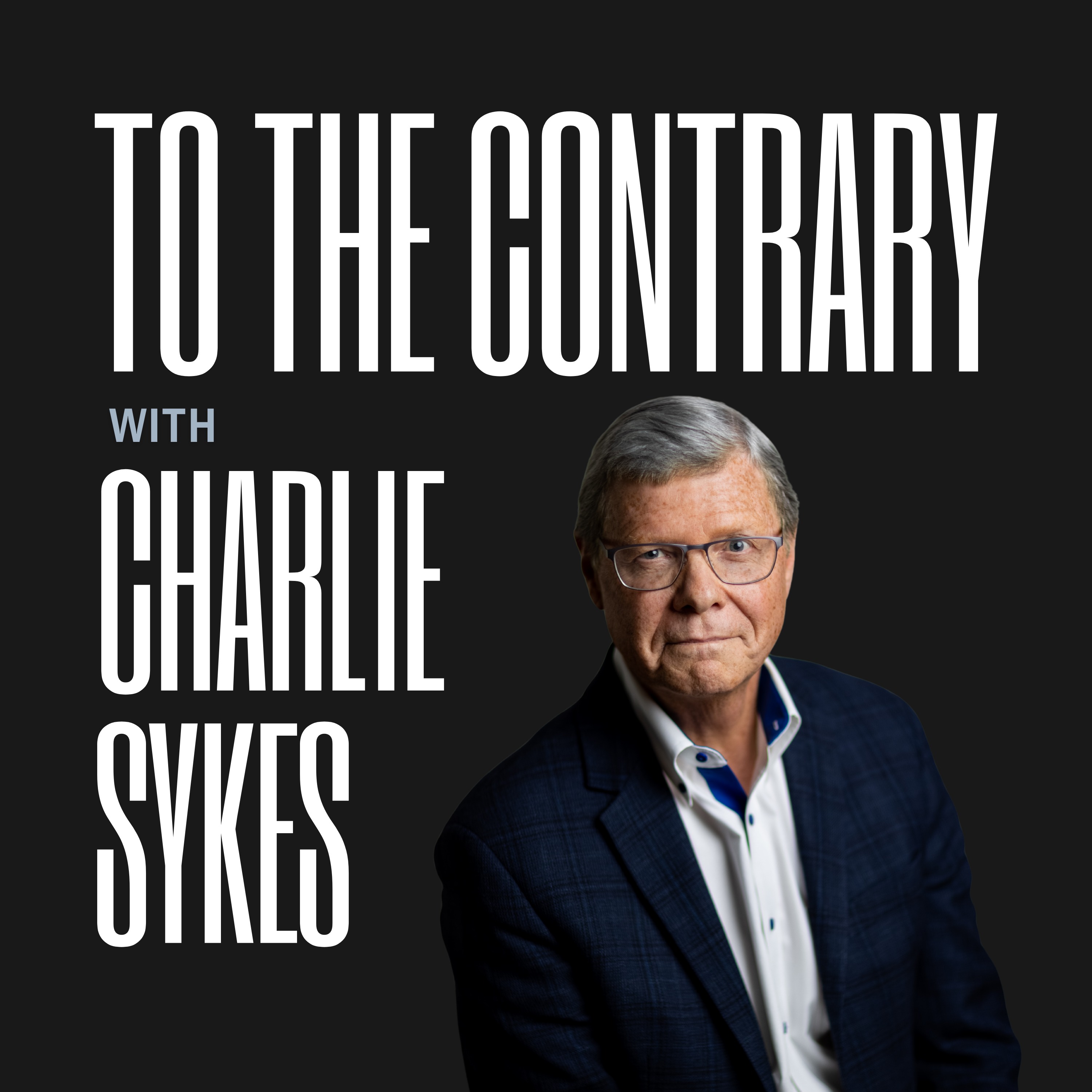
Loading summary
Transcript62 lines
- [00:00]
Charlie Sykes
USAA knows dynamic duos can save the day like superheroes and sidekicks or auto and home insurance. With USAA you can bundle your auto and home and save up to 10%. Tap the banner to learn more and get a'@usaa.com bundle restrictions apply.
- [00:15]
Christian Dropoux
Have you ever wondered how your body naturally repairs and rejuvenates itself? It all comes down to your stem cells. Your body's built in repair system that renews tissue, restores balance and helps you feel your best. But by age 30 you have up to 90% fewer stem cells in circulation. That's where Stemregen comes in. Founded by stem cell scientist and health pioneer Christian Dropoux, stemregen products are designed to support your body's natural repair system by using science backed plant based extracts. Just two capsules of stem regen releases an average of 10 million of your own stem cells into your body. No injections, just two capsules empower your body to rejuvenate from within. Whether you're focused on recovery, longevity or just overall wellness, STE can help release more of your health, more life and more of the best version of you. Try it now at Stemregen co and use code pod15 for 15% off your first order. That's stem regen codepod15.
- [01:14]
Acast
Acast powers the world's Best Podcasts Here's a show that we recommend.
- [01:22]
Knox McCoy
Do you like being educated on things that entertain but don't matter? Well then you need to be listening to the podcast with Knox and Jamie. Every Wednesday we put together an episode dedicated to delightful idiosy to give your brain a break from all the serious and important stuff.
- [01:34]
Jamie Golden
Whether we're deep diving a classic movie, dissecting the true meanings behind the newest slang, or dunking on our own listeners for their bad takes or cringy stories, we always approach our topics with humor and just a little bit of side eye. And we end every episode with recommendations on all the best new movies, books, TV shows or music.
- [01:50]
Knox McCoy
To find out more, just search up the Podcast with Knox and Jamie. Wherever you listen to podcasts and prepare to make Wednesday your new favorite day.
- [01:56]
Unknown
Of the week.
- [02:01]
Acast
ACAST helps creators launch, grow and monetize their podcasts everywhere. Acast.com.
- [02:21]
Charlie Sykes
I'm Charlie Sykes. Welcome to the to the Contrary podcast. We have a very, very special episode today. Normally we would talk about the news of the day, all the deplorable things that are happening, and Lord knows there are so many. But what I wanted to do before the holiday weekend was to pull the lens back and to look at where we've come from and what it means to be an American on this particular July 4th. So we are very, very lucky to be joined by a great American, a great jurist and one of the strongest patriots in the country today, Judge Michael Ludig. Judge Ludig, thank you so much for coming on the podcast.
- [03:01]
Judge Michael Ludig
Thank you so much, Charlie. It's really an honor to be on with you today.
- [03:06]
Charlie Sykes
Well, what I wanted to talk to you about was your July 4th piece that you had in Ryan Liz's substack, his substack Telus. And let me just read you what Ryan wrote. You know, it talks about, you know, how you have stepped up in the past and yet America finds itself at another historic moment, another crisis. And Judge Ludig, once again the country's most indispensable public scholar explaining the law to an American public bewildered by the actions of a lawless president. Once again, Judge Ludig is embracing a new medium. Substack. And your first piece is this extraordinary piece that marks Independence Day 2025. It's not an essay or an op ed or a polemic of any kind. Rather it's, it's a statement, it's a restatement of the truths that we Americans, at least for 249 years have held to be self evident. And it's really a jarring exposition of how closely the modern day truths parallel the American colonists original list of self evident truths. You know, and Judge Ludic, I have to say that my wife and I were talking about July 4th and she said something like it's just going to feel different this year. It's gonna feel like an in memoriam. And I said well yes, maybe, or maybe it's going to be that moment of reaffirmation where we realize that it's not just a birthday party. It's the moment when Americans said no kings, we believe in freedom, we believe in the law. And maybe this is a moment for reaffirmation. And then what happened? Judge Ludig, I see your piece which does exactly that. So I really appreciate it. And I just have this sense that Americans need this right now in this context to remind us who we are, that we are not the country of the alligator Alcatraz. We are not the country of retribution and government by whim. So thank you for this piece. I appreciate it very much.
- [05:07]
Judge Michael Ludig
Judd Ludick well, thank you Charlie. That's music to my ears. The you know what your, what your wife said is, is what I to fear and feared. And my hope is her hope that. All right, well around in some way.
- [05:36]
Charlie Sykes
Well, let's go through it. Your piece in on, on the telosite, which I will, which I will restack and link to the self evident truths of freedom and of tyranny. 27 truths about America, our democracy and the rule of law and our rights, freedoms and liberties. So I'm going to shut up and basically turn this over to you as walk us through these 27 truths that Americans desperately need to remember.
- [06:03]
Judge Michael Ludig
Well, thank you. Thank you, Charlie. And it's really an honor for me to be on with you in particular. I, I won't take you at your word. I won't walk through all of it. I, I, I couldn't frankly the highlights. But, but let me just start with the, you know, the genesis of it. I have always wanted to, to say something on, on Independence Day. I was never in a position to say anything that anyone would read or see. And frankly, in the sense I'm talking about now, there has never been the need to say something profound on Independence Day in America until today. And it gave me an opportunity to give back to my country that I love so very, very much. So the genesis of the idea, if you will, you know, was this. I think that we could take judicial notice of the fact that America has strayed from its original ideas and values and principles, but we can certainly take judicial notice of the fact that today we've all but abandoned the principles in the Declaration of Independence. And, and so, you know, I don't get any credit for particularly credit for creativity. All I did was having that thought in mind. Like most of America, I, I just went back to the Declaration of Independence. And I'm, I'm not ashamed to say, Charlie, that I didn't, you know, I didn't know a fraction of what I, I read a month ago. I had the same experience. Yeah, I mean, you know, the, the, you know, I not, nor should any American really have that kind of knowledge. Until today, I don't think, I think it's fair to say that until today that level of detailed knowledge didn't, didn't matter. Although, you know, Charlie, I want to say, because I've, I've just learned this myself this past week is that many of my friends and their families, you know, read the Declaration of Independence out loud on July every, every July 4th. And I'm embarrassed that I've never thought, thought to do that. But, but in any event, it's a.
- [09:23]
Charlie Sykes
Good tradition maybe to, to, to restore.
- [09:26]
Judge Michael Ludig
Yes, yes. And so you know what I I modestly tried to, to, to pin if you Declaration of Independence overlaid by the Constitution of the United States in the hopes of meeting this precarious moment in American history. A moment which I will add, I don't think that we have ever come to this moment in the almost 250 years of our, of our nation's existence. That is the evident betrayal of essentially everything that is included in the Declaration of Independence and much of what underlies the Constitution of the United States. So that was my reason for doing it. So what did I do in this piece? I, I tried to restate in, in my modest way the self evident truths about America and, and of course started from the Declaration of Independence and, and then you know, studied for the first time, you know, the, the indictments if you will, against the Crown and studied them, each and every one of them and then drafted what I'll call today the self evident truths and lined today's self evident truths up with those, the original self evident truths. And so, so that I, I see it, I'm very proud of it, but I, I'm not proud of it individually. I'm proud of it for my country because it gives, it gives people a opportunity, if you will, from the opportunity they had almost 250 years ago to think about what America is and, and where it's going in, in the future and of course an opportunity to turn back from where it's headed at the moment. There's very few people, I think, Charlie, who would even contest that the country is not moving in the right direction. They may quibble over what that right direction is, but my guess is it's universally agreed that something's gone wrong. And so my, my modest hope is, is that by penning this piece that, that Americans will think and, and rethink and frankly decide for themselves whether this is the direction we want to go or whether instead we want to turn back. Charlie.
- [13:15]
Charlie Sykes
So let's dip into this, shall we? You know, you write on this July 4, 2025, the eve of the 250th anniversary of Americans Declaration of Independence and the founding of this nation we the people hold to be self evident. And you did. We won't do all 27, but let's start with this 27 truths about freedom and about tyranny. That all persons are endowed with certain rights, liberties and freedoms that are unalienable and that are the bulwark against tyranny by government. That government should secure, protect and preserve our unalienable rights, liberties. And, and you blend it together with the indictment of the King. And what I was struck by when I went through the various grievances and indictments is how many of the grievances against King George I would say have echoes in our time. So again, do you want to walk through just some of the most important self evident truths that people should focus on, on this 24th birthday of American freedom?
- [14:19]
Judge Michael Ludig
Yeah, of course I'd be glad to, Charlie, with, with your help. But as to your, your, your main point, as you know, I, I just call them as I see them and, and, and, and frankly, millions and millions of Americans, even if not.
- [14:44]
Charlie Sykes
Would agree.
- [14:45]
Judge Michael Ludig
With, with you, you and me. But whether they agree or not, these are what we call in, in the law, neutral principles about which no American ought disagree with that. If you'll, if you'll give me a hand, I'll be glad to, to go down some, some of the list.
- [15:12]
Charlie Sykes
Let's go through some.
- [15:13]
Judge Michael Ludig
Yeah, sure.
- [15:14]
Charlie Sykes
Okay. So you, you, I'm sure you have it in front of me. I think it was interesting that you know that government is limited and government is obligated to conform its every action to the requirements of the law, which acknowledges our creations as equals and enshrines our equal and unalienable rights, liberties and freedoms. And, and it's interesting then you juxtapose that with the King who gave his assent to acts of pretended legislation, taking away our charters, abolishing our most valuable laws, and altering fundamentally the forms of our government. So the entire foundation of the country is that the law is the King, that we have these unalienable rights, and when the King abrogates those rights and he has moved toward tyranny. And again, you've woven it together. Rights, liberties, freedoms are secured by the separation of powers, the executive and the judiciary, and the way in which both the Declaration of Independence and the Constitution seem very, very consciously targeted at how we should never, ever, ever submit ourselves to a king or a tyrant. Again. Expand on that a bit.
- [16:35]
Judge Michael Ludig
Exactly, Charlie. Exactly. So all that I've, all that I have done here, in fact is, is, is modestly try to restate all of the enduring principles of the United States of America as they have previously been been articulated by our Founding Fathers and then in our Declaration of Independence and in our Constitution of the United States. So there's nothing I would never have attempted, dared attempt to add anything at all. Okay, I want your viewers to understand that in, in. I regard myself in this piece as a mere conduit. Yes. For our Founding Fathers and for our Declaration of independence and the Constitution of the United States, everything.
- [17:44]
Charlie Sykes
That's what makes it so powerful. It really does.
- [17:48]
Judge Michael Ludig
Well, thank you. Thank you, actually, because that is exactly the power of it. You could say in shorthand that all that I've done is restate the fundamental principles of America as articulated by our founding Fathers and in the Declaration of Independence and in the Constitution of the United States, nothing more. Right. But the power of the peace comes in its timing, Charlie, as you understand. In other words, for 250 years. Let's think of it this way. For 250 years. Almost 250 years. If I had written this piece, it would be of unexceptionable interest. Yeah, it's only of exceptionable interest today because the way I will put it, we have strayed so far from these well known founding principles of our nation.
- [19:04]
Charlie Sykes
Well, what's interesting about it is that in the past it would have been unnecessary because we had grown, I think, complacent, or we had taken many of these for granted. What I am struck by rereading it again is really how radical it is and how definitive it is in terms of its vision of government. And that's what makes it, I think, also powerful. So, for example, one of your self evident truths, which is a restatement of American principles. Each branch of government, the legislature, the executive and the judiciary, should exercise only the powers respectively enumerated and conferred upon it by the Constitution or otherwise by law, thereby both avoiding and guarding against encroachment upon the powers of the other two branches of government. So once again, going back to the limited nature of the government of the powers that they had to be enumerated and that this was necessary so that, for example, the executive did not turn the legislative into potted plants. One of your self evident truths, which seems very timely in the last couple of weeks. Government should wage war against foreign enemies only when authorized by Congress of the United States in a declaration of war, which again has been honored more in the breach. And the government should respect the need for the separation of military from civil authority and the need to limit the military to military purpose and not to civil purposes. That seems to be such a fundamental principle. And I'm guessing that the founding fathers would have regarded that, would have. Would have said, would have sort of held up and said. And yes, this is absolutely crucial. I hope America never, ever, ever forgets that point. And yet today, this week, we are in the process of forgetting it. And again, to realize what a departure from those American founding principles that represents.
- [21:11]
Judge Michael Ludig
You know, Charlie, you're you know, you're an amazing friend, you know, but you, you can articulate these things far better than I, just as you just did. But yes, the entire piece, speaking through our founders and, and the authors of our Constitution, is a comment on how far we have strayed in the 250 years since the founding of our nation. When you get into the individual, the items, if you will, of course, I have merely restated these principles. But because of the moment in history that America finds itself in, those principles sound frightening. And the reason they sound frightening is because every American knows subconsciously, and hopefully they will now know consciously, that we have farred. We have. We have. We are far astray from the fundamental principles and values of the United States of America that we have held dear to for almost 250 years.
- [22:54]
Charlie Sykes
Well, some of this, though, is surprising and you mentioned that you'd gone back and read it. Actually, I was surprised reading your piece of the principles that when I first saw it. So, for example, one of your 27 is government should respect the need for free and open trade in the world. Okay, where does that come from? Well, you quote from The Declaration of Independence 4 quote, we are reminded, we are reminded of the circumstances of our immigration and settlement here. Yet the king endeavored to prevent the population of these states for that purpose, obstructing the laws of naturalism, laws for naturalization of foreigners refusing to pass others to encourage their migrations hither, and raising the conditions of new appropriation of land. Well, that's awfully interesting that they talked about it. Again, I think people know that there's the First Amendment, you know that we have a right of free speech. But as you point out, one of the fundamental principles is that every person should have the right to petition government and petition the government for redress of oppressions without government answer of injury. And again from the Declaration of Independence for an at every stage of these oppressions, we have petitioned the king for redress in the most humble terms. Our repeated petitions have been answered only by repeated injury. A prince whose character is thus marked by every act which may define a tyrant is unfit to be the ruler of a free people. And again, the idea that you would face retaliation or revenge or punishment from the state or from the executive order for speaking out, for attempting a redress of grievances is so alien to the American idea. The idea that if you were a law firm and you defy the executive, that you would be punished, or a private business or a media outlet or a university. This again, these are not political or partisan points. Right. These are, as you document, point by point, the bedrock principles that. That we ought to be talking about on July 4th.
- [25:03]
Judge Michael Ludig
Well, I mean, Charlie, I'm almost left speechless. I guess I should have expected it, you know, coming. Coming from you. But I won't comment on the, you know, the contemporary relevance because I purposely, you know, avoided that deliberately.
- [25:25]
Charlie Sykes
Right.
- [25:25]
Judge Michael Ludig
But I will say I stated every word in neutral principle and leaving for the readers, such as yourself, to examine the application of those neutral principles and terms to today's society. I'm not naive, as you know, but that's the way I want to present it, because I wanted to present this as an. As modestly presented as an enduring document at this point in American history.
- [26:04]
Charlie Sykes
No. And I would suggest that maybe, if people for July 4th are looking for something to read, take this document, if you think that the Declaration of Independence is too abstract. So, again, I want to go back, because again, what you have done is you brought this back to life again in a way that I find very, very compelling. The declar of independence. One of the grievances against the King is that he abolished the free system of English laws and established therein an arbitrary government. It's an important phrase. Arbitrary government as opposed to a nation of laws. An arbitrary government is what the king decides based on his moods, his likes, his dislikes. Sound familiar at all? I think many of us probably thought it's almost a cliche that the Declaration says, all men are created equal and endowed with their Creator with certain unalienable rights. And your gloss on that is this means that no person is above the law. The law applies equally to all persons elected or appointed to serve the American people in their government as it does to all other persons. And all elected or appointed representatives of the people are accountable under law for their offenses against the people, as every other person is accountable for their offenses. Again, this is a fundamental and bedrock principle that. And yet again, I do wonder if the American political system and legal system really understood that and believed it, that maybe the history of the last several years would be very, very different than it is right now. And maybe the course we're on would be very, very different than it is right now. But again, you're not waving some red flag and saying, look what's going on here. You're saying, look, these are just the. These are not controversial, or these shouldn't be controversial. And again, people need to overlay that to what's. What's going on.
- [28:02]
Judge Michael Ludig
Thank you. So this. This is. I consider this And I believe there's proof of it that these are a, are neutral statements of principles of the United States of America as articulated first, you know, in the Declaration of Independence and then subsequently in the Constitution of the United States. Nothing more, nothing less. It's the juxtaposition of all of this that is known to the world for 250 years. Known, but forgotten in this moment. And you beat me to it. But I'm going to get the last word. The power of the piece, I believe is what you started to say, which is we Americans have forgot all of this.
- [29:07]
Charlie Sykes
Well, and again, I want to go back to this because I'm slightly embarrassed to say that I'm not as familiar with this as I certainly should be, as every American should be. That for as in absolute governments, the king is. This is new, this is a quote. For in absolute governments the king is law. So in free countries the law ought to be king and there ought to be no other that a crown be placed thereon. But lest any ill use should afterwards arise, let the crown at the conclusion of the ceremony be demolished and scattered among the people whose right it is. Now, I mean, this again is really at the time a radical concept that it's not. First of all, the law is king, but we don't have any kings. And we ought to be very, very skeptical of any massive centralized power that that ought to be the people. Then you write as a gloss on this, no person elected or appointed to represent the people enjoys the royal prerogatives of a king. America was impelled to seek its separation and independence from the tyranny of a king. Now there were those rallies, you know, no kings. And I actually have a, have a hat now, by the way. I don't. I'm going to wear it for you here. But this is my rejecting kings since 1776. Which reminds me that we talk about the Declaration of Independence and all the fireworks and everything, but the Declaration of Independence was really all about the rejection of kings. And the definition of the king is arbitrary power. The definition of the king is ignoring the ability to ignore the consent of the government. And the essence of a king is that the king is above the law. And I think this is a point that you've woven through all of this, that if there was one, you correct me here, but I think if there's like one sentence takeaway I have is that in our country the law is king, there are no kings. But if there's a king, it's the law. I mean, isn't that kind of the heart of your piece, Charlie.
- [31:18]
Judge Michael Ludig
That's the heart and the soul of this piece. In fact, I was hoping you would give me the opportunity to say this as a personal, you know, matter. I purchased for the country just last week a rare copy of Thomas Paine's Common Sense, from which I derived much, much of the piece that I have written today. And I I'm going to donate it, give it to the the nation's friend, the National Constitution center in Philadelphia. Wonderful group is led by my dear friend Jeffrey Rosen at the moment.
- [32:19]
Charlie Sykes
And let's talk about in your piece what the founders, what the fundamental American principle was, how they viewed the courts of law, that all persons should have access to independent courts of law to vindicate their rights and interests. And the courts of law should be neither political nor beholden to either the legislature or the executive. Now there seems to be a difference of opinion these days about whether or not judges are supposed to be loyal to the person that appointed them. The judges are supposed to be enactors of ideological agendas. And among your fundamental self evident truths, it was once that again, a bedrock principle that courts of law should not be ideological and should not be in the service of of any powerful individual. The independence of the judiciary is not just one among many principles. It is fundamental. And obviously that's something close to your heart.
- [33:23]
Judge Michael Ludig
This is a profound point, obviously not of my original writing, but it is one of the most profound points, not only in the Declaration of Independence, but more importantly in the Constitution of the United States of America. Charlie, as you know and yes, I will choose to say only that we are straying from that ideal. I will not go so far as to say that we have at this point strayed from it. But I love that point because you know, the the judiciary is is so special to me. But I, I like to think that I've given voice to many other equally profound points from which we've strayed.
- [34:34]
Charlie Sykes
Well, let's get into this because again, I am continue to be impressed by the relevance but also the clarity of these points. And again, people can find this you can find this on Ryan Liz's site. You can find it on the to the contrary site. I'm going to be restacking and reposting it. But let's talk about the rights of individuals. We know that one of the constitutional principles is all persons suspected and accused of criminal offenses should be protected from government abuse by the Constitution's limitations on searches and seizures, due process, equal protection, the privilege against self incrimination by prohibitions on selective and vindictive prosecutions, double jeopardy and cruel and unusual punishments, all of which we kind of understand what, you know, how that applies. So again, these principles, no person should be tried for a criminal offense except by a jury of their peers. No person should be investigated or prosecuted for offenses against the nation except in accordance with the law. And this one, no person should be investigated by the Executive on pretext or investigated and prosecuted by the Executive on pretext, in revenge and retaliation for different opinions or politics from the Executive or for personal offense taken by the Executive. This was one of the things that kings were notorious for doing. And very specifically we developed this entire tradition of law in the Declaration of Independence and codified in the Constitution that this was not what was going to happen in this country. And again, I don't think we need to go into great detail where we are at the moment. But this was for 249 years a self evident truth, correct?
- [36:25]
Judge Michael Ludig
Yes. And Charlie, I, I think of what I have written here as nothing more than a refresher on the enduring principles of our nation as articulated by our founders and the framers of our Constitution.
- [36:52]
Charlie Sykes
I have railed in the past, I don't know that we've talked about it, about the failure of whether we want to call it the American education system or American culture to teach things like civics and these American traditions. Because I think again, going back to your original point, you know, we've taken all of this for granted. It comes as a surprise to actually read it again. But do you think that it would have made a difference had we taught these values more aggressively to generation after generation? Because the fact that even you and I go back to these documents and they're going, oh, wow, that's kind of interesting. That's rather pointed. I hadn't realized that, you know, if, if we had not let it slide, might we be in a better position?
- [37:48]
Judge Michael Ludig
You know, Charlie, I, I want to think that, that this moment will turn out to be one of the blessings of liberty that caused us to look back on and re examine these fundamental principles of our, of American society and ask ourselves the question, are we headed in the right direction or are we headed in the wrong direction? Now, of course, if, if Americans didn't conclude that we're heading in the wrong direction, it will be up to them to right that direction. Not to you and me. This is, this is the government of the people. It's we the people. And we the people have to decide whether to turn back or to go forward. And whatever the American people decide, they'll decide no matter what you. And I think that's, you know, as it should be.
- [39:10]
Charlie Sykes
And that is as it should be. Wilson, thank you so much for writing this. I think this is really, as soon as I read it, I said, this is what I've been waiting for. This is what I've been hoping for. I think this may be the most important document. I think there are a lot of people who are looking for some sort of clarity and have these mixed feelings about July 4th, how we're supposed to think about it. And I don't think that it's irrational exuberance to think that this anniversary and next year's 250th birthday could be a renewal, kind of a new birth of understanding about freedom and about the values of the Constitution. If it results in a remembering and a relearning of those values, then, as you say, it will be one of the blessings of liberty. And I think that people. And again, I think people should be very, very grateful that you put this together. And I strongly urge you to go find it. You can find it on my site. You can find it on Ryan Liz's site, download it, print it out, share it with your family and friends. This would be something to talk about if you're looking for, as opposed to people going, you know what, on this July 4th, let's not talk about the state of America. We just don't want to talk about the news. We don't want to talk about our. Fine. Don't talk about the news. Talk about this and kind of remind yourself who we are and what we believe. Judge Ludig, very, very grateful for this contribution. I appreciate it very much.
- [40:37]
Judge Michael Ludig
Charlie, thank you so much. This means more to me than I could ever say to you, but thank you.
- [40:48]
Charlie Sykes
Thank you. And thank you all for listening to this episode of to the country podcast on this anniversary of America's declaration that we have no kings. I'm Charlie Sykes. Talk to you next week. Okay, close your eyes.
- [41:17]
Unknown
Exhale.
- [41:18]
Charlie Sykes
Feel your body relax. And let go of whatever you're carrying today.
- [41:23]
Unknown
Well, I'm letting go of the worry that I wouldn't get my new contacts in time for this class. I got them delivered free from 1-800-contacts. You guys, they're so fast. Oh, sorry. Namaste.
- [41:36]
Charlie Sykes
Hi, there.
- [41:36]
Christian Dropoux
Did you find everything okay?
- [41:38]
Unknown
Yes, I did, because I found the exact same contacts as my eye doctor prescribes. F1,800 contacts here. Give me that. Attention, shoppers. Did you know one 800 contact contacts has 45 million contacts in stock.
- [41:52]
Charlie Sykes
Okay, we checked the brakes. Everything looks good.
- [41:55]
Unknown
You know, speaking of checking, did you know 1-800-contacts triple checks every order? Yeah, they make sure you get exactly what you need when you need it. 1-800-contacts. So good, so fast, so accurate. You'll want to tell everyone, too. Download the app or visit 1-800-contacts.com today and save on your first order. 1-800-contacts.
- [42:17]
Charlie Sykes
It's not.
- [42:19]
Unknown
Want to start sponsoring podcasts, but not sure where to start? Acast Smart Recommendations does the heavy lifting, finding you the perfect podcast that aligns with your target audience. From top shows to hidden gems, our AI powered tool scans thousands of podcasts to deliver you a list of personalized suggestions ready to reach the right listeners. Start now at go acast.
- [42:47]
Running a business can be exhausting. Building your website shouldn't be. With wix, you can express your ideas, give direction, then leave the heavy lifting to AI. From site creation to branded content and images. Have fun with the details, customize what you want the way you want, and manage your whole business from a centralized dashboard with expert AI tools. Build, scale and enjoy the incredible results. You can do it all yourself on wix.
- [43:19]
Acast
ACAAS powers the world's best podcasts. Here's a show that we recommend.
- [43:26]
Knox McCoy
Do you like being educated on things that entertain but don't matter? Well, then you need to be listening to the Podcast with Knox and Jamie. Every Wednesday we put together an episode dedicated to delightful idiocy to give your brain a break from all the serious and important stuff.
- [43:39]
Jamie Golden
Whether we're deep diving a classic movie, dissecting the true meanings behind the newest slang, or dunking on our own listeners for their bad takes or cringy stories, we always approach our topics with humor and just a little bit of side eye. And we end every episode with recommendations on all the best new movies, books, TV shows, or music.
- [43:55]
Knox McCoy
To find out more, just search up the Podcast with Knox and Jamie. Wherever you listen to podcasts and prepare to make Wednesday your new favorite day.
- [44:01]
Unknown
Of the week.
- [44:05]
Acast
Acast helps creators launch, grow and monetize their podcasts everywhere. Acast.com.