← To The Contrary with Charlie Sykes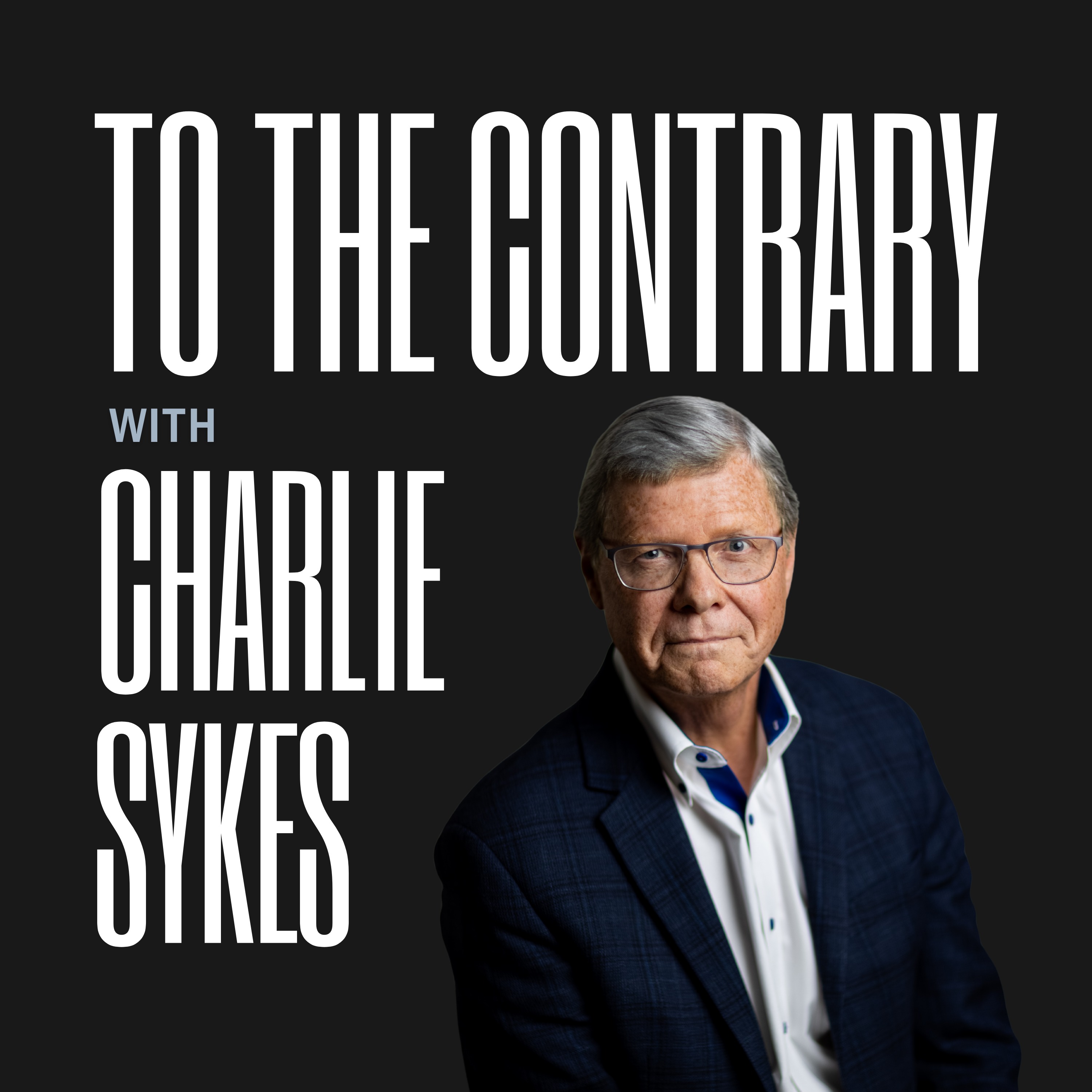
Loading summary
Transcript88 lines
- [00:00]
Rubrik Agent Cloud Advertiser
AI agents are everywhere, automating tasks and making decisions at machine speed. But agents make mistakes. Just one rogue agent can do big damage before you even notice. Rubrik Agent Cloud is the only platform that helps you monitor agents, set guardrails and rewind mistakes so you can unleash agents, not risk. Accelerate your AI transformation@rubrik.com that's R U B R-I K.com.
- [00:33]
Instacart Advertiser
Did you see the game last night? Of course you did, because you used Instacart to do your grocery restock. Plus you got snacks for the game, all without missing a single play. And that's on multitasking. So we're not saying that Instacart is a hack for game day, but it might be the ultimate play this football season. Enjoy. $0 delivery fees on your first 3 orders. Service fees apply for 3 orders in 14 days. Excludes restaurants. Instacart we're here A lot of supplement.
- [00:59]
Momentous Supplement Advertiser
Brands chase trends, but if you're serious about your health, we know research backed science is what actually moves the needle. Momentous works with the best brains in human science to create every formula. And every batch is made of pure ingredients tested for safety and does not contain fillers so you get the best long term results possible. Creatine isn't just for muscle gains, it's essential daily fuel for your brain, body and long term performance. Momentous Creapure Creatine is backed by leading performance experts like Dr. Andrew Huberman and Dr. Stacey Sims. Sourced exclusively in Germany, Creapure sets the gold standard for creatine, delivering the purest form Creatine monohydrate that's rigorously washed and never cut with fillers. With over 2,000 five star reviews, over 112,000 customers have seen the results firsthand with Momentous. The fundamentals are done right. Right now, Momentous is offering our listeners up to 35% off your first subscription order with promo code Acast. Go to livemomentous.com and use promo code Acast for up to 35% off your first Subscription Order. That's live momentous.com promo code Acast.
- [02:19]
Charlie Sykes
I'm Charlie Sykes. Welcome back to the to the Contrary podcast. We're talking trying to just make it make sense, make it seem like mildly coherent. And who better to talk to about that than our good friend Justin Wolfers who rejoins us. Justin, thanks for coming back on the podcast.
- [02:37]
Justin Wolfers
Great joy. Charlie, I don't know what's going on mate. It looks like you might have gray hair and I might be losing Hair that might tell us something about whether we're succeeding at making it make sense, mate.
- [02:48]
Charlie Sykes
See, I think if you're not. If your hair's not graying or falling out, then you're not paying attention. I mean, really.
- [02:53]
Justin Wolfers
Which would be a lovely state of affairs, wouldn't it?
- [02:55]
Charlie Sykes
It would be a lovely state of affairs. So, again, make it make sense to me. Things that. Whether we should worry about them or not. Okay, so there's this scary chart floating around. You've probably seen this showing that the stock market is up 70% over the last three years while job openings are down about 30%. People are starting to recognize that there seems to be a little bit of a gap between the irrational exuberance of the stock market and. And the economy on the ground. How do you see it? Does this concern you? Should this concern those of us who have 401ks?
- [03:32]
Justin Wolfers
Okay, great question. Boy, there's so much to say. Okay, first of all, you said you're worried. If I saw a chart showing stocks pointing north, that sounds like something to celebrate. I'm gonna start. So remember, I'm not here to tell a political story. I'm here to try and understand the data. Stocks are a bet on our economic future. Because when you buy a stock, you're basically owning the future profits of the firm you just bought. So if you think the future is rosy, you're willing to pay more for stocks. So when stocks are up, we usually think about that as being a vote of confidence in our future. There's a lot of slippage right there. Also saying the stock market's not the economy. But I just want to stop there and pause. It's a legitimate reason to be excited about the current moment. Very smart people betting billions of dollars are betting as if they're excited about America's economic future. Fantastic. It might contravene our stories about the destruction the President has wrought, and that might be embarrassing for us, but first of all, I'm just going to call it good news. Secondly, you said, should we be worried because of this irrational exuberance? Charlie, why are you so confident? You know that everyone else is wrong and you might be right. That's what it would mean if you were to call the stock market irrational or irrationally exuberant. Look, you're a very fine commentator, so I'm not having a go at you.
- [05:07]
Charlie Sykes
I'm a contrarian. That's my job. It's my job to think that when the crowd is all going in one direction, saying, you know, maybe they're Wrong. This is what I do.
- [05:16]
Justin Wolfers
Yeah. But as a matter of statistical practice, in almost every domain where we're trying to predict the future, the crowd is smarter than any individual. That's true whether we're predicting the weather, corporate earnings, the future state of the economy, or the success of Apple. So I start with that just as a foundational truth about how the world works. And that then leads me to be extraordinarily humble or to preach humility about being willing to call everyone else a fool. I think the conventional wisdom is actually, here's a wildly unconventional take. The conventional wisdom is often wiser than contrarians, and that may be the case here.
- [06:02]
Charlie Sykes
The gap between the jobs, the fact that, okay, so that's what people are looking at.
- [06:07]
Justin Wolfers
Let's get to all those lines. I'm just saying let's start by recognizing this for what it is, a very strong positive signal. Now let's try and think about how seriously should we take it. One, you raised the contrast between the stock market and a recent labor market indicator. Now, the first thing you realize is the stock market is a bet on the future. It's more a statement about the health of the economy over the next several decades than over the next year. Whereas any economic indicator like job openings, the unemployment rate, job growth, tells us more about what's happening in October of 2025 than anything else. So sometimes they go in different directions. And actually, what we usually care about is our future. So that would actually say you think more about the market. Now, I'm actually not that convinced by the market. So now I'm switching sides. I'm going to put on my Charlie Sykes hat for a bunch of reasons, but I do want to recognize it's embarrassing for those of us who think the President has screwed things, because that would normally lead you to think this is another indicator that would head south. Many others have. So, first thing is, the stock market is not the economy. In many ways, stocks are a return to capital, not a return to labor. So if something changes in the economy that helps capital and hurts labor, but does nothing to grow the pie, that will grow the stock market, but not gdp. And if you look at this president, you could sort of believe this is a guy who's in favor of capital over labor. Secondly, and this I think is absolutely critical, the stock market is an aggregation of large existing stocks, even when you're thinking about capital. There's my local laundromat, who's struggling, my local toy shop, whose cost of goods has gone up enormously because of tariffs. Then there's the Apples, the Lenovo's, the Facebooks of the world. And so the stock market is telling us stuff looks good for big companies, not for small companies. And the other part I want to really emphasize here is existing companies, not the unborn, to borrow a phrase, the unborn. The companies that we hope youngsters are out there finding right now are the source of vibrancy in our economy. That's where the productivity growth comes from, the problem. The reason I highlight this in particular is the way the President manages. We can talk about whether to call it state capitalism, government intervention, crony capitalism. The President likes to just summons CEOs into the white House and if they bring him a gold plated bauble and flatter him in front of the press, he makes life a little easier for them. Tim Cook has learned that. And that's a game Tim Cook at Apple plays. Notice who is getting invited into the White House. Existing CEOs of big companies. So this form of crony capitalism, current CEOs are becoming the cronies. If you and I were starting a business in our garage in Silicon Valley, which 40 years ago is what Apple was, we would not be invited into the White House. We would be having to deal with the fact that the Chinese didn't want to sell us some of the inputs that we needed. We would be dealing with the fact that foreigners were closing markets to us. We'd be dealing with difficulties in getting finance and so on. And so we could be in a world in which large and existing companies are doing very well because of the President's theory of capital capitalism. But actually the rest of the economy is doing terribly because of the President's theory of capitalism. This is an interventionist guy who wants to steer the biggest ships around the joint. That's not the whole story. Another story is stocks, of course go up when the after tax return to holding stocks rises. After tax. Oh, is this a president who's done something that might lead you to believe that the return that the taxation of capital is or is and will be lower than it would be under the alternative? Yes. So that would drive stocks up, but not the rest of the economy. And then let me just you all know the expression that the stock market has predicted eight of the last five booms. Sorry, that it's predicted. I got the line wrong. You know the line that the stock market has predicted six of the last three recessions. Well, it's also predicted 12 of the last three booms. And so this could be, it could be wrong. I'm not saying. I know that. I'm just saying I'm not sure how much I want to emphasize that given everything else that's going on. But let me come back. Maybe everything I just said is making excuses. Maybe the president and his supporters are right, that stocks are the way to think about this. I want to acknowledge that. Hey, Charlie, I forgot to give you time to ask questions, but I want to add one more fact.
- [10:53]
Charlie Sykes
Sure. No, no, this is great.
- [10:56]
Justin Wolfers
What I want you to do is evaluate the extent to which US Stocks have gone up, not in US Dollars, but in Euros or yen or Aussie dollars or Chinese yuan or pesos. It turns out that the US Stock market's only gone up in US Dollars. What's happened is stocks have gone up and the dollar has gone down. One way of thinking about this is foreign investors are no more impressed by our economic prospects today than they were when the president came to power.
- [11:33]
Charlie Sykes
Interesting.
- [11:33]
Justin Wolfers
I'm not quite sure what to make of this fact, because you might say, well, what I care about is domestic. And I'm not sure why you should. But I'm not sure why you should care about foreigners. But it certainly is a different picture when you look at this in a different currency.
- [11:47]
Charlie Sykes
Okay, so let's switch to something that we talked about extensively in the past. What is the status of the trade wars at this point? It's like, I almost need. I need to have a scorecard, because we will have Trump announcing these incredibly huge draconian tariffs, and then a couple of days later, they go away or they're tacoed or whatever. So give me your sense, like, where are we with that? If things seems to have simmered down, there's still obviously China out there, and that is not resolved. And in the last couple of weeks, it looked like it might actually escalate. So what is your sense about the state of war with our trading partners?
- [12:35]
Justin Wolfers
I predict it's the strongest prediction of my life. I forecast full employment for trade economists over the next four years.
- [12:45]
Charlie Sykes
That's a nail. You've nailed that one.
- [12:47]
Justin Wolfers
Yeah. Look, this is just our domestic soap opera, and it's sad because it's people's lives, but it is our domestic soap opera. The president came down the golden escalator over 10 years ago. He came to power, he actually campaigned on tariffs, a very precise plan. He mentioned numbers, none of which he's ever mentioned again. Then he never got around to it for the first couple of months while they dodged the hell out of the joint. Then on April Second, he announced draconian tariffs which went off on April 9, and then he took a 90 day holiday, then at the end of the 90 day holiday, had failed to get any of the 90 deals done he promised in 90 days. So he gave himself a 24 day extension. At the end of that 24 day extension, he then announced a new set of tariffs that were remarkably like the original set of tariffs, but perhaps even a little bit more incoherent. The first set was based on a formula that was utter nonsense. The second set was based on his mood. And we got some absolute rippers that may not be making America great again. The fact that Brazil wants to put its former President Bolsonaro in jail led the President to put a 50% tariff on Brazil. I don't see how that makes America great again. Although it does sort of say that there's room in the world for insurrectionists, which again, I'm not sure helps the American people in particular. So the President announced this next set of tariffs after a couple of extensions, then realizes that actually when you just say the words out loud, that doesn't automatically cause tariffs to get turned on. There's some poor bastards at the border who have to figure out what to do. So he gave himself another week. Then finally the tariffs got turned on. And at this point you're like, well, this is terrific. Except he said the tariffs are on except for countries that are doing a deal with us. Which countries are they? Well, a couple came out and they sort of said that they'd done a deal. The problem was that a couple of weeks later, he then imposed steel and aluminium tariffs, none of which were in place at the time he did these deals, thereby sort of leaving the folks who thought that they had settled tariff policy feeling remarkably unsettled. And then more recent. So we now have the tariffs on. Now realize the tariffs have only been on literally for a matter of weeks. So of course the Washington Post had a brilliant op ed, brilliant being, let me put that in sarcasm font. A brilliant opinion from someone saying, well, the tariffs haven't caused enormous economic carnage yet. The tariffs had barely been on yet. So just price of admission to the debate about tariffs, you have to know what's actually happening that helps. And the fact that the administration is on again, off again, makes it very difficult for anyone to do business. But it also means that their full effects aren't yet being felt. And then you think we're in a pretty good world and things are traveling along. And then the President failed to win the Nobel Peace Prize. And I think later that afternoon, if I recall correctly, decided that peace through strength is what we're going to do. So he reimposed a 100% extra tariff on China. He'd actually done this once before, several months ago. So this is now the whole telenovela going into reruns. When he'd done that before. It turns out tariffs that high are so high, they're not meaningful. They're basically saying, don't send ships. And so when you cut America off from China overnight, that is very bad for China and very bad for America. So bad that last time he tried it, Trump realized it wasn't a good idea. And they got together and they had a meeting and they both said, well, let's stop doing this. So on the Friday, Trump said, tariffs are going to be an extra 100% by Sunday evening of that week. He said, yeah, I think we'll probably come up with a deal. Everything's a deal, and they won't be. Charlie, you might have followed it better than me. I've just been in Australia for a week, mate. I think those hundred percent tariffs. Oh, no, they never actually went on. He never signed.
- [16:35]
Charlie Sykes
That's what was confusing. It was like, okay, big announcements, stock market crashes. And then it's like, never mind.
- [16:43]
Justin Wolfers
He got bored. Got bored.
- [16:44]
Momentous Supplement Advertiser
Yeah.
- [16:45]
Justin Wolfers
And he thinks they're going to do a deal to make to remove tariffs that he's yet to impose.
- [16:51]
Momentous Supplement Advertiser
Yeah.
- [16:52]
Charlie Sykes
All right. So in all of this, one of the big crises that's been caused by this, of course, has been for the soybean farmers because China stopped buying American soybeans, which is very, very, very bad for our farmers. And apparently the Chinese then bought it from Argentina. None of this stuff is actually very simple. It's buying it from Argentina. Argentina needs a bailout. They're an ideological soulmate or something of Donald Trump, or he thinks they are who. So give me some sense about what's going on there, that America first is bailing out Argentina because Donald Trump likes the president there. It's $40 billion. And now he's saying that we're going to start buying large amounts of Argentine beef, which of course is like a double fuck you to the cattle ranchers of the United States. We're going, wait, wait, wait. You are supposed to protect. The whole point of the terrorists, right, was to protect us from foreign competition. And you are now importing Argentine beef as part of your bag. So help make it make sense, Justin.
- [18:03]
Justin Wolfers
Okay, Charlie, one thing you just said is none of this makes sense. And it's all very complicated. Yeah, I want to correct that. None of this makes sense, and it's not very complicated.
- [18:14]
Charlie Sykes
Okay.
- [18:15]
Justin Wolfers
But we have to do is go issue by issue. So let's just slide. I want you to pick apart your question when I forget the next part to bring you back to it. Okay. So soybeans, look, soybeans are a great story simply because it's so simple and easy to understand.
- [18:27]
Charlie Sykes
Yes.
- [18:28]
Justin Wolfers
America grows a lot of soybeans.
- [18:30]
Charlie Sykes
Right.
- [18:31]
Justin Wolfers
And in many. When we talk about commodities generally, if you're not selling it to one country, you can just sell it to another.
- [18:38]
Momentous Supplement Advertiser
Yeah.
- [18:38]
Justin Wolfers
So, you know, if China stops buying Australia's wheat, no worries, we'll sell our wheat to someone else. Soybeans are an exception because China is such a big part of the soybean market. I, of course, am advocating for a tofu first strategy in the United States. And we should all wake up and eat more soy.
- [18:58]
Charlie Sykes
Yes.
- [18:59]
Justin Wolfers
Oh, I was just doing that. So someone clips me and calls me a soy boy.
- [19:04]
Charlie Sykes
Yeah, that's inevitable now. Unavoidable.
- [19:08]
Justin Wolfers
So this really matters. And I think what matters is that it's a very easy story to tell. Our farmers sell stuff to China. China's not buying. Our farmers hurt. I don't want anyone out there to get confused and think that America has a soybean dependent economy and that this is going to rattle the rest of the country. It's not. It's going to hurt a select few farmers. Those farmers are very politically connected, and so they may get a bailout. They're also a very. They're part of the American mythology. They take interviews from their harvesters. And so the politics of this is very simple, which is Trump destroyed the market for American soybean manufacturers. So I don't want you to actually care that much about soybean manufacturers. There's not enough of them. I want you to understand that as a metaphor for what Trump is doing for all of America's businesses. But this is the easy end where the story is easy to tell. Fair enough.
- [20:11]
Charlie Sykes
Excellent. I like that part.
- [20:13]
Justin Wolfers
Okay, so, you know, Argentina was next.
- [20:17]
Charlie Sykes
Well, no. And so the Argentinians were buying the. I mean, basically, no, the Chinese were buying their soybeans from Argentina, which is sort of like almost a side thing. But, you know, the. The bailout of Argentina.
- [20:31]
Justin Wolfers
I think that's like a really nice liberal talking point that it's like, right, oh, the Argentinians are using our money to sell soybeans. No, the Chinese are going to Argentina to buy soybeans as An FU to us.
- [20:44]
Charlie Sykes
Yeah, absolutely. So, but, you know, again, America first, and we are bailing out a foreign government. I'm trying to imagine in this game we always play in our heads. Barack Obama decided he was gonna bail out some foreign country, but I mean, in the America first thing, to have the US treasury bailing out. What is the president's name there? Milley, who actually showed up at cpac. He was, by the way, you know, for your fans of trivia, he was the guy who campaigned with the chainsaw, brings it to the CPAC conference and. And while he's on stage, he gives it to Elon Musk. So the famous picture of Elon Musk when he was doing the Doge, you know, thing with the chainsaw, that was the president of Argentina's chainsaw that he borrowed. So now we're bailing this guy out because, what, the maga, right, has found another foreign country that we need to prop up.
- [21:35]
Justin Wolfers
Okay, so let me tell you, I think there's both a business as usual story and a reasonably outraged story. And I think both are just as important. Right? So, Charlie, I know that you're a member of the liberal media, and I have been disappointed that we've only told this as a political scare story, not as a genuine economic story. So, look, bailouts aren't unusual. It can happen that countries get themselves in trouble. And if they can get a major power to stand behind them and say, we'll do whatever it takes, that is enough to prevent the trouble. Bailouts can be an intensely useful thing to do. And if you do them right, they don't cost you anything. A bailout does not mean we give them money. It means we lend them money and they pay it back. And if a bailout works, what happens is that in itself is enough to provide enough confidence that the route stops and then you don't actually need the bailout. And that we should use our economic might to help others if we can do so at low cost is a very, very good idea. And it can prevent global contagion. It can buy us soft power, it can buy us hard power, and so on. So I'm not generically anti bailout. Lots of people are. I think lots of people are because they often assume a bailout is when we give away money. Yes, very, very rarely is that the case. So this is about lending money, all right, just sitting in our bank. You can have it. What do I care? That would be one view. Now, you have to be careful, because a bailout only works if you're bailing out someone who's stable enough that your help will be enough to move them from swirling down the drain to being healthy if they're so weak they're swirling down the drain anyway. You lend them money, you don't get paid back, now we lose something. So that's why you need a bunch of nerds to walk into the country with leather briefcases and sit down and run the numbers and say, hey, this is the sort of place where if America stood behind them, we could prevent a lot of pain elsewhere in the world. It's an open question whether that's true in Argentina, which is. Argentina is slowly trying to remove currency controls, perhaps too slowly. And it's possible markets are taking a big bet against not just Argentina, but now also the United States. And therefore it's possible we may end up losing money. I don't want to opine whether that's true right now because that would require a lot more work than I've had time to invest in the issue. But I just want to say the idea of bailouts is not inherently bad, and I know many listeners disagree with that.
- [24:01]
Charlie Sykes
But let me tell you, this has risks to it. Right? Okay.
- [24:04]
Justin Wolfers
So, yeah, what worries me about this is we're bailing out Malay not because it's an ally with whom we have long standing relations, not because they're a group who would help us when we help them. Not because it's in our security interests, our economic interests. It's because he's an ideological ally of the present. This now is very dangerous. So this is different. Typically when the IMF or the World bank is asked whether to put in place a rescue package for a country, the question is, can we help and can we do so in a way in which we're not going to lose too much money? And they seem to me to be very sensible questions. Yes, can we help? Are we going to not lose too much money? And can we get it done before the election in order to keep this guy in office is a very big, very different question. So do you and I want our money being used to prop up a regime, literally in the days leading up to an election? In some worlds we'd call this electoral interference. You may want Malay to win the next election. I honestly don't know enough about Argentinian politics. I know that generally it's very bad politicians running against very bad politicians. So it's very hard to know who to cheer for.
- [25:20]
Charlie Sykes
Yeah, there's been quite a cycle there.
- [25:22]
Justin Wolfers
Yeah, they're not, you know, they're not great. And it could be Melaye's as good as they're gonna get. Could be he's worse than the opposition. But the one thing I don't want is I don't think I should be misleading the Argentinian voters into believing the current system is sustainable so they reelect the current right wing guy. And I would say that if it was a left wing guy as well, I think these questions of bailouts are too important. And the people we should care about are the punters, the population, the citizenry, rather than the elites, which is to say, in this case, who happens to be the. And so the question for me is whether we can help the people, not whether we can help the politician. And so the thing I don't like is that it's about whether we can help the politician.
- [26:04]
Charlie Sykes
Yeah, that seems to be the bottom line here. Okay, so I've been really anxious to talk to you about something else. You just got back from Australia, Correct?
- [26:13]
Justin Wolfers
Beautiful place, mate.
- [26:14]
Charlie Sykes
Yeah, well, because we've talked about. We in general, as part of the debates that we're having in this country, we've been talking about institutions, the importance of institutions. We've also obviously been talk lot about the economy and prosperity. Now, my understanding is that you gave a major lecture on the relationship between sound institutions and prosperity. Have I summarized that correctly?
- [26:40]
Justin Wolfers
You have my.
- [26:41]
Charlie Sykes
And by the way, toot your own horn here. This was a big deal what you did down in Australia.
- [26:48]
Justin Wolfers
Thanks, Charlie. It's kind of you to say that. So I gave what is sort of Australia's leading public intellectual lecture. I don't know why they chose me, but made my heart feel full that they did. And it's called the Boya lecture. It's on YouTube if you want to watch it.
- [27:02]
Charlie Sykes
I just want to bask in the reflective glory here. So this is good. Go ahead.
- [27:07]
Justin Wolfers
That's right. I'm Fancy, Charlie Fancy.
- [27:09]
Charlie Sykes
That's right. That's right.
- [27:12]
Justin Wolfers
So I had a chance to just sit and have a think. If I was going back to my home country, what is the one message I wanted to bring them? And you know, it's very easy to go back home and bitch and moan about Trump. That's a well worn story. The question is, what's of some interest to the rest of the world? And I think what the current moment has taught us is that our institutions are under attack, democracy is under attack, and autocracy is on the rise. That's not a statement just about the US that's also a statement around the World, we've seen autocracy on the march. You've got Orban in Hungary, you've got Erdogan in Turkey, you've got Trump in the United States, you've got the bloke in El Salvador. And on and on it goes until I embarrass myself with terrible pronunciations. And what's astonishing really is, Charlie, if you and I had talked 10 years ago, you would have said to me, well, it can't happen here. And I would have said, of course not, Charlie. We're one of the world's leading democracies in the United States. We are one of the world's leading economies. It can't happen here. And we all learned a very painful lesson, which is that it can happen here. And so the question for other countries then is, can it happen here? And if so, how important is it? And so the essence of the lecture actually was to summarize what has been 50 years of economic research and several Nobel prizes to say, what is it that makes some countries rich and other countries poor? And there's huge economics literature, thousands of papers on this. But at the end of the day, we're coming down to something of a consensus that what matters are the rules of the game. The word we use for rules of the game, for political and economic life is institutions. Do you have a Federal Reserve that acts in the nation's best interests or the President's best interests? Do we enforce contracts? If you found a very important. Or invest in a semiconductor company that we might call intel, will you get to keep it? Or will you walk into the White House and walk out owning 10% less of your company than you once did? Will you protect intellectual property rights? Will you encourage research and development in world leading institutions? Will you make immigrants one of the engines of new ideas and prosperity welcome or will you push them out? That's the answer. That is the source of prosperity around the world. That's what means some countries are rich and some countries are poor. The language that is used in this literature is inclusive. Institutions are institutions that make it in your best interest to help grow the pie. The opposite is extractive institutions, where what elites will do is set the rules so they can take a scoop of someone else's pie. And if that's how elites get rich, then we don't make more pie. We either steal other people's pie or other people put up big gates around their pie. And then you get stuck in this unproductive world where no one's actually doing baking pies. And the US has moved somewhat over recent months from broadly inclusive institutions to broadly extractive. And the point of that literature, and the point I was trying to make in the talk is the most fundamental source of American prosperity is the value of our institutions. The rule of law, contracts, and so contracts.
- [30:32]
Charlie Sykes
Property rights.
- [30:33]
Justin Wolfers
Property rights, absolutely. And they're being undermined. And you and I can tell people, oh, this is bad, but we just sound like two conservatives now. I don't want to change things, right? And so what I want to do as an economist is actually say, let me explain why this is bad, because the stakes are high. So in the talk, actually, I talk about Argentina, I say if you went back 100 years ago and you looked for a country that was really like Australia, that was just as likely to succeed as Australia, you would have thought of Argentina. Both are large countries, sparsely settled at the time, rich natural resources plugged into British trade and commerce. So you would have guessed both countries would succeed together. Beautiful road to prosperity. Australia launched a bold democratic experiment with inclusive institutions. And we have one of the greatest democracies in the world, I think, a fact too few people understand. Argentina was captured by elites. It was rich. The elites wanted to keep things for themselves. Its experiment with democracy also teetered to the military and populism. They experienced hyperinflations, coups, coups, coups and coups. Then they also experienced multiple depressions. The point is, if you want to be less like Argentina, if you want economic performance less like Argentina, you need to have respect for institutions more like Australia. I'm not saying the United States is about to become Argentina, but I am telling you that that's the direction we're moving in.
- [32:02]
Charlie Sykes
That's terrifying. And you know, the funny thing about this is it's not funny at all, actually, is that up until five minutes ago, most conservatives in the United States would have taken for granted those institutions, taken for granted the fact that our free markets were based on the rule of law, contract law, a predictable set of rules. I mean, this was that these institutions are not. It's not like prosperity is over here and these institutions are there. The institutions are the foundations. They were the pillars of the prosperity. And to substitute that. So when you undermine the institutions, when you undermine the rule of law, when you make the marketplace about fear or favor, when the government starts picking winners and losers, you undermine all of that. And again, the irony is that every conservative would have nodded their head again in the before times to all of this, and to watch them go along with the dismantling of this or these question marks that are being placed on all of this, that if the world begins to see the United States as somewhat unstable, that it is an economy driven by whim and by political winds rather than market whimsical, then we have lost something.
- [33:25]
Justin Wolfers
Really.
- [33:27]
Charlie Sykes
You want to talk about American exceptionalism? Something I won't say unique because you just described it in Australia, but the. And I'm not sure that I'm really. I'm glad you explained that because I'm not sure that most people have connected the dots between the institutional erosion and the danger to our future prosperity.
- [33:46]
Justin Wolfers
Yeah, I come from a household that, broadly speaking, I try not to talk about my politics too much. But you probably can guess. I've often voted Democratic. My spouse served in the Obama administration. I think my friends on the left owe two groups a big apology. One, real conservatives, real conservatives are right about the importance of institutions. And by conservatives, I mean people who want to conserve.
- [34:12]
Charlie Sykes
Conserve institutions.
- [34:14]
Justin Wolfers
Yeah, people like you, Charlie. The irony, of course, is that we do not have a conservative party in the United States anymore. Or if we do, it's the Democrats. But I do wanna say to you, Charlie, as a real conservative, you were right. These matter. And those of us who were not of a conservative bent didn't understand because we hadn't had reason to think about how valuable these institutions were. January 6th is an absolutely critical moment in American history. And I had never thought about the value of losing an election and moving on because I kind of just expected it happened.
- [34:57]
Charlie Sykes
Peaceful transition of power. It just happens, Right? Right.
- [35:01]
Justin Wolfers
I'll tell you, it's the most ridiculous phrase, because I'll tell you, in every other bloody country, you have an election, you lose, you piss off. We don't think it's a miracle. We think he just listened. It's only Americans who think it's a miracle that the guy who lost leaves. I promise you, spend election day in any other country, they will not use that term. They expect losers to slink off. So that's the first group I owe an apology to. The second group is my libertarian friends. My libertarian friends who are inherently suspicious of concentrations of power. And I was naive enough to believe that folks who hold power would be folks of good conscience who wanted to make the world a better place. And I may not agree with them always, but they would use it in the pursuit of values that you would want on your headstone. And I was wrong. Concentrations of power are inherently dangerous. And I'm seeing it right now. And my libertarian friends ought to to take a Victory lap right now.
- [36:05]
Charlie Sykes
You know, this is a fundamental point, and I think about this all the time, that this really, you know, if you're looking for a point of optimism and hope, you know, it's twofold. Number one, that we're relearning things that we had taken for granted in the past, that we are actually. That a lot of those things had become kind of cliches or truisms, and we're like, yeah, yeah, yeah, yeah. Now we're realizing, no, this is why due process matters. This is what the rule of law means. This is why we are a nation of laws and not men. All of those values that I think we sort of let slide, that's number one. And number two, and you've touched on this, that this is a moment where I do hope that people in the center and the left do rethink this whole question of the concentration of power, because this was the essence of modern conservatism until Trump came along. Really. It was the suspicion of the concentration of power in government. Saying, you know, a government. What was the cliche. And sometimes it's attributed to Jefferson, A government big enough to do, you know, everything you want is also big enough to do to you anything it wants. And now suddenly we're realizing, wow, you know, we've been applauding all of this accretion of power in the executive and in Washington, D.C. and shit. You know, you begin looking at what's happening, how dependent so many institutions are on government largesse. Well, with that comes political control. This is something honestly was like if there was a hymnal for American conservatives, it was, this is the danger. And so to watch someone claim to be a conservative, who is dismantling this? I actually had a conversation with Julian Zelizer from Princeton about this, saying, this is not conservatism, this is radicalism. We are living through revolutionary times. In revolutionary times, you tear down the institution, you blow up the laws, you blow up the norms. And so that's what we're experiencing right now. And it'll be interesting to see how we come out on the other side of this.
- [38:11]
Justin Wolfers
Charlie, let me just add a note to that. It's so wise what you had to say. But our world is so upside down that not only is it the party of conservatives has become the party of radical change.
- [38:23]
Charlie Sykes
Yeah.
- [38:24]
Justin Wolfers
Just think about the simple meaning of the following ones. The Republican Party is now in favor of kings over Congress. The party of small government is now the party of government, intruding into every aspects of economic and social life. And the party of fiscal conservatism is the party of debt and deficits. It's a stunning change.
- [38:47]
Charlie Sykes
So literally true, right? It's a stunning change. If you've seen it from the within, it's even more stunning. I mean, I can't tell you the number of seminars and conferences I went to where these principles were enunciated and then were just, like, tossed aside. Like, we didn't really believe that.
- [39:05]
Justin Wolfers
Just forget it. It's a rich irony, Charlie, that I found myself often on television recently quoting Ronald Reagan. And if you'd asked me three years ago, are you ever gonna see Justin Wolfer's Qu Quoting Ronald Reagan approvingly, I would have said, that's absurd. But there was deep wisdom in Reagan. There was wisdom in Reagan's respect for markets in his fundamentally Republican way, and in his conservatism as well. He may not have been a fiscal conservative, and I'm not gonna get into foreign policy because I'm an expert on it, but there's much to admire back there.
- [39:41]
Charlie Sykes
Well, but also I rethink some of the other things. I mean, Milton Friedman was somebody that I admired greatly. However, I was thinking about this recently when he came up with the principle that the only responsibility of corporations was to make profits and to return value to their stockholders, and that there was no other sense of responsibility. I think that's where you had a divergence of free market from, I think, healthy civic life, because obviously we all have something that we ought to care about more than just the bottom line. And I say this as somebody who is quite conservative on that. And, you know, I've read all of Milton Friedman's books, but you, you, you see the, I mean, what did you think of that? I mean, I, I, I do think that, you know, as a, as a turning point for, for the right and for conservatism, like, you know, whatever you destroy, it doesn't matter, because your only responsibility is to the bottom line. And I think something was lost there. And by the way, even some of the MAGA conservatives, I think, have made that critique, and they're, it's hard for me to say, but they're not totally wrong about that either.
- [40:53]
Justin Wolfers
Yeah, look, you've given me a nice opportunity to recover some of my reputation. When I said that I owe my libertarian friends an apology. They were right about the concentration of power. They're wrong about lots of other things. And I think that's your point about Milton Friedman. Friedman was a brilliant libertarian. He was very, very right about many Things, including the draft. I don't think I could imagine an economist who would have been more opposed to slavery than Milton Friedman. And so there's a lot to love there, but you don't have to love the whole lot of it. And when my conservative. When my libertarian friends get together and they debate whether heroin should be sold in high schools, using vending machines or using shop fronts, then, you know, they've sort of lost me. Fair enough.
- [41:42]
Charlie Sykes
Yeah. Yeah. I think they lost a lot of Americans there. That, that's been. That was one of the tragedies of libertarianism, was that you had this core of a very, very important idea, and then it got wrapped within a political party that. That actually lost its mind even before the Republican Party. I mean, that. That was. That was always. Every. Every once in a while, I would want to flirt with being a libertarian. And then you would actually look at what the Libertarian Party was. You went, wow. And that hasn't changed. But of course, we've seen this happen throughout American politics.
- [42:11]
Justin Wolfers
Let me just throw out the challenge for my fellow liberals. I became attracted to the center left of politics because I grew up with a deep and abiding belief in the importance of people having dignity in their daily lives. I find poverty to be a moral affront, and I want everyone to have a chance. And that really does mean looking down to help those who are left behind. That strikes me. That's the animating force behind why I became an economist and why I identified as center left. What I find very hard to understand and deal with right now is my political party, which is the Democrats, is no longer the party of the working class. Just as a statistical statement, I am now aligned with elites and intellectual and financial elites. As a statistical statement, that's who you know. When you go to Martha's Vineyard over the summer, everyone's voting Democrat. That feels very uncomfortable. I need to sit with that discomfort and think harder. Not about identity, but who's right right at the moment. I still believe that the policies that I believe in, things like higher taxation, more redistribution, public education, universal health insurance, I still believe that those are the right policies for working class folks. But I need to be aware that many of them disagree with me, and I need them to think about it. Is this me being paternalistic? Is this me failing to understand their condition? And I need to understand all of that while still realizing that I'm still pretty new in this country at 30 years. I don't understand every part of it. And so I think there's a really important set of questions around this. Not just reorientation around the role of kings versus Congress, or around conservatism versus radical change or small versus big government, but around who is the party of and for the working and middle class.
- [44:11]
Charlie Sykes
We'll have to continue that conversation because that is a fascinating conversation and I think a lot of people are working through that and I think there's some very, very difficult questions they have to ask. The point of the distinction between the identity, your, you know, tribal connections versus who's actually right about all of this. And you know, hopefully we'll have that that moment in this country where we're going to be able to have that kind of a a conversation and a dialogue. Justin Wolfers, thank you so much. You know what the way I evaluate these podcasts is, is if at the end I feel smarter than I think it has been successful and I feel smarter today. So thank you so much.
- [44:50]
Justin Wolfers
Well, I feel more optimistic, so thank you for that. Charlie.
- [44:53]
Charlie Sykes
Wow, that's very unusual. I don't get a lot of that. And thank you all for listening to this episode of to the Contrary podcast. I'm Charlie Sex. We continue to do this and we're going to do this for the duration because as you know, we constantly need to be reminded that we are not the crazy ones.
- [45:25]
Boost Mobile Advertiser
Boost Mobile is now sending experts nationwide to deliver and set up customers new phones. Wait, we're going on tour? We're delivering and setting up customers phones. It's not a tour, not with that attitude. Introducing store to door switch and get a new device with expert setup and delivery. Delivery available for select devices purchased@boostmobile.com AI.
- [45:40]
Rubrik Agent Cloud Advertiser
Agents are everywhere, automating tasks and making decisions at machine speed. But agents make mistakes. Just one rogue agent can do big damage before you even notice. Rubrik Agent Cloud is the only platform that helps you monitor agents, set guardrails and rewind mistakes so you can unleash agents, not risk. Accelerate your AI transformation@rubrik.com that's R U V R I K.
- [46:15]
Madupa Akinola
Hi, I'm Madupa Akinola from TED Business and I'm here to talk about the Financial Times. Every day the world bombards you with endless headlines and noise. What matters most, facts and context. That's where the Financial Times comes in. With clarity, depth and truly independent reporting, the FT helps you cut through the noise and see what's real and why it matters. Stay informed with the trusted source Leaders around the world rely on. Visit FT.comSourceFT to read more and save 40% on a digital FT subscription AI.
- [46:55]
Rubrik Agent Cloud Advertiser
Agents are everywhere, automating tasks and making decisions at machine speed. But agents make mistakes. Just one rogue agent can do big damage before you even notice. Rubrik Agent Cloud is the only platform that helps you monitor agents, set guardrails, and rewind mistakes so you can unleash agents, not risk. Accelerate your AI transformation@rubrik.com that's R U B R-I K.com if you're a smoker.
- [47:26]
Zyn Nicotine Pouches Advertiser
Or vaper ready to make a change, you really only need one good reason. But with Zyn Nicotine Pouches, you'll discover many good reasons. Zynn is America's number one nicotine pouch brand, plus, Zynn offers a robust rewards program. There are lots of options when it comes to nicotine satisfaction, but there's only one Zyn. Check out zyn.com find to find Zyn at a store near you. This product contains nicotine. Nicotine is an addictive chemical.