Loading summary
Transcript82 lines
- [00:01]
Zyn Nicotine Pouches Advertiser
If you're a smoker or vaper ready to make a change, you really only need one good reason. But with Zyn Nicotine pouches, you'll discover many good reasons. Zynn is America's number one nicotine pouch brand. Plus Zynn offers a robust rewards program. There are lots of options when it comes to nicotine satisfaction, but there's only one Zyn. Check out zyn.com find to find Zyn at a store near you. This product contains nicotine. Nicotine is an addictive chemical.
- [00:30]
Charlie Sykes
Knock knock.
- [00:31]
Matt Bennett
Ooh, who's there?
- [00:32]
Boost Mobile Expert
A Boost Mobile expert here to deliver and set up Your all new iPhone 17 Pro. Designed to be the most powerful iPhone ever.
- [00:38]
Boost Mobile Conversationalist
You called that a knock knock joke?
- [00:40]
Boost Mobile Expert
This isn't a joke. Boost Mobile really sends experts to deliver and set up your phone at home or work.
- [00:44]
Matt Bennett
Okay.
- [00:45]
Boost Mobile Conversationalist
It's just that when people say knock knock, there's usually a joke to go with it.
- [00:48]
Boost Mobile Expert
Like I said, this isn't a joke.
- [00:50]
Boost Mobile Conversationalist
So the knock knock was just you knocking?
- [00:52]
Boost Mobile Expert
Yeah, that's how doors work.
- [00:53]
Boost Mobile Conversationalist
Get the new iPhone 17 Pro delivered and set up by an expert wherever you are. Delivery of for select devices purchased@boostmobile.com terms apply.
- [01:00]
Boost Mobile Expert
Boost Mobile is now sending experts nationwide to deliver and set up customers new phones.
- [01:04]
Boost Mobile Conversationalist
Wait, we're going on tour?
- [01:05]
Boost Mobile Expert
We're delivering and setting up customers phones. It's not a tour.
- [01:08]
Charlie Sykes
Not with that attitude.
- [01:09]
Boost Mobile Expert
Introducing store to door switch and get a new device with expert setup and delivery.
- [01:13]
Boost Mobile Conversationalist
Delivery available for select devices purchased@boostmobile.com.
- [01:28]
Charlie Sykes
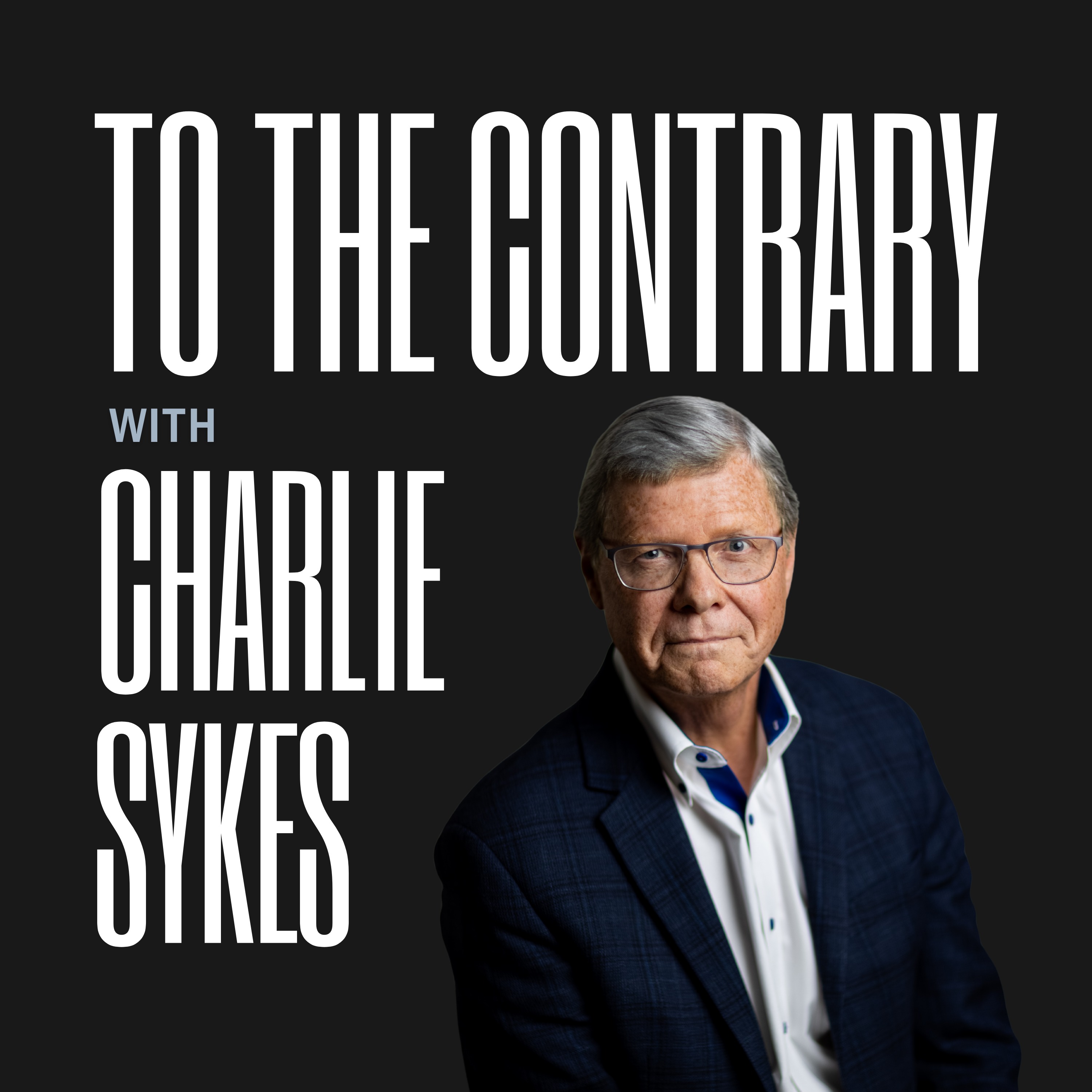
I'm Charlie Sykes. Welcome to the to the Contrary podcast. You know what I often talk about being distracted by the bright shiny objects. And right now there's really no brighter or shinier object among Democrats than the new mayor of New York, Mandani. And we're going to talk about that. So we are joined today by the executive vice president of Third Way, Matt Bennett. Good to talk with you Matt.
- [01:51]
Matt Bennett
Thanks for having me.
- [01:53]
Charlie Sykes
Well, you have a memo out that I should have talked to you about this a couple of weeks ago. 10 reasons why Mamdani's Politics will of New York City. But before we do that, it's got a lot of fans. You know there's going to be a lot of fans out there. Just talk to me a little bit about what your organization Third Way is. I want to establish the credentials. You are a senator left organization that seems devoted to trying to convince Democrats to stop losing elections. Would that be a fair way of putting it?
- [02:22]
Matt Bennett
That would be a fantastically pithy way of putting it, yeah, we've been around for 20 years. This is, this was our anniversary this year. And we kind of helped define what it means to be center left, to be a moderate Democrat. There's a lot of ways of putting it. Nobody much likes any of those terms, but we are stuck with them. And I think it's important to emphasize that sometimes when people think about moderates especially our name is Third Way. We named ourselves after the Bill Clinton, Tony Blair philosophy of government back in the 90s. But people think that somehow the center left was trapped in Amber in 1992 and we can't change, and we haven't changed, despite the fact that in 1992, China was a poor agrarian country, Russia was our ally. I mean, things were really different. The Internet was not around. So the world has turned completely upside down about 10 times since then. And we as a movement have evolved dramatically with it. And I think that's evident by the various people that Democrats have nominated for president, most of whom have been moderates. The people who serve in Congress and the House, New Democrats and the Blue Dogs and the moderates in the Senate and the governors. And many of them are very forward thinking people. So I think we need to kind of set aside the idea that all that is moderate was defined by Bill Clinton in his first race. President.
- [03:51]
Charlie Sykes
Yeah, well, there is some confusion there. And I wanna address this right up front between people who think, among people who think that when we say moderate, we're talking about the people that really don't wanna fight. Because right now the Democrats seem to be divided between progressives and moderates. But I think even more fundamentally between people who really want to aggressively fight against Donald Trump and those who maybe would take a softer approach. So that's not what we're talking about here. When you talk about moderates. It's not, hey, let's tone it down in opposing the Trump administration. That's not where we're going with this term, are we?
- [04:29]
Matt Bennett
Absolutely not. We regard ourselves as combative centrists and we take a backseat to no one in our loathing of Donald Trump. I mean, I read your newsletter every day, agree with every single word of it. The guy is destroying everything that we care about and we believe that we have to fight him with everything we've got.
- [04:49]
Charlie Sykes
Well, now, what position did you take when the Democrats caved in, surrendered on the shutdown last week?
- [04:58]
Matt Bennett
Yeah, we opposed the shutdown deal and we did so very deliberately because we were worried that that would be regarded as the moderates caving in. Now, it is true that of the eight senators who signed on, a lot of them would regard themselves as moderate, not all. I don't think Dick Durbin is a moderate. But, but that was not a moderate deal. That was a group of senators that decided, for whatever reason that that was the moment that they should strike a deal with the Republicans. We thought that was an error. And a whole bunch of other moderates did, too. I mean, Mikey Sherrill and Abigail Sparrow both put out scathing statements about it. And no one would regard them as radicals.
- [05:43]
Charlie Sykes
No, nobody would regard them as radicals. So, you know, again, I wanna set the stage for all of this because the only way to really stop and resist Donald Trump is to actually win elections, to win midterm elections, to elect governors, to elect members of Congress, not to scratch your ideological aid. And so we're gonna be just talking about that. Right. Who in fact, are the majority makers. And you would think that having lost to Donald Trump in 2016 and again in 2024, the Democrats would be, you know, would be open introspection. And I think a lot of, I think a lot of them are. But you only, only learn the big lessons in politics sometimes by losing elections. And I notice in your resume, you actually put in your resume, the first line was when you were a 23 year old staffer, you were one of the people responsible for putting Michael Dukakis in the tank.
- [06:35]
Matt Bennett
Yeah, it worked out.
- [06:37]
Charlie Sykes
You mentioned that.
- [06:38]
Boost Mobile Expert
Yes.
- [06:40]
Charlie Sykes
You learned something. Apparently, though.
- [06:43]
Matt Bennett
Yeah, look, we are big believers in learning from mistakes and learning from losses. And unfortunately, in my nearly 40 years in politics, I've got plenty of things to learn from, you know, mistakes that we've made and losses that we've suffered. But I think that too often, and I'll just speak for Democrats, Democrats are kind of immune to change and immune to recognizing where they've really made mistakes. And I think there was one moment in like late November of last year where there was some introspection and people thought, oh, my God, we just lost to Trump again, something's wrong. And somehow that moment has passed us. And now the more extreme members of my party are just returning to all the things they did that drove voters away last time.
- [07:39]
Charlie Sykes
Well, what's really ironic about that is, of course, the big winners in this November election were these two centrist center left Democrats, Mikey Sherrill, who won in New Jersey, and Abigail Spanberger, who's almost like a central casting version of a centrist Democrat winning big in Virginia. And yet you perhaps have noticed this that instead of endless cycles of talking about what did Abigail Spanberger and Mikey Sherrill do? What do their tell us? But you have a lot of Democrats who think that it is Mamdani from New York who can serve as a model for how Democrats could run in competitive races across the country. So I want to talk about the memo, because look this, we're talking about a very, very talented candidate who ran an exceptionally good race. So there are some things that obviously candidates all across the country could look at and say, hey, you know, let's emulate that. So let's start with the positives of this young man winning this extraordinary election.
- [08:44]
Matt Bennett
Yeah, look, some of the things that he did really well are not replicable by everyone being young and handsome. You know, if you have it, great. If you're not, you have to work around it. Being incredibly facile with social media. That was one of the greatest social media campaigns anybody's ever seen. So trying to do that better is very important for Democrats. And then to give him real credit and something that actually can be replicated, he stuck to one issue, which was affordability. Mikey and Abigail did too, but he did it very effectively, and he did it in ways that were simple and sticky. I mean, this guy had people repeating crowds, repeating back to him his three, I think not great policy ideas. That's pretty good for a politician, that people remember what you're promising to do so vividly that they can repeat it to you. Now could cause him a problem as mayor, because it's pretty hard to do all the things he's promised like free buses and freezing rent. But it was a simple, sticky message, and all Democrats should emulate that.
- [09:53]
Charlie Sykes
Yeah, I mean, this is an interesting point, because now he has to be a mayor and he has to deliver. And the last thing you want to do is to become mayor. Making all these sweeping promises, then failing to deliver. Okay, so let's walk through this memo, which I think is extraordinary, and I'm gonna post it in my newsletter. It will be there if people want to actually read the text that, you know, that. That. Yes, you know, people should learn lessons from the. The kinds of candidacy he had. But his policies and message are radical and politically toxic outside the deep confines of deep blue confines of New York City. And they do not translate. So let's just dive right into this, that people take a deep breath here. New York City is a deep blue outlier. It is not a model for swing state America. So let's talk about just some of the numbers here, because and we have a lot of. You have a lot of numbers in this memo that I think are important. This is an extremely Democratic city. It is an extremely liberal Democratic city.
- [11:00]
Matt Bennett
It is. And I think it's worth noting that despite all of that, despite the fact that he was running in this, you know, very blue place, he actually underperformed his predecessors like Bill de Blasio, and he massively underperformed Mikey Sherrill and Abigail Schmamberger with all kinds of constituencies that matter enormously. He wildly underperformed them versus Harris. So they.
- [11:29]
Charlie Sykes
18 points.
- [11:30]
Matt Bennett
They outperformed Harris. He underperformed Harris in New York City. And by the way, she didn't do great in New York. I mean, Trump did better than expected in New York City in 24. But Mamdani did worse. And by the way, let me just put to rest for a moment this idea that he was in a three way race. I mean, Curtis Sliwa got 7% of the vote or something like that. That didn't matter. He was essentially terrible opponents.
- [11:53]
Charlie Sykes
We ought to remember all the baggage of the opponents. I mean, Andrew Cuomo was not just an establishment retread, he was a disgraced, awful candidate, was forced to resign. Scandals. If the establishment, you know, it's almost impossible to think of them coming up with a weaker or less appropriate candidate than him. So this victory was over deeply, deeply flawed opponents.
- [12:20]
Matt Bennett
Exactly. And Nevertheless, Mamdani ran 18 points behind Kamala Harris, where Spamberger ran ahead of her by nine and Sheryl by eight. So in the overall, he was massively outperformed by the moderates running in the much more difficult places. And the idea that Mamdani's win was fueled by this huge turnout from super liberal young people. I mean, there is some truth to it. But get this. The turnout in Virginia and New Jersey outpaced turnout in New York as compared to 2024. You're never going to get the turn. Sorry, you're never going to get the turnout of a presidential election in an off year like this. But it was 76% in both Virginia and New Jersey and it was 74% in New York. So it's not like he mobilized everybody in this unbelievable historic way. He basically did what they did.
- [13:22]
Charlie Sykes
Okay, that's. These numbers, I think are very, are very. I'm sorry, go ahead. These numbers, these numbers are very, very persuasive. Because again, if you just focus on his race, it looks like this miraculous thing took place. And I keep saying, oh, look, would you look at the bigger races? I Mean, you had these double digit wins in two states that are potentially kind of swingy. That should be the model for what works. And these numbers, the fact that you had Spanberger and Mikey Sheryl, you know, outperform Kamala Harris by a considerable amount and he got 18 points less than she got in New York City. I mean, these are just numbers that I think need to be put on the table for Democrats around the country looking at which model you look at going forward.
- [14:11]
Matt Bennett
And there's more. I mean, look at non white voters. Sheryl got 77%, Spanberg got 83%, Mondani got 56%. So, and he was running against, you know, essentially Cuomo, who's a white dude. Cheryl and Spamberger both outperformed him with working class voters by more than eight points and with independence by double digits. So the very people that people in Democratic politics like me are obsessed with because we need to be if we're ever going to win elections in tough places again, those are the voters that he just didn't do very well with as compared to others.
- [14:54]
Charlie Sykes
Well, let's look at this, this is point number five here. Mandani relied on highly educated, high income electorate to win. But Democrats obviously need to make inroads with working class voters. That's the, you know, that's, those are the, that's the magic of, of, of the midterm elections. Early estimates show that Mandani won 55% of college educated voters and but just 38% of working class voters. Now, as you point out, Democrats have already kind of maxed out with the college educated voters. Their problem, they've been hemorrhaging those working class voters cycle after cycle. 58% of working class voters now say the Democratic Party has moved too far left. Just 34% of working class voters say the Democrats are in touch with the working class. So clearly he has not, even with that old socialist thing, he has not figured out a way to fix that problem to turn around the working class voters that Democrats are going to need if they're going to stop Republicans and.
- [15:59]
Matt Bennett
Donald Trump, he certainly has not. And the things that he was running on, while they might be relatively popular in a very liberal place like New York or Seattle, which also just elected a socialist mayor, are just like rat poison in the places where we need to win.
- [16:18]
Charlie Sykes
I mean, right.
- [16:19]
Matt Bennett
You know, take Rebecca Cook running in Wisconsin three in your backyard there, right. I mean, she can't run on these things. Like she, she's got to run on being a normie Democrat. In a swing district, she has a good chance of winning against terrible MAGA troll. Absolutely. But, yeah, but she's got to run as a moderate, and that is true across the country. And let me just harken back to a very similar situation in 2018. So in 2018, you had a young, dynamic, attractive Democratic socialist win a primary in June, and then she goes on to take the country by a storm. And in November, she and the rest of the squad, obviously I'm talking about aoc, are all the rage. However, in that same election, Democrats won a net of 40 new House seats. Handed the gavel back to Pelosi, put a check on Trump. It wasn't, by the way, 24 of those 40 were women, so it wasn't about that. And not a single one of those 40 seats that we flipped from red to blue were flipped by groups that were endorsed by Our Revolution or the Justice Democrats or the FAR or the DSA or the Far left. Every single one of them was either a moderate Democrat endorsed by the New Dems. That's most of them. A handful were just kind of normal liberals. That's who wins elections in tough places and flip seats.
- [17:50]
Charlie Sykes
Yeah, let me go read your point here. The far left does not flip swing seats. Mandani did not flip the mayor's office from red to blue. He managed not to lose a safe seat. That's because the far left simply does not win tough general election races. Since 2018, far left candidates have not flipped a single House seat from red to blue, while the moderate New Dems have been the majority makers flipping 50 seats. And in 2024, democratic socialist candidates represented just 1% of all congressional winners in the primary. Now, you know what? I know that people are gonna say, well, okay, this guy. You know, what works in New York isn't gonna work necessarily in western Wisconsin where Rebecca Cook is running. But what people need to understand is the Republicans are very good at something. They're very good at nationalizing politics. They're very good at picking a nugget, and they believe that this is their secret. What weapon? And I think the reason you wrote. Well, you tell me not to put words in your mouth. The reason it's important to write a memo like this is because Republicans, I think, are going to spend tens of millions of dollars trying to saddle all of his extreme positions. And we'll get to them in just a moment. On every other Democrat in America, we saw what they did with a single ACLU form that Kamala Harris filled out in 2019, where she said, you know, they said, well, do you support the taxpayer fund, you know, for a taxpayer funding for trans sexual operations for prisoners. Click yes. $100 million in ads. They are actually kind of jiggy that even with their losses that they're going to use this Democratic socialist win to tag all Democrats. And Democrats just need to understand what's coming their way. Your thoughts?
- [19:43]
Matt Bennett
Oh, they absolutely do. And we have seen this before, not just in the Harris ad, which was one of the most, maybe the most devastating ad certainly since the tank ad. I will take credit for that, but in a long time, but we've also seen them do it kind of at scale. So think about In 2020, Joe Biden wins the presidency and Democrats lose a net of, I think it was 14 House seats, which is not supposed to happen. And so we took a look at that and we thought why did we lose House seats while winning the presidency? And in many, many cases the answer was to fund the police. And this was not a position held by most of the people who were defeated by it. Take for example, there's this guy, Anthony Brindisi, he was a one term House member from upstate New York, from Utica, I'm from Syracuse. Anthony Bernizzi didn't want to defund the police. He thought that was bonkers. But all of the ads run against him were connecting him to that idea that he did not share. But it was part of the kind of big tent of his party and it was just deadly. And so that is what we're worried about with Mamdani, with the Democratic Socialists of America and all of those ideas being weaponized against lots of other people.
- [21:02]
Charlie Sykes
Okay, so what should Democrats around the country say about all this? Because you know, I read the same things you read and again, the Republicans were, I would say, rather, rather pleased when Hakeem Jeffries, the Democratic House leader, endorsed him. Because they said this means that we can now, you know, link the Democratic campaign, Congressional campaign to this Democratic socialist. So that's their playbook. We know what their playbook is going to be. What should the Democratic playbook be? You're running for Congress in western Wisconsin and you're asked, well, you know, the guy who is the head of your party has just endorsed a Democratic socialist who once supported defund the police in New York City. What say you?
- [21:50]
Matt Bennett
What I would say is I think that was a terrible mistake. I mean, the guy lives in New York. I don't know what's going on in New York City, but it sure as hell isn't what's going on here in Massachusetts. And I think all of that is crazy. And I think one of the problems that I'm going to Washington to try to fix is that there are radicals in both parties. They've completely taken over one party and they are threatening the other. And we need sensible, pragmatic people to go to Washington and ensure that the values of this community are represented there.
- [22:23]
Charlie Sykes
Okay, so let's talk about this DSA platform. The other pushback that I get is. Look, look, he's not a socialist. He's a democratic socialist. I mean, you know, Sweden and Denmark and places like that, you have documented, and I appreciate this, you've documented how the Democratic socialists of America, distinct from Democratic socialists from Scandinavia, are really extreme radicals. And I think that there's been an underestimation of what's in there. Now we'll talk about how he distanced himself from it. But this is not your standard. Even. This is not even your standard progressive liberal Democrat stuff. I mean, there's a lot. There's a lot in there. So can you just give me a little flavor of the Dem? And again, when I talk about the Democratic Socialists of America, and I'm going to push back on anybody that comments on this. This is not just generic democratic socialism. This is not just. This is not. You're going to find politicians in Denmark, you know, talking this way. So give me some flavor. Because the new mayor of New York says I'm a proud member of the dsa. Who are they?
- [23:33]
Matt Bennett
Right. So a couple of things to keep in mind. First of all, the DSA national is one thing, and then they have locals and there's been some infighting and it all gets very confusing. The second thing to understand is they had a platform that was on their website for many years that was on their website at the beginning of this year when Mamdani began his run, when he marched behind their banner, when he sent out fundraising emails for the dsa, when he hired a bunch of them to work for him. They scrubbed some of this from their website, but this is what was on it and I'm going to read it verbatim. Close local jails and free all people from involuntary confinement. All people from involuntary confinement to fund the police and cut budgets annually towards zero social ownership of major industry and infrastructure. Close all US Foreign military bases. Withdraw from NATO. Extend voting rights to non citizens. A second Constitutional Convention to write the founding documents of a new socialist democracy and finally abolish the U.S. senate. That one I can get behind. But the other ones are all completely bananas. Now, again, they claim that they're moved on from that, but that's what he signed up for. And he has not. He has not disowned it.
- [24:51]
Charlie Sykes
Okay, but in fairness, he has disowned some of it. Right. He backed away from a lot of that. And during the campaign, he said, if it's not on my website, I'm not running on it. So is it really fair to tie him to the DSA platform?
- [25:05]
Matt Bennett
What is not fair is to suggest that he's gonna close down Rikers island and let all the prisoners out. Like, I get that he's not doing any of that and he's way too smart to basically do any of this stuff. And it is true that he's put some distance between himself and that thing. What is fair and what is troubling for Democrats is that he remains an active member of a party that had that in their platform. And not just an active member, like a very engaged participant in ways that Bernie Sanders and AOC really never were. And that's the problem, is that those kinds of things, it does not take great imagination to figure out how Republicans are going to take those and really drive them into the foreheads of a bunch of Democrats elsewhere.
- [25:52]
Charlie Sykes
Well, and also, we know how they can weaponize a single sound bite. And there are sound bites and there are things from before the campaign that are out there. The oppo research is to say that it's a target rich environment is putting it mildly. But as you point out in your memo that he has reversed his position on defunding the police, saying he'll keep the NYPD4 staff at its current level. But I think it's interesting that what you wrote was if a DSA member like Mandani felt it was a political imperative to move to the center, even in a deep blue city, a similar candidate running in a Reddit electorate would certainly not be viable. You know, even he had to dial it down. So I don't have a good term for this, but I hope you'll recognize it. Part of the problem is the boomerang effect, which is that you see the Republicans and Trump and MAGA just really foaming at the mouth to attack him and calling him a communist and how he's going to turn New York into a Muslim city and everything. So the boomerang effect is that Democrats instinctively sort of rally around, if you hate him, he must be a good guy. And so therefore, it's what used to be called the Fox News fallacy that if anything was considered to be a story on Fox News, then we couldn't talk about it. You know, if they think crime's a problem, crime's not a problem. If they think the border's a problem, the border's not a problem. If they think there's a problem with trans athletes, it is a non issue. So we push back and don't take it seriously at all. So are you concerned that there's a rally that might be a rallying around effect because of the vociferousness of the attacks on, on him?
- [27:40]
Matt Bennett
Yeah, I'm very concerned about that. And, and look, I think there's another problem. In addition to the Fox News fallacy, there's this moral equivalency fallacy. So look, Mandani has some troubling views about some things that really bother me personally. I'm Jewish and I, I am concerned about his views about, you know, as an anti Zionism, but fundamentally, his basic take, like city owned grocery stores are not the same as murdering people in the Caribbean and, you know, doing and destroying the Justice Department and doing all the things that we all know that the Trump administration is doing every day. So, you know, I don't want to suggest those things are in any way morally equivalent, but they are problematic and they are, and they are a potent weapon in the hands of people who I believe are destroying the country.
- [28:34]
Charlie Sykes
See, I, look, I actually feel a little regretful about all of this because, you know, in the early days of the Trump era, it was so hard just to keep up with all of his depredations. It was so difficult. Day by day, it still is. You know, what crime are we gonna talk about? We can talk about the hundreds of thousands of people who died because he cut off the, the foreign aid. Are we going to talk about the, the extrajudicial murders or the, the scope of the corruption or the weaponization of the Department of Justice? Every single day it feels like if you're not talking about how terrible Trump is, then somehow you've, you've dropped the ball or you've taken, you've taken your eye off that ball. On the other hand, if you keep your eye on the ball, though, you have to keep coming back to this question. How do you win elections and how did Democrats lose to this guy? You know, we're watching him and we see the extremism and the crazy, and I think that the dominant question should be how is it that we are not beating this? Remember when Hillary Clinton said I should be beating this guy by 50 points, how is this even close? And then he goes on. He wins, you know.
- [29:45]
Matt Bennett
Right. I mean, it's. It's absolutely bananas. Now, I do think, if you want to. I don't think it pays much to look back at 2024. A lot of that was unique to that race, with Biden's age and getting out. And Harris obviously was hamstrung by a lot of things that were not her fault, but there were things that she had done and said that did hurt her.
- [30:10]
Charlie Sykes
Right.
- [30:11]
Matt Bennett
And you referenced the thing from 2019, when she made that pledge to the ACLU, and she did it on camera for another group that they were able to weaponize. When she entered that race in 2019, what happened to Harris was. I don't know if you remember this, but her tagline was for the people, which is the thing you say as a DA when you stand up on behalf of the people of California or the United States or what have you on Kamala Harris for the people. And I thought when she entered the race, she was my candidate. Initially, I was like, oh, my God, like, she is a badass, and she is going to go out there and she's going to. You know, she's going to be really a combative centrist, which is what I was hoping for. But she was pushed to the left by a whole bunch of forces that remain, some of them below the surface, but they are strong tidal forces in our party that ended up really hurting her both in that primary where Biden was able to beat her, and ultimately.
- [31:12]
Charlie Sykes
In 2024, you know, and I think that on some level, she understood that she had to reach out to a different kind of voter. She reached out to people like Liz Cheney, and frankly, to me, but that wasn't sufficient. If you weren't going to change your position on a lot of these other issues, that it was not simply enough to run on being for democracy. I mean, I thought that it would have been, but we were wrong there. And I've said this. I actually feel guilty because I was on stage with her in Waukesha, Wisconsin, a couple of weeks before the election. And I remember sitting there thinking, you know, I'm gonna ask her about these $100 million worth of ads that are just pounding the airwaves about, you know, the, you know, transgender athletes and things like that. I give her a chance to, like, you know, correct the record, and I didn't do it, and I regret that. And I also regret. And so this is. This is a confession, not an accusation against anybody else. And, you know, And I've, I've said this before, you know, as much as I certainly am going to be never Trump forever, I do have some regrets there. And I think that in many ways, never Trump was a successful commercial venture, but a failed political venture because we were not more forceful in telling our new allies, like, if you do this, it will be disastrous. We should have been voices pulling them to the center, saying, look, if we want to have any credibility with Republicans for Harris or Republicans for Biden, if we again, have any credibility whatsoever talking to swing voters, centrist voters, center right voters, then, you know, we need to tell you how some of this stuff sounds and that your drift to the left, we should have been a counterweight to the drift to the left. Instead, I think we got caught up in, well, a lot of what gets, you get caught up in politics. And I regret not being more forceful as, as a, as a voice, because what Democrats did not need was just simply never Trump cheerleaders for whatever Democrats were doing. Because if we knew, and we were in a position to know, if you do these things, you're going to lose the voters in the states like Wisconsin and Pennsylvania and Michigan that you need to win these elections. And that's why I find this stuff so powerful. And I think that you've been, you know, talking about this is that, look, you have to make a decision. Do you want to win elections or do you want to be ideologically pure? Right? I mean, isn't that what it really comes down to? I mean, you need to scratch your ideological aid or do you want to actually win elections for governor and Senate and for Congress?
- [33:50]
Matt Bennett
Look, I certainly believe that's what it comes down to. Now there is a huge debate inside the Democratic Party about this. And what the left would say is, that's not true at all. In fact, what you need is to mobilize. You need to. There's a huge untapped resource of people that are either low propensity or non voters. They should be ours. And if we mobilize them, we will win. There are two big problems with that. One is in the last 50 years, that strategy has worked precisely once. In 2008, when we had a world historic candidate on the ballot who was able to mobilize at least some low propensity voters and go on to a crushing victory. And if you have Barack Obama breaking barriers and leading your ticket, then it might work. However, it did not work in 2012 when he was also leading the ticket, because by then he was already president for four years. So the idea that mobilization will solve this problem has been a myth that centrists like me have been pushing back against since I was very young. In fact, there was a. The DLC, one of our predecessor organizations, issued a paper in 1989 written by Bill Galson, Lane Kmark, and one of the chapters was called the Myth of Mobilization. That you cannot mobilize your way out of this problem. What you have to do is what you just described. You have to persuade. And what you really have to do is persuade people that voted for the other guy last time, because that's worth two votes. And so ultimately, our view is that unless you are trying to turn blue, places bluer, like Mamdani did, to win in red and purple places, to win in competitive races, you simply must put the emphasis on persuasion. And persuasion means persuading people you share your values that you're a pragmatic person, you're not a nutcase. They're just looking for who's less crazy. And somehow we lost the who's less crazy debate to Donald Trump twice, which does not speak well of our party.
- [36:01]
Charlie Sykes
Well, also, I mean, the point that you have to show that you share the values, that you have a certain amount of respect. And this is where, and you know, you had an earlier memo this, this fall talking about the, you know, Democrats have to stop using certain elitist language, you know, the stuff that, the seminar room stuff. And I think part of that is just, is just the relatability, which is that, do you share my values? Do we have a common ground that we can work, you know, forward on? And do I not look down on you? Because the moment a voter begins to think that you despise that person or you dislike that person or that you have views that are completely off the charts, then it doesn't matter, you know, if, you know, basically, you know, yes, I think you're a mouth breathing, you know, bigoted xenophobe. Would you like to hear my ideas on education reform now? Well, no, I mean, you know, once that can have that conversation, it gets shut down. And so I do think that that's. That, you know, I am with you, you know, I share your values. And I think though, so that, you know, going back to this sort of original question, Democrats around the country are going to be forced whether they want to or not. Now maybe the anti Trump stuff, I mean, maybe MAGA falls apart. None of this actually matters in the midterms, but long term, you're going to have to have people who will go, okay, you know, what, you know, and Democrats will say, you know, no, I'm, I'm, I'm sorry, I'm not a socialist. No, I'm not a believer in these, in these, in these crazy ideas. You know, no, I do not look down on you because you have certain religious points of view. You have certain ideas towards gender.
- [37:36]
Matt Bennett
I actually share your.
- [37:38]
Charlie Sykes
I have. I want the same thing for my kids. You want for your kids. That, that is the, Is the key to winning these elections as opposed to simply, let's just double down on our id because somehow there's this secret mass cache of progressive Democratic socialists who will come out of the woodwork and turn Missouri blue or something.
- [38:03]
Matt Bennett
I don't know exactly. I mean, we put out this memo about language where we laid out 42 words and phrases that people really, not just Democratic politicians who don't use them all that often, but the people in our ecosystem should stop using, because to your point, it either makes us sound like we're freaks or it makes us sound like the listeners or the voters are either stupid or bigoted or both. And that's not a great look if you're in politics. And it's also, like, gross and unfair. And that is not how we should be approaching the world. And, you know, what we say to people is like, just ask yourself, like, do people in the grocery store, do the people you went to high school with, do they say people suffering from incarceration or do they say people who are in jail or inmates, do they talk about birthing person or pregnant women? Like, it's just like, come on, like, talk like a normal human being. Will this solve all our problems? Of course not. I help run a think tank. We believe deeply that we need policy ideas and we need substance. But language matters enormously because it's a signal to people that you either think they're dumb or that you respect them.
- [39:19]
Charlie Sykes
Yes. Talk like a normal person. Yes. I'm trying to think of the controversy in Wisconsin where there was some document that referred to somebody as, that used the birthing people or pregnant or it was something that was. That somebody went out of their way not to use the word woman or mother. And I kind of wonder who was in the room at that time who thought that was a good idea. I mean, like, step out of the legislation.
- [39:45]
Matt Bennett
Yeah. Like it was in legislation the governor signed.
- [39:49]
Charlie Sykes
Yeah, yeah, it was.
- [39:50]
Matt Bennett
It was.
- [39:50]
Charlie Sykes
It was not good. So let's talk about this in the time we have left because it really does. I think it does come down to this question of the Working class voters. And I am old enough to remember when, of course, that was what the Democratic Party was. They were the party of the working class. It was the party of fdr. It was the party of Harry Truman. It was the party of lbj. What, in your mind, in the short version, what happened and what do Democrats have to do now? I mean, when I look at Donald Trump, it still hurts my head to think that working class Americans look at Donald Trump and think, that's my guy. He's on my side. This is what I have in mind. But. But it's happened, so what do we need to know? It happened.
- [40:34]
Matt Bennett
So I think there were a whole bunch of things that happened. I'll go through them as quickly as I can. One is, look, we made mistakes. I served in the Clinton White House. We did some great things. We created 20 million new jobs. The economy was booming. When he left office, Bill Clinton had a 66% approval rating. People loved him because they were doing really well. What we did not reckon with was the pain that was coming from globalization and technology, which was far worse than we anticipated. And we did not do enough. And people know that, and that's on us and the Democrats that followed. I think the second thing is that we became enamored with things that voters don't care that much about. We are the champions of the things that they put the lowest on their list. Climate change. When you ask a voter, are you worried about climate change? They'll say, sure, but is that at the top of their list? It is definitely not. Because most of these people are living lives of real economic precarity where one thing could go wrong and their lives could really spiral in terrible ways, or they're already facing enormous strain to put food on the table and provide for their families. And when you talk to them about democracy, a thing I talk to them about just like you and climate change, they just think you're completely out to lunch. You don't understand how hard my life is. And then the final thing is, as we were just discussing, we talk to that population as if we are looking down on them, and no one's gonna vote for you if you think that you think they are morons or bigots or. Or bad people or stupid for being religious or, you know. So I think all of those things contributed to this horrible decline in support among, first the white working class, but now voters of color as well. And I think one final point, which is too many people in Democratic politics and the ecosystem around Democratic politics, including the philanthropies and the NGOs. Almost every room I'm in, almost every room any of us are in. Not a single person didn't go to college, didn't or lives a life where, you know, one thing going wrong could, could really, they could end up homeless. And if you don't have that connection to people who are, which is how most Americans are living, it is very hard to devise messages and policy that will connect with people whose lives are that way.
- [43:10]
Charlie Sykes
So give me a short list of some of the Democrats you think who get this. I'm guessing Abigail Spamberger, Mikey Sherrill, who else you see who get this?
- [43:20]
Matt Bennett
Alyssa Slotkin, Ruben Gallego, I think two of the brightest lights in the Senate right now and people really should be paying attention to them. Richie Torres in New York City. House member Jake Auchincloss from Massachusetts, another really great House members, thinks really is very smart about these things. I think Becca Cook, running in Wisconsin, three, I think really gets this. I mean, she is a waitress. She supports herself as a waitress. She grew up on a dairy farm. We need more people like her that really understand what it is to live a difficult economic life in Congress. And then look, I think at the national level, I think I'm very hopeful about people like Josh Shapiro and Andy Beshear and Wes Moore. I don't know about Gavin Newsom. We'll see. Let him know they can. He contains multitudes. But I do think there's plenty of Democrats out there. And I will just point out that if you had asked me or people like me at this point in 1989, you know, a year into having just lost three presidentials in a row, who will lead us from the wilderness? Very few people would have said Bill Clinton. So we just don't know who's coming along to fix this problem for us.
- [44:36]
Charlie Sykes
Although what everybody that you mentioned has in common is that they have won elections in states or districts that are swing districts. They know how to win these elections. You talk about Ruben Gallego winning in Arizona state that Donald Trump won. Lyssa Slotkin wins in Michigan when Donald Trump wins. This is crucial. Andy Beshear, one of the most popular Democratic governors in the country from Kentucky. So there are Democrats who have figured out how to do this particular Rubik's Cube. So there is hope. There is hope.
- [45:12]
Matt Bennett
There is definitely hope.
- [45:14]
Charlie Sykes
Matt Bennett, thank you so much for your time. I appreciate it. If you are interested in this memo, you will find it on my newsletter. To the Contrary newsletter if you don't subscribe please subscribe. The entire text will be there and I appreciate it. I appreciate you all listening to me. You know why we do this, even if these conversations can be difficult because it is so crucial to continually remind ourselves that we are not the crazy ones. Thank you.
- [45:52]
Boost Mobile Advertiser
The longer you stay alive, the longer you can enjoy Boost Mobile's unlimited plan with a price that never goes up. So here are some tips. Do not parallel park on a cliff if you want to enjoy an unlimited plan with a price that never goes up. Do not mistake a wasp nest for a pinata if you want to enjoy an unlimited plan with a price that never goes up. Do not microwave a hard boiled egg if you want to enjoy an unlimited plan with the price that never goes up. Stay alive and enjoy Unlimited Wireless for $25 a month forever with Boost Mobile. After 30 gigs, customers may experience lower speeds. Customers will pay $25 a month as long as they remain active on the Boost Mobile Unlimited plan.
- [46:22]
Sundays for Dogs Advertiser
The holidays are about family and quality time, right? But while we're carving roast beef, our dogs are stuck with dry kibble mystery meat. And yes, they notice it. Time to make the switch to sundaes. Sundaes is clean whole food based food made for the dogs we love. It's air dried and made in a human grade kitchen using the same ingredients and care you'd use to cook for yourself and your family. Every bite of sundaes is clean and made from real meat, fruits and veggies with no kibble, no weird ingredients and no fillers. Because your dog deserves food made with care, not in the interest of cost cutting. And the best part? You just scoop and serve. No freezer, no thawing or pre no mess. Just nutrient rich clean food that fuels their happiest, healthiest days so you get more of them to share together. Sunday's holiday sale is going on right now. Go to sundaysfordogs.com acast50 and get 50% off your first order. Or you can use code acast50 at checkout. That's 50% off your first order at sundaysfordogs.com accast50 don't miss out on Sunday's best sale of the year at sundaysfordogs.com acast50 or use code acast50 at checkout.
- [47:44]
Aviva Software Advertiser
If you're listening to this, you're ready. Ready to join the industrial intelligence generation. A generation defined not by age but by a shared mindset to connect teams, accelerate efficiency and drive innovation. Using the power of Aviva software to reshape industries turning real time insights into real world growth. Discover our stories@industrialintelligence.com join Generation I if.
- [48:15]
Zyn Nicotine Pouches Advertiser
You'Re a smoker or vaper ready to make a change, you really only need one good reason. But with Zynn Nicotine Pouches, you'll discover many good reasons. Zynn is America's number one nicotine pouch brand, plus Zynn offers a robust bust rewards program. There are lots of options when it comes to nicotine satisfaction, but there's only one Zyn. Check out zyn.com find to find Zyn at a store near you. Warning this product contains nicotine. Nicotine is an addictive chemical.
- [48:44]
Grainger Advertiser
If you're a maintenance supervisor at a manufacturing facility and your machinery isn't working right, Grainger knows you need to understand what's wrong as soon as possible. So when a conveyor motor falls, Grainger offers diagnostic tools like calibration kits and multimeters to help you identify and fix the problem. With Grainger, you can be confident you have everything you need to keep your facility running smoothly. Call 1-800-GRAINGER clickgrainger.com or just stop by Grainger for the ones who get it done.