Loading summary
Transcript63 lines
- [00:00]
Instacart Narrator
This holiday season, Instacart is bringing magic to the people who make it magic for others. Get delivery and deals on everything you need this season. Whether it's a last minute holiday decor, emergency coverage for the holiday party, or just avoiding going out in the cold, Instacart is here. Plus, November 24th to December 23rd is deal month with savings from your favorite retailers and deals on grocery, electronics, beauty, toys and more. Download the Instacart app to get a little magic delivered today.
- [00:30]
Zyn Nicotine Pouches Advertiser
If you're a smoker or vaper ready to make a change, you really only need one good reason. But with Zynn Nicotine Pouches, you'll discover many good reasons. Zynn is America's number one nicotine pouch brand. Plus, Zynn offers a robust rewards program. There are lots of options when it comes to nicotine satisfaction, but there's only one Zyn. Check out zyn.com find to find Zynn at a store near you.
- [00:56]
Instacart Narrator
Warning.
- [00:56]
Zyn Nicotine Pouches Advertiser
This product contains nicotine. Nicotine is an addictive chemical.
- [01:00]
Michael Scherer
Hey, Ryan Reynolds here wishing you a very happy half off holiday because right now Mint Mobile is offering you the gift of 50% off unlimited. To be clear, that's half price, not half the service. Mint is still premium unlimited wireless for a great price. So that means a half day. Yeah. Give it a try@mintmobile.com Switch upfront payment.
- [01:24]
Grainger Advertiser
Of $45 for a free month plan equivalent to $15 per month required new customer 3 months only. Speed flow after 35 gigabytes of network.
- [01:28]
Michael Scherer
Busy taxes and fees extra. Cmnobile.com.
- [01:43]
Charlie Sykes
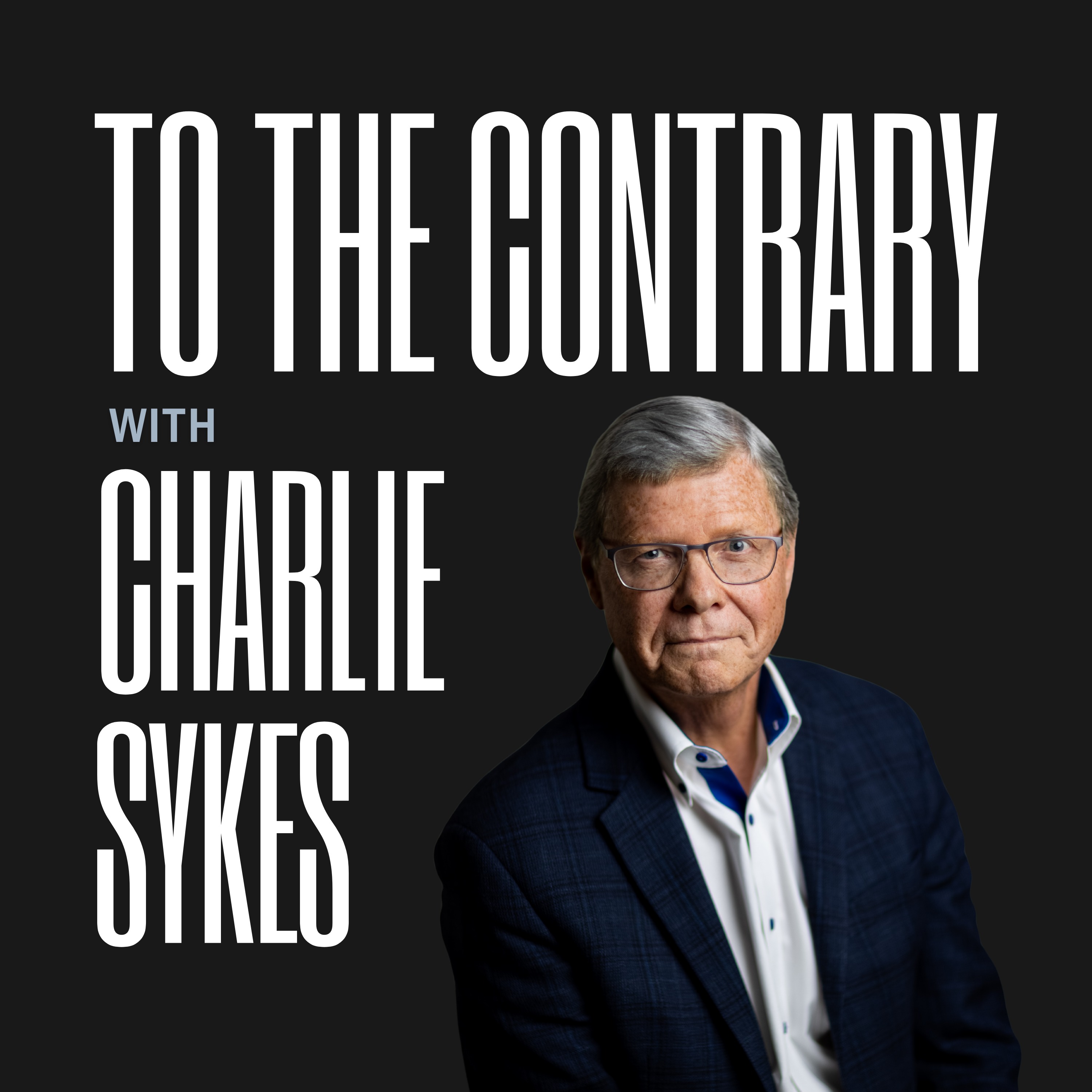
I'm Charlie Sykes. Welcome back to the to the Contrary podcast. An extraordinary weekend. The world turned upside down. Marjorie Taylor Greene is out and Trump has a new bff, Zoran, the new mayor of New York. And we're not going to even get into that because we have to talk about the scariest thing that I saw today. The COVID story of the January issue of the Atlantic has a picture of RFK Jr. With the headline the Most Powerful man in Science. Joining me to talk about that terrifying headline is the author of the piece, Atlantic staff writer Michael Scherer. Michael, thank you so much for joining me. I appreciate it very much.
- [02:27]
Michael Scherer
Yeah, thanks for having me.
- [02:29]
Charlie Sykes
Okay, we're going to get to the poetry of RFK Jr. A little bit later. You didn't cover it in your article, but I have to ask you about it. But let's just talk about this cover story, the Most Powerful man in Science. And is he holding a rosary in that cover photo?
- [02:45]
Michael Scherer
Not only is he holding a rosary, but I wasn't at the photo shoot. We sent a photographer to his office at hhs, but he pulled the rosary out and he wanted to be posed with the rosary. He knew this was a shot for this story. He basically at that point knew what the story was all about. And I thought it was really interesting that that was the image he wanted of himself in a story about the fights over science and why he's doing it.
- [03:11]
Charlie Sykes
Well, the headline of your story is, why is Robert F. Kennedy, Jr. So convinced he is right? You spent a lot of time with him, you had a lot of access. So tell me about that. Why, why he was willing to do this, why he was willing to let you travel with him, talk to him, shared articles with you. So just a little bit of background, how a story like this comes about.
- [03:35]
Michael Scherer
Sure. And that's a big part of the story. So it's worth sort of stepping all the way back. I first met Bobby Kennedy in the spring of 2023 when he was just starting his run as a Democratic candidate for president. I went to Indiana. He did an event. I interviewed him in a hotel room or a hotel conference room. And the story I wrote out of that, the headline was something like, Robert F. Kennedy Jr. Tests the conspiratorial Appetite of Democrats. And he was furious with that story and sent me a sort of nasty note. He went on the Lex Friedman podcast and accused me of being part of a real conspiracy because I worked then for the Washington Post, which he was suing. It's a complicated, long story because they had tried to help us social media networks stop misinformation online. But. And eventually he wrote me a letter. Ended up being a private letter. At points he said he was going to publish it publicly. That was much longer than the story I had written and had 78 footnotes in it. And he basically laid out his case that I had been co opted by the sort of powers that be in Washington and that I wasn't the independent journalist I thought I was, and that whether I knew it or not, I was serving sort of evil forces in approaching work as I did. And it was a fascinating letter.
- [05:05]
Charlie Sykes
I mean, like, it sounds like the beginning of a beautiful friendship. Right.
- [05:09]
Michael Scherer
And I found it remarkable, I mean, remarkable that a guy running for president had taken the time to write, you know, 8,000 word letter with 78 footnotes that wasn't like, ever publicly released. And so we kept communicating after that. And I reported quite a bit on his courtship with Trump, on the process behind the scenes of how that came together on the endorsement. And he was cooperative during that reporting the following summer. And then after Trump won, I sent a message to him. I said, can I come down to Mar A Lago and meet with you? Off the record, I'd love to chat with you. His response was, yes, if you read my book. And he wanted me to read the book. He's written many books, but he wanted me to read the book he'd written about his family called American Values, sort of a memoir of his family. So I read the book, went down, we talked, and then six months later, I came to him, I said, look, I got a new job at the Atlantic. I'd love to do a big story on you. The premise of my story, when I first approached him was, and I still believe this is true, that that he symbolized a sort of broader breakdown that's happening in our country. There's a breakdown that's happened in science. Scientists are not talking to each other. They're attacking each other's motives. The scientific process, at least at the federal level, is basically broken at this point. People are appointed or fired from advisory commissions and then badmouth each other, you know, off camera or, you know, long time scientific advisory officials are quitting in protest. And the scientific process, which is supposed to be a formal, objective process, it has all these rules set up to actually get to the truth, is no longer functioning. And it's sort of a microcosm of the broader breakdown that's happened in the political space. And I think it arises from some of the same forces. And so what I said to him was, look, I don't think anyone's really explained why you're doing what you're doing. Well, I mean, most of what we read about rfk, including, I think in some ways the story I wrote, the conspiratorial style of politics kind of goes to name calling. He's anti vax. He's, you know, he's pushing debunk science. He has a brain worm. Everybody kind of knows those things. And if you're on the other side, he's a sort of populist fighter who's taking on the corrupt establishment, who's fighting for disabled kids. But there's not really much communication across that divide. And that's something that's actually frustrated him too. And so that was the initial offer. Look, I've got time. I can spend time with you. I can really go into your biography, your backstory, and I want to understand why you are doing this in a way that hasn't really been explained because the brain worm doesn't explain it. And the idea that, like, the sort of the common liberal refrain is he's just crazy, that's not right either. He's not crazy. I mean, crazy can mean a lot of things, but there's nothing certifiable about him. So that was the premise of the story. And then I'm going along in this answer, but let me just end here. While I was reporting, a sort of remarkable moment happened. I was on a plane with him back from Chicago in September where he had done an event about banning vapes. And I said to him on the plane, we were talking about, like, things were getting pretty bad at that point, and there were a lot of, like, name calling, flying. And he'd just gone to the Senate Finance Committee and he, he'd been calling senators names, and the senators have been saying he's, you know, going to kill kids. And he told me that, you know, the, the, he had just gotten a memo from his security team that the threats against him had risen, what he said, above the threshold of lethality. I'm not sure what that means, but it was like a new warning about the, the threats. And then maybe 15 minutes later, we found out Charlie Kirk had been shot. And that was his friend. I mean, he was very close to Kirk. And it was, you know, a jarring moment. And it struck me that, that the story also should be about that. I mean, if everything is breaking down in the country, in science, where it's breaking down to is towards violence. I mean, if the standard refrain around in science right now is you were killing kids, I mean, almost everyone I talked to for this story, all the vaccinologists, Kennedy people who work in Kennedy's administrations, have death threats against them because people are convinced that whatever side of the issue they're on, they're literally doing things that kill kids, which is maybe the worst possible thing you can do. And, and I was hoping that actually spending time trying to understand him could be a bomb against that drift, which is like, I think, a very real one.
- [09:58]
Charlie Sykes
So I have so many questions. I mean, the first of which you talk about science being broke. You know, that it's being broken. Well, is it broken or is it being broken by people like Robert F. Kennedy Jr. Who is firing people right and left? He has, you know, many of the, as you point out, much of the senior career staff, thousands of workers at the cdc, are gone. He refers to that as a snake bit. So here you have a man who is going through the health establishment, our health infrastructure, with hammers breaking things. So is, is, was, was science broken before he got there? Or is, or is this, is this a story of, of. You say he's not crazy, but I'm going to throw it. He's a, he's a, he's a conspiracist and a crank, and he is dismantling much of what we had thought of as the, as the federal health infrastructure. So was it, was it broken or is he breaking it?
- [10:55]
Michael Scherer
Yeah, I think it's a totally fair point. If you say is broken, the passive voice, you get away with a lot there. And there are lots of culprits here. And I don't, I make very clear, like, he's a big part of this. He's a full combatant in this war. But I would start sooner than Kennedy. I don't think Kennedy's 2023 run for president would have happened without Covid. And I don't think the anger that fueled his rise through that political season that led to Trump deciding that it was a good idea to merge forces with him would have existed without the backlash to the public health response to Covid. Yeah, I put in the story. Plenty of polls about, you know, I think it's 70% plus of Americans believe that the health system is primarily designed to make profit for the people at the top. That's a bipartisan view. That's not Republican, Big pharma, big insurance, confidence in the CDC as a reliable source for information about your health. Dove from. I don't have the numbers in front of me, but it was like high 60s, 70, down to the mid-50s during COVID And that's before Kennedy comes onto the scene. I mean, he was often on the margins during this. But there is, and this is a much bigger conversation. There is a breakdown in authority in this country and significant concern about whether the American people are being lied to, whether the leaders are actually acting in their best interest. And that is much broader than science. And what that does when you apply it to science is we have a system in which elections, the election result leads to political appointments at our scientific institutions, and those political appointments have the power under our system, the constitutional system, to change the priorities of science, to change funding levels for science. I mean, there's some debate over whether all these cuts were constitutionally legal or not. But. But the basic premise that Trump was democratically elected.
- [13:18]
Charlie Sykes
Yeah.
- [13:18]
Michael Scherer
And on a platform that was explicit about much of what Kennedy is now doing and that he's now carrying that out. I mean, that's just a, that's just a fact. So, so who broke it? I mean, yes, Kennedy is doing a lot to dismantle institutional science right now. That's absolutely true. But he is also doing that because Trump was elected on a plat with him on stage, with him saying, I will do these things when I get elected.
- [13:47]
Charlie Sykes
Well, okay, let's go back. And I agree with you that obviously this lack of faith predates RFK Jr getting into office. But it also, one of the causes was the flood of disinformation, the flood of the conspiracy theories, the flood of people who are undermining legitimate, proven science. And you had people exploit this. And one of the sources, one of the vectors of that disinformation of those conspiracy theories is RFK Jr. So again, this didn't just happen. It's happened because people have destroyed confidence in science. So, I mean, I. That. So do you. If people say you are trying to normalize RFK Jr. How do you respond to that? You know, you're saying, he's not crazy. He's coming in this, in this thing. So give me your sense of, you know, I mean, should we take RFK Jr seriously? Should we pretend that he actually knows what he's talking about? Do we pretend that the bogus studies he's pushing are not bogus? What, How. What should we think about him? If he's not crazy, what is he?
- [14:55]
Michael Scherer
Yeah. So you should take RFK seriously. Absolutely. He's the Secretary of Health and Human Services. He has enormous power, and he's executing on that power in a very aggressive way. You should not take anything he says at face value. You should not assume that what he says is correct. You should not. You should be. There's plenty of reasons to have enormous skepticism about whether what he is doing now will lead to more death and disease than. Than he would have otherwise. And those are separate things. Now, the response to the normalizing rfk. I'll go back to what I was saying about the Kirk shooting.
- [15:33]
Charlie Sykes
Yeah.
- [15:33]
Michael Scherer
I've been covering politics now in Washington for 25 years or something like that. And I'm not a science reporter. I'm a political reporter. During that time, there has been, with the exception of maybe like 18 months for Obama, one direction that political debate has been going, and that is to deeper division, deeper alienation, a deteriorating ability of Americans to listen to each other and understand where they're coming from, from. And a lot of that's with good reason. I'm not judging that as like, you shouldn't fight for what you believe in. You shouldn't protest. All those things Are, are, are okay. But I do think that the only way off of this path we're on, which history tells us leads to a violent place, a painful place for everyone, is to try and seek understanding of what is actually going on and not to get caught up in like the names of crazy anti vax, all that. And you know, this is a 12,000 word story. It's a long story, it takes a while to read. But the premise of it is this is a valuable experiment and much of the story is a debate between me and him as we go along.
- [16:49]
Charlie Sykes
Yeah, well, let's talk about this before we get off that particular path that you're describing accurately. You know, he is known for being anti vaccine and is dismantling. In fact, you know, in your story, you know, you talk about the fact that, you know, although Kennedy slashed the budget of his department, he told you he plans to send billions of dollars investigating vaccines, potential ties to chronic diseases, a position that most people in science reject. And the question comes, if in fact we do undermine vaccines, if in fact we start having the massive spread of unvaccinated individuals, particularly children, isn't it true that children will die? Isn't that an accurate statement? We have eliminated so many diseases from this country, as you point out, and at one time the leading causes of death were things like pneumonia, tuberculosis, polio is gone, measles has been eradicated. If we stop vaccinating and those come back, children will die. So yes, that does lead to more political division. But is it accurate or not, then.
- [18:02]
Michael Scherer
Children, more children will die? Yes, there's plenty of reason to believe that if you decrease vaccination rates, more children will die. That's absolutely true. I effectively asked him that question directly at one point in the story and I said, what if you're wrong? What if you spend all this. I mean, what he's doing at this point is saying, I believe there is evidence to suggest that there is hidden dangers caused by vaccines. Things like autism and other chronic diseases which have not shown up yet in studies. We don't have studies connecting those two things. He comes back, his response to that is, well, we don't have studies connecting those two things because for the most part those studies haven't been done. And that's an accurate statement. There are studies of thimerosal, there are studies of Illumina adjuvants and vaccines, there are studies of the MMR vaccine. But the first year vaccines that most kids get, or almost all kids get. There are not studies specifically asking the question, for instance, do these vaccines, do people who take these vaccines have an increased rate of autism? Now, the reason those vaccine, those studies haven't been done is because the scientific establishment doesn't think they need to be done because they haven't seen evidence that it has to be done. And I spoke to one person, former very senior person in the federal health establishment, who said even if we did those studies and even if we found out that a Hep B vaccine or something like that did have a cause, a causative or a correlation with increased autism rates, the increase that change would not be enough to change the recommendation, because we know where most of the increase in autism rates are coming from. There's a small part of that that is unexplained. And even if it was fully attributed to a vaccine, we would still want to give that vaccine because the benefit of the vaccine is so much greater than the autism rates. So it's actually a very complicated conversation. Now, that's what he's doing. Those are the reasons why he's doing it. Now, he has been very. He said many things over many years that discourage people from taking vaccines. It's also true that he now says certain vaccines are safe. He will say the tuberculosis vaccine, which is a live virus vaccine, he believes is a safe vaccine that studies have shown to be safe. His idea now is that he will, having cut federal research dramatically by billions of dollars, having laid off about a quarter of the federal HHS workforce, that he is now going to invest billions of dollars in answering this question that most of science does not believe needs to be answered. For them, it's the equivalent of like, do we study whether bananas cause autism or do we study whether AirPods cause autism? There's just no reason to ask the question. It takes a long time to figure it out, but that's what he believes he was brought into office to do.
- [20:57]
Charlie Sykes
So you had an interesting anecdote that was actually quite surprising that Kennedy told you that he told Trump not to post that warning on social media about pregnant women taking Tylenol. Because this whole weird relationship between Trump and Kennedy, I wanna talk about that just at least briefly. So Kennedy actually told Trump not to do that?
- [21:23]
Michael Scherer
Yeah. So here's what happens. In August, there's a study published out of a health journal in Harvard. It's a meta study of a bunch of other studies that suggests there's a correlation, not causality, between Tylenol used by mothers and autism and other neurodevelopment problems in kids. Kennedy gets very excited when this study is published. And he said he spent the weekend reading 70 studies. He calls other researchers, he calls Ken Views CEO and has him bring in scientists. He basically concludes that there could be a real tie here, that this could be a thing. And for Kennedy, it totally makes sense. Kennedy also concludes that things like Tylenol are beneficial to some pregnant women. One of the main or a serious cause of miscarriage of congenital abnormality is high fevers during pregnancy. And Tylenol brings down high fevers. So you're dealing then with a possible harm from Tylenol, a known benefit from Tylenol. And, and he begins the process of figuring out how to communicate that. He briefs Trump on the process. Trump, who's been looking, he very much wants to discover the cause of autism and announce it to the world, gets very excited and says, let's just tweet it out, don't take Tylenol. And this is weeks before the actual announcement is made. Kennedy says, no, you can't do that. There's nuances here we have to get right. And by the way, the industry will freak out if you do it. And, and, and Trump's response, according to Kennedy, was I don't give a shit about that. For which, ironically for Kennedy was he thought a very noble thing for Trump to say because he doesn't give a.
- [23:10]
Charlie Sykes
Shit about the pushback from big Pharma.
- [23:12]
Michael Scherer
Yeah, he doesn't give a shit. Like Kennedy likes to. We can talk about the relationship, but Kennedy explains Trump as a populist. It's like a truth telling populist against entrenched power. Of course, weeks later, they do this press conference at the White House. They announce the possible connection between Tylenol and neurodevelopmental disorders. The FDA puts out a statement, an advisory to doctors, that is actually very nuanced. You go back and read the FDA statement that is put out at that press conference. It says there is no causative. We don't have any science that says this is causation. We have a possible correlation and we. And Tylenol is still very valuable during pregnancy to deal with high fevers. But for low level fevers, if you can avoid it, probably it's better at this point, before we know more to do that, to tell mothers not to take the Tylenol. Trump in that press conference goes way beyond what Kennedy was saying, what Marty Makary was saying, what the other people, what the FDA statement was, and his Trump says Don't take it. Don't take it. You know, it's terrible. Whatever you do, don't take Tylenol, which is exactly what Kennedy and his team did not want to happen in that moment. But that's the give and take of. I mean, this administration is a rather chaotic one. Kennedy never spoke out against it afterwards. He never complained about it afterwards.
- [24:41]
Charlie Sykes
Now, you also talk about, you know, Kennedy's rather, I mean, sort of, you know, shaky. You know, life. You know, his life as an addict in recovery is. You talked about his current nicotine and tanning habits and that he referred to. Referred to his brain as a sort of formulation, pharmacy, able to transform anything, rock climbing, falconry, sex into a drug. I mean, so, you know, he talks about. He talks about this. Can you give me some sense, though, why, what his relationship is to the rest of the Kennedy family? Because when his. When his confirmation was up, you had prominent members of the Kennedy family who referenced the fact that he. That his drug addiction said that he was completely unqualified for that. He is really, at least my. My sense is completely isolated and alienated from the rest of his family. So give me your sense of what's. What. What's the story there. Why nobody else in the Kennedy family has sort of gone along for the RFK ride.
- [25:53]
Michael Scherer
Yeah. And the next question is, why did he take a different. Such a different journey? I mean, so let me just start with the. The drug addiction thing, because you have to start there to get to the other part. At 15 years old, his father's been killed two years earlier. His uncle's been killed a couple of years before that. His mother has 11 children, including a newborn. He's at a party for someone going off to Vietnam. Someone gives him acid. Later that night, someone gives him crystal meth. He's 15 years old, and his life changes. And. And for the next 14 years, he very aggressively pursues drugs and becomes a pretty intense heroin addict who overdoses in the early 80s. I asked Kennedy how much of that experience, how much of the fact that he's still in recovery, how much of the fact that he still goes to a meeting every single day. Well, he was a candidate. No matter what city he was in, he was going to a recovery meeting as HHS secretary. Every day he goes to a meeting. Some days he goes twice to a meeting. He sponsors others in recovery. He's constantly talking. I mean, the process of that is to constantly talk about your own demons, your own addiction, how you're trying to do good work out of that. I asked him, how much does that have to do with the way your life is now? And he said, I think all of it. He is entirely shaped by this experience and the fact that he is trying to still outrun it. At one point, he described to me article he remembers reading while he was still using in New York. He said it was in the Village Voice. I couldn't find it in which someone wrote, heroin addicts have a unique opportunity for redemption because they've literally been to hell and now they're coming back. And for Kennedy, that really hit home. He really, truly believes he has been to hell. He has lived in hell of addiction. He still struggles with it every day. He doesn't claim to be cured of any of these things, these compulsions.
- [27:54]
Charlie Sykes
Does he still use, you think? I mean, does he use anything?
- [27:57]
Michael Scherer
Because, well, obviously he uses Zyn. He's on testosterone replacement therapy. He has a very unique diet. I don't know the full details of it, but I'm sure he's on a number of different supplements and things like that. I do not think he's on heroin. He told me once that because of a surgery in the early 2000s, he once took pain pills and that he restarted. He started counting his sobriety again after that. So I don't really understand exactly what that experience was for him. But no, I don't think he is using like he did before. But I. I can't tell you what he's. He is or not doing, but. But let me just connect it to the family. The family lived through this with him. And he was a terrible influence on a lot of people. I mean, it was going on. The whole Kennedy clan was sort of hit by drug use during the 70s. He was a part of that. Carolyn Kennedy wrote a letter to the Senate trying to keep him from confirmation. His cousin and said, like his life as a teen was a. Or his basement was a scene of despair and darkness, I think was the phrase or something like that. I asked him about. I said, is that true? He said, well, I don't really contest it. And, and so the, the. It is true that he has sort of separated himself from the family, but it's also true that he had. He's on a quest. There's a. There's a like, fervor to his effort to reclaim what. What I describe what he described as the sort of hero's journey that he was sort of born into. That just doesn't exist for most people generally. But even for other people in his family, there's something ferocious about his desire to claim the birthright that was lost to him. You know, the fact that he was the second son of Robert F. Kennedy to reclaim the ability to do good in the world that was lost during those years of addiction in which he did a lot of bad in the world and still something he struggles with. And I think that has pushed him in a way where, I mean, I asked him at one point, how is, how do you explain having been like, someone who was canceled on Instagram a few years ago and now being HHS secretary?
- [30:18]
Charlie Sykes
Yes. Weird.
- [30:19]
Michael Scherer
And. And his answer was providence. But he, he does believe that there is a greater system at work. There's a reason he was posing with the rosary that is setting him on this path and putting him in this place, and that he is serving that system, which is a unusual approach for most public servants.
- [30:45]
Charlie Sykes
Well, since we're talking about. And I want to get back to his influence on science and what he's doing, but Robert F. Kennedy, Jr. The man, the family, the story, the history is, of course, a bizarre story in and of itself. So I have to ask you about the Olivia Nuzzi story because, you know, right now, everyone's consumed by the back and forth. Olivia Nuzzi, who apparently had some kind of an affair with him over the last year. Her former fiance, Ryan Lizza, is writing about it in very, very graphic terms. And it does strike me, as we're talking about this, that here we have this sort of, you know, major journalistic ethics sex scandal story out there, and Robert F. Kennedy, Jr. The man involved in this, seems to be above it, that there doesn't seem to be any sort of fallout from this, even though there are certainly strong suggestions that he has been less than candid about his relationship, that he was involved in an affair with a reporter in the last two years, that he was doing all of this. I know this all came out after you finished your piece, but your thoughts on what do you make of that? Well, so you make it a whole Lucy story.
- [32:06]
Michael Scherer
Well, you said it before. He, he does still consider himself a sex addict. So that's the starting point.
- [32:13]
Charlie Sykes
Okay.
- [32:14]
Michael Scherer
That's as one of his many addictions, like he said, Formulation, Pharmacy, Falcon Reset, the, the newsy affair was known when we were talking with each other. We didn't spend time on it. I told him I was going to mention it in the story I told him also, I was going to mention something that came out during the campaign where a former babysitter of his said she groped her her in very inappropriate ways and Sort of propositioned her when she was working for him, him, a babysitter to his children. He responded to that, both those things during the campaign by pointing to lines from his announcement speech. It's sort of a joke. So if I have so many skeletons in my closet, if they could all vote, I'd be king of the world. So he's basically, his response to all of this is categorically, I have done lots of bad things. You should know that about me. I can't justify it. I'm not going to engage with it. I asked him this weekend because the story was going to publish. The story's already gone to print. I asked him this weekend because it was going to publish today, Monday, if he wanted to respond at all to either the New Yorker story by his cousin Tatiana Schlossberg, or the nuzzy stuff that's come out in the last week, which is pretty graphic. You know, poetry he wrote or things like that. And he, he said no, he doesn't want to respond to any of that. I don't expect he will respond to any of. Is true that the Nuzzi relationship was enormously trying on his marriage during the campaign. And, and we know that partly because his wife has written a memoir in which she discusses the turmoil of that period in which she found out about this. I assume what's happening now is not easy for them either because it wasn't like she was giving him a pass.
- [34:06]
Charlie Sykes
Before, but there are no consequences for him. I mean, what's interesting is that he seems to sort of embody this post scandal era where you don't have to be really, really old to realize that even small portions of this would have been career ending for most people. And RFK seems to be almost this avatar. It doesn't matter what you find out about me, what I did, how graphic it is, there will be Fallout 4. The blast radius will consume other people, but won't touch me.
- [34:37]
Michael Scherer
Yes, I think that's absolutely correct. And I would say that the reason that is, is the president of the United States has been credibly accused of sexual assault by a number of women and found liable in a jury of sexual assault by a jury in New York of sexual assault and was elected, reelected president, you know, with all that known. So the, the American people's tolerance for this stuff has changed. And, and therefore the, the tolerance within the administration for this sort of stuff has changed. I, I mean, we'll find out in a few weeks if there's another Gallup poll about his favorability or something. Whether, you know, the public's view of Kennedy has, has shifted. But, but no, we're definitely in a, in a new era, I would say. I mean, I think this is an important point. I, again, I've been covering politics a long time. I try not to write about sex. I mean, it just feels like not the thing I want to be doing, but I do write about it when it involves use of power abuse, sexual assault, rape. I mean, that comes up in politics where you have non consensual behavior of a person in power preying on somebody else. I don't think the Nuzzy example right now, that clearly is the example in the babysitter case. And I think there are other allegations have been made against Kennedy, but I don't think the Nuzzy example rises to that level. I mean, by her own account, she was very willing and excited about this relationship with him. And I mean by her former fiance's account as well.
- [36:18]
Charlie Sykes
Well, I mean, we haven't gotten the full, the full account here, but the last thing that Ryan Lizza posted was when he basically said, you know, I'm going to tell the story or I'm what, You know, and she was terrified. And her reaction was, I'm afraid that Bobby will kill me. I mean, some of these, I mean, the details of this are not, I mean, I don't want to spend too much time on it, but to say that there's a certain sordidness and there's a sense of, I mean, and also that she was willing to take a bullet for him, that he was very anxious for her not to say certain things about their relationship that are coming out now. So, I mean, this does raise certain credibility issues about whether or not he was telling this story.
- [37:02]
Michael Scherer
No, absolutely. And if he threatened her at any point during this, that would be a total, it would void everything I just said. Absolutely.
- [37:11]
Charlie Sykes
So let's talk about his relationship with Trump, because it is one of the strangest relationships in a very, very strange political time. You have a very revealing quote where he says, the whole medical establishment has huge stakes in equities that I'm now threatening. And I'm shocked President Trump lets me do it. And he describes his relationship sort of like when you're dating someone. So give me your sense. What is the dynamic between these two guys?
- [37:40]
Michael Scherer
Yeah, the full quote was, he said, it's like when you're dating someone and you, you realize you're liking them more and more. And he said that's basically the relationship you have with Trump. He says when before he met, I mean, during the campaign, he spoke of Trump as a malign force on the country, as someone who tapped into the darkest spirits of the, of the country as sort of like an anti Kennedy in a way. He tries very hard in the summer of 2024 to get someone in the Biden or Harris campaigns to pay attention to him because he realizes his campaign's not going anywhere and he wants to broker something, he wants to get something out of it. They won't engage with him. Trump is very different. After the assassination attempt in Butler, Pennsylvania in July, that night he goes on tv, he talks about how the country has to come together. Tucker Carlson and another person end up connecting him with President Trump that night. And they have their first conversation. Days later, they're meeting at the convention in Wisconsin before the convention starts. And according to Kenny's telling, they're discussing everything where he could be vice president at that point, if he joins the campaign, you know, he could have a health role, he could have another role. For a number of reasons, it doesn't go anywhere and it falls apart. But Susie Wiles, the current chief of staff, and I think people in Kennedy's camp, at Kennedy also come away from that meeting believing something can be forged there. And, and Kennedy then has to go on his own journey. And his journey is basically, I mean, he said this to other people.
- [39:19]
Charlie Sykes
That.
- [39:20]
Michael Scherer
That he felt like he could save the lives of children, that he was called to do this and that he would have to, like, what was his obligation here. And then after a while, he begins to, like he said in the quote, believe that Trump was not a maligned force. It wasn't like a deal with the devil to get his policies in place. That actually Trump was an admirable person. And this, I think, is really deeply ironic. In the early 2000s, Kennedy wrote a whole book about George W. Bush in which he basically cast Bush as a return of Mussolini, as a fascist force who is bringing this country in a terrible direction in which corporate power was merging with government power and destroying the environment. And now he's working alongside someone who appoints oil executives to run cabinet level departments. And he had to get his brain around that jump, that, that political journey. And the way he did was by convincing himself that that one Trump was not incurious and idiotic, that he was actually very bright. He tells a story of Trump drawing a map when they're on the plane together of the Middle east with the troop strengths of all the countries, explaining to him the dynamics of the Middle East. He he talks about his encyclopedic knowledge of music and, you know, Wall street net worths, but also that Trump's fundamental role was as a populist crusader against the corporate oligarchy, you know, the sort of the fascist power. So in Kennedy's mind, he makes that transition to convince himself that, you know, when the President says, I don't give a shit about that, that's actually like a great quality. That's like a Naderite, you know, it's everything John F. Kennedy wanted to be, you know, when he took on the powers of the federal government and the deep state in the early 60s.
- [41:28]
Charlie Sykes
So where do you think this is going? Because we've seen, I mean, so RFK Jr. Is obviously a true believer in his own way. He's got his own identity. We've seen these beautiful friendships break up in the past. Trump's loyalty tends to go only one direction. We saw that whole Elon Musk drama play out. Marjorie Taylor Greene is on the. So I mean, do you, do you think that this is going to be a long term, I mean, a long term relationship? Do you think that there will be a divorce at some point? You know, are they, are they paddling in the, in the same direction at the moment? At the moment? I mean, I'm a long term. Big egos, big agendas, right?
- [42:15]
Michael Scherer
I have no idea. I mean, I can't predict that. And I think anybody there, there, I can count on one hand the people who have worked for Trump who have come out of it, you know, not being deeply critical of Trump. So the, the, that's not an easy relationship to maintain for the long term. That said, I think even within the Cabinet, Kennedy's standing has been about as high as it can be from the start of the year. And this for a couple of reasons. One, he's very close with Susie Wiles and other people around the president. The President loves. He's been very savvy in how he manages the president. Others in the administration in terms of avoiding fights that he could have picked. Kennedy has. And I think Trump still sees in his relationship with Kennedy a huge asset for himself politically. And I think that will come more to the fore going into next year. I think the Republican Party and the White House very much want to use the Maha, Make America Healthy Again Kennedy thing as an electoral issue going into the midterms. They see it as a real way of peeling off otherwise Democratic voters. And so he has a sort of public profile that I think the President still sees as very valuable to Him. So it is different than some of the other ones. Yeah.
- [43:52]
Charlie Sykes
So, I mean, look, a lot of your readers, a lot of our listeners have a pretty set idea image of who, you know, Bobby Kennedy Jr. Really is. What do you want people to come out of reading this article, which is a very, very deep dive into him? What is the takeaway? Because you're still a skeptic, he tried to convince you on vaccines. His facts, his data often does not add up. He is slashing programs for research that could be life saving. What, what do you want people to take out of this story? What will they think about Kennedy afterwards that they didn't understand before?
- [44:33]
Michael Scherer
So those are slightly different questions. What I want people to take out of this story is that it's important and valuable for us as Americans to take the time to try to understand even the people we deeply oppose, even the people we think are hurting the country, are doing things that are going to hurt kids, that we have a responsibility as Americans in this system to hold ourselves together as a country. And the only way that's going to happen is by having conversations and trying to seek understanding, not agreement, understanding of where each other's coming from. And that's what I want the message of this story to be. Now, what people should understand about Kennedy is to understand Kennedy, you have to understand all these other parts of his life. You have to understand his upbringing and his, his family. You have to understand his drug addiction and recovery. You have to understand his time as a trial lawyer litigating against large corporations. You have to understand his continued personal struggles and, and that, and then you also have to take the time to bury, go deeper into some of these scientific disputes because ultimately, like, the only way to rebuild this, the idea that, that, you know, the Fauci regime will just return happily to running federal science after Democrats elected in 2029, is not real. Like, the way out of this divide we have as a country is actually to begin to grapple with the details of these scientific disputes, even if they're unwelcome, even if the administration or the, the senior scientists in government, the senior scientists and all the universities think this is ridiculous. They have a populist popular uprising on their hands and they need to engage with it because the alternative is things get worse. The alternative is not that if you ignore Kennedy, he goes away. If you ignore Kennedy, he becomes HHS secretary. You have to actually engage with these ideas.
- [46:40]
Various Advertisers (Boost Mobile, Peloton, etc.)
The.
- [46:40]
Charlie Sykes
The COVID story of the January edition of the Atlantic. The most powerful man in science, Michael Scherer, is the author of this Deep Dive Into Robert F. Kennedy, Jr. Thank you so much for talking to me on the day that this was in fact released. I appreciate it very, very much. Michael.
- [46:58]
Michael Scherer
Thanks. I really enjoyed it.
- [47:00]
Charlie Sykes
And thank you all for listening to this episode of to the Contrary podcast. I'm Charlie Sykes. We do this well, we continue to do this because we need to keep reminding ourselves that we are not the crazy ones. Thank you.
- [47:25]
Various Advertisers (Boost Mobile, Peloton, etc.)
Dreaming of getting the all new iPhone.
- [47:27]
Michael Scherer
17 Pro designed to be the most powerful iPhone ever? Then stay in bed and let a Boost Mobile expert deliver and set it up for you. Oh actually they will have to get up and open the door.
- [47:36]
Instacart Narrator
Oh right.
- [47:37]
Michael Scherer
Delivery available for select devices purchased at boostmobile.com, terms apply.
- [47:41]
Grainger Advertiser
If you're a custodial supervisor at a local high school, you know that cleanliness is key and that the best place to get cleaning supplies is from Grainger. Grainger helps you stay fully stocked on the products you trust, from paper towels and disinfectants to floor scrubbers. Plus, you can rely on Grainger for easy reordering so you never run out of what you need. Call 1-800-GRAINGER, click grainger.com or just stop by Grainger for the ones who get it done.
- [48:15]
Various Advertisers (Boost Mobile, Peloton, etc.)
Hi, this is Robert Mays from the Athletic this time of year always gets busy, but that's when having Peloton in my life really makes a difference. The new Peloton Cross Training Tread plus, powered by Peloton iq, helps me fit in great workouts no matter what's on my schedule. It's Peloton's most advanced equipment yet, giving you real time guidance and endless ways to move. Peloton IQ plans your workouts, tracks your progress, and corrects your form so you can train smarter and make the most of your time. Let yourself run, lift, flex, push and go. Explore the new peloton cross training tread plus at 1 peloton D. If you're.
- [48:49]
Zyn Nicotine Pouches Advertiser
A smoker or vaper ready to make a change, you really only need one good reason. But with Zyn Nicotine Pouches, you'll discover many good reasons. Zynn is America's number one nicotine pouch brand. Plus Zynn offers a robust rewards program. There are lots of options when it comes to nicotine satisfaction, but there's only one Zyn. Check out zyn.com find to find Zyn at a store near you. Warning. This product contains nicotine. Nicotine is an addictive chemical.
- [49:19]
Grainger Advertiser
If you're a custodial supervisor at a local high school, you know that cleanliness is key and that the best place to get cleaning supplies is from Grainger. Grainger helps you stay fully stocked on the products you trust, from paper towels and disinfectants to floor scrubbers. Plus, you can rely on Grainger for easy reordering, so you never run out of of what you need. Call 1-800-GRAINGER, click granger.com or just stop by Granger for the ones who get it done.