Loading summary
Transcript114 lines
- [00:00]
John Avlon
The longer you stay alive, the longer you can enjoy Boost Mobile's unlimited plan with a price that never goes up. So here are some tips. Do not parallel park on a cliff if you want to enjoy an unlimited plan with a price that never goes up. Do not mistake a wasp nest for a pinata if you want to enjoy an unlimited plan with a price that never goes up. Do not microwave a hard boiled egg if you want to enjoy an unlimited plan with the price that never goes up. Stay alive and enjoy Unlimited Wireless for $25 a month forever. With Boost Mobile. After 30 gigs, customers may experience lower speeds. Customers will pay $25 a month as long as they remain active on the Boost Mobile Unlimited plan.
- [00:30]
1Password Advertiser
A password manager should be the first security purchase you make for your team. Why? Because compromised passwords are the number one way bad actors attack companies, and small businesses are their favorite targets. But unlike a lot of security challenges, passwords actually have a pretty simple solution. 1Password lets you manage all your business's credentials so you can feel confident that your data stays secure as your company grows. Find out more at 1Password.com/special offer and start securing every login.
- [01:01]
Farnoosh Tarabi
The hustle doesn't have to hurt if performance pressure is making it hard to breathe. Grow Therapy helps you navigate stress, set boundaries, and actually feel like yourself again. Whether it's your first time in therapy or your 50th. Grow makes it easier to find a therapist who fits you, not the other way around. You can search by what matters like insurance, specialty, identity, or availability and get started in as little as two days. There's there are no subscriptions, no long term commitments. You just pay per session. Grow helps you find therapy on your time. Whatever challenges you're facing, Grow Therapy is here to help. Grow accepts over 100 insurance plans, including Medicaid in some states. Sessions average about $21 with insurance and some pay as little as $0 depending on their plan. Visit growththerapy.com startnow to get started. That's growthherapy.com startnow growtherapy.com start now. Availability and coverage vary by state and insurance plan.
- [02:04]
Charlie Sykes
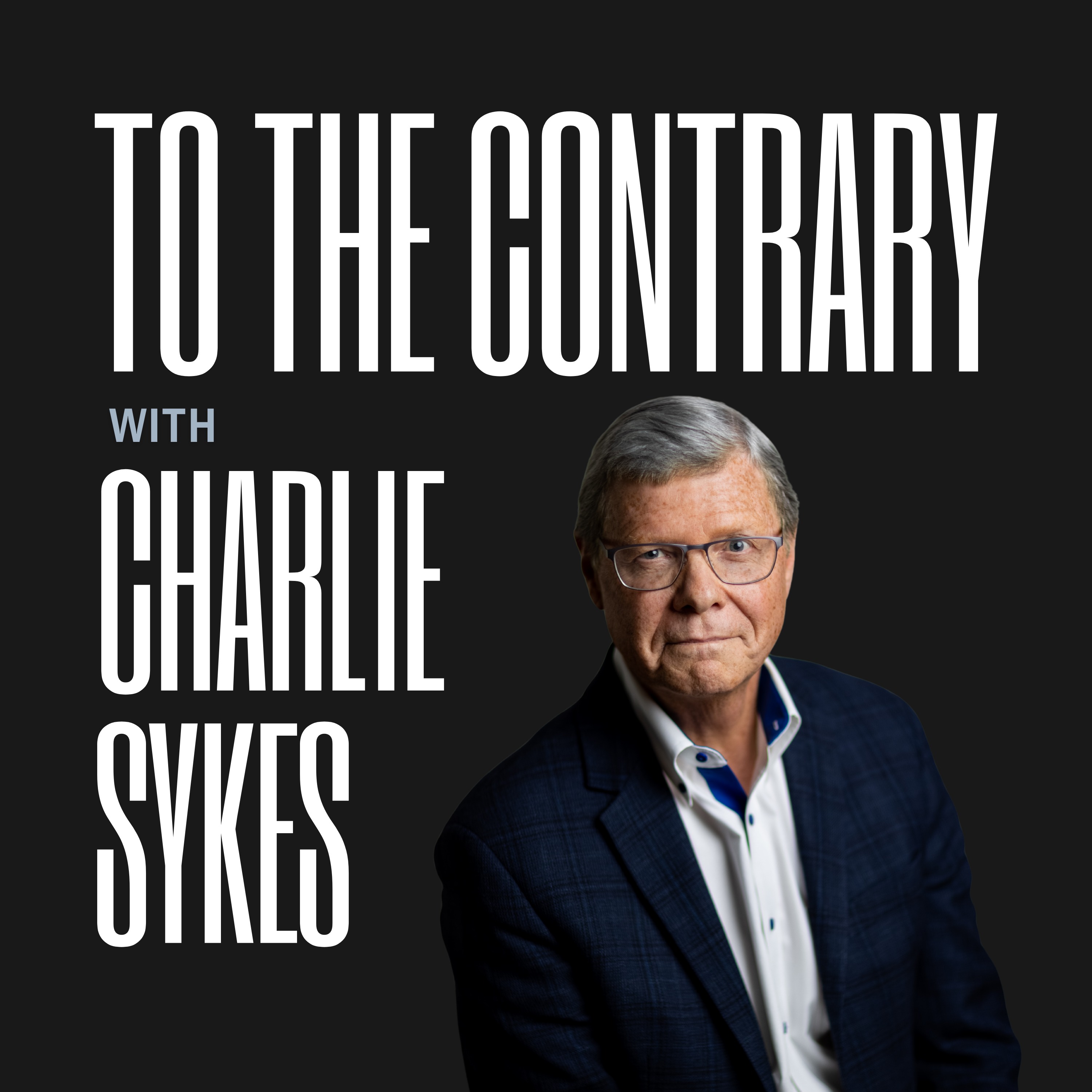
I'm Charlie Sykes. Welcome back to the to the Contrary podcast. It is actually spring and I regard that as a hopeful season. I think we all think of this as a season of rebirth. Meanwhile, some question about who's in charge of Donald Trump's war. I mean, Donald Trump would say that of course I am always in charge of Trump's war, his war of women, Iran. Although there were some questions about it when he was suggesting that, no, I had no idea that the Israelis were about to bomb that big gas field. Interesting admission that the president says that in effect, Donald Trump, in effect is saying that Trump is losing control of Trump's own war. Trump himself says. There's so much to talk about this week. And joining us on this weekend's to the Contrary podcast, our good friend John Avalon has. How do we introduce you? Author, commentator, former CNN anchor, congressional candidate, all around Renaissance man. Good to talk with you again, John.
- [03:05]
John Avlon
Good to see you, my friend. Good to see you, Charlie. And my wife, Margaret, Margaret Hoover sends her regards.
- [03:10]
Charlie Sykes
I wish I could be one tenth the interviewer she is, but I'm going to give it my best shot today. Okay, let's start with just like a palate cleanser, if you don't mind. I know it's a couple of days ago right now, but every once in a while I, you know, I think that we need to put a pin in a moment and just reflect on it. And of course, I'm referring to one of the great moments of American diplomacy. Donald Trump sitting in the Oval Office with the prime Minister of Japan. And he's asked by a Japanese reporter, why didn't you tell anyone in Europe or Asia, your allies, that you were planning to go to war with Iran on February 28th? And this is what the President of the United States says sitting next to the Japanese prime minister. Surprise. Who knows better about surprise than Japan? Okay. Why didn't you tell me about Pearl Harbor? Okay. Right. Oh, John, you know, I'm kind of wondering what, what wtf, you know, is in, in Japanese? Because she's sitting there going, I. Are you serious? Are you really bringing up Pearl harbor right now? What was your reaction to that? I mean, this is, I mean, we've had these, I can't even describe them as gaffes anymore because they've become sort of kind of the normal routine of Donald Trump be clowning himself in the country in the presence of foreign leaders.
- [04:37]
John Avlon
What do you think to your point? I think you could do a super cut of Trump doing this to virtually every allied leader in some form or another. And the response is always an exasperated eye roll, some attempt at not breaking into a smile, not because it's charming, but because it's absurd. And the restraint, because America is still the larger power and so our allies need to keep up good relations. But you've got someone who's self evidently not in control of their impulses, their faculties, their. And just treating this as an insult comedy reality show. But it does not only the clown himself, it degrades and denigrates our country. And that's the larger reason why this isn't, you know, sort of a funny curb your enthusiasm outtake. The damage that he is doing to our nation in the eyes of the world, in the eyes of ourselves, will take a long time to fix. But that's the effort that we're gonna have to make to rededicate ourselves, to clean up this mess that I think someone who will be regarded as a succubus on the American experiment.
- [05:56]
Charlie Sykes
Oh, definitely a succubus on the American experiment. And I want to get to that in a moment. I mean, every world leader has to know that if you go into the Oval Office, prepare to be insulted. Unless, of course, you brought a bribe, like a plane or something. And by the way, or your name is Vladimir put.
- [06:13]
John Avlon
Yeah.
- [06:13]
Charlie Sykes
Or. Right. Or something like that. I thought one of the weirder flexes, though, was that here's Donald Trump comparing his own attack on Iran to the Japanese attack on Pearl harbor, which most American presidents have regarded as Franklin Delano Roosevelt described as a day that will live in infamy. So we might be thinking, okay, a surprise attack on Iran, you know, that, you know, death and destruction, no warning, assassinate the leader, blow up schools, all of these things. It's kind of like what happened on December 7, 1941, with Pearl Harbor. But it's Donald Trump who brings Pearl harbor into the conversation, comparing what the United States of America just did to one of the worst moments in world history.
- [07:00]
John Avlon
Yeah, I mean, that's. That's the point worth sort of interrogating. Right. This wasn't sort of a, you know, Rodney Dangerfield, like, well, you did it. You know, this was. He's comparing himself, in effect, to Tojo and Hirohito, which is. Is not the look that American presidents
- [07:15]
Charlie Sykes
typically
- [07:17]
John Avlon
denigrating the loss of life that propelled America into the Second World War. But. But this is. This is the other. You know, there are two things about this war. And, and we can say, and should say that the Islamic Republic of Iran has been enforced for evil for nearly a half century. But democracies depend on. Rely on the consent of the government. So typically, what leaders do is either we engage in wars with acts of Congress after being attacked, clearest moral authority there is, or if there is a war that requires repelling a larger power from invading a smaller one, as Bush 41 did with the Gulf states, that we make that case. The presidents make the case for why war is necessary and we bring allies into it because we're making a point that not about a new world order, but about defending, you know, our allies, defending international law, which is basically, you can't have a world in which big countries go invading small countries. Cuz that's been the history of the world and it doesn't lead any place good. And then there's Donald Trump, who doesn't bother to make a case. He spoke to head the State of the Union a few days before, never bothered to make a case because there's a certain contempt for the American people in public opinion that exists on the far right in particular, and that Trump has been happy to embody. Now, in this case, he's actually alienated a significant part of his base. But there's no regard for the Constitution, there's no regard for the moral obligation to make the case for war. And there's no. And this is what I, you know, we'll get into. But I wrote a whole book about, you know, the whole importance of winning a peace after winning a war. There's been no planning again for how to stabilize a nation. This is sort of the, you know, Wolfowitz Redux, where, you know, well, the Pentagon has a plan for how to stabilize Iraq, but we'll put it on a shelf because we're going to go into the small imprint and be greeted as liberators. And this is within living memory.
- [09:15]
Charlie Sykes
It is within living memory. So, you know, since you mentioned history, you have been, and I'm kind of obsessed with this conversation that I hope that we're about to have here, because you have been writing about, you have been writing about the sort of insanity of American politics for decades now, as well as some of these moments of sanity and decency in American history. So, for example, I showed you right before we started this that actually just so you prove back in the. Was it back in the 90s you wrote Wingnuts?
- [09:49]
John Avlon
Well, not in the 90s. That's the early 2000s wing nuts. I vastly prefer the second copy burn the first.
- [09:57]
Charlie Sykes
Okay. Obviously. Well, this is when I was trying to figure out how the right lost its mind. What was going on here? By the way, the very, very painful it is Wingnuts Extremism in the Age of Obama. And it actually was endorsed by Bill Clinton. Wingnuts offers a clear and comprehensive review of the forces on the outer edge of the political spectrum that shape and distort our political debate. But you documented all this. Could you possibly have imagined the way in which the wing nuts would move right to the center of American politics. I mean, I don't wanna put words in your mouth, but I think you were writing about them as like, look how bizarre and scary these folks are. Did you actually imagine that we would, a decade, two decades down, live in a world dominated by the people that you describe and the impulses you describe in that book?
- [10:48]
John Avlon
That was the worst case scenario. And that's what I was warning about, that there was a danger of where, where the, the extreme starts bleeding into the base. Now, I wrote Wingnuts originally when I was a columnist at the Daily Beast and right after the 2008 election, which I think in retrospect looks like a high watermark for decency and civility. And both those men should have been president. John McCain, I think American history would been dramatically different if he'd won the primary in South Carolina in 2000. But you know, Barack Obama, you know, we should have that choice and both men should have been president. That said, I got very interested in the immediate aftermath of the Obama election, how on right wing media there was a reflexive subconscious echoing of white Citizen Council language. And I do believe it was subconscious in many cases, you know, calling for massive resistance. And he just won a very convincing popular and electoral vote mandate. Yeah, but there was the language of massive resistance, which is White Citizens Council language. And so I did a lot of reporting about that initial freakout on the far right related to Obama in columns. I called it the extremist beat. And I think it's fair to say, I don't know, I helped popularize, if not, you know, I mean, there was the paranoid style in American politics before, but I did it as a regular column focus. The book was designed not just to tie those things together, but because I'm this kind of nerd to what are the historical antecedents? You know, when we hear this stuff, what, what, what, what? Earlier, Ugly.
- [12:28]
Charlie Sykes
Where's it coming from? Right.
- [12:31]
John Avlon
And, and then to, to, to really warn. And some folks said, you know, why are you paying? You're just elevating these extremes by focusing on them. And I said, no, something's going on. They're infecting the base even then. And we did a second edition a few years later. But Donald Trump is a blip in that, basically because of birtherism. He wasn't really a factor. And it looked for a time like we'd beaten that back, we'd put the genie back in the bottle. But this is the problem. And I'd say the major flow through Charlie of all my work as a columnist and historian. And everything has been warning about the dangers of hyper partisanship and polarization. And here we are. And here we are. And I write the history books as a. As a counterpoint, you know, to remind people that this was not the founder's vision, that this is precisely what they
- [13:19]
Charlie Sykes
warned against rather explicitly.
- [13:21]
John Avlon
And. But I didn't think we'd be quite at this idiocracy stage. And of course, it's heartbreaking for someone who's deeply patriotic, as you are, as I am in my case, because my grandparents were immigrants and we were raised to really appreciate America. And I do. And I love this country very much. And so it breaks my heart to see this do this to ourselves. It's why I left cnn, a job I love to run for Congress, because I didn't want to talk about it. I wanted to try to do something about it and see if I could flip a seat in a difficult district. But so, you know, all this effort is to say that we. I think I did see the danger. I didn't think it would metastasize to this extent. I certainly did not think that our country would reward someone who tried to overturn an election on the back of a lie that led to an attack on the Capitol.
- [14:05]
Charlie Sykes
Oh, gosh, no.
- [14:07]
John Avlon
And that's a civic sin we're gonna take a long time to wash out.
- [14:09]
Charlie Sykes
Oh, I think so. I wish I would have read this book. I needed to read this book years before I actually read the book. But, you know, as you know, from my point of view, going back and reading this, I mean, it was like wincing almost, you know, page by page, because, you know, much of what you described there I was familiar with, but I thought was a recessive gene on the right. But so much of what's happening today, as you go back, if you go back and you read this book, you do see what the antecedents are. You do see where it comes from, what the echoes were. And again, what we wrestle with is why the body politic at large, why the Republican Party didn't have an immune system, was not able to resist. This was taken over by the entertainment wingnut section of the party. But it is the, you know, what you chronicled was sort of this rising tide of sort of madness in our politics, this heated demon of unrest. And I mentioned that because that's the title of Erik Larson's book about the beginning of the Civil War. And you've written about the Civil War. And that's why I wanted to connect the Dots here. Because I have been reading a lot about the 1850s and the run up to the Civil War and this fever that gripped the country, this madness that in retrospect, could it have been avoided if you would have done this or that? At least my feeling at the moment is no. This country was at a boil. And yet, as you look back on that period where you had all of this hyper partisanship and this sectional hatred for one another and the passions and the illusions and everything, along comes one of the most decent, thoughtful, sane political leaders in American history. And you know, and we're talking about your book you wrote, and I'm holding this up for the YouTube Lincoln and the Fight for Peace. And I've heard you describe Lincoln as the anti. Anti Trump, but of course he in his own right. But I guess, you know, what strikes me, what I wanted to talk to you about is it feels that, you know, that there are moments of national madness and sometimes we have a figure who comes along and puts us on, you know, who appeals to our better angels. And then we have what we're going through right now. Are you struck by that contrast every single day where the madness seems to be flowing down? I'm not sure that the American people as a whole have, you know, have the passions and the fever, but it's being fed from the president, as opposed to a president who was saying, no, let's come reason together.
- [16:53]
John Avlon
That's the critical point is we've never had an extremist reach the Oval Office in this way. You know, we've, we've dealt with demagogues in our history before. And you go back to the founders and read the Federalist Papers and I did also a book on Washington's Farewell Address.
- [17:10]
Charlie Sykes
Yes, I have that too.
- [17:11]
John Avlon
The thing the founders were most concerned about was, was a demagogue, that democracy demagogues are a kill shot to democracy. Those sort of populist passions that seek to divide in order to conquer, demonize fellow Americans. I mean, go back to the ancient city states of Greece and Rome and you'll see that was a danger even then. You know, you would divide a polity, turn it against itself, and that left it easier to conquer, which is why in many cases, demagogues are sponsored by outside states over the course of human history. And the founders designed a system very consciously drawing on the lessons of history up until that point. And that's why, you know, to stop a demagogue, to stop a tyrant. That's why we have, you know, divided, you know, co. Equal branches of government checks and balances. You know, ambition must be made to counteract ambition. But, you know, so when we've dealt with this in the recent past, Joe McCarthy, George Wallace, they didn't get within spitting distance of the Oval Office. Pat Buchanan, Pat Buchanan, who is a proto Trump. And Lincoln is the great contrast. Now the reason Lincoln is worth meditating upon is because first of all, he is bookended by objectively two of the worst presidents in American history, I think matched only by Trump in the, in the race for the basement, right, James Buchanan and Andrew Johnson. Andrew Johnson, I found a quote from the Atlantic at the time, who they called him, you know, ill tempered and vain, you know, egotistical and susceptible to flattery, you know, you know, motivated by bitterness and revenge and recrimination followed. And, and, and so Lincoln is the outlier, but he's the outlier who gives us hope. We depend upon unifying leaders in divided times. And that's what I'm fascinated by. What's that? Leadership style. Lincoln used humor. He was a poet of democracy, he was a lawyer. He knew how to suffer. But his superpower is empathy. All the things Donald Trump doesn't have. He's a deeply kind man and that's why he's so revered today. He's the Jesus of American politics killed on Good Friday. And so I think it's very important and I and my substack have tried to tell stories of the good America to remind people of the good America right now, because we need to redeem that promise. And the only silver lining I think we can see is that in times of great danger, there's a time of great opportunity to rise up the best in ourselves and to be the heroes in a democracy. Not one person, because we cannot wait for someone else to come save us. It's gotta be us in a democracy this citizens, but that the Lincoln example should give us hope. And, and the Republican Party at that time was a breakaway third, you know, party that was a moderate progressive party and was founded in 1854 and had the presidency six years later. So, you know, great change can occur, especially when it's animated by, by uncommon decency and uncommon moral courage that doesn't blur with a sense of moral superiority. And that was another one of Lincoln's superpowers. So we got to have faith, but we also got to be real clear eyed that this is something we've done to ourselves. As Lincoln said in the Lyceum speech, you know, as a nation of free men, we must live for all time or Die by suicide and the division that's been infected into our country and the willingness of many people to go along with it, to rationalize it. That's why you study history. But we got to be real clear eyed about what we've done to ourselves. And then we've gotta dedicate ourselves to, I think, strengthening American democracy for the rest of our lives.
- [21:04]
Charlie Sykes
Well, okay, so these are the fundamental questions. Does America right now have the government that it deserves?
- [21:11]
John Avlon
No.
- [21:13]
Charlie Sykes
Well, no.
- [21:14]
John Avlon
And I'll tell you why. I know it's very easy to say that Trump is a mirror to our culture and he's a reality show con man. And to that extent, he is a mirror to our culture. And you can look at, as we discussed, we're doing a book on Teddy Roosevelt right now. We'll get to that. But Roosevelt really warned about, you know, material success is not enough. You know, I recently found a pretty obscure quote by tr but it's very obscure. And I'm thinking about making the epigraph of the book because it's so on the nose. He talks about courage, honor, justice, truth, sincerity and hardihood are the virtues that made America. The things that will destroy America are prosperity at any price, peace at any price, safety first instead of duty first, the love of soft living, and the get rich quick theory of life. I think to some extent, Trump embodies the prosperity at any price, the get rich quick ethos, the discarding of anything about morality or a spiritual dimension to life, anything rooted in the goal golden rule. And that's a dangerous beer up to ourselves. The reason I say I don't think it's the government we deserve is probably threefold. One Americans, and this is the hopeful part, are not as divided as our politics make it seem. There are 50 issues, and I've been working on something called the 80% agenda that over 80% of Americans agree on. And some are seen as supported by the right, some are supported by the left. But we have broad agreement in many, many issues. What we haven't had is leadership because the incentive struct of our politics is set up to stop even 80% issues.
- [23:00]
Charlie Sykes
Right.
- [23:01]
John Avlon
The second thing is I still do believe that most people are good, and that's an unpopular belief, but I think we see it every day in small ways, in local ways. And I don't think Donald Trump reflects the fundamental character of America. What's dangerous is that so many people made a Faustian bargain in the election by saying that, you know what, he may be a bad man, but he hates the same people I do, or I'm so frustrated by a broken status quo, we gotta blow it all up. And that's not what you do with your own home.
- [23:33]
Charlie Sykes
No. And again, I struggle with this as well, because, you know, when you get out of the world of social media and you go out into the world, you see a fundamentally decent people. And I think they are decent. And it is this disconnect between our politics that, you know, the people tolerate things in politics they would never tolerate in their own, in the community, in youth sports, in their jobs, in their professional lives, at school. So you see people going about their lives, and yet somehow they've made a division that they're willing to tolerate things. So the question is, how do you tap in politically to that sort of fundamental decency, which I think is. I think it's being reflected now in the reaction to what's been happening over the last few months, the reaction to the corruption, the reaction to the violence, the reaction to what happened in Minneapolis, et cetera, you know, and I think that's encouraging. But again, how we do have this. If you're right, and I think you are, I hope you're right, we have a radical disconnect between our politics and our culture. If the culture is still fundamentally decent, how do you connect those things? How do you reach over?
- [24:41]
John Avlon
So the way you just framed it makes it trickier because I do believe that to some extent, politics is downstream from culture.
- [24:48]
Charlie Sykes
Right.
- [24:48]
John Avlon
And I think there are aspects of our culture that we have let slide. We have become disconnected from the balance between rights and responsibilities. We've become really. We've become so distracted digitally and fragmented politically that we cocoon and the wingnuts. I wrote about this a little bit. We self segregate into separate realities, and there's been an attempt to successfully monetize fear, anger, frustration, demonization of the other. So our culture has a lot of structural elements that have brought us to this place. One of my favorite political quotes, I'm going to go deep with you, because that's what I could do with Charlie Sykes, is this is a Zen cone of American politics. Daniel Patrick Moynihan, one of my more contemporary political heroes. It was the last interview he did before he died. I was doing my very first book, which was called Independent Nation, which is a history of centrist leaders in American politics and how some succeeded and some failed. And I had previously been the chief speechwriter to the mayor of New York, Rudy Giuliani, during 9 11, and had come out of that experience and A lot of people wanted me to write another book about 9 11. And I just written a lot about 911 and I wanted to do this book. So I interviewed a number of figures for it. It's historical, but Moynihan's one of them. And I asked Moynix, who was alive, what quote would you give me to begin your chapter? Thought about it. He said, let me call you back. He came back with this. The central conservative truth is that it is culture, not politics, that determines the fate of a society. The central liberal truth is that politics can help change a culture and save it from itself. Meditate on that.
- [26:41]
Charlie Sykes
Perfect.
- [26:42]
John Avlon
Yes, it's. It's perfect.
- [26:47]
GNC Advertiser
There's one place for the newest drops in wellness and performance and the biggest sale of the year. It's the drop by gnc, curating the best of what's new, handpicked by the pros who know what works. And right now, get it all. Buy one, get one 50% off during the semi annual LiveWell sale. From crushing workouts to leveling up your nutrition and everything in between, get the best deals on the latest innovations. All the newness is all on sale right now during the LiveWell sale on the drop by GNC.
- [27:17]
1Password Advertiser
A password manager should be the first security purchase you make for your team. Why? Because compromised passwords are the number one way bad actors attack companies, and small businesses are their favorite targets. But unlike a lot of security challenges, passwords actually have a pretty simple solution. 1Password lets you manage all your business's credentials so you can feel confident that your data stays secure as your company grows. Find out more@1Password.com specialoffer and start securing every login.
- [27:51]
John Avlon
It's a.
- [27:52]
Charlie Sykes
You know what you got me thinking about, though?
- [27:53]
John Avlon
Tell us.
- [27:55]
Charlie Sykes
We're talking about Lincoln. We're talking about the. The United States Senate once had people like Daniel Patrick Moynihan, and now the United States Senate has people like Tommy Tuberville and Mark Wayne Mullen. Yeah, if you want to mark the trajectory of American political culture.
- [28:11]
John Avlon
But here's where I think history is useful. We had people like Pitchfork, Benjamin Tillman and Joe McCarthy and all sorts of buffoons, right? I mean, there's that other fair point before I dig into my next. You know, I'm going to say this quote. Yes, Moynan's extraordinary. Moynihan had strengths and weaknesses. But you know, we've got really good people like Angus King in the Senate today, who's one of my favorites, who I think is exactly the founders would have wanted to see in terms of his practicality and perspective and sense of
- [28:45]
Charlie Sykes
humor on this podcast.
- [28:48]
John Avlon
You know, I think Mark Warner is an excellent senator. I mean, you know, I think Mark Kelly is a great senator. And I could go through the list. I think that the point Moynihan's making, though, is the point we need to remember, which is that there are aspects of our culture that have been structured and aspects of our politics that have been structured to get us where we are that don't represent our best selves. But incentive structures matter. We are suffering from a set of really bad incentive structures. The reason hyper partisanship and polarization has been my unilateral focus through all of this, different angles and approaches is that, look, as the parties become more polarized, as the rules reduce the number of competitive districts through the rigged system of redistricting, as the extremes take over these political apparatuses, in a country that doesn't have a parliamentary democracy and has legally defaulted to, to a protection racket between the two parties, it moves power to the extremes. Now these power, you know, the far right is much more extreme than the Democratic Party. That is not always people's perceptions. The Democratic Party needs to do a lot more reflection on why that is. But it's. That doesn't mean it's true. But if we were to have open primaries and redistricting reform and ranked choice voting, you would change incentive structure around our politics. Why? Well, ranked choice voting in an open primary situation where independents get to vote means that you don't have an incentive. You want to win over other people's supporters. You don't want to, you know, just demonize them and tell them that they're, they're all tiny devils. So that changes the incentive structure. If you have more competitive general elections, it means that they're going to be the candidate people in Congress. And you hear this, if you cover Congress, they'll be more liberated to actually do what they think is right rather than constantly looking over their shoulder because they've got lifelong employment unless they piss off the far right or the far left, respectively. And so it's an incentive structure problem. These are rules that are not come down from God. We created them, we can change them, but we need to change them and not get sucked into some sort of lazy lobbyist fueled rationalization for why the current system is just fine, thank you very much. In terms of the technology that is really driving our minds right now. I mean, the constant dopamine high, low distraction that's making it hard to read a book or talk to a neighbor or date a girl. If you're, you know, I mean, you know, in, you know, real life, we need to make sure there's a countercultural effort to return to real life, you know, touch the grass, some people say, but also recognize that these, these companies, some are trying to do it right.
- [31:37]
Charlie Sykes
That may be an uphill fight.
- [31:38]
John Avlon
Yeah, some companies are trying to do it right. But this past change is, is we do not need to accept this as an inevitable thing because it's not necessarily helping our country or our culture. Take a look at what TikTok was doing, an algorithm you can't get in China. But, you know, it was creating a sense of. When I was campaigning for Congress, I talked to these, this was a constant theme. Women who were very actively engaged in the local Democratic Party, who would come to me, talk to me with despair, saying, my children don't think voting matters. They don't think democracy matters. Well, you know What? Disproportionately blame TikTok for propagating that idea. And so these are things we need to take the reins of now.
- [32:23]
Charlie Sykes
How did that work? How did TikTok plant that idea?
- [32:28]
John Avlon
Mike Gallagher and Matt, Wisconsin's former Mike Gallagher, maybe future at some point wrote a very good report on this with Matt Pottinger, who's one of my closest friends. And basically you can see that the algorithm was pushing agendas. Right? I mean, one really hilarious example is briefly, Kashmir was the number one trending topic on TikTok. I'm gonna guess that Kashmir wasn't organically on the top of every tween's mind at the time. Right. You saw after October 7th, TikTok disproportionately, you know, blaming the victim after that immediate terror attack. And I'm not talking about Gaza, I'm not talking about Iran. I'm talking about the immediate aftermath of October 7th. And it's sort of a vehicle to. What do autocratic regimes have always wanted? They want to use freedom against itself. You want to use, you know, undermine democracy. And I think algorithmically that's one of the things that's being done. And there are a lot of investors who see the short term upside and come up with all these charming anecdotes for why it's all benign and fine, but it's not. And especially when you, as we're seeing now, a lot of powerful people in media trying to get, you know, M and A approval through an administration where the only thing that matters is, you know, that you play it, pay a vig Yep. You bend the knee, you flatter absurdly. You create awards.
- [33:52]
Charlie Sykes
Right.
- [33:53]
John Avlon
You promote. You know, we are degenerating in real time because there are all these people with enormous power who haven't shown the backbone and they hide behind a fig leaf of fiduciary responsibility or the short term self interest of getting rich. And they're selling out the country and their conscience and common sense in the process.
- [34:12]
Charlie Sykes
That's why your Teddy Roosevelt quote seems so timely.
- [34:15]
John Avlon
Yep.
- [34:15]
Charlie Sykes
You know that this is what's going on. So let me ask you this, because you sort of briefly alluded to the fact that you ran for Congress. I mean, you've had this unusual background all across the board. You've been an author, you've been a magazine editor, you've been a columnist, you've been an historian, you've written these books. And then you went out and you were pounding the pavement and you ran for public office. So talk to me a little bit about what that experience was like. What did you learn about American politics? Being a candidate yourself, because that had to be something very different from what you had been doing almost entire career. And then there you were, right out there naked in front of the voters.
- [34:58]
John Avlon
It's related, you know, if you go. It should be anyway. Right. If you go back to the progressive era, you know, 100 or so years ago, there were dozens of former journalists for newspaper editors in Congress.
- [35:14]
Charlie Sykes
Right.
- [35:15]
John Avlon
The very common thing to be. And it makes a degree of common sense, not just because papers were partisan then on a local level, some people sort of lazily say, but because ideally, you know, journalism writ large and politics, public service, there should be two sides of the same coin. You get into them for reasons that are related because you care about the country, you care about good debates, civic conversations.
- [35:40]
Charlie Sykes
So what was it like? What did you learn in the campaign? Sure.
- [35:44]
John Avlon
Yes. So the number one thing I learned, other than the fact I got energy from it and I felt I did the right thing in terms of not just wanting to talk about the election, is that the insular talking often is totally on TV or in journalism or even what trends on journalism, when you're sort of monitoring these things, can be disconnected from the conversations that people have at home that actually influence how they vote.
- [36:11]
Charlie Sykes
Right.
- [36:12]
John Avlon
So there's a significant disconnect in that regard. You know, the reason that James Carville, you know, it's the economy, stupid, is eternally true, is because it's eternally true. It's because people feel that pressure every day. My, the macro sort of Light bulb, which I'd known. My grandparents were from Youngstown, Ohio, so I had the experience of watching a prosperous city die when I was a kid. But the middle class squeeze that's been going on for decades is the defining issue of our time because it's shrunken people's feeling that I think undergirded the ideal of the American dream. Fundamentally, it's about the promise of opportunity.
- [37:00]
Charlie Sykes
Is that right?
- [37:00]
1Password Advertiser
Is that you work hard, you play
- [37:02]
Charlie Sykes
by the rules, you get ahead, you
- [37:04]
John Avlon
get it, and you're going to do better than your parents.
- [37:06]
Charlie Sykes
Right?
- [37:06]
John Avlon
Right. Maybe not by a lot, but, you know, and it relates to how hard you work and what you do and.
- [37:11]
Charlie Sykes
But that was the social contract that,
- [37:14]
John Avlon
that social contract got broken. And the big, big thing, and I made this a theme of the campaign, was that, you know, it's not a coincidence that we hollowed out the middle of our politics at the same time we hollowed out the middle of our economy. Once you denigrate and push down the middle class in real terms, our society's not going to have the kind of ballast to withstand demagogues. And so we really do need to take the, you know, and I, because I'm kind of a nerd, I like, you know, policy and solutions. You know, think about all the think tanks out there. How many of them focus exclusively on what we can do to rebuild the middle class? None that I found. Some of them have special projects. And it's not a silver bullet solution, but it needs to be almost the unilateral focus. I would combine it with political reforms because of the broken incentive structure in our politics and culture matters. And, you know, we could talk about the desperate need for civic education in our country. But, but, but, you know, that's why the affordability light bulb that went off belatedly, you know, for some folks, you know, the abundance argument is, is, is worthwhile because it's part of that conversation. But that's the conversation we should be having and we desperately need to have because people don't feel like if they feel the contract's been broken, that they're not getting ahead, that life is not going to be better for them or their kids. Then they're going to be very tempted to fall in with somebody who says, blame the other guy and burn it all down. But, you know, talking to people is, you learn an enormous amount. You also realize that we're actually not as divided as it seems. Exceptional, except on the extremes.
- [38:57]
Charlie Sykes
You know, that's been my sense as well. Now you Mentioned Mike Gallagher. Mike Gallagher, being a congressman from my home state of Wisconsin was really a rising star. I mean I think that had he stayed in Congress, it's certainly possible that he could have risen, he could have been speaker of the House of Representatives someday. He abruptly resigned. Left. And what we're seeing is that a lot of the people that we want to be in politics, and I will flatter you by saying people like you and people like Mike Gallagher are turning their backs on politics. They are self deporting you. We talked about the incentive structures. The incentive structures for a lot of these folks are it is just not simply worth it. And that seems to be a problem. Mike Gallagher has left. Do you think you're going to run again or you going to. I mean writing books is a much easier, I mean more pleasurable thing to do than go out and stand on the street corner and talk to people, you know. So what are you going to do?
- [39:56]
John Avlon
Well, writing, writing books is unlike writing columns. You know, I like the craft of it. I like the fact that when you're done, you've got something that lasts hopefully that people love. You shouldn't get involved in public service for that. Right. And I look when I, when I ran, I was really surprised when I talked to members of Congress and they would say this almost verbatim multiple times, it's really great you're running. And many of them knew me from TV because I'd been on CNN sort of during the high water mark of cable news in terms of viewership and attention. And they said it's great that you're getting in there, but why are you doing this?
- [40:41]
Charlie Sykes
Legitimate question.
- [40:43]
John Avlon
Everyone in Congress wants to be on TV and make more money. Why, why are you leaving TV and offering to take a massive pay cut?
- [40:53]
Charlie Sykes
This is a great question because the Republican conference seems to be filled with people who are looking like how can I leverage my congressional seat into being a podcast host? And my God, maybe I will be on CNN or Fox News or Ms. Now or everything. And you were actually going from that to into the swamp. Good question.
- [41:14]
John Avlon
Yeah, well, well, because that's what patriotic people should do for a period of their life if they're concerned about their country. I'm not doing it for attention. I mean, you know, plenty of that. That's not the point. It's because at some point self respecting people should not be simply content to talk, but to actually try to do. And, and I'm impatient with talking. I'm happy to do it with you and have a thoughtful conversation. And elevate ideas and reach people and hopefully give them hope and, you know, write books. That's part of what I do. It's part of who I am. But it shouldn't be all of it. We should be able to make a sacrifice for a time because we care about our country and view it as a chapter in our lives, not a career. I will say that the reason I didn't run again right now and we won more votes than any Democrat in the district's history and paced ahead of common is because our, you know, as my Margaret, my wife said to me in a checkmate argument, you know, there will be other elections, but our kids will never be 10 and 12 again.
- [42:13]
Charlie Sykes
Yeah, that's so true.
- [42:14]
John Avlon
And it is tough on film.
- [42:15]
Charlie Sykes
It is tough.
- [42:16]
John Avlon
And I do, I love being a dad. And there's no argument for that. You know, there's no counter argument. So everyone should figure out how they can do their part. Right now running for office is part of that. But we're making it very unattractive for folks we're leaving. And that's disproportionately because Mike Johnson in particular gimp speaker has made. Has utterly, you know, self castrated a co equal branch of government. And so what's the point if it's all going to be partisan? Lockstep with fear and intimidation. Many of them are scared for their lives. They don't have the spine to stand up. Think about what people have suffered in the past. The threats now are maybe you'll lose your job. It's not a job most of them want anyway. How the hell are they not doing the right thing every day?
- [43:03]
Charlie Sykes
That's a, that's a fascinating question. Why? Especially the ones who are on the way out at some point point, why not stand up? I guess it's learned helplessness. So they've decided that it's easier and safer to be a potted plant. Right.
- [43:15]
John Avlon
Well, but I think it's more insidious than that. And this is really, really, really important. We don't talk about it enough. First of all, I'm amazed if you look at how people come out of Congress vastly richer than when they came in. I mean, Mark Wayne Mullen, who, you know, had a plumbing business, former MMA fighter, apparently gonna be our new DHS head, his net worth increased like something like, like 4 or 5 million to like 40 million. New York Times said, look at this. That's extraordinary that that did. He did. He found a hugely successful company that went public in that period when he was In Congress, the answer is no. And I'm not casting aspersions, because, you
- [43:50]
Charlie Sykes
know, I cast away.
- [43:51]
John Avlon
I wouldn't do that because I, but, but that's just a fact. So put, put that aside.
- [43:56]
Charlie Sykes
So how did he do it?
- [43:58]
John Avlon
Well, stock trading. It's, it's, you know, that's a big part of the compensation structure. Because, by the way, you know, the, the, the, the, the, the, the numbers that people have had in Congress, you know, their, their, their salary hasn't risen, but guess what? It hasn't risen for people who work on assembly lines either. Right. So that's a real fundamental, fundamental issue. But, but the real issue, and I looked at this when Senator Burr was leaving the Senate, and, and there was an opportunity because Trump had just tried to perpetrate an insurrection on the American people, and we almost had the numbers. It's a high bar to convict. In the Senate, we almost had the numbers and people like Richard Burr were leaving. Why wouldn't you convict? The guy just fomented an attack on your workplace, on the people's house. And I think the answer is the partisan economy is corrupting. The partisan economy is corrupting after you leave office because you need to hang out a shingle somewhere and benefit from the partisan economy and get those contracts that are associated with. And so even, even when someone's leaving office, they're unwilling to do the right thing if it's going to disrupt that ecosystem, because that's going to kill their family's payday. And the partisan economy is a huge reason for the corruption. Right.
- [45:10]
Charlie Sykes
I think you cannot overstate that, because if you do break with the hyper partisanship, not just you lose your job, you lose your community, you lose all your contacts, you will be excommunicated. You will be, you know, thrust into outer darkness. Okay. In the few minutes we have left, I think that people, you know, listening to this podcast realize that you're, you're, you're reasonable, you're a moderate individual, but who's been studying extreme extremists for a very. Who've been studying extremism for a very long time. So I have to admit that my eyes got a little wide seeing your latest piece in Rolling Stone magazine that talks about the GOP's problem with Nazis, with Nazism. Because, of course, this is one of those things like, are we going to go there? Are we going to. Is, is, is everybody Hitler or anything? So when you actually kind of went there, I thought, okay, you know, attention needs to be paid. So let's talk about you know, because there is something weird, scary, ugly going on. Can you just briefly just talk about this? Because this piece in, in Rolling Stone magazine would certainly suggest that the cancer is spreading within Republicans and especially and bizarrely among younger Republicans.
- [46:27]
John Avlon
Yeah, and that's why I wrote it. It was a bit of return to wingnuts territory, which I'm not too inclined to do, but sometimes it's just damn necessary. So you alluded to Godwin's Law, which was a thing in the early days of the Internet in the 1990s that said quite sensibly, the first person to call the other Hitler loses. You lose the argument why Hitler's Hitler. Nazis are Nazis. Like, we could talk about historic parallels and bad echoes and of commentary or political strategy and learn from that lesson without calling the other guy Hitler. That's a bad move. But I wrote a piece in a Reality Check on CNN in the wake of, of the January 6th attack in which I noted that at least five people who'd been arrested in that attack were avowed, self avowed Nazis. Right. There's the Camp Auschwitz guy T shirt. There's another guy who had like a Hitler mustache who was a government contractor working in, you know, which is sort of a tell in New Jersey. And it went on and on. There was a video of a woman who'd been in Nancy Pelosi's office doing an Adam Waffen salute to Edmund. And so the question I ask is, okay, there's Godwin's Law, but what do you do when your opponents call themselves Nazis? Like, the whole thing short circuits. And then we've had a series of Young Republican, and that's why it's troubling. I covered Young Republican chats that were very racist during the Obama years, but now we've had a pattern, and it's the pattern that matters, of young Republicans on group chats invoking Hitler approvingly. And I mean, I mean, one quote is like, I love Hitler. Talking about the gas chambers in the context of like, you know, trying to win an election for a pro Trump slate in their Young Republican. A lot of racism, talking about how to, you know, best way to kill African Americans and curbing, curb stomping and crucifixion. But, but it's, it's the Nazi stuff that keeps bubbling up, and that is so dangerous and so dark to see it creeping into the mainstream. We talked about the dangers in the wing nuts about the extremism creeping into the mainstream. Well, we've got a, there's a cadre of Folks who are outright Hitler admiring when they think nobody's looking.
- [48:48]
Charlie Sykes
So how it would also seem easy to shut the door on them. I mean if there's any bright line in American politics. So, so why have they not shut the door on this? Who's opening this? Who's creating this permission structure?
- [49:03]
John Avlon
Well, I think the permission structure tone comes from the top in any organization. That's not to say that Donald Trump is a Nazi, but there is a strong man. Although Marie Brenner famously reported they did a book of Hitler's speeches by his bed in the 80s or 90s which never been refuted. In fact some folks have validated but
- [49:20]
Charlie Sykes
does seem more plausible.
- [49:21]
John Avlon
Yeah, there is the Manhattan Institute, a center right think tank did a focus group and one of the young folks, a self described very right wing 20 year old landscaper Christian said, well Hitler just wanted to make Germany great and that's what we need now. We need a strong leader who's willing to make America great.
- [49:43]
Charlie Sykes
Is he aware of how that ended? Was he aware of how that turned out for Hitler? The greatness agenda?
- [49:50]
John Avlon
You'd think that would have a disproportionate. But, but people try to do this like I'm not talking about the bad, you know, the, the last seven years, I'm talking about the first three. You know, you don't separate them guys. But, but this is becoming a real problem. The same studies show that I think 16, 17% of the GOP coalition is self described anti Jewish, inclined to Holocaust deny. So this is becoming part of your coalition and it's particularly ironic and darkly so. I don't, there's nothing to make light about this. You know, I think, you know, the carnival barker atmosphere of extremism has gotten much, much, much darker. But folks who said I'm voting for Trump in 2024 despite it all because I'm a single issue voter regarding Israel in the wake of October 7 and the anti Semitism we'd seen on the far left in campus protests which should be continued. But now you've got a situation where this is part of the coalition and it's growing and it's talking about Hitler and the White House. J.D.
- [50:44]
Charlie Sykes
vance, J.D.
- [50:45]
John Avlon
vance got asked about the Hitler chance and he sort of shrugged. And it's an extension of an idea you're well aware of and it's a very dangerous one in politics. No enemies to the right.
- [50:53]
Charlie Sykes
Yes, this is the key.
- [50:55]
John Avlon
I'm not going to criticize the right because they're part of the base. I don't care how crazy they are, they support. I don't support them, but they support me. And it's exactly what Donald Trump did with David Duke in 2016. Wouldn't disavow it. You know, I don't really know who he is, but if he supports me, he must be fine. It's the way that Christian nationalism has creeped into the mainstream. But the next step are people who are making excuses or finding things to admire in Adolf Hitler. And it's becoming part of the coalition. It sounds so sick. It makes me sick to talk about it. But ignoring the pattern doesn't make it go away. And it does require, I mean, famously, William F. Buckley kicking the Birchers out of the movement in the 1960s. That's a benign example. That doesn't seem to fit the stakes of the this. But, you know, yes, if you can't call it out, what the hell good are you? And this is a real dangerous problem.
- [51:47]
Charlie Sykes
Yeah, yeah, it is very dangerous. And the role of J.D. vance, I'm glad you highlighted that because clearly he has decided these are part of his constituents. If he's going to run, he is not going to shut the door. So there is a debate. I mean, the fact that you actually have this internal debate about, you know, is Nick Fuentes, should we have him?
- [52:05]
John Avlon
Is there debate? Should there be a debate?
- [52:07]
Charlie Sykes
Well, that's my point and that's where it flows from the top. Because frankly, Donald Trump and J.D. vance could clearly say, we wanna make America great, but there's no room for Nazis. I mean, they could say that they have made a conscious choice not to
- [52:22]
John Avlon
say that this should be the easiest, lowest stake state.
- [52:24]
Charlie Sykes
This should be the. Yes, exactly. So just imagine, and it doesn't take a lot say, okay, here's our agenda, but we draw the line at Nazis. We know we have no tolerance for that. Easy. What does he lose? Nothing. And yet he's had that opportunity for the last 10 years and he has, you know, again and again, you know, refused to do it. And J.D. vance very explicitly, and this is the context with those young Republicans from New York who were, you know, engaging in that. And he was like, boys will be boys. We don't want to be woke. We don't want to do any of that. I hope it's a major issue in 2028 if JD Vance runs for president.
- [53:02]
John Avlon
But it needs to be something more than a major issue for J.D. vance. The debate within the Republican Party. Ultimately, parties need to place their own extremes. And that's what we've there isn't the ballast to apparently do it. And all these people who warned about Donald Trump, including J.D. vance, called him, you know, potentially America's Hitler.
- [53:18]
Charlie Sykes
America's Hitler. Yeah, he went there.
- [53:22]
John Avlon
It's cowardice and careerism will cause people to contort in all sorts of ways. But this is an American problem. And yeah, we need to be able to really clearly say that we welcome all forms of debate. We're a pluralistic country, but Nazis need not apply.
- [53:39]
Charlie Sykes
John Avlon, thank you so much for your time. By the way, I'm gonna put links to John's articles and all of his books on our website to the Contrary newsletter if you want to catch up on all the things that John has been writing. And I have to say I am very much looking forward to your next book on Teddy Roosevelt. Big Teddy Roosevelt fan. So, John, thank you. Thank you so much for your time today.
- [53:58]
John Avlon
Thank you, Charlie. Be well, my friend.
- [54:00]
Charlie Sykes
And thank you all for listening to this episode of to the country podcast. I'm Charlie Sykes. Because we live in an era where every single day we need to remind ourselves, look in the mirror and remind ourselves that we are not the crazy ones. Thank you.
- [54:21]
Farnoosh Tarabi
Hi, this is Farnoosh Tarabi from Sew Money with Farnoosh Tarabi. And today I want to talk to you about Boost Mobile Quick Money Stop paying a carrier Tax if your phone bill feels trapped in a pricey plan, this is your sign to unlock savings. Boost Mobile helps you reset your spending with the $25 Unlimited Forever plan. You can bring your own phone, pay $25 and get unlimited Wireless Forever. And that simple switch can unlock up to $600 in savings a year. That's money you could put towards paying down debt, investing or something that actually brings you joy. Those savings are based on average annual single line payment of AT&T Verizon and T Mobile customers compared to 12 months on the Boost Mobile Unlimited plan as of January 2026. For full offer details, visit boostmobile.com there's
- [55:12]
GNC Advertiser
one place for the newest drops in wellness and performance and the biggest sale of the year. It's the Drop by gnc curating the best of what's new, handpicked by the pros who know what works. And right now, get it all. Buy one get one 50% off during the semi annual LiveWell sale. From crushing workouts to leveling up your nutrition and everything in between, get the best deals on the latest innovations. All the newness is all on sale right now during the LiveWell sale on
- [55:39]
1Password Advertiser
the drop by GNC a password manager should be the first security purchase you make for your team. Why? Because compromised passwords are the number one way bad actors attack companies, and small businesses are their favorite targets. But unlike a lot of security challenges, passwords actually have a pretty simple solution. 1Password lets you manage all your business's credentials so you can feel confident that your data stays secure as your company grows. Find out more at 1Password.com specialoffer and start securing every login.