← To The Contrary with Charlie Sykes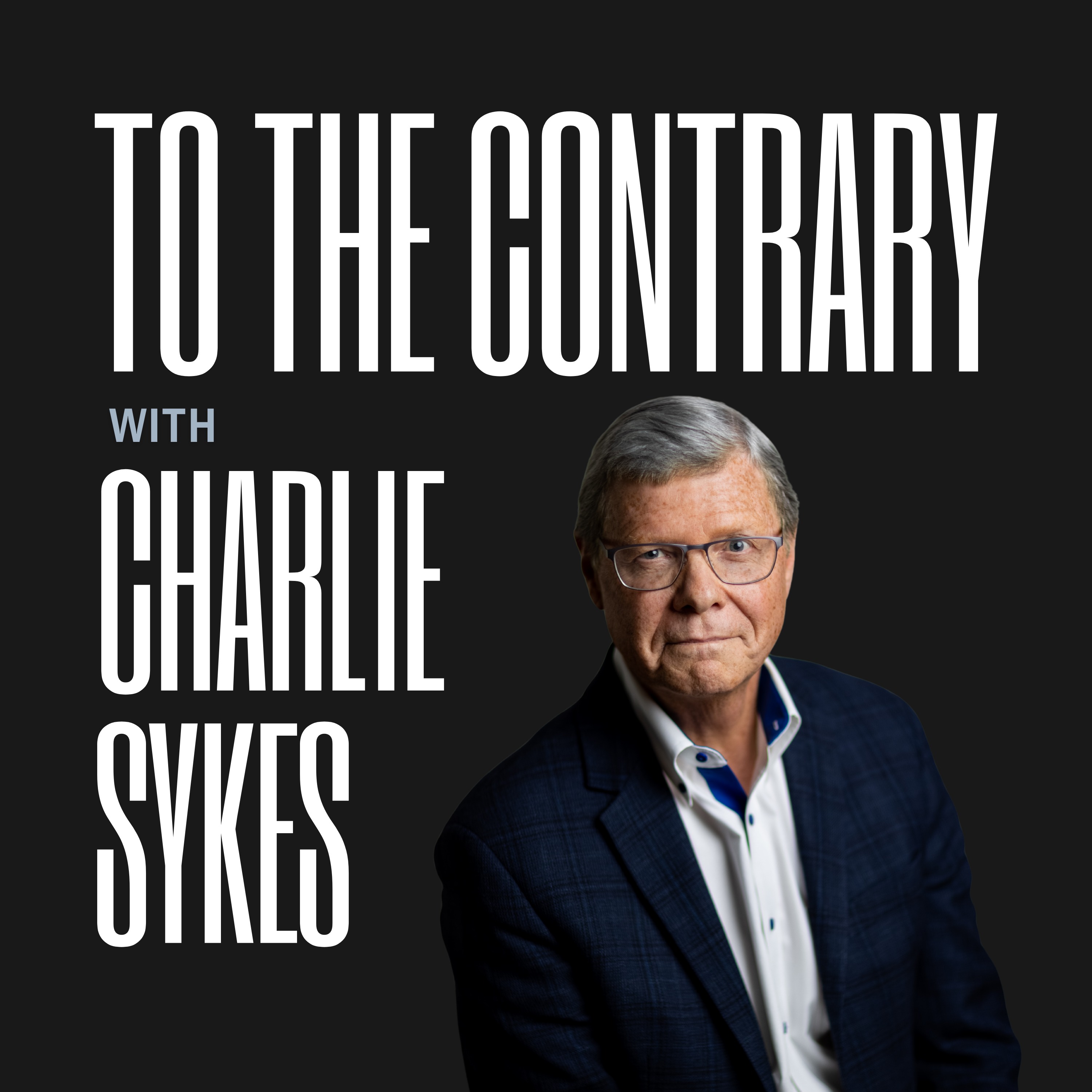
Loading summary
Transcript82 lines
- [00:00]
Tim O'Brien
We will answer your call as soon as we can.
- [00:03]
Quo Business Phone System Advertiser
Are you still running your business with one creaky old phone system, missing calls, losing track of messages, and scrambling to keep up with your team? It's time to break up with the past and say hello to Quo. Quo is the number one business phone system with 4.7 stars across 3,000 reviews on G2. Quo brings all your business phone calls and texts into one app for your team. No more juggling devices or being tied to a landline. Quo's built in AI logs calls, creates summaries, automates follow ups, and can even answer and route calls so you never miss an opportunity. Whether you're a solo operator or leading a growing team, Quo keeps you connected and helps you deliver standout customer experiences. Join over 90,000 businesses using Quo and see why it's the one business phone system for customer satisfaction. Let's level up your workflow with quo. Get started free plus get 20% off your first six months at quo.comtech that's quo spelled q u o.com tech and if you have existing numbers with another service, Quo will port them over for free. Quo no missed calls, no missed customers. Did I talk too much? Can't I just let it go? I wish I would stop I was thinking so much.
- [01:19]
BetterHelp Advertiser
Take a breath. You're not alone. Counseling helps you sort through the noise with qualified professionals. Get matched with a therapist online based on your unique needs and get help with everyday struggles like anxiety or managing tough emotions. Visit betterhelp.com randompodcast for 10% off your first month of online therapy and let life feel better.
- [01:41]
Momentous Supplements Advertiser
A lot of supplement brands chase trends, but if you're serious about your health, we we know research backed science is what actually moves the needle. Momentous works with the best brains in human science to create every formula. And every batch is made of pure ingredients tested for safety and does not contain fillers so you get the best long term results possible. Creatine isn't just for muscle gains. It's essential daily fuel for your brain, body and long term performance. Momentous Creapure Creatine is backed by leading performance experts like Dr. Andrew Huberman and Dr. Stacey Sims. Sourced exclusively in Germany, Creapure sets the gold standard for creation creatine, delivering the purest form creatine monohydrate that's rigorously washed and never cut with fillers. With over 2,000 five star reviews, over 112,000 customers have seen the results firsthand with Momentous. The fundamentals are done right. Right now Momentous is offering our listeners up to 35% off your first subscription order with promo code Acast. Go to livemomentous.com and use promo code Acast for up to 35% off your first Subscription order. That's live momentous.com promo code Acast.
- [03:01]
Charlie Sykes
I'm Charlie Sykes. Welcome to the to the Contrary podcast boy. Talk about unusual times. Later today, of course, there are going to be the no Kings rallies all across the country. We have the Bolton indictment. We have, well, there's just so much going on, so who better to talk about this with? And Bloomberg Opinions. Tim o', Brien, who has been covering Donald Trump for decades now. I mean, if there was a university of Trumpology, you would be the dean, right? So, you know, welcome back on the show, Tim.
- [03:33]
Tim O'Brien
I'm probably a survivor rather than a dean. You know, given, given the world that we're in. It's, you know, you survived the Trump era. I don't know if he's steward over anything.
- [03:43]
Charlie Sykes
Okay, so let's start with a meta question, a mega question. Okay, let's just take this deep breath because you have been studying Donald Trump long before he was a gleam in anyone's political eye. So here we are in the middle of October of Trump 2.0. He has negotiated a ceasefire in Gaza. He's apparently planning to meet with Vladimir Putin again. He is moving, you know, through his retribution campaign, ticking off the names of his enemies, openly talking about weaponizing the irs. The government has shut down. Let's just, could just step back for a second. Give me your sense of what is the state status of the Trump presidency right now? MAGA world would argue that he's got the wind at his back, that he's got one win after another. He, he feels that there's no resistance to him. On the other hand, there is this moment where the most, it feels like the most extreme warnings from last year have fallen short of the actual reality of this year. So, Tim, just give me your sense of where are we at right now in this presidency.
- [05:02]
Tim O'Brien
Well, I do think he has the wind at his back. I do think that he has sprinted towards a lot of goals that he has that, you know, I think, I think the MAGA part of the MAGA base revels in the fact that, that he is steadily accreting executive authority at the expense of Congress, voters, the Constitution and democracy. If they want to celebrate that, that's their choice. But he is well on his path towards that. And that's certainly something he wanted economically. The stock market is defying all data that suggests there's real stresses in the economy. And, you know, Trump, you know, he, he has, he has met his unilateral power grab with unilateral foreign forays overseas, diplomatic forays and economic swordsmanship. And, and a lot of that has the impact of all of that. What he's doing legally and politically as the president, how he's conducting himself as a aggressive ambassador for U.S. interests overseas. And I think some of the landmines he's placed around the US Economy, particularly tariffs, stresses in the labor system, the defenestration of some parts of government that are integral to American life are not going to play out in minutes or weeks. They're going to play out months and years. But I do think we're going to start to see the impact of certainly the economic stuff, you know, in the first quarter and second quarter of next year will get more tangible. We got so much to talk about. Gaza is here, obviously on the table, Ukraine keeps going on, etc. But you have, I think that the long and short and the war with Venezuela, chaos agent. Well, or with possibly with Venezuelan smugglers, we're not even sure if they're drug dealers because the government is, you know, taking them out without much process. But we have a chaos agent presiding over a chaos moment, chaotic moment. And he is at the top of his game, but his game is one of destruction, I think. And I think we have to be wary of all of that.
- [07:23]
Charlie Sykes
Well, I see. That's that, that, of course, is the, is the paradox here. And let me just talk about some of the counter indicators, because, yes, you know, in the White House, they do feel the wind is at his back. On the other hand, public opinion polls would show the rather strong majority of Americans disapprove of him. There are going to be millions of people who will be out in the streets later today at these no Kings rallies. There are the economic warning signs. And I guess that this is also a good moment to talk about that Donald Trump's successes are also the failures of all of the institutions, all of the guardrails that we had counted on and believed would resist them. So, you know, you've probably seen David Brooks's piece in the Atlant. You know, he says, you know, that we need a mass pushback. And he walks through, you know, what happened in other countries, like in the Philippines when Ferdinand Marcos tried to consolidate power and became an autocrat, how the civil society really rose up against him. And basically, essentially for not basically, they forced him out of office. And then he asked this question for the United States. The question of the decade is, why hasn't a resistance movement materialized here? You know, the second Trump administration has flouted court decisions, decisions in a third of all rulings, according to one study, operates as a national extortion racket, using federal power to control the inner workings of universities, law firms, and corporations. It has thoroughly politicized the Justice Department, launching a series of partisan investigations against its political foes. It has turned ICE into a massive paramilitary organization with apparently unconstrained powers. It has treated the Constitution with disdain, assaulted democratic norms and diminished democratic freedoms, put military vehicles and soldiers on the streets of the capital. It embraces the optics of fascism and flaunts its autocratic aspirations. So where is the resistance now? We're raising this question. He raised the question the week of the no Kings rallies. So give me some sense of whether or not that marks a turning point, whether the resistance is finding its footing, whether that will make a difference. What do you think?
- [09:38]
Tim O'Brien
I think we don't know. I think it's good that we are seeing ICE raids conducted by unmarked federal agents who, we don't know their training or their background, are pulling up to curbs and unmarked vehicles and arresting people. It's Soviet. It is not American. You've seen all the video footage from Chicago where people on the streets are holding hands to protect neighbors. I think that's a. That welcome sign. It's a welcome sign, I think, when Chuck Grassley goes home to Iowa and one of the reddest districts of Iowa, and his own constituents are reaming him out about the deportations, which happened a few months ago. That's a good sign. I think none of this is deeply coordinated. And at the end of the day, I don't know that protests are going to loosen Trump's hold the levers of government, the federal purse and the US Military. And we have a lot to worry about there, particularly, I think, with the military and Trump's control of a massive standing army, not just through ice, but the military itself. And I think that the institute, you know, you noted earlier that institutions, one by one, have fallen. I don't think they have come or. And you may not have said fallen, but you just said he's trumped, no pun intended, many institutions. And I think that's true. You know, he's run roughshod over them. But the courts haven't completely bowed down, the media hasn't completely bowed down, voters haven't completely bowed down, and certainly the military hasn't. And I think that the test is still to come based on how far he pushes all of this and how much of it is performative and how much of it he actually wants to institutionalize. And that's an unknown.
- [11:33]
Charlie Sykes
Well, I agree with every single point you made there. And there are these indications of the pushback. Let's be positive about it. You mentioned some of the resistance in Chicago. I think the role of the church is so far an underappreciated, undercovered story, particularly now that you have an American pope who is clearly willing to speak out aggressively and urging bishops to speak out aggressively. So at the very moment when Trump and his supporters are talking about the resistance as being a hate America movement or antifa. Whatever, you're getting these scenes out of Chicago where you have priests and nuns trying to deliver the Eucharist to migrants. You are having priests who are showing up. They may get shot in the head with pepper balls, but they're showing up here. The media, which has had such a shaky track record, I was heartened by the universal reaction of the media to those Pentagon gag rules when they all stood together. And, of course, these rallies that are going to take place on Saturday, I have to say that normally I'm a little bit cynical and skeptical about the effect of these mass rallies, whether they actually make a difference. I mean, I think there are all the legends, in fact, that these are these great turning point to the 1960s. And you look back and, okay, you know, they were. They were performative. I actually think that what's going to happen on Saturday really does matter now, whether it's going to loosen the hold. I agree with you. It's not going to. But I think that it is absolutely crucial that Americans demonstrate the resistance to themselves and to the rest of the world, that the rest of the world sees that Donald Trump does not speak for America. And there's an incredible power of people, you know, going to these events, and I'm going to go to one of them, looking around and going, wow, we're not alone here. Because one of the keys to authoritarianism is to convince people that resistance is futile, that it's hopeless.
- [13:28]
Tim O'Brien
Well, and not only that, we're not.
- [13:29]
Charlie Sykes
That we can stand up, yes, you.
- [13:32]
Tim O'Brien
Can stand up against it. Not only that you're not alone, but you can safely and constructively stand up against it. And as you noted, you know, the constructively is the wild card here. I do think that, you know, I think, you know, the, the marches by the black community in Selma, in the in, you know, they did make in the 60s, they did with the Voting Rights act, and the Civil Rights act came out of that. The Supreme Court is currently dismantling the Voting Rights act, but that. That came out of that. I do think the Vietnam protests heightened people's awareness of whether or not it was the right kind of war for the US on the other hand, there were a lot of marches during Trump's Trump 1.0, you know, including shortly after he was inaugurated that that ended up stopping nothing. And voters didn't respond to those rallies in a way where you had a cohesive political movement coming out of it to take Trump on. So I think, you know, I think these protests are really important because they demonstrate people bringing democracy to the streets and standing up. If they have an impact, it will be whether or not the Democrats get their act together and understand how to message around these things. And I'm not strongly confident they will. And then I think the protesters themselves have to think about how does the messaging land if a bunch of protesters in Portland are going to ride naked on bicycles? And I'm glad they came out fine, but you know that Fox is going to clip every second of every new bicyclist and simply say to other people, look how crazy they are. And I don't think the protesters want to be seen as crazy. They want to be seen as constructive, purposeful, brave people, which I think they all are, regardless of how they come out. But I think they should also think about what it looks like from a messaging and a tactical standpoint.
- [15:35]
Charlie Sykes
Well, I mean, there are obviously risks and there are opportunities. The risks you just identified, all you need are a couple of viral clips of somebody waving a Palestinian or a Mexican flag or burning an American flag at any of these rall. They really do need to police themselves. On the other hand, the opportunity is if there are a sea of American flags and just regular everyday Americans, you know, families bringing baby strollers to these rallies. It's going to be an interesting commentary on the attacks from the White House. And I want to talk to you about that because it seems extraordinary how much political energy MAGA is putting into trying to smear these rallies. You know, Mike Johnson's got the talking point that these are hate America rallies. By the way, is there any anything more pro American than saying no kings? I mean, can we just start with that? This is the founding of the country. No kings.
- [16:28]
Tim O'Brien
I mean, it's the Revolutionary War. It's the whole thing there.
- [16:32]
Charlie Sykes
So, you know, and it's antifa and It's Hamas. So if, you know, people come out there and they're waving the flags, it's going to look bad. But, but what are your thoughts on this? Why they have decided to invest so much energy not in saying, you know, what, you know, this is America. We have free speech. This is, you know, an American tradition of coming out and, you know, petitioning the government for the repressive, for the redress of grievances. It's in the Constitution. Instead, you even have Ted Cruz saying he wants to investigate, you know, who is funding this because it might turn into riots. What is, what, what is your take on why they've decided in their own way to kind of elevate these rallies.
- [17:16]
Tim O'Brien
Also, don't leave out that the IRS is now, has said part of its mission is also to investigate, you know, the funding and backing of organizations like this. And I think they specifically mentioned the Soros Foundation. Yeah, yeah, yeah.
- [17:32]
Charlie Sykes
By the way, didn't they impeach Richard Nixon? We're using the IRS against his political opponent. I, I, by the way, think that this is one of the most undercovered stories of the week, Jim, this fact that they're actually going to turn the IRS on their political enemies.
- [17:44]
Momentous Supplements Advertiser
But.
- [17:44]
Charlie Sykes
I'm sorry, go ahead. I interrupted you.
- [17:46]
Tim O'Brien
Well, it's in, you know, it's an equivalent of what they've done with the Justice Department. It's basically weaponizing another federal agency for political purposes, which you don't want any party doing that, the Democrats or the Republicans, because that's what those agencies, that's not what those agencies are there for.
- [18:01]
Charlie Sykes
Right.
- [18:04]
Tim O'Brien
So it's interesting that people, a party and its constituents who revel in vote rallies, you know, very expensive boat rallies around Palm beach or Trump's own road shows where thousands of people show up to hear him speak, are aggrieved and find it anti American when their political opponents do the same, just in larger numbers and without silly contraptions like the boats. And I think it's because they're afraid of it. And they're afraid of it because at the end of the day, you know, and this gets back to your question at the beginning of our conversation, the only thing that is going to save us, and it's been true of Trump's first administration, are voters. But the institutions are only powerful as long as the people who rely on them and use them and our constituents of them believe in them. And you've got this deep crisis of trust and faith in US Institutions right now. And Trump has filled that void and exacerbated it. But I think, I think that Ted Cruz, who I believe has a law degree. Charlie, doesn't he. Doesn't Ted Cruz have a law degree? But he's, you know, he talks like an outlaw with some frequency, and as does Josh Hawley and others who should know better, who have law degrees and actually have filled law enforcement roles in the United States. I think, I think no Kings has proven to them that this is starting to resonate with people, that it is connecting across cities, that the message is clear. Again, messaging is so important, and no Kings is about as clear a message as you can have. And I think they're worried about this from entirely a public mind standpoint. Will this sway people? Because Trump's been able to navigate around popular opinion on his way to grabbing the levers of power. And, and I think the people who back Trump and the Republican Party that refuses to rein him in is very wary of counter messaging that gets traction.
- [20:14]
Charlie Sykes
No, it is interesting the, the way they continually ramp up the rhetoric. You saw what Carolyn Levitt had to say, that the Democratic Party's main constituency is made up of, of Hamas terrorists, illegal aliens and violent criminals. Right. That's what it is. So part of this is. Is pr, but, but there's, there's, you know, words have consequences, and they also can be very Propaganda.
- [20:39]
Tim O'Brien
Right. It's more.
- [20:40]
Charlie Sykes
This is propaganda. And what they're trying to do is they're trying to delegitimize the opposition that the. We are not talking about, you know, Americans exercising their democratic rights. They are saying these are basically enemies of America. These are, you know, supporters of terrorists. I think there's something very dangerous. And part of the authoritarian vibe through all of this has been this campaign to, again, say that we are not engaging in normal Democratic give and take with legitimate political parties. We are dealing with extremist organizations or redefining your opponents as terrorists. Given what's happening, given the fact that you are having this militarization of law enforcement, this strikes me as extremely dangerous because this seems to greenlight the use of state force against political opponents. I'm not saying that's going to happen on Saturday, but I think everybody ought to be absolutely aware that the narrative is going to be that these people out there are dangerous, they are extremists, and they are enemies of all that is good in America. And so how will people react to that? We're going to find out very shortly.
- [21:51]
Tim O'Brien
And when Carolyn Levitt gets on a national megaphone from the White House and not only tries to characterize these protesters for being someone or something they're not. She's also putting them in harm's way. It's really.
- [22:07]
Charlie Sykes
That's what it means.
- [22:09]
Tim O'Brien
Yeah. You know, that's been a feature of Trump's track record, too. It's not just that he smears people. He puts people who are far less powerful than he is in danger, and he knows it, and the White House knows it. And it's because they want people to literally feel pain and to feel painful consequences for not getting on board with Trump's agenda. And by the way, as you know, he's been this way his whole life. He has reveled. He has reveled in other people's pain. I don't know if you caught the clip yesterday of Charlie Kirk's widow.
- [22:45]
Momentous Supplements Advertiser
Saying.
- [22:45]
Tim O'Brien
You know, at the White House that. That. That she wants to forgive her enemies, and essentially she wants to forgive those who've done harm to her. And. And. And Trump is standing off center behind her, and he begins laughing when. When she says this, because, of course, that's the last. He would never roll that way. He sees it as utterly naive, the idea that you would forgive your enemies because he is a relentless revenge machine. And Carolyn Levitt is just one face of that.
- [23:19]
Charlie Sykes
No. And the relentless revenge machine is on full display. You know, we mentioned the IRS weaponization. You know, it is worthwhile going back to look at, you know, Watergate and Nixon. Some of the things for which Nixon was impeached and driven from office that were done in secret mainly until they were exposed. Donald Trump just says it out loud. I mean, he just puts out a dm, telling the Department of Justice to go after my political opponents. I mean, he stands in the Oval Office and he says, yeah, you know, Jack Smith is a criminal. And then, of course, we have, you know, the John Bolton case. And I want to just, you know, the John. John Bolton indictment.
- [23:59]
Tim O'Brien
Wait, one thing, one quick thing before you get off of Watergate.
- [24:02]
Charlie Sykes
Yeah.
- [24:02]
Tim O'Brien
Also remember that, like the denouement of Watergate was Howard Baker and other Republicans going into the Oval Office and telling Nixon it was time to resign because he had broken the law and shamed the party and Nixon left. Can you imagine today's Republican Party doing that with Donald Trump? Of course not. It's another measure of how far we've fallen.
- [24:28]
Charlie Sykes
Well, it's another measure of how far we've fallen that Richard Nixon had enough sense of shame that he actually did resign. He had no choice. But that's never gonna happen here. I Actually was speculating the other day and I can't remember whether I said this out loud or not. Something about podcasts. You can actually have thoughts while you're actually doing this. If at some point Donald Trump says, I am the only one who can bring world peace, I am the only one who can keep America safe, I am running for reelection. I'm going to serve a third term. Name the elected Republican who would stand up and oppose him at this point, I mean, it's just none. We're so far down the road. So the revenge tour continues. We have the indictment of James Comey, the indictment of Letitia James at the behest of Donald Trump and John Bolton. And again, I write in my newsletter today we have to hold multiple thoughts in our heads at the same time because this indictment, unlike the Comey indictment, is detailed. It may turn out that there is a there, there, that there is a violation of law. On the other hand, I think it's impossible to ignore the, the context of this campaign of retribution, the fact that John Bolton is indicted. And again, maybe he did have the crime, but he's indicted because Donald, he's an enemy of Donald Trump. And Donald Trump basically ordered his, his indictment. So I was on one of the cable shows yesterday and I quoted that Soviet era prosecutor said, show me the man and I will show you the crime. They started with, they started with the man, John Bolton, and they may have found a crime. But your thoughts on, on the Bolton indictment and how that's going to play.
- [26:07]
Tim O'Brien
I feel like I need to know more, frankly, about Bolton. Remember, that's, that is an investigation that began in the Biden administration. It didn't begin with Trump. There were alarms about the nature of what Bolton was doing. He was using an AOL account to send classified, clearly classified documents that he knew to be sensitive to. Unidentified. I think two unidentified parties. I read all that as thinking he thought it might be fodder for a good book of memoirs, which he wrote. He wanted to stash it. Yeah, which he wrote if, if there's any evidence that he contemplated selling it to foreign governments or betraying the national security of the United States, we're in a whole new world. I, John Bolton doesn't seem to me to be someone who would do that necessarily, but you never know. And so I think the fact pattern has to get more clearly delineated here. But it's also a really useful time to remember that the President United States had boxloads and boxloads of classified documents at Mar A Lago and that the only reason that case didn't go to its logical conclusion is because he got reelected and he cut Jack Smith's professional legs out from under him. So, again, it's like that moment, by the way, when Trump was at Quantico weeks ago, and he's telling the gathered military officials that first Pete Hagseth says they don't want any overweight military people in the Pentagon, and then he brings the president on stage, who is decidedly overweight and during the Vietnam era had managed to avoid the draft five times. And he's telling these people to be better public servants. And now you have them prosecuting John Bolton for possible violations of classified security national security laws. And, and Trump himself, of course, had been in the crosshairs for that irony. The larger issue is whatever the bonafide d days of this investigation are, Trump has taken the Justice Department and FBI into a world of personal vendetta settlements. And so you can't really trust the integrity of anything his agencies do anymore. And I worry also there'll be a long term loss of faith in those institutions for exercising the rule of law with impartial fairness.
- [28:39]
Charlie Sykes
Yeah, no, I think we're already there. You make a great point about the fact pattern, and I think people need to be cautious about that. And I think people have been so far. I just want to read you this. His attorney is Abby Lowell, who is, you know, one of the, you know, top, top defense attorneys in the country. And he said in a statement the underlying facts in this case were investigated and resolved years ago. He said the charges stem from portions of Bolton's personal diaries over his 45 year career in government, included unclassified information that he shared only with his immediate family and was known to the FBI as far back as 2021. My understanding is that's his wife and his daughter. Like many public officials throughout history, Bolton kept diaries. That is not a crime. He said Bolton did not unlawfully share or store any information. So we're going to find out. He's going to get the day in court, the day in court that Donald Trump evaded. So can I go back to something that you mentioned earlier? Because I've been thinking about it.
- [29:37]
Tony and Ryan
The.
- [29:39]
Charlie Sykes
About the rallies today. You said it'll be interesting to see whether Democrats can figure out a way to messages because so far they have been rather feckless. I guess it's almost become a cliche to refer Democrats as feckless. And it occurs to me, and I want to get your take on this, that one of the reasons why people are so frustrated about the lack of opposition is that we have looked to congressional Democrats to provide the leadership. And that was a fundamental category error, because the congressional Democrats are precisely the wrong people in the wrong place at the wrong time. They're conventional politicians who we're asking to wage unconventional warfare. And so that if the opposition is going to come, perhaps it's going to come from someplace else, the church. Jimmy Kimmel, by the way, I think is the most effective opposition groups in the country right now. But give me your sense of the Democratic leadership and why they have had so much trouble breaking through. Is it because Donald Trump is just a monopoly on attention, or is it something lacking in them?
- [30:45]
Tim O'Brien
Well, I think it's both of those things. I do think that, you know, the Trump White House does things that civic and civilly minded people wouldn't do. They lie, they smear people. They're not afraid to dissemble in the service of a good joke. They, the whole cult of personality they've built around Trump, which he wants, he's ordered them to do, and they do it with gusto, is essentially the White House's main mission. You talk to anybody in that White House, reporters who've worked in that White House. There's no process in the Trump White House. Everyone's afraid of putting something on Trump's desk he doesn't like. So people try to avoid that. But policy is made often on a whim, and it's deeply personal. But what they do focus on is this daily messaging machine on social and on the networks and through speeches. And it revolves around the idea that Donald Trump is the chosen one, The Democrats are terrorists. And Trump has landed on planet Earth to help his constituents be free of the yokes of an oppressive government and live better lives, and that he'll live better lives by delivering economic freedom to them. Now, that is going to get really tested in the next year. I believe, actually, that part of it, and I think it may be the most salient. I don't think most voters look to leadership to improve their lives. And we've talked about this a million times. Right. But, but retail politicking, Charlie, comes down to getting people jobs, making sure their kids can get educated, roof over their head and affordable groceries and health care. And, and that, you know, you can argue that Joe Biden lost all hope for reelection when inflation started spiking in, you know, 2021 or so.
- [32:41]
Charlie Sykes
Yeah.
- [32:42]
Tim O'Brien
And, and I think the Democrats, because of the nature of the party, I think it's less monolithic than traditionally the Republican Party has been. And so they have different constituencies with different needs. I think if you look at the data, the Democrats have always presided over greater expansions of GDP growth than Republican administrations. But Republicans are still seen in the public mind as business people, more effective, party of prosperity. Yeah. Stewards of the economy. And I don't think Democrats are. And so the Democrats have a lot of work ahead, I think, to show that they can embrace opportunity, that getting wealthy or prosperous through opportunity is not a bad thing. But also that no one should be left behind and that that shouldn't come at the expense of average people. And I think inside that message is a place where they can go. I think they're going to have a lot of trouble and shouldn't go into a world where Gavin Newsom sort of stepped into, where you try to out Trump Trump with imagery and messaging because you get into absurdist political theater. And I don't know that that piece of it changes public minds long term.
- [33:59]
Charlie Sykes
No, I mean, ultimately it comes down to are you on my side or are you not on my side? And so the most effective, I think, line of the Trump campaign in 2024 is she is for them, we are for you, that sort of thing. Now, that had to do with the culture war issues with transgenderism, but it really is the battlefield on economics. Right. That Democrats have to at some point look at the American voter, say, you know what? I am for you guys, I am going to make your life better and more secure and more prosperous, as opposed to this guy who is for them, these oligarchs or whatever that's going on right here. And they have not sealed that deal. You know, Ruben Gallega, you know, points, you know, puts this in the most graphic terms. People want to know, are you going to help me or make it harder for me to buy my big ass truck? Just as simple as that sort of.
- [34:52]
Tim O'Brien
Thing, you know, And I think this is what's animating the government shutdown right now. I think the Democrats have landed on something, health care. And, and I think that this is weighing in their favor. I'm not sure what the long term impact of this shutdown will be on vot perceptions, but clearly the GOP has a real problem. After engineering a budget that cut back Medicare funding and basically obliterated rural hospitals. And, and then the ACA subsidies, the Affordable Care act subsidies are in play. And, and the, and the Democrats said, this is, this is the Hill. We're going to die down and die on in this budget negotiation. And we'll shut the government down to do it. And what we will tell Americans is the GOP is gutting your health care. I think those are the kind of bread and butter issues that they can actually make hay out of. And I think that's where their focus should be.
- [35:50]
Charlie Sykes
No. And it seems to be shockingly working for them right now. Okay, so the other story that, the other story that I find fascinating, I wanted to get your take on is this. It's amazing. On actually, maybe it's totally unsurprising on one level, but still kind of amazing. I'm talking about the, the young Republicans whose text messages were exposed by Politico to say that they were racist. Really underplays it. I mean, these are, these are youngish men, not kids, who are talking about their praise for Hitler, for slavery, using the N word, talking about gas chambers. I mean, in any civilized society, this is the most disgusting sort of thing. And again, I wish I was more shocked, but if, you know, you are a youngish Republican and you've grown up over the last 10 years, who are your role models? Who is the leadership of the party? What is the incentive structure? But what I find somewhat amazing is that JD Vance, the grown ass vice president of the United States, has decided he's gonna come to their defense saying this is nothing more than pearl clutching and kids will be kids. Even though these are not kids. These are people in their 30s.
- [36:57]
Tim O'Brien
So state senator, a state senator was among them. These aren't kids. You know, J.D. vance is shameless and an immoral willingness to carry water for both the party and Trump in any situation with absurdist theater because. Which he's learned at the knee of Donald Trump. By the way, J.D. vance, who once described Trump as untrustworthy because of antics and dangerous propaganda like this, now embraces them wholeheartedly because like Trump, he wants power above all else. And this excuse making it, it's tragic comic because it's too serious to simply say, gosh, what a clown JD Vance is for making excuses for a group of overt and racists. It's tragic because it's yet another reminder that the Trump era has made it permissible to say the quiet part out loud. And certainly, you know, this country has been a hotbed of racism for a long time. It has also tried for a long time to institutionally and culturally move past that. And one of the ways you move past it is by simply not condoning it. And, and which Republicans tried to do.
- [38:20]
Charlie Sykes
Yeah, I mean, I know that some listeners will say, well, you Know, the rate, you know, Republicans have been racist, you know, going back, you know, all the time. But the fact is there was this massive problem.
- [38:27]
Tim O'Brien
So if Democrats, by the way.
- [38:29]
Charlie Sykes
Yes.
- [38:30]
Tim O'Brien
Yeah.
- [38:30]
Charlie Sykes
I mean, would this have been conceivable in a party run by John McCain or Mitt Romney or even, you know, George W. Bush, you know, how would they have reacted to this?
- [38:41]
Tim O'Brien
Abraham Lincoln.
- [38:43]
Charlie Sykes
I was part of a republic of. Not republic. I'm part of a conservative wing that had spent decades saying, okay, we are going to distance ourselves from that sort of past, make it very clear that is not acceptable. It seems like the easiest play in the world to do it. And now my take on this is JD Vance is coming to their defense. The kids will be kids. You know, Pearl clutching about this because frankly, he, under this, folks like this are his constituency that he. And he has to say, I have your back. And he does not want to be outflanked on the right. And the thing that is the most, I think, tragic about all of this is that, you know, going back to the role model, this is Donald Trump's political party. If you are a young Republican and you have become, you know, you've risen to positions of power within the last 10 years, when you're looking around what is acceptable, how do people behave? What are the incentives to become more and more prominent? And so you peel off this, you know, you, you know, you open off this scab and what do you see? You see this sort of thing. And to a certain extent, look, we've been building this and encouraging this now for years. They have, and here they are. I just find it amazing, though, that JD Vance is spending political capital on a week like this defending these guys.
- [40:04]
Tim O'Brien
Well, because it resonates. Remember Charlottesville after the Charlottesville marches in Trump's first term? You know, in the face, in the face of, of violent attacks and, and overt racism show Trump followed the path of moral bankruptcy and, and refused to condemn racism for what it is and what it was. And everyone in his party has learned from that. JD Vance has learned from that. We are.
- [40:33]
Charlie Sykes
There's a turning point.
- [40:36]
Tim O'Brien
Yeah, we are in a lost world if we can't clearly say racism is racism and it's reprehensible and unwelcome rather than kids will be kids, which is not only a flat out lie because they weren't kids, but it's also, again, morally bankrupt and craven.
- [41:01]
Charlie Sykes
Well, I would think if there's one red line in American politics, it would be when you say I love Hitler. That would be Like a bad. Matt labosh's column is today is like Springtime for Hitler, apparently. I mean, we're going back that it's okay now to believe all that. And maybe this is part of that generational change. I mean, this was something part of the culture from which Trump arose that sort of lulls nothing matters. Let's do these edgy meme things. And, you know, people like Elon Musk and J.D. vance obviously have become very, very comfortable in all that. It is genuinely shocking, though, to see it. I also think it was interesting that the national Young Republicans moved very quickly to say, this is totally despicable. You know, these people all should resign. And so they were cleaning their own house, and then J.D. vance parachutes in and says, it's not so bad. I mean, forget about it. I mean, forget about it. We don't care about that. All we care about is bashing some Democrat, you know, Democratic attorney general candidate in Virginia who. But by the way, I don't know if you've been following that, that he. He had some pretty disgusting texts. I'm kind of surprised he's still in the race. What am I missing there? Why are Democrats not. Why did they not throw him under the bus?
- [42:15]
Tim O'Brien
Well, you know, again, I think anytime this arises within any party, the move is clear, simple and important. You disavow it, you move away from it, and you get people who perpetrate it out of the system. And when it's not happening that way, you have to ask, why not?
- [42:35]
Charlie Sykes
Yeah, I think we know that five minutes ago.
- [42:39]
Tim O'Brien
It's either a power grab or you condone it. It's one of those things.
- [42:44]
Charlie Sykes
Two quick hits. We've gone through virtually all of this conversation without talking too much about the government shutdown or about whether or not we are in a hot trade war with China. Remember, that's going on here. We'll figure that out, I suppose, in the future. You raised, I think, one of the scariest scenarios earlier when you talked about Donald Trump's desire to control the military, to turn the military into a personal weapon, and how that's going to play out. His ambitions are not a mystery. They're not secret. You saw that at Quantico. I think I had a conversation earlier this week about one of the more ominous developments, the blowing up the boats in the Caribbean, which don't seem to have much legal basis, and yet there doesn't seem to be any resistance from the military to those orders. People keep saying, will the military go along with it? Will they commit war crimes. So the fact that there were no resignations, no pushback was, I think, troubling. However, just yesterday, the top general in the area resigned abruptly. Is that an indication that maybe there. And the reports are that this admiral had real concerns about the attacks and the way the military was being used? I don't know. We don't know the whole story, but that struck me as perhaps a small indication that there might be cracks in this. How did you read that?
- [44:14]
Tim O'Brien
Well, and also just remember, Millie, right. In Trump 1.0, when Trump wanted to use troops on the streets of Washington to quell protests, I think the military has been wrestling with the realities of Donald Trump for quite a while. I think individual strikes like the one in Venezuela, until we know, you know, what kind of information was the military acting on. You know, there's so much granular you have to assess around that incident. But I think there are going to be broader, big, broad, clear lines that Trump will try to cross. I think, as you noted, I do think he's already crossed it in Venezuela. I don't think those strikes were properly conducted. But we need more information. I think if Trump moves the military en masse into US Cities, which he also suggested doing in that Quantico speech, he will, then we're in a whole new world. And the military, and remember, the military takes an oath of allegiance of the Constitution not to the president. And, and, and it's deeply institutionalized in the military. My son served in the U.S. navy. My father served in the U.S. navy, my brother served in the U.S. army. Yeah, they, that, that it is civilian rule they have to respect, but their allegiances to the Constitution. And if Donald Trump is asking the military to do unconscious, unconstitutional things, then the military is going to have to stand its ground. And I hope they do. And I imagine informally conversations like that have happened everywhere. But the question will be then when people resign like, like, like the one officer you just referenced in Latin America, will others just fill his or her place and then do Trump's bidding? And you know, when you have people like Pat, Pete Hegseth, and Pam Bondi at the head of other agencies who are just puppets for Trump, you have to wonder which path this will follow.
- [46:16]
Charlie Sykes
Yeah, they, because the, all of these agencies are run now by people who will never say no to Donald Trump. Tim o', Brien, thank you so much for joining me on an historic week. You Tim o' Brien's work at Bloomberg Opinion, one of our favorite guests and actually one of our most popular. Tim, you know you like, blow out all the numbers.
- [46:34]
Tim O'Brien
Good to know, Charlie.
- [46:35]
Momentous Supplements Advertiser
Thank you.
- [46:35]
Tim O'Brien
You made my day.
- [46:37]
Charlie Sykes
Thank you. And thank you all this weekend for listening to this episode of to the Contrary Podcast. I'm Charlie Sykes. People ask, what can you do? Well, number one, show up at one of those rallies near you. You know there are interactive maps. That's number one. Number two, continue to support the people who are standing up who have decided we are not going to live on our knees during this era. And keep reminding yourself that you are not the crazy ones. Thank you.
- [47:17]
Madupak Enola
Hi, I'm Madupak Enola from TED Business and I'm here to talk about the Financial Times. Every day, the world bombards you with endless headlines and noise. What matters most? Facts and context. That's where the Financial Times comes in. With clarity, depth and truly independent reporting, the FT helps you cut through the noise and see what's real and why it matters. Stay informed with the trusted source Leaders around the world rely on visit FT.comSourceFT to read more and save 40% on a digital FT subscription.
- [47:57]
BetterHelp Advertiser
If you're a smoker or vaper ready to make a change, you really only need one good reason. But with Zyn Nicotine Pouches, you'll discover many good reasons. Zynn is America's number one nicotine pouch brand. Plus Zynn offers a robust rewards program. There are lots of options when it comes to to nicotine satisfaction, but there's only one Zyn. Check out zyn.com find to find Zyn at a store near you.
- [48:23]
Tim O'Brien
Warning.
- [48:23]
BetterHelp Advertiser
This product contains nicotine. Nicotine is an addictive chemical.
- [48:32]
Madupak Enola
Hi, I'm Madupakinola from TED Business and I'm here to talk about the Financial Times. Every day the world bombards you with endless headlines and noise. What matters most? Facts and context. That's where the Financial Times comes in. With clarity, depth and truly independent reporting, the FT helps you cut through the noise and see what's real and why it matters. Stay informed with the trusted source leaders around the world rely on. Visit FT.comSourceFT to read more and save 40% on a digital FT subscription.
- [49:12]
Charlie Sykes
Here's how to stay alive longer so you can enjoy Boost Mobile's unlimited plan with a price that never goes up. Do not mistake a wasp nest for a pinata. Stay alive and switch now at boost mobile. After 30 gigs, customers may experience lower speeds. Customers will pay $25 a month as long as they remain active on the Boost Mobile Unlimited Plan.
- [49:27]
Tony and Ryan
G' Day America. It's Tony and Ryan from the Tony and Ryan Podcast from Down Under Today.
- [49:32]
Charlie Sykes
We want to talk to you about Boost Mobile, the newest 5G network in.
- [49:35]
Tony and Ryan
The country offering reliable nationwide coverage backed by a 30 day money back guaranteed. Love your service or get your money back, no questions asked.
- [49:43]
Tim O'Brien
Boost Mobile's Unlimited plan start at just $25 a month and will never increase in price.
- [49:49]
Tony and Ryan
The Boost Mobile network, together with their roaming partners, covers 99% of the US population. 5G speeds not available in all areas.
- [49:57]
Charlie Sykes
Visit the nearest boost mobile or boostmobile.com after 30 gigabytes.
- [50:01]
Tony and Ryan
Speeds may slow $25 per month with active boost unlimited plan. Cancel within 30 days for a refund of service fees, activation and phone payments. Not refunded.