← To The Contrary with Charlie Sykes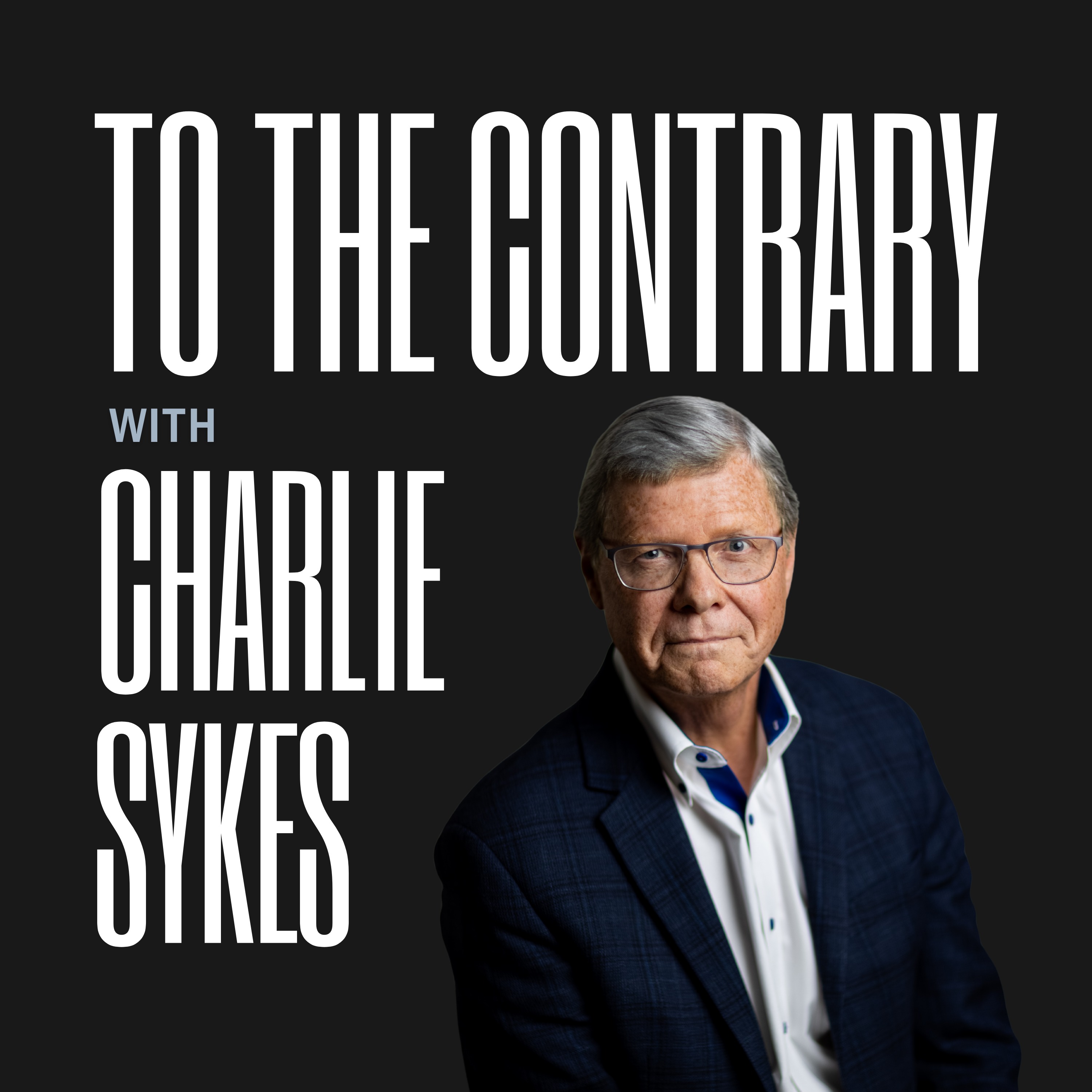
To The Contrary with Charlie Sykes
Trump Just Did Something No President Has Tried Since 1798
00:47:50
Loading summary
Transcript60 lines
- [00:01]
Susan Glasser
That new thing.
- [00:02]
GNC Advertiser
Yeah, we've got it. The Drop by GNC bringing you all the newness that matters. Hand picked by the pros who actually know what's up and what's proven to work. We keep you on top of the trends and dialed into what's next. Whether you're crushing it at the gym, leveling up your game, or thriving every day, the Drop by GNC is where the latest solutions in health and wellness land first. Non stop innovation and fresh finds daily explore what's new and what's next on the drop by GNC day or night.
- [00:32]
VRBO Care Representative
VRBoCare is here 247 to help make every part of your stay seamless. If anything comes up or you simply need a little guidance, support is ready whenever you reach out. From the moment you book to the moment you head home. We're here to help things run smoothly because a great trip starts with the right support. And hey, a good playlist doesn't hurt either.
- [01:02]
Charlie Sykes
ACAST powers the world's best podcasts. Here's a show that we Recommend.
- [01:10]
Dungeons and Daddies Narrator
Galactic year 6967-420-428-0085 the war for the spark rages on. Yet one last hope remains. Four ancient warriors are about to take to the stars and take the galaxy by storm.
- [01:29]
Charlie Sykes
Hey, so here's what you're gonna do. You're gonna go to HTTPs. They added that colon.
- [01:35]
Podcast Producer/Technician
Yeah, gotta check on that.
- [01:37]
Charlie Sykes
Oh, don't we all. I wish I were dead colon.
- [01:40]
Podcast Producer/Technician
So do I.
- [01:43]
Dungeons and Daddies Narrator
Dungeons and Daddies Presents Grandpas and Galaxies an improvised actual play Senior Star Citizen Space Opera adventure. Come coming February 10th to our solar system.
- [01:56]
Charlie Sykes
ACAST helps creators launch, grow and monetize their podcasts everywhere. Acast.com I'm Charlie Sykes. Welcome to the to the Contrary podcast. Just a quick note. If you like these conversations, if you find them interesting and valuable, please consider subscribing. And also, if you have not yet subscribed to my newsletter, to the Contrary over on Substack, consider doing that. It is free, but of course we always like it when we have subscribers who are willing to pay. In any case, we have so much to talk about. The anniversary of the murder of Alexei Navalny, the attempts to indict members of Congress in the last week. The Pam Bondi meltdown. Whatever happened to Tulsi Gabbard? And Barack Obama now deciding to speak out more openly about the clown in the White House. A lot to talk about as we start a new week. And on today's episode, we're joined by Susan Glasser of The New Yorker to try to break all of this down. Thanks for coming back, Susan. I appreciate it very, very much.
- [03:00]
Susan Glasser
Great to be with you, Charlie. Thank you.
- [03:03]
Charlie Sykes
Well, I wanna do a deep dive into your piece about Donald Trump, who ran for office, saying if we don't have free speech, then we don't have anything in a free country. This would be the same Donald Trump who tried to indict six sitting members of Congress in the last week. And as you point out, the attempt to criminalize political expression in is crossing a line that's more or less held in this country since 1798. And I think sometimes we need to put these things into historical perspective. But speaking of historical perspective, would you mind if I started with something different here for sure. Monday was the second anniversary of the murder of Alexei Navalny. And over the weekend, European governments announced the UK Sweden, France, Germany, the Netherlands, all announced they are confident that Alexei Navalny, who was a leader of the Russian opposition, was poisoned with a lethal toxin, something that is found in Ecuadorian dart frogs. This suggests, of course, that two years ago today, two years ago Monday, Alexei Navalny was murdered by Vladimir Putin. Vladimir Putin murdered one of the most prominent political leaders of the opposition. The whole world now understands what it is clearly not an accident. This is a toxin found in a poison. You know, this poison is 200 times stronger than morphine. It is not normally found in Russia. So, Susan, your, your thoughts on all of this? Because I keep thinking this is Vladimir Putin. We know he's been a killer. It's right there. It's unavoidable. And yet his picture is still hanging in. Sorry, but his picture is still hanging in Donald Trump's White House.
- [04:47]
Susan Glasser
That's right. This is the man who was greeted on a red carpet at an American Air Force base, you know, several years after invading his neighbor and unleashing the deadliest war in Europe since World War II. And I think I really appreciate you starting with Alexei Navalny, because I do think, first of all, it's important to pay tribute to somebody who was so courageous in the face of almost overwhelming odds. We were just talking about this last night with fellow friends who all also served as foreign correspondents in Moscow and in earlier, better times in Russia. And the repression and the dictatorship that Putin has created today, in many ways, is not only a rollback of what we hoped and aspired for at the end of the Soviet Union, but in many ways, it's a harsher dictatorship now than it was in the latter years of the Cold War. And of The Soviet Union. I think you would have more to fear from expressing political speech in Russia today than you might have in the late Brezhnev era. And that I think is very telling. Alexei Navalny's death reflects the fact that in many ways he was the most successful, bar none of those who arose to challenge Trump's sort of monomaniacal rule in Russia. And this thing about Putin, the man of the KGB with the ever more elaborate poisonings, too, I would point out that this is the same lab that was working on Novichok, another poison used to take out Putin opponents. There were the poisonings with polonium in London earlier in the Putin presidency. It is almost impossible to imagine that the Russian agencies would have used a rare Ecuadorian tree frog poison on Alexei Navalny, the most prominent man in Russia aside from Putin himself, without the permission of the leader. And the other thing I think to underscore, Charlie, is your point about this is a man whose portrait is hanging in the White House. Vladimir Putin's use of poison was not confirmed by the United States. The US Was not on the list of intelligence agencies.
- [07:10]
Charlie Sykes
Interesting.
- [07:10]
Susan Glasser
That jointly acted to release this information. And in fact, it was during the Munich security conference that was bookended by Donald Trump releasing a video in which he once again demanded that Ukraine and not Russia make concessions in order to bring an end to the war. And you know, this is a tragedy not just for Ukraine, but for the US and its standing in the world.
- [07:38]
Charlie Sykes
No, and this is the key point, I think this is not just a Russian story, this is also an American story. Because if you wanted to get some sense of the shift in American moral worldview, you only have to look at the Donald Trump's relationship with Vladimir Putin and his defense of the various murdering thugs around the world. After MBS came to Washington, Donald Trump basically said, yeah, we bygones be got bygones. We can't judge the morality of the people we're doing business with. Even if he murdered or ordered the murder of an American journalist named Jamal Khashoggi. You remember several years ago, Bill O'Reilly, of all people, back on the before times, it feels like asked Donald Trump about his relationship with Vladimir Putin and said, and by the way, if we can drop in a soundbite of this, we can do it. Otherwise I'll just do it, you know, yell if we could just drop in the sound bite. So Bill O'Reilly asks Donald Trump, well, Vladimir Putin is a killer. He murders people. And Trump doesn't blink. And he says, well, lots of People kill people. And so this sort of the amoral approach to all of this, we need to remember that even though we now know that he murdered in cold blood leader of the political opposition, it's not likely to have any effect on the President's relationship with him. That picture is not coming down from the White House. He will not continue to carry water for him. I mean, he will not stop carrying water for him in Ukraine. And so I think in many ways, this is one of those mile markers of the amorality of American government right now at the very top.
- [09:27]
Susan Glasser
Well, I think you're right to underscore that. And yet at the same time, Charlie, what I would say is that even if you take Trump's view of the world, which is a much more kind of dyspeptic and cynical view of a sort of world in which might makes right and the weak dominant, that weak are dominated by the strong, even if you take his view of that, I would say there are many Americans, including many Republicans in Trump's own party, who view his attitude towards Putin and Russia as not in American self interest. And that's the thing that's always been so hard to fathom. When the US has as its partners and friends the European Union and the people in NATO, who together with the United States, constitute an enormous chunk of the world economy, not to mention, you know, the vast majority of the billions of people who live in freedom and democracy in the world, why would you shed that alliance for a transactional relationship with the world's biggest, most aggressive militaristic dictator? Right. You know, like, what is the American self interest that is represented by this? That's the part that continues to mystify. Even if you say, you know, Trump is not the first American president, nor will he be the last, to excuse acts of brutality and murderousness on the part of those we do business with in the world.
- [11:07]
Charlie Sykes
Yeah, I mean, we ought to mention Franklin Delano Roosevelt was allied with Joseph Stalin, who was so much more aggressive. But, you know, at the Munich Security Conference, Marco Rubio gave a somewhat conciliatory speech, at least compared to JD Vance trying to put lipstick on this particular pig. But, you know, you set Marco Rubio's attempt to intellectualize what's happening with the reality of Donald Trump and Vladimir Putin. I mean, this is where we're at right now. It's not what Marco Rubio says, it's what Donald Trump does.
- [11:41]
Susan Glasser
Well, and notably what Marco Rubio did not say. Marco Rubio gave a speech expressing essentially the non snarling Non. J.D. vance view of Trumpism to Europe without ever mentioning the overriding security concern of Europe today, which is the war that Russia started against its neighbor Ukraine and what it means for the profound upheaval that it means for European security. And I mean, it's just, it's actually absurd when you think about it, right? Like, how can you go to the Munich Security Conference if you're the American, American Secretary of State and lecture Europeans, Whatever your tone is, I mean, forget the tone, right? Whatever your tone is, how can you lecture them about security in Europe and never mention Russia? And I think to me, that is the thing that didn't get enough attention. But that perfectly encapsulates Marco Rubio and a certain wing of what you might call the kind of Republican accommodationists, the former Republican establishment that doesn't really agree with Donald Trump about foreign policy, but chooses the sort of like, see nothing, say nothing approach to it. And so they focus on where they might have commonality with Trump or with J.D. vance. And they simply don't mention those unpleasant facts like Russia and Ukraine. But it's, you know, again, if you just sort of pull out a little bit, and I do think we're all live a little bit too much inside this news cycle. Pull out of it. And it's like a fricking joke. We're four years almost to the day of the anniversary of Russia unleashing this war and the American Secretary of State goes to Munich and doesn't say a damn word about it. Come on, that's embarrassing.
- [13:25]
Charlie Sykes
Beyond embarrassing. All right, so let's. I was very, very grateful to see your essay in the New Yorker over, over the weekend about the president's attempt to arrest and indict six sitting members of Congress because it strikes me that this was, you know, that we have again in this news cycle, we get a little bit numb to the various things. Yes, of course, Donald Trump is Department of justice is a cudgel of retribution. Same old, same old. This did cross a fundamental line. I want you to talk about it because also you start off by pointing out that as a candidate, Donald Trump was running as the free speech candidate, that he was going to reclaim this fundamental right from the left wing censorship regime. And he said, never again will the immense power of the state be weaponized to persecute political opponents. This is what he said, something I know something about. And so, you know, he talked about, you know, the most, the importance of free speech. Fast forward. Last week we found out that he tried and failed to get felony indictments handed down against six members, six sitting members of Congress. So let's talk about the significance of that and the really masterful job you did in tracing the historical, you know, the historical significance of a president trying to jail his political opponents. Because this. This is not just one off, is it? I mean, this feels like it was something fundamentally worse and different.
- [14:58]
Susan Glasser
Well, thank you, Charlie. And I do think that we are at this moment where so many lines are being crossed. It's hard to know when to sort of take a breath, you know, take a beat, and to sort of say, wait a minute, this is something that's truly, absolutely historically different. And, you know, I think it's really important to do so in the case of Trump v. These six members of Congress who, you know, again, are protected by the First Amendment, as you and I are, as Donald Trump is. Donald Trump relies upon the protections of the First Amendment every single damn day. When he lies about his opponents, when he slurs them, when he defames them, when he posts a video of our former president and his wife as apes, that is the First Amendment protecting Donald Trump. Trump. But his vision of the Constitution is that it only applies to him and those he agrees with. And, you know, six members of Congress, let's take a second and remember, what did they do here? They literally posted a very short video in which they remind. Aimed at members of the US Military, reminding them of the language directly in the military's own handbook, saying they are not required to obey illegal orders. You know, again, this is like the definition of political speech, not only protected by the First Amendment, by the way, but also by the fact that these are legislators. Congress is a co. Equal branch. I'm not a lawyer, but the speech or debate clause of the Constitution is a very robust protection for members of Congress precisely because of the possibility of another branch, you know, the executive or the judicial branch, taking out after members of Congress for speaking their mind. And so you say about history, I was just struck by this fact that once again, everybody is sort of giving Trump credit for the fact that a few brave people stood up to him and didn't do the crazy thing. So in this case, a few grand jurors here in D.C. said, wait a minute, this is bullshit. We're not gonna make this indictment really remarkable act. I don't want to diminish that act because, as you know, it's unbelievably rare. I was on ABC this week with Chris Christie, who pointed out that when he was a prosecutor, a federal prosecutor in New Jersey, he Went back and looked at the record. Not a single time was there a grand jury that refused to process one of the indictments he and his team asked for. Very unusual. So I'm not diminishing that. But let's not give credit to Donald Trump for the acts of people standing up to him. And so I was going back through looking at, well, you know, are there any examples? I was thinking, well, let me look at, you know, Woodrow Wilson's terrible crackdown on free speech during World War I, or let's look at McCarthyism or, you know, even the Civil War. I mean, they actually came to blows on the floor of Congress at times in the run up to the Civil War. So I was thinking, okay, there must be some other examples. No, not even in the most divisive, horrible, difficult times for American democracy, when it was really tested, has a president ever jailed a member of Congress. The only example in American history is in 1798 when Matthew Lyons of Connecticut was convicted and then served four months in jail for publishing an article critical of John Adams. And the only reason that that even happened, this one outlier in American history, was because of the passage of the Alien and Sedition act, which, as you know, were subsequently repealed, repudiated, and historically speaking, are seen as this incredible sort of blemish on American history. And by the way, Matthew Lyons was jailed and ran successfully for reelection from Congress while in jail at that time, at any rate, Donald Trump going where no one else before him has.
- [19:01]
Charlie Sykes
No, I was. I was struck by that because there was the crackdown, the Reds under Wilson, in which there were a lot of violations of civil liberties during the Civil War. There was a. Wasn't there. There was a Democratic congressman who was exiled to the Civil War. I mean, was exiled to the Confederacy. But as you point out, you have to go back to 1798 to find an example of a member of Congress who is jailed for an act of speech. And the video is such a clear act of speech. And it's not just the indictment. I thought it was interesting that you mentioned here that, you know, a federal judge had to consider the. The attempt by the Department of Defense to go after Senator Mark Kelly for his involvement. And Senator Kelly, of course, is a decorated military veteran and is a George W. Bush appointee, ruled that the Defense Department, by trying to reduce his rank and punish him, had trampled on Senator Kelly's First Amendment freedoms, denounced its arguments as horse feathers. So. So when ordinary Americans, I suppose the good news is, and federal judges are looking at this, they're saying this is a straight up case of First Amendment rights as well as constitutional protections. What does it tell you that Donald Trump is willing to roll over those protections after having claimed that he was the free speech president?
- [20:25]
Susan Glasser
Well, there's so much to unpack there. I mean, first of all, I think it is important to note in any discussion about this that we have spent the last few years hearing nearly hysterical, hyperventilating about how America's basic freedoms were under attack from left wing thought police. And remember what happened in the wake of the assassination, the terrible assassination of Charlie Kirk. An immediate effort on the part of Kirk's friends and allies to purge those who wanted to talk about Kirk's own record of at times hateful political speech. So we have that context, which is very important context. I also think we have Trump's very well documented because he himself has told us this again and again, plan to use his return to the presidency as a period of revenge and retribution for what he views as the wrongs done to him. And his remarkable effort to transform the Justice Department into a personal arm of the presidency and the president himself has been really notable. And it was Donald Trump's own public attacks on these six members of Congress that seems to have led very directly to the Justice Department's effort to prosecute them. By the way, who's leading this failed and embarrassing from the legal standpoint effort to do this? It's a former Fox News personality, you know, that Donald Trump has installed as U.S. attorney for the District of Columbia, Jeanine Pirro. So again, you know, you have so many elements of Trump coming together. But I want to point out to people, because this is important too, that it's not a one off. This isn't just like, well, you know, an outlier or Donald Trump just went crazy, you know, in Mar a Lago one night watching this video and demanded the prosecution of these members because it actually very clearly part of a broad and sweeping campaign against free speech, freedom of the press throughout Trump's second term. And again, you know, there's a lot of reasons why we've been focused on many of the other outrages, you know, in, in Trump's second term because they affect, you know, the lives of millions of real people. We've seen that, of course, in, in this ICE crackdown in Minnesota. So I want to say that. But the number and range of actions really needs to be understood here because it challenges actually so many Americans in ways they might not realize. First of all, okay, there has been a sweeping effort by the Trump to chill free speech, not just by threatening to prosecute members of Congress. He has filed lawsuits against, you know, about ABC and cbs, which to, I think their eternal shame settled these lawsuits. He's also got pending lawsuits that you may not realize against the Wall Street Journal, the New York Times, the BBC, even the BBC, even. He didn't like a poll in the 2024 campaign. He sued the pollster. When the New York Times recently published another poll he didn't like, he said he was going to sue them, too, over the poll. When the New York Times recently published an article about the signs of his aging and potential ill health, he said that that constituted sedition. When Chris Christie went on television recently and said something critical of Donald Trump that he didn't like, this is his former friend. Trump said the Justice Department should reopen the investigation of a 2013 scandal involving Christie and the George Washington Bridge. And I could go on. So that's one bucket. There's a whole other bucket which is Donald Trump's efforts to criminalize protest and the expression of their First Amendment rights by everyday people. We saw this most prominently in Minnesota, where we've all seen the videos of people literally having the crap beat out of them for the simple act of holding up their phone and having a violent response from armed mass federal agents. But it's not just in Minnesota. It's been in Los Angeles and Portland and Chicago and around the country. The New York Times just reported over the weekend that Trump's DHS is asking big tech companies to provide information about the personal information about people who have spoken out publicly against ice. So that's another bucket. Then there's the bucket of Trump interfering in media deals in order to actually change the media landscape and make it more favorable to him, including most recently intervening in a large potential merger of local television stations because he says that this might provide an alternative to the, quote, fake news that he doesn't like on other TV stations. And I could go on, look at how he threw the Associated Press out of the White House press pool because the AP would not go along with his unilateral name change of the Gulf of Mexico to the Gulf of America. So it's a broad, sweeping crackdown on free speech and not a one off against six members of Congress.
- [25:48]
Charlie Sykes
So this raises the question, and there are probably more threatened lawsuits as well. And I've talked about some of them here on this program. Is it working? Is it having a dampening effect? I think that many of us grew up during an era where you had the Kathryn Grahams of the world who would stand up and basically tell President Nixon to stuff it. But this relentless threat, is it actually having an effect on the media? Now, we know about cbs, we know about abc. Do you sense any sort of a pullback? Because sometimes I'll look at the headlines and I'm wondering, okay, you're sane washing this, or you're downplaying this, or there's a, give me your sense of whether or not he's gotten into the minds of journalists. In particular, before we get to other sorts of critics who are thinking, do I really wanna go there? Should I use this word and not that word? What do you think?
- [26:43]
Susan Glasser
Yeah, I mean, look, Charlie, this is a really important question, but I think, you know, unfortunately the answer is an unequivocal yes. You know, I recently heard, you know, conservative, well known conservative who doesn't really like Donald Trump making this, this argument. Well, you know, what's, what's the harm? I mean, you know, tell me that the Washington Post today under Jeff Bezos has not been affected by the climate of fear and the effort to cow political speech in America. You know, I think if you look at the behavior of so many leaders in this country that we would have expected to speak up and to speak out against these excesses, whether it is Republican members of Congress who claim privately to colleagues, and you and I have both heard this directly ourselves, that they are afraid, whether it's afraid of political violence directed against them or afraid of the President enacting retribution against them for speaking out. But clearly there are many, many, many Republican elected officials who aren' not telling the truth to the public because they are afraid in some way of Donald Trump. There are business leaders who have been told very explicitly, it seems to me, by this administration what it takes to pay to play. And that includes a level of public subservience that doesn't seem in keeping with the established norms of a free society. And in particular, I think the effort to cow the media owners has been unfortunately, extremely effective. And by the way, is the hallmark of so many countries, not just the United States, where you've seen Democratic rollbacks over the last two decades. It unfortunately turns out to be the very wealthy oligarchs who run media corporations who have been the most susceptible to pressures of this kind over time.
- [28:35]
Charlie Sykes
So, okay, I don't want to freak people out here, but you mentioned something in passing. There are all the things they're doing that the government is asking the tech companies for information about people. So if in fact DHS or whatever agency goes to Apple and says, I would like all of the search records and all of the files. I want to be able to look at all this stuff from Susan Glasser. Would the companies do it? Would they turn over the, the, the things? How. Well, I mean, how serious is that threat? Because you can imagine, really, you think.
- [29:11]
Susan Glasser
That they're serious, Charlie? I mean, you know, Tim Cook, you know, what, what can we say about Tim Cook? You know, what is now for this man to be giving, you know, whose devices we use every day, you know, who wouldn't be one of the most.
- [29:27]
Charlie Sykes
Powerful, telling us, though, he's protecting people.
- [29:29]
Susan Glasser
In the world, you know, if we didn't use his products. And there he is giving the money that we have given to him to Donald Trump to knock down the east wing of the White House and build, you know, a golden ballroom, you know, a Mark Zuckerberg. I mean, do you think Mark Zuckerberg cares about keeping your information private at this point? You know, I just, I think that the lesson we need to take from this is not could it happen here, but it is happening here, and what are we going to do about it? I recently heard the incredibly brave Maria Reisa, who is the Nobel Prize winner from the Philippines, journalist who, you know, was put on trial by the Duterte government in, in the Philippines for her own courageous journalism and that of her staff at her organization called Rappler. And, you know, Maria made the point, you know, she said, I've been acting as a combination of a sort of Cassandra and Sisyphus since 2016, trying to explain to Americans she was educated here at Princeton, you know, what it is. But you people are on the front lines now. And I take heart and courage from her, from the many brave journalists that I knew in Russia and Ukraine. And when journalists are under threat, in my experience, it is so many everyday rank and file journalists who've had the courage to keep investigating, even at cost of their own lives. That's what happened to Anna Politskaya early on in the Putin years, who was an incredible investigative reporter whose work I relied upon, who I spoke with many, many times in Russia, who was killed on Putin's birthday outside of her home in Moscow. And the answer is that democracy isn't just something that you get for free. It's something that you have to pay into as well. And unfortunately, one of the tragedies of the Trump era, America is learning that people like Jeff Bezos and Mark Zuckerberg value things other than our democracy or our freedom. Of speech more highly. And you know, I'm just, we're on the front lines here. And I do think I'm awed by, you know, the courage and the great professional work that so many journalists are doing. By the way, even in places like the Washington Post, which has been gutted and destroyed by, you know, the combined efforts of Bezos and Trump, you still have have, you know, very important work being done by the people who work there. And, you know, let's just hope that they and and people like the people in Minnesota are going to get us out of this mess.
- [32:17]
Podcast Producer/Technician
This is Ndomic and Sue from the no Free Lunch Podcast Ever Feel like your workload is out of control? Like you're wearing every hat and expect it to be everywhere at once? Running a business means juggling books, payments, leads, payroll, basically everything. But with Intuit QuickBooks, your workload gets unloaded. QuickBooks gives you access to Intuit's powerful AI agents and trusted human experts who work together to handle the tedious stuff so you can get back to what actually grows your business. And because everything's streamlined on one platform, your customer management, accounting, exposure, expenses and payroll all work seamlessly in one place. So go ahead, outdo it with Intuit QuickBooks get 50% off QuickBooks Online for three months. Terms and conditions apply. Feature availability may vary by product. Visit QuickBooks.com for details.
- [33:13]
Grow Therapy Advertiser
There are a million reasons people start therapy. A breakup, Burnout, A new job. Whatever your reason, there is one place to start. Grow Therapy meets you where you are, with support that actually sticks. Whether it's your first time in therapy or your 50th, grow makes it easier to find a therapist who fits you, not the other way around. They connect you with thousands of independent, licensed therapists across the US Offering both virtual and in person sessions, nights and weekends. You can search by what matters like insurance, specialty, identity or availability and get started in as little as two days. And if something comes up, you can Cancel up to 24 hours in advance at no cost. There are no subscriptions, no long term commitments. You just pay per session. Grow helps you find therapy on your time. Whatever challenges you're facing, Grow Therapy is here to help. Sessions average about $21 with insurance, and some pay as little as $0 depending on their plan. Grow accepts over 100 insurance plans, including Medicaid in some states. Visit GrowTherapy.comStartNow today to get started. That's GrowTherapy.comStartNow now GrowTherapy.com start now. Availability and coverage vary by state and insurance plan.
- [34:36]
Charlie Sykes
Switching to another topic, give me your sense of where we're at on the Epstein files. Because it feels like we've gone through several stages with all of this. We had the obvious, the COVID up. Well, I mean, going back to Trump and Pam Bondi saying we have them on our desks, we're going to release them, they're coming. This is a big thing. Flipping and saying, no, we're not going to slow walking it. Congress passes the law. There was a huge delay. Millions of pages have been released. Now we're getting some sense that millions of more pages will never be released. Heavily redacted. It feels to me as if it is a cover up in plain sight. But what is your perspective? You've covered cover ups over the year. This seems like one that where everyone sort of knows what's being covered up or at least they suspect and it's happening. But what is your take? Where are we at on that?
- [35:33]
Susan Glasser
Yeah, I mean, you know, sadly, Charlie, you know, unfortunately I've long been of the view that, you know, the accountability that so many people understandably crave for Donald Trump and others who, you know, supported and enabled and befriended Jeffrey Epstein over the years was not likely to come out of a process controlled by Trump's own Justice Department. So, you know, we'll see what happens there. You know, people are still going through, investigative reporters are still doing their job and going through these millions of pages. I'm sure there's much more to be unearthed there. But certainly what we can say now that is sort of profoundly depressing, right, is that you've seen consequences all over the world, everywhere, everywhere except for Donald Trump and his cabinet. You know, the prime Minister of Great Britain is facing an enormous political scandal at the moment that threatens his hold on power. Never even met Jeffrey Epstein, all because he appointed as ambassador to the United States before then firing him a man, Peter Mendelsohn, who did have extensive dealings, and it turns out now from the papers, more extensive dealings than we realized with Epstein. The chief of staff of the 10 Downing street has already resigned. You have consequences in Norway, of course, there's the investigation of the former Prince Andrew as a result of it, you know, and on and on you can go of people who are facing scandals and crises as a result of this disclosure. Meanwhile, Howard Lutnick, the Commerce secretary to Donald Trump, was revealed to literally be in business with Jeffrey Epstein after his initial conviction, you know, in Florida. And yet that Trump sticking by him, Trump himself is the man who is named more frequently than anyone else in these documents. And so it's sadly just another story about the impunity and lack of accountability that has largely existed in the Trump era.
- [37:40]
Charlie Sykes
It has. And of course, the blast radius continues to grow, the number of careers that are being destroyed. There does seem to be be accountability for everyone outside of the Trump circle. But then again, we've seen that sort of zone of impunity and immunity before. What did you make of Barack Obama coming out and becoming more and more outspoken about? He used the word clownishness about it, which, as I've said before, a clown with a flamethrower still has a flamethrower. But what role, if anyone, does someone like Barack Obama have to play at this particular point? Because we've been waiting for former presidents to speak out. Generally, they have not done it historically. So this does seem as if he's made a decision that he's going to get into the fray. Your take?
- [38:31]
Susan Glasser
Yeah. I mean, look, Barack Obama is everything that Donald Trump isn't in so many ways, including his ultra sort of cool Persona. Donald Trump is all ID and shouting impulsive rage. And Obama has always been the sort of analytic figure in our politics, the framer in elegant, perfectly rendered prose who sort of describes our moment, but often had seemed, even when he was president, to be reluctant to enter the fray. He does things on his terms terms. So it is notable that the man who does things on his terms has chosen, you know, to talk. But even look at his response to the grotesque choice by Donald Trump to repost a video, an AI generated video of Obama and his wife Michelle as apes. You know, Obama went on a podcast the other day and he criticized it, but in very Obama terms. Listen to that. Right. You know, this is not a guy who's going to be out there taking on Trump in Trump's terms. Gavin Newsom has decided to be the kind of democratic mirror inversion of Trump on social media with the name calling and the insults and the all caps. And you're never gonna get that from Barack Obama.
- [39:59]
Charlie Sykes
That's fine. I mean, that's good that we're not gonna be getting that from Barack Obama. But it is interesting that Donald Trump is reportedly telling people that if you broke with him on that racist video, that you are dead to him. And I don't know whether that's reporting is accurate or not. But, you know, so typical of Trump is it that he will never acknowledge mistakes, can never back off, even though this would be a perfect example of one where, you know, you cut your losses, you Say some low level stabber did it, and there he was last week. So, you know, it was a very, very strong video. And again, it's, it's like, is this like just one more? Among many things, this was by far.
- [40:37]
Susan Glasser
It's not a mistake.
- [40:38]
Charlie Sykes
No, of course it wasn't a mistake, Charlie.
- [40:40]
Susan Glasser
Donald Trump meant it. He's not sorry. He's never going to be sorry. It's not because he's failing to acknowledge a mistake. It wasn't a mistake for Donald Trump. That's what he thinks of the Obamas. That's who he is. He is a profoundly, deeply disturbed and racist person who has long, you know, trafficked in racist memes and ideology, in fact, even well before he ever entered, you know, public life as a politician. Politician. That's who he was. And so I think it may be inconceivable to him that this is being viewed as a mistake or something that he should be criticized over, number one. Number two, as my husband pointed out in a very good piece in the Times about the cult of personality that Trump has insisted on in his second term, we've all focused on what that stupid video had of the Obamas, but we didn't focus so much on why Trump might have liked it, which is that it showed him as the king of the jungle, and that's who he thinks he is, is the king.
- [41:40]
Charlie Sykes
Okay, so since you mentioned this, your husband, Peter Baker, had one of the, I think, most interesting stories of the weekend. Trump's relentless self promotion fosters an American cult of personality. Trump has engaged in a spree of self aggrandizement unlike any of his predecessors, fostering a mythologized superhuman Persona. Persona and making himself the inescapable force at home and around the world. But the details in the story are so good. I mean, okay, we sort of know that the guy's got an ego and he wants to put his name on a lot of stuff. But Peter writes, he regularly depicts himself in a heroic, almost godly fashion, as a monarch, as a superman, as a Jedi knight, as a military hero, even as a pope in a White Castle. Now, Trump has spent a lifetime promoting his own personal brand, slapping his name on hotels, casinos, airplanes, stakes, neckties, bottled water. But what he's doing in the second term as president comes closer to building a cult of personality the likes of which has never been seen in American history. That's true. And yet you go back and say, okay, this mentality of this man who would like to think of himself as the emperor, but Makes himself a Jedi. Now his defenders and the anti, anti Trump folks will say, oh, he's just trolling you folks, folks, I would say that if you're looking for sort of evidence of some psychological challenges, it's right there and he's doing it. I mean, there was a time when there was something called maga, what I called maga porn, where it was, you know, other people who would depict him all muscular and all cut and everything. Now Trump is posting this, this kind of stuff himself. I mean, it feels like you go to the dictionary, look up, you know, narcissistic megalomania, and his picture's right there. But again, we knew that, right? Or is it getting worse?
- [43:29]
VRBO Care Representative
Well, that's right.
- [43:29]
Susan Glasser
I mean, actually, we did an entire episode of our New Yorker podcast this week on the science of megalomania. And, you know, because I think, by the way, I mean, the point to get beyond kind of Donald Trump slapping his name on the Kennedy center and the US Institute of Peace and the, you know, the new ballroom and the Trump accounts and the, this when you get, get, you know, beyond that to the moment, the thing that I'm most worried about and that I think, you know, there are historic examples to suggest we should be worried is what happens when things go south for a megalomaniac. And I think, you know, there's some strong evidence to suggest that's the period that we're entering here. If you look at Trump's approval ratings, which are cratering not just because of excesses like what's happening in Minnesota, but his personal approval ratings as well, down to the lowest level levels of his tenure, and from my perspective, very little prospects of bouncing back. When you look at what's going on, when you look at how the midterm elections are stacking up, the fact that people are finding their voices, if not, you know, some of the corporate leaders we even talked about earlier in this podcast, at least many everyday Americans and grand juries in the streets of American cities are finding ways, ways to resist and to stand up to Trump in such a situation. You know, some people have focused on, well, you know, Trump is getting weaker. You know, he's a lame dog. You know, maybe we'll see some Republicans even breaking with him more. My concern is a different one based on the history of megalomaniacs, which is that that's exactly when he may be doing more over the top, excessive things is when faced with a loss of power.
- [45:17]
Charlie Sykes
Like what sorts of things? Like trying to, to indict six members of Congress Bombing Iran again. Attack me. What?
- [45:23]
Susan Glasser
Yeah, I mean, look, you know, first of all, there is a history suggesting that this is when leaders get into wars. Dictators, when they feel threatened or insecure at home, they may lash out abroad. You know, there's a dispute about what exactly, you know, caused Putin to invade Ukraine this time. But, you know, you can go back and look at even the discussion of Mussolini, see, back in the Pre World War II era, in terms of insecurity and how that fuels militarism. That's one possibility that's worrisome. Although I think it's important to note that Trump has always been very, very nervous about the political consequences to himself of unchecked war. He likes, you know, kind of brief, spectacular war like the Venezuela one and done in. Yeah, but, you know, so, so militarism, that's what one possibility, I think, another, even more real possibility is. Let's take him at his word. He's saying, well, if I can't win the election legitimately, you know, maybe I need to change the terms on which we're going to be having an election in, in 2026. And I think he's already started to not only undermine the potential legitimacy of a Republican to beat this fall, but to suggest that he's going to do things like, you know, send ice out to monitor and menace polling places. He'd said over the weekend. And again, let's take Trump seriously at this point. He said over the weekend that if Congress wasn't going to pass his proposed changes to elections, that he himself was going to unilaterally declare that Americans would have to show IDs in order to vote. That's a direct contradiction.
- [47:02]
Charlie Sykes
How does that happen, though? What is he talking about?
- [47:06]
Susan Glasser
Well, that's a good question. What is he talking about? Is he going to sign some executive order and, you know, dare people not to follow it? Probably. Maybe. I don't know. But these are the kinds of things it seems to me that Trump can do if he feels more and more insecure and challenged, which he is.
- [47:26]
Charlie Sykes
So, in a few minutes, we have left your thoughts on Pam Bondi's performance last week, week before the House. I, I had predicted, I mean, look, I, I was not expecting much given her performance before the Senate. But I have to say that having spent a few more time than I would like to, reviewing some of the, the exchanges, it was way worse. I mean, if, if this was not the worst House hearing ever, I don't know what. Baby, this is the Attorney General of the United States, I know the whole audience of one thing. But just give me your thoughts about this. You know, and I guess in the back of my mind my question is the almost inexhaustible willingness of people to humiliate themselves and the agencies they run was fully on display there. What did you think?
- [48:13]
Susan Glasser
Yeah, I mean it's hard to think that that's the Attorney General of the United States. As you said, it's an act of self abasement that forget about standing up to history. I mean just even in the moment. Moment. It's beyond self parody. And you know, I mean. Right. It's the kind of thing that the Saturday Night Live skit writers would probably tone it down because it was too embarrassing. I was thinking back to that unbelievable kind of period after the 2024 election when Trump tried to make Matt Gaetz the Attorney General and you know, Washington freaked out and said, oh my God, we can't have that clown. You know, I mean, he's accused of, you know, having sex with an underage girl and doing all these things and you know, that would be just terrible. And so Pam Bondi was seen as the, you know, somewhat more acceptable alternative.
- [49:07]
Charlie Sykes
Right.
- [49:07]
Susan Glasser
Which really tells you again, you know, we're back into boiled frog territory here, you know, that this was once what paths were acceptable. I do think it probably underscores some of the reporting that we've, we've seen, you know, based on sources that, that she feels insecure with her own status in Trump world. And often you find that the more insecure, you know, the cabinet official or advisor is in, in Trump's world, you know, in this sort of for the court of the czar, the more over the top and flamboyantly confrontational they're willing to be in order to get back into the boss's good graces. But it's not, that's not an excuse, obviously.
- [49:50]
Charlie Sykes
No, no, no, no. But, but that also explains, you know, what Tulsi Ca Gabbard was sort of, you know, on the outs kind of went, everybody went dark on her. She was not supportive of what they were doing in Venezuela. So we were wondering what's going to happen with her. And then what does she do? She pops up in Georgia carrying water for debunked conspiracy theories. So that's kind of that pattern. What can I do to show my absolute abject loyalty to the God King?
- [50:20]
Susan Glasser
And you're right about that, Charlie. And the conclusion that I draw from those examples and other examples is look at what it is that these Cabinet officials do when they are trying to prove their loyalty to Trump, they take very radical actions to punish and attack his political opponents and to use the government for his political opponents. And I think that's why, again, that to me, this is at the core of what we should see as Trump's own agenda. It's not some ideological commitment to making America great. Again, you know, the ideology that Trump cares most about and that therefore the people surrounding him care most about is the use of the federal government as an, a weapon of personal revenge and retribution. And to me, it's just so telling that that's what they do when they're in truth trouble. Right. It's not like they go up to Congress and they say, okay, well, we're finally going to get some action on this priority of Donald Trump's. No, they say, we're going to, like, you know, prove that the 2020 election was rigged and we're going to throw some members of Congress in jail.
- [51:37]
Charlie Sykes
Yeah. Scorched earth comes to mind. Susan Glasser, thank you so much for all your time. Appreciate it.
- [51:45]
Susan Glasser
Thank you, Charlie. I'm not sure it's a soothing way to begin a Monday, but here we are.
- [51:50]
Charlie Sykes
Well, no, but it reminds people that they're not the crazy ones if they've been watching all of this. And you can read all of Susan's work in the New Yorker. Thank you for listening to this episode of to the Contrary podcast. I'm Charlie Sykes. We're trying to make an oasis of crazy by at least saying, hey, you know what? If you think that's crazy, you might be right about that. Thank you.
- [52:25]
Susan Glasser
That new thing.
- [52:26]
GNC Advertiser
Yeah, we've got it. The drop by GNC bringing you all the newness that matters. Hand picked by the pros who actually know what's up and what's proven to work. We keep you on top of the trends and dialed into what's next. Whether you're crushing it at the gym, leveling up your game, or thriving every day day. The drop by GNC is where the latest solutions in health and wellness land first non stop innovation and fresh finds daily. Explore what's new and what's next on the drop by gnc.
- [52:54]
VRBO Care Representative
At vrbo, we understand that even the best of plans sometimes need a little support. So we plan for the plot twists. Every booking is automatically backed by our VRBO Care guarantee, giving you confidence from the very start. Whenever you need help, it's ready before your stay, through the moments in between and after your trip. Because a great trip starts with peace of mind. And maybe a good playlist, but we've got the peace of mind part covered.
- [53:23]
Tempur Pedic Advertiser
Do you suffer from aches and pains? Meet our Tempur Pedic Adapt Mattress, featuring the most advanced, infinitely adaptable Tempur material to ease your pressure points in a way no other mattress can and help make those aches and pains a thing of the past. During the Tempurpedic President's Day Sale, save up to $500 on select adjustable mattress sets. Shop now at tempurpedic. Com Select Adjustable Mattress Sets. Only lesser savings, maybe.